
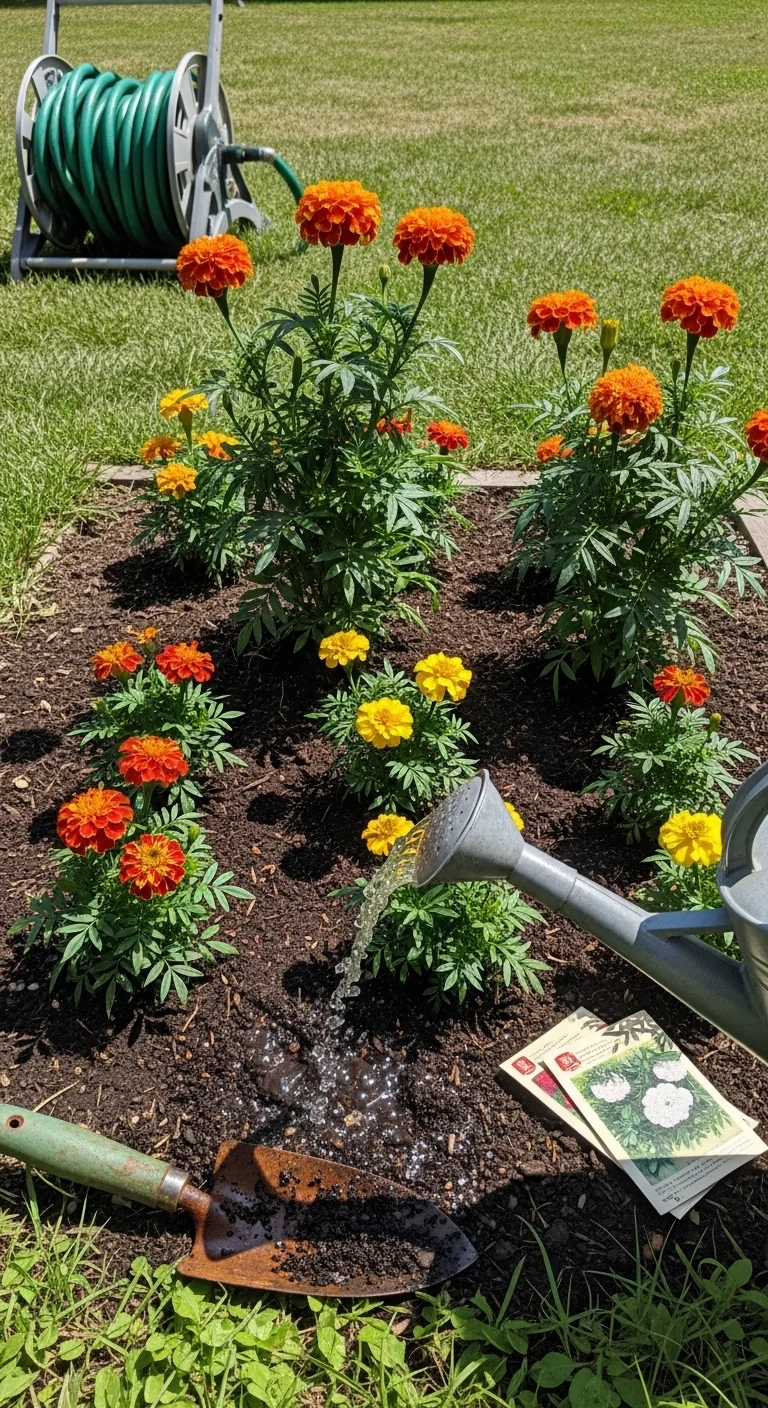
Marigold varieties succeed when matched to measurable garden constraints instead of chosen by color or habit alone. African types deliver tall stems and large blooms suited to vertical accents or cutting gardens. French types provide compact growth and root-level pest suppression ideal near vegetables or in borders. Signet types form low mounds with fine foliage and edible petals perfect for tight spaces or containers.
This guide covers nine widely available varieties across the three main types. It excludes perennial substitutes, edible-only uses outside ornamentals, and non-Tagetes species. Focus stays on annual Tagetes selections that deliver consistent summer-to-frost color in full-sun ornamental settings.
You will identify the single dominant constraint in your setup (height allowance, pest profile, or space limits) and select the matching branch below. That choice narrows your planting list to varieties proven under those exact conditions.
Measure your tallest allowable height, note any recurring soil pests, and check drainage speed, then plant the two recommended varieties from the matching branch for season-long coverage.
The Yield Grid Decision Grid
Branch 1: Pest-pressure gardens. Use where root-knot nematodes appeared in prior seasons or vegetables sit adjacent (soil temperature at planting exceeds 60 F and full sun exceeds six hours daily). Recommended: Items 2, 5, and 7 below. See our annual flowers overview for integration tactics.
Branch 2: Tall-display or cut-flower needs. Use where vertical space exceeds 24 inches and stems longer than 12 inches are desired for arrangements (well-drained soil and full sun). Recommended: Items 1, 4, and 9 below.
Branch 3: Space-limited edging or containers. Use where mature height stays under 18 inches or pots limit root run (drainage holes present and soil dries within 24 hours after watering). Recommended: Items 3, 6, and 8 below.
Quick Comparison Table
| Option | Key mechanism | Best for | Decision Grid Branch | Effort Score |
|---|---|---|---|---|
| Crackerjack African Marigold | Large double blooms on sturdy tall stems | Cut-flower stems and focal points | Branch 2 | 3 |
| Sparky French Marigold | Compact habit plus strong foliar scent | Pest suppression in borders | Branch 1 | 2 |
| Lemon Gem Signet Marigold | Fine mounding foliage and single edible flowers | Edging and container fill | Branch 3 | 1 |
| Big Duck Orange African Marigold | Uniform large blooms on improved hybrid stems | Massed tall displays | Branch 2 | 3 |
| Bolero French Marigold | Bicolor petals on bushy low plants | Pest suppression in mixed beds | Branch 1 | 2 |
| Tangerine Gem Signet Marigold | Citrus-scented leaves and mounding single blooms | Edging and container fill | Branch 3 | 1 |
| Nema Control French Marigold | Targeted root exudate profile | Soil pest management near vegetables | Branch 1 | 2 |
| Safari Scarlet French Marigold | Dwarf stature with scarlet-red single blooms | Edging and container fill | Branch 3 | 2 |
| Alumia Vanilla Cream Marigold | Creamy large blooms on tall hybrid frame | Cut-flower stems and focal points | Branch 2 | 3 |
Crackerjack African Marigold
Best for: Branch 2
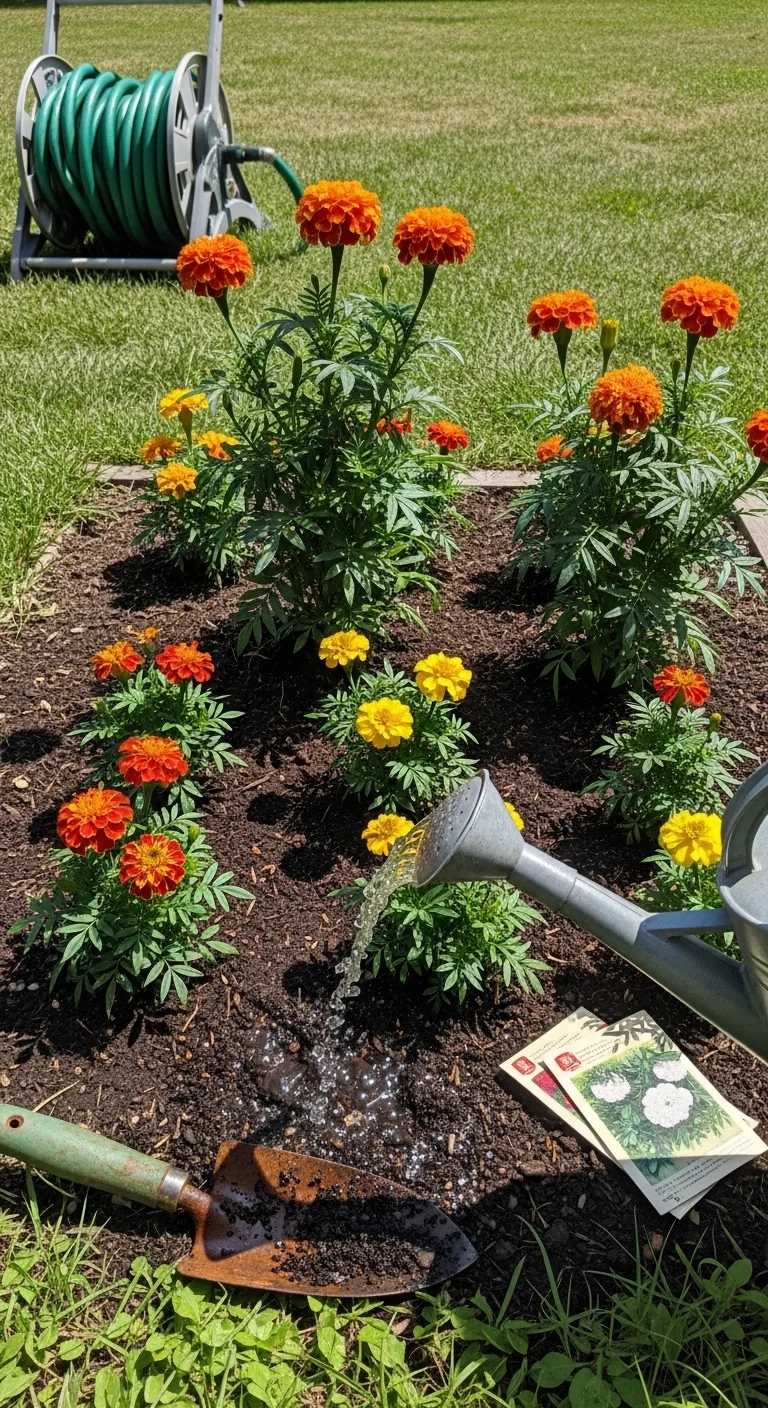
Crackerjack African Marigold produces large double flowers up to five inches across on stems reaching 24 to 36 inches. It suits gardens requiring vertical structure or cut-flower material because the thick stems transport water efficiently for vase life of five to seven days when cut at the base in early morning. Plant in rows spaced 12 inches apart after soil temperature holds above 60 F.
Blueprint steps: prepare bed with compost to improve drainage, set transplants or direct-sow seeds one-quarter inch deep, water to settle soil without saturation. Common mistake: allowing soil to dry completely between waterings during the first three weeks, which delays root establishment and shortens overall bloom window. Pair with our cut flower garden planning for harvest timing.
Sparky French Marigold
Best for: Branch 1
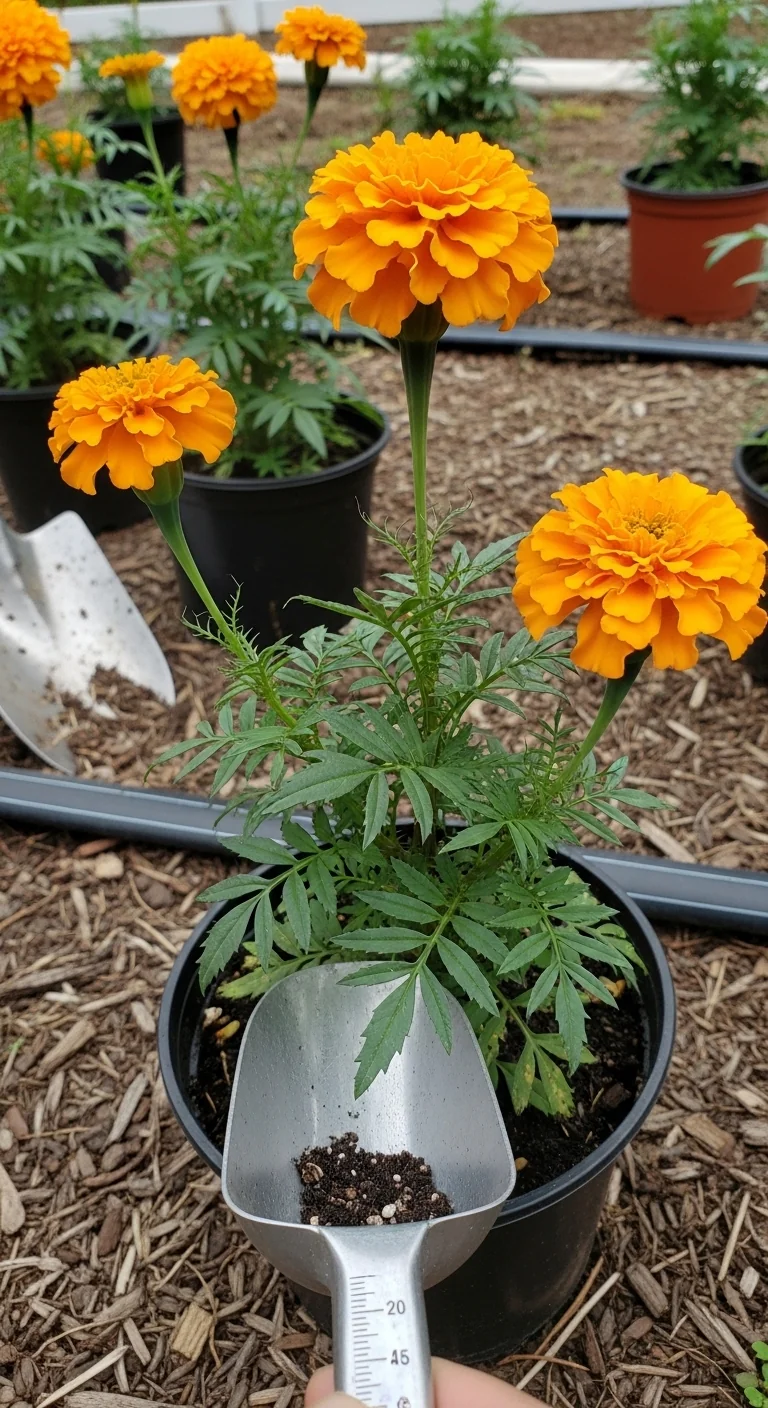
Sparky French Marigold reaches 10 to 12 inches with dense foliage that releases a strong scent when brushed. Use versus skip: plant it where aphids or nematodes recurred last season because the root profile actively limits soil pest buildup; skip in open windy sites where its compact form offers no windbreak value. Edge case: heavy clay that stays wet longer than 48 hours after rain requires raised beds or amended drainage first.
It integrates cleanly with deer resistant flowers because the same scent deters browsing.
Lemon Gem Signet Marigold
Best for: Branch 3
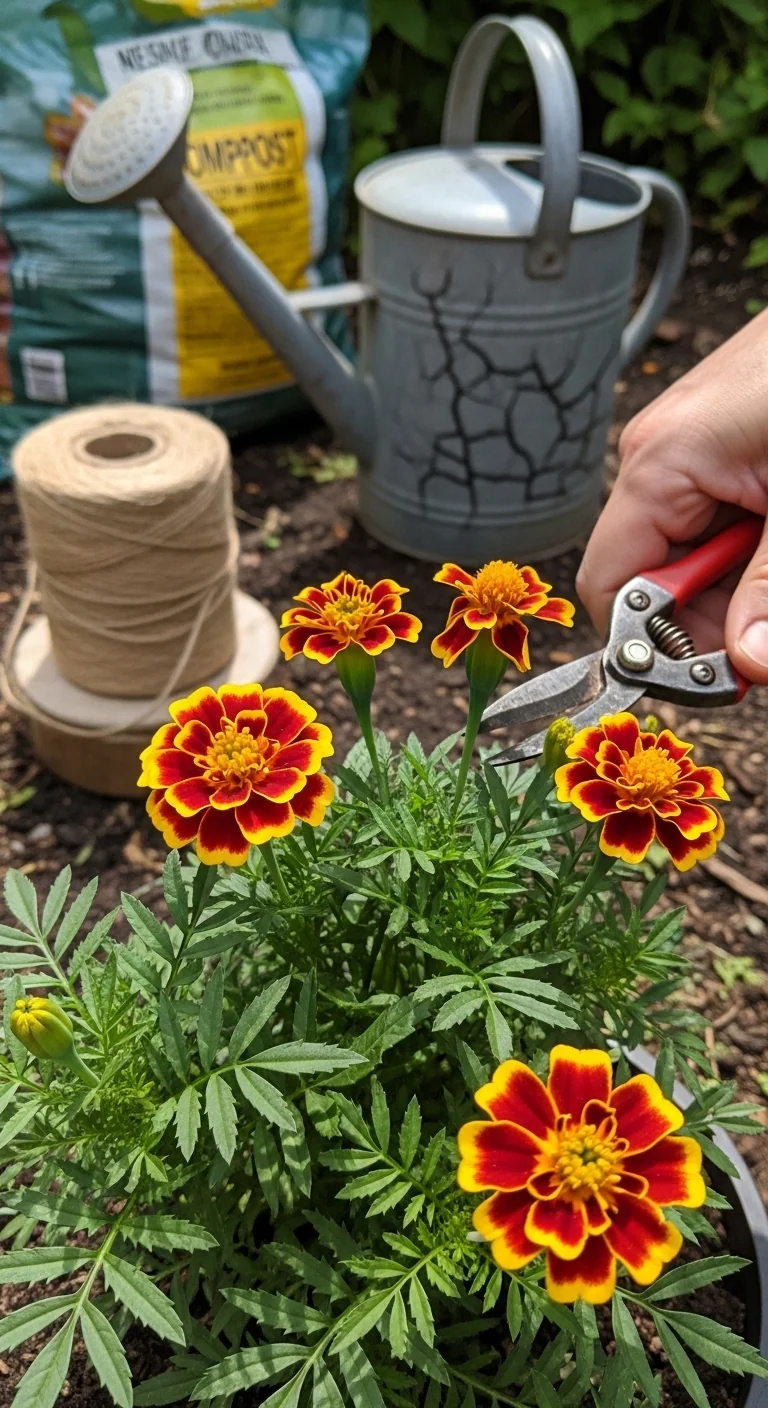
Lemon Gem Signet Marigold forms a low mound eight to 12 inches tall and wide with tiny single lemon-yellow flowers and lacy foliage. Threshold rule: select it when container diameter stays under 12 inches or edging width measures less than eight inches because the mounding habit fills space without legginess. Adjust spacing to six inches apart for solid coverage; exceed eight inches and gaps appear by midsummer.
The petals are edible and add citrus notes to salads when harvested fresh. It pairs with container flowers for mobile color on patios or balconies.
Big Duck Orange African Marigold
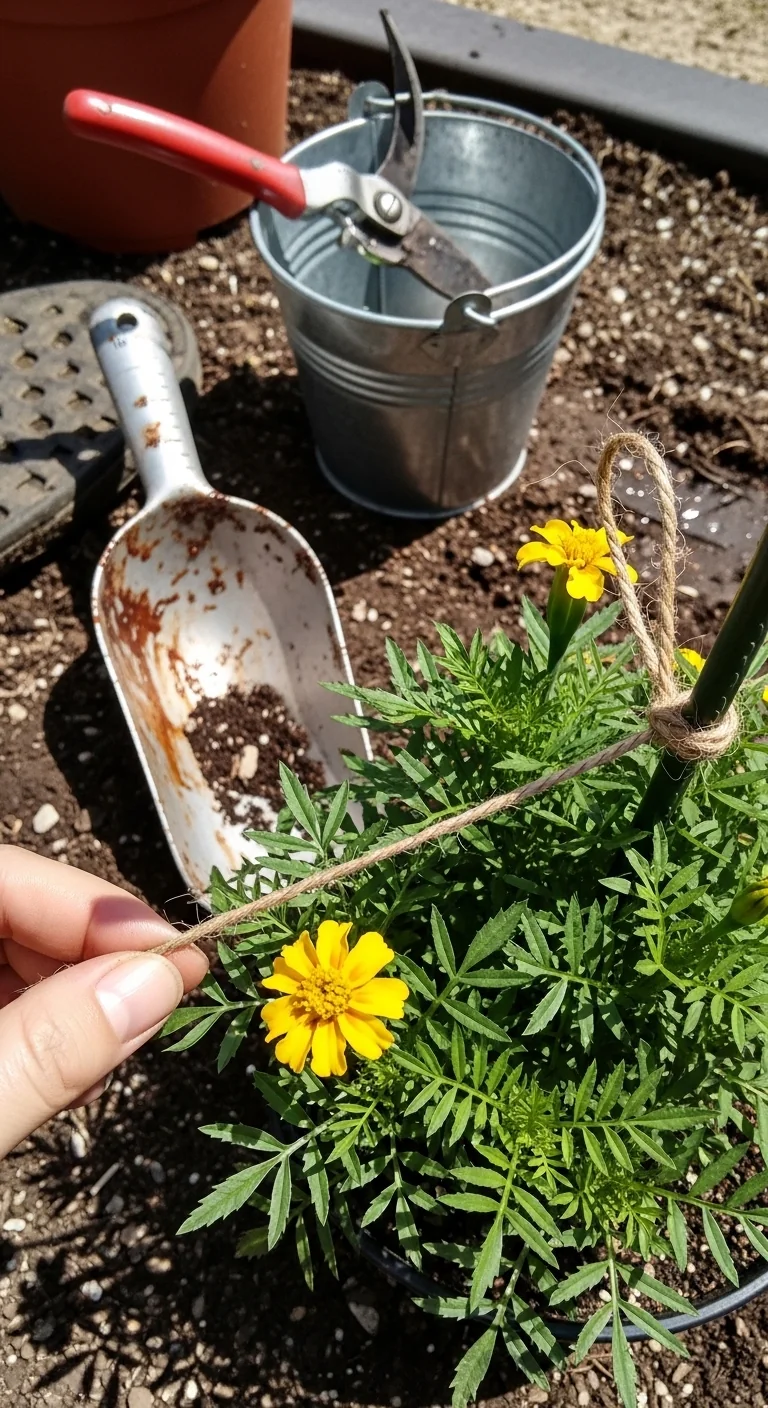
Best for: Branch 2
Big Duck Orange African Marigold delivers uniform 24- to 36-inch stems carrying three- to four-inch double orange blooms that hold color through heat spikes above 85 F. Ten-minute workflow: week one after planting, apply one-inch layer of coarse mulch to retain soil moisture; week four, pinch central stem tip to encourage branching; thereafter check soil moisture twice weekly by inserting finger two inches deep and water only when dry.
Upgrade option: add a single bamboo stake per plant at week six if wind exceeds 15 miles per hour on exposed sites. Link this to full sun flowers for coordinated tall plantings.
Bolero French Marigold
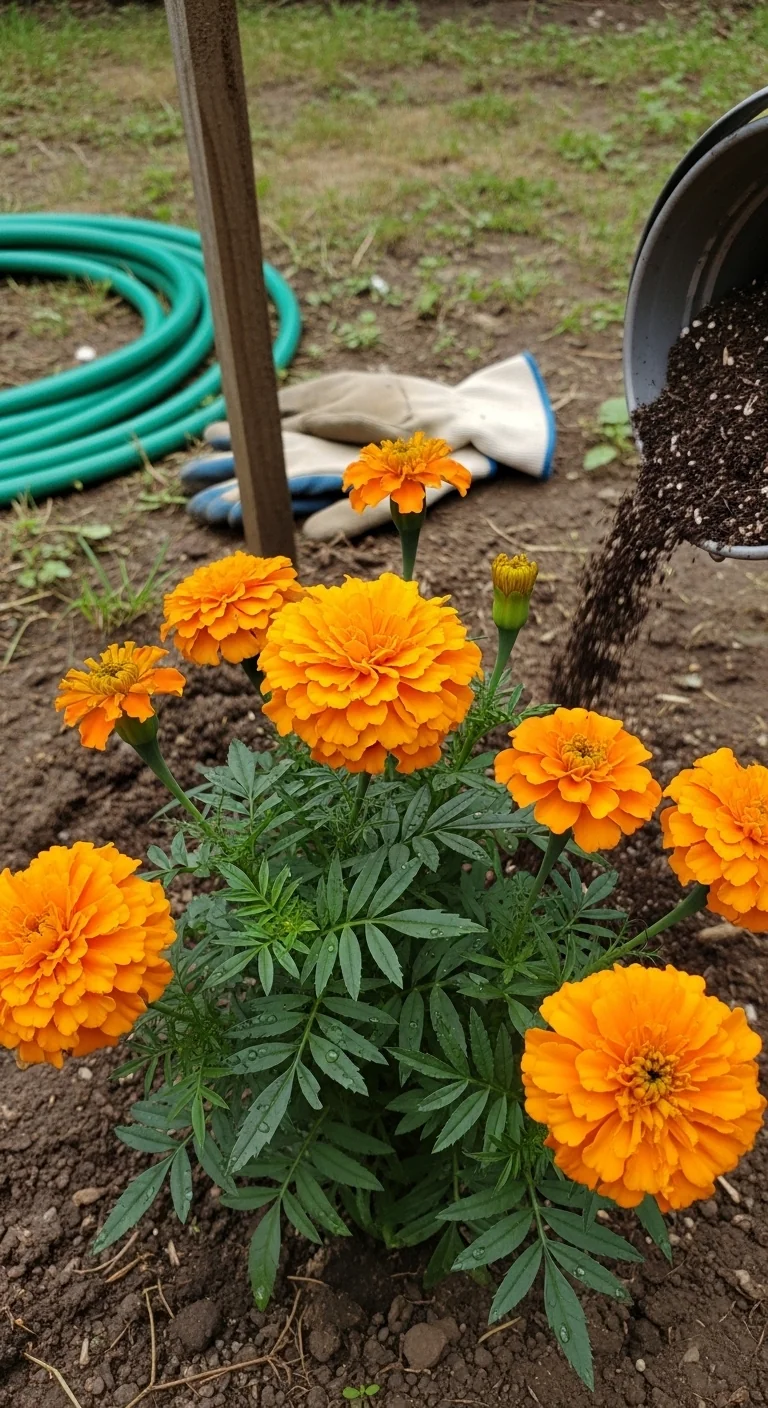
Best for: Branch 1
Bolero French Marigold offers bicolor maroon-and-gold flowers on eight- to 12-inch plants. Use versus skip: plant for reliable pest suppression in vegetable-adjacent beds where the dense canopy shades soil and limits weed germination; skip where you need bright solid yellow tones because its pattern leans toward contrast rather than uniformity. Edge case: early spring planting before night temperatures stabilize above 50 F risks slowed growth and fewer blooms.
It complements pollinator flowers by drawing bees to the mixed border.
Tangerine Gem Signet Marigold
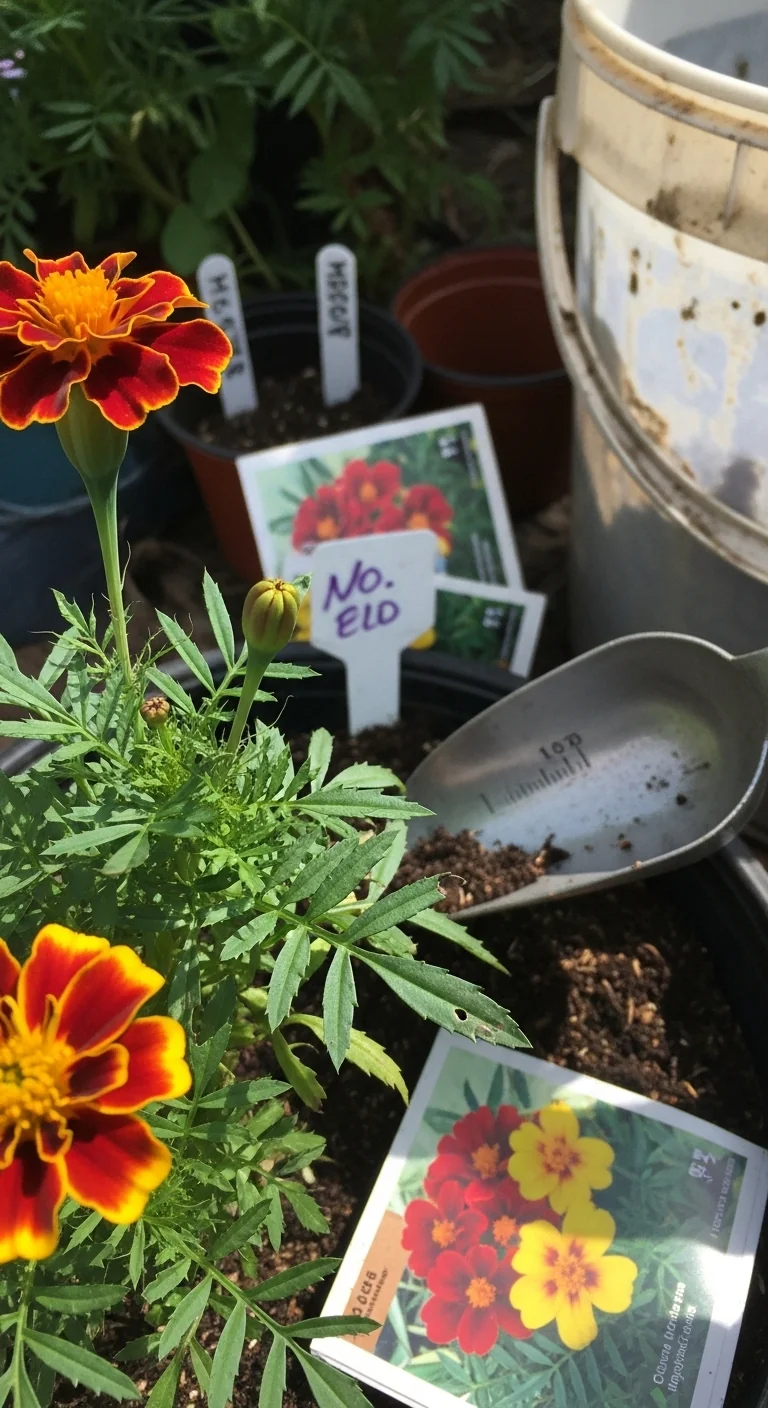
Best for: Branch 3
Tangerine Gem Signet Marigold mirrors Lemon Gem in mounding habit but carries orange single blooms and citrus-scented foliage that releases aroma when leaves are crushed. Threshold rule: choose it when garden bed width measures eight to 12 inches because the fine texture knits into a low carpet without crowding neighbors; raise spacing to 10 inches if soil fertility tests high to avoid overly lush foliage at the expense of flowers.
Plant in flower bed design schemes needing fine-textured fillers.
Nema Control French Marigold
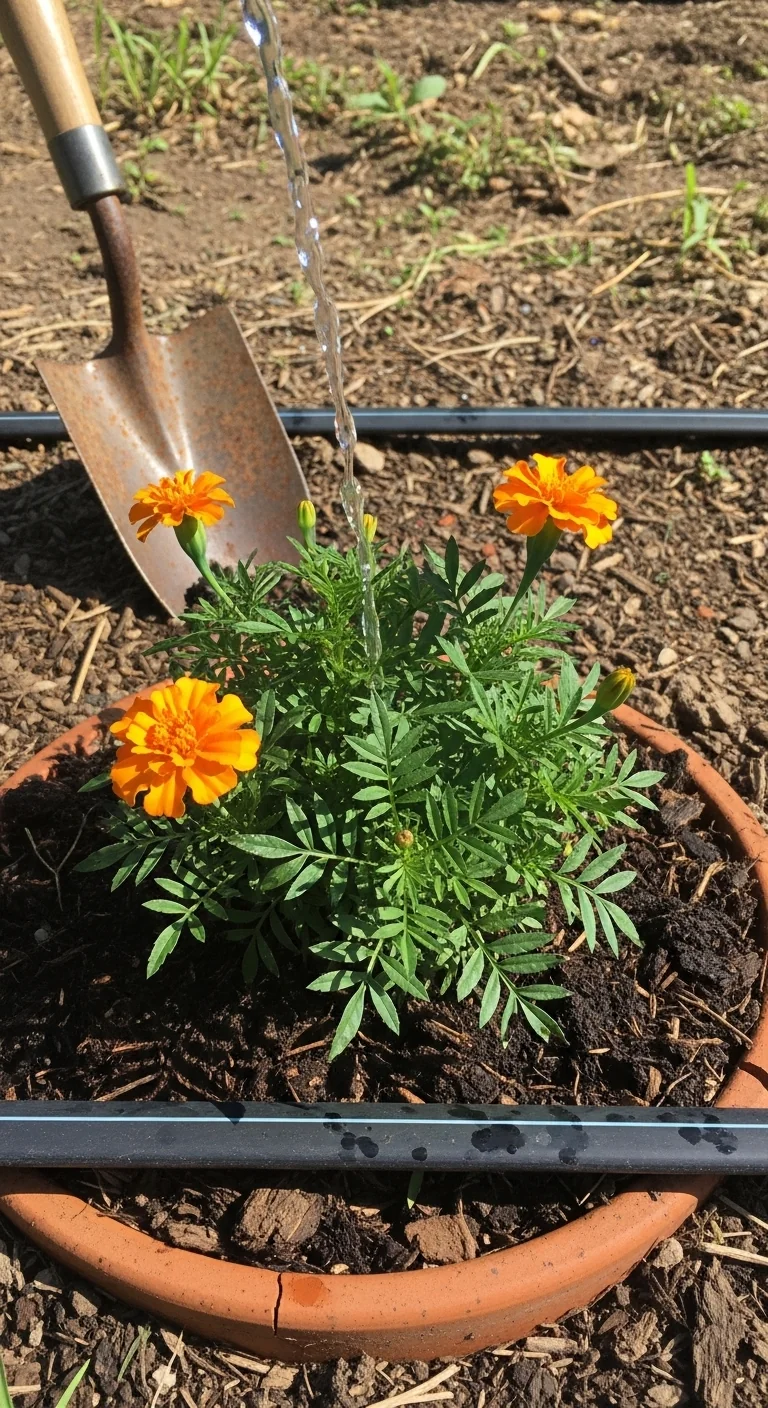
Best for: Branch 1
Nema Control French Marigold is a compact selection bred with a root profile that targets soil-borne nematodes while maintaining eight- to 12-inch height. Blueprint steps: sow or transplant after final frost date, space plants 10 inches apart in rows, incorporate into soil only the top two inches of compost at planting. Monitor weekly for the first month by checking lower leaves for yellowing, which signals drainage shortfall rather than nutrient lack.
Common mistake: rotating it out after one season without re-testing soil the following spring. Combine with low maintenance flowers for hands-off pest management.
Safari Scarlet French Marigold
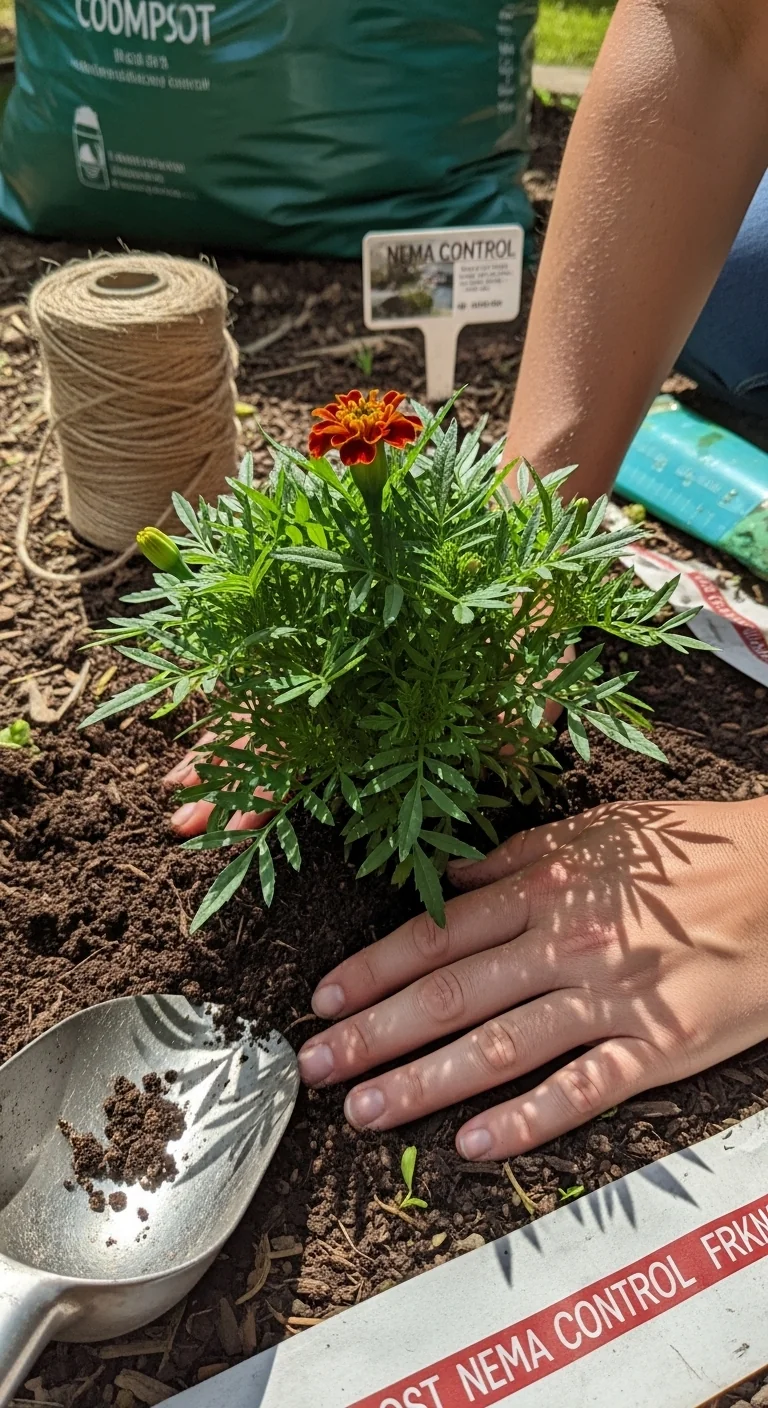
Best for: Branch 3
Safari Scarlet French Marigold stays under 12 inches with vivid scarlet single blooms and dark green foliage. Use versus skip: plant in narrow edging or small pots where bright red contrast is needed; skip in large open beds because its dwarf stature disappears visually beyond 10 feet. Edge case: containers without drainage holes will cause root issues within days even with careful watering.
Alumia Vanilla Cream Marigold
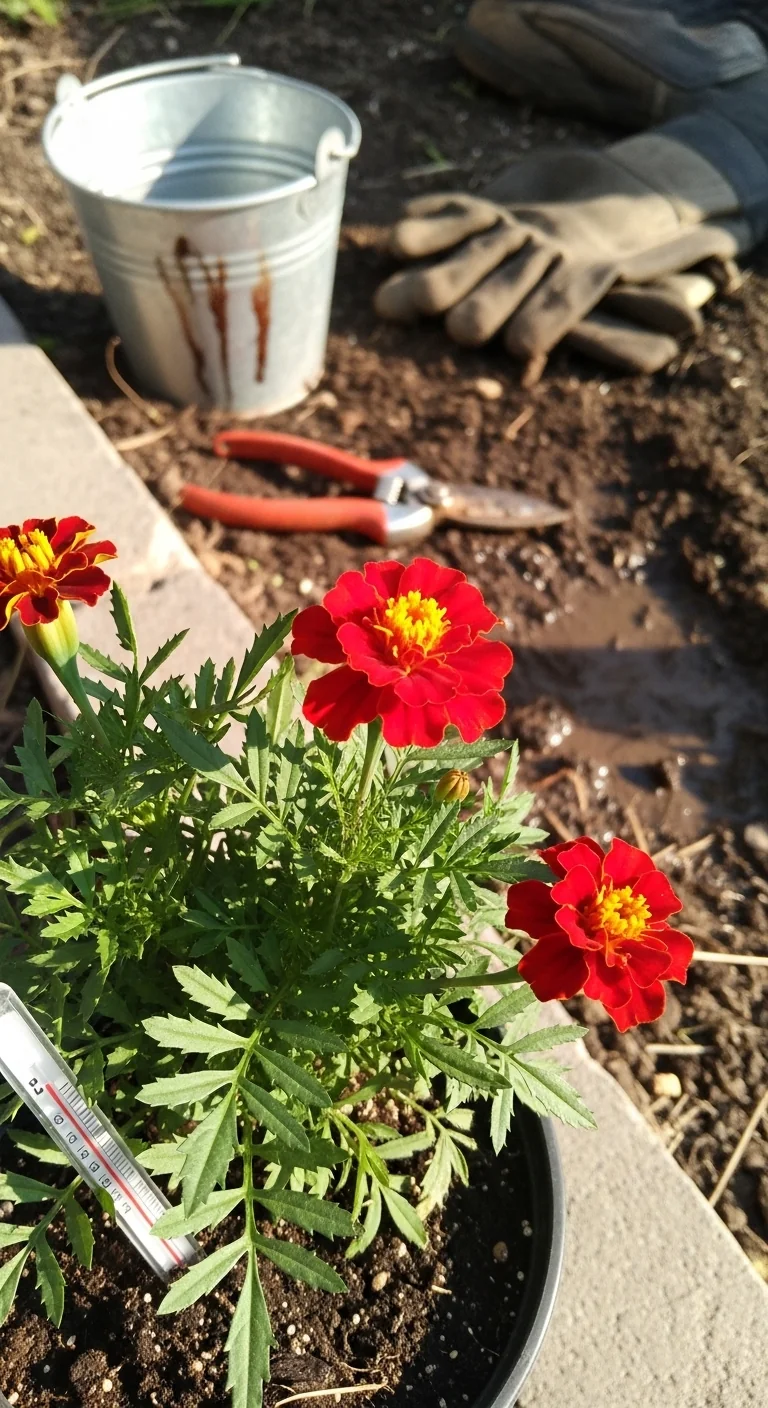
Best for: Branch 2
Alumia Vanilla Cream Marigold carries creamy-white large blooms on 24- to 36-inch stems that stand out against darker foliage. Threshold rule: select it when your color palette requires pale tones and space allows 18-inch centers because the open double form reflects light and brightens shaded corners within the bed; reduce spacing to 12 inches only if wind protection exists to prevent stem lodging.
It works for cut arrangements when harvested before full opening.
Starter Stack (What to Choose First)
For Branch 1: Pest-pressure gardens
Start with Nema Control and Sparky. The targeted root action of Nema Control pairs with the dense canopy of Sparky to cover soil and suppress surface pests simultaneously. Seed packet cost ranges three to six dollars; planting time runs 30 to 45 minutes per 10 square feet.
For Branch 2: Tall-display or cut-flower needs
Start with Crackerjack and Big Duck Orange. Their uniform stem lengths and large bloom size create cohesive vertical mass while supplying cut material on staggered schedules. Seed packet cost ranges four to seven dollars; planting time runs 40 to 60 minutes per 10 square feet.
For Branch 3: Space-limited edging or containers
Start with Lemon Gem and Tangerine Gem. Their mounding habits knit together quickly to fill gaps while the edible petals add secondary harvest value. Seed packet cost ranges three to five dollars; planting time runs 20 to 35 minutes per 10 square feet or per six pots.
When This Won’t Work
Marigold varieties fail when daily direct sun drops below six hours or when soil remains saturated longer than 48 hours after rainfall. Both conditions trigger leggy growth or root rot regardless of variety selected.
Measure sun with a simple light meter or shadow test at midday; if readings stay under six hours, switch to alternatives suited for lower light. Check drainage by digging a six-inch test hole, filling it with water, and timing how long it takes to empty; if longer than 48 hours, amend with coarse sand or raised beds before replanting.
In either case move to shade flowers selections that tolerate those exact conditions.
Choosing the Right Option for Your Situation
Budget threshold
Seed packets cost three to seven dollars across all listed varieties. If your total budget stays under 20 dollars, buy two packets from the matching branch and direct-sow to cover 20 to 30 square feet.
Time threshold
Planting and initial care require under one hour for 10 square feet. If your available time stays under 30 minutes weekly after establishment, limit to Branch 3 varieties that need the least follow-up.
Technical constraint: soil drainage
Test by digging a six-inch hole and timing water evacuation. If drainage exceeds 48 hours, restrict choices to Branch 3 and amend soil before planting.
Yes/No checklist
Does your site receive six-plus hours of full sun? Yes/No
Does soil drain within 48 hours after rain? Yes/No
Does height allowance exceed 24 inches where needed? Yes/No
Is pest pressure confirmed from prior seasons? Yes/No
Expert Q&A
Do marigolds compete with nearby roses for nutrients or space?
French and Signet varieties stay compact enough to interplant without crowding rose root zones when spaced 12 inches away. African types need 18-inch clearance to avoid shading lower rose canes. All share similar pH preference of 6.0 to 7.5 so soil amendments remain consistent across the bed.
Which varieties draw the highest number of beneficial insects versus
pest insects?
Signet types like Lemon Gem and Tangerine Gem attract more hoverflies and parasitic wasps because their open single flowers allow easy nectar access. French varieties draw bees but fewer predators; African types with double blooms offer less accessible nectar overall.
How long can you expect bloom duration to last under average summer
temperatures?
French varieties typically bloom from six weeks after planting through first hard frost when deadheaded every 10 to 14 days. African types start two weeks later but continue equally long. Signet types bloom continuously once established with no deadheading required.
Can you save and replant seeds from these hybrid varieties next season?
Open-pollinated Signet types like Lemon Gem and Tangerine Gem produce true-to-type seedlings. Most French and African listed here are hybrids so saved seed yields variable flower size and color; purchase fresh packets for uniform results.
What soil temperature range triggers reliable germination without cold
damage?
Direct sowing succeeds once soil holds steady at 60 F or higher at two-inch depth for seven consecutive days. Below that threshold, start indoors four weeks before last frost and harden off transplants gradually to avoid shock.
Conclusion
The decision grid removes guesswork by tying each variety to one measurable garden constraint instead of broad advice. The single biggest mistake is ignoring drainage timing, which leads to root issues across every type listed.
Next, review your deadheading schedule to extend bloom weeks using our deadheading guide. Plant the two starter-stack varieties from your branch this season and adjust spacing next year based on observed performance.