
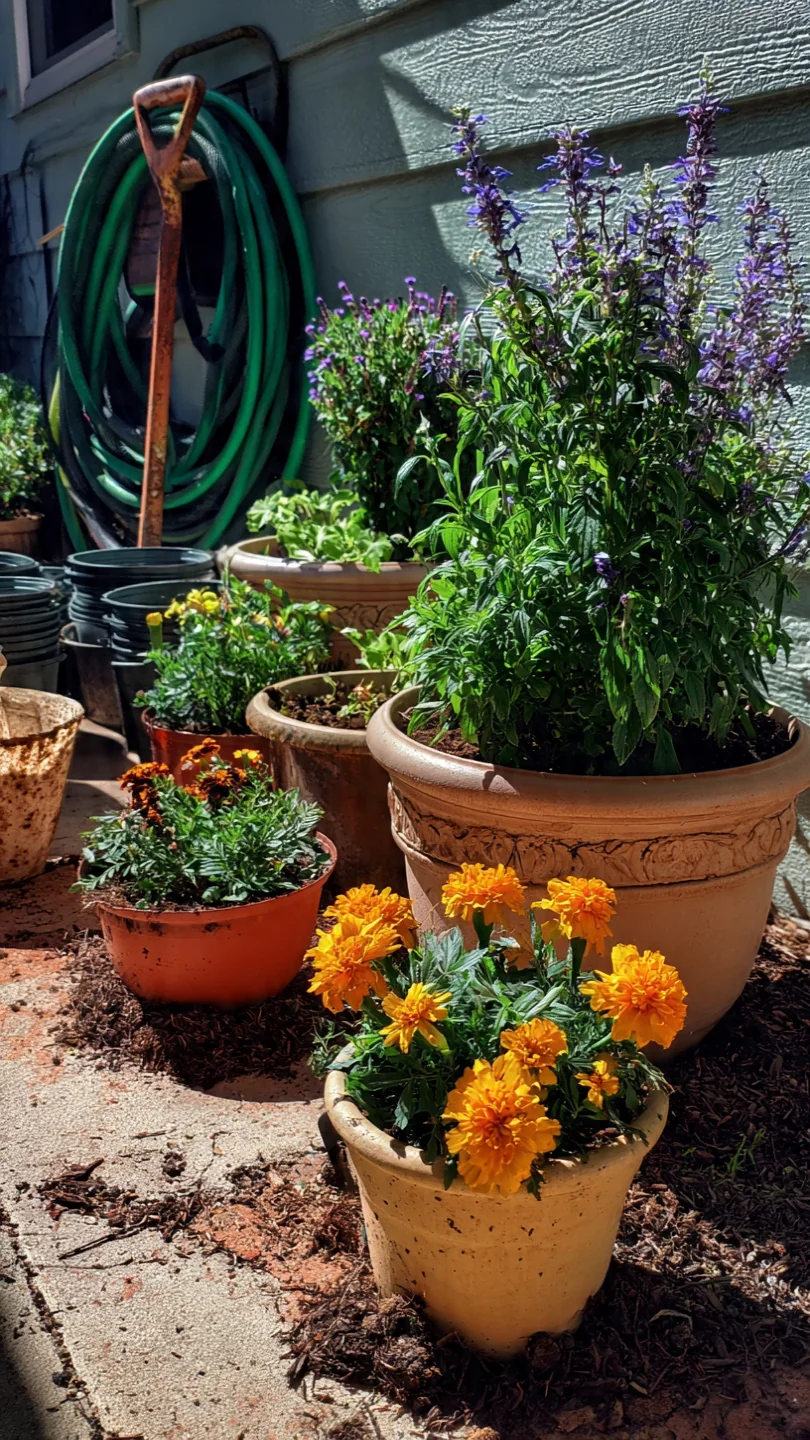
Container flowers succeed when chosen for their tolerance to fast soil drying and limited root expansion, conditions that pots create every day. Ground beds buffer temperature swings and moisture changes. Pots do not. This reframing shifts focus from bloom color alone to measurable traits like root habit and drainage needs.
The guide includes nine annuals and perennials documented to perform reliably in standard containers across typical home conditions. It excludes plants that require trellises over four feet tall, constant soil saturation, or greenhouse-level humidity control.
You will gain exact rules for matching each flower to your pot diameter, daily light hours, and watering interval. This lets you select once and maintain color through the season without repeated replacement.
Bottom line: Match the flower to your container conditions first, and consistent performance follows.
The Yield Grid Decision Grid
Branch 1 applies to full sun exposure of six or more hours daily combined with pot diameters of 12 inches or greater. These conditions favor heat-tolerant types that manage rapid moisture loss through thick foliage or deep taproots.
Recommended: Items 1, 2, 5, and 6 below. See also full-sun flowers for additional pairing guidance.
Branch 2 applies to partial shade of four to six hours direct or dappled light paired with pot diameters of eight to 12 inches. These suit flowers that maintain even moisture uptake without waterlogging.
Recommended: Items 3, 4, and 8 below.
Branch 3 applies to low-intervention setups with watering intervals of four days or longer across any pot size. These prioritize resilient perennials or drought-adapted annuals with built-in stress tolerance.
Recommended: Items 7 and 9 below.
Quick Comparison Table
| Option | Key mechanism | Best for | Decision Grid Branch | Reapply Class |
|---|---|---|---|---|
| Marigolds | Thick foliage limits transpiration | Heat and variable drainage | Branch 1 | Monthly |
| Zinnias | Compact root system in confined space | Air circulation and upright form | Branch 1 | Biweekly |
| Geraniums | Waxy leaves retain internal moisture | Consistent but not excessive water | Branch 2 | Monthly |
| Pansies | Cool-weather metabolism | Even moisture in smaller volumes | Branch 2 | Biweekly |
| Salvia | Deep taproot accesses lower soil layers | Full sun with good drainage | Branch 1 | Monthly |
| Lavender | Silvery foliage reflects heat | Dry, well-drained conditions | Branch 1 | Once-per-season |
| Echinacea | Drought tolerance once established | Perennial return in stable pots | Branch 3 | Once-per-season |
| Snapdragons | Tall spikes with moderate water use | Cooler microclimates | Branch 2 | Biweekly |
| Cosmos | Light, airy root structure | Minimal feeding and deadheading | Branch 3 | Once-per-season |
Marigolds
Best for: Branch 1
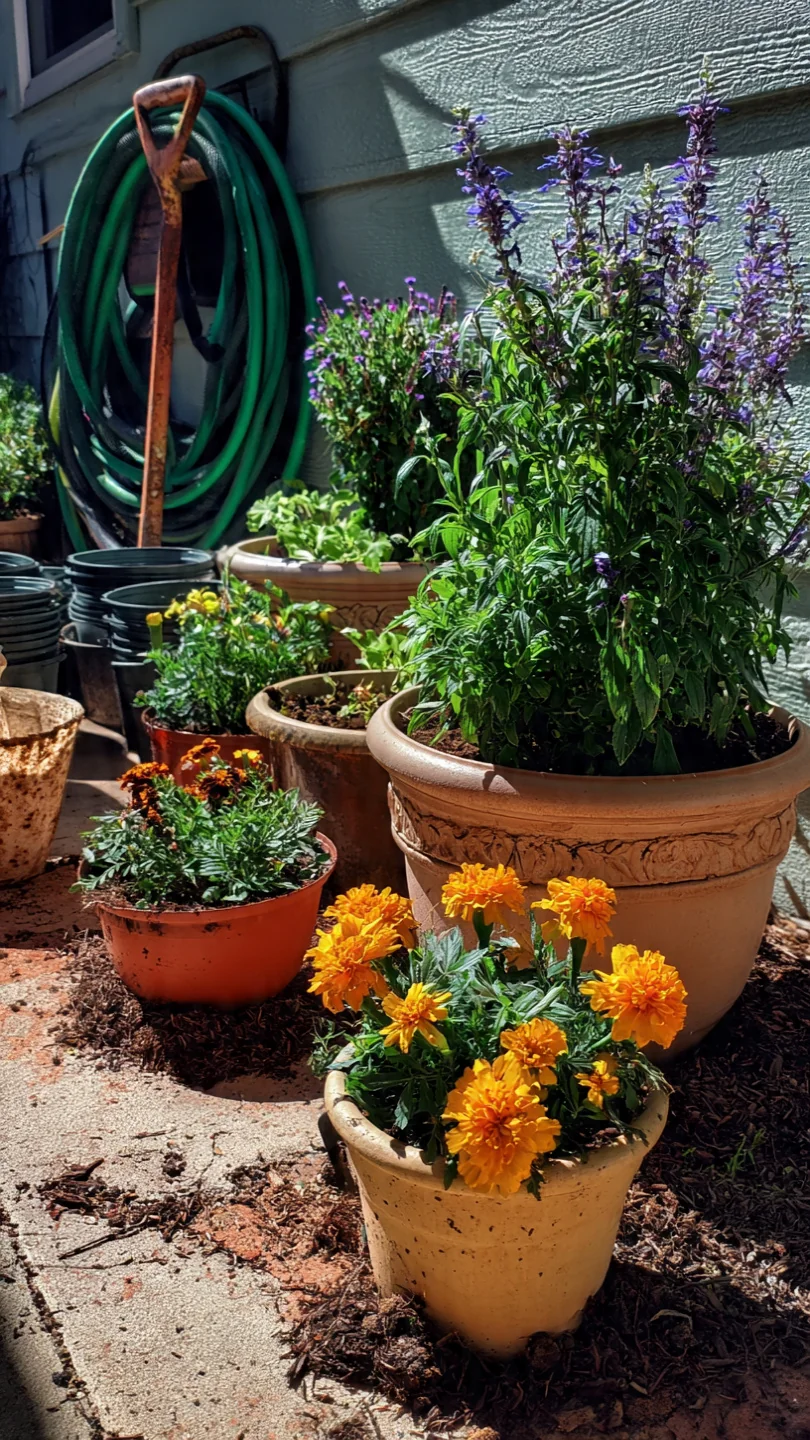
Marigolds follow a clear threshold rule that prevents common container stress. Use pots at least eight inches deep and 10 inches wide to accommodate their fibrous roots without circling. They require six or more hours of direct sun and tolerate soil drying to the top two inches between waterings. Adjust by adding a one-inch layer of coarse grit to the potting mix if your local soil stays damp longer than three days after rain. Deadhead spent blooms every four weeks to redirect energy to new buds. This combination keeps plants compact and flowering through summer heat without supplemental feeding after the initial planting. In windy balconies, choose French varieties over African types for lower center of gravity.
Drought-tolerant flowers share many of these same tolerances.
Zinnias
Best for: Branch 1
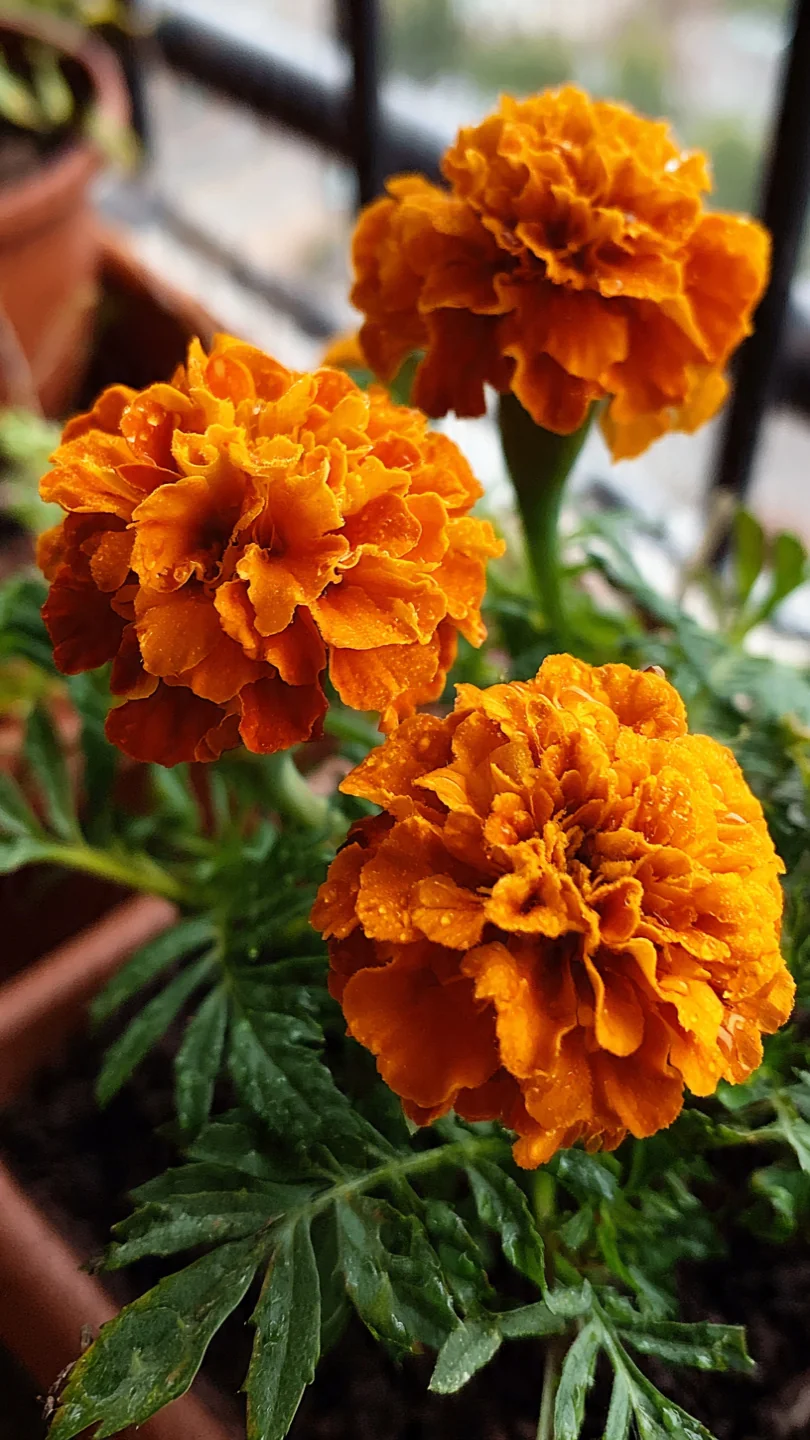
Use zinnias when you need vertical color in full sun but skip them if air circulation stays below average or pots hold excess moisture. They resist heat through sturdy stems yet develop powdery mildew when foliage stays wet for days at a time. Choose dwarf series for containers under 14 inches to avoid top-heavy tipping.
Geraniums
Best for: Branch 2
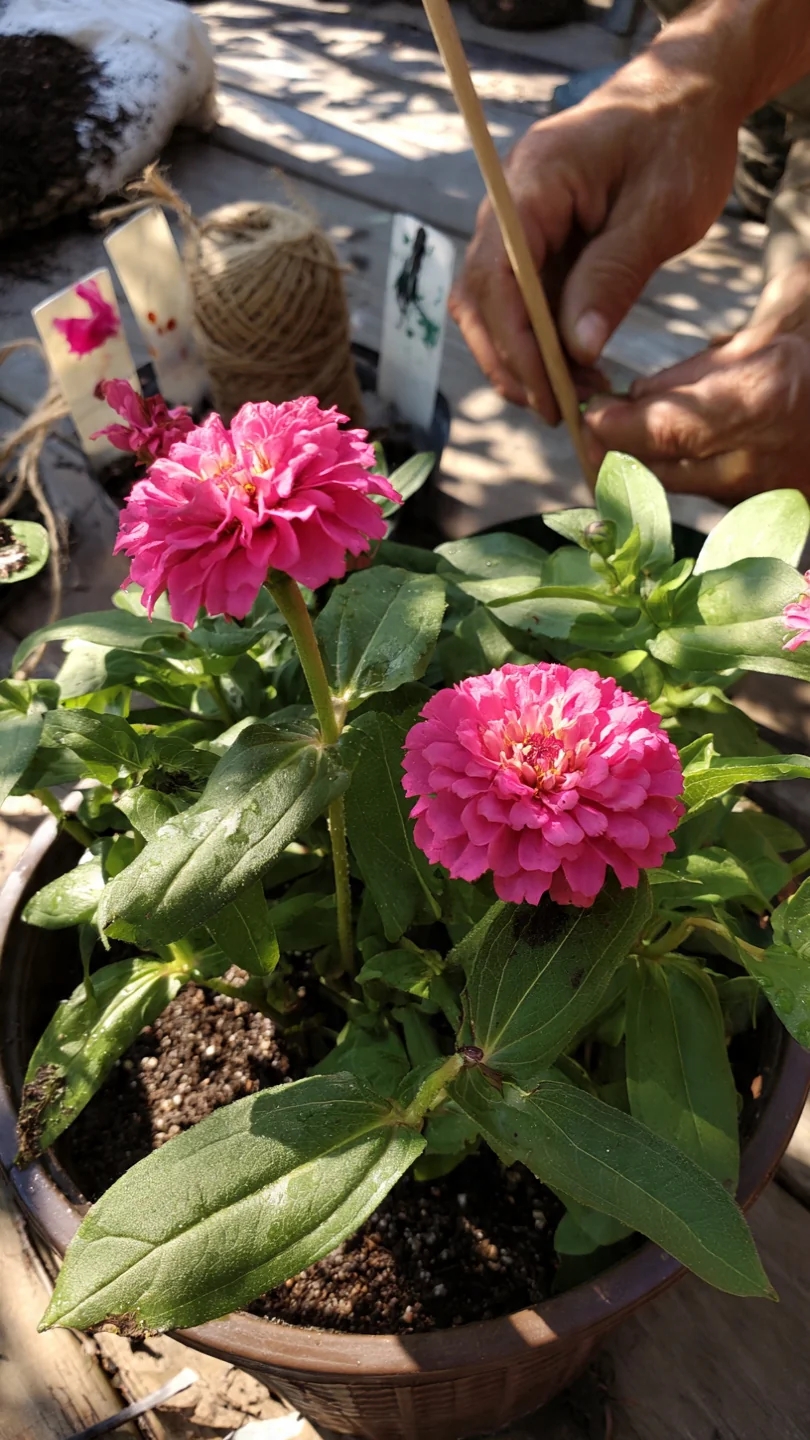
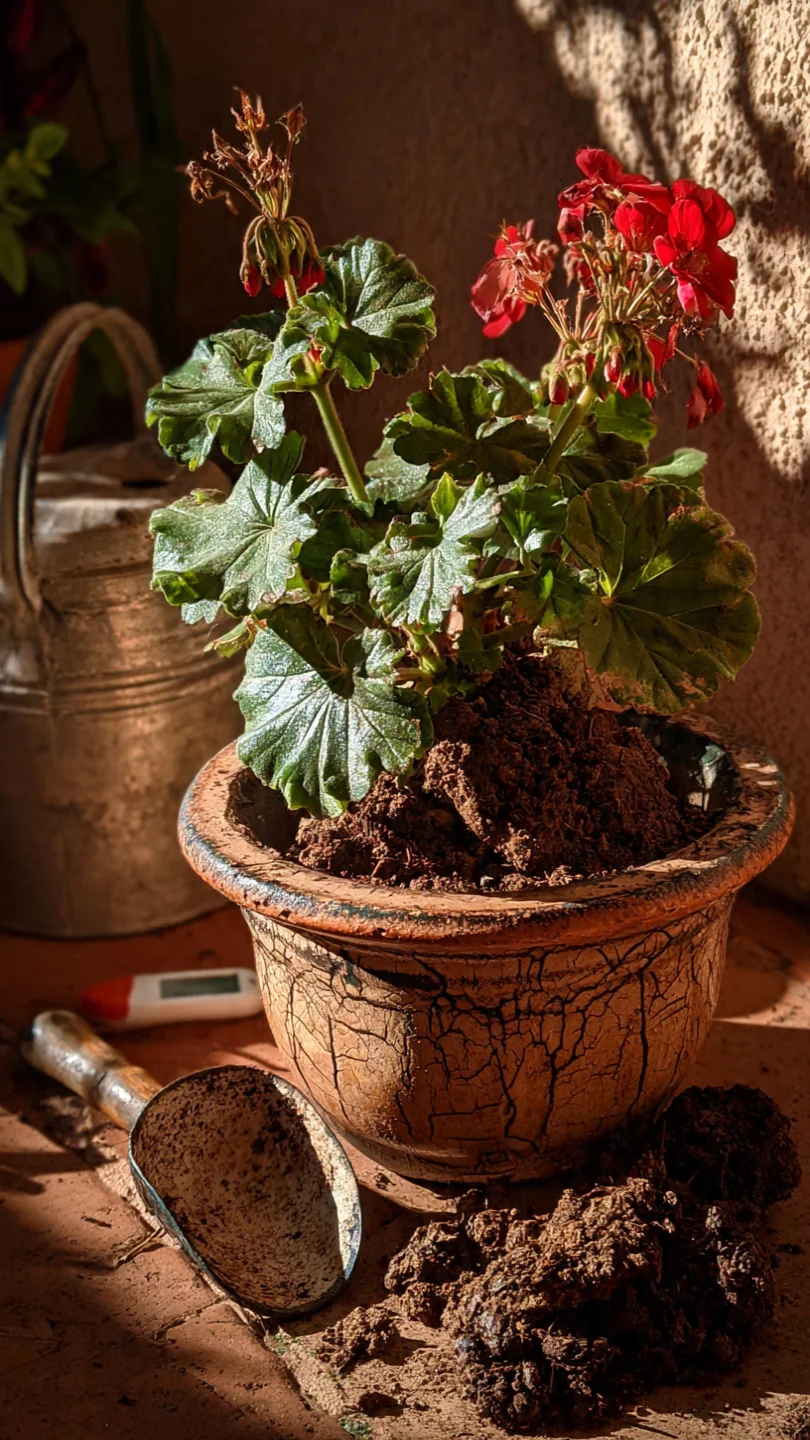
Follow this blueprint for geraniums in containers. Select a pot with multiple drainage holes and fill with a 50:50 blend of standard potting mix and perlite. Plant at the same depth as the nursery container. Water only when the top inch feels dry, typically every five to seven days in partial shade. Remove faded flower clusters by snapping the stem at the base to keep the plant tidy. This routine produces continuous blooms from spring into fall. Upgrade by placing the pot on a saucer filled with pebbles to raise humidity around the roots without waterlogging. See geranium care for zone-specific timing adjustments.
Pansies
Best for: Branch 2
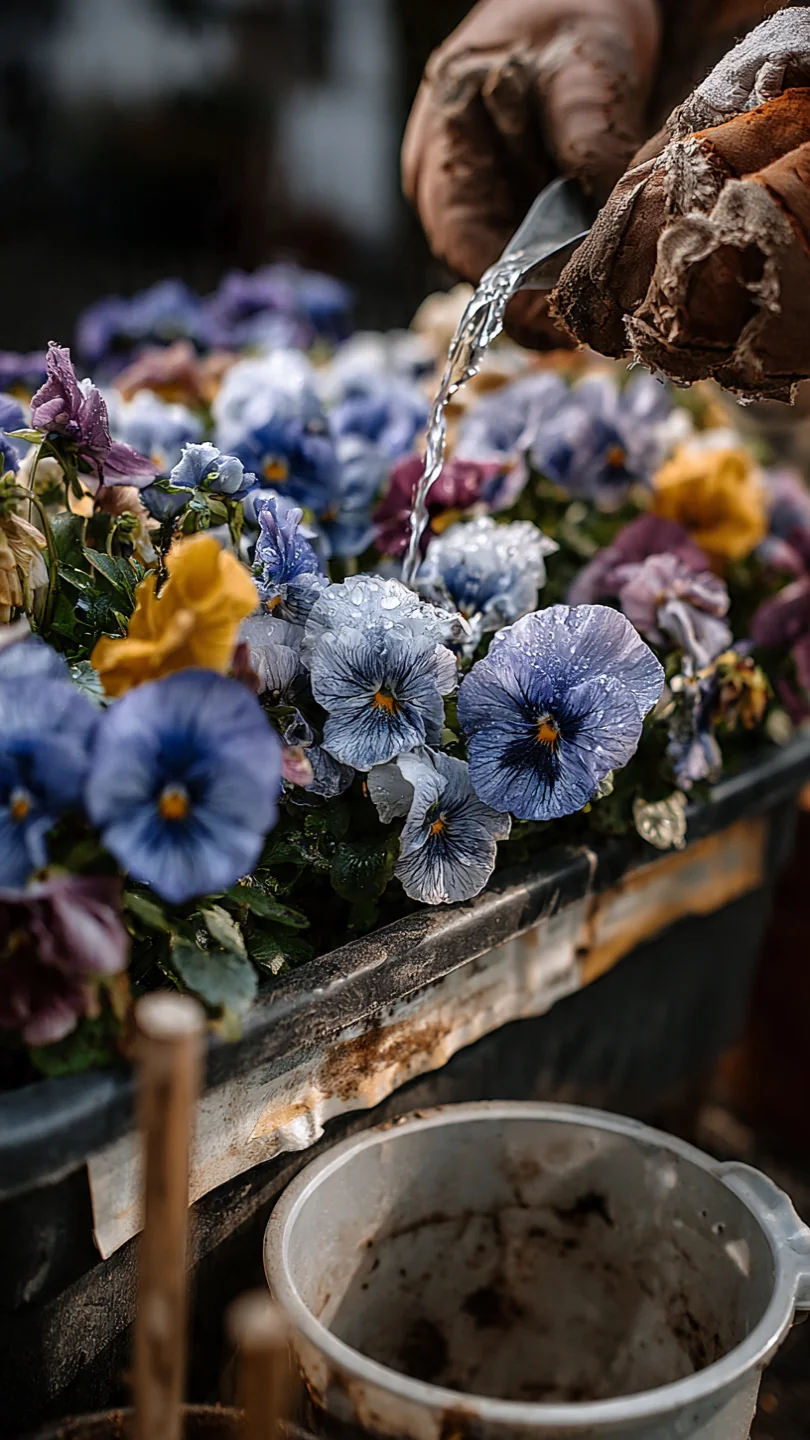
Pansies respond to a precise 10-minute workflow that extends their cool-season display. Begin by soaking the root ball for five minutes while preparing an eight- to 10-inch pot with fresh mix. Position the plant so the crown sits level with the soil surface. Water thoroughly until it drains freely, then place in four to six hours of light. Every two weeks, pinch back leggy stems to encourage side branching. This workflow fits small-space setups and delivers color from early spring until temperatures exceed 75 degrees consistently. For fall extension, move pots to a sheltered spot when nights drop below 40 degrees.
Shade flowers offer similar cool-weather reliability.
Salvia
Best for: Branch 1
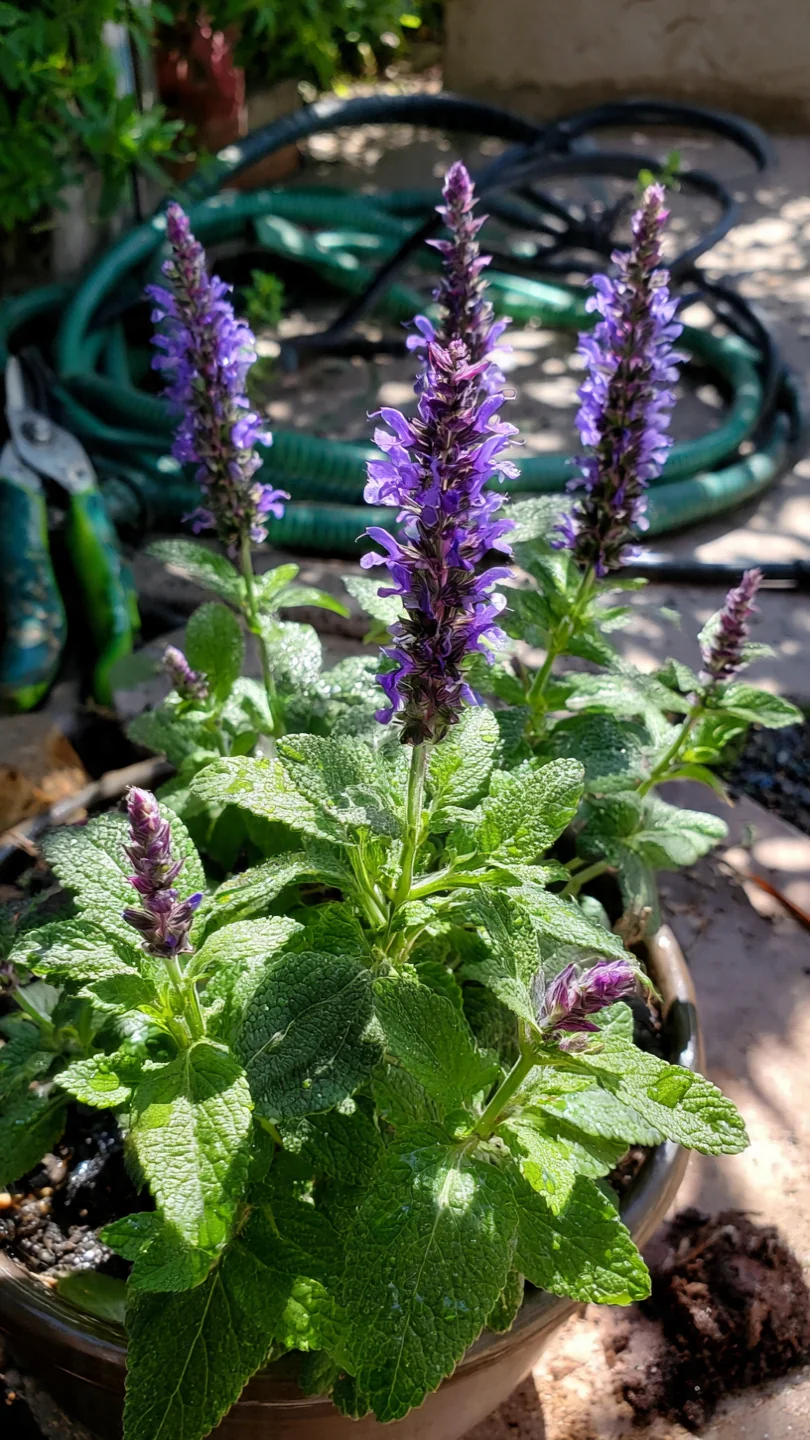
Use salvia for reliable spikes in full sun and skip it only if your pots receive afternoon shade under four hours total. Its taproot reaches deeper soil layers, reducing surface drying stress. Plant in 12-inch or larger containers to give the root system room. Water deeply once weekly after establishment. Deadhead the top third of each spike when the bottom flowers fade. This keeps new buds forming without weekly intervention.
Lavender
Best for: Branch 1
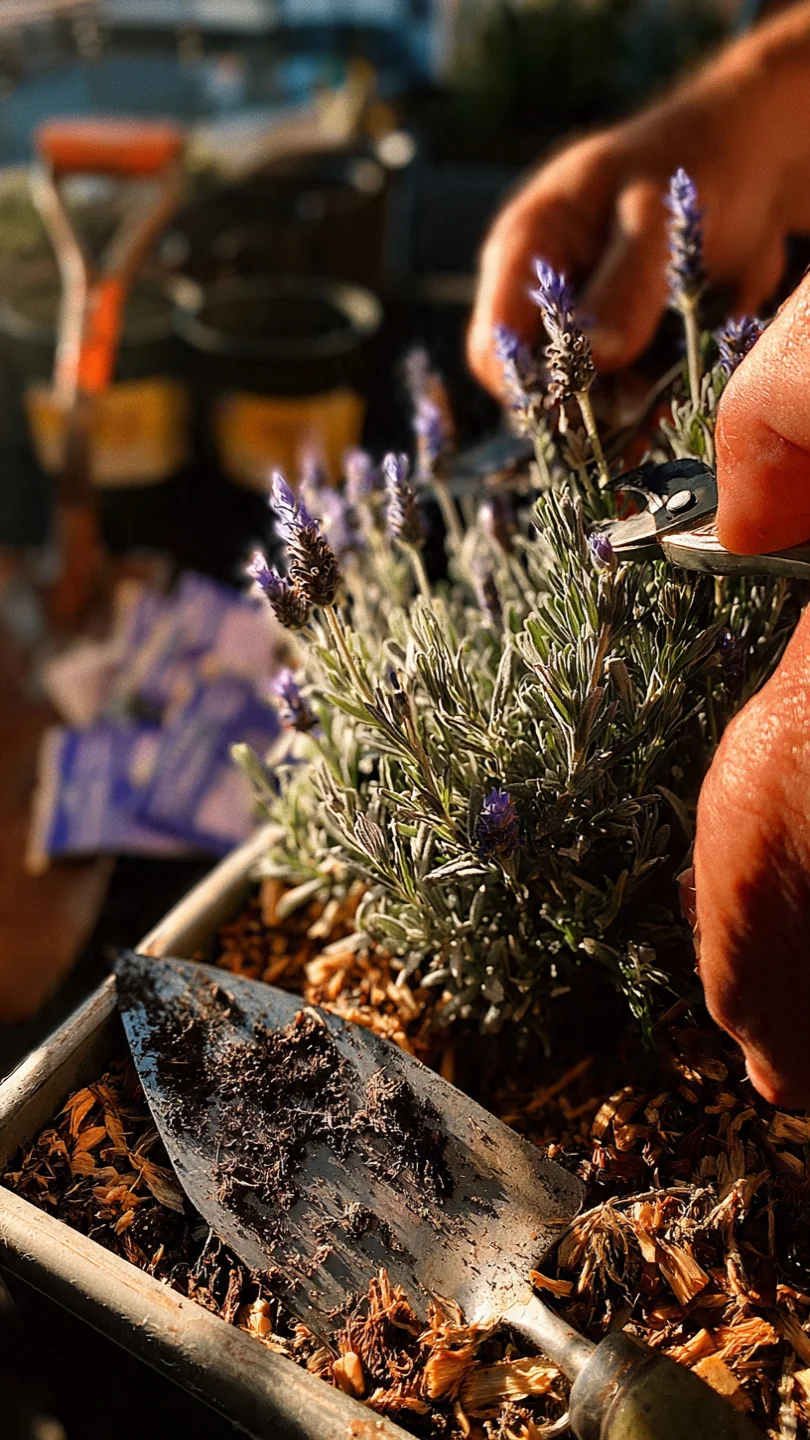
Lavender operates under a strict threshold rule for container success. Provide six or more hours of sun and maintain soil pH between 6.5 and 7.5 by adding lime if your mix tests acidic. Use pots with excellent drainage and water only after the top three inches dry completely. Prune once in early spring by removing one-third of the previous year’s growth. These conditions prevent woody decline and support fragrant blooms through midsummer. In humid regions, elevate pots on feet to increase airflow underneath.
Low-maintenance flowers align closely with lavender’s profile.
Echinacea
Best for: Branch 3
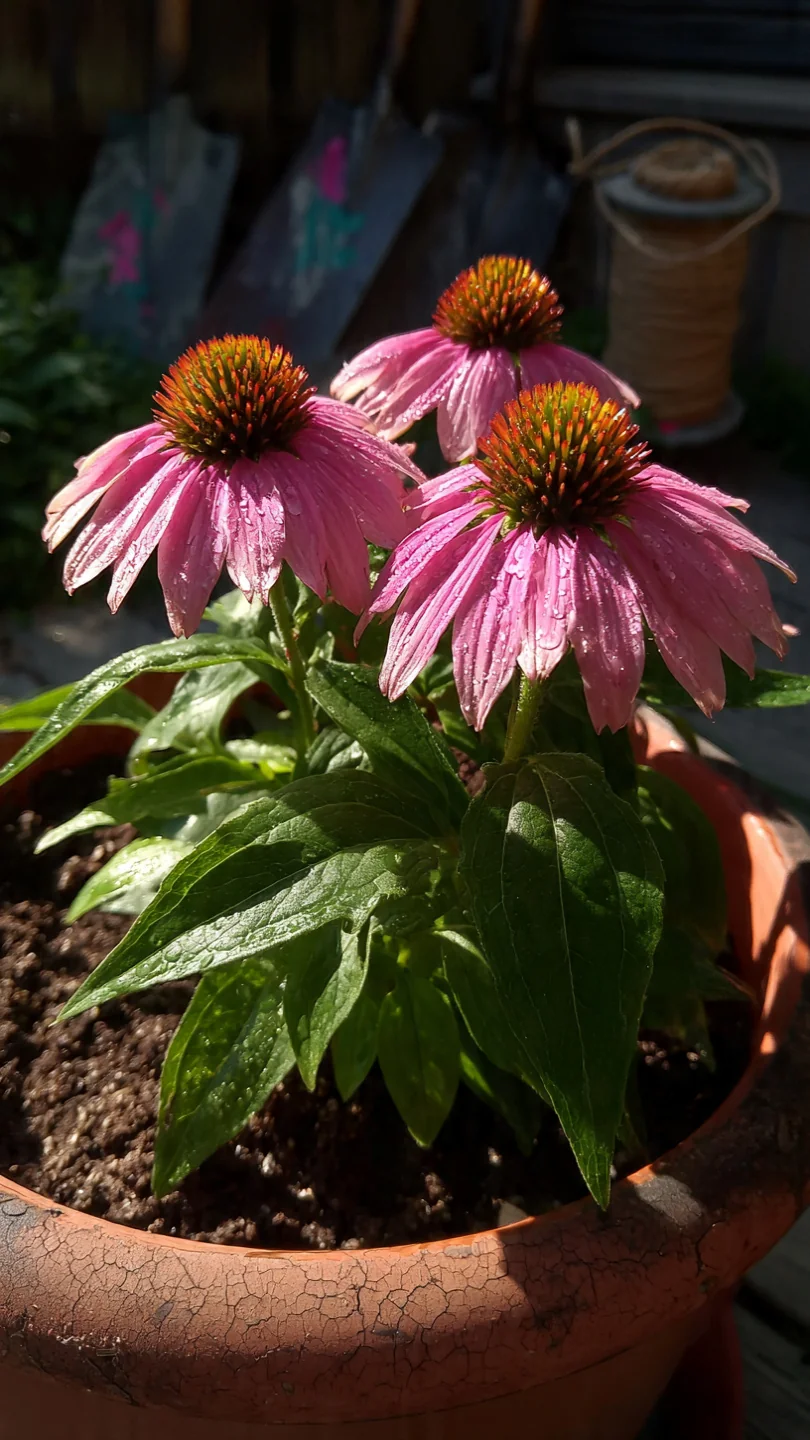
Follow this blueprint for echinacea in containers. Choose a 14-inch pot or larger to support its clump-forming habit over multiple seasons. Fill with a well-draining mix and plant so the crown remains one inch above soil level. Water deeply at planting, then reduce to every five to seven days once roots establish. No deadheading is required because spent cones attract birds and self-seed lightly. Divide every third spring if the clump outgrows the pot. This approach returns blooms each summer with almost no ongoing input after year one.
Snapdragons
Best for: Branch 2
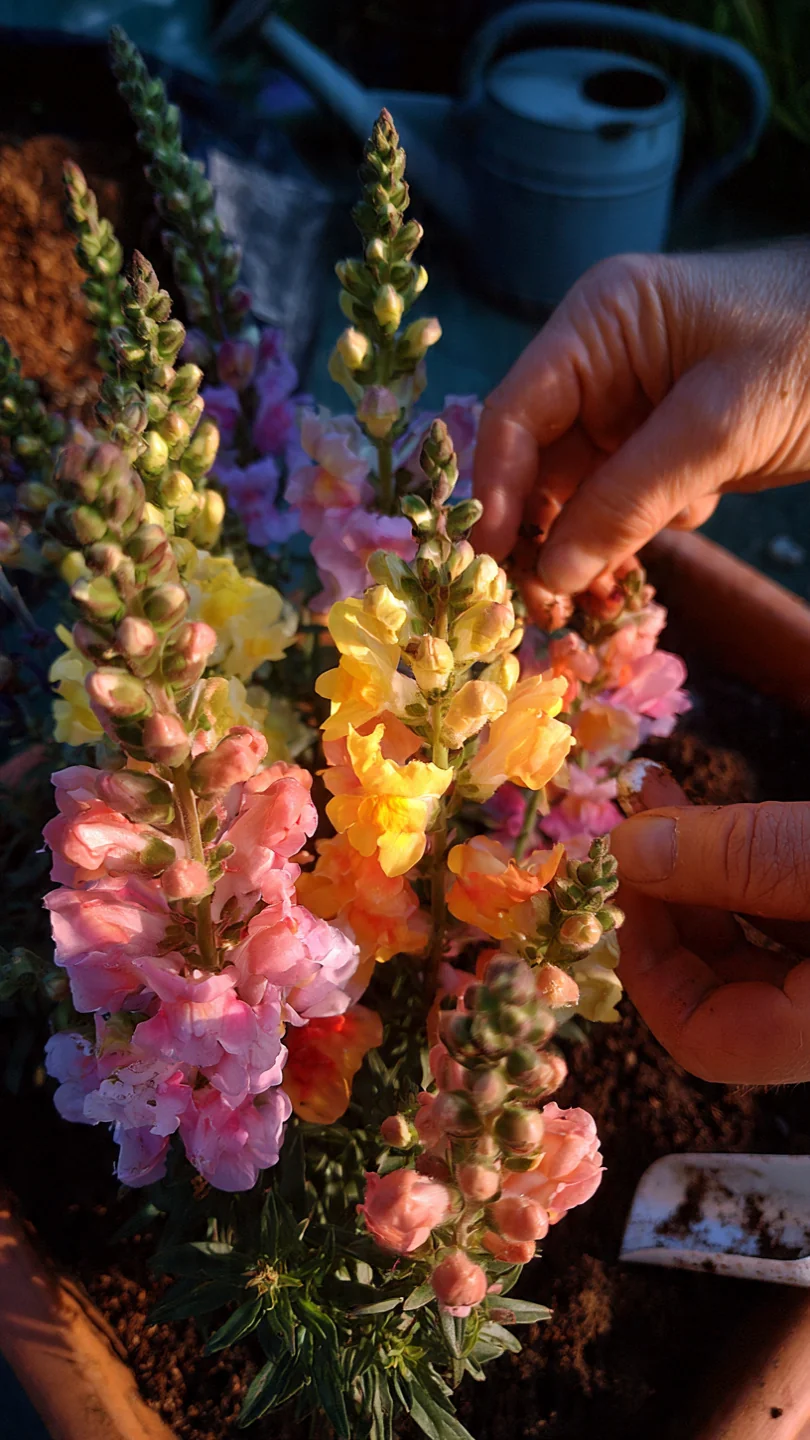
Use snapdragons in cooler microclimates and skip them during prolonged heat above 85 degrees. They tolerate partial shade and produce vertical color without heavy feeding. Pinch the first flower spike at planting to encourage bushiness. Water when the top inch dries, roughly every four days in average conditions.
Cosmos
Best for: Branch 3
Cosmos fit a 10-minute workflow ideal for low-effort containers. Sow seeds directly into a 10-inch pot in spring after last frost or transplant starts at the same depth as the nursery pot. Water once at planting, then only when the top two inches dry. Thin seedlings to three per pot for strong stems. No supplemental fertilizer is needed. Remove spent flowers only if you want to prevent self-seeding. This routine produces airy blooms from midsummer until frost with minimal attention. For balcony use, select shorter varieties to avoid wind damage.
Balcony flowers benefit from the same lightweight structure.
Starter Stack (What to Choose First)
Branch 1 Setups
Start with marigolds and salvia. Their combined pest-repelling foliage and upright spikes fill a 14-inch pot completely. Planting time ranges from 15 to 25 minutes per container. Material cost ranges from $10 to $20 for two nursery starts plus fresh mix.
Branch 2 Setups
Start with geraniums and pansies. The waxy leaves of geraniums pair with pansies’ cool-season color for steady coverage in partial shade. Planting time ranges from 12 to 20 minutes per container. Material cost ranges from $8 to $18 for two starts plus mix.
Branch 3 Setups
Start with echinacea and cosmos. The perennial base of echinacea returns yearly while cosmos add height and movement in the same pot. Planting time ranges from 10 to 18 minutes per container. Material cost ranges from $12 to $22 for one perennial start and cosmos seeds or starts plus mix.
When This Won’t Work
Container flowers fail when pots measure less than the minimum diameter listed for the chosen variety or when drainage holes are absent or blocked. Both conditions lead to compacted roots and oxygen deprivation within two to three weeks of planting. The second measurable failure occurs when watering intervals exceed the plant’s documented tolerance by more than two days during temperatures above 85 degrees, causing permanent wilting in non-drought-adapted types.
In either case, shift to ground beds or larger raised planters for better buffering. If space limits that option, replace the current selection with a drought-tolerant variety suited to your exact conditions.
Low-maintenance flowers provide a direct alternative path when intervention time is limited.
Choosing the Right Option for Your Situation
Budget Threshold
Keep total cost per container under $15 by starting from seed packets or small nursery six-packs instead of gallon-size plants. This threshold covers pot, mix, and two to three starts while still delivering full-season color.
Time Threshold
Limit weekly care to under 10 minutes by selecting once-per-season reapply options such as lavender or echinacea. These require only occasional deep watering and no routine deadheading.
Technical Constraint
Match soil drainage to your local conditions by testing potting mix drainage rate: water should exit the bottom hole within 30 seconds of a full soak. If slower, amend with 30 percent perlite before planting.
Yes/No checklist:
Does your pot have at least four drainage holes?
Does your daily light match the branch requirements?
Can you water on the recommended interval?
Is the pot diameter at or above the listed minimum?
Expert Q&A
What pot material best controls temperature swings for container flowers in warm regions?
Glazed ceramic or thick terracotta moderates soil temperature better than thin plastic. These materials release heat slowly at night and reduce daytime spikes, protecting roots from rapid fluctuations above 90 degrees.
How do you prepare container flowers for winter without moving them indoors every year?
Shift pots against a south-facing wall and mulch the soil surface with two inches of bark. For tender types, wrap the container in bubble wrap and cover the top with evergreen boughs once temperatures drop below 32 degrees consistently.
Can three different flower types share one container without competition?
Yes, when you combine one upright, one mounding, and one trailing form with identical light and water needs. Space them eight inches apart at planting and refresh the top inch of soil each spring to maintain nutrients.
What soil mix ratio minimizes compaction in containers over multiple seasons?
Use 60 percent quality potting mix, 25 percent perlite, and 15 percent compost. This ratio maintains structure for two to three years before full replacement while ensuring oxygen reaches roots.
When is the latest safe date to plant container flowers from seed for reliable summer display?
Eight weeks before your average last frost date for indoor starts, or four weeks after for direct sowing. This timing allows root establishment before peak heat arrives.
Conclusion
The decision grid and variety profiles give you a repeatable system for selecting container flowers that match your exact light, space, and care level. The single most common mistake is choosing based on bloom photos alone instead of verifying pot diameter and watering tolerance first.
Take the next step by auditing one existing pot against the thresholds listed here. Adjust or replace as needed to lock in season-long color. For balcony-specific layouts, explore balcony flowers.