
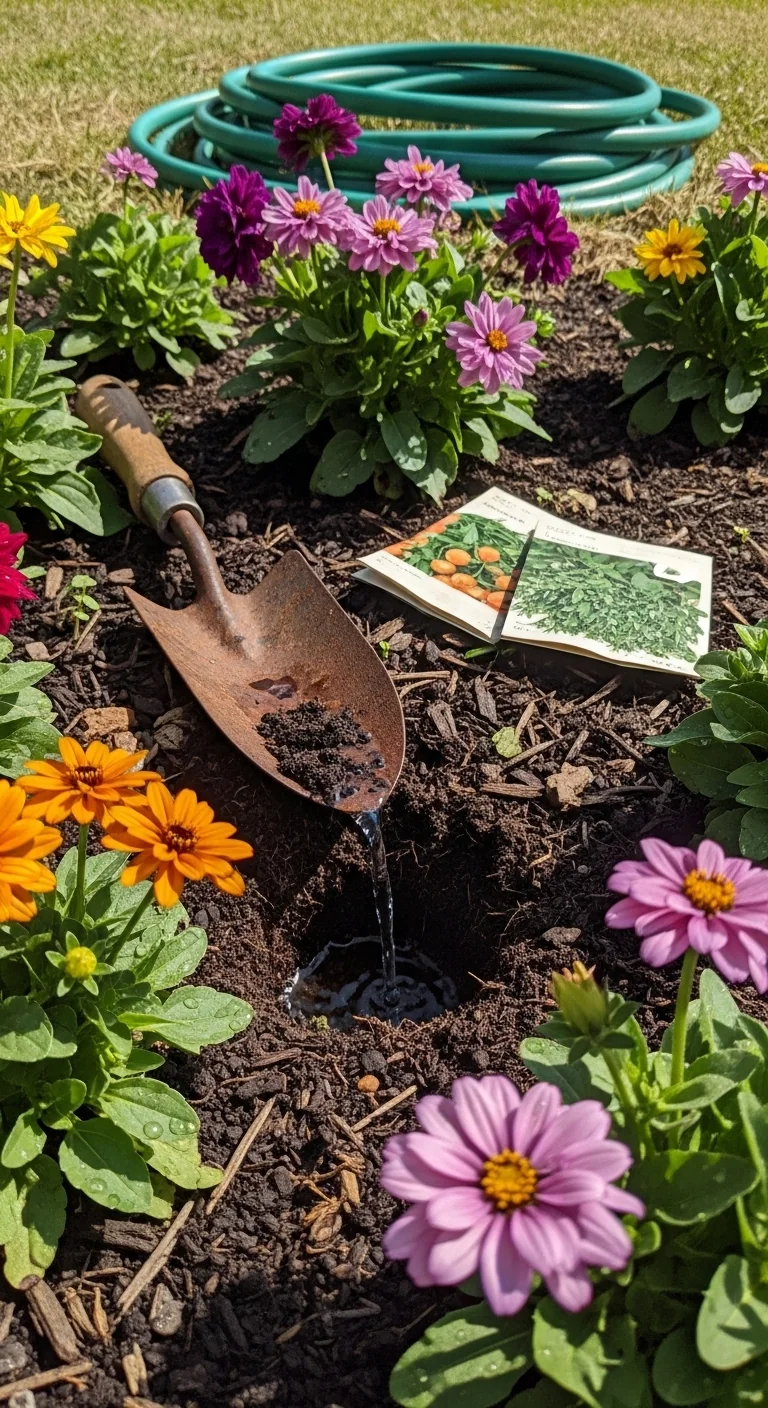
Full sun exposure alone does not guarantee success with flowers. The decisive factor is how each variety’s root system interacts with your soil’s drainage speed and the length of dry periods in your local climate.
This guide evaluates nine full sun flowers across annual and perennial types. It focuses on varieties with documented performance in full sun conditions of six hours or more daily. Partial sun or shade options are excluded.
You will gain a clear mapping of each flower to specific garden profiles, complete with planting thresholds, spacing rules, and maintenance triggers that prevent common failures like root rot or short bloom periods.
Test your soil drainage first, then select the matching flower to achieve reliable color from early summer through fall.
The Yield Grid Decision Grid
Branch 1: Well-drained soil (test: dig 12-inch hole, fill with water; drains in under 4 hours) with summer dry spells exceeding 7 days. Recommended: Zinnias, Marigolds, Cosmos below.
Branch 2: Moderate drainage (drains in 4-12 hours) or clay-heavy soil with periodic moisture. Recommended: Salvia, Echinacea, Black-eyed Susan below.
Branch 3: Limited soil volume in containers or raised beds (under 10 gallons per plant) with full sun exposure. Recommended: Coreopsis, Sunflowers, Dahlias below.
To refine your soil profile before choosing, review the flower bed planner.
Quick Comparison Table
| Option | Key mechanism | Best for | Decision Grid Branch | Effort Score |
|---|---|---|---|---|
| Zinnias | Deep taproots access subsoil moisture, prolific side branching after pinch | Vibrant summer color in hot dry beds | Branch 1 | 3 |
| Marigolds | Foliage releases natural pest-repelling compounds | Border edging and companion planting | Branch 1 | 2 |
| Cosmos | Airy foliage reduces wind resistance, self-seeding habit | Filling gaps in mixed beds | Branch 1 | 2 |
| Salvia | Spiked blooms on woody base draw targeted pollinators | Vertical accent in mixed borders | Branch 2 | 2 |
| Echinacea | Cone-shaped centers extend nectar availability | Pollinator support in perennial beds | Branch 2 | 1 |
| Black-eyed Susan | Rhizomatous spread creates quick coverage | Naturalized meadow-style areas | Branch 2 | 1 |
| Coreopsis | Thread-like foliage tolerates heat with minimal water | Low edging in small spaces | Branch 3 | 2 |
| Sunflowers | Tall single stem stores energy in large seed heads | Dramatic height and bird attraction | Branch 3 | 4 |
| Dahlias | Tuber storage supplies energy for large blooms | Showy focal points in pots | Branch 3 | 3 |
Zinnias
Best for: Branch 1
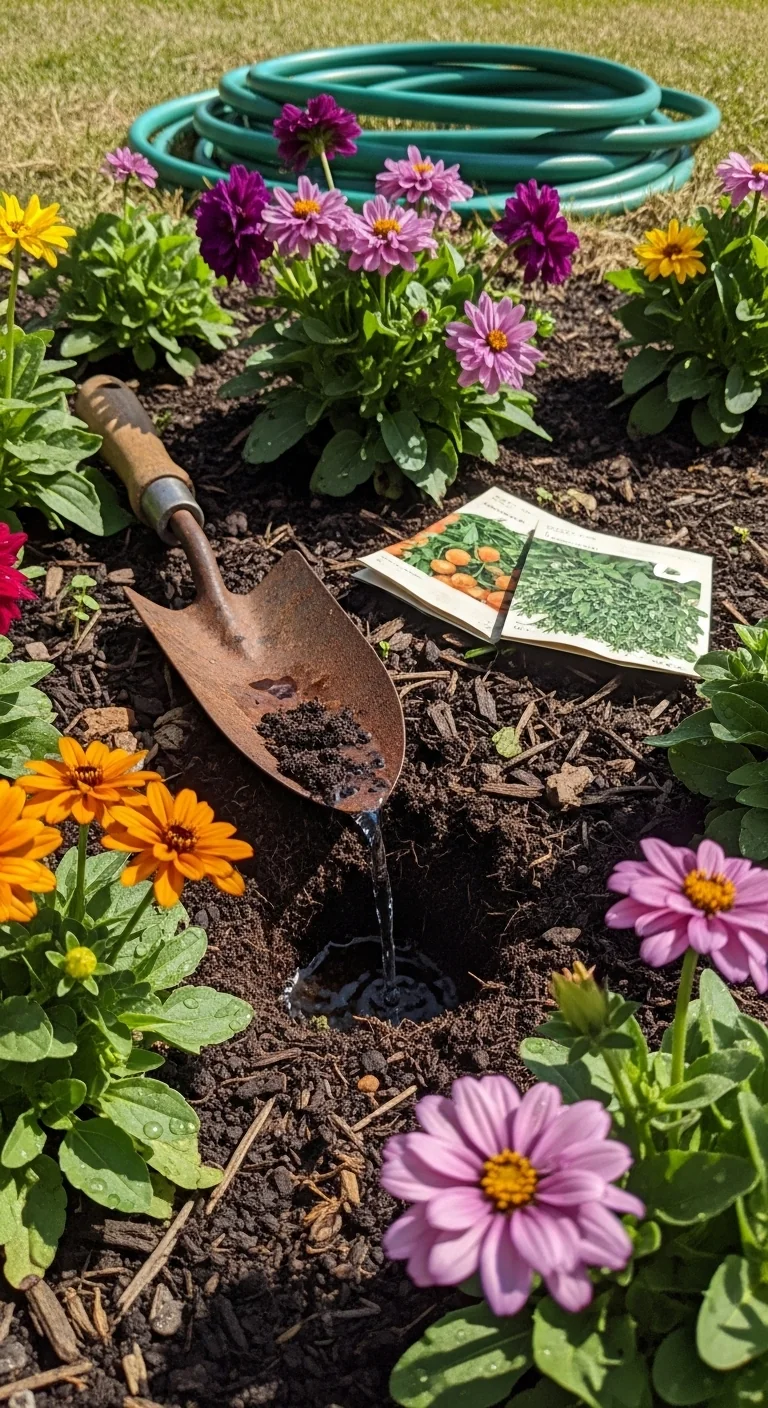
Zinnias deliver continuous color when their planting blueprint aligns with soil and timing rules. Use them in full sun beds where drainage test confirms water clears in under 4 hours and soil temperature reaches 60F (16C) at 4-inch depth after last frost.
Start seeds indoors 4-6 weeks before outdoor transplant or direct sow when conditions meet the threshold. Space plants 12-18 inches apart to promote air flow and reduce foliar disease risk in humid microclimates. Pinch the main stem at 12 inches tall to trigger branching and extend bloom window into fall.
Common mistake: planting too early in cool soil below 60F leads to slow germination and damping off. Water at soil level to keep foliage dry. For more annual flower options see annual flowers.
Expect blooms 60-70 days from seed with deadheading every 2-3 weeks to remove spent stems just above a leaf node. This blueprint keeps zinnias productive without guesswork in hot, dry full sun sites.
Marigolds
Best for: Branch 1
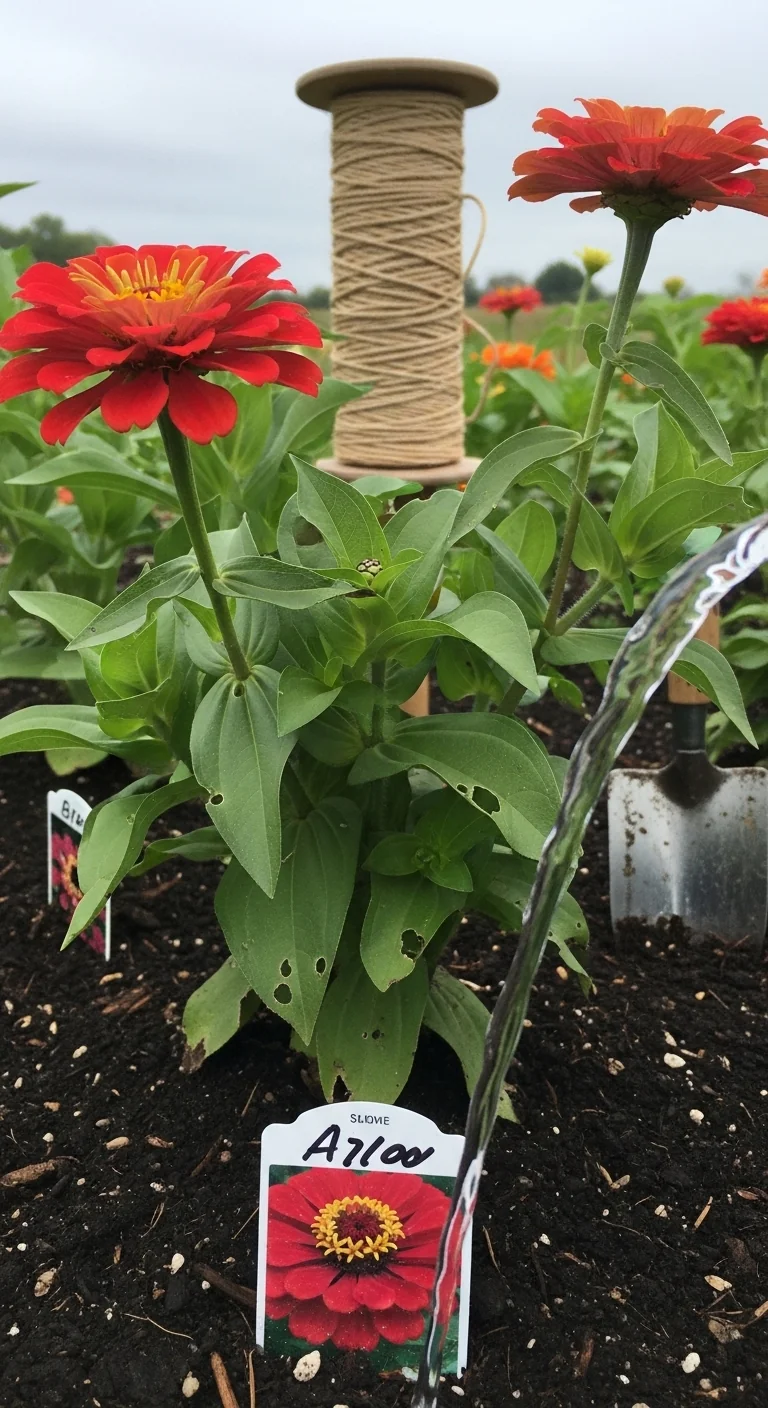
Use marigolds when you need reliable edging that repels soil pests naturally in well-drained full sun beds. Skip them in heavy clay or consistently moist spots where root rot risk rises.
Edge case: French varieties stay compact under 12 inches while African types reach 3 feet; choose based on bed depth to avoid overcrowding.
Cosmos
Best for: Branch 1
Cosmos succeed when soil drains in under 4 hours and summer dry spells last 7 days or more. Threshold rule: direct sow only after soil hits 65F (18C) and space seedlings 18-24 inches apart to allow airy foliage to reduce wind damage.
Adjust spacing wider in exposed sites above 10 mph average wind. Self-seeding occurs reliably if spent heads remain until brown, filling gaps without extra planting. For pollinator flowers see pollinator flowers.
Salvia
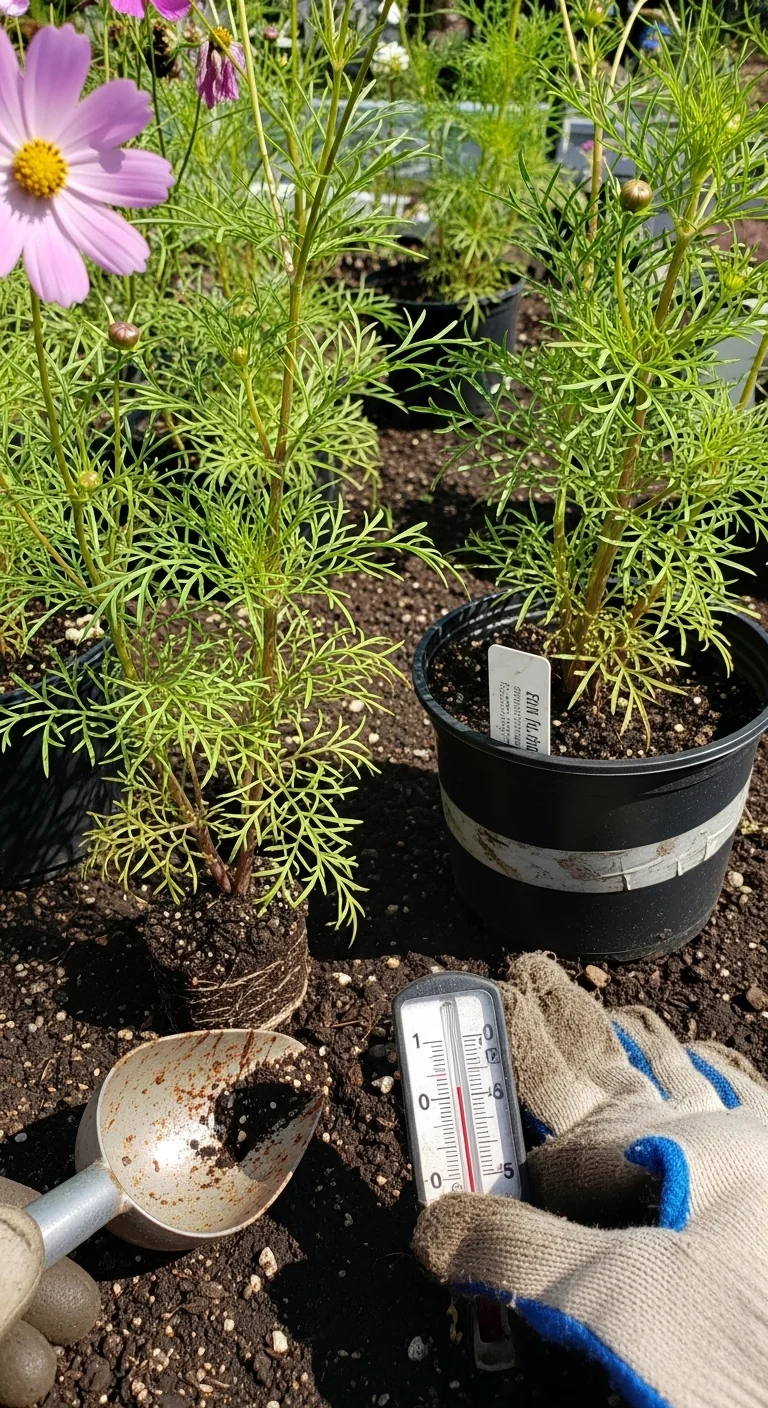
Best for: Branch 2
Salvia fits moderate drainage profiles when a 10-minute workflow keeps it blooming. Measure soil pH first (target 6.0-7.5) and confirm drainage falls between 4-12 hours.
Steps: transplant container starts in spring after last frost, space 18-24 inches apart, water deeply at base once weekly until established. Cut back spent spikes to the first set of healthy leaves every 3-4 weeks to trigger new stems.
Upgrade option: mulch 2 inches deep with gravel to maintain even moisture without sogginess. For perennial flowers see perennial flowers.
Edge case in clay: amend planting hole with 30 percent coarse sand to prevent winter wet damage.
Echinacea
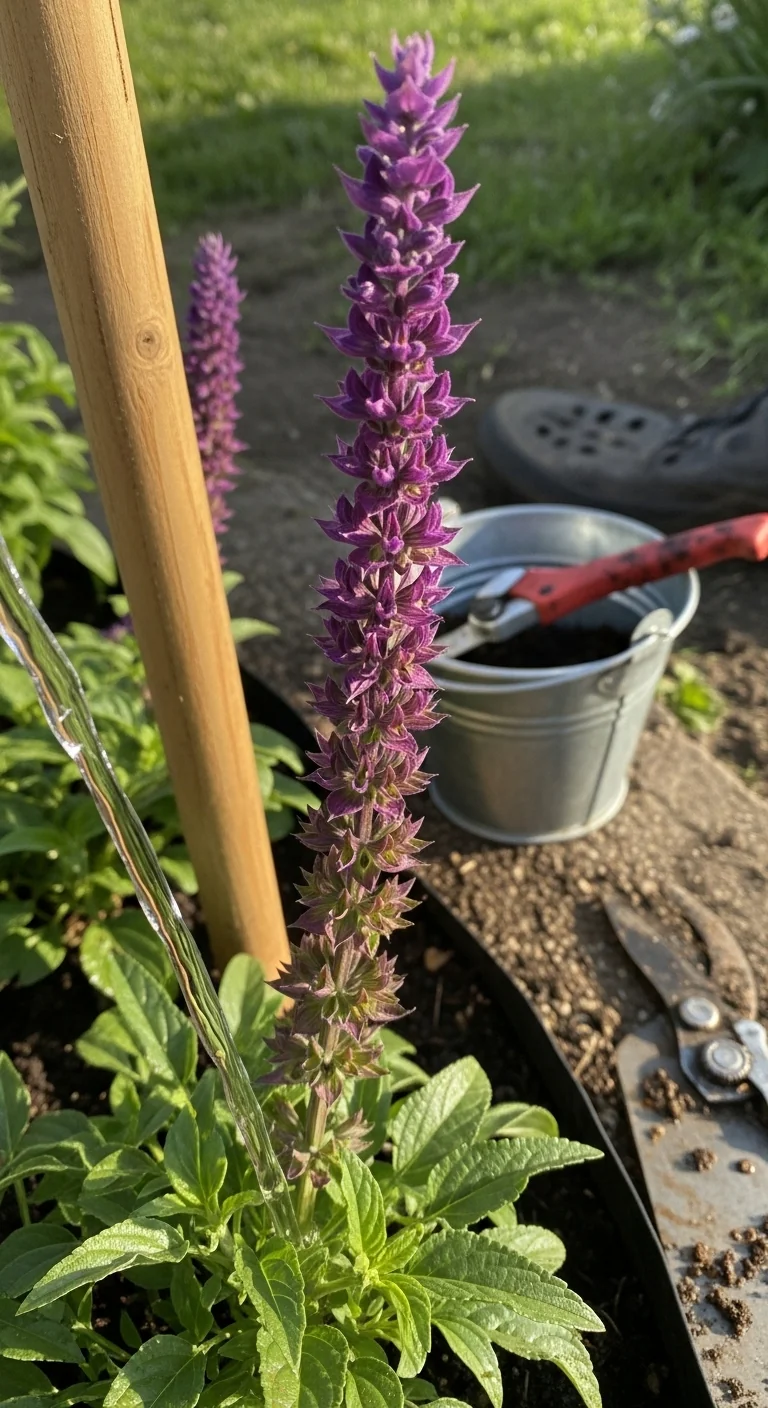
Best for: Branch 2
Use echinacea in clay-tolerant perennial beds where it returns yearly with almost no intervention. Skip in pure sand or containers under 10 gallons where root establishment stays shallow.
Edge case: choose native species over hybrids for better drought recovery after 10-day dry spells.
Black-eyed Susan
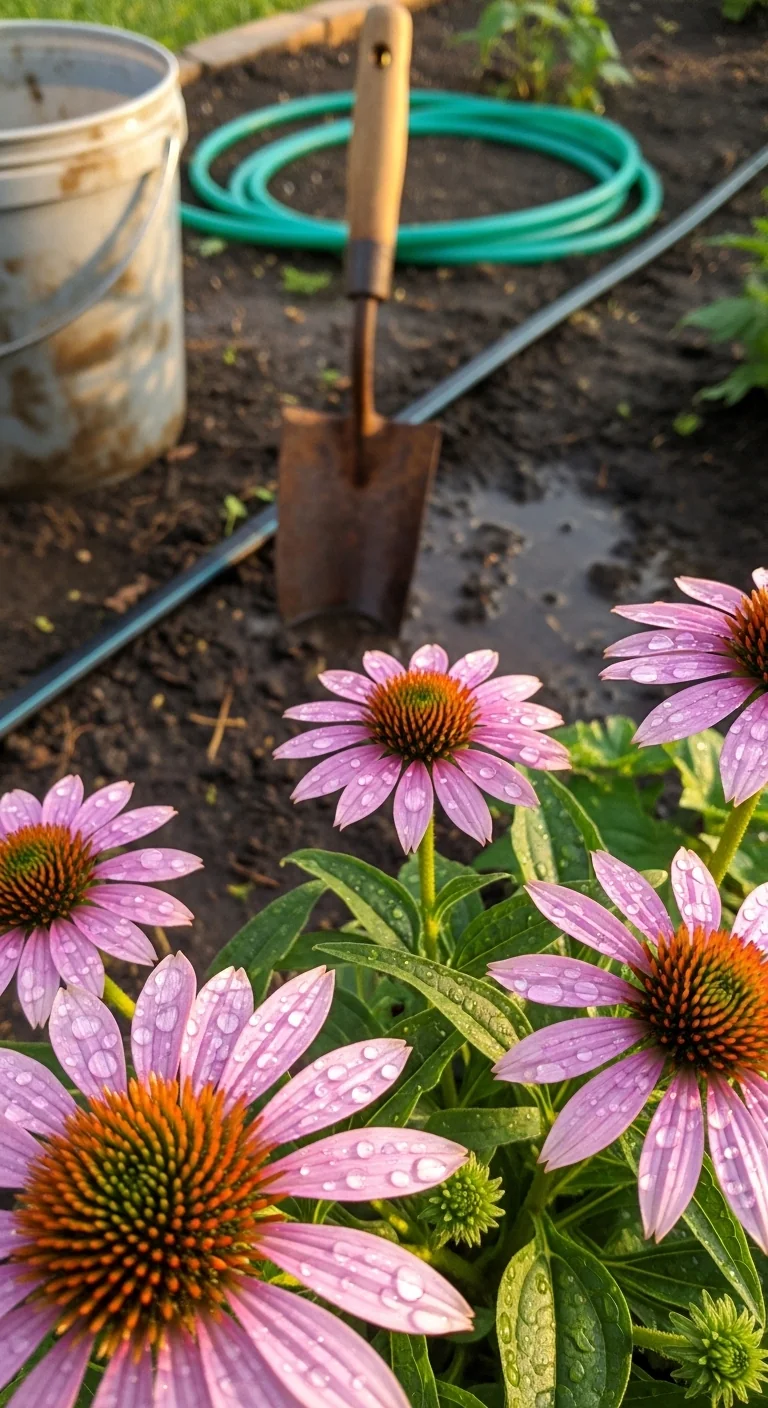
Best for: Branch 2
Black-eyed Susan spreads via rhizomes to cover moderate drainage sites quickly once established. It tolerates periodic moisture without rot when planted in full sun with 12-18 inch spacing.
For low maintenance flowers see low maintenance flowers.
Cut stems back to ground in late fall for clean spring regrowth.
Coreopsis
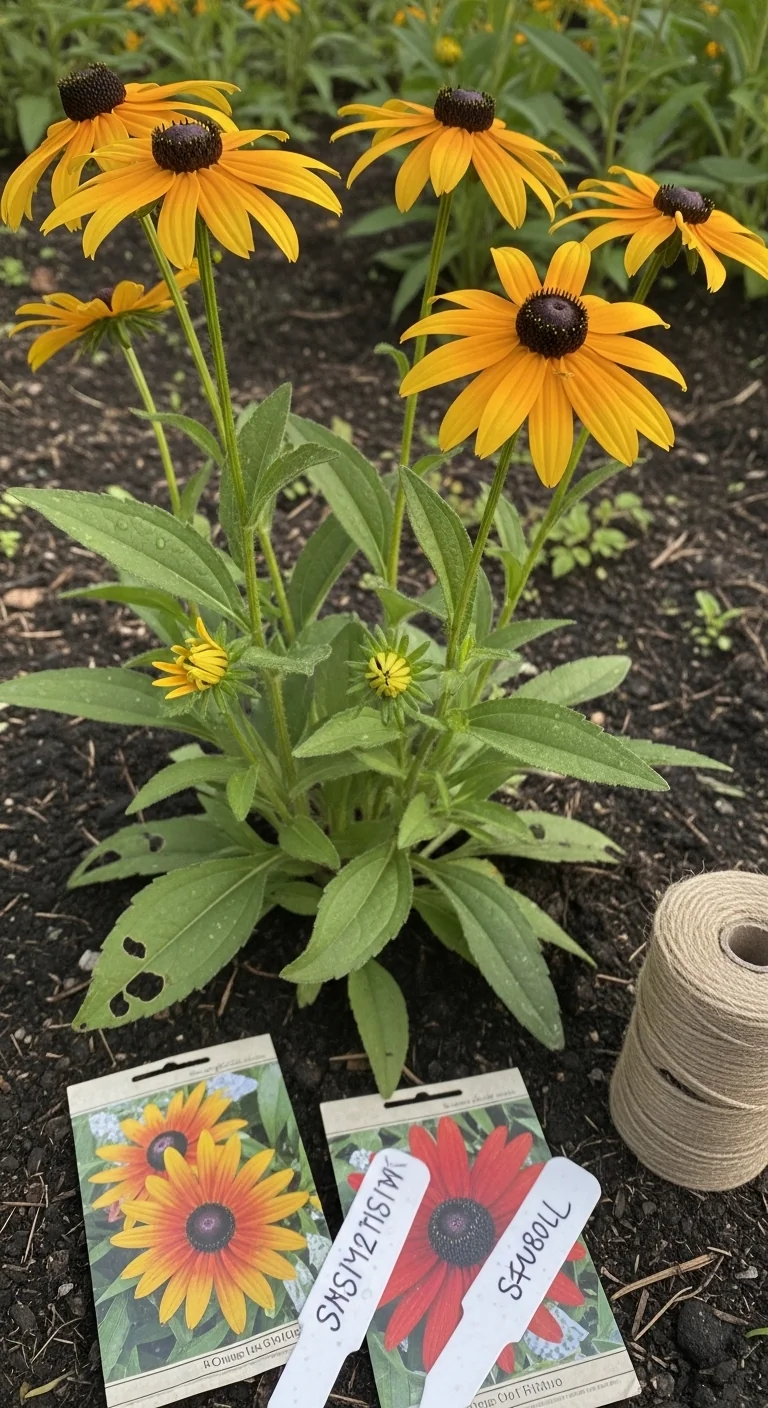
Best for: Branch 3
Coreopsis thrives in containers when soil volume stays under 10 gallons and full sun hits 6+ hours. Threshold rule: plant only after soil temperature exceeds 55F (13C) and water when top 2 inches feel dry (typically every 5-7 days in summer heat).
Deadhead weekly during peak bloom to extend display until first frost. For drought tolerant flowers see drought tolerant flowers.
Sunflowers
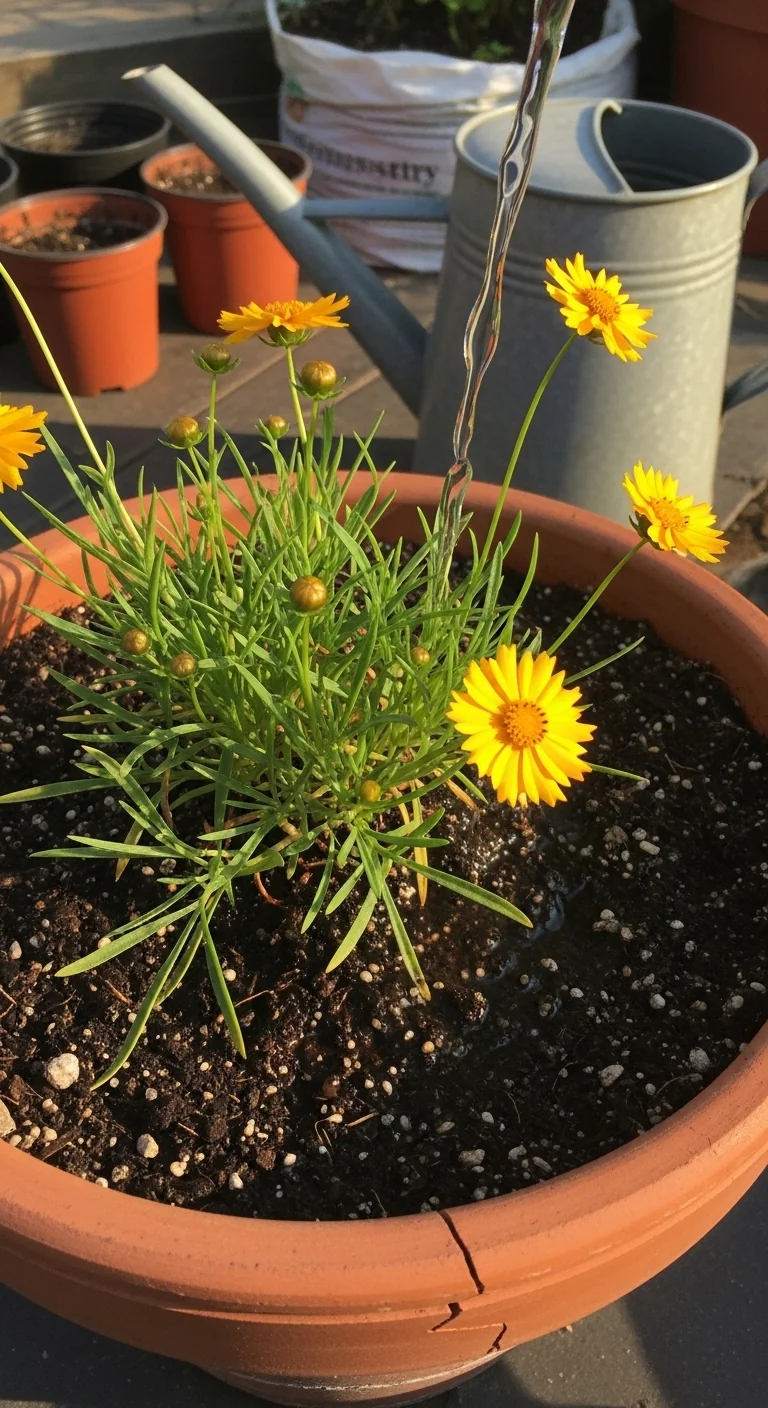
Best for: Branch 3
Use sunflowers in large pots for vertical drama when support is added early. Skip in small containers under 5 gallons where roots lack room for stability.
Edge case: dwarf varieties under 3 feet avoid tipping in windy balconies.
Dahlias
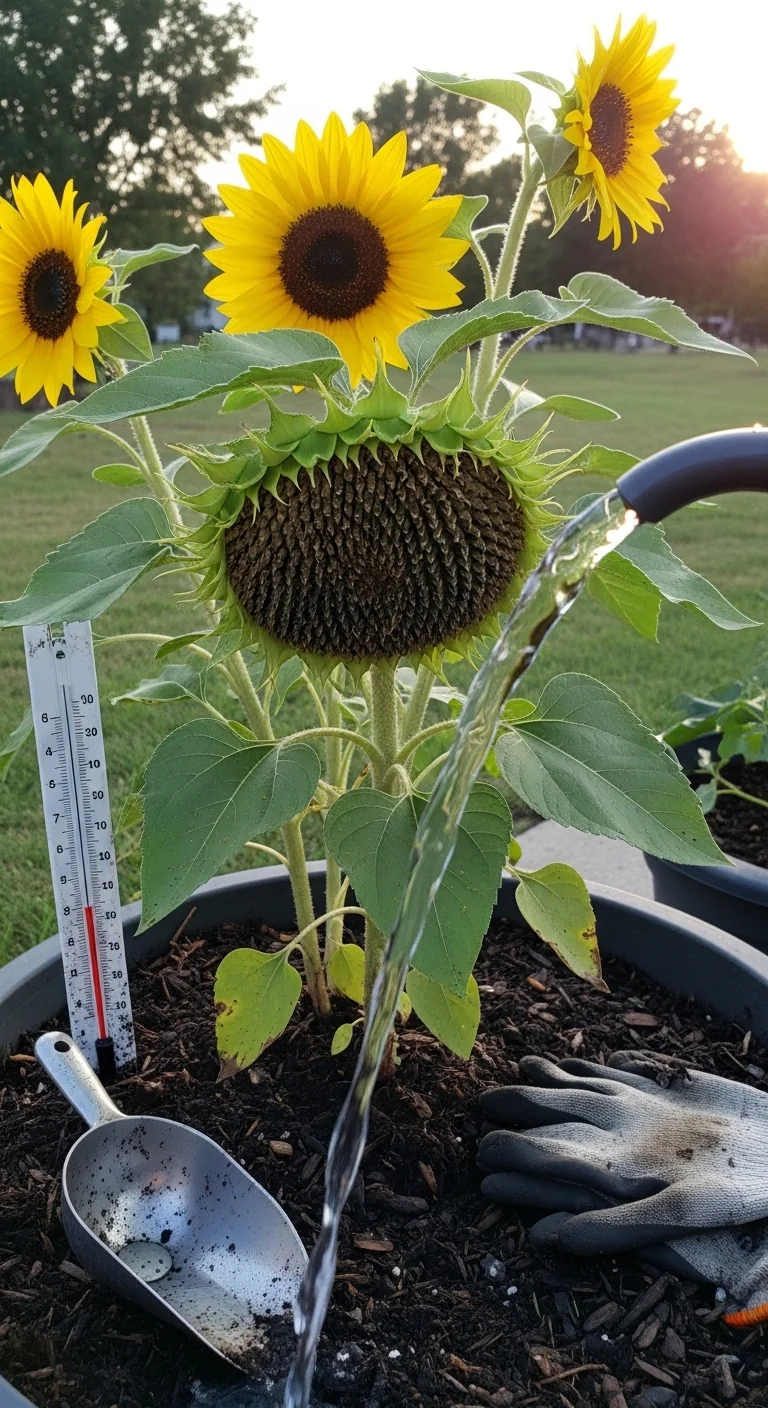
Best for: Branch 3
Dahlias perform in containers when tubers are planted 4-6 inches deep after soil warms to 60F (16C). Pinch main stem at 12 inches to promote bushier form and more blooms.
Stake stems over 3 feet tall with bamboo at planting time to prevent wind damage. Lift tubers in fall where frost occurs and store dry at 40-50F (4-10C).
Starter Stack (What to Choose First)
Branch 1: Well-drained dry sites
Start with Zinnias and Marigolds. Zinnias supply height and repeat color while marigolds handle base-level pest deterrence. Plant together in one 20-square-foot bed for layered effect. Time estimate: 45-90 minutes. Cost range: 10-25 dollars for seeds and starts.
Branch 2: Moderate drainage or clay sites
Start with Salvia and Echinacea. Salvia adds vertical spikes and Echinacea supplies extended nectar and structure. They share similar water needs once established. Time estimate: 60-120 minutes. Cost range: 15-35 dollars for container starts.
Branch 3: Containers or raised beds
Start with Coreopsis and Dahlias. Coreopsis fills lower edges while Dahlias create focal blooms in the same pot group. Use one large container or cluster of three. Time estimate: 30-60 minutes. Cost range: 12-30 dollars for tubers and plants.
When This Won’t Work
These full sun flowers fail when soil drainage test shows standing water after 24 hours or when direct sun drops below 6 hours daily. Root rot develops quickly in such conditions and bloom production halts.
Alternative action: amend heavy soil with 2-3 inches of coarse sand and compost before replanting or relocate the bed entirely. Measure sun hours with a simple app or watch over 3 clear days to confirm exposure.
Choosing the Right Option for Your Situation
When your setup budget stays under 30 dollars per 50 square feet
Select Zinnias, Marigolds or Cosmos from seed packets. These deliver high stem count per dollar with direct sowing after soil warms.
When your available planting time stays under 2 hours
Choose Echinacea or Black-eyed Susan starts. They establish with one session of spacing and initial watering then require only annual cleanup.
When your soil pH measures outside 6.0-7.5
Adjust with lime or sulfur first then plant Salvia or Coreopsis. These tolerate slight pH swings better than most after correction.
Yes/No checklist:
Does your drainage test clear in under 12 hours?
Is soil temperature at planting depth above 55F?
Will you commit to deadheading every 3-4 weeks?
Does site receive 6+ hours direct sun daily?
Expert Q&A
What soil temperature threshold triggers safe planting for most full sun flowers?
Most full sun flowers germinate reliably when soil at 4-inch depth reaches 55-65F (13-18C). Below this range seeds rot or seedlings stall. Use a soil thermometer inserted 4 inches and wait until consistent readings hold for 3 days before sowing or transplanting.
How does deadheading timing affect bloom duration in annual full sun varieties?
Deadhead every 2-3 weeks by cutting spent stems just above a leaf node with 4-6 leaves. This redirects energy from seed production back to new buds and can extend bloom window by 4-6 weeks compared to leaving heads intact.
Which full sun flowers tolerate clay soil without amendment?
Salvia, Echinacea and Black-eyed Susan handle clay when drainage sits between 4-12 hours after rain. Their root systems resist compaction better than taproot-heavy types. Space 18 inches apart to reduce competition in dense soil.
What spacing rules prevent powdery mildew in humid full sun beds?
Space Zinnias and Cosmos 18-24 inches apart and Marigolds 12 inches apart in humid zones. Wider spacing improves air circulation around foliage and cuts mildew incidence when combined with morning watering at soil level.
Can full sun flowers be started from seed directly in the garden?
Yes for Cosmos, Marigolds and Sunflowers once soil exceeds 60F (16C) and frost risk passes. Press seeds lightly into soil surface without burying deep. Keep top inch moist until emergence in 7-14 days then reduce to deep weekly watering.
Conclusion
The decision grid simplifies selection by tying each flower to measurable soil and site factors. The top mistake is skipping the drainage test and planting based on sun hours alone.
Next step: run the hole-drain test today then map your top two flowers to the matching branch and reference the cut flower garden guide for layout ideas.