
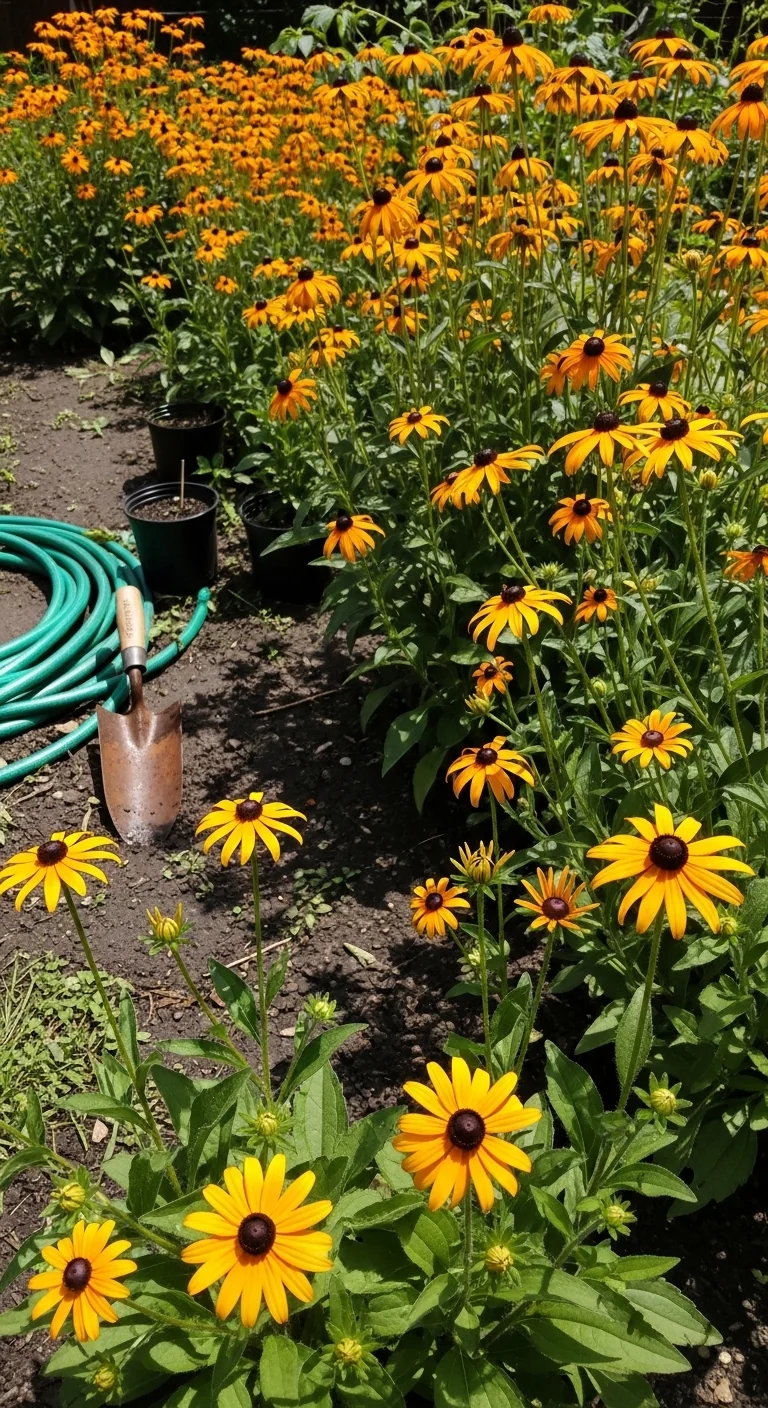
Black-eyed Susan success depends on pairing the correct Rudbeckia species and cultivar to your garden’s measurable limits: height allowance, soil drainage, and bloom duration target. Most gardeners default to the big-box standby and end up with short seasons, disease pressure, or overcrowding.
This listicle covers nine cultivars drawn from the two dominant groups: Rudbeckia hirta (often short-lived or self-seeding) and Rudbeckia fulgida (reliable perennials). It excludes the unrelated black-eyed Susan vine (Thunbergia alata) and focuses only on plants suited to ornamental flower beds.
You will finish with a clear decision on which variety fits your space, delivers the bloom window you need, and requires the least ongoing adjustment.
Align the cultivar to your height limit, sun exposure hours, and soil drainage for consistent summer-to-fall color with minimal intervention.
The Yield Grid Decision Grid
Branch 1: Compact spaces where mature plant height stays 24 inches or less (ideal for containers or narrow borders). Recommended: Items 2, 5, 8 below.
Branch 2: Standard borders or meadows allowing height of 24 to 48 inches and moderate spread (full sun, average drainage). Recommended: Items 1, 4, 7 below.
Branch 3: Gardens prioritizing extended bloom or petal color variation (midsummer through first frost). Recommended: Items 3, 6, 9 below.
For more full-sun flower options see our full-sun flowers guide.
Quick Comparison Table
| Option | Key mechanism | Best for | Decision Grid Branch | Effort Score |
|---|---|---|---|---|
| Rudbeckia fulgida ‘Goldsturm’ | Rhizomatous perennial colony formation | Long-blooming borders with strong stems | Branch 2 | 1 |
| Rudbeckia fulgida ‘Little Goldstar’ | Compact clump-forming perennial | Containers and tight edging | Branch 1 | 1 |
| Rudbeckia hirta ‘Cherokee Sunset’ | Multi-hued petal transition with heavy bloom set | Color-varied displays through fall | Branch 3 | 3 |
| Rudbeckia fulgida var. deamii | Disease-resistant rhizomatous spread | Reliable perennial borders in variable weather | Branch 2 | 1 |
| Rudbeckia hirta ‘Indian Summer’ | Large semi-double flowers on tall stems | Cut-flower production and height impact | Branch 1 | 3 |
| Rudbeckia hirta ‘Cherry Brandy’ | Red-toned ray petals with compact habit | Early color in mixed beds | Branch 3 | 3 |
| Rudbeckia fulgida var. fulgida | Extended bloom window via later start and finer foliage | Prolonged season in borders | Branch 2 | 1 |
| Rudbeckia fulgida ‘Little Suzy’ | Dwarf perennial with small star-shaped flowers | Low edging and rock gardens | Branch 1 | 1 |
| Rudbeckia hirta ‘Prairie Sun’ | Green-centered petals fading from orange to lemon | Unique center color and long stems | Branch 3 | 3 |
1. Rudbeckia fulgida ‘Goldsturm’
Best for: Branch 2
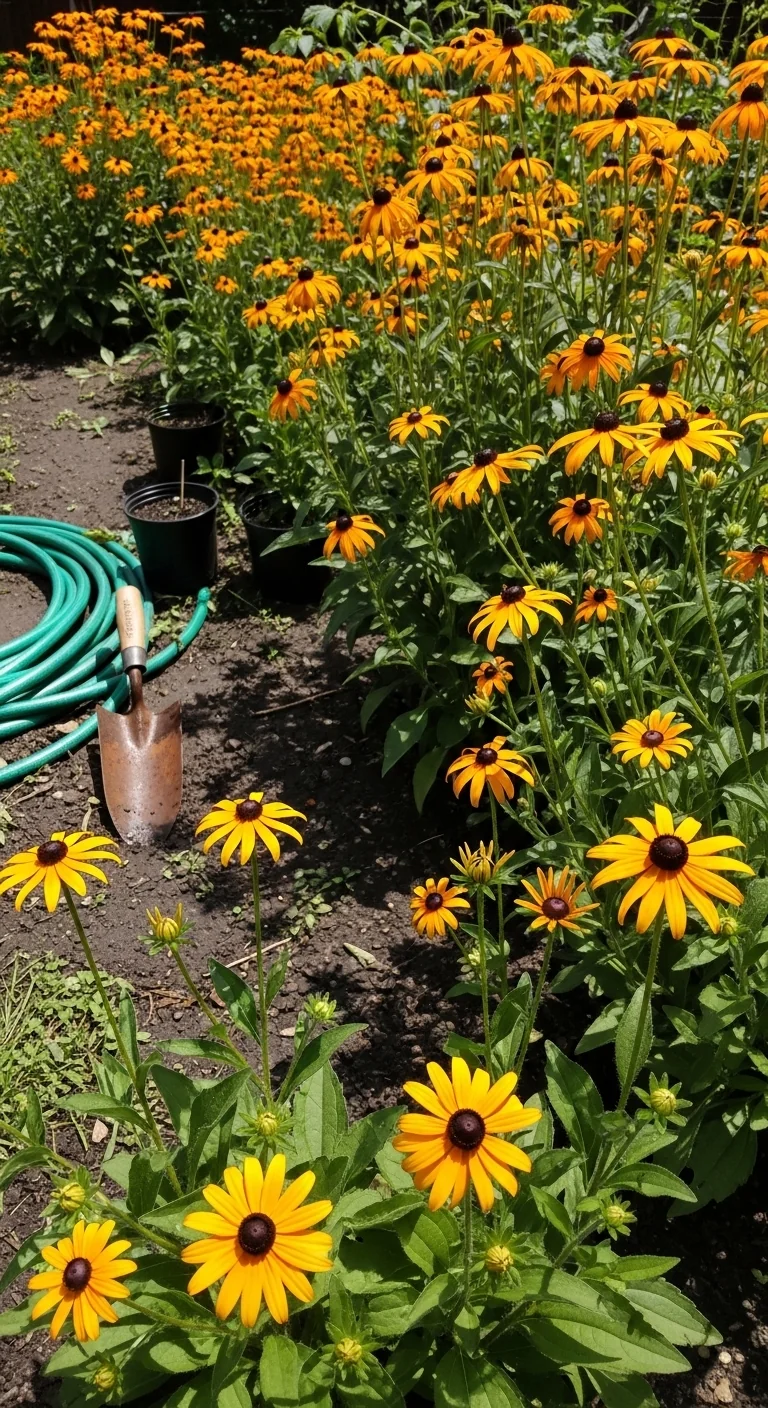
This cultivar forms colonies through underground rhizomes and produces bright orange-yellow flowers on sturdy stems. It received Perennial Plant Association Plant of the Year status in 1999 for its consistent performance across zones 3 to 9. Plant in full sun with average to dry soil that drains within 24 hours after rain. Space plants 18 to 24 inches apart in spring after last frost. Water deeply once per week during the first growing season only. Common mistake: placing it in heavy clay that stays saturated; rhizomes rot quickly without improved drainage. Pair with taller perennials behind it for layered summer color that lasts from July until October.
See our perennial flowers guide for companion planting ideas.
2. Rudbeckia fulgida ‘Little Goldstar’
Best for: Branch 1
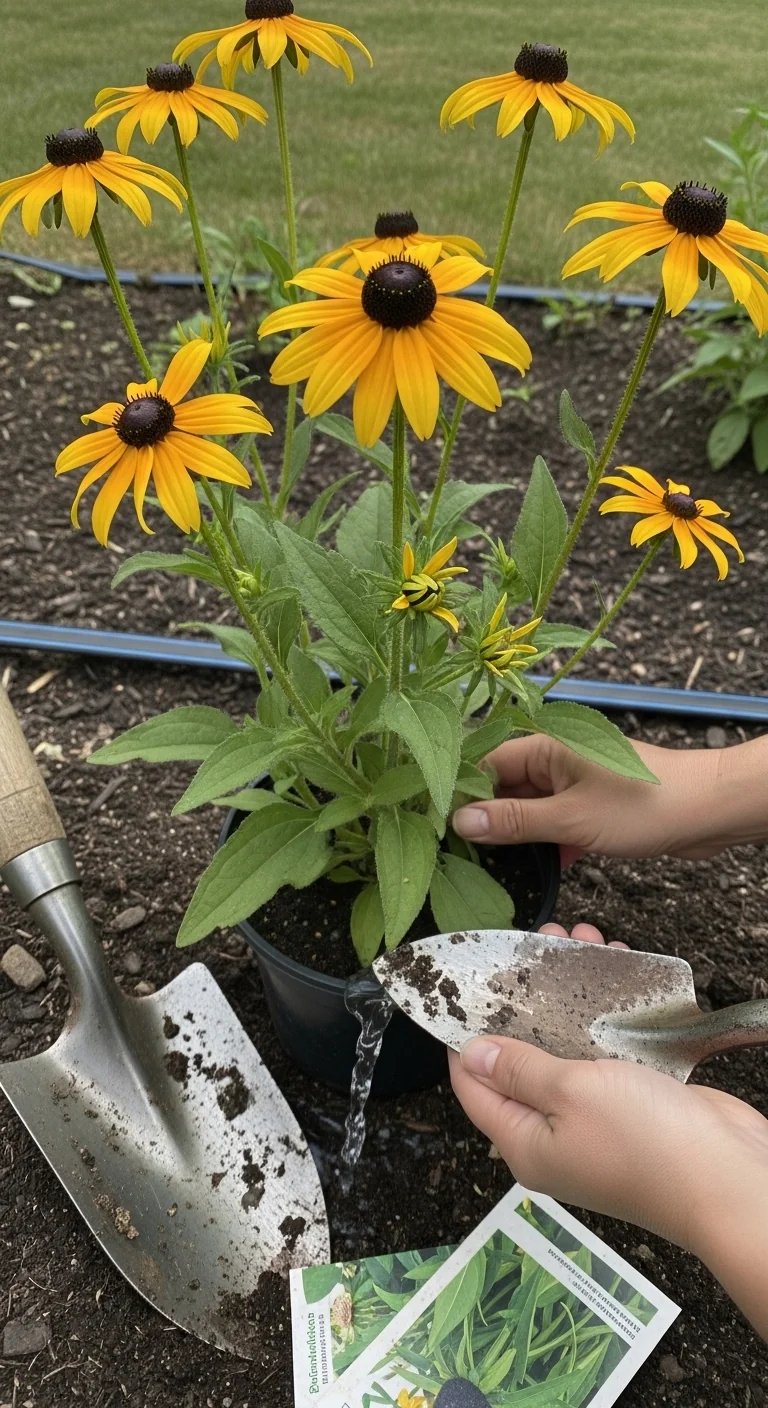
Use this dwarf selection where space is tight or in containers: it stays 14 to 16 inches tall and wide with star-shaped flowers from spring through fall. Skip it in large open meadows where its compact size gets lost. Edge case: it performs well even in poor soil once established but still needs the initial deep watering cycle in the first season.
3. Rudbeckia hirta ‘Cherokee Sunset’
Best for: Branch 3
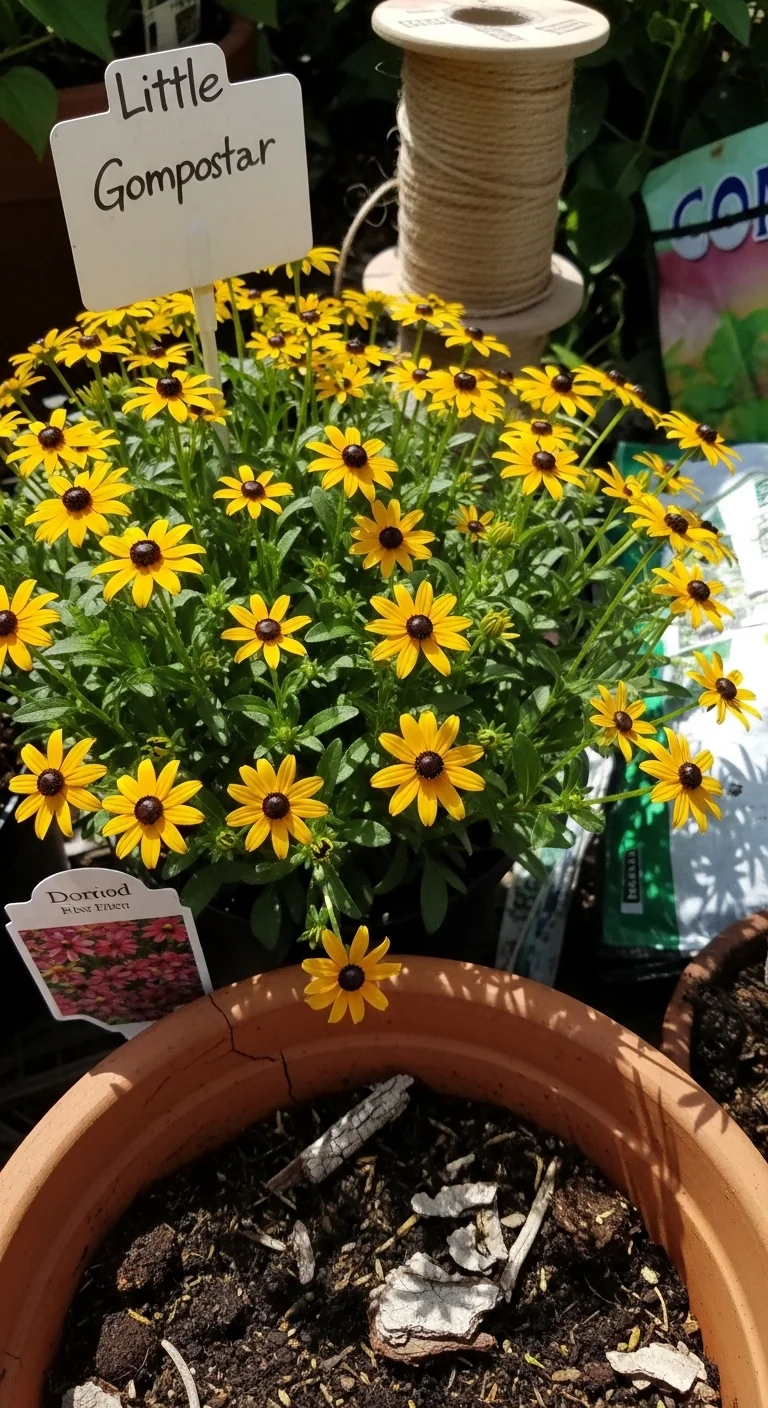
Petals shift from mahogany at the base through orange to yellow tips on 24-inch plants. Threshold rule: if you need color from midsummer to first frost without deadheading every week, this cultivar qualifies because its profuse bloom set extends naturally. Adjust spacing to 12 to 18 inches if self-seeding is desired. It earned All-America Selections recognition in 2002 for garden performance.
Learn more in our drought-tolerant flowers guide.
4. Rudbeckia fulgida var. deamii
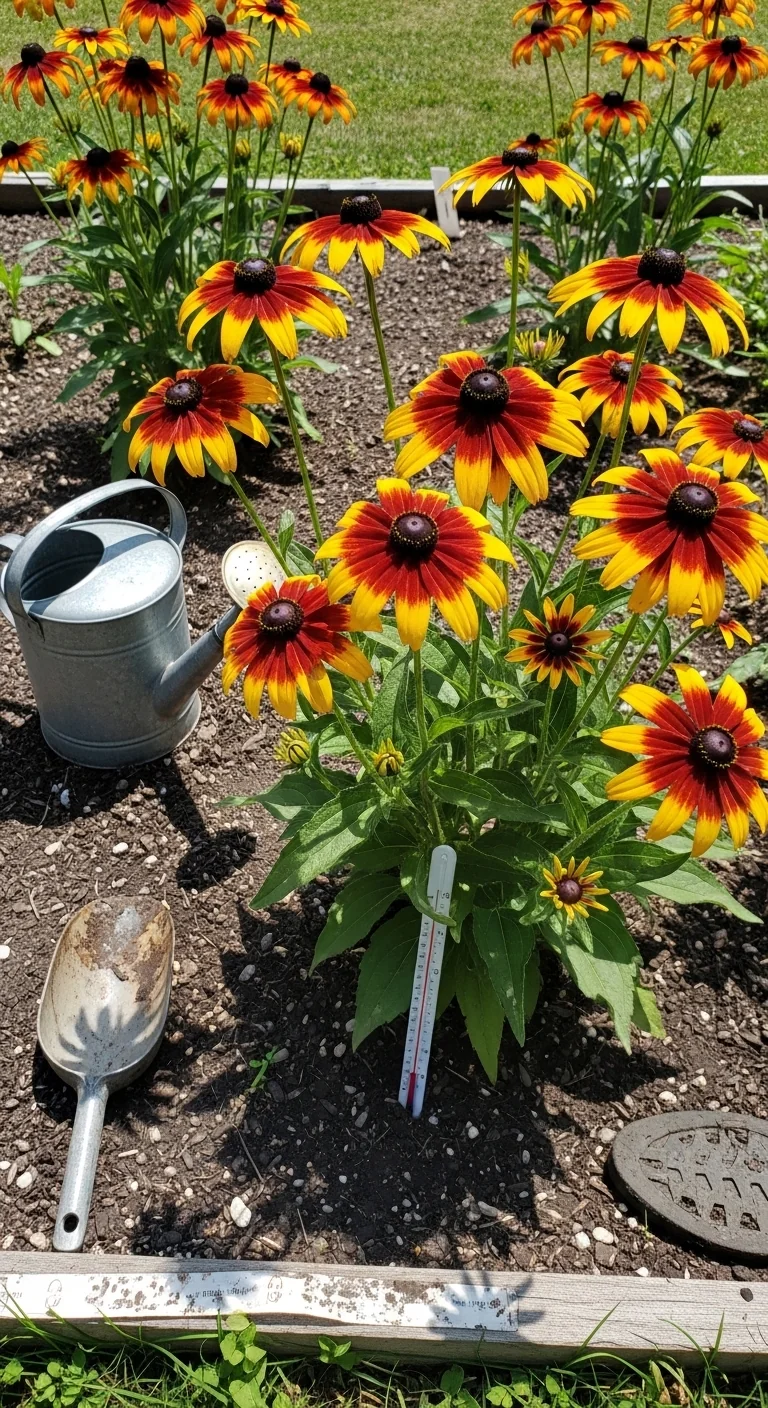
Best for: Branch 2
10-minute workflow: (1) choose a site with at least six hours of direct sun; (2) amend heavy soil with compost to improve drainage; (3) plant in early spring at the same depth as the nursery pot; (4) water thoroughly and apply 2 to 3 inches of organic mulch. Upgrade option: divide clumps every three to four years in early spring to maintain vigor and prevent center die-out. This variety offers stronger disease resistance than older fulgida selections and reaches slightly taller than the standard Goldsturm while staying within border-friendly proportions.
See our pollinator flowers guide for ecosystem benefits.
5. Rudbeckia hirta ‘Indian Summer’
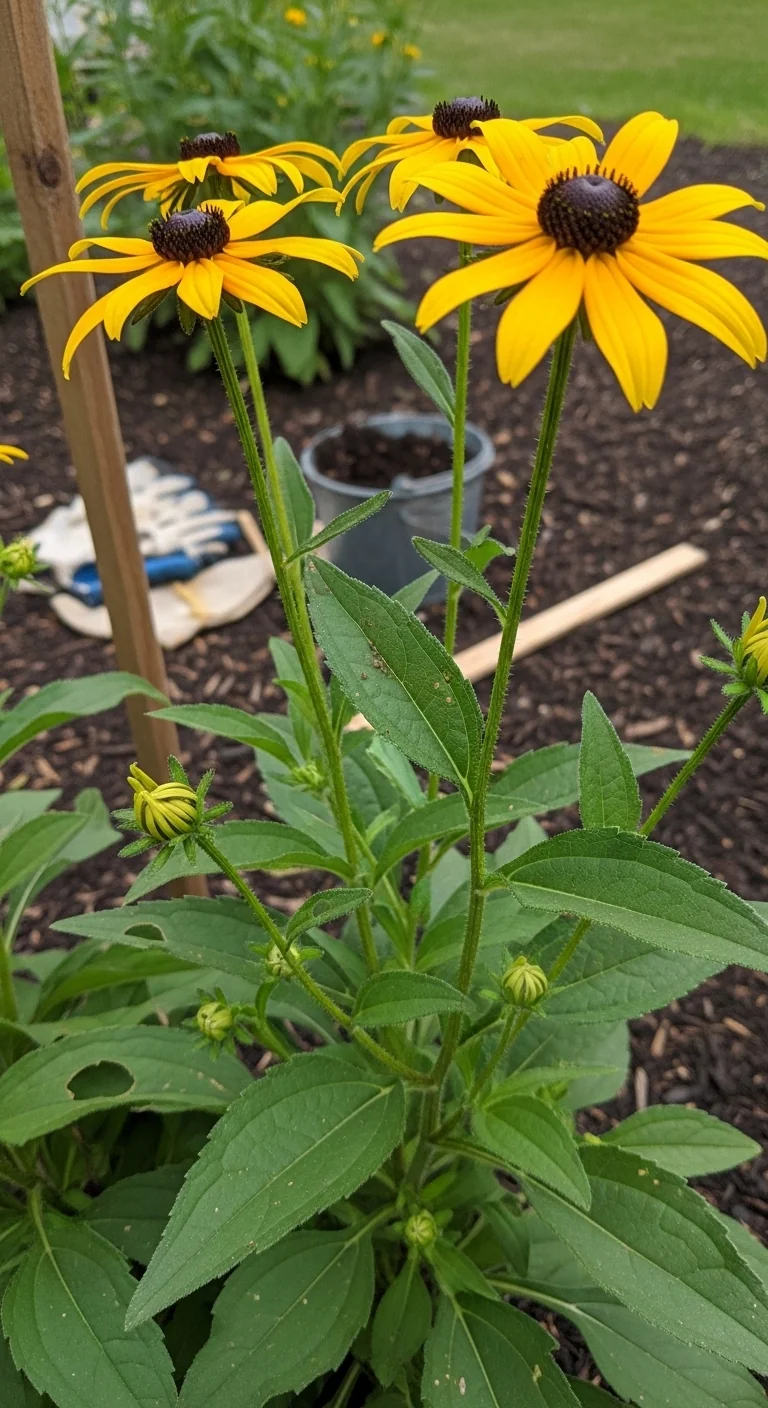
Best for: Branch 1
Use when you want oversized semi-double golden blooms up to 9 inches across on taller stems within a compact footprint. Skip if your garden experiences repeated wet winters; the short-lived nature leads to gaps the next season. Edge case: it still performs in zones with mild winters when sown directly in spring.
6. Rudbeckia hirta ‘Cherry Brandy’
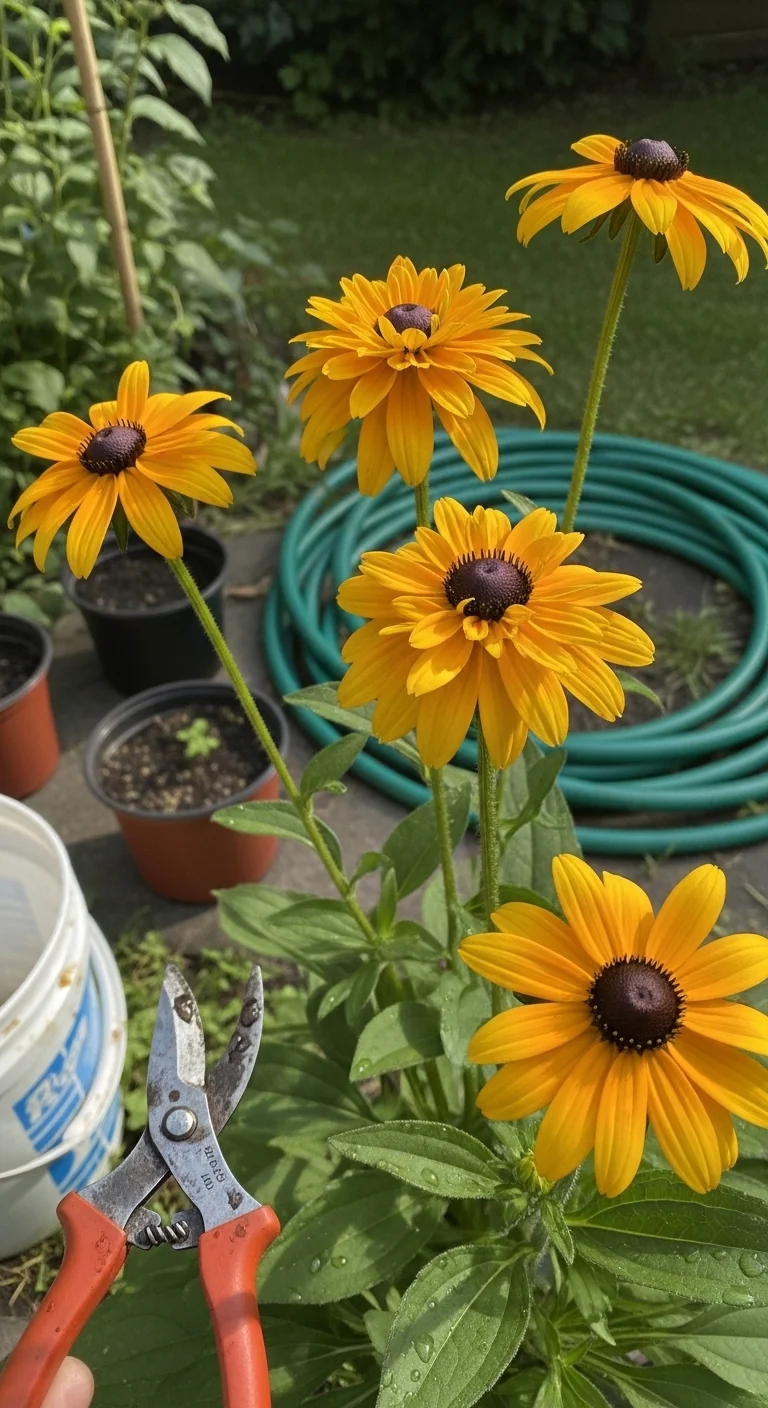
Best for: Branch 3
Red rays fade from crimson near the center to cherry red at the tips on rounded 24-inch plants. The compact habit suits front-of-border placement. It delivers early midsummer color in mixed beds and works as a cut flower because stems remain sturdy even after harvest. Plant in groups of three for immediate visual impact.
Explore our cut-flower garden guide for harvest tips.
7. Rudbeckia fulgida var. fulgida
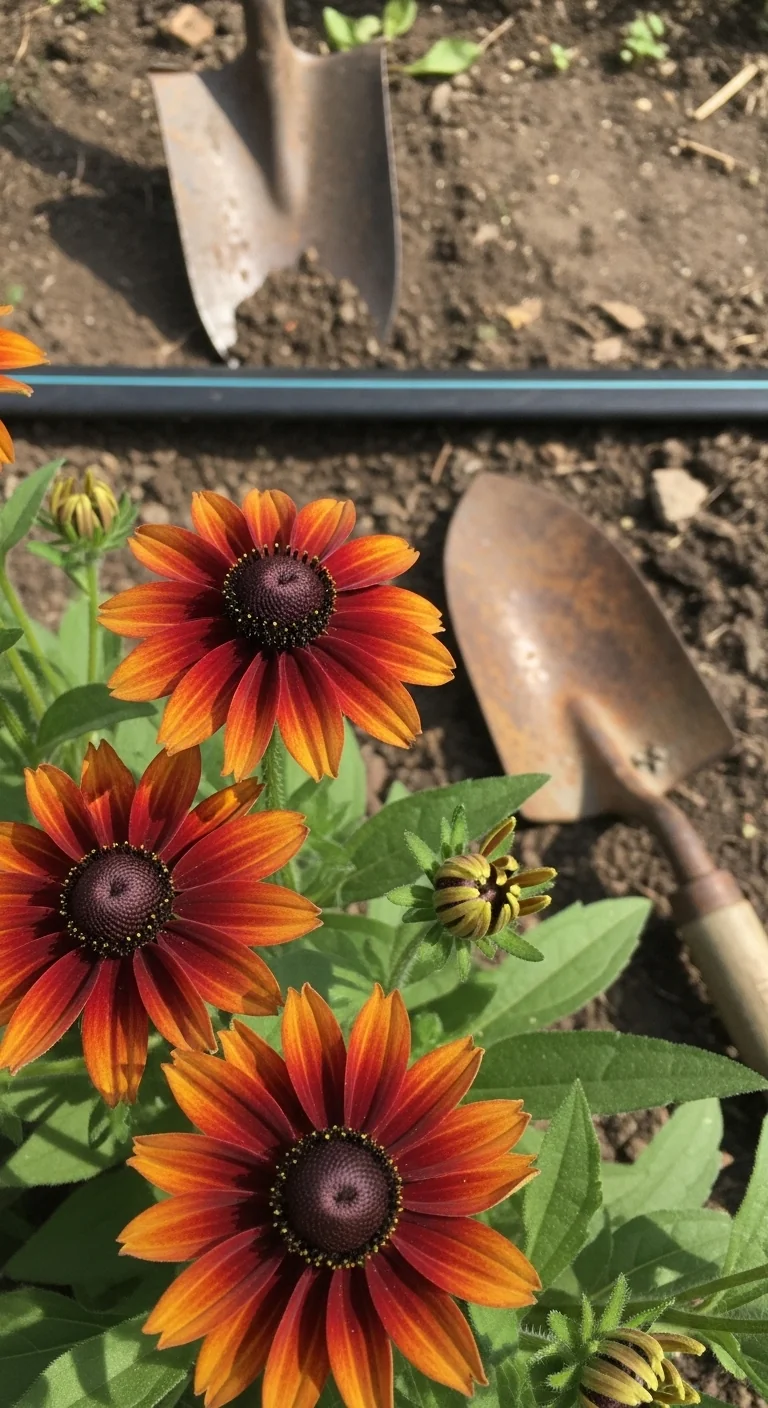
Best for: Branch 2
This variety starts blooming slightly later than many fulgida types yet continues longer into autumn thanks to its finer foliage and extended flower production. It forms neat clumps without aggressive spreading and shows strong overall vigor in average garden soil. Plant 18 to 24 inches apart in full sun. It tolerates occasional dry spells once roots establish. Combine with earlier bloomers for season-long coverage without extra maintenance.
Read our deer-resistant flowers guide for pairing strategies.
8. Rudbeckia fulgida ‘Little Suzy’
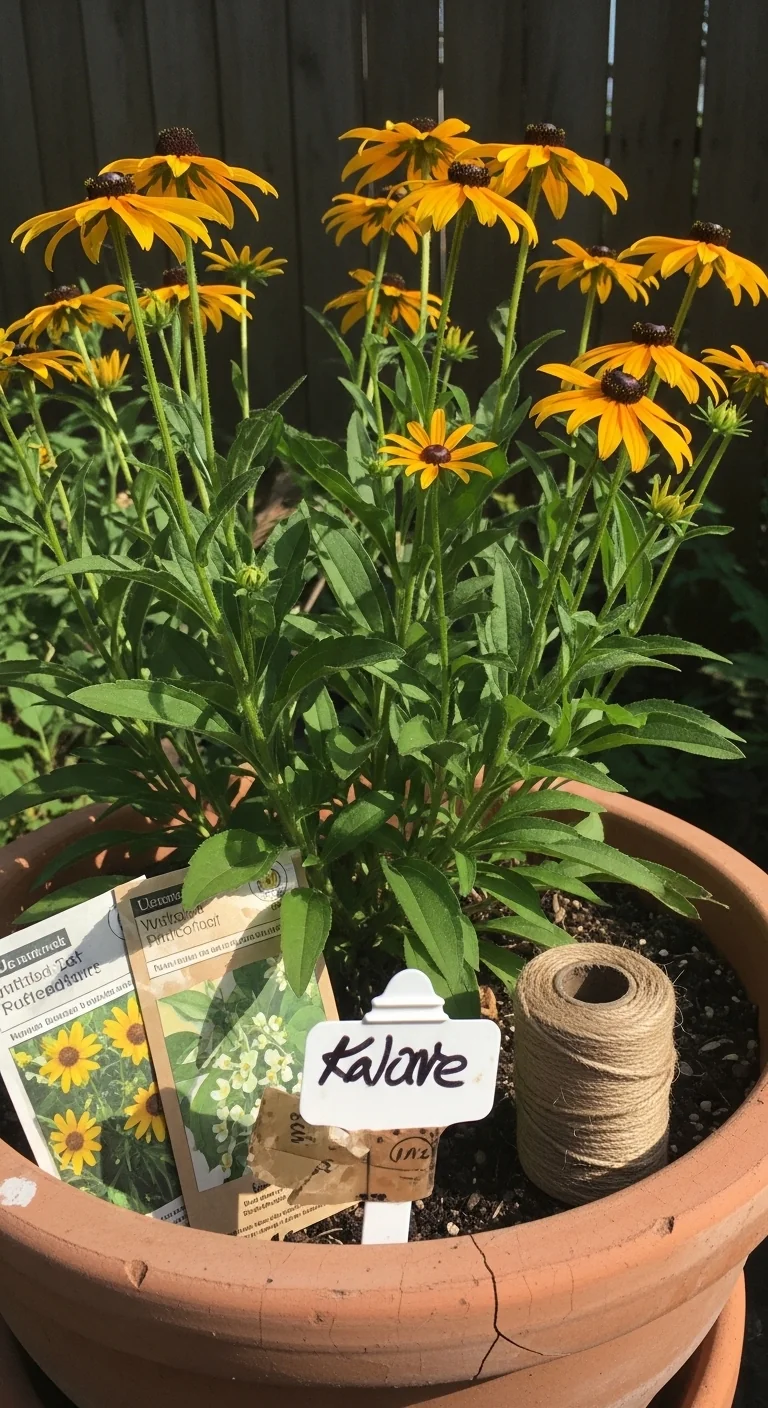
Best for: Branch 1
Use this 24-inch-tall selection for low edging or rock gardens where small yellow blossoms with brown-purple centers create tidy ribbons of color from midsummer until first frost. Skip it only if your site receives fewer than six hours of sun; bloom density drops sharply. Edge case: it remains compact even in richer soil that might push other cultivars taller.
9. Rudbeckia hirta ‘Prairie Sun’
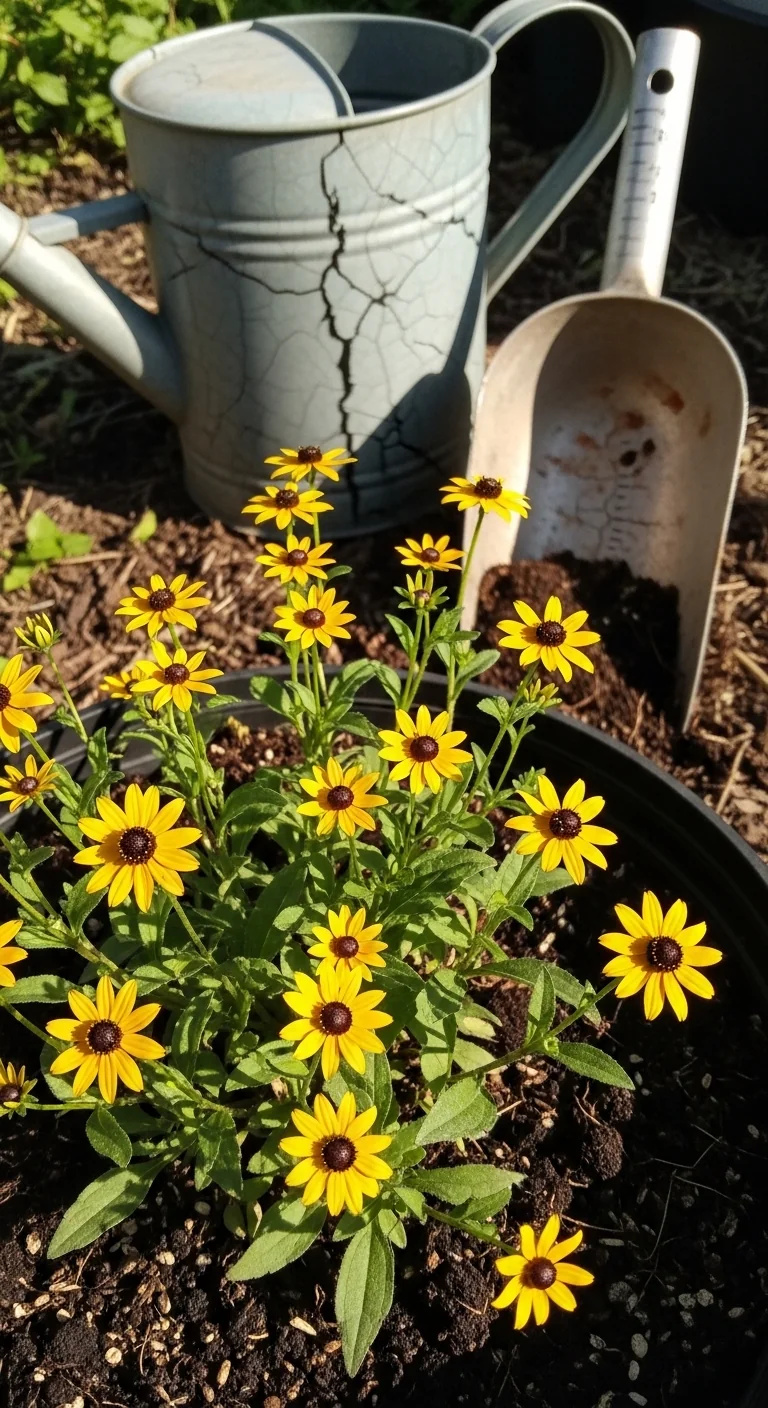
Best for: Branch 3
Green centers contrast with petals that open orange near the cone and fade to lemon yellow at the tips on 36-inch stems. Threshold rule: if you seek a distinctive center color that stands out in photographs or arrangements, this cultivar meets the mark when planted in groups. Space 12 to 18 inches apart and expect reliable performance through fall in full-sun beds with average drainage. It earned All-America Selections recognition in 2003.
Starter Stack (What to Choose First)
Branch 1 Compact spaces
Start with ‘Little Goldstar’ and ‘Little Suzy’. Both stay under 24 inches and form tight clumps that layer well in containers or narrow beds. Plant two of each in a 3-foot square area for instant coverage. Time estimate: 20 to 40 minutes total planting. Cost range: 8 to 15 dollars per plant.
Branch 2 Standard borders
Begin with ‘Goldsturm’ and Rudbeckia fulgida var. deamii. Their rhizomatous habit fills borders steadily without becoming invasive in one season. Space 18 to 24 inches apart for natural colony development. Time estimate: 30 to 60 minutes for a 10-foot border section. Cost range: 10 to 18 dollars per plant.
Branch 3 Extended season or color variation
Choose ‘Cherokee Sunset’ and ‘Prairie Sun’. Their petal transitions and unique centers extend visual interest through fall when combined. Sow or transplant in groups of three for balanced color shifts. Time estimate: 15 to 35 minutes per small cluster. Cost range: 7 to 14 dollars per plant.
When This Won’t Work
Black-eyed Susan cultivars fail when the site receives fewer than six hours of direct sun daily; bloom count drops and stems stretch weakly. They also struggle in soil that remains saturated longer than 48 hours after rain, leading to root issues in both hirta and fulgida types.
In either case shift to plants documented for low-light or wet conditions. Improve drainage first by raising beds 6 to 8 inches if full sun is available but water lingers.
See our shade flowers guide for suitable alternatives.
Choosing the Right Option for Your Situation
Budget threshold
Under 50 dollars total: select seed-grown hirta cultivars such as ‘Cherokee Sunset’ or ‘Cherry Brandy’ and direct-sow in spring. Over 100 dollars: invest in established fulgida perennials like ‘Little Goldstar’ or var. deamii for faster first-year coverage.
Time threshold
Under 30 minutes planting time: choose container-grown fulgida options and drop them into prepared holes. Over one hour available: start hirta from seed indoors six weeks before last frost for larger displays by midsummer.
Soil drainage constraint
If water pools longer than 24 hours test drainage by digging a 12-inch hole and filling it; refills in under four hours qualify most cultivars. Otherwise amend with coarse sand or raised beds before planting.
Yes/No checklist:
– Does your site get 6+ hours sun? Yes → proceed.
– Does drainage test pass? Yes → proceed.
– Height matches chosen branch? Yes → proceed.
– All no → revisit When This Won’t Work section.
Expert Q&A
How do hirta and fulgida types differ in pollinator value?
Rudbeckia fulgida cultivars produce more numerous smaller flowers that provide steady nectar and pollen from midsummer onward, supporting bees and butterflies longer. Rudbeckia hirta types offer larger individual blooms that attract the same visitors but for a shorter overall window because plants often behave as biennials or short-lived perennials.
When and how should you divide established black-eyed Susan clumps?
Divide fulgida types every three to four years in early spring when new growth emerges but before flower buds form. Lift the entire clump, separate healthy outer sections with roots attached, and replant at the original depth. This maintains vigor and prevents the center from dying out.
Does black-eyed Susan tolerate clay soil?
Most cultivars tolerate clay if drainage is amended with 2 to 3 inches of compost worked into the top 12 inches before planting. Without amendment, fulgida rhizomes and hirta roots stay too wet in winter and spring, increasing rot risk.
How early can you start black-eyed Susan from seed indoors?
Sow hirta seeds indoors six to eight weeks before the last expected frost date at 70 degrees Fahrenheit soil temperature. Fulgida types are better purchased as plants or divided from existing clumps rather than started from seed for reliable first-year bloom.
What causes powdery mildew on black-eyed Susan and how do you reduce it?
Overcrowding combined with poor air circulation in humid conditions triggers powdery mildew. Space plants according to mature width listed on the tag and avoid overhead watering in late afternoon or evening. Removing affected lower leaves at first sign limits spread without chemicals.
Conclusion
Next step: measure your available height and drainage today, then pick the two cultivars that align with your branch. Plant this season and enjoy reliable color without repeated trial-and-error purchases.
Explore our native flowers guide for additional ecosystem pairings.