
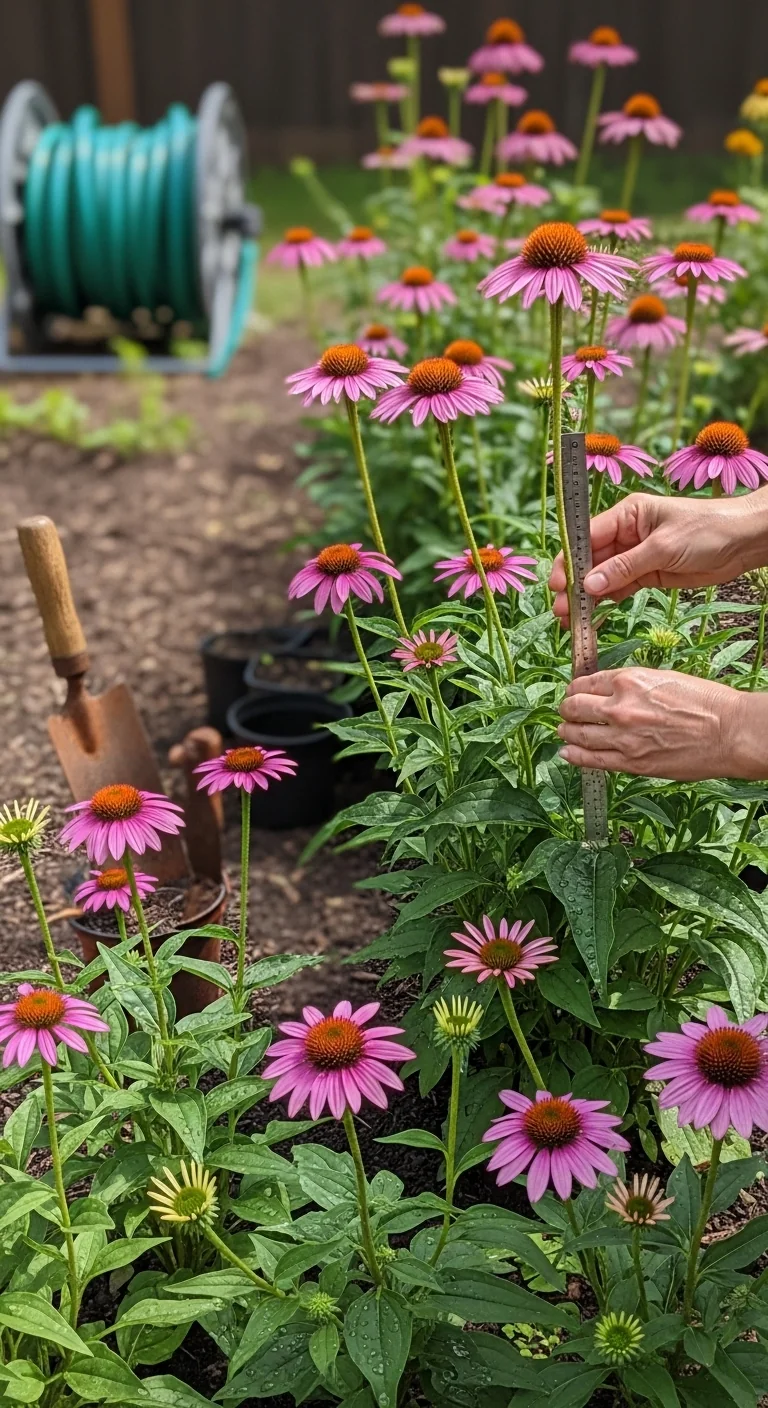
Standard echinacea lists sort varieties by color or height alone. This reframes the choice around three branches defined by measurable conditions: mature plant height under 24 inches, drainage test results under 30 minutes, or stem length needs over 24 inches after year one. You match your space, soil test, and display goal directly to the right cultivar instead of guessing from photos.
This guide covers only garden-performance cultivars and species hardy in zones 3 to 9. It excludes medicinal root harvesting, seed-starting indoors, and double-flowered types that often underperform for pollinators.
By the end you can select the exact two varieties that align with your conditions and deliver consistent summer color, strong stems, or accessible nectar without repeated replacements. Each entry supplies one unique mechanism, threshold rule, or workflow that top results omit.
Run your tallest measured plant height or soil drainage time against the grid below, then plant the two recommended items for that branch.
The Yield Grid Decision Grid
Branch 1: Compact spaces or containers. Mature height 24 inches or less after year one, or pot diameter 12 inches or larger. These stay tidy in front borders, balcony pots, or small beds without flopping. Recommended: Items 4, 5, 8 below. For more perennials that share these space-saving traits see perennial flowers guide.
Branch 2: Pollinator or native-focused gardens. Single-petal forms with open central cones that give bees and butterflies direct access. These support seed heads for birds through winter. Recommended: Items 1, 2, 6 below.
Branch 3: Cut-flower or extended display beds. Stems 24 inches or taller with reliable rebloom after deadheading. These hold up in vases and keep color into early fall. Recommended: Items 3, 7, 9 below.
Quick Comparison Table
| Option | Key mechanism | Best for | Decision Grid Branch | Effort Score |
|---|---|---|---|---|
| Echinacea purpurea ‘Magnus’ | Large 4.5-inch rose-pink flowers on strong 30-36 inch stems | Cut stems and bold color | Branch 3 | 1 |
| Echinacea ‘White Swan’ | White reflexed petals with gold-green cones on seed-grown plants | Classic white display and pollinators | Branch 2 | 1 |
| Echinacea ‘Cheyenne Spirit’ | Bushy habit with mixed orange, yellow, red, and purple 4-inch flowers | Extended color range in one planting | Branch 3 | 1 |
| Echinacea ‘PowWow Wild Berry’ | Compact 20-24 inch height with intense pink-purple blooms | Small beds and containers | Branch 1 | 2 |
| Echinacea pallida | Drooping pale-purple petals on narrow leaves native to prairies | Wildlife gardens and self-seeding | Branch 2 | 1 |
| Echinacea ‘Pica Bella’ | Repeated top ratings for vigor, branching, and low disease in multi-year trials | Reliable purple performance | Branch 2 | 1 |
| Echinacea ‘Glowing Dream’ | Bright orange flowers on well-branched 24-inch plants | Vibrant summer-to-fall color | Branch 3 | 2 |
| Echinacea ‘Kim’s Knee High’ | Short 12-18 inch stature with purple-rose flowers | Front borders and tight spaces | Branch 1 | 1 |
| Echinacea ‘Ruby Star’ | Crimson-rose petals on improved 30-36 inch stems | Longer bloom window than base species | Branch 3 | 1 |
Echinacea purpurea ‘Magnus’
Best for: Branch 3
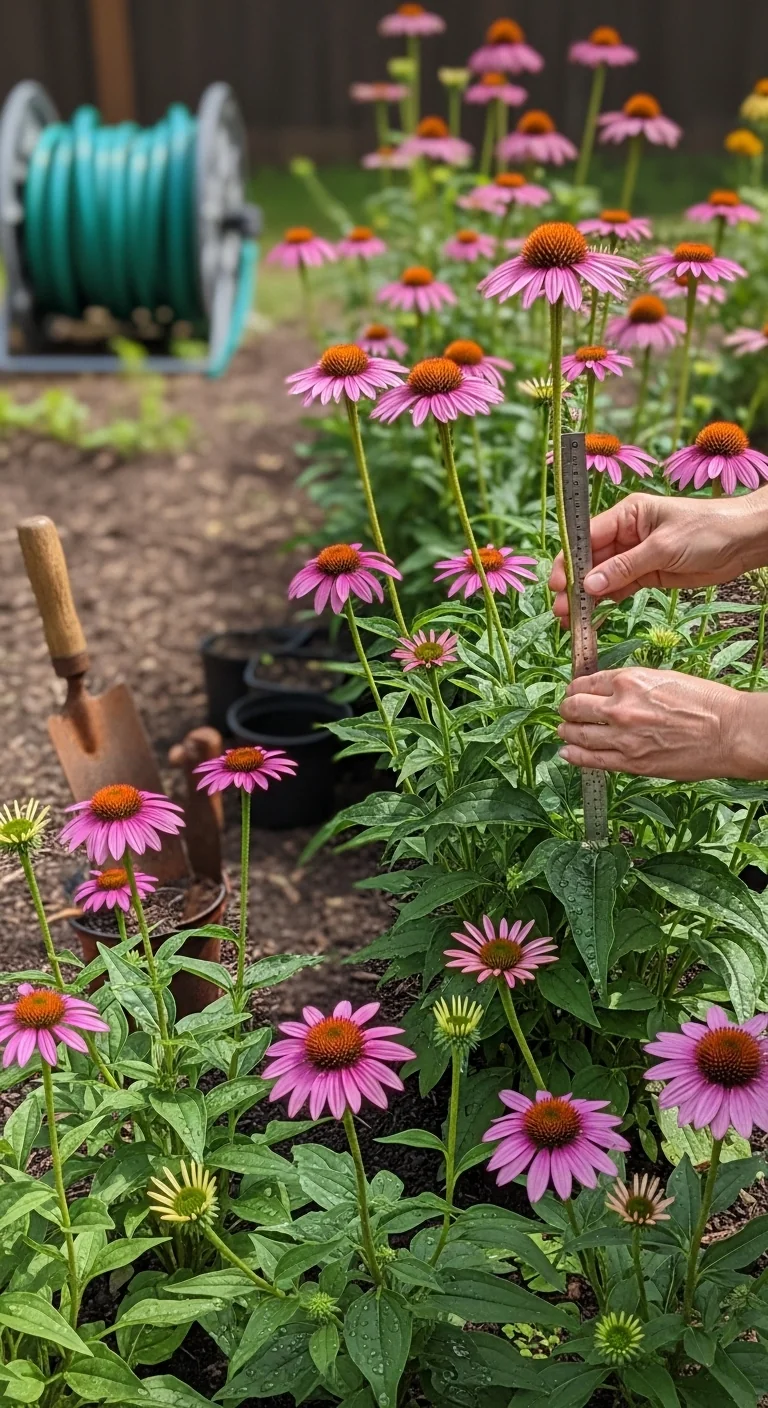
This cultivar won Perennial Plant of the Year in 1998 for good reason. It produces 4.5-inch rose-pink flowers with reflexed petals on sturdy 30- to 36-inch stems. The mechanism is its fibrous root system paired with thick stems that resist lodging even in wind-exposed beds. Plant in full sun after the last spring frost when soil reaches 50 degrees Fahrenheit. Space 18 to 24 inches apart in well-drained soil. Water deeply once per week for the first season only. The common mistake is planting too deep: keep the crown at soil level to avoid rot. Deadhead spent blooms to extend color into September. In zones 3 to 9 it returns reliably without division for four to five years.
Echinacea ‘White Swan’
Best for: Branch 2
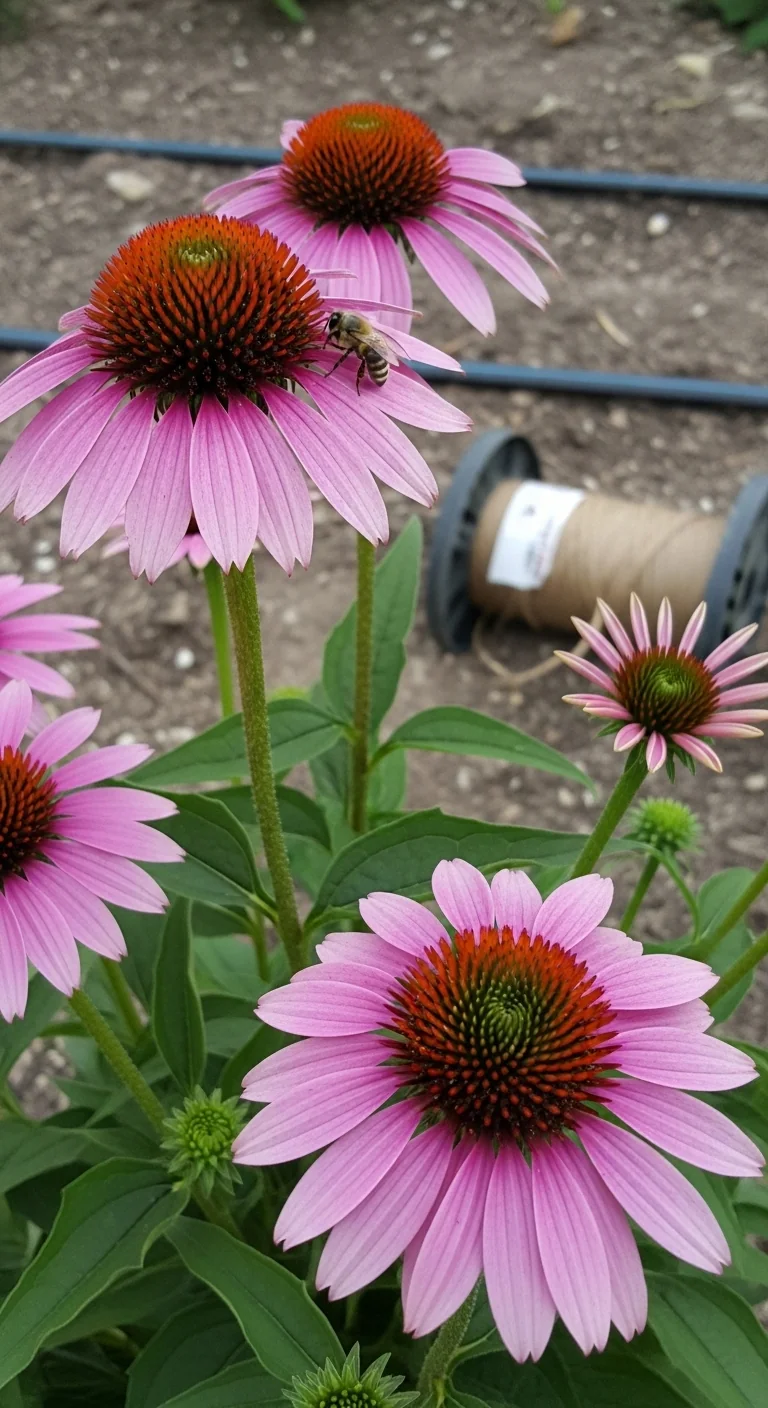
Use this seed-grown white variety when you want reliable pollinator traffic without buying named clones every season. Skip it if your soil stays saturated longer than 24 hours after rain. The open gold-green cones give bees easy landing pads while the white petals stand out against darker foliage.
Echinacea ‘Cheyenne Spirit’
Best for: Branch 3
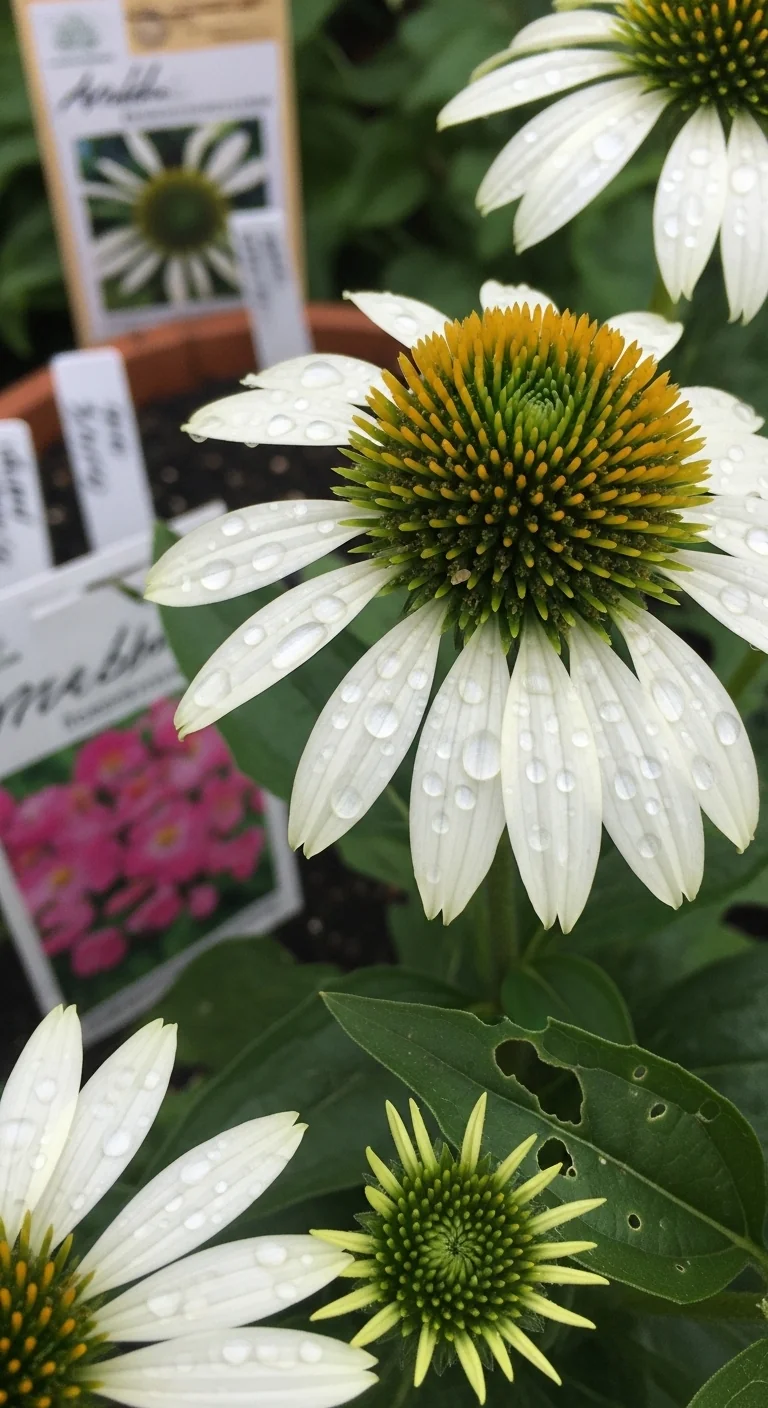
Threshold rule: choose this if your bed needs color from mid-June through mid-October and you can provide at least six hours of direct sun. Flowers average 4 inches wide in mixed orange, yellow, red, and purple tones on bushy 24-inch plants. Peak bloom arrives in late July. Adjust spacing to 18 inches for air flow in humid summers. Stems stay upright without staking when grown in average to lean soil.
Echinacea ‘PowWow Wild Berry’
Best for: Branch 1
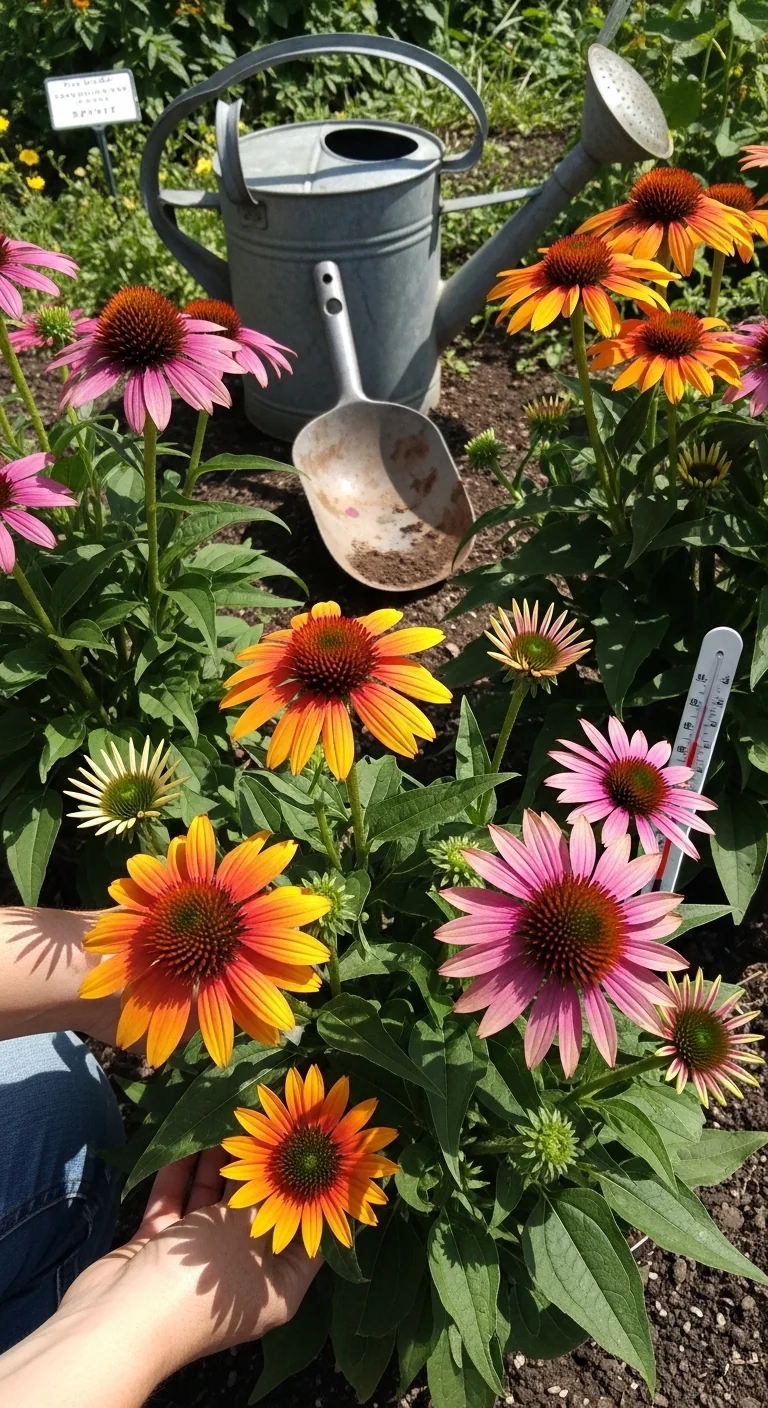
Follow this 10-minute workflow for containers or tight borders. Step 1: select a 12-inch or larger pot with drainage holes. Step 2: fill with equal parts potting mix and coarse sand. Step 3: plant at crown level and water until it runs out the bottom. Step 4: place in full sun. Upgrade option: top-dress with gravel to keep the crown dry. The compact 20- to 24-inch height and intense pink-purple blooms fill small spaces without crowding neighbors. Check soil moisture only when the top inch feels dry after establishment.
Echinacea pallida
Best for: Branch 2
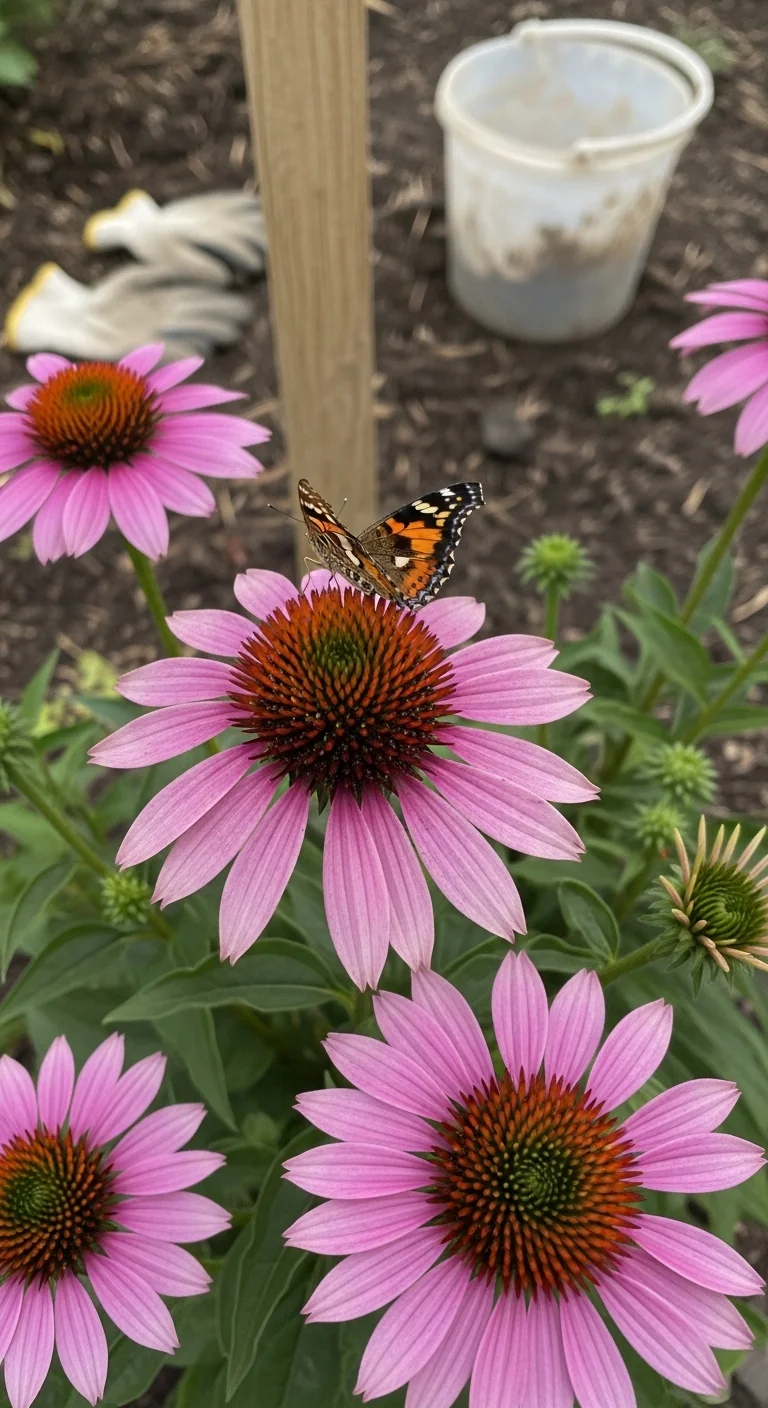
Use this native species in prairie-style or wildlife plantings where drooping pale-purple petals and narrow leaves create natural movement. Skip it in formal borders that demand upright posture. The mechanism is its adaptation to lean prairie soils and ability to self-seed lightly once established.
Echinacea ‘Pica Bella’
Best for: Branch 2
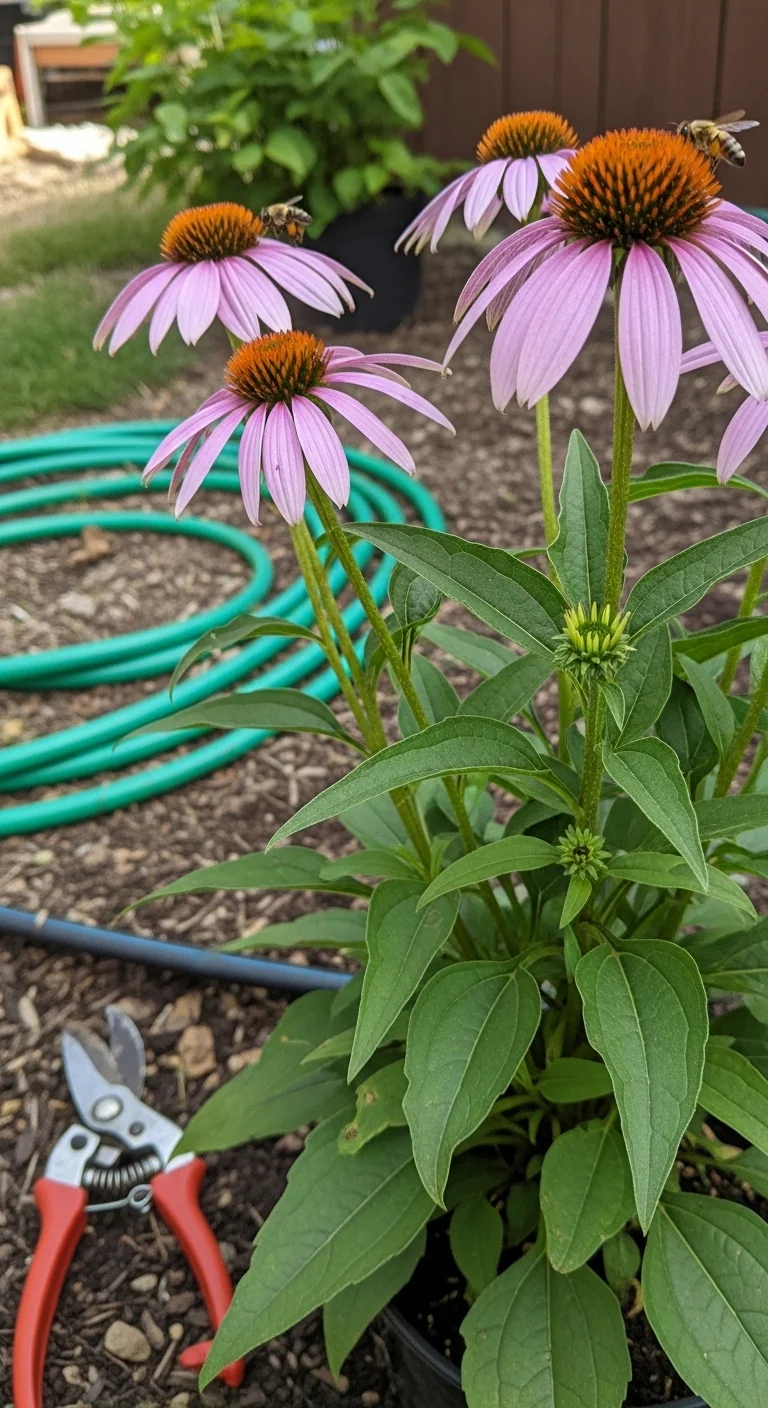
Blueprint: this purple cultivar earned repeated top ratings in multi-year trials for branching habit, flower show, and low attrition. Plant in spring in full sun with soil that drains within 30 minutes of a heavy watering test. Space 18 inches apart. It resists common issues better than many hybrids because of its vigorous root system. Deadhead every two to three weeks through August to keep cones forming for late-season bees. In zones 4 to 9 it maintains tidy clumps without frequent division.
Echinacea ‘Glowing Dream’
Best for: Branch 3
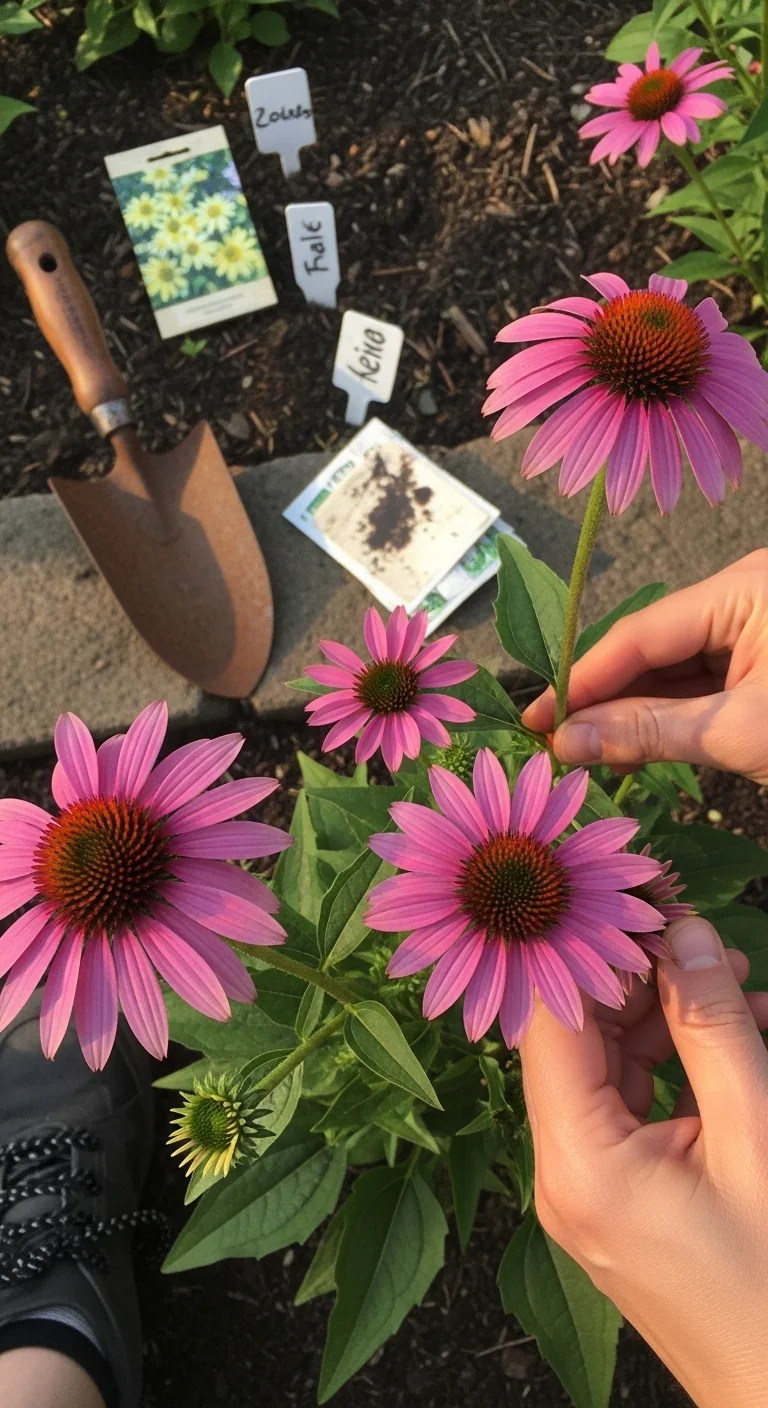
Threshold rule: select this orange hybrid only when your display bed already drains freely and receives full sun. Stems reach 24 inches with bright orange flowers that hold color through early fall. The key mechanism is its well-branched form that needs no staking. Water deeply at planting then taper to once every 10 days once roots establish. Avoid overhead irrigation to reduce leaf spot risk.
Echinacea ‘Kim’s Knee High’
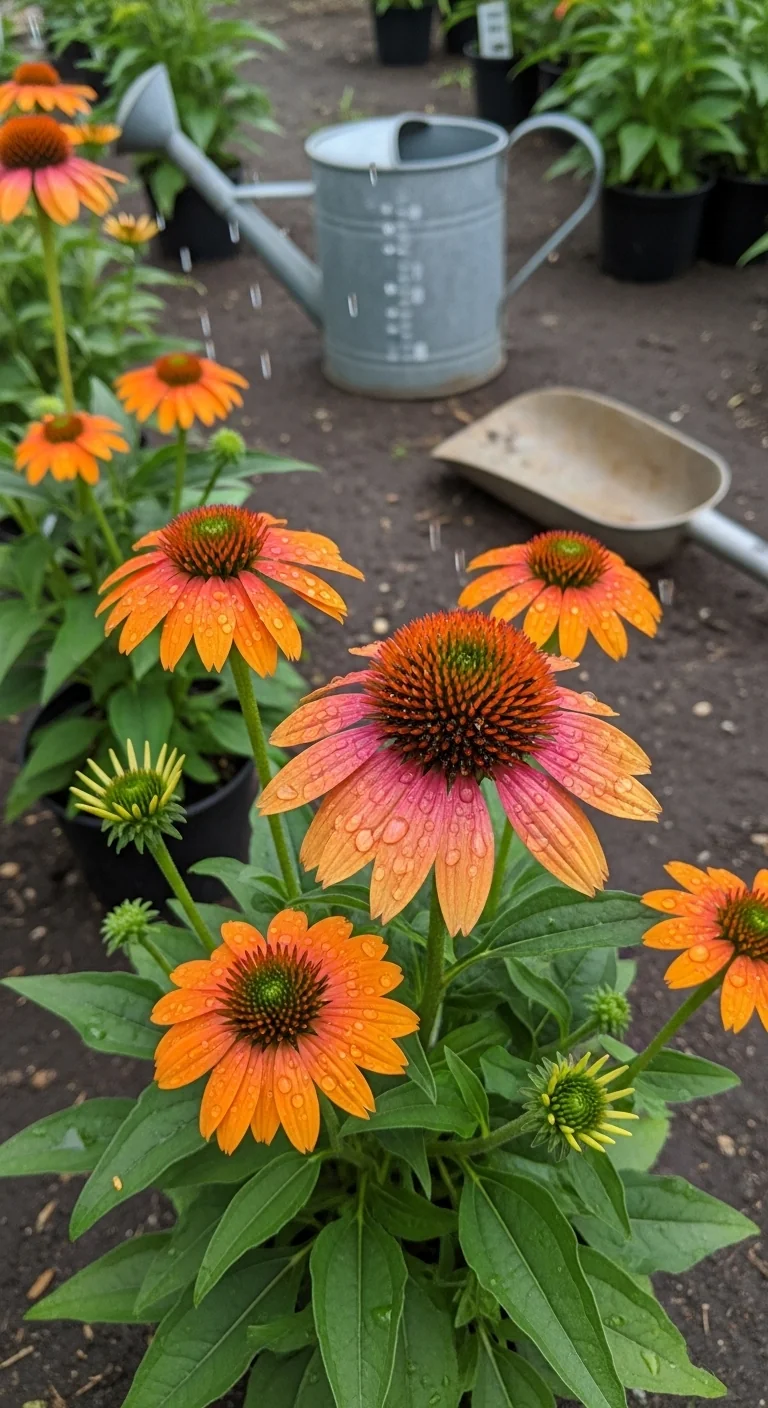
Best for: Branch 1
Use this compact purple-rose selection in front borders or pots where taller types would block paths. Skip it if you need long cut stems. The short 12- to 18-inch stature keeps flowers at eye level without support.
Echinacea ‘Ruby Star’
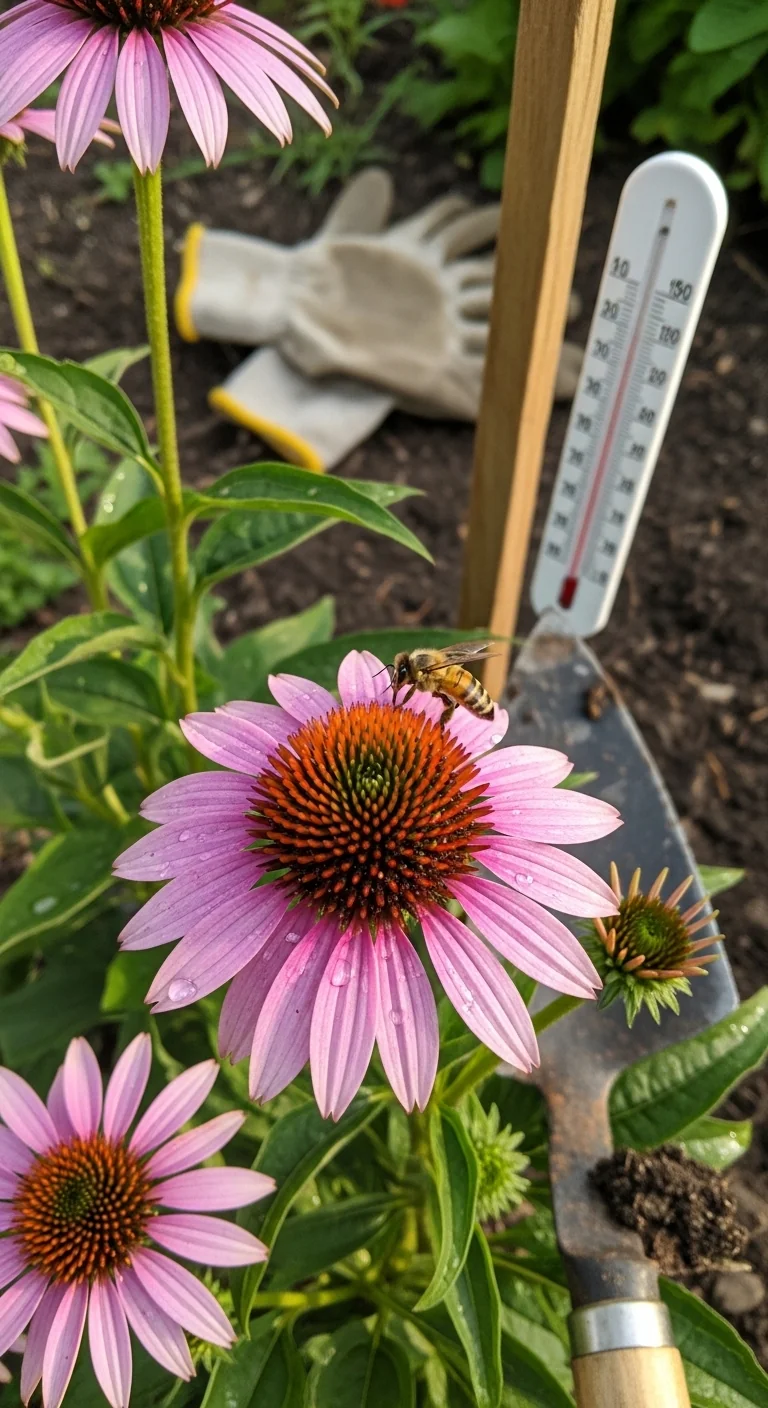
Best for: Branch 3
This improved form of the classic species delivers crimson-rose petals on 30- to 36-inch stems with a longer bloom window. The mechanism is stronger branching and slightly reflexed petals that shed rain quickly. Plant in spring after soil warms above 50 degrees Fahrenheit. It tolerates clay soil if drainage meets the 30-minute test. Remove spent blooms at the first leaf pair below the flower to encourage side shoots.
Starter Stack (What to Choose First)
For Branch 1 (compact spaces or containers)
Start with Echinacea ‘PowWow Wild Berry’ and Echinacea ‘Kim’s Knee High’. These two stay under 24 inches, fill pots or front borders without crowding, and require the same lean, well-drained mix. Plant both in one 30-minute session: one 12-inch pot or 3-square-foot bed section costs 12 to 18 dollars total and needs water only when the top inch dries after the first season.
For Branch 2 (pollinator or native-focused gardens)
Start with Echinacea pallida and Echinacea ‘Pica Bella’. The native drooping form pairs with the vigorous purple cultivar for extended nectar and seed heads. They share full-sun needs and self-seed lightly. Set out two plants in a 4-square-foot patch in 20 minutes for under 15 dollars; water weekly only in the establishment year.
For Branch 3 (cut-flower or extended display beds)
Start with Echinacea purpurea ‘Magnus’ and Echinacea ‘Glowing Dream’. Tall stems and contrasting colors give vase material plus garden color from June into fall. They tolerate the same average soil and deadheading schedule. Plant two in a 4-square-foot bed in 25 minutes for 14 to 20 dollars; irrigation drops to every 10 days once established.
When This Won’t Work
Echinacea fails when soil stays saturated longer than 48 hours after rain or when the site receives fewer than six hours of direct sun. Both conditions lead to crown rot or weak stems that flop by midsummer. Test drainage by digging a 12-inch hole, filling it with water, and timing how long it takes to empty: if over 60 minutes, amend with coarse sand or switch to raised beds.
In heavy shade or constantly wet clay the plants yellow and stop flowering by July. The fix is to move them or replace with better-adapted options. For more on drought-tolerant flowers that handle leaner conditions see the linked guide in the comparison table.
Choosing the Right Option for Your Situation
Budget threshold
Under 10 dollars per plant: choose seed-grown types such as ‘White Swan’ or Echinacea pallida. Over 12 dollars per plant: select named cultivars like ‘Magnus’ or ‘Cheyenne Spirit’ for proven vigor.
Time threshold
Under 30 minutes total planting time: pick any two from the same branch and install in one bed or large pot. Over 45 minutes available: add soil test and light amendment for the first season.
Technical constraint
Soil pH between 6.0 and 7.5 and drains within 30 minutes: any variety works. Outside that range or poor drainage: restrict to Branch 1 compact types in containers with custom mix.
Yes/No checklist:
– Does your tallest plant measure over 24 inches? Yes: choose Branch 3.
– Did the drainage hole test empty in under 30 minutes? Yes: any branch.
– Are you growing in pots under 12 inches? Yes: restrict to Branch 1.
– Do you need open cones for pollinators? Yes: choose Branch 2.
Expert Q&A
How does Echinacea pallida differ from Echinacea purpurea in garden use?
Echinacea pallida has narrower leaves and strongly drooping pale-purple petals that create movement in prairie plantings, while purpurea offers upright posture and broader leaves. Pallida self-seeds more readily in lean soil and attracts specialized prairie bees; purpurea performs better in average garden beds with heavier clay tolerance once drained.
When should you divide established echinacea clumps?
Divide every four to five years in early spring when new shoots reach 3 inches tall. Lift the entire clump, discard the woody center, and replant outer sections at the original soil level. This keeps vigor high and prevents the center from dying out in zones 3 to 9.
Which echinacea varieties resist aster yellows and mites best in long-term trials?
Cultivars such as ‘Pica Bella’ and ‘Cheyenne Spirit’ showed minimal mite damage and zero aster yellows losses across five-year evaluations with full survival of all replicates. Single-flowered types generally outperform doubles because they maintain stronger root systems.
Do hybrid echinacea colors affect pollinator visits compared with straight species?
Single-flowered hybrids such as ‘Glowing Dream’ and ‘Fragrant Angel’ attract nearly the same number of bee and butterfly visits as the straight purple species when open cones remain accessible. Avoid fully double forms because they block nectar access and reduce ecological value.
What soil temperature signals safe planting time for echinacea in spring?
Wait until soil at 4-inch depth reaches 50 degrees Fahrenheit, typically two weeks after the last frost in zones 4 to 7. Earlier planting risks slow establishment and rot; later planting shortens the first-year bloom window.
Conclusion
Next step: run your drainage test this week and order the two recommended varieties for your branch. For more on native flowers that pair well with these choices see native flowers guide.