
The real difference between hydrangeas that bloom year after year and those that skip a season comes down to one decision: does your plant set its flower buds on last year’s stems or on this year’s new growth? Most guides push calendar dates that fail across zones and varieties. This guide reframes pruning around your plant’s own signals so you stop guessing and start protecting next season’s buds.
It covers the four main garden types: bigleaf, oakleaf, panicle, and smooth. It excludes climbing hydrangeas and tree forms, which follow separate rules. You will learn exact identification steps, measurable timing windows, cut locations, and recovery care that fit US, UK, Canada, Australia, Germany, and France conditions where these shrubs rank high in searches.
Follow the decision grid and you can choose the right method for your shrub in minutes, avoid the top failure points, and decide when to prune lightly versus hard without losing color or size control.
Identify old wood versus new wood first, then apply the matching branch below to keep blooms coming.
The Yield Grid Decision Grid
Branch 1: Old-wood bloomers. Examine bare stems in late winter or early spring. Plump, rounded flower buds sit on wood from the previous season and flowers appear on last year’s growth before strong new stems emerge. Typical for bigleaf and oakleaf types. Recommended: Items 1, 4, and 7 below.
Branch 2: New-wood bloomers. No large flower buds appear on last year’s stems. Blooms form only after spring growth pushes out. Typical for panicle and smooth types. Recommended: Items 2, 5, 8, and 10 below.
Branch 3: Rebloomers or uncertain types. Blooms appear on both old and new wood or the variety label is missing. Test by leaving one stem unpruned the first year to observe the pattern. Typical for Endless Summer series and similar. Recommended: Items 3, 6, and 9 below.
For full variety selection details see our complete hydrangeas guide.
Quick Comparison Table
| Option | Key mechanism | Best for | Decision Grid Branch | Effort Score |
|---|---|---|---|---|
| Post-bloom light prune | Removes spent stems above pre-formed buds | Bigleaf and oakleaf | Branch 1 | 2 |
| Late-winter hard prune | Cuts back to low buds to trigger strong new wood | Panicle and smooth | Branch 2 | 3 |
| Dual-wood light shaping | Deadheads first flush and thins lightly in spring | Rebloomers | Branch 3 | 2 |
| Early-spring deadwood removal | Scratch test then cuts only confirmed dead canes | All types after winter damage | Branch 1 | 1 |
| Size-control thinning | Removes up to one-third oldest canes at base | Overgrown new-wood shrubs | Branch 2 | 3 |
| Rejuvenation reset | Cuts all stems to 12-18 inches in dormancy | Neglected new-wood plants | Branch 2 | 4 |
| Post-flower deadheading | Snips individual spent heads above buds | Rebloomers and old-wood types | Branch 3 | 2 |
| Climate-adjusted light prune | Delays cuts until after last frost risk passes | Cold-zone gardens | Branch 3 | 3 |
Post-Bloom Pruning Blueprint for Old-Wood Hydrangeas
Best for: Branch 1
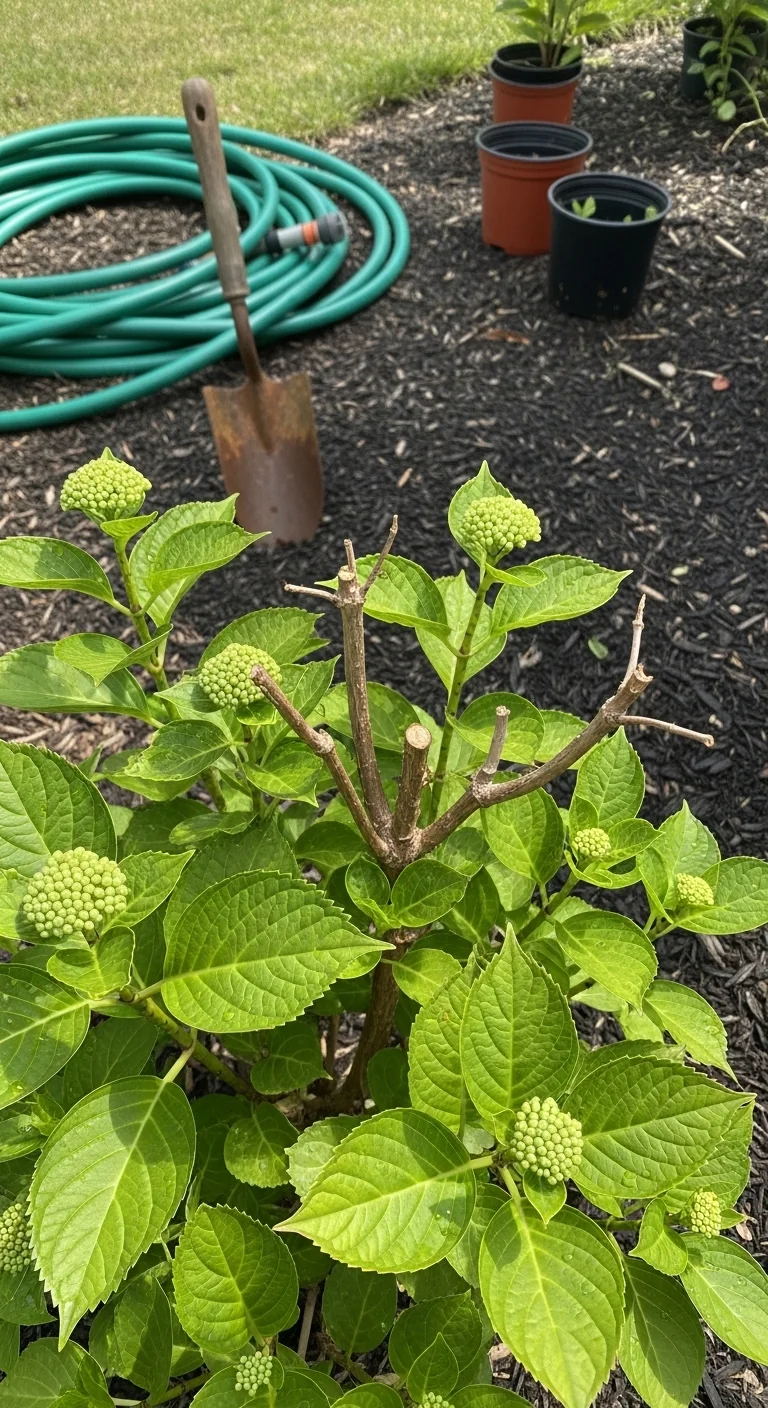
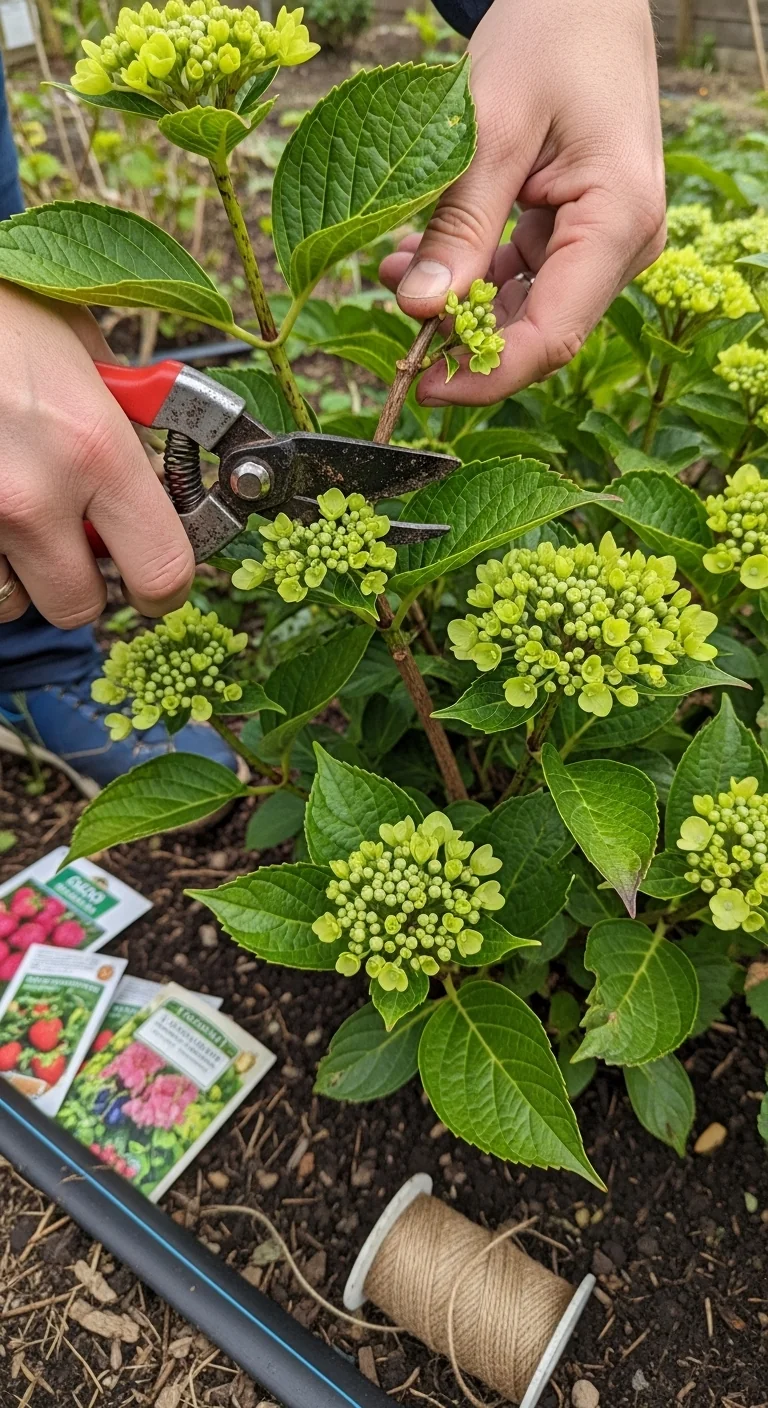
Wait until flowers fade but finish before the end of August so the plant has time to set next year’s buds. Remove spent flower heads by cutting just above the first pair of healthy buds on each stem. Thin out the oldest canes at soil level if the shrub has become crowded, taking no more than one-third of the total stems. Make all cuts at a 45-degree angle facing outward to direct new growth away from the center. This blueprint keeps the plant compact while protecting the wood that already carries next season’s flower buds. Skip any heavy shaping until after bloom to avoid removing pre-formed buds that appear as rounded swellings on last year’s stems. In zones with early autumn frost, leave the dried heads in place through winter for extra bud protection before the final clean-up the following spring.
Late-Winter Pruning Thresholds for Panicle and Smooth Types
Best for: Branch 2
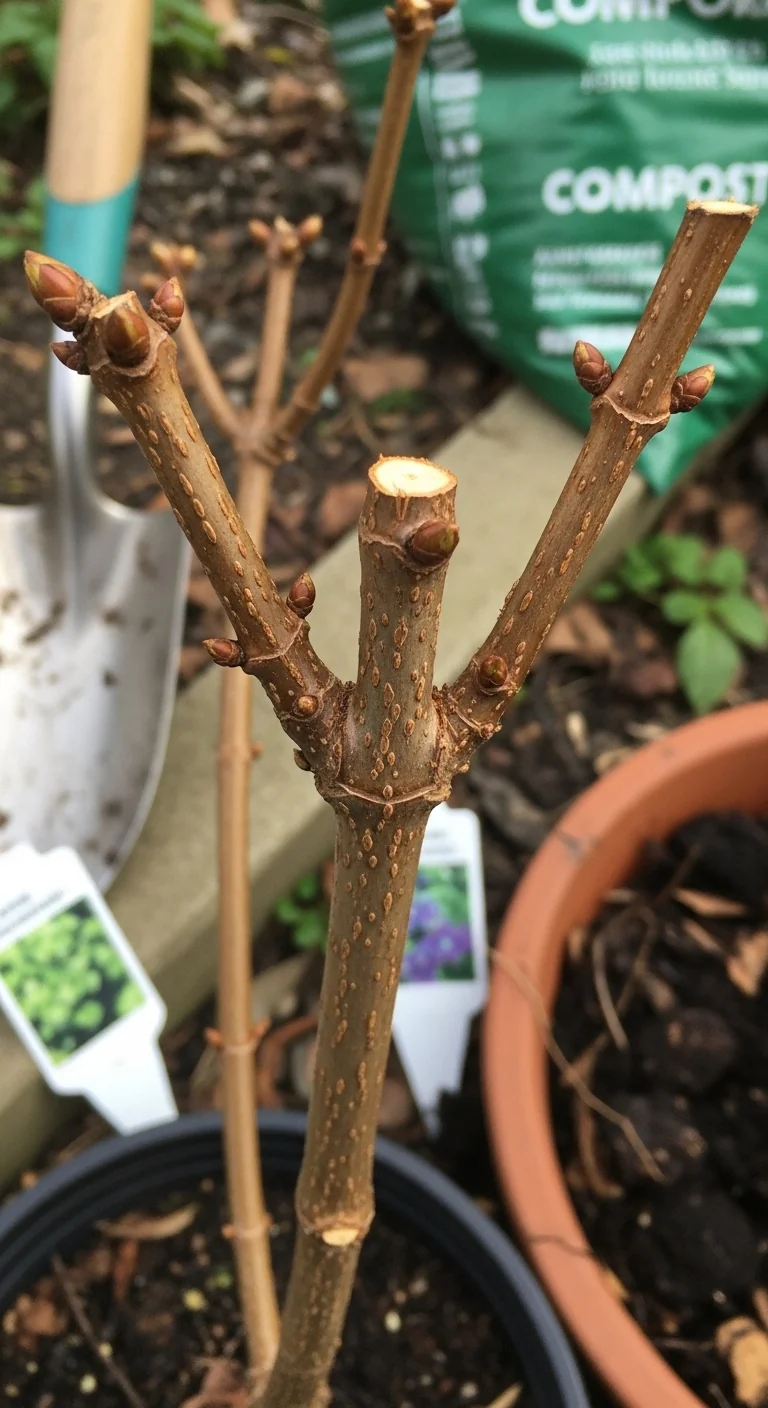
Prune once the plant is fully dormant and before buds swell, usually late winter to early spring. Cut stems back to 12-18 inches from the ground or to the first strong pair of buds. Remove weak or crossing branches entirely at the base. This threshold timing forces vigorous new wood that carries the current season’s flowers.
Handling Reblooming Hydrangeas With Dual Wood Strategy
Best for: Branch 3
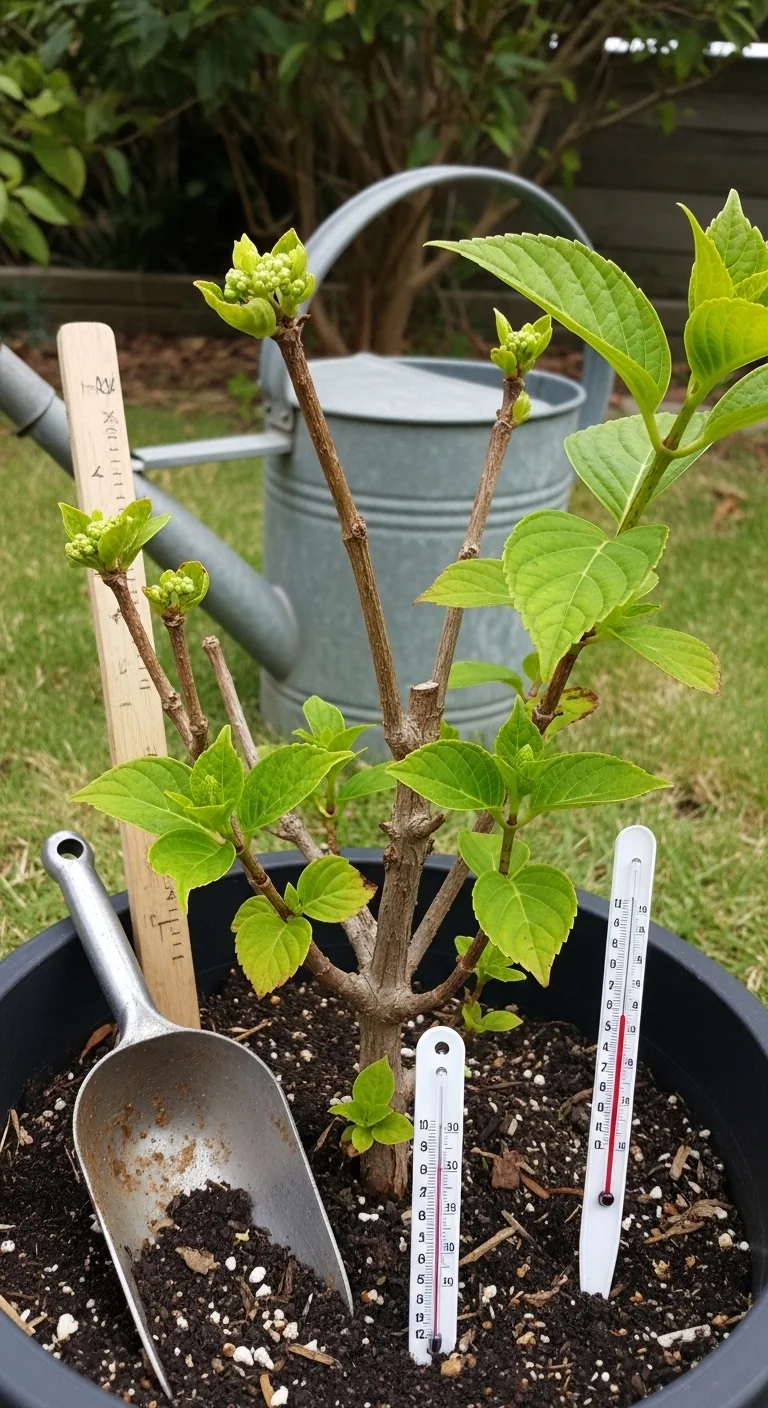
Rebloomers set buds on both old and new wood, so treat them with a two-step approach. In early spring remove only dead or damaged stems using the scratch test to confirm live tissue. After the first flush of flowers fades, deadhead individual heads above the nearest healthy buds to encourage a second round later in the season. Keep overall thinning light so you preserve both wood types. This strategy extends bloom time without the heavy cuts used on strict new-wood varieties.
Early-Spring Deadwood Removal Protocol
Best for: Branch 1
Once new leaves begin to emerge, inspect every stem. Use a pocket knife to scratch a small area of bark: green tissue underneath means the stem is alive and must stay. Brown or brittle means dead and can be cut at the base or just above the nearest live bud. Remove only confirmed dead wood to open the center for light and air. This single early-spring pass prevents disease entry points and keeps the shrub’s energy focused on the remaining live old wood that holds next year’s buds. In regions with late frost, delay this step until all frost risk has passed to protect any exposed buds.
Size Control Cuts for New-Wood Shrubs
Best for: Branch 2
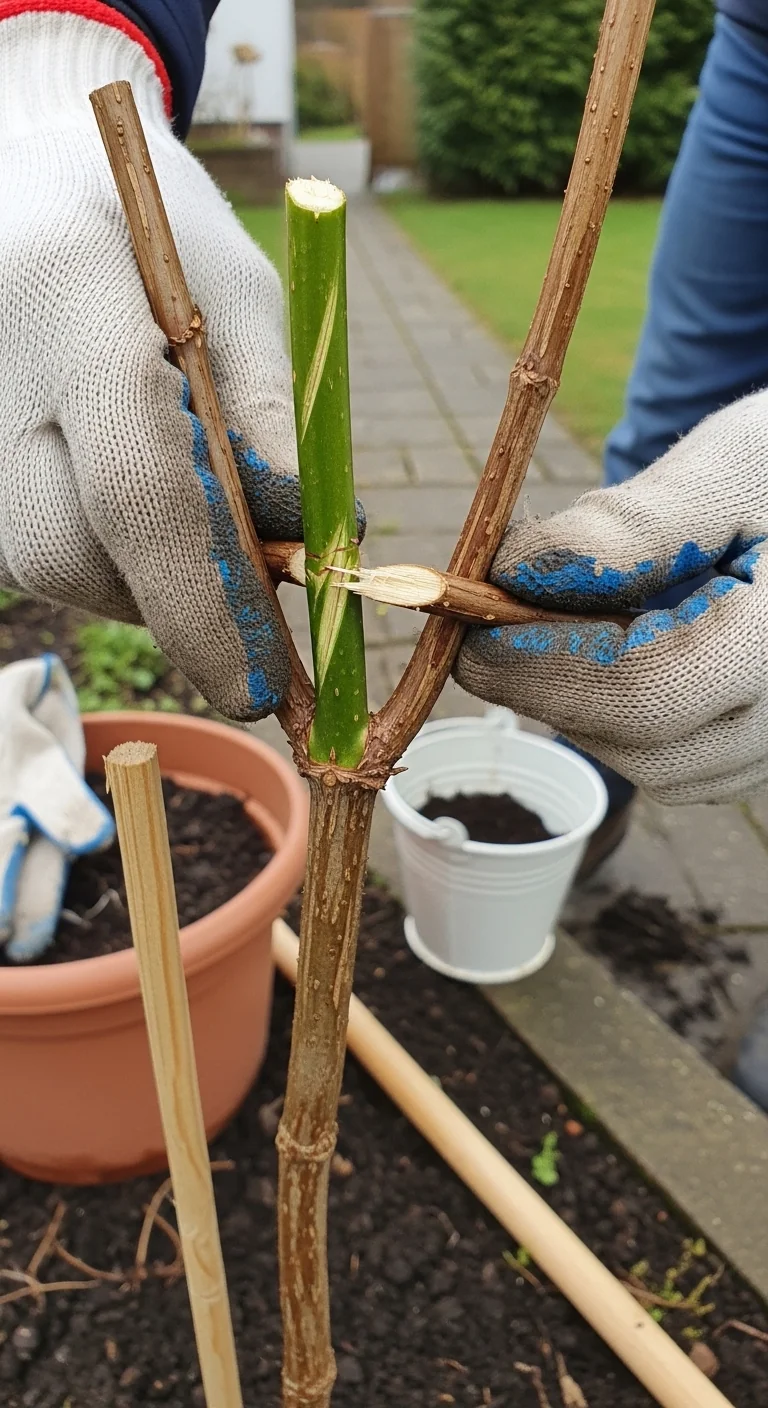
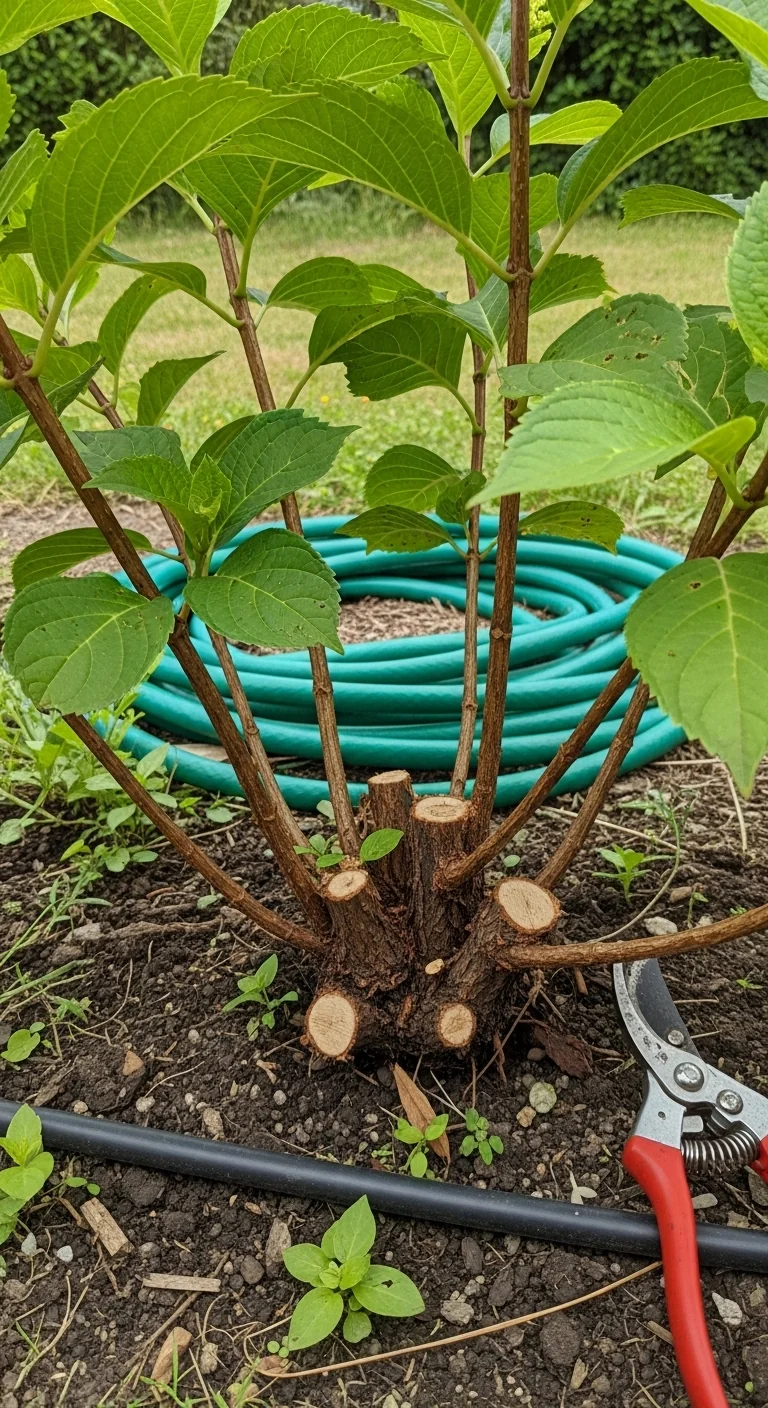
Each dormant season remove up to one-third of the oldest, thickest canes at soil level while leaving younger stems intact. This keeps the plant from outgrowing its space without sacrificing bloom volume on the fresh growth produced after pruning.
Deadheading Spent Flowers Across All Types
Best for: Branch 3
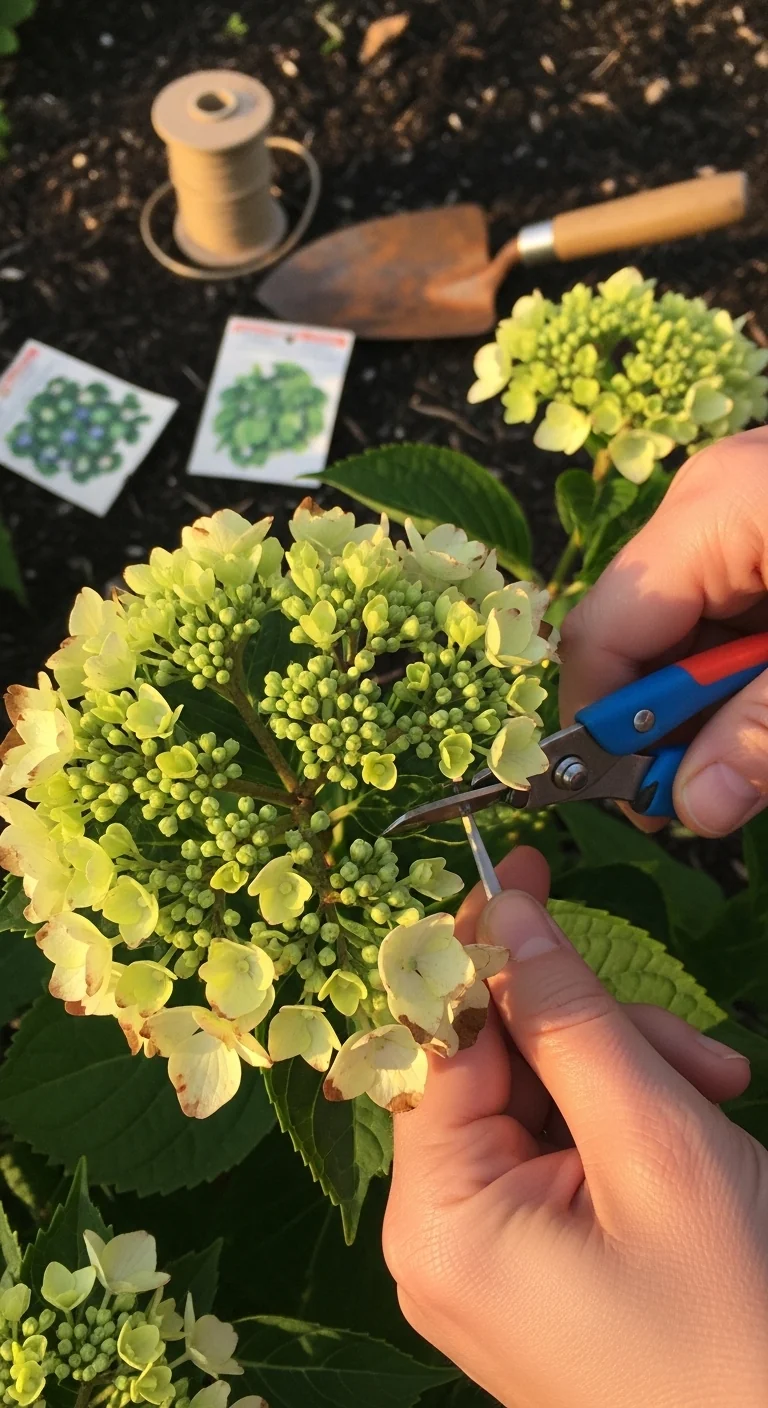
Snip each faded flower head individually just above the first set of strong buds rather than stripping entire stems. Do this as soon as petals drop but before late summer so the plant does not waste energy on seed production. For old-wood types this preserves the lower stem that already holds next year’s buds. For rebloomers it triggers the second flush. See our full deadheading guide for timing across other perennials.
Thinning Older Old-Wood Plants for Renewal
Best for: Branch 1
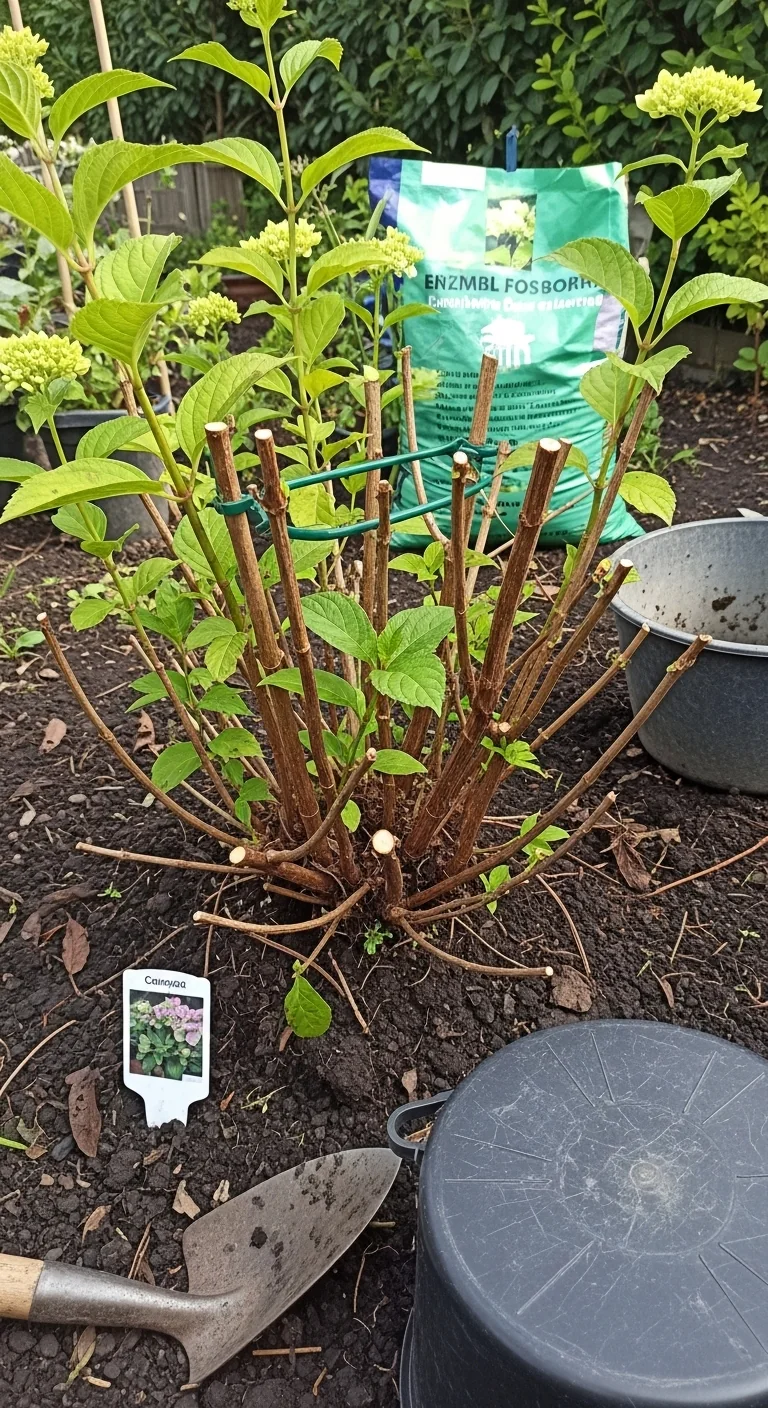
Over time old-wood hydrangeas develop crowded centers that reduce flowering. In late summer after bloom, select the three or four thickest, oldest canes and cut them flush at soil level using sharp bypass pruners. Leave the younger, thinner stems untouched because they carry most of the flower buds. Open the center to improve air flow and light penetration, which reduces the chance of powdery mildew in humid summers common in the UK and eastern Canada. Follow with a light mulch layer to retain soil moisture during the recovery period. This thinning restores vigor without touching the wood needed for next season’s display.
Tool Selection and Cut Technique Essentials
Best for: Branch 2
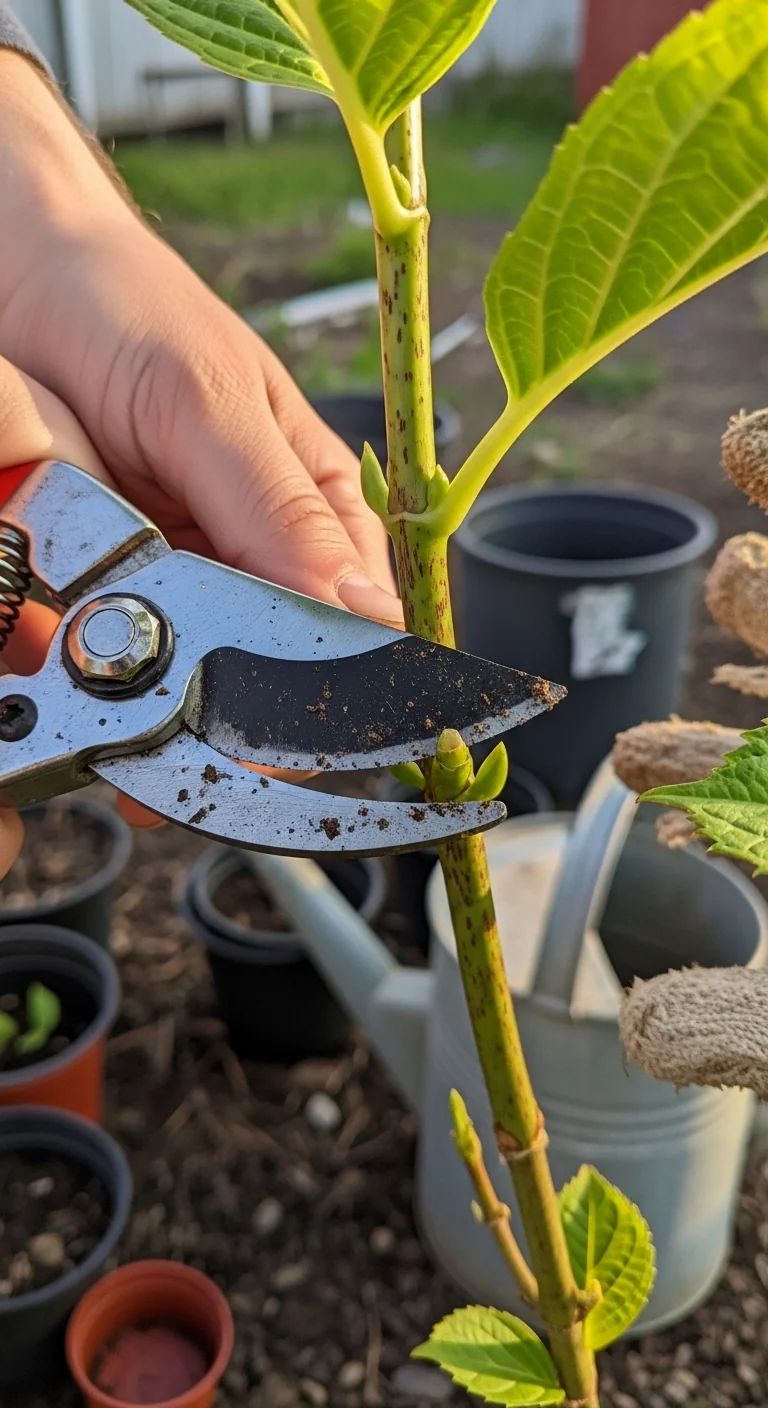
Choose sharp bypass pruners disinfected with alcohol between cuts. Make every cut at a 45-degree angle one-quarter inch above an outward-facing bud. Clean cuts heal faster and direct growth away from the center.
Pruning Adjustments for Cold Climate Survival
Best for: Branch 3
In zones with harsh winters wait until after the last possible frost date before any spring cuts. Remove only clearly dead wood and leave dried flower heads in place through winter to insulate buds. For rebloomers, limit spring thinning to one or two oldest canes so the plant retains enough framework to push new wood even after cold snaps. This measured approach matches the shorter growing seasons in parts of Canada, Germany, and the northern US.
Rejuvenation Pruning for Neglected Hydrangeas
Best for: Branch 2
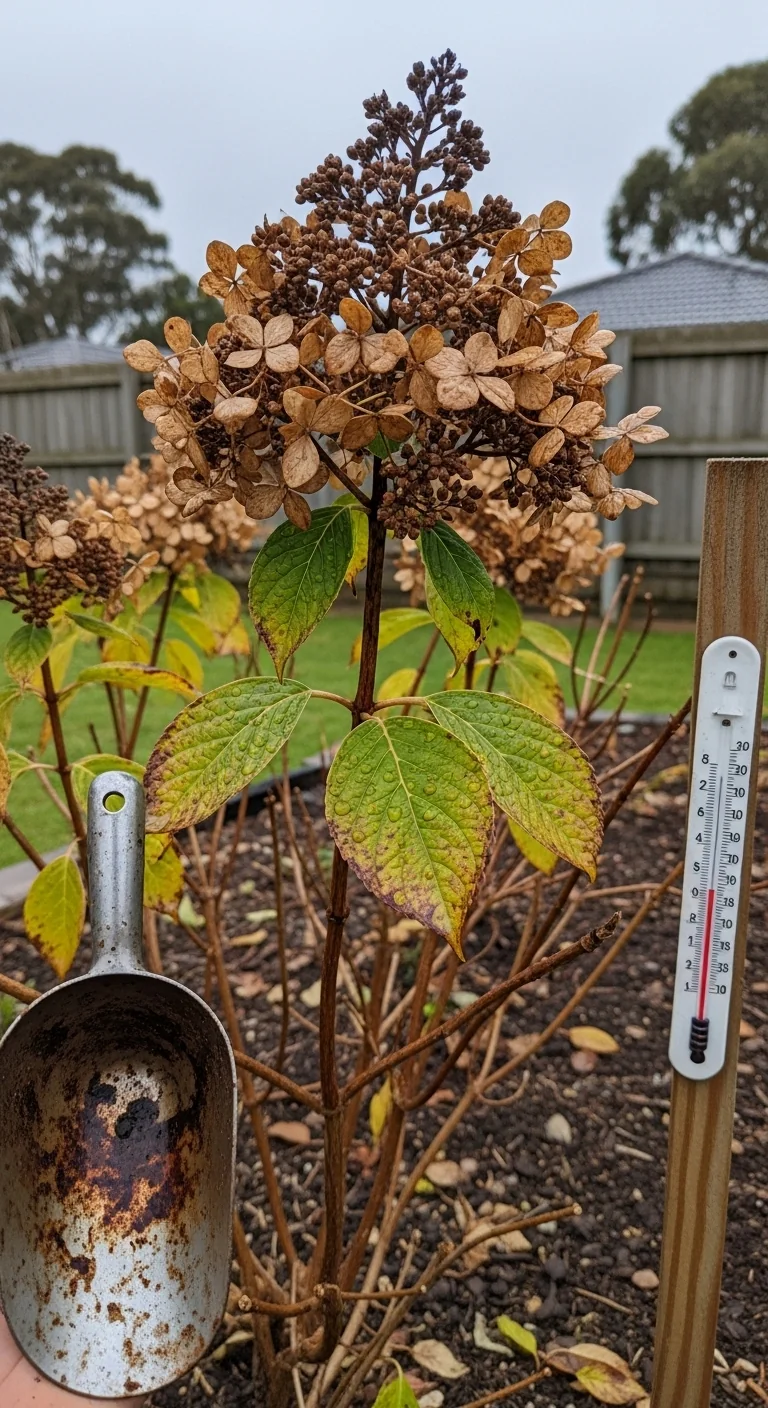
When a new-wood hydrangea has grown leggy or stopped blooming well, cut every stem back to 12-18 inches above ground level while the plant is dormant. Remove any thin, weak shoots entirely. The plant will respond with strong new basal growth that carries larger flower heads the following season. Apply this reset no more than once every three to four years to avoid stressing the root system. Water deeply after the cut and mulch to conserve moisture during the recovery spring flush.
Starter Stack (What to Choose First)
For Branch 1 (old-wood types)
Start with Item 1 (post-bloom blueprint) paired with Item 4 (early-spring deadwood removal). The post-bloom cut clears spent heads and sets up clean structure, while the spring deadwood pass confirms live tissue before any new growth starts. Together they take 20-40 minutes per mature shrub and cost under 20 dollars in basic pruners and gloves.
For Branch 2 (new-wood types)
Begin with Item 2 (late-winter thresholds) and Item 10 (rejuvenation pruning). The annual threshold prune maintains size, and the occasional full reset restores vigor on overgrown plants. Total time ranges from 15 minutes for routine work to 45 minutes for rejuvenation, using only existing hand tools.
For Branch 3 (rebloomers)
Combine Item 3 (dual-wood strategy) with Item 6 (deadheading). The light spring shape preserves both wood types while midsummer deadheading extends the display. Expect 10-25 minutes twice per season with no extra equipment needed.
When This Won’t Work
Pruning old-wood hydrangeas in early spring removes the rounded flower buds already set on last year’s stems, leaving the plant to produce only foliage that season. The same risk appears if you prune new-wood types after midsummer once new growth has hardened: the plant lacks time to form strong replacement wood before dormancy. In both cases the measurable result is little or no bloom the following year.
Heavy winter damage that kills all above-ground buds also defeats pruning plans. When entire stems show no green cambium in the scratch test, the shrub must rebuild from the base before any flowering returns.
In either failure case leave the plant untouched the next full season and observe bloom timing to reclassify its wood type correctly. For ongoing shrub care across seasons see our perennial flowers overview.
Choosing the Right Option for Your Situation
When your budget stays under 30 dollars
Stick to basic bypass pruners and gloves. All branches rely on sharp, clean cuts rather than expensive tools or sprays. One quality pair of pruners lasts multiple seasons when wiped with alcohol after each use.
When you have 20 minutes or less
Choose deadheading (Item 6) or early-spring deadwood removal (Item 4). Both target only spent or dead parts and finish quickly on a single mature shrub.
When facing extreme winter temperatures
Delay all cuts until after the last frost date and limit work to confirmed deadwood. Leave dried flower heads intact for bud insulation through the coldest months.
Quick yes/no checklist
Do you see plump buds on last year’s bare stems? Yes: follow Branch 1.
Are blooms forming only after new spring growth? Yes: follow Branch 2.
Do you get two flushes or have an unknown variety? Yes: follow Branch 3.
Have you pruned at the wrong time before? Yes: start with identification steps in Item 1.
Expert Q&A
How do I confirm wood type if the nursery tag is missing?
Leave one stem unpruned through the first full season and note whether flowers appear on old wood before new growth or only after new stems lengthen. The pattern repeats reliably each year and lets you classify the plant without further guesswork.
Can I prune hydrangeas for cut-flower arrangements without hurting future blooms?
Yes, take stems from inside the shrub rather than the outer framework and cut above strong buds. Limit removal to no more than one-third of the total stems in any single season so the plant retains enough leaves for energy storage.
What changes if my shrub suffered winter dieback to the ground?
Treat it like a new-wood plant the following spring even if it was originally old-wood. Cut all remaining stubs to 6-12 inches and allow fresh basal growth to rebuild the framework before expecting flowers again.
Does pruning timing affect flower size on new-wood types?
Harder cuts in late winter to lower buds usually produce larger individual flower heads because the plant concentrates energy into fewer, stronger new stems. Lighter pruning yields more but smaller blooms.
How often should I repeat rejuvenation pruning on the same plant?
Apply the full reset only once every three to four years. More frequent heavy cuts weaken roots over time and reduce overall shrub longevity even on forgiving new-wood varieties.
Conclusion
Hydrangea pruning succeeds when you match the method to the plant’s bloom wood type instead of the calendar. The number-one mistake remains cutting old-wood buds in spring or pruning new-wood types after active growth has started. Use the decision grid, follow the matching items, and your shrubs will deliver consistent color without repeated trial and error.
Next step: walk your garden this week, examine one bare stem on each hydrangea, and place it in the correct branch. For companion plants that thrive beside pruned hydrangeas see our hydrangea companions guide.