
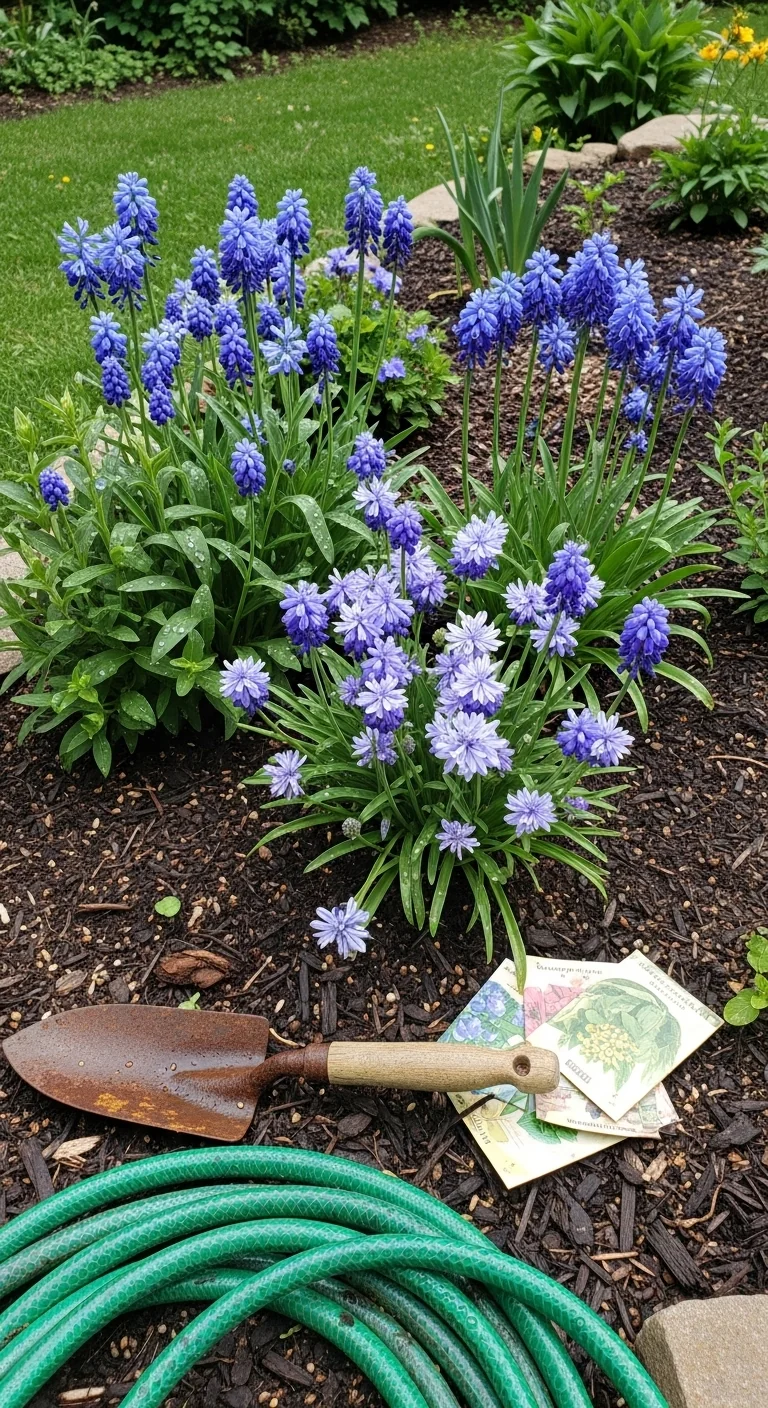
Blue flowers remain rare in gardens because most varieties demand exact matches in light, soil pH, and temperature range. The Yield Grid reframes selection around three measurable conditions instead of color charts alone.
This guide reviews nine blue flower options suited to ornamental beds, borders, containers, and cutting gardens across US, UK, Canada, and similar temperate zones. It focuses on varieties with documented performance in home settings and excludes houseplants, tropical exotics, and hard-to-source species.
Use the decision grid and table to narrow choices, then read each profile for setup details that prevent early fade or weak stems. You will exit with a shortlist that fits your site and a starter stack to plant first.
Align your light exposure, soil pH test, and seasonal temperatures to the right blue flower and secure extended color with standard care routines.
The Yield Grid Decision Grid
Branch 1: Garden receives 6 or more hours of direct sun daily and soil tests pH 6.0 to 7.5 with good drainage. Recommended: Items 1, 2, 4, 5, 7 below.
Branch 2: Garden receives 4 to 6 hours of sun or you garden in cooler USDA zones 3 to 6 with average summer highs below 80 F. Recommended: Items 6, 8, 9 below.
Branch 3: Soil tests pH below 6.0 or you rely on containers and raised beds. Recommended: Items 3, 9 below.
For full setup steps across all branches see flower gardening basics.
Quick Comparison Table
| Option | Key mechanism | Best for | Decision Grid Branch | Effort Score |
|---|---|---|---|---|
| Delphiniums | Tall spires from basal foliage | Vertical accents in borders | 1 | 3 |
| Salvia | Repeated spikes from woody base | Long summer color in heat | 1 | 2 |
| Hydrangeas | Soil pH controls flower color | Shrub mass with adjustable hue | 3 | 4 |
| Alliums | Globe blooms from fall-planted bulbs | Deer-resistant early summer structure | 1 | 1 |
| Morning Glory | Fast-climbing annual vines | Quick vertical screens | 1 | 2 |
| Clematis | Twining stems with large blooms | Partial-shade fences and trellises | 2 | 3 |
| Tulips | Spring bulbs with cupped flowers | Early-season focal points | 1 | 1 |
| Pansies | Cool-weather face-like blooms | Edging and containers in mild seasons | 2 | 3 |
| Lobelia | Trailing or upright blue clusters | Moist containers and edges | 3 | 3 |
Delphiniums
Best for: Branch 1
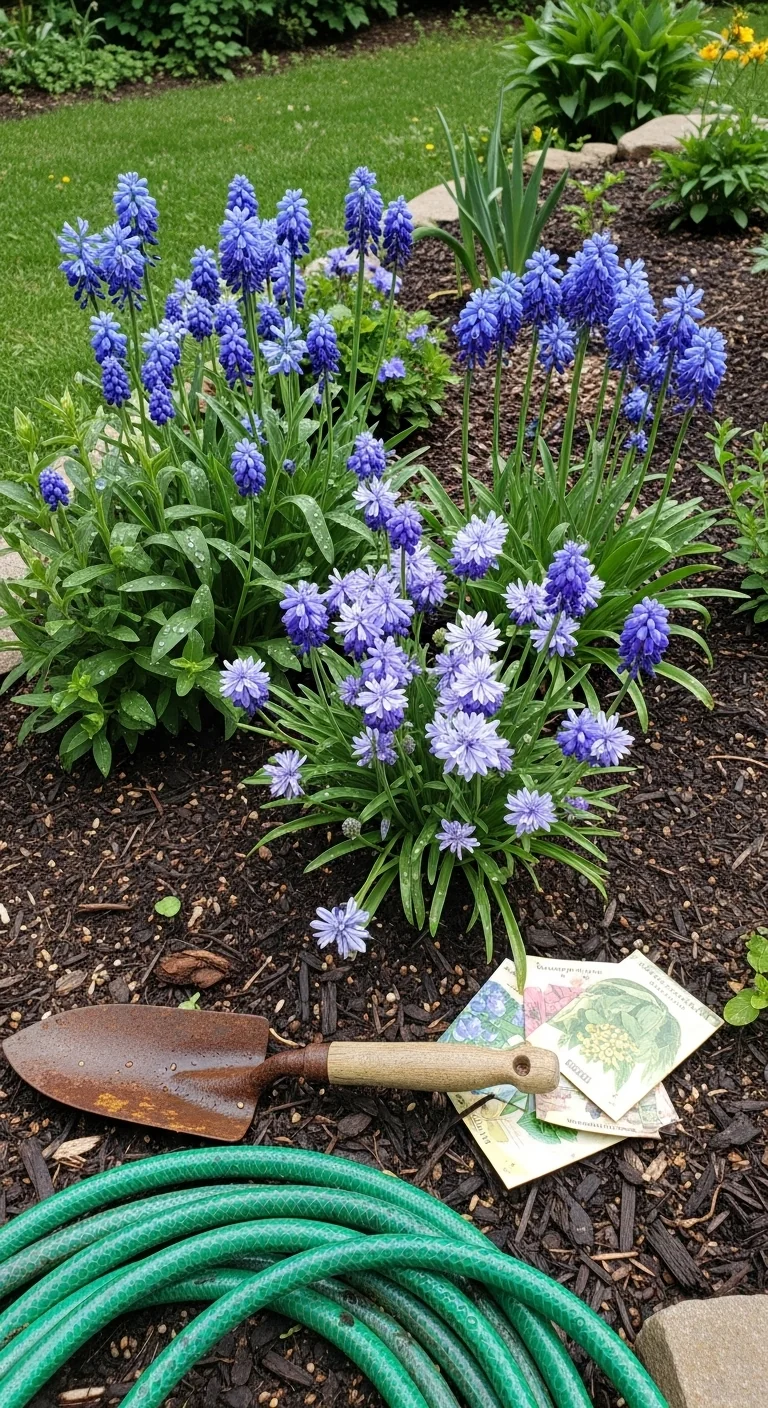
Delphiniums deliver tall blue spires that reach 4 to 6 feet when conditions align. They function best as back-of-border anchors in full-sun sites with rich, moist but well-drained soil. Plant in spring or fall once soil temperature holds at 50 F. Space plants 18 to 24 inches apart and incorporate compost at planting. Support stems with stakes or grow-through rings before flower buds appear. A key edge case appears in windy gardens: unprotected stalks snap at 3 feet. Deadhead spent spikes to the first set of leaves to encourage a second flush in late summer. Avoid overhead watering to limit powdery mildew on dense foliage. These perennials return each year in zones 3 to 7 when crowns stay dry in winter.
Salvia
Best for: Branch 1
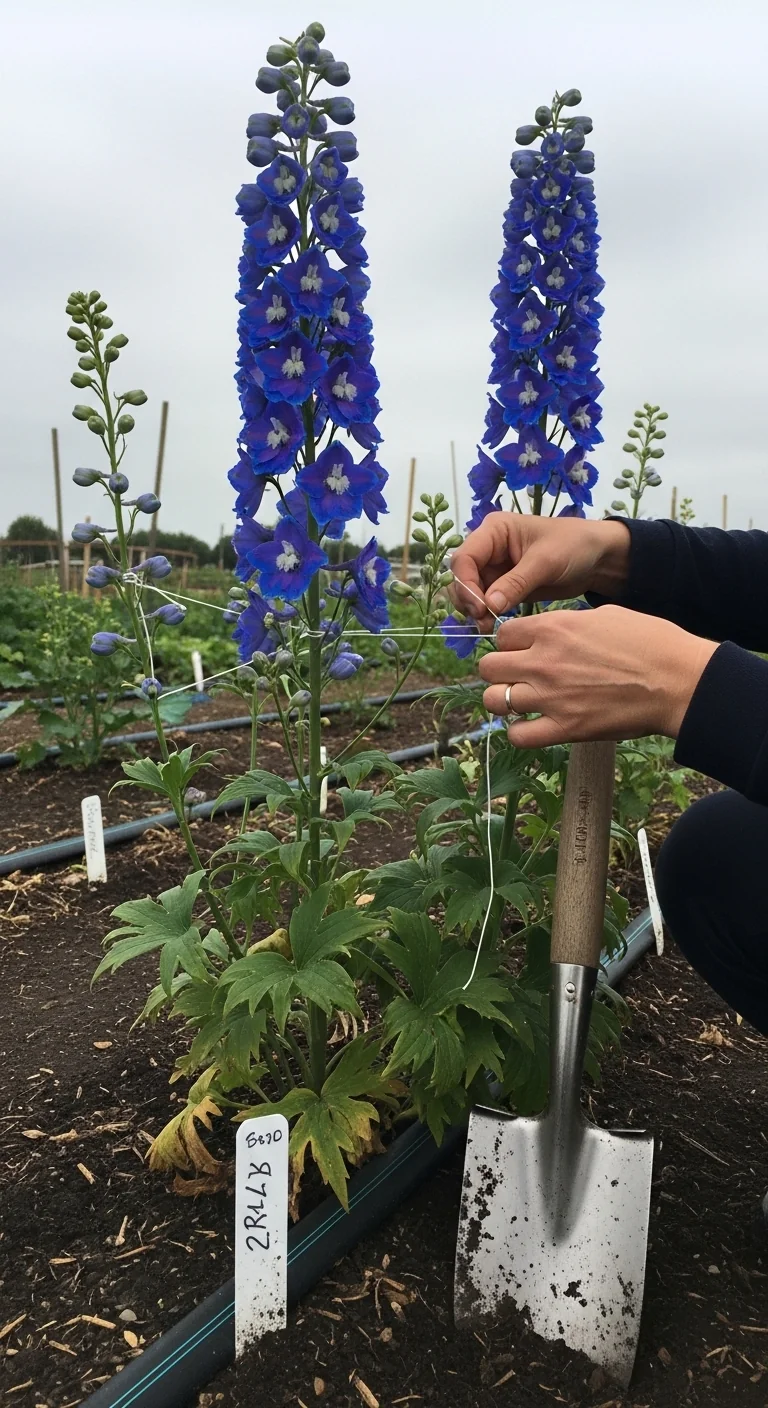
Salvia produces upright blue spikes that rebloom through summer heat once established. Use it where water is limited after the first month. Skip it in constantly soggy soil or zones with short cool summers below 60 F average. One unique detail: the aromatic foliage deters deer while drawing bees and hummingbirds all season.
Hydrangeas
Best for: Branch 3
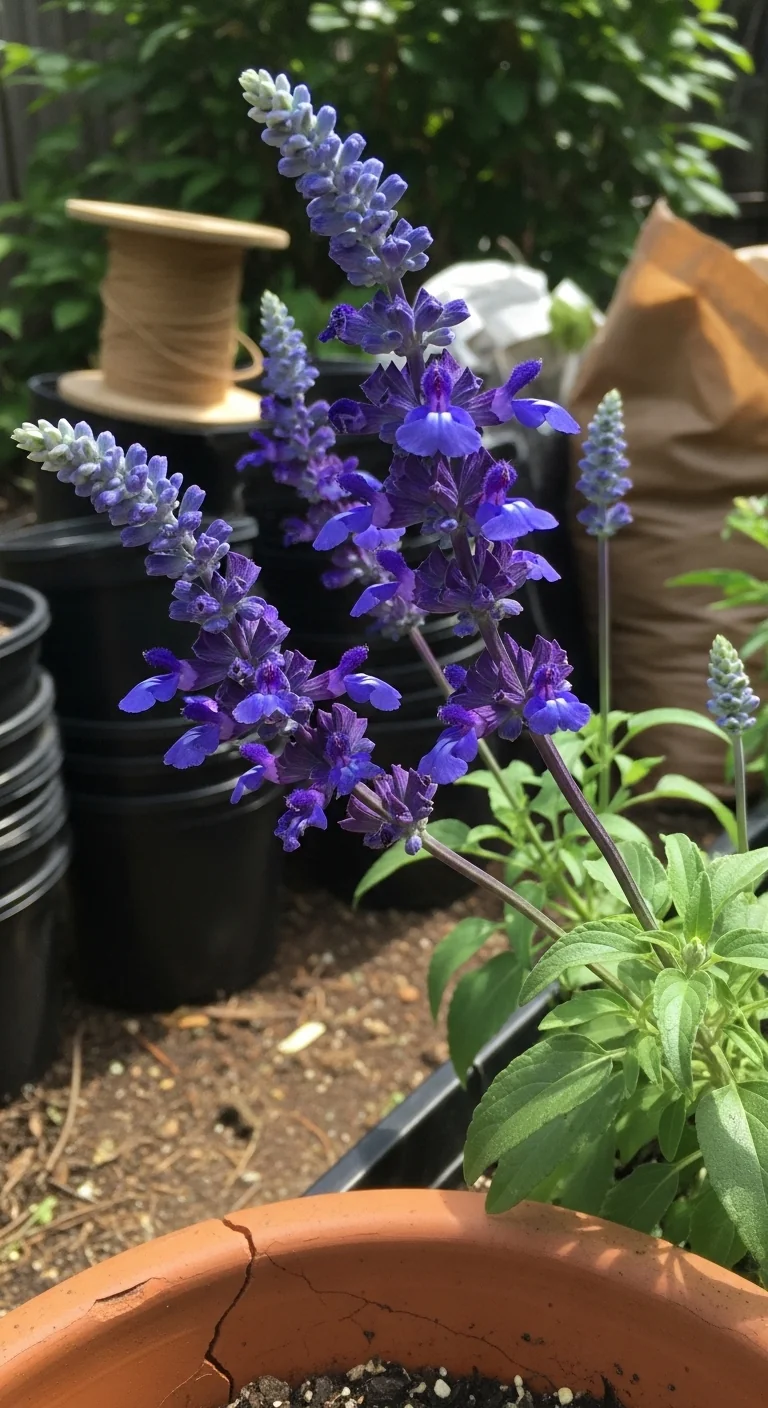
Hydrangeas shift to clear blue when soil pH stays below 6.0. They suit large shrub borders or containers in sites with morning sun and afternoon shade. Test soil pH in early spring. Apply aluminum sulfate according to label rates if readings exceed 6.0, then water thoroughly. Mulch with pine needles to hold acidity. Prune after bloom on bigleaf types to shape. These shrubs tolerate clay once amended but resent drought stress that browns leaf edges.
Alliums
Best for: Branch 1
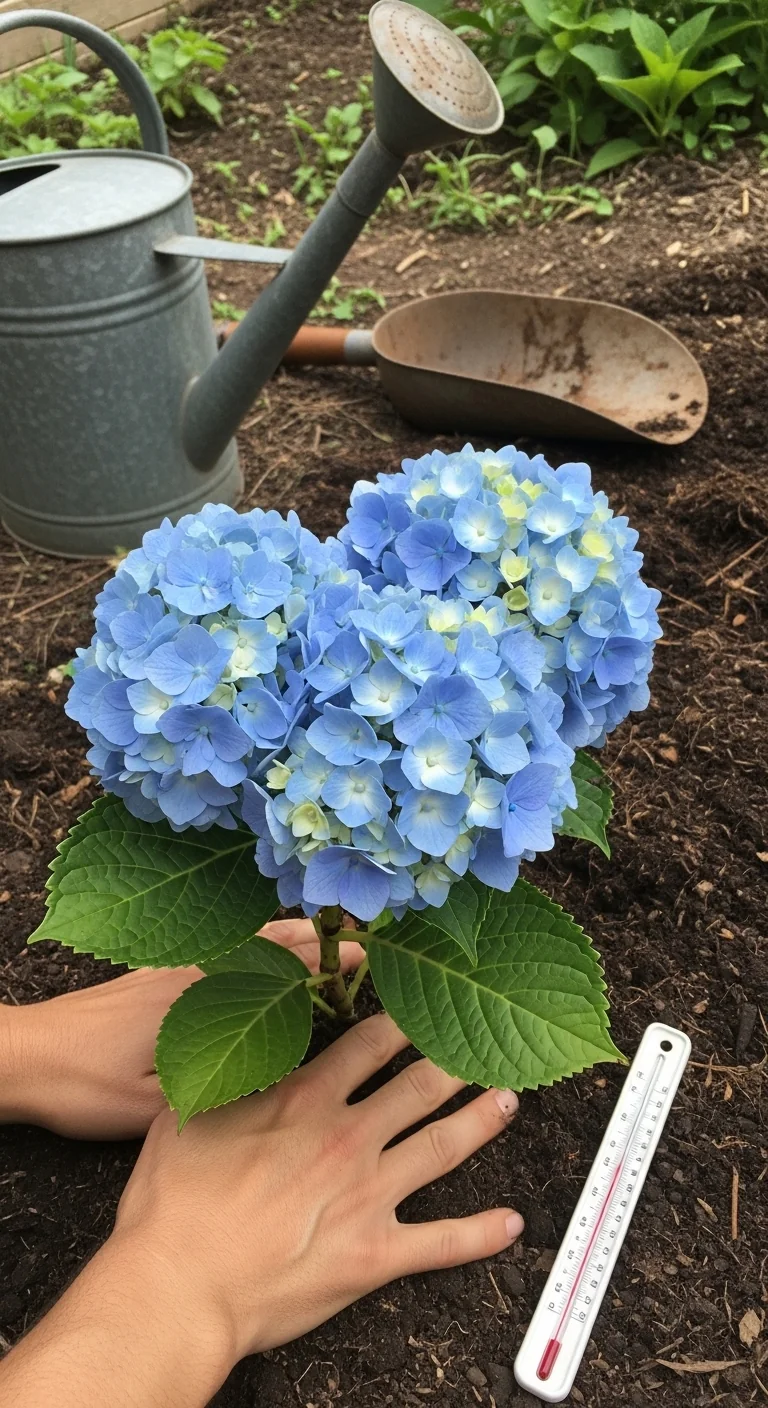
Alliums grow from bulbs planted in fall for globe-shaped blue-purple blooms the following early summer. They require full sun and sharp drainage. Plant bulbs 4 to 6 inches deep and 8 to 12 inches apart in groups of five or more for impact. Foliage dies back naturally after bloom, leaving ornamental seed heads that stand through winter. A practical constraint: heavy clay without raised beds leads to bulb rot in wet winters. These perennials naturalize over time in zones 4 to 9 and resist deer and rodents. No staking or deadheading is needed after the first year.
Morning Glory
Best for: Branch 1
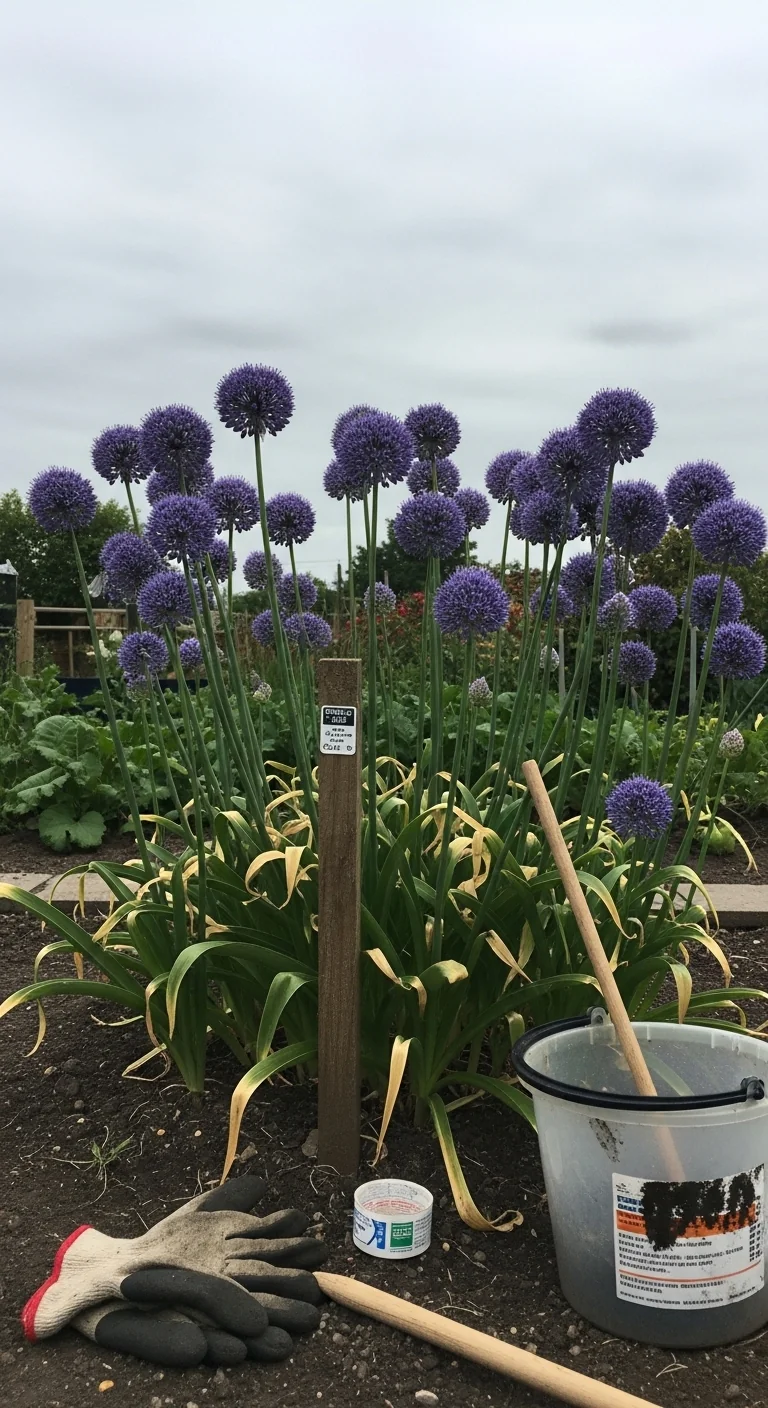
Morning Glory offers fast blue trumpets on vines that climb 8 to 10 feet in one season. Sow seeds directly after last frost in full sun. Soak seeds 24 hours before planting to speed germination. Train onto trellises or fences early. It self-seeds in warm zones but stays annual in cooler areas. Edge case: it wraps tightly around nearby plants, so isolate from delicate perennials.
Clematis
Best for: Branch 2
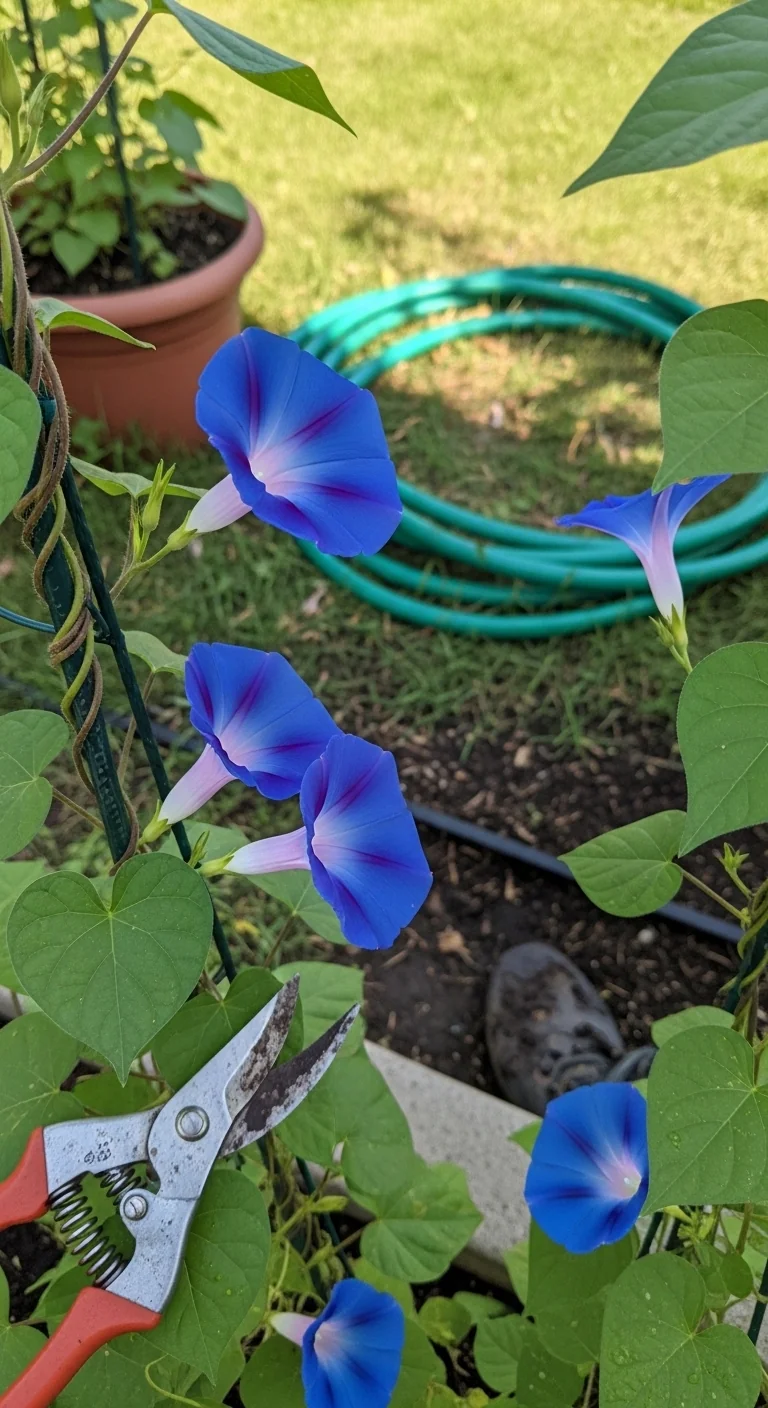
Clematis uses twining stems to cover fences or obelisks with large blue blooms in partial shade. Roots prefer cool soil while tops receive filtered light. Plant with the crown 2 inches below soil level. Provide a trellis or support at installation. Prune according to group type in late winter. One constraint: full afternoon sun in hot zones scorches foliage. It pairs well with hostas at the base for root cooling.
Tulips
Best for: Branch 1
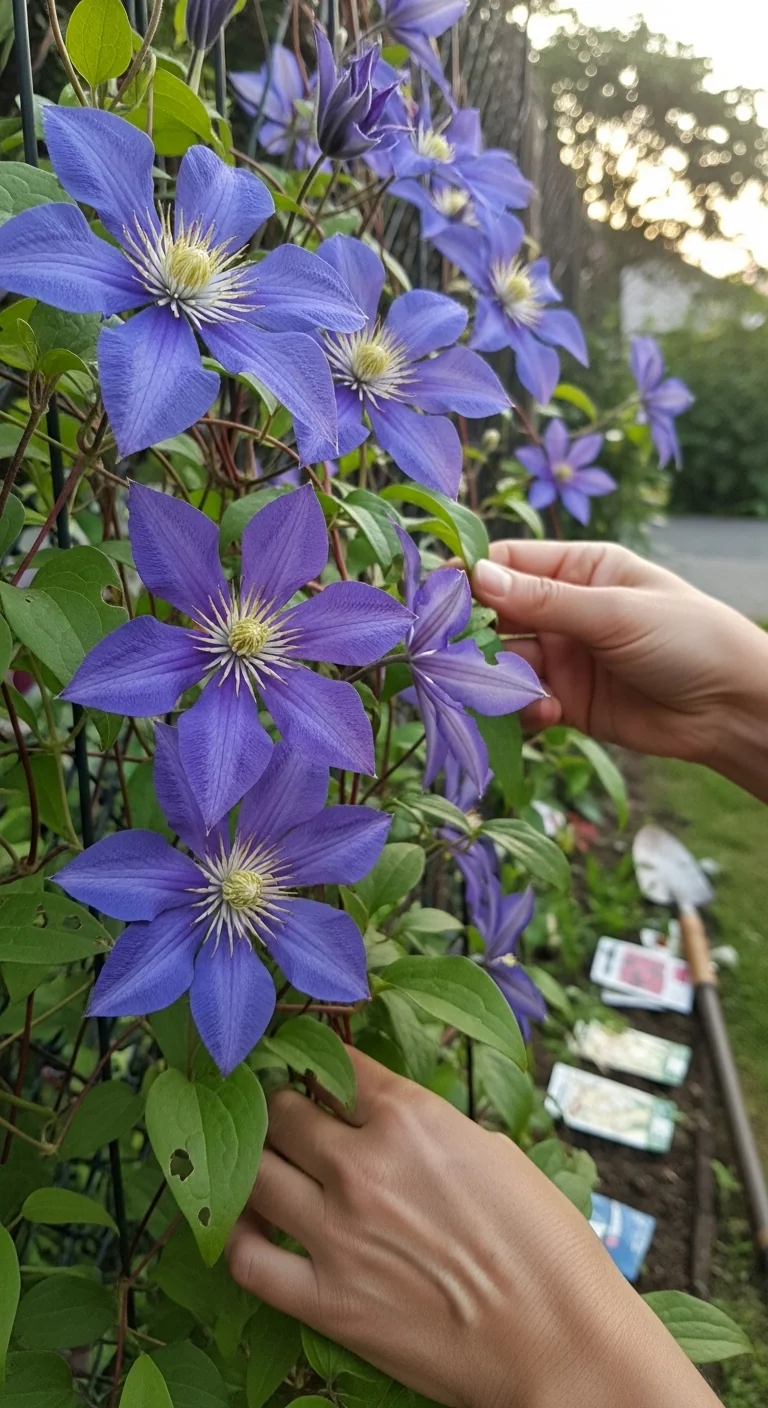
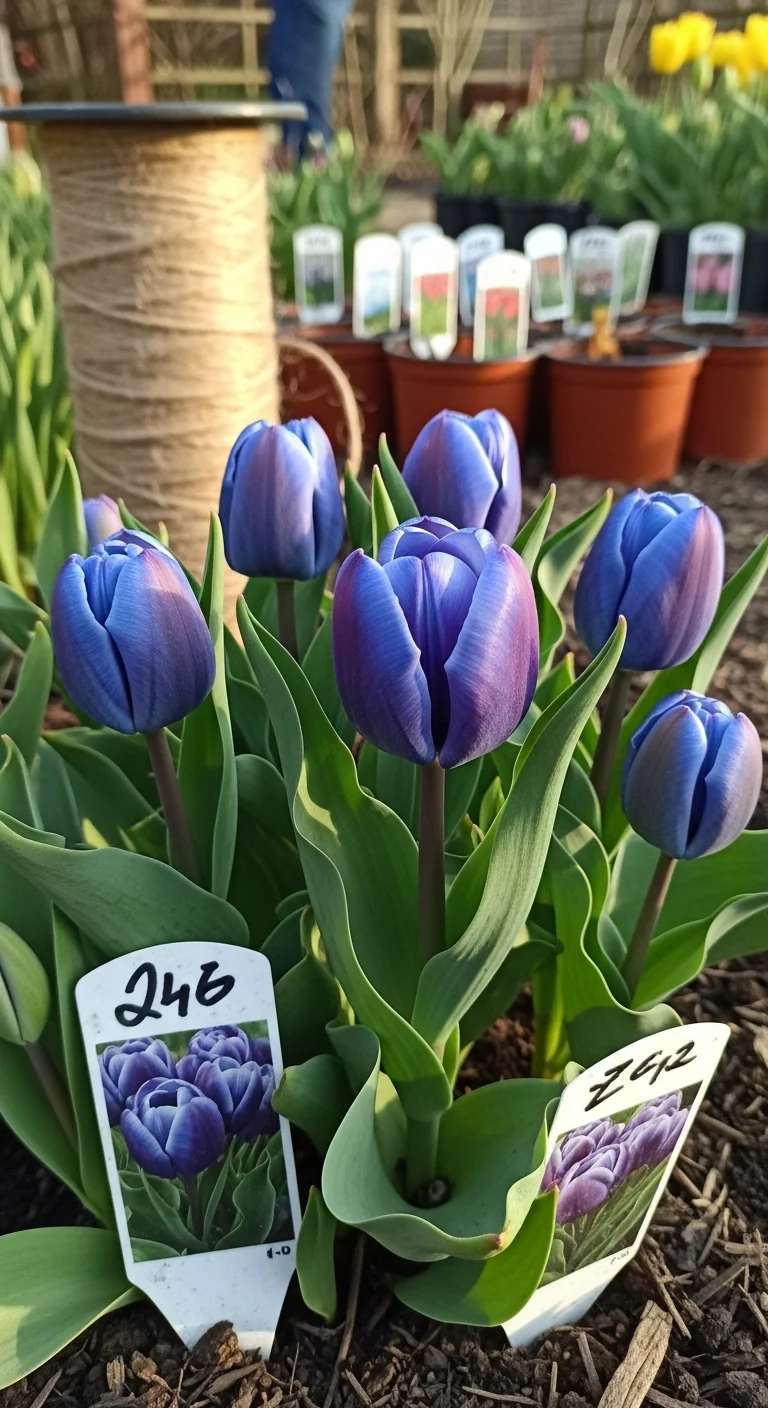
Tulips produce cupped blue blooms in early spring from bulbs planted in fall. They excel as focal points in full-sun beds or containers. Plant bulbs 6 inches deep and 4 to 6 inches apart in well-drained soil when ground temperature drops below 60 F. Choose virus-resistant varieties for repeat performance. Lift and store in warm zones or treat as annuals. A measurable limit: temperatures above 70 F at bloom time shorten display to under two weeks. Deer frequently browse foliage, so protect with netting until leaves yellow.
Pansies
Best for: Branch 2
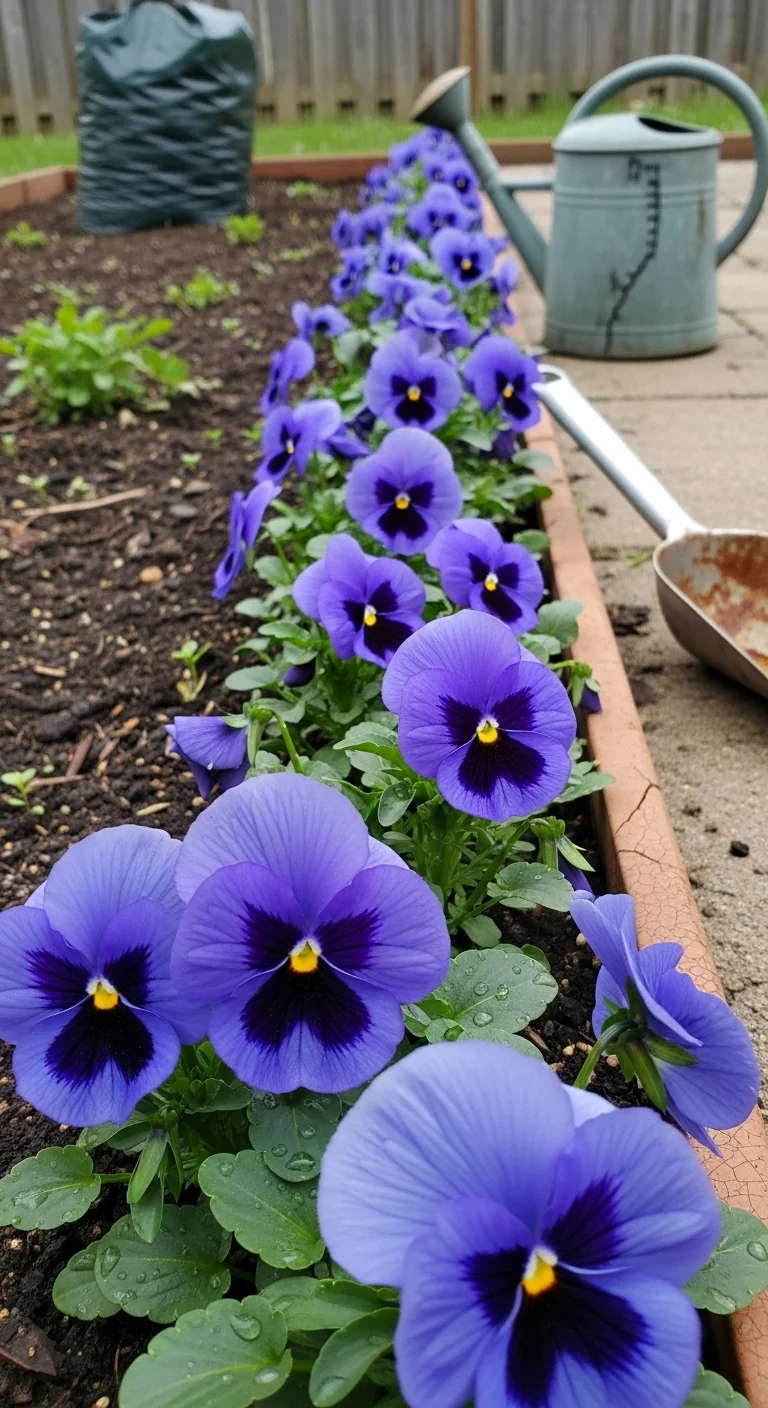
Pansies deliver face-like blue blooms in cool weather. Plant them in partial shade for edging or containers when nights stay above 40 F. Space 6 to 8 inches apart and pinch spent flowers weekly. They tolerate light frost but stop blooming once summer heat exceeds 75 F. Replace with warm-season options after the first heat wave.
Lobelia
Best for: Branch 3
Lobelia forms trailing or upright blue clusters suited to moist containers and bed edges. It thrives when soil stays evenly damp and pH sits below 6.5. Start transplants after last frost. Water daily during dry spells and deadhead to extend bloom into fall. Trailing types spill over pot rims while upright forms fill gaps between taller plants. Avoid dry soil that causes wilting within hours.
Starter Stack (What to Choose First)
Branch 1 Starter Stack
Begin with Delphiniums and Alliums. The tall spires of delphiniums pair with low globe alliums for layered structure that fills space without crowding. Plant in one session: 4 delphiniums and 12 allium bulbs per 10 square feet. Estimated cost 25 to 45 dollars. Time required: 90 minutes.
Branch 2 Starter Stack
Begin with Clematis and Pansies. Clematis covers vertical space while pansies edge the base in cool months. Install one clematis vine and 12 pansies per 8 square feet. Estimated cost 20 to 35 dollars. Time required: 60 minutes.
Branch 3 Starter Stack
Begin with Hydrangeas and Lobelia. Hydrangeas form the shrub backbone while lobelia softens container rims. Use one hydrangea and three lobelia per 6 square feet container or bed. Estimated cost 30 to 50 dollars. Time required: 75 minutes.
When This Won’t Work
Two measurable conditions cause blue flowers to underperform. First, sustained summer highs above 85 F shorten bloom windows for delphiniums and tulips to under three weeks. Second, soil that stays saturated for more than 48 hours after rain leads to bulb rot in alliums and weak stems in salvia.
In either case shift to alternatives that tolerate heat or wet feet. Test drainage by digging a 12-inch hole and filling it with water: if it drains in under four hours the site suits most listed options.
For persistently low-light or wet areas consider shade flowers that maintain color without the same light demands.
Choosing the Right Option for Your Situation
Budget Threshold
If your total spend stays under 50 dollars for a 10 square foot area, start with seed or bulb packs from salvia, alliums, or tulips. Container-grown hydrangeas or clematis push costs higher but deliver instant structure.
Time Threshold
If you can give under 30 minutes per week to maintenance, select effort-score 1 or 2 options such as alliums, tulips, or morning glory. Avoid hydrangeas that require twice-yearly pH checks.
Technical Constraint: Soil Test Availability
If you lack a recent soil pH test, choose non-pH-dependent options from Branch 1 such as delphiniums or salvia. Reserve hydrangeas and lobelia for confirmed acidic sites.
Yes/No Checklist
Full sun 6+ hours and pH 6.0-7.5? Yes: Branch 1.
Partial shade or cool summers? Yes: Branch 2.
Acidic soil or containers? Yes: Branch 3.
Effort score matches your weekly time? Yes: proceed to starter stack.
Expert Q&A
How early can you plant blue flower bulbs for spring display?
Plant tulips and alliums when soil temperature falls below 60 F in fall, typically 6 to 8 weeks before first hard freeze. This timing allows root establishment before winter without premature top growth that risks frost damage.
Which blue flowers resist deer better than others?
Alliums and salvia rank highest because their strong scent and fuzzy or onion-like foliage deter browsing. Delphiniums need early staking and occasional netting in high-pressure areas.
Can blue flowers serve as effective cut-flower crops?
Delphiniums, salvia, and hydrangeas hold in vases for 7 to 10 days when cut at half-open stage and placed in cool water with floral preservative. Harvest in early morning to reduce wilt.
What spacing avoids overcrowding in mixed blue borders?
Space tall delphiniums 18 to 24 inches apart, medium salvia and clematis 12 to 15 inches, and low pansies or lobelia 6 to 8 inches. This prevents air circulation loss that invites mildew.
How do you extend bloom on annual blue flowers like morning glory?
Remove faded blooms before seed pods form and provide consistent moisture without waterlogging. Morning glory responds with new buds within 5 days of deadheading in full sun.
Conclusion
Start with the two-item stack for your branch, plant this season, and track results. Next review perennial flowers to layer additional seasons of interest.