
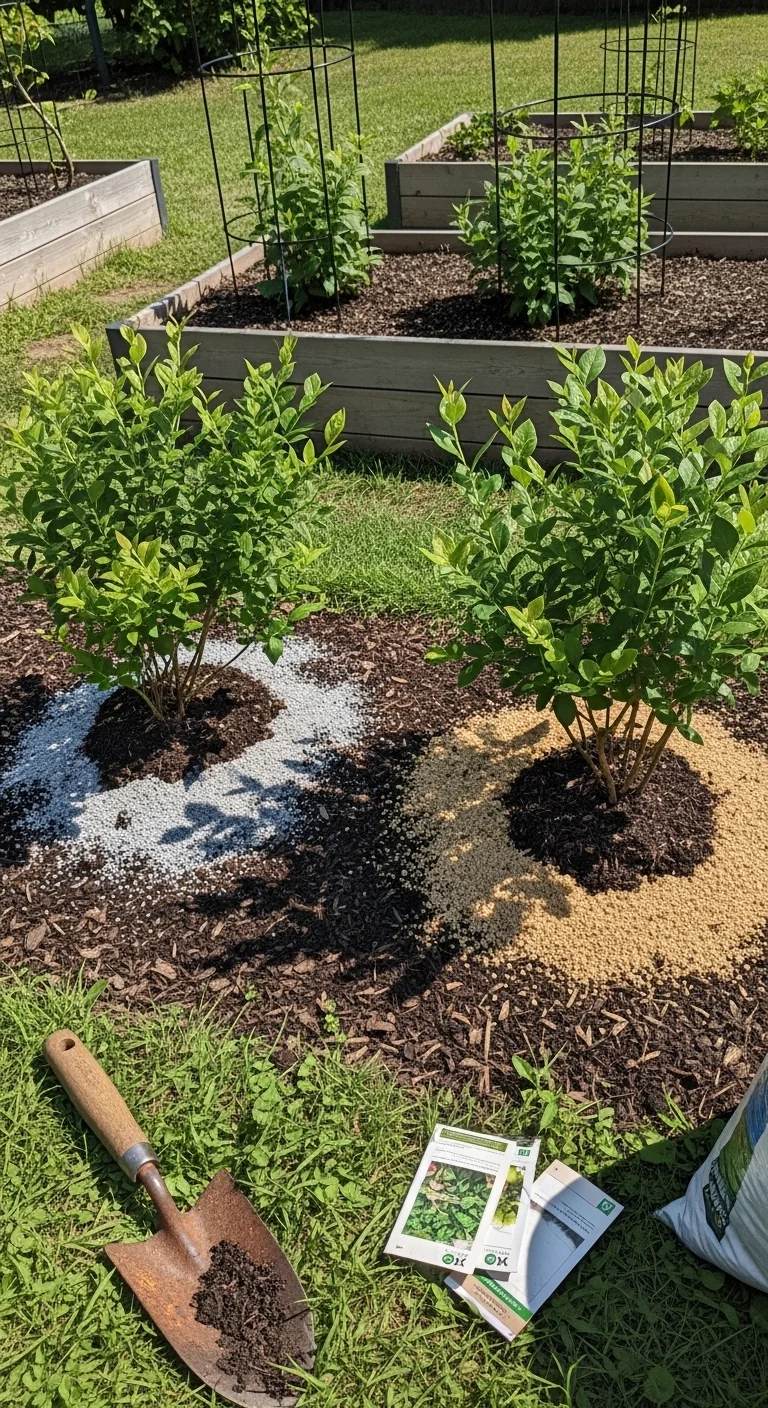
Blueberry soil pH is not a single target number but a starting condition that dictates your entire amendment path. The Yield Grid reframes management as a 3-branch decision grid based on your measured soil pH and growing method to deliver consistent leaf color and fruit production without repeated trial and error.
This guide covers pre-plant correction, maintenance for established plants, and methods for in-ground, raised-bed, and container setups across typical garden conditions in the US, UK, Canada, Australia, and New Zealand. It excludes cultivar selection, pruning schedules, and pest management.
You will identify your exact branch from a single soil test, select the matching options, and apply precise rates and timing to hold soil pH in the 4.5-5.5 range required for blueberries.
Test your soil first, locate your branch, and follow the recommended items to lock in the right pH strategy for your site.
The Yield Grid Decision Grid
Branch 1: Soil pH above 6.0. Alkaline soils common in many regions require major correction before planting. Recommended: Items 1, 4, 6 below.
Branch 2: Soil pH 5.1-6.0. Mildly high pH needs moderate adjustment for reliable uptake of iron and other nutrients. Recommended: Items 2, 5, 7 below.
Branch 3: Soil pH 4.5-5.0. Already suitable range requires only maintenance to prevent gradual rise. Recommended: Items 3, 8, 9 below.
For container setups, see our blueberries in containers guide which adapts these branches to potting mixes.
Quick Comparison Table
| Option | Key mechanism | Best for | Decision Grid Branch | Reapply Class |
|---|---|---|---|---|
| Elemental Sulfur Pre-Plant Incorporation | Microbial conversion to sulfuric acid | In-ground planting prep | Branch 1 | Once (pre-plant) |
| Pine Needle Mulch Layering | Slow release of organic acids from decomposition | Surface maintenance | Branch 2 | Annually |
| Ericaceous Potting Mix for Containers | Pre-adjusted acidic base with peat and bark | Container and raised setups | Branch 3 | Once per repot cycle |
| Ammonium Sulfate Fertilizer Protocol | Acidifying nitrogen source that lowers pH with each feed | Ongoing maintenance | Branch 1 | Monthly during growth |
| Sphagnum Peat Moss Blending | Direct addition of acidic organic matter | Soil volume increase | Branch 2 | Once (at planting) |
| Raised Bed Peat-Sand Construction | Custom acidic blend isolated from native soil | Raised bed planting | Branch 1 | Once (construction) |
| Surface Sulfur Top-Dressing for Established Plants | Gradual microbial action around drip line | Correcting drift in mature bushes | Branch 2 | Every 2-3 years |
| Pine Bark Fines Amendment | Long-lasting acidic organic particles | Top-dressing refresh | Branch 3 | Every 2 years |
| Consistent Rainwater Use for pH Stability | Neutral pH water prevents alkalinity buildup | Long-term pH hold | Branch 3 | Ongoing (irrigation) |
Elemental Sulfur Pre-Plant Incorporation
Best for: Branch 1
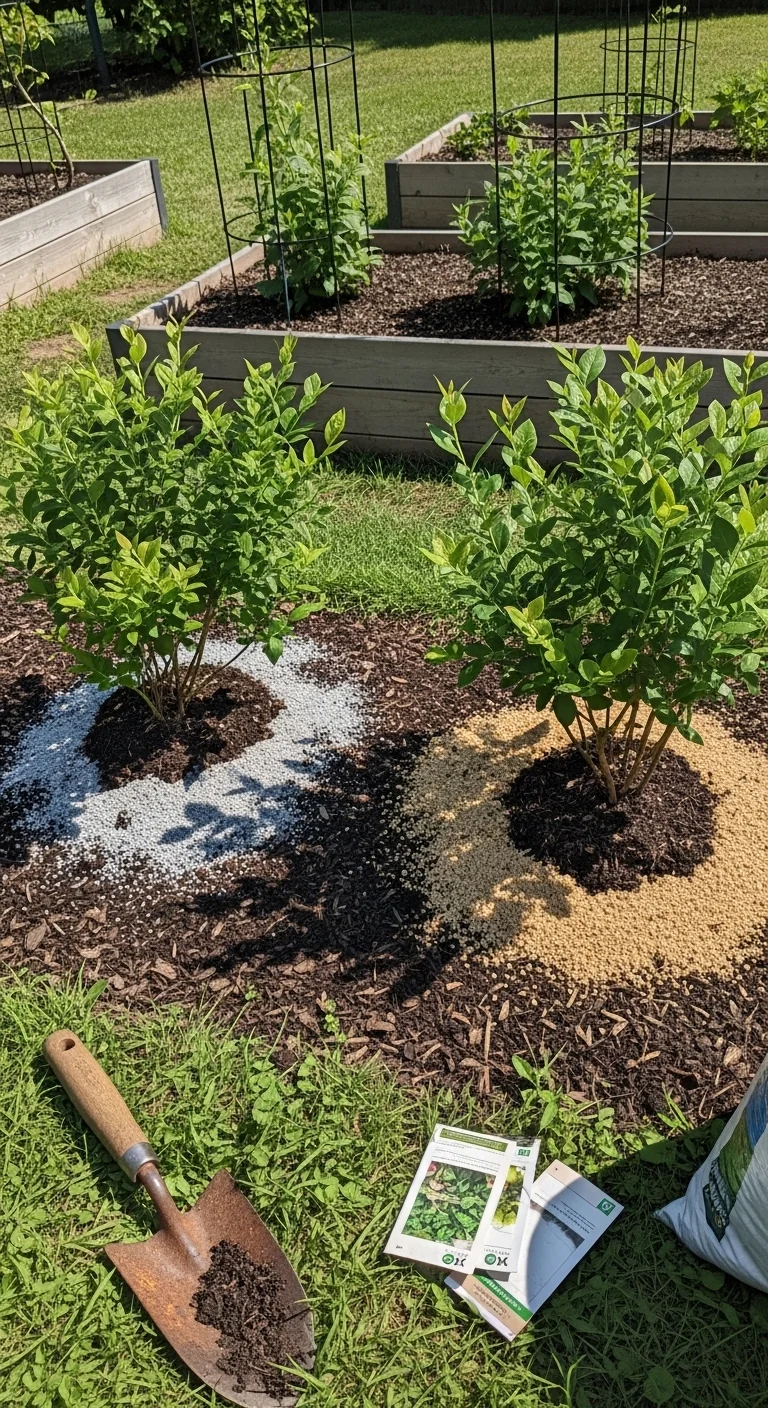
Elemental sulfur is the primary tool for lowering soil pH through soil bacteria that convert it to sulfuric acid. It suits sites where native soil tests above 6.0 and planting is planned 6-12 months ahead. Apply only after a soil test confirms the exact starting pH and soil texture.
Blueprint: Measure current pH and texture. For sandy soils, use 1 pound per 100 square feet to lower pH by one full unit. For loam or clay soils, use 2 pounds per 100 square feet for the same drop. Spread evenly and incorporate into the top 6-8 inches. Water to field capacity and keep soil moist and above 55 F for bacterial activity.
Common mistake: applying the full rate at once in heavy clay or waiting less than six months before planting. Split large corrections over two seasons and retest after three months. Never exceed 400 pounds per acre in any single year on established sites.
Pine Needle Mulch Layering
Best for: Branch 2
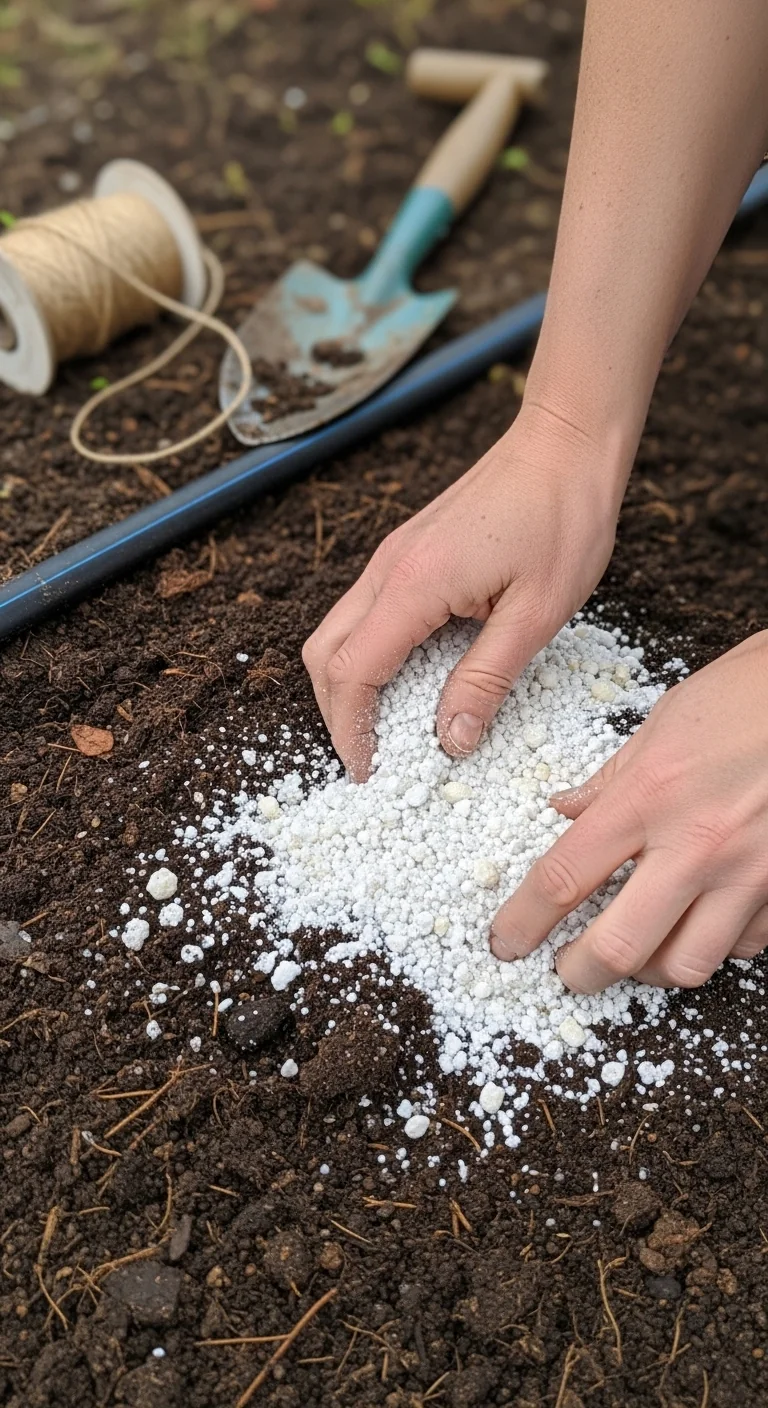
Use pine needle mulch when soil pH sits between 5.1 and 6.0 and you need gentle ongoing acidification without digging. Skip it on already optimal 4.5-5.0 pH sites where it could drop pH too far, or on very sandy soils where rapid drainage reduces the effect.
Edge case: in regions with frequent alkaline irrigation water, refresh the 3-inch layer every spring to counteract upward drift. It also conserves moisture and suppresses weeds around shallow blueberry roots.
Ericaceous Potting Mix for Containers
Best for: Branch 3
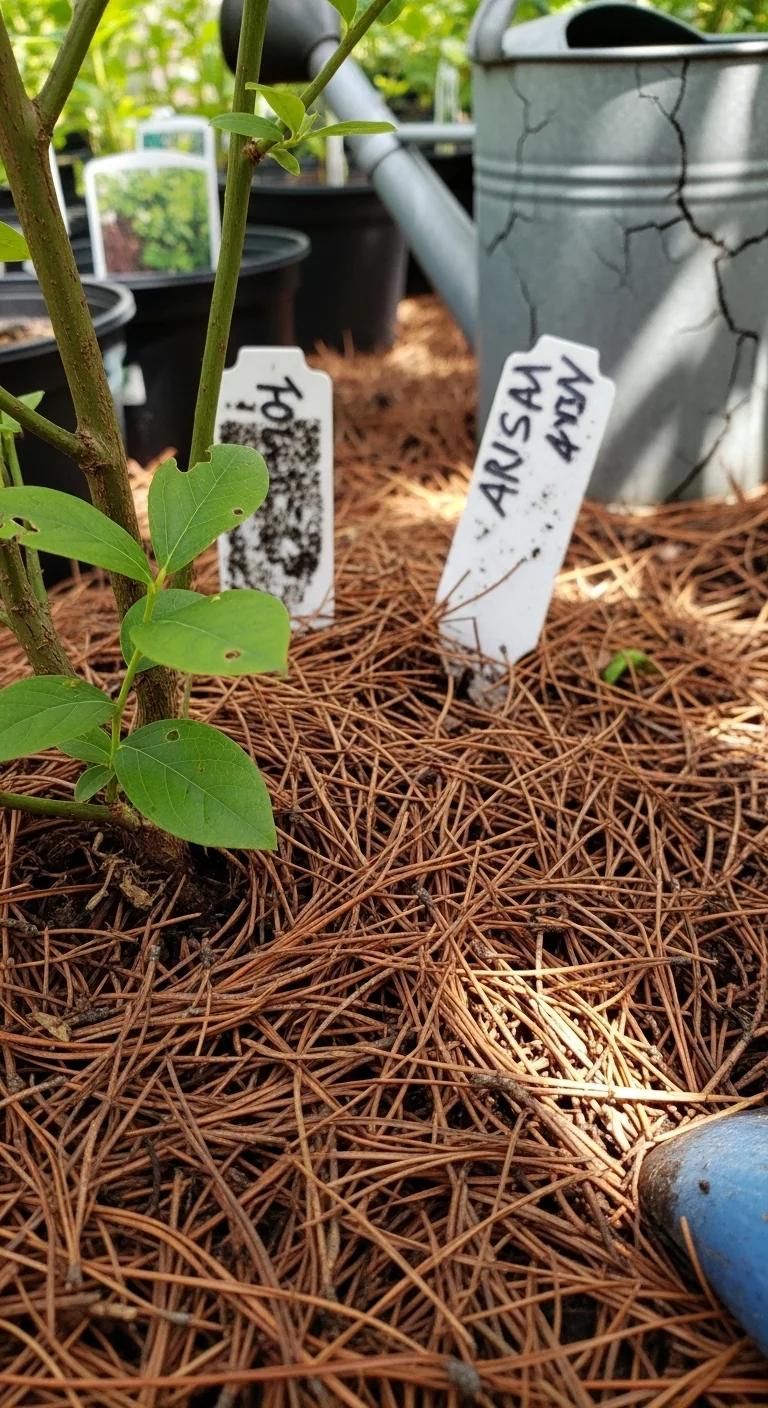
Ericaceous potting mix delivers an immediate pH of 4.5-5.5 without native soil interference. Threshold rule: the bagged mix pH must test below 5.5 before filling pots. If it reads 5.6 or higher, blend in an extra 20 percent sphagnum peat moss by volume and retest.
Adjust for pot size: for a 5-gallon container, start with 100 percent ericaceous mix and top-dress with pine bark fines after six months. Repot every three to five years into fresh mix to reset any upward pH creep from tap water.
Ammonium Sulfate Fertilizer Protocol
Best for: Branch 1
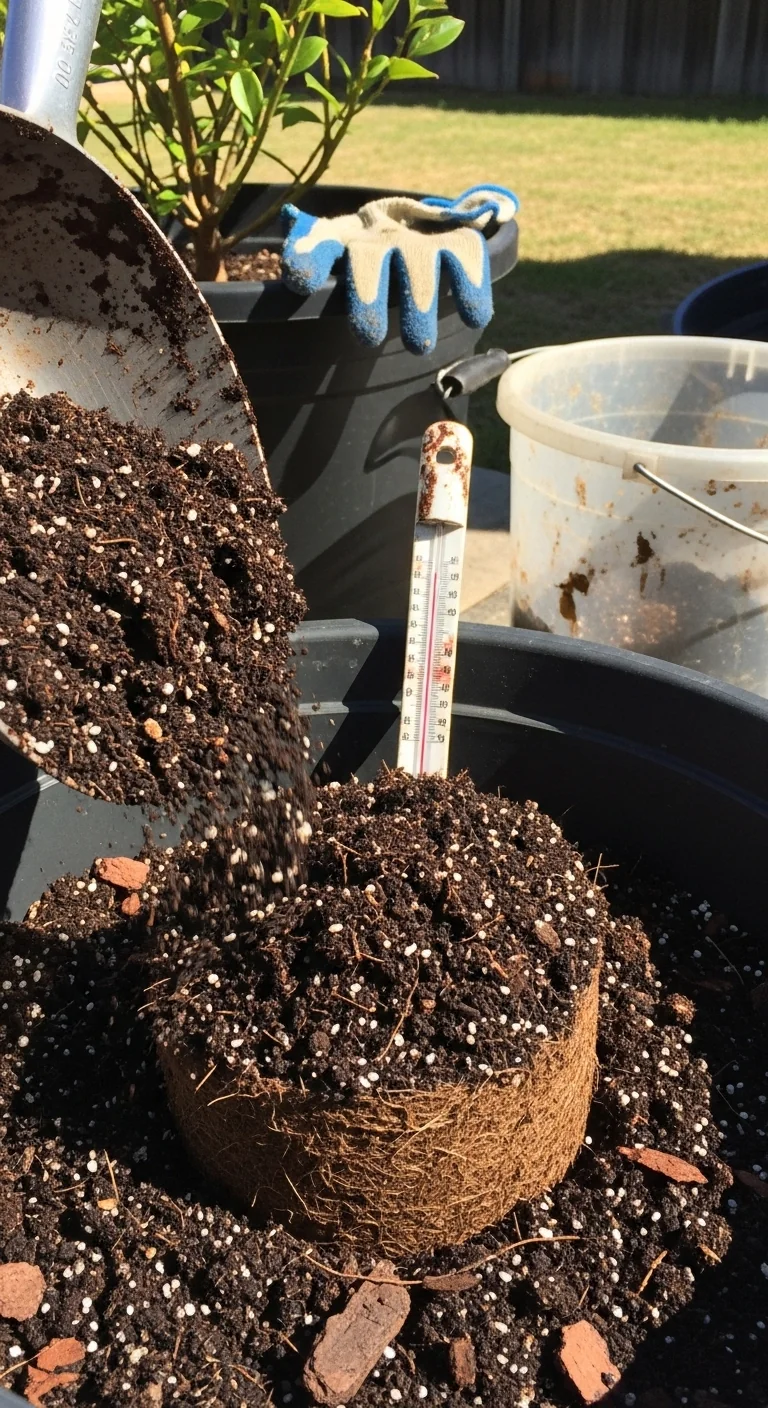
Ammonium sulfate supplies nitrogen while its acidifying reaction helps hold pH in range after initial sulfur correction. It works especially well in Branch 1 sites where pH tends to rebound.
10-minute workflow: In early spring after soil warms, broadcast 1 ounce per plant in a 12-inch circle around the drip line. Water immediately. Repeat every four weeks through early July for a total of four applications per season. Upgrade option: combine with a soil test in late summer to fine-tune the next year’s rate. See our fruit tree fertilizing guide for compatible nitrogen choices that avoid raising pH.
Sphagnum Peat Moss Blending
Best for: Branch 2
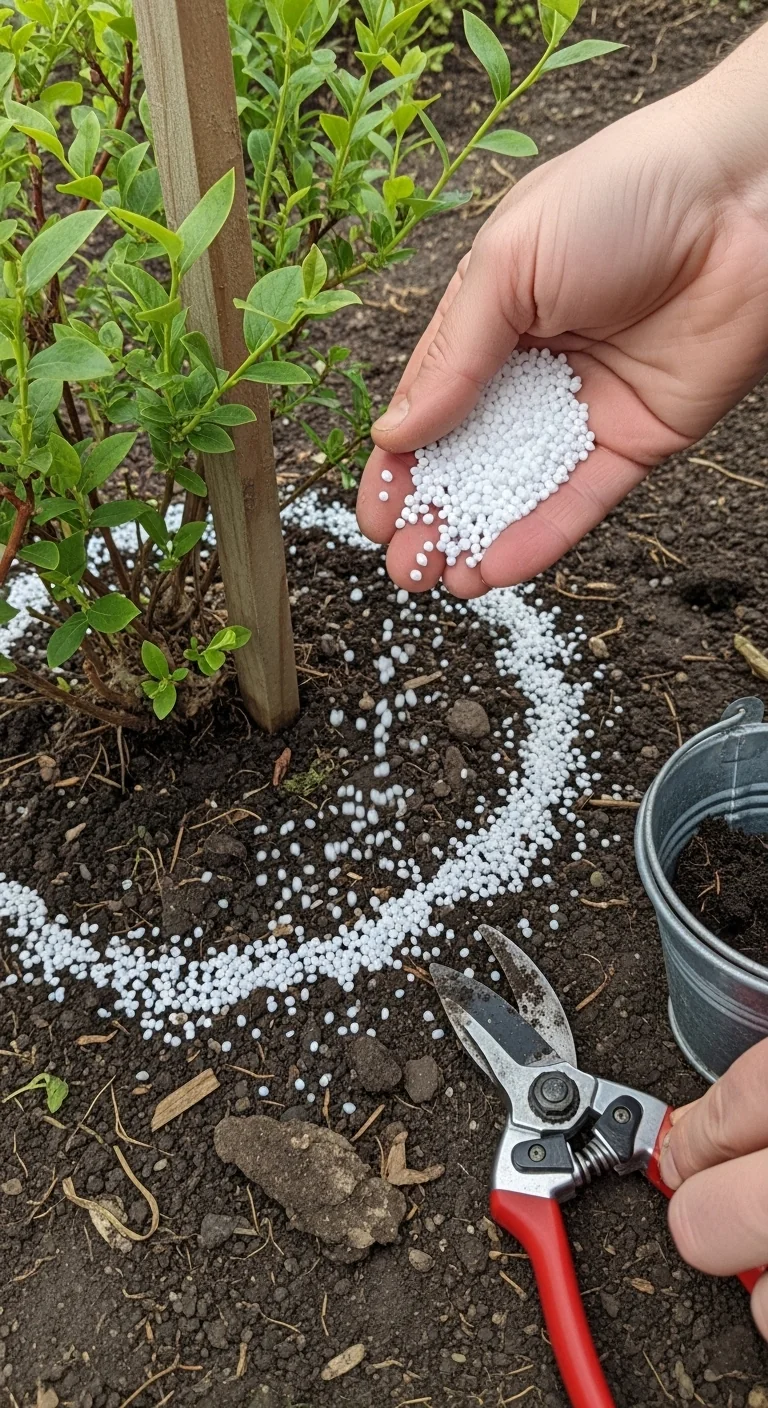
Blend sphagnum peat moss when moderate correction is needed and you want to increase organic matter at the same time. Use versus skip: ideal for loamy soils needing both pH drop and better drainage. Skip on already high-organic sites where extra peat adds little benefit.
Raised Bed Peat-Sand Construction
Best for: Branch 1
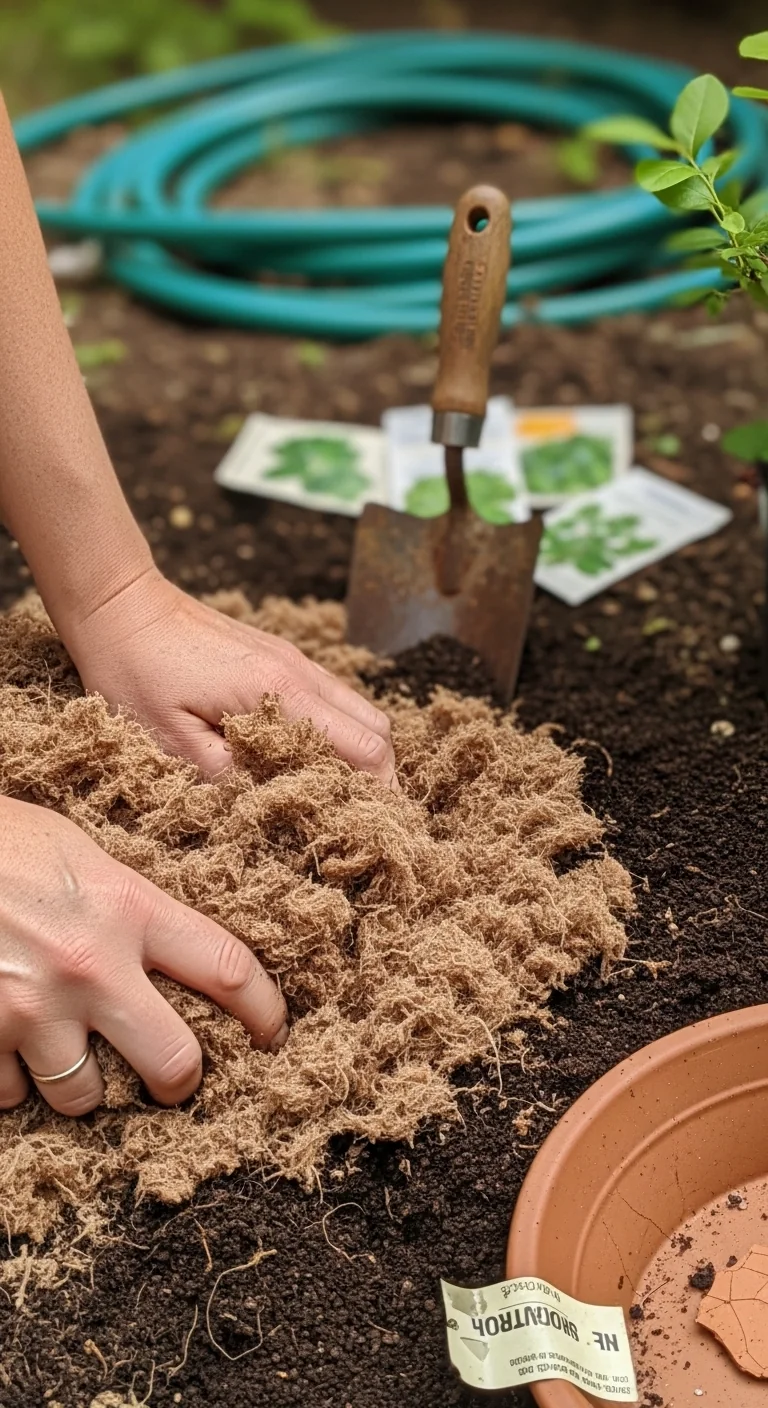
Raised beds isolate the root zone from alkaline native soil. Blueprint: excavate 12 inches deep, then fill with a 50:50 blend of sphagnum peat moss and coarse sand by volume. Add elemental sulfur at half the in-ground rate before mixing. Mound beds 8 inches above surrounding grade for drainage.
Steps: test the final blend pH after two weeks of settling. Plant directly into the mix. See our strawberry raised beds guide for similar berry bed construction details that transfer directly to blueberries.
Surface Sulfur Top-Dressing for Established Plants
Best for: Branch 2
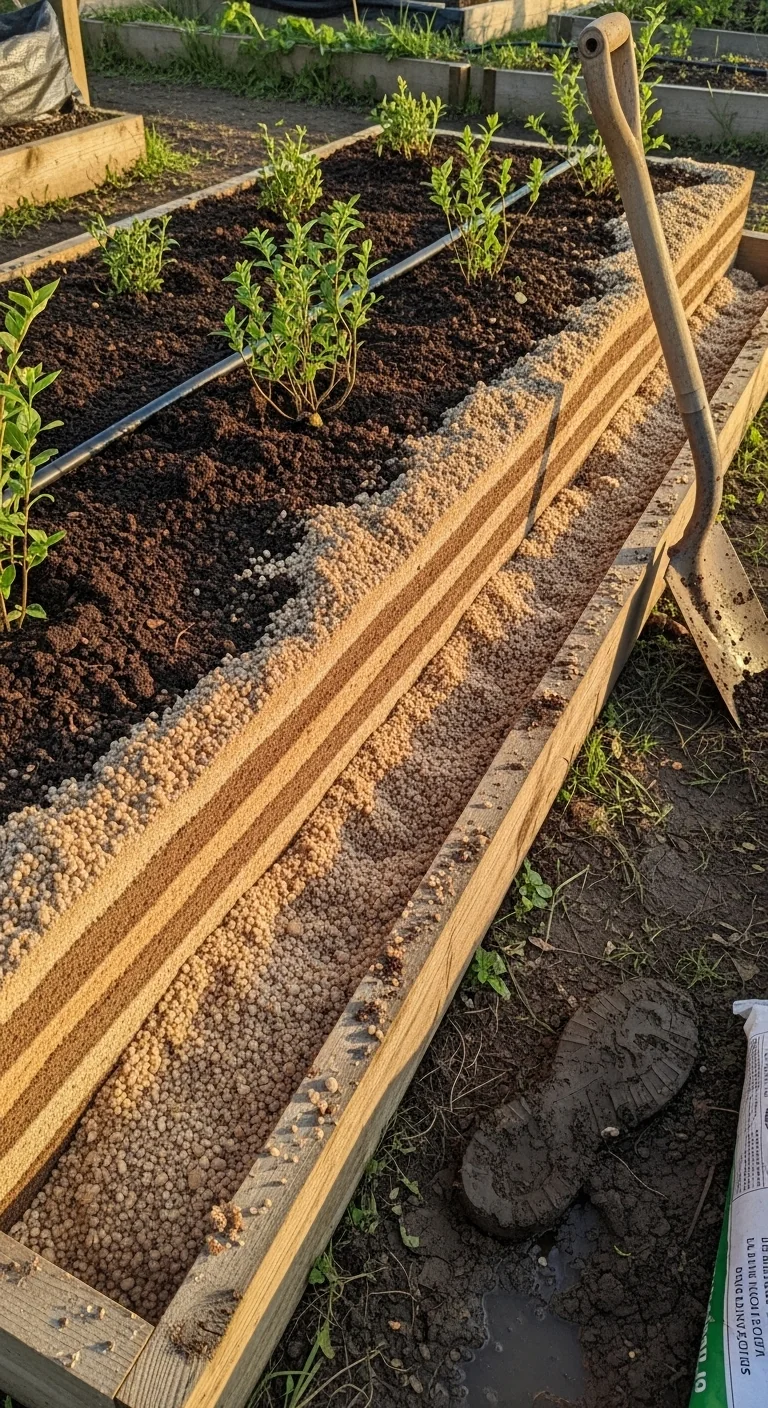
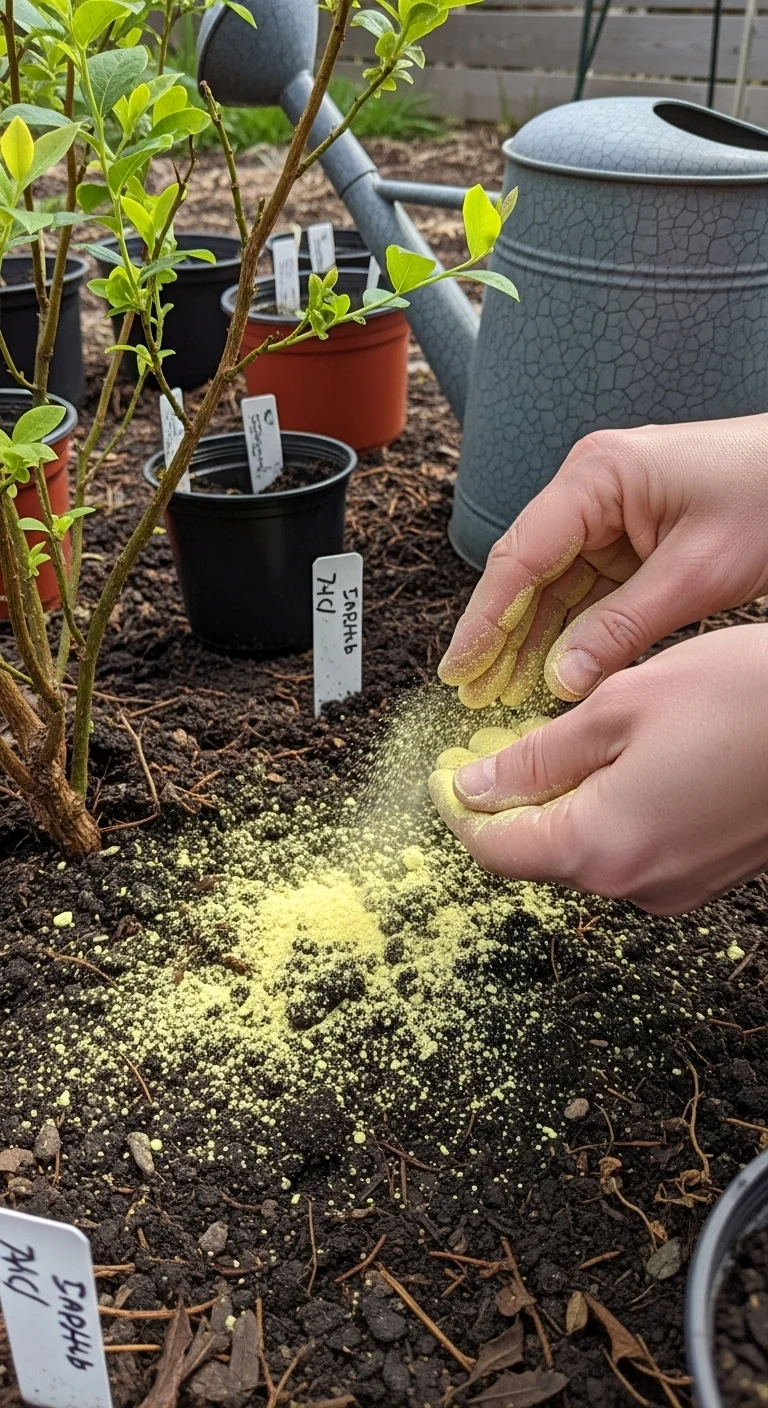
Surface sulfur corrects gradual pH rise around mature bushes without disturbing shallow roots. Threshold rule: apply only if a soil test shows pH has climbed above 5.5. Limit to 3 ounces per plant per application, scattered in a 24-inch circle and watered in. Never apply more than once every two years and retest after six months.
Pine Bark Fines Amendment
Best for: Branch 3
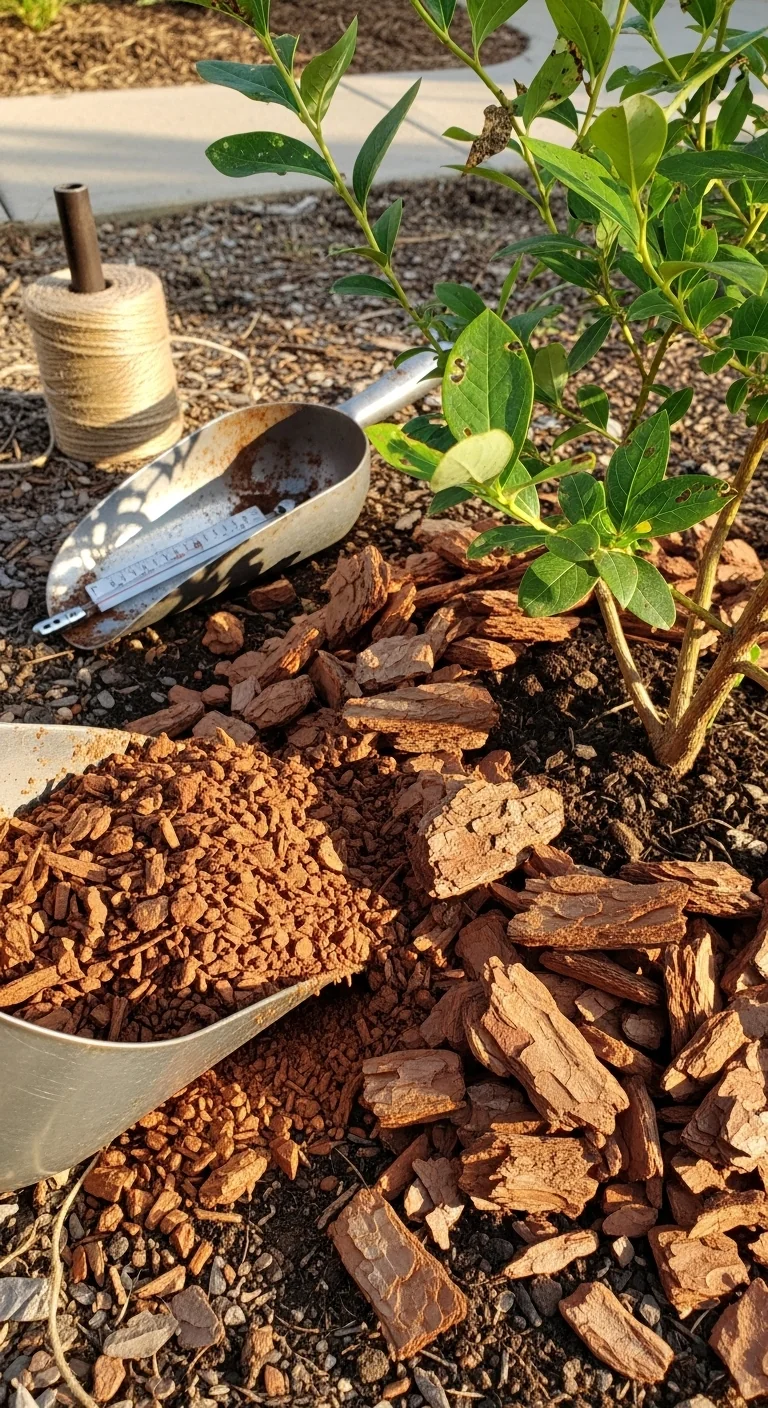
Pine bark fines refresh acidity in already suitable soil without the speed of sulfur. Apply a 2-inch layer every two years around the drip line after the first spring feeding.
Consistent Rainwater Use for pH Stability
Best for: Branch 3
Rainwater (pH near 5.6) prevents the slow rise caused by alkaline tap water in many municipal supplies. Collect and use it for all irrigation once bushes are established. Combine with pine bark fines to extend the interval between any corrective amendments.
Starter Stack (What to Choose First)
For Branch 1 Growers
Start with Item 1 (elemental sulfur pre-plant) paired with Item 4 (ammonium sulfate fertilizer). The sulfur sets the base pH while the fertilizer maintains it through the first two seasons. Estimated cost per plant: low (under $5 total). Time investment: 12 months prep plus four monthly feeds in year one.
For Branch 2 Growers
Start with Item 2 (pine needle mulch) paired with Item 5 (sphagnum peat moss). Mulch provides surface acidification while peat corrects the root zone. Estimated cost per plant: low. Time investment: one afternoon at planting plus annual mulch refresh.
For Branch 3 Growers
Start with Item 3 (ericaceous potting mix) paired with Item 9 (consistent rainwater). The mix locks pH at planting and rainwater prevents drift. Estimated cost per plant: medium for initial mix. Time investment: one repotting session every three to five years.
When This Won’t Work
Soil tests showing free calcium carbonate or calcium levels above 2,000 pounds per acre mean elemental sulfur will have little lasting effect. Switch immediately to raised beds or containers filled with imported acidic mix to bypass the native soil entirely.
Consistent use of irrigation water with pH above 7.5 will neutralize amendments over one to two seasons. Collect rainwater or install a simple acid injection system for watering to counteract the alkalinity.
Choosing the Right Option for Your Situation
Budget Threshold
Under $10 per plant: choose pine needle mulch or rainwater collection. $10-30 per plant: add elemental sulfur or peat moss. Above $30: invest in ericaceous potting mix and raised bed materials for fastest results.
Time Threshold
Less than six months until planting: select container mix or raised bed construction. Six to twelve months available: use elemental sulfur pre-plant incorporation.
Soil Type Constraint
Heavy clay: double sulfur or peat rates and improve drainage first. Sandy soil: standard rates work faster but require more frequent reapplication.
Yes/No Checklist
Soil test pH known and dated within last 12 months? Yes / No
Growing method (in-ground, raised, container) matched to branch? Yes / No
Amendment rate adjusted for soil texture? Yes / No
Retest scheduled three months after first application? Yes / No
Expert Q&A
How does irrigation water pH affect blueberry soil over time?
Water with pH above 7.5 adds dissolved carbonates that slowly raise soil pH by 0.1-0.3 units per season in containers or raised beds. Track water pH with a meter and switch to rainwater or acidified sources when readings exceed 7.0 to keep the root zone stable.
Can I use vinegar to lower blueberry soil pH quickly?
Vinegar provides only a temporary drop that lasts days to weeks before soil buffers rebound. It is unsuitable for long-term management because it does not address the underlying chemistry and can harm beneficial microbes at high concentrations.
What is the difference in pH management between highbush and rabbiteye blueberries?
Highbush types need the strict 4.5-5.5 range for iron uptake. Rabbiteye tolerate up to 5.5-6.0 more readily but still require sulfur if native soil exceeds 6.0. Both respond to the same sulfur rates, but rabbiteye need less frequent retesting in warmer climates.
How often should I retest soil pH after amendments?
Retest every three months during the first year after any sulfur or peat application, then every 12 months thereafter. Sample from the top 6 inches in the drip line zone for the most accurate reading of root-zone conditions.
Do raised beds change the pH adjustment strategy compared to in-ground planting?
Raised beds isolate the root zone so you adjust only the fill mix rather than the entire garden. Use half the standard sulfur rate inside the bed and focus maintenance on the custom blend, which drains faster and requires more frequent organic top-dressings.
Conclusion
The core decision is locating your soil test result on the 3-branch grid and pairing the right initial correction with steady maintenance. The number-one mistake is applying amendments without a current soil test, which leads to either iron deficiency or root burn.
Ready to plant? Follow our when to plant fruit trees guide to align pH adjustments with the optimal planting window for your region.