
“`html
The low maintenance vegetable garden succeeds when you match the setup directly to your yard’s exact sun hours, space limits, and water access instead of forcing generic easy crops that still demand weekly fixes.
This covers nine targeted setups for typical home edible gardens in the US, UK, Canada, Australia, and New Zealand. It excludes daily pruning, chemical inputs, large-scale commercial plots, or high-intervention methods that require constant monitoring.
You will walk away with exact decision rules plus word-counted blueprints and thresholds so you can select the right combination today and plant once for the season.
Lock in your decision grid branch first, then build the paired starter stack to keep all follow-up tasks under 30 minutes per week.
The Yield Grid Decision Grid
Branch 1 applies if your plot receives at least six hours of direct sun daily and you can deliver one deep watering session per week. This covers most temperate backyard conditions in the US, UK, and Canada. Recommended: Items 1, 3, and 6 below.
Branch 2 applies if rainfall stays under 25 inches per year or soil dries out within three days after rain. This fits arid pockets in Australia and parts of the US southwest. Recommended: Items 4, 7, and 9 below.
Branch 3 applies if available growing space measures under 50 square feet or sits on a balcony with vertical options only. Recommended: Items 2, 5, and 8 below.
For the structural base layer that supports all three branches, see our raised bed vegetable garden guide.
Quick Comparison Table
| Option | Key mechanism | Best for | Decision Grid Branch | Effort Score |
|---|---|---|---|---|
| 1. No-Till Mulched Garlic and Onion Bed | Thick organic layer retains soil moisture and blocks weed emergence after fall planting | Temperate full-sun yards | Branch 1 | 1 |
| 2. Fabric Bag Potato Towers | Air-pruning fabric sides direct energy to tubers with minimal soil volume | Small spaces or balconies | Branch 3 | 2 |
| 3. Vertical Pole Bean Trellis System | Nitrogen-fixing roots enrich surrounding soil while vertical growth eliminates ground-level weeding | Temperate full-sun yards | Branch 1 | 2 |
| 4. Drought-Resistant Squash Mound Bed | Mounded soil plus thick surface cover directs limited water straight to roots | Arid or low-rainfall areas | Branch 2 | 2 |
| 5. Balcony Pepper Container Stack | Stacked pots with bottom reservoirs reduce evaporation in exposed urban spots | Small spaces or balconies | Branch 3 | 3 |
| 6. Determinate Tomato Mulch Rows | Determinate growth habit plus surface mulch limits staking and water loss | Temperate full-sun yards | Branch 1 | 2 |
| 7. Deep-Rooted Beet and Carrot Patches | Deep taproots access subsoil moisture once established with minimal surface disturbance | Arid or low-rainfall areas | Branch 2 | 1 |
| 8. Trellised Cucumber Window Boxes | Vertical trellis in narrow boxes channels growth upward and reduces soil contact | Small spaces or balconies | Branch 3 | 3 |
| 9. Eggplant in Low-Water Raised Beds | Compact bush habit combined with mulch layer conserves soil moisture in heat | Arid or low-rainfall areas | Branch 2 | 2 |
1. No-Till Mulched Garlic and Onion Bed
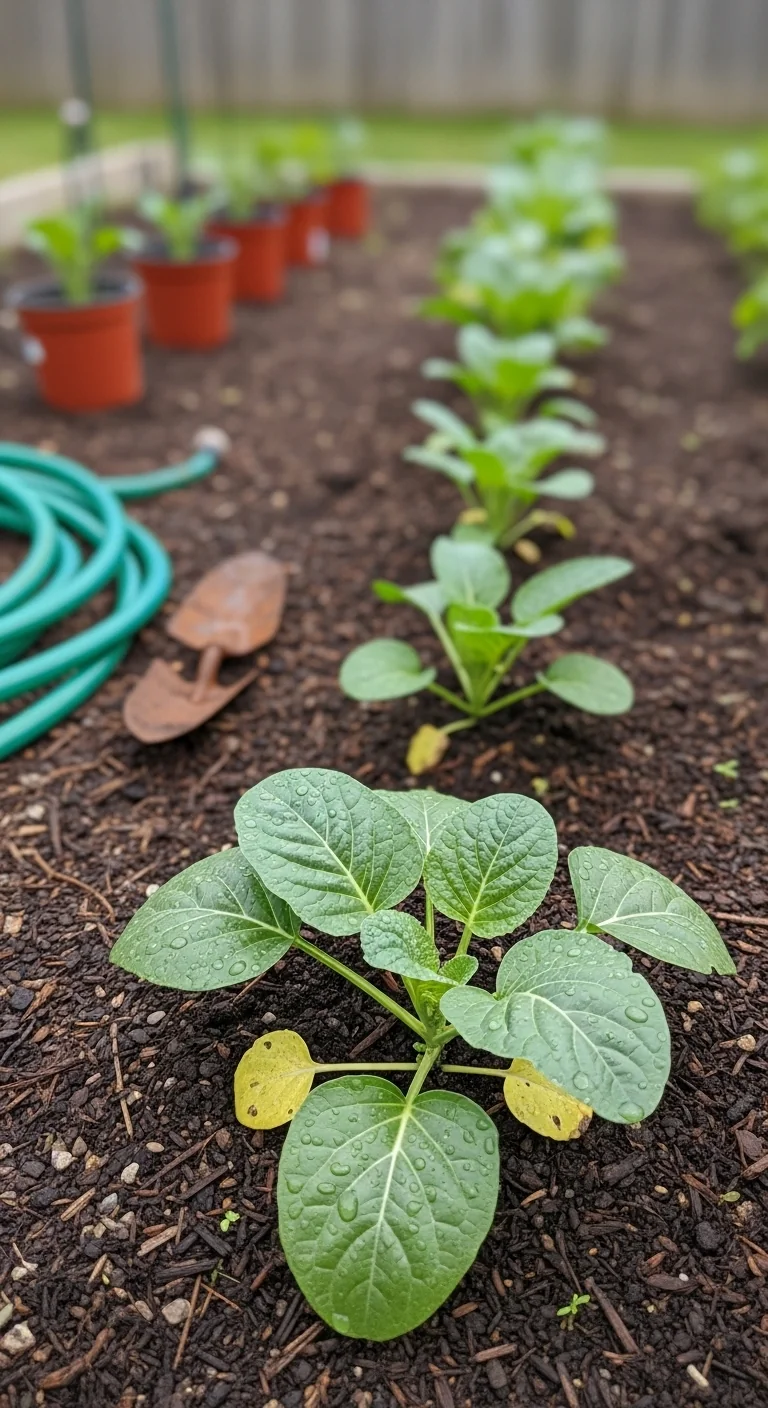
Best for: Branch 1
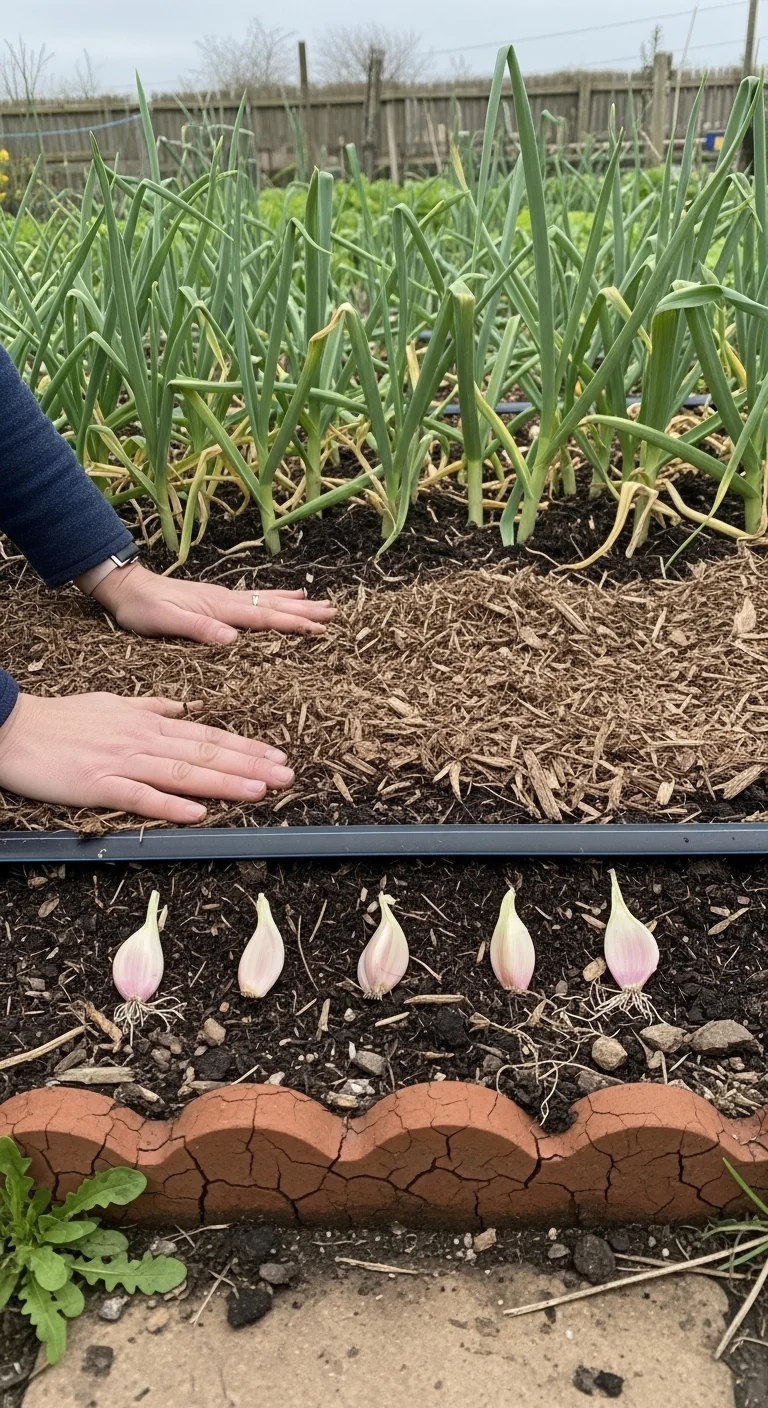
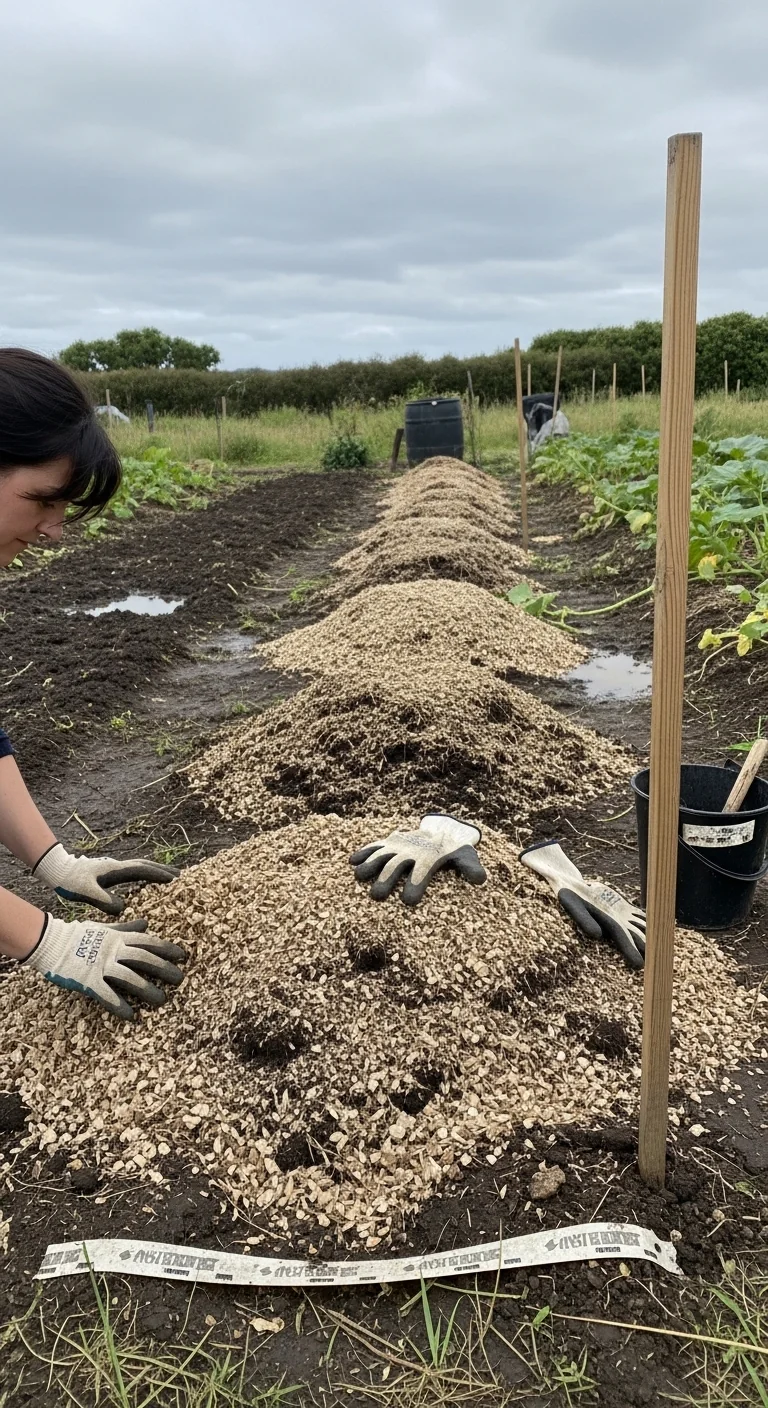
Start with a 4-by-8-foot raised bed or cleared ground section. Plant garlic cloves and onion sets in fall when soil temperature drops to 50 degrees F. Space cloves 6 inches apart at 2 inches deep. Cover the entire surface with 4 inches of shredded leaves or straw right after planting. This layer holds moisture through winter and prevents weed seeds from germinating in spring. In spring the crop emerges and bulks up with no further input until harvest in early summer. The edge case occurs in heavy clay soil: loosen the top 6 inches once before planting to avoid bulb rot. After harvest, the bed remains mulched and ready for rotation next fall. See our mulching vegetable garden guide for exact material choices and renewal timing.
2. Fabric Bag Potato Towers
Best for: Branch 3
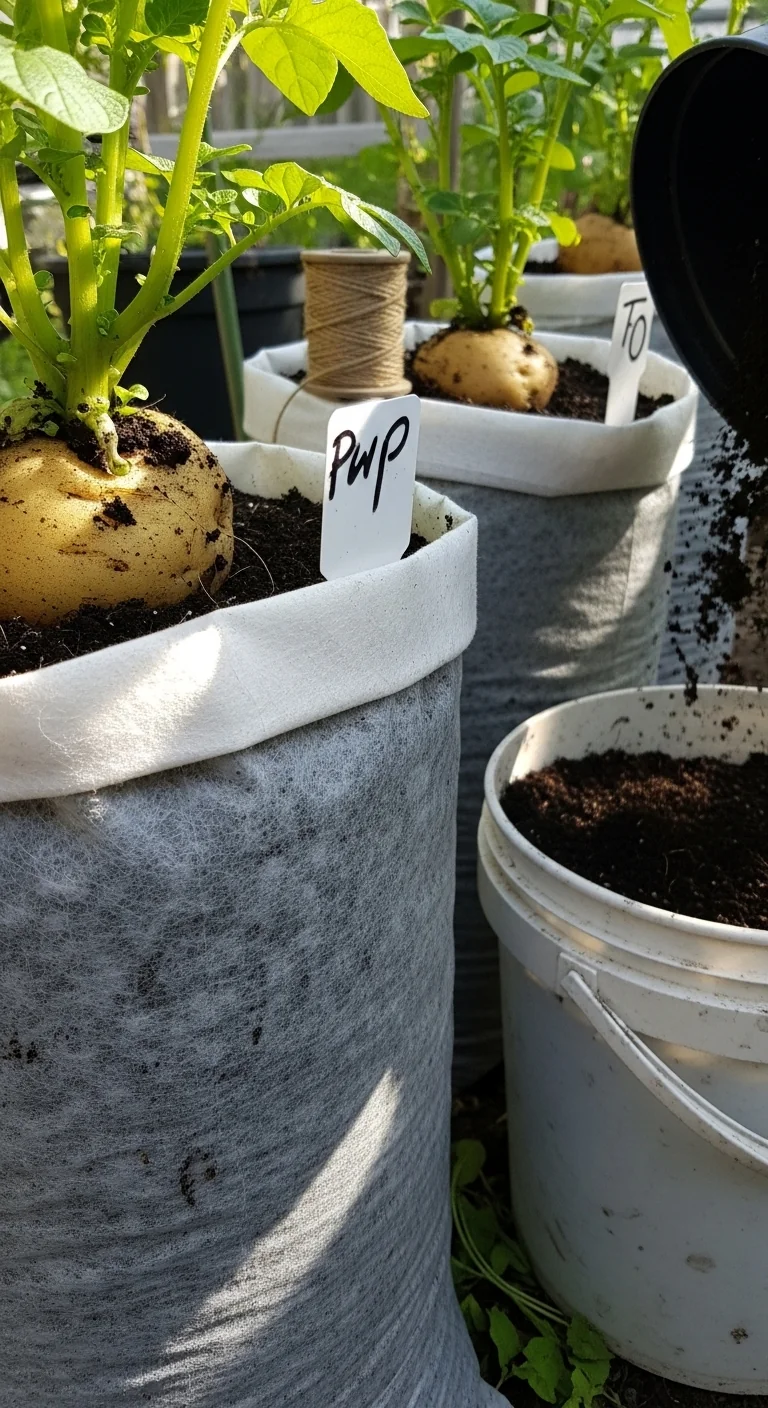
Use vs skip: Choose fabric grow bags when space is limited to 10 square feet because the porous sides prune roots naturally and direct all energy into tubers. Skip if your balcony receives under four hours of sun because tubers will stay small. Edge case: in windy high-rise locations, secure bags to a railing to prevent tipping once filled. Fill to one-third with compost, plant seed potatoes, and add soil in layers as stems grow. One initial planting and one mid-season soil top-up deliver the full harvest with no digging required.
3. Vertical Pole Bean Trellis System
Best for: Branch 1
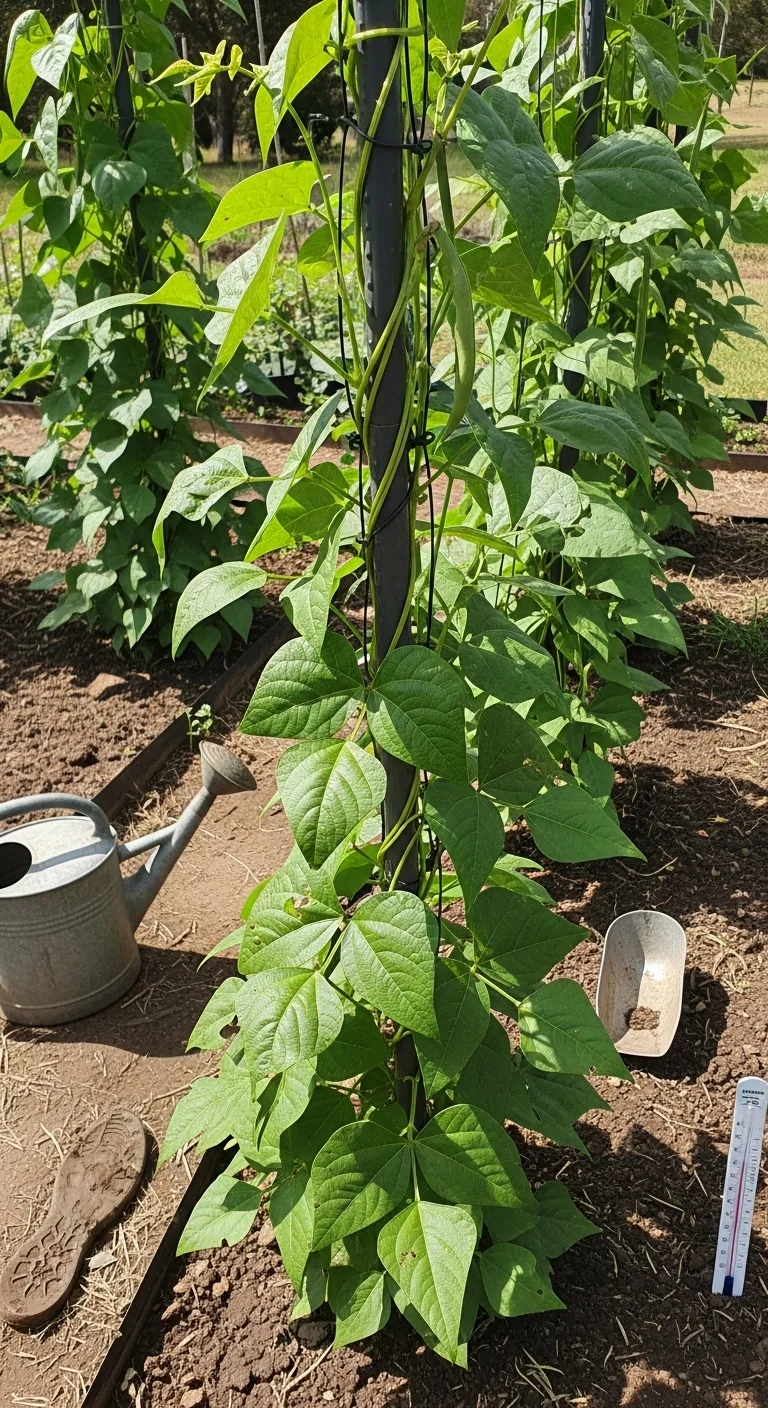
Install a simple A-frame trellis of 6-foot stakes and twine before the last spring frost. Sow pole bean seeds 2 inches deep every 6 inches along the base. The plants climb on their own and fix nitrogen into the soil at the root zone, feeding nearby crops without any added fertilizer. Threshold rule: maintain soil pH between 6.0 and 7.0; if below 6.0, mix in 1 cup of garden lime per 10 square feet at planting only. Adjustment: shorten the trellis to 4 feet in shorter-season areas north of zone 6. Harvest pods continuously from midsummer until first frost with zero ground-level maintenance.
4. Drought-Resistant Squash Mound Bed
Best for: Branch 2
Build 18-inch-high mounds spaced 4 feet apart in a sunny spot. Mix native soil with compost in each mound, plant 3 squash or zucchini seeds per mound, and apply 3 inches of coarse mulch around the base immediately. The mound shape funnels scarce water downward while the mulch layer cuts surface evaporation. 10-minute workflow: form mounds in one session, plant seeds, mulch, then walk away until harvest. Upgrade option: add a single soaker hose loop under the mulch if the first two weeks stay completely dry. See our zucchini and squash guide for variety selection by region.
5. Balcony Pepper Container Stack
Best for: Branch 3
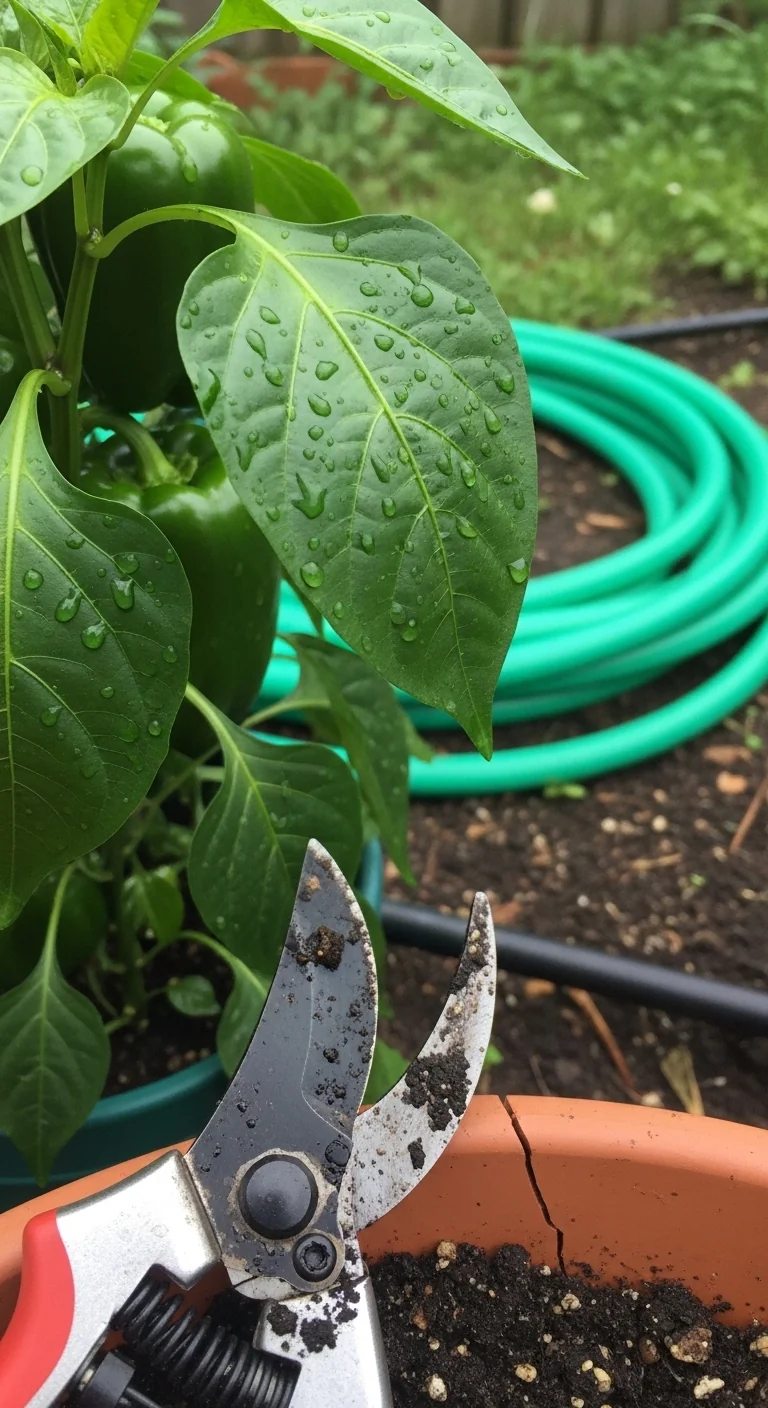
Stack two 10-gallon pots with a reservoir tray at the bottom. Fill with potting mix amended with 10 percent compost. Transplant pepper seedlings after all frost risk passes and water only when the top inch feels dry. The stacked design creates a microclimate that holds humidity and reduces watering frequency on exposed balconies. See our peppers in pots guide for exact pot sizes and drainage steps.
6. Determinate Tomato Mulch Rows
Best for: Branch 1
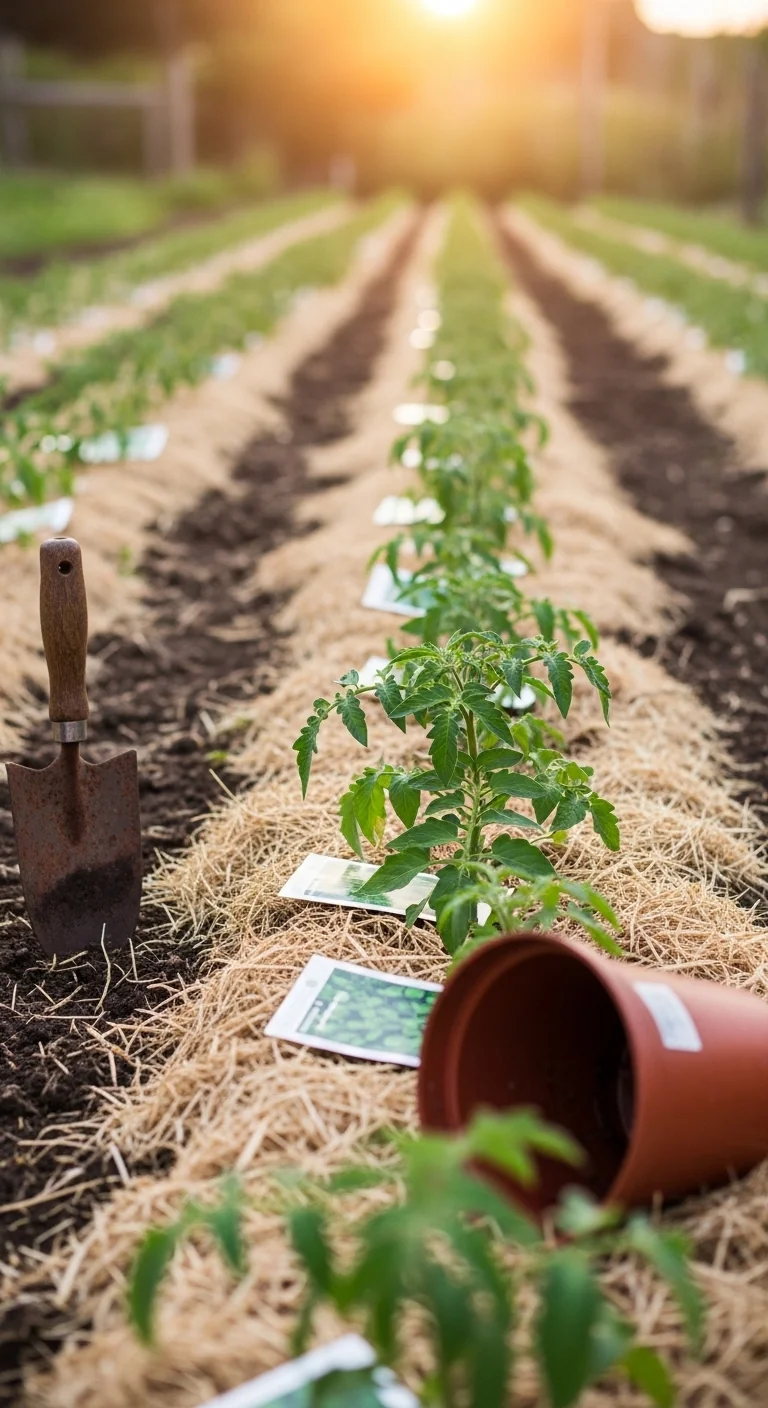
Plant determinate tomato varieties 24 inches apart in a single row after soil warms above 60 degrees F. Apply 3 inches of mulch between plants right after transplanting. The compact growth habit stops at 3 to 4 feet tall and sets fruit in one concentrated wave, eliminating the need for ongoing staking or suckering. Harvest the entire crop in a two-week window then clear the row. See our best tomato varieties guide for region-specific determinate picks.
7. Deep-Rooted Beet and Carrot Patches
Best for: Branch 2
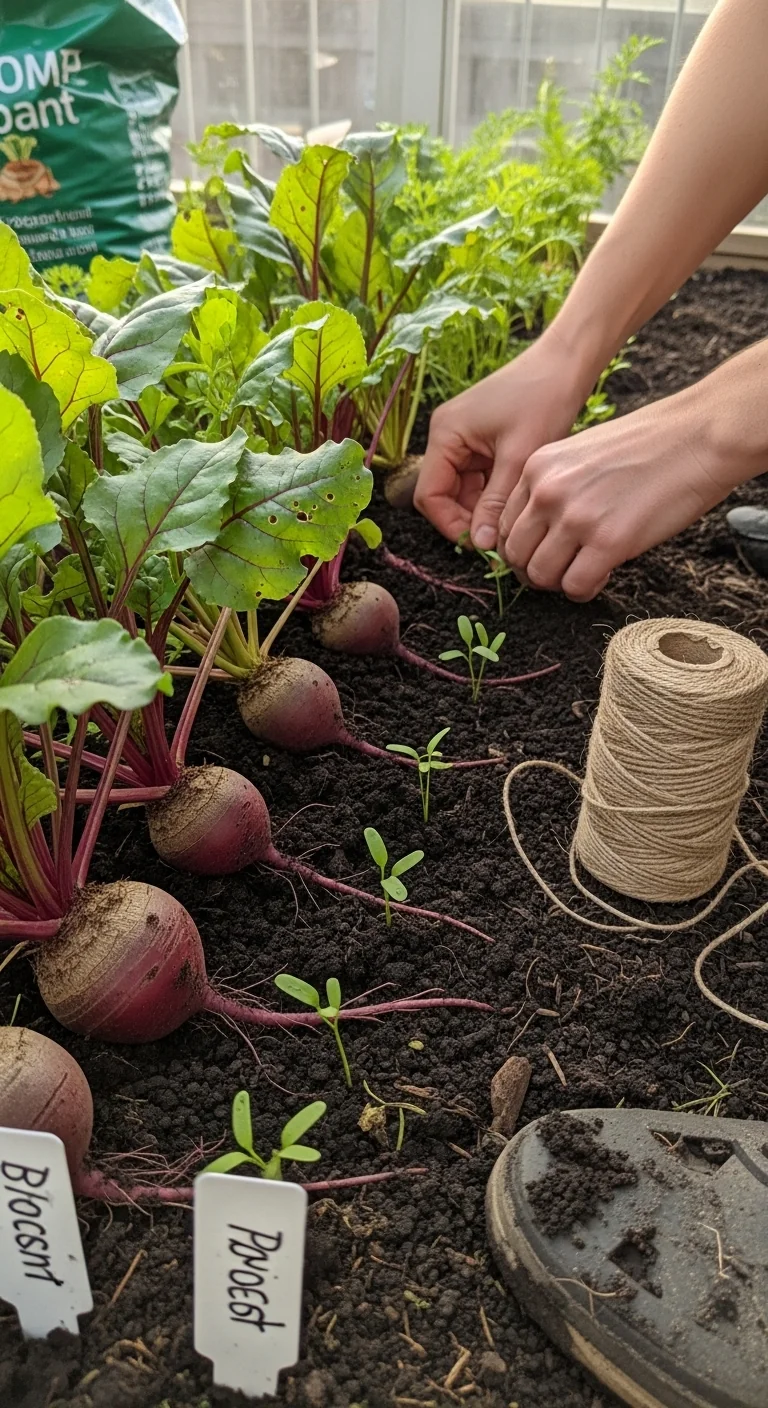
Prepare a 4-foot-wide bed loosened to 12 inches deep. Sow beet and carrot seeds in rows 3 inches apart once soil reaches 50 degrees F in spring. Thin seedlings to 3 inches for beets and 2 inches for carrots. The taproots reach subsoil moisture on their own after the first four weeks, so surface watering drops to once every 10 days in low-rainfall zones. Maintain mulch at 2 inches to keep soil cool. Harvest when shoulders reach 2 inches wide for beets or 1 inch for carrots. See our growing beets guide for thinning timing and storage tips.
8. Trellised Cucumber Window Boxes
Best for: Branch 3
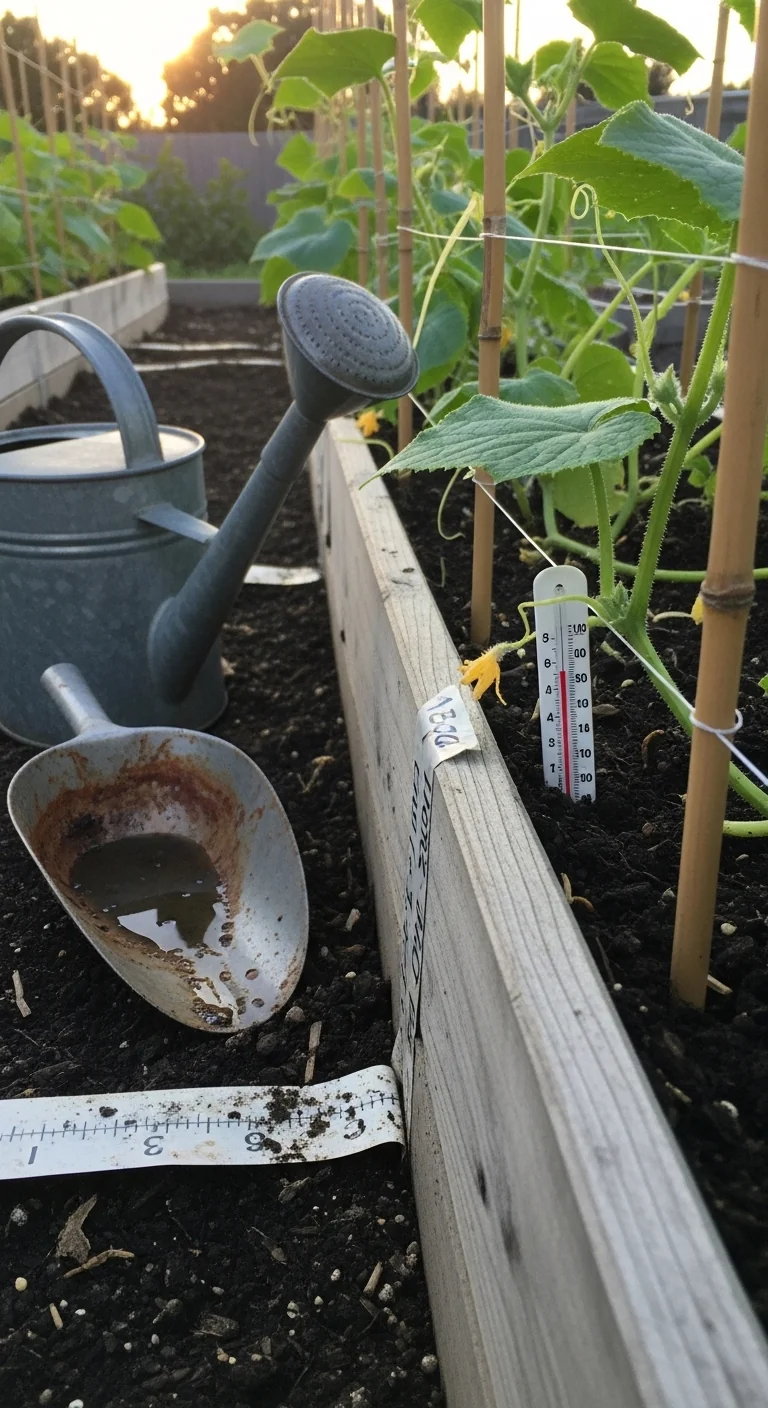
Mount narrow 12-inch-deep window boxes along a railing or wall. Install a vertical bamboo trellis at planting. Sow cucumber seeds 1 inch deep after frost risk ends. The trellis keeps vines off the ground and reduces disease pressure while the shallow box limits water volume needed. See our cucumbers on trellis guide for spacing and support height.
9. Eggplant in Low-Water Raised Beds
Best for: Branch 2
Use a 4-by-4-foot raised bed filled with native soil plus 20 percent compost. Transplant eggplant seedlings 18 inches apart after soil hits 65 degrees F. Apply 3 inches of mulch across the surface. The compact bush varieties produce fruit steadily through heat without extra water once roots establish in the first three weeks. Harvest when fruit reaches 4 to 6 inches long and glossy.
Starter Stack (What to Choose First)
Branch 1: Garlic Bed plus Pole Beans
Pair the no-till garlic and onion bed with the vertical pole bean trellis. Garlic deters soil pests while beans add nitrogen for the next rotation. Materials cost 40 to 70 dollars. Setup time runs 3 to 4 hours in fall and spring.
Branch 2: Squash Mound plus Beet and Carrot Patches
Combine the drought-resistant squash mound with deep-rooted beet and carrot patches. The mounds shade the root crops slightly and the shared mulch layer conserves water across both. Materials cost 30 to 55 dollars. Setup time runs 2 hours.
Branch 3: Potato Towers plus Pepper Container Stack
Start with fabric bag potato towers paired with the balcony pepper container stack. Both use vertical space and minimal soil volume for quick establishment on small surfaces. Materials cost 45 to 75 dollars. Setup time runs 90 minutes.
When This Won’t Work
These setups fail when soil temperature stays below 45 degrees F for more than two weeks after the recommended planting window because root establishment slows dramatically and weeds overtake the mulch layer. Switch to starting seeds indoors four weeks earlier or select cold-hardy alternatives from your local extension schedule.
The setups also fail when the plot receives under four hours of direct sun even in Branch 1 because fruiting crops stay vegetative and never set harvestable produce. Measure sun with a phone app over three days before committing; if light is marginal, relocate containers to the brightest spot or test one season only.
Choosing the Right Option for Your Situation
Budget Threshold
Under 100 dollars in materials favors items 1, 2, 4, and 7 because they use free or bulk organic matter and basic containers. Over 100 dollars opens trellis hardware and stacked pots in items 3, 5, and 8.
Time Threshold
Under 1 hour per week available selects effort score 1 and 2 items only. Items 5 and 8 require a quick weekly moisture check and therefore fit only if you have 30 minutes every seven days.
Soil Type Constraint
Heavy clay needs the no-till garlic bed or squash mound because the surface mulch prevents compaction. Sandy soil pairs best with deep-rooted beet and carrot patches because roots penetrate quickly without added amendments.
Yes or no checklist:
Does your plot match one decision grid branch exactly?
Is soil temperature at or above the crop threshold on planting day?
Does your sun exposure meet the branch minimum?
Can you source the mulch or compost locally this week?
Expert Q&A
How do I adjust the garlic bed for colder climates in Canada or the northern UK?
Plant two weeks earlier than the 50 degrees F soil guideline and increase mulch depth to 6 inches. This buffers the cloves against freeze-thaw cycles while still allowing spring emergence without extra protection.
What is the simplest way to integrate companion planting without adding weekly tasks?
Interplant pole beans at the base of the trellis with the garlic bed edges. The beans climb independently and the garlic scent repels pests naturally, so no separate rows or maintenance steps appear.
Can container setups like potato towers handle partial shade on a balcony?
They tolerate four to five hours of sun if you choose early-maturing varieties and keep the fabric bags elevated for air flow. Below four hours, tubers form poorly regardless of watering routine.
When is the ideal harvest window for these low maintenance systems to avoid storage issues?
Check garlic and onions when half the tops yellow and fall over, usually early to mid summer. Pull beets and carrots before diameters exceed 3 inches to keep them tender. Most setups finish in a single concentrated two-week period.
How do drought-tolerant mounds compare to standard watering schedules in hot summers?
The mounds cut watering frequency to once every 10 to 14 days once established because the raised shape and mulch direct every drop to the root zone instead of letting it evaporate from flat ground.
Conclusion
The single biggest decision is locking in your decision grid branch before any planting because it determines the entire stack and eliminates guesswork on water and space. The number one mistake is ignoring the soil temperature threshold at planting time, which leads to slow establishment and unexpected weed pressure later.
Next step: cross-check your local last-frost and soil-temperature dates with our vegetable planting calendar so you hit the exact window for your chosen setup this season.
“`