
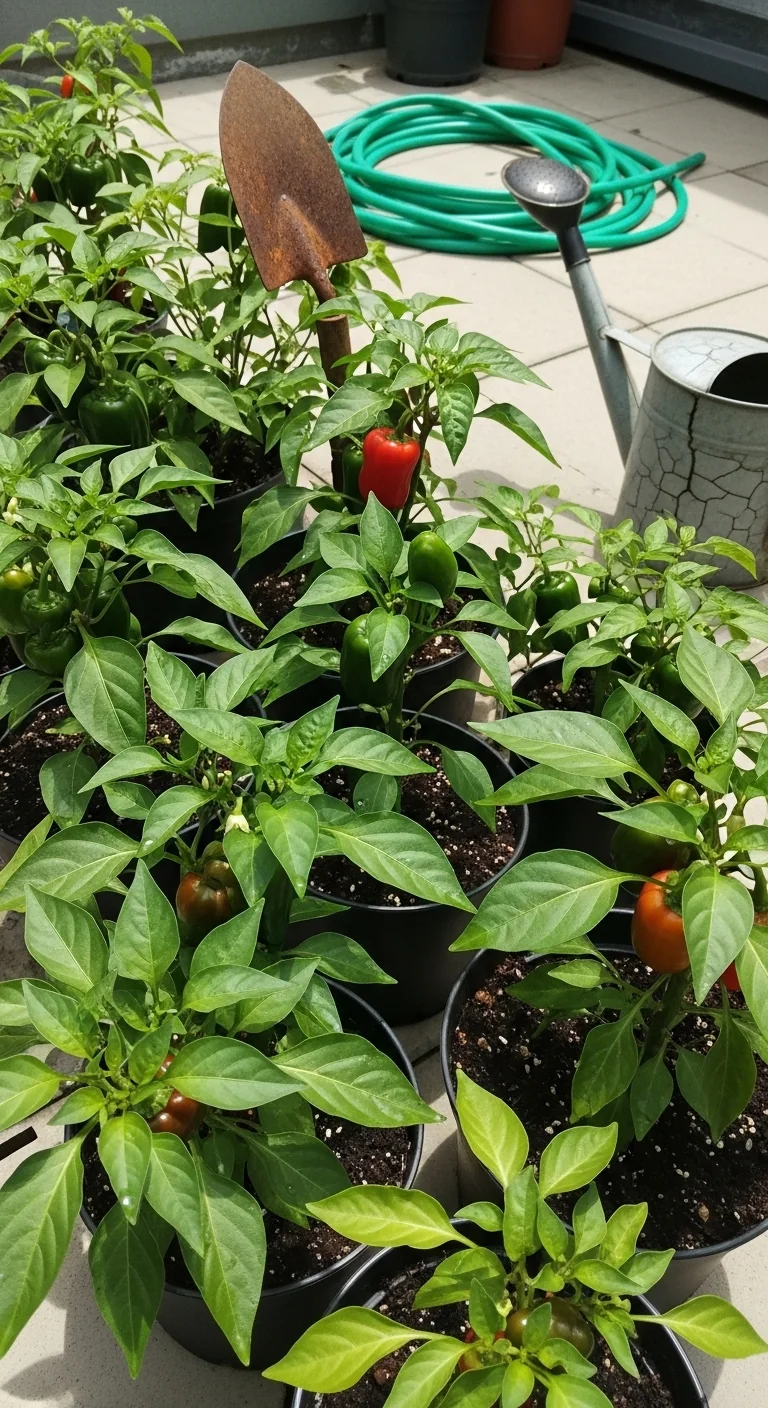
Peppers in pots succeed or fail based on three measurable conditions that most guides ignore: exact pot volume available, daily direct sun hours, and daytime temperature peaks. The Yield Grid reframes every choice around these data points so you select the right variety before you buy a single seed or pot.
This article covers nine container-adapted varieties across mild, sweet, and hot types. It focuses on real-world pot performance using 3- to 10-gallon containers with standard drainage. Large ground-only or indeterminate types fall outside scope.
You will exit with a clear variety pick for your setup, plus exact next actions on pot size, soil mix, and care schedule that fit your conditions.
Match your conditions to the right variety using the grid below and harvest peppers from pots without the usual stunting or blossom drop.
The Yield Grid Decision Grid
Branch 1: Space-constrained setups. Available pot volume is 5 gallons or less (or diameter 12 inches or smaller). These compact varieties deliver dense fruiting without outgrowing the container. Recommended: Items 1, 4, and 6 below.
Branch 2: High-heat environments. Daytime temperatures regularly exceed 85 degrees F. These varieties maintain fruit set under heat stress. Recommended: Items 2, 3, and 9 below.
Branch 3: Low-maintenance setups. Watering intervals longer than every other day. These varieties tolerate brief dry-down periods while still producing reliably. Recommended: Items 5, 7, and 8 below.
For full pot selection and drainage basics, see our guide to container vegetable gardening.
Quick Comparison Table
| Option | Key mechanism | Best for | Decision Grid Branch | Effort Score |
|---|---|---|---|---|
| Shishito Peppers | Compact 20- to 24-inch habit with upright fruit clusters | Balconies with floor space limits | Branch 1 | 2 |
| Jalapeño Peppers | Heat-stable fruit set with compact root system | Hot patios or south-facing decks | Branch 2 | 3 |
| Cayenne Peppers | Slender pods allow higher fruit density per plant volume | Full-sun urban balconies | Branch 2 | 2 |
| Thai Hot Peppers | Ultra-dwarf plant with clustered upright pods | Tiny pots or window boxes | Branch 1 | 1 |
| Banana Peppers | Thick-walled fruits with lower water demand once established | Set-and-forget patios | Branch 3 | 2 |
| Mini Bell Peppers | Bite-size fruits on 18-inch plants | Small-space sweet pepper needs | Branch 1 | 3 |
| Carmen Sweet Peppers | AAS-winning sweet type with strong container performance | Low-intervention sweet harvests | Branch 3 | 2 |
| Pretty N Sweet Peppers | Small colorful pods bred specifically for pots | Colorful low-effort displays | Branch 3 | 2 |
| Chilly Chili Peppers | 10- to 12-inch ornamental habit with safe edible pods | Hot-climate display pots | Branch 2 | 1 |
Shishito Peppers
Best for: Branch 1
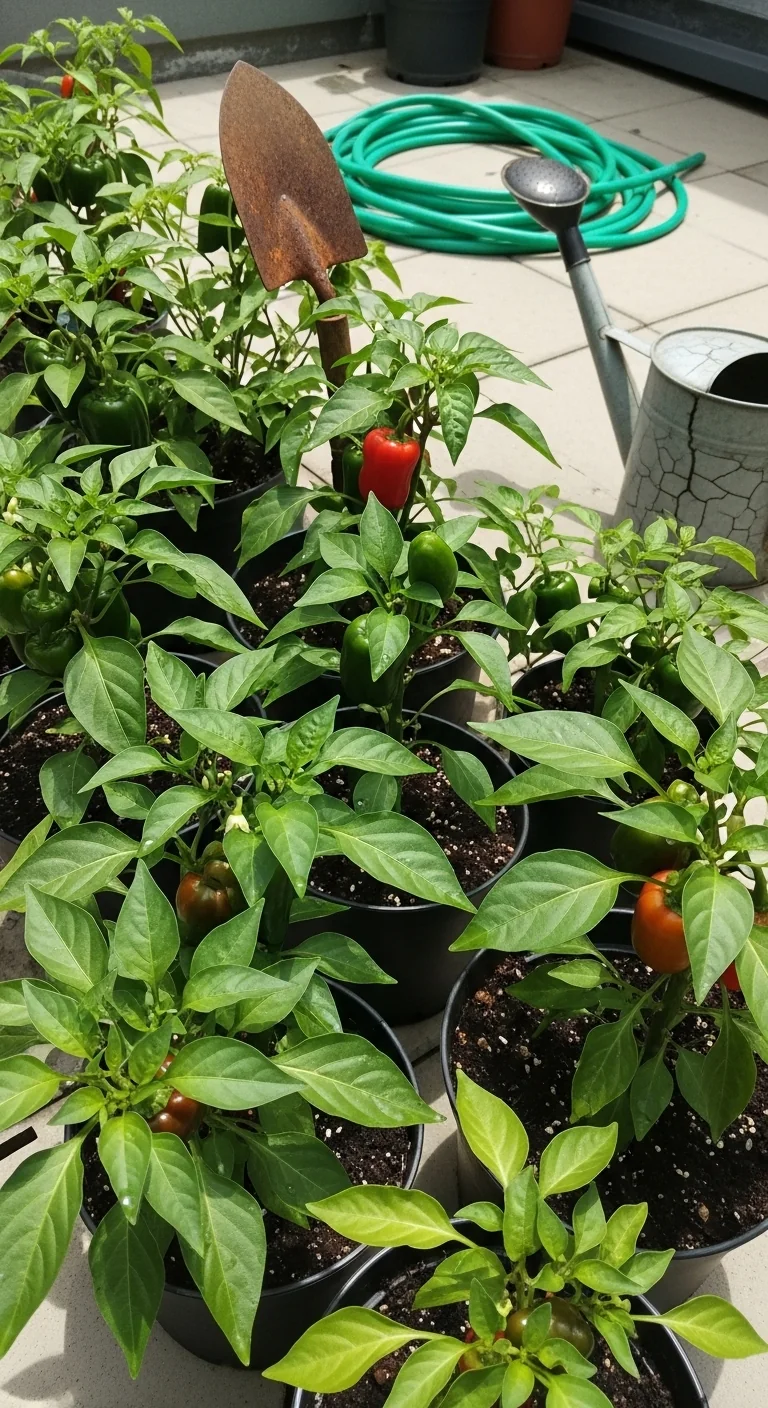
Shishito peppers use a compact 20- to 24-inch habit with upright fruit clusters to pack production into small volumes. The mechanism is early fruiting that starts at 60 days from transplant and continues through summer without needing support. Start seeds indoors 8 weeks before last frost, transplant into 5-gallon or smaller pots filled with well-draining potting mix amended with compost, and place in full sun. Water to keep soil evenly moist but never soggy. Harvest when pods are 3 to 4 inches long and slightly wrinkled for best mild smoky flavor. Common mistake is letting soil dry completely between waterings, which triggers blossom drop in the first flush. Combine with organic fertilizer for vegetables applied at transplant and again at first flower for steady growth.
Jalapeño Peppers
Best for: Branch 2
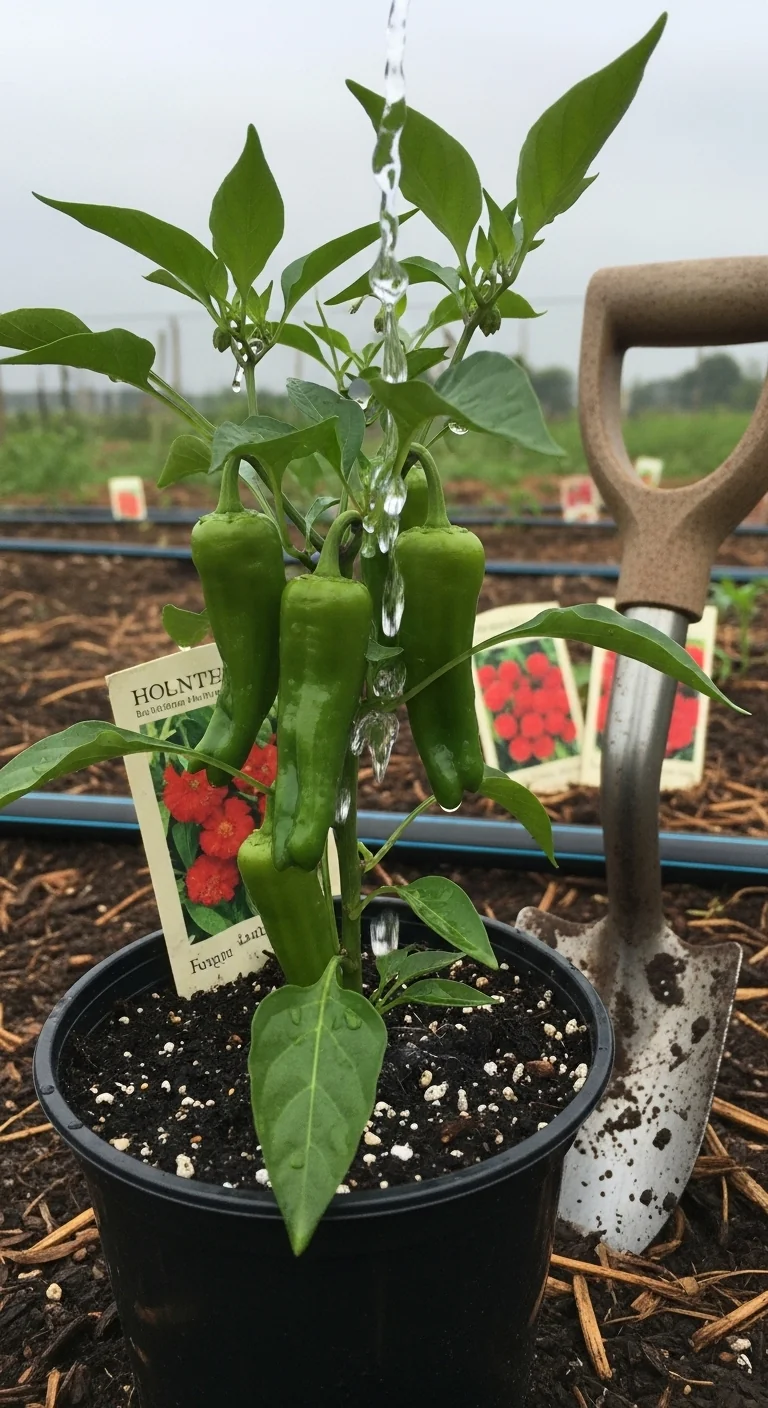
Use jalapeño peppers when daytime heat exceeds 85 degrees F. Skip them only if your nights regularly drop below 60 degrees F or you cannot provide 6 hours of direct sun. The compact root system and heat-stable fruit set keep production steady where other varieties stall. Plant one per 5- to 10-gallon pot and expect dark green pods that turn red if left longer.
Cayenne Peppers
Best for: Branch 2
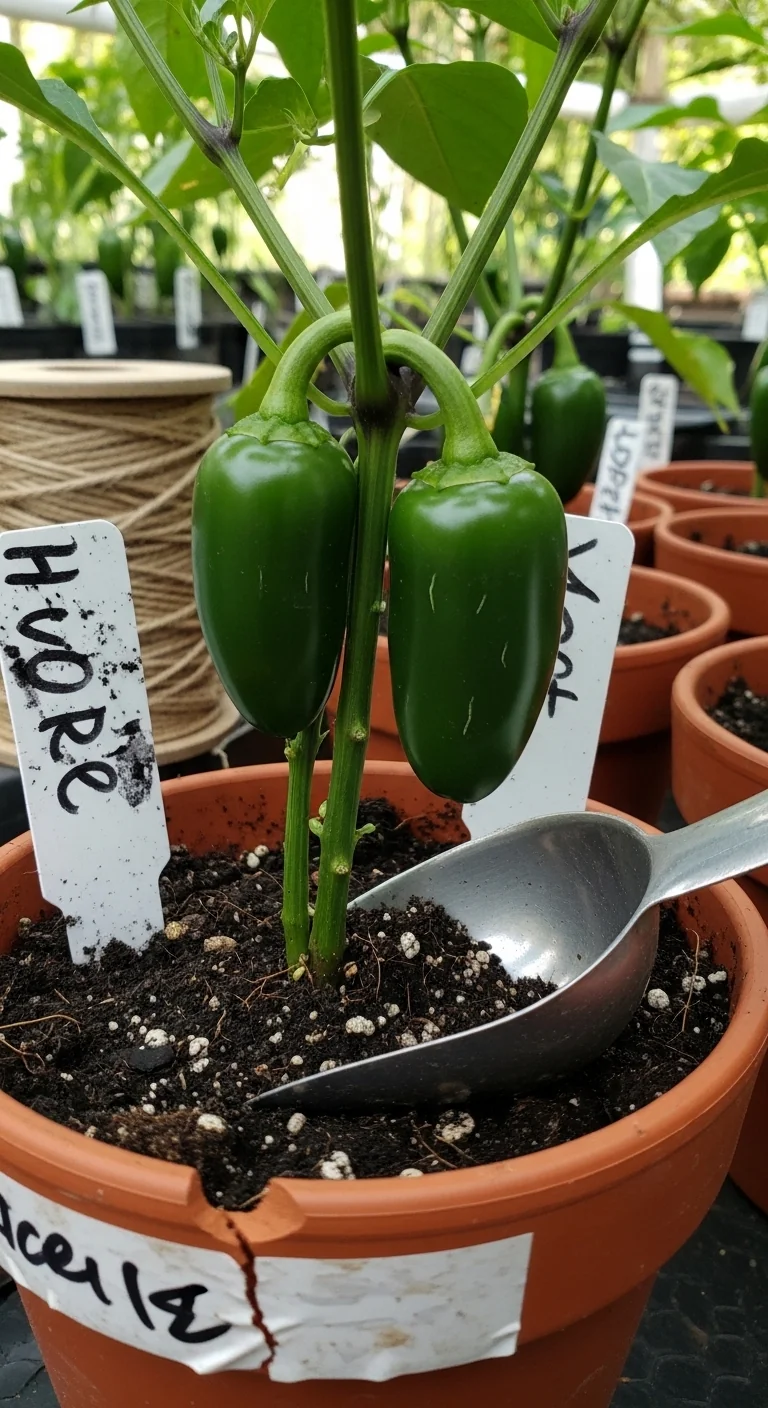
Cayenne peppers rely on slender pods to increase fruit density within the same root volume. The threshold that matters is consistent daytime temperatures above 70 degrees F paired with at least 6 hours of sun: below that threshold fruit set slows dramatically. Use 5- to 10-gallon pots, water when the top inch of soil feels dry, and harvest pods at 4 to 6 inches long while still green for maximum heat. Afternoon shade in extreme heat above 95 degrees F prevents sunscald on thin walls.
Thai Hot Peppers
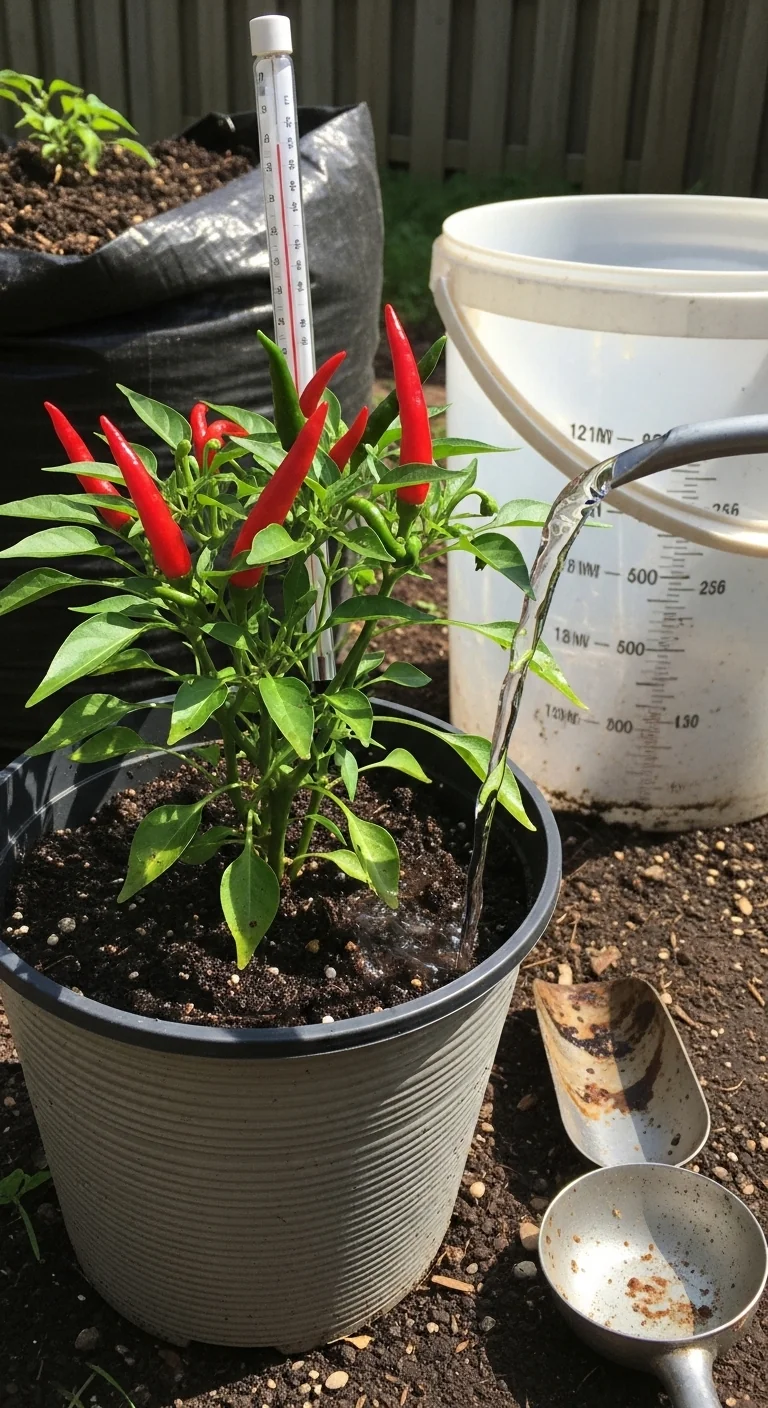
Best for: Branch 1
Thai hot peppers follow this 10-minute workflow for tiny pots. Week 1 after transplant: check drainage by watering thoroughly and confirm water exits within 30 minutes. Weeks 2 through 8: spend 10 minutes every 7 days to water deeply, remove any yellow lower leaves, and apply liquid fertilizer at half strength once flowers appear. Upgrade option is to move the pot to a slightly larger container at first fruit set if space allows. The ultra-dwarf habit and clustered upright pods deliver high yields even in 3- to 5-gallon volumes. Place in full sun and avoid overwatering to prevent root issues.
Banana Peppers
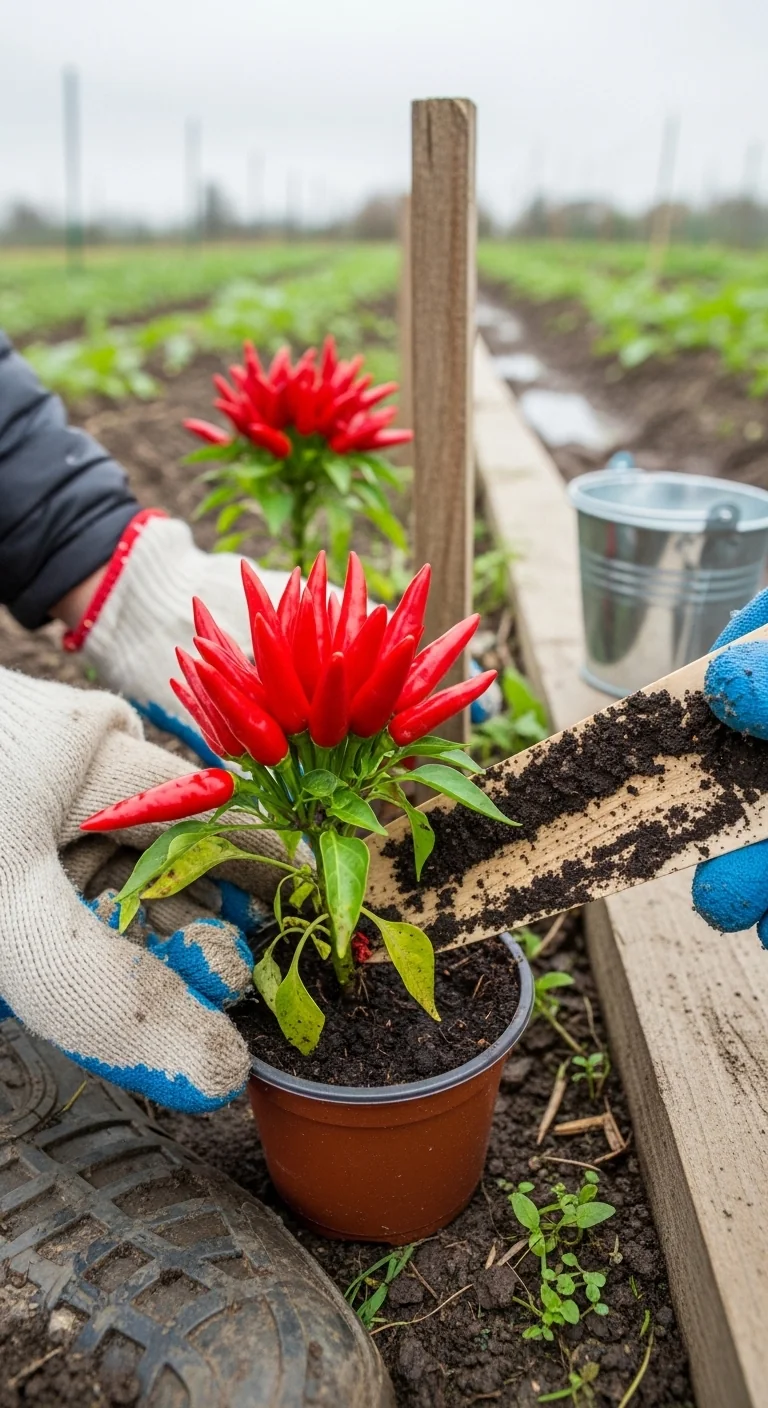
Best for: Branch 3
Banana peppers use thick-walled fruits that reduce water demand once established. The blueprint is simple: choose 5-gallon pots or larger, fill with compost-amended mix, plant after soil warms to 65 degrees F, and water every 2 to 3 days. Harvest yellow pods at 6 to 8 inches for mild flavor in salads or pickling. The variety tolerates brief dry periods better than thinner-walled types.
Mini Bell Peppers
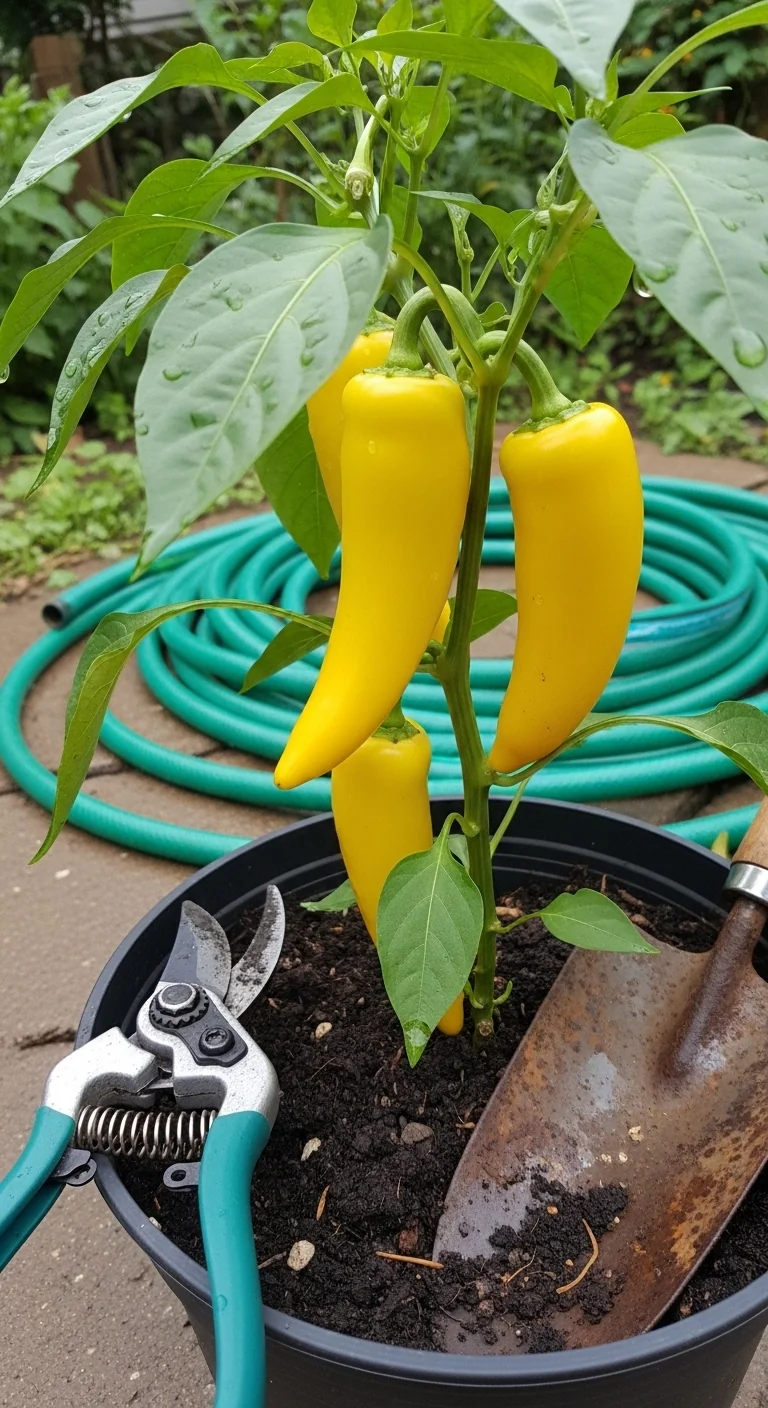
Best for: Branch 1
Use mini bell peppers when space is tight but you want sweet bite-size fruit. Skip them if your location receives fewer than 6 hours of direct sun or if pots stay waterlogged longer than 1 hour after watering. The 18-inch plants produce colorful small bells steadily in 5-gallon volumes with minimal support needed. The mechanism is early maturity that fits short growing windows on balconies.
Carmen Sweet Peppers
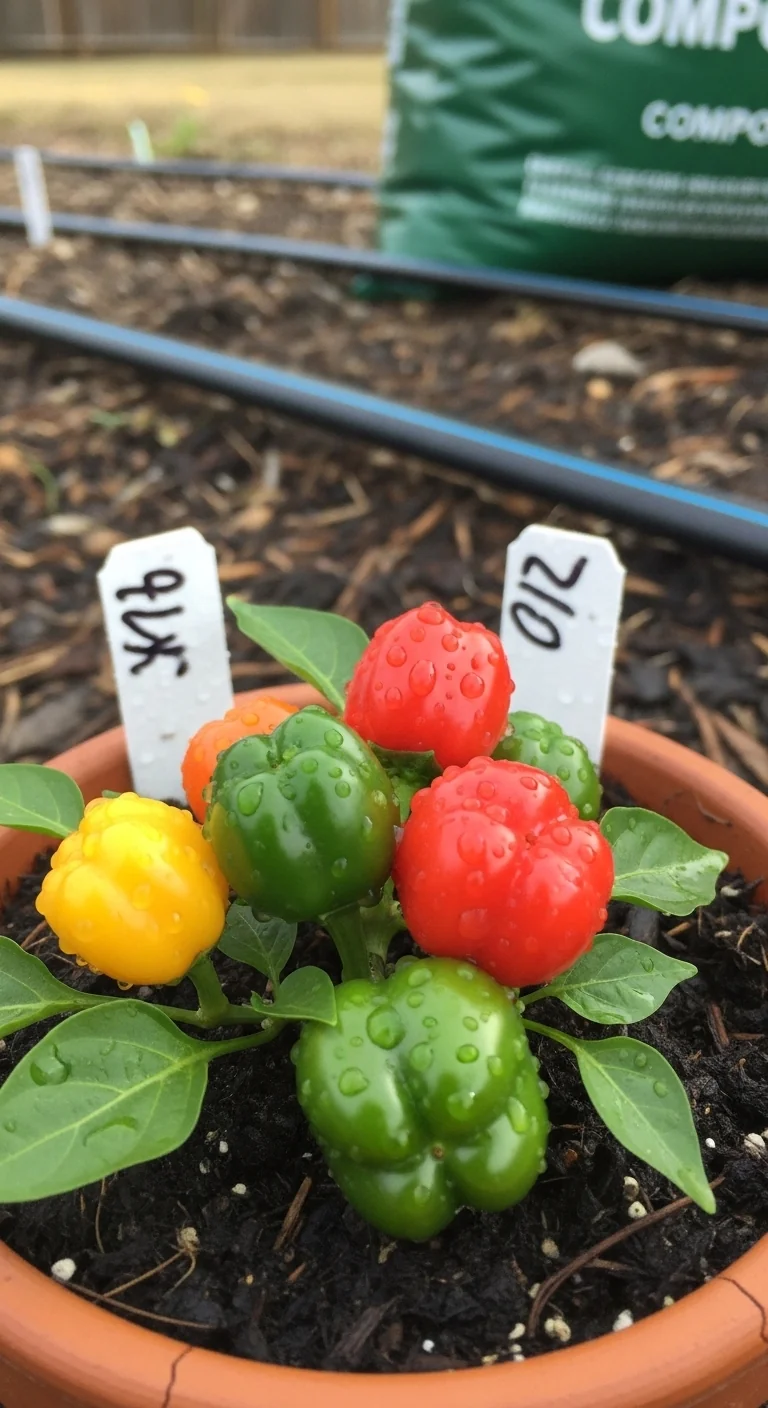
Best for: Branch 3
Carmen sweet peppers set fruit reliably when watering occurs every 2 to 3 days. The threshold that matters is soil temperature at planting: wait until consistent 65 degrees F or higher to avoid slow establishment. Use 5- to 10-gallon pots in full sun, mulch the surface after transplant, and harvest red pods at full color for sweetest flavor. The variety was an All-America Selections winner specifically for strong container performance. See our guide to mulching vegetable garden practices for moisture retention details.
Pretty N Sweet Peppers
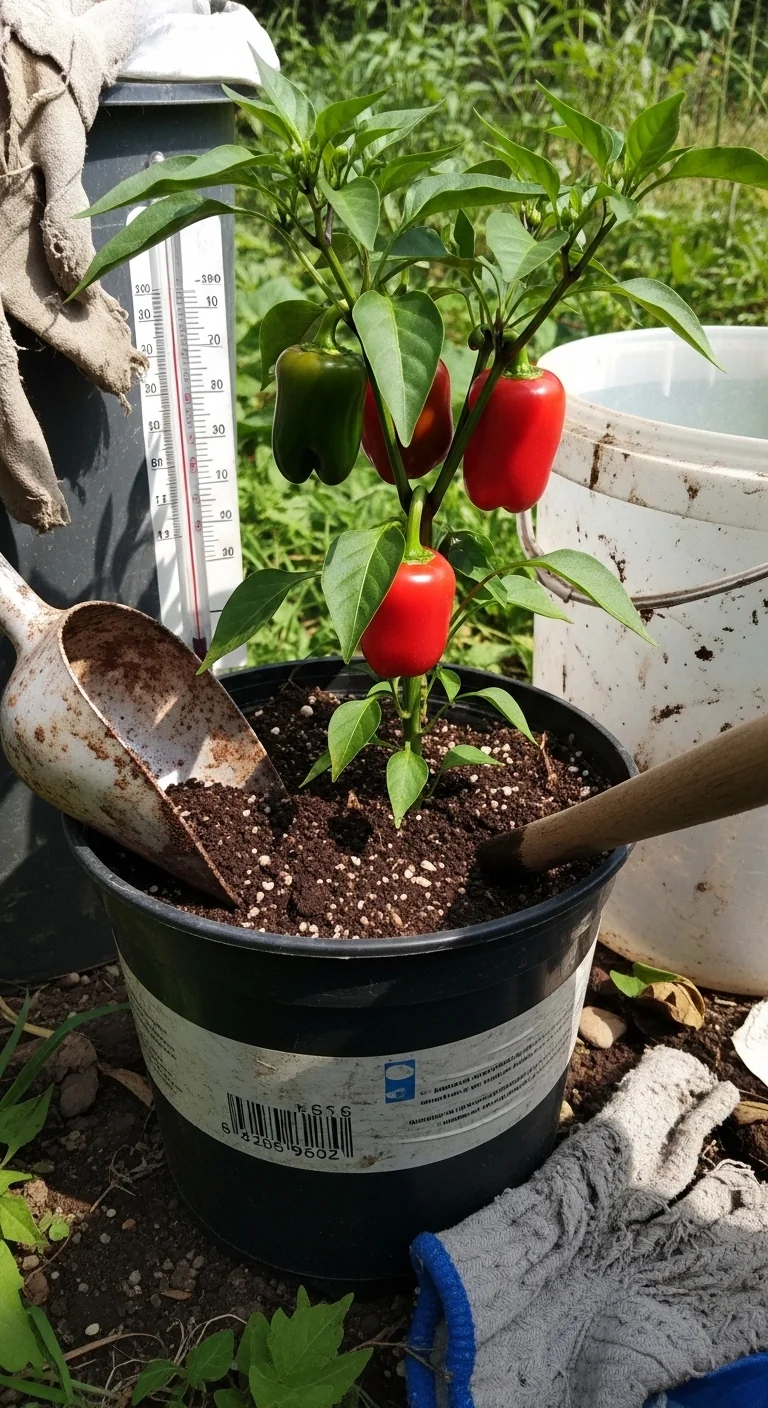
Best for: Branch 3
Pretty N Sweet peppers deliver small colorful pods bred for pots with low daily attention. The 10-minute workflow is: water when top inch is dry (usually every 2 days in heat), check for aphids once per week by inspecting undersides of new leaves, and feed monthly with balanced organic fertilizer. Harvest pods at any stage for snacking or salads. The compact habit keeps plants under 24 inches even in 5-gallon pots.
Chilly Chili Peppers
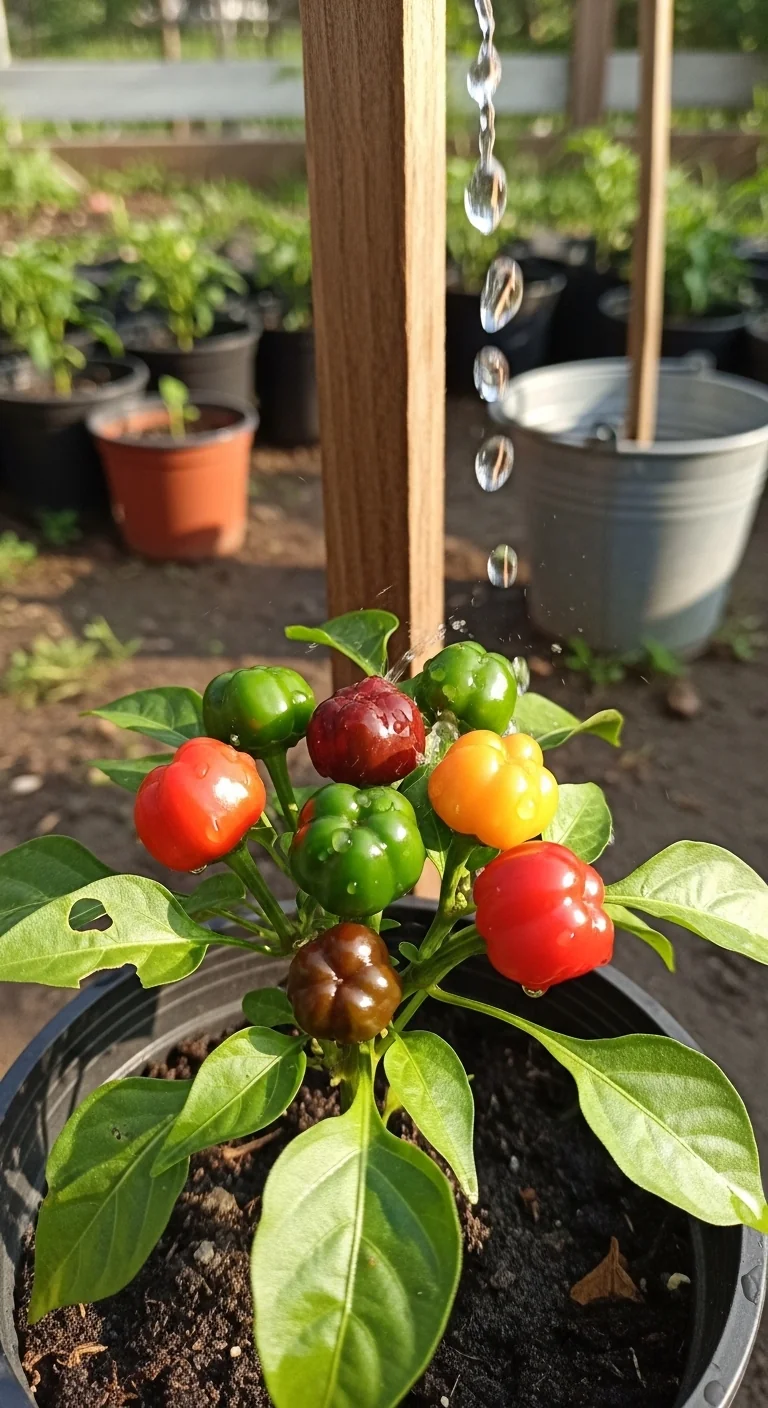
Best for: Branch 2
Chilly Chili peppers use a 10- to 12-inch ornamental habit with safe edible pods to handle high heat. Use them when daytime temperatures exceed 85 degrees F and you want a colorful display without intense spice. The plants stay compact in 3- to 5-gallon pots, produce multicolored small pods, and require only basic sun and drainage. Harvest at any color for mild snacking.
Starter Stack (What to Choose First)
For Branch 1: Space-constrained setups (5 gallons or less)
Start with Shishito Peppers (Item 1) and Thai Hot Peppers (Item 4). The synergy comes from both using ultra-compact habits and upright clustering to maximize pods in tiny volumes while offering contrasting mild and hot flavors from the same small footprint. Total starter cost range is 8 to 15 dollars for seeds and one shared bag of potting mix. Time investment is 10 minutes weekly for watering checks.
For Branch 2: High-heat environments (above 85 degrees F days)
Start with Jalapeño Peppers (Item 2) and Cayenne Peppers (Item 3). The synergy pairs classic jalapeño flavor with slender cayenne density for steady production even under heat stress, giving both fresh use and drying options from the same sunny spot. Total starter cost range is 7 to 12 dollars for seeds plus one 5-gallon pot. Time investment is 15 minutes weekly for basic checks.
For Branch 3: Low-maintenance setups (watering every 2-3 days)
Start with Banana Peppers (Item 5) and Carmen Sweet Peppers (Item 7). The synergy combines thick-walled drought tolerance with reliable sweet fruit set for harvests that continue with minimal daily attention. Total starter cost range is 9 to 14 dollars for seeds and initial soil. Time investment is under 10 minutes weekly once established.
When This Won’t Work
Peppers in pots fail when consistent night temperatures stay below 60 degrees F for more than 7 days: fruit set stops and existing blossoms drop. The alternative action is to move pots indoors or under protection at night until nights warm or start later in the season. Another measurable failure condition is poor drainage where water remains pooled in the saucer longer than 1 hour after watering: roots become oxygen-starved and plants yellow. The alternative action is to repot immediately into a fresh well-draining mix and elevate pots on bricks. Follow the principles in our watering vegetable garden guide to prevent both issues.
Choosing the Right Option for Your Situation
Budget Threshold
If your total setup cost stays under 25 dollars per plant (seeds, one pot, and initial soil mix), choose any Branch 1 or 3 variety listed. These stay productive in standard 5-gallon containers without extra amendments.
Time Threshold
If you can dedicate 15 minutes or less per week to watering and checks, select Branch 3 options. These tolerate 2- to 3-day watering intervals once established.
Technical Constraint: Soil Drainage Rate
If your potting mix drains at least 2 inches per hour after a thorough watering, any variety here will perform. Slower drainage requires switching to a coarser mix with added perlite before planting.
Yes/No checklist:
– At least 6 hours direct sun daily? Yes: proceed with any branch.
– Daytime temperatures above 70 degrees F for 8 weeks? Yes: full production expected.
– Pot volume 5 gallons or more available? Yes: expand to Branch 2 or 3 options.
– Night temperatures consistently above 60 degrees F? Yes: plant now.
Expert Q&A
How do companion plants affect peppers in pots?
Basil or marigolds planted in the same large container can reduce aphid pressure through scent masking and attract beneficial insects. Keep companions to one-third of the pot volume to avoid root competition. Space them 6 inches from the pepper stem and monitor soil moisture since companions increase overall water use slightly.
What is the best way to overwinter peppers in pots?
Bring healthy plants indoors before first frost to a sunny south-facing window or under grow lights providing 12 to 14 hours daily. Reduce watering to every 10 days, maintain 65 to 70 degrees F daytime temperatures, and prune back leggy growth by one-third. Expect limited fruit but preserved plants for spring cuttings.
Do pot color and material change pepper performance?
Light-colored pots reflect heat and keep root-zone temperatures 5 to 8 degrees F cooler than black plastic in full sun. Fabric grow bags improve aeration and drainage compared with solid plastic but require more frequent watering checks. Choose based on your local summer heat load.
When should you harvest peppers in pots for maximum flavor?
Pick green or yellow pods for milder taste and continued production. Allow full color change on the plant for sweeter or hotter final flavor, but remove any overripe fruit immediately to prevent seed formation that slows new pod set. Check plants every 3 days once fruit reaches full size.
Can you grow multiple pepper varieties in one large container?
Yes, if the container holds at least 10 gallons and varieties share similar maturity times and water needs. Plant two compatible types 12 inches apart and rotate the pot weekly for even sun. Avoid mixing very hot and sweet types if cross-pollination flavor concerns exist for saved seed.
Conclusion
The key decision is always variety matched to your exact pot volume, sun hours, and heat load rather than defaulting to the most popular name. The number-one mistake is planting in containers smaller than 5 gallons without choosing a true dwarf type, which leads to restricted roots and reduced harvests.
Take the next step by reviewing transplant timing for your location in our growing peppers guide, then order seeds for your assigned branch. Your pots will deliver steady peppers this season.