
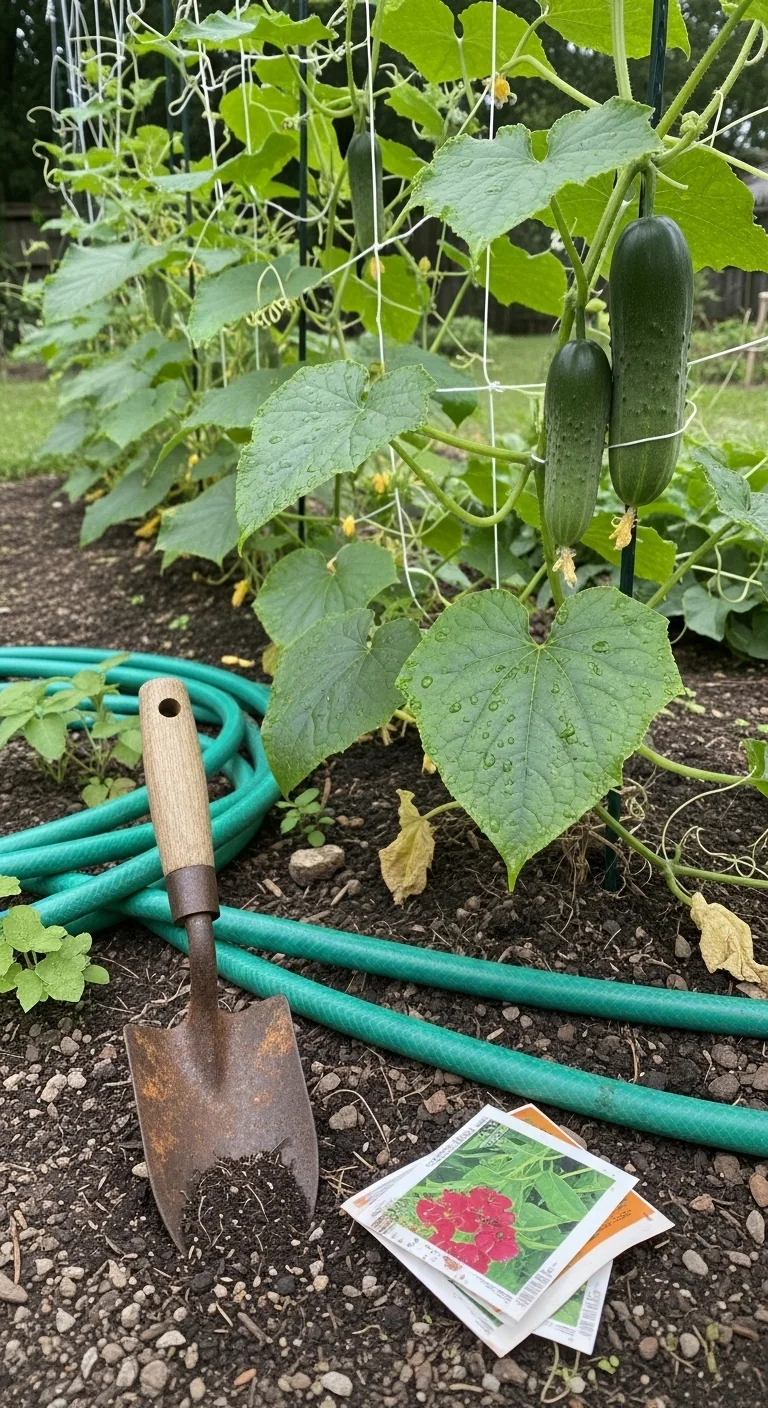
The standard approach to cucumbers on trellis overlooks a critical factor. Support choice must align with your available vertical clearance, average wind exposure, and the natural load from vining varieties to avoid common vine stress and fruit contact with soil.
This guide focuses on vining cucumbers in outdoor gardens. It covers 9 distinct trellis systems suitable for different setups in the US, UK, Canada, and Australia. Bush types and indoor methods fall outside scope.
Use the decision grid and comparison table below to select the system that fits your conditions. You will know exactly which option delivers the best airflow and harvest access without repeated adjustments.
Pick the trellis that matches your measured space and site conditions to grow straighter cucumbers with less maintenance.
The Yield Grid Decision Grid
Branch 1: Compact spaces with less than 4 feet of width or limited height under 5 feet (balconies or small raised beds). Recommended: Items 2, 4, 6 below.
Branch 2: Standard raised beds or sites with moderate wind exposure. Recommended: Items 3, 5, 8 below.
Branch 3: Large in-ground plots or high-vigor varieties. Recommended: Items 1, 7, 9 below.
For integrating these into your overall plan, check our vegetable garden layout ideas.
Quick Comparison Table
| Option | Key mechanism | Best for | Decision Grid Branch | Effort Score |
|---|---|---|---|---|
| Cattle Panel Arch Trellis | Heavy-gauge wire panels bent into arch shape with natural gripping points for tendrils | Large plots needing durable multi-plant support | 3 | 1 |
| Vertical String Trellis | Heavy twine suspended between stakes with tension for upward vine guidance | Small spaces or containers | 1 | 3 |
| A-Frame Wire Trellis | Foldable metal frame with grid pattern allowing fruit to hang freely | Raised beds with moderate conditions | 2 | 2 |
| Bamboo Teepee Trellis | Bound poles forming cone with cross ties for even vine distribution | Compact gardens requiring quick assembly | 1 | 2 |
| Garden Netting Trellis | Plastic mesh stretched on stakes providing multiple attachment points | Standard beds needing lightweight support | 2 | 3 |
| Fence Lean-To Lattice Trellis | Wooden lattice panels leaned against existing fence for added stability | Large plots using boundary structures | 3 | 1 |
| Raised Bed Integrated Frame Trellis | Custom wooden frame bolted directly to bed edges with wire fill | Raised beds seeking permanent integration | 2 | 1 |
| Portable Wire Cage Trellis | Pre-formed cylindrical cages with wide openings for easy vine weaving | Moderate wind sites or movable setups | 2 | 2 |
| Horizontal Flat Trellis | Grid laid flat above soil level with vines trained upward through openings | Large plots prioritizing low-profile harvest | 3 | 4 |
Cattle Panel Arch Trellis
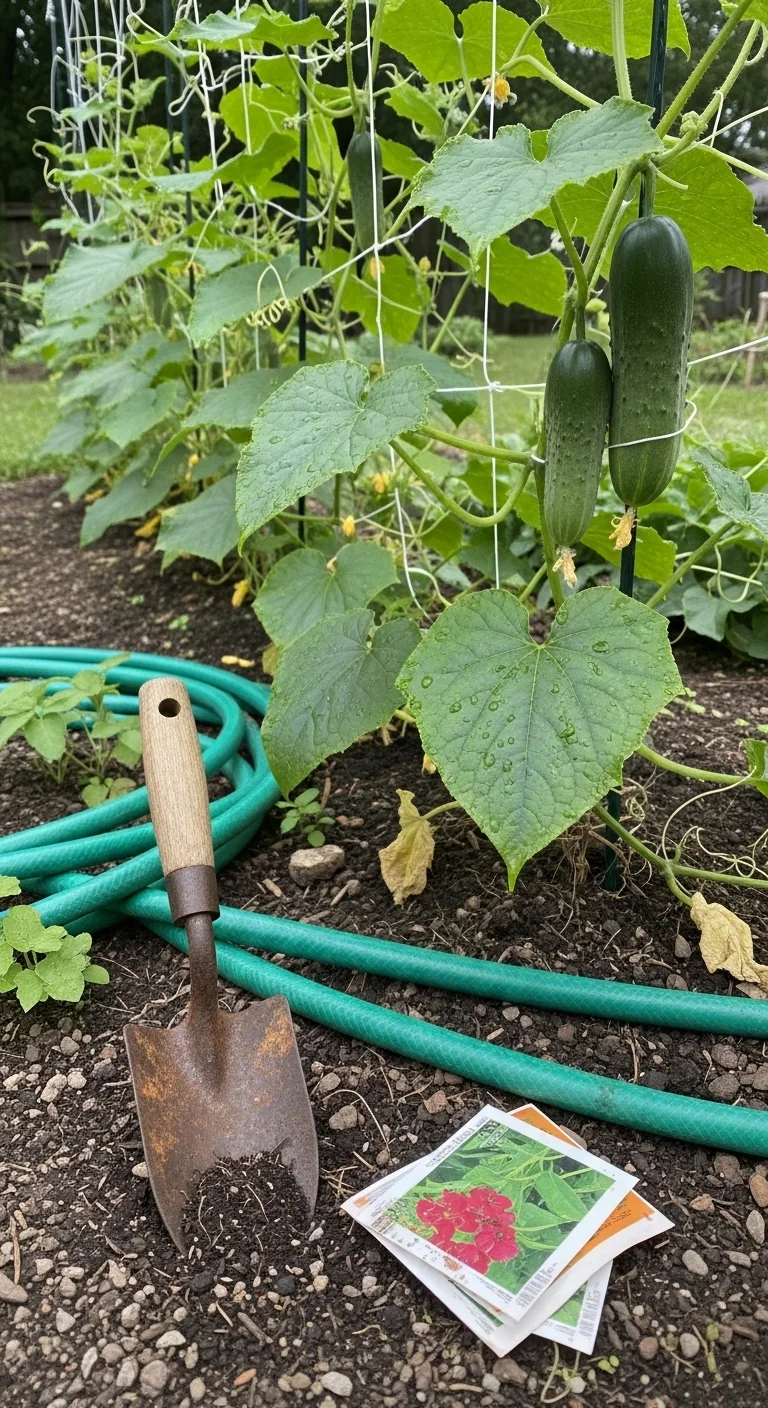
Best for: Branch 3
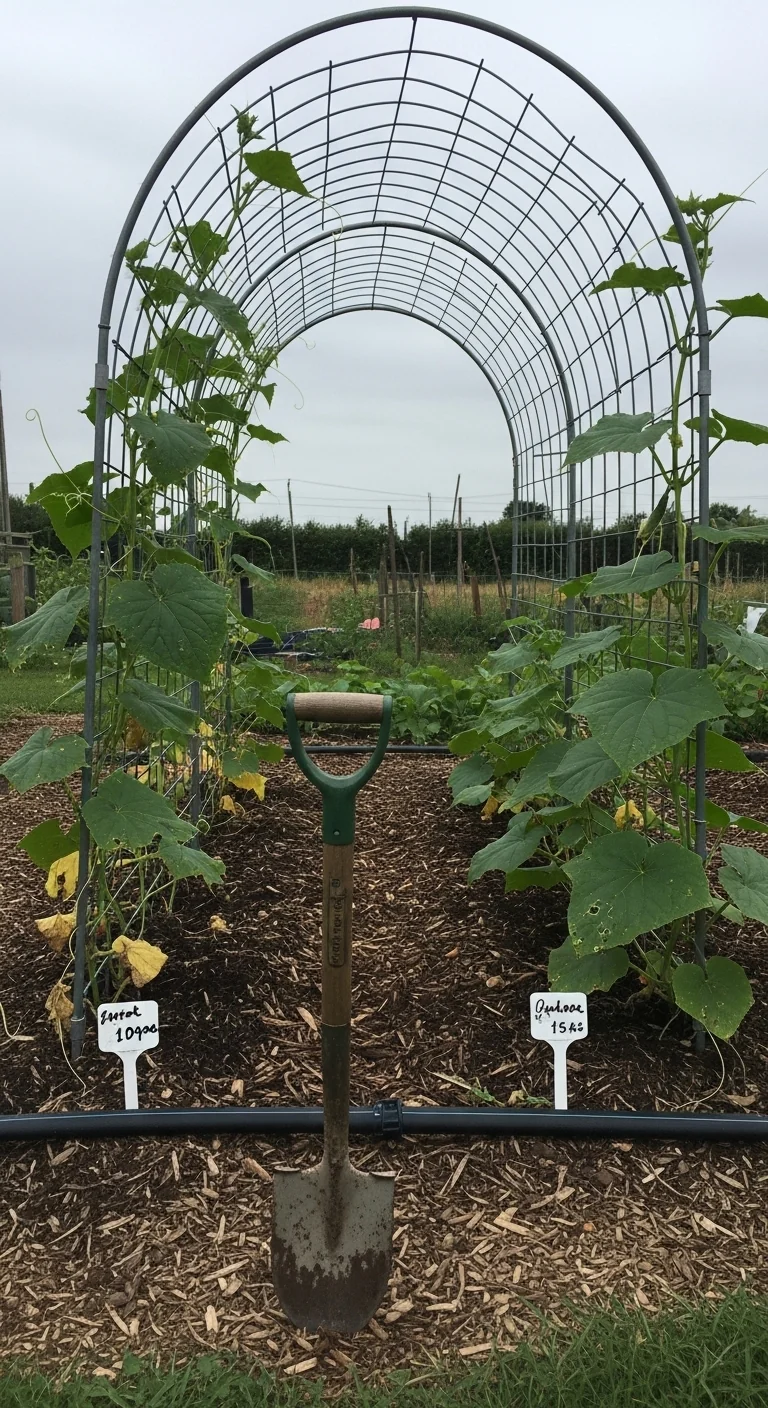
Blueprint: Use 4-by-8-foot cattle panels available at farm stores. Sink 2-foot posts at each end, bend panel into arch over the row, and secure with wire ties. Plant vining cucumbers 18 inches apart along the base. Guide tendrils through openings as vines reach 12 inches tall. The arch shape distributes weight evenly and creates shaded underplanting space. Common mistake: placing the arch too low, which blocks airflow and invites soil splash. This system lasts multiple seasons with no annual rebuild.
Vertical String Trellis
Best for: Branch 1
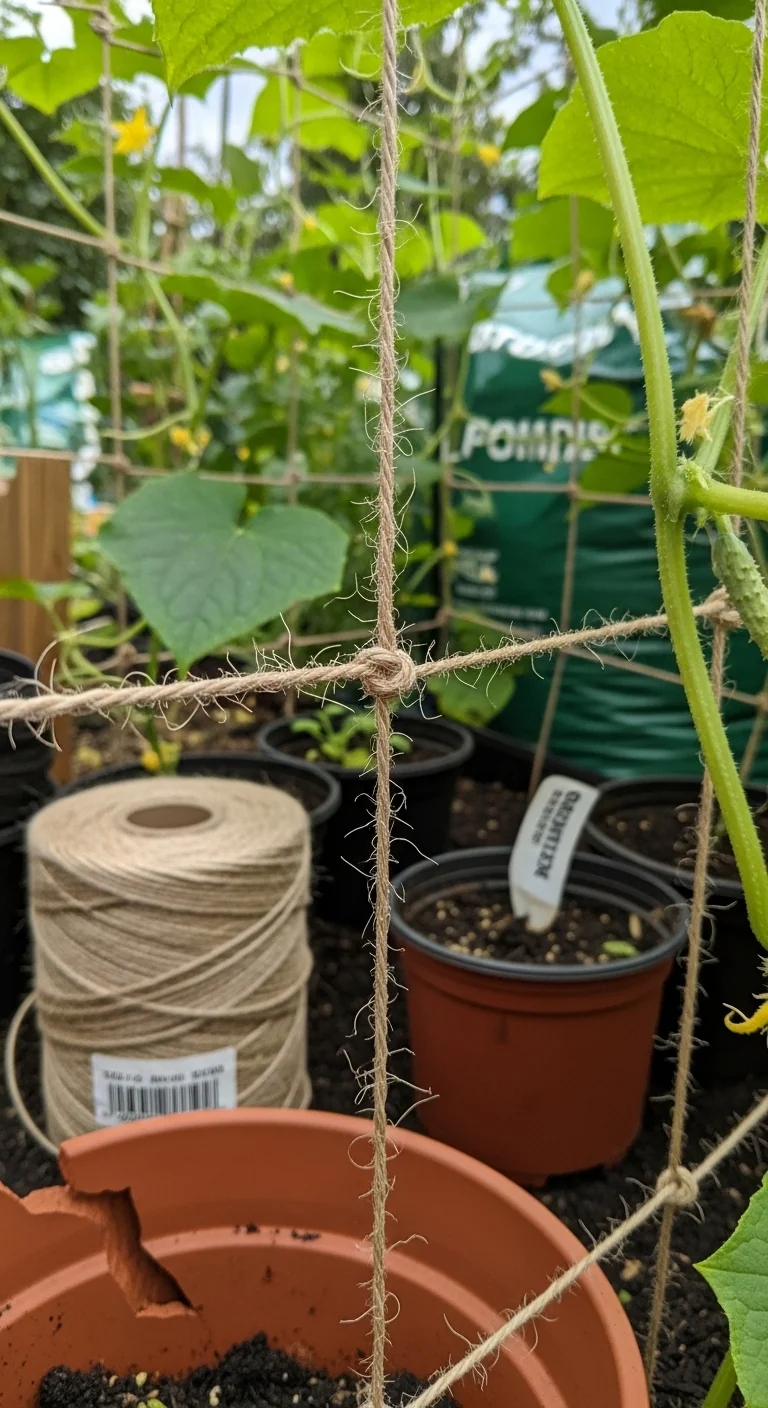
Use vs skip: Choose this for tight balconies or containers where floor space matters most. It requires only two stakes and twine, allowing upward growth in 2-foot-wide areas. Skip it if your site sees frequent high winds, since loose strings can tangle and snap vines. Edge case: pair with container vegetable gardening for mobility during storms.
A-Frame Wire Trellis
Best for: Branch 2
Threshold rule: Select when your raised bed width measures 3 to 4 feet and average wind stays below 15 mph. Height reaches 5 feet, which matches most vining cucumber growth without topping out. Adjust by adding cross braces if soil is loose. Fruit hangs clear of soil once vines top 18 inches. This keeps maintenance to monthly checks only.
Bamboo Teepee Trellis
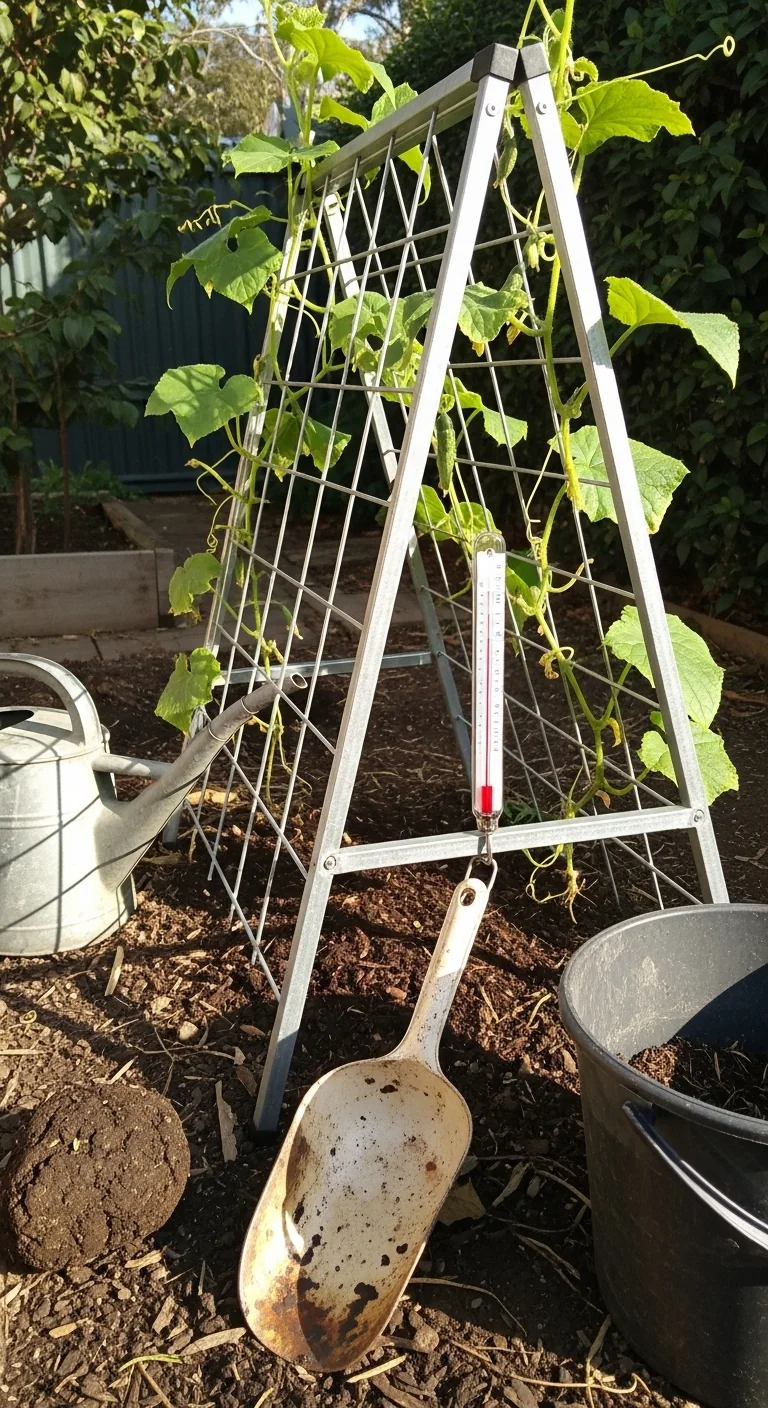
Best for: Branch 1
Blueprint: Gather six 6-foot bamboo poles and lash tops together with twine, then spread bases 3 feet apart in a circle. Plant one cucumber per pole base. Weave vines around poles starting at 10 inches height. Add horizontal ties every 18 inches for extra grip. The cone design works in small beds and allows companion herbs at the center. It breaks down for storage at season end.
Garden Netting Trellis
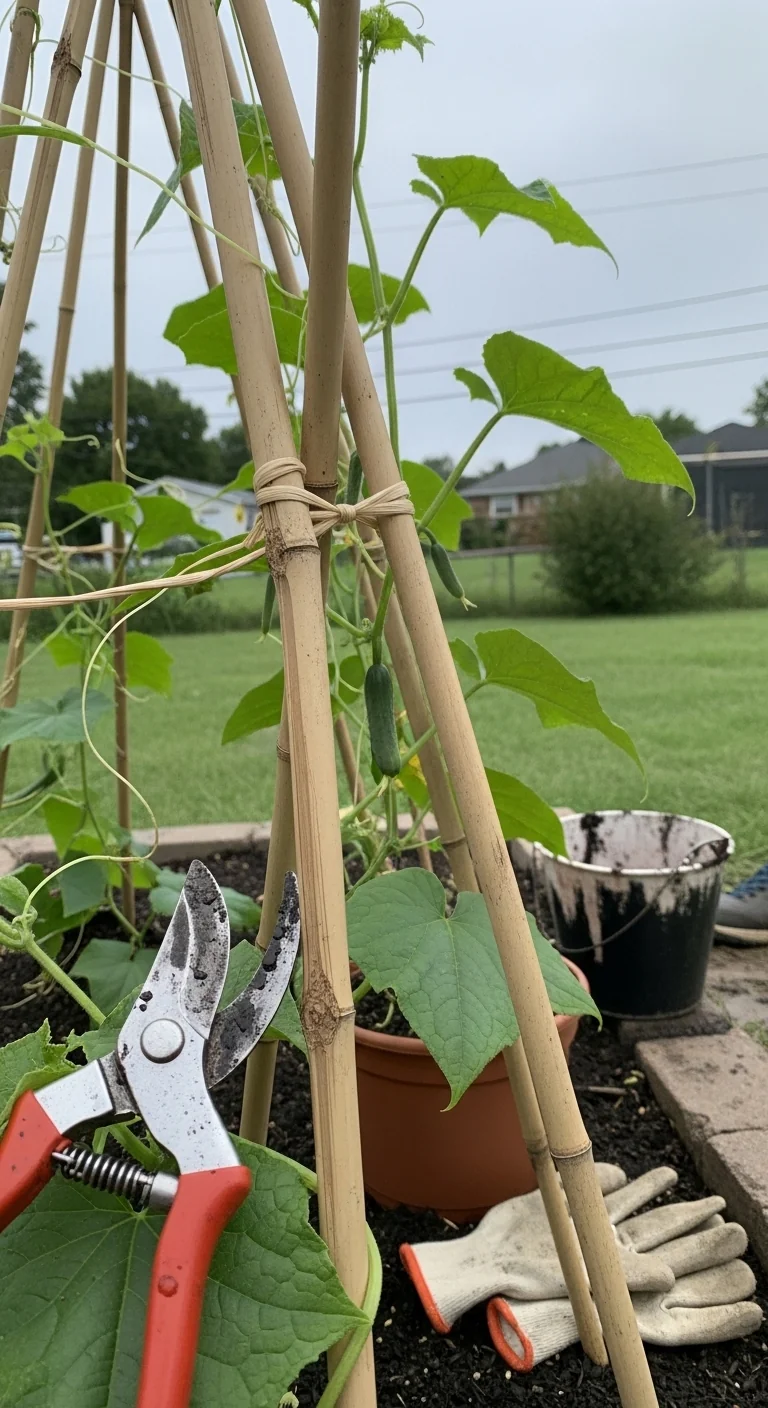
Best for: Branch 2
Use vs skip: Ideal for standard raised beds when you need quick coverage over 8 feet of row. The mesh grips tendrils automatically after initial guidance. Skip if your vines are exceptionally heavy, as netting can sag under load. Edge case: combine with mulch to maintain even soil moisture around the base.
Fence Lean-To Lattice Trellis
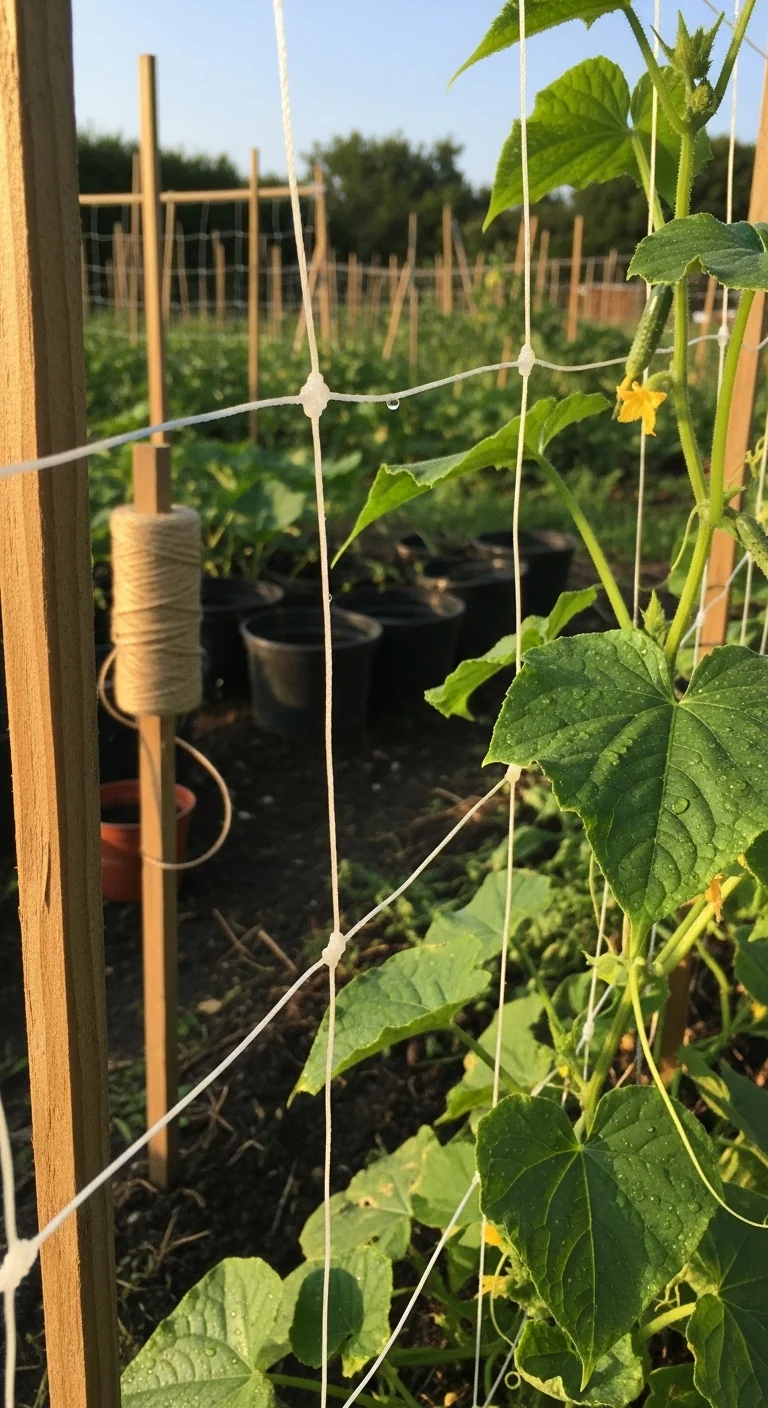
Best for: Branch 3
Threshold rule: Use when your fence runs at least 6 feet long and receives full sun. Lean lattice panels at 60 degrees against the fence and anchor bottoms 12 inches from the base. Space plants 18 inches apart along the lean. This setup adds no new footprint and supports multiple vines. Check anchors after heavy rain to keep panels stable.
Raised Bed Integrated Frame Trellis
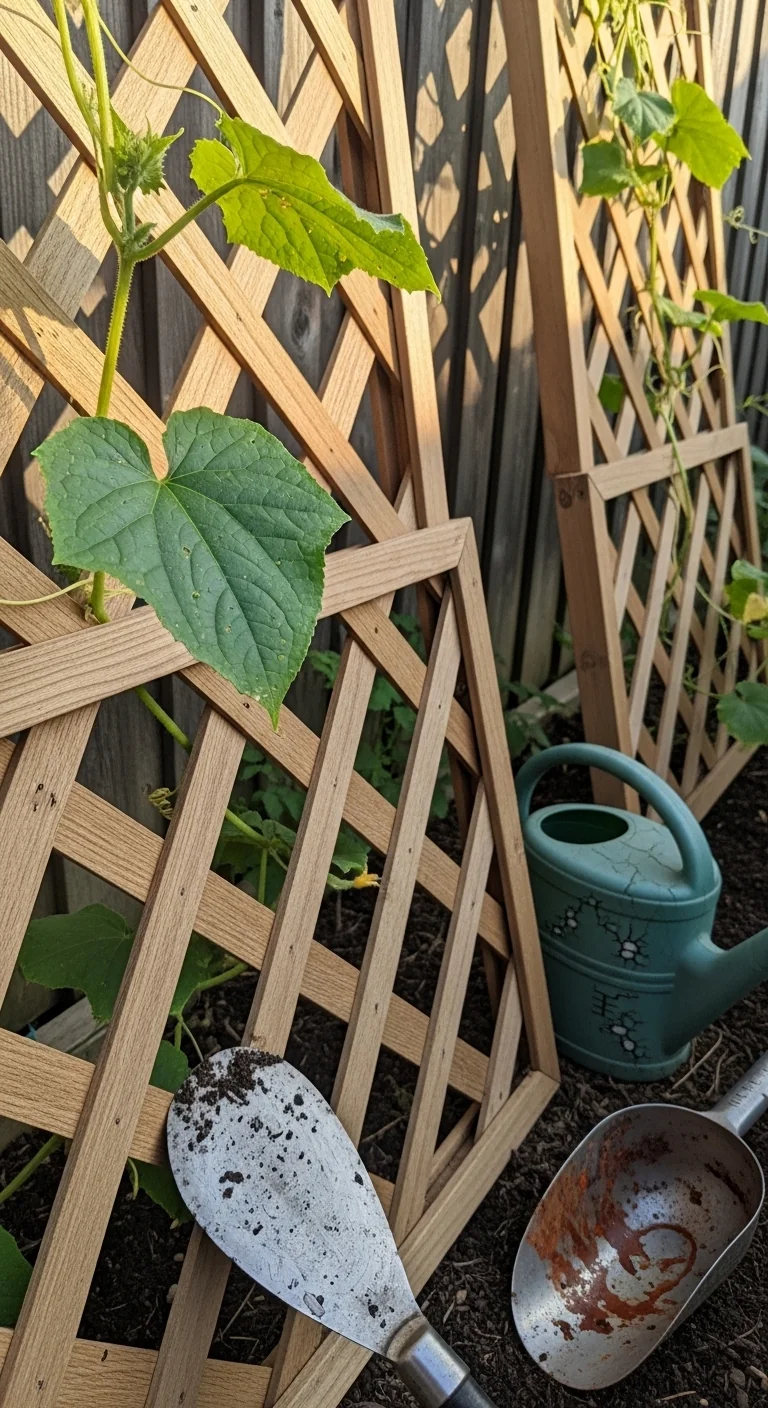
Best for: Branch 2
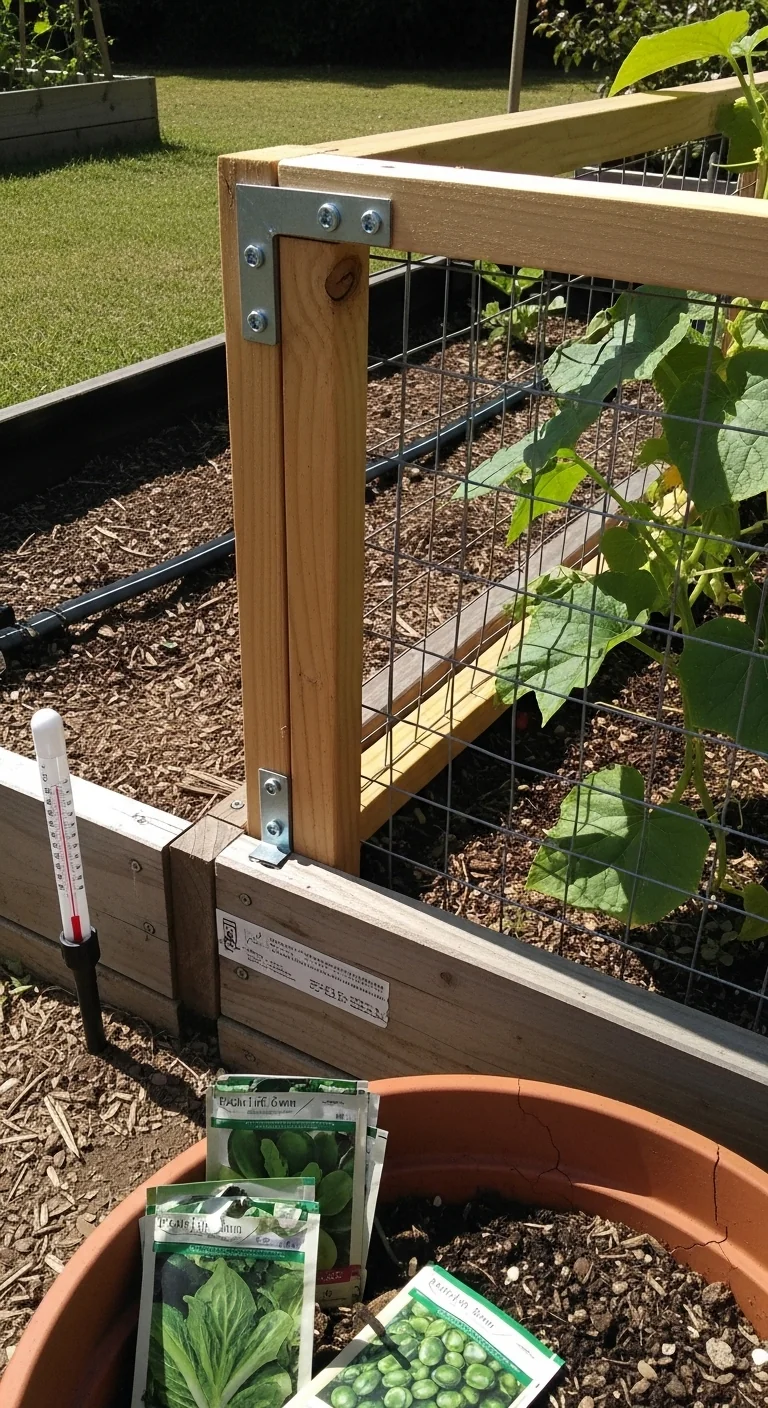
10-minute workflow: Cut 2-by-2 lumber to bed length plus 2 feet, attach vertical posts inside bed corners with brackets, then staple wire mesh between posts. Plant cucumbers 15 inches apart along the inside edge. Guide first tendrils through mesh within 7 days of emergence. Upgrade option: add a top crossbar for taller vines. For full integration details, see raised bed vegetable garden guidance.
Portable Wire Cage Trellis
Best for: Branch 2
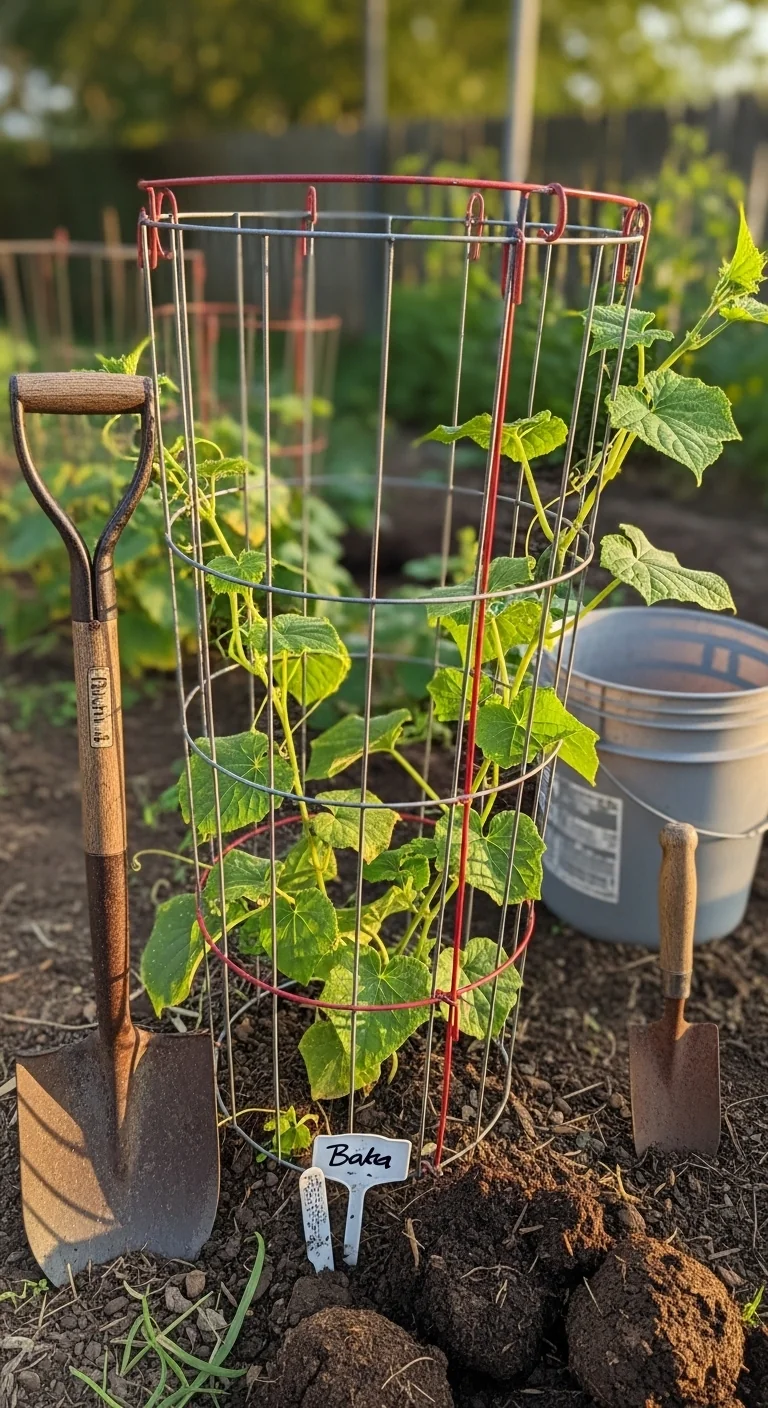
Use vs skip: Pick these ready-made red wire cages for sites needing seasonal relocation. Each cage supports one vigorous vine and folds flat for storage. Skip them in very large plots where multiple units become costly. They provide instant 4-foot height and wide grid spacing for easy fruit reach.
Horizontal Flat Trellis
Best for: Branch 3
Threshold rule: Deploy when your plot allows 4 feet of headroom above soil and you want fruit to develop below the grid. Stretch wire or string in a grid 18 inches above ground, secured to perimeter stakes. Train vines up through openings. This keeps foliage elevated while fruit hangs downward for straight shape and easy picking. Limit to sites with good drainage to prevent pooling under the grid.
Starter Stack (What to Choose First)
Branch 1: Compact spaces
Start with Vertical String Trellis plus Bamboo Teepee Trellis. The string offers instant vertical lift in tight spots while the teepee adds stable multi-vine support. Total setup cost ranges from 15 to 35 dollars and takes under 45 minutes. Synergy comes from using the teepee center for quick herbs that benefit from shared shade.
Branch 2: Standard raised beds
Begin with A-Frame Wire Trellis paired with Raised Bed Integrated Frame Trellis. The A-frame handles early growth and the integrated frame secures long-term rows. Combined cost stays between 40 and 70 dollars with 1 to 2 hours of build time. Together they maximize airflow across the entire bed length.
Branch 3: Large in-ground plots
Choose Cattle Panel Arch Trellis and Fence Lean-To Lattice Trellis first. The arch creates walk-through access while the lattice uses boundary space efficiently. Expect 30 to 60 dollars total and 90 minutes of work. The pair supports heavy yields without crowding pathways.
When This Won’t Work
Trellising fails when soil temperature stays below 60 degrees Fahrenheit at planting time, since vines remain weak and fail to grip supports. The alternative is to wait until soil warms and switch to a later planting window. Another measurable failure occurs in full shade or less than 6 hours of direct sun daily, where vines stretch thin and collapse regardless of structure strength. In that case, relocate to a sunnier spot or select a different crop entirely.
For timing guidance across seasons, consult vegetable planting calendar details.
Choosing the Right Option for Your Situation
Budget threshold
If your total spend must stay under 40 dollars, limit choices to Vertical String Trellis, Bamboo Teepee Trellis, or Garden Netting Trellis. These use common materials already on hand in most sheds.
Time threshold
When setup must finish in under 30 minutes, select A-Frame Wire Trellis or Portable Wire Cage Trellis. Both arrive mostly assembled and require only anchoring.
Technical constraint
For vining varieties only, confirm the trellis reaches at least 5 feet tall and can handle 10 to 15 pounds of distributed vine weight. Bush types do not climb and will sprawl regardless of support.
Yes/No checklist:
Does your space allow 5 feet of height? Yes/No
Are you using only vining varieties? Yes/No
Does the site receive 6-plus hours of sun? Yes/No
Can you install before planting? Yes/No
Expert Q&A
How soon after emergence should I start training vines on any trellis?
Begin guiding vines when they reach 10 to 12 inches tall and show the first set of true tendrils. Gentle weaving at this stage prevents later breakage and establishes strong upward direction before fruit weight appears.
Which companion plants work best under a cucumber trellis?
Low-growing herbs such as basil or nasturtiums thrive in the shaded zone beneath arches or A-frames. They repel pests while the elevated cucumbers gain better airflow above them.
Does trellis height affect fruit shape and color?
Yes. A 5- to 6-foot height lets fruit hang straight and develop even green color on all sides. Shorter supports force fruit to rest against structures or soil, leading to curved or pale patches.
How do I adjust trellis systems for heavy summer rains?
Anchor bases deeper and add diagonal braces on windy or wet days. For netting or string systems, tighten lines monthly to counteract sag after downpours.
What is the best way to harvest cucumbers from tall trellises without damaging vines?
Use sharp shears and cut stems 1 inch above the fruit. Support the vine with one hand while harvesting to avoid pulling. Check every 2 days since fruit grows rapidly and can become oversized quickly.
Conclusion
The decision grid and effort scores cut through generic trellis advice and point you to the single system that fits your measured space and conditions. The top mistake is installing after vines have already sprawled, which forces awkward retraining and vine damage.
Next step: review your bed width and wind exposure, then build the matched trellis from the starter stack. Pair it with proper moisture management using watering vegetable garden techniques for season-long success.