
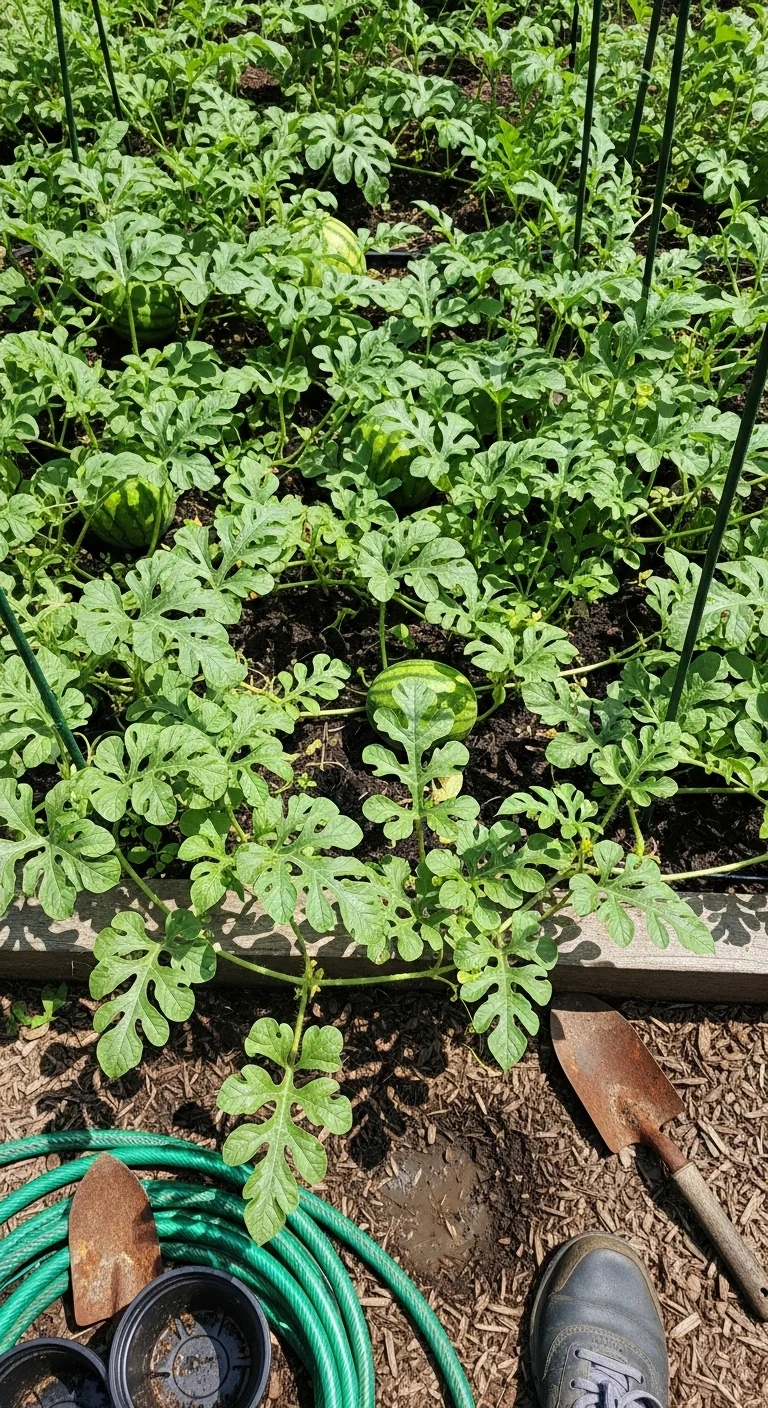
Watermelon pruning works best as a targeted response to your garden constraints instead of a default step applied to every vine. Space limits, humidity levels, and season length each dictate whether aggressive vine cuts help or hinder fruit development.
This guide covers vine management options including secondary shoot removal, fruit thinning, tip pinching, and leaf sanitation. It excludes general planting, watering, or pest control topics unrelated to direct cuts on established vines.
You will finish with clear criteria for matching one of three decision paths to your plot size, climate, and goals, plus exact techniques that avoid the most common errors of over-pruning or pruning at the wrong moment.
Prune watermelons only when your specific space and conditions require it to balance vine control with fruit production.
The Yield Grid Decision Grid
Branch 1: Limited space setups. Use this path when your plot measures under 200 square feet, you grow in raised beds, or you plan vertical training. Vines quickly outgrow boundaries and crowd neighboring plants. Recommended: Items 1, 4, and 7 below. Pair decisions here with melon trellis ideas for maximum control.
Branch 2: Ample space with size priority. Choose this path when you have open ground over 300 square feet and want fewer but larger fruits. The goal is to concentrate resources without sacrificing total vine health. Recommended: Items 3, 5, and 8 below.
Branch 3: Humid climates or short seasons with disease risk. Select this path when summer humidity stays above average or your frost-free window runs under 90 days. Focus stays on airflow and early cleanup to limit foliar issues. Recommended: Items 2, 6, and 9 below.
Quick Comparison Table
| Option | Key mechanism | Best for | Decision Grid Branch | Effort Score |
|---|---|---|---|---|
| Secondary Vine Thinning | Removes laterals without blooms or fruit to redirect resources to main stem | Controlling sprawl in tight plots | Branch 1 | 2 |
| Base Sucker Removal | Cuts low shoots at the main stem base to improve airflow | Early season sanitation | Branch 3 | 1 |
| Selective Fruit Thinning | Removes misshapen or excess fruits per vine to concentrate energy | Larger individual melons | Branch 2 | 3 |
| Trellis-Integrated Pruning | Combines vine cuts with vertical support to keep growth compact | Vertical or small-space training | Branch 1 | 3 |
| Growing Tip Pinching | Stops further extension on side vines after fruit set | Limiting runaway growth | Branch 2 | 2 |
| Airflow Leaf Management | Removes yellow or crowded lower leaves at the joint | Reducing humidity around fruit | Branch 3 | 2 |
| Pruning Timing Thresholds | Times cuts to vine length or leaf count milestones | Avoiding pollination disruption | Branch 1 | 1 |
| Bush Variety Minimalism | Limits intervention to only dead material on compact types | Low-maintenance varieties | Branch 2 | 1 |
| Late-Season Vine Cleanup | Removes damaged growth after main harvest window | Preparing plants for end of cycle | Branch 3 | 2 |
1. Secondary Vine Thinning
Best for: Branch 1
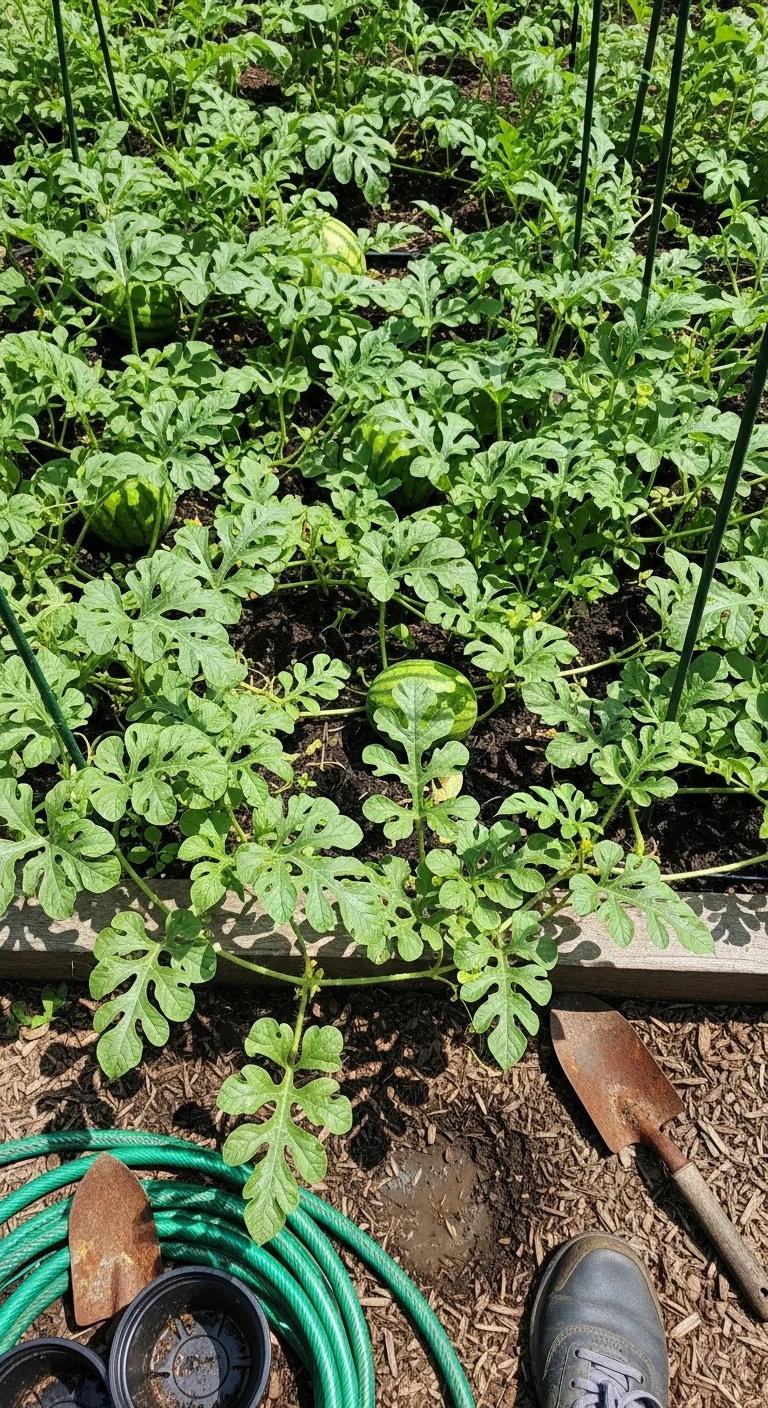
Secondary vine thinning follows a clear blueprint that starts with locating the main stem and identifying laterals. Trace each side shoot from the main vine outward. Keep only two or three laterals that show female flowers or small fruit. Cut the rest at the joint where they meet the main stem using sterilized shears on a dry morning.
Perform this step once vines reach roughly 3 feet in length. The mechanism concentrates resources on the retained laterals while preventing the plant from sending energy into unproductive runners. A frequent mistake is leaving too many laterals, which recreates the overcrowding you aimed to fix.
This approach differs from pruning cane fruits such as raspberries, where you remove entire spent canes after harvest. Watermelon vines stay productive longer, so selective thinning preserves the main structure. Raspberry pruning offers a useful comparison for timing your first cuts.
Edge case: In wind-prone areas, tie retained laterals loosely to stakes immediately after thinning to prevent breakage.
2. Base Sucker Removal
Best for: Branch 3
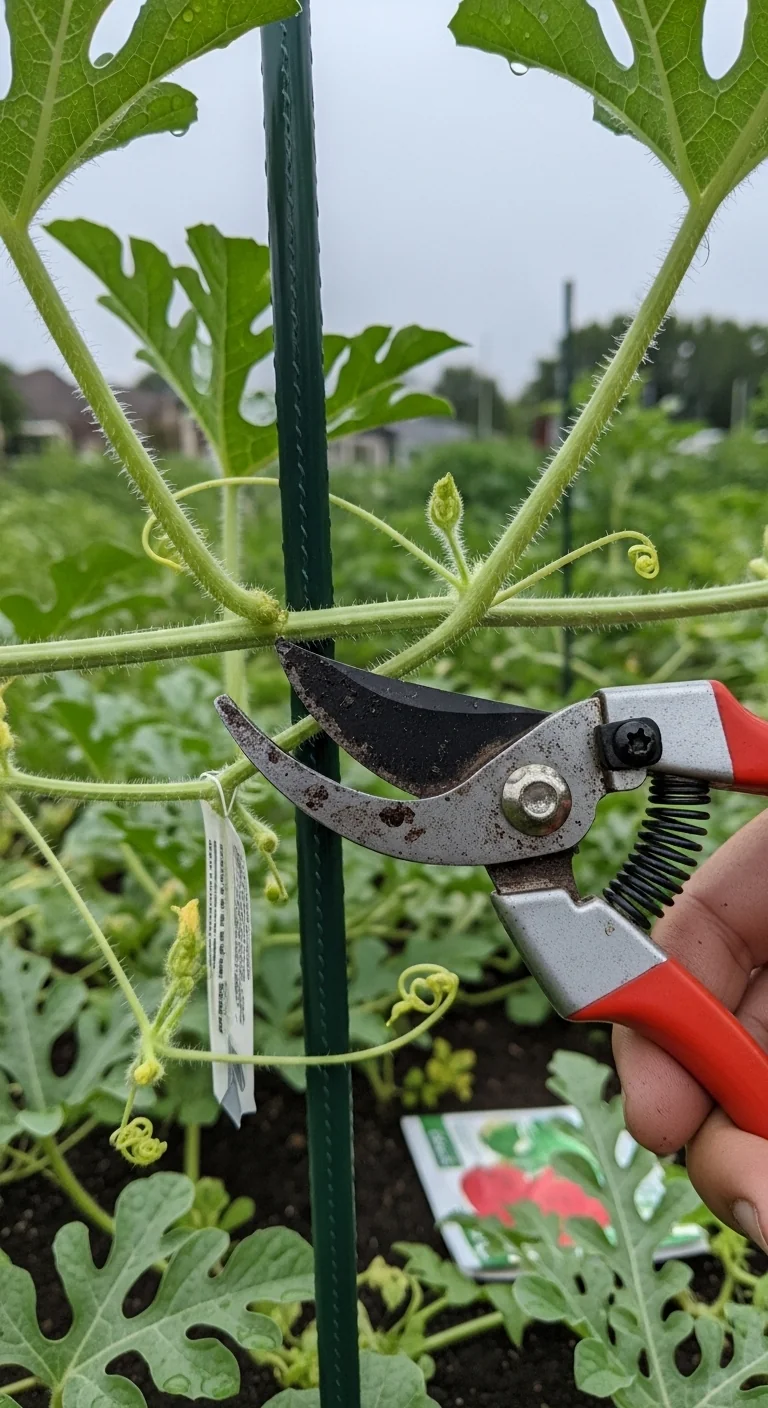
Base sucker removal targets shoots emerging directly from the crown or lowest nodes. Cut them cleanly at soil level with sharp shears. This single early-season action improves airflow around the base and reduces moisture that can harbor fungal spores.
3. Selective Fruit Thinning
Best for: Branch 2
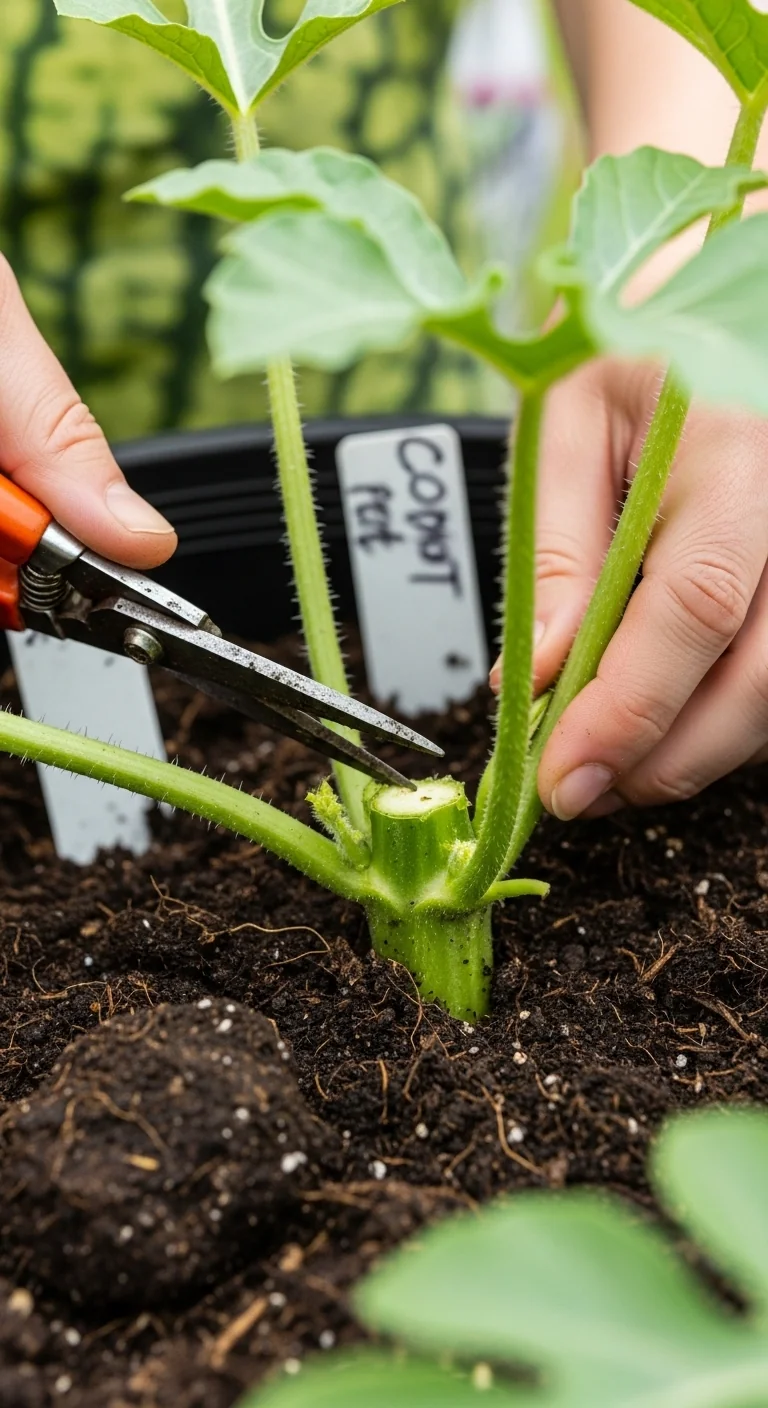
Selective fruit thinning removes misshapen, damaged, or excess melons once they reach golf-ball size. Leave two to four fruits per healthy vine depending on variety vigor. This step directs nutrients to the strongest fruits without cutting vines themselves. Thinning fruit trees uses the same principle of early removal to improve final size and quality.
Inspect every vine weekly during the first three weeks after flowering. Remove the smallest or deformed fruits at the stem attachment point. The technique works especially well in open gardens where space allows full vine development.
4. Trellis-Integrated Pruning
Best for: Branch 1
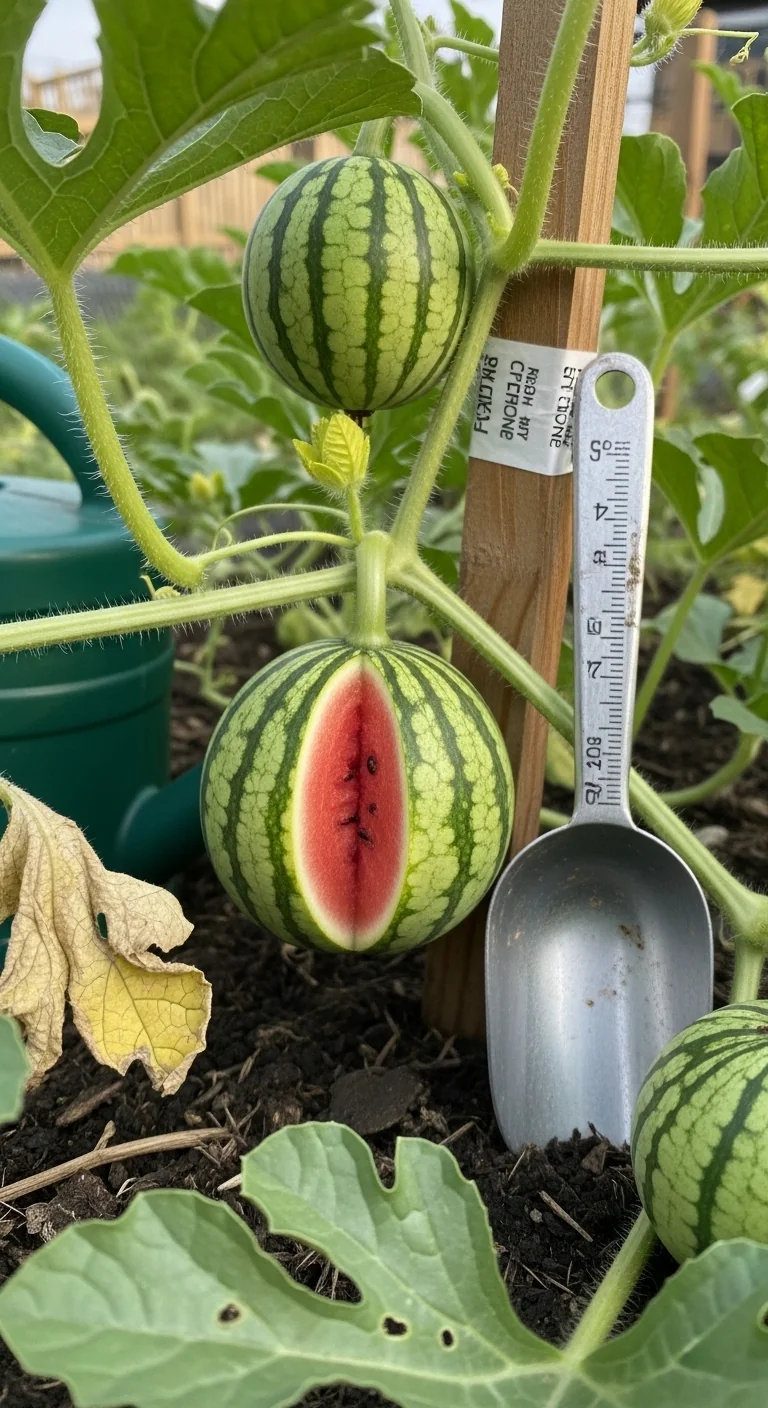
Trellis-integrated pruning combines vine cuts with vertical support structures. After securing the main stem to the trellis, remove all but the strongest two or three laterals. Pinch side shoots that grow beyond the trellis frame. This keeps the entire plant upright and within the support footprint.
Begin training when vines hit 18 inches. The synergy between pruning and trellising prevents ground contact that invites rot and saves floor space. Similar ideas appear in blackberry training systems where vertical management reduces sprawl. Blackberry trellis ideas share practical tie-down methods you can adapt.
Unique constraint: Use soft ties every 6 to 8 inches to avoid girdling the vine as it thickens.
5. Growing Tip Pinching
Best for: Branch 2
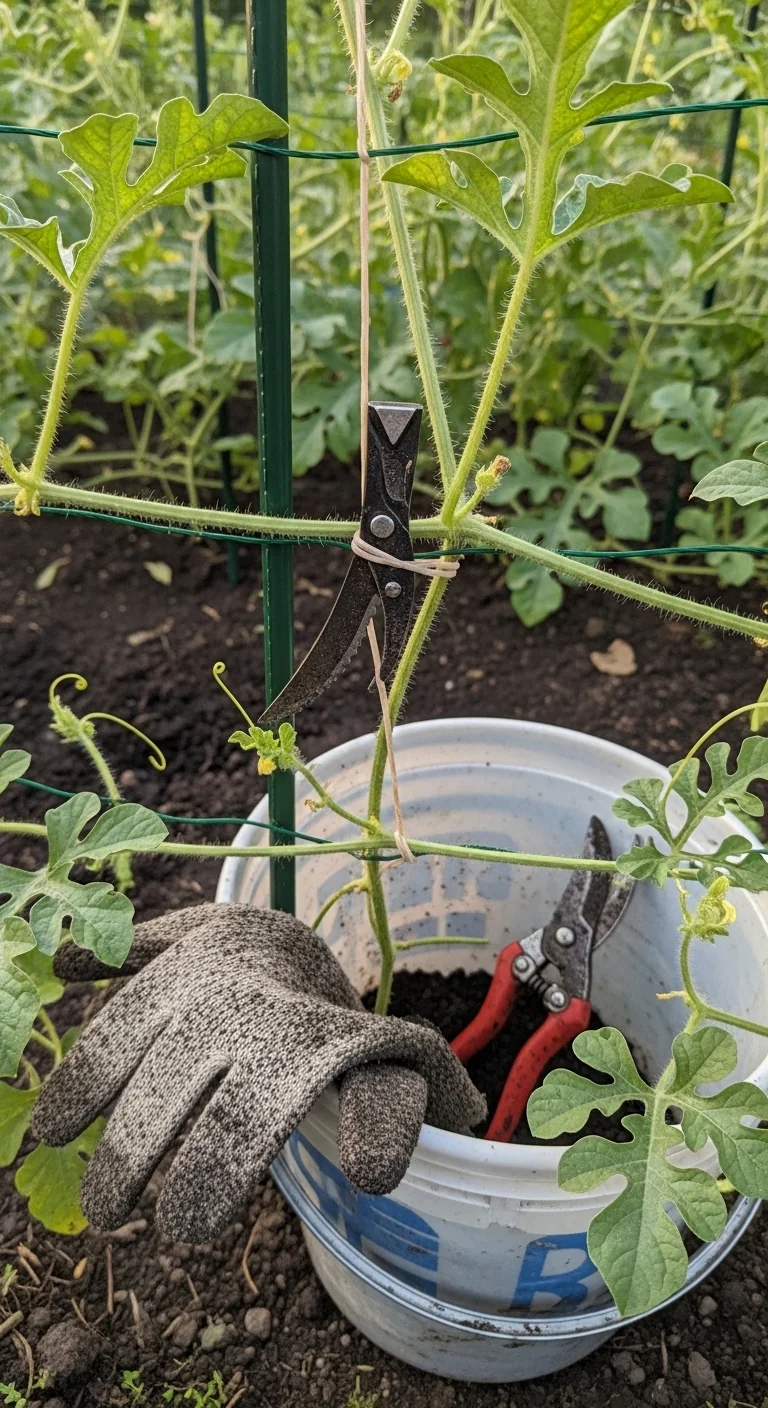
Growing tip pinching stops further extension on selected side vines once they carry fruit. Count 10 to 12 leaves past the last set fruit and snip the tip. This halts runaway growth while the retained leaves continue feeding the melon.
6. Airflow Leaf Management
Best for: Branch 3
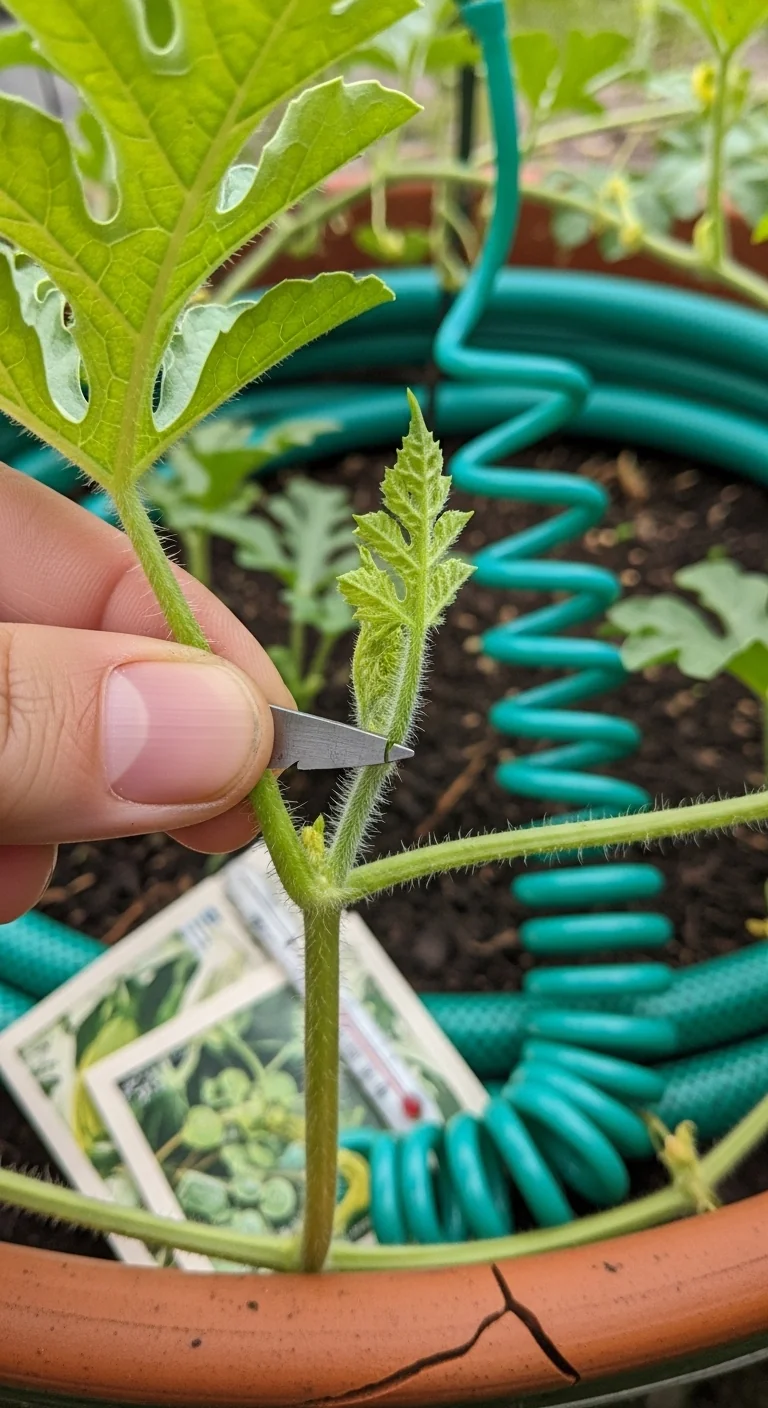
Airflow leaf management removes only the lowest yellowing or crowded leaves that touch soil or shade developing fruit. Cut each leaf at the petiole joint. Keep at least 12 to 15 healthy leaves above each melon to maintain photosynthesis. Perform checks every 10 to 14 days in humid conditions.
This practice lowers humidity around the fruit zone and reduces disease pressure without stripping the plant. It works alongside good spacing and avoids the need for chemical sprays in many home gardens.
7. Pruning Timing Thresholds
Best for: Branch 1
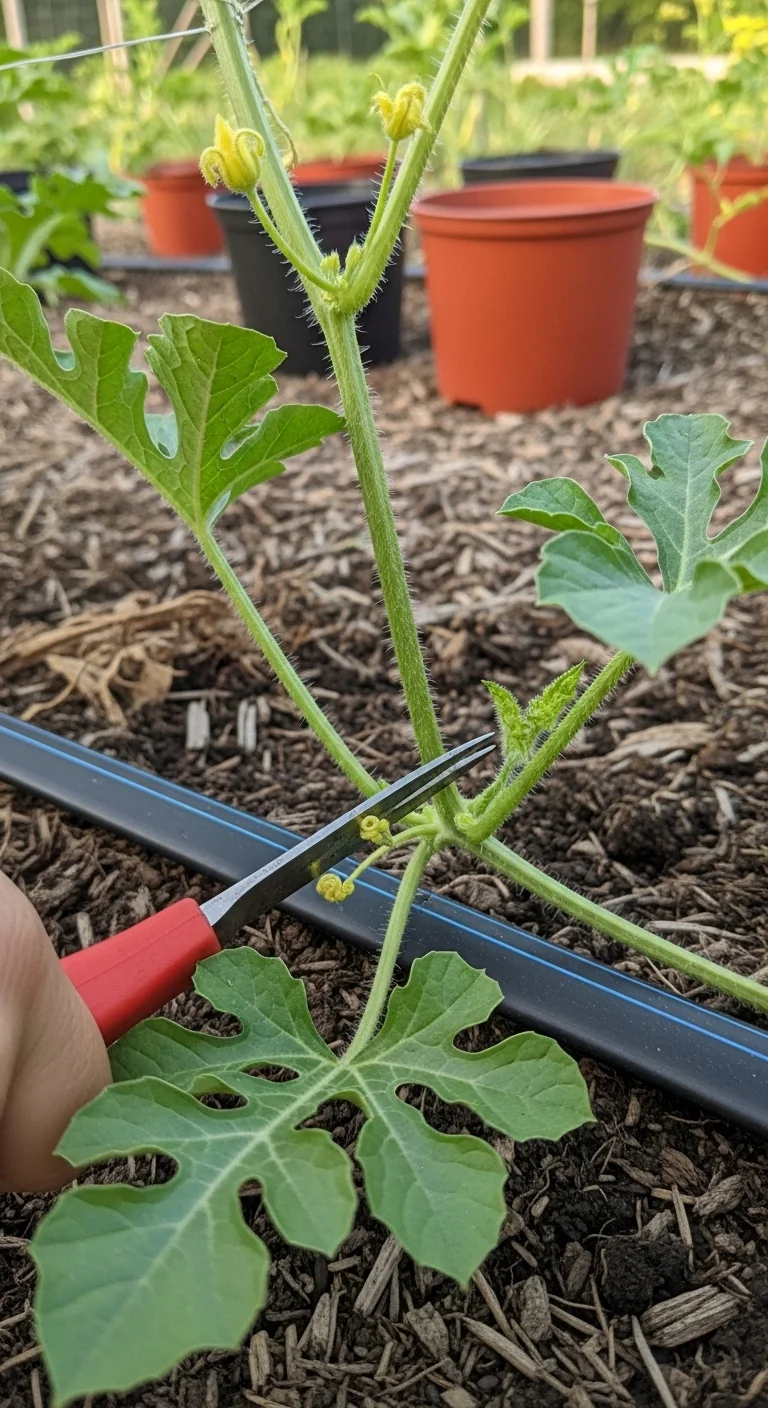
Pruning timing thresholds rely on observable vine milestones rather than calendar dates. Wait until the main vine has at least four true leaves and side vines show initial female flowers before any major cuts. Early cuts before flowering can reduce female bloom numbers and lower overall fruit set.
Complete major thinning before vines exceed 4 feet. This window minimizes disruption to pollination while still controlling size. Apple tree guides follow similar milestone-based rules for dormant versus summer pruning. Apple pruning guide provides parallel reasoning you can transfer to vine crops.
Adjustment rule: In cooler regions, delay the first cut by one week compared with warmer zones to match slower growth rates.
8. Bush Variety Minimalism
Best for: Branch 2
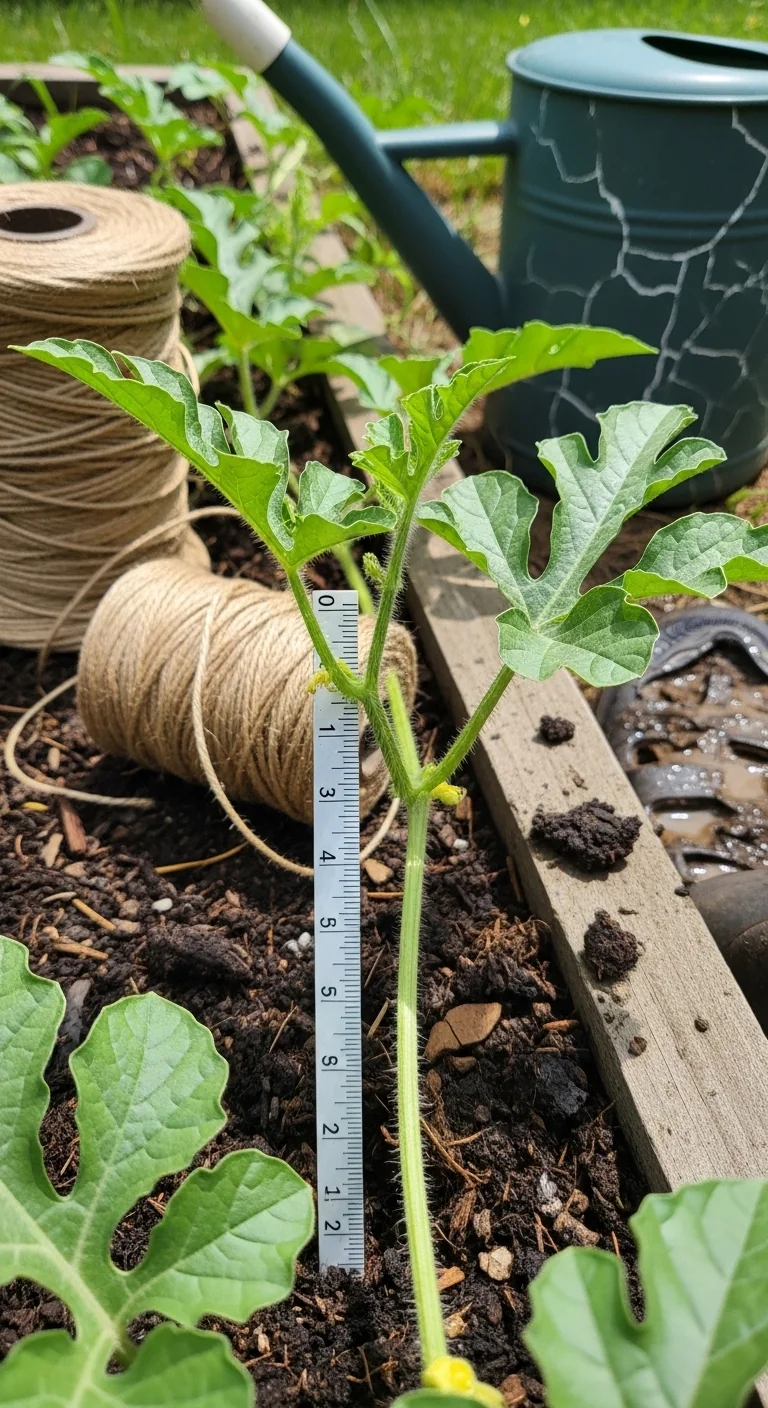
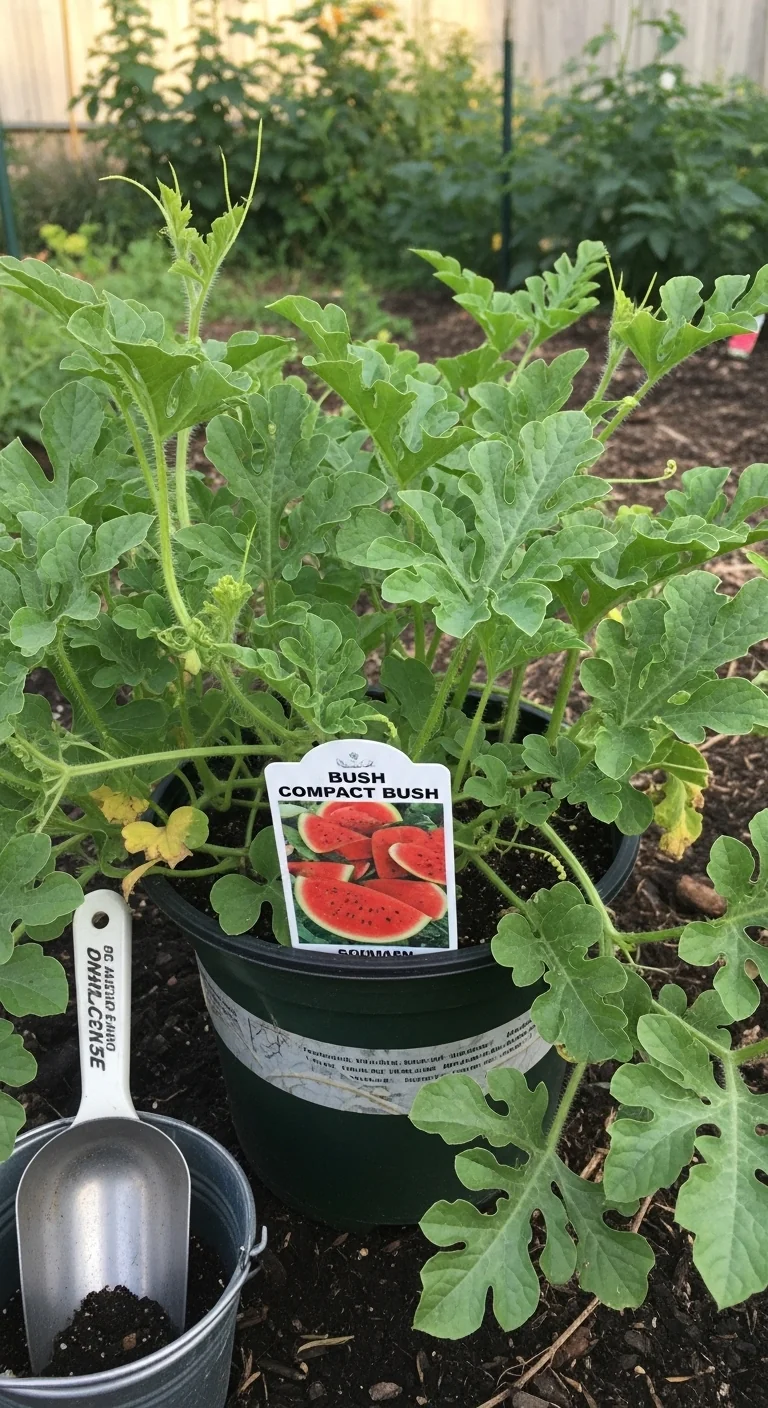
Bush variety minimalism limits cuts to only dead or damaged material on compact watermelon types. These varieties naturally stay shorter and require far less intervention. Remove only clearly yellow or broken leaves and any fruit that shows rot.
9. Late-Season Vine Cleanup
Best for: Branch 3
Late-season vine cleanup happens after the main harvest window closes. Remove any remaining damaged vines or leaves that show disease signs. This step prepares the bed for crop rotation and reduces overwintering pest habitat. Leave healthy foliage intact until the first frost threat appears.
Starter Stack (What to Choose First)
For Branch 1 (Limited space setups)
Start with Secondary Vine Thinning and Trellis-Integrated Pruning. Together they keep vines compact and vertical from early growth. Estimated time: 15 to 25 minutes per plant once vines reach 3 feet. Basic shears and soft ties cost 10 to 20 dollars total.
For Branch 2 (Ample space with size priority)
Begin with Selective Fruit Thinning and Growing Tip Pinching. The combination focuses energy on fewer, larger melons without restricting the overall vine framework. Estimated time: 10 to 20 minutes per vine spread over two sessions. Shears only required.
For Branch 3 (Humid climates or short seasons)
Start with Base Sucker Removal and Airflow Leaf Management. These steps open the canopy quickly and limit moisture buildup. Estimated time: under 15 minutes per plant in a single early pass. No additional tools beyond clean shears.
When This Won’t Work
Pruning delivers little benefit on bush-type watermelons or in extremely short seasons under 75 frost-free days. These varieties stay compact naturally, and aggressive cuts can stress plants before they set any fruit. Skip vine thinning and focus instead on consistent watering and nutrition.
Over-pruning in dry, low-humidity regions can also backfire by reducing leaf area needed for sugar production. If your plot already has excellent airflow and low disease pressure, leave vines untouched. In these cases, companion planting strategies around melons provide better support than cuts. Cantaloupe companion plants apply directly because the two crops share similar growth habits.
Alternative action: Shift effort to soil preparation and mulch layers before planting rather than mid-season pruning.
Choosing the Right Option for Your Situation
Budget threshold
If your tool budget stays under 25 dollars, stick to Base Sucker Removal or Bush Variety Minimalism. Both require only basic shears. Higher budgets allow trellis materials for integrated pruning.
Time threshold
With under 30 minutes available per session, select one-time actions like Secondary Vine Thinning or Pruning Timing Thresholds. Weekly checks fit only if you already walk the garden daily.
Technical constraint: pollination window
When female flower production is your main concern, avoid any cuts before vines show at least four female blooms. Delay pruning until after initial fruit set.
Yes/No checklist:
Do you have limited space or plan vertical growth? Yes: use Branch 1.
Is your priority larger individual fruits in open ground? Yes: use Branch 2.
Does your area have high humidity or short summers? Yes: use Branch 3.
Are you growing bush varieties only? Yes: default to minimal intervention.
Expert Q&A
How does pruning timing interact with flower production in watermelons?
Watermelons produce far more male than female flowers. Cuts made before the first female blooms appear can reduce the female count and lower total fruit set. Wait until vines show female flowers, then prune selectively to protect pollination potential.
Can you prune watermelons grown in containers the same way as in-ground?
Container watermelons need stricter vine control because root volume is limited. Use trellis-integrated pruning and remove more secondary shoots early. Keep only one or two main vines per pot to avoid nutrient competition.
What is the relationship between pruning and pollination success?
Moderate pruning improves airflow for better bee activity around flowers. Heavy cuts can temporarily reduce female flower numbers, so balance removal of non-fruiting shoots while preserving bloom-bearing laterals.
Does pruning watermelon vines affect companion planting choices?
Yes. Aggressive vine thinning opens space that companion herbs or flowers can occupy without competition. Minimal pruning in open gardens keeps dense foliage that naturally shades out weeds near companions.
How do you adjust pruning for different watermelon varieties like icebox or seedless?
Icebox types stay smaller and need less thinning. Seedless varieties often set fruit more reliably, so you can retain slightly more laterals. Always match cuts to the variety’s natural vigor listed on the seed packet.
Conclusion
Your next step is to measure your plot and note your local frost dates, then select the matching decision grid branch and begin with the two starter items recommended for it. When to plant fruit trees shares related timing principles that transfer directly to vine crops.