
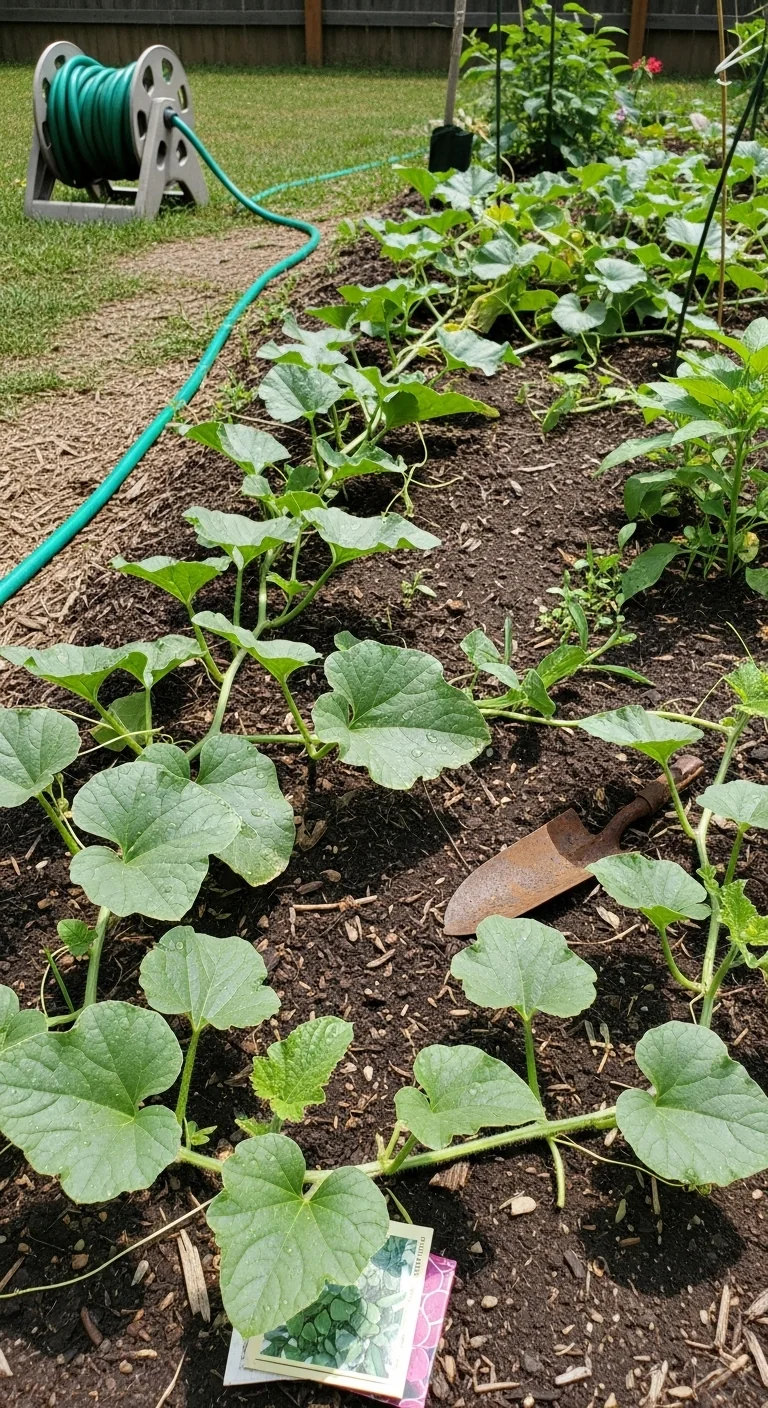
Companion planting for cantaloupe succeeds when you align each partner plant to one measurable garden constraint instead of following blanket lists that ignore your setup. Most top guides repeat the same 10 plants without explaining how to pick based on actual conditions like bed size, insect history, or soil depletion after last season’s crops.
This article covers nine proven companions drawn from extension service charts and university guides. It includes only plants that share cantaloupe’s preference for warm soil above 60°F and consistent moisture. Excluded are generic flowers or unrelated crops that compete for the same resources or share heavy disease risks.
You will finish with a clear decision grid, comparison table, and starter stacks so you plant exactly what solves your limiting factor this season. Internal links point to related fruit-gardening tactics on The Yield Grid for seamless next steps.
Align companions to your garden’s single biggest constraint and you gain measurable space use and pest control without trial-and-error rows.
The Yield Grid Decision Grid
Branch 1: Space-constrained setups. Your cantaloupe grows in raised beds 4 by 8 feet or smaller, containers, or on a trellis. Vining partners or quick upright fillers fit without choking the main crop. Recommended: Items 3, 5, and 7 below. For vertical options see melon trellis ideas.
Branch 2: Pest-pressure zones. Cucumber beetles or aphids appeared in the past two seasons or your area averages high humidity during flowering. Repellent-scent or trap-crop partners reduce scouting time. Recommended: Items 1, 4, 6, 8, and 9 below.
Branch 3: Nutrient-depleted soils. Last year’s heavy feeders left the bed low in available nitrogen or you skip annual compost. Legume partners replenish soil naturally through root nodules. Recommended: Items 2 and 7 below.
Quick Comparison Table
| Option | Key mechanism | Best for | Decision Grid Branch | Effort Score |
|---|---|---|---|---|
| Marigolds | Root compounds deter soil nematodes; flowers draw predatory insects | Pest control in open beds | Branch 2 | 2 |
| Bush Beans | Nitrogen fixation via root nodules | Soil building without extra fertilizer | Branch 3 | 1 |
| Nasturtiums | Trap-crop action pulls aphids away; trailing habit fills gaps | Space-efficient perimeter defense | Branch 1 | 2 |
| Basil | Strong aromatic oils repel aphids and flies | Herb harvest plus pest reduction | Branch 2 | 3 |
| Radishes | Fast 30-day cycle loosens soil around young vines | Quick interplanting in tight beds | Branch 1 | 1 |
| Garlic | Sulfur compounds repel cucumber beetles | Long-season perimeter planting | Branch 2 | 2 |
| Pole Beans | Nitrogen fixation plus vertical growth on shared supports | Dual-purpose space and soil gain | Branch 1 | 3 |
| Borage | Flowers attract pollinators and predatory wasps | Low-input pollinator boost | Branch 2 | 1 |
| Dill | Umbel flowers draw beneficial wasps; seeds self-sow lightly | Season-long insectary row | Branch 2 | 2 |
Marigolds
Best for: Branch 2
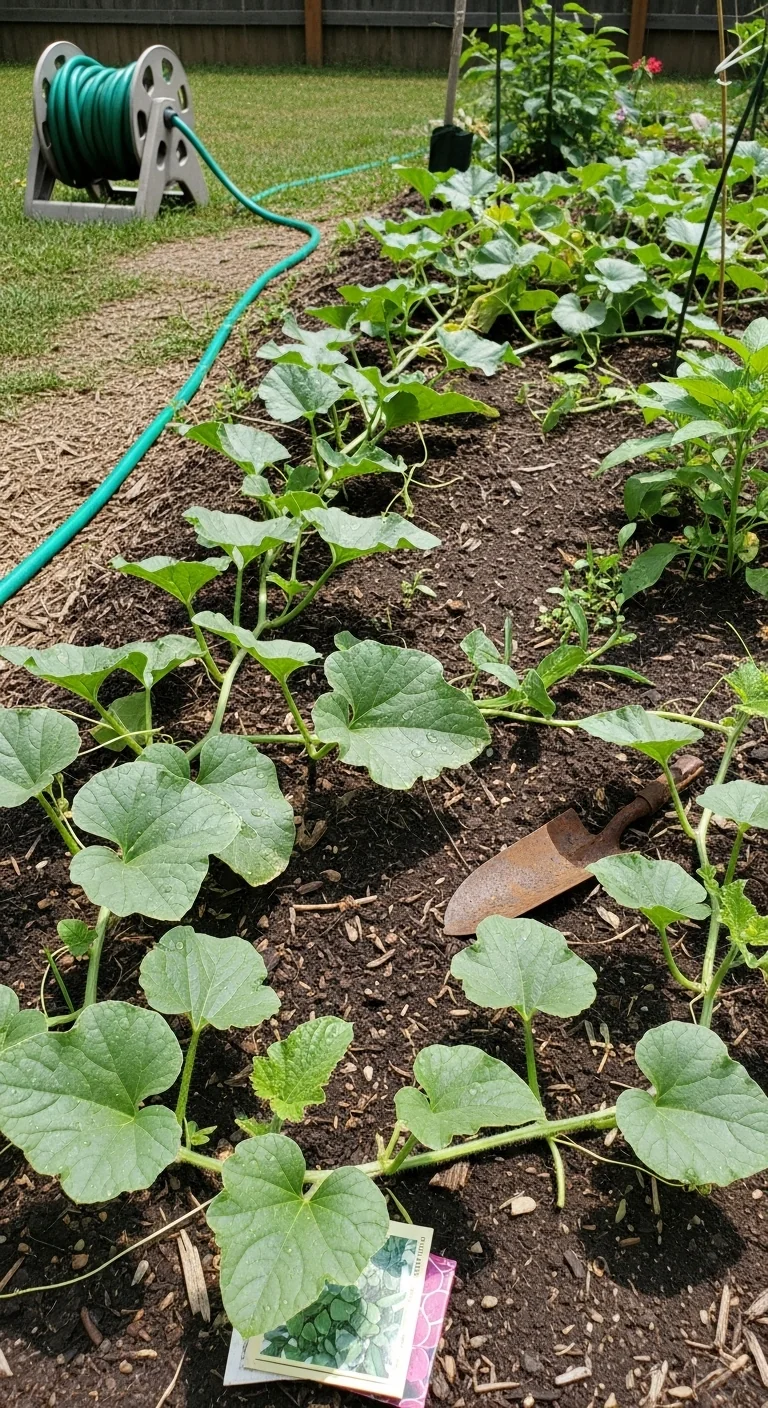
French marigolds (Tagetes patula) release alpha-terthienyl from their roots into the soil, a compound shown in university trials to suppress root-knot nematodes that attack cantaloupe. Plant them 8 to 12 inches from the main vine base in a ring around each hill. Space plants 10 inches apart so foliage does not shade the melon leaves during peak sun hours.
Start seeds indoors four weeks before last frost or direct-sow after soil reaches 60°F. Deadhead spent blooms every 10 to 14 days to keep the display active until first hard frost. Avoid African marigolds (Tagetes erecta) in tight beds because their taller 24-inch stature blocks airflow and raises mildew risk on humid nights.
Common mistake: planting only one variety. Mix French and signet types for layered height and continuous bloom coverage.
Bush Beans
Best for: Branch 3
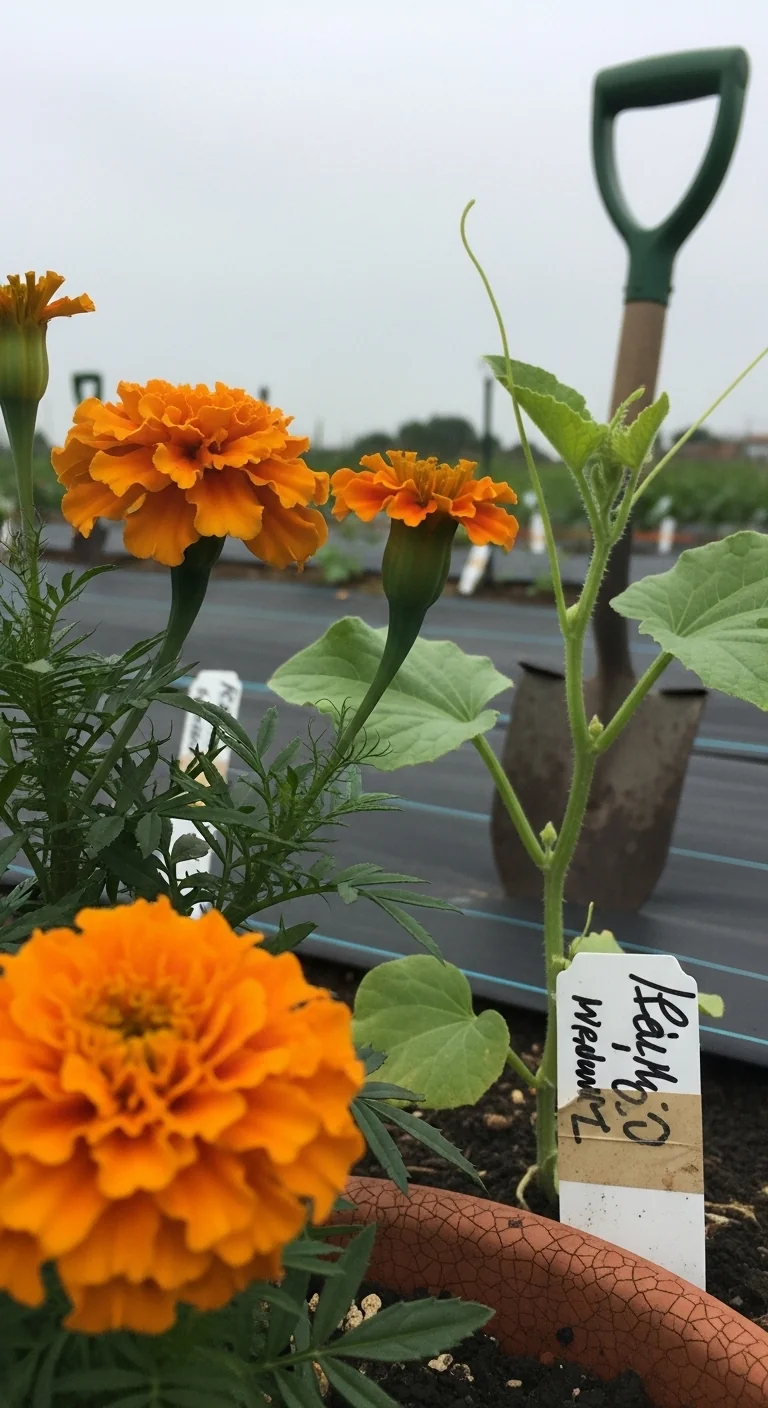
Use vs skip: Plant bush beans if your soil test shows low nitrogen after a previous heavy crop. Skip if you already added 2 to 3 inches of compost this spring. They fix nitrogen quietly through the season and finish before cantaloupe vines need full row width.
Nasturtiums
Best for: Branch 1
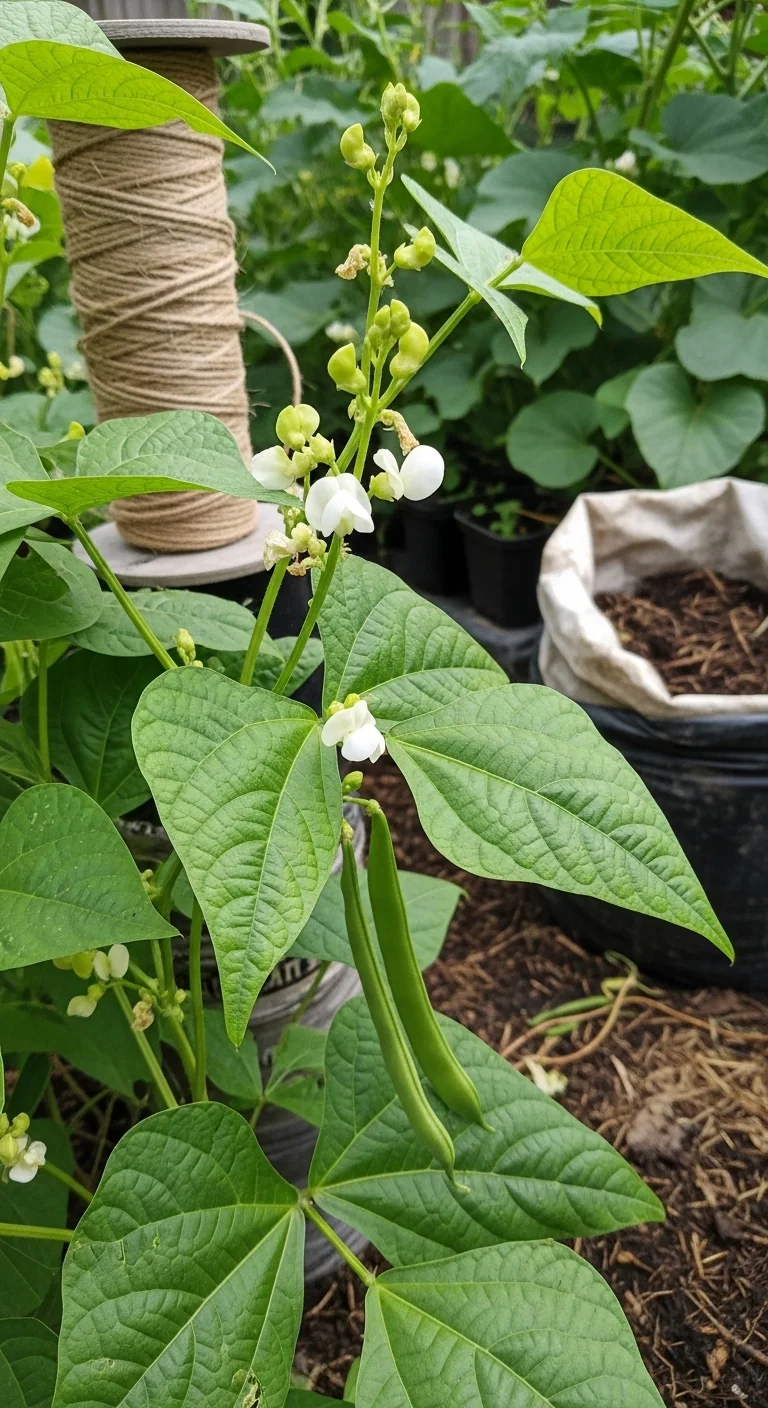
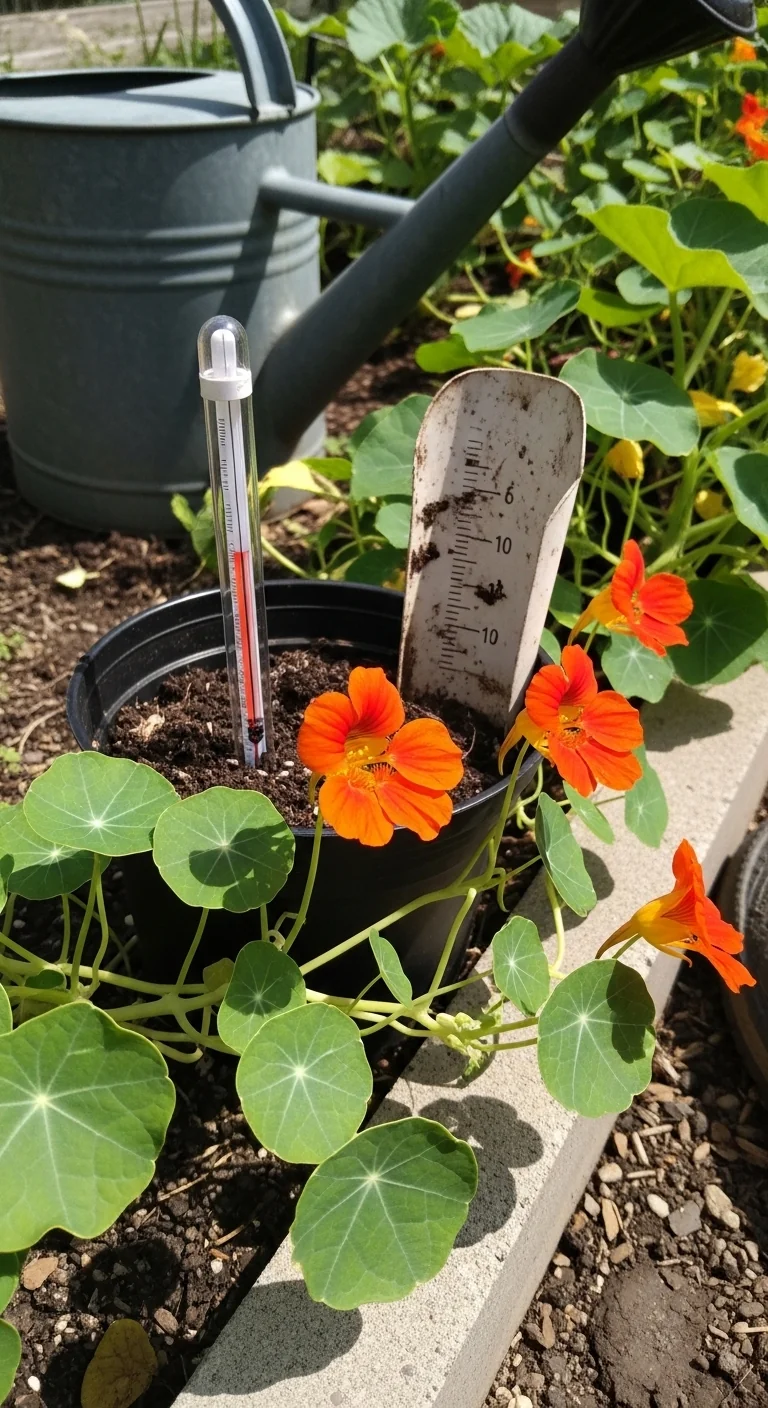
Threshold rule: Sow nasturtiums when your bed width measures under 4 feet or you plan vertical cantaloupe training. Their trailing stems stay under 18 inches high and act as a living mulch that cools soil while drawing aphids away from melon stems. Direct seed after final frost in clusters of three every 18 inches along the outer edge. If aphids appear, the nasturtiums concentrate them for easy removal with a strong water spray. In containers under 15 gallons, limit to two plants per pot to avoid root competition.
Basil
Best for: Branch 2
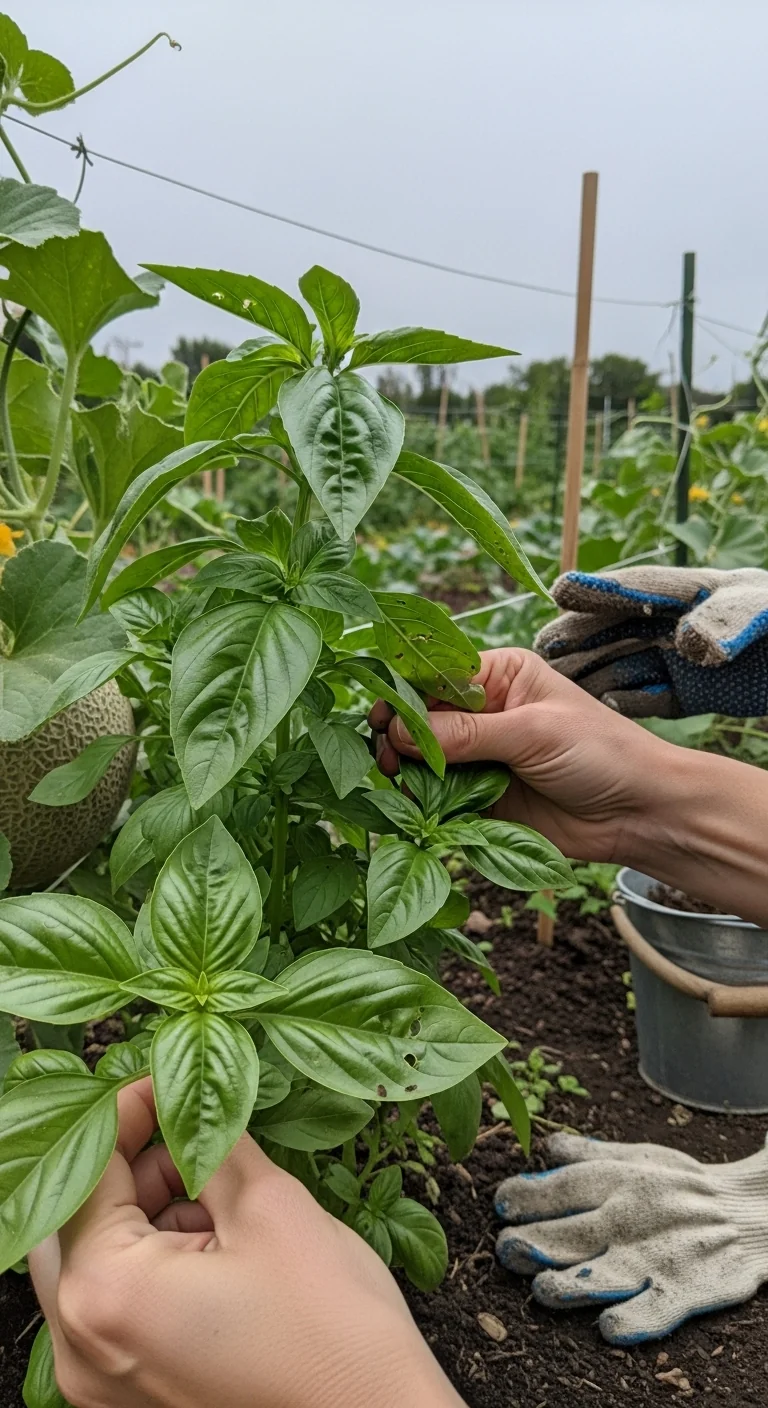
10-minute workflow: Week of last frost, fill 4-inch pots with seed-starting mix, press two basil seeds per pot, and cover lightly. After true leaves appear, transplant 12 inches from cantaloupe hills. Pinch tops every two weeks once plants reach 6 inches to keep them bushy and aromatic. Harvest leaves for kitchen use any time. Upgrade option: interplant with garlic for layered scent defense against both aphids and beetles.
Radishes
Best for: Branch 1
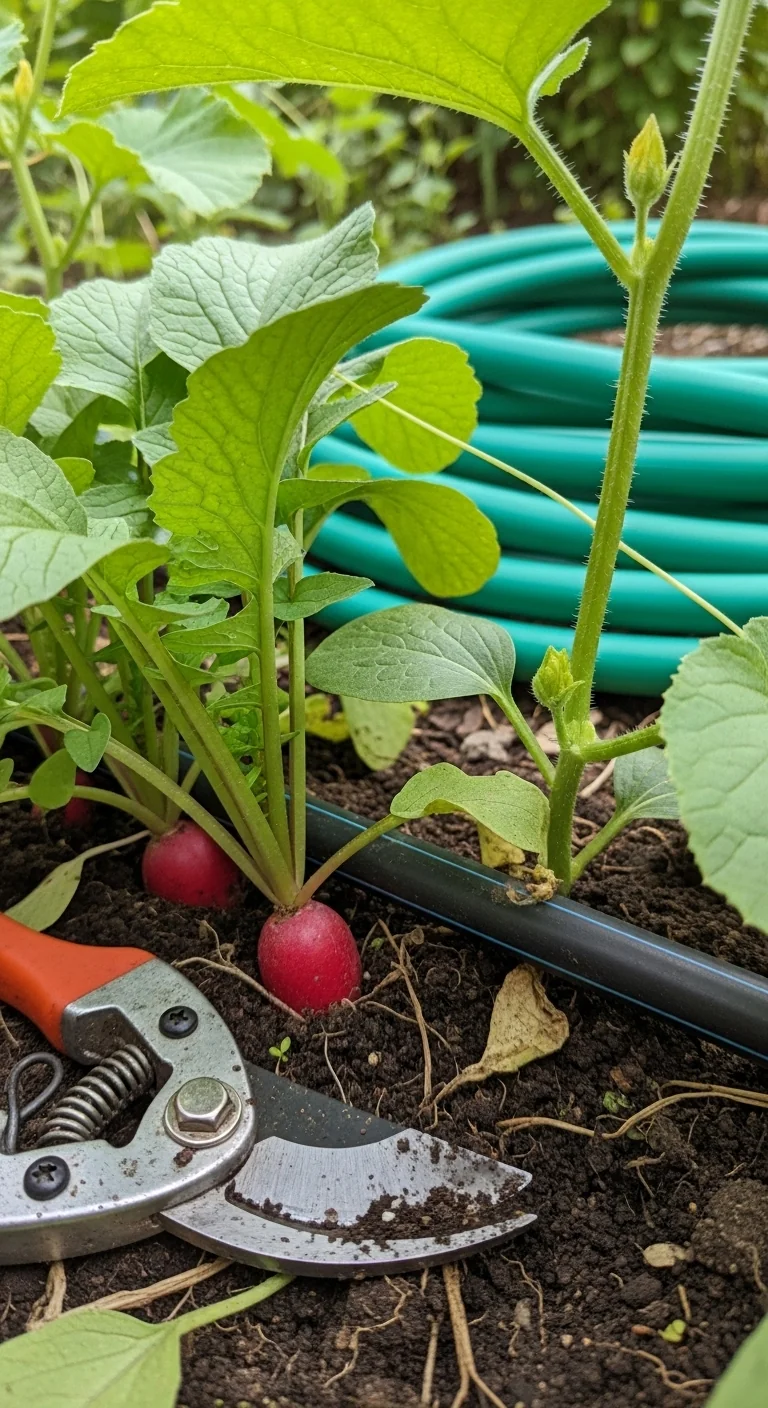
Blueprint: Radishes serve three roles in compact cantaloupe beds. Sow them between hills at planting time. They emerge in 4 days, loosen surface crust for melon roots, and mature in 25 to 30 days so you harvest them before vines spread. Thin to 2 inches apart to prevent crowding. The spent roots leave channels that improve water infiltration for the thirsty melons. Skip if your bed already has loose, amended soil from prior cover crops.
Garlic
Best for: Branch 2
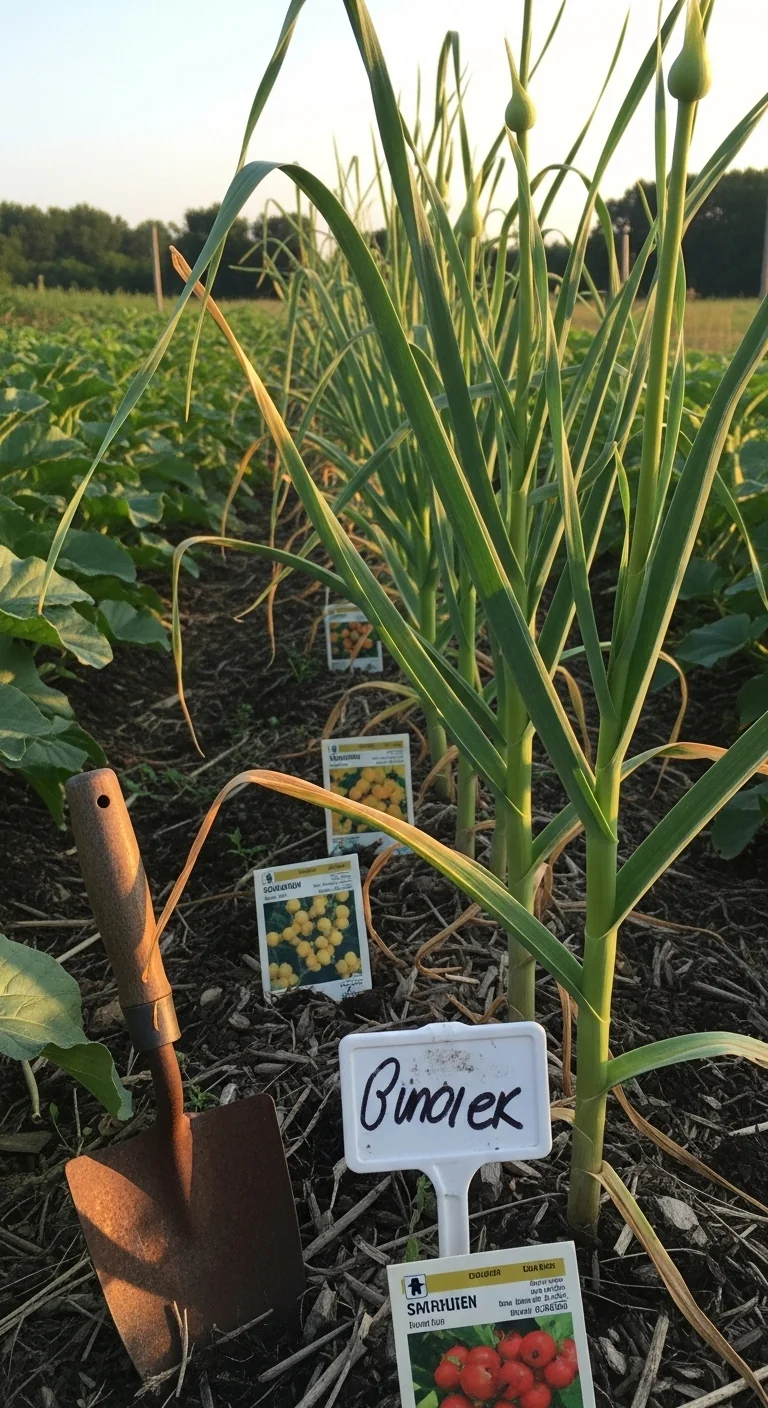
Use vs skip: Plant garlic cloves 4 inches deep in fall if beetle pressure was high last year. The sulfur scent lingers through spring and summer. Skip spring planting because cloves need cold stratification for best bulb size. Space cloves 6 inches from melon vines so foliage does not overlap during flowering. Harvest scapes in early summer to redirect energy back to bulbs and keep the bed open.
Pole Beans
Best for: Branch 1
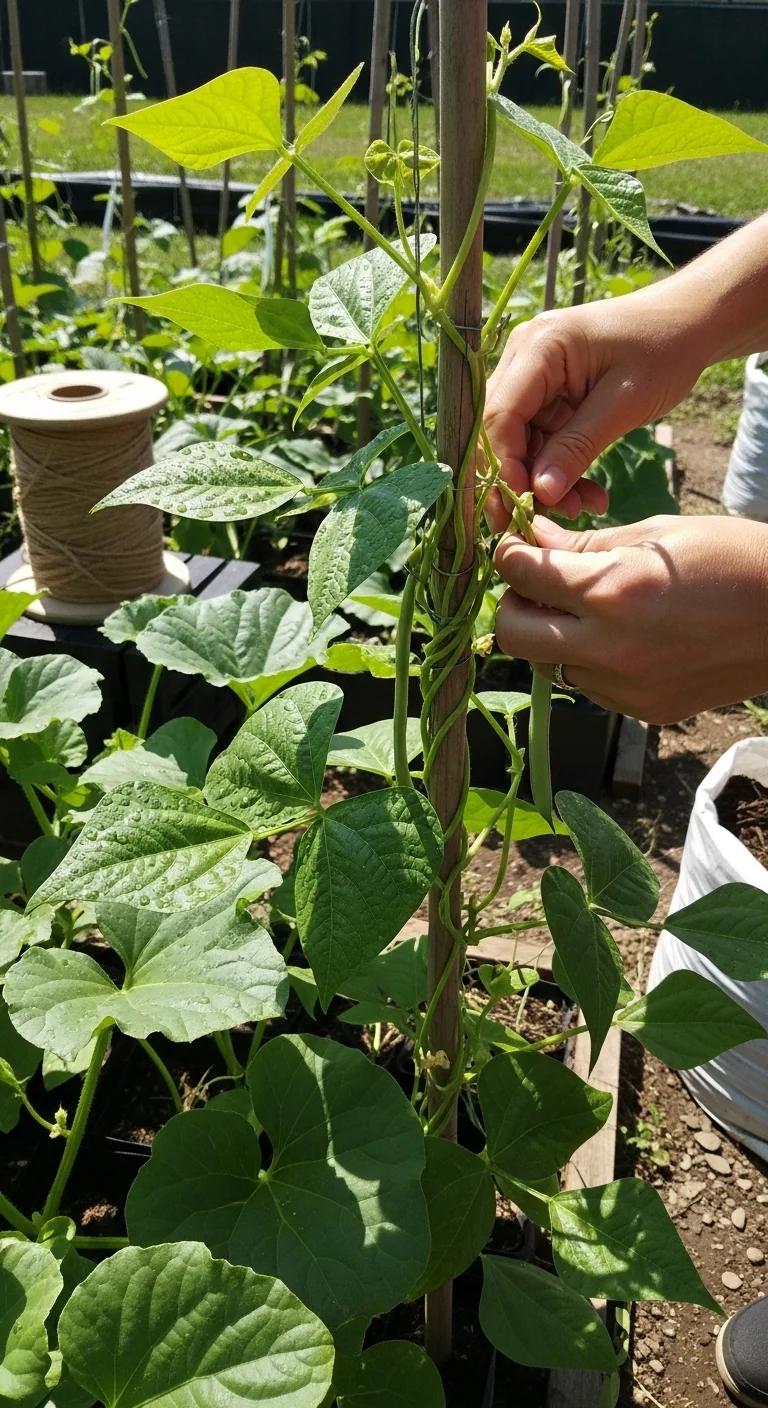
Threshold rule: Use pole beans only if you have a sturdy trellis at least 6 feet tall and plan to train both crops upward. Sow beans at the base of the support two weeks after cantaloupe transplant. Nitrogen nodules form within 30 days and feed the melon roots without extra side-dressing. Keep beans on one side of the trellis to maintain 50 percent sun on cantaloupe leaves. If your trellis is under 5 feet, switch to bush beans instead. See related vine management tactics in watermelon pruning for timing guidance that applies equally here.
Borage
Best for: Branch 2
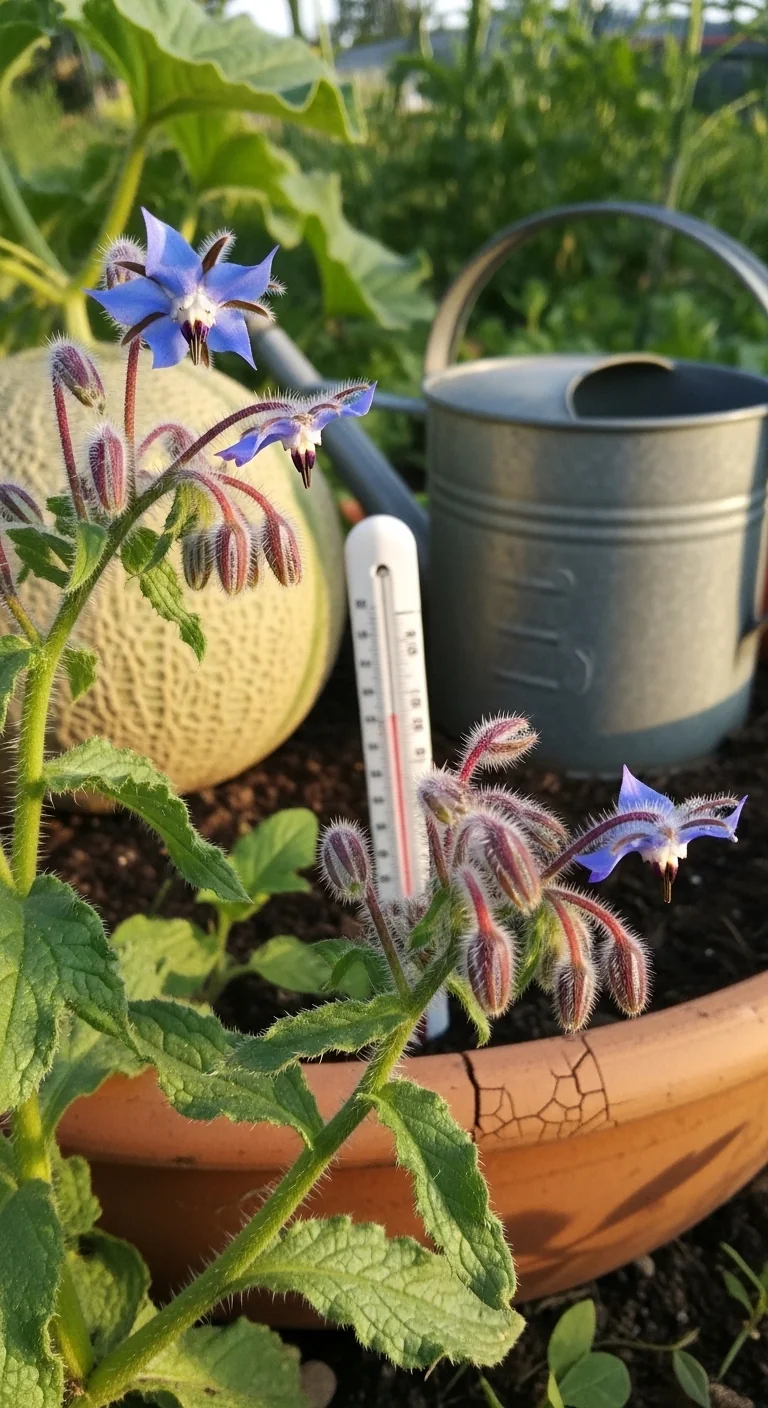
10-minute workflow: Direct seed borage after soil warms to 65°F in gaps between cantaloupe hills. Thin seedlings to 18 inches. The star-shaped blue flowers open within 40 days and draw hoverflies and parasitic wasps that target melon pests. Self-seeding is light in most climates; pull volunteers in fall if you rotate beds. No ongoing pruning needed.
Dill
Best for: Branch 2
Blueprint: Dill acts as a season-long insectary. Sow seeds ¼ inch deep in a single row 12 inches from melon vines once soil hits 60°F. Allow some plants to bolt and flower by midsummer; the flat umbels attract beneficial wasps that parasitize cucumber beetle larvae. Harvest leaves early for kitchen use and let later plants go to seed for next year’s volunteers. Remove spent stalks in late fall to reduce overwintering sites for pests.
Starter Stack (What to Choose First)
For Branch 1 (Space-constrained setups)
Start with nasturtiums and radishes. Nasturtiums edge the bed while radishes fill gaps and loosen soil early. Total seed cost ranges from 3 to 6 dollars; planting time runs 20 to 30 minutes for a 4-by-8-foot bed. Synergy comes from quick radish harvest opening space exactly when cantaloupe vines begin rapid spread.
For Branch 2 (Pest-pressure zones)
Start with marigolds and basil. Marigolds handle soil nematodes while basil targets flying pests. Total seed or starter cost ranges from 4 to 8 dollars; planting time runs 25 to 40 minutes. Synergy appears in overlapping bloom and scent windows that keep beneficial insects active from first flower to fruit set.
For Branch 3 (Nutrient-depleted soils)
Start with bush beans and pole beans. Bush beans build soil at ground level while pole beans add vertical nitrogen. Total seed cost ranges from 3 to 7 dollars; planting time runs 15 to 35 minutes. Synergy occurs as both legumes feed roots without shading the melon canopy when trained properly.
When This Won’t Work
Companion planting fails in two clear conditions. First, if soil drainage stays below 2 inches per hour after a 1-inch rain test, shared moisture needs turn into root rot for both cantaloupe and any vining partner. Switch to raised beds with amended soil or grow cantaloupe in containers with perlite mix. Second, if night temperatures regularly drop below 55°F during the first 30 days after transplant, slow growth lets aggressive companions like borage outcompete young vines. Delay companion seeding by three weeks or use row covers until soil warms.
In either case the fix is the same: isolate cantaloupe in its own bed or container and add the companion strategy only after vines establish six true leaves. See strawberry raised beds for bed-building details that transfer directly to melon culture.
Choosing the Right Option for Your Situation
Budget threshold
If your seed budget is under 10 dollars per 100 square feet, limit to two companions from the same branch and source open-pollinated packets. Above 10 dollars you can mix one from each branch for layered benefits.
Time threshold
If you have under 30 minutes for planting day, choose effort-score-1 options (bush beans, radishes, borage). Over 30 minutes opens the full starter stack for your branch.
Technical constraint: trellis availability
If no trellis exists, drop pole beans and substitute bush beans. If trellis height exceeds 6 feet, pole beans become the top choice for dual harvest and support.
Yes/No checklist:
Do you have a confirmed primary constraint? (yes or no)
Does your chosen stack match only that branch? (yes or no)
Will you plant companions after cantaloupe establishes? (yes or no)
Did you avoid cucurbit family overlaps? (yes or no)
Expert Q&A
Can I interplant cantaloupe companions with tomatoes in the same bed?
Yes if you keep 3 feet between tomato stakes and melon hills. Tomatoes and cantaloupe share few pests, but both need full sun and consistent water. Basil works as a triple-duty companion for all three, repelling aphids while adding harvest value. Space the bed so air circulates freely to prevent foliar diseases that thrive in tight quarters.
Do companions change the ideal soil pH for cantaloupe?
No. Keep soil between 6.0 and 7.0 regardless of companions. Marigolds and beans tolerate that exact range and actually perform best inside it. Test once in spring and adjust with lime or sulfur before planting; companions do not alter the target pH.
How close can I plant companions without risking cross-pollination issues?
Keep flowering companions at least 10 feet from open cantaloupe blooms if you save seed. For eating melons only, distance does not matter because commercial varieties are bred for isolation. Nasturtiums and dill flower at different times and do not cross with melons.
Will self-seeding companions like borage or dill become weeds in future melon beds?
Light self-seeding occurs but stays manageable if you pull volunteers before they set seed in fall. In zones with cold winters, most seedlings die off before spring planting. Mark beds and cultivate shallowly each spring to remove any that emerge.
Can I use the same companions for cantaloupe and watermelon in adjacent rows?
Yes, but stagger planting dates by two weeks and keep rows 6 feet apart. Shared companions like marigolds and beans work for both, yet separate rows prevent vine entanglement and reduce shared beetle pressure.
Conclusion
Next step: review your bed measurements or last season’s pest log, then head to blueberries companion plants for parallel decision tools that sharpen your fruit-gardening approach across the entire patch.