
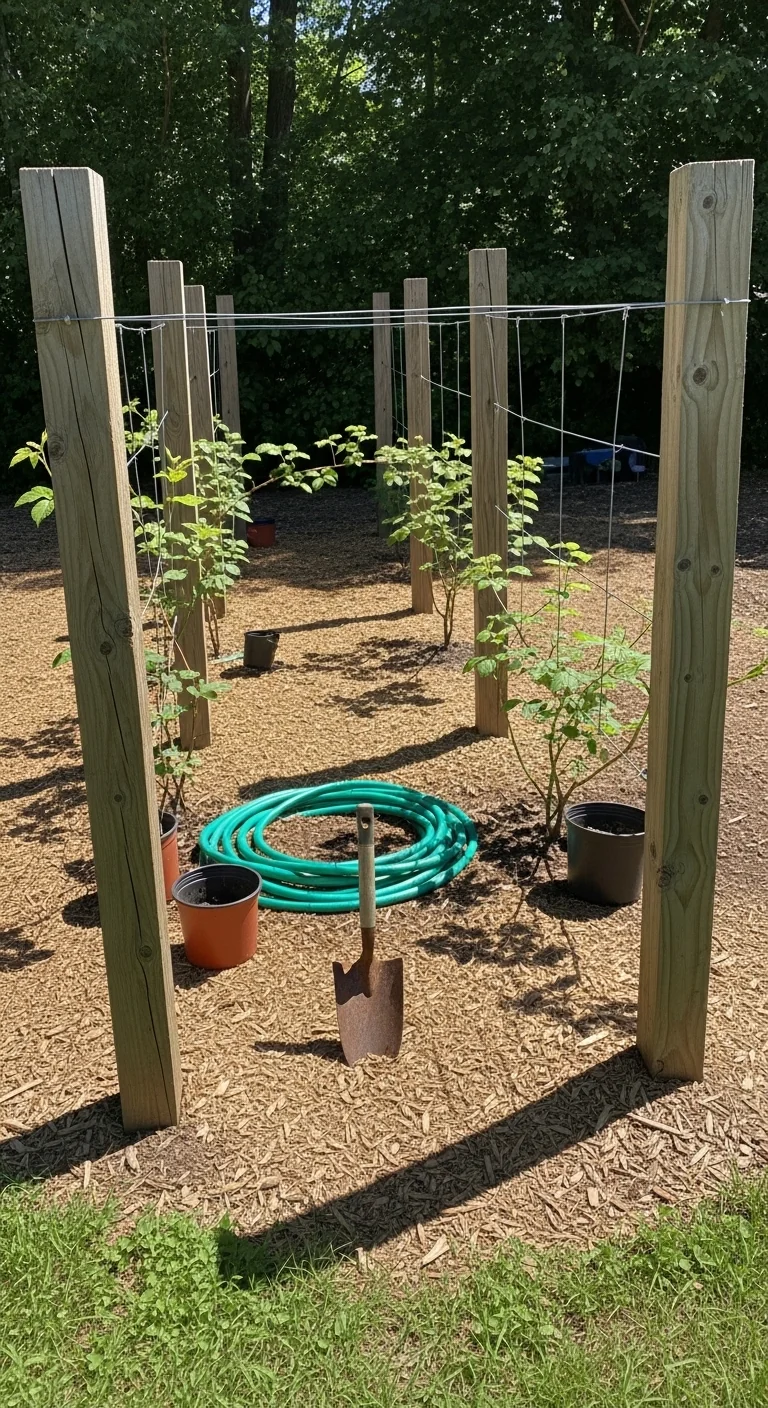
Blackberry trellis ideas deliver results only when they match the specific growth habit and vigor of your variety rather than following generic designs.
This guide presents nine practical trellis setups for home edible gardens in the US, UK, Canada, Australia, and New Zealand. It covers options built with common materials such as posts, wire, and panels while excluding commercial rotating-arm systems and purely ornamental structures.
You will gain a clear framework to select the trellis that fits your exact yard dimensions, blackberry type, and maintenance level so you can reduce cane tangling and simplify harvest access.
Align your trellis choice with your blackberry variety’s growth habit and garden footprint to simplify care and improve plant performance.
The Yield Grid Decision Grid
Branch 1: Your available planting area measures under 20 square feet or you grow blackberries in containers or on patios.
Recommended: Items 2, 6, and 9 below.
Branch 2: You maintain a standard backyard row planting with erect or semi-erect blackberry varieties that exhibit moderate vigor.
Recommended: Items 1, 3, and 4 below.
Branch 3: Your site supports 30 feet or more of linear row space and you grow trailing or highly vigorous varieties.
Recommended: Items 5, 7, and 8 below.
For related cane fruit support options, consult our raspberry supports guide.
Quick Comparison Table
| Option | Key mechanism | Best for | Decision Grid Branch | Effort Score |
|---|---|---|---|---|
| Two-Wire T-Bar Trellis | Parallel wires on cross arms for upright cane support | Erect blackberries in linear rows | Branch 2 | 2 |
| Simple Stake-and-Tie System | Individual wooden or metal stakes with ties | Container or small patch blackberries | Branch 1 | 1 |
| Multi-Wire Fence Trellis | Multiple horizontal wires along existing fence or posts | Moderate vigor varieties needing vertical training | Branch 2 | 2 |
| V-Trellis for Airflow | Diverging wires forming a V shape for open canopy | Semi-erect varieties in humid climates | Branch 2 | 3 |
| Archway Trellis | Curved arch structure for trailing canes to drape | Vigorous trailing varieties in larger spaces | Branch 3 | 2 |
| Container Wall Lattice | Grid panels mounted on walls or fences | Potted blackberries in limited spaces | Branch 1 | 1 |
| Portable Cattle Panel Trellis | Arched or straight heavy gauge panels that can be moved | Trailing types in flexible garden layouts | Branch 3 | 3 |
| Single Post with Crossbars | Central post with horizontal arms for fan training | Trailing varieties requiring spread control | Branch 3 | 2 |
| Espalier Wire System | Closely spaced wires on wall or frame for flat training | Space-saving in small or urban gardens | Branch 1 | 2 |
1. Two-Wire T-Bar Trellis
Best for: Branch 2
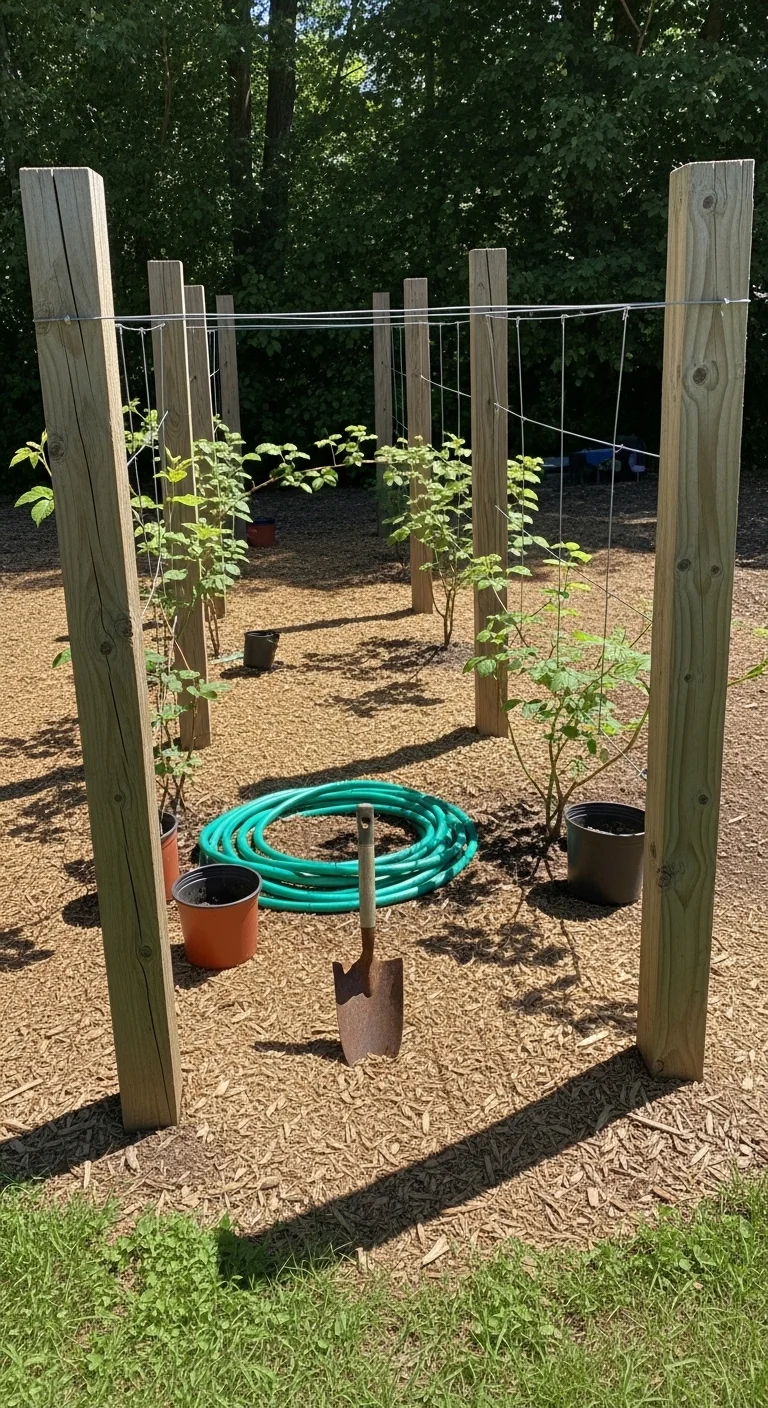
This trellis uses wooden or metal posts set 8 to 10 feet apart with cross arms attached at 4 feet and 5.5 feet high. Two parallel wires run along the arms to hold erect and semi-erect canes upright. It suits varieties labeled as erect on the plant tag because the structure keeps new primocanes separated from fruiting floricanes.
Installation steps begin with setting posts 2 feet deep in concrete or compacted soil. Attach 18-inch cross arms with lag screws, then string 12-gauge galvanized wire and tension with turnbuckles. Train first-year canes between the wires as they grow.
One common mistake is spacing posts wider than 12 feet, which causes wire sag under fruit weight. Keep spacing tight and check tension each spring before new growth emerges.
2. Simple Stake-and-Tie System
Best for: Branch 1
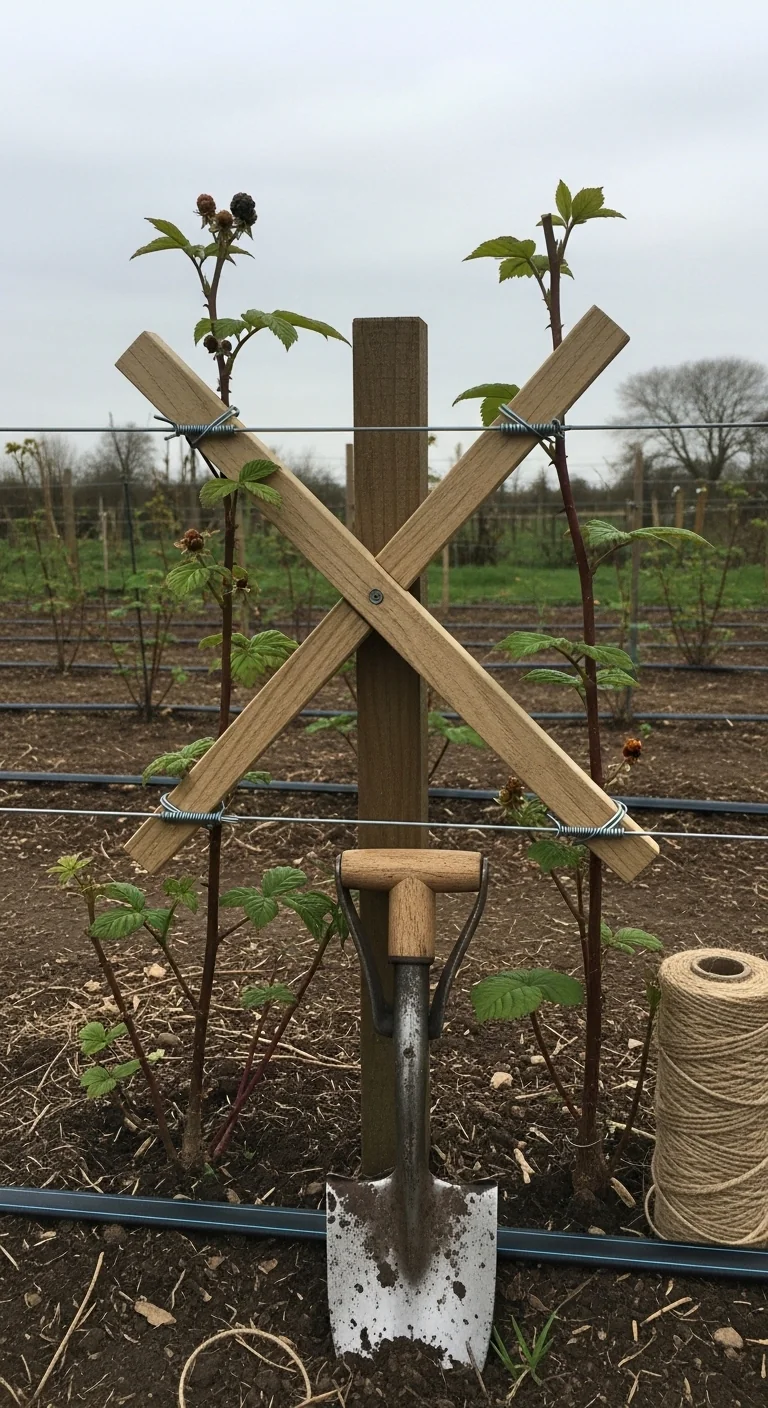
Use this system when you want zero permanent infrastructure. Drive a single 6-foot stake beside each plant and tie canes loosely with soft twine as they reach 3 feet tall. It works for container blackberries or very small patches.
Pros include low cost and instant setup. Cons appear in windy sites where stakes can lean without guy lines. Skip this option if your variety produces canes longer than 8 feet, as one stake cannot contain the spread without constant retieing.
3. Multi-Wire Fence Trellis
Best for: Branch 2
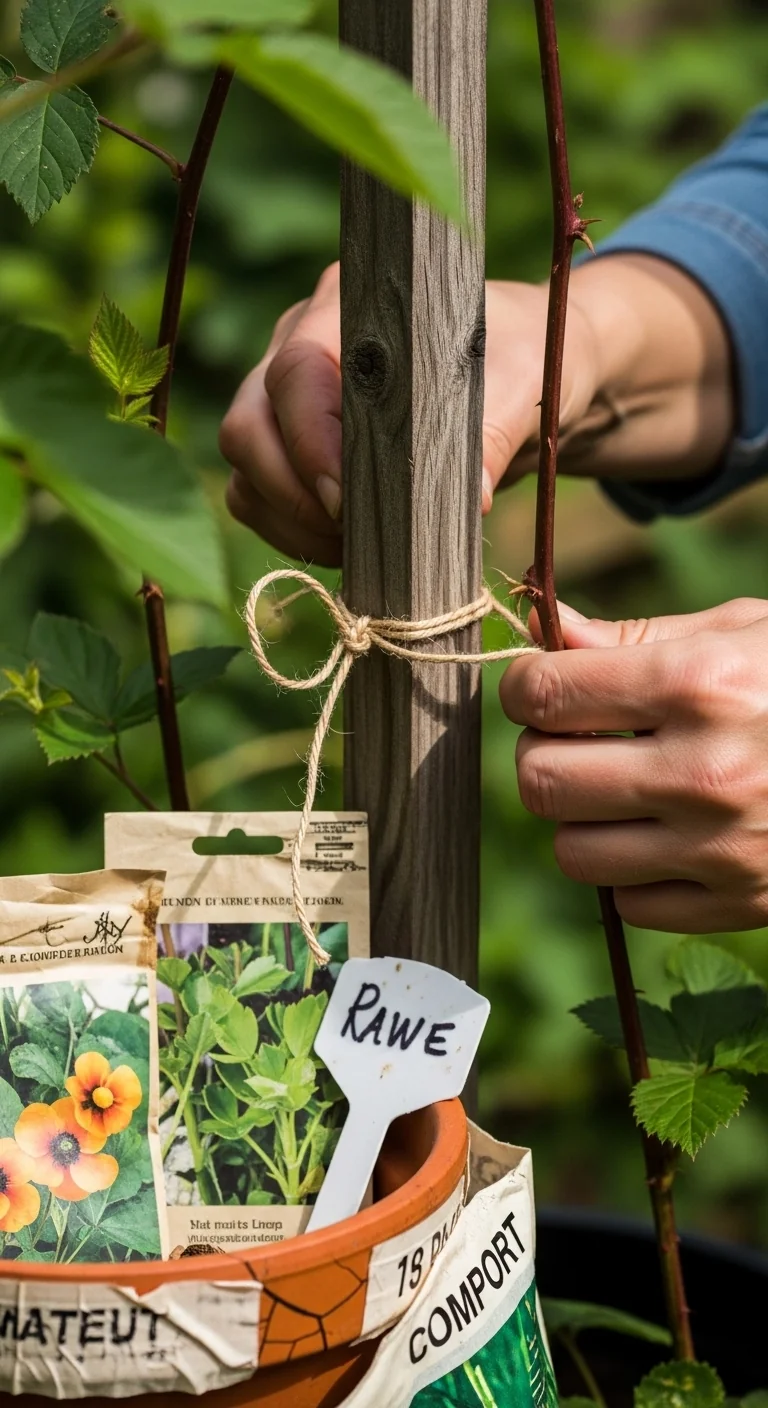
Run three or four horizontal wires at 2-foot intervals up to 6 feet high along an existing fence line or new posts. This vertical training method suits moderate-vigor blackberries because it allows easy access to both sides of the row.
Use 9-gauge wire and space posts no more than 10 feet apart to prevent sag. Adjust wire height by 6 inches if your variety shows unusually tall first-year growth; lower the top wire to keep fruit within easy reach.
4. V-Trellis for Airflow
Best for: Branch 2
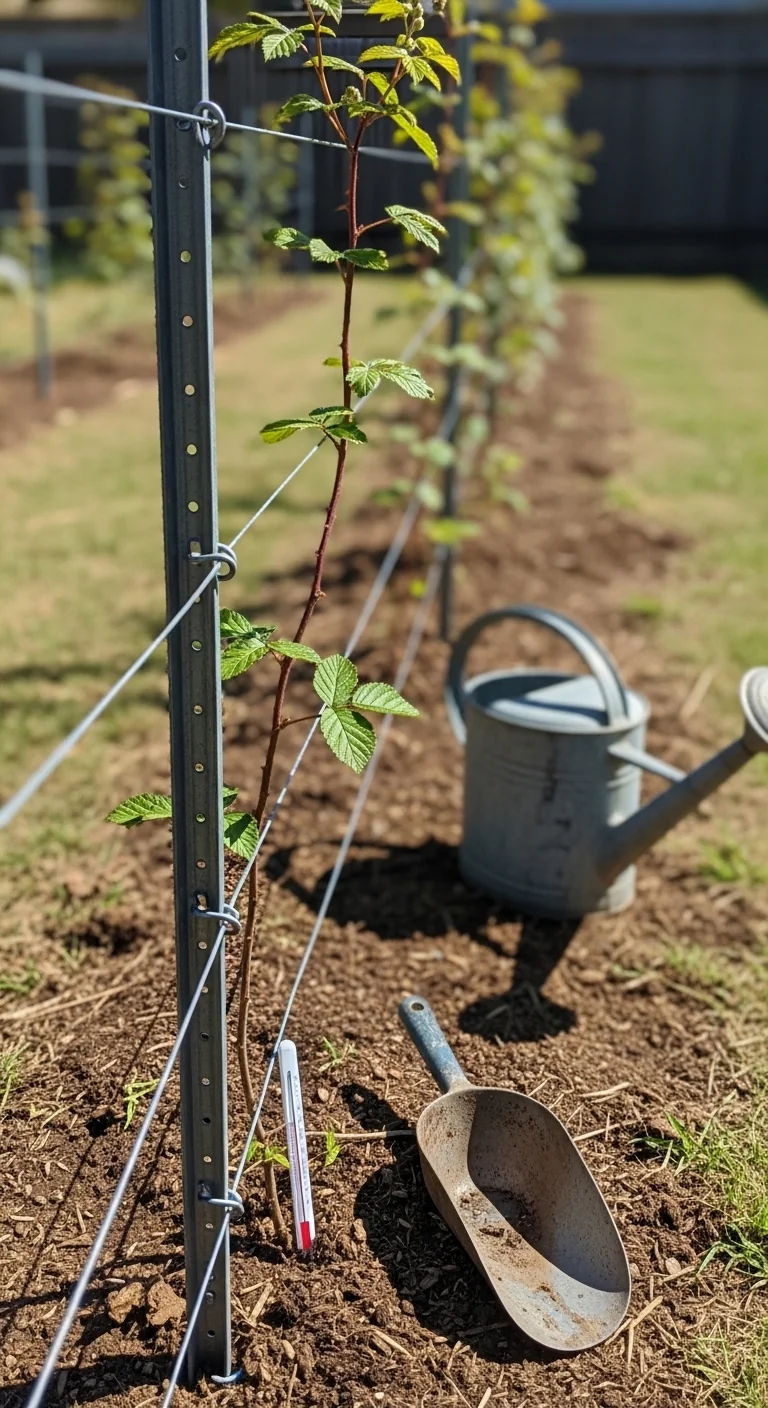
Build this in 10 minutes per 10-foot section once posts are set. Attach two diverging wires from a central post at ground level outward to 3-foot-high cross arms on either side. The V shape opens the canopy for sunlight and air movement.
Start by setting 8-foot posts 2 feet deep every 10 feet. Secure lower wires at 18 inches and upper wires at 4 feet with eye hooks. Train new canes down the center and older canes outward along each arm.
Upgrade option: add a fifth wire at 5.5 feet for extra-long varieties. Similar wire configurations appear in hardy kiwi trellis systems where airflow also prevents fungal issues.
5. Archway Trellis
Best for: Branch 3
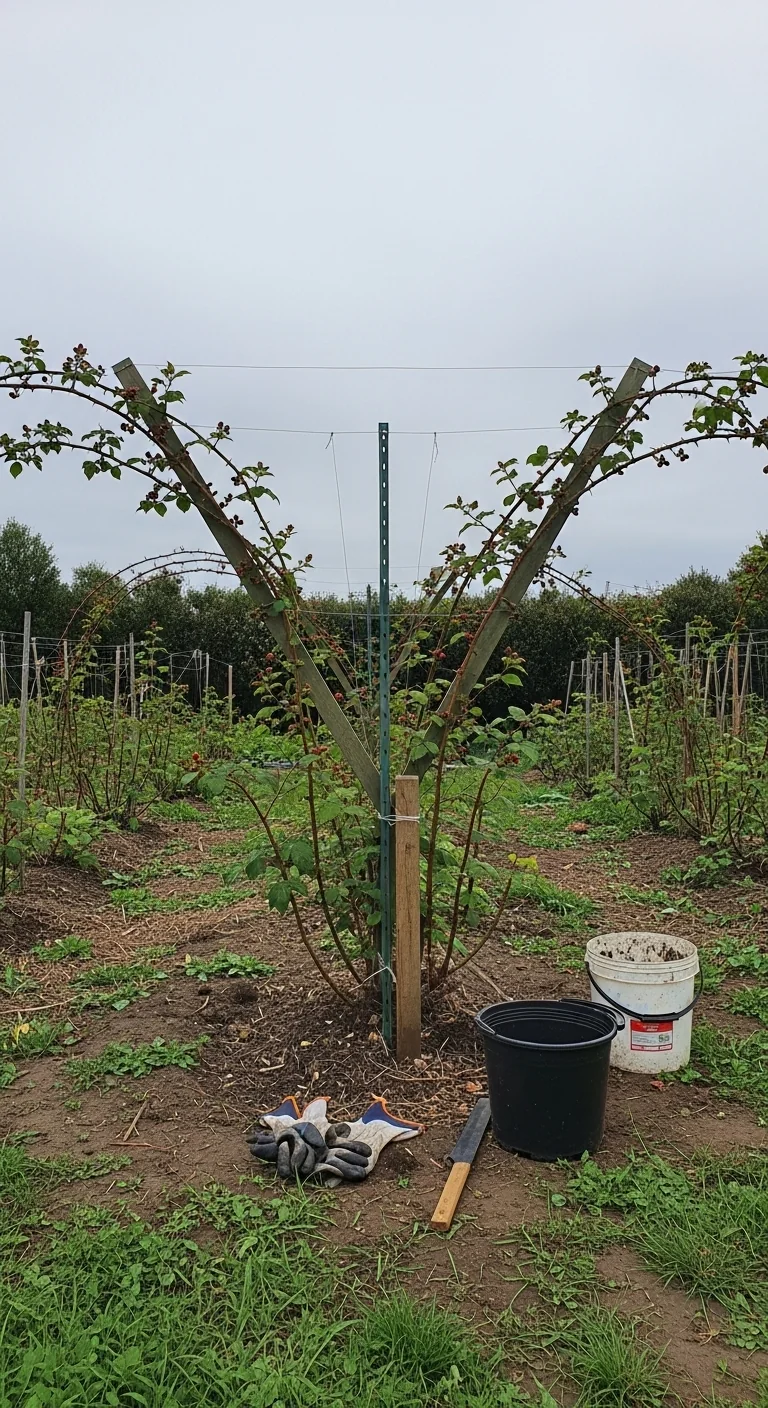
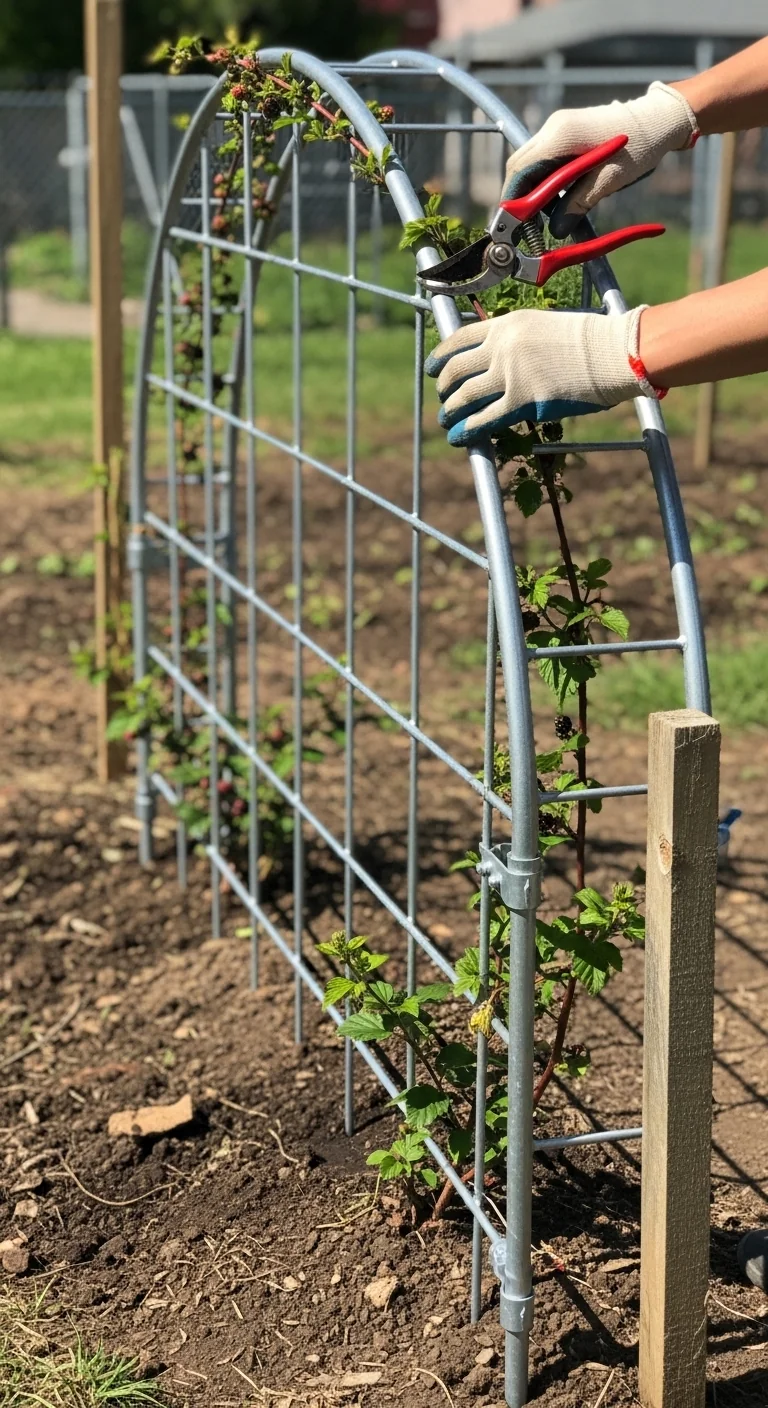
Form arches from bent rebar or EMT conduit spaced 8 feet apart and connected at the top with wire or pipe. Trailing canes drape over the curve, keeping fruit off the ground while creating a walkway.
Pros include aesthetic appeal and high fruit yield from increased light. Cons include higher material cost and the need for sturdy anchors in high-wind zones. Skip if your space cannot accommodate the 6-foot width at the base.
6. Container Wall Lattice
Best for: Branch 1
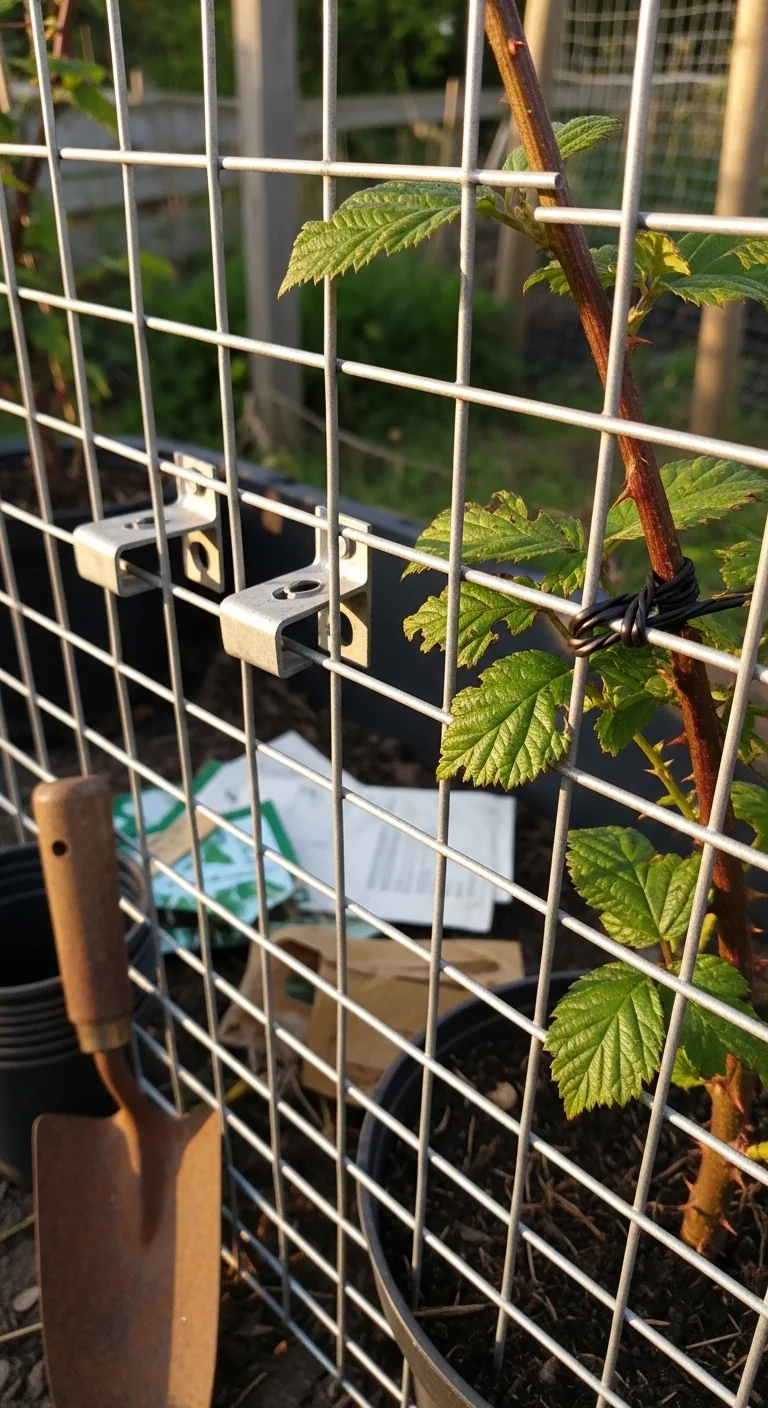
Mount a 4-by-8-foot grid panel or cattle panel section directly to a south-facing wall or sturdy fence using brackets. Tie container-grown blackberry canes to the grid as they grow. The vertical orientation saves floor space in patios or balconies.
It requires only drill holes and brackets for setup. This option suits thornless patio varieties because the grid provides multiple tie points without obstructing harvest.
7. Portable Cattle Panel Trellis
Best for: Branch 3
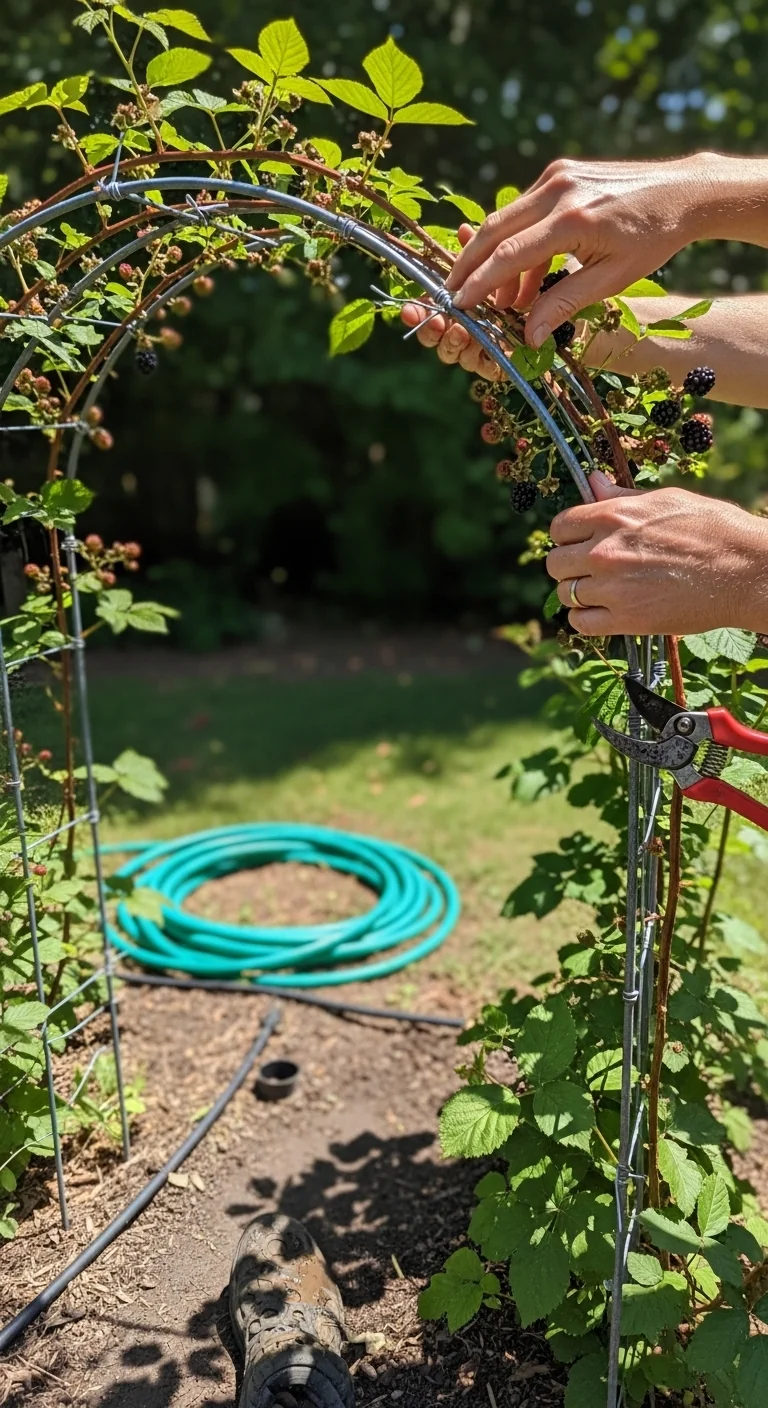
Bend 16-foot cattle panels into gentle arches or stand them upright between T-posts. The heavy gauge steel allows relocation each season if garden layout changes. It handles vigorous trailing blackberries because the panel openings let canes weave through naturally.
Set two T-posts 10 feet apart and lean or arch the panel between them. Secure with wire ties. This setup takes under 15 minutes per panel once materials are on site.
Upgrade by adding a second panel for double rows. Gardeners often adapt the same panels for melon trellis ideas where strength and movability matter.
8. Single Post with Crossbars
Best for: Branch 3
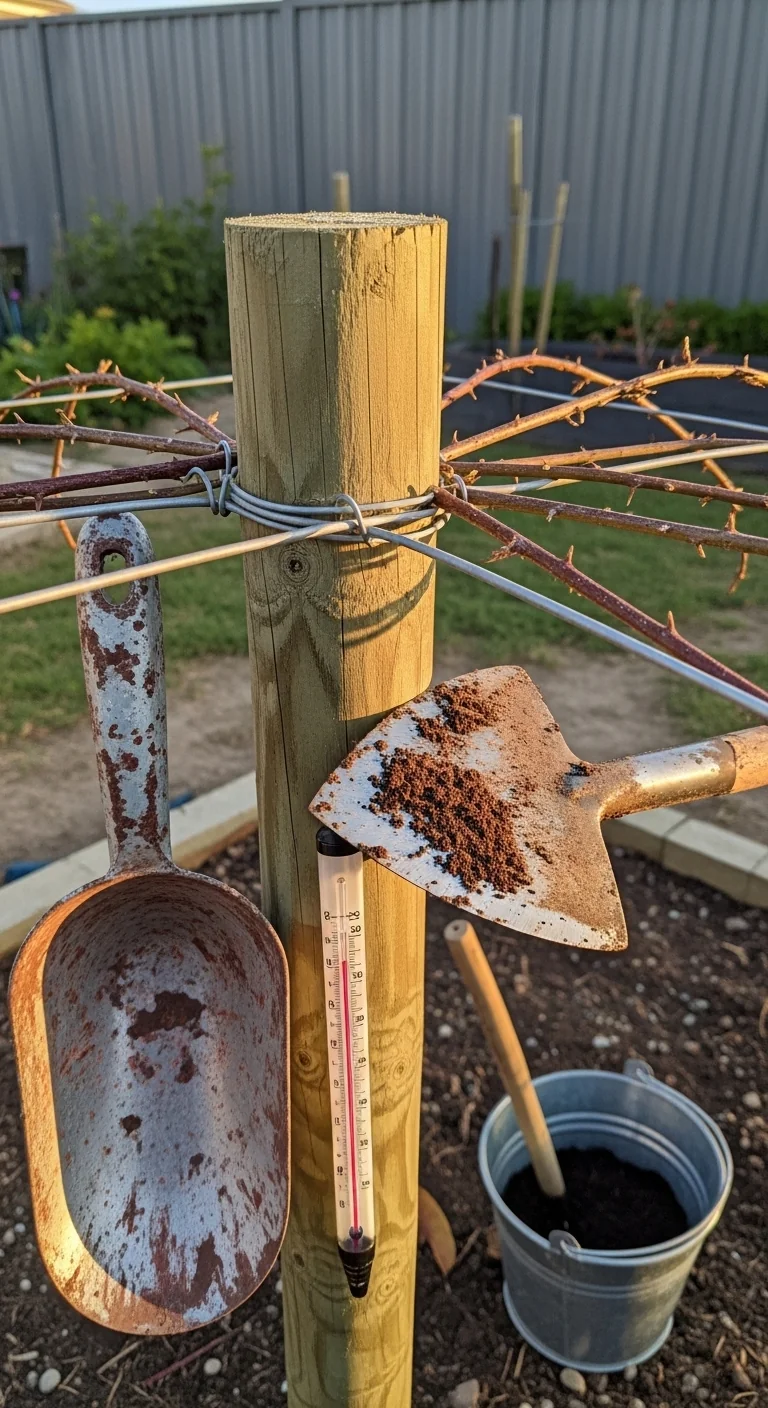
Drive a central 8-foot post every 8 feet and attach three horizontal crossbars at 2, 4, and 5.5 feet. Fan trailing canes outward along the bars for controlled spread. This creates a narrow footprint while supporting wide growth.
Pros include efficient use of linear space. Cons surface if canes exceed 12 feet, requiring extra tie points. Edge case: avoid in areas with frequent heavy wet snow that can overload the arms.
9. Espalier Wire System
Best for: Branch 1
String horizontal wires every 12 to 18 inches up a wall or freestanding frame. Train blackberry canes flat against the surface in a two-dimensional pattern. The system maximizes vertical space in tight urban or courtyard gardens.
Begin with eye screws or nails every 10 feet horizontally and tension wire between them. Tie new growth horizontally each month during the growing season. This method works especially well for thornless types because flat training simplifies access.
Similar flat training techniques appear in espalier fruit trees where space efficiency is the priority.
Starter Stack (What to Choose First)
For Branch 1: Limited Space or Containers
Start with the Simple Stake-and-Tie System paired with the Container Wall Lattice. The stake provides immediate support while the lattice offers permanent structure as plants mature. Combined setup time: 1 to 3 hours. Material cost range: $15 to 60.
For Branch 2: Standard Backyard
Begin with the Two-Wire T-Bar Trellis and the V-Trellis for Airflow. The T-bar gives upright control while the V shape improves light penetration and reduces disease pressure. Combined setup time: 3 to 6 hours. Material cost range: $40 to 120.
For Branch 3: Expansive Growth or Trailing Varieties
Start with the Archway Trellis and the Portable Cattle Panel Trellis. The arch handles draping canes while the panel adds movable strength for large spreads. Combined setup time: 4 to 8 hours. Material cost range: $80 to 200.
When This Won’t Work
A blackberry trellis will fail if the planting site receives fewer than 6 hours of direct sunlight daily. Reduced light leads to weak canes that cannot support themselves even with perfect wiring. Relocate plants to a sunnier spot before installing any support structure.
It will also fail if your blackberry variety produces canes longer than 15 feet without annual reset and you select a fixed narrow trellis. The structure becomes overwhelmed and tangled within two seasons. Switch to a movable or wider-span option or choose shorter-vigor varieties suited to your space.
Choosing the Right Option for Your Situation
Budget Threshold
If your total material budget stays under $50, limit choices to the Simple Stake-and-Tie System or Container Wall Lattice. These require only basic fasteners and reused lumber or panels already on hand.
Time Threshold
If you have under 2 hours available for installation, select the Simple Stake-and-Tie System or Container Wall Lattice. Both install in minutes with pre-cut materials and need no concrete setting.
Technical Constraint: Wind Exposure
If your site experiences sustained winds over 20 miles per hour, avoid lightweight wire-only setups. Choose the Portable Cattle Panel Trellis or Two-Wire T-Bar Trellis with deeper post footings and guy wires for stability.
Yes/No checklist:
Is your space under 20 square feet? Yes: choose Branch 1 options.
Do you grow erect varieties? Yes: choose Branch 2 options.
Can you dedicate over 30 feet of row? Yes: choose Branch 3 options.
Is effort tolerance low (score 1 or 2)? Yes: prioritize simple stake or wall systems.
Expert Q&A
How does blackberry variety affect trellis choice?
Erect varieties need narrow upright support like T-bar systems while trailing types require wider arches or fan structures. Check the plant tag for growth habit description before buying materials. Mismatching leads to excessive tying or broken canes by the second season.
What wire gauge and spacing prevent sagging under fruit load?
Use 9- to 12-gauge galvanized wire with posts no farther than 10 feet apart. Tension wires to remove slack before the first fruiting year. Check and retighten in early spring when canes are still dormant.
Can you adapt one blackberry trellis for mixed berry plantings?
Yes, provided all plants share similar vigor and height needs. A multi-wire fence trellis works for blackberries and raspberries together if you train each type to separate wires. Keep rows at least 8 feet apart to avoid root competition.
What happens if you delay trellis installation past the first year?
Canes become tangled on the ground and develop disease from poor airflow. Installation in year two requires careful untangling and may damage roots. Install at planting time or by the end of the first dormant season at latest.
How do regional climate differences affect material choices for blackberry trellises?
In humid regions such as the UK or eastern US, choose pressure-treated wood or metal to resist rot. In dry windy areas like parts of Australia or the western US, add extra guy wires and deeper post settings. Always select galvanized or stainless hardware everywhere to prevent rust.
Conclusion
The number one mistake is installing any trellis without first confirming your blackberry variety’s growth habit. Take the next step by measuring your space and noting the variety type, then review our raspberry pruning guide to coordinate support with seasonal cane management.