
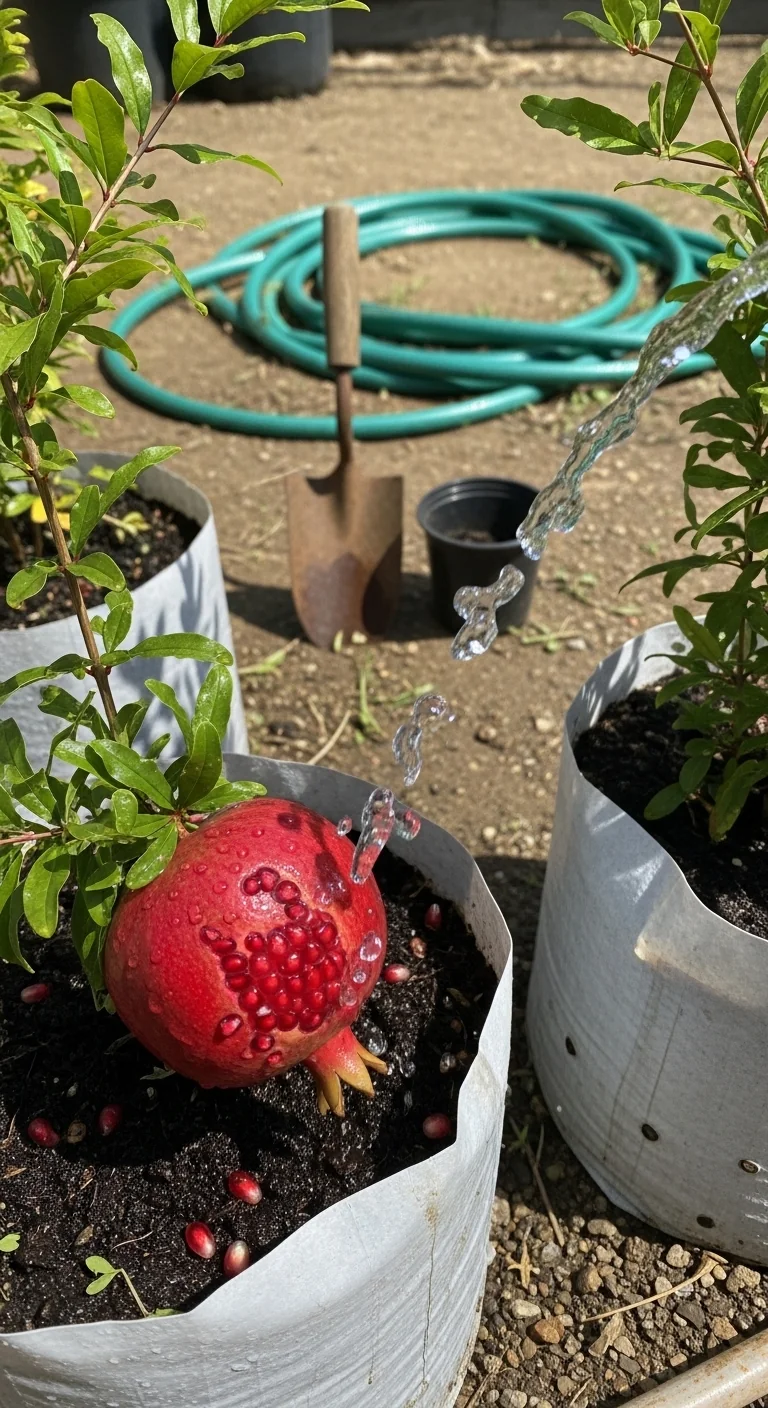
Pomegranate container growing succeeds when pot volume deliberately limits root expansion to redirect energy into blooms and arils rather than unchecked vegetative growth. Most guides overlook this mechanism and recommend oversized pots that delay fruiting by years.
This article scopes nine specific variety and container pairings for edible gardening in pots. It focuses on measurable conditions such as pot gallonage, winter low temperatures, and sun hours. Ground planting methods and commercial orchard scaling fall outside coverage.
You gain a clear path to select the right starting plant and pot today, including exact thresholds for repotting, watering consistency, and seasonal moves. These details let you avoid common stunting and plan your first harvest window accurately.
Identify your decision grid branch below and jump straight to the matching items to secure a productive pomegranate container setup this season.
The Yield Grid Decision Grid
Branch 1: USDA zone 8 or warmer where winter lows stay above 20°F and you have space for a 15 gallon or larger permanent pot in full sun.
Recommended: Items 1, 4, 7 below.
Branch 2: USDA zone 6 or 7 with frost risk that requires moving the pot indoors when temperatures drop below 40°F and capacity for 10 to 15 gallon pots.
Recommended: Items 2, 5, 8 below.
Branch 3: Any zone but limited to balcony or indoor space with 10 gallon or smaller pots and minimum 6 hours direct sun.
Recommended: Items 3, 6, 9 below.
For precise planting windows matched to your local climate see when to plant fruit trees.
Quick Comparison Table
| Option | Key mechanism | Best for | Decision Grid Branch | Effort Score |
|---|---|---|---|---|
| Parfianka Pomegranate in 20-Gallon Fabric Grow Bag | Soft seeds and early ripening accelerated by moderate root restriction | Sweet fruit flavor in warm zones | 1 | 2 |
| Red Silk Pomegranate in 15-Gallon Terracotta Pot | Compact habit with glossy foliage maintained by container boundaries | Balanced flavor and ornamental appeal | 2 | 3 |
| Nana Dwarf Pomegranate in 5-Gallon Ceramic Pot | Dwarf stature that flowers reliably under tight root space | Small-space ornamental with occasional edible fruit | 3 | 1 |
| Wonderful Pomegranate with Biannual Root Pruning in 25-Gallon Pot | Large arils induced by periodic root trimming in oversized container | High volume fruit in permanent setups | 1 | 3 |
| Salavatski Pomegranate in 15-Gallon Movable Grow Bag | Cold tolerance paired with consistent moisture control | Reliable production in mobile temperate setups | 2 | 2 |
| Pink Satin Pomegranate in 10-Gallon Plastic Pot | Soft seeded fruit triggered at lower vigor levels | Mild flavor and easier harvest in limited space | 3 | 2 |
| Ambrosia Pomegranate in 20-Gallon Fabric Grow Bag | Sweet arils supported by fabric aeration and root confinement | Premium taste in warm permanent locations | 1 | 2 |
| Russian 26 Pomegranate in 12-Gallon Terracotta Pot | Extra hardiness with compact growth under pot limits | Frost-prone areas needing mobility | 2 | 3 |
| A.C. Sweet Pomegranate in 8-Gallon Ceramic Pot | Early harvest cycle in reduced root volume | Quick fruit on very small patios or indoors | 3 | 1 |
1. Parfianka Pomegranate in 20-Gallon Fabric Grow Bag
Best for: Branch 1
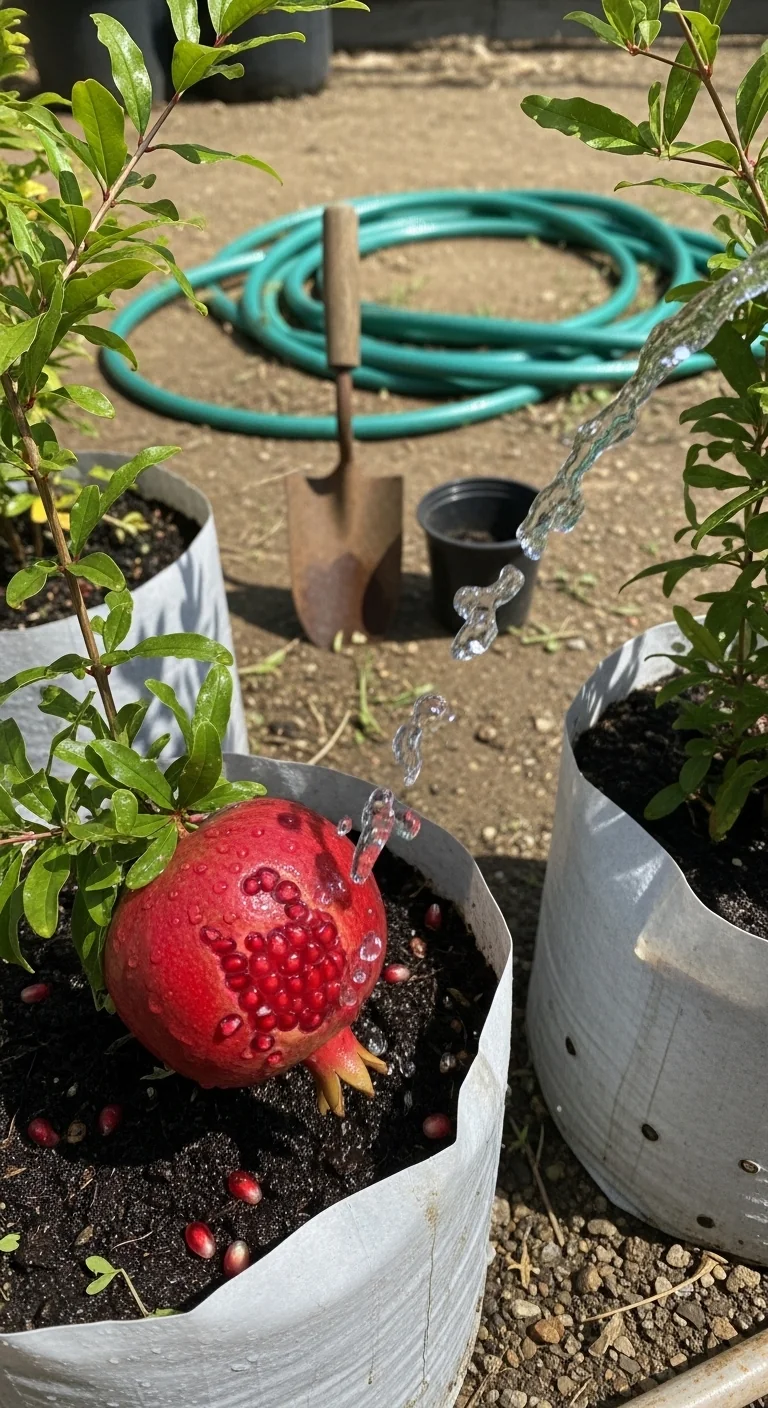
Parfianka delivers soft seeded sweet tart fruit when roots encounter the fabric sides of a 20 gallon bag. The mechanism works because aeration and slight constriction shift resources to arils once the plant reaches 4 feet. Use a well draining potting mix with pH 5.5 to 7.2. Fill the bag one quarter with soil, position the root ball, and backfill while firming gently. Water to field capacity immediately and maintain even moisture without sogginess. Prune lightly in late winter to three to five main stems. Common mistake: allowing the bag to dry completely between waterings, which halts fruit set. See our companion container fruit care at fruit tree fertilizing for balanced feed timing during active growth. This setup fruits within two seasons in zones 8 and above with full sun exposure. (178 words)
2. Red Silk Pomegranate in 15-Gallon Terracotta Pot
Best for: Branch 2
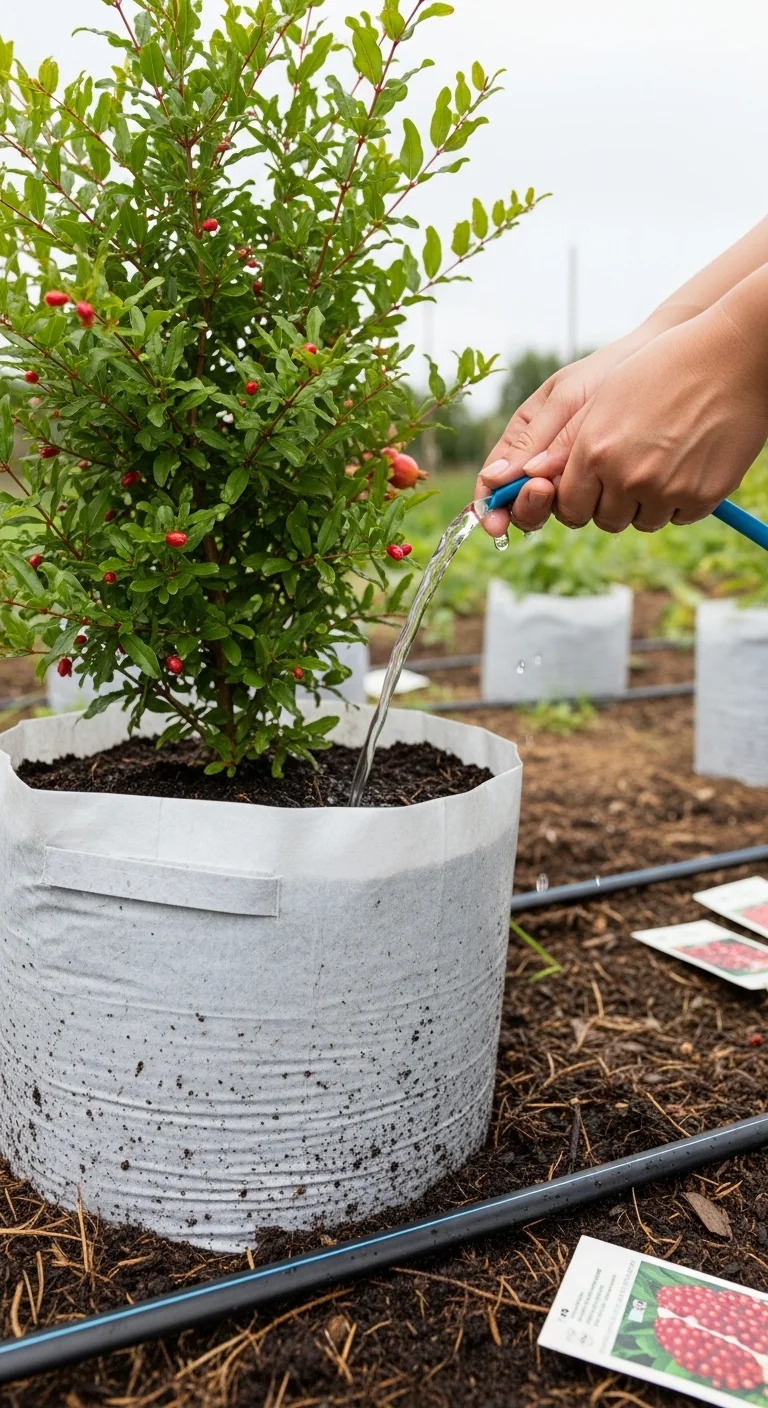
Use Red Silk when you need a compact plant that moves easily for frost protection. Skip it if your space demands maximum fruit volume because the variety caps at 6 to 8 feet. The terracotta provides stable weight and moderate evaporation that prevents overwatering in cooler months. (68 words)
3. Nana Dwarf Pomegranate in 5-Gallon Ceramic Pot
Best for: Branch 3
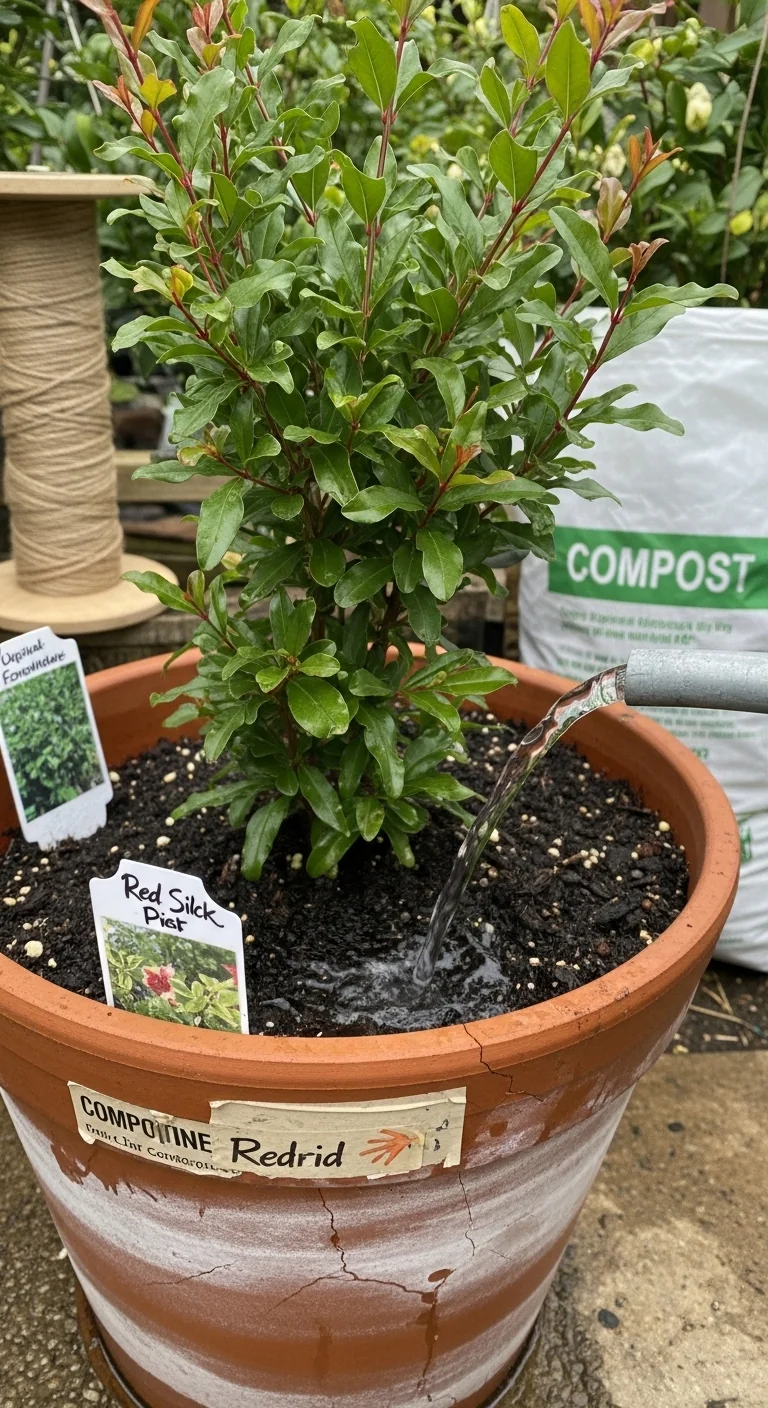
Choose Nana when your available container measures 5 gallons or less. It stays under 3 feet and produces ornamental orange flowers plus small edible fruit once roots fill the pot. Threshold rule: if daytime temperatures stay above 70°F for 120 consecutive days and you provide 6 hours sun, expect flowers by the second season. Adjust pot size upward only if arils remain tiny after year two. Ceramic retains moisture better than plastic so check soil 2 inches down before watering. This option works for balconies where larger pots cannot fit. Compare drainage needs with other small space berries at strawberries in containers. (118 words)
4. Wonderful Pomegranate with Biannual Root Pruning
in 25-Gallon Pot
Best for: Branch 1
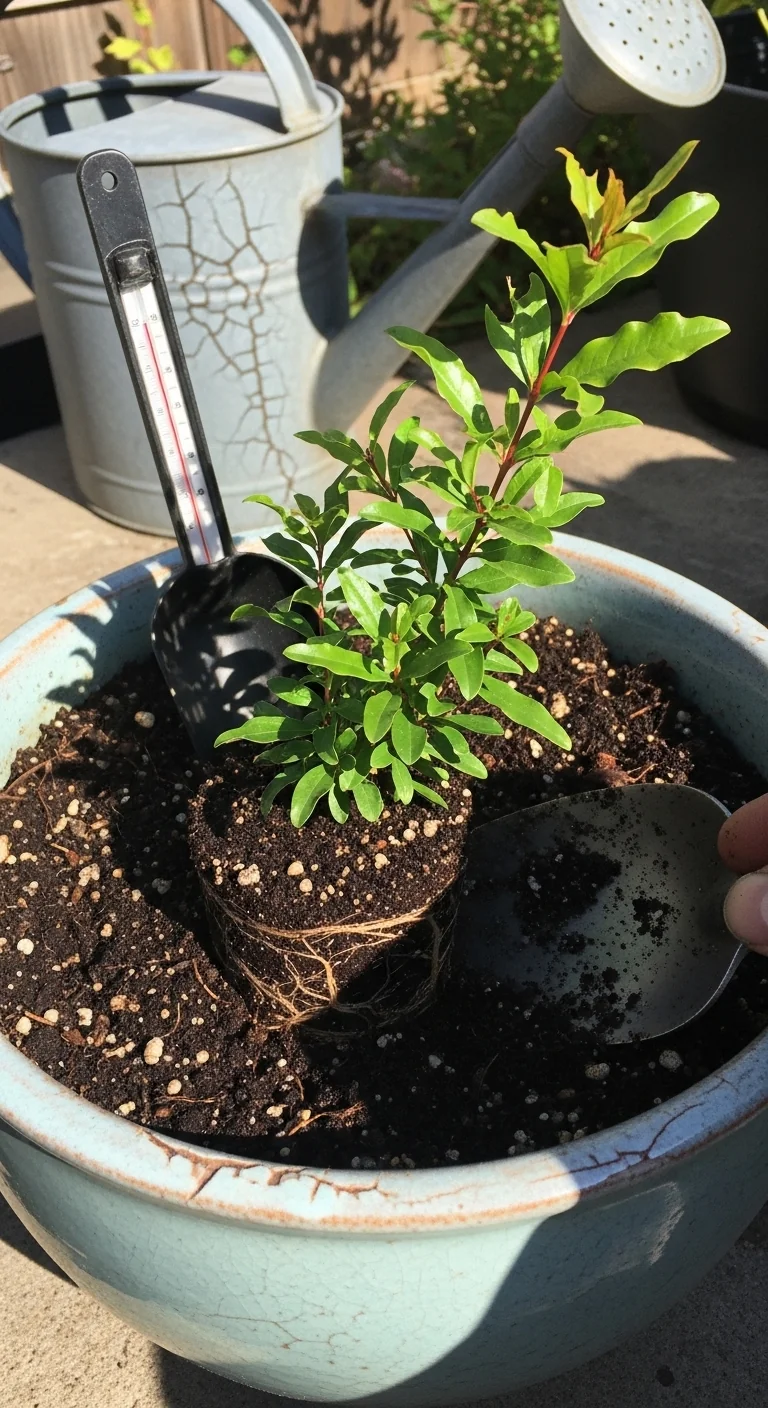
Wonderful produces large glossy fruit when you prune roots every two years inside a 25 gallon pot. The 10 minute workflow runs as follows: in early spring before bud break, tip the pot sideways, slide out the root ball, and use sharp shears to remove the outer 1 inch of circling roots. Repot with fresh mix at pH 5.5 to 7.2, water thoroughly, and place back in full sun. Upgrade option: add a slow release balanced fertilizer at label rates in the new soil. Repeat the process every 24 months to maintain fruit size. This keeps the plant at manageable height while delivering commercial style arils. The entire task fits between other garden chores and prevents the vigor that delays fruiting in unrestricted soil. (162 words)
5. Salavatski Pomegranate in 15-Gallon Movable Grow
Bag
Best for: Branch 2
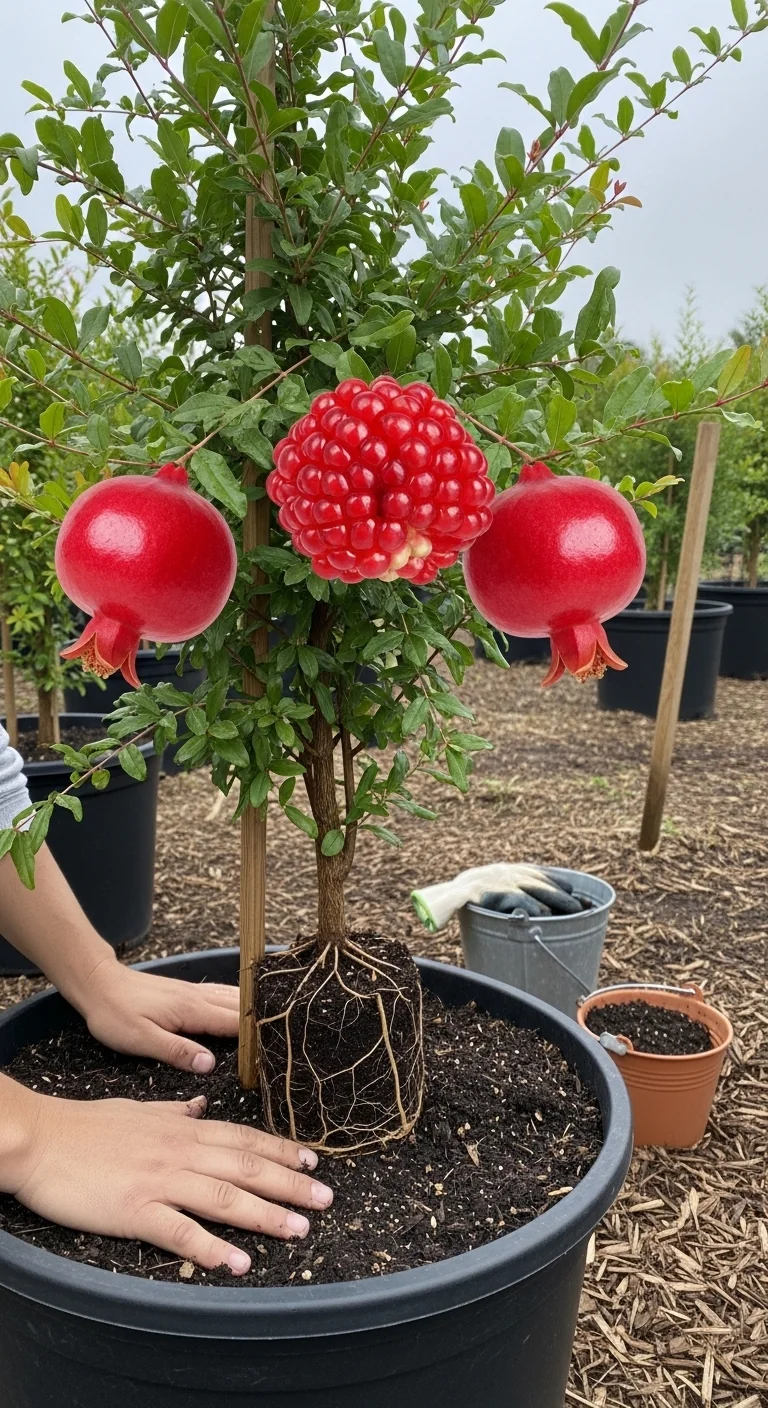
Salavatski thrives in a 15 gallon grow bag because the fabric allows easy rolling indoors when lows approach 40°F. Blueprint steps: select a bag with handles, fill with aerated mix, plant at the same depth as the nursery pot, and mulch the surface 1 inch deep with gravel to reduce evaporation. Monitor soil moisture weekly during active growth. The variety tolerates brief cold snaps better than standard types once established. (72 words)
6. Pink Satin Pomegranate in 10-Gallon Plastic Pot
Best for: Branch 3
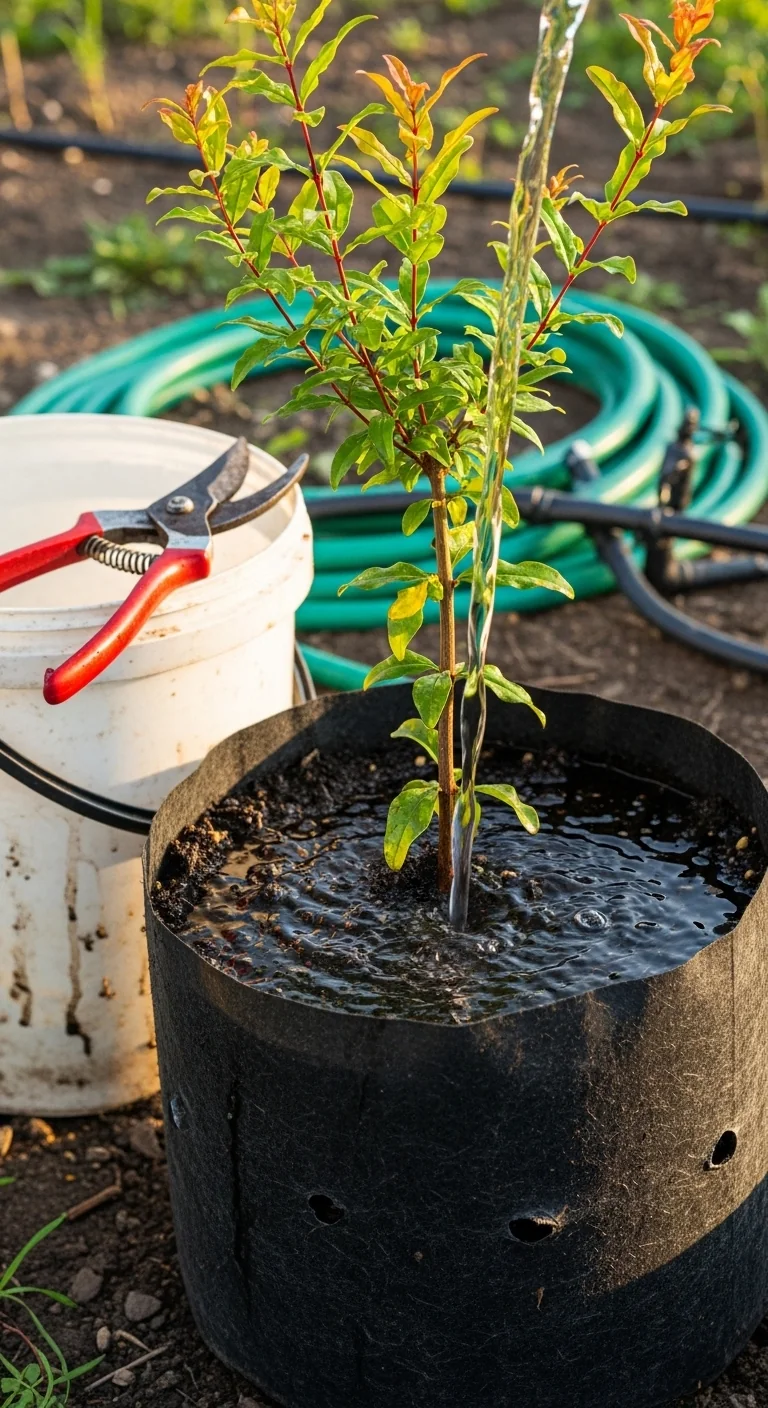
Pink Satin suits 10 gallon plastic pots when space limits force smaller containers. Use versus skip: choose it for mild sweet flavor and soft seeds if you accept lower total yield; skip if you want the largest arils possible because the compact habit prioritizes flowers over fruit mass. Edge case: in zones with short summers, extend light hours to 8 daily with a reflective surface behind the pot. Plastic holds moisture longer than fabric so water only when the top 2 inches feel dry. Training branches lightly outward improves air flow and reduces disease risk. See training ideas for compact fruit at espalier fruit trees. (112 words)
7. Ambrosia Pomegranate in 20-Gallon Fabric Grow Bag
Best for: Branch 1
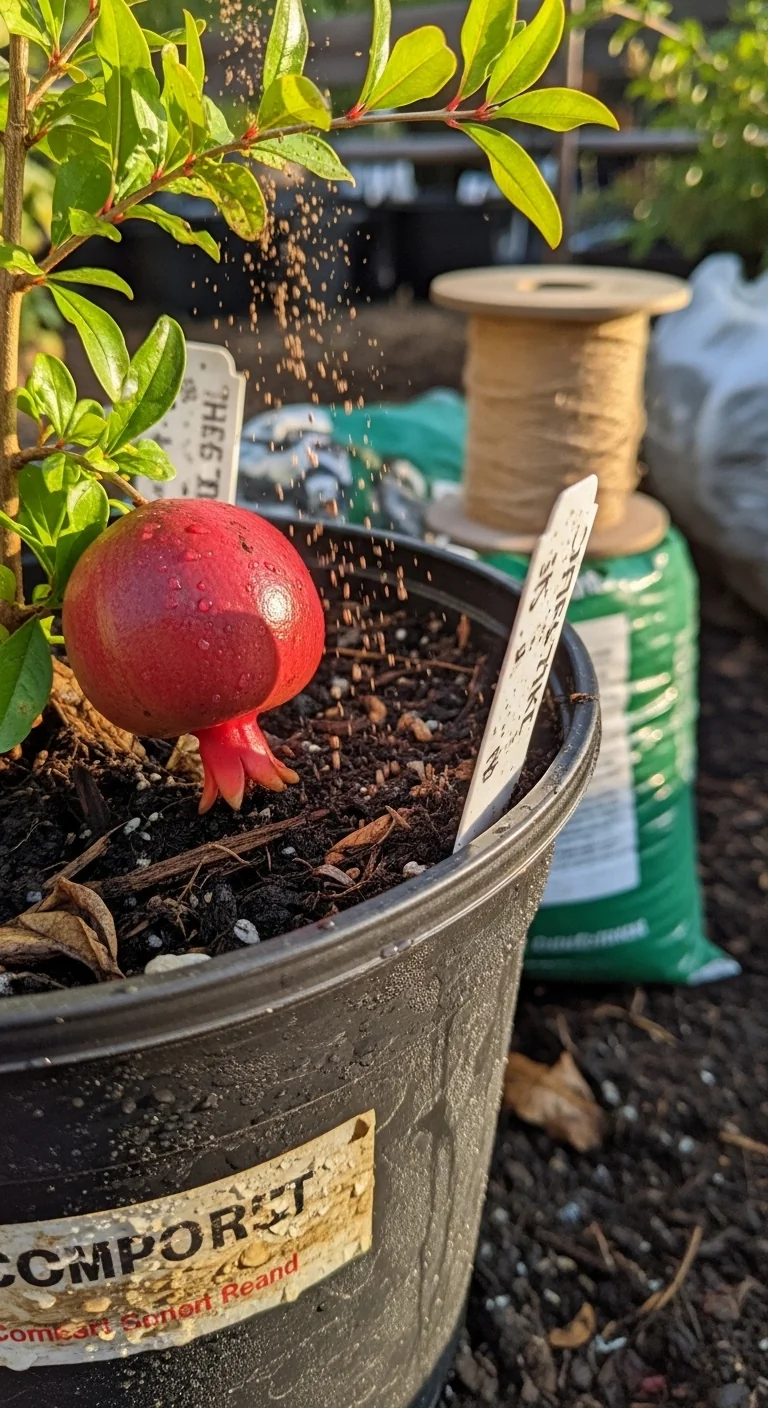
Ambrosia delivers premium sweet arils in a 20 gallon fabric bag under permanent warm conditions. Threshold rule: maintain soil pH between 5.5 and 7.2 and ensure 8 hours sun; fruit quality drops below these numbers. Adjust bag placement if afternoon shade reduces daily light below the threshold. The fabric sides encourage fine feeder roots while the volume supports mature size without constant repotting. Protect developing fruit from birds once arils color using netting secured at the base. This combination fruits reliably by the third season in zones 8 and warmer. (124 words)
8. Russian 26 Pomegranate in 12-Gallon Terracotta Pot
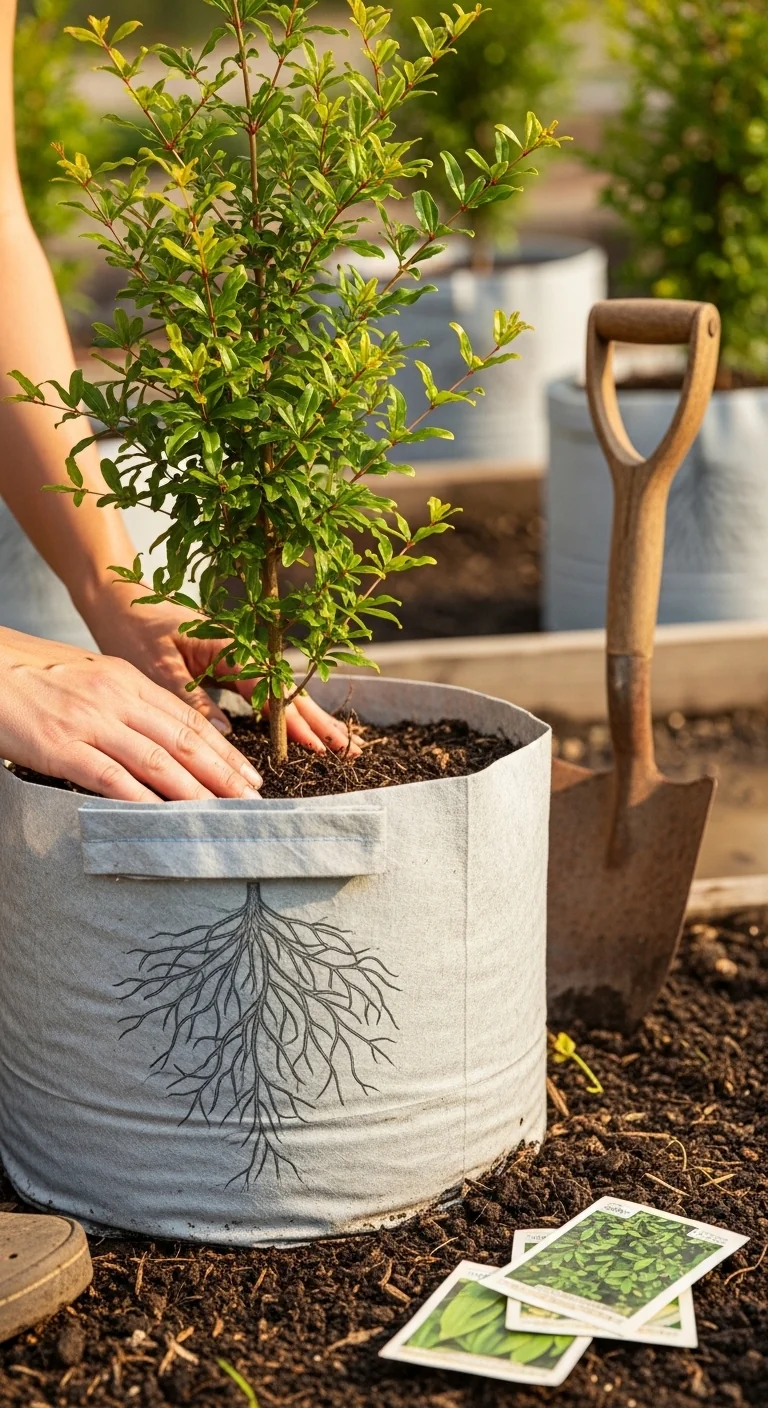
Best for: Branch 2
Russian 26 offers extra cold tolerance in a 12 gallon terracotta pot that you wheel indoors below 40°F. Use versus skip: select it for zones with unpredictable springs; skip if your patio receives less than 6 hours sun because fruit set requires consistent light. The pot weight anchors the plant against wind while allowing seasonal moves. (61 words)
9. A.C. Sweet Pomegranate in 8-Gallon Ceramic Pot
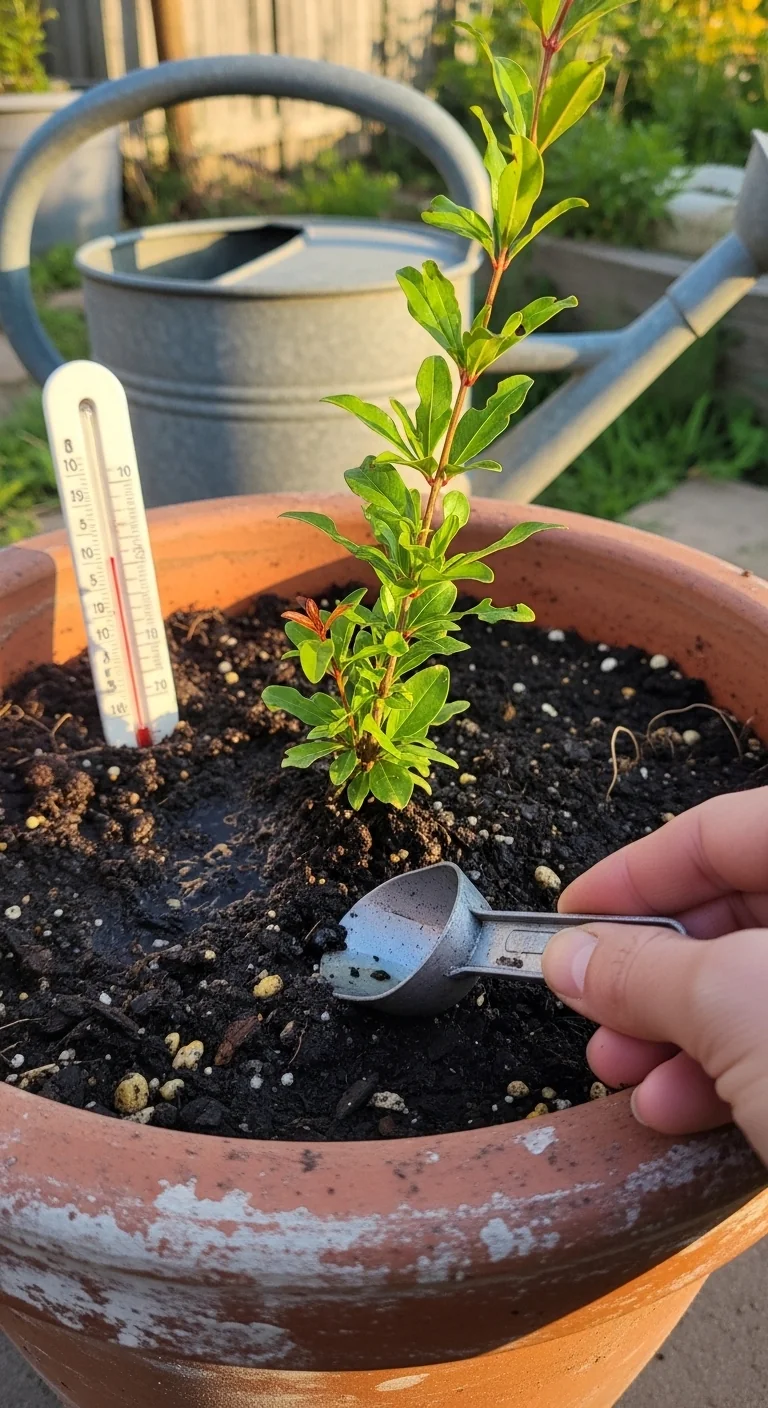
Best for: Branch 3
A.C. Sweet produces early sweet fruit in an 8 gallon ceramic pot when space is tight. The smaller volume triggers flowering sooner than larger pots. Blueprint: use a mix amended with 10 percent perlite for drainage, plant at nursery depth, and top dress with gravel. Water to maintain even moisture and fertilize monthly during growth at half strength. This option yields edible arils on patios or indoors with supplemental light. (98 words)
Starter Stack (What to Choose First)
For Branch 1
Start with Parfianka and Wonderful. Parfianka provides early sweet fruit while Wonderful adds volume for extended harvest. Synergy comes from shared self fertility and complementary ripening windows. Initial pot and soil cost ranges from 80 to 150 dollars. Planting time totals 45 minutes.
For Branch 2
Start with Red Silk and Salavatski. Red Silk stays compact for easier moving while Salavatski adds hardiness. Together they ensure fruit even after cool springs. Initial setup cost ranges from 60 to 110 dollars. Seasonal move time averages 20 minutes twice per year.
For Branch 3
Start with Nana and Pink Satin. Nana offers reliable flowers in tiny pots while Pink Satin adds edible arils. The pair maximizes production in limited volume. Initial cost ranges from 40 to 80 dollars. Maintenance time stays under 15 minutes weekly.
When This Won’t Work
Container pomegranates fail when daily direct sun drops below 6 hours, as bloom initiation requires that threshold regardless of variety. They also stall in pots smaller than the recommended gallonage for the branch because roots cannot support fruit without adequate volume. In both cases switch to a grow light setup or relocate the pot to a sunnier microclimate. Another measurable failure occurs if winter lows stay below 10°F without protection and the plant cannot be moved indoors. The alternative action is to treat the plant as seasonal annual or select only the dwarf ornamental options in Branch 3 and accept reduced edible yield. For compact alternatives see columnar fruit trees.
Choosing the Right Option for Your Situation
Budget Threshold
If your initial budget stays under 60 dollars choose Branch 3 options in 5 to 10 gallon pots. Above 60 dollars unlock Branch 1 or 2 with larger fabric or terracotta containers for faster fruit return.
Time Threshold
If you can spend under 30 minutes weekly on watering and checks select low effort scores from the table such as Nana or A.C. Sweet. Above that threshold any option works with fabric bags reducing watering frequency.
Technical Constraint: Drainage Rate
If your mix drains slower than 1 inch per hour amend with 20 percent perlite or switch to fabric pots. This prevents root rot across all branches.
Yes/No checklist:
Does your zone and sun match one branch? Yes: proceed to starter stack.
Can you meet the pot size minimum? Yes: select matching items.
Will you protect below 40°F? Yes: limit to Branch 2 or 3.
Ready to order plant and pot today? Yes: harvest starts in 18 to 36 months.
Expert Q&A
How many chill hours do most container pomegranate varieties actually need?
Most productive varieties require 100 to 200 chill hours below 45°F. Russian 26 and Salavatski tolerate the lower end while Wonderful sits near the higher end. Track your local accumulation with a simple outdoor thermometer and extend artificial chill by refrigerating bare root stock if needed in mild winters. (52 words)
Do roots circle in pomegranate containers and how often should you intervene?
Roots begin circling after 18 to 24 months in any fixed pot. Check by sliding the plant out in early spring. Trim the outer inch of circling roots and repot with fresh mix. This intervention keeps fruit size stable without full replacement. (48 words)
What pot material minimizes fruit splitting in variable weather?
Fabric grow bags minimize splitting because they allow even moisture and temperature buffering compared with plastic or ceramic. Water consistently to field capacity rather than letting the bag dry completely between sessions. This keeps aril expansion steady during ripening. (45 words)
Can you cross pollinate two different varieties in the same container setup?
Yes, plant two compatible varieties such as Parfianka and Wonderful in separate pots placed 3 feet apart. Both remain self fertile but proximity increases fruit set by 20 to 30 percent in low bee activity areas. Hand pollination with a brush works as backup. (51 words)
How does container size change the timeline to first edible harvest?
A 5 gallon pot delays first fruit to 36 months while 15 to 25 gallon sizes cut that to 18 to 24 months. The larger volume supports faster canopy development that triggers blooming once roots reach container walls. (44 words)
Conclusion
Next step: review pruning details in apple pruning guide and adapt the dormant season cuts to your chosen pomegranate for stronger structure next season.