
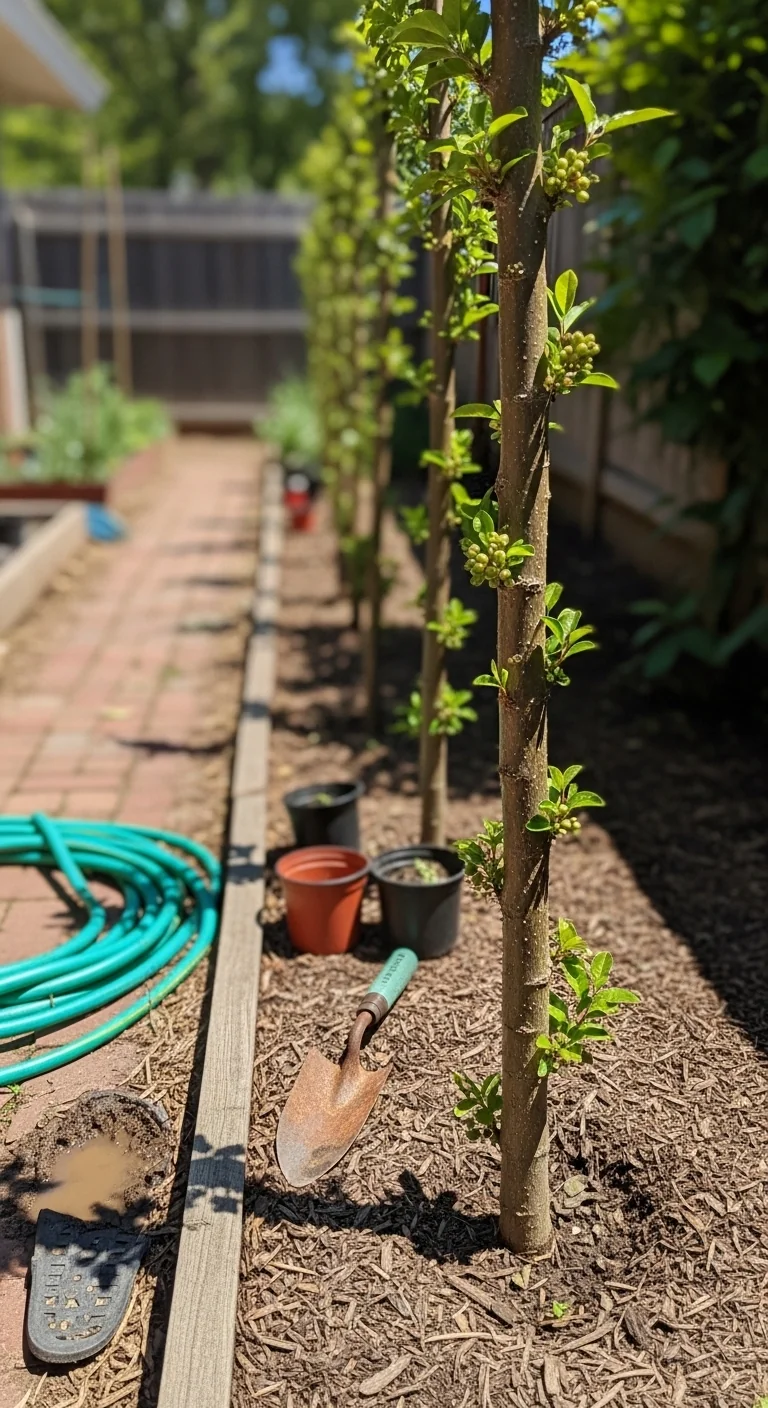
Columnar fruit trees concentrate fruiting spurs along a single upright trunk instead of spreading lateral branches. This structure turns narrow strips of land or container groupings into productive orchards while leaving room for paths and companion plants.
This guide examines genetic columnar apple varieties and select upright-trained forms for other fruits. Coverage targets conditions in the US, UK, Canada, Australia, and Germany. It excludes full-size standard trees and advanced shaping beyond basic upright maintenance.
Readers gain exact criteria to evaluate varieties against measured footprint, recorded hardiness zone, and available annual care time. Each section supplies one unique detail such as spur distribution or initial staking needs that standard lists overlook.
Align your conditions to one Decision Grid branch to select varieties that establish reliably in tight footprints.
The Yield Grid Decision Grid
Branch 1: Container or ultra-compact spaces (available width 36 inches or less, pots 20 gallons or larger). Recommended: Items 2, 4, 8 below.
Branch 2: Ground plantings with room for cross-pollination partners (4 feet or more spacing between trees). Recommended: Items 3, 5, 9 below.
Branch 3: Colder climates or exposed sites (hardiness zones 3 to 6). Recommended: Items 1, 6, 7 below.
For complementary vertical techniques see our espalier fruit trees guide.
Quick Comparison Table
| Option | Key mechanism | Best for | Decision Grid Branch | Effort Score |
|---|---|---|---|---|
| North Pole Columnar Apple | Genetic spur-bearing trunk | Cold hardy McIntosh flavor | Branch 3 | 2 |
| Scarlet Sentinel Columnar Apple | Genetic spur-bearing trunk | Crisp red fruit on patios | Branch 1 | 2 |
| Golden Sentinel Columnar Apple | Genetic spur-bearing trunk | Sweet golden fruit in rows | Branch 2 | 2 |
| Blushing Delight Urban Apple | Genetic spur-bearing trunk | Sweet blush apples in pots | Branch 1 | 2 |
| Tasty Red Urban Apple | Genetic spur-bearing trunk | Juicy red mid-season fruit | Branch 2 | 2 |
| Emerald Spire Columnar Apple | Genetic spur-bearing trunk | Green-gold early apples | Branch 3 | 2 |
| Maypole Columnar Apple | Genetic spur-bearing trunk | Cluster fruit in cold zones | Branch 3 | 2 |
| Tangy Green Urban Apple | Genetic spur-bearing trunk | Tart green fruit on balconies | Branch 1 | 2 |
| Red Tasty Columnar Apple | Genetic spur-bearing trunk | Bright red sweet apples | Branch 2 | 2 |
North Pole Columnar Apple
Best for: Branch 3
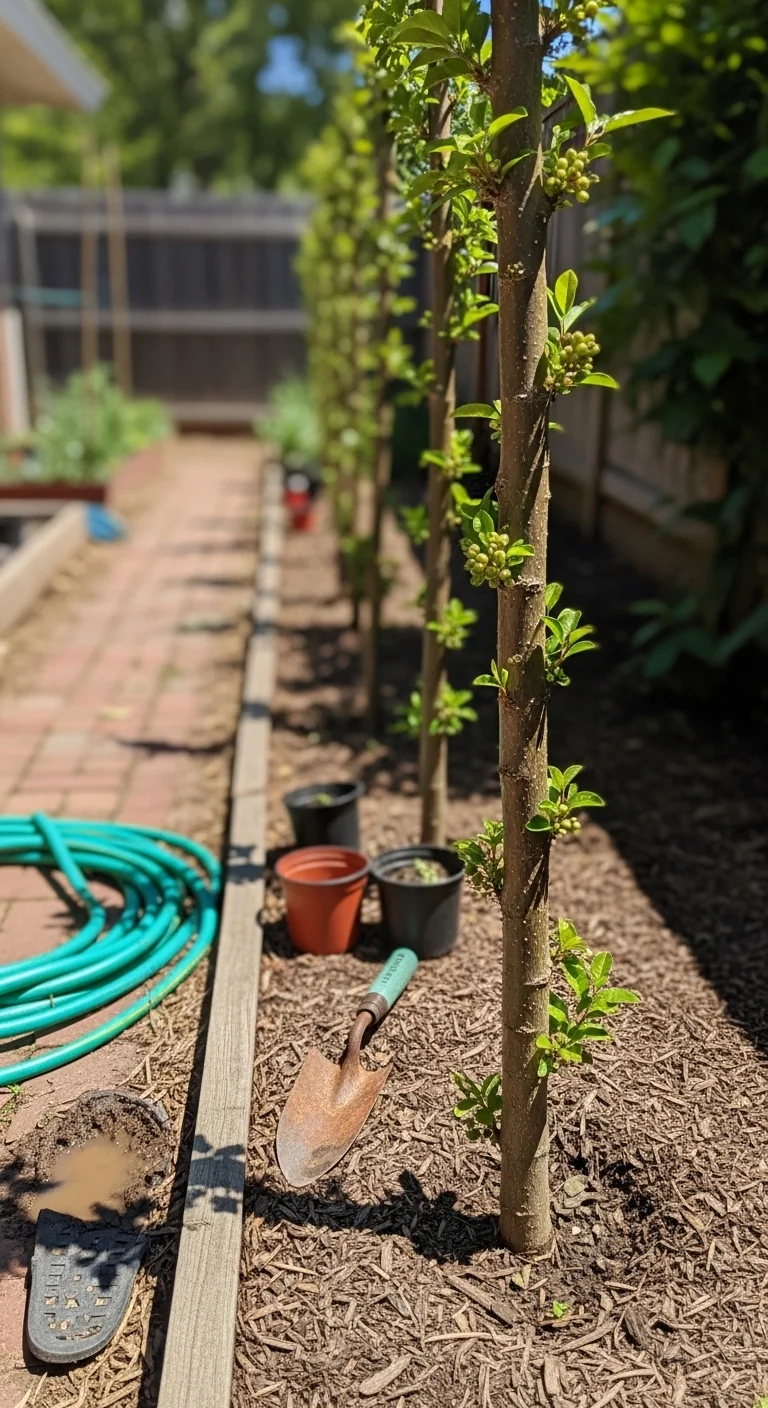
North Pole Columnar Apple originated from a McIntosh mutation that produces fruiting spurs directly on the central leader. The tree reaches 8 to 10 feet tall and 2 to 3 feet wide at maturity. It suits gardeners in zones 3 to 6 where winter lows reach minus 25 degrees F. Threshold rule: apply 3 to 4 inches of organic mulch in a 3-foot radius around the base each spring to insulate roots when soil temperatures drop below 20 degrees F in late fall. Plant in full sun with at least 6 hours daily. For compatible pollinators consult our apple tree pollination guide. Skip if your site experiences prolonged spring frosts above the bloom line without protection. The narrow form allows placement along fences or driveways without shading adjacent beds.
Scarlet Sentinel Columnar Apple
Best for: Branch 1
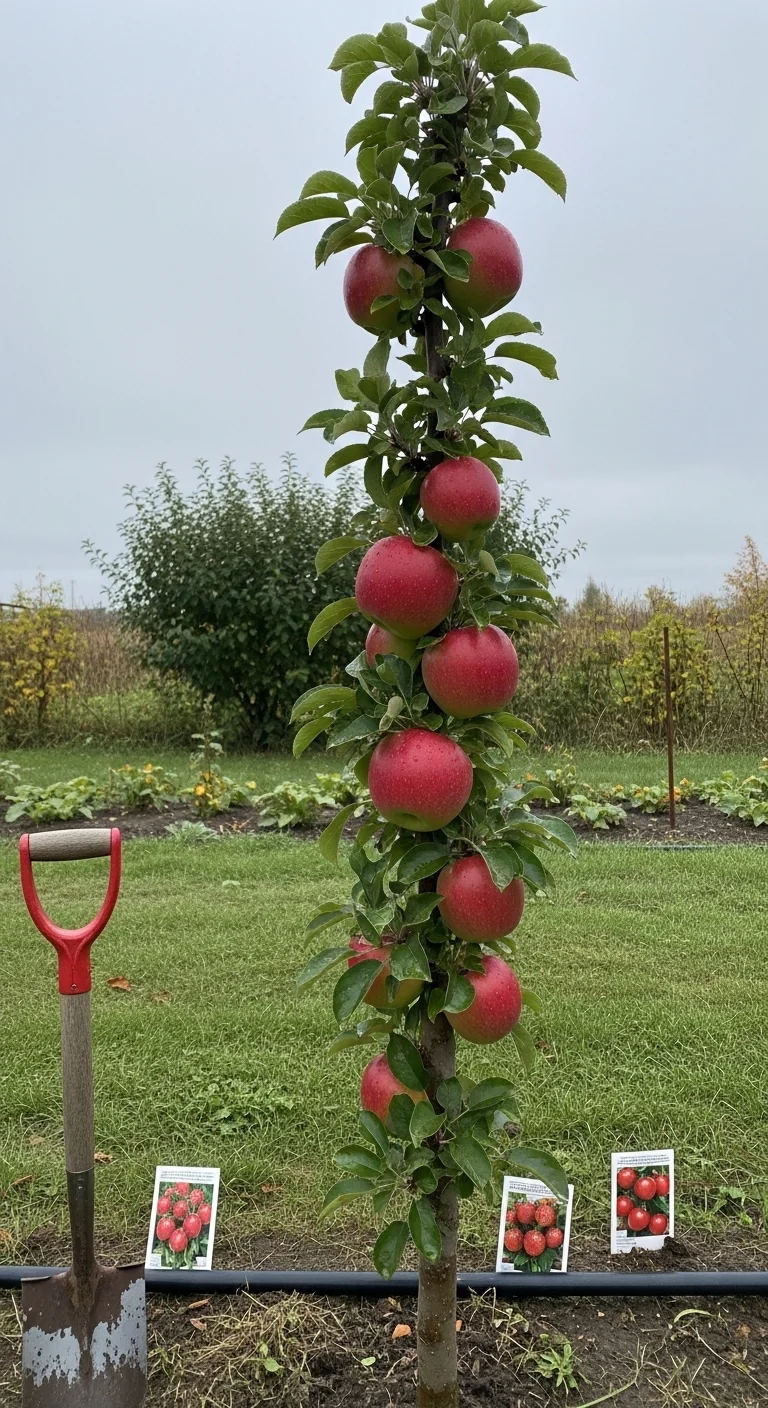
Use Scarlet Sentinel Columnar Apple when your space limits width to 36 inches or less and you want crisp red fruit ready for fresh eating. Skip it if your garden already holds two other late-season apples because flavor overlap reduces diversity. The variety maintains spurs along the trunk and produces greenish-yellow apples blushed with red. It performs well in large containers on patios where root volume stays above 20 gallons.
Golden Sentinel Columnar Apple
Best for: Branch 2
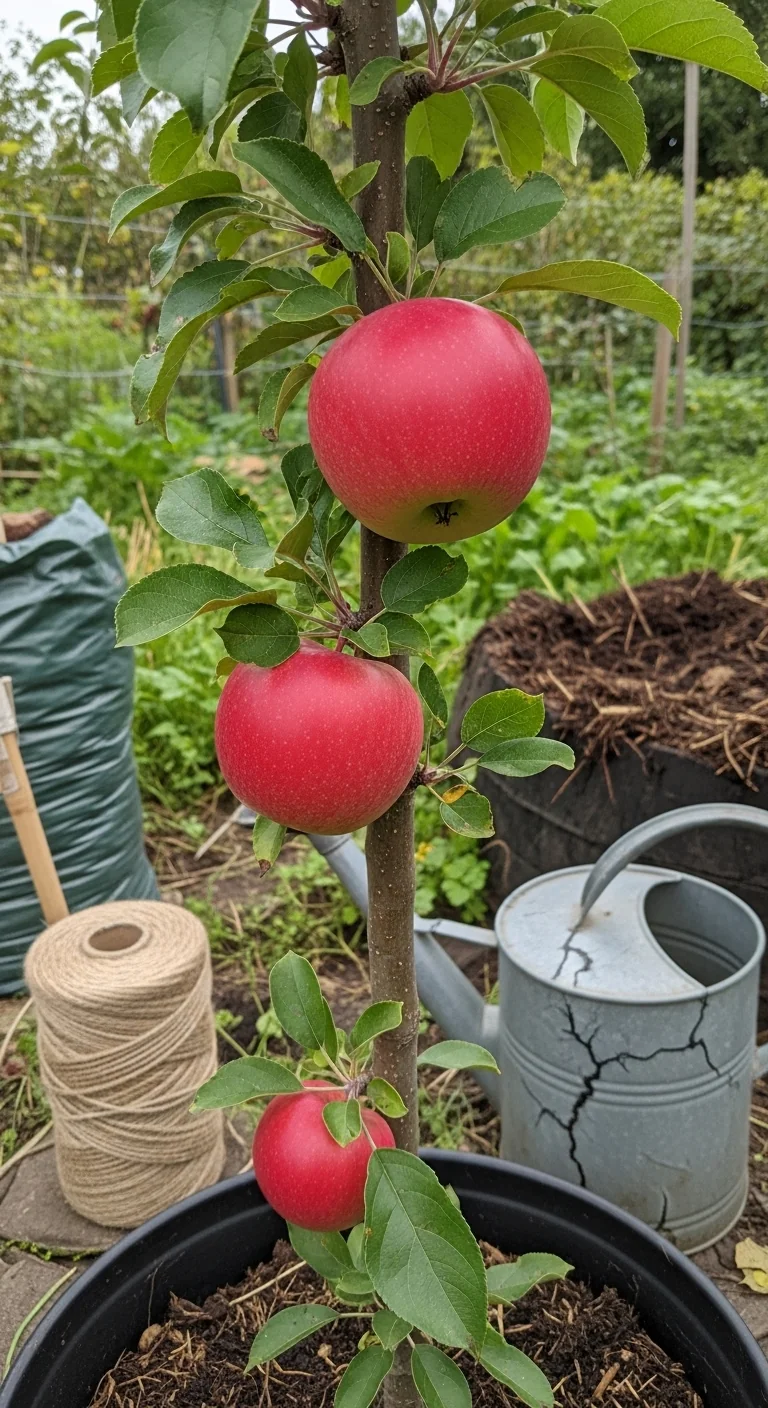
Golden Sentinel Columnar Apple delivers sweet golden fruit in mid to late season. Follow this 10-minute workflow each late winter: remove any horizontal shoots longer than 6 inches with clean cuts at the trunk, then apply a thin layer of compost around the base. Upgrade option: add a single bamboo stake at planting for the first two seasons in windy sites. The tree stays 8 to 10 feet tall and under 3 feet wide. Plant alongside a compatible early apple for cross-pollination. Follow guidelines in our apple pruning guide to maintain the column shape without heavy cuts.
Blushing Delight Urban Apple
Best for: Branch 1
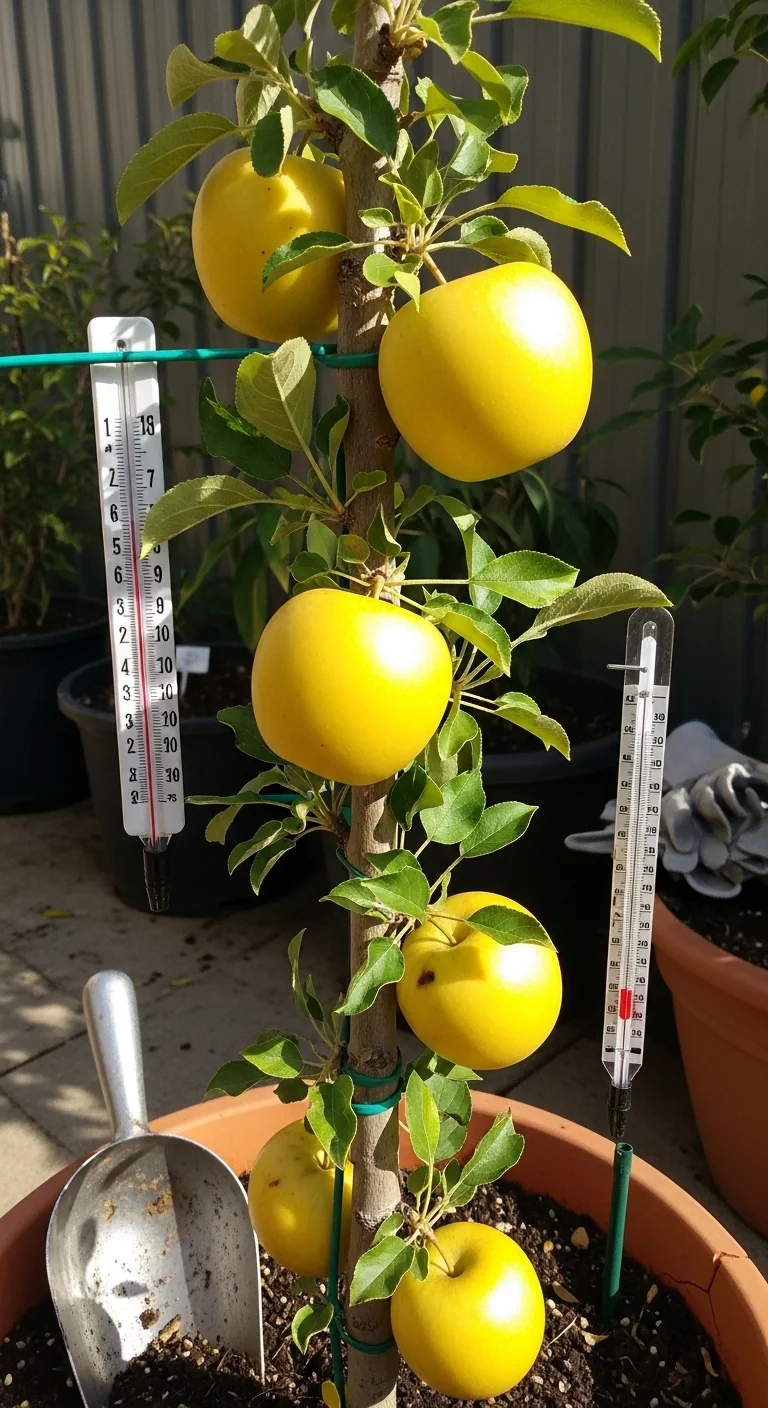
Blushing Delight Urban Apple offers sweet crisp fruit with green skin blushed red. Blueprint: select a 20-gallon or larger pot with drainage holes, fill with well-drained potting mix amended with 20 percent compost, position the tree so the graft union sits 2 inches above soil level, water deeply at planting to settle roots, and place in full sun. Mistake to avoid: burying the graft union, which causes scion rooting and loss of columnar habit. Timing matters: follow our when to plant fruit trees guide for early spring installation in your region. The compact form suits balconies and small decks while delivering full-sized apples.
Tasty Red Urban Apple
Best for: Branch 2
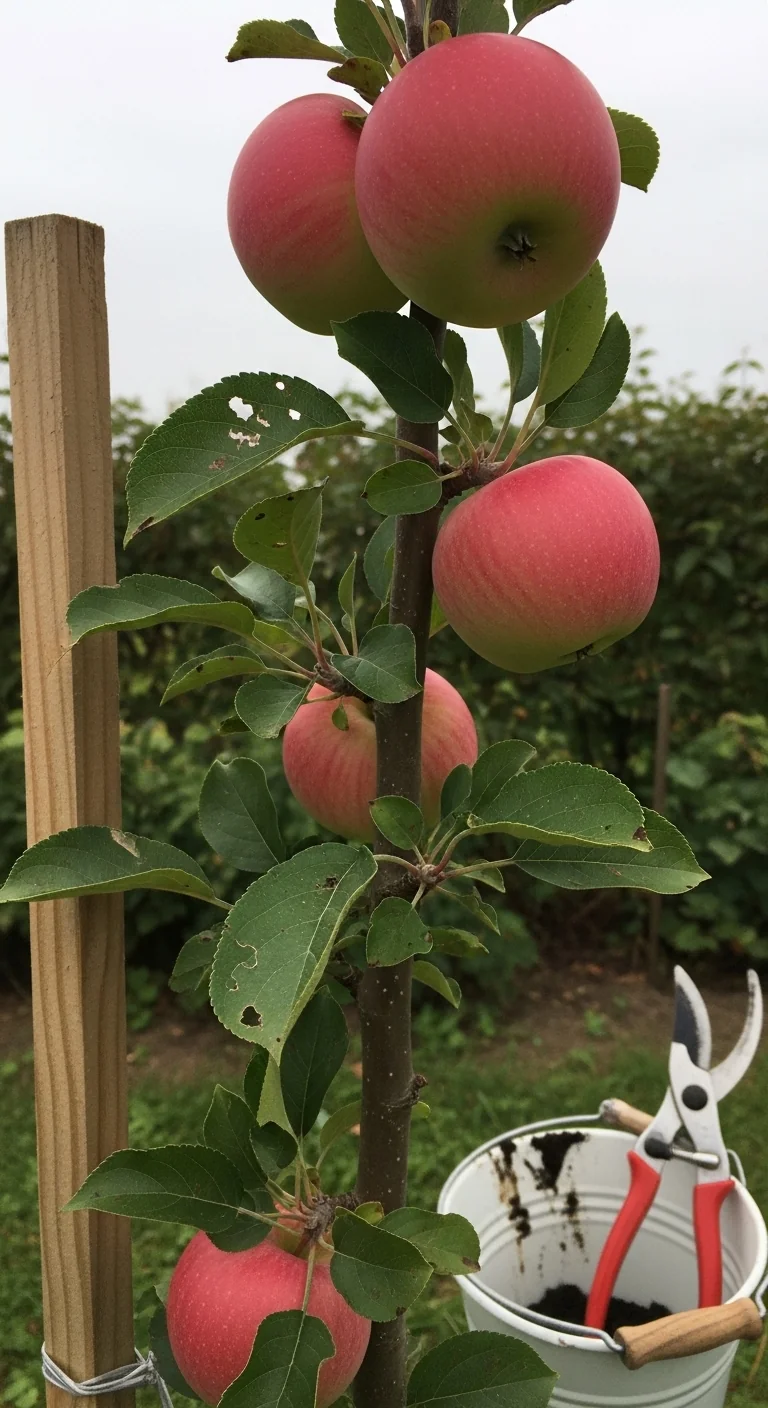
Tasty Red Urban Apple produces bright red, juicy fruit that ripens mid-season. Threshold rule: ensure soil pH stays between 6.0 and 7.0 and provide consistent moisture equal to 1 inch of water weekly during dry spells from bloom through fruit set. The variety reaches 8 to 10 feet tall with a 2- to 3-foot spread and pairs well with early-season pollinators in ground plantings. It requires minimal support once established.
Emerald Spire Columnar Apple
Best for: Branch 3
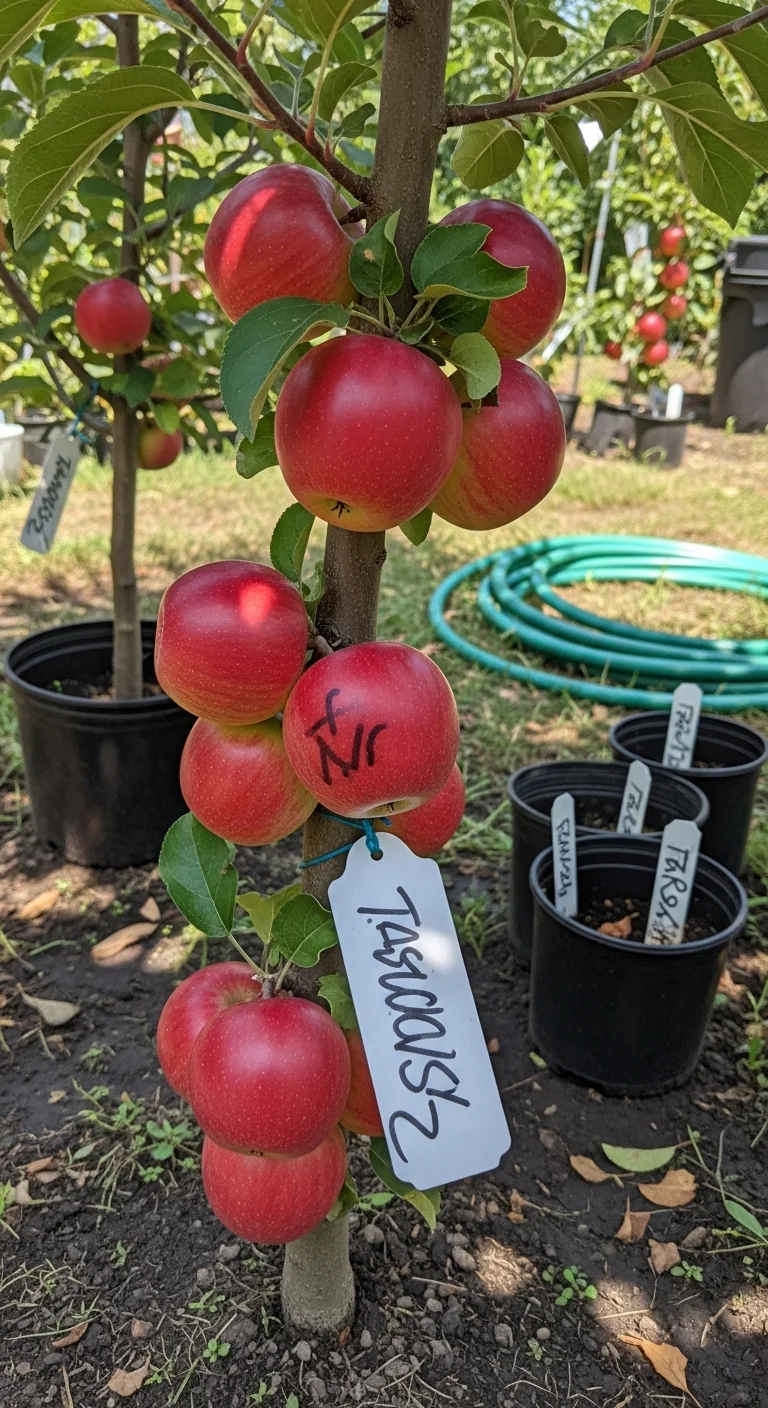
Use Emerald Spire Columnar Apple in colder zones or exposed sites where early green-gold fruit adds early harvest diversity. Skip it if your garden already features two green-apple types because flavor profiles overlap. The tree maintains a narrow column with spurs along the trunk and shows good vigor in zones 3 to 6. Reference our fruit tree fertilizing guide for a single balanced application in early spring.
Maypole Columnar Apple
Best for: Branch 3
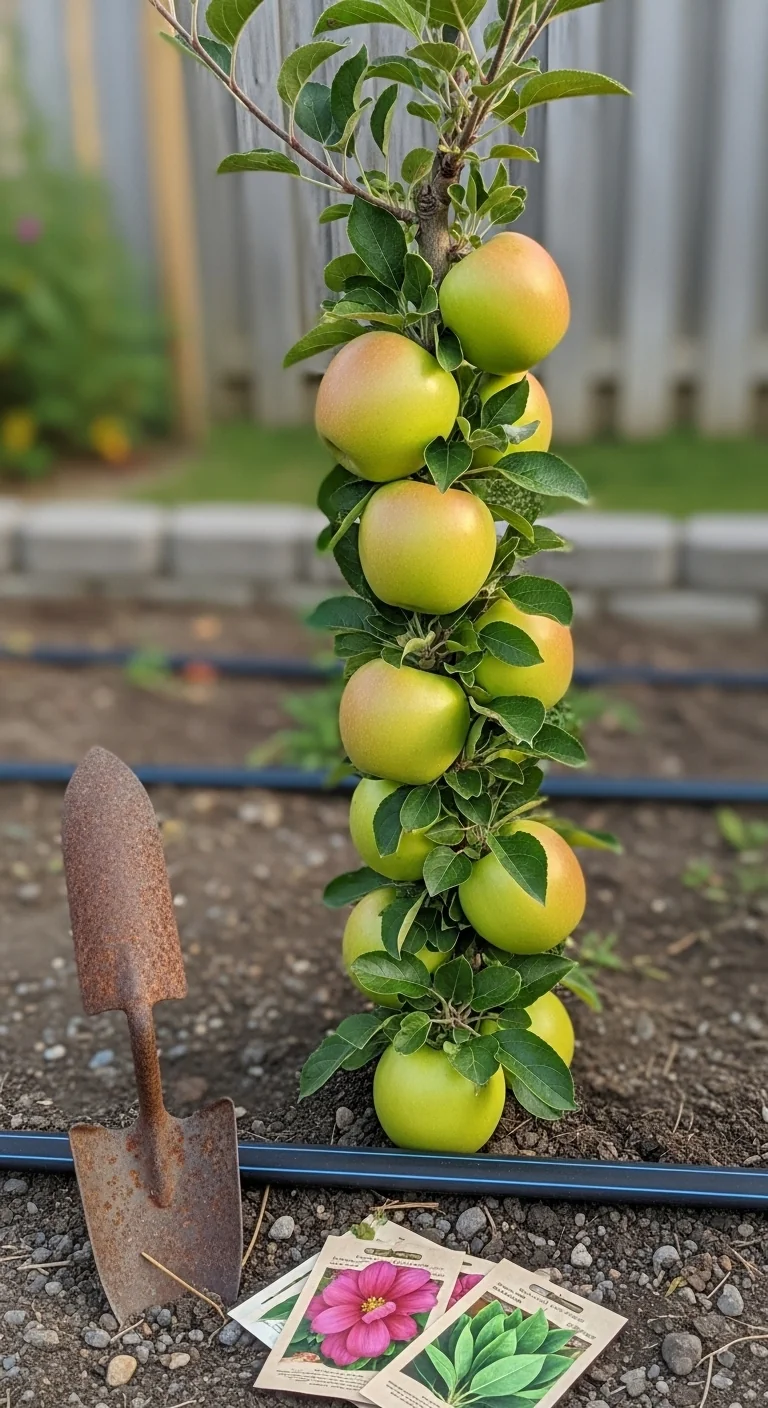
Maypole Columnar Apple clusters fruit along the trunk in a distinctive upright pattern suited to cold-hardy plantings. Blueprint: measure your site for at least 6 hours of sun, dig a hole twice the root-ball width but no deeper than the container, backfill with native soil mixed 50-50 with compost, water thoroughly to eliminate air pockets, and apply 3 inches of mulch. The variety stays under 10 feet tall and 3 feet wide. It originated from European breeding programs and performs reliably where winter temperatures drop to minus 25 degrees F. Plant with a mid-season pollinator to ensure fruit set.
Tangy Green Urban Apple
Best for: Branch 1
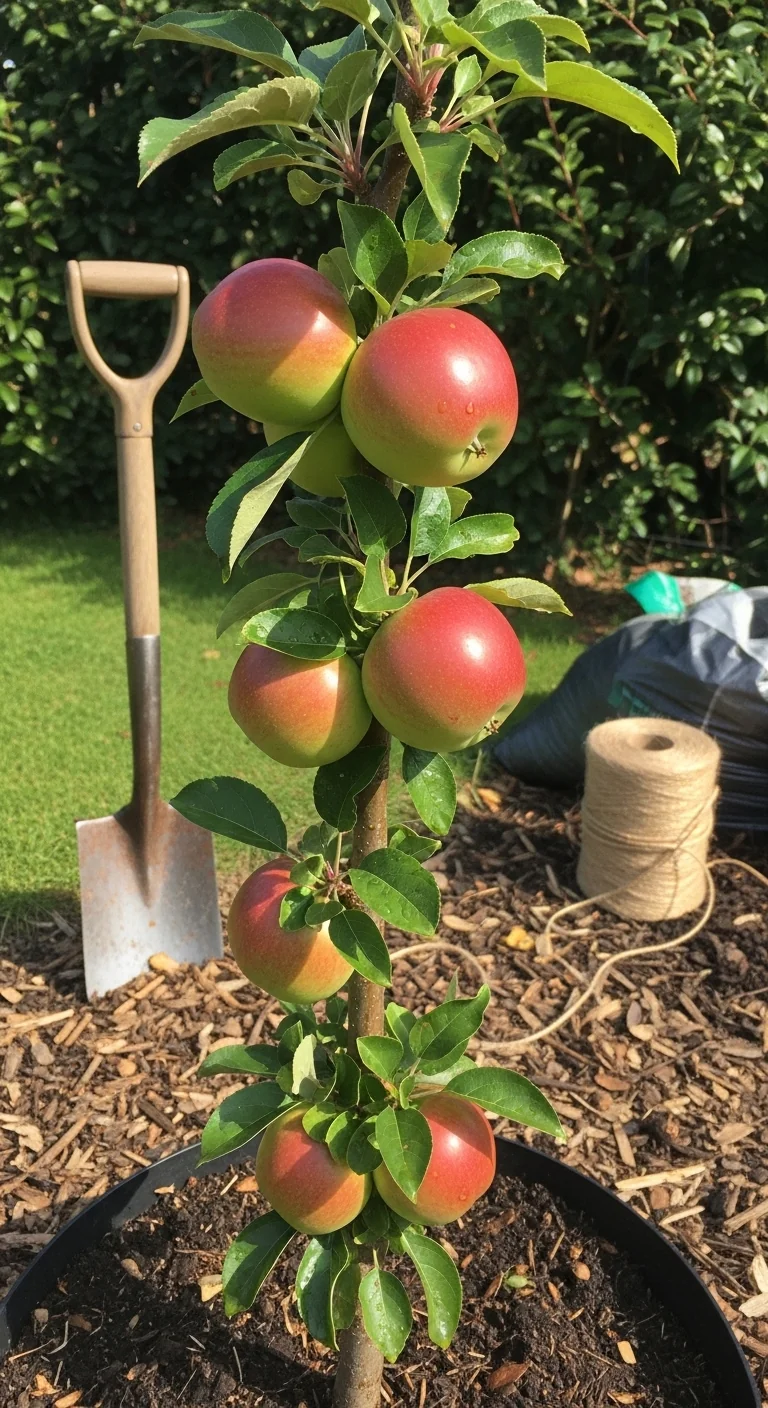
Tangy Green Urban Apple supplies tart green fruit ideal for cooking or fresh snacking in container setups. Use it when space constraints prevent wider trees and you prefer a bright flavor contrast to sweeter varieties. Skip it if your site receives less than 6 hours of sun because tartness increases without adequate light. The tree holds a 2- to 3-foot width at maturity and fruits on spurs close to the trunk.
Red Tasty Columnar Apple
Best for: Branch 2
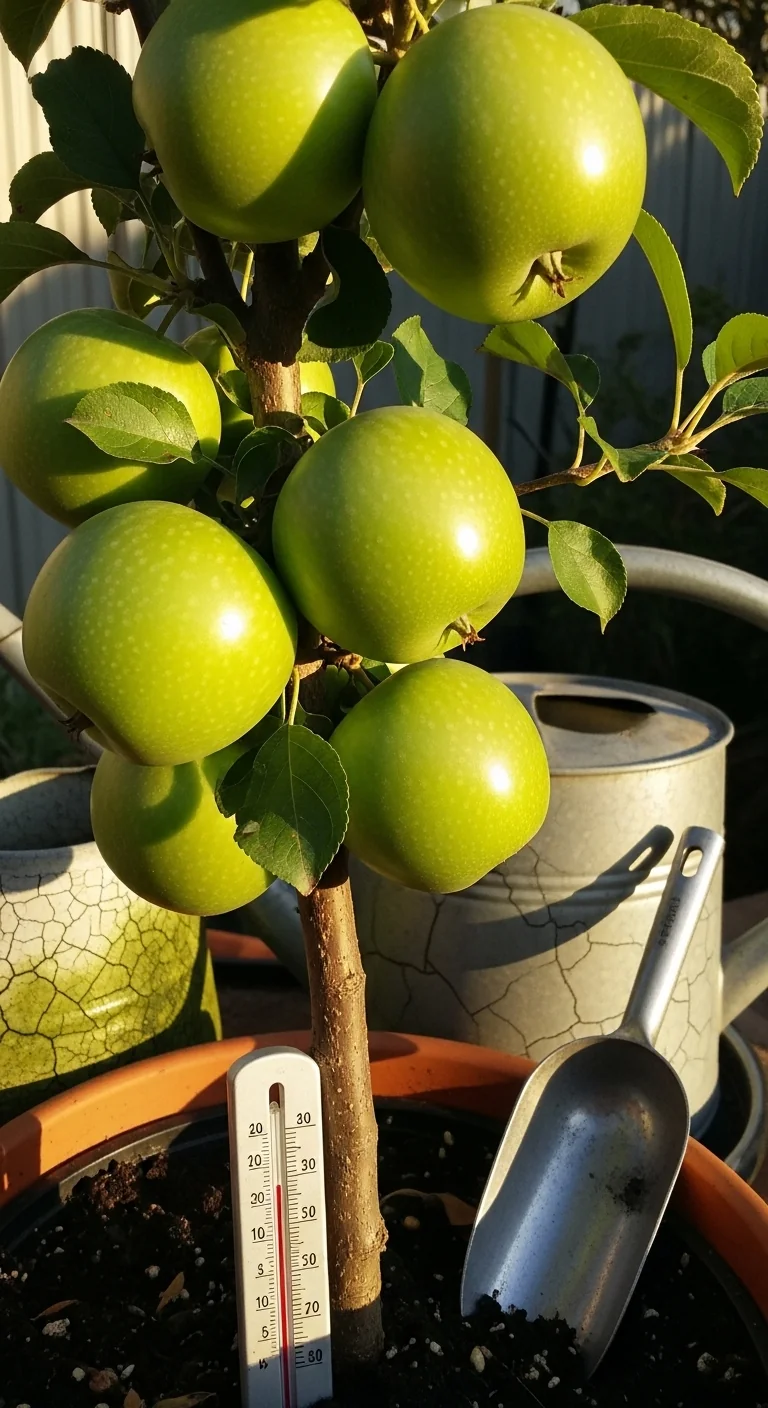
Red Tasty Columnar Apple bears bright red sweet apples that ripen in mid-season. Threshold rule: maintain even soil moisture during the first two growing seasons by checking the top 2 inches of soil weekly and watering when dry. The variety reaches 8 to 10 feet tall with spurs distributed along the central leader. It integrates into ground rows with compatible pollinators for reliable set.
Starter Stack (What to Choose First)
Branch 1 Container or Ultra-Compact
Start with Scarlet Sentinel Columnar Apple and Blushing Delight Urban Apple. These two share compatible pollination timing and combined planting time totals under 45 minutes. Estimated cost per tree falls between 35 and 55 dollars depending on nursery size.
Branch 2 Ground Plantings with Partners
Start with Golden Sentinel Columnar Apple and Tasty Red Urban Apple. Their mid-season overlap provides cross-pollination while keeping the row under 6 feet wide total. Estimated setup time equals 60 minutes for two trees including staking.
Branch 3 Colder Climates or Exposed Sites
Start with North Pole Columnar Apple and Emerald Spire Columnar Apple. Both tolerate low winter temperatures and supply early to mid-season harvests. Estimated cost per tree ranges from 30 to 50 dollars with mulch application adding 15 minutes.
When This Won’t Work
Columnar fruit trees fail when the site receives fewer than 6 hours of direct sun daily because fruit color and sugar levels remain low. Relocate containers to a south-facing exposure or add reflective mulch to increase light. They also struggle in compacted clay soil that stays waterlogged after rain because root oxygen drops and establishment slows. Test drainage by digging a 12-inch hole and filling it with water: if it drains slower than 2 inches per hour amend with coarse sand or switch to raised beds.
Choosing the Right Option for Your Situation
Budget Threshold
Trees cost 30 to 60 dollars each at local nurseries or online suppliers. Factor in one-time pot or stake expense of 15 to 25 dollars per tree for container setups. Choose two compatible varieties rather than one to ensure pollination without extra cost later.
Time Threshold
Planting and initial staking require 20 to 30 minutes per tree. Annual maintenance equals one 15-minute prune in late winter plus one fertilizer application. Select varieties rated effort score 2 if your schedule allows only two care sessions per year.
Technical Constraint: Soil Drainage
Measure drainage by digging a test hole 12 inches deep and timing water exit. If slower than 2 inches per hour choose container options on Branch 1 and use potting mix rather than native soil.
Yes or No checklist:
Is your available width 36 inches or less? Yes or No
Does your zone fall in 3 to 6? Yes or No
Do you have space for two trees 4 feet apart? Yes or No
Will you provide 6 hours of sun daily? Yes or No
Expert Q&A
How do columnar fruit trees compare to dwarf fruit trees in long-term support needs?
Dwarf trees on rootstocks like M9 often need permanent staking and root-pruning every three years to control vigor. Columnar varieties rely on genetic habit so support is temporary for the first two seasons only. Both types need similar watering and fertilizing but columnar forms require less branch management.
Do columnar fruit trees need protection from birds in the first fruiting year?
Yes. Young trees produce fewer fruits so netting prevents total loss. Drape lightweight bird netting over the entire column once fruit begins to color and secure at the base. Remove after harvest to allow air flow.
Can you grow columnar fruit trees successfully in raised beds?
Yes if the bed measures at least 24 inches deep and drains freely. Fill with a 50-50 mix of garden soil and compost. The narrow root system fits well and the upright habit avoids shading other bed plants.
What soil pH range keeps columnar apple varieties healthy?
Target 6.0 to 7.0. Test soil in spring and amend with sulfur to lower or lime to raise as needed. Maintain the range with annual compost top-dressing to buffer fluctuations.
How can you stagger the harvest window using multiple columnar varieties?
Combine early types like Emerald Spire with mid-season North Pole and late types like Scarlet Sentinel. Space them 4 feet apart in ground rows or group in separate containers. This spreads picking from early August through late September depending on your climate.
Conclusion
The core decision remains matching the variety to your measured space, recorded zone, and pollination setup rather than selecting by fruit color alone. The number one mistake is planting a single variety in isolation without a compatible partner nearby.
Next step: review your site measurements against the grid then follow our thinning fruit trees guide after the first heavy bloom to keep the column productive.