
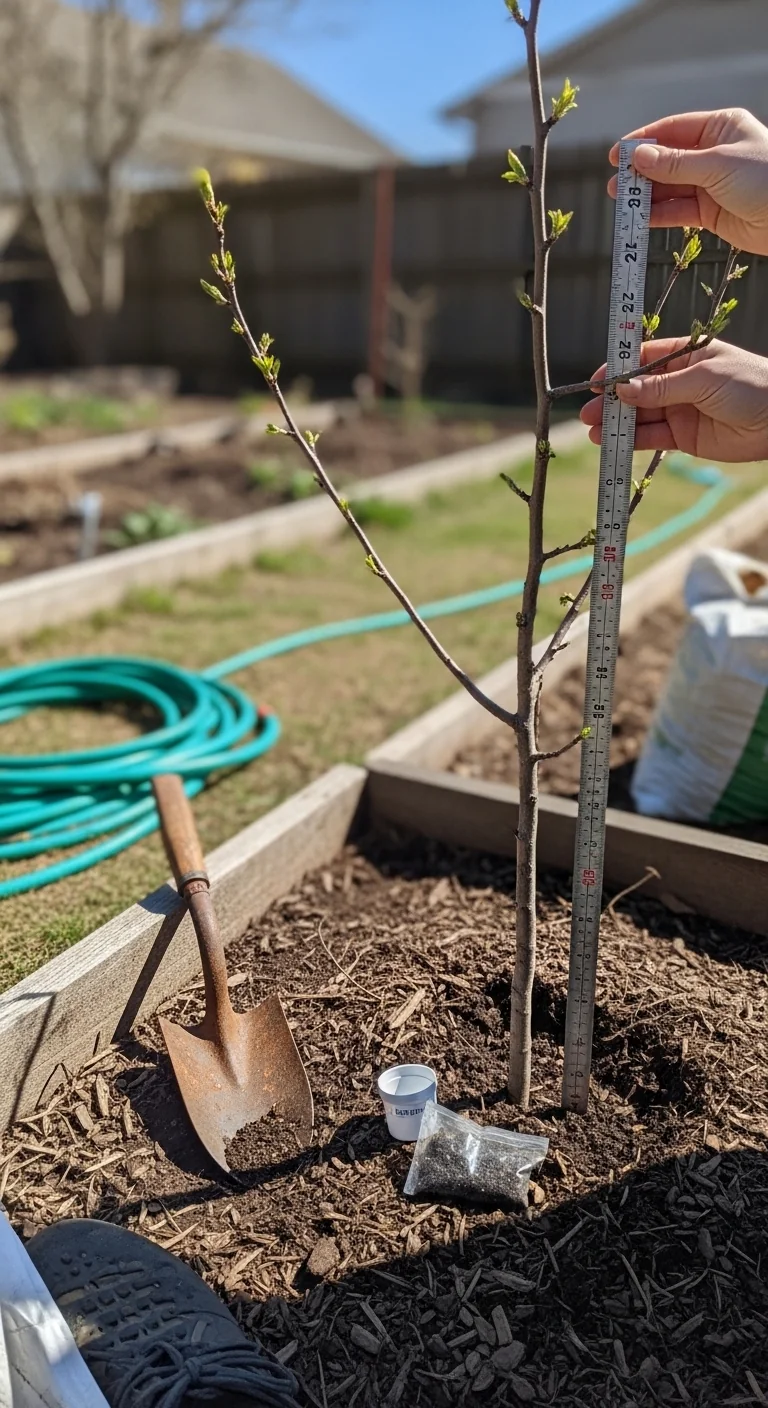
Fruit tree fertilizing succeeds when applications align with measurable tree signals such as annual shoot growth length and soil test results rather than a universal spring schedule. This targeted approach prevents excessive vegetative growth that crowds out fruit production or weak root systems in young plantings.
This guide addresses nine fertilizing options for common pome and stone fruit trees including apples, pears, peaches, plums and cherries. It covers both organic and conventional methods with precise timing windows, application rates and measurable conditions. It excludes tropical species, commercial orchards and disease treatment protocols.
You will gain the tools to assess your own trees and select the fertilizing strategy that fits their current stage, soil profile and growth rate. The result is informed decisions on type, rate and schedule that support balanced development without guesswork.
Measure new shoot growth each season and obtain a soil test to select the right option from the decision grid below.
The Yield Grid Decision Grid
Branch 1: Low vigor trees defined as new shoot growth shorter than 12 inches for pome fruits or 18 inches for stone fruits or trees zero to three years old. Recommended: Items 1, 4, 7 below.
Branch 2: Optimal vigor trees defined as new shoot growth of 12 to 18 inches for pome fruits or 18 to 24 inches for stone fruits in established in-ground plantings. Recommended: Items 2, 5, 8 below.
Branch 3: Container-grown, columnar or espalier fruit trees or situations where soil pH is outside the 5.5 to 7.5 range. Recommended: Items 3, 6, 9 below.
For guidance on establishing new fruit trees that sets up long-term fertilizing success see when to plant fruit trees.
Quick Comparison Table
| Option | Key mechanism | Best for | Decision Grid Branch | Reapply Class |
|---|---|---|---|---|
| 1. Soil Test Guided Organic Topdressing | Slow nutrient release through organic matter breakdown | Low vigor or young trees | Branch 1 | Once-per-season |
| 2. Balanced Granular Fertilizer Application | Quick NPK delivery matched to tree age | Optimal vigor established trees | Branch 2 | Once-per-season |
| 3. Slow-Release Organic Fertilizer Blend | Controlled release over months via coated granules | Container or dwarf trees | Branch 3 | Once-per-season |
| 4. Blood Meal Targeted Nitrogen Boost | Fast-acting organic nitrogen source | Low vigor or young trees | Branch 1 | Spring-and-summer |
| 5. Foliar Liquid Nutrient Spray | Direct leaf absorption for quick correction | Optimal vigor established trees | Branch 2 | Monthly during growing season |
| 6. Aged Manure Applications | Soil structure improvement with moderate nutrients | Container or espalier setups | Branch 3 | Once-per-season |
| 7. Custom Soil Amendment Based on Test | Precision correction of specific deficiencies | Low vigor or young trees | Branch 1 | Once-per-season |
| 8. Fish Emulsion Liquid Feed | Balanced liquid nutrients with trace elements | Optimal vigor established trees | Branch 2 | Monthly during growing season |
| 9. Bone Meal Phosphorus Amendment | Slow phosphorus release for root and fruit support | Container or dwarf trees | Branch 3 | Once-per-season |
1. Soil Test Guided Organic Topdressing
Best for: Branch 1
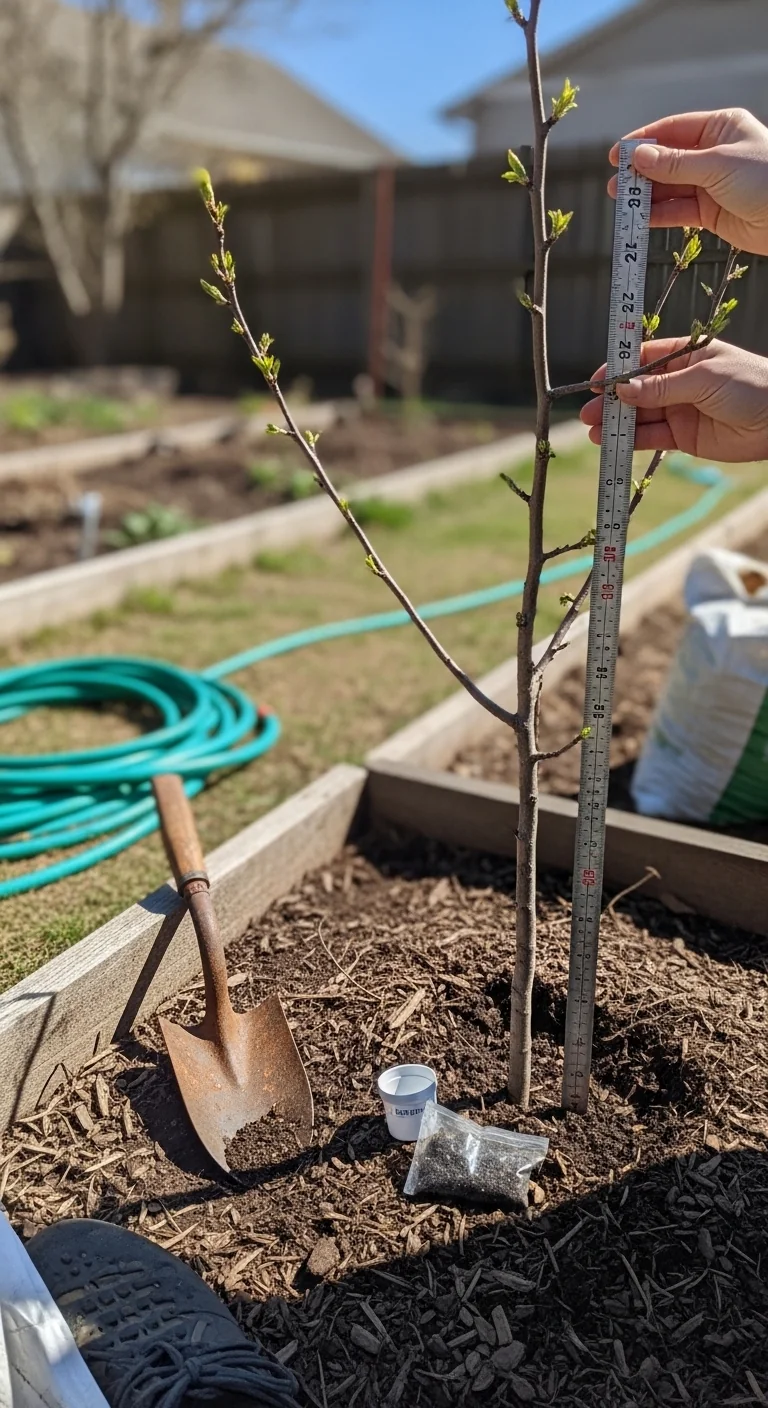
This blueprint starts with a soil test to identify exact nutrient gaps then applies a 2- to 4-inch layer of well-aged compost or leaf mold across the drip line. It works for young trees or those with short shoot growth by building soil biology that releases nutrients gradually over the season.
Steps include clearing debris, spreading evenly from 12 inches away from the trunk outward past the drip line, and watering thoroughly. The common mistake is piling material against the trunk which invites rot or rodent damage. Perform this once in early spring when soil temperature reaches 50 degrees Fahrenheit. For trees under three years old limit the layer to 2 inches to avoid smothering shallow roots.
This method integrates well with pruning decisions because improved soil health supports recovery from cuts. (168 words)
2. Balanced Granular Fertilizer Application
Best for: Branch 2
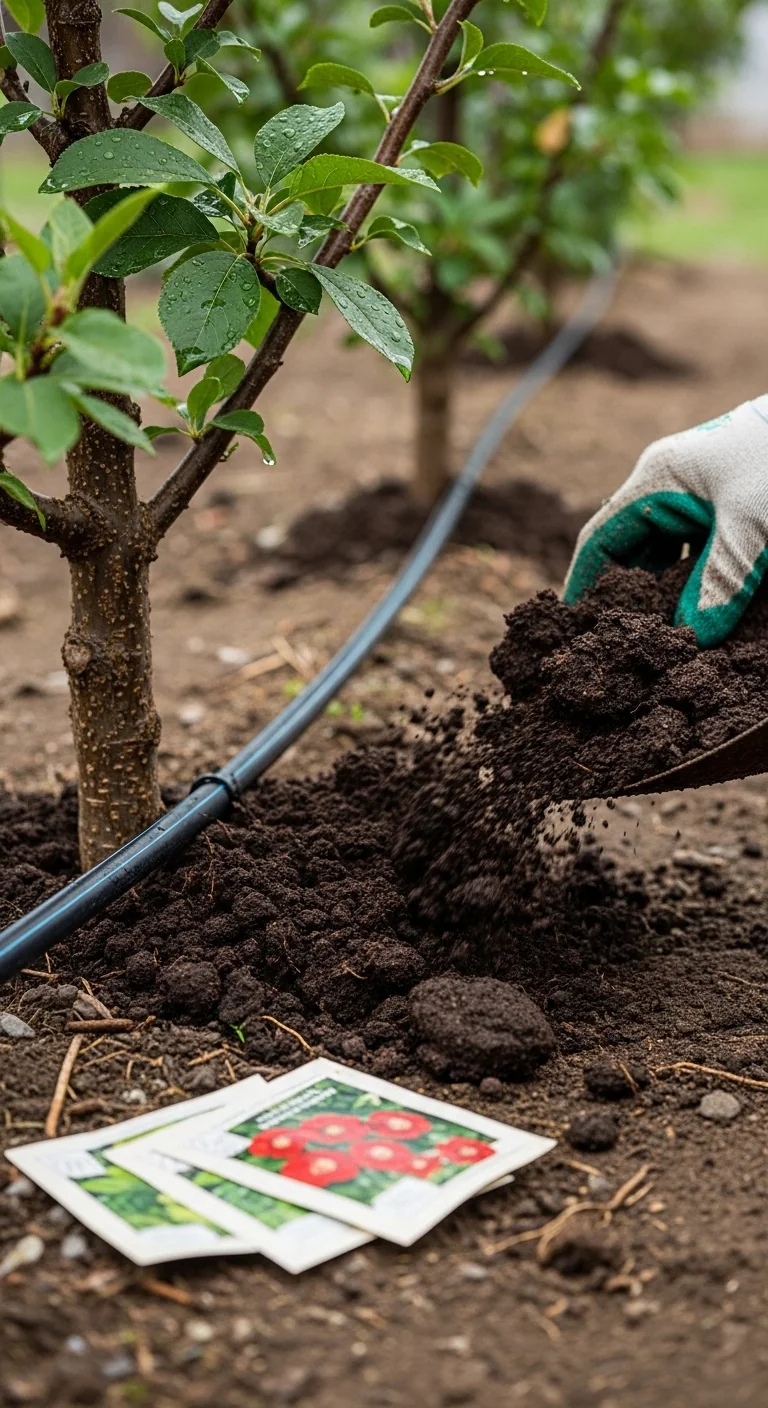
Use a 10-10-10 granular product when trees show optimal shoot growth. Apply 0.1 pound of actual nitrogen per year of tree age up to a maximum of 1 pound for mature specimens.
Skip this if soil test shows already high phosphorus levels or if growth exceeds 24 inches annually. Edge case: bearing trees need slightly lower rates to favor fruit over leaves. (68 words)
3. Slow-Release Organic Fertilizer Blend
Best for: Branch 3
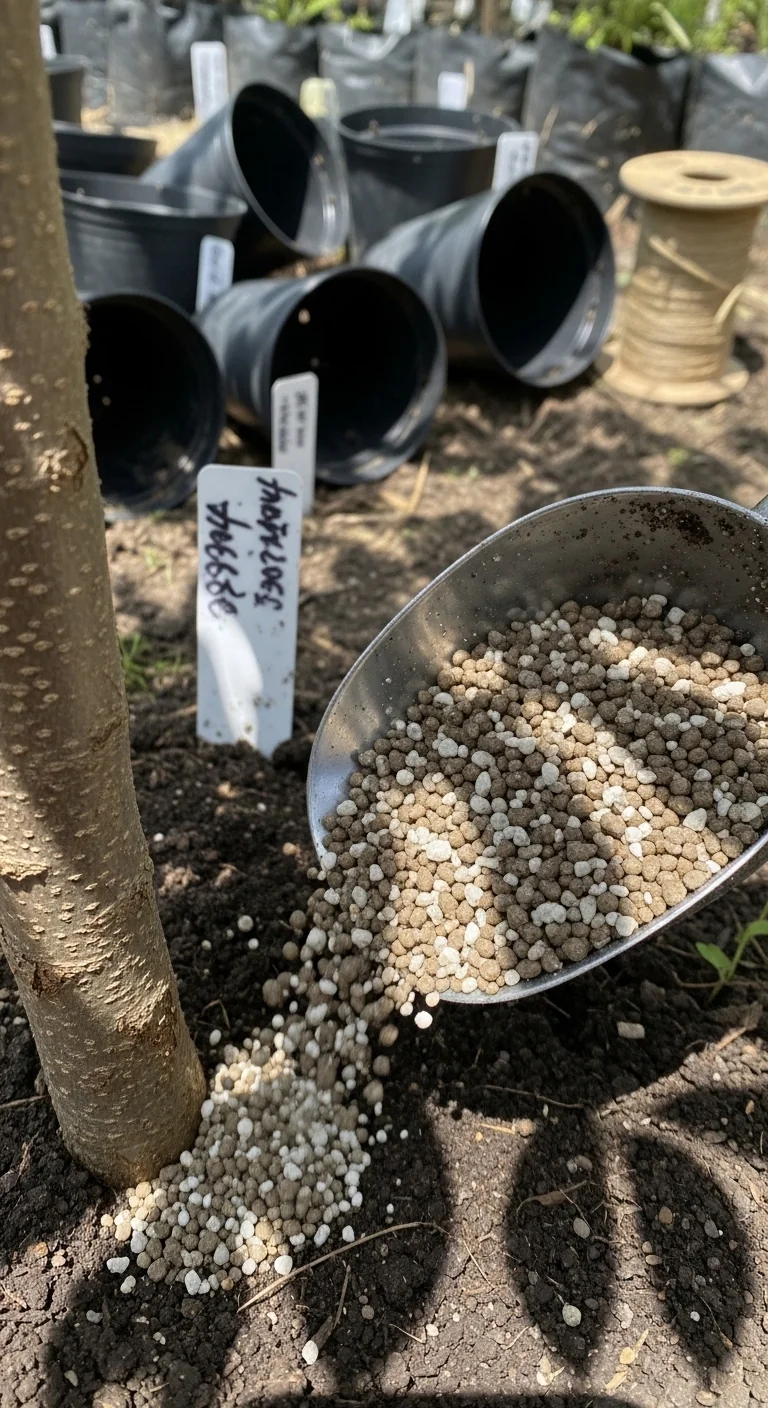
Threshold rule: choose this blend when soil test reveals low organic matter and container or espalier trees need steady supply without frequent reapplication. Apply at label rate when new growth begins and soil temperature exceeds 55 degrees Fahrenheit.
Adjust downward by half if shoot growth already measures 18 inches or more. This prevents salt buildup in limited root zones typical of columnar or espalier setups. (112 words)
4. Blood Meal Targeted Nitrogen Boost
Best for: Branch 1
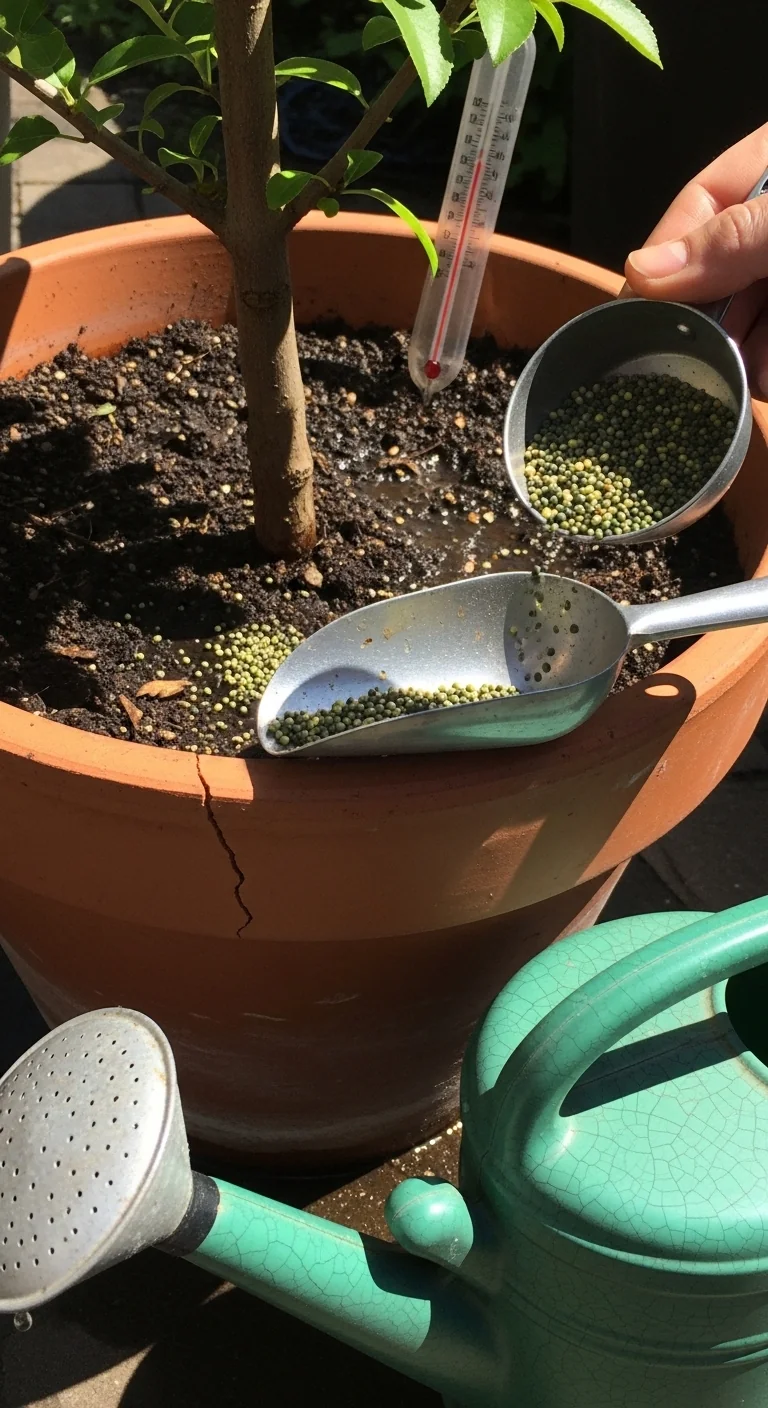
This 10-minute workflow corrects low vigor in young trees. Measure trunk diameter at 6 inches above soil then apply 1 tablespoon of blood meal per inch of diameter scattered around the drip line and watered in.
Upgrade option: combine with a light compost topdressing for extended release. Perform only in spring before bud break and again in early summer if new shoot growth remains under target length. Avoid contact with leaves or trunk to prevent burn. This pairs with apple pruning guide practices to direct energy toward roots. (162 words)
5. Foliar Liquid Nutrient Spray
Best for: Branch 2
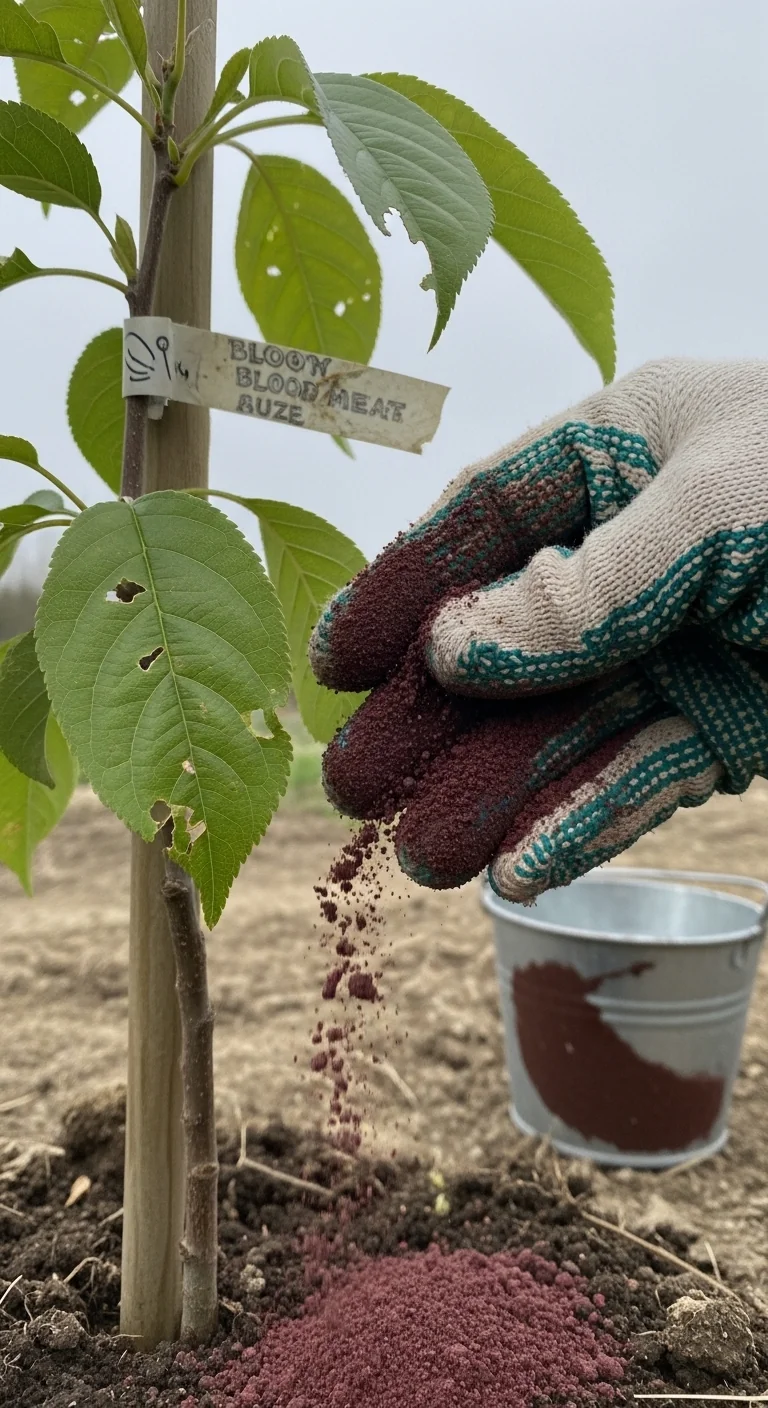
Apply diluted liquid fertilizer to leaves every four weeks during active growth when optimal shoot length appears. It supplies quick correction for mid-season deficiencies without soil overload.
Skip during bloom or fruit set to avoid residue on edible parts. Edge case: use only on calm days below 85 degrees Fahrenheit for best absorption. (64 words)
6. Aged Manure Applications
Best for: Branch 3
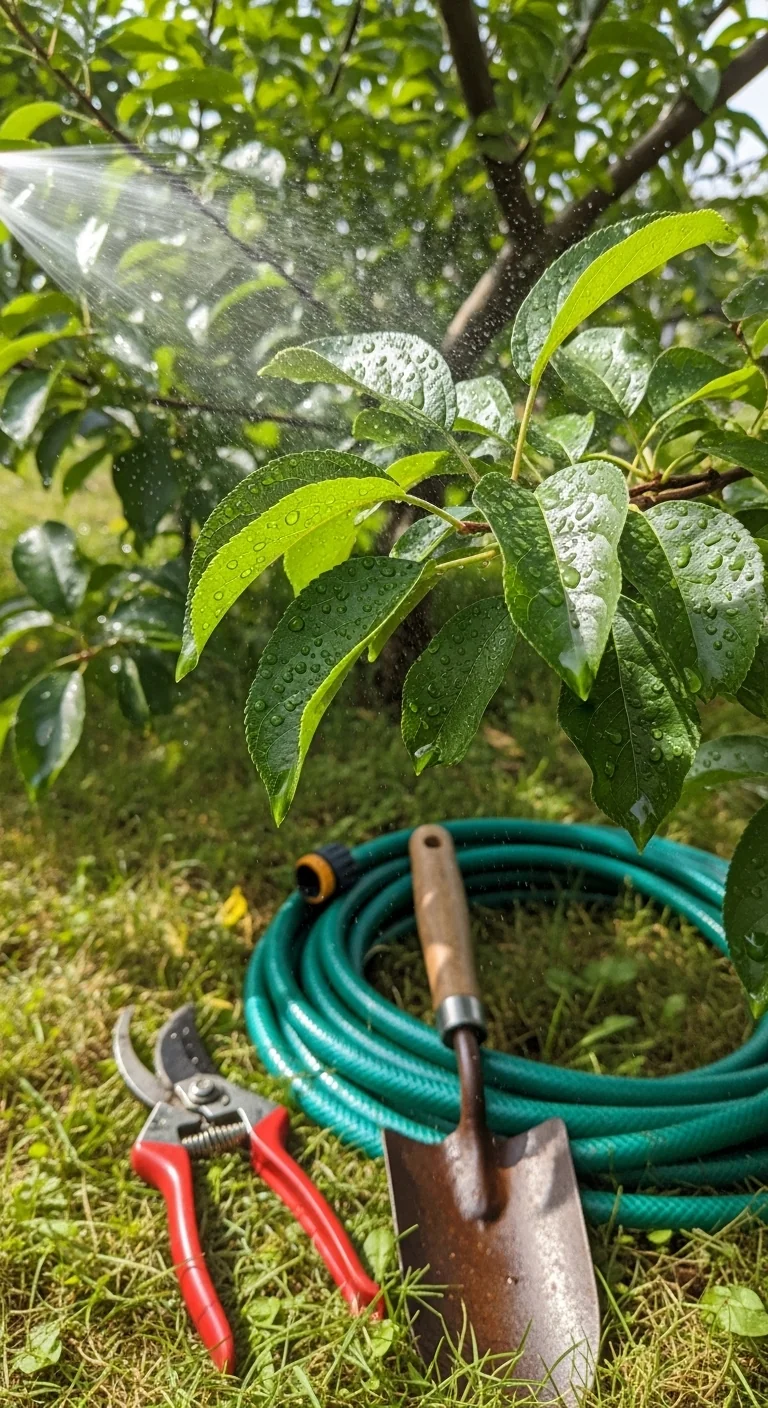
Blueprint starts with well-aged manure spread 2 inches thick under container or espalier trees to improve drainage and provide moderate nutrients. It suits limited soil volume because it avoids heavy salt loads.
Steps: test manure for maturity first then apply in early spring and water deeply. Common mistake is using fresh material which can burn roots or introduce pathogens. Limit to one application per season. (118 words)
7. Custom Soil Amendment Based on Test
Best for: Branch 1
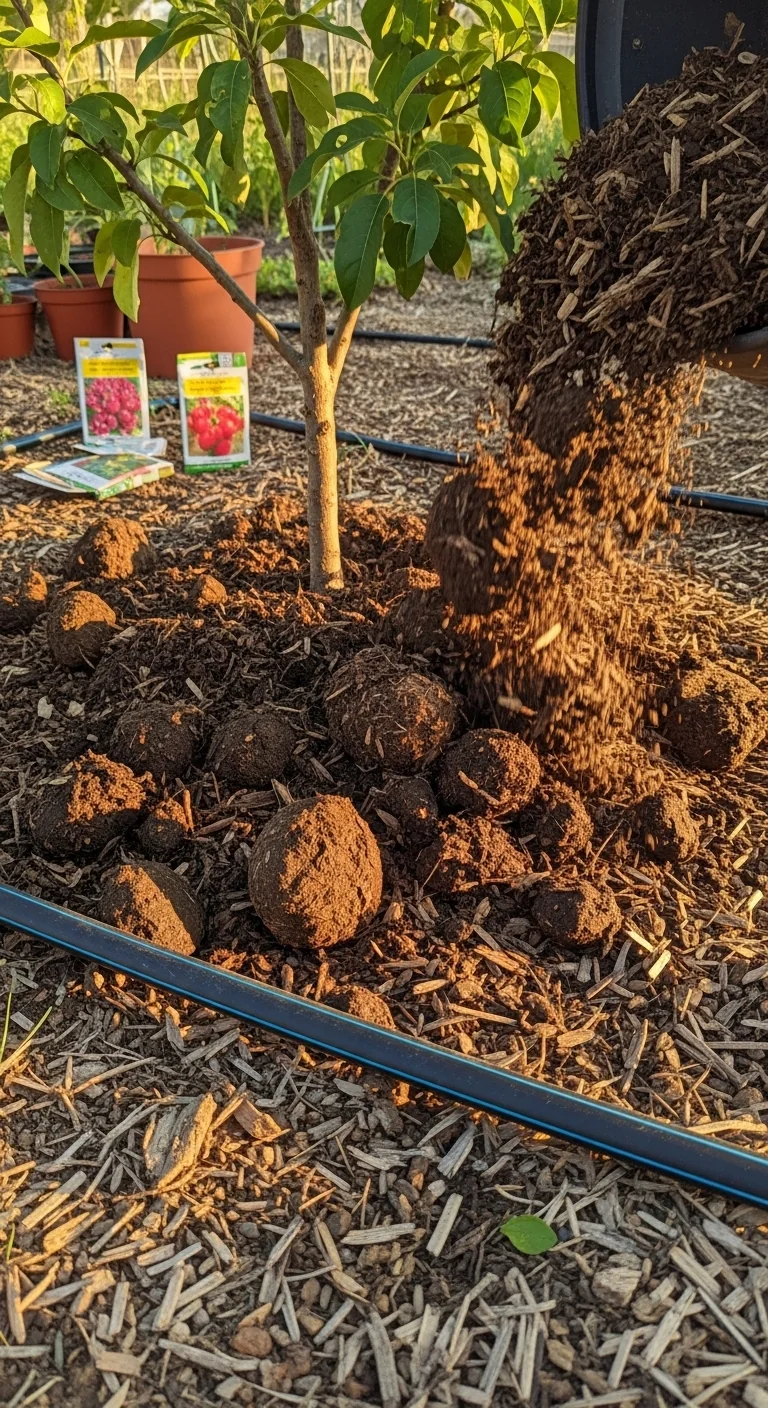
Threshold rule: follow soil test recommendations exactly when low vigor persists after initial topdressing. For example add sulfur only if pH exceeds 7.5 or lime only if below 5.5 while keeping rates at 5 to 10 pounds per 100 square feet depending on test values.
Re-test soil after 12 months and adjust upward or downward by no more than half the original amount. This precision method prevents nutrient lockout common in young trees with poor initial soil. Link it to container options when transplanting small trees. (158 words)
8. Fish Emulsion Liquid Feed
Best for: Branch 2
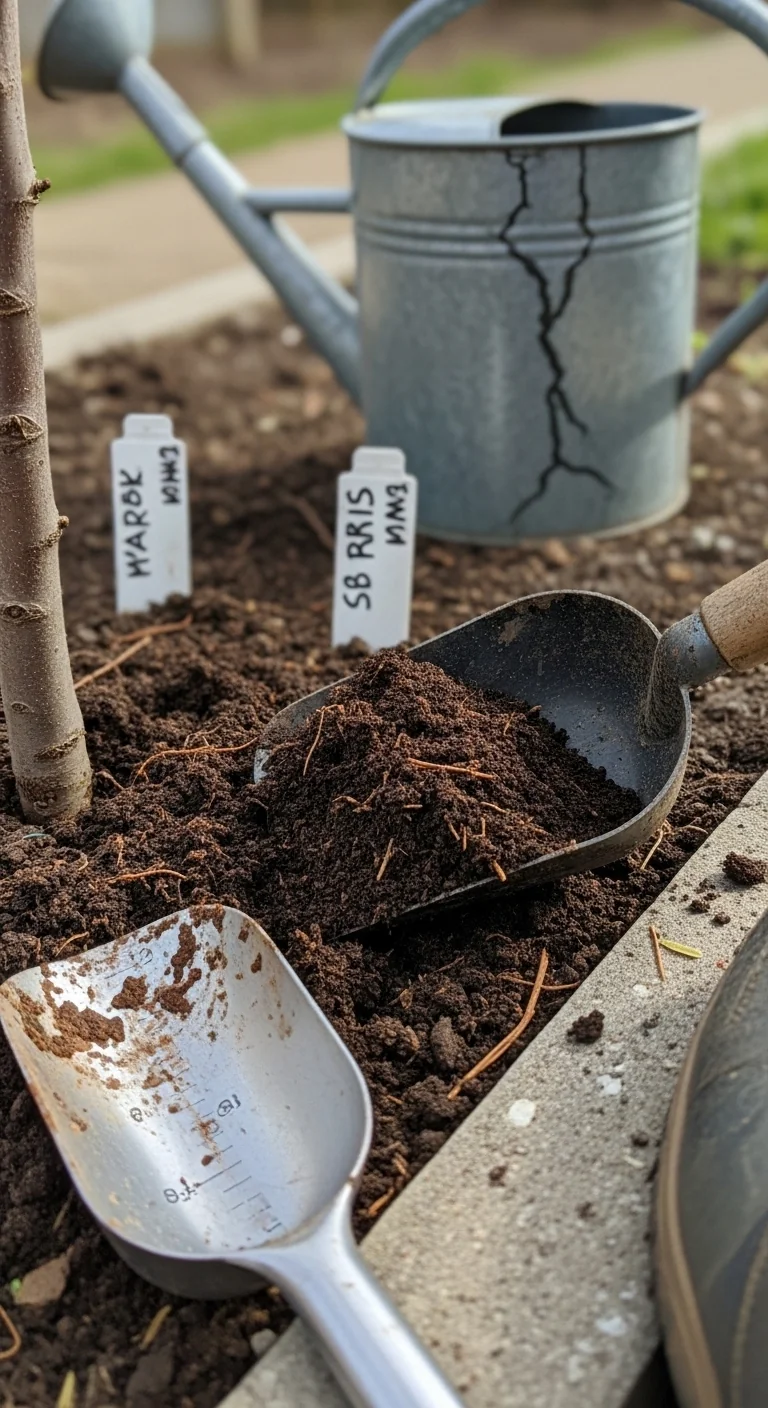
Dilute and apply monthly to soil or foliage during the growing season for established trees with good vigor. It delivers balanced nutrients plus trace elements in a form trees absorb rapidly.
Upgrade option: combine with granular base for longer effect. Use when soil remains cool in early season. (71 words)
9. Bone Meal Phosphorus Amendment
Best for: Branch 3
Use vs skip: apply bone meal at 2 to 4 pounds per mature tree in containers when soil test shows low phosphorus or fruit set appears weak. Skip if test already indicates adequate levels to avoid excess that ties up other nutrients.
Edge case: mix into potting soil at planting time for columnar varieties to support early root establishment without repeated applications. (109 words)
Starter Stack (What to Choose First)
For Branch 1 Trees
Start with item 1 (soil test guided topdressing) plus item 4 (blood meal boost). The combination builds long-term soil health while supplying immediate nitrogen for vigor recovery. Time estimate per tree: 30 to 60 minutes. Cost range: 10 to 25 dollars per application.
For Branch 2 Trees
Start with item 2 (balanced granular) plus item 5 (foliar spray). Together they deliver baseline NPK plus mid-season correction for sustained optimal growth. Time estimate per tree: 20 to 40 minutes. Cost range: 15 to 30 dollars per application.
For Branch 3 Trees
Start with item 3 (slow-release blend) plus item 6 (aged manure). The pair maintains steady nutrition in restricted root zones without frequent intervention. Time estimate per tree: 25 to 45 minutes. Cost range: 12 to 28 dollars per application.
When This Won’t Work
Fertilizing fails when applied after mid-summer because new growth stays tender and risks winter damage even in mild climates. It also fails when soil pH falls below 5.5 or rises above 7.5 without correction because nutrients become unavailable regardless of application rate.
In either case switch to foliar sprays only or delay until soil is amended and re-tested. For specialized training systems such as espalier review espalier fruit trees practices first because reduced canopy size lowers overall nutrient demand.
Choosing the Right Option for Your Situation
Budget Threshold
Under 15 dollars per tree favors organic topdressing or manure. 15 to 30 dollars allows granular or slow-release blends. Over 30 dollars suits custom test-based mixes or repeated foliar feeds.
Time Threshold
Under 30 minutes favors granular or liquid options. 30 to 60 minutes accommodates topdressing or custom amendments. Over 60 minutes indicates full soil test plus multiple amendments.
Technical Constraint: Container or Limited Root Zone
Choose slow-release or liquid methods only. Avoid heavy manure layers that compact small volumes. Always water thoroughly after any application to prevent salt buildup.
Yes/No checklist:
Do you have a recent soil test result? Yes proceed to grid. No start there.
Is new shoot growth within target range? Yes select Branch 2. No check Branch 1 or 3.
Is your tree in-ground or container? In-ground favors granular. Container favors slow-release.
Ready to apply before bud break? Yes continue. No wait until soil warms.
Expert Q&A
How do I calculate the right fertilizer rate based on tree age?
Measure trunk diameter 6 inches above soil then use 0.1 pound actual nitrogen per year of age up to 1 pound total for mature trees. Divide the bag analysis to find exact product amount. Reassess every year because growth rate changes with pruning and fruit load.
What soil temperature threshold matters most for fertilizing?
Wait until soil reaches 50 degrees Fahrenheit at 4 inches depth before any application. Below this roots remain inactive and nutrients sit unused or leach away. Use a simple soil thermometer in the drip line area for accuracy.
Do container fruit trees need different fertilizing frequency than in-ground ones?
Yes because limited soil volume depletes nutrients faster. Opt for monthly liquid feeds or slow-release products during the growing season rather than one annual application. Always leach pots with plain water every fourth watering to flush excess salts.
How does pruning change fertilizing requirements?
Heavy pruning removes growth potential so reduce nitrogen by half the following season. Light pruning maintains normal rates. Always fertilize after pruning cuts heal to support recovery without encouraging weak succulent shoots.
When should I focus specifically on potassium supplements?
Target potassium when fruit set is poor or fruit size remains small despite adequate nitrogen and phosphorus. Apply in late spring after bloom once soil test confirms the gap. Potassium supports fruit quality and tree hardiness without driving leaf growth.
Conclusion
The decision grid simplifies fruit tree fertilizing by tying every choice to shoot growth measurements and soil test data. The single biggest mistake is applying fertilizer without those two data points which leads to mismatched rates or timing.
Next step: balance nutrient supply with crop load by reviewing thinning fruit trees techniques once your chosen fertilizing method shows results.