
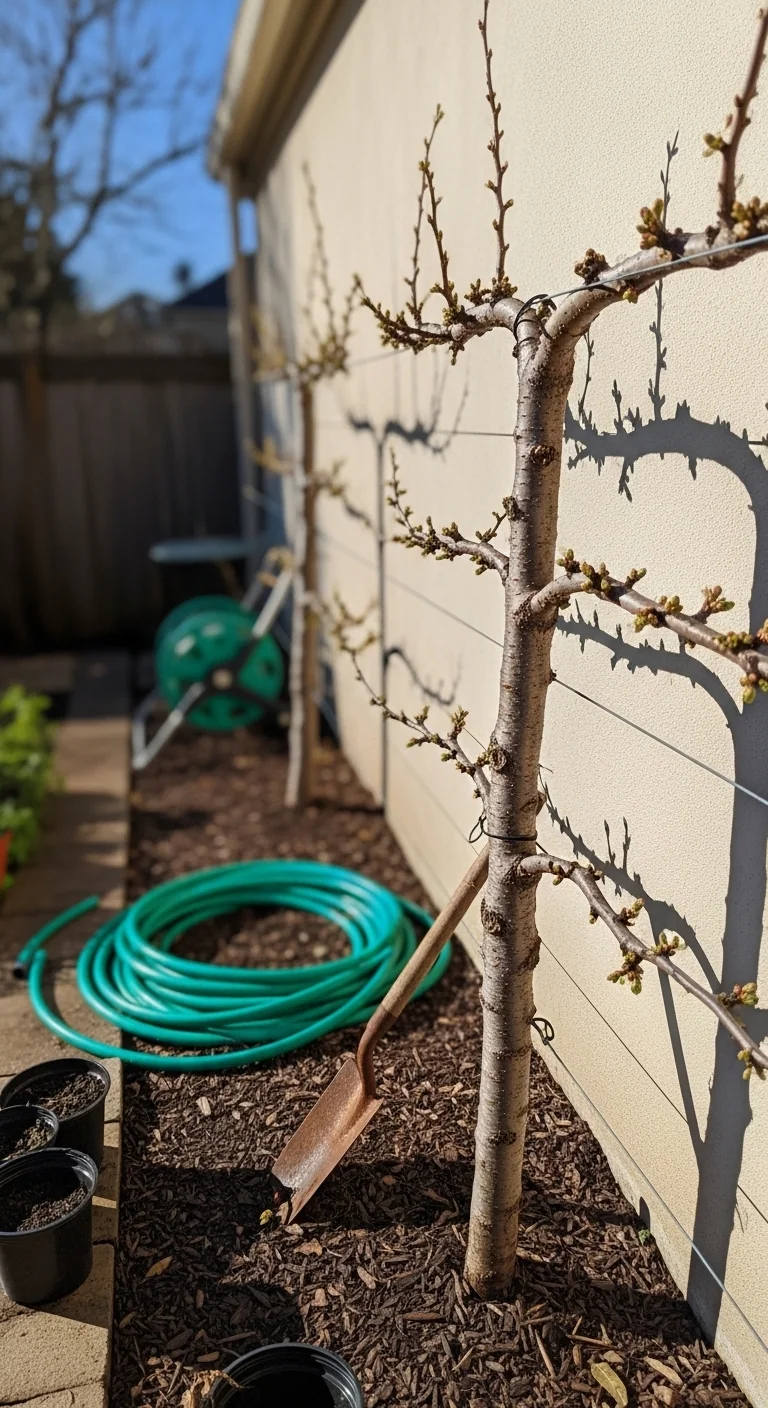
Espalier fruit trees deliver reliable harvests in narrow footprints when you prioritize site conditions over decorative patterns. Wall aspect determines heat reflection and sun hours, while accumulated chill hours below 45°F (7°C) control bud break and fruit set for each variety.
This guide covers nine fruit tree options proven for espalier training. It focuses on apples and pears as primary candidates because of their long-lived spurs and flexible new growth, with stone fruits and others included where they fit measurable constraints. Full step-by-step training diagrams and advanced multi-tier designs fall outside scope.
You will finish with a clear first-choice tree, its required rootstock category, and a maintenance rhythm that fits your schedule. The decision grid and comparison table eliminate guesswork on compatibility.
Pick the branch that matches your exact wall exposure and local chill hours, then select the corresponding item below to start planting this season.
The Yield Grid Decision Grid
Branch 1: South- or west-facing walls with 6 or more hours of direct sun daily and 600 or more chill hours per winter. These sites provide reflected heat for faster ripening and strong spur development.
Recommended: Items 1, 2, and 4 below. Compare columnar fruit trees here if your space is under 18 inches deep.
Branch 2: East- or west-facing walls with 4 to 6 hours of sun and 300 to 600 chill hours. Partial shade reduces afternoon heat stress while still supporting moderate fruit set.
Recommended: Items 3, 5, and 7 below.
Branch 3: Low-chill regions under 300 chill hours or north-facing walls with wind protection. These conditions favor heat-tolerant or self-fertile types that fruit on short spurs or older wood.
Recommended: Items 6, 8, and 9 below.
Quick Comparison Table
| Option | Key mechanism | Best for | Decision Grid Branch | Effort Score |
|---|---|---|---|---|
| Apples | Spur-bearing habit on 2-year-old wood plus supple spring growth | High-chill south walls | Branch 1 | 3 |
| Pears | Short fruiting spurs and strong lateral response to summer pinching | High-chill west walls | Branch 1 | 3 |
| Plums | Flexible young branches trained horizontally before wood hardens | Moderate-chill east walls | Branch 2 | 4 |
| Sweet cherries | Spur production on older wood with careful rootstock selection | High-chill protected sites | Branch 1 | 4 |
| Peaches | Tip-bearing renewal pruning redirected into horizontal framework | Moderate-chill west walls | Branch 2 | 5 |
| Figs | Fruit on new and one-year-old wood tolerant of heat reflection | Low-chill warm walls | Branch 3 | 2 |
| Apricots | Early spur formation on short laterals suited to reflected warmth | Moderate-chill east walls | Branch 2 | 4 |
| Quinces | Compact growth habit with reliable spurs on semi-vigorous rootstocks | Moderate-chill sites | Branch 2 | 3 |
| Citrus | Evergreen habit with fruit on current season wood in frost-protected spots | Low-chill warm walls | Branch 3 | 2 |
1. Espalier Apples
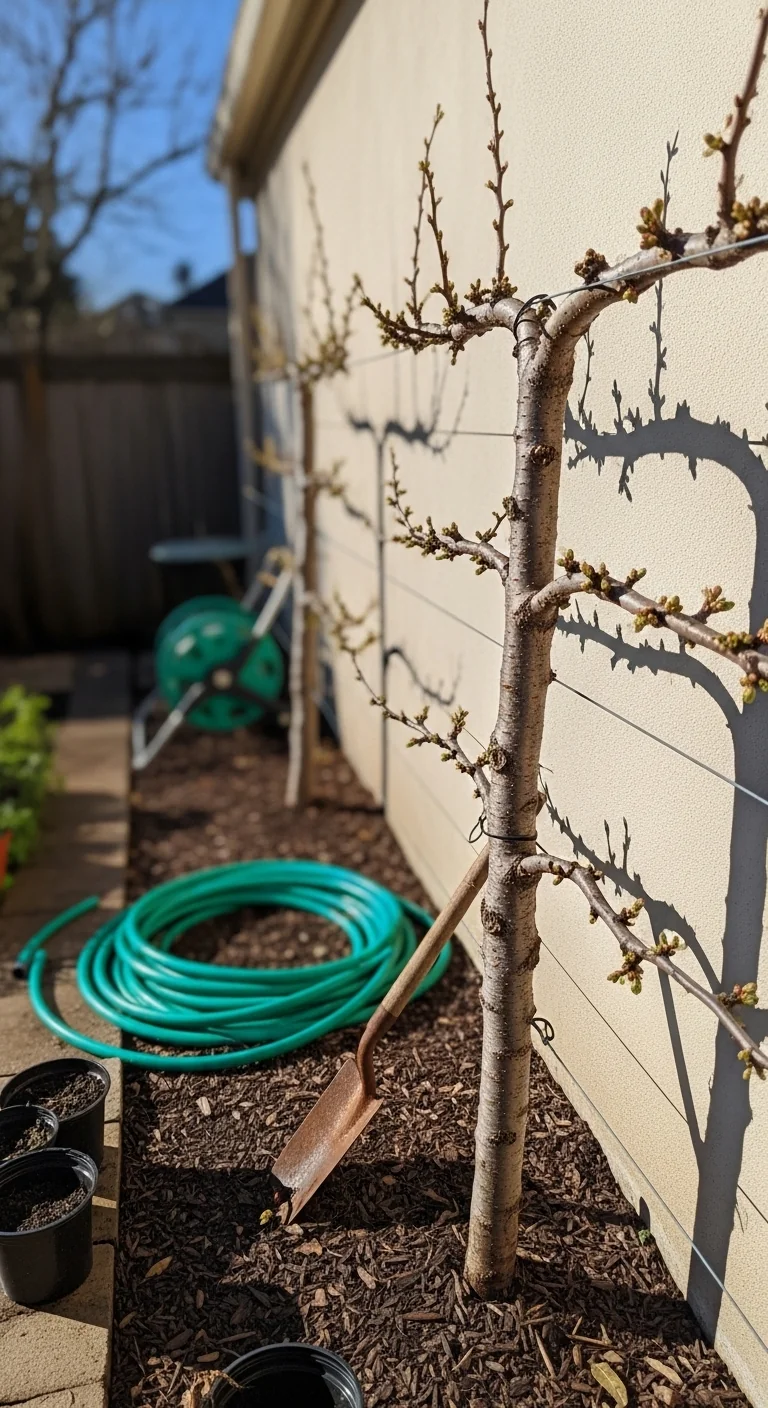
Best for: Branch 1
Apples form the foundation of most successful espalier projects because their fruit develops on persistent spurs rather than new tips. Select varieties on M9 or M26 rootstocks for controlled vigor that stays within a 6- to 10-foot height after training. These rootstocks keep trunk diameter manageable while the wall provides the microclimate needed for even coloring.
Blueprint: Plant bare-root whips in late winter when soil is workable but before bud break. Establish the first horizontal tier at 18 inches above ground using 14-gauge wire spaced 18 inches apart. In the first summer, select two opposite laterals and tie them down at 45 degrees until they reach the wires, then straighten. Remove all vertical shoots except the central leader. Mistake to avoid: allowing the leader to grow unchecked past the second tier before summer pinching, which creates permanent top-heavy imbalance.
Follow our apple pruning guide for the three annual cuts that maintain spur density without reducing next year’s crop. Apples on espalier often color earlier and show fewer fungal issues due to improved air flow along the flat plane.
2. Espalier Pears
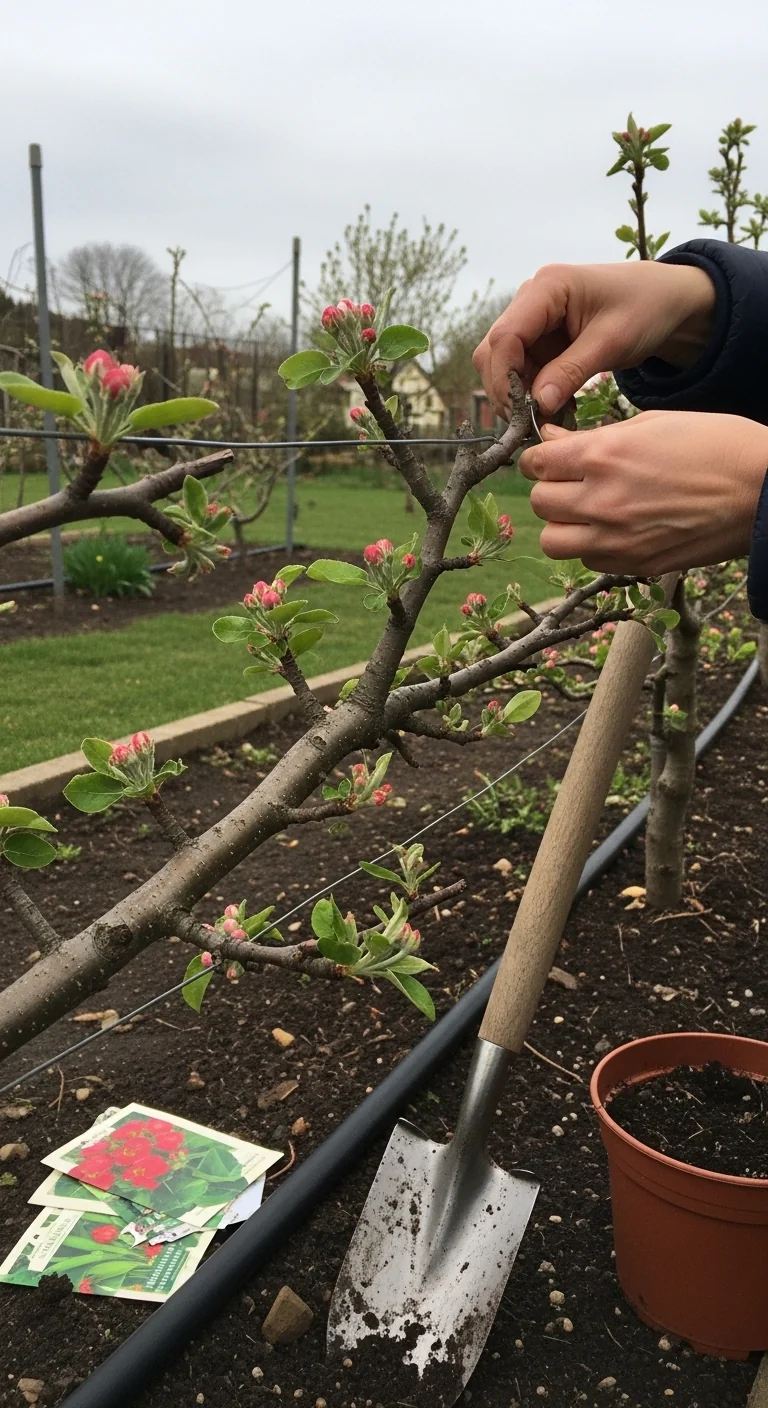
Best for: Branch 1
Pears respond quickly to horizontal training and produce short spurs that remain productive for a decade or more. Use quince rootstocks such as Quince A or C to moderate growth on warmer walls.
Use versus skip: Choose pears when your wall receives consistent west sun and you want fruit that stores well into winter. Skip if fire blight pressure is high in your region and you cannot monitor for early symptoms. Edge case: Asian pear varieties tolerate warmer summers but require stricter summer pinching to prevent overly long laterals.
3. Espalier Plums
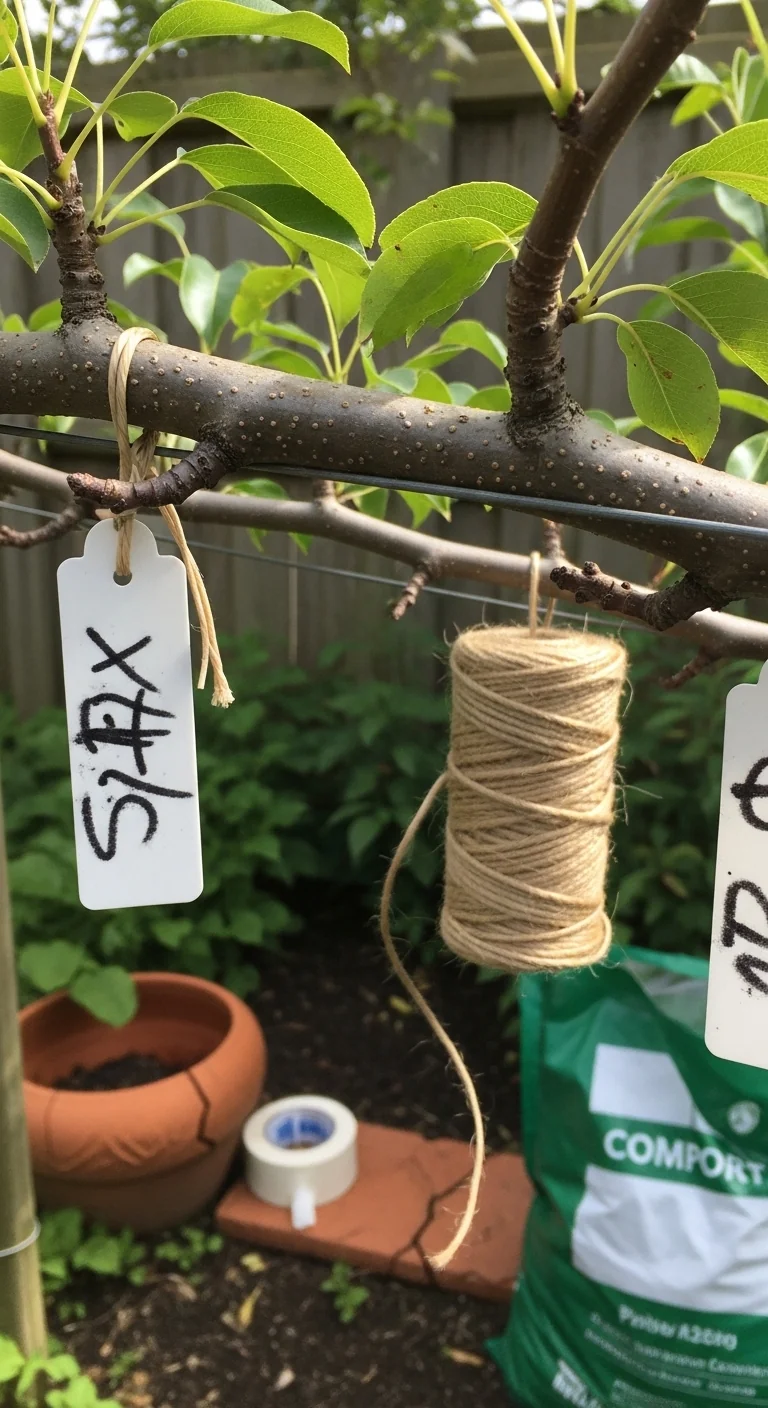
Best for: Branch 2
Plums develop flexible young shoots ideal for initial bending before wood lignifies in midsummer. European types on semi-vigorous rootstocks balance fruit load without excessive suckering.
Threshold rule: Train only when your site accumulates at least 300 chill hours and receives morning sun to dry foliage quickly. Adjust by removing every third lateral if growth exceeds 24 inches between ties in the first season. This keeps the framework open and reduces brown rot risk compared with denser free-standing forms.
Plant timing follows local conditions; see when to plant fruit trees for exact windows by region.
4. Espalier Sweet Cherries
Best for: Branch 1
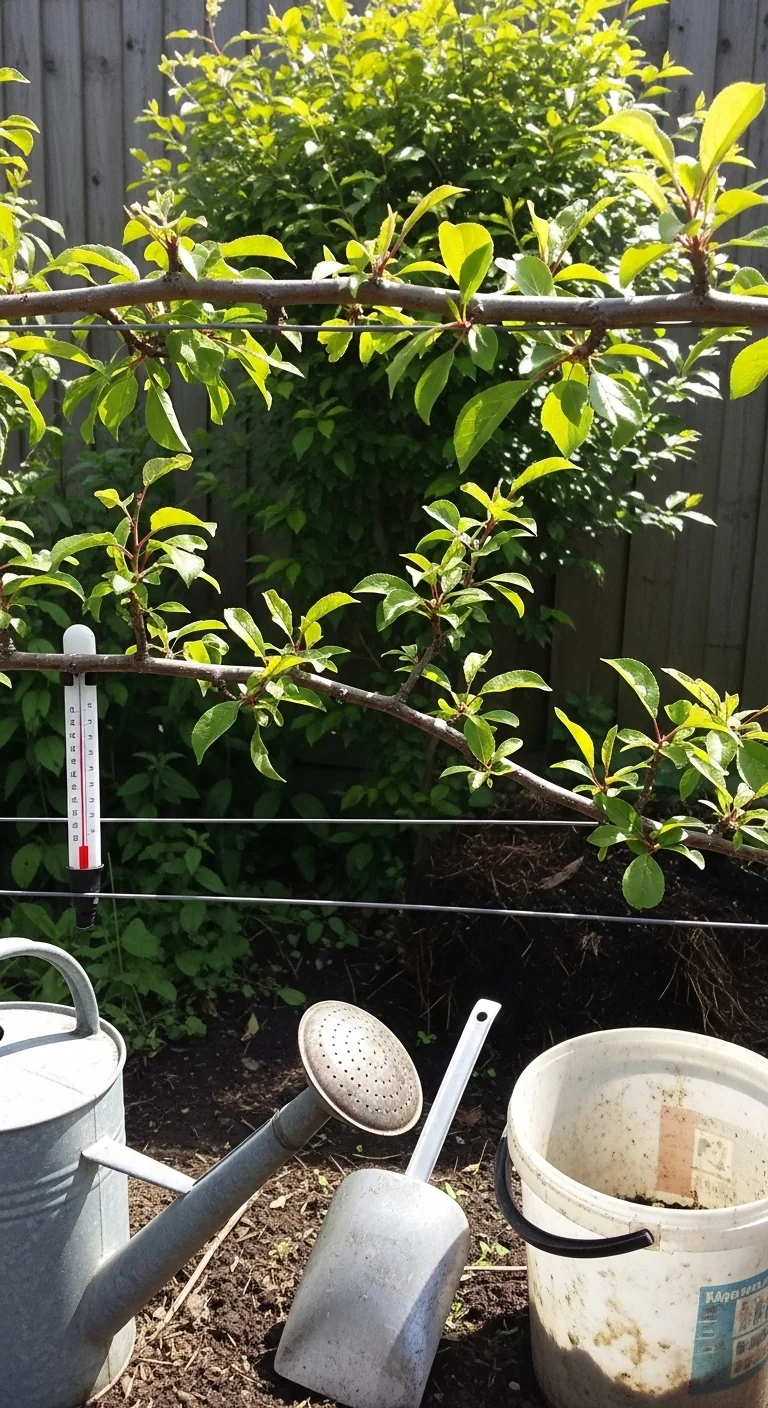
Sweet cherries succeed on espalier when grafted onto dwarfing Gisela or Colt rootstocks that limit height while supporting spur formation on older wood. The flat structure improves spray coverage and allows birds to be excluded more easily than in rounded canopies.
10-minute workflow: In early summer, pinch new vertical growth to two leaves above the last fruiting spur. Tie new laterals to the next wire level before they reach 12 inches long. Upgrade option: add a second pollinator variety on the same framework by grafting a compatible branch in late winter to ensure full set without extra space. Follow apple tree pollination principles for timing bloom overlap.
5. Espalier Peaches
Best for: Branch 2
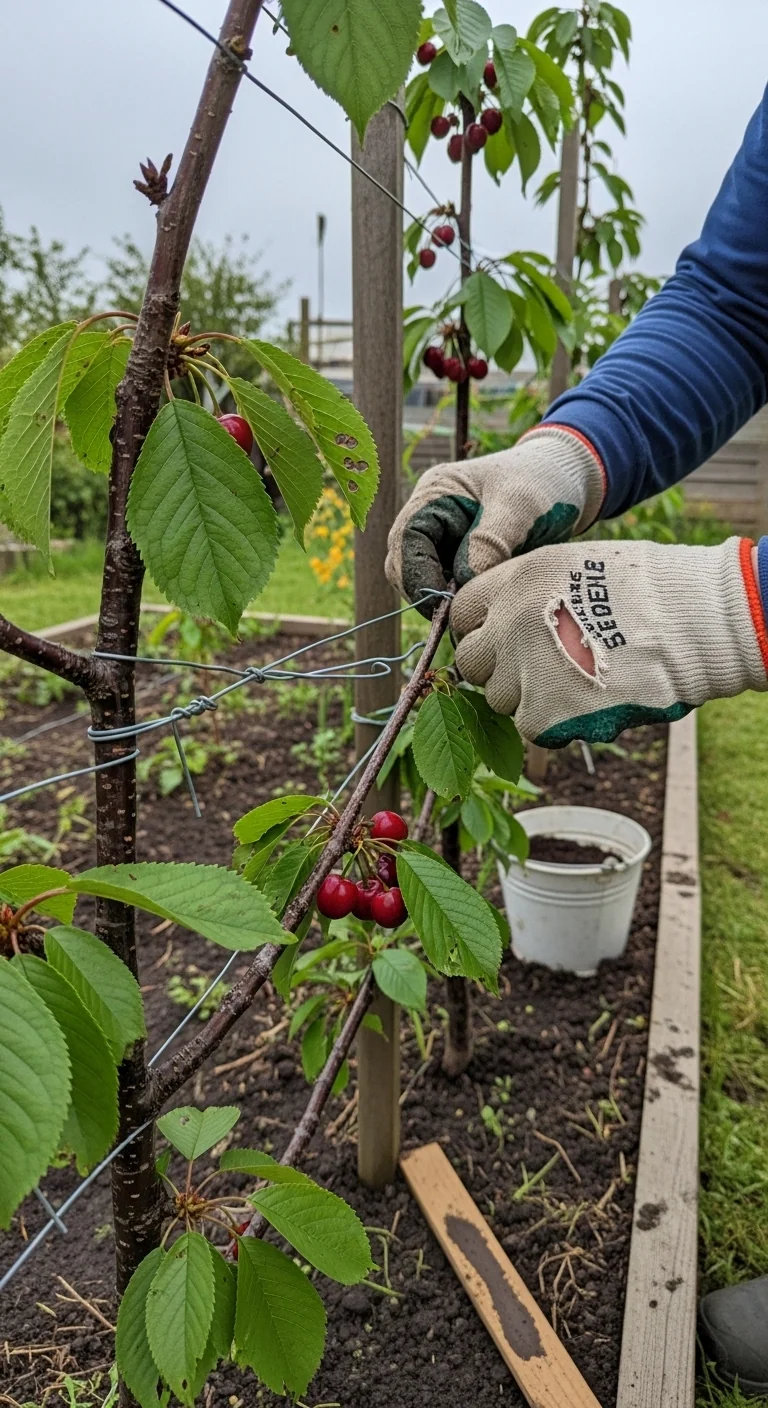
Peaches require renewal pruning because fruit forms on last season’s wood. Horizontal training works when you replace two-year-old laterals annually after harvest.
Use versus skip: Select peaches for west-facing walls where reflected heat speeds ripening. Skip in areas with late spring frosts unless the wall provides reliable protection above 28°F. Edge case: nectarines follow the same rules but need stricter thinning to avoid branch breakage under heavy crop loads.
6. Espalier Figs
Best for: Branch 3
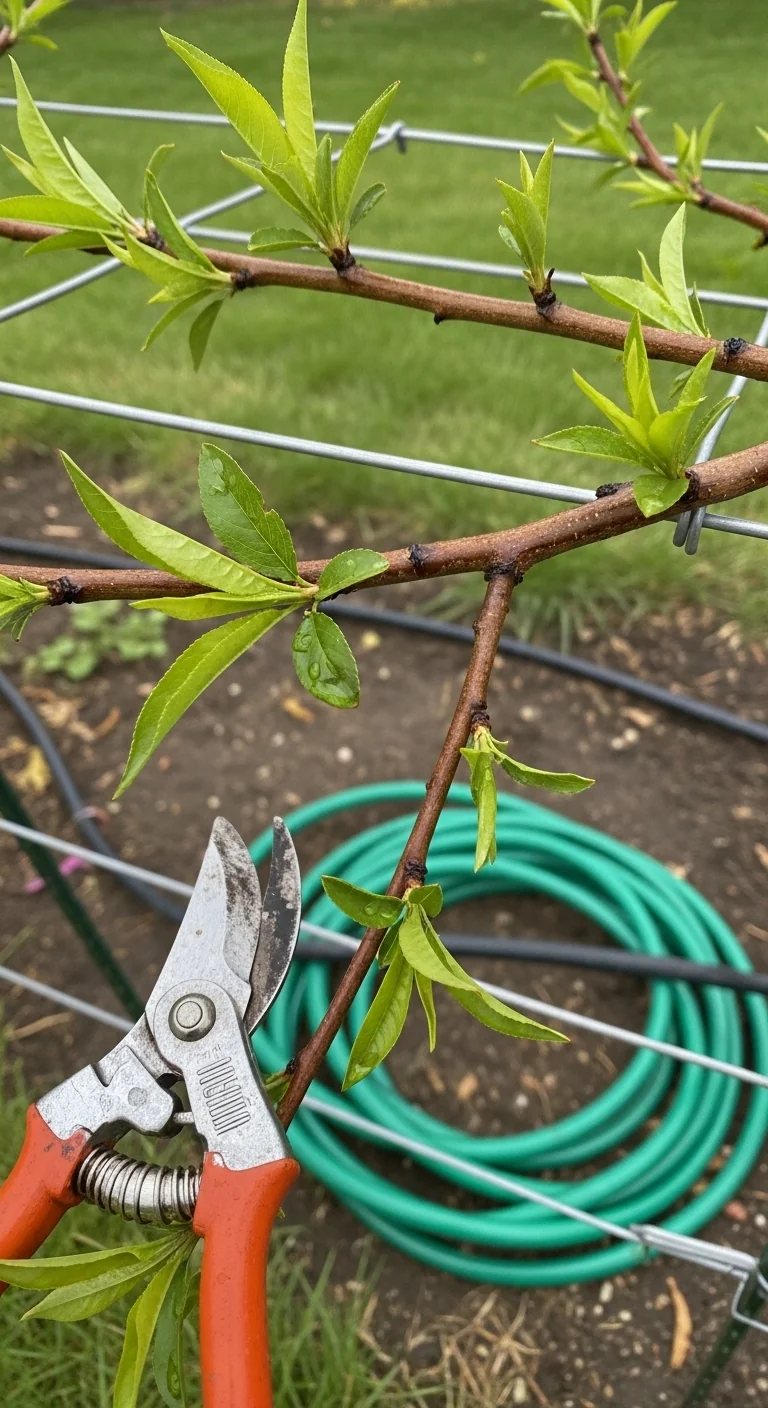
Figs fruit on both new growth and one-year-old wood, making them forgiving for low-chill or protected north walls. Their natural compact habit reduces the need for constant pinching compared with pome fruits.
Threshold rule: Maintain framework below 8 feet when winter lows stay above 20°F. Remove any vertical shoots longer than 18 inches in late summer to direct energy into breba and main crops. This structure also shelters the trunk from temperature swings better than open planting.
7. Espalier Apricots
Best for: Branch 2
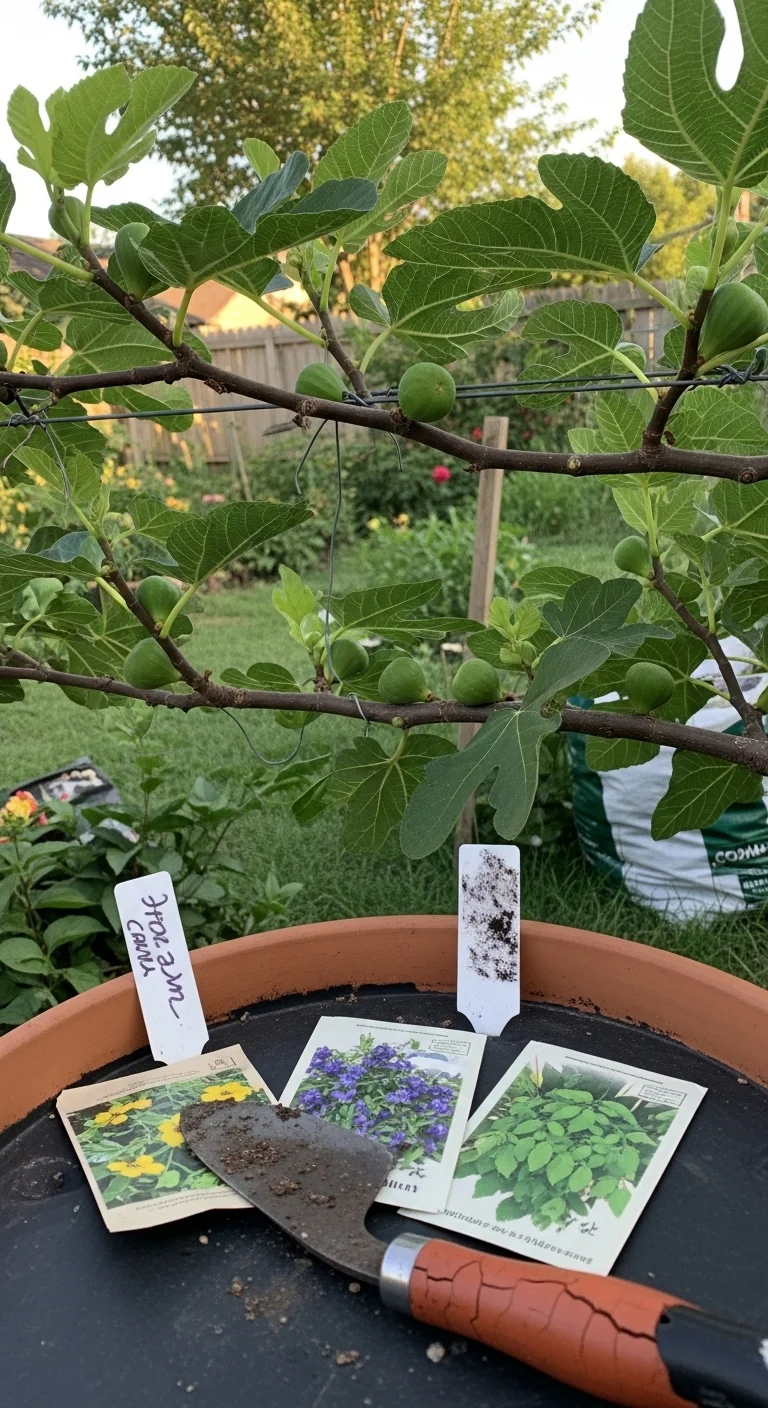
Apricots set spurs early on short laterals and benefit from the warmth of east-facing walls that moderate overnight lows. Choose self-fertile varieties on Myrobalan or apricot rootstocks for steady production without cross-pollination partners.
Blueprint: Establish the first two tiers in year one, then focus summer pruning on shortening laterals to 6 to 8 inches after fruit set. Mistake to avoid: heavy dormant pruning that removes next season’s fruit buds. See thinning fruit trees for load management once spurs load up.
8. Espalier Quinces
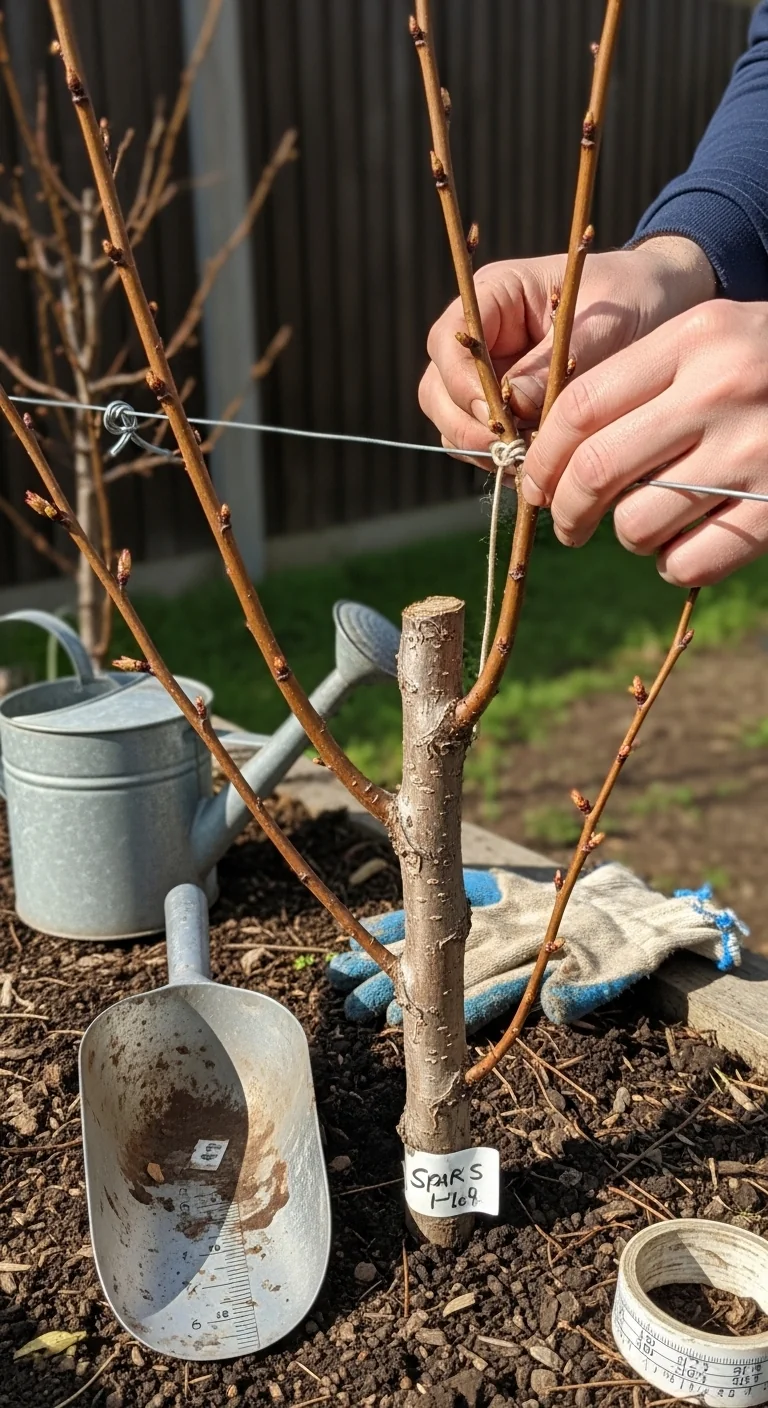
Best for: Branch 2
Quinces produce reliable spurs on semi-vigorous rootstocks and tolerate moderate chill with good flavor development along warmer walls. Their fuzzy fruit benefits from the air circulation that espalier provides.
Threshold rule: Limit height to three tiers when your site receives at least 4 hours of morning sun. Fertilize according to soil test results only; overfeeding creates soft growth that fails to harden before frost.
Refer to fruit tree fertilizing for timing that supports spur development rather than leaf flush.
9. Espalier Citrus
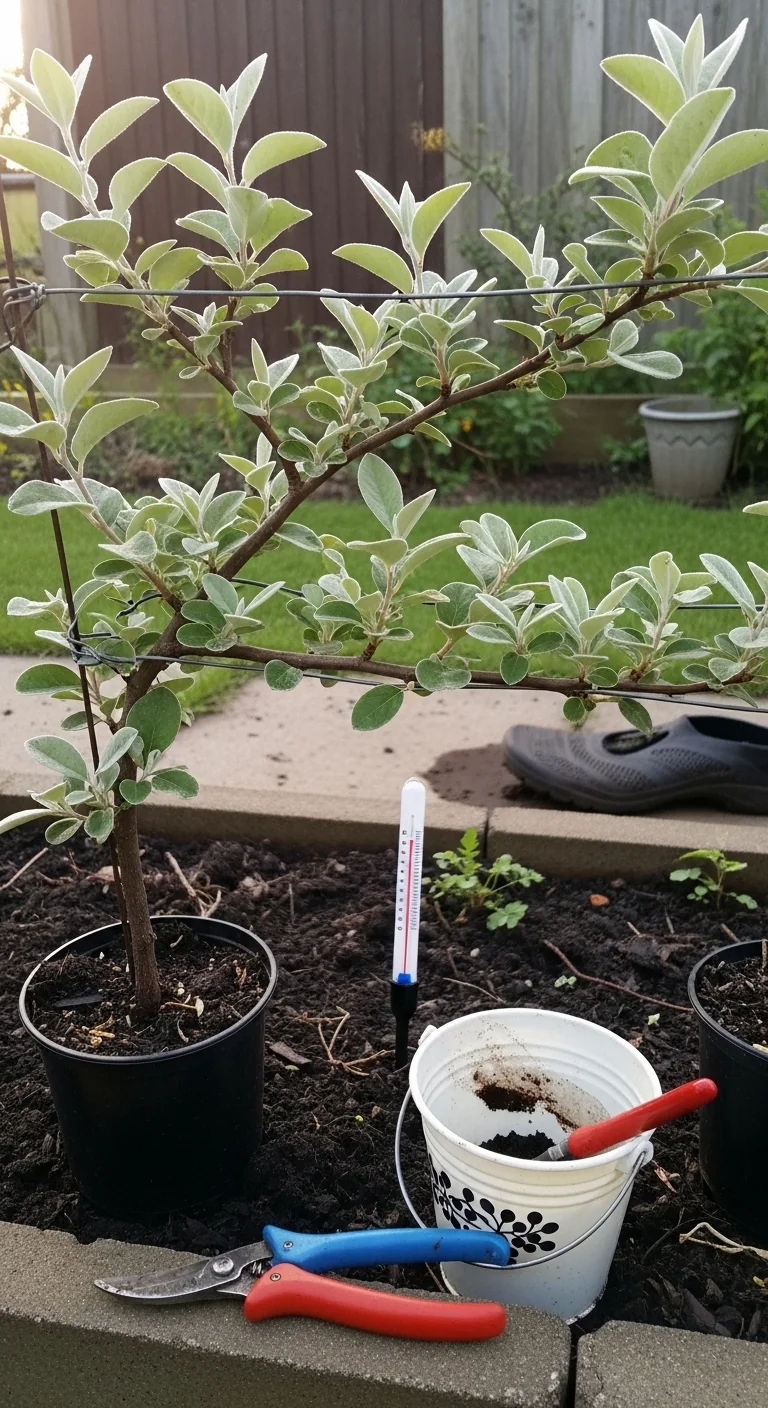
Best for: Branch 3
Citrus maintains evergreen foliage and fruits on current-season wood, suiting low-chill warm walls or frost-protected courtyards. Meyer lemon and satsuma types stay compact when trained flat.
Use versus skip: Ideal when winter lows stay above 28°F and the wall reflects afternoon sun. Skip if hard freezes are common without supplemental protection. Edge case: container-grown specimens on dwarfing rootstocks allow relocation during extreme cold snaps.
Starter Stack (What to Choose First)
For Branch 1 sites
Start with Item 1 (Apples) plus Item 2 (Pears). The combination provides cross-pollination overlap and spreads harvest from midsummer into late fall. Total first-year cost range: $80 to $140 for two bare-root whips on dwarfing rootstocks plus wire and ties. Time to first fruit: 2 to 3 seasons with consistent summer pruning.
For Branch 2 sites
Begin with Item 3 (Plums) plus Item 7 (Apricots). Both tolerate partial sun and require similar horizontal tying schedules. Estimated setup: $70 to $110 for the pair plus basic trellis hardware. Maintenance stays under 30 minutes per tree monthly during the growing season.
For Branch 3 sites
Combine Item 6 (Figs) plus Item 9 (Citrus). These share heat tolerance and low pruning demands after establishment. First-year investment: $90 to $150 including containers if needed. Expect fruit in 18 to 24 months with minimal intervention beyond tying.
When This Won’t Work
Espalier fails when daily sun drops below 4 hours or winter chill stays under the variety’s minimum threshold for two consecutive seasons. Buds remain dormant and fruit set collapses regardless of training effort.
It also underperforms on north-facing walls in regions with frequent spring frosts below 28°F without added windbreaks or row covers. In these cases switch to free-standing dwarf trees or container culture on a south patio.
Where heavy bird pressure exists, install netting early; see bird netting fruit trees for installation that fits flat frameworks without tearing new growth.
Choosing the Right Option for Your Situation
Budget threshold
Under $100 total: select Items 1 or 2 on bare-root dwarf stock plus basic wire. $100 to $200: add Items 3 or 7 for diversity. Over $200: include Items 6 and 9 with professional-grade trellis posts.
Time threshold
Less than 20 minutes weekly in summer: choose Items 6, 8, or 9 (Effort Score 2 or 3). 30 to 45 minutes weekly: Items 1, 2, or 3 work well. Over 45 minutes: reserve for Items 4 or 5 only if you enjoy detailed pinching.
Technical constraint (chill hours and rootstock)
Confirm your local chill accumulation first. Use M9/M26 for apples or quince C for pears when space is under 10 feet wide. Avoid tip-bearing stone fruits unless you accept annual renewal pruning.
Yes/No checklist:
– Wall gets 4+ hours sun daily? Yes → proceed.
– Chill hours match selected variety? Yes → buy now.
– Rootstock is dwarf or semi-dwarf? Yes → train confidently.
– Willing to prune three times per year? Yes → harvest starts year two.
Expert Q&A
Do spur-bearing apples need different rootstocks than free-standing trees?
Yes. Espalier benefits from semi-vigorous stocks like MM106 or M7 in larger frameworks because heavy pruning already controls size. Dwarf stocks suit small walls but may require more frequent checks to prevent stunting under intense training.
Can you graft multiple varieties onto one espalier framework?
Yes, on the same trunk or separate laterals. Choose compatible pollinators with overlapping bloom windows. This approach fits several cultivars into the space of one standard tree and improves fruit set without extra planting area.
What happens if new growth hardens before tying?
Once branches reach pencil thickness they resist bending and may snap. Check weekly during rapid spring growth and tie at 45 degrees first, then horizontal once they soften. Late ties require notching or weighting instead.
Is summer pruning enough to control vigor on peaches and nectarines?
Summer pinching after fruit set redirects energy into replacement wood for next year. Combine with light dormant thinning of weak laterals. Without this cycle the framework thickens and shades interior spurs.
How do you protect espalier trunks from southwest sun scald in hot summers?
Apply white tree wrap or latex paint to the lower trunk and main branches the first two seasons. The flat orientation already increases exposure; light color reflects heat until bark thickens.
Conclusion
Espalier fruit trees convert vertical surfaces into high-density orchards when you align the variety’s chill requirement and growth habit with your exact site. The most common mistake is selecting a tree first and forcing it into an incompatible wall, which leads to weak spurs and skipped harvests.
Pick your Decision Grid branch today, order the matching bare-root stock from a local nursery, and install the first wire tier before bud break. Next step: review blackberry trellis ideas for adaptable support hardware that works equally well for fruit tree frameworks.