
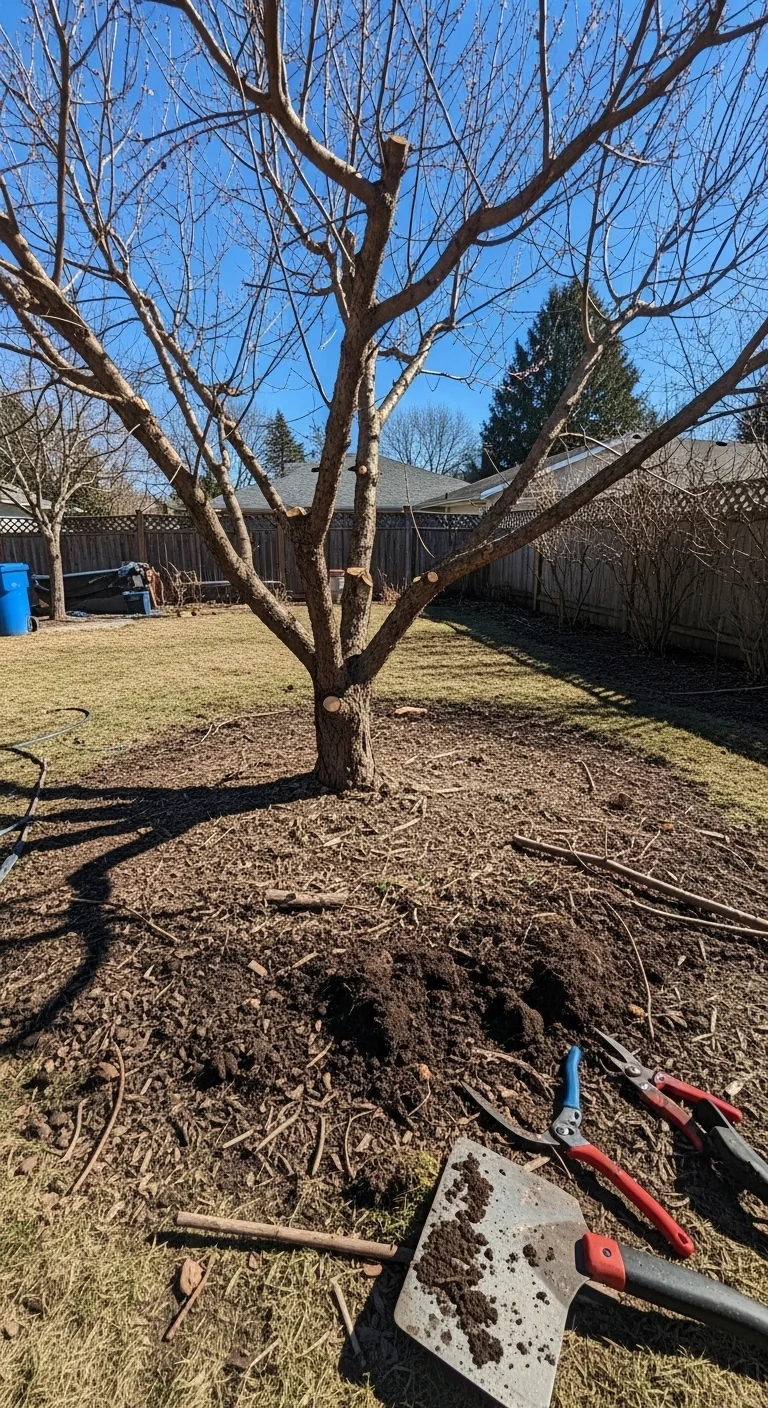
Peach leaf curl prevention succeeds when you align your methods to your local winter climate pressure and your specific tree setup instead of applying blanket recommendations.
This article details nine options for home fruit gardeners in the US, UK, Canada, Australia, and New Zealand. It covers preventive steps only and excludes measures once symptoms appear, since the fungus Taphrina deformans cannot be stopped after leaves emerge.
You will gain measurable rules to select the right combination for your conditions, including timing thresholds, application details, and synergy between tactics.
Match prevention intensity to your winter conditions and tree type to maintain healthy foliage and fruit production without unnecessary steps.
The Yield Grid Decision Grid
Branch 1 applies when your dormant season features low precipitation (under 8 inches total from November to March) or you have already planted a resistant variety. Recommended: Items 1, 7, and 8 below. See optimal planting windows here.
Branch 2 applies when your area sees moderate precipitation with occasional cool wet spells during bud swell. Recommended: Items 2, 3, and 6 below.
Branch 3 applies when your winters bring frequent rain above 40 degrees F during late dormancy combined with a history of curl on susceptible varieties. Recommended: Items 4, 5, 7, and 9 below.
Quick Comparison Table
| Option | Key mechanism | Best for | Decision Grid Branch | Reapply Class |
|---|---|---|---|---|
| Resistant varieties | Genetic resistance to Taphrina deformans | New plantings in any climate | 1 | Once per planting |
| Copper-based dormant spray | Kills overwintering spores on bark and buds | Susceptible varieties in moderate conditions | 2 | Once per season |
| Bordeaux mixture | Copper sulfate and lime barrier on twigs | Organic systems needing thorough coverage | 2 | Once per season |
| Lime sulfur dormant spray | Disrupts fungal spore survival in dormancy | High-pressure wet winters | 3 | Once per season |
| Chlorothalonil as backup | Protective coating before bud swell | Escalation in persistent wet springs | 3 | Once per season |
| Pruning for airflow | Reduces canopy humidity around buds | All setups needing better spray reach | 2 | Annually dormant |
| Tree vigor management | Supports recovery and reduces stress | Trees with prior curl exposure | 1 | Seasonal adjustments |
| Planting timing and site selection | Avoids high-risk microclimates | New orchard establishment | 1 | Once per planting |
| Training systems | Improves access for coverage and drying | Small-space or container trees | 3 | Initial setup plus annual |
Selecting Resistant Varieties
Best for: Branch 1
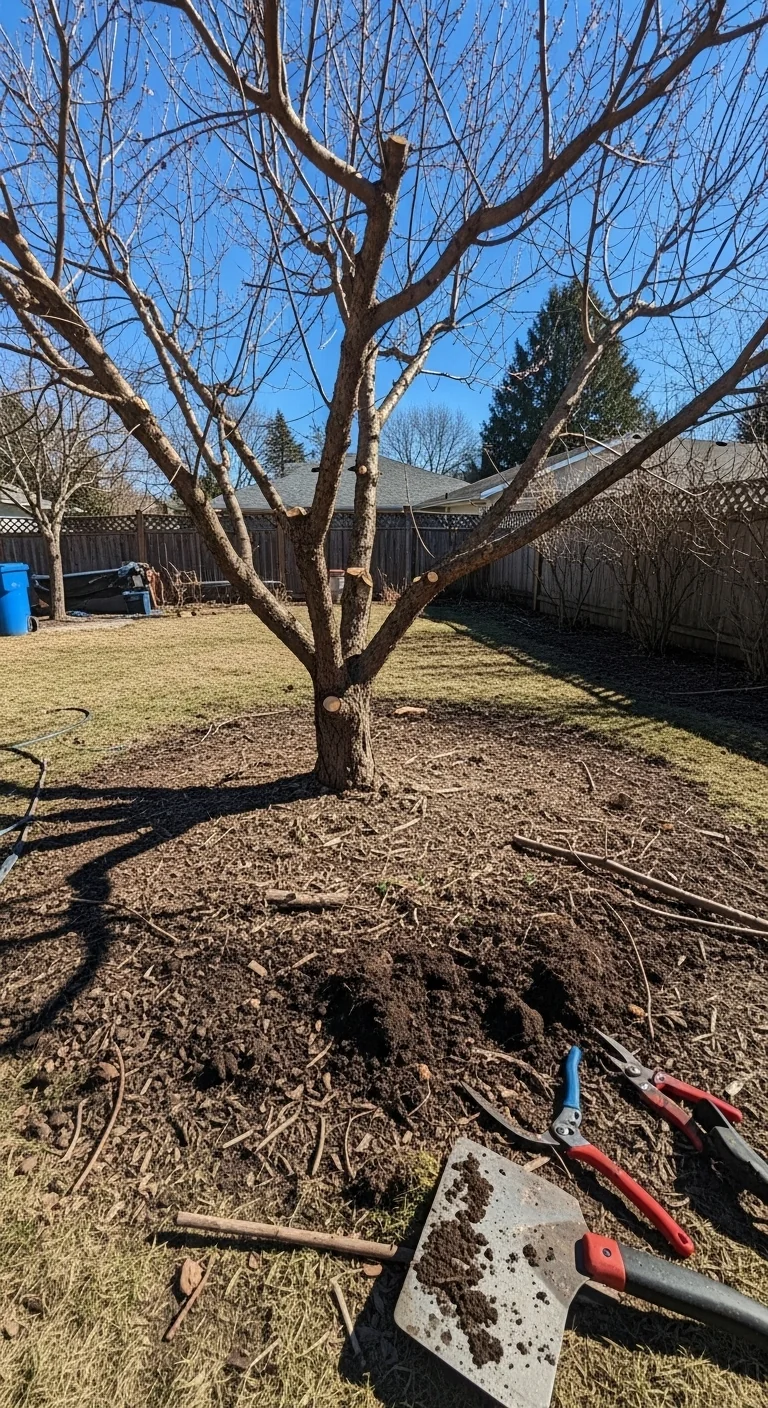
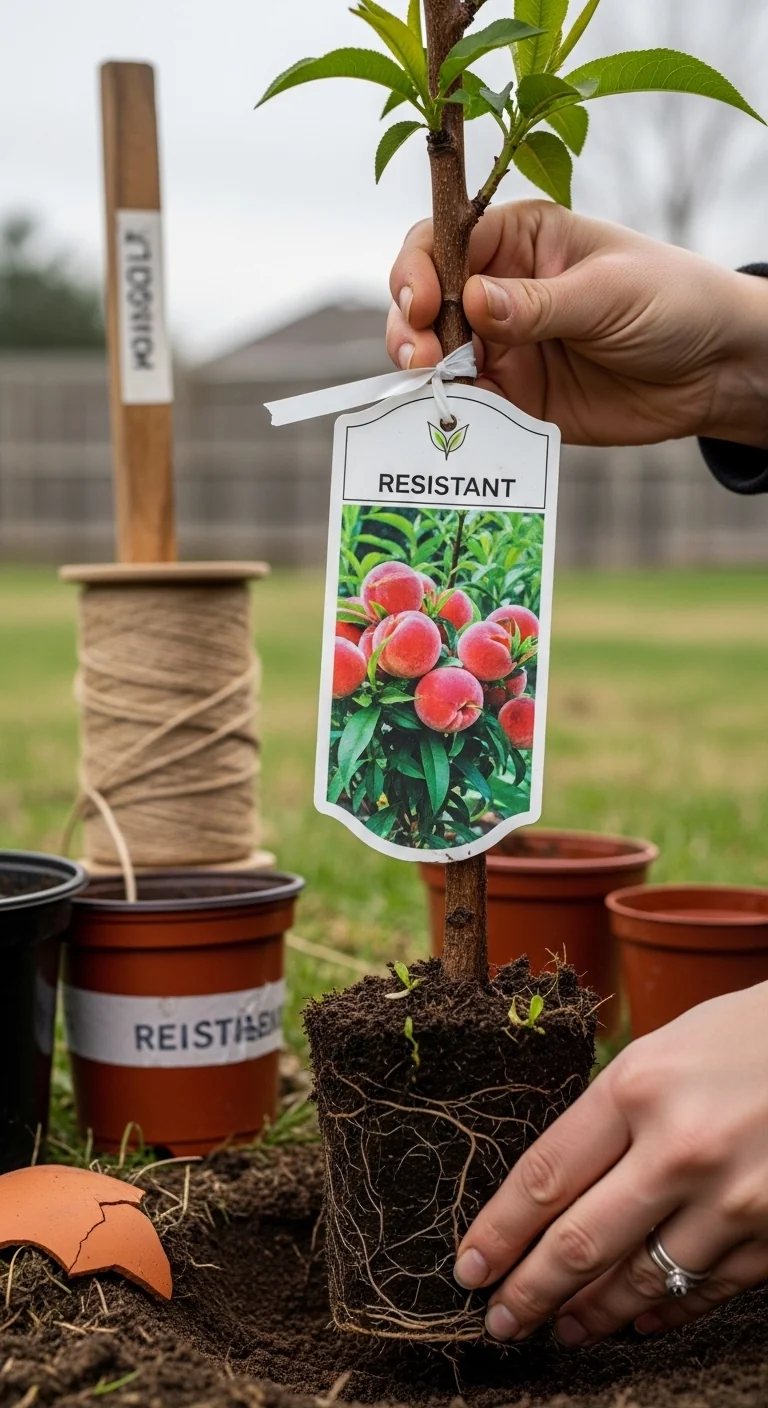
Resistant varieties provide the foundation for peach leaf curl prevention by limiting fungal entry at the genetic level. Options include Frost (highly resistant but requires protection in the first two to three years), Indian Free, Muir, Q-1-8, and derivatives of Redhaven. These cultivars restrict spore germination compared with standard types such as those related to Redskin.
To choose, check nursery tags or extension lists for your region and confirm the variety suits your chill hours and heat tolerance. Plant in well-drained soil with full sun exposure. The key constraint appears with young trees: even resistant types need full dormant coverage in the establishment phase. Avoid mixing resistant and susceptible varieties in the same small orchard, since spores from one can still pressure the others.
This approach reduces reliance on sprays over time while delivering reliable foliage health.
Copper-Based Dormant Spray
Best for: Branch 2
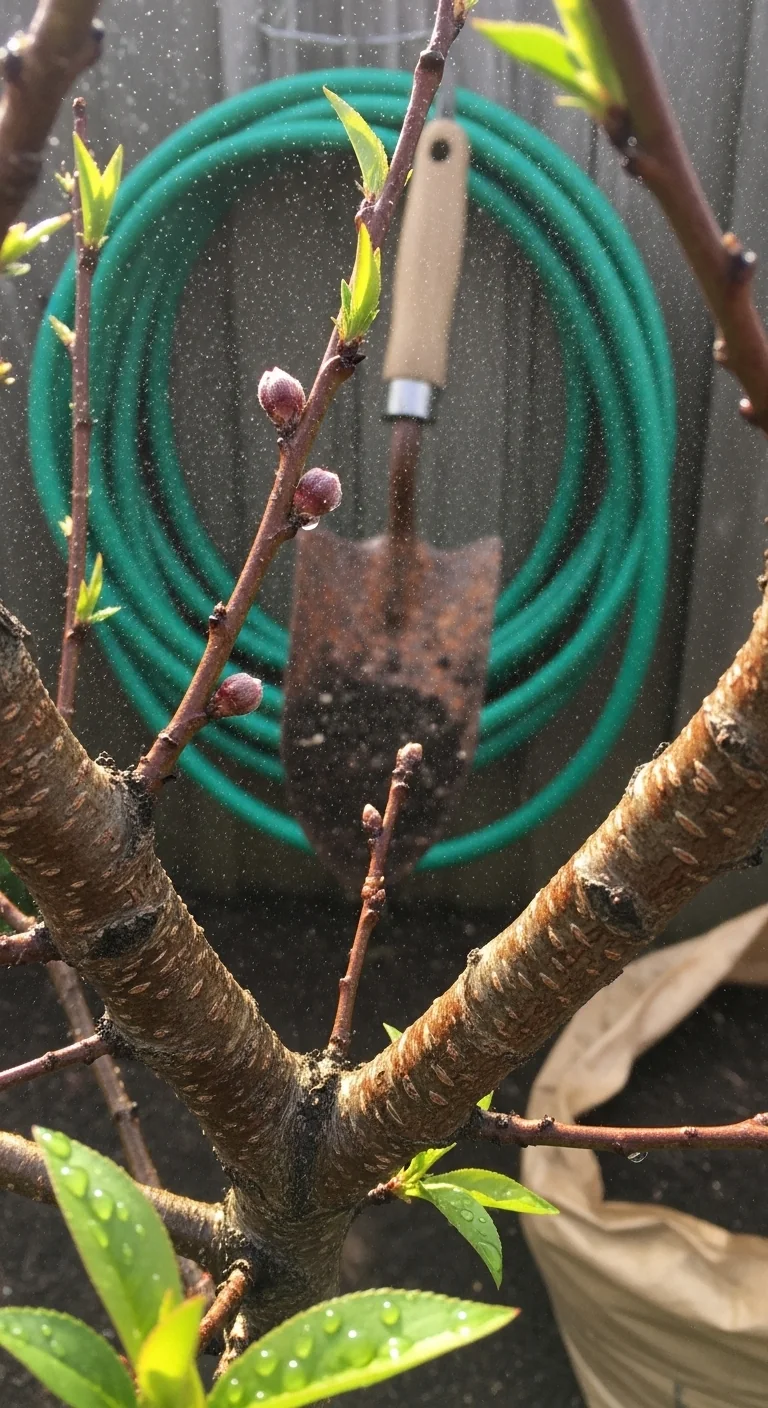
Fixed copper products kill overwintering spores on bark and buds when applied after leaf fall or before bud swell. Use a labeled fruit-tree product and ensure complete twig and trunk coverage.
Bordeaux Mixture
Best for: Branch 2
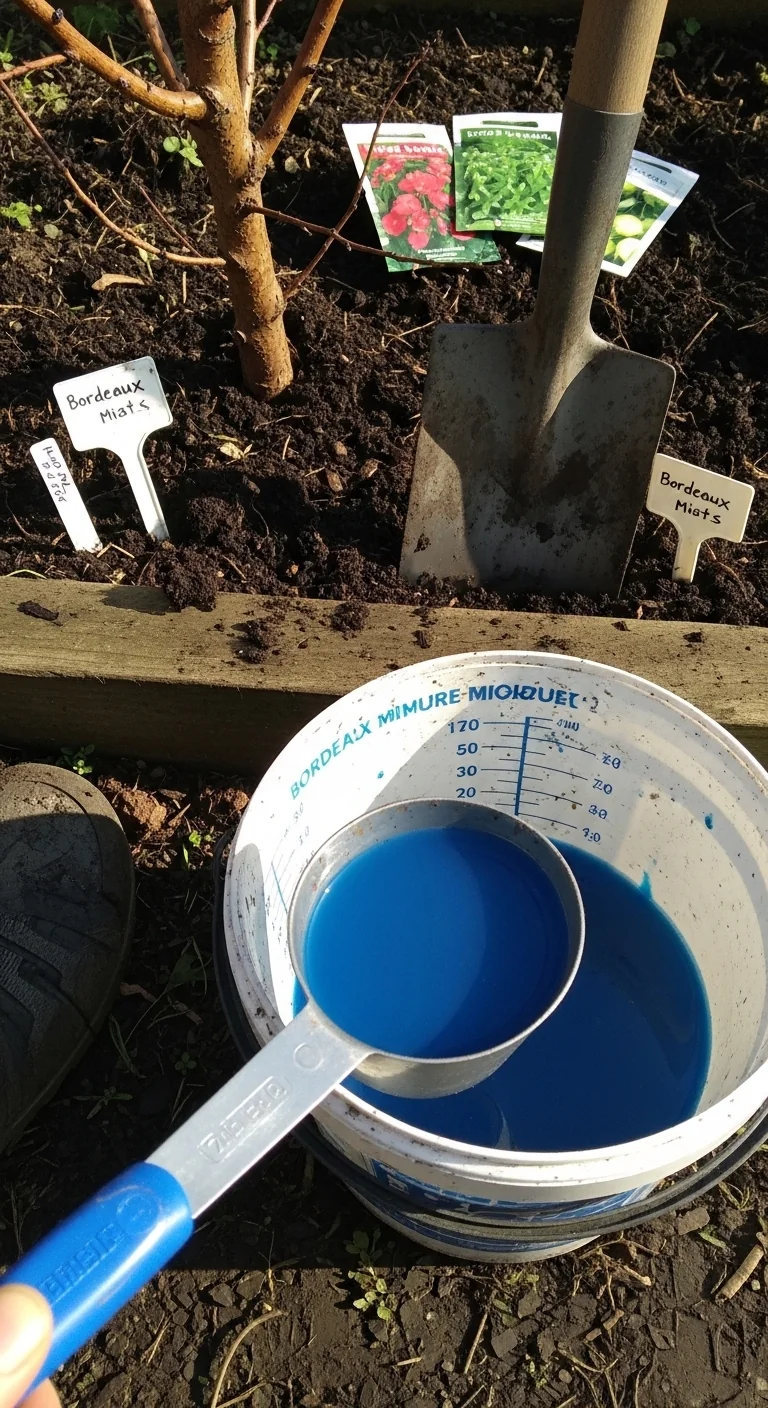
Bordeaux mixture combines copper sulfate and lime to form a protective barrier effective against Taphrina deformans. Mix fresh immediately before application and apply during dormancy after most leaves have dropped. It suits organic systems but requires precise ratios to avoid phytotoxicity on sensitive tissues.
Lime Sulfur Dormant Spray
Best for: Branch 3
Lime sulfur serves as an organic alternative that disrupts fungal spore survival during the dormant period. Apply after leaf drop and before any sign of bud swell in high-pressure areas. Combine with thorough pruning for best contact. This option works well when copper sensitivity arises or when rotating chemistries to maintain efficacy across seasons.
Follow label rates for edible crops and test a small branch first in borderline weather conditions.
Chlorothalonil as Backup Option
Best for: Branch 3
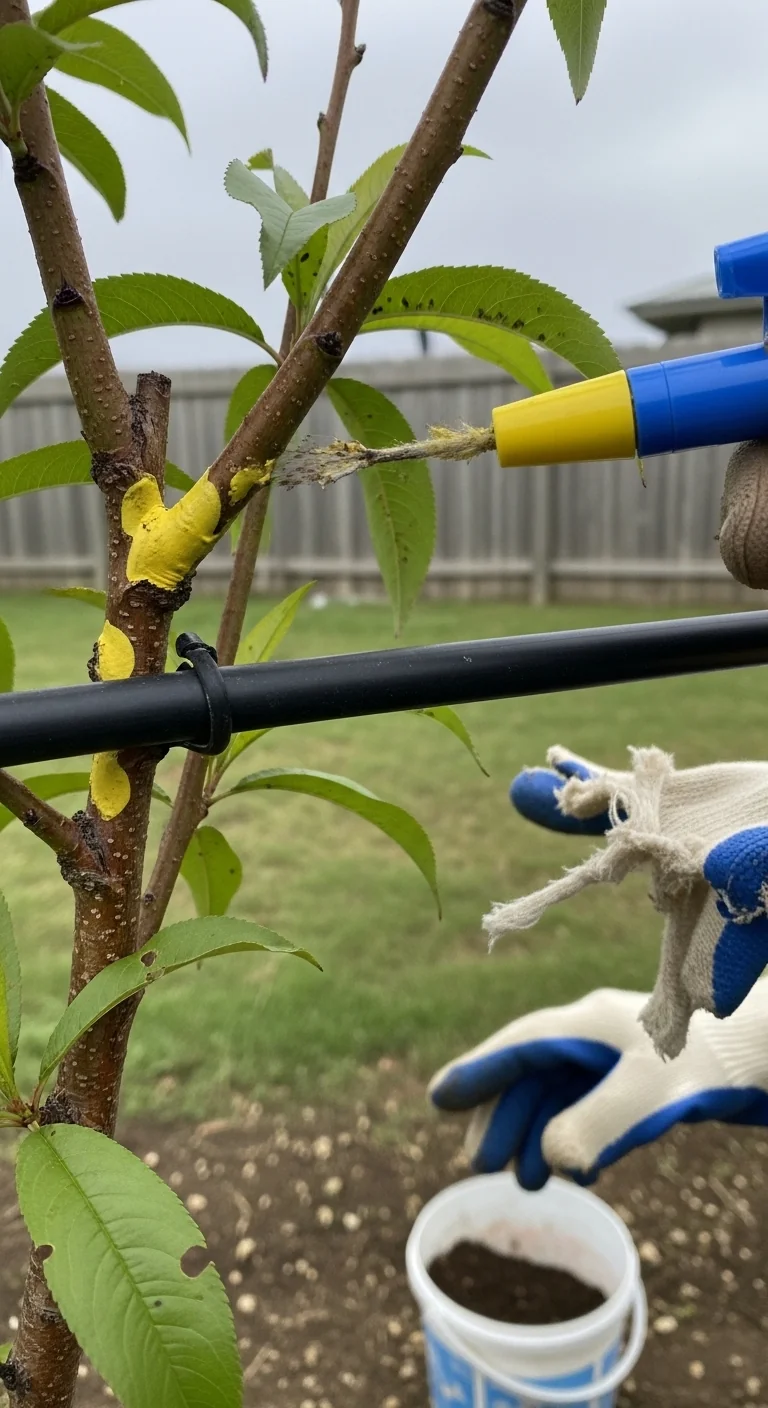
Chlorothalonil provides a protective coating option for escalation in persistently wet springs. Apply as a dormant treatment before bud swell when primary copper applications risk missing narrow windows. It redistributes during light rain and suits cases where a second application becomes necessary.
Pruning for Improved Airflow
Best for: Branch 2
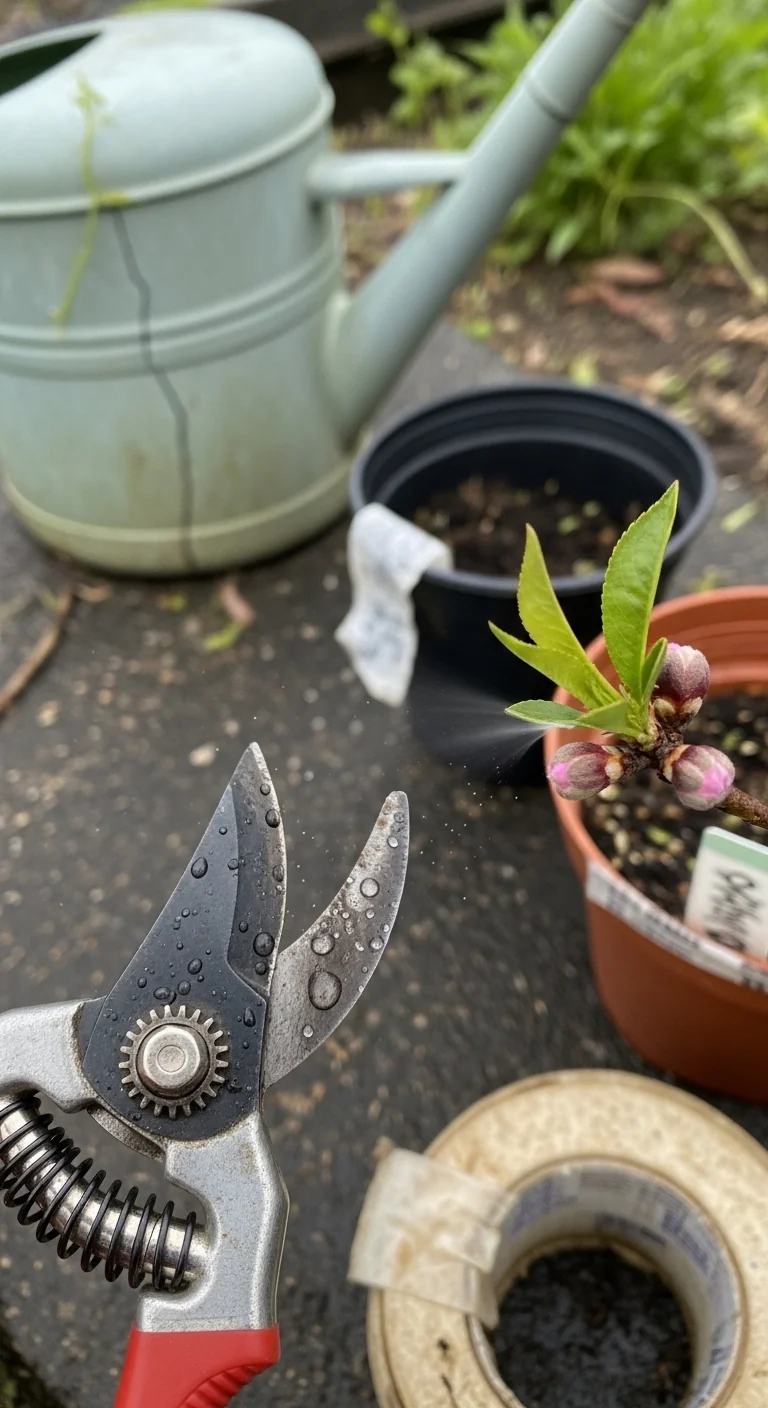
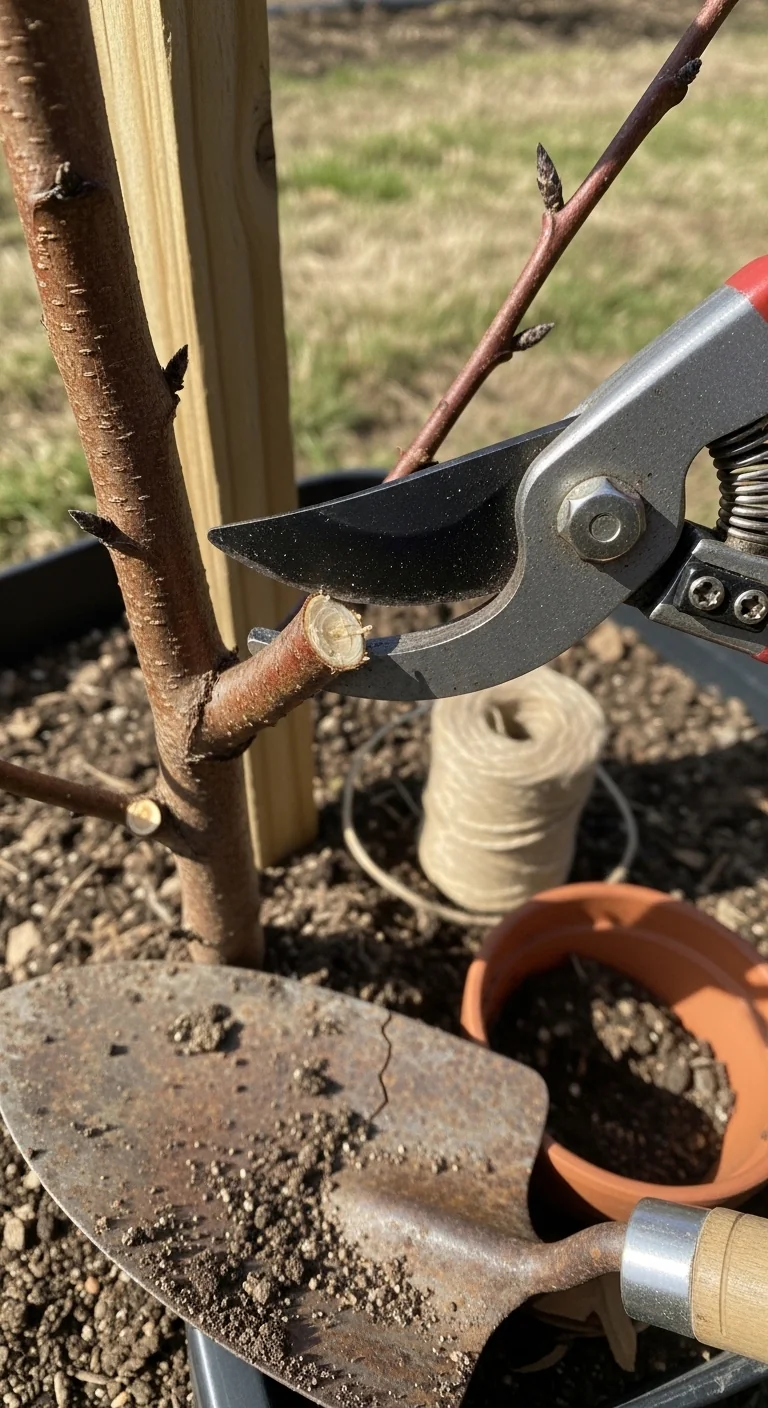
Pruning opens the canopy to speed drying and improve spray penetration to inner buds. Remove crossing branches and maintain an open center structure during the dormant season. Apply similar pruning techniques here. This step lowers humidity around infection sites without adding materials.
Perform cuts cleanly and sterilize tools between trees to limit spread of other issues.
Building Tree Vigor with Fertilizing and Thinning
Best for: Branch 1
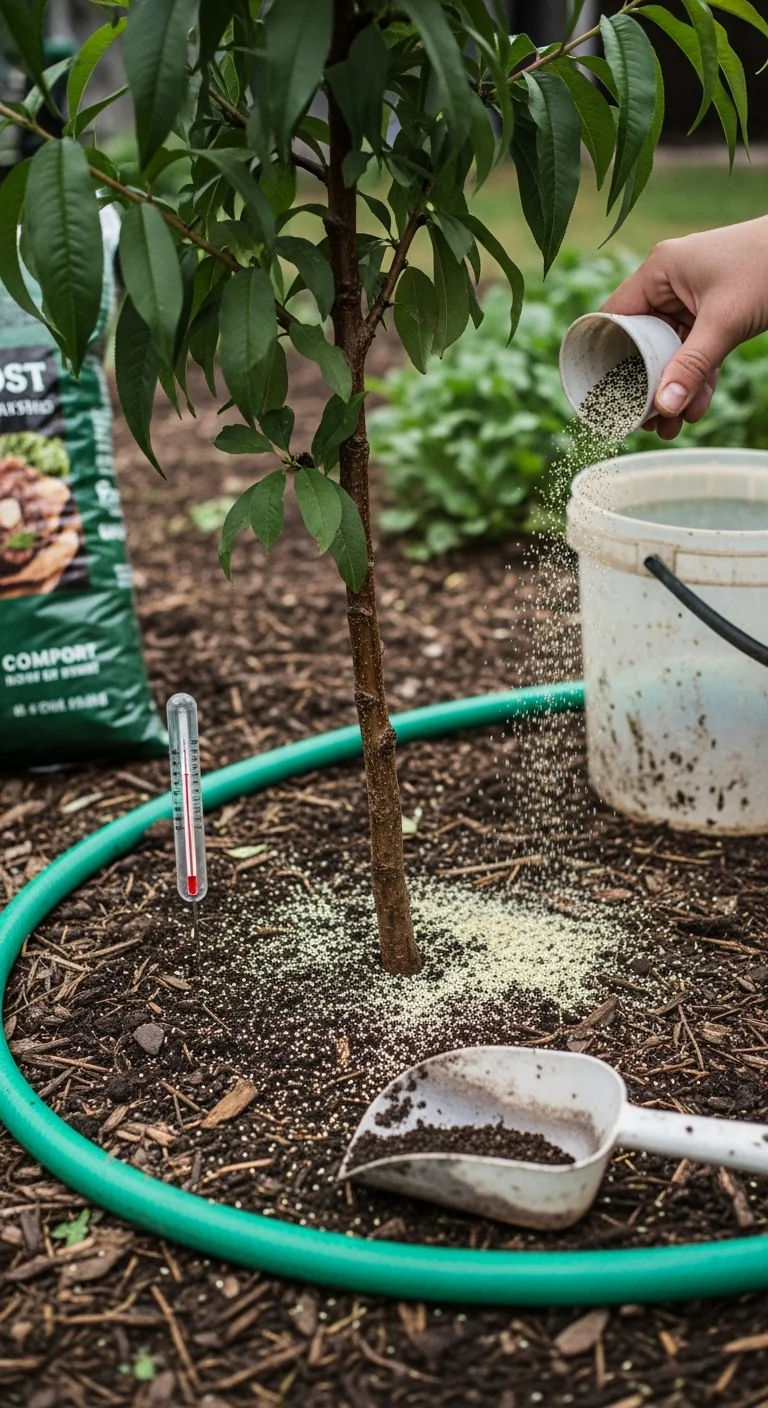
Strong tree vigor limits the impact of any minor infections by supporting rapid leaf replacement and overall resilience. Apply nitrogen fertilizer according to soil test results no later than mid-June. Thin fruit clusters to reduce load when prior curl occurred. Proper watering during dry spells prevents drought stress that compounds leaf loss.
Follow a balanced fertilizing schedule tailored to fruit trees. Combine with annual thinning to keep energy directed toward healthy growth rather than overproduction. This cultural foundation pairs with any spray program and helps trees recover faster from environmental pressure.
Planting Timing and Site Selection
Best for: Branch 1
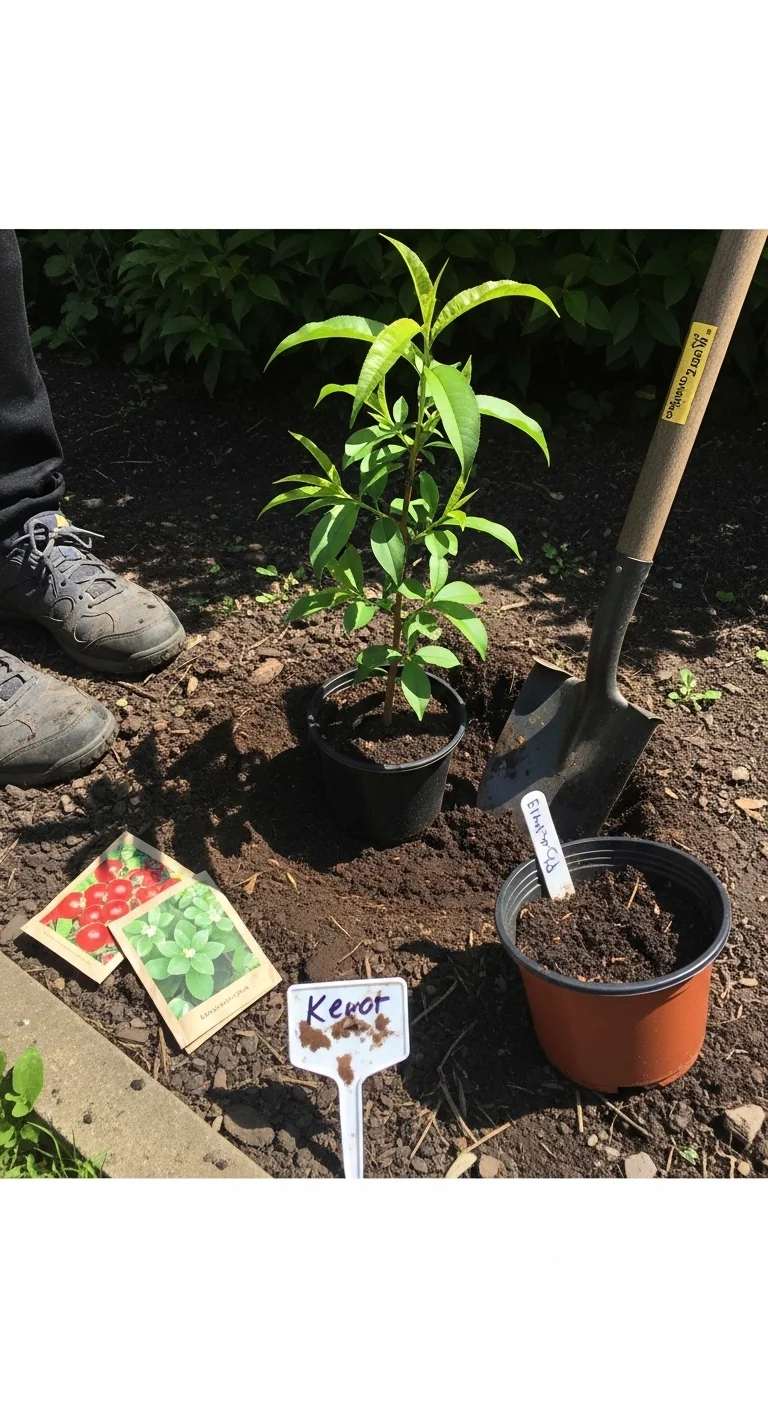
Site selection and planting timing avoid high-risk microclimates that prolong cool wet conditions around buds. Choose locations with good air drainage and full sun. Plant during the recommended dormant window for your region to establish roots before spring infection periods.
Reference local timing charts to match your zone. Avoid low spots where cold air pools or areas near water that stay damp longer.
Training Systems for Better Coverage
Best for: Branch 3
Training systems such as espalier or columnar forms improve spray access and promote faster drying of buds and twigs. These structures suit small spaces and containers by keeping growth compact and accessible. Initial training during the first two seasons creates open frameworks that reduce humidity pockets.
Explore espalier techniques or columnar options for easier dormant applications.
Starter Stack (What to Choose First)
Branch 1: Low-pressure setups
Start with resistant varieties plus tree vigor management. Plant a resistant cultivar and follow a fertilizing and thinning plan. Synergy comes from reduced spray needs paired with stronger natural recovery. Expect 20 to 40 minutes per tree annually plus initial planting investment of 15 to 30 dollars per tree.
Branch 2: Moderate-pressure conditions
Begin with copper-based dormant spray and pruning for airflow. The spray targets spores while pruning ensures full coverage. Together they address the core infection window with minimal added effort. Plan for 30 to 60 minutes total per tree and material costs of 10 to 25 dollars per season.
Branch 3: High-pressure or small-tree setups
Combine lime sulfur dormant spray with training systems. The spray handles spores and training improves reach and drying. This pairing suits containers or espalier where access matters most. Allocate 45 to 90 minutes per tree initially and 15 to 35 dollars for supplies each season.
When This Won’t Work
Prevention fails when any dormant spray occurs after buds begin to swell and show green tissue. At that stage the fungus has already entered susceptible tissues and no application reverses damage. The measurable condition is visible bud swell exceeding one-half inch of green color. Switch instead to removing severely affected shoots during the season and focusing on vigor recovery for the following year.
A second failure condition appears in very young trees under two years old when coverage remains incomplete due to small size and rapid growth. Adjust by using half-rate applications on test branches first and pairing with training to open structure early.
Choosing the Right Option for Your Situation
Budget threshold
If annual supplies must stay under 25 dollars per tree, prioritize resistant varieties and pruning. These options carry low recurring costs after initial planting and deliver long-term reduction in spray needs.
Time threshold
If you can dedicate fewer than 45 minutes per tree per year, select resistant varieties combined with site selection. These require minimal ongoing effort beyond standard dormant-season checks.
Organic-only technical constraint
When synthetic products are not allowed, use lime sulfur or Bordeaux mixture paired with training systems. These maintain efficacy within organic guidelines while addressing coverage challenges.
Yes/No checklist:
Do you have confirmed winter precipitation data for your site?
Have you identified your variety susceptibility level?
Can you access the tree fully during dormancy?
Does your schedule allow one thorough dormant application?
Expert Q&A
Does peach leaf curl affect nectarines the same way?
Yes. Nectarines share the same susceptibility to Taphrina deformans as peaches because they belong to the same species group. All prevention steps, including resistant variety selection and dormant sprays, apply directly to nectarines with identical timing windows.
What temperature and wetness conditions raise infection risk the most?
Cool temperatures between 40 and 55 degrees F combined with prolonged wetness during bud swell create ideal conditions for spore germination. Monitor local forecasts in late winter and advance spray timing if wet periods are forecast before full dormancy ends.
Can sanitation alone control the disease?
No. The fungus overwinters primarily on bark and bud scales rather than fallen leaves. Removing infected leaves offers limited benefit and cannot replace timely dormant sprays or variety selection.
How does fruit thinning support prevention indirectly?
Thinning reduces crop load and conserves tree energy for leaf production and root growth. Healthier trees replace damaged foliage faster and withstand minor infections better when combined with other tactics.
Is a fall spray more reliable than a late-winter one?
Fall application after leaf drop often proves more practical because weather remains stable and coverage is easier before any bud activity. Late-winter sprays work but require closer monitoring of swelling buds to stay within the effective window.
Conclusion
Take the next step by reviewing your local winter conditions against the grid and selecting your starter stack. Consider columnar training for easier future management.