
“`html
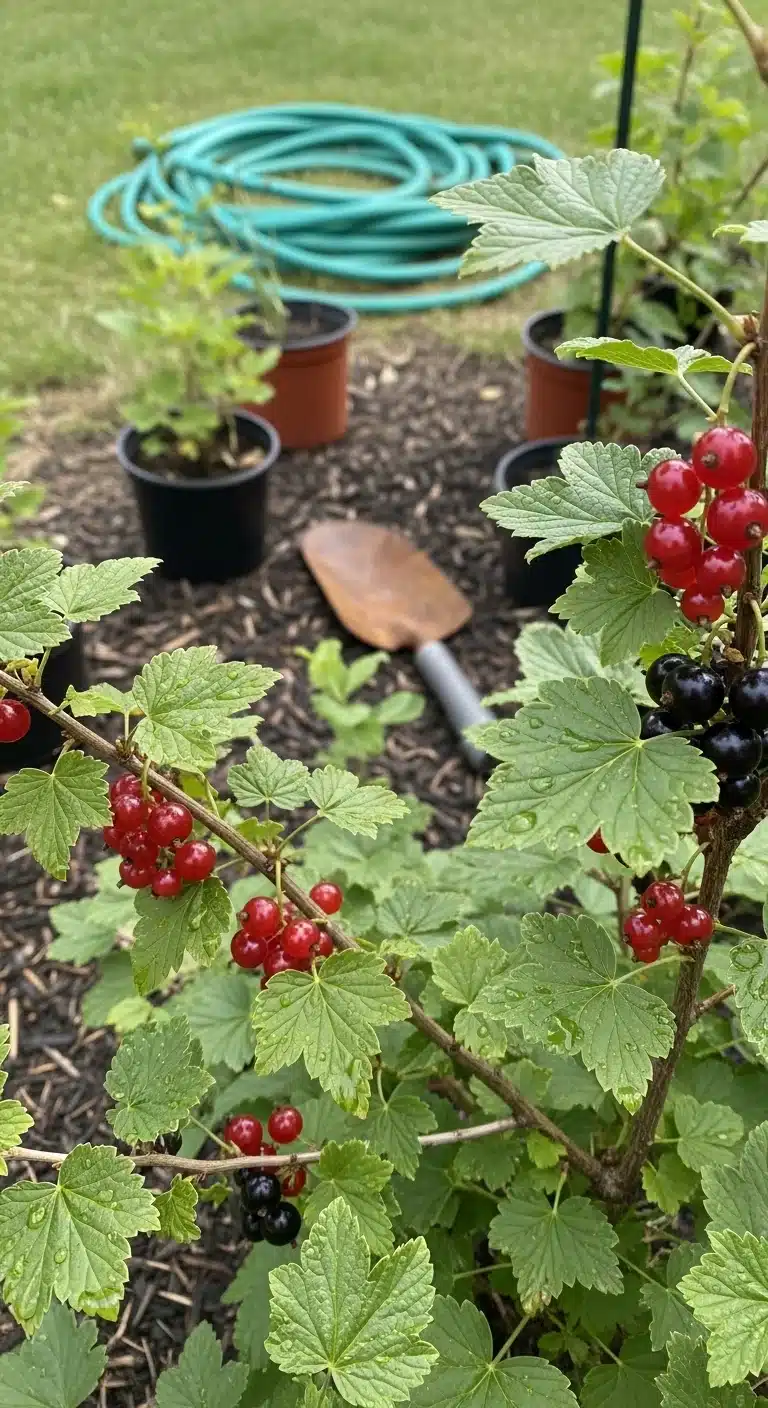
The Yield Grid reframes currants and gooseberries as site-specific perennials rather than generic berry bushes. Match the cultivar to your exact daily shade hours, summer air circulation, and planting width, and these plants deliver steady crops from year two with one annual pruning pass.
This listicle covers nine red currant, black currant, and gooseberry cultivars proven in home gardens across cool temperate zones in the US, UK, Canada, and similar northern European climates. It focuses on home-scale decisions for fresh eating, jams, or baking and excludes jostaberries plus any commercial yield tactics.
You leave with a shortlist of two or three varieties plus clear placement rules for your yard so you order once and harvest reliably.
Align the variety to your measured garden factors and these bushes become a low-intervention source of tart-sweet fruit.
The Yield Grid Decision Grid
Branch 1: Partial-shade or cool-summer sites (4 or more hours of daily shade or average summer daytime temperatures below 72 degrees F). Currants outperform gooseberries here for consistent berry set on older wood.
Recommended: Items 1, 3, and 9 below.
Branch 2: Humid or low-airflow locations (where dew lingers on foliage past 10 a.m. or bushes sit under 4 feet apart). Prioritize built-in disease resistance to keep maintenance minimal.
Recommended: Items 4, 6, and 7 below.
Branch 3: Small-space or container setups (planting spots narrower than 4 feet or in pots 18 inches or larger). Focus on compact habit and reduced thorns for easy access.
Recommended: Items 2, 5, and 8 below. See our guide on when to plant fruit trees for zone-specific timing windows.
Quick Comparison Table
| Option | Key mechanism | Best for | Decision Grid Branch | Effort Score |
|---|---|---|---|---|
| Red Lake Red Currant | Long-stemmed clusters on vigorous upright canes | Cool shaded gardens and fresh eating | Branch 1 | 3 |
| Rovada Red Currant | Late-season ripening with extended clusters | Staggered harvest in limited space | Branch 3 | 2 |
| Titania Black Currant | Strong resistance to blister rust and mildew | High-vitamin processing fruit in cool sites | Branch 1 | 2 |
| Consort Black Currant | Rust immunity plus compact form | Rust-risk zones needing minimal intervention | Branch 2 | 1 |
| Invicta Gooseberry | Large fruit with mildew resistance | Dessert-quality berries in moderate humidity | Branch 3 | 2 |
| Hinnonmaki Red Gooseberry | Sweet flesh under tart skin with airflow tolerance | Flavor-focused gardens with humidity pressure | Branch 2 | 1 |
| Captivator Gooseberry | Fewer spines and large sweet fruit on hardy plants | Low-thorn harvest in humid or crowded spots | Branch 2 | 2 |
| Pixwell Gooseberry | Productive habit with reduced thorns | Beginner-friendly small spaces | Branch 3 | 3 |
| Crandall Black Currant | Ornamental yellow flowers plus sweeter berries | Dual-purpose shade gardens | Branch 1 | 2 |
1. Red Lake Red Currant
Best for: Branch 1
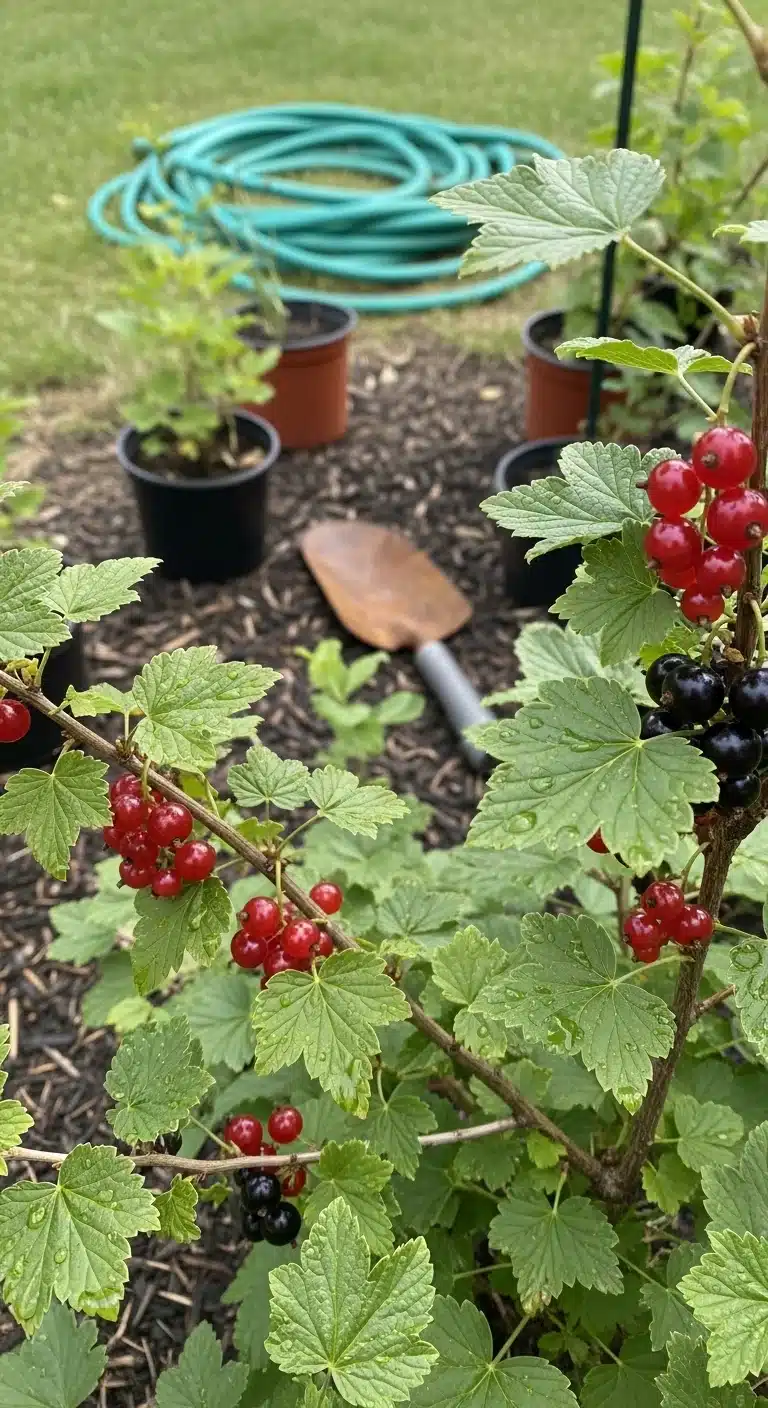
Red Lake delivers large bright red berries in long easy-to-pick clusters on vigorous upright canes. It serves cool shaded gardens where fruit set holds steady on two- and three-year-old wood. Plant the root collar one inch deeper than nursery depth to encourage extra roots and stronger establishment. In spring remove only the oldest gray canes at ground level, leaving six to eight younger stems. Common mistake: placing in full hot sun without afternoon shade, which shortens cluster length and reduces berry size. Compare its cane management to raspberry pruning for shared timing cues. This cultivar stays widely available as bare-root stock and fits northern US, UK, and Canadian zones with minimal extra steps beyond one winter cleanup.
2. Rovada Red Currant
Best for: Branch 3
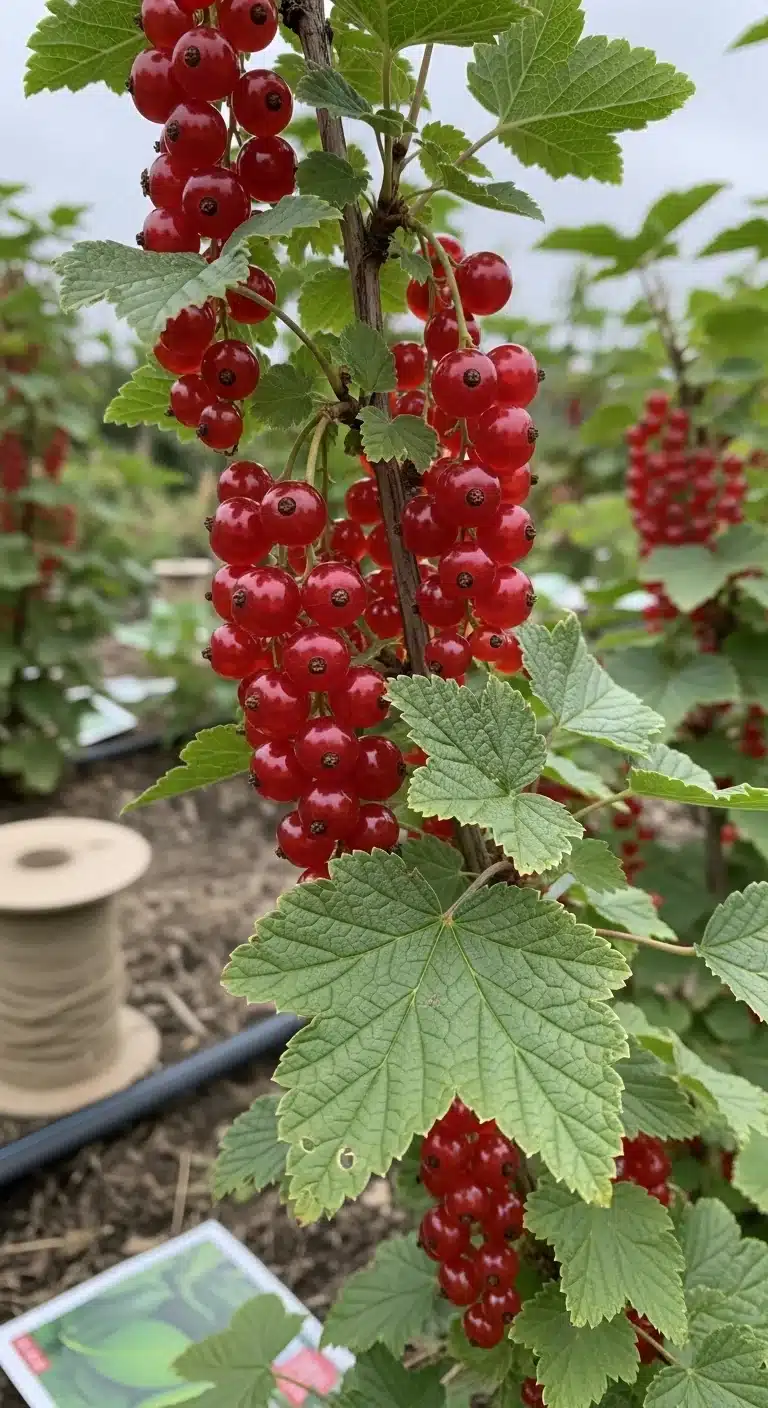
Use Rovada when you need late-season clusters that extend the harvest window into late summer. Skip it if your garden demands the earliest possible berries. Its long stems and mildew resistance suit tight spaces or pots where airflow stays adequate. Space plants three feet apart and prune only old wood each dormant season.
3. Titania Black Currant
Best for: Branch 1
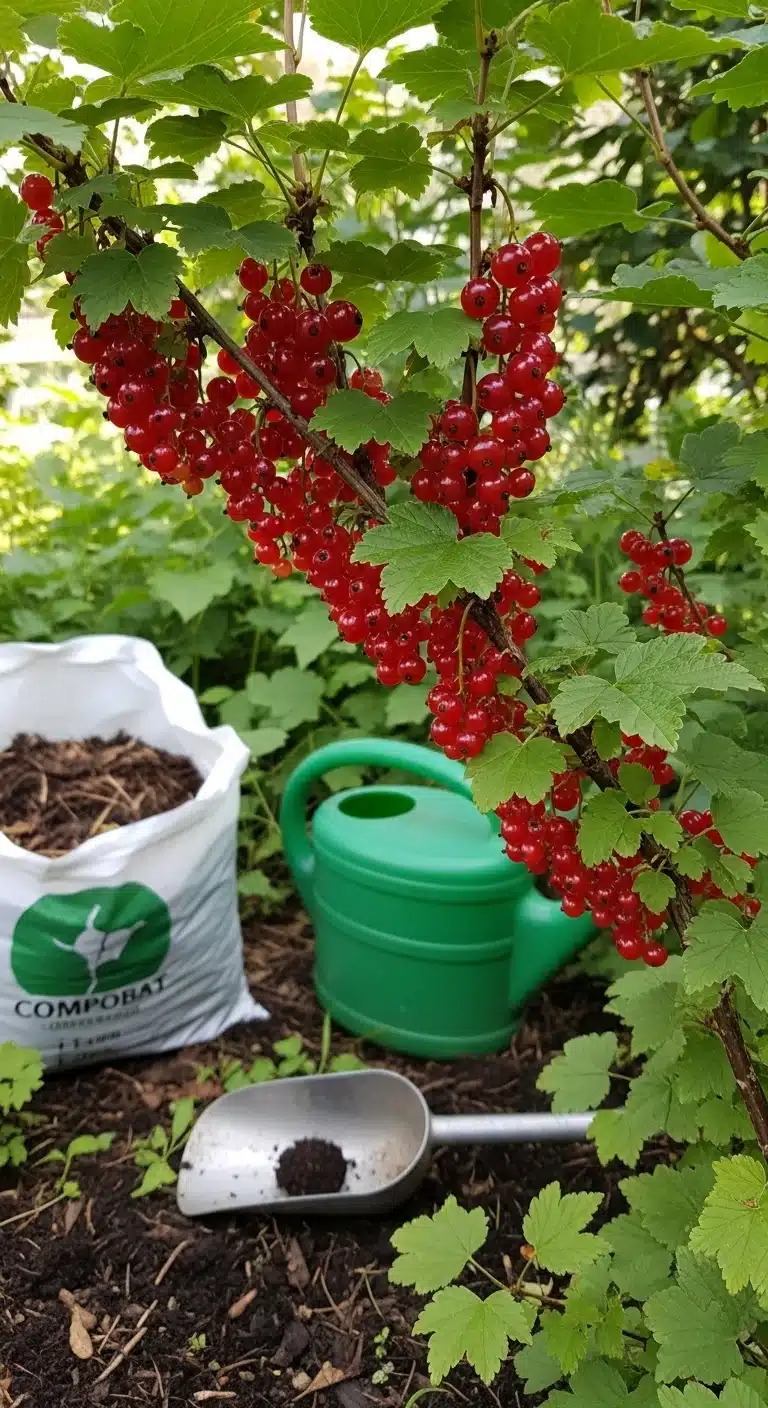
Titania thrives when black currants must deliver high vitamin content without rust worries. Threshold rule: plant only if your site shows four-plus shade hours or stays below 72 degrees F in summer; otherwise berry flavor turns bland. Maintain five to six main canes and remove the rest at the base each year. Add a balanced feed in early spring per fruit tree fertilizing guidelines to support leaf growth without excess nitrogen that invites soft growth.
4. Consort Black Currant
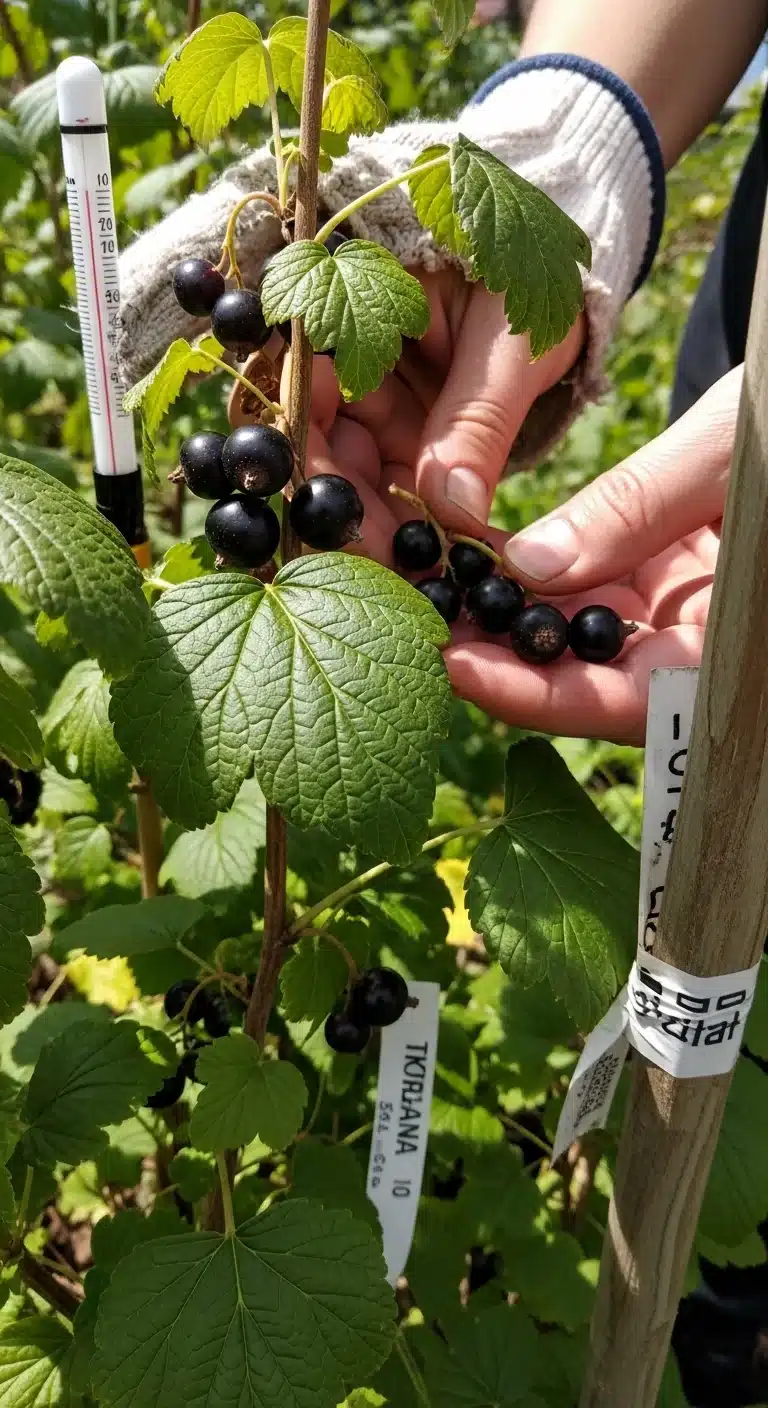
Best for: Branch 2
Consort offers rust immunity in a compact frame that simplifies management in humid or crowded conditions. Ten-minute workflow: first inspect canes in late winter and cut the three oldest to ground level; second shorten any crossing branches to open the center; third apply mulch two inches deep around the base; fourth water deeply once if soil feels dry at three inches down. This routine keeps the bush productive with almost no follow-up checks. It pairs well with bird netting during ripening (see bird netting for fruit trees for installation tips). The medium-sized berries hold flavor for drying or juice.
5. Invicta Gooseberry
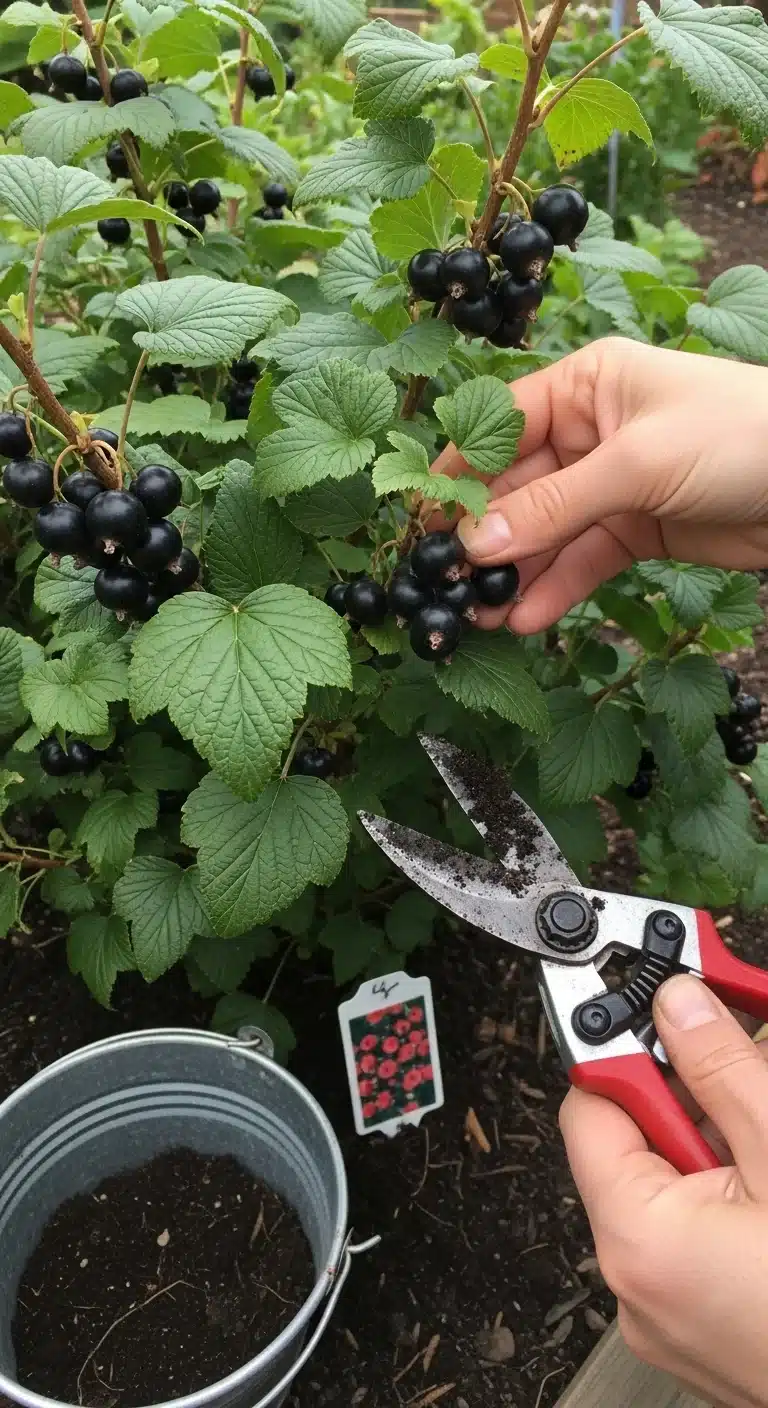
Best for: Branch 3
Use Invicta for large dessert berries where space limits full-size bushes or pots are the only option. Skip it if your site has heavy clay that stays wet in spring. Its mildew resistance and upright habit let you train it as a small cordon against a fence with one support wire. Harvest green for pies or wait for full color for fresh snacking.
6. Hinnonmaki Red Gooseberry
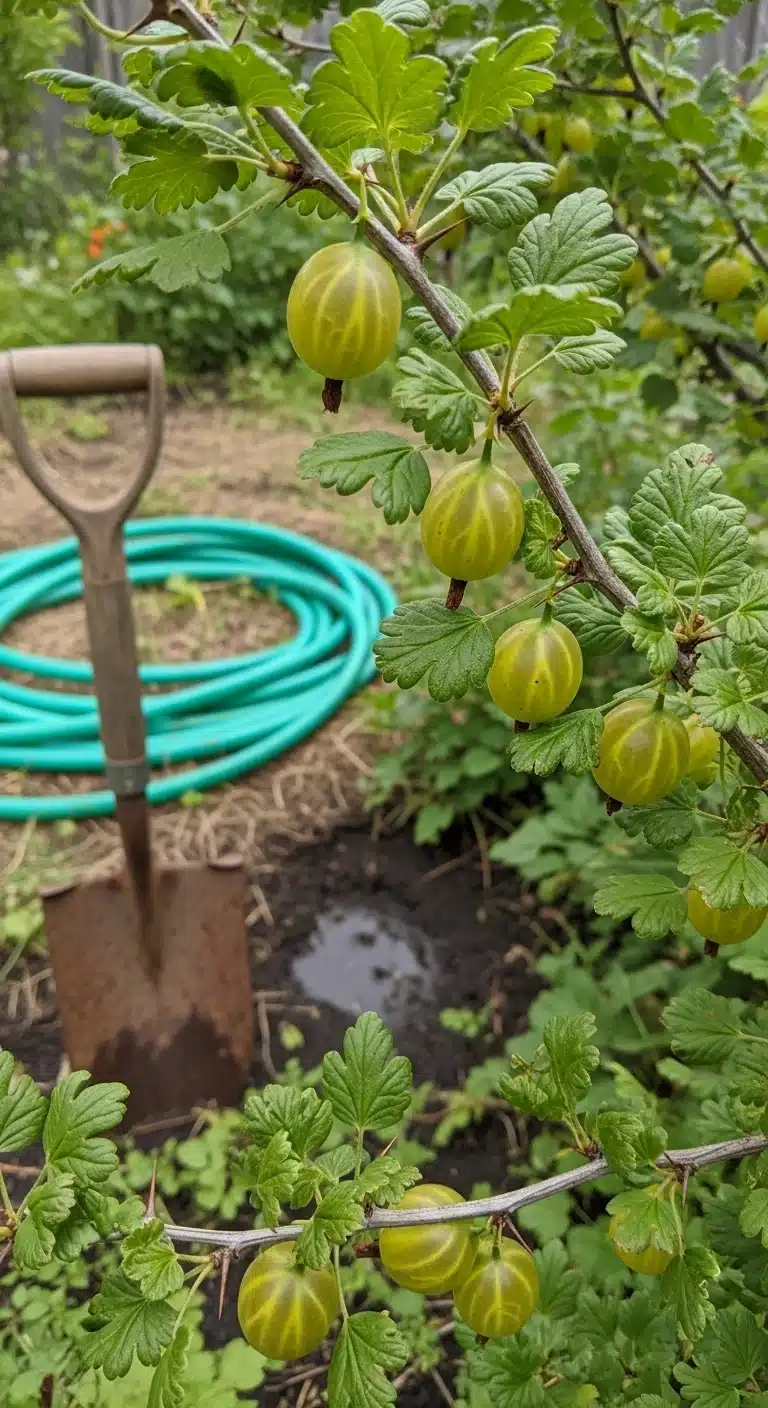
Best for: Branch 2
Hinnonmaki Red meets humid sites when sweet flesh under tart skin is the goal. Threshold rule: confirm dew clears by mid-morning before planting; otherwise open the center wider during pruning to keep leaves dry. Its resistance lets you space bushes closer than standard four feet without mildew buildup. Berries ripen mid-season and store well for preserves. Companion planting with low-growing herbs improves airflow around the base.
7. Captivator Gooseberry
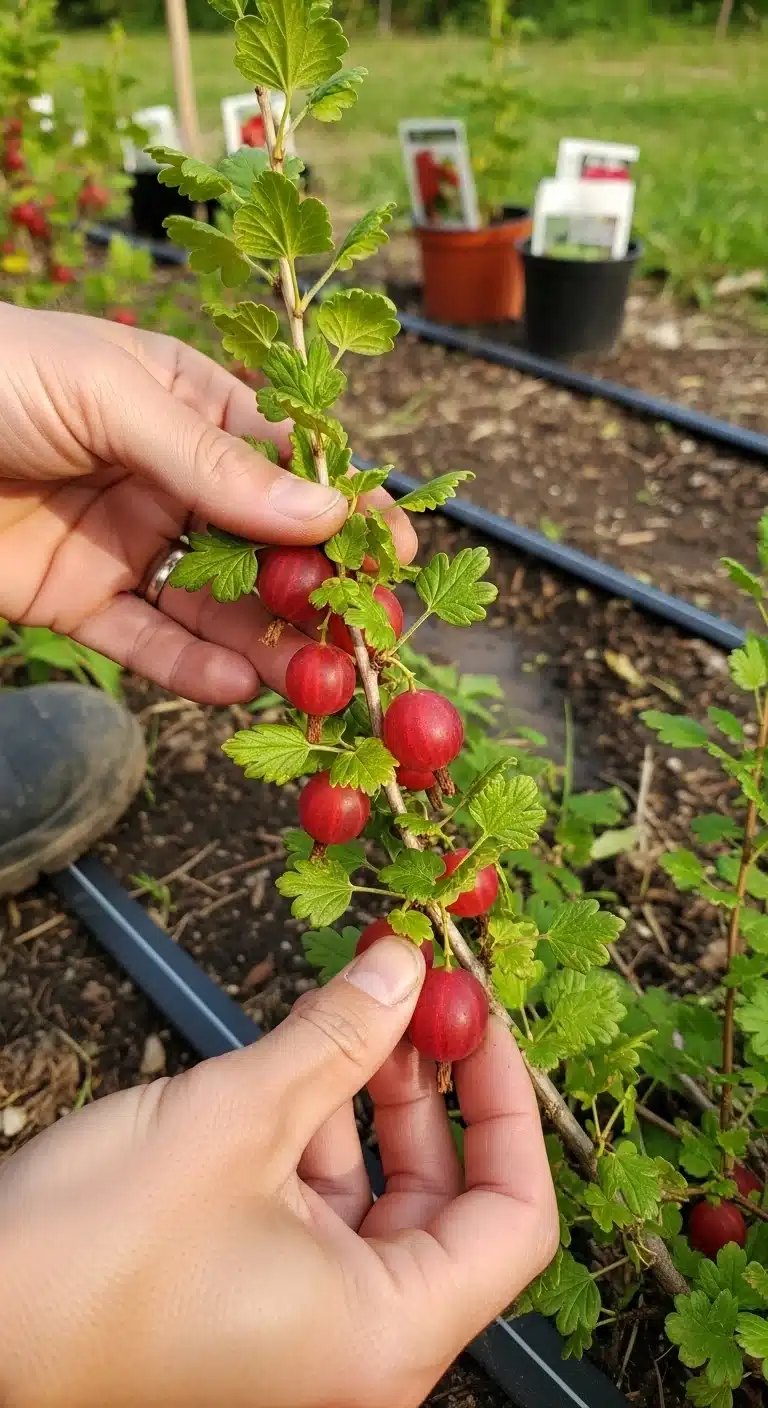
Best for: Branch 2
Captivator combines large sweet reddish fruit with fewer spines and mildew resistance for humid low-airflow gardens. Blueprint: it grows as a hardy upright bush suited to USDA 3-7 equivalents; site it where summer dew dries quickly; prune by removing oldest canes plus any that touch the ground; mulch to retain moisture without sogginess; harvest over several weeks as berries color pink. The reduced thorns shorten picking time compared with older European types. Place near other resistant selections for a unified block that needs only one annual cleanup pass.
8. Pixwell Gooseberry
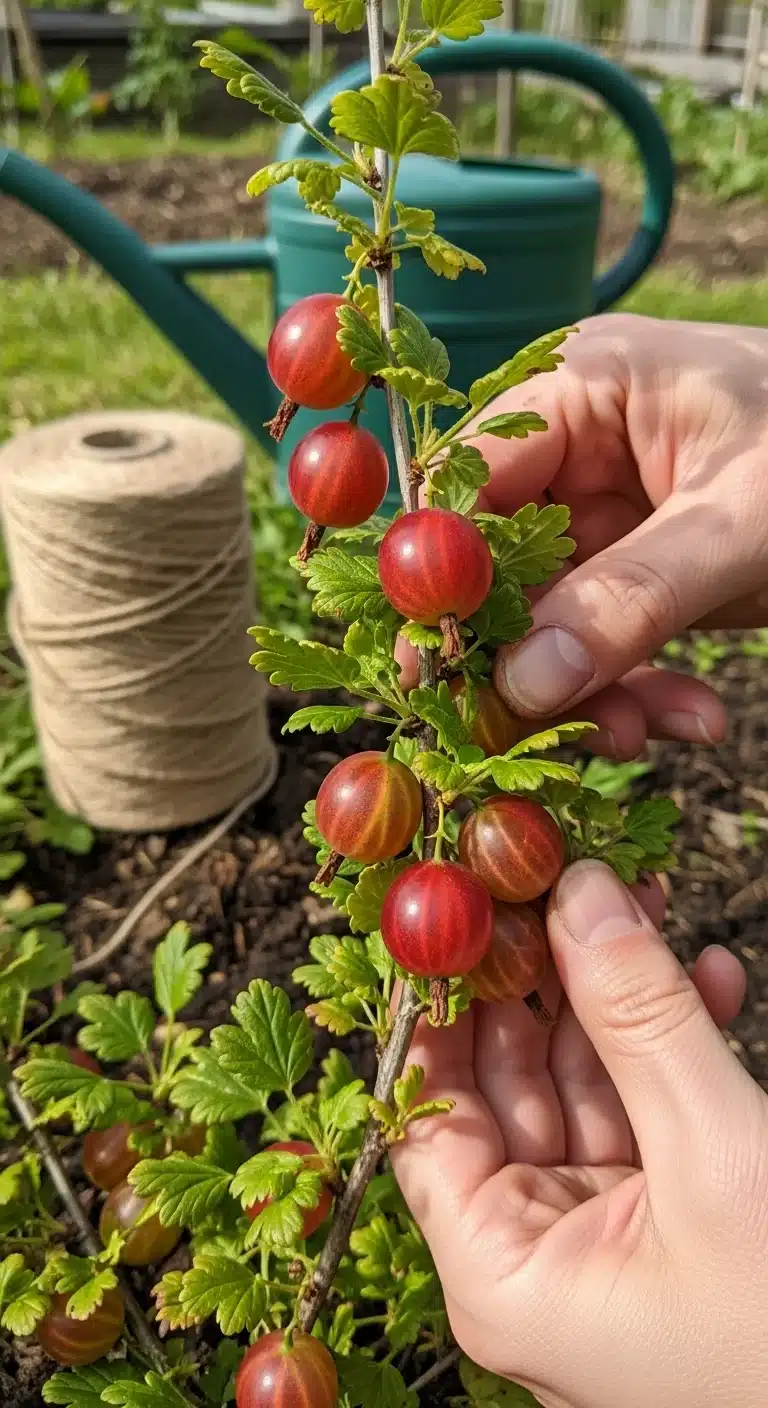
Best for: Branch 3
Use Pixwell when beginner-friendly production and fewer thorns matter most in narrow beds or containers. Skip it if you prioritize top dessert flavor over sheer volume. Its hardy productive habit tolerates variable soils once established and delivers steady medium berries that turn pink at full ripeness. One dormant-season thinning keeps the plant compact.
9. Crandall Black Currant
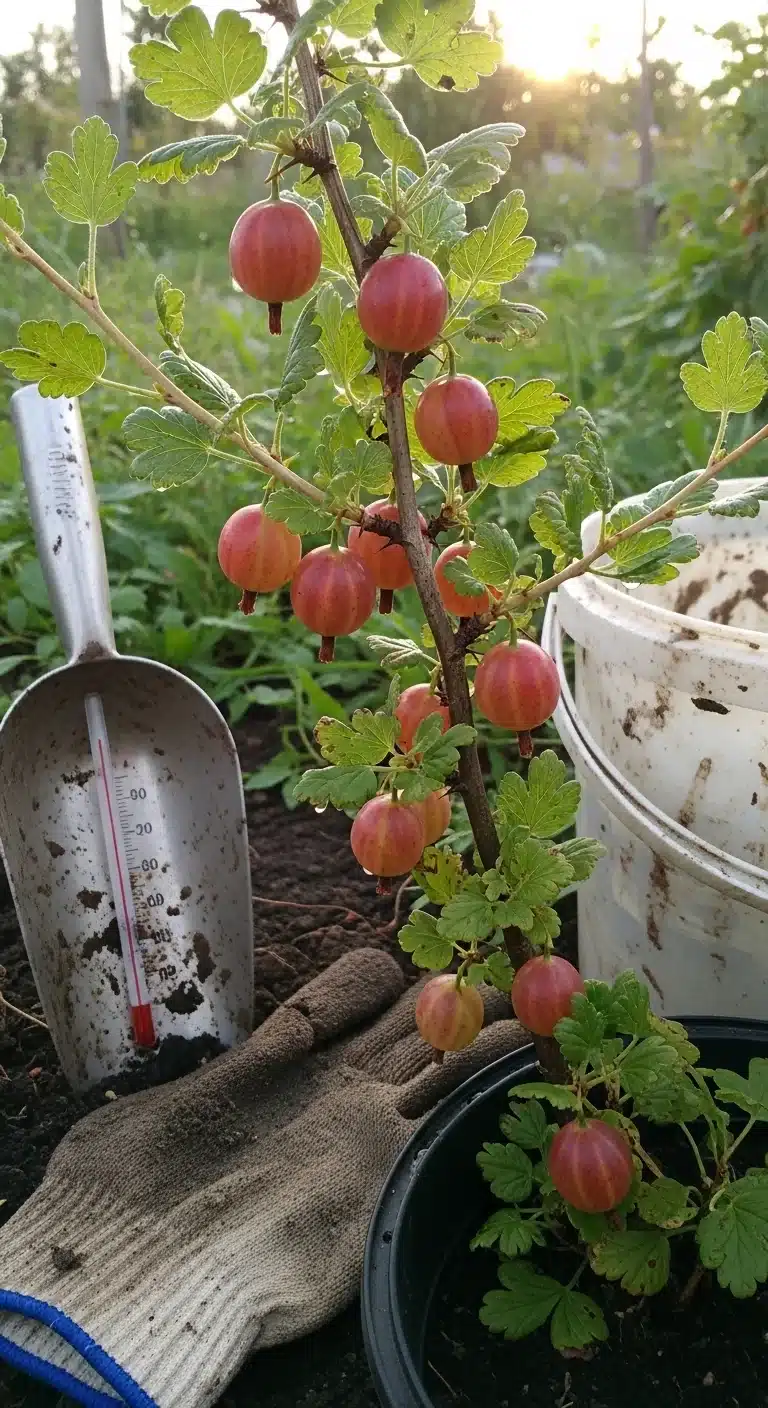
Best for: Branch 1
Crandall adds ornamental yellow clove-scented flowers plus sweeter-than-average black berries in shaded cool gardens. It functions as both edible hedge and fruit source. Ten-minute workflow: cut oldest canes to ground in late winter; thin new growth to six strong stems; scatter compost around the drip line; water once if rainfall stays below one inch weekly during bloom. The dual purpose rewards sites where space doubles as landscape. Berries work fresh or processed and the plant shows good fall color in northern zones.
Starter Stack (What to Choose First)
For Branch 1 gardens
Start with Red Lake and Titania. The red currant supplies early bright clusters for fresh snacking while the black adds vitamin-dense fruit for later processing. Both share similar pruning windows so one winter session covers the pair. Estimated cost: 20 to 35 dollars total for two bare-root plants. Planting time: 45 minutes.
For Branch 2 gardens
Begin with Consort and Captivator. Rust immunity from the black currant pairs with mildew resistance and low thorns from the gooseberry to cut monitoring needs in humid air. Extended flavor range covers both processing and fresh use. Estimated cost: 25 to 40 dollars total. Planting time: 40 minutes.
For Branch 3 gardens
Choose Rovada and Pixwell. Late clusters from the red currant combine with compact productive habit from the gooseberry for maximum output in narrow spots or pots. Both stay easy to reach at harvest. Estimated cost: 20 to 30 dollars total. Planting time: 35 minutes.
When This Won’t Work
These varieties struggle when average summer daytime temperatures stay above 80 degrees F for weeks at a time or when soil stays waterlogged after rain because drainage stays poor. Fruit set declines and canes weaken under those conditions. Switch to raised beds filled with amended mix or move to container culture with frequent checks on moisture.
Another measurable failure occurs near five-needle white pines if you ignore rust-resistant selections for black currants. In that case limit choices to immune cultivars only or replace Ribes with non-host alternatives. Blueberries in containers offer a direct substitute that avoids the issue entirely.
Choosing the Right Option for Your Situation
Budget threshold
If total plant cost must stay under 25 dollars per bush, select Red Lake, Rovada, or Pixwell as widely stocked bare-root options at local nurseries.
Time threshold
If annual care must stay under 30 minutes per bush, prioritize Consort, Hinnonmaki Red, or Captivator whose built-in resistance removes extra disease steps.
Technical constraint: white pine blister rust risk
If five-needle pines grow within 1000 feet, restrict black currants to Titania or Consort and avoid any susceptible types.
Yes if your site fits one Decision Grid branch and you can meet spacing and drainage rules.
No if summer heat exceeds 80 degrees F consistently without shade structures.
Yes if you accept one dormant pruning pass each year.
No if you cannot provide winter protection for container plantings in zone 3 or colder.
Expert Q&A
How does pruning differ between currants and gooseberries?
Currants produce on older wood so you remove only the three or four oldest canes at ground level each winter. Gooseberries need extra thinning of new growth to maintain open centers and reduce thorn density in the picking zone. Both tasks finish in under 15 minutes per mature bush once you establish the framework.
Can you grow these varieties successfully in containers?
Yes. Compact forms such as Pixwell gooseberry or Rovada currant perform well in 18-inch or larger pots filled with well-drained mix. Provide winter mulch or move pots to a sheltered spot in colder zones and water when the top inch dries.
What companion plants improve performance?
Low-growing herbs such as thyme or chives planted at the base enhance airflow and deter some pests. Avoid tall companions that block light or crowd the root zone. The combination keeps foliage drier in humid conditions.
How do you limit disease pressure without sprays?
Focus on spacing at least three feet apart, opening the bush center during pruning, and applying two inches of mulch to stabilize soil moisture. These steps reduce leaf wetness and mildew risk across resistant and standard cultivars alike.
When should you harvest for different end uses?
Pick red and white currants slightly under-ripe for jams to capture pectin. Wait for full color on gooseberries intended for fresh dessert eating. Black currants develop best flavor when berries soften fully on the cluster before processing into juice or cordials.
Conclusion
Review your site numbers against the Decision Grid then order your starter pair. Next review blackberry trellis ideas if you decide to train any selections as space-saving cordons.
“`