
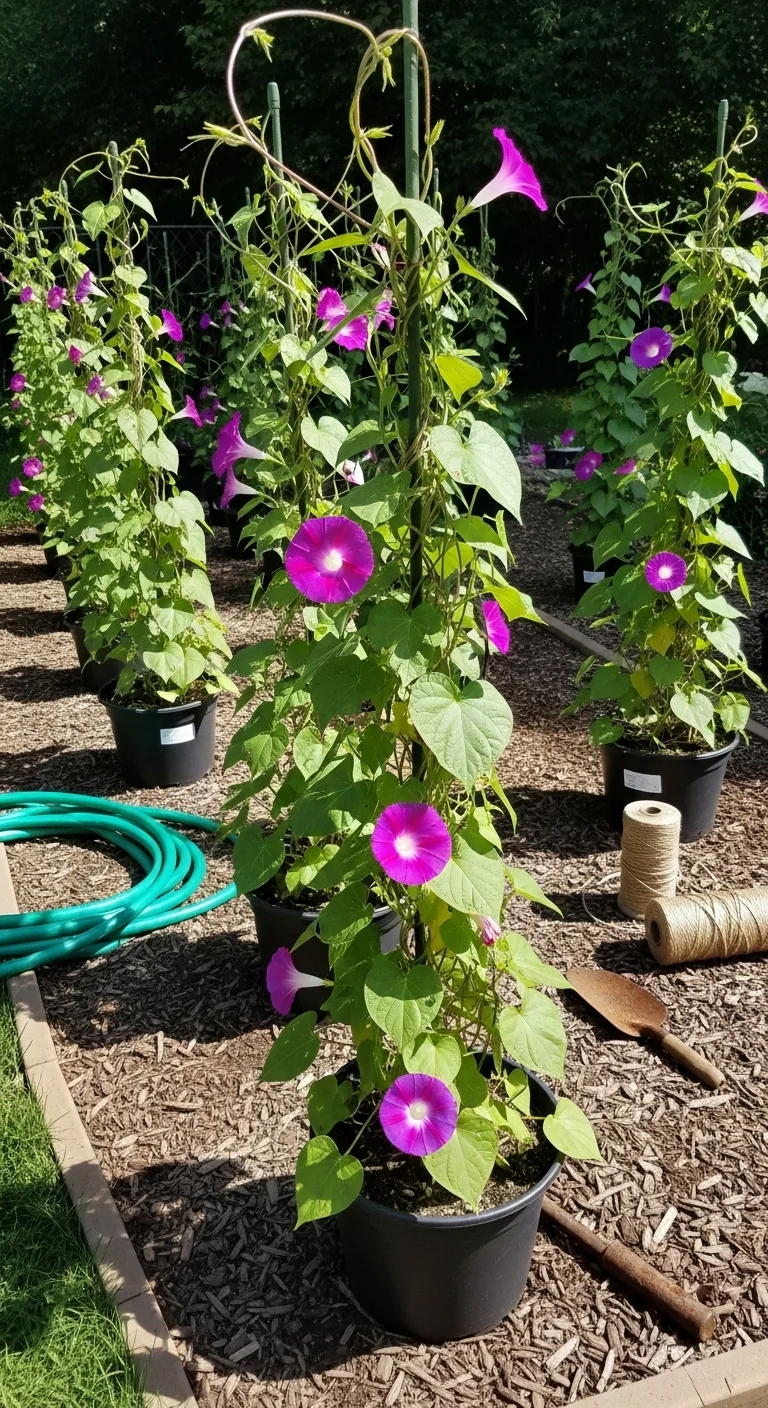
Most lists pick morning glory varieties by color alone. The decision that actually matters starts with three measurable conditions in your garden: soil temperature at planting, available vertical space, and your tolerance for self-seeding volunteers the following season.
This guide covers nine annual morning glory varieties (Ipomoea spp.) for ornamental use on trellises, fences, and containers across US, UK, Canada, Australia, and Japan gardens. It excludes perennial relatives, moonflowers, and weedy bindweeds.
You will match each variety to your exact conditions, avoid failures such as stalled germination below 60 F soil temperature or excessive volunteers in borders, and combine them for season-long coverage without guesswork.
Match the variety to your soil temperature, space limits, and reseeding tolerance first, then plant for trumpet blooms from early summer through first frost.
The Yield Grid Decision Grid
Branch 1: Soil temperature has reached 60 F or higher at planting depth and the site receives 6 or more hours of direct sun daily. These conditions support vigorous 10 to 15 foot vines in warm-summer regions.
Recommended: Items 1, 3, and 7 below. See our annual flowers guide for timing details.
Branch 2: Vertical climbing space is limited to under 10 feet or the plants will grow in containers on patios or balconies.
Recommended: Items 4, 6, and 9 below.
Branch 3: Gardens where lower self-seeding rates are required to prevent volunteers among perennials or fall plantings.
Recommended: Items 2, 5, and 8 below.
Quick Comparison Table
| Option | Key mechanism | Best for | Decision Grid Branch | Effort Score |
|---|---|---|---|---|
| Heavenly Blue | Large sky-blue trumpets with white throats on 10 to 15 foot vines | Vibrant blue coverage on sunny trellises | 1 | 2 |
| Grandpa Ott’s | Deep purple blooms with red star throat on heirloom vines | Hummingbird attraction in warm full sun | 1 | 2 |
| Scarlett O’Hara | Deep scarlet flowers with white throats on strong climbers | Red accents against fences | 1 | 3 |
| Flying Saucer | Variegated blue and white 5 to 6 inch blooms | Eye-catching patterns in limited space | 2 | 2 |
| Crimson Rambler | Crimson red trumpets on vigorous but manageable vines | Bold color without excessive spread | 3 | 3 |
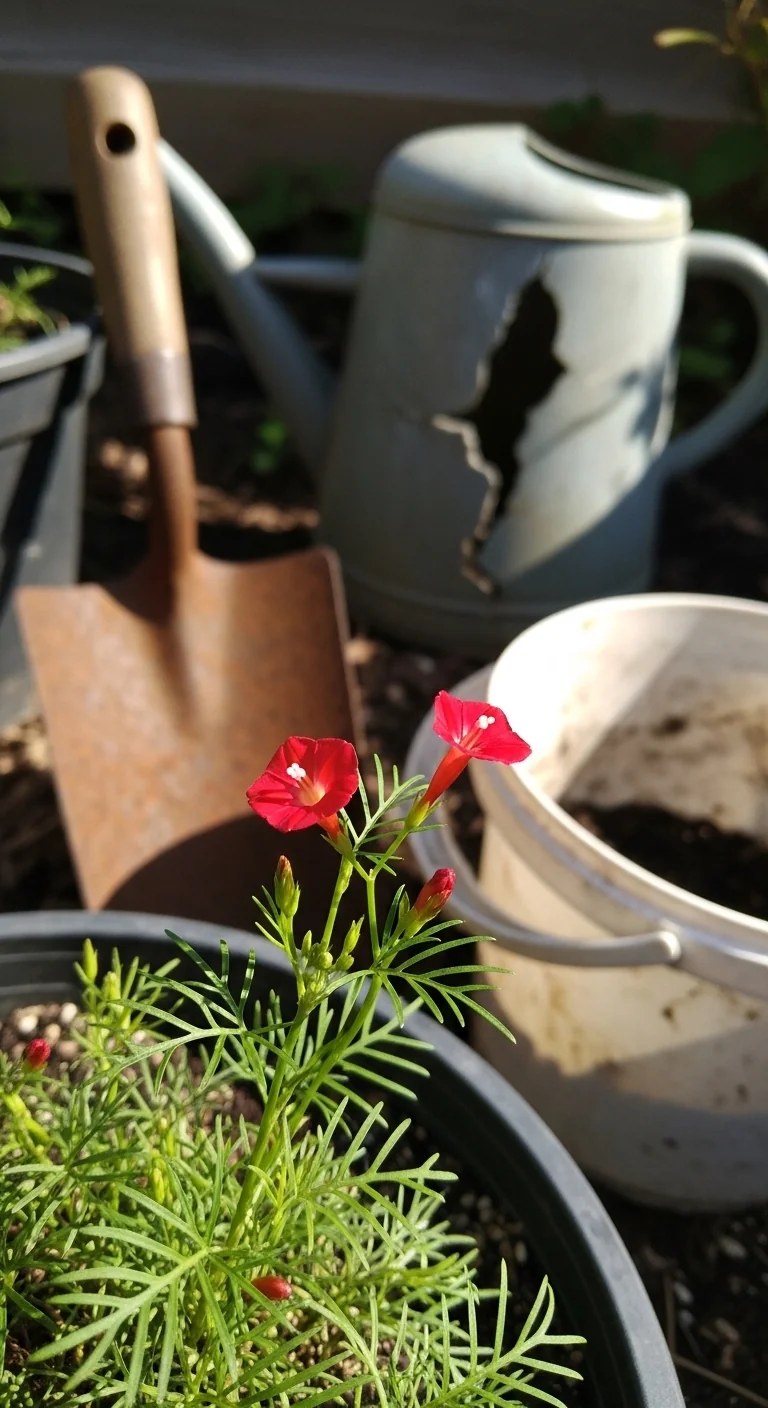
| Cardinal Climber | Scarlet tubular flowers with finely divided ferny foliage | Hummingbird draw in containers | 2 | 1 |
| Cypress Vine | Red star-shaped blooms on 10 to 20 foot delicate vines | Light texture in controlled gardens | 3 | 2 |
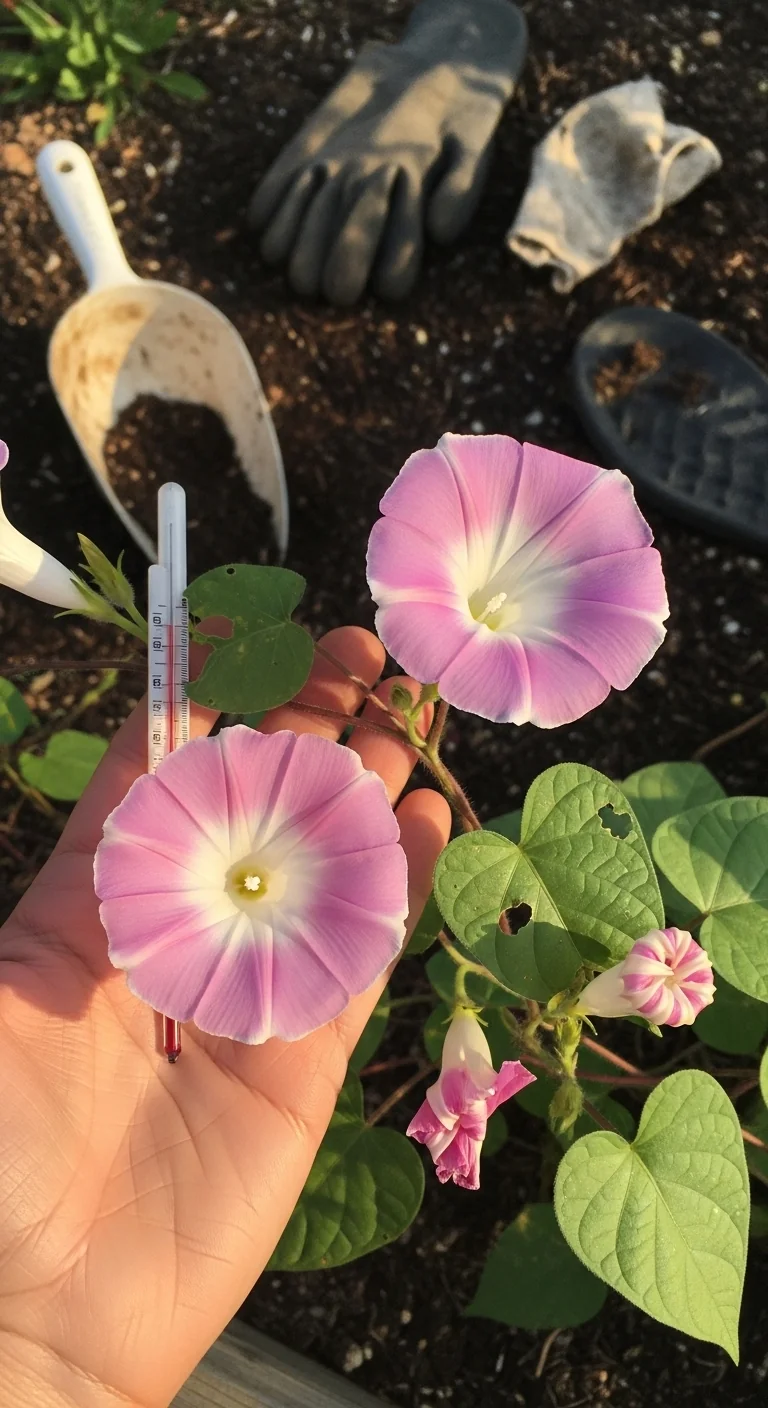
| Chocolate | Rose-pink blooms edged in white | Soft tones in small spaces | 2 | 2 |
| Early Call Mix | Mixed colors with earlier bloom window | Shorter-season or cooler-summer setups | 3 | 1 |
Heavenly Blue
Best for: Branch 1
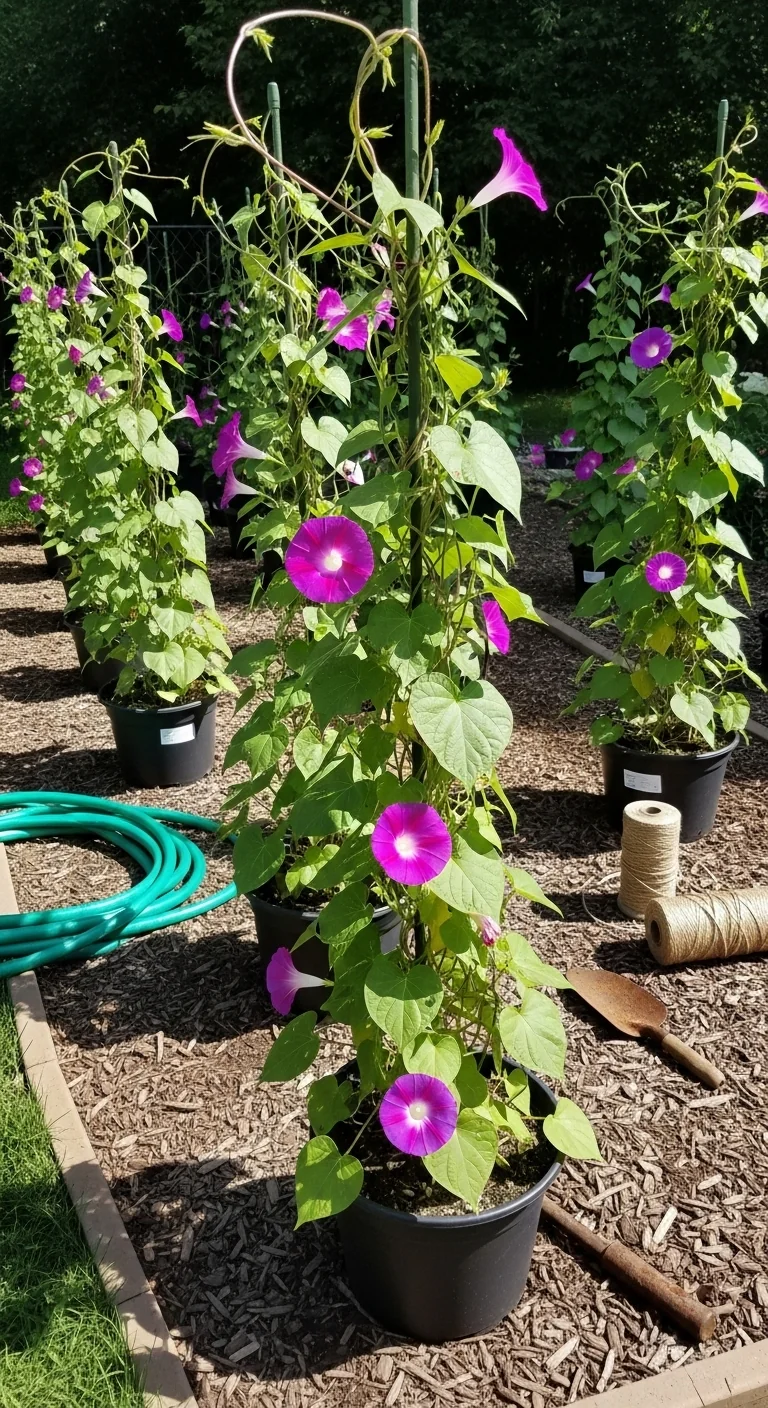
Blueprint for success starts with seed preparation. Nick the hard seed coat with a file or soak overnight in warm water before planting one quarter inch deep once soil reaches 60 F. Space plants 6 inches apart at the base of a trellis in well-drained soil. The vines climb clockwise and produce 4 to 5 inch sky-blue trumpets daily from early summer until frost. Common mistake: skipping the soak step delays germination by up to two weeks in cooler springs common in northern UK or Canada zones. Once established the plants tolerate short dry spells but benefit from irrigation during heat waves above 85 F. Pair with complementary foliage for contrast in full-sun beds. Full-sun flowers offer proven companions that extend the season.
Grandpa Ott’s
Best for: Branch 1
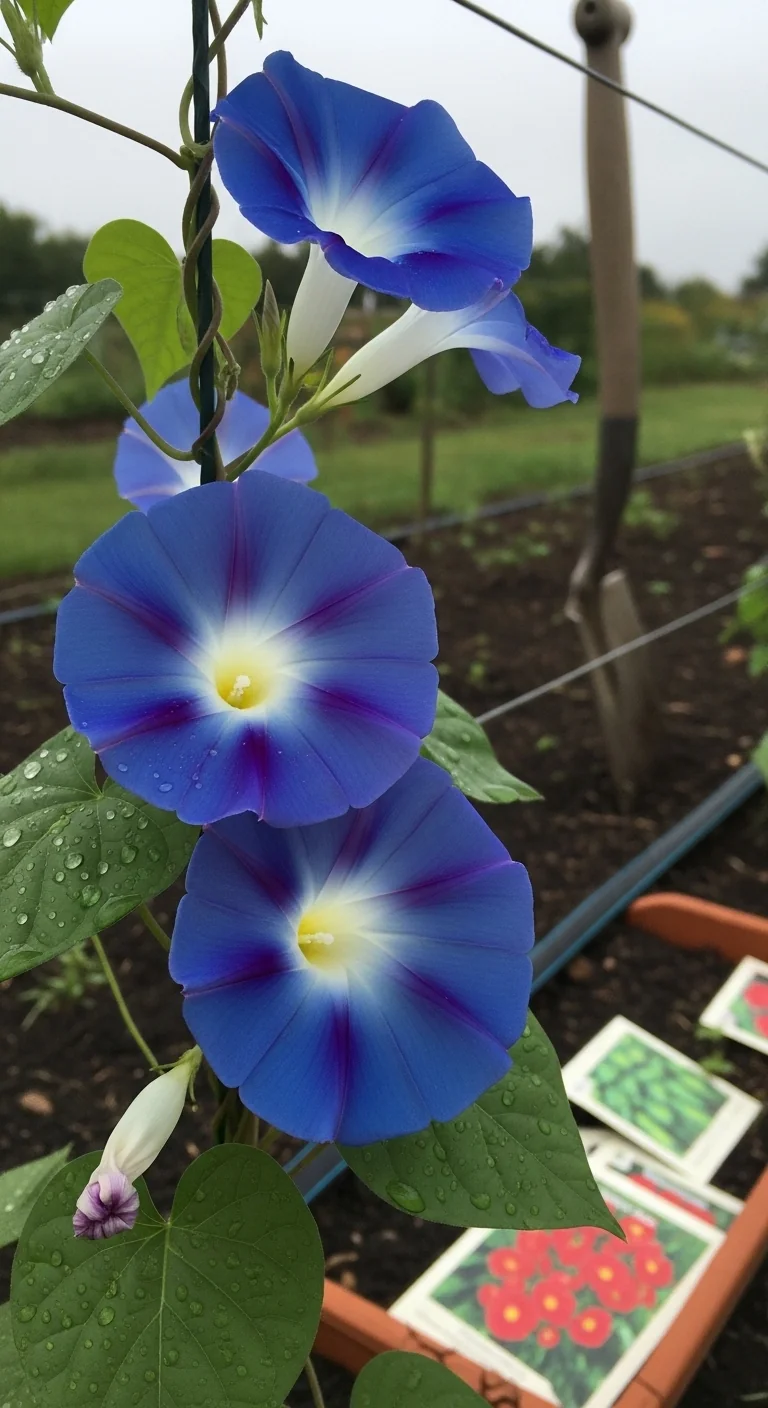
Use Grandpa Ott’s when you want heirloom deep-purple blooms that draw hummingbirds. Skip it in containers smaller than 12 inches wide because the vines reach 10 feet and need strong support. The red-star throat adds visual depth against green foliage. This variety self-sows moderately in warm US and Australian summers but stays manageable when deadheaded weekly after peak bloom.
Scarlett O’Hara
Best for: Branch 1
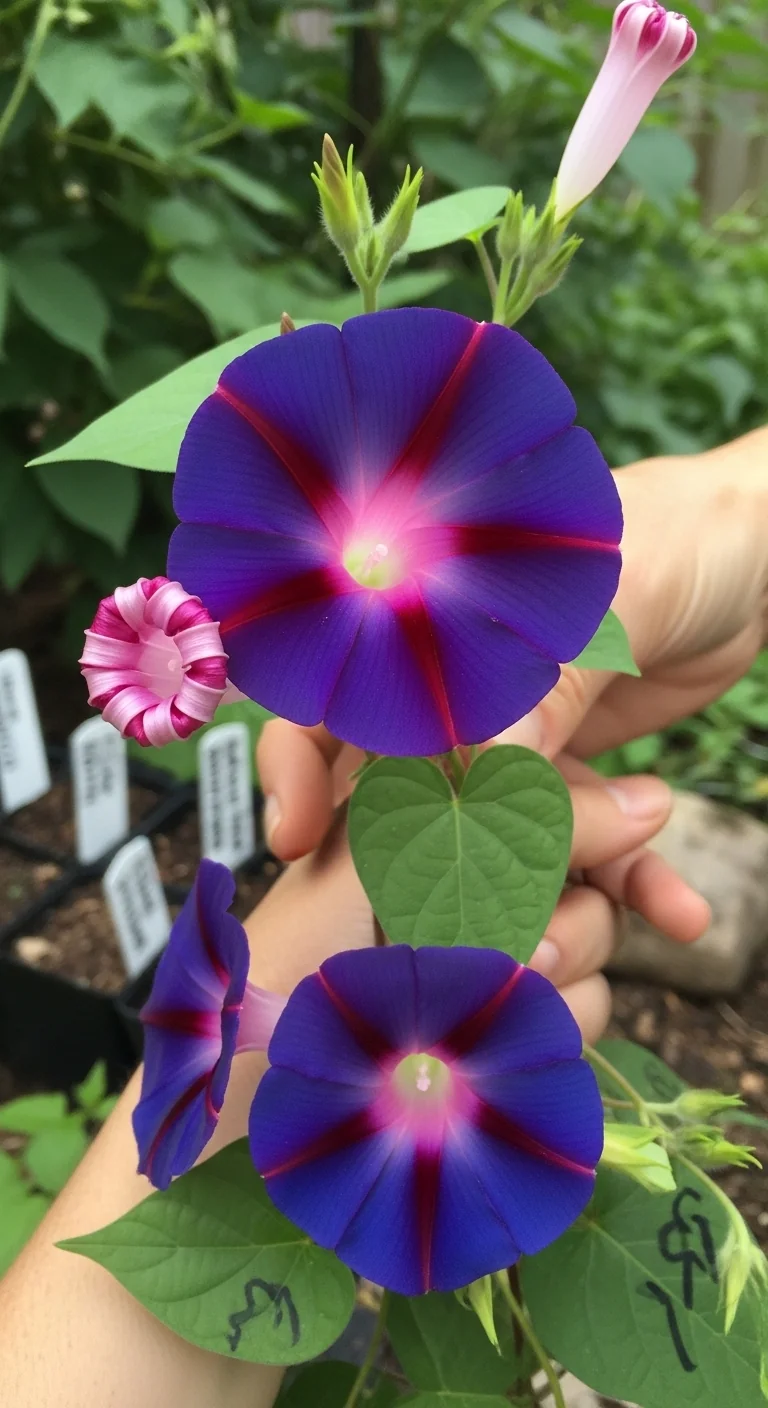
Threshold rule: plant only when soil temperature holds above 60 F for seven consecutive days and daily sun exceeds 6 hours. Below this threshold the 4-inch scarlet flowers with white throats appear two weeks later than expected. Vines reach 12 feet and require initial training onto thin supports because they twine clockwise. In clay soils amend with compost to improve drainage before sowing to prevent root issues in wet UK springs.
Flying Saucer
Best for: Branch 2
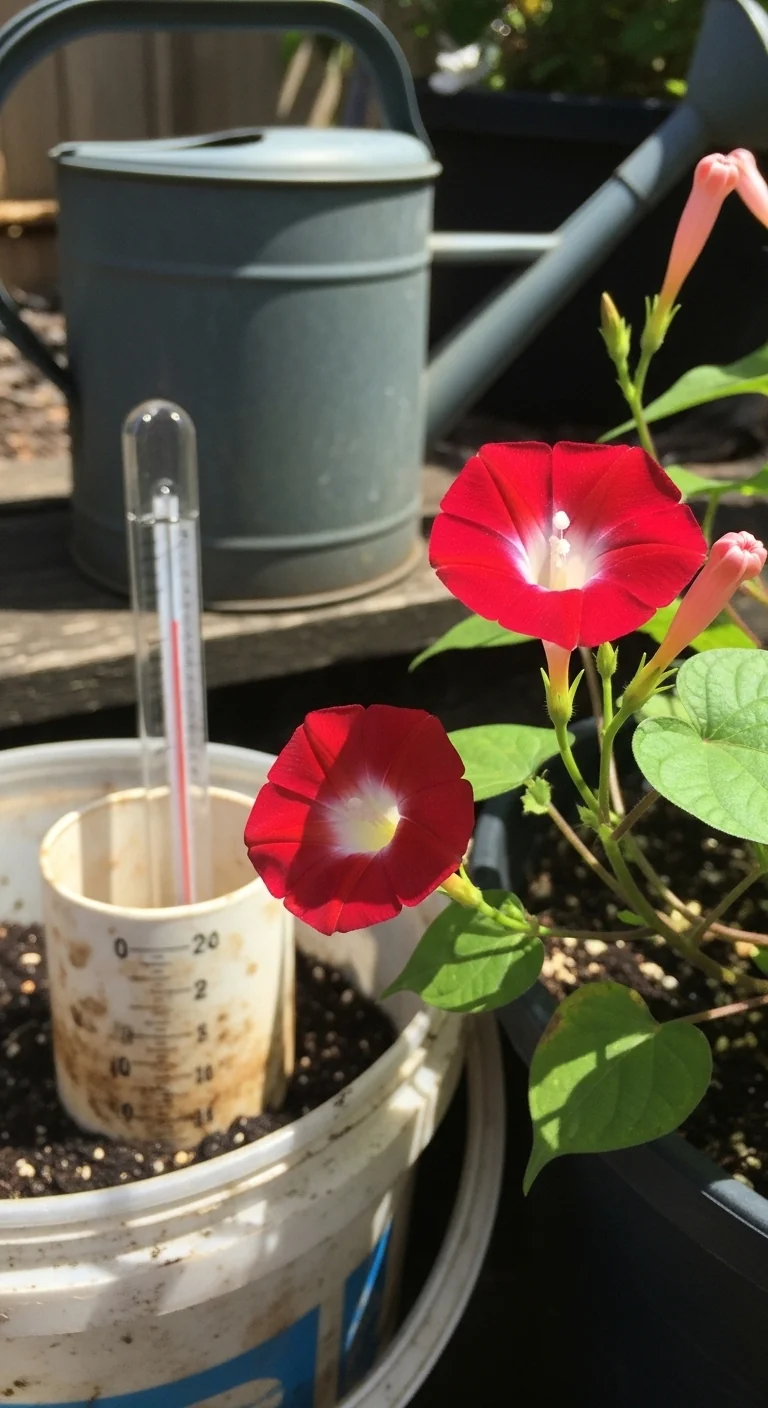
10-minute workflow: soak seeds overnight, plant in containers at least 10 inches wide, install a small obelisk or cage at sowing time, water thoroughly, and place in full sun. The variegated 5 to 6 inch blue-and-white blooms open reliably even in space-limited patios. Upgrade option: add slow-release balanced fertilizer at planting to support foliage without excess leaf growth. This variety fits balconies and window boxes where taller types would overwhelm the structure. Container flowers share the same drainage needs.
Crimson Rambler
Best for: Branch 3
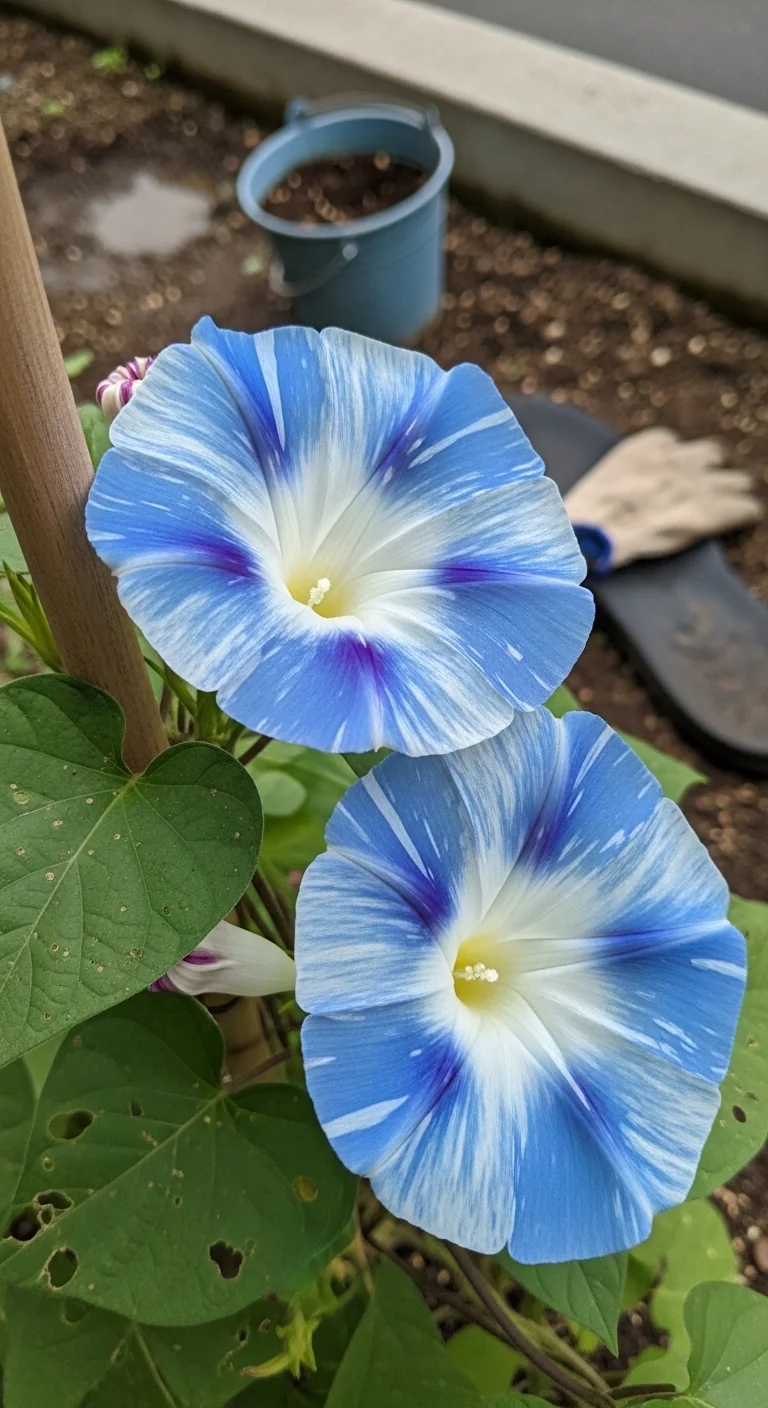
Use Crimson Rambler for bold red color when reseeding must stay low. Skip it near perennial beds if you cannot commit to removing volunteers in spring because it self-sows more than daintier relatives. The vines produce reliable crimson trumpets through late summer and tolerate moderate drought once past the seedling stage.
Cardinal Climber
Best for: Branch 2
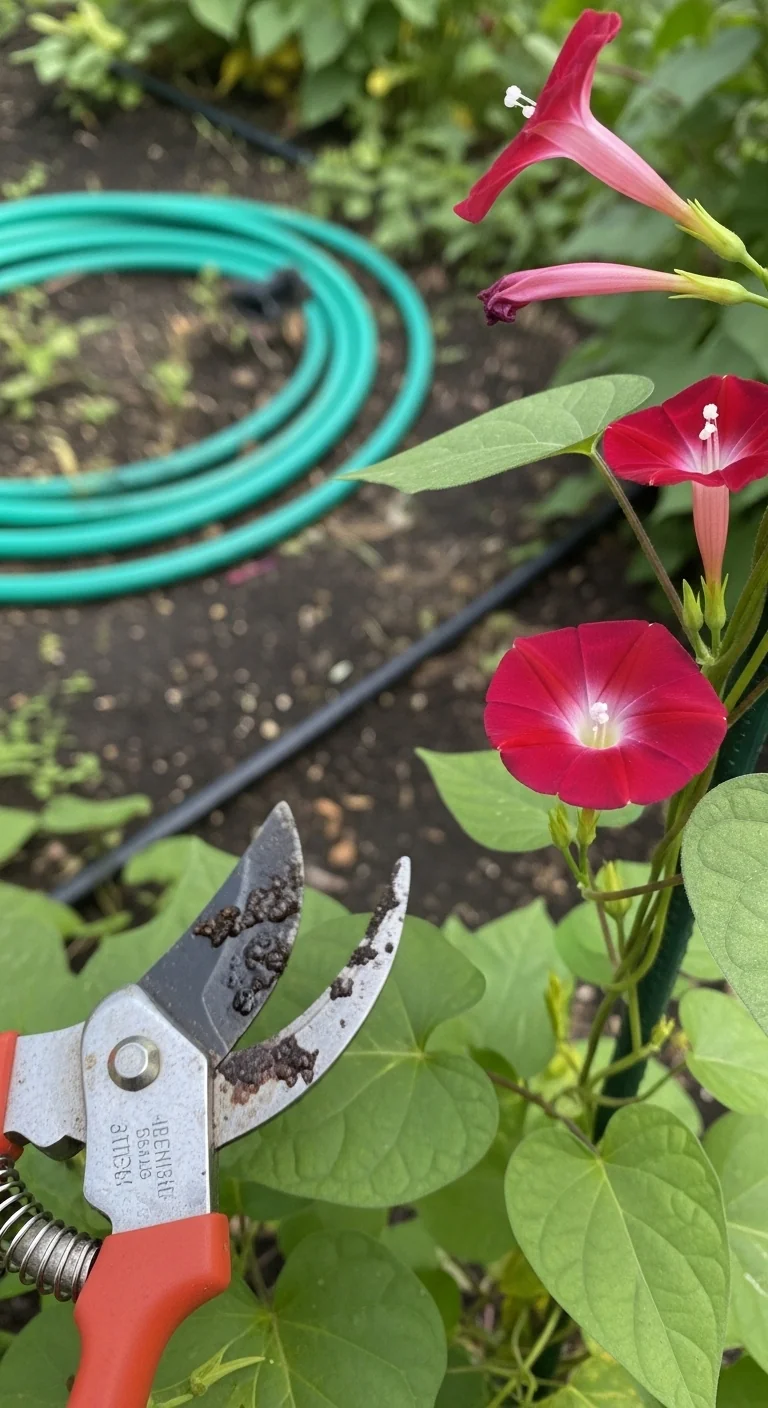
Threshold rule: choose Cardinal Climber when vertical space is under 8 feet or pots limit root run. The scarlet tubular flowers and ferny foliage stay compact enough for containers yet attract hummingbirds without the aggressive spread of common types. Germination improves after overnight soaking and soil at 65 F. In Japan and Australian conditions the dainty leaves recoil from direct midday sun but expand fully by evening.
Cypress Vine
Best for: Branch 3
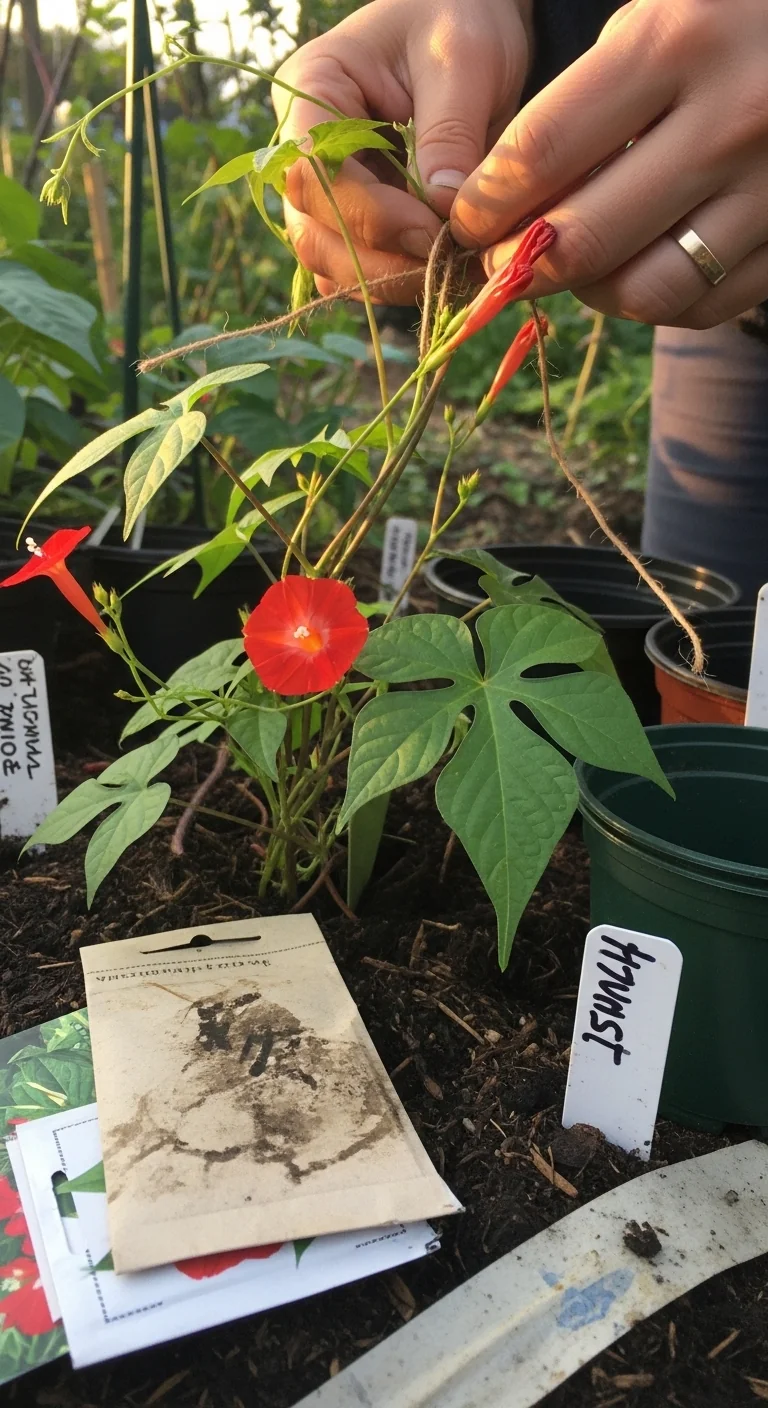
Blueprint for success: nick seeds, sow after soil warms to 60 F, provide thin supports for the 10 to 20 foot delicate vines, and monitor for self-seeding at season end. The star-shaped red blooms and fine foliage create light texture without smothering nearby plants. This variety stays lower on the reseeding scale than standard morning glories, making it suitable near fall borders. Water during extended dry periods above 85 F to maintain bloom production. Pollinator flowers pair well for extended wildlife interest.
Chocolate
Best for: Branch 2
Use Chocolate when soft rose-pink tones fit small spaces or containers. Skip it in heavy clay without raised-bed amendment because drainage must stay good to avoid root problems. The blooms appear on more restrained vines and open reliably in 8 to 10 weeks from seed in shorter UK or Canadian seasons.
Early Call Mix
Best for: Branch 3
Threshold rule: select Early Call Mix when the growing season runs under 120 days or summer highs stay below 80 F for weeks. The mixed-color blooms arrive earlier than standard types and vines stay manageable at 6 to 8 feet. Soak seeds overnight and plant one quarter inch deep once soil hits 60 F. This reduces the window for self-seeding in cooler regions while still delivering trumpet flowers through early frost. Hummingbird flowers complement the palette without competition.
Starter Stack (What to Choose First)
For Branch 1 gardens (warm full sun above 60 F soil)
Start with Heavenly Blue and Grandpa Ott’s. The sky-blue and deep-purple combination creates strong contrast while both attract hummingbirds. Planting takes 20 to 30 minutes for a 10-foot trellis section and seed packets cost under 10 dollars total.
For Branch 2 gardens (limited space or containers)
Start with Flying Saucer and Cardinal Climber. Variegated blooms pair with ferny foliage for texture in pots or small trellises. Setup takes 15 to 25 minutes per container and total seed cost stays under 8 dollars.
For Branch 3 gardens (low reseeding priority)
Start with Cypress Vine and Early Call Mix. The red stars and mixed early colors cover structures lightly without heavy volunteers next season. Planting requires 25 minutes for a border section and seed cost remains under 12 dollars.
When This Won’t Work
Morning glory varieties fail when soil temperature stays below 60 F for more than two weeks after the last frost date or when the site receives fewer than 6 hours of direct sun. Germination drops sharply and vines produce few or no blooms before summer ends. Start seeds indoors 4 to 6 weeks early in these conditions or switch to shorter-season alternatives.
Heavy clay soil without amendment also prevents success because roots rot in poor drainage. Raised beds or containers solve the issue. Drought-tolerant flowers offer compatible partners that share similar sun needs once established.
Choosing the Right Option for Your Situation
Budget threshold
If your total seed budget is under 15 dollars, any single packet from the list covers 20 to 30 plants. All varieties fall in the low tier with packets priced similarly across retailers.
Time threshold
If you have under 30 minutes for planting preparation, choose varieties that need only overnight soaking rather than filing plus soaking. Early Call Mix and Cardinal Climber require the least prep time.
Technical constraint (soil drainage)
If your soil drains slower than 1 inch per hour, select container-friendly options or amend beds with compost before sowing to prevent root issues in wet springs.
Yes/No checklist:
Does your soil reach 60 F at planting depth?
Does the site receive 6 or more hours of sun?
Is vertical space under 10 feet or are you using containers?
Is low reseeding a priority in your borders?
Expert Q&A
Why do morning glory flowers close by mid-afternoon?
The blooms are adapted to open at dawn when pollinators are active and close as temperatures rise to protect pollen. This daily cycle repeats regardless of variety and does not indicate plant stress in full-sun conditions above 60 F soil temperature.
How do you prevent excessive self-seeding without constant weeding?
Deadhead spent blooms weekly before seed pods mature and remove any volunteers in early spring while they are small. Varieties such as Cardinal Climber and Cypress Vine produce fewer viable seeds than standard types, reducing the workload in perennial beds.
Which support structures work best for the vines?
Thin wires, strings, or narrow wooden trellises allow clockwise twining. Avoid thick posts because the tendrils cannot grip them securely. Install supports at sowing time to avoid disturbing roots later.
Can morning glories be saved and replanted in colder climates like northern UK or Canada?
Collect mature seeds in late summer, store in a cool dry place over winter, and nick or soak before sowing the next spring after soil warms to 60 F. This method works reliably for all listed varieties without indoor overwintering of plants.
What makes certain varieties better for hummingbird gardens?
Tubular red or scarlet flowers such as those on Cardinal Climber and Grandpa Ott’s provide the shape and color hummingbirds prefer. The vines climb quickly to place blooms at eye level when trained on fences or arbors.
Conclusion
The key decision is always matching the variety to your measured conditions of soil temperature, space, and reseeding tolerance rather than color preference alone. The number-one mistake is planting without checking the 60 F soil threshold, which leads to delayed or failed germination across regions.
Review your garden’s current soil temperature and available climbing space this week, then select from the decision grid. Next step: explore trellis designs that suit these vines in cottage garden flowers.