
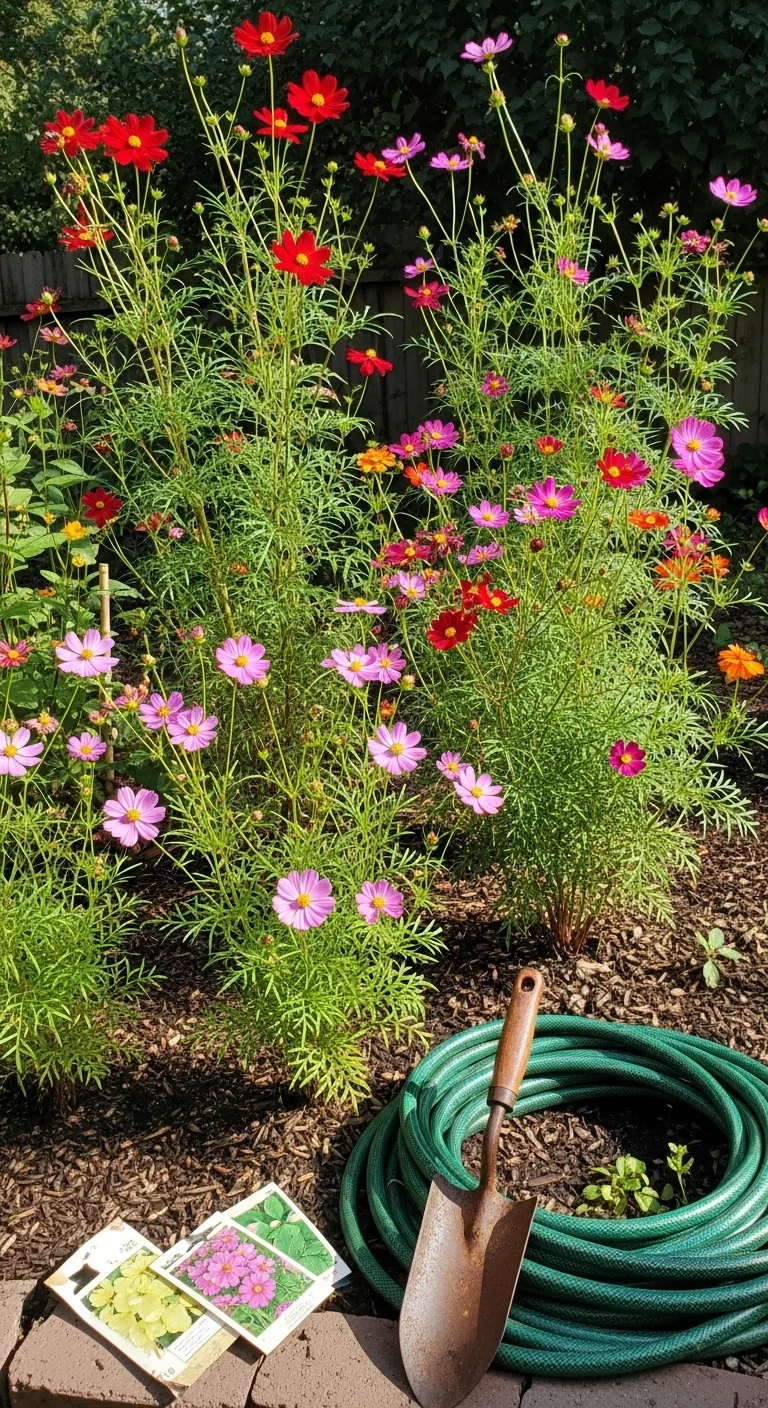
Choosing the right cosmos variety requires aligning its specific growth habit and tolerances with your garden’s measurable conditions rather than defaulting to generic seed packets that often lead to mismatched results.
This guide covers nine distinct cosmos varieties across three decision branches, focusing on annual types from Cosmos bipinnatus and Cosmos sulphureus species. It excludes perennial chocolate cosmos, non-flower uses, and any variety requiring rich soil amendments.
You will be able to select varieties that fit your exact setup, plan sowing and care steps, and integrate them into borders or beds for reliable summer color through fall.
Match the variety to your branch and follow the starter stack for the simplest path to months of blooms.
The Yield Grid Decision Grid
Branch 1: Poor to average soil with good drainage and low fertility (measurable conditions: no added compost or fertilizer, soil pH 6.0 to 8.0, minimal supplemental watering once established). Recommended: Items 2, 5, 9 below.
Branch 2: Ample space for taller plants in full-sun beds or cutting areas (measurable conditions: height allowance 3 to 5 feet, at least 6 hours direct sun daily). Recommended: Items 1, 4, 7 below.
Branch 3: Limited space or container setups with wind exposure (measurable conditions: height limit under 2 feet, pots or front borders). Recommended: Items 3, 6, 8 below.
For more options suited to these conditions see our full-sun flowers guide.
Quick Comparison Table
| Option | Key mechanism | Best for | Decision Grid Branch | Effort Score |
|---|---|---|---|---|
| Cosmos bipinnatus ‘Rubenza’ | Prolific single blooms on branching stems with feathery foliage for air flow | Tall borders needing color depth | Branch 2 | 2 |
| Cosmos sulphureus ‘Carioca’ | Open growth habit with glowing orange singles that tolerate heat and low water | Hot, dry meadow-style plantings | Branch 1 | 1 |
| Cosmos bipinnatus ‘Antiquity’ | Compact bushy form with fading red-to-pink singles, no staking required | Front borders and containers | Branch 3 | 1 |
| Cosmos bipinnatus ‘Double Click Rose Bonbon’ | Double ruffled petals on tall stems for extended vase life | Cutting gardens with repeated harvest | Branch 2 | 3 |
| Cosmos bipinnatus ‘Xanthos’ | Neat yellow singles with white ring around golden eye on 1-meter plants | Low-fertility sunny spots needing bright contrast | Branch 1 | 1 |
| Cosmos bipinnatus ‘Cupcakes White’ | Bowl-shaped fused petals creating cupped form on shorter stems | Unique texture in tight spaces | Branch 3 | 2 |
| Cosmos bipinnatus ‘Purity’ | Single white flowers with fringy edges and yellow disks on tall branching stems | Classic pollinator borders | Branch 2 | 2 |
| Cosmos bipinnatus ‘Apollo Carmine’ | Uniform carmine singles on compact plants that hold color through fade | Windy containers or edges | Branch 3 | 1 |
| Cosmos sulphureus ‘Cosmic Orange’ | Profuse smaller orange blooms on open, heat-adapted framework | Dry soils needing late-season color | Branch 1 | 1 |
Cosmos bipinnatus ‘Rubenza’
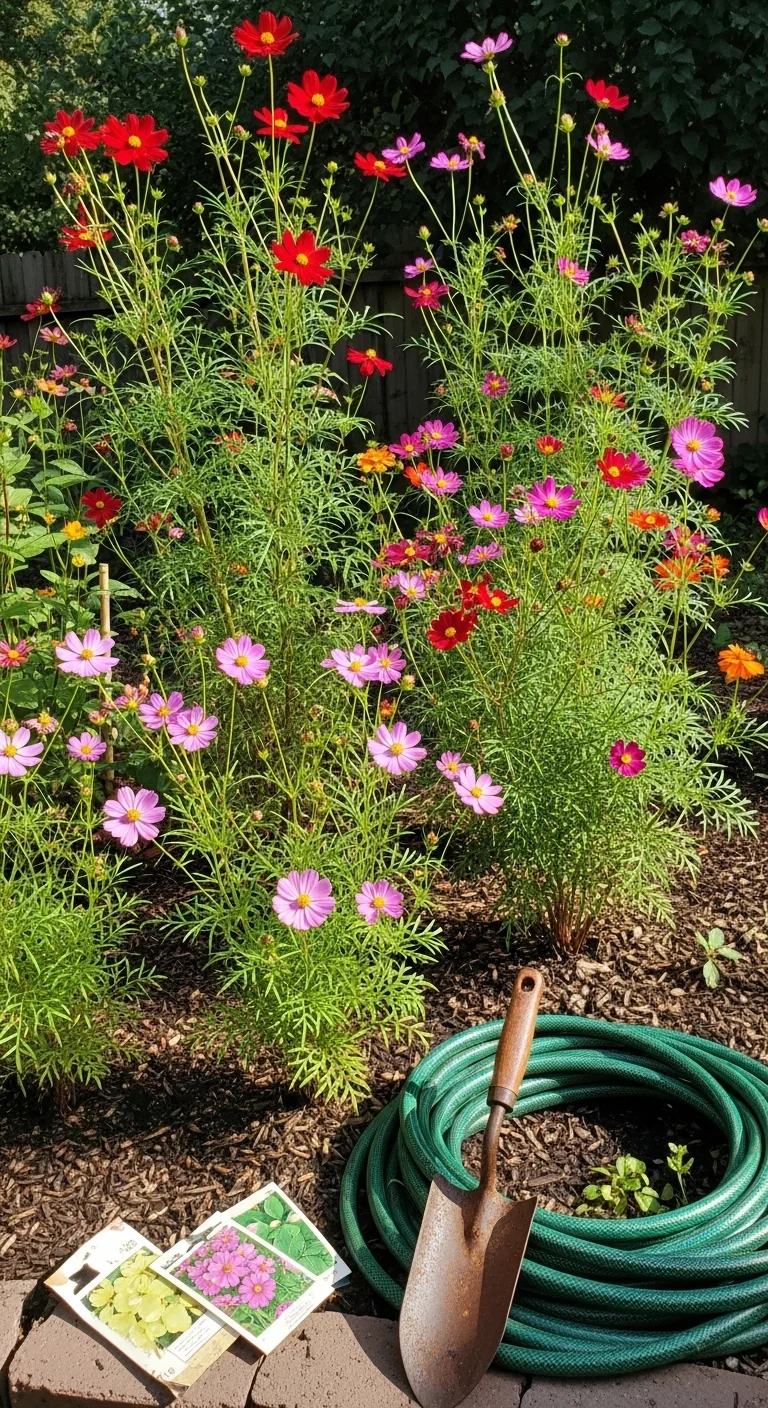
Best for: Branch 2
Blueprint for success starts with direct sowing after last frost in prepared beds. This variety reaches 1.5 meters with deep-red to scarlet singles that age to dusty pink while staying prolific on branching stems. The feathery foliage promotes air circulation to reduce disease pressure in humid summers. Steps: Sow 1/4 inch deep, thin to 12 to 18 inches apart, and deadhead spent heads to maintain bloom production into fall. Common mistake: allowing rich soil pockets to form, which shifts energy to foliage instead of flowers. Pair it with silver-leaved companions for contrast. This option delivers reliable height and color depth without supplemental feeding.
Pollinator flowers like this draw bees and butterflies consistently.
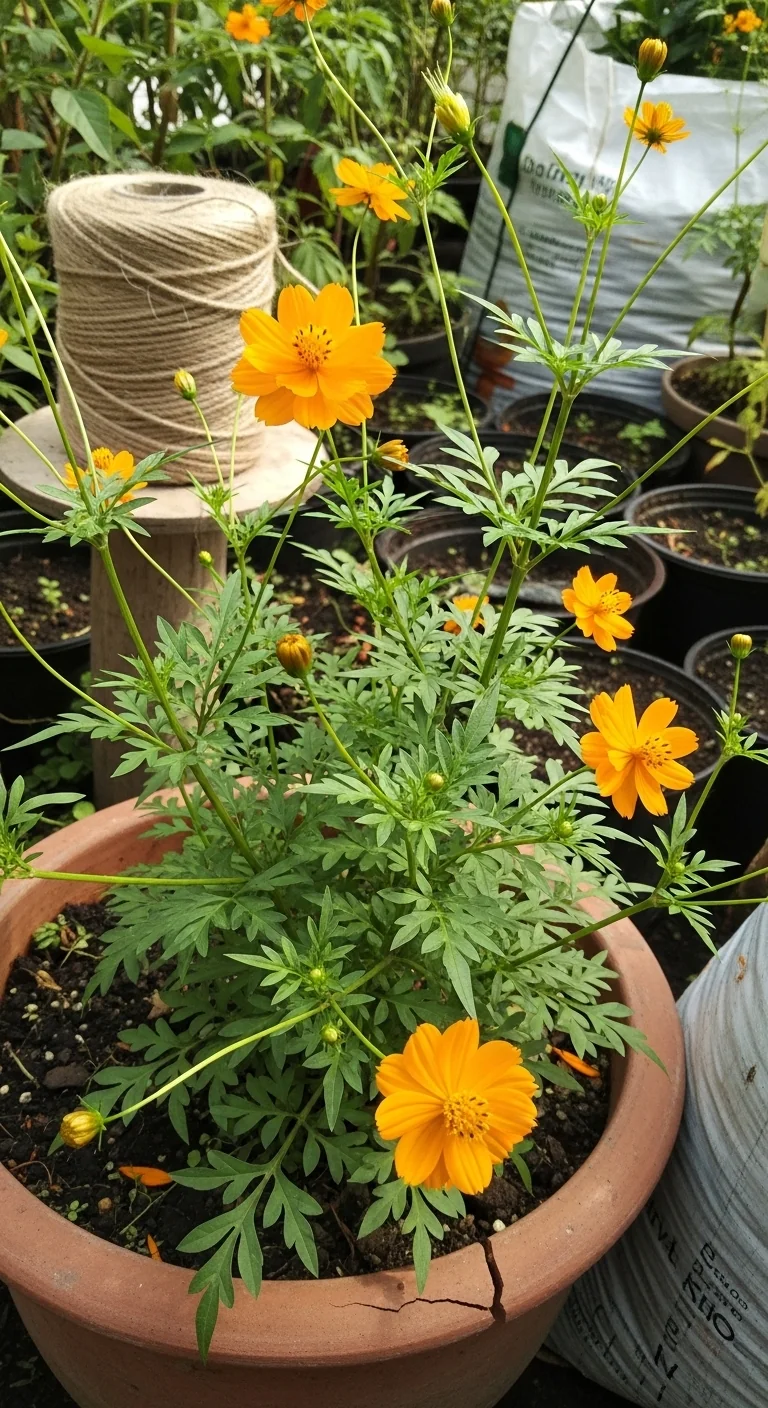
Cosmos sulphureus ‘Carioca’
Best for: Branch 1
Use this variety in hot, low-water sites and skip it in cool, shaded spots where bloom production slows. Its open growth and glowing orange singles thrive where soil fertility stays low and drainage stays sharp.
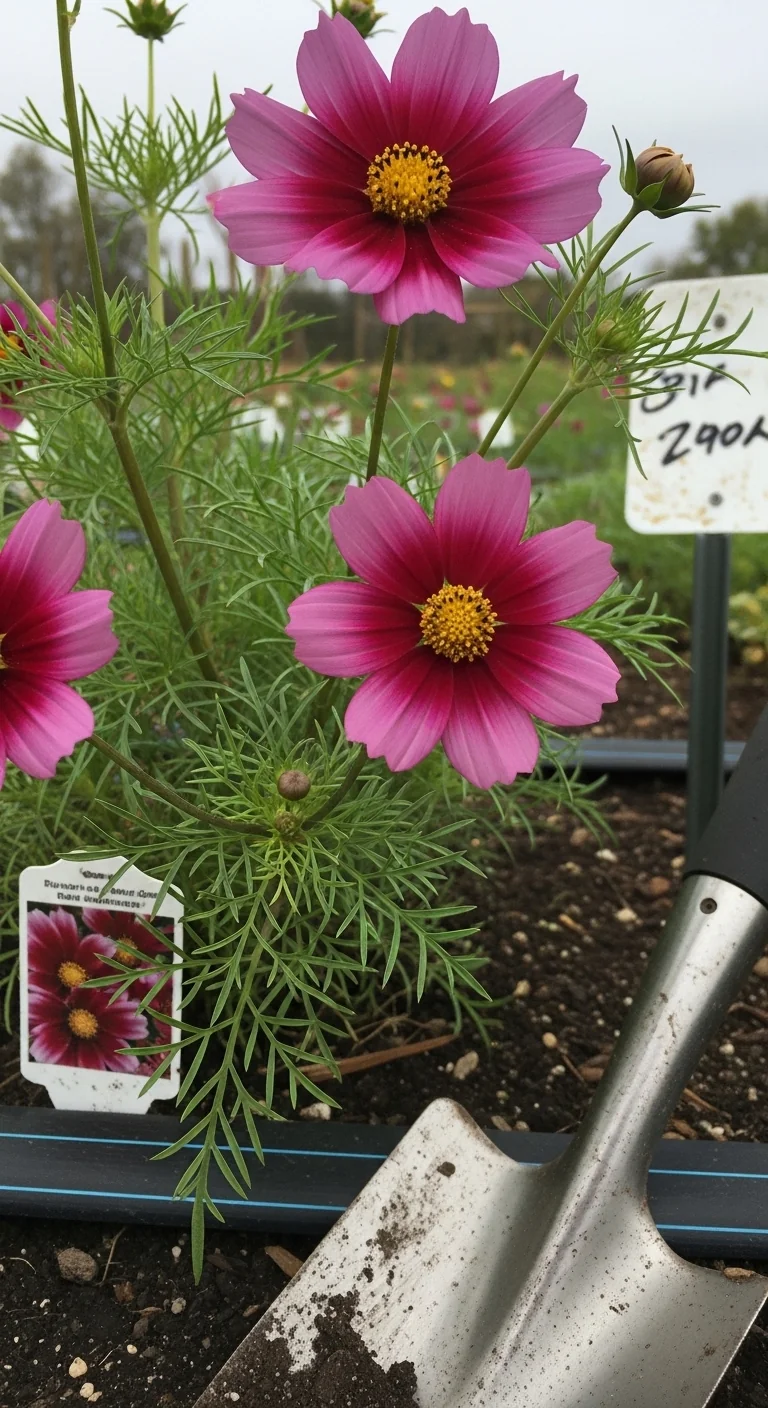
Cosmos bipinnatus ‘Antiquity’
Best for: Branch 3
Threshold rule: plant only when soil temperature holds above 65 degrees Fahrenheit and space remains under 60 centimeters tall. This compact form reaches 60 centimeters with red-to-pink singles that require no staking even in light wind. Adjust by pinching tips at three sets of true leaves if plants exceed your height limit early. The bushy habit keeps blooms visible at eye level without crowding neighbors. In containers, water only when the top inch of soil dries to avoid root issues. This rule prevents leggy growth in small footprints while maximizing early-season display.
Drought-tolerant flowers share similar low-input needs.
Cosmos bipinnatus ‘Double Click Rose Bonbon’
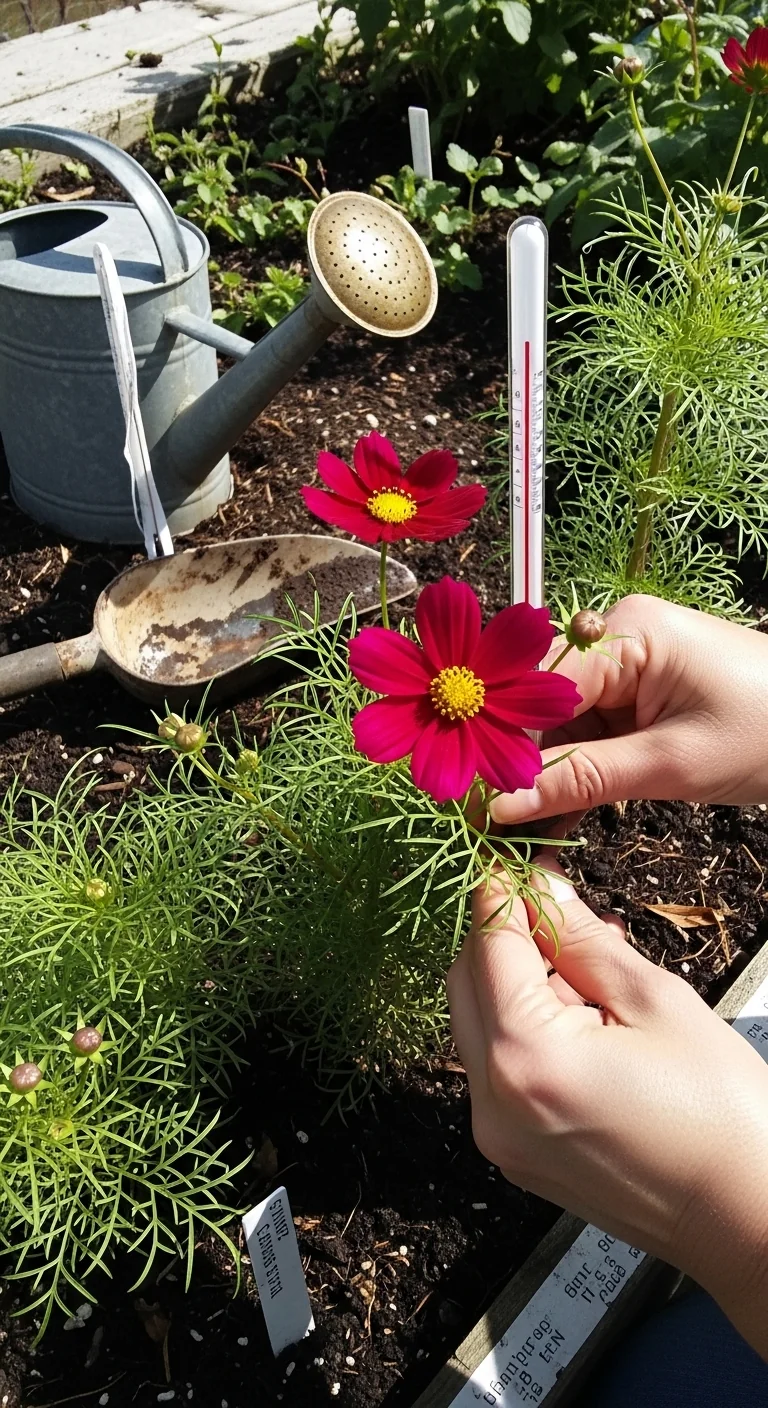
Best for: Branch 2
10-minute workflow for harvest-ready plants: (1) direct sow or transplant after frost, (2) space 18 inches apart in full sun, (3) pinch at 12 inches tall for branching, (4) cut stems when buds show color. Upgrade option: add a simple stake at planting for stems reaching 1.8 meters during heavy rain. This double-flowered form produces ruffled rosy-pink blooms ideal for bouquets, with singles and fluted petals appearing in the same color range. The mechanism relies on consistent deadheading to redirect energy back to new buds rather than seed set. Avoid overhead watering to keep petals intact longer. Results include steady supply for arrangements from midsummer onward.
Cut-flower garden planning pairs well with this variety.
Cosmos bipinnatus ‘Xanthos’
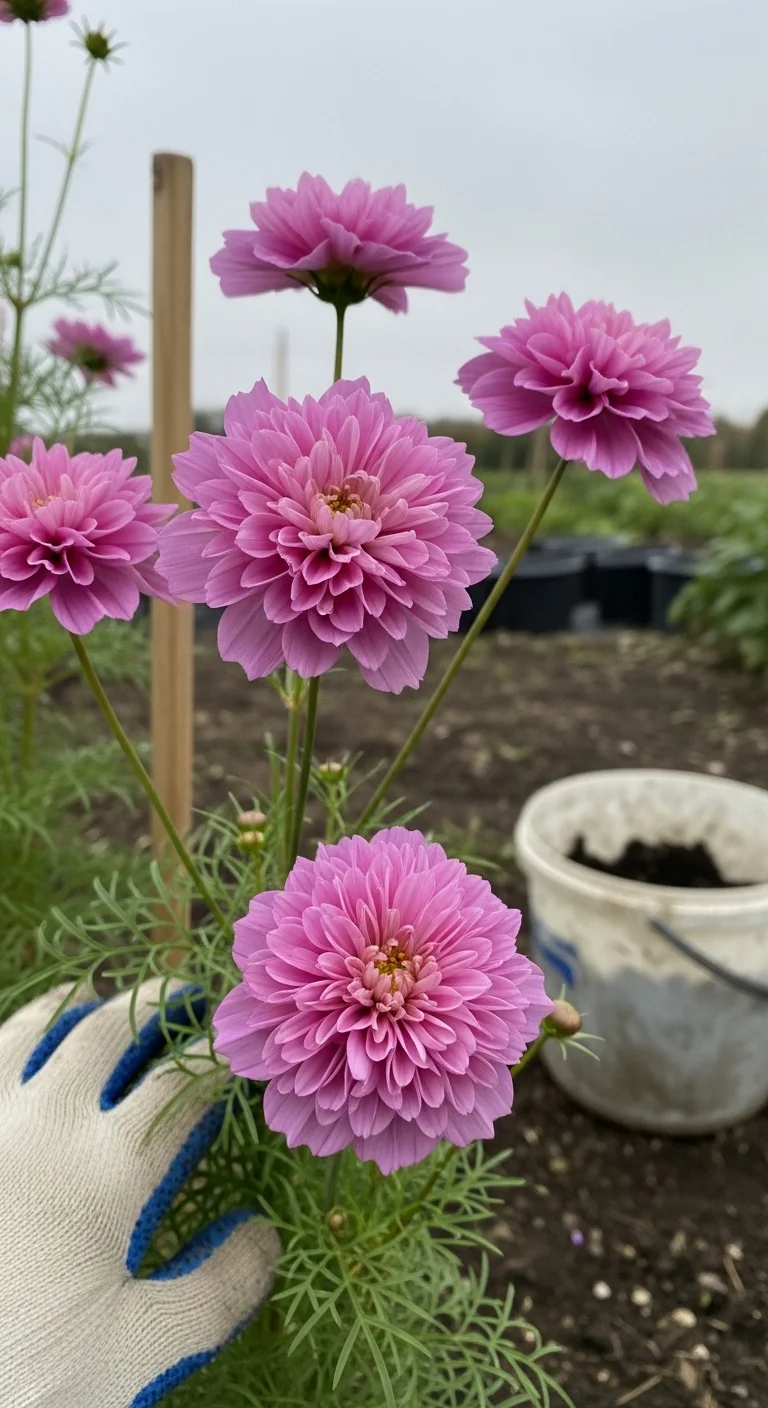
Best for: Branch 1
Use versus skip: deploy in low-fertility full-sun beds for its primrose-yellow singles with white ring detail and skip where soil tests show high nitrogen. The 1-meter height fits meadow edges without support, and the neat habit contrasts dark foliage plants. Edge case: in cooler zones it starts slower but catches up once heat arrives.
Cosmos bipinnatus ‘Cupcakes White’
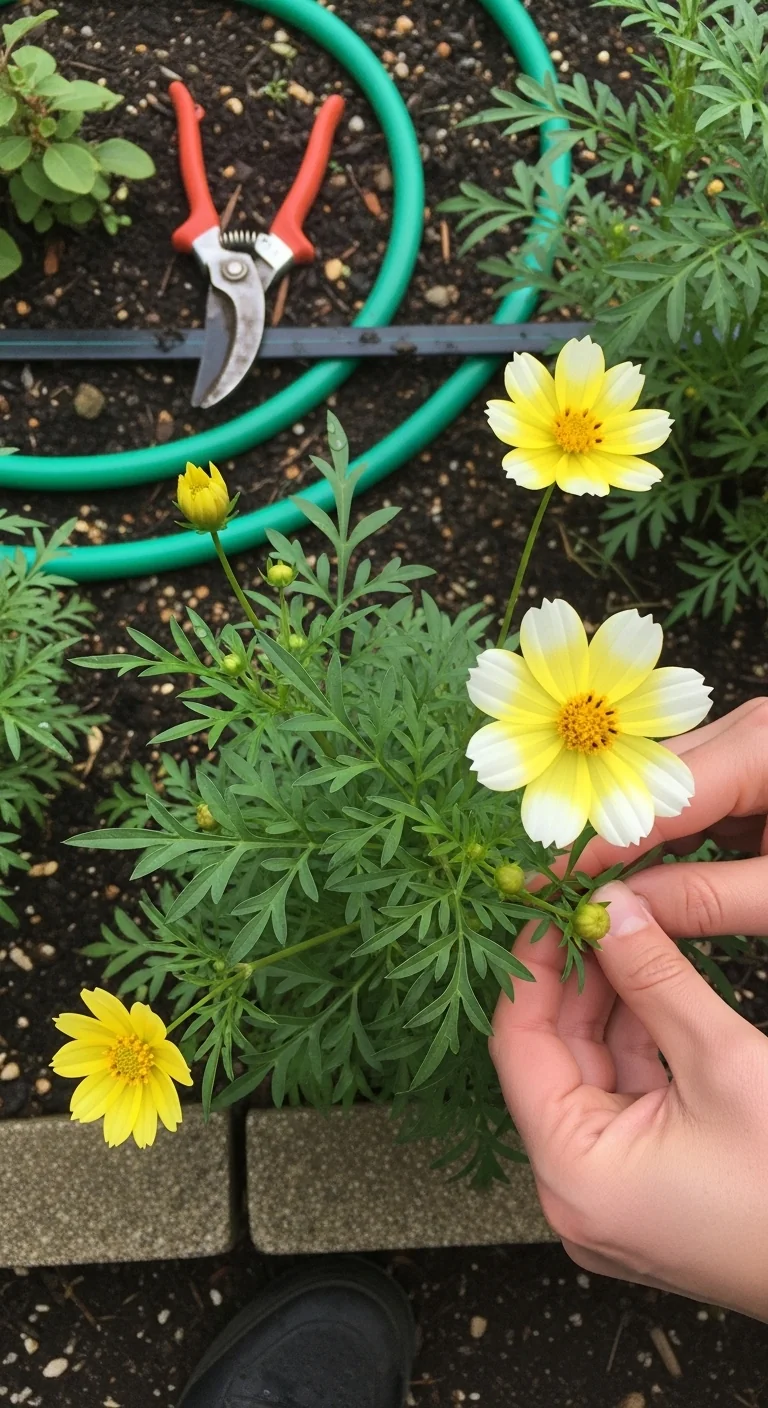
Best for: Branch 3
Threshold rule applies here for height under 1.2 meters and container depth at least 8 inches. Bowl-shaped white petals fused like paper cases create unique texture, with some pink tints appearing naturally. Deadhead when flowers turn ragged to keep the cupped form fresh. In windy sites, the shorter stems reduce toppling risk compared to taller singles. Adjust spacing to 12 inches for bushier fill. This variety earned recognition in trials for its distinctive silhouette that stands out in tight spaces or mixed pots without competing for vertical room.
Deadheading flowers extends display on this type effectively.
Cosmos bipinnatus ‘Purity’
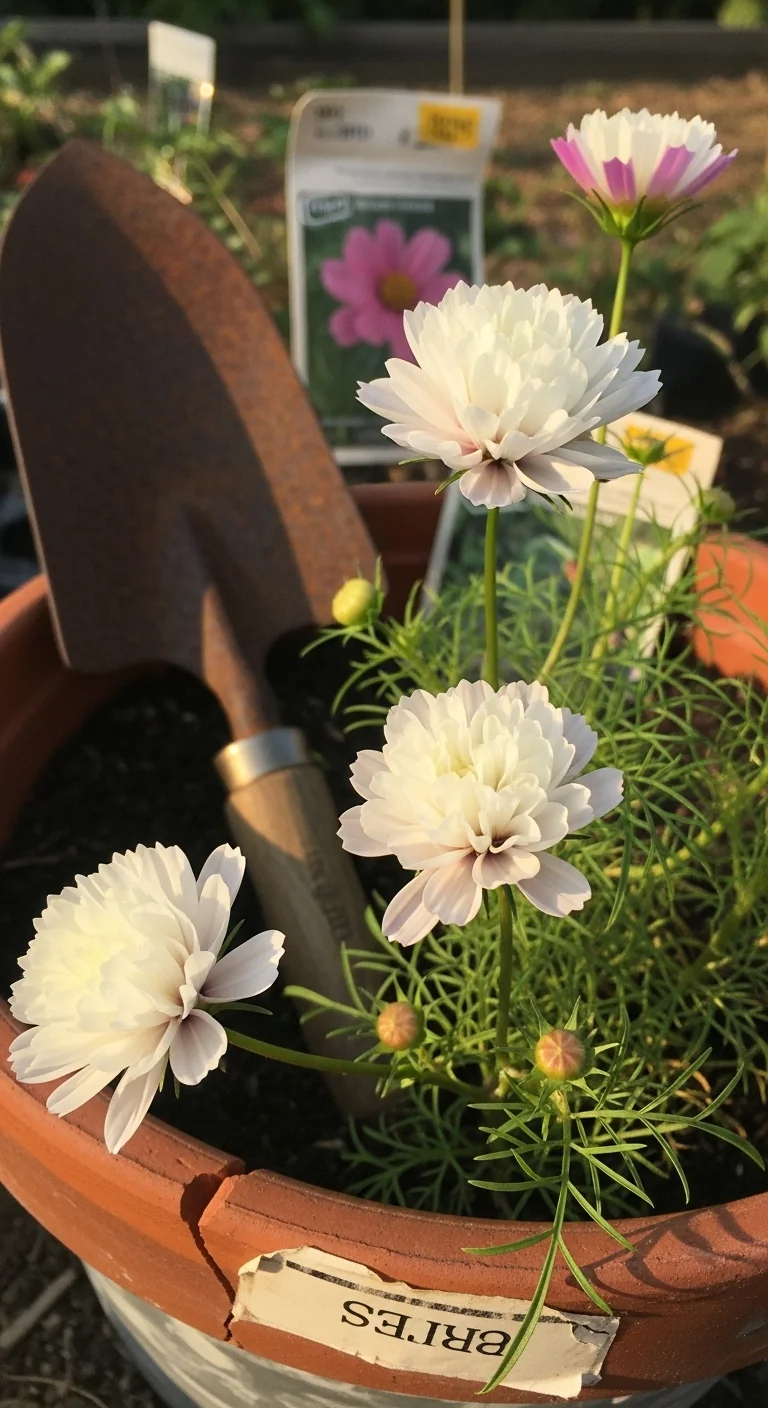
Best for: Branch 2
Blueprint begins with seed sown directly once soil warms. This white variety grows 3 to 4 feet tall with single flowers featuring fringy edges and fuzzy yellow centers on tall branching stems. Feathery chartreuse foliage stays light and airy. Steps include thinning seedlings to 18 inches, providing light support only if wind exceeds 15 miles per hour, and collecting seed heads in fall for next year. Mistake to avoid: planting too early in cold soil, which delays germination by weeks. The clean white tones anchor pollinator beds and pair with other pastels for extended season interest.
Low-maintenance flowers benefit from this reliable performer.
Cosmos bipinnatus ‘Apollo Carmine’
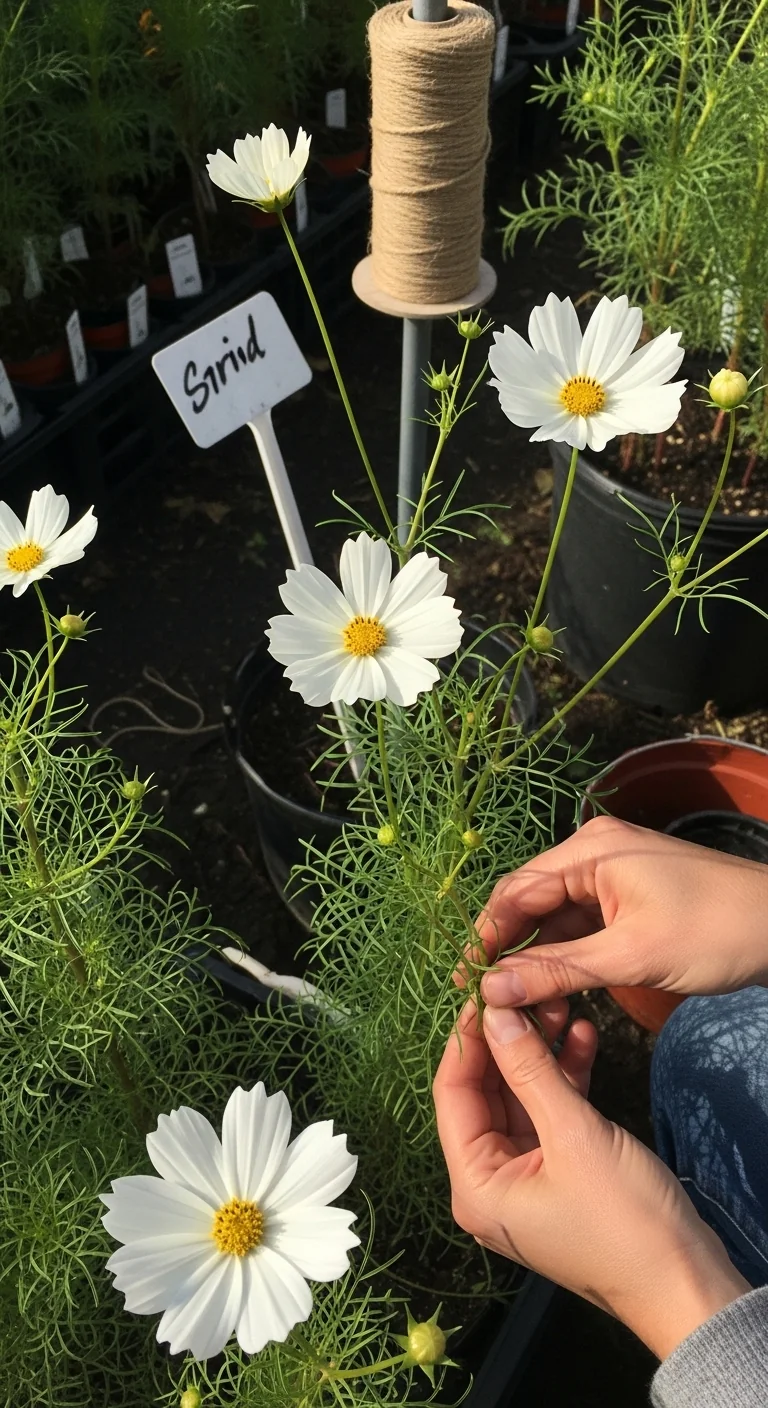
Best for: Branch 3
Use this uniform carmine single in exposed containers and skip it behind taller plants where blooms become hidden. At 60 centimeters it holds color through fade to pinkish tones with compact foliage that keeps flowers prominent. The even plant shape suits large pots or front edging without extra support.
Cosmos sulphureus ‘Cosmic Orange’
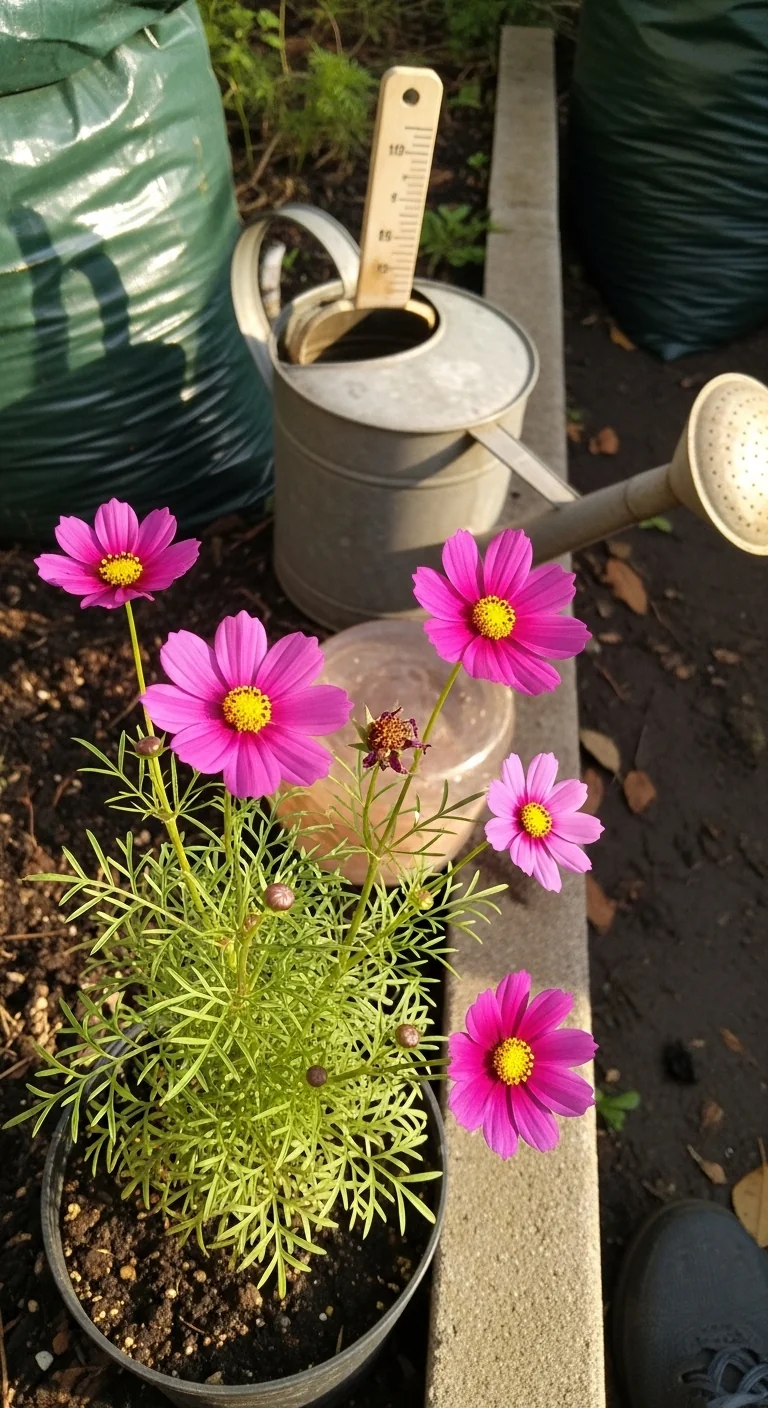
Best for: Branch 1
Threshold rule: sow when nights stay above 55 degrees Fahrenheit in soils testing low fertility. Profuse smaller orange blooms appear on open frameworks that handle dry conditions without supplemental water after establishment. Adjust by avoiding any nitrogen boost that reduces flower count in favor of leaves. This variety fills late-season gaps in hot climates with minimal input.
Starter Stack (What to Choose First)
Branch 1: Poor Soil Gardens
Start with Cosmos sulphureus ‘Carioca’ and Cosmos bipinnatus ‘Xanthos’. These two combine orange and yellow tones for natural contrast while sharing low-fertility tolerance and heat resistance. Sow both directly after frost for simultaneous bloom start around 10 to 12 weeks later. Estimated cost per 10 square feet: 4 to 7 dollars in seed packets. Time investment: 15 to 20 minutes for sowing and thinning.
Branch 2: Tall Cutting or Pollinator Areas
Start with Cosmos bipinnatus ‘Rubenza’ and Cosmos bipinnatus ‘Double Click Rose Bonbon’. The red depth pairs with double pink ruffles for layered color and harvest volume. Pinch both at 12 inches for bushier stems and space 18 inches apart. Estimated cost per 10 square feet: 5 to 8 dollars. Time investment: 20 to 25 minutes including initial pinching.
Branch 3: Compact Spaces or Containers
Start with Cosmos bipinnatus ‘Antiquity’ and Cosmos bipinnatus ‘Cupcakes White’. The compact red-pink fade balances the white cupped texture for visual interest in small footprints. Both need only 12-inch spacing and minimal support. Estimated cost per 10 square feet or 4 pots: 3 to 6 dollars. Time investment: 10 to 15 minutes for sowing or transplanting.
When This Won’t Work
Cosmos fail in waterlogged soil that holds standing water longer than 24 hours after rain, as roots rot quickly in saturated conditions. Measure drainage by digging a 12-inch hole, filling it with water, and timing how fast it empties. If slower than 30 minutes, switch to raised beds filled with amended mix or select different annuals suited to heavy clay.
They also underperform with less than 6 hours of direct sun daily, producing leggy stems and few flowers as energy shifts to foliage. Test your site with a sunlight meter or observe shadow patterns over a full day. In shade move containers to brighter spots or replace with shade-adapted options.
Choosing the Right Option for Your Situation
Budget Threshold
All listed varieties cost under 10 dollars per packet covering 50 to 100 square feet. Choose any branch starter stack when seed budget stays below 15 dollars total.
Time Threshold
Direct sowing takes under 25 minutes per branch stack. Opt for these varieties when available gardening time stays under 30 minutes weekly for maintenance.
Soil Constraint
Confirm drainage and pH before sowing. These cosmos suit unamended average soils but require adjustment to raised beds if clay content exceeds 40 percent by volume.
Yes/No checklist:
Yes if soil drains in under 30 minutes and sun exceeds 6 hours.
No if fertilizer was added this season or height space falls short of variety needs.
Yes if frost date has passed and nights stay above 55 degrees Fahrenheit.
No if water stands in test holes longer than 24 hours.
Expert Q&A
How do bipinnatus and sulphureus differ in hot climates?
Cosmos bipinnatus offers larger flowers and finer foliage suited to moderate heat while Cosmos sulphureus develops more branching and smaller blooms that hold up better in sustained temperatures above 90 degrees Fahrenheit. Sulphureus types branch more openly and require less water once established, making them the practical pick for southern or southwestern gardens where summer dryness persists.
Will cosmos self-sow reliably year to year?
Yes in regions with mild winters and well-drained soil, where fallen seed germinates the following spring without intervention. Leave a few spent heads in place after bloom and avoid heavy mulching over the bed. In colder zones or containers self-sowing drops sharply, so collect and store seed indoors for controlled restarts each year.
What companions maximize pollinator activity around cosmos?
Pair with native perennials like echinacea or rudbeckia that bloom in overlapping windows and share full-sun, low-fertility preferences. The daisy-like cosmos flowers provide accessible nectar while companion upright forms create layered habitat. Space companions 24 inches away to prevent shading and keep air flow open around cosmos stems.
How long do cut cosmos stems last in arrangements?
Single-petal types hold 5 to 7 days in vases when cut as buds begin to open and placed in fresh water with stems recut underwater. Double forms like ‘Double Click’ may last slightly longer but drop petals faster if humidity stays high. Change vase water every two days and keep arrangements out of direct sun to extend display.
Does pinching change bloom timing or plant shape?
Pinching the central stem after three sets of true leaves delays first bloom by roughly 10 to 14 days but creates bushier plants with more side branches and higher total flower count. Skip pinching on compact varieties under 2 feet tall to avoid reducing their natural density in small spaces.
Conclusion
Take the next step by reviewing your soil drainage and available height, then plant the starter stack for your branch. See our flower bed design guide to integrate the chosen varieties effectively.