
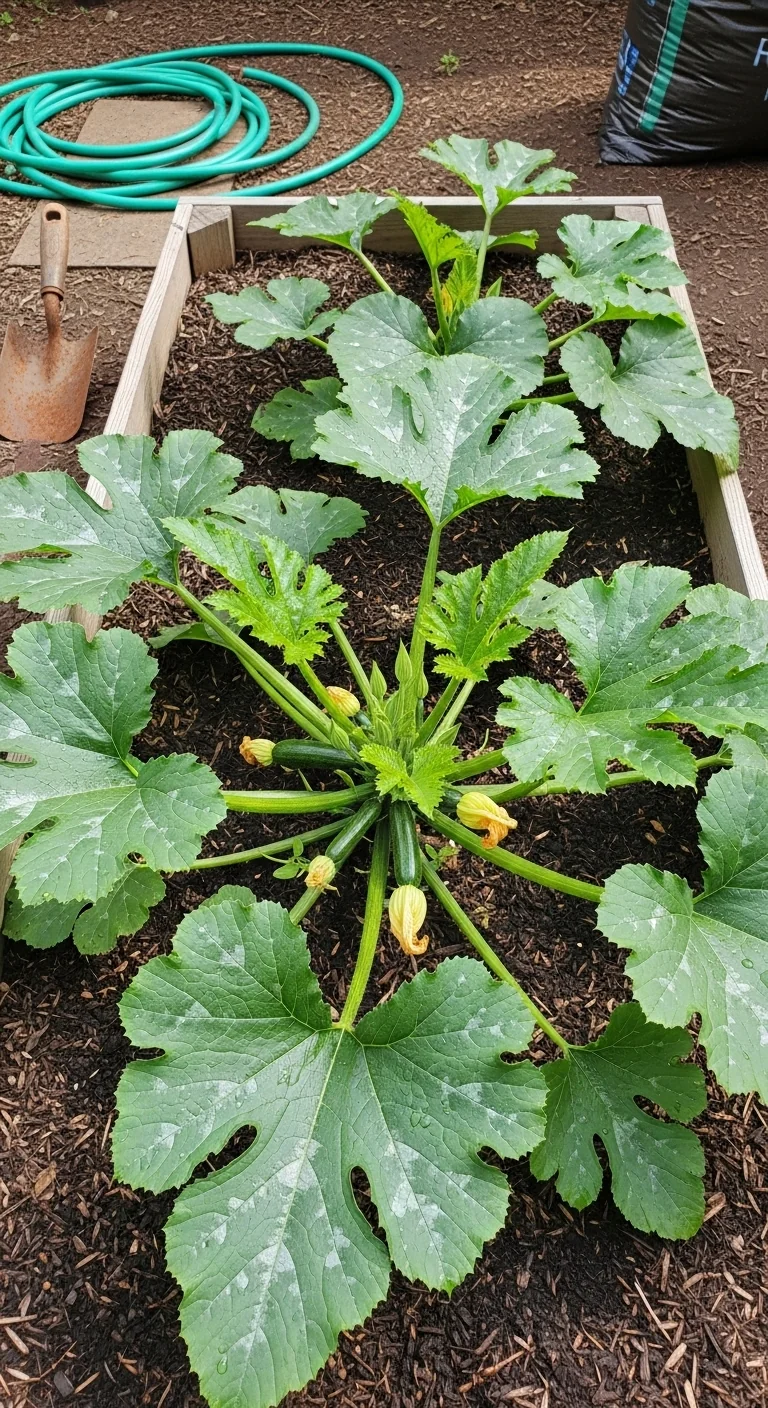
Raised beds solve zucchini’s two biggest vulnerabilities: poor drainage that invites root rot and sprawling vines that crowd out other crops. The key is selecting the exact configuration that aligns your bed size, local rainfall patterns, and amendment schedule with the plant’s vining habit and heavy nutrient draw before the first seed goes in.
This listicle focuses exclusively on nine raised-bed-specific configurations. It does not cover pure container growing or general in-ground advice except where it directly informs bed choice. Every recommendation ties back to measurable conditions you can check in your own garden today.
You will finish with a clear assignment: which two setups to install first, exactly how they work together, and the thresholds that tell you when to adjust or switch. No vague rules. No guesswork on spacing, support, or fertility.
Run your bed through the three-branch grid below, pick the two matching items, and install them in sequence for zucchini that stays productive without overtaking the bed.
The Yield Grid Decision Grid
Branch 1: Compact space. Your raised bed measures 32 square feet or smaller (typical 4 by 8 feet or less) and you need maximum plants per square foot without constant pruning fights. Recommended: Items 1, 7, and 8 below.
Branch 2: Moisture priority. Your area averages less than 1 inch of rain per week during peak summer or you cannot water daily. Recommended: Items 2, 5, and 6 below.
Branch 3: Nutrient sustainability. You want to cut mid-season side-dressing frequency or your native soil tests low in organic matter. Recommended: Items 3 and 4 below. See how raised beds compare to in-ground options here.
Quick Comparison Table
| Option | Key mechanism | Best for | Decision Grid Branch | Effort Score |
|---|---|---|---|---|
| Vertical Trellis Integration | Vines trained upward on 5-6 foot supports | Space efficiency | Branch 1 | 1 |
| Drip Irrigation Setup | Targeted root-zone delivery at soil level | Consistent moisture without leaf wetting | Branch 2 | 2 |
| Soil Mix Optimization | Custom 50-30-20 blend layered at fill time | Immediate nutrient availability | Branch 3 | 1 |
| Hugelkultur Base Layer | Buried woody debris creates slow-release fertility | Long-term nutrient bank | Branch 3 | 1 |
| Self-Watering Conversion | Reservoir at base wicks water upward on demand | Hands-off moisture stability | Branch 2 | 2 |
| Wicking Bed Retrofit | Capillary mat draws water from lower reservoir | Dry-climate reliability | Branch 2 | 3 |
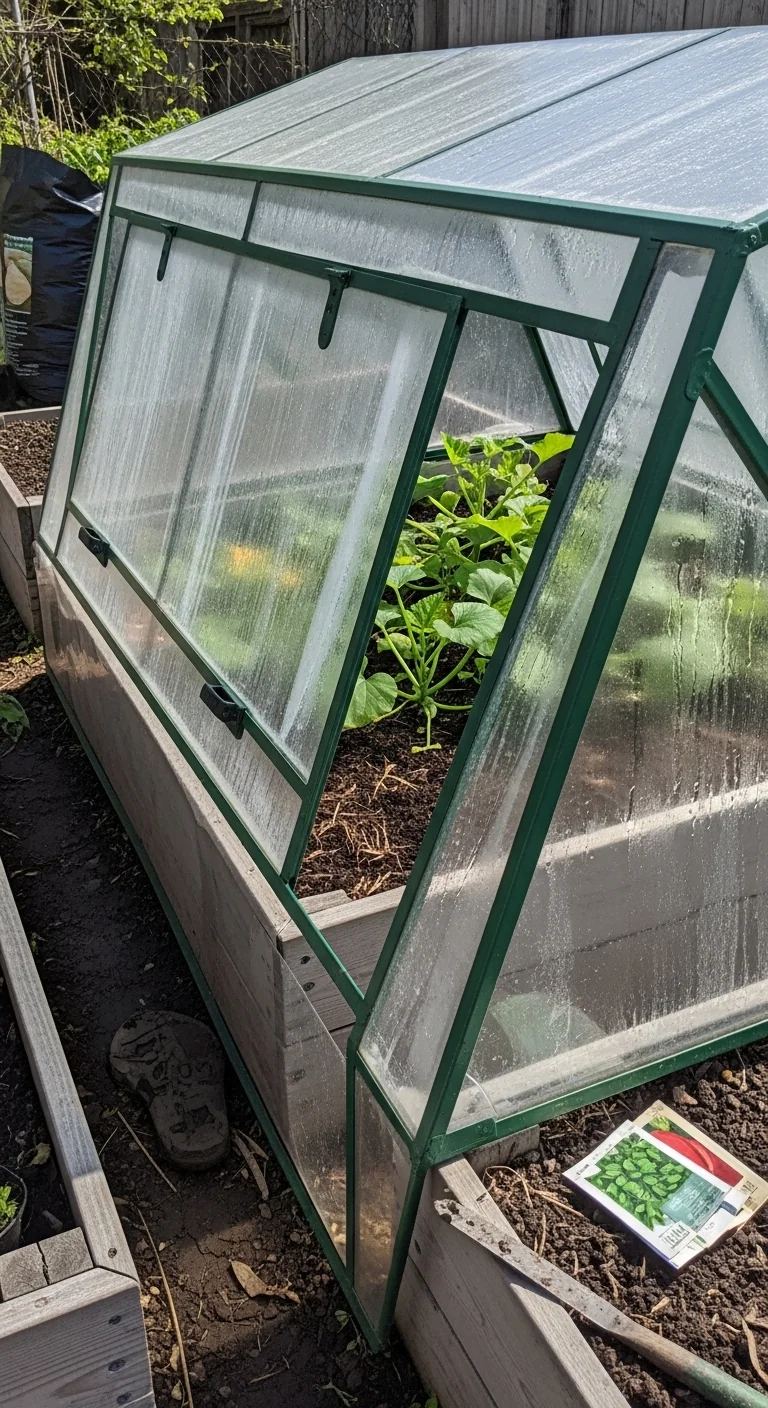
| Cold Frame Overlay | Removable clear cover raises soil temperature | Early and late harvests | Branch 1 | 2 |
| U-Shaped Bed Layout | Open center allows full access from three sides | Easy harvest and training in tight spaces | Branch 1 | 1 |
| Raised Bed Against Fence Placement | Fence serves as built-in vertical support | Zero-extra-structure vertical growth | Branch 1 | 1 |
Vertical Trellis Integration
Best for: Branch 1
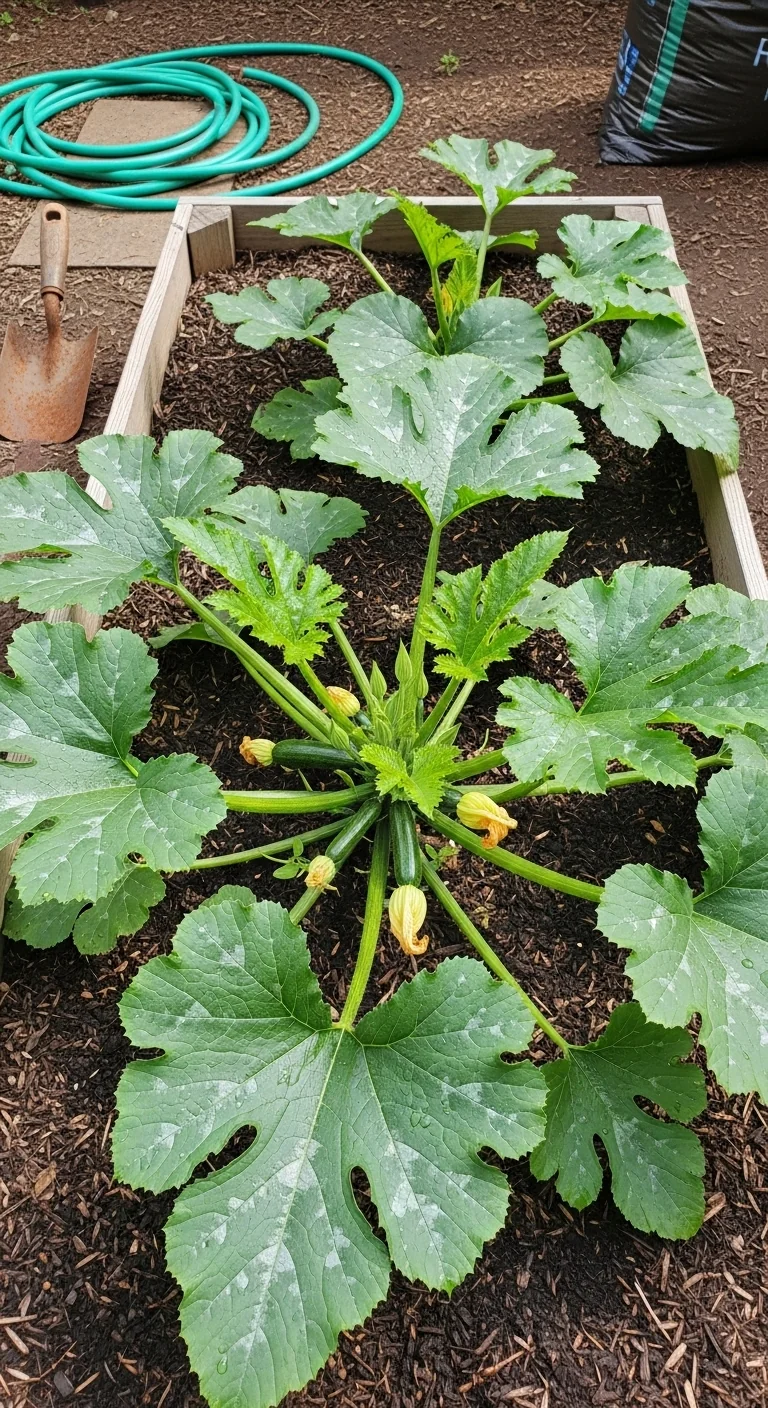
Install a 5- to 6-foot trellis along the north side of the bed at planting time. Train the main stem upward by tying every 12 inches with soft cloth strips. Remove side shoots below the first fruit set once the plant reaches 18 inches tall. This keeps the vine footprint under 2 square feet instead of the usual 8 to 12 square feet. In raised beds the improved drainage pairs with vertical airflow to cut foliar disease pressure. Common mistake: tying too tightly with twine that girdles stems. Use 1-inch-wide fabric ties instead. Full instructions appear in the DIY raised bed trellis guide.
Drip Irrigation Setup
Best for: Branch 2
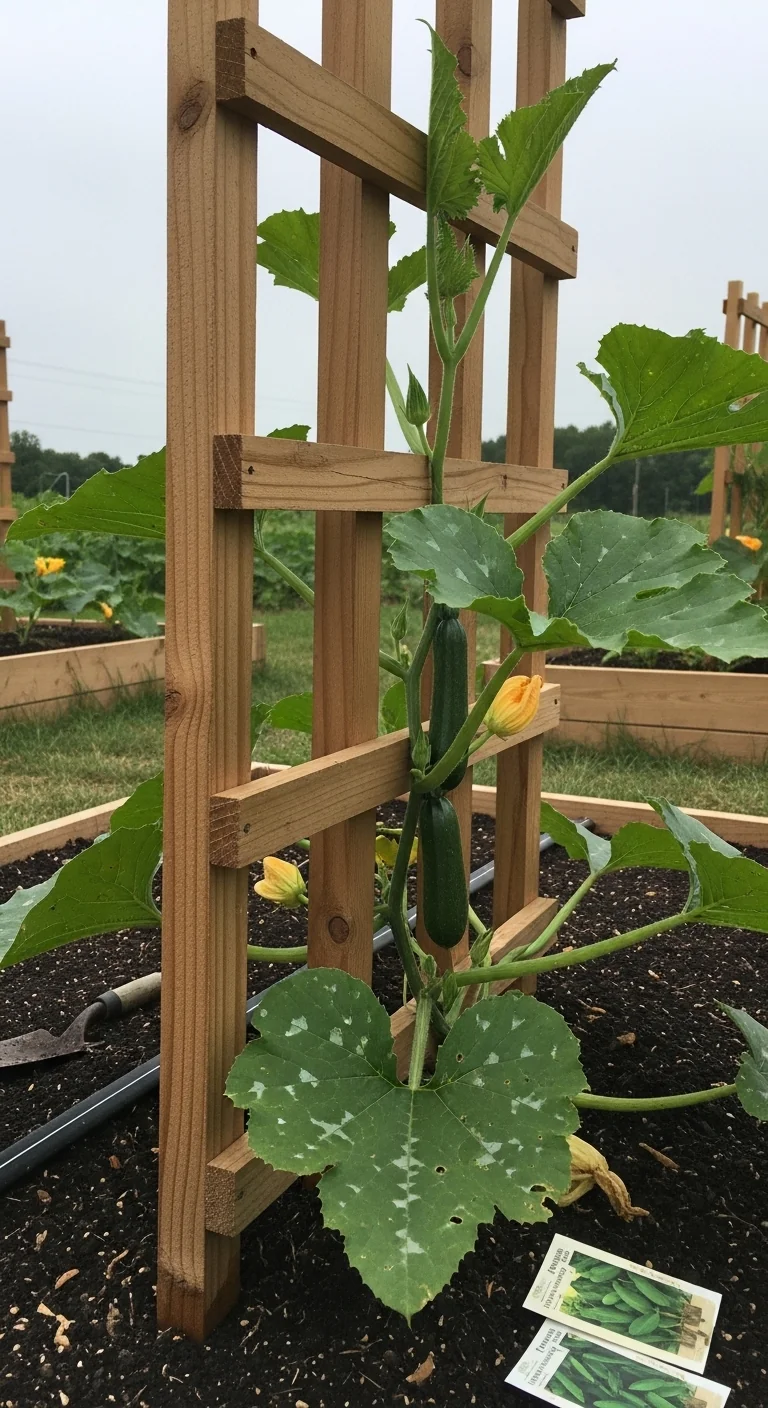
Run ½-inch drip line in a grid pattern 6 inches from the plant base. Set timer for 20 to 30 minutes every other day when rainfall is below 1 inch weekly. This delivers water directly to roots without wetting leaves, which prevents mildew. Skip overhead sprinklers entirely in humid zones. Edge case: raised beds heat faster, so check soil 4 inches down before watering; if still moist, skip the cycle.
Soil Mix Optimization
Best for: Branch 3
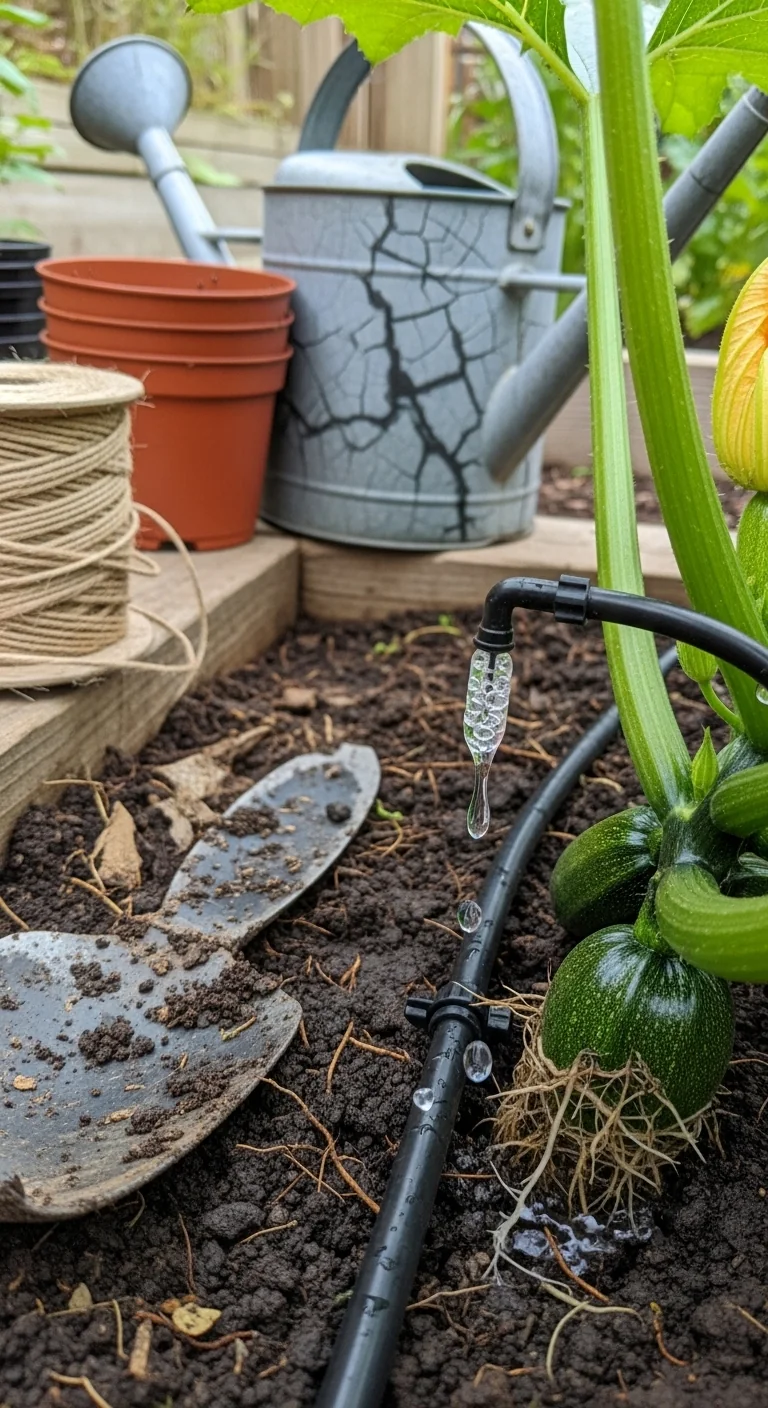
Layer 50 percent high-quality compost, 30 percent coarse sand or perlite for drainage, and 20 percent native soil or aged bark. Target pH 6.0 to 7.5 and soil temperature of at least 65 degrees F before planting. This blend supplies the initial nitrogen and potassium zucchini demands without immediate side-dressing. Threshold rule: retest pH at 30 days; if below 6.0, incorporate 1 cup lime per 4 square feet and wait 10 days before any further adjustment. See exact ratios in the best soil mix for raised beds.
Hugelkultur Base Layer
Best for: Branch 3
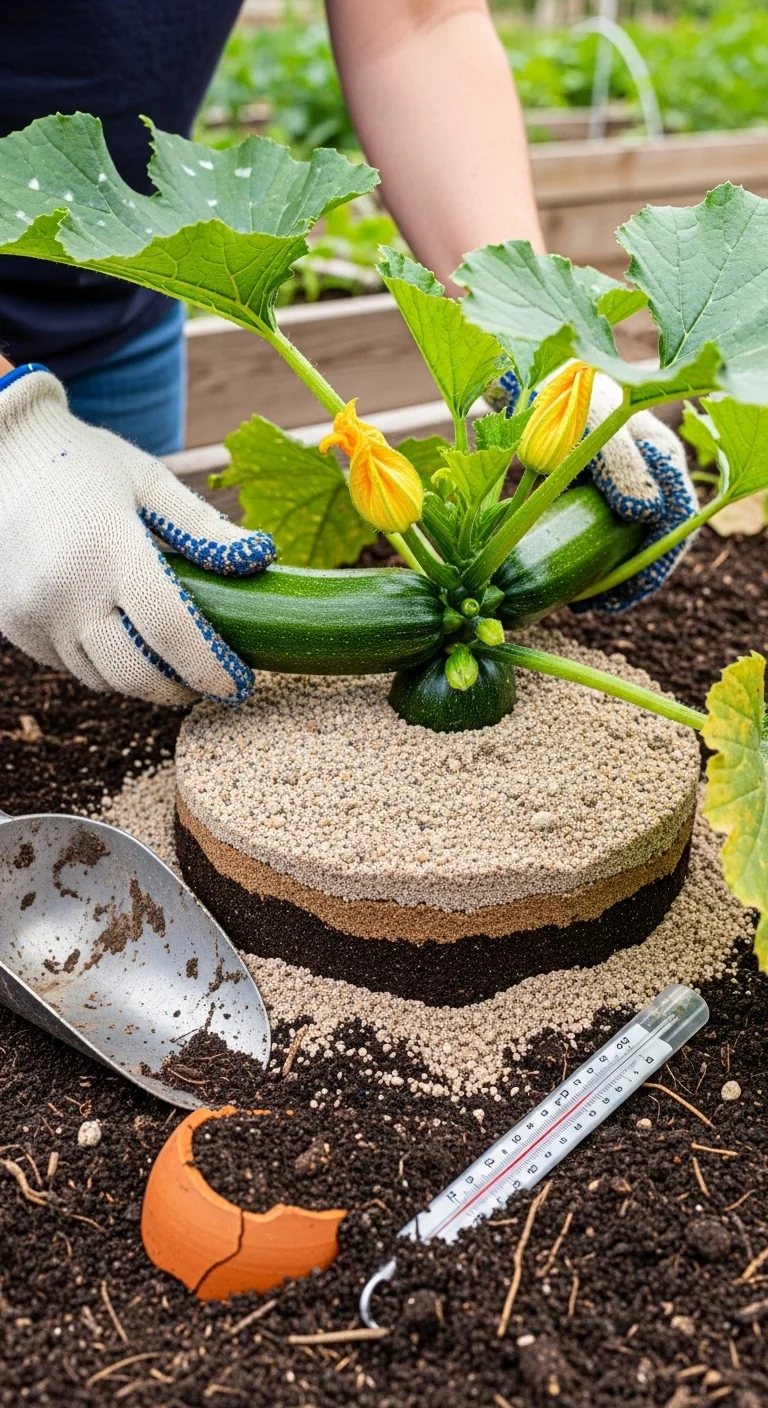
At bed construction, bury 8 to 12 inches of untreated hardwood branches and logs, top with 4 inches of leaves or straw, then finish with the optimized soil mix. The decomposing wood holds moisture and releases nutrients slowly over two to three seasons. In raised beds this layer stays contained and does not sink unevenly. 10-minute workflow: lay branches, add leaves, water thoroughly once, then add soil. Upgrade option: mix in a thin layer of finished compost between wood and soil for faster initial breakdown. Details in the hugelkultur raised bed guide.
Self-Watering Conversion
Best for: Branch 2
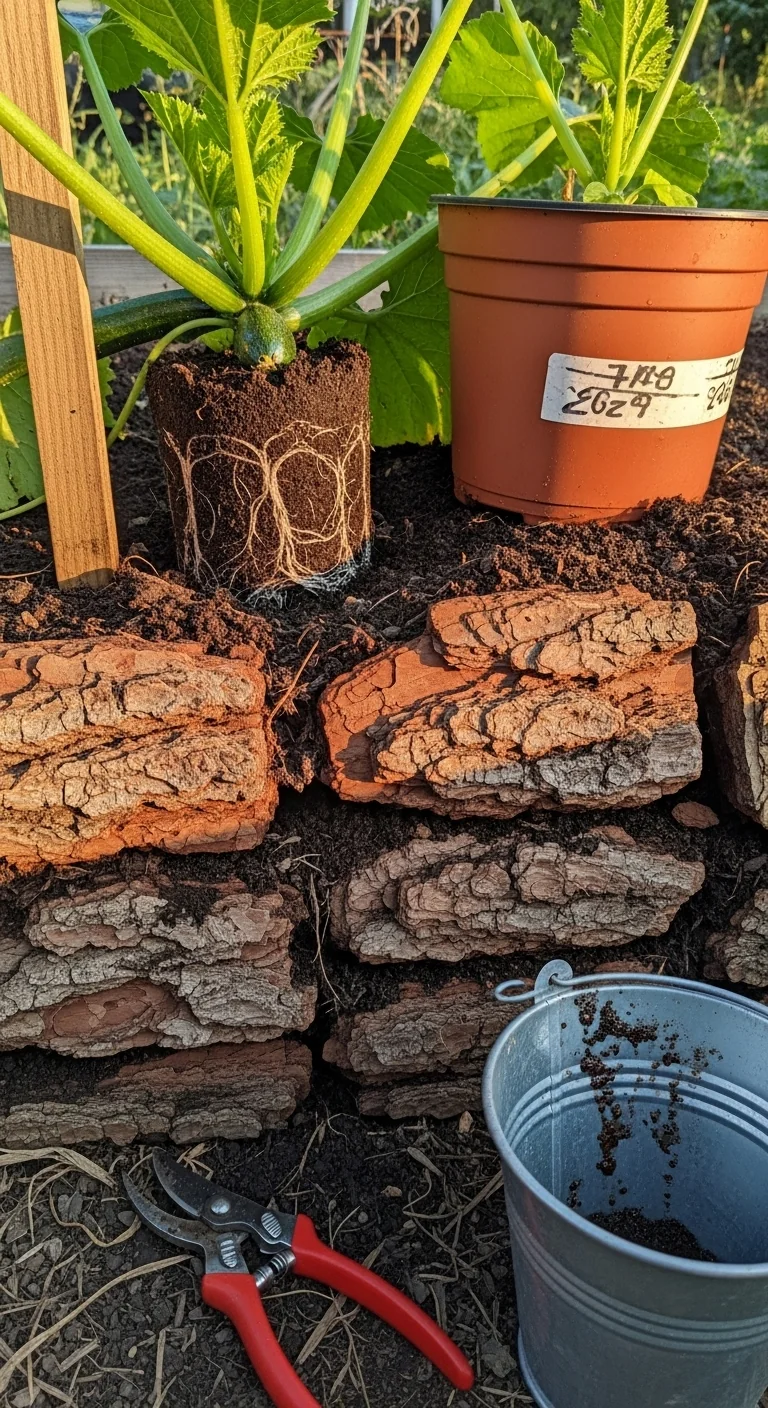
Insert a perforated 4-inch PVC reservoir pipe along the bottom third of the bed and connect to an external fill tube. Fill the reservoir every 5 to 7 days. The soil wicks moisture upward on demand. Use vs skip: ideal when summer highs exceed 85 degrees F; skip in cool, wet climates where constant saturation risks rot. Edge case: zucchini planted near the reservoir edge show faster establishment than center plants.
Wicking Bed Retrofit
Best for: Branch 2
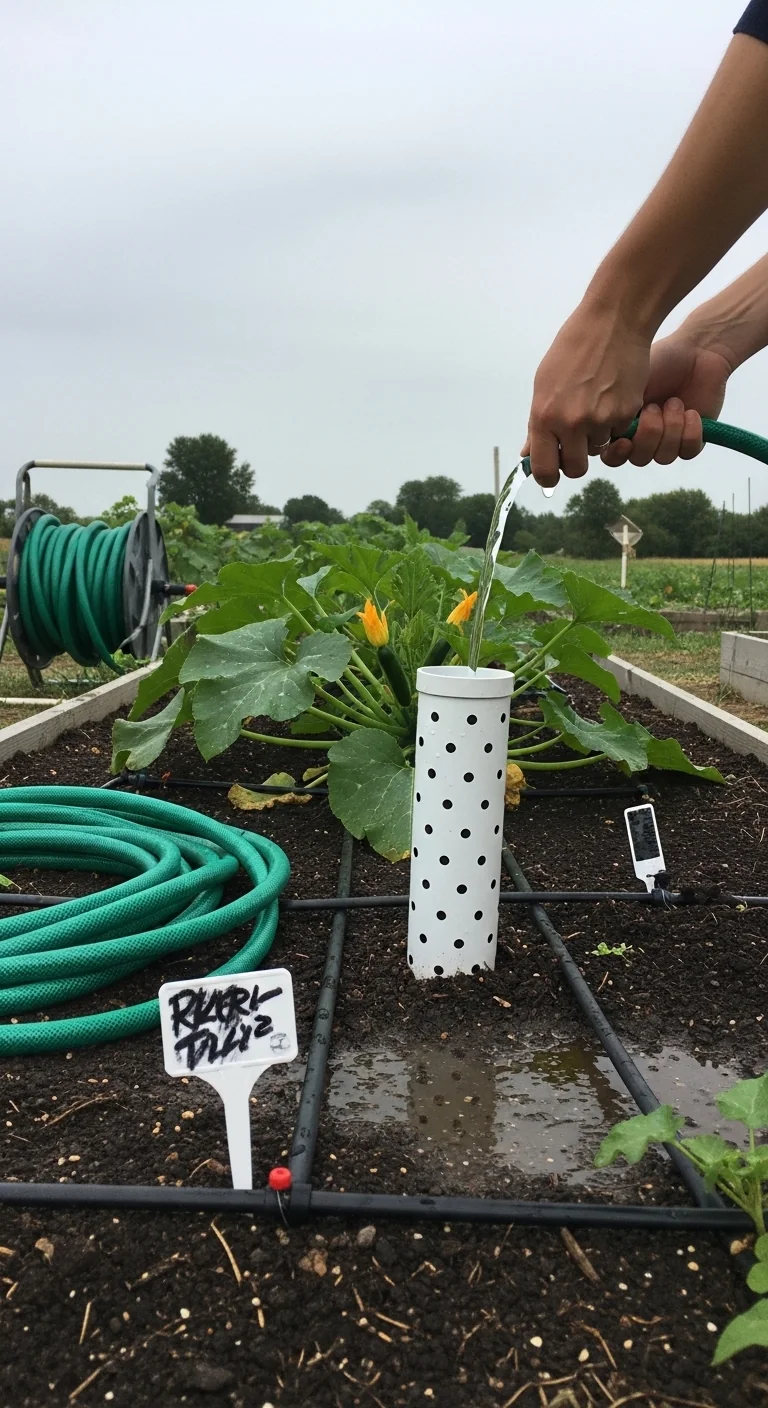
Lay landscape fabric over a 4-inch gravel base, add a capillary mat or old cotton sheet, then fill with soil mix. Water the reservoir below the fabric once every 7 to 10 days. This system pulls water evenly even during 10-day dry spells. Threshold rule: maintain reservoir level at 2 inches below soil surface; if soil surface dries in under 48 hours, add more wicking material. Full retrofit steps in the wicking raised bed guide.
Cold Frame Overlay
Best for: Branch 1
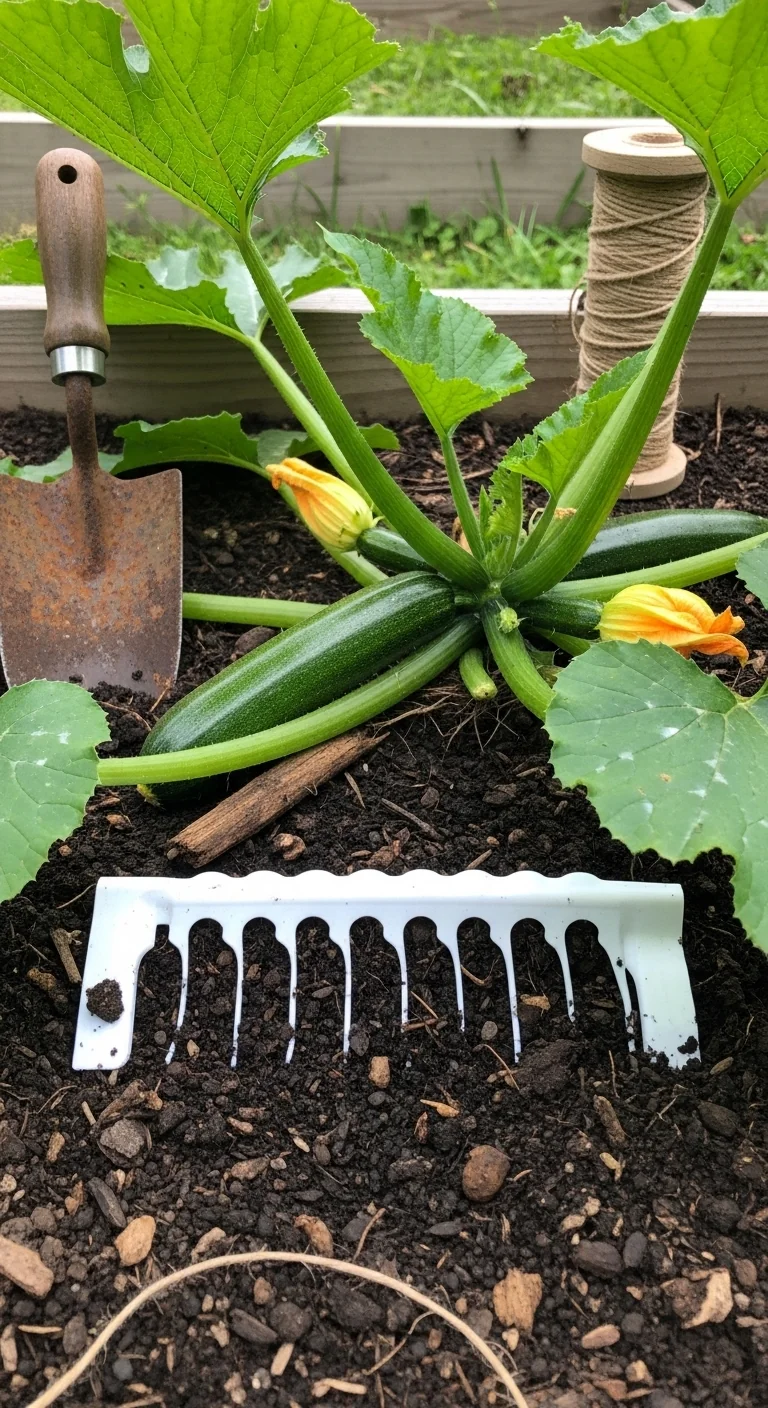
Build or buy a hinged polycarbonate lid sized exactly to your bed. Place over the bed when night temperatures drop below 50 degrees F or to push planting two weeks earlier in spring. Soil under the frame warms 8 to 12 degrees F faster than open beds. Remove the lid once daytime highs stay above 70 degrees F and zucchini vines reach the trellis. Synergy with vertical trellis: the frame protects early vertical growth without shading the entire garden. Blueprint steps and material list in the cold frame raised bed guide.
U-Shaped Bed Layout
Best for: Branch 1
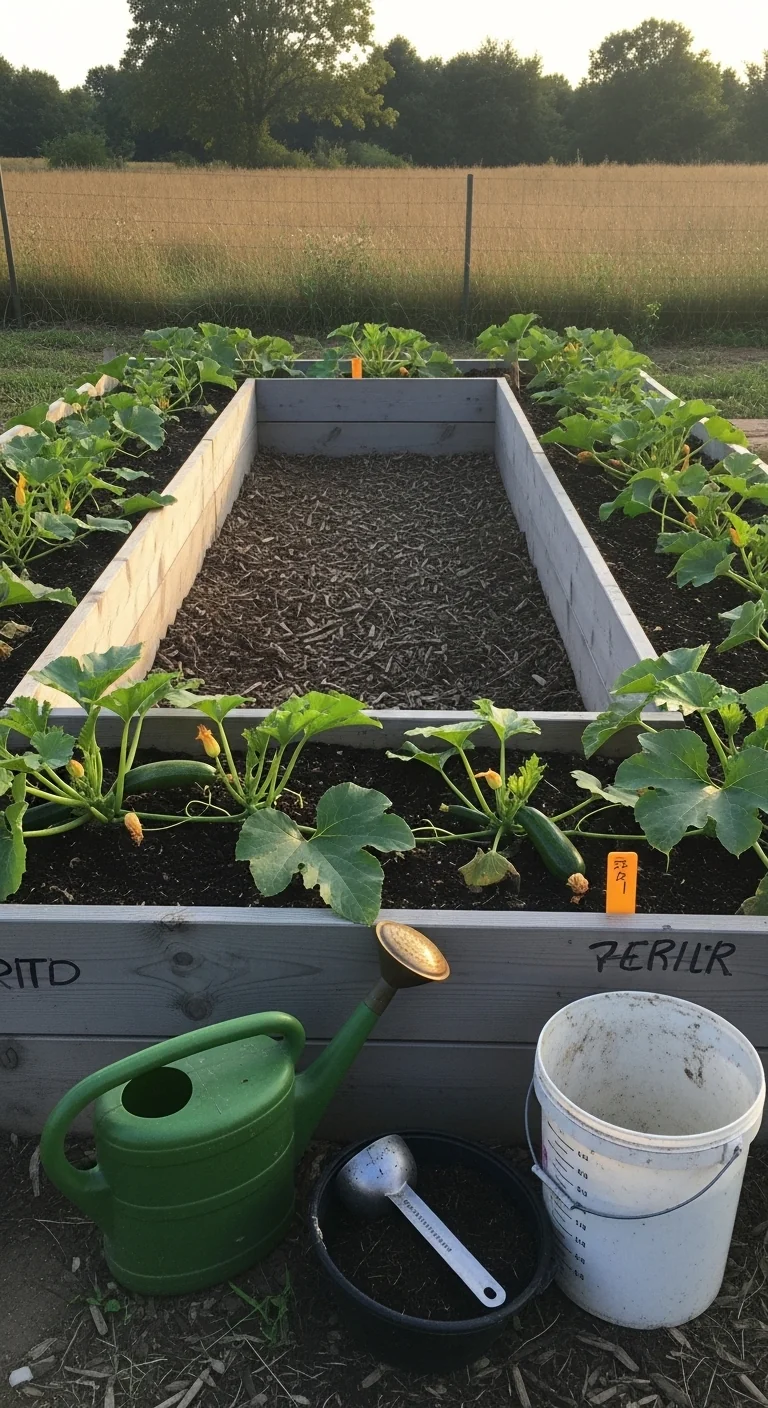
Construct the bed in a U shape with the open side facing south for full sun access. This gives 3-sided reach for training vines and harvesting without stepping on soil. Plant one zucchini at each inside corner and train outward along the arms. Use vs skip: choose when your space allows only perimeter paths; skip if you already have full 360-degree access. Edge case: the center open area doubles as a narrow walkway for quick daily checks.
Raised Bed Against Fence Placement
Best for: Branch 1
Position the bed directly against a south- or west-facing fence or wall. Use the fence as the vertical support structure instead of building a separate trellis. Space plants 18 inches apart along the fence line. This eliminates material cost and wind sway. Threshold rule: ensure the fence receives at least 6 hours of direct sun; if shaded more than 2 hours daily, fruit set declines. Complete layout details in the raised bed against fence guide.
Starter Stack (What to Choose First)
For Branch 1 (Compact Space)
Start with Vertical Trellis Integration plus Cold Frame Overlay. The trellis frees floor space immediately while the frame protects early growth in small beds. Total setup time 4 to 6 hours, material cost 30 to 80 dollars depending on lumber on hand.
For Branch 2 (Moisture Priority)
Start with Drip Irrigation Setup plus Self-Watering Conversion. Drip provides precise delivery and the reservoir acts as backup during heat spikes. Combined time 3 to 5 hours, material cost 40 to 70 dollars.
For Branch 3 (Nutrient Sustainability)
Start with Soil Mix Optimization plus Hugelkultur Base Layer. The custom blend gives instant nutrition while the buried wood supplies steady release for the entire season. Setup time 2 to 4 hours at fill, material cost 25 to 60 dollars.
When This Won’t Work
Two measurable conditions cause consistent failure even with the right configuration. First, if your raised bed depth measures less than 12 inches, zucchini roots hit the bottom liner or native soil too quickly and plants become stunted by midsummer. Switch to a deeper bed or mound additional soil on top before planting. Second, if night temperatures regularly fall below 50 degrees F after transplanting without protection, fruit set stops regardless of variety. Add the cold frame overlay or wait until soil temperature holds steady above 65 degrees F at 4-inch depth.
In either case the alternative is to move to a larger in-ground mound or choose a different warm-season crop until conditions improve. Check your bed dimensions and local frost dates against these thresholds before investing time.
Choosing the Right Option for Your Situation
Budget Threshold
If total materials budget stays under 100 dollars, begin with Soil Mix Optimization and Vertical Trellis Integration. Both use common lumber and compost you may already stock.
Time Threshold
If you can dedicate only 2 hours or less per week after planting, select Drip Irrigation Setup and Hugelkultur Base Layer. Once installed they require almost no weekly intervention.
Technical Constraint: Native Soil Type
If your native soil is heavy clay (sticks when wet and cracks when dry), prioritize Hugelkultur Base Layer plus Wicking Bed Retrofit. The wood and capillary action counteract compaction.
Quick Yes/No checklist:
Is your bed 32 square feet or smaller? Yes → Branch 1.
Does summer rainfall average under 1 inch weekly? Yes → Branch 2.
Do you want fewer than two mid-season feedings? Yes → Branch 3.
All no? Re-run measurements and default to Branch 3.
Expert Q&A
How close can I space zucchini when using a trellis in a raised bed?
Space plants 12 to 18 inches apart along the trellis line. Vertical training lets roots share the bed volume while leaves receive full sun and air. Closer than 12 inches risks nutrient competition even with rich soil; wider than 18 inches wastes compact-bed space.
Does raised bed depth change zucchini root development?
Depths of 12 to 18 inches support full root spread and steady water uptake. Shallower than 12 inches forces roots to circle or hit barriers, reducing drought tolerance. Deeper than 24 inches adds no measurable benefit for this crop but increases fill cost.
When should I prune zucchini vines in a raised bed to keep airflow high?
Begin pruning once the main stem reaches 18 inches and the first female flower appears. Remove leaves touching soil and any side shoots below the lowest fruit. This keeps foliage off damp bed surfaces and lowers mildew risk in humid zones.
Can multiple zucchini varieties share one raised bed without cross-pollination issues?
Yes, as long as total plants fit the spacing rules for your chosen configuration. Different varieties pollinate each other freely but fruit remains true to type. Limit to two varieties per 32-square-foot bed to avoid overcrowding.
How do I extend the zucchini harvest into early fall in a raised bed?
Install the cold frame overlay when night temperatures first dip near 50 degrees F and continue harvesting until frost kills the vines. Combine with consistent moisture from drip or self-watering to keep plants active through cooler nights.
Conclusion
The single decision that determines success is matching your exact bed size and local conditions to one of the three branches before you buy a single seed packet. The most common mistake is treating all raised beds the same and planting without vertical support or moisture infrastructure.
Run the checklist, install your two Starter Stack items, and you will have a zucchini system that stays productive and contained all season. Next step: review the winterizing raised beds guide now so you close the season cleanly and prepare the same bed for next year.