
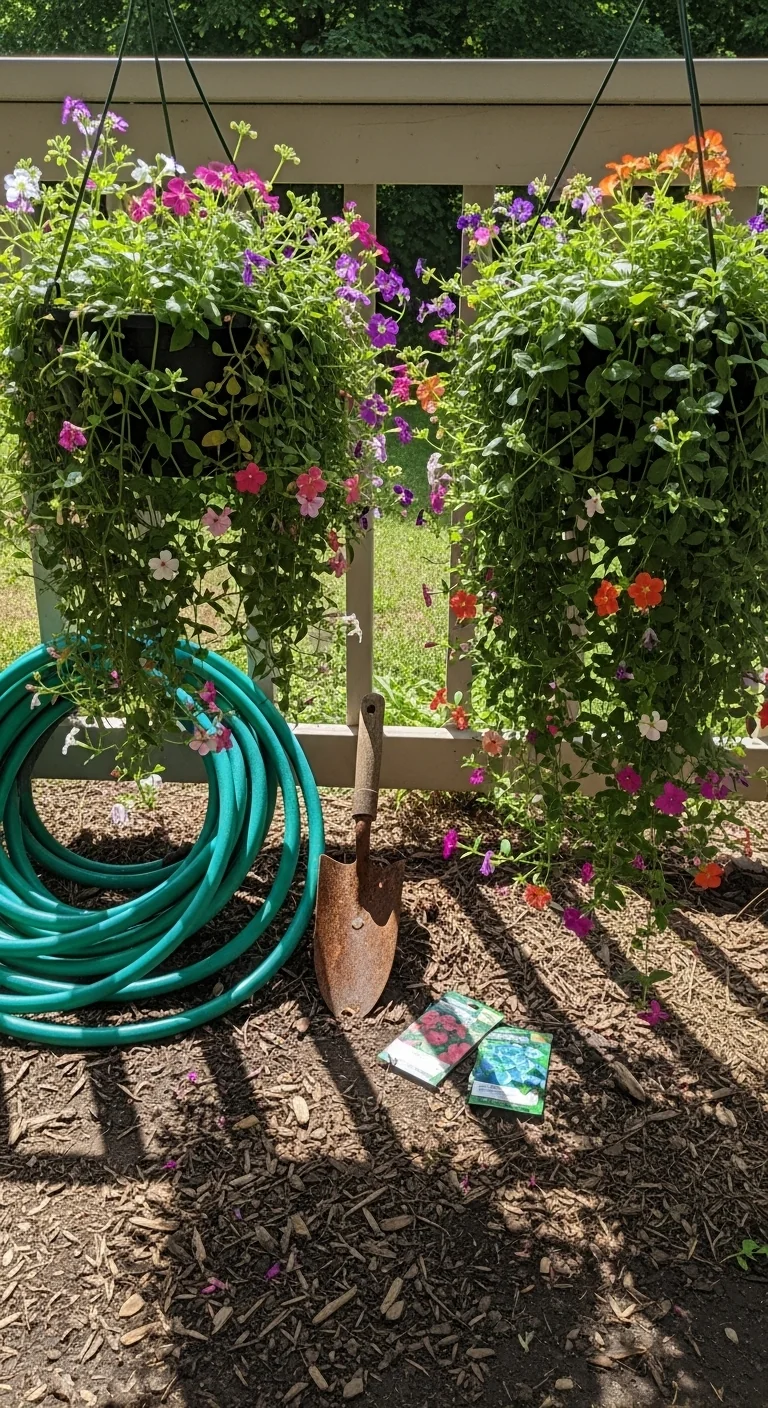
The real difference between hanging baskets that deliver months of color and those that fade by midsummer is not the brand of potting mix. It is pairing each flower’s natural response to light intensity, wind movement, and soil volume with the exact conditions at your specific hanging spot.
This guide evaluates nine flowering plants proven for hanging baskets in the US, UK, Canada, Australia, New Zealand, Ireland, and South Africa climates. It focuses exclusively on trailing and mounding types that cascade naturally over the rim. Upright bloomers, foliage-only spillers, and edible options fall outside the scope.
After reading you can select the right flower for your daily sun exposure and wind pattern, follow the exact planting steps to maximize bloom density, and apply the care thresholds that keep roots healthy without guesswork.
Run your basket location through the three-branch decision grid below to pick the hanging basket flowers that will thrive without mid-season replacement.
The Yield Grid Decision Grid
Branch 1 applies when your basket receives 6 or more hours of direct sun daily combined with moderate wind exposure (equivalent to USDA zones 7 through 11). These conditions demand heat-tolerant trailers that hold shape without scorching.
Recommended: Items 1, 4, and 7 below.
Branch 2 applies when your basket receives 4 to 6 hours of direct sun daily with low wind exposure in sheltered spots. These conditions suit varieties that bloom continuously without stretching or burning.
Recommended: Items 2, 5, and 8 below.
Branch 3 applies when your basket receives under 4 hours of direct sun daily or sits in north-facing positions. These conditions favor cool-loving pendulous types that perform in consistent shade.
Recommended: Items 3, 6, and 9 below.
For detailed mapping of your site’s light levels across seasons, consult the container flowers guide.
Quick Comparison Table
| Option | Key mechanism | Best for | Decision Grid Branch | Effort Score |
|---|---|---|---|---|
| Calibrachoa | Self-cleaning blooms drop naturally; vigorous trailing stems to 24 inches | Heat and full sun baskets | Branch 1 | 1 |
| Bacopa | Dense mounding habit fills gaps quickly; tolerates humidity | Partial shade continuous bloom | Branch 2 | 2 |
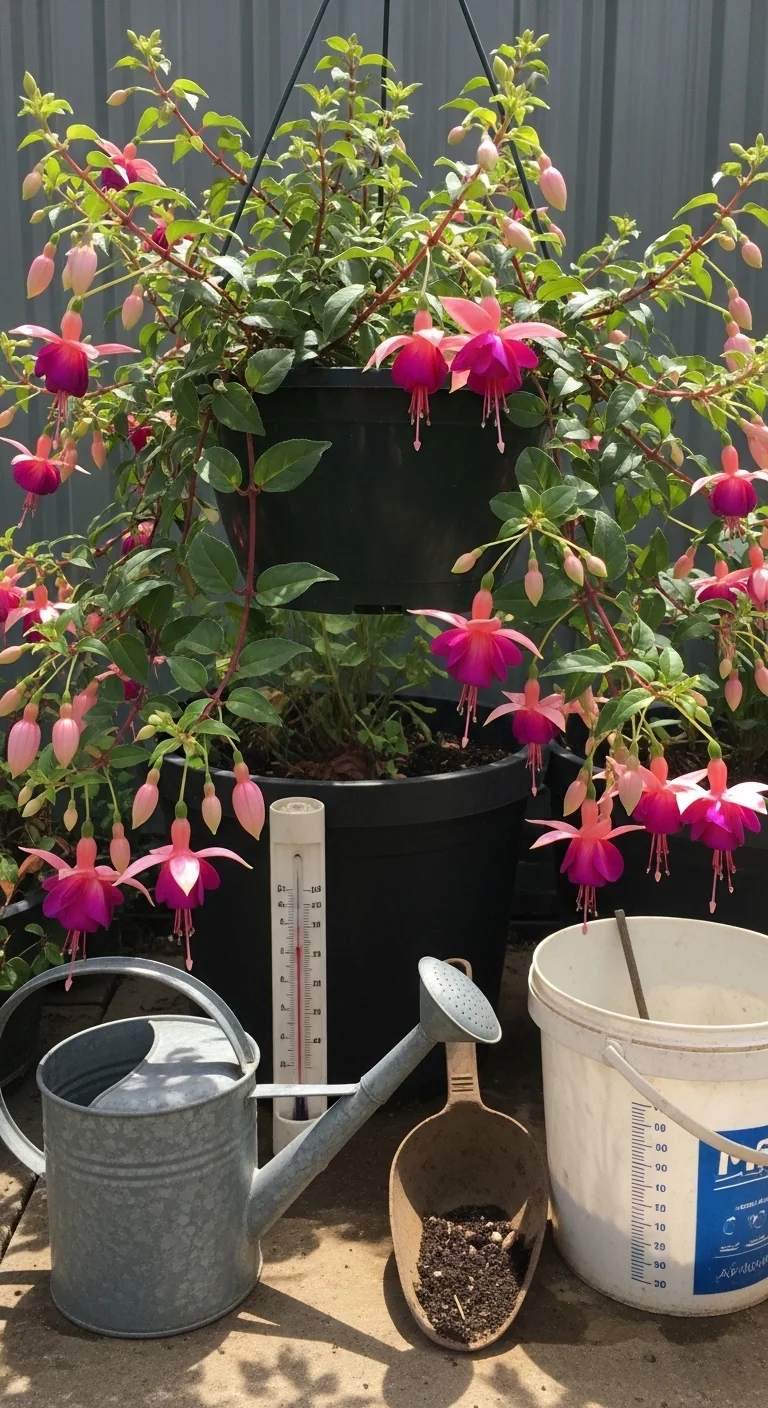
| Fuchsia | Pendulous flowers on flexible stems; attracts pollinators | Cool shaded baskets | Branch 3 | 3 |
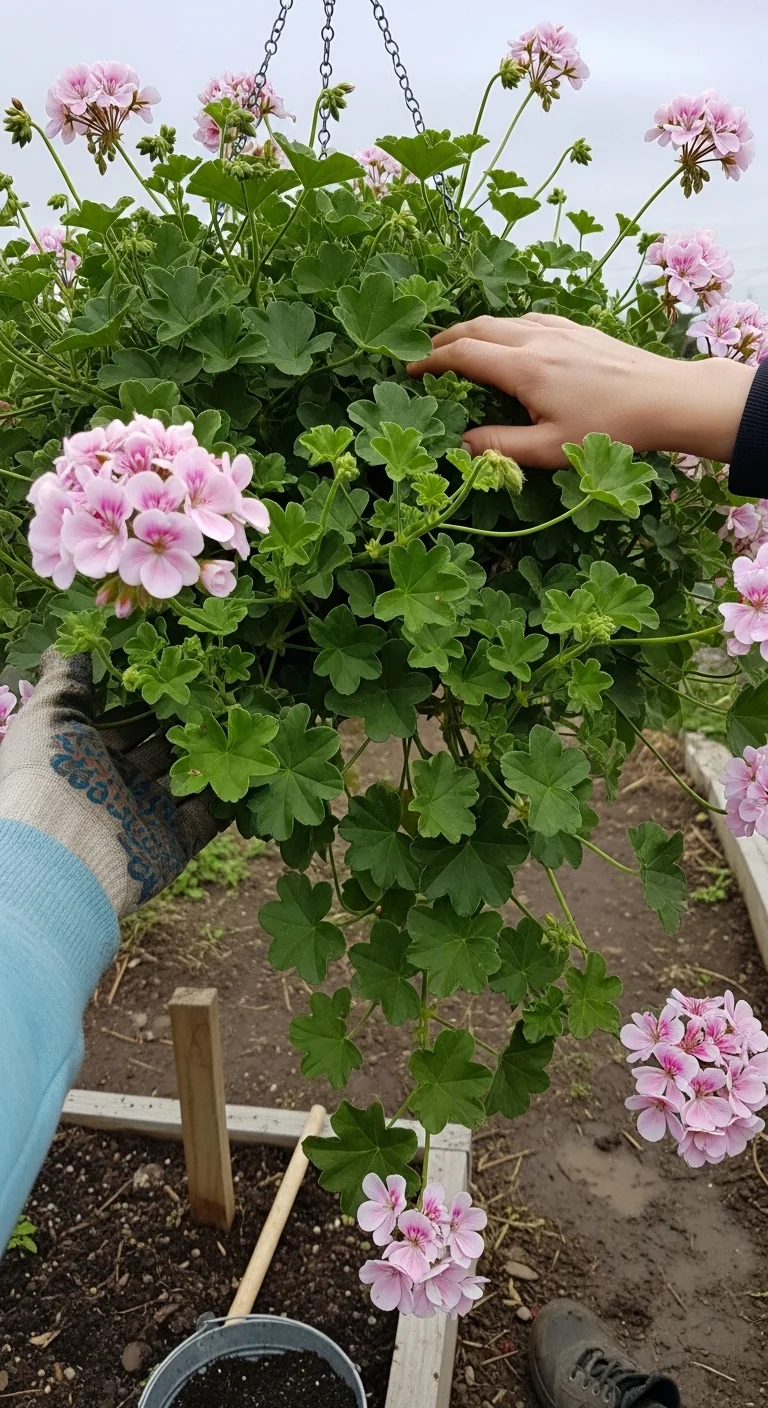
| Ivy Geranium | Leathery ivy-like leaves and trailing habit; wind resistant | Full sun with air movement | Branch 1 | 2 |
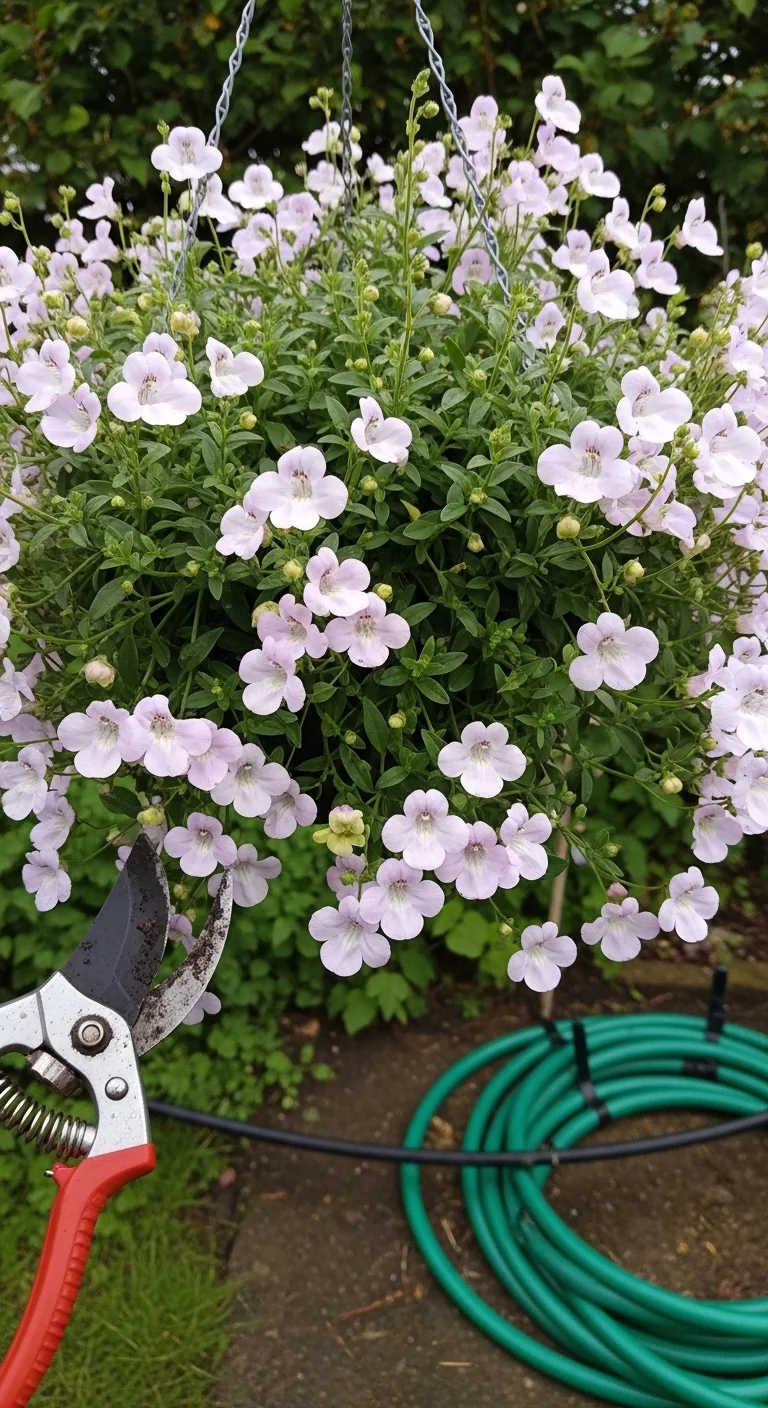
| Diascia | Arching stems with twinspur flowers; cool-season vigor | Partial shade with steady moisture | Branch 2 | 3 |
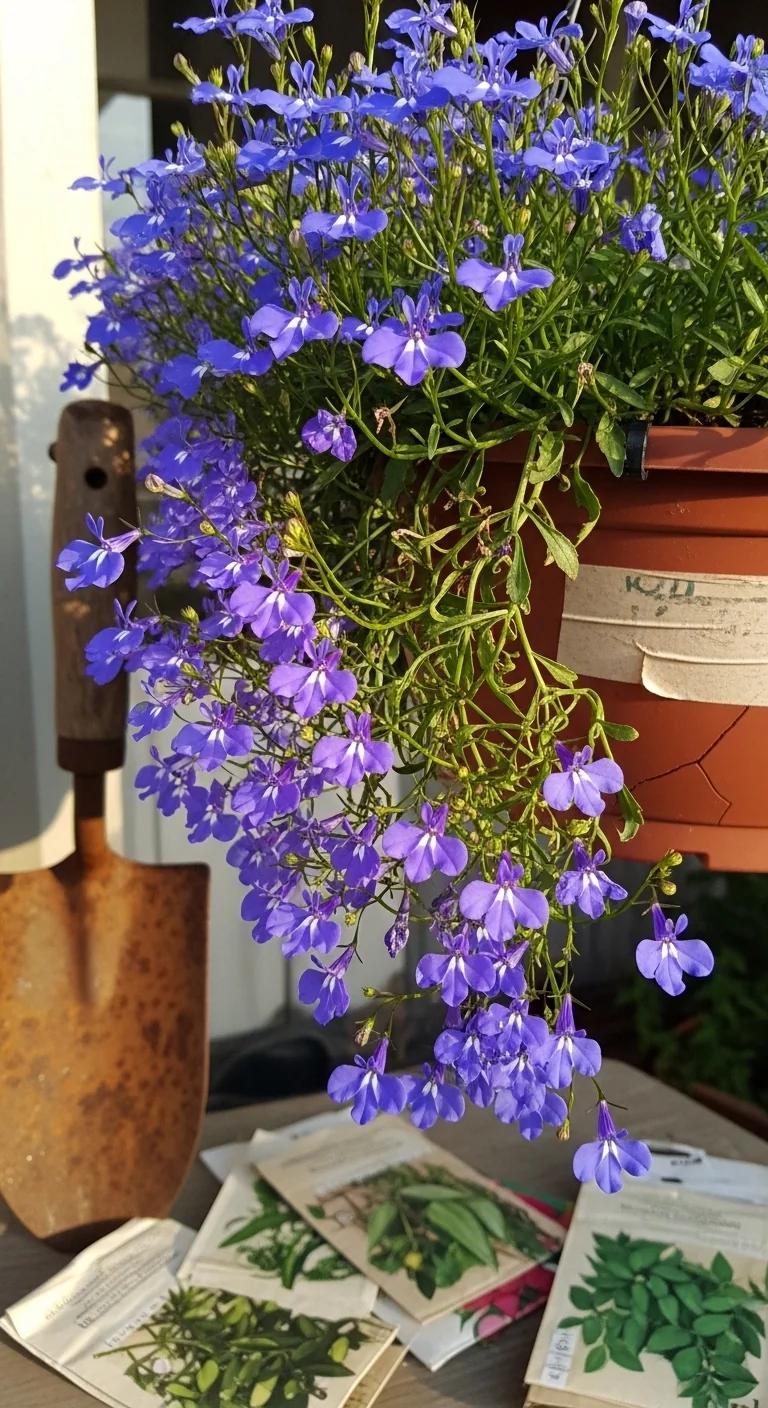
| Lobelia | Fan-shaped flowers in cool temps; compact trailing form | Low light sheltered spots | Branch 3 | 4 |
| Verbena | Clusters of small flowers on drought-tolerant stems | Full sun heat and wind | Branch 1 | 2 |
| Trailing Petunia | Large blooms on long cascading stems; vigorous growth | Partial sun with shelter | Branch 2 | 3 |
| Trailing Begonia | Large pendulous blooms; prefers moist shade | Low light north-facing baskets | Branch 3 | 3 |
Calibrachoa
Best for: Branch 1
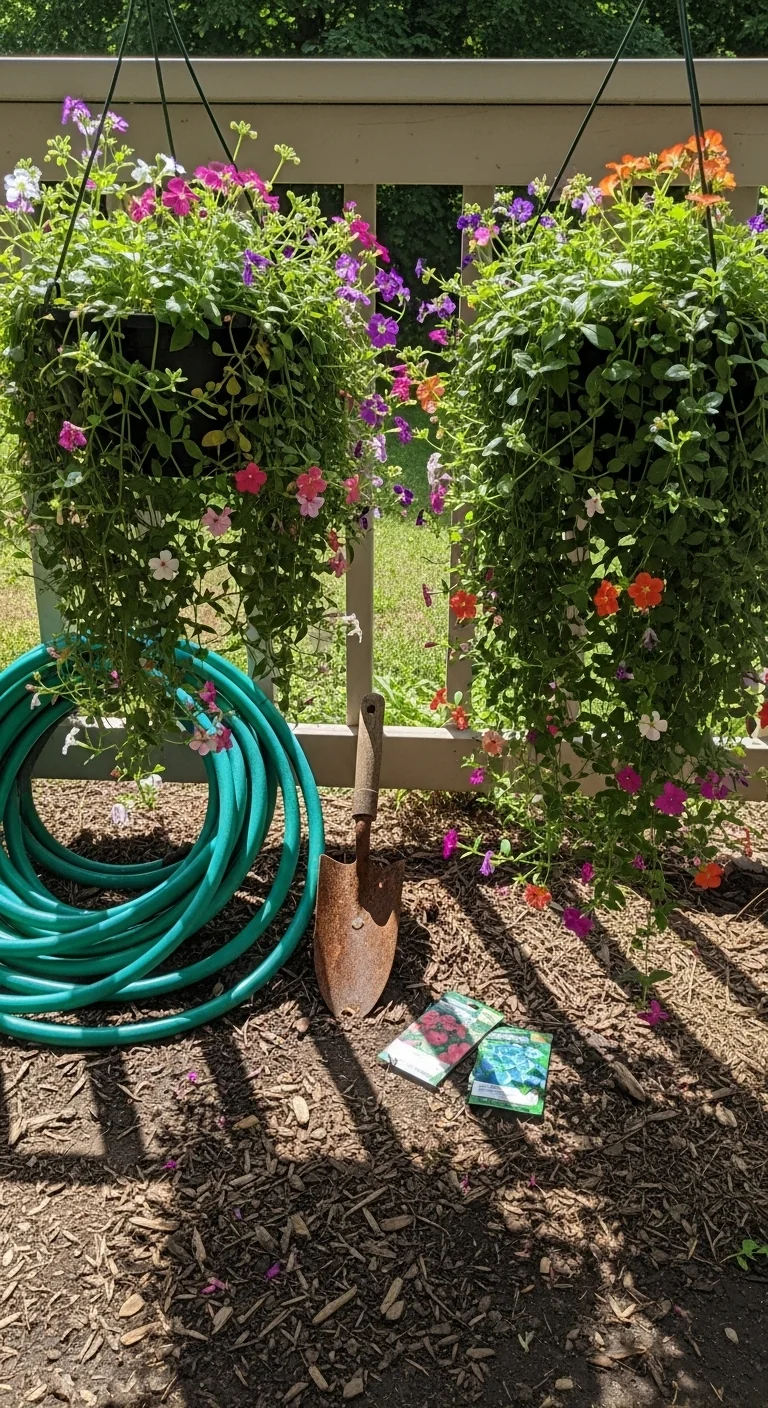
Calibrachoa delivers nonstop color through self-cleaning blooms that drop spent petals without intervention. The mechanism relies on its South American origins: prolific flower production triggered by full sun and temperatures between 60 and 90 F. Plant in baskets at least 12 inches wide using well-draining mix at pH 5.5 to 6.5.
Blueprint steps: Line the basket with coir, fill with potting mix plus perlite, space three plants evenly around the rim, water thoroughly after planting, and place in full sun. Common mistake: allowing soil to dry completely between waterings, which halts bloom set within days. See our full sun flowers for site assessment tips. This option rewards consistent moisture with cascades reaching 24 inches by midsummer. (178 words)
Bacopa
Best for: Branch 2
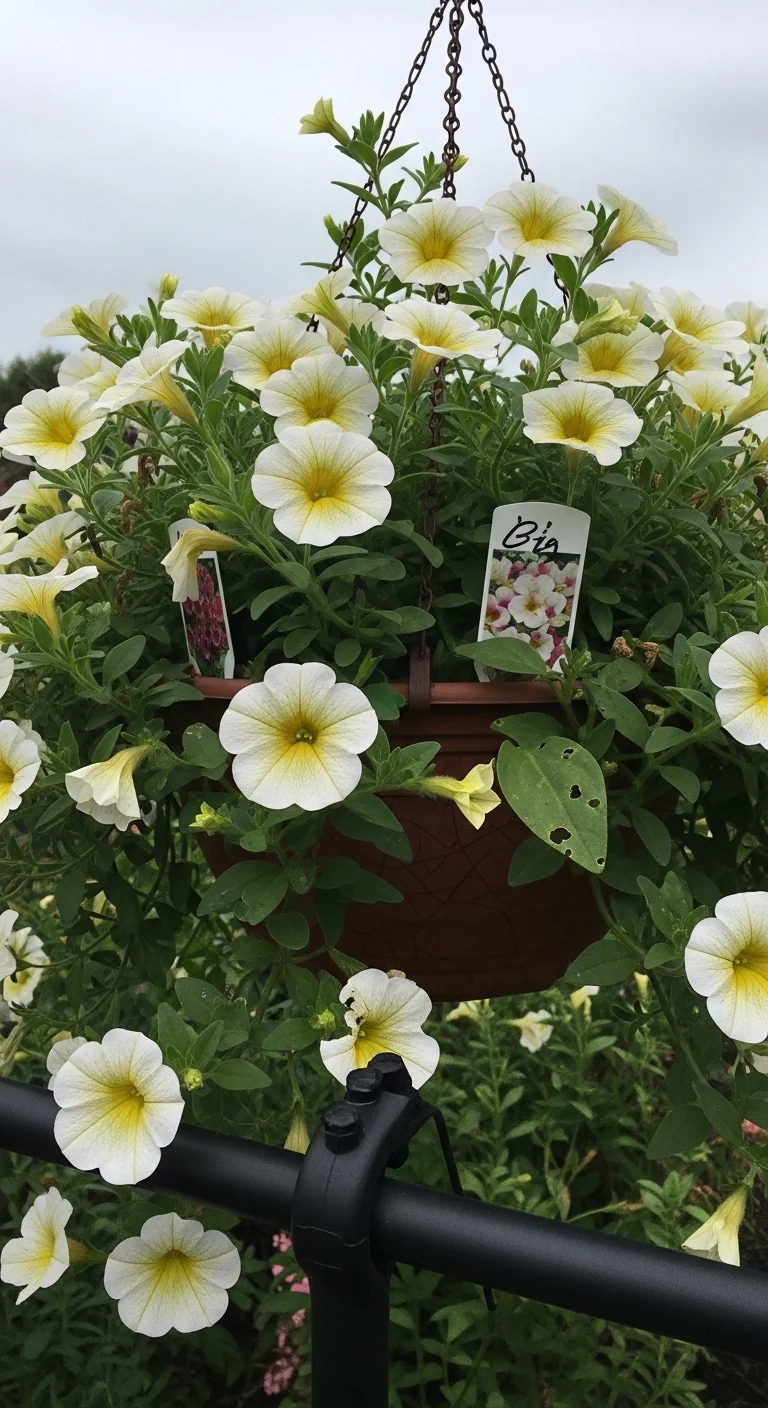
Use Bacopa when partial shade and humidity dominate your basket site. It produces small white or colored flowers on dense trailing stems that fill gaps without becoming leggy. Skip it in full sun above 85 F or in windy spots where foliage scorches. Edge case: it performs best when night temperatures stay above 55 F. (68 words)
Fuchsia
Best for: Branch 3
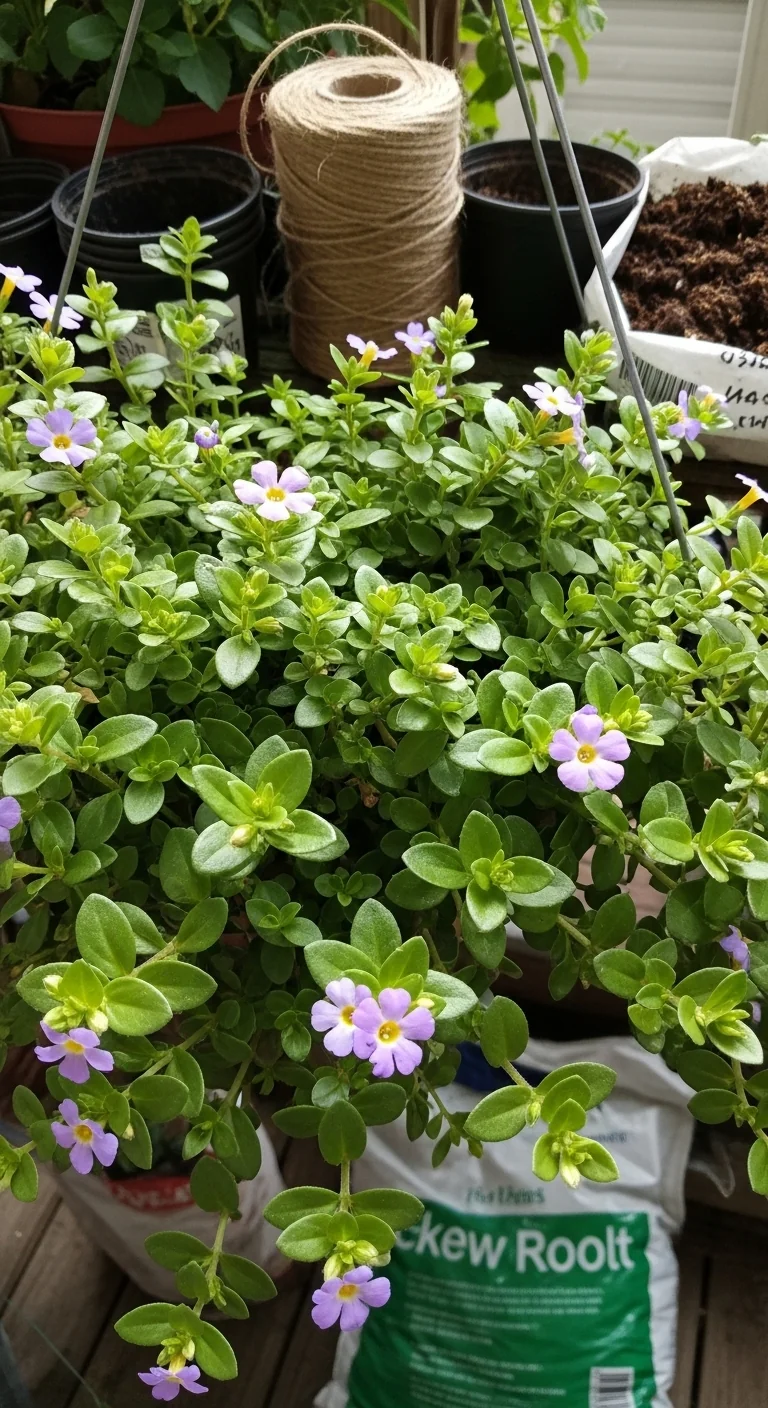
Fuchsia thrives when daily light stays under 4 hours. Its pendulous flowers open best at 50 to 70 F and drop quickly above 80 F. Threshold rule: maintain soil moisture so the top inch stays damp but never soggy; test by inserting a finger daily. Adjust by adding 20 percent more perlite if drainage slows in cool shade. Pair with the shade flowers guide for companion timing. (112 words)
Ivy Geranium
Best for: Branch 1
Ivy geranium uses leathery leaves and flexible trailing stems to resist wind damage in full sun baskets. The mechanism comes from its ivy heritage: thick foliage retains moisture while allowing air flow around roots. Follow this 10-minute workflow: soak the root ball for 10 minutes before planting, position at the basket rim, firm soil around stems, water until it drains freely, then hang immediately in the chosen spot. Upgrade option: add a slow-release fertilizer pellet at planting for steady nutrition through the season. Monitor soil every three days in heat above 85 F. See detailed steps in our geranium care resource. (162 words)
Diascia
Best for: Branch 2
Diascia suits partial shade baskets with steady moisture. Its arching stems carry twinspur flowers that continue through cooler weeks. Blueprint: choose a 14-inch basket, mix in extra compost for nutrient retention, plant five plugs evenly, and water to field capacity after installation. (62 words)
Lobelia
Best for: Branch 3
Lobelia produces fan-shaped flowers best in low light under 4 hours. It stays compact when temperatures remain below 75 F but stretches above that mark. Use vs skip: choose it for north-facing balconies with consistent moisture; skip if afternoon sun exceeds 3 hours or if summer highs top 80 F regularly. Edge case: it rebounds from light frost but wilts permanently above 85 F. (98 words)
Verbena
Best for: Branch 1
Verbena clusters small flowers on stems that tolerate drought once established in full sun. The mechanism: deep root system accesses limited basket soil efficiently when wind increases evaporation. Plant in 12-inch baskets with 30 percent perlite added to standard mix. Water deeply every three days until roots anchor, then reduce to every five days in heat. This option handles wind up to 15 mph without stem breakage. See our drought-tolerant flowers for similar site matches. (128 words)
Trailing Petunia
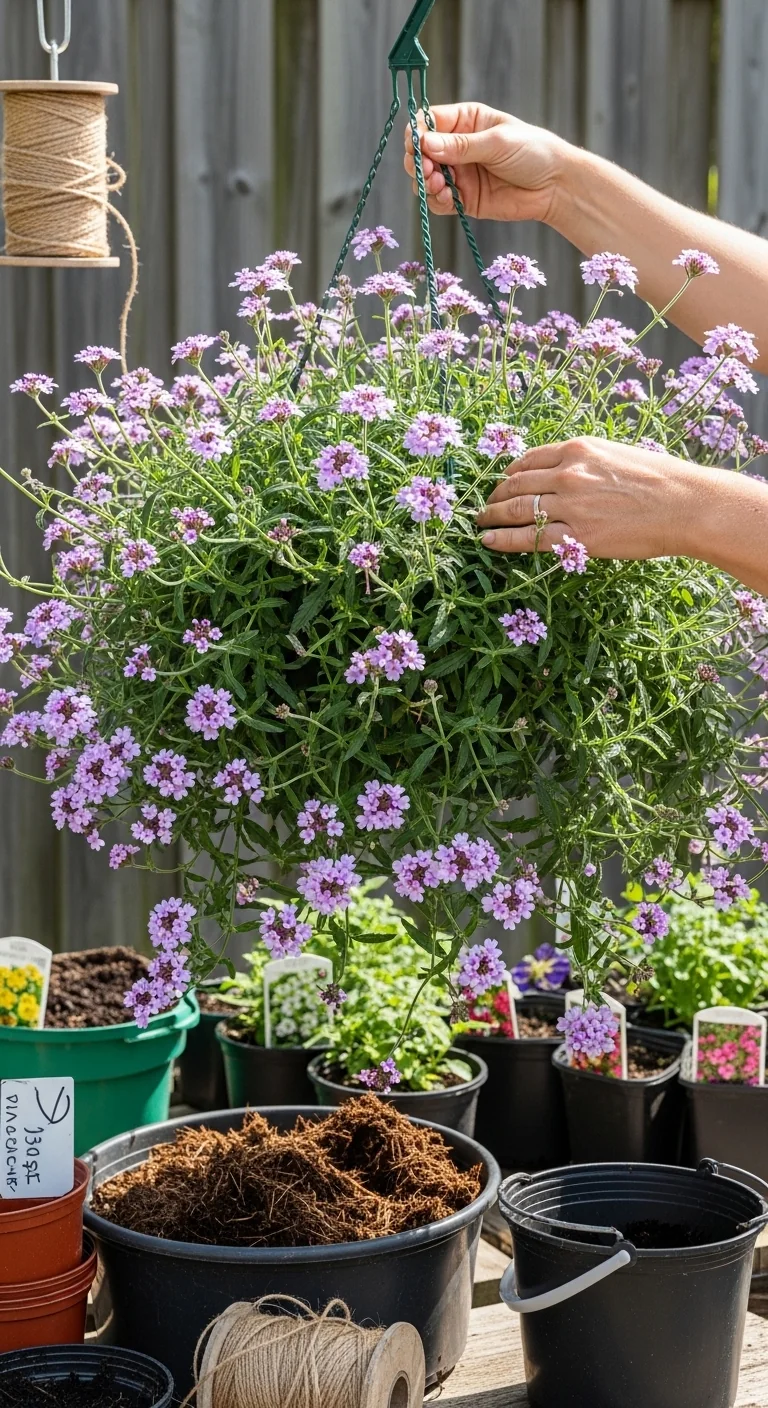
Best for: Branch 2
Use trailing petunia in partial sun with shelter from strong wind. Its large blooms cascade vigorously but require removal of spent flowers every seven days to maintain density. Avoid full afternoon sun above 85 F where petals fade. (59 words)
Trailing Begonia
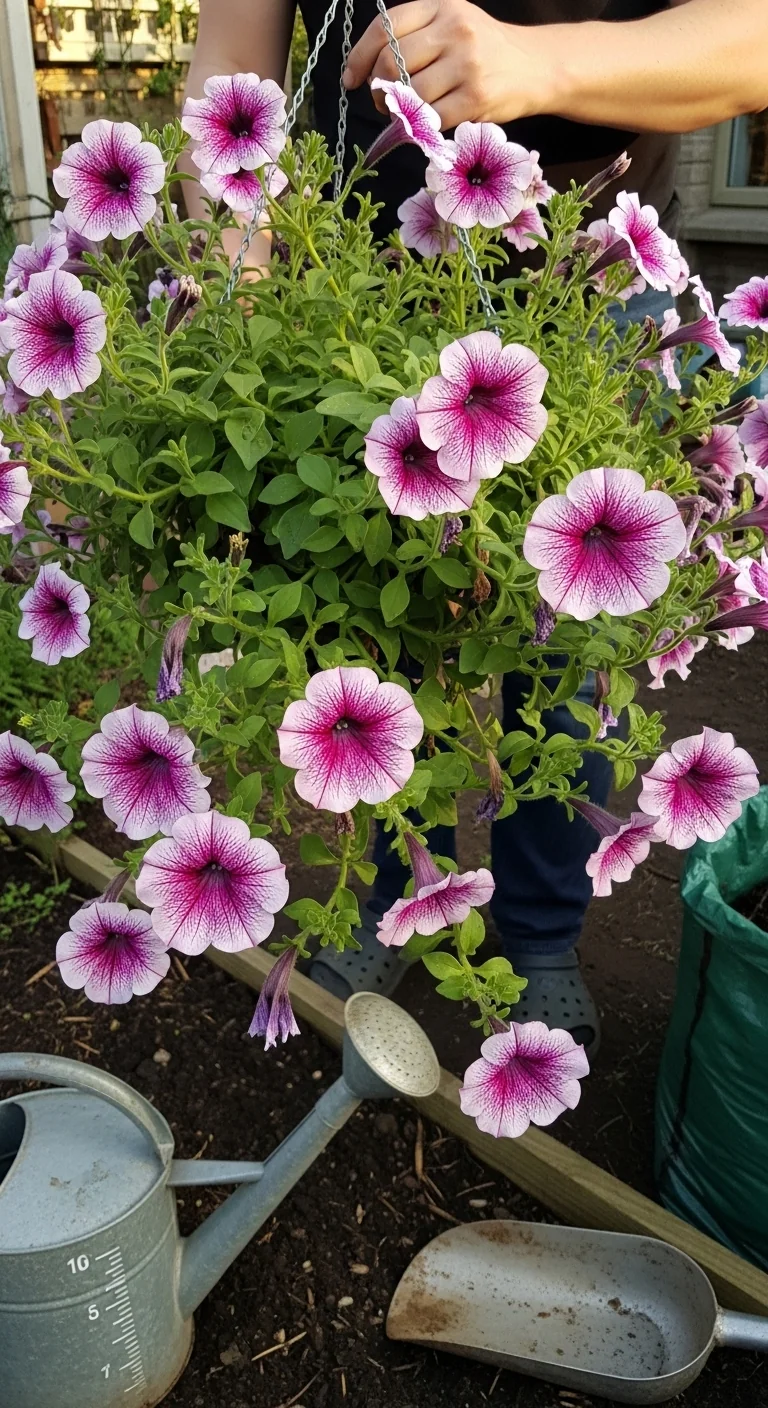
Best for: Branch 3
Trailing begonia produces large pendulous blooms suited to low light and moist shade. Threshold rule: keep soil pH between 5.5 and 6.5 and water when the top half inch feels dry. In baskets under 12 inches, add a saucer beneath during establishment to buffer moisture swings. This variety pairs well with balcony conditions. Consult the balcony flowers guide for placement ideas. (104 words)
Starter Stack (What to Choose First)
Branch 1: Full Sun and Moderate Wind
Start with Calibrachoa and Ivy Geranium. The self-cleaning habit of calibrachoa pairs with the wind-resistant structure of ivy geranium for a dense, low-care cascade. Setup cost range: 18 to 28 dollars per basket. Planting time: 10 to 15 minutes.
Branch 2: Partial Sun and Low Wind
Start with Bacopa and Trailing Petunia. Bacopa fills gaps quickly while trailing petunia adds large blooms for visual depth. Setup cost range: 15 to 25 dollars per basket. Planting time: 12 to 18 minutes.
Branch 3: Low Light or North-Facing
Start with Fuchsia and Trailing Begonia. Fuchsia provides pendulous movement while trailing begonia supplies bold bloom size in shade. Setup cost range: 20 to 30 dollars per basket. Planting time: 10 to 15 minutes.
When This Won’t Work
Hanging basket flowers fail when the basket diameter stays under 10 inches in zones with summer highs above 85 F. The limited soil volume causes rapid moisture loss and root stress within 48 hours of watering.
They also fail in locations with constant wind over 15 mph daily without protection. Stems snap or leaves scorch regardless of variety.
Switch to self-watering large baskets or move the same plants to a ground-level container setup. This adjustment restores root room and stabilizes moisture.
Choosing the Right Option for Your Situation
Budget Threshold
Under 20 dollars per basket favors low-cost starters like calibrachoa or bacopa that require minimal additional inputs through the season.
Time Threshold
Less than 10 minutes weekly care points to effort score 1 or 2 options such as calibrachoa, ivy geranium, or verbena that need little deadheading or monitoring.
Technical Constraint: Soil pH
If your irrigation water measures above pH 7.0, select acid-loving types like fuchsia, calibrachoa, or trailing begonia and amend mix with sulfur as needed to reach 5.5 to 6.5.
Yes/No checklist:
Does your site get 6 or more hours sun? Yes: choose branch 1.
Is wind exposure low and light partial? Yes: choose branch 2.
Does light stay under 4 hours daily? Yes: choose branch 3.
Does basket size exceed 12 inches? Yes: all options perform better.
Expert Q&A
What soil mix ratio prevents root rot in hanging basket flowers?
Use 60 percent standard potting mix, 30 percent perlite, and 10 percent compost. This combination ensures fast drainage while retaining enough moisture for trailing roots in limited basket volume. Test final pH to confirm it falls between 5.5 and 6.5 before planting. (52 words)
How do you fertilize hanging basket flowers without burning roots?
Apply a balanced liquid fertilizer at half strength every 14 days after the third week of growth. Dilute in the watering can and apply only when soil is already moist. Stop feeding in late summer when bloom production naturally slows. (48 words)
Can you overwinter hanging basket flowers indoors in cooler climates?
Yes for fuchsia, ivy geranium, and trailing begonia. Move baskets indoors before first frost to a bright south-facing window at 50 to 60 F. Reduce watering to keep soil barely moist and resume feeding at quarter strength in early spring. (51 words)
What companions balance a single hanging basket for even cascade?
Pair one thriller like calibrachoa with two fillers such as bacopa and one spiller like ivy geranium. Position thrillers toward the center and spillers at the rim. This creates layered height and prevents bare spots as stems lengthen. (49 words)
How do you protect hanging basket flowers from pests without chemicals?
Inspect undersides of leaves weekly for aphids or whitefly. Use a strong water spray every three days at dusk to dislodge them. Introduce beneficial insects like ladybugs if infestations appear. Maintain air circulation around baskets to reduce fungal risk. (47 words)
Conclusion
The key decision is always matching the flower’s built-in response to your basket’s exact light hours, wind exposure, and soil volume. The number one mistake is ignoring basket diameter and letting soil dry between waterings, which collapses even the toughest varieties within days.
Your next step: measure daily sun and wind at the hanging spot, then select from the matching branch using the starter stack recommendations. For similar vertical displays, explore the window box flowers guide.