
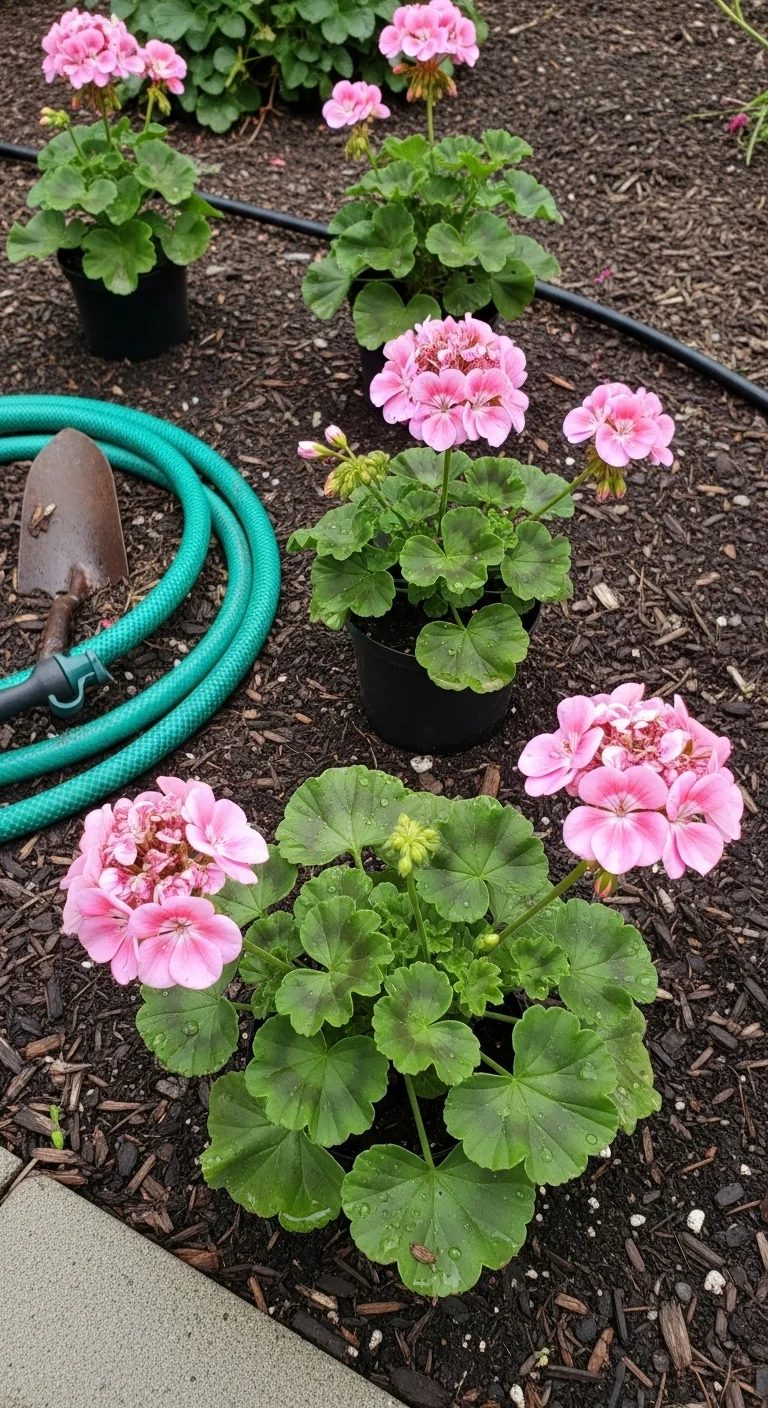
Geranium care succeeds only when you stop treating all setups the same. The Yield Grid Decision Grid reframes the process around your specific growing method: containers, borders, or overwintering.
This article covers soil preparation, light rules, watering, feeding, deadheading, pruning, and pest handling for common pelargonium geraniums. It excludes seed propagation and hardy cranesbill specifics.
You will gain the ability to select the correct watering interval, fertilizer dilution, and cut timing to keep plants compact and flowering from spring to fall.
Identify your branch in the decision grid, follow the matching items, and geraniums will deliver reliable color with minimal waste.
The Yield Grid Decision Grid
Branch 1 applies if you grow in containers or hanging baskets where soil dries within 3 days or pots measure less than 12 inches across. Recommended: Items 1, 4, 7 below.
Branch 2 applies if you plant directly in garden borders with loamy soil and full sun exposure in USDA zones 9 to 11. Recommended: Items 2, 5, 8 below.
Branch 3 applies if you overwinter plants indoors or garden in cooler zones below 9 where frost risk exists before October. Recommended: Items 3, 6, 9 below.
For container-specific approaches see our container flower strategies.
Quick Comparison Table
| Option | Key mechanism | Best for | Decision Grid Branch | Effort Score |
|---|---|---|---|---|
| Potting Mix and Drainage Setup | Creates air pockets with perlite or peat to speed drainage | Containers | Branch 1 | 1 |
| Sunlight Exposure Guidelines | Matches hours of direct sun to growth habit | Borders | Branch 2 | 1 |
| Overwintering Preparation | Cuts back stems and adjusts temperature to maintain dormancy | Overwintering | Branch 3 | 3 |
| Fertilizer Application Schedule | Delivers balanced nutrients through measured dilution | Containers | Branch 1 | 3 |
| Watering Thresholds | Triggers irrigation only after top inch of soil dries | Borders | Branch 2 | 5 |
| Deadheading for Rebloom | Removes spent flowers to redirect energy to new buds | Overwintering | Branch 3 | 3 |
| Pruning and Shaping | Pinches tips at specific nodes to control legginess | Containers | Branch 1 | 3 |
| Pest and Disease Management | Inspects undersides of leaves at set intervals | Borders | Branch 2 | 5 |
| Cutting Propagation for Renewal | Uses stem cuttings in sterile mix to replace older plants | Overwintering | Branch 3 | 1 |
Potting Mix and Drainage Setup
Best for: Branch 1
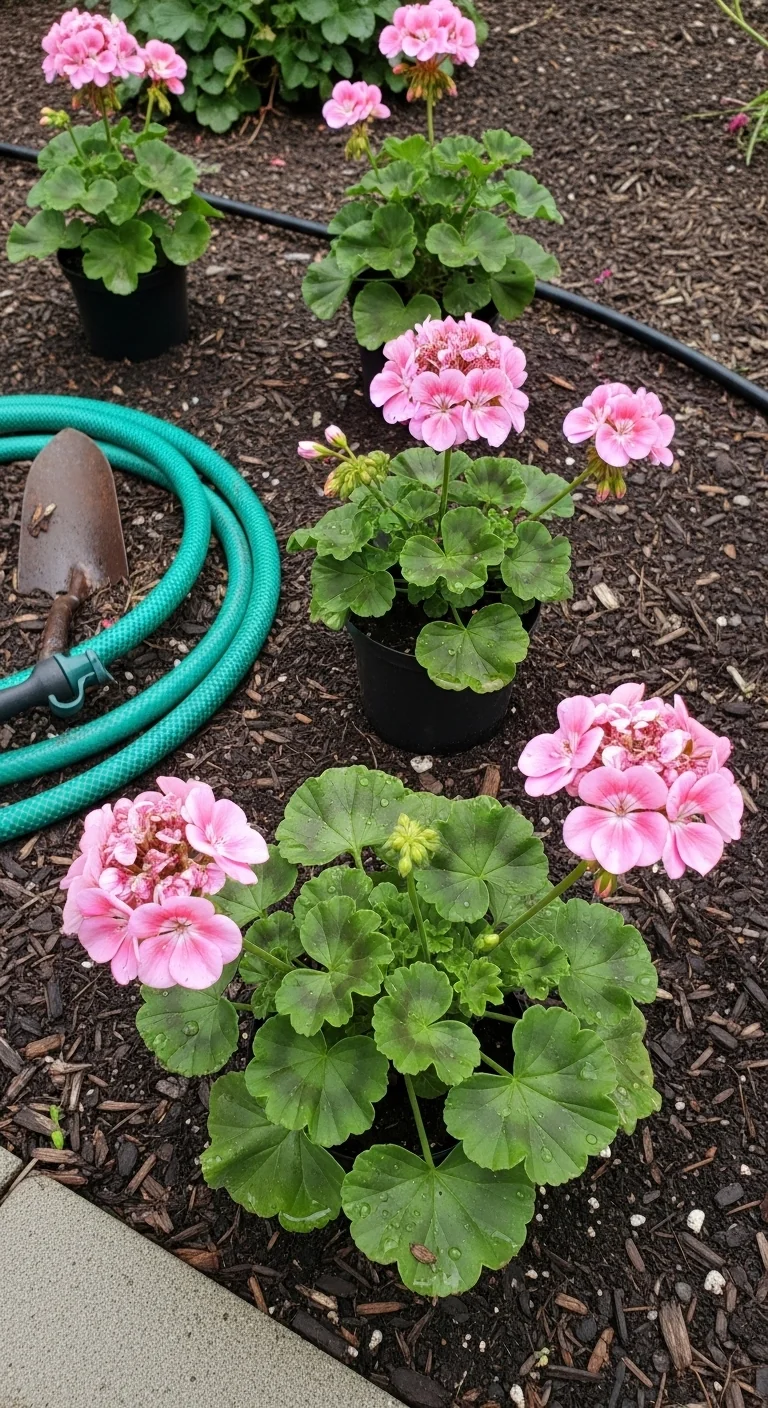
Use a blend of loam, peat or coco coir, and perlite in a 2:1:1 ratio for geraniums in containers. This mix drains at roughly 1 inch per hour and prevents waterlogging that leads to root rot in small pots. Fill the container to within 1 inch of the rim, firm the mix around the root ball so the crown sits at soil level, and water thoroughly once to settle. The key edge case is heavy clay garden soil: never use it straight in pots because compaction occurs within 48 hours and blocks oxygen to roots. Test drainage by pouring 1 quart of water through a filled pot; it should exit the bottom holes within 5 minutes. Skip commercial potting mixes labeled for moisture retention; they hold water too long for geraniums. Follow this blueprint once at planting and again only if repotting in spring.
Sunlight Exposure Guidelines
Best for: Branch 2
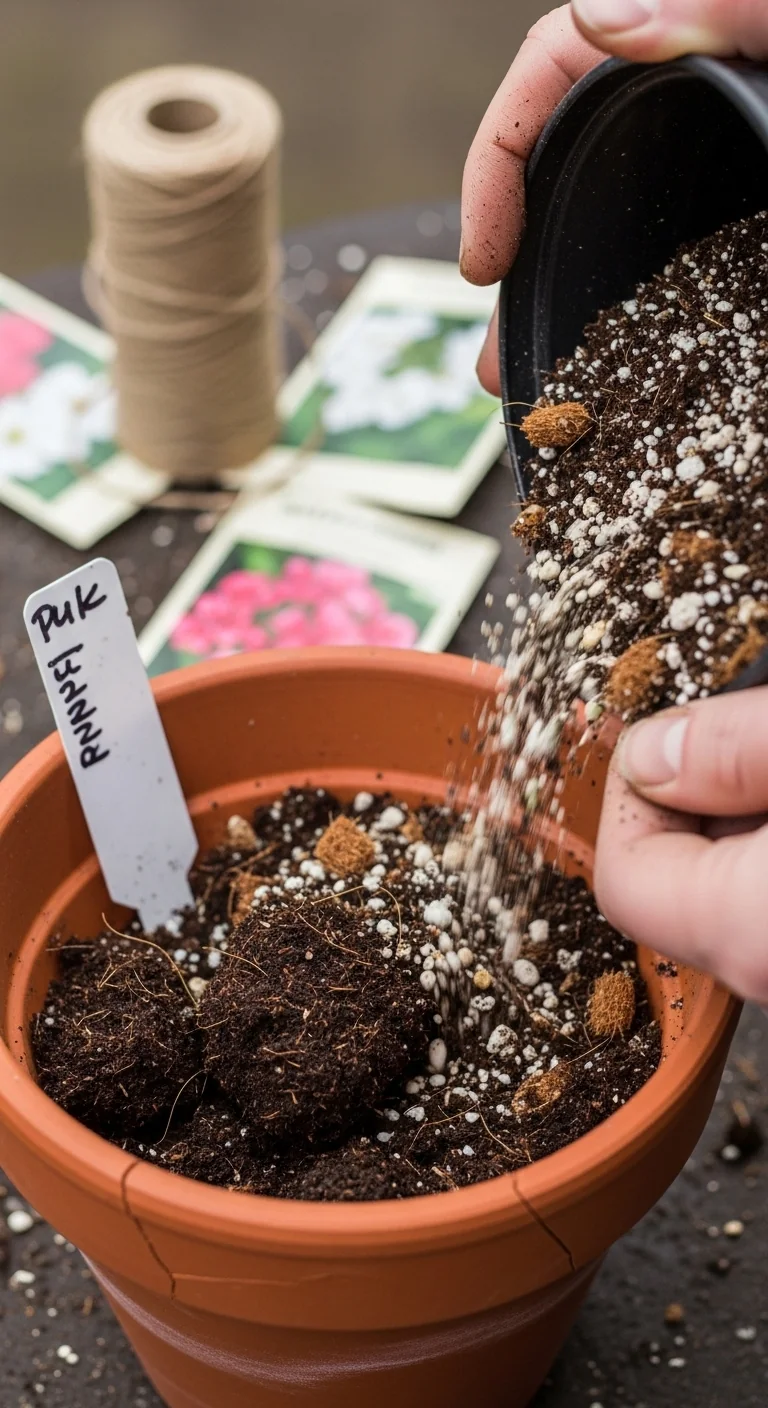
Use full sun of 6 hours or more daily for border geraniums in zones 9 to 11; skip partial shade unless afternoon temperatures exceed 90 F, in which case provide light afternoon cover to prevent leaf scorch. The mechanism is simple: direct sun drives flower production while shade promotes foliage at the expense of blooms. Edge case: ivy-leaf types tolerate 4 hours of sun but stretch in deeper shade. Place plants 12 to 18 inches apart in prepared beds so air circulates and reduces fungal risk. Monitor for 2 weeks after planting; if leaves yellow on the south side, shift 1 foot east or west.
Overwintering Preparation
Best for: Branch 3
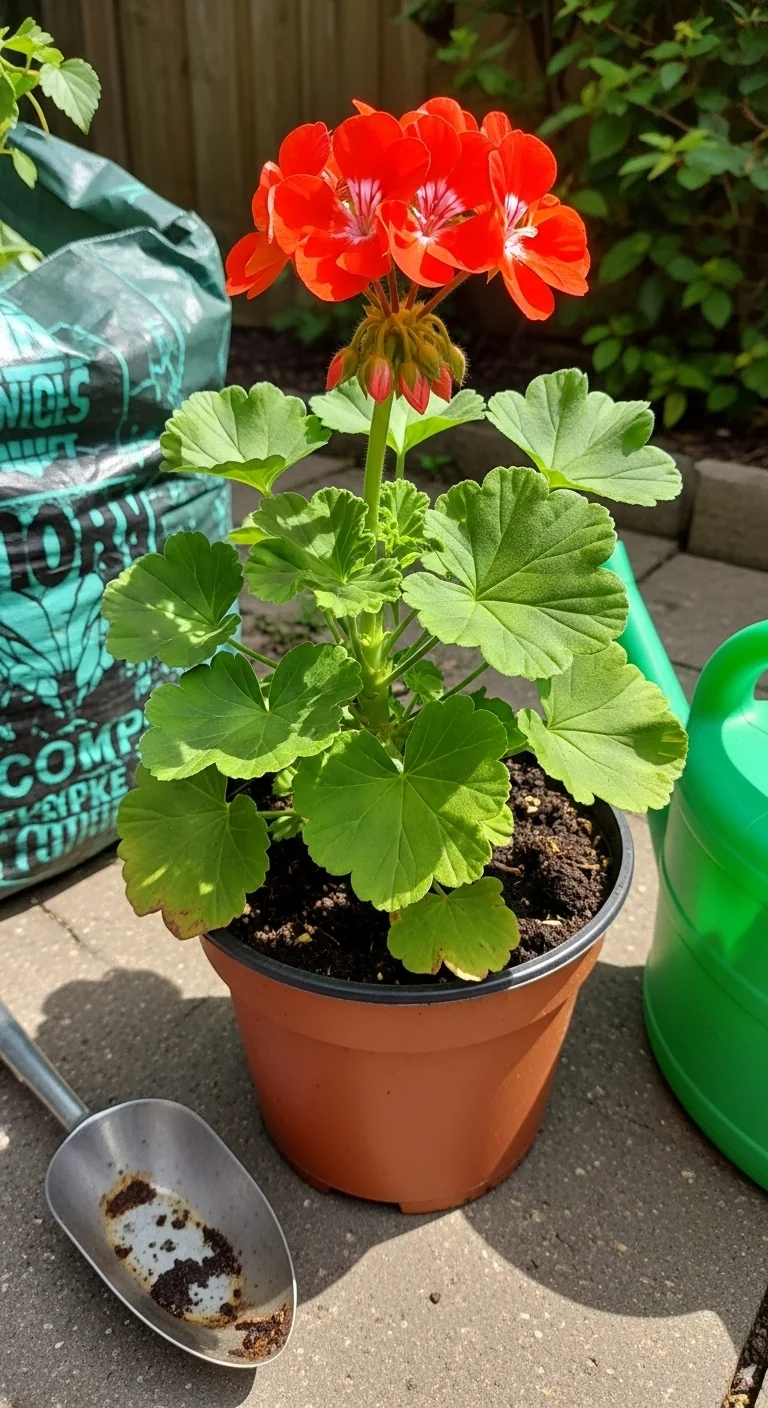
Overwintering works when night temperatures stay above 45 F outdoors or you move plants indoors before the first frost. Cut stems back to 4 to 6 inches, remove any yellow leaves, and place in a bright spot with 50 to 60 F daytime temperatures. Water only enough to keep soil barely moist; check every 10 days. The adjustment that matters is reducing light to 12 hours maximum with a grow light if natural daylight drops below 8 hours. Skip this step if your zone stays above 50 F year-round; plants remain active and need the full fertilizer schedule instead.
Fertilizer Application Schedule
Best for: Branch 1
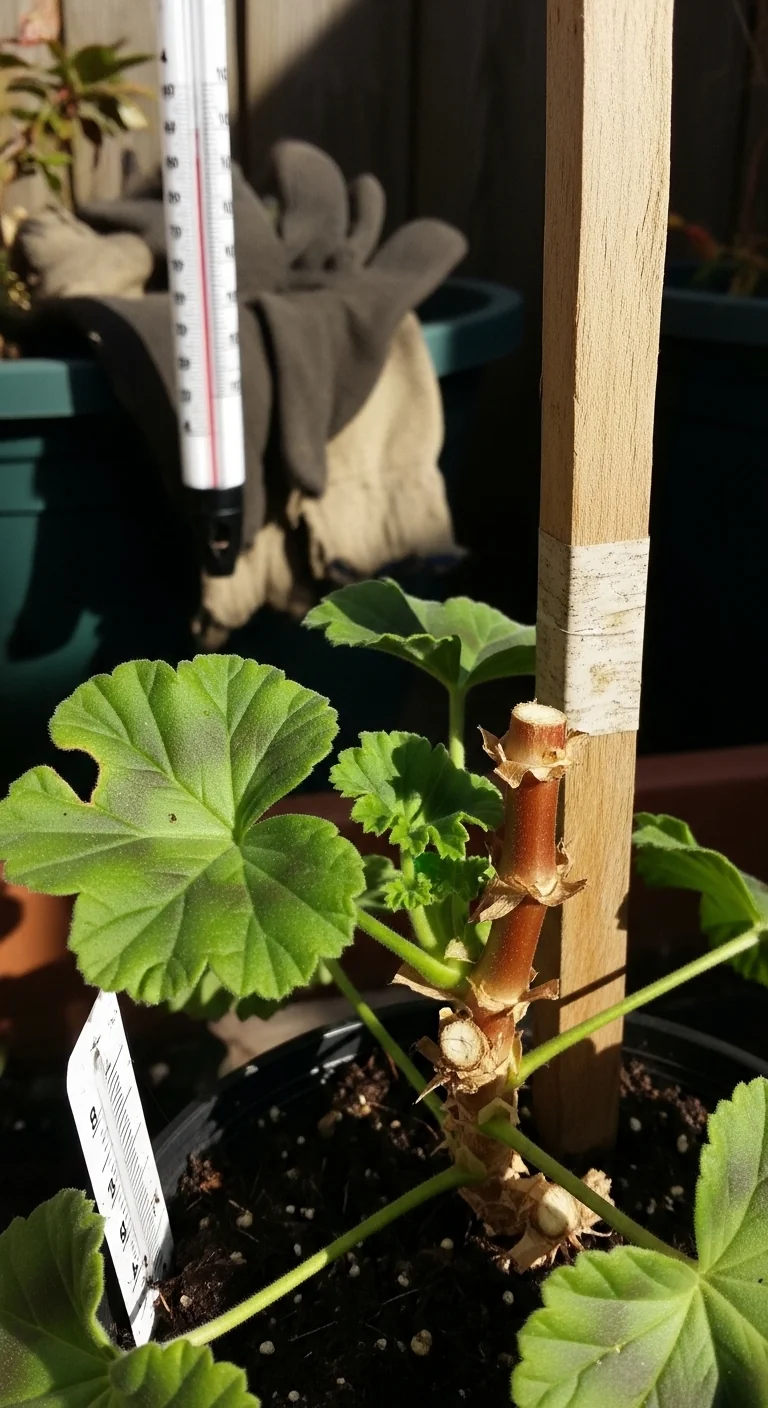
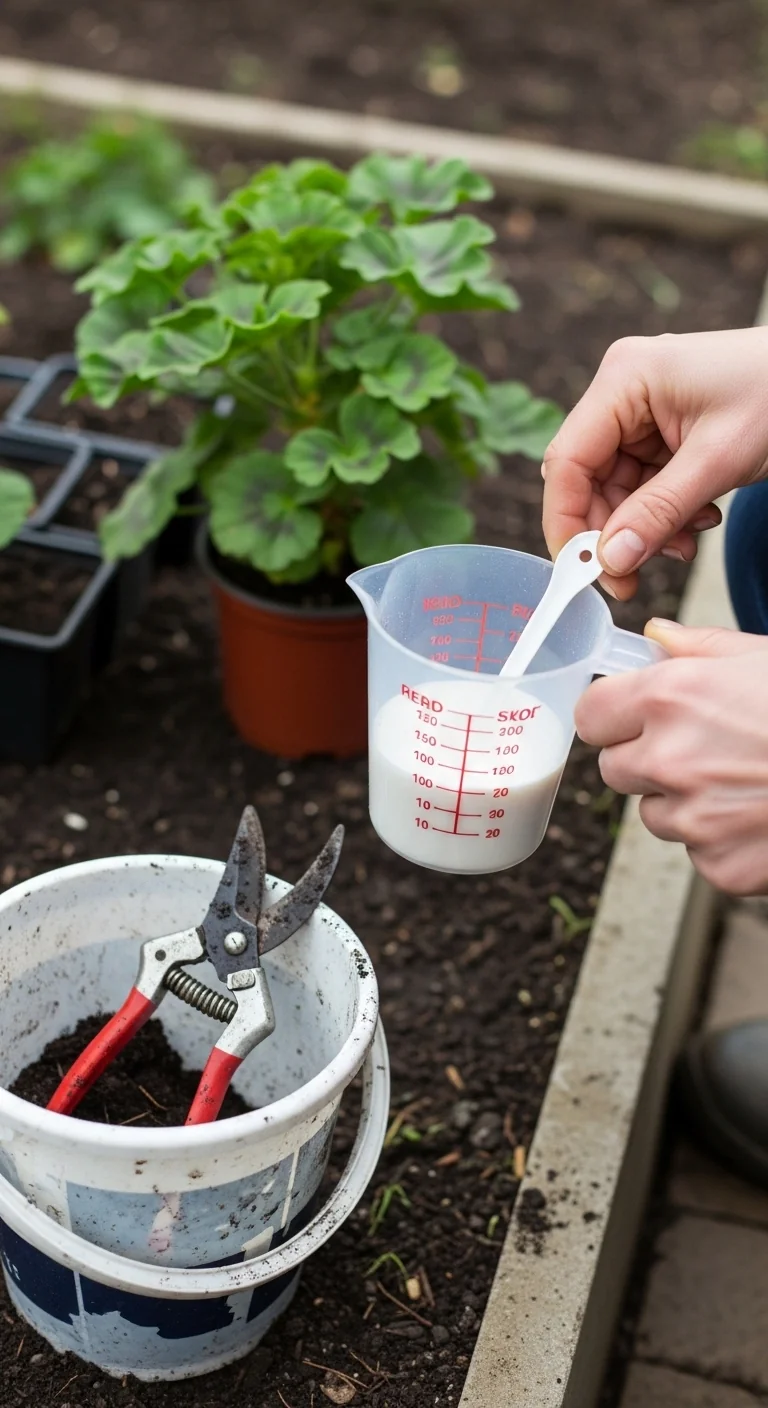
Follow this 10-minute workflow every 14 days for container geraniums: mix a balanced liquid fertilizer at half the label strength in a watering can, apply to moist soil until it runs out the drainage holes, and discard any excess. The mechanism supplies nitrogen for leaves and phosphorus for flowers without salt buildup in limited soil volume. Upgrade option: switch to a slow-release granular product scratched into the top inch of mix at planting for 3-month coverage and skip the liquid step until midsummer. Perform the task on the same day each time so you never miss the window when buds form. Measure the dilution with a marked cup to keep ratios exact.
Watering Thresholds
Best for: Branch 2
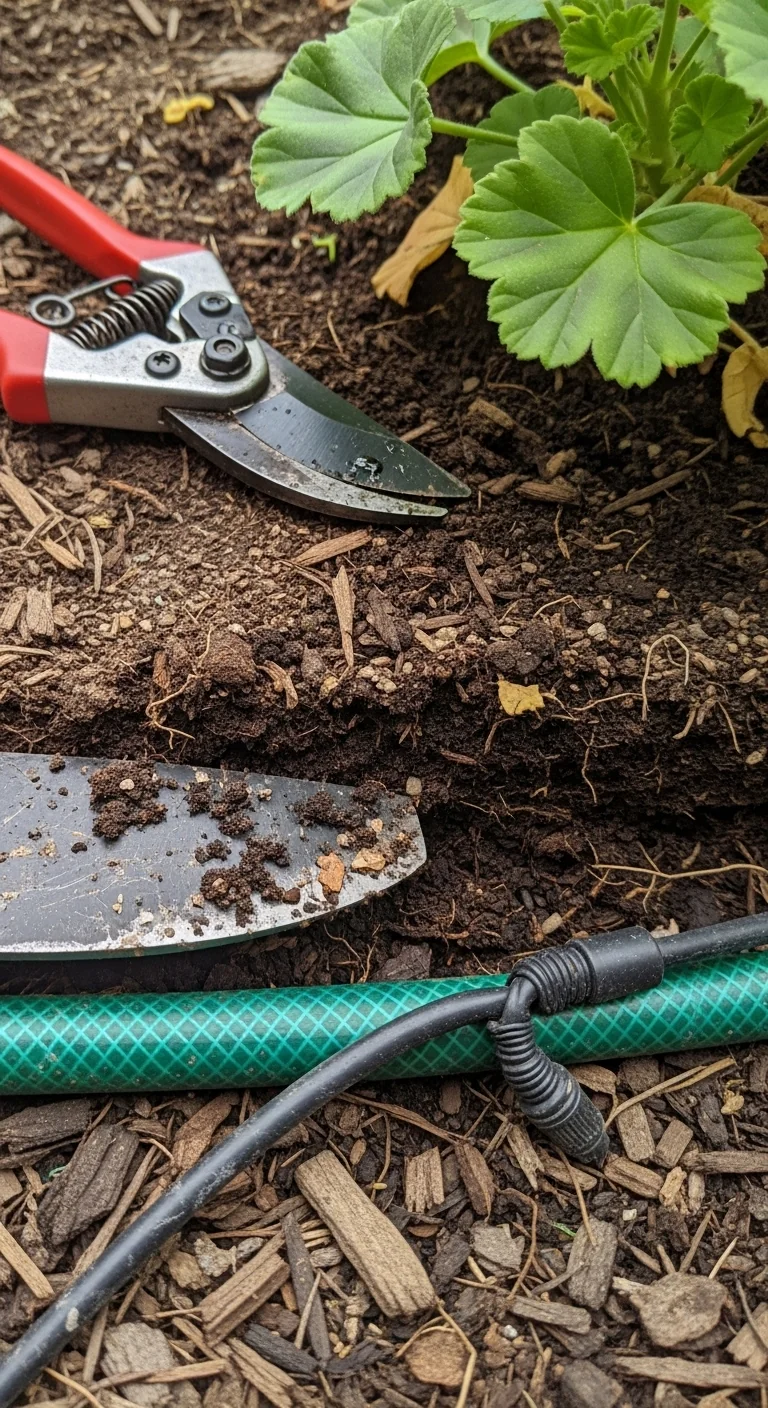
Water border geraniums only when the top 1 inch of soil feels dry to the finger; push a finger straight down and stop if the soil is still damp at that depth. In loamy beds this interval usually falls between 4 and 7 days depending on rainfall. The mechanism prevents both drought stress that halts blooms and constant wetness that invites root diseases. Edge case: after a 1-inch rain event wait an extra 2 days before checking again. Use a soaker hose at the base to keep foliage dry and reduce mildew risk. Adjust the threshold to the top 2 inches during cooler spring or fall weather when evaporation slows.
Deadheading for Rebloom
Best for: Branch 3
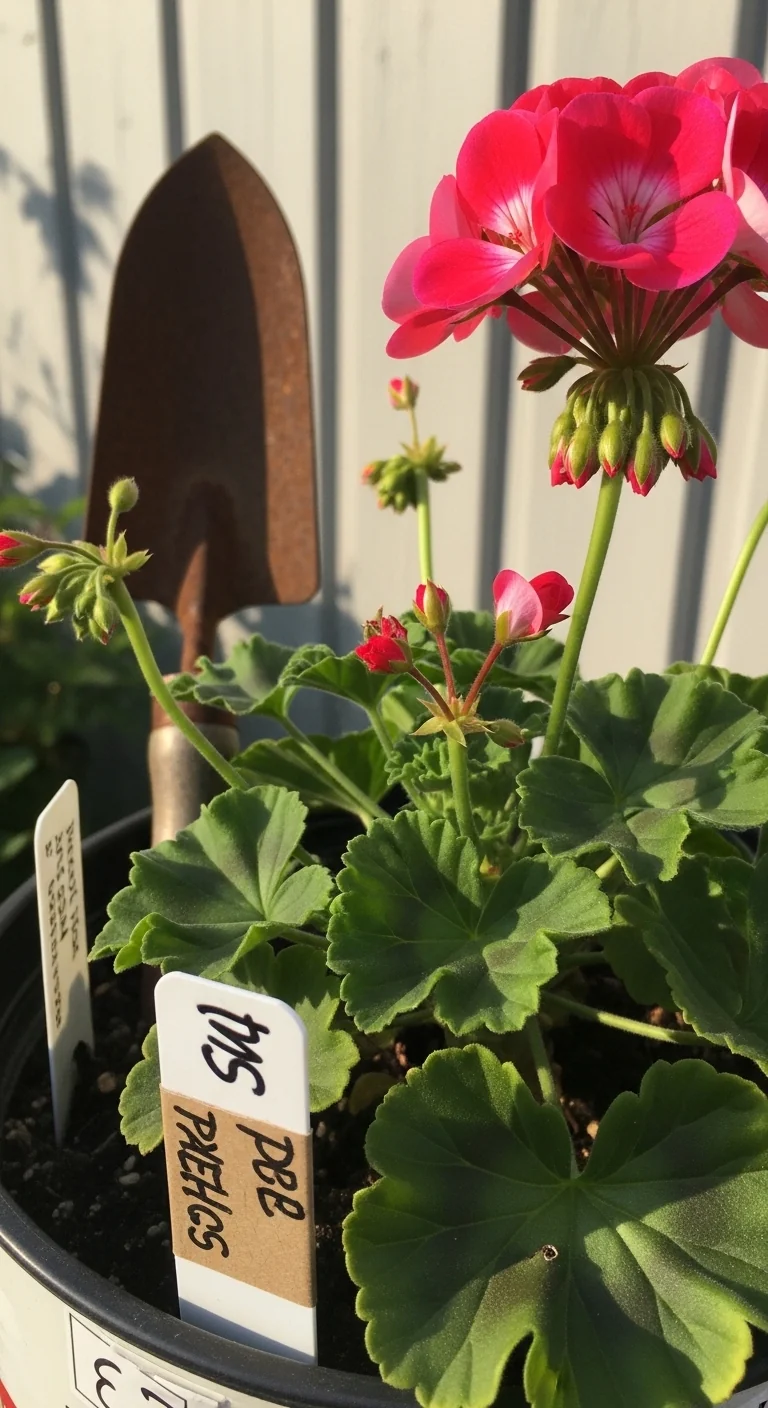
Deadhead geraniums by snapping or cutting the flower stem just above the nearest healthy leaf pair whenever petals fade and turn brown. This redirects energy from seed production back to new buds within 7 to 10 days. Use the technique on overwintered plants kept indoors where light is lower and bloom cycles slow. Skip if you want seeds for next season or if the plant is a sterile hybrid that never sets seed. The edge case is regal geraniums: remove the entire flower cluster at the main stem to avoid woody stubs. See our deadheading flowers guide for tool choices that speed the task.
Pruning and Shaping
Best for: Branch 1
Prune container geraniums when stems reach 8 inches by pinching the growing tip just above a leaf node with two or more leaves below it. This triggers branching within 14 days and keeps plants compact in limited root space. The threshold that matters is timing: perform the first pinch at 6 weeks after planting and again in midsummer if growth exceeds 12 inches. Skip pinching on ivy types that trail naturally. The mechanism works because geraniums produce flowers on new growth; without it plants become leggy and sparse at the base. Always use clean shears dipped in alcohol between cuts to stop disease spread.
Pest and Disease Management
Best for: Branch 2
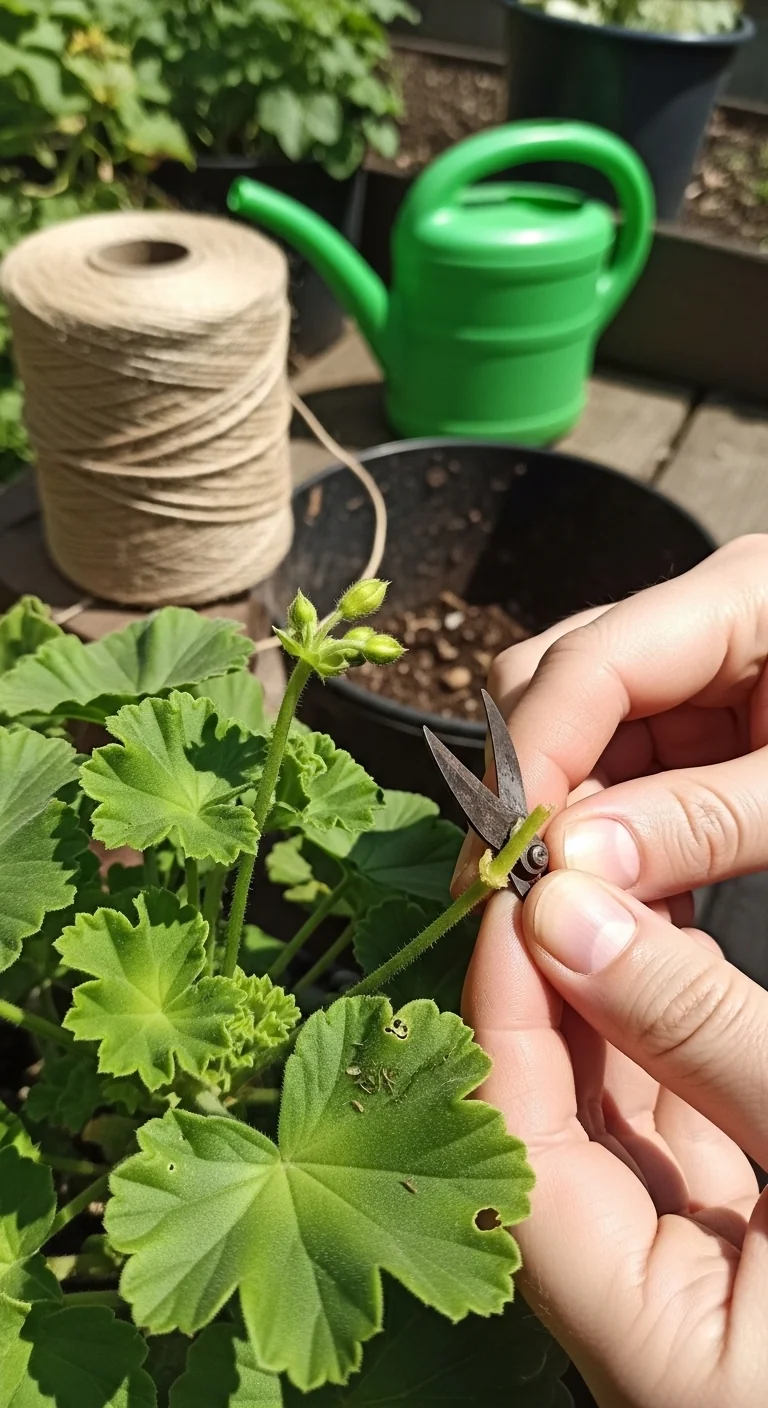
Inspect border geraniums every 7 days by turning leaves over and checking stems for aphids, whiteflies, or rust spots. The 10-minute workflow is: spray a strong water jet to dislodge insects, then apply insecticidal soap only if more than 5 pests appear per plant. For fungal issues like botrytis, increase spacing to 18 inches and remove affected leaves at the base. Edge case: after heavy rain check the crown for gray mold within 48 hours. Upgrade option: plant marigolds 12 inches away as a companion to repel soil pests without extra sprays. Early detection stops spread before it reaches neighboring flowers.
Cutting Propagation for Renewal
Best for: Branch 3
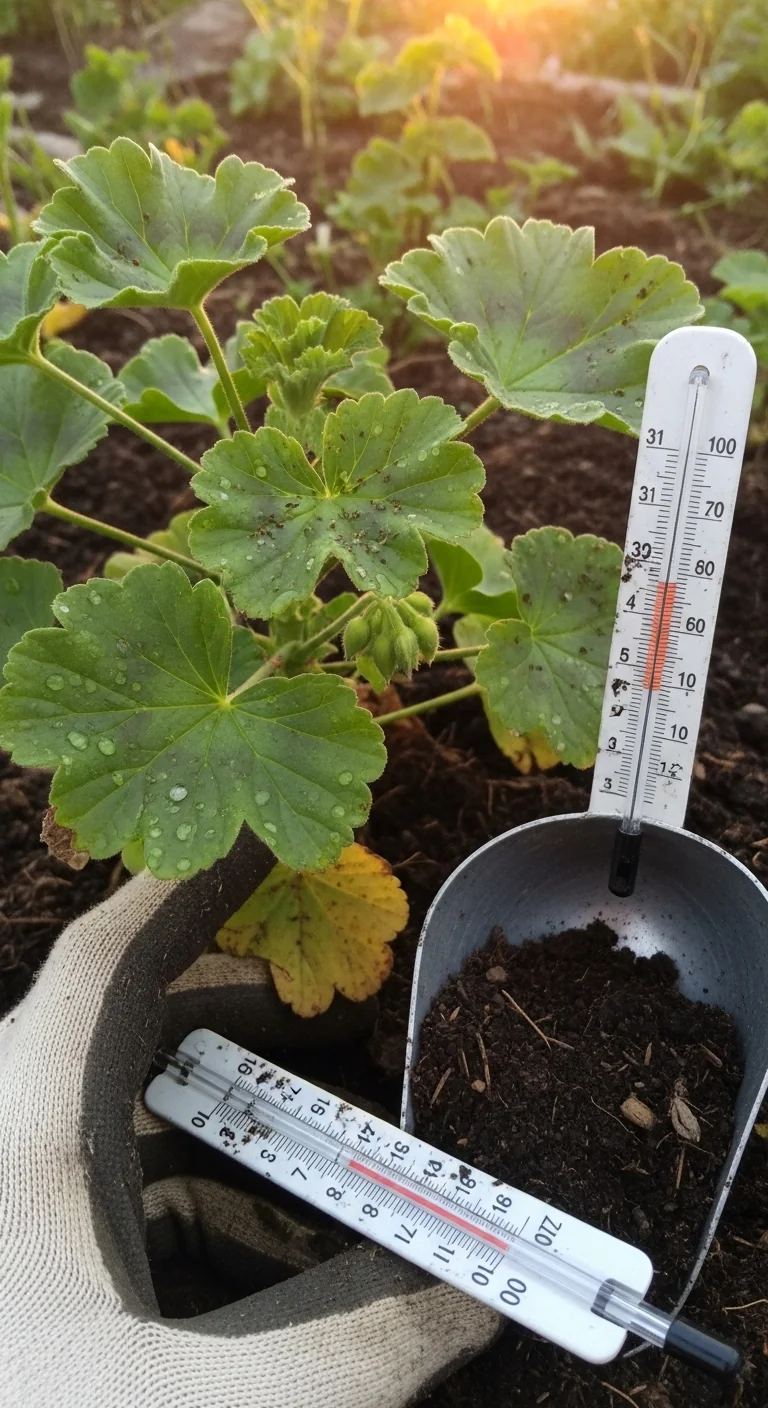
Take 4-inch stem cuttings from healthy overwintered geraniums in early spring, remove the lower leaves, and insert into a sterile mix of perlite and peat kept at 70 F. Roots form in 14 to 21 days when the medium stays barely moist. The mechanism replaces older woody plants with vigorous new ones that bloom more freely the same season. Skip if your zone allows outdoor survival year-round. This single-step renewal keeps the collection fresh without buying replacements each spring.
Starter Stack (What to Choose First)
Branch 1: Container Setups
Start with Items 1 and 4. The potting mix creates the drainage base while the fertilizer schedule supplies nutrients that containers lose quickly. Together they prevent the two most common container failures: root rot and nutrient starvation. Time estimate: 20 minutes at planting plus 10 minutes every 14 days. Cost range: 8 to 15 dollars per 12-inch pot for mix and initial feed.
Branch 2: Border Setups
Start with Items 2 and 5. Sunlight rules set the bloom foundation while watering thresholds stop over- or underwatering in open soil. The pair keeps foliage healthy and flowers continuous without constant adjustment. Time estimate: 10 minutes at planting plus 5 minutes weekly checks. Cost range: 5 to 10 dollars per plant for initial bed prep.
Branch 3: Overwintering Setups
Start with Items 3 and 6. Overwintering preparation protects the plant through dormancy while deadheading maintains shape and triggers buds even under lower indoor light. The synergy extends the life of each plant across multiple seasons. Time estimate: 15 minutes at frost threat plus 5 minutes weekly maintenance. Cost range: 3 to 8 dollars for grow light bulb if needed.
When This Won’t Work
Geranium care fails when night temperatures drop below 45 F without moving plants indoors; stems blacken within 72 hours and recovery is impossible. The alternative action is to take cuttings immediately and root them under lights rather than trying to save the parent plant. The second measurable failure condition occurs when soil pH tests below 5.5 or above 7.5; nutrient lockout shows as yellow leaves with green veins within 10 days. Test with a simple probe kit and amend with lime or sulfur before replanting. In both cases switch to fresh cuttings in corrected conditions to restart the season.
Choosing the Right Option for Your Situation
Budget Threshold
If your total spend per plant stays under 15 dollars for soil, feed, and tools, choose Items 1, 2, and 5 first; they deliver the highest return with the lowest ongoing cost.
Time Threshold
If you have fewer than 10 minutes per week available, select Items 1, 3, and 9; these require only one-time or seasonal actions and still support reliable flowering.
Technical Constraint: Hardiness Zone and Soil Test
If your zone is 8 or lower and soil test shows poor drainage, prioritize Branch 1 or 3 items and avoid direct border planting until raised beds are built.
Yes/No checklist:
Does your setup match one decision grid branch? Yes / No
Can you test soil moisture or pH this week? Yes / No
Will temperatures stay above 45 F for the next 60 days? Yes / No
Do you have space for cuttings if frost arrives early? Yes / No
Expert Q&A
How does geranium care differ when growing near roses or other heavy feeders?
Space geraniums at least 18 inches from roses to avoid competition for phosphorus. Use half-strength fertilizer for geraniums while giving roses full strength; the lighter feed prevents salt buildup that stresses geranium roots faster than rose roots in the same bed.
What temperature drop indoors causes geraniums to drop buds during overwintering?
A sudden drop below 50 F for more than 48 hours triggers bud drop. Maintain 55 F minimum with a small heater or move pots away from cold windows; consistent temperature matters more than light intensity at that stage.
Can you combine geraniums with drought-tolerant flowers without changing the watering schedule?
Yes, pair with plants that also tolerate drying to the top inch of soil such as lavender or salvia. The shared threshold keeps the entire bed on a 5- to 7-day cycle and reduces root disease risk for all species involved.
How do you stop geranium stems from turning woody after the second season?
Renew plants every 18 months by taking 4-inch cuttings in spring and discarding the parent. The new plants stay compact and bloom heavier because they never develop the thick, unproductive base wood that forms on older specimens.
What soil amendment fixes yellow leaves that appear after heavy summer rain?
Incorporate 20 percent perlite or coarse sand into the top 6 inches of border soil before the next season. This raises drainage rate and prevents the temporary nitrogen flush that causes chlorosis after saturated conditions.
Conclusion
Next step: map your current geranium locations to the grid and adjust one item this week. Start with our low-maintenance flowers guide to expand the bed with compatible companions.