
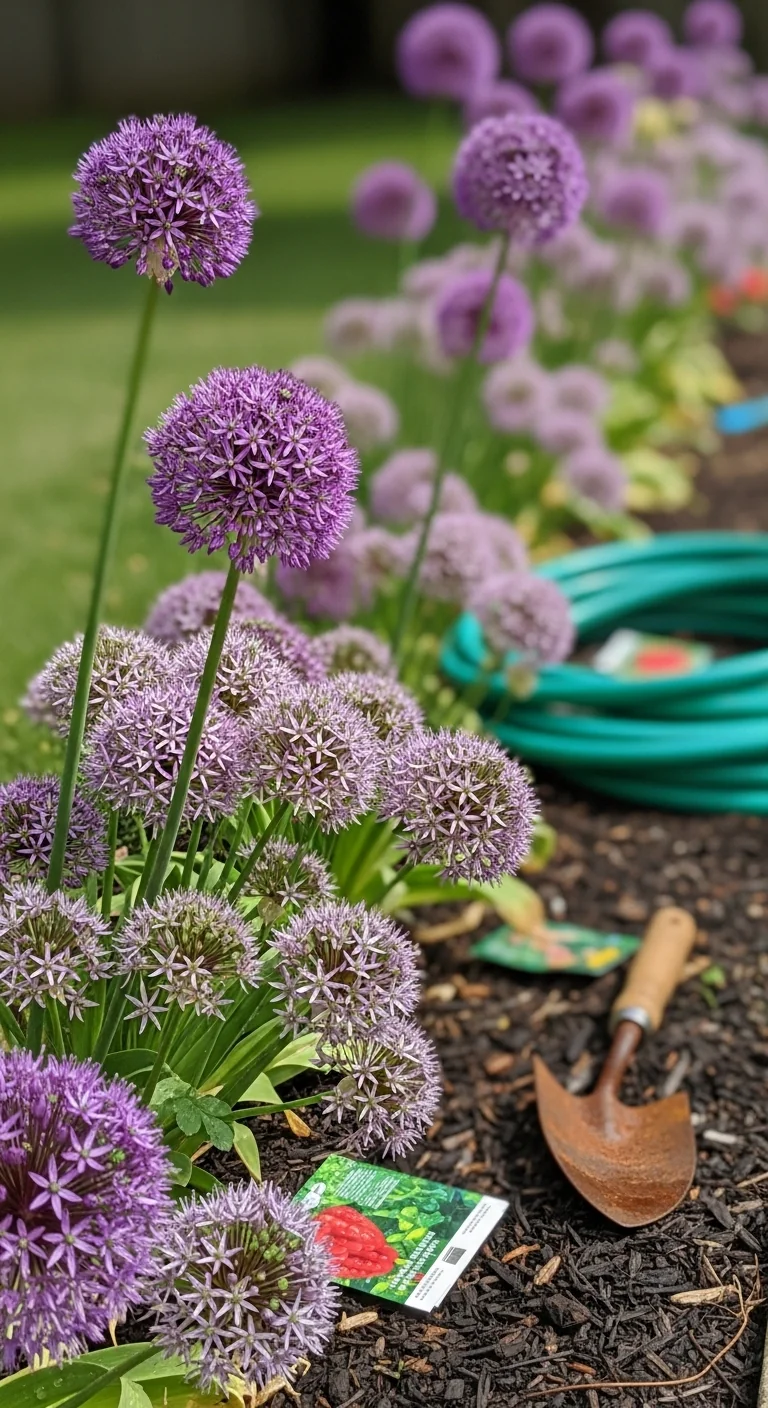
Most lists sort alliums by color or height alone. This decision grid starts instead with your measured garden constraints: stem height needed, bloom window required, and space available. Alliums become precision tools that fill gaps between spring bulbs and summer perennials, resist deer through sulfur compounds, and draw pollinators without extra feeding.
This guide covers 12 ornamental allium varieties suited to flower gardens in USDA zones 3 to 8 (common in the US, UK, Canada, Netherlands, and Germany). It excludes edible onions, garlic, and chives. Focus stays on planting depth, drainage needs, and variety-specific traits that affect performance.
You will finish knowing exactly which variety solves your border height issue, extends bloom time, or fits a small bed. Each recommendation includes one unique constraint or edge case that top results overlook.
Plant the right allium variety once in fall at the correct depth for your soil test, and it returns reliably with one fall action per season.
The Yield Grid Decision Grid
Branch 1 applies when your border needs vertical structure over 36 inches tall in full sun with well-drained soil. These tall types act as exclamation points without staking in sheltered spots. Recommended: Items 1, 4, and 9 below.
Branch 2 applies when your mixed beds or pollinator areas need mid-height fillers between 18 and 36 inches. These balance earlier and later bloomers. Recommended: Items 2, 5, 6, and 11 below. See broader flower gardening strategies for pairing ideas.
Branch 3 applies when your space is under 18 inches or needs low-profile edging in rock gardens or front borders. These stay compact without flopping. Recommended: Items 3, 7, 8, 10, and 12 below.
Quick Comparison Table
| Option | Key mechanism | Best for | Decision Grid Branch | Effort Score |
|---|---|---|---|---|
| Allium ‘Globemaster’ | Large 8-10 inch globe on tall stem | Dramatic focal point | 1 | 1 |
| Allium sphaerocephalon | Oval drumstick shape shifts color | Late-summer extension | 2 | 1 |
| Allium christophii | Metallic starry open globe | Textural front border | 3 | 1 |
| Allium giganteum | Extra-tall globe for scale | Back-of-border height | 1 | 1 |
| Allium ‘Purple Sensation’ | Early baseball-size globe | Early color bridge | 2 | 1 |
| Allium schubertii | Loose fireworks cluster | Movement in mid-bed | 2 | 1 |
| Allium ‘Millenium’ | Compact perennial clump | Repeated low filler | 3 | 1 |
| Allium caeruleum | True blue globe | Cool-tone contrast | 3 | 1 |
| Allium ‘Mount Everest’ | White globe on tall stem | Bright contrast accent | 1 | 1 |
| Allium moly | Yellow star clusters | Bright low edging | 3 | 1 |
| Allium ‘Summer Beauty’ | Fragrant mid-summer globe | Pollinator mid-bed | 2 | 1 |
| Allium ‘Graceful Beauty’ | White open clusters | Delicate front detail | 3 | 1 |
Allium ‘Globemaster’
Best for: Branch 1
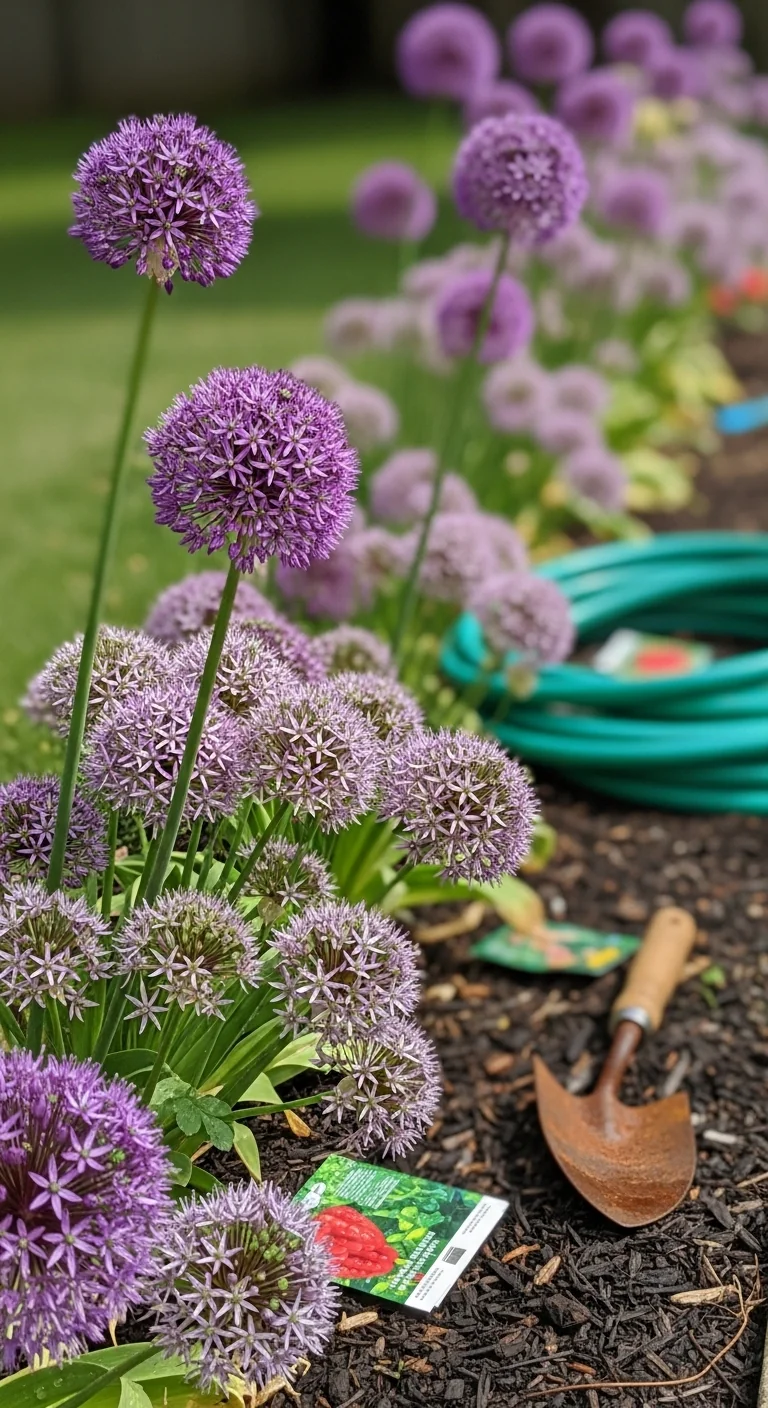
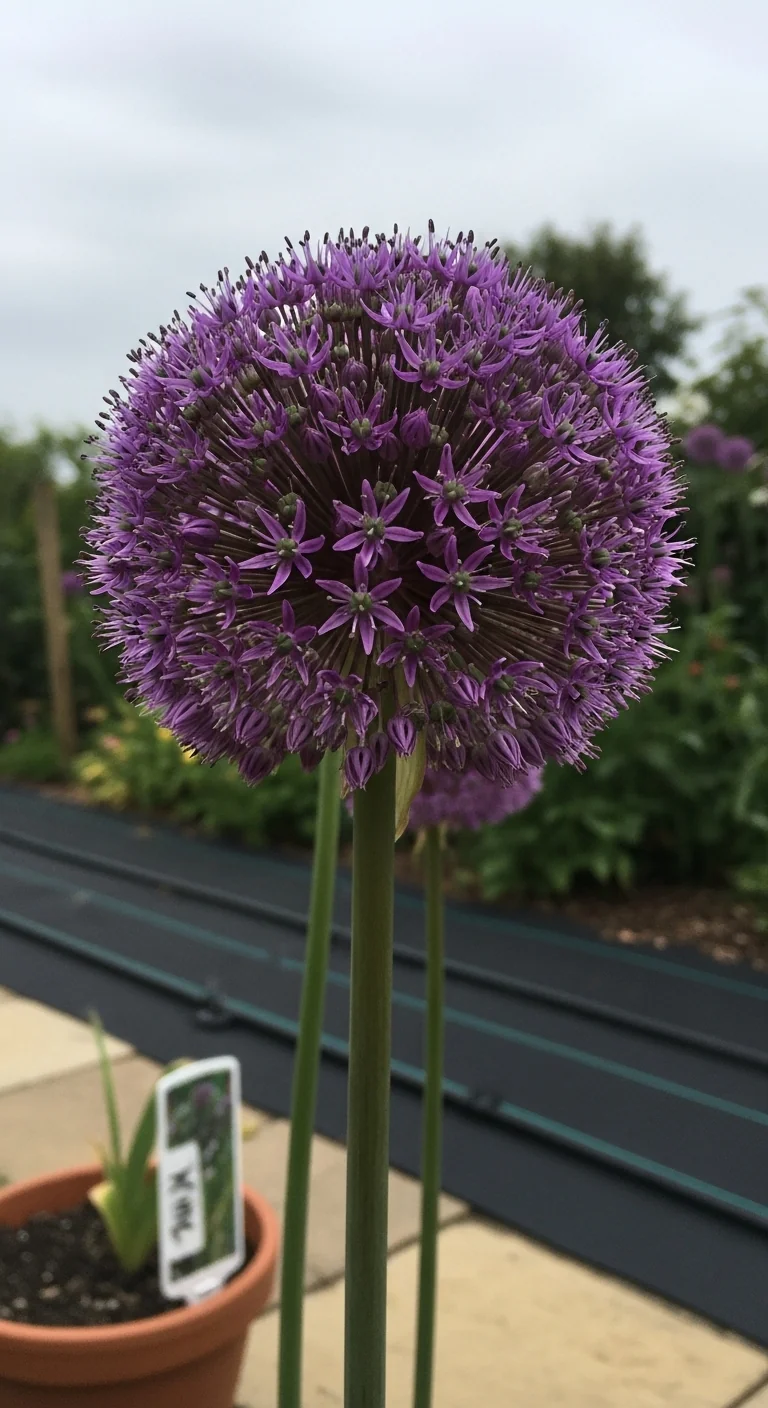
Blueprint for success starts with fall planting at four times the bulb height deep in soil that drains within 30 minutes of watering. The 8-10 inch purple globe forms on 36-48 inch stems in early summer and holds structure for weeks. Unique edge case: in windy sites over 40 inches, plant behind lower perennials for natural support instead of stakes. Steps include loosening soil to 12 inches, spacing bulbs 8 inches apart, and skipping summer water once foliage yellows. Common mistake is shallow planting that leads to weak stems. This variety returns strongly when drainage stays consistent.
Allium sphaerocephalon
Best for: Branch 2
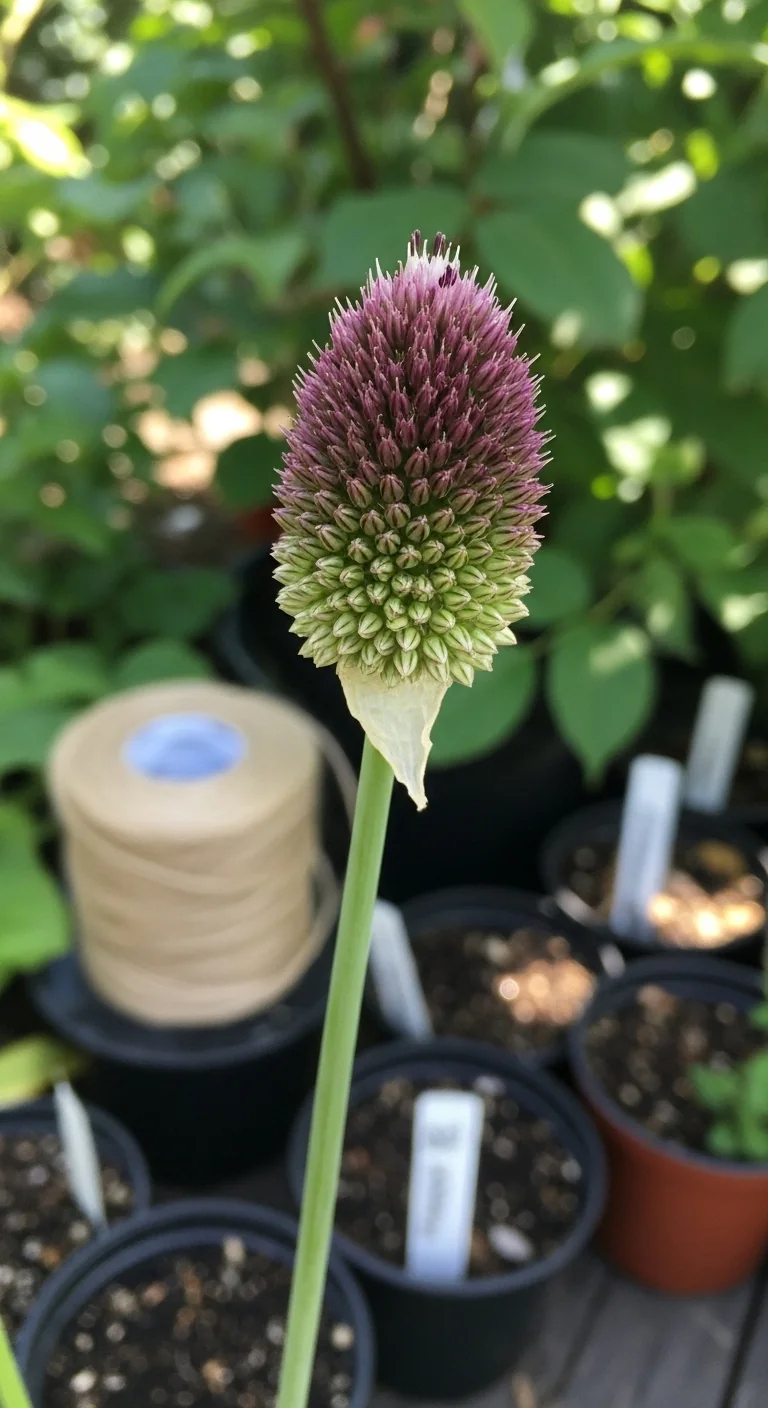
Use this drumstick type when you need color that shifts from green-maroon to purple in July. Skip it if your bed already has heavy late-summer competition from taller perennials that shade the 24-36 inch stems.
Allium christophii
Best for: Branch 3
Threshold rule: plant only if your front border allows 12-24 inch spread. The metallic starry globe opens loosely and dries into seed heads that stand through winter. Adjust spacing to 6 inches in tight rock gardens. This form adds movement without crowding lower companions.
Allium giganteum
Best for: Branch 1
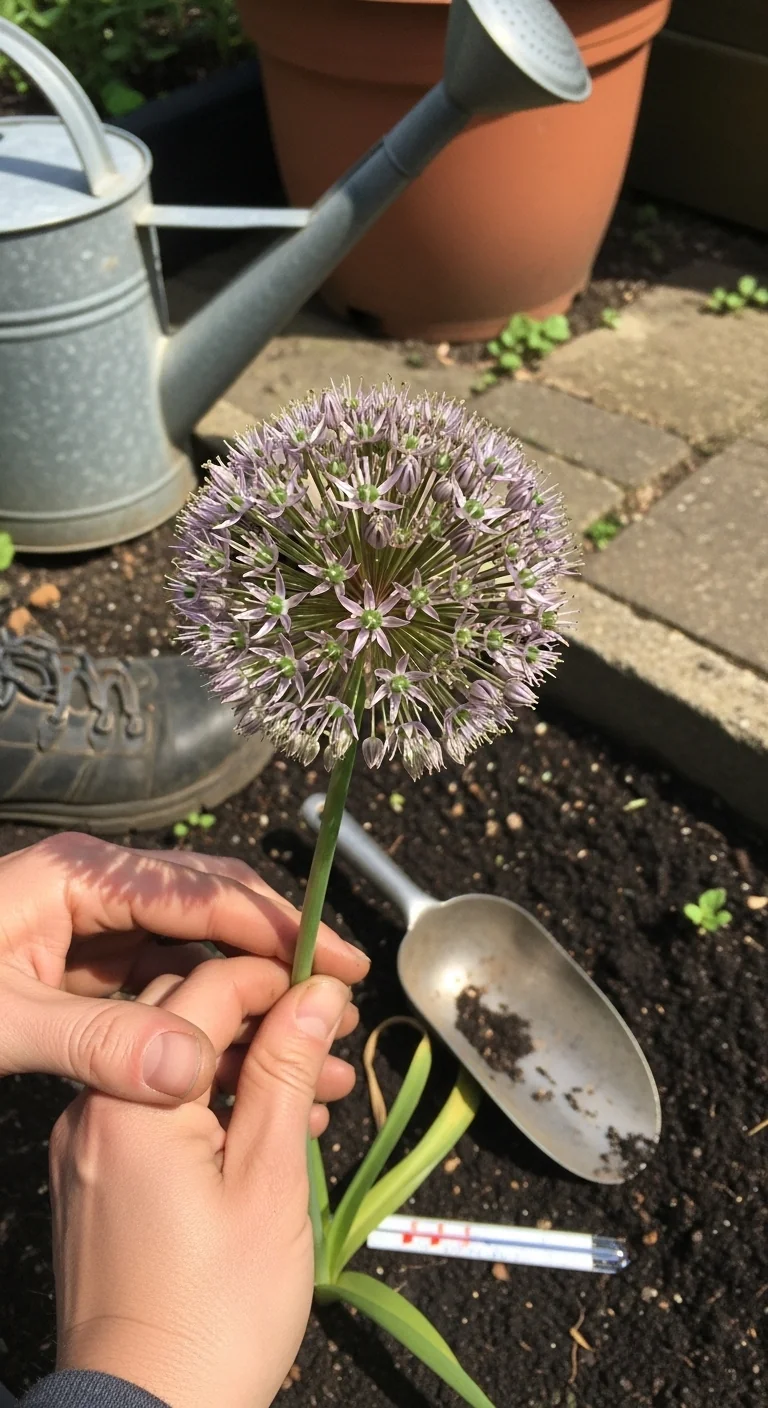
10-minute workflow: measure soil drainage first, then dig holes 8-10 inches deep for the large bulbs, place pointy end up, backfill, and water once. Upgrade option is layering with smaller spring bulbs below for extended interest. The 4-5 foot lilac globes create instant scale in large borders. Unique constraint: avoid heavy clay without raised beds because the oversized bulbs rot faster than smaller types in winter wet. Space at 10 inches for full globe development.
Allium ‘Purple Sensation’
Best for: Branch 2
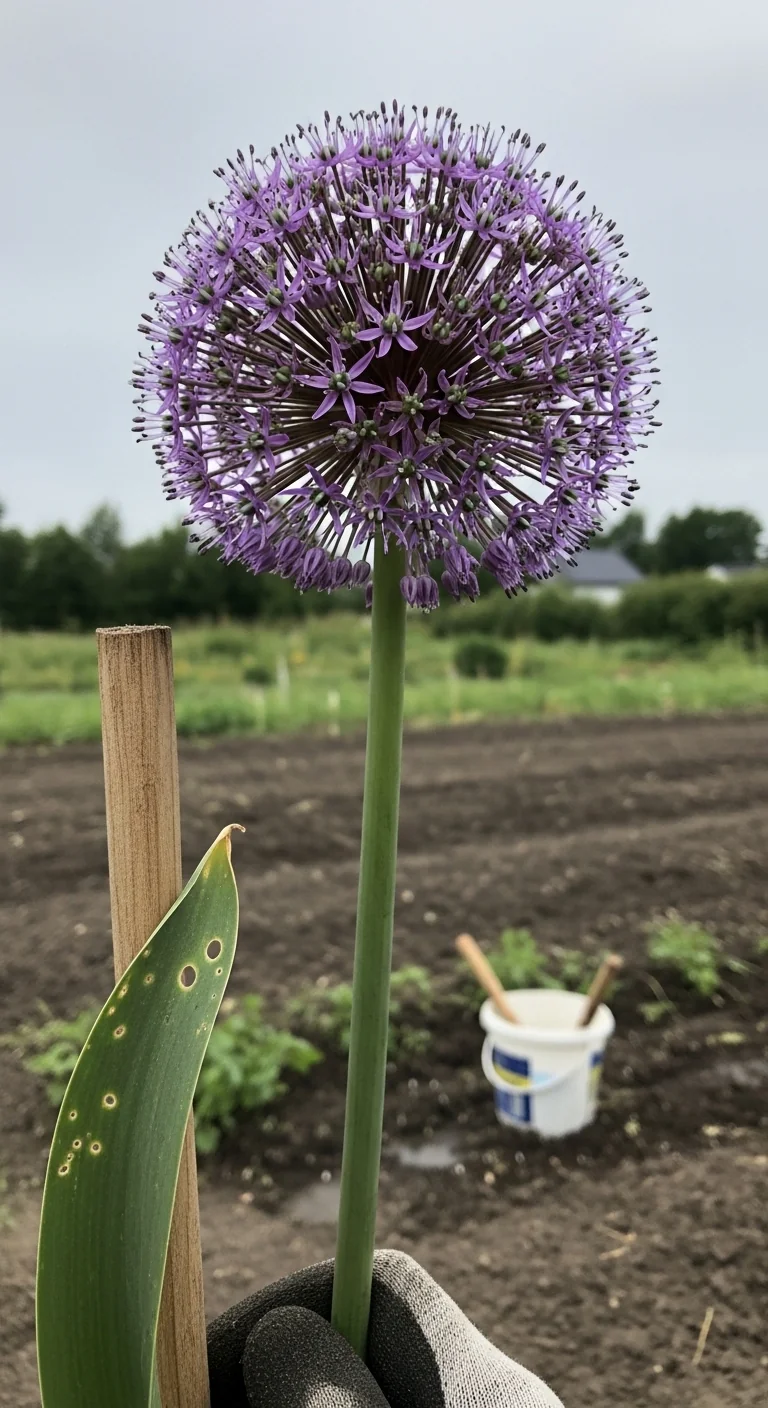
Use versus skip: plant for early May bridge color in mixed beds. Skip if your soil pH stays below 5.5 without amendment, as early bloom suffers.
Allium schubertii
Best for: Branch 2
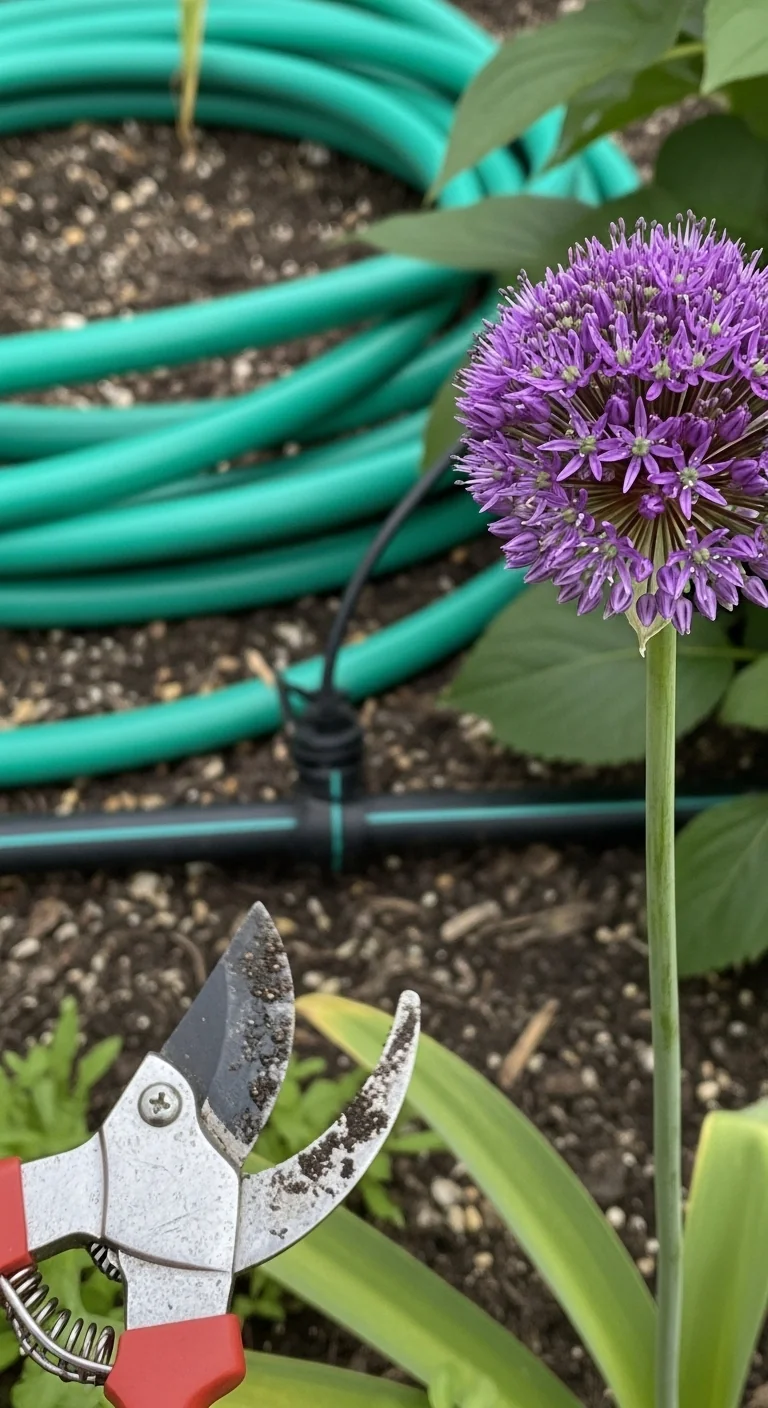
Threshold rule: choose when you need 12-24 inch height with loose open form that catches light differently. The fireworks cluster stands out against denser foliage. Adjust by grouping three bulbs for stronger visual impact in mid-beds.
Allium ‘Millenium’
Best for: Branch 3
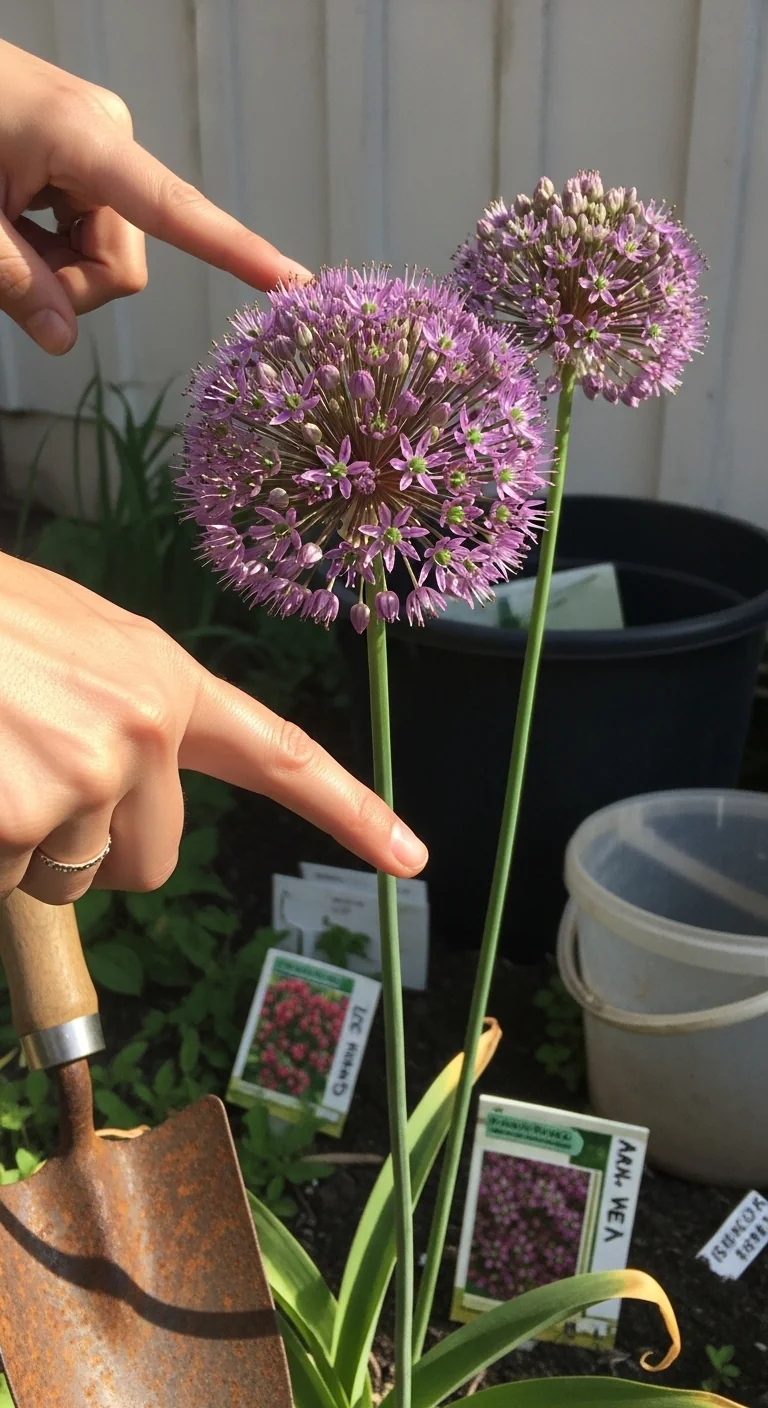
Blueprint for success: this compact type forms neat clumps 12-18 inches tall and blooms purple in midsummer. Plant in fall at standard depth. Steps include choosing sites with at least six hours sun and avoiding overhead watering after bloom. Unique detail: unlike most bulb alliums, it behaves as a true perennial and expands slowly without lifting every few years. Mistake to avoid is placing it where summer heat reflects off hardscaping, as foliage can scorch.
Allium caeruleum
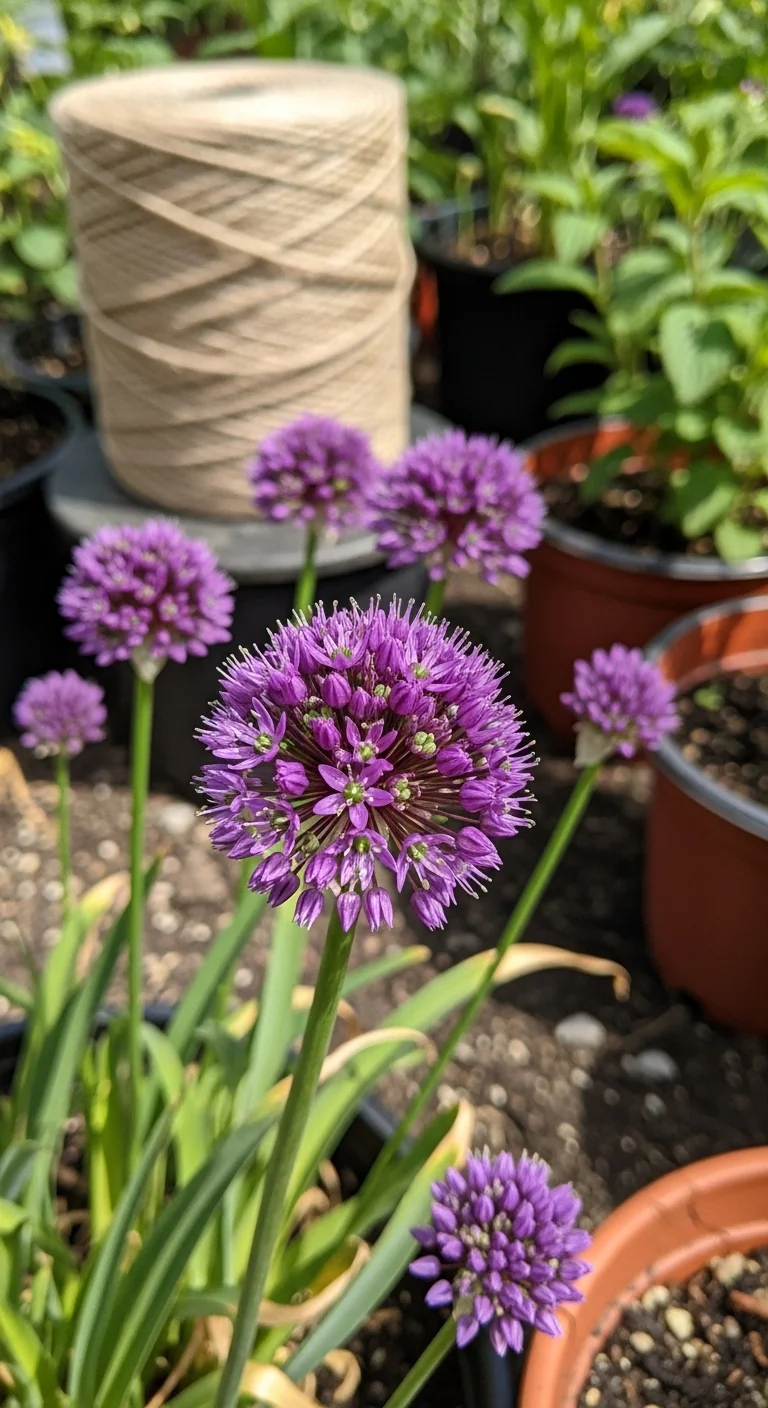
Best for: Branch 3
Use versus skip: ideal for true blue tone in cool color schemes. Skip in zones with hot dry summers over 90 degrees without afternoon shade protection.
Allium ‘Mount Everest’
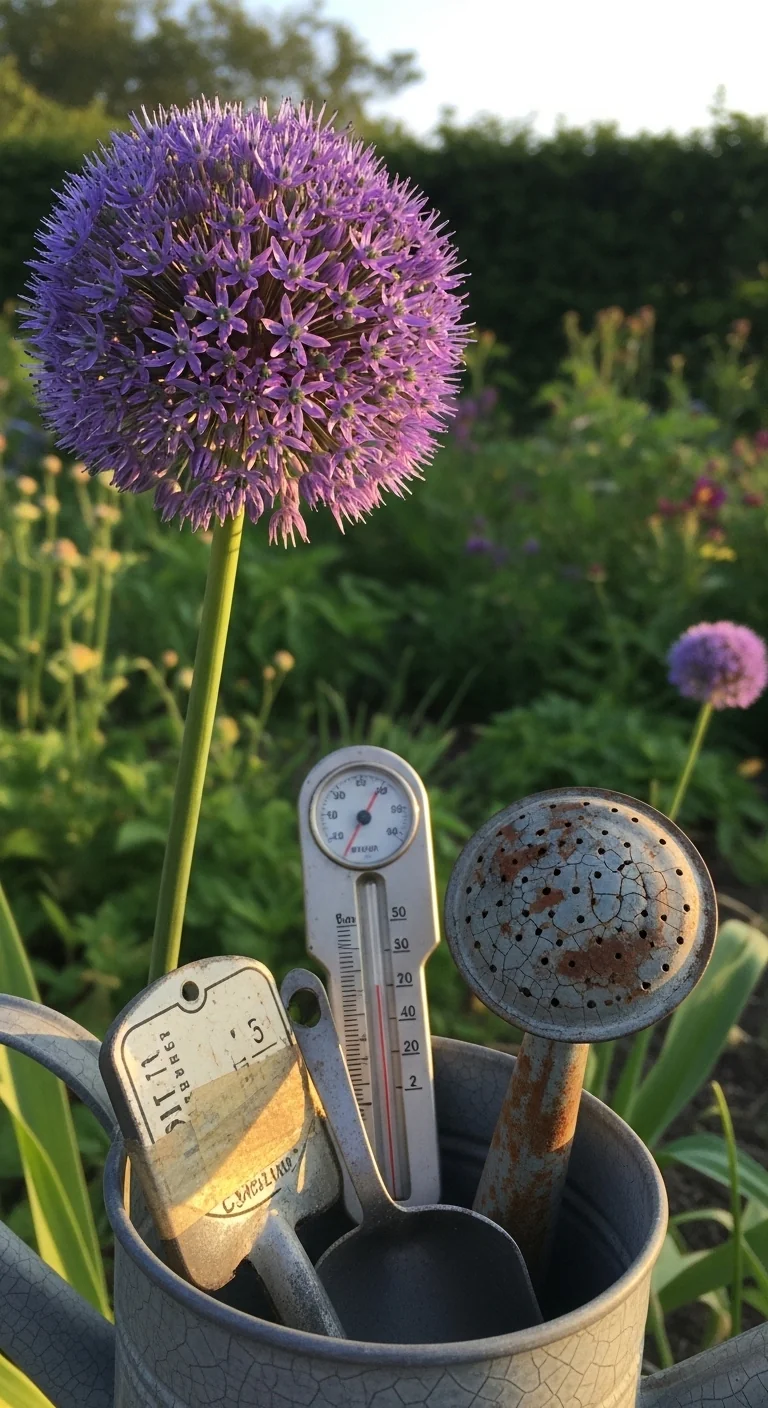
Best for: Branch 1
Threshold rule: select for white contrast when your border exceeds 36 inches and needs light against dark foliage. The 5-6 inch globes on tall stems open in early summer. Adjust depth to four times bulb height in lighter soils for stability.
Allium moly
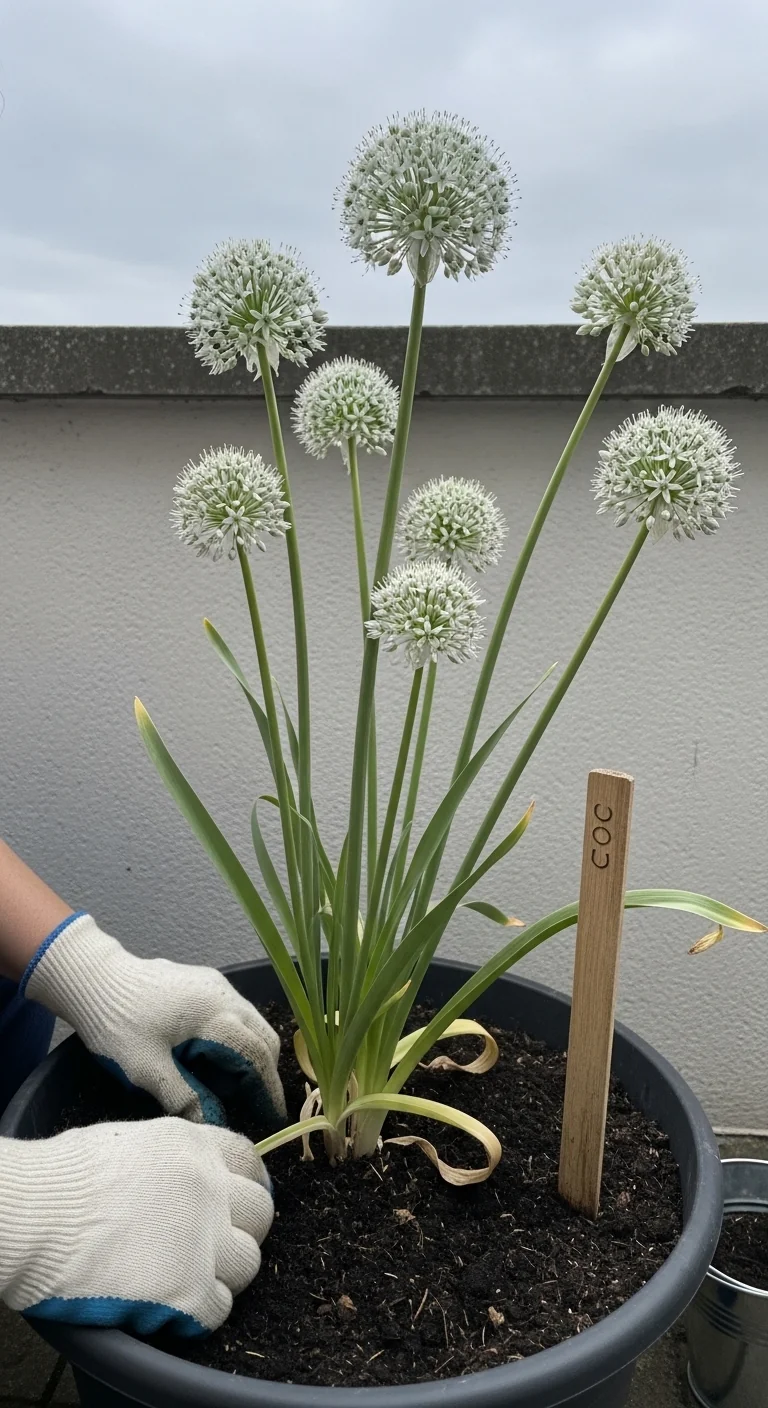
Best for: Branch 3
10-minute workflow: test for well-drained spot, plant small bulbs 4 inches deep and 4 inches apart, water in, then leave. Upgrade is combining with low groundcovers for yellow star effect in early summer. The 8-12 inch height fits tight edging. Unique constraint: this variety naturalizes more readily than taller types, so monitor spread in small rock gardens and divide every fourth year if crowded.
Allium ‘Summer Beauty’
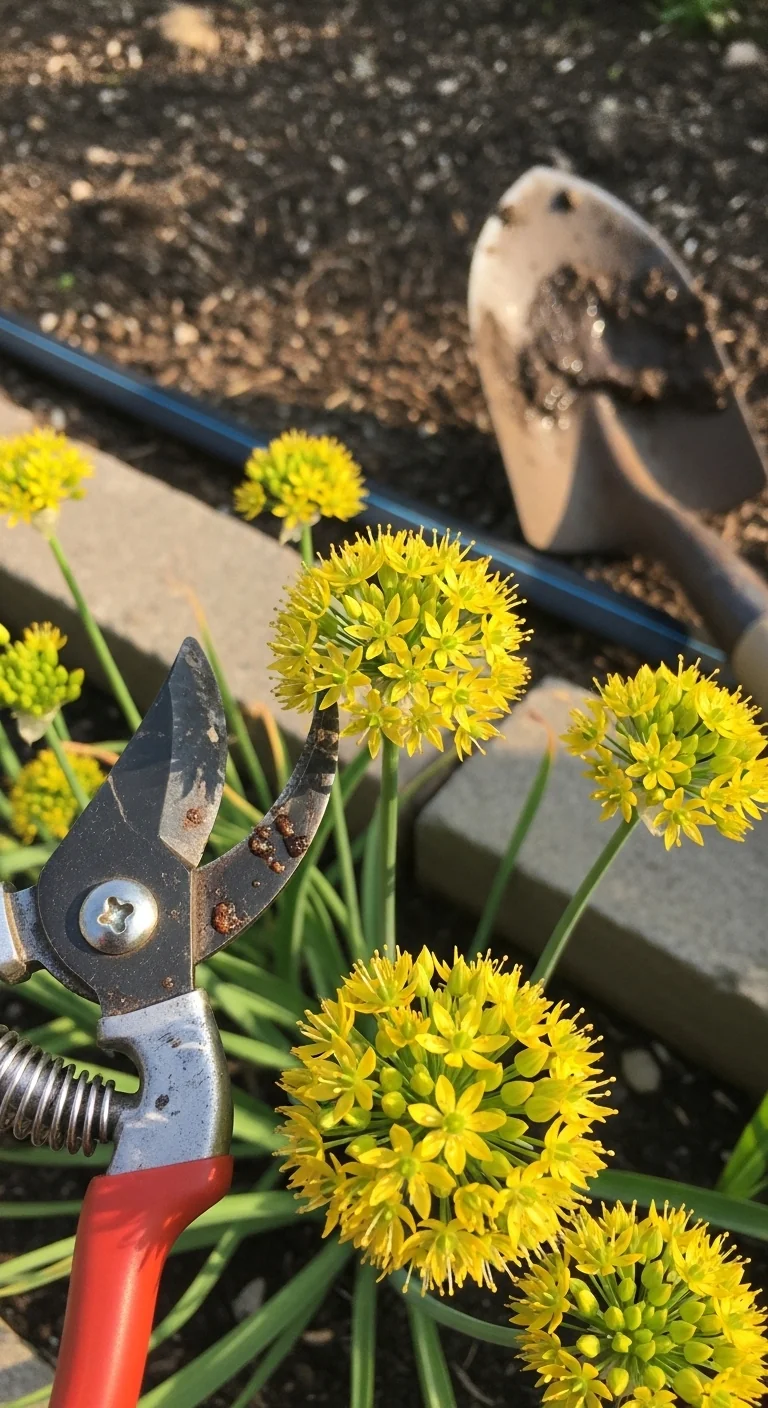
Best for: Branch 2
Use versus skip: plant for fragrant midsummer purple when pollinator activity peaks. Skip if your bed floods in winter, as even moderate moisture reduces repeat bloom.
Allium ‘Graceful Beauty’
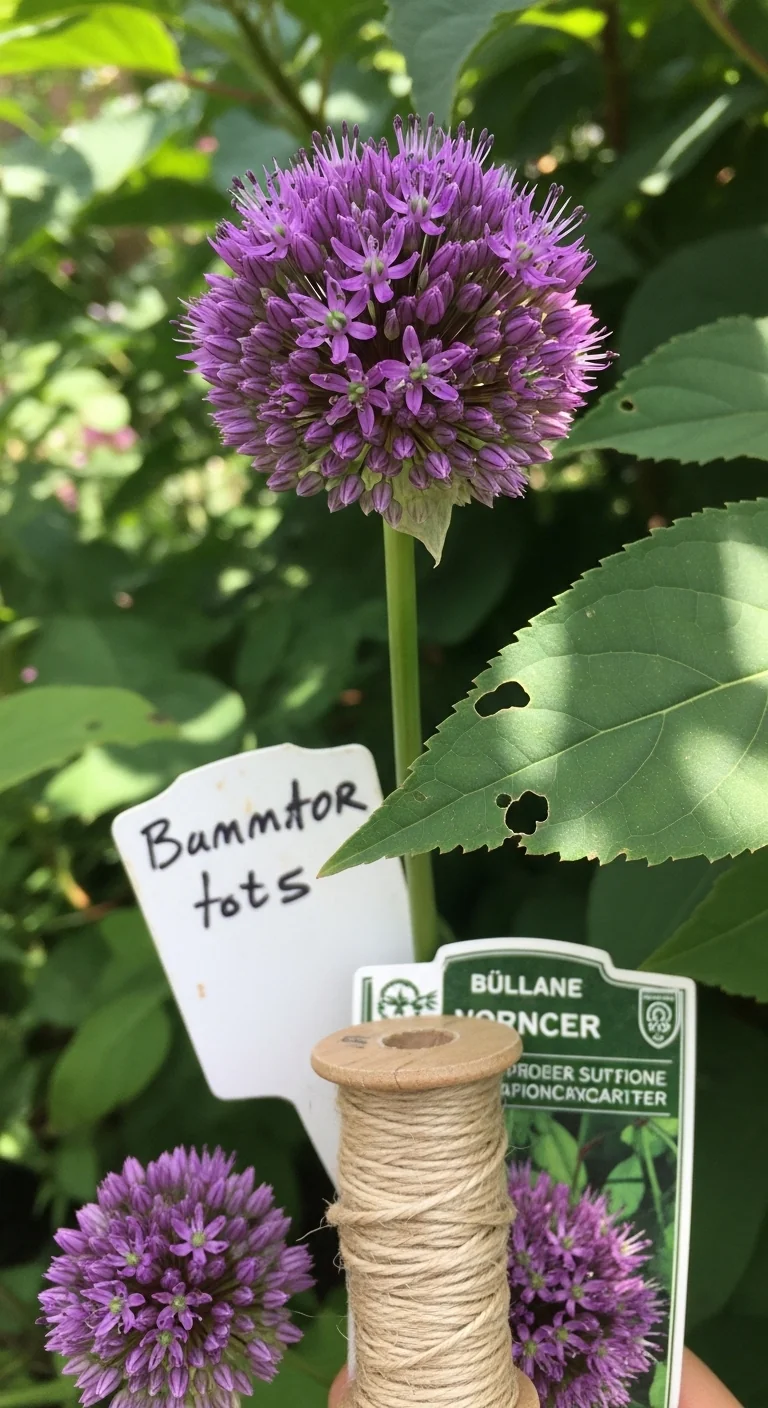
Best for: Branch 3
Blueprint for success: the white open clusters on 12-18 inch stems add delicate detail without overwhelming small spaces. Plant in fall at 4 inches deep. Steps include full-sun placement and reduced watering post-bloom. Unique edge case: the lighter flower weight resists flopping better than dense globes in exposed front borders.
Starter Stack (What to Choose First)
For Branch 1 gardens
Start with Allium ‘Globemaster’ and Allium giganteum. The large globe pairs with the extra-tall scale to create layered vertical interest in one planting session. Time estimate: 20-40 minutes for 12 bulbs. Cost range: medium to higher for larger sizes.
For Branch 2 gardens
Start with Allium sphaerocephalon and Allium ‘Purple Sensation’. Early and late bloom windows extend color without overlap. Time estimate: 15-30 minutes for 15 bulbs. Cost range: lower to medium.
For Branch 3 gardens
Start with Allium christophii and Allium ‘Millenium’. Starry texture combines with compact perennial habit for front-border fill that returns yearly. Time estimate: 10-25 minutes for 20 bulbs. Cost range: lower.
When This Won’t Work
Alliums fail in sites where water stands longer than four hours after rain because bulbs rot during dormancy. The same occurs if daily sun drops below six hours, resulting in weak stems and fewer flowers. Test drainage by digging a 12-inch hole and timing water disappearance before ordering. In either case, switch to containers filled with gritty potting mix or raised beds amended with coarse sand.
These conditions appear most often in heavy clay or low-lying shade. Raised beds solve both drainage and light issues in one adjustment.
Choosing the Right Option for Your Situation
Budget threshold
If your fall bulb budget covers only smaller sizes, select from Branch 3 varieties first. Larger globes in Branch 1 require higher per-bulb cost but cover more visual area per plant.
Time threshold
If planting time is under 20 minutes, choose any Branch 3 compact type. Taller Branch 1 needs deeper holes and wider spacing.
Technical constraint
If soil pH tests outside 6.0-7.5 or drainage fails the hole test, limit choices to container culture regardless of branch.
Yes/No checklist:
Does your site drain within 30 minutes after watering?
Does it receive at least six hours of direct sun?
Is stem height requirement clearly measured?
Will you plant in fall before soil freezes?
Expert Q&A
How do alliums combine with roses without disease overlap?
Alliums pair cleanly with roses because their sulfur compounds deter the same pests and they bloom after most rose flushes. Space 12 inches away from rose crowns and keep foliage dry to avoid any shared fungal risk in humid summers.
What happens if alliums are planted in clay soil without amendment?
In unamended clay, bulbs often rot over winter because moisture collects around them. Raised beds or 30 percent coarse grit mixed in solve this by improving drainage while keeping the nutrient level stable.
When should seed heads stay versus be removed?
Leave dried heads on schubertii and christophii types through winter for structure and self-seeding in informal gardens. Cut others at ground level after bloom if tidy appearance matters more than naturalizing.
Do alliums naturalize reliably across different zones?
Most naturalize best in zones 4-7 with well-drained soil and no summer irrigation. Moly and ‘Millenium’ spread faster than giant types, which stay as individual clumps unless divided every four to five years.
How do alliums perform as cut flowers compared with other bulbs?
Alliums last 10-14 days in vases when cut at full color. Change water daily and sear stem ends to reduce the mild onion scent. Taller varieties give more dramatic arrangements than compact ones.
Conclusion
Next step: run the soil drainage test this week and order varieties matched to your branch. Explore perennial flowers for companion plants that extend the season around your chosen alliums.