
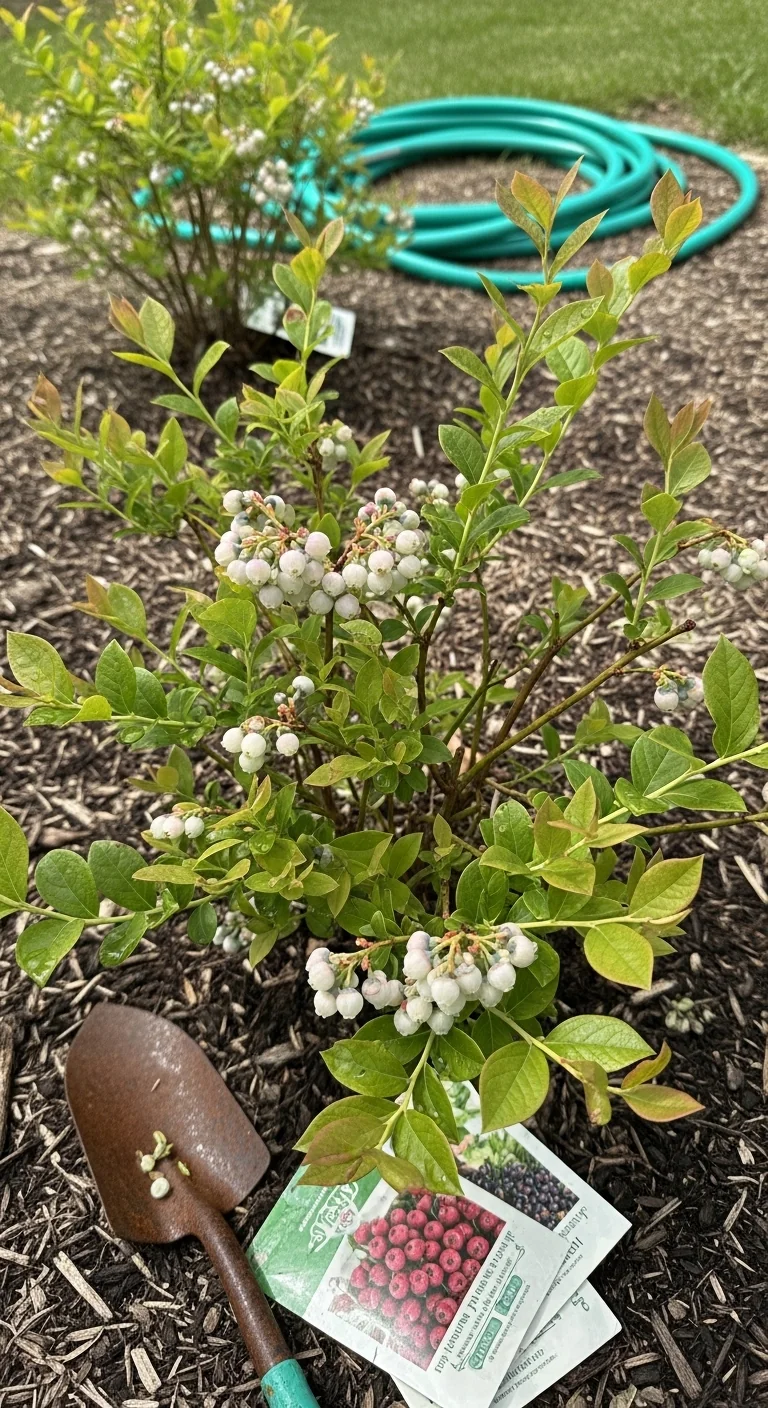
Blueberries companion plants succeed only when every addition preserves the narrow 4.5 to 5.5 pH zone blueberries require while delivering one clear layered function such as ground cover or bee attraction. Most guides list attractive options without addressing how companions either stabilize or sabotage that acidic micro-environment and your available space.
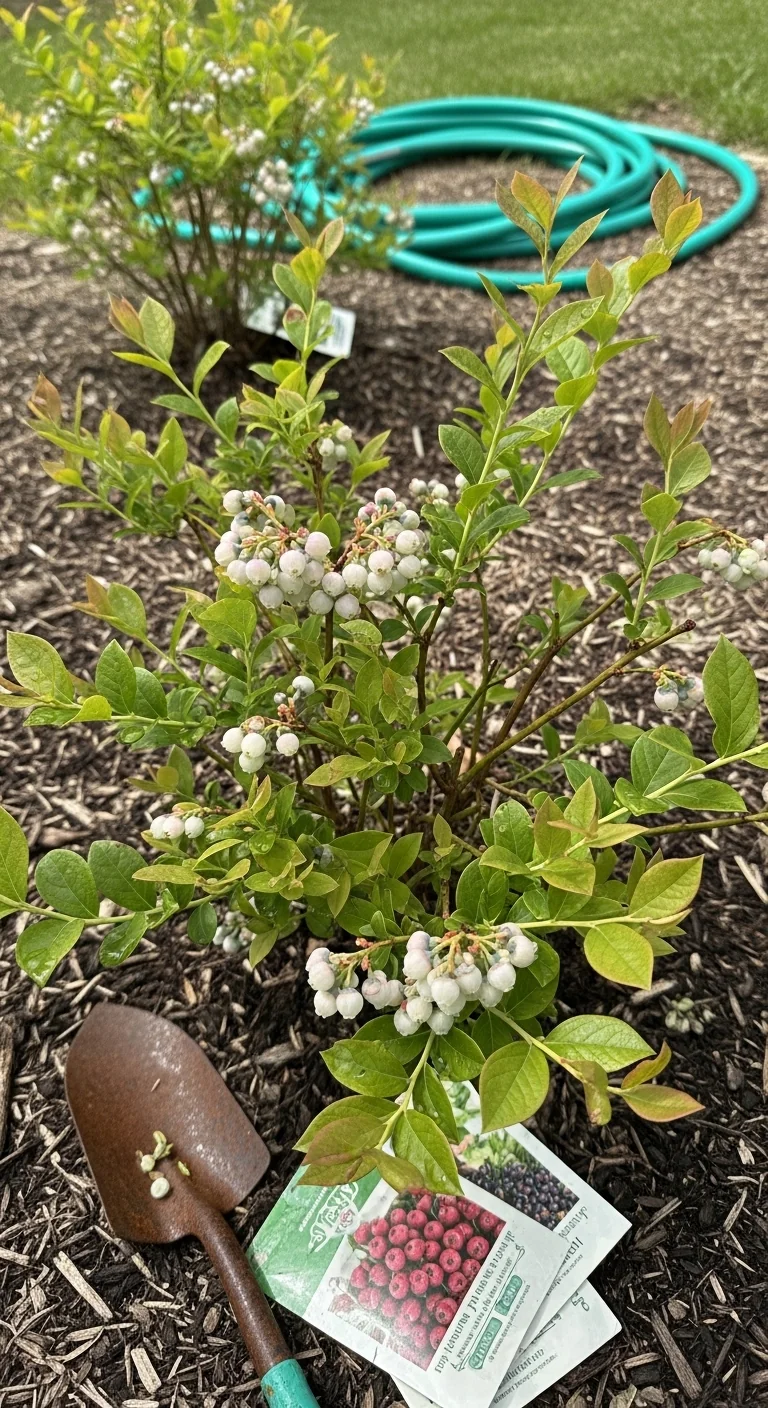
This article covers nine options drawn from acid-tolerant herbs, low shrubs, ground covers, and pollinator plants. It excludes nightshades, brassicas, walnuts, and any aggressive spreaders that raise pH or crowd shallow blueberry roots. Focus stays on in-ground beds, containers, and small polycultures across US, UK, Canada, Australia, and New Zealand conditions.
You gain a repeatable decision process to select and space companions so your blueberries avoid common root competition or nutrient lockout. Each choice includes exact spacing notes and measurable conditions that trigger adjustments.Use the decision grid below to pick exactly two starters that match your setup and build a stable guild without trial-and-error.
The Yield Grid Decision Grid
Branch 1 (Container or narrow beds under 4 feet wide): Your blueberries grow in pots, raised planters, or tight rows where root space stays limited and pH stays locked via imported mix. Recommended: Items 2, 3, and 5 below.
Branch 2 (In-ground beds with twice-yearly soil tests): Blueberries sit in native or amended garden soil where you monitor pH every six months and accept moderate root spread. Recommended: Items 1, 7, and 9 below.
Branch 3 (Larger polyculture or guild plantings over 8 feet wide): Blueberries form part of a diverse edible layer with room for self-seeding and multi-season bloom overlap. Recommended: Items 4, 6, and 8 below.
For exact soil preparation thresholds that keep every companion viable, see our blueberry soil pH guide.
Quick Comparison Table
| Option | Key mechanism | Best for | Decision Grid Branch | Effort Score |
|---|---|---|---|---|
| Rhododendrons and Azaleas | Exact pH overlap plus synchronized early bloom that draws native bees | Structural backdrop in acidic zones | Branch 2 | 2 |
| Thyme | Aromatic oils deter Japanese beetles while dense mat suppresses weeds | Low edging in tight spaces | Branch 1 | 1 |
| Strawberries | Low trailing foliage acts as living mulch and retains surface moisture | Ground cover under taller bushes | Branch 1 | 2 |
| Borage | Star-shaped flowers attract bumblebees that improve blueberry pollination | Season-long pollinator support | Branch 3 | 3 |
| Cranberries and Lingonberries | Same family shares mycorrhizal networks and tolerates identical pH | Evergreen low carpet in acidic beds | Branch 1 | 1 |
| Chives and Garlic Chives | Sulfur compounds repel aphids and deer while edible scapes add harvest | Edible perimeter defense | Branch 3 | 2 |
| Sage | Drought-tolerant foliage releases compounds that discourage spider mites | Herb layer in drier acidic spots | Branch 2 | 2 |
| Mint (contained) | Fast ground cover and strong scent masks blueberry scent from pests | Suppression in bordered zones only | Branch 3 | 4 |
| Crimson Clover | Low-growing nitrogen contribution plus flowers that extend bee forage | Seasonal living mulch in open guilds | Branch 3 | 3 |
Rhododendrons and Azaleas
Best for: Branch 2
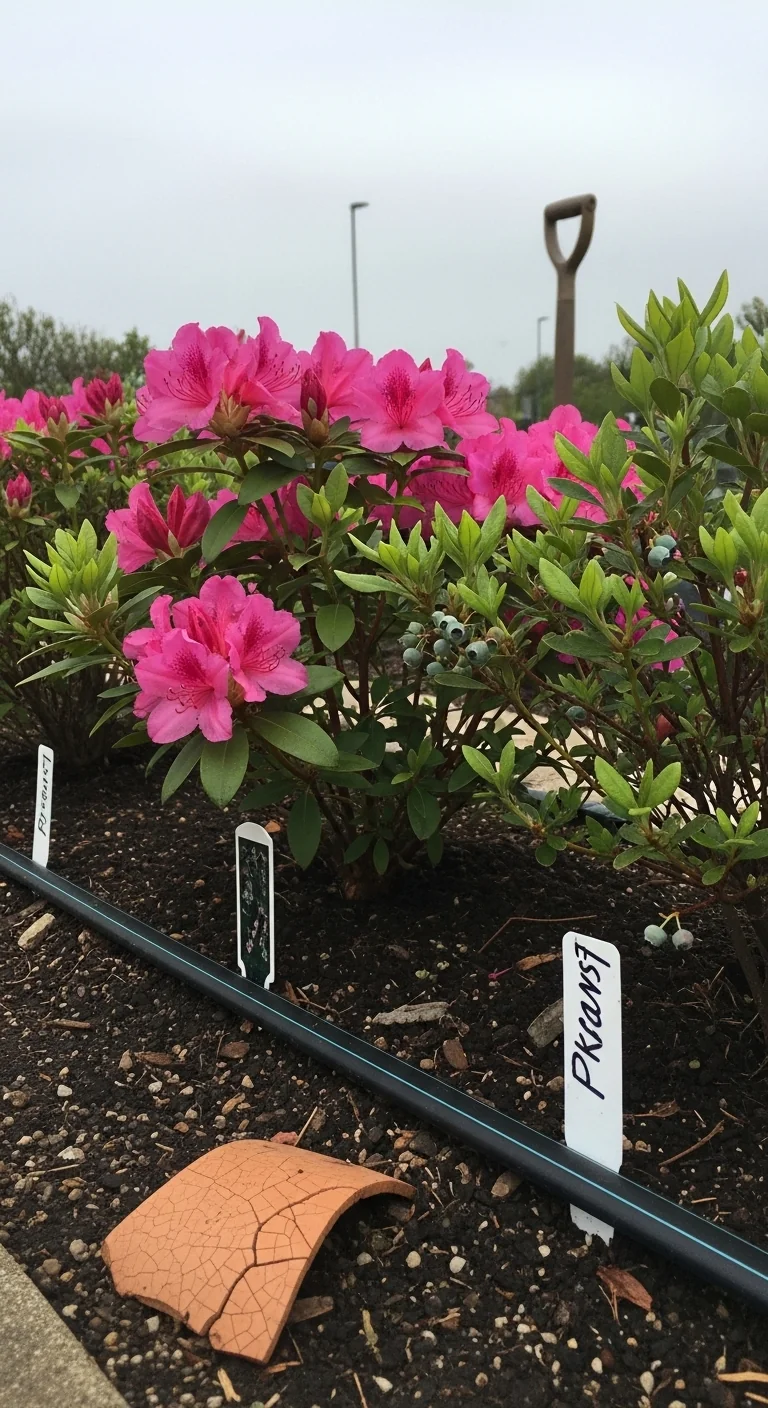
Rhododendrons and azaleas serve as structural companions because they demand the identical 4.5 to 5.5 pH range and shallow root habit as blueberries. Their trumpet-shaped flowers open in early spring at the same window when blueberry blossoms appear, drawing the same native bee species that perform cross-pollination. Plant them 4 to 6 feet away from blueberry crowns so canopy overlap stays minimal yet bee flight paths stay short.
Blueprint steps: test soil in a 3-foot radius around the blueberry drip line first; amend only the planting hole for the shrub with pine bark fines to match existing pH; water both plants at the same time using collected rainwater to avoid pH drift. Common mistake: placing them on the south side in full sun zones above USDA 7 where afternoon heat stresses both; site on the east or north instead for morning light only.
This pairing works across cooler climates in Canada and the UK where chill hours align for both species.
Thyme
Best for: Branch 1
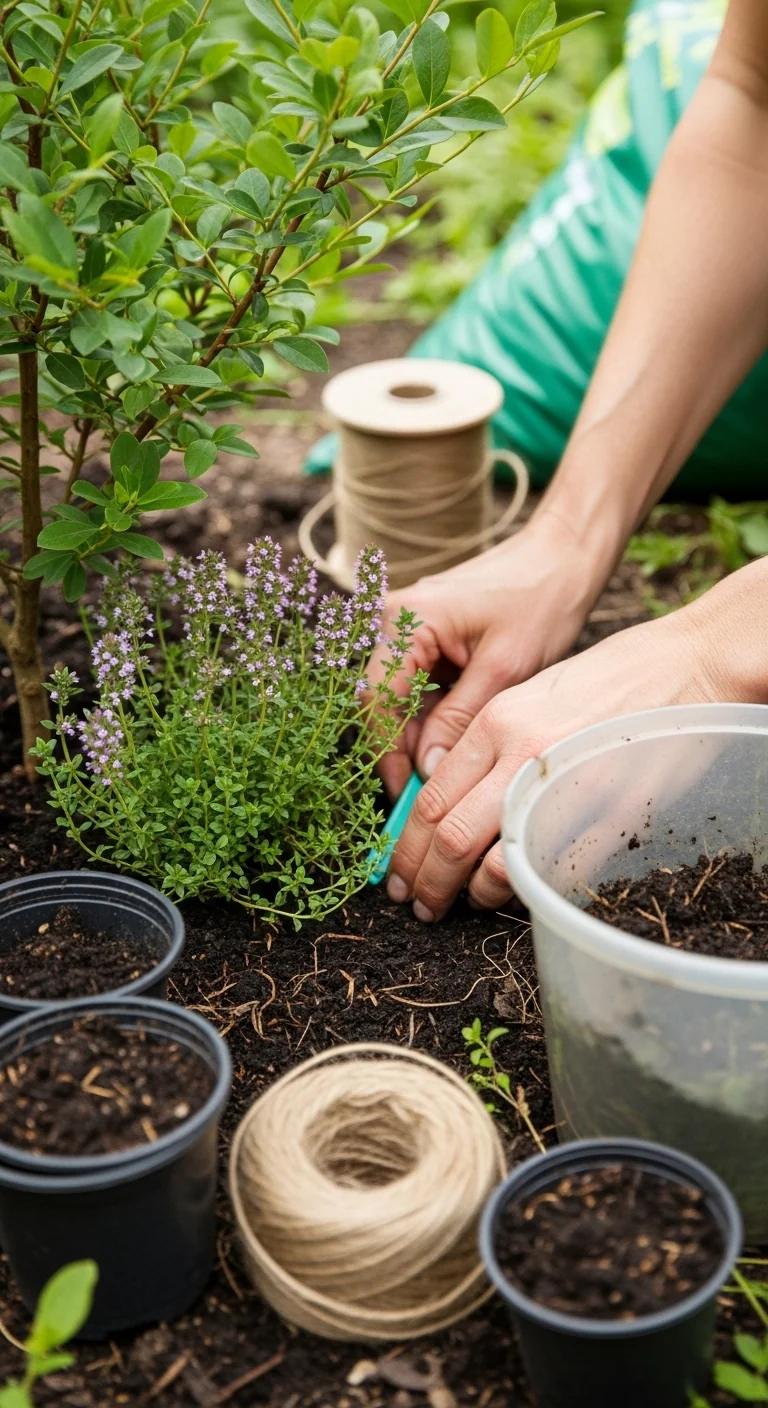
Thyme earns its place in container or narrow beds because its low mat-forming growth fills gaps without competing for deep moisture. The essential oils released from crushed leaves deter Japanese beetles that target blueberry foliage. Space plants 12 inches apart along the front edge of the pot or bed.
Use thyme when you need instant weed suppression; skip it if your setup already has dense mulch because the mat can trap excess moisture around blueberry crowns in wet UK or Pacific Northwest summers.
Strawberries
Best for: Branch 1
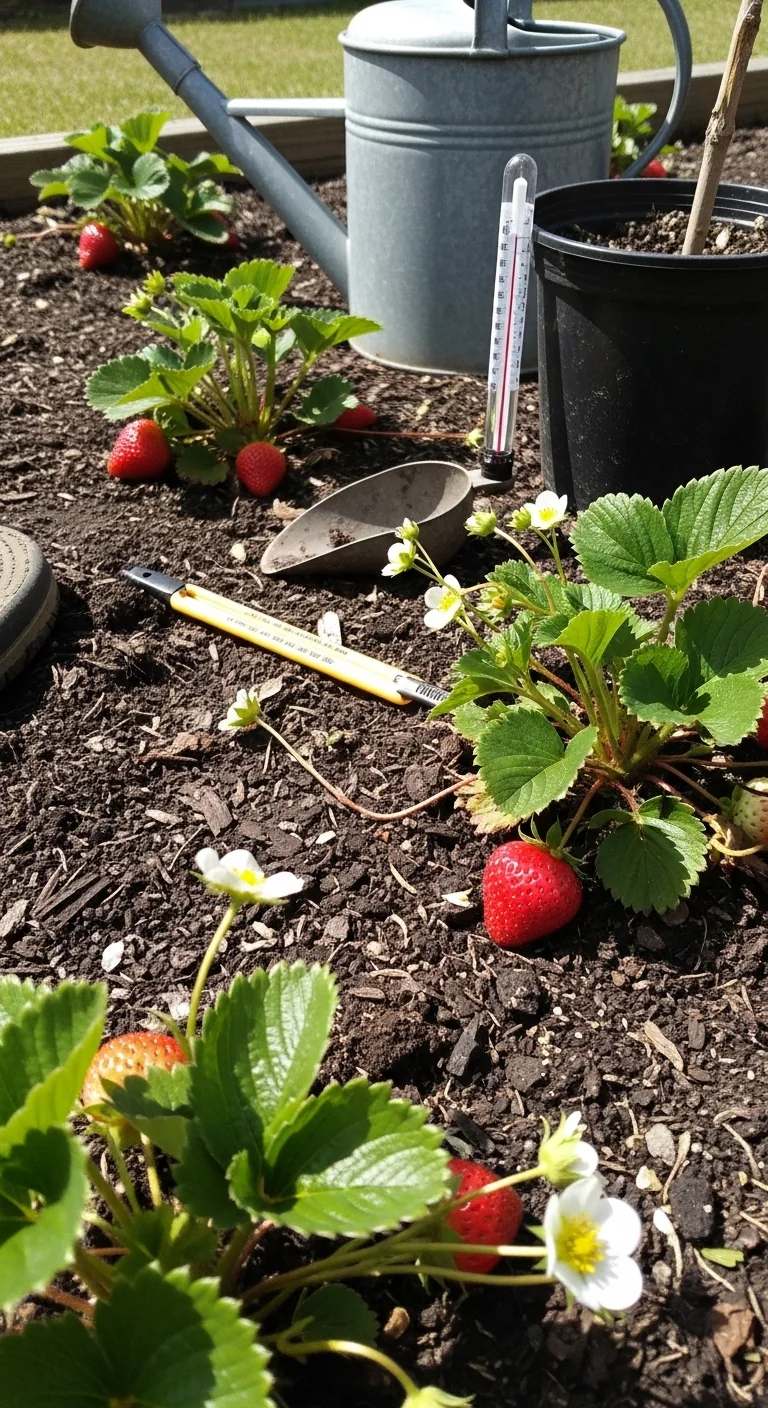
Strawberries function as living mulch because their trailing runners cover bare soil between blueberry stems and reduce surface evaporation by up to half in measured trials. Both tolerate overlapping pH at the 5.0 to 5.5 sweet spot when you start with a shared acidic mix. Keep runners trimmed back 8 inches from blueberry trunks to prevent runner competition for surface nitrogen.
Threshold rule: if your soil test shows pH above 5.5 after one season, lift and replant strawberries into separate raised beds; otherwise they coexist for multiple years. For container success pair with our dedicated strawberry guidance at strawberry raised beds.
Borage
Best for: Branch 3
Borage acts as a dynamic pollinator magnet because its blue star flowers produce nectar from early summer through frost, extending the forage window for bumblebees that service blueberry blooms. The plant self-seeds reliably in open guilds yet stays easy to pull if numbers exceed 3 per 10 square feet.
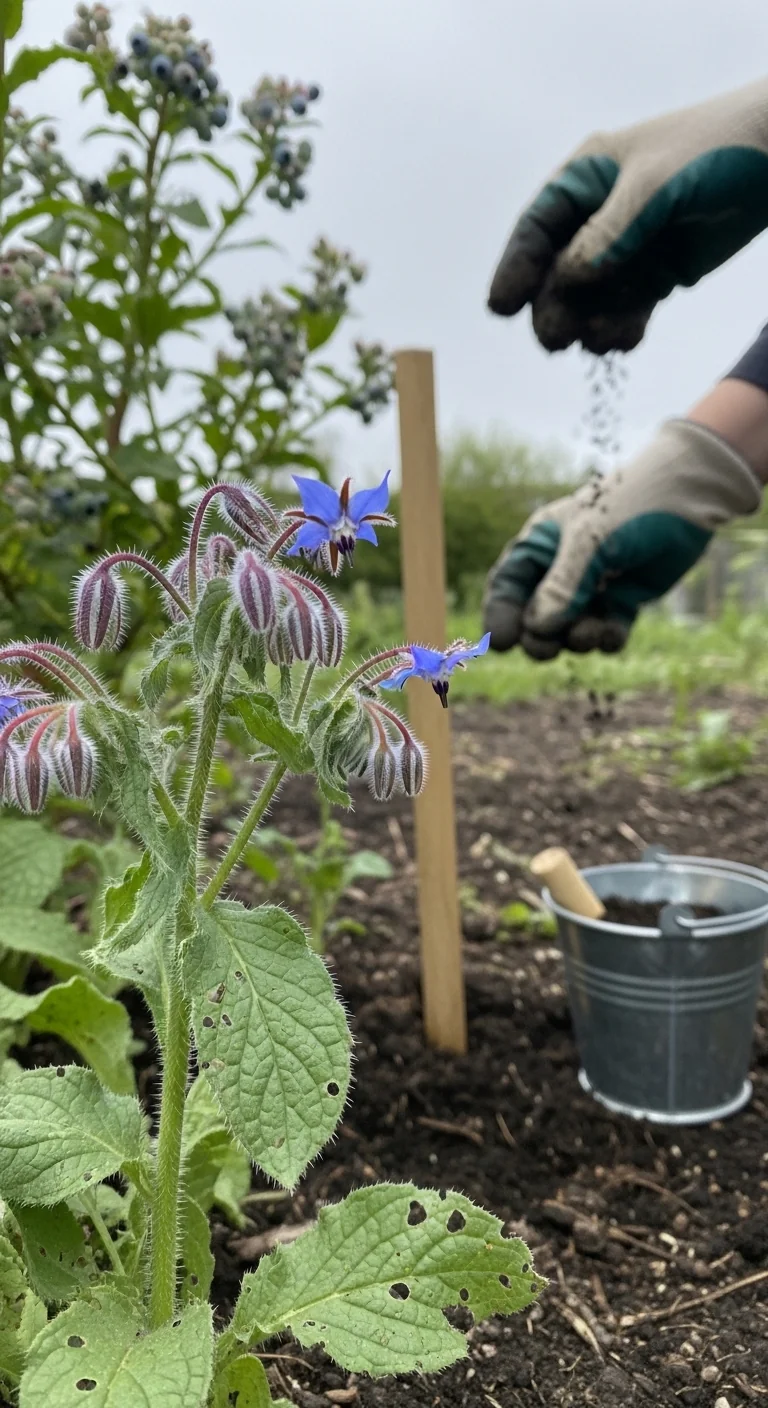
Blueprint steps: sow seeds directly in late spring after last frost; thin seedlings to 18 inches; allow spent stems to drop seed for next year. Common mistake: letting it flop onto blueberry canes during peak bloom; stake or prune side branches at 12 inches tall to keep airflow open and reduce fungal risk in humid Australian coastal zones.
Cranberries and Lingonberries
Best for: Branch 1
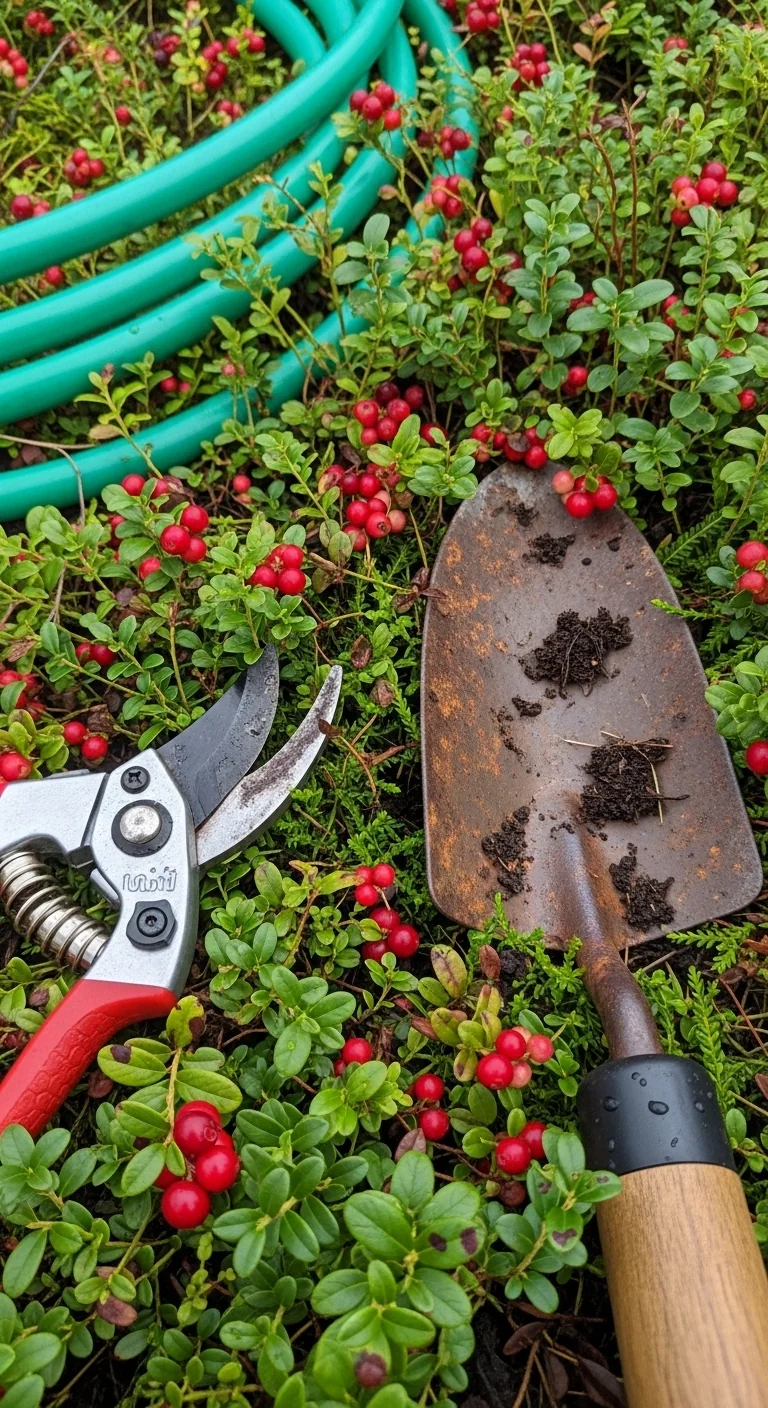
Cranberries and lingonberries share the same Vaccinium family and mycorrhizal partners as blueberries, forming a seamless evergreen carpet that stabilizes soil temperature and pH in containers. Space them 12 to 18 inches from blueberry stems so runners fill the pot base without shading lower leaves.
Use versus skip: plant them when you want year-round acid-soil coverage; skip in heavy clay soils even if amended because drainage must stay sharp or root rot follows. Related acid-tolerant berries expand the same guild; explore our full guide at currants and gooseberries.
Chives and Garlic Chives
Best for: Branch 3
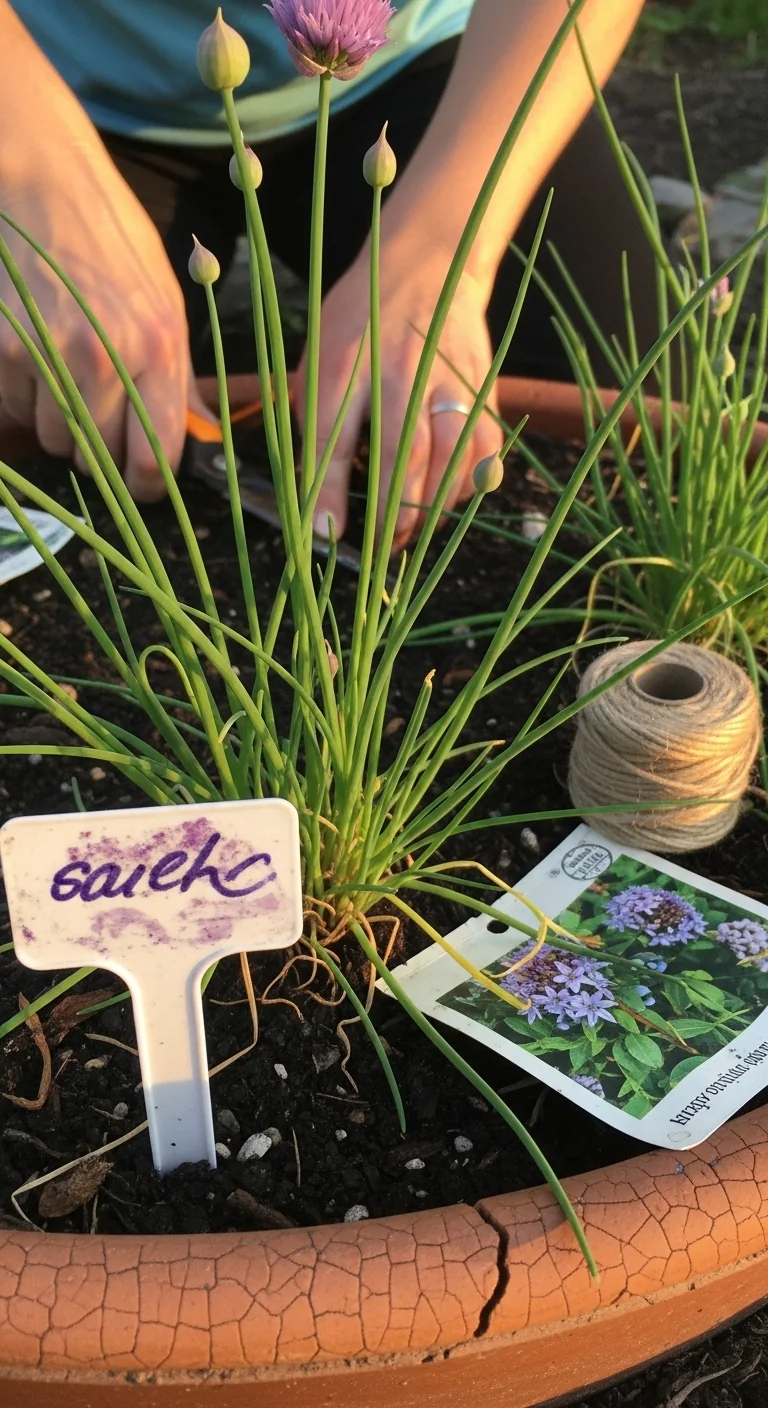
Chives and garlic chives release sulfur compounds through their foliage that repel aphids and deer while the edible flower heads and scapes add a second harvest layer. Plant in clumps every 3 feet around the outer perimeter of large blueberry groupings so the onion scent forms a natural barrier.
Threshold rule: maintain 12-inch spacing from blueberry crowns; if clumps exceed 18 inches wide after year two, divide and relocate half to prevent root overlap. The combination works equally in cooler Canadian prairies and milder New Zealand regions.
Sage
Best for: Branch 2
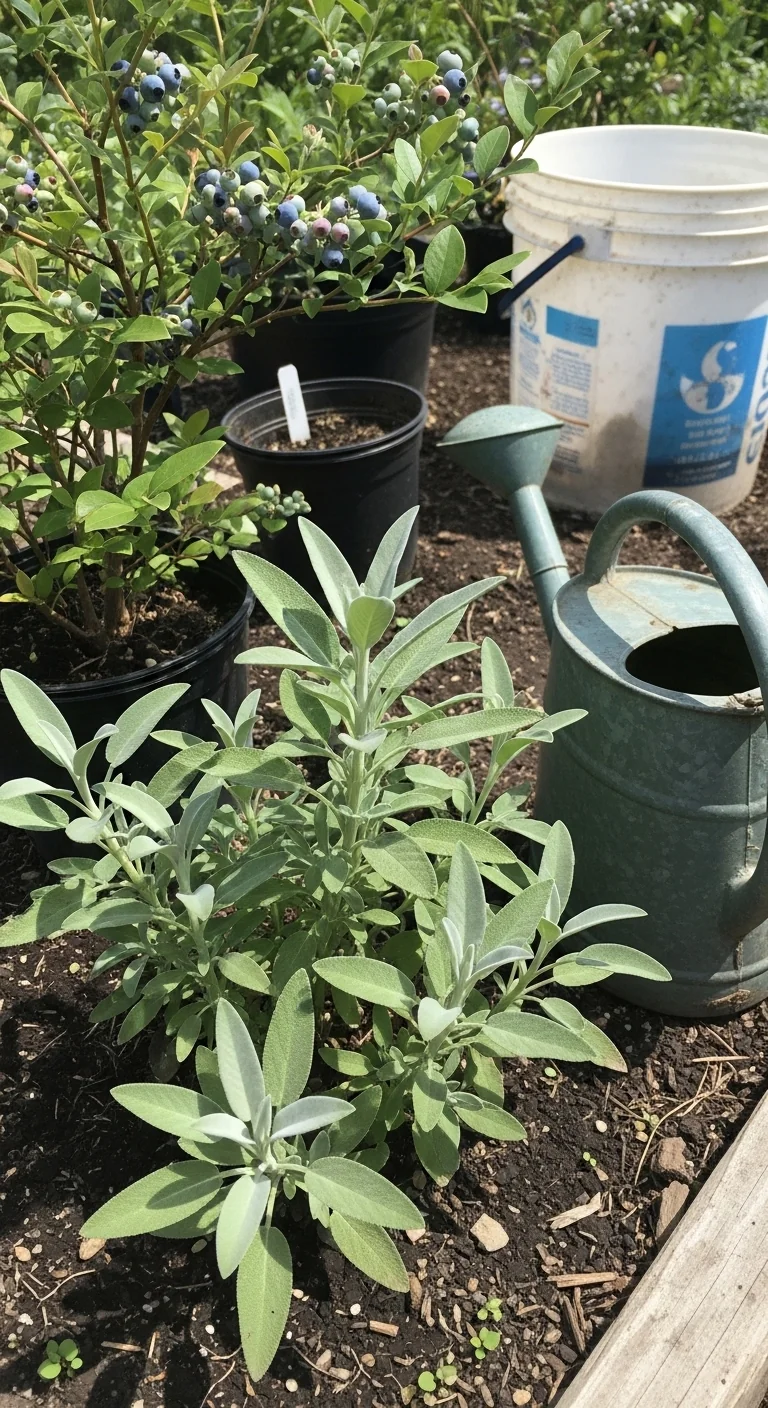
Sage fits managed in-ground beds because its woody stems and silver foliage tolerate the same dry spells and acidic conditions as mature blueberries. The aromatic leaves discourage spider mites that sometimes target new blueberry growth. Site it 3 feet from the drip line on the sunnier side.
Blueprint steps: start with a 1-gallon transplant in spring; water deeply once weekly for the first season only; prune woody stems back by one third each early spring to keep the plant compact. Common mistake: overwatering after establishment because sage prefers the drier edge of blueberry beds and excess moisture invites root issues.
Mint (contained)
Best for: Branch 3
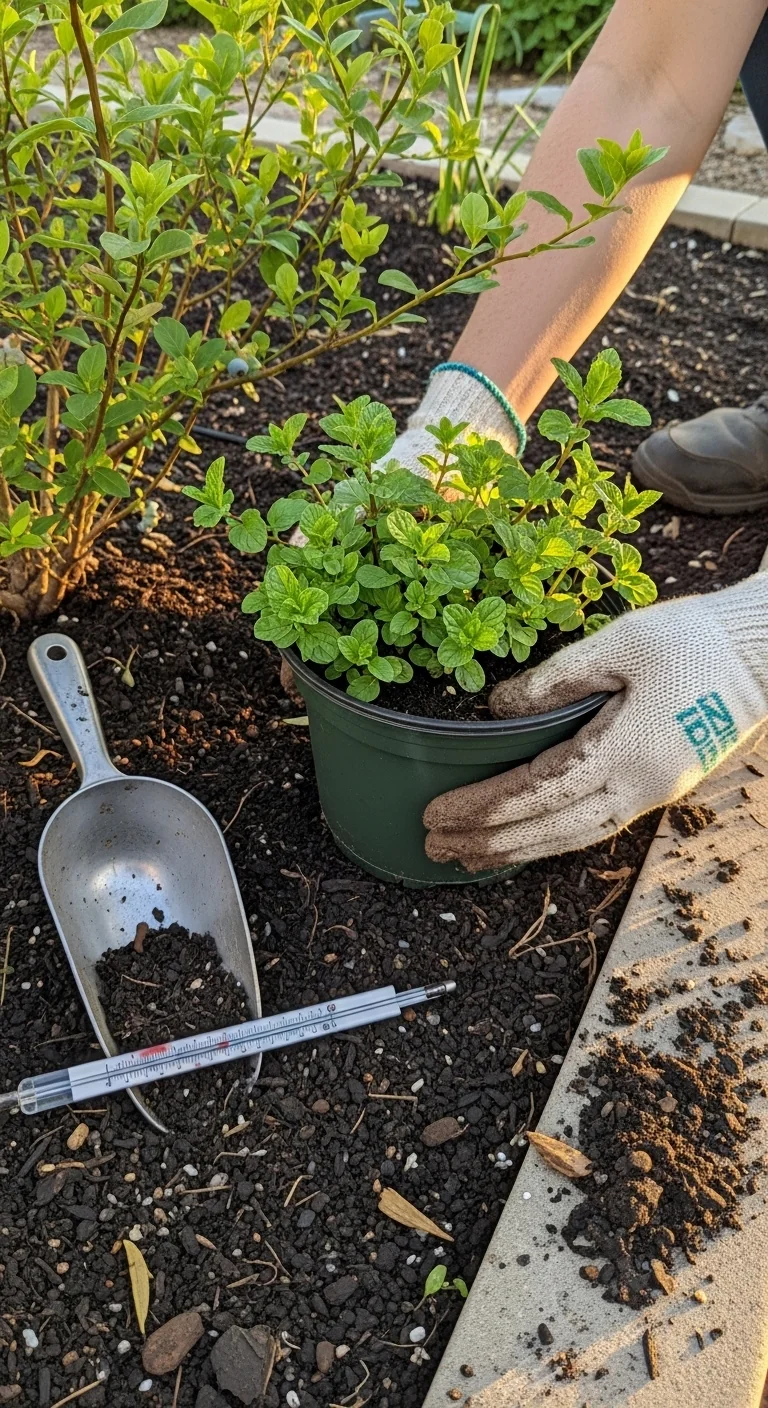
Mint provides fast ground cover and a strong scent that masks blueberry foliage from certain pests when grown inside a buried pot or metal barrier. Limit each colony to one 12-inch pot sunk into the bed so roots cannot escape.
Use versus skip: choose contained mint only in large guilds where you need instant coverage; skip entirely in open soil or containers because even one season of escape creates dense mats that steal surface moisture from blueberries.
Crimson Clover
Best for: Branch 3
Crimson clover functions as seasonal living mulch because its low rosettes and pink flowers extend bee activity into late spring without competing for deep nutrients. Sow in fall or early spring at 1 pound per 500 square feet then mow or pull before seed set to prevent volunteer pressure.
Threshold rule: keep clover at least 2 feet from blueberry trunks; if soil tests show nitrogen rise above target levels after two seasons, reduce sowing rate by half the following year. The clover works across varied rainfall patterns in the US Pacific Northwest and UK.
Starter Stack (What to Choose First)
For Decision Grid Branch 1
Begin with thyme and strawberries. Thyme edges the container while strawberries fill the base as living mulch. Synergy comes from combined weed suppression and pest deterrence without root competition. Time estimate: 30 to 60 minutes total planting; cost range 15 to 30 dollars for starter plugs in a standard 15-gallon pot.
For Decision Grid Branch 2
Start with rhododendrons or azaleas plus sage. The shrubs provide structure and bloom overlap while sage fills the mid-layer with drought tolerance. Synergy stabilizes pH across the bed and draws consistent pollinators. Time estimate: 60 to 90 minutes; cost range 40 to 70 dollars for one shrub and three sage plants.
For Decision Grid Branch 3
Choose borage and crimson clover first. Borage supplies continuous nectar while clover adds early-season ground cover. Synergy extends bee forage across the full blueberry bloom window. Time estimate: 45 to 75 minutes including direct sowing; cost range under 20 dollars for seed packets.
When This Won’t Work
Companions fail when soil pH climbs above 6.0 within one full season despite initial amendments or when any chosen plant spreads beyond its measured 18-inch exclusion zone around blueberry crowns. Both conditions appear on standard soil test results or through visible root crowding after 12 months.
They also fail in full-shade sites below 4 hours of direct sun because reduced light limits bloom and pollinator activity for every option listed. Switch immediately to container culture with imported acidic mix and move the entire guild to a brighter location.
Choosing the Right Option for Your Situation
Budget Threshold
If your total spend stays under 50 dollars per 50 square feet, select thyme, strawberries, and crimson clover. These options rely on seed or small plugs rather than nursery shrubs and still deliver full function in the first season.
Time Threshold
If planting time stays under 60 minutes total, limit choices to thyme, cranberries, or contained mint. All establish from plugs or divisions with no soil amendment beyond the blueberry zone itself.
Technical Constraint: Soil Test pH
If your latest test reads 5.0 or lower, any option works. If the reading sits at 5.5 or higher, restrict to cranberries, rhododendrons, and sage only until you lower the zone with sulfur or pine fines.
Yes/No checklist:
Do you maintain pH below 5.5 with annual tests?
Does your space allow 12-inch minimum clearance from blueberry crowns?
Can you commit to one containment barrier for mint or borage?
Will your site receive at least 5 hours of sun during bloom?
Expert Q&A
How close can companions sit to mature blueberry trunks without root competition?
Keep all companions at least 12 inches from the trunk and 18 inches from the outer drip line. Closer spacing forces shallow blueberry roots to compete for the same surface moisture and nutrients within the first two seasons.
Do strawberries actually share the same long-term pH needs as blueberries?
They overlap effectively between 5.0 and 5.5 when you start with a shared acidic mix and test yearly. Above 5.5 strawberries begin to show iron deficiency while blueberries stay healthy; below 5.0 strawberries slow and blueberries thrive.
Can I add mint without it invading the entire bed?
Only if you sink each mint plant inside a 12-inch buried pot or metal ring at planting time. Without that physical barrier the rhizomes travel 3 feet or more in one season and crowd blueberry roots.
Will nightshades like tomatoes damage blueberries if they sit in the same bed?
Yes. Tomatoes prefer pH above 6.0 and introduce different pest pressures that stress blueberry foliage. Keep them in separate vegetable beds at least 10 feet away.
Do azaleas pull nitrogen away from blueberries over multiple years?
No measurable competition occurs when you space them 4 feet apart and apply a balanced acid fertilizer to the shared zone each spring. Both species draw from the same mycorrhizal network without depleting surface reserves.
Conclusion
Take the next step by auditing your current blueberry layout against the decision grid above and reviewing container strategies if space feels tight at strawberries in containers. Your guild will stabilize faster and support heavier fruit set season after season.