
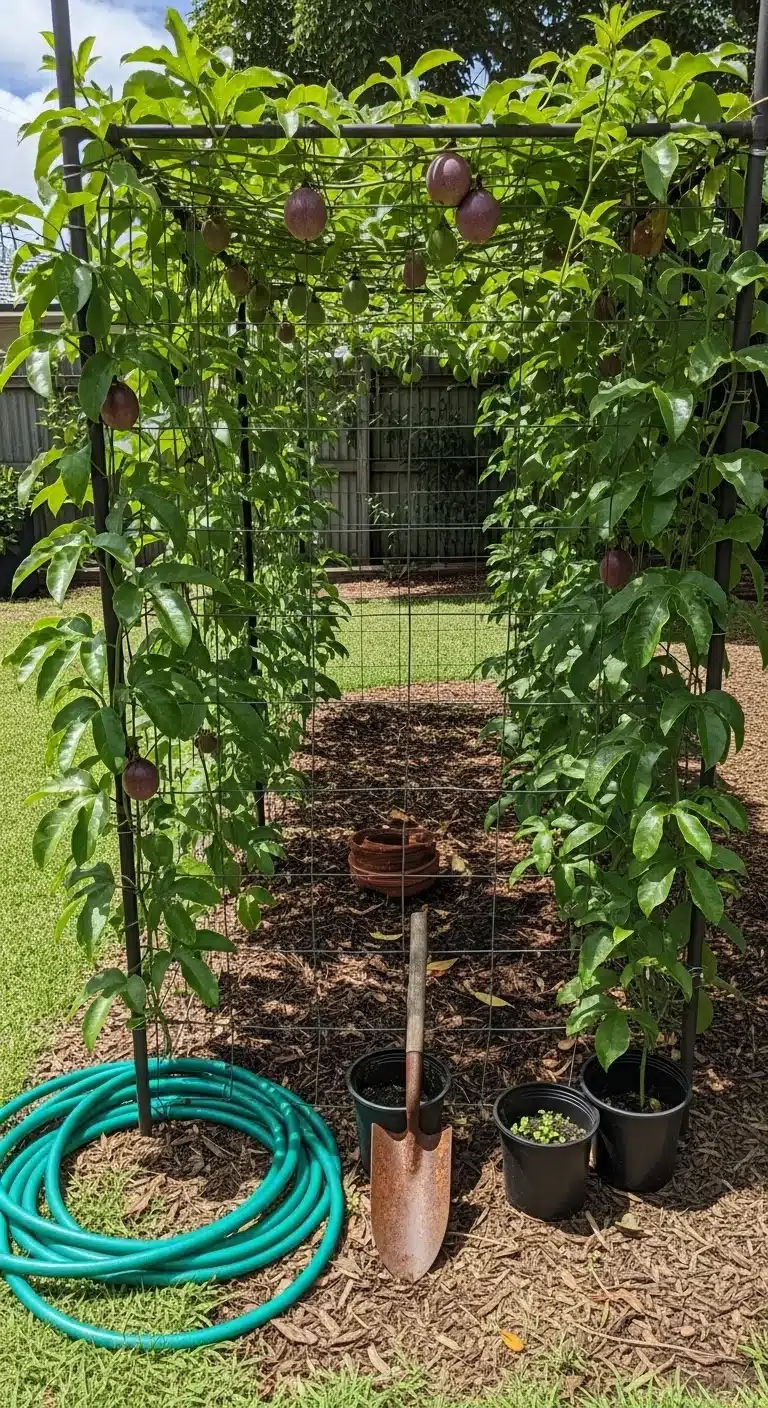
Passionfruit vines produce consistent fruit only when trellis choice, pruning cuts, and feeding rates align precisely with your frost exposure, soil drainage, and available space. Generic seasonal checklists overlook these site-specific triggers and often lead to weak structures, root issues, or excessive vegetative growth instead of flowers.
This article covers edible passionfruit (Passiflora edulis and flavicarpa types) through trellising, soil management, planting timing, pruning, fertilizing, watering, cold protection, pest thresholds, and container adaptations. It excludes ornamental Passiflora species and seed-starting details.
You will finish with clear rules for selecting support strength, pruning windows, and nutrient timing that fit measurable conditions in your yard. These decisions extend vine productivity in USDA zones 9 through 12 and similar climates across the US, UK (under cover), Canada (protected microclimates), Australia, New Zealand, and South Africa.
Identify your decision grid branch below, then follow the matching items to install the right support and schedule before the next growth flush.
The Yield Grid Decision Grid
Branch 1 (Frost-free subtropical, full sun, 15-plus-foot space available): Winter minimums stay above 32 degrees Fahrenheit with at least six hours of direct sun and room for vigorous climbing. Focus on heavy-duty permanent support and frequent feeding to channel growth into fruit.
Recommended: Items 1, 4, and 7 below. See espalier fruit tree training for additional vine shaping ideas.
Branch 2 (Marginal climates with occasional light frost or variable drainage): Winter lows reach 32 to 50 degrees Fahrenheit or soil drains slowly after rain. Prioritize protection measures and targeted soil amendments to prevent root loss.
Recommended: Items 2, 5, and 8 below.
Branch 3 (Limited space or container setups): Patio, balcony, or raised bed under 10 feet wide where vine spread must stay contained. Emphasize compact pruning and raised soil volume for drainage control.
Recommended: Items 3, 6, and 9 below.
Quick Comparison Table
| Option | Key mechanism | Best for | Decision Grid Branch | Effort Score |
|---|---|---|---|---|
| Trellis Systems for Vigorous Vines | Permanent wire or post framework anchored to resist 30-plus-foot spread and fruit weight | Heavy climbing load in open sites | Branch 1 | 1 |
| Soil pH Testing and Adjustment | Raising or lowering to 6.0 to 7.5 range with lime or sulfur plus drainage test | Sites prone to root rot | Branch 2 | 2 |
| Planting Timing and Site Prep | Setting out after soil warms above 65 degrees Fahrenheit in prepared mounds | Establishment in restricted areas | Branch 3 | 2 |
| Pruning for Renewal and Fruiting | Removing one-third of old wood in late winter to stimulate new fruiting shoots | Long-term productivity in warm zones | Branch 1 | 2 |
| Fertilizing Schedule and Ratios | Balanced or potassium-leaning applications every four to six weeks during active growth | Fruit set without excess leaves | Branch 2 | 3 |
| Watering and Mulching Thresholds | Keeping top two inches of soil moist but never saturated, with three-inch mulch ring | Preventing fruit drop in containers | Branch 3 | 4 |
| Cold Protection and Frost Management | Overhead sprinklers or covers when temperatures approach 32 degrees Fahrenheit | Marginal winter protection | Branch 1 | 3 |
| Container Growing Adaptations | Using 15-plus-gallon pots with raised soil mix and frequent root-zone checks | Patio or small-space confinement | Branch 2 | 4 |
| Pest and Disease Monitoring Protocol | Weekly visual checks for aphids, scale, or leaf yellowing plus netting | Early intervention in any site | Branch 3 | 3 |
Trellis Systems for Vigorous Vines
Best for: Branch 1
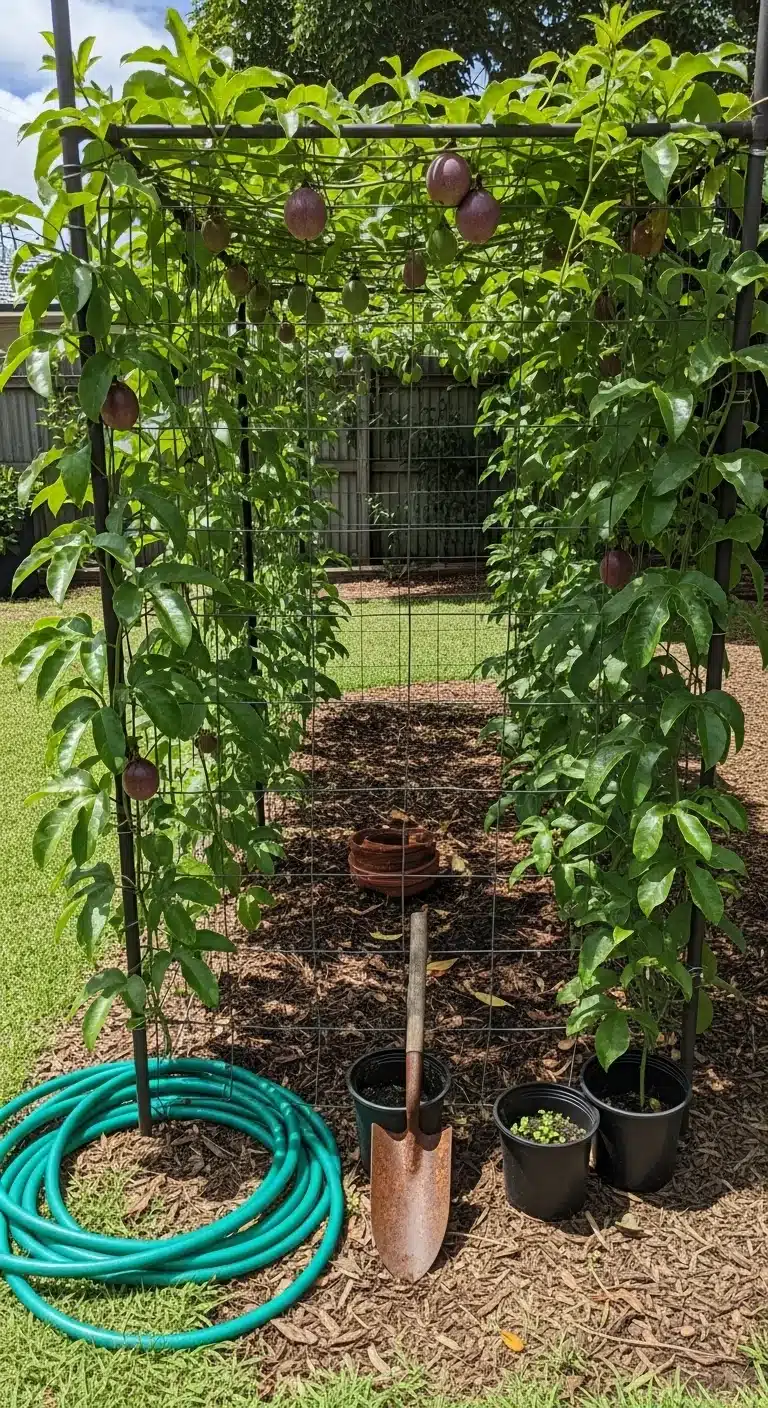
Passionfruit vines climb with tendrils and can reach 30 feet while carrying heavy fruit loads, so the support must be installed before planting and built to last the vine’s productive life of three to seven years. Use pressure-treated posts set three feet deep, spaced eight to 12 feet apart, with three horizontal galvanized wires at 18 inches, 36 inches, and 60 inches high. Anchor end posts with diagonal braces or concrete footings. This framework distributes weight evenly and keeps fruit off the ground to reduce disease pressure.
Key mechanism: The wires allow the vine to spread horizontally while the posts resist wind loads common in open subtropical sites. Install the structure in the dormant season so roots establish around it. Avoid flimsy lattice or single stakes; these collapse under mature vine mass. Upgrade option: Add a second set of wires on the opposite side for two-sided training if space allows.
Common mistake: Placing the trellis too close to a wall or fence without air circulation, which traps humidity and invites fungal issues.
Soil pH Testing and Adjustment
Best for: Branch 2
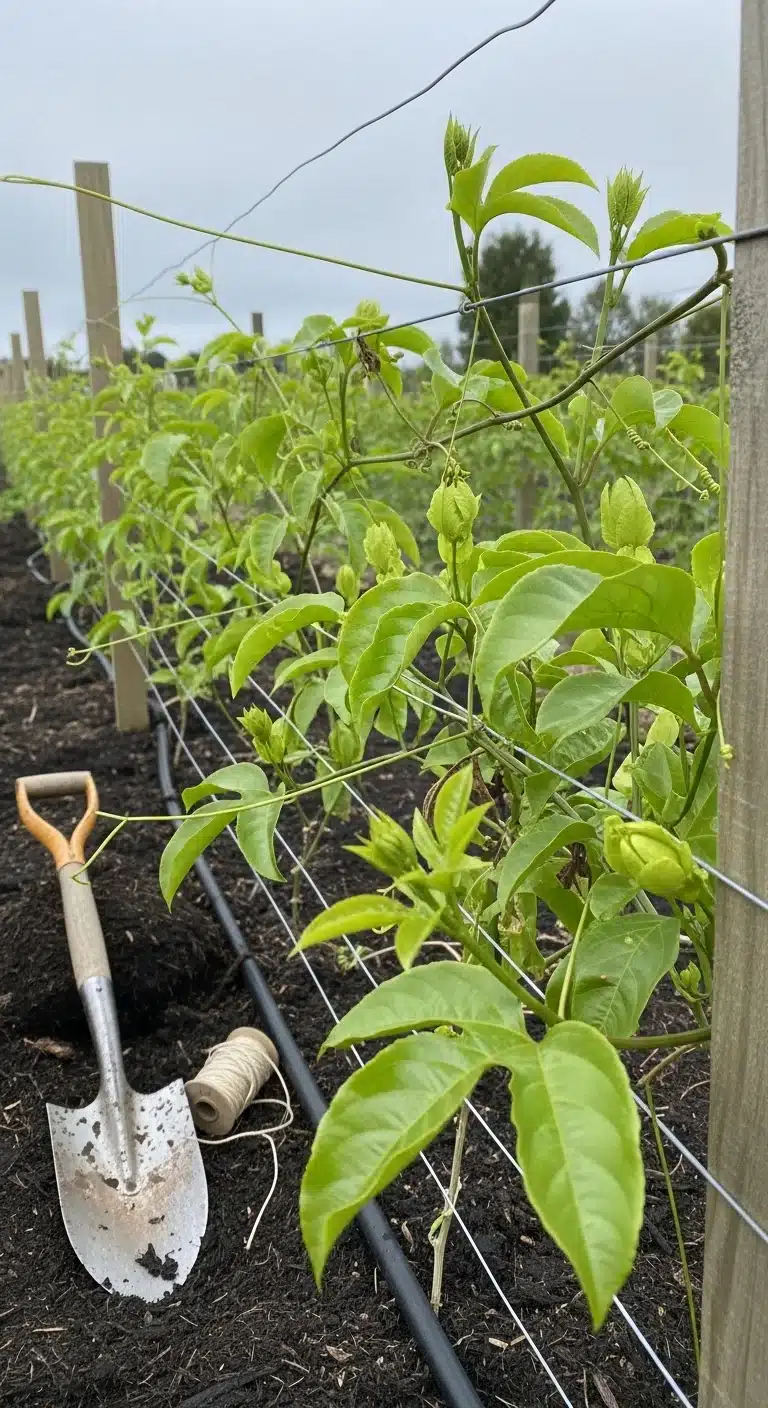
Test soil pH and drainage before planting by digging a 12-inch hole and filling it with water; it should drain completely within one to two hours. Passionfruit prefers 6.0 to 7.5. If below 6.0, incorporate agricultural lime at the rate recommended by your soil test kit. If drainage fails the hole test, build raised mounds or beds 12 to 18 inches high with added coarse sand or compost.
Planting Timing and Site Prep
Best for: Branch 3
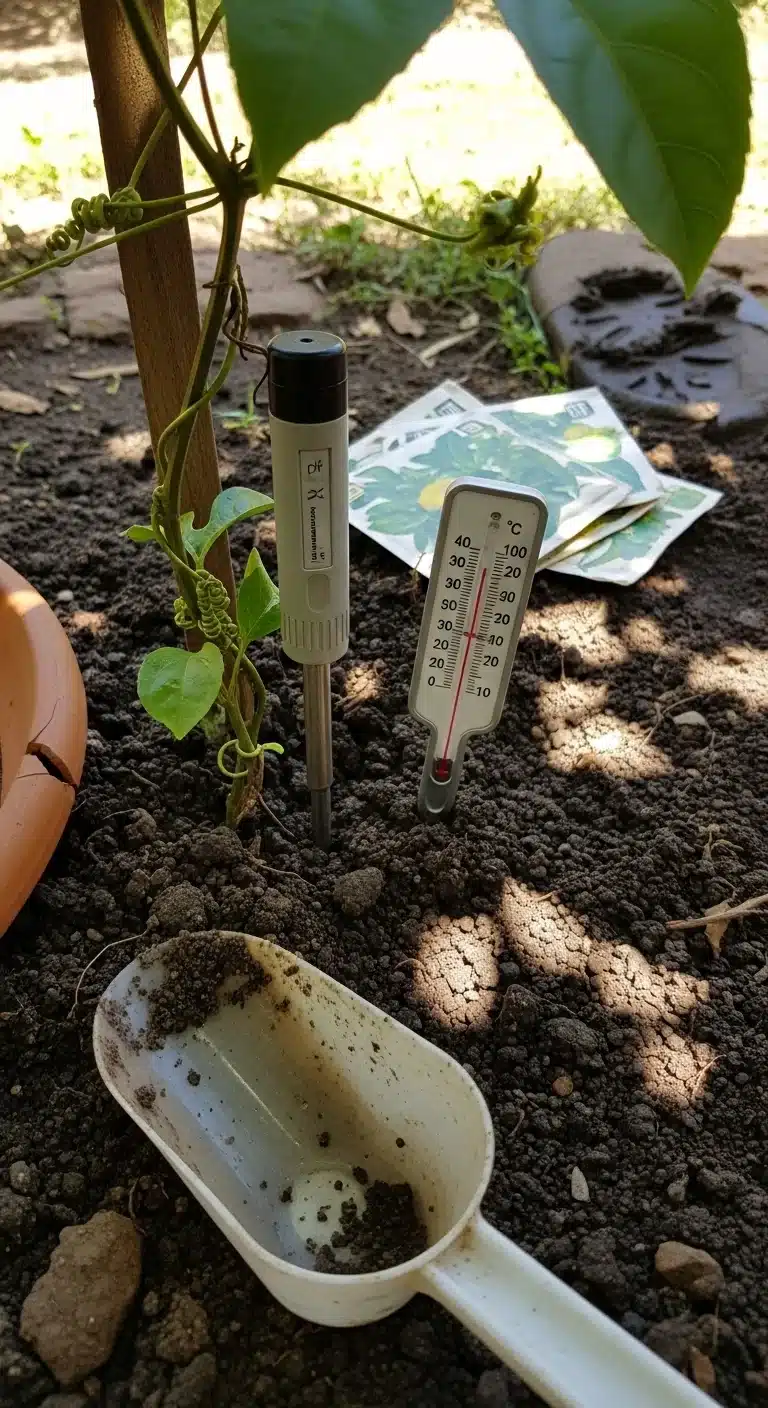
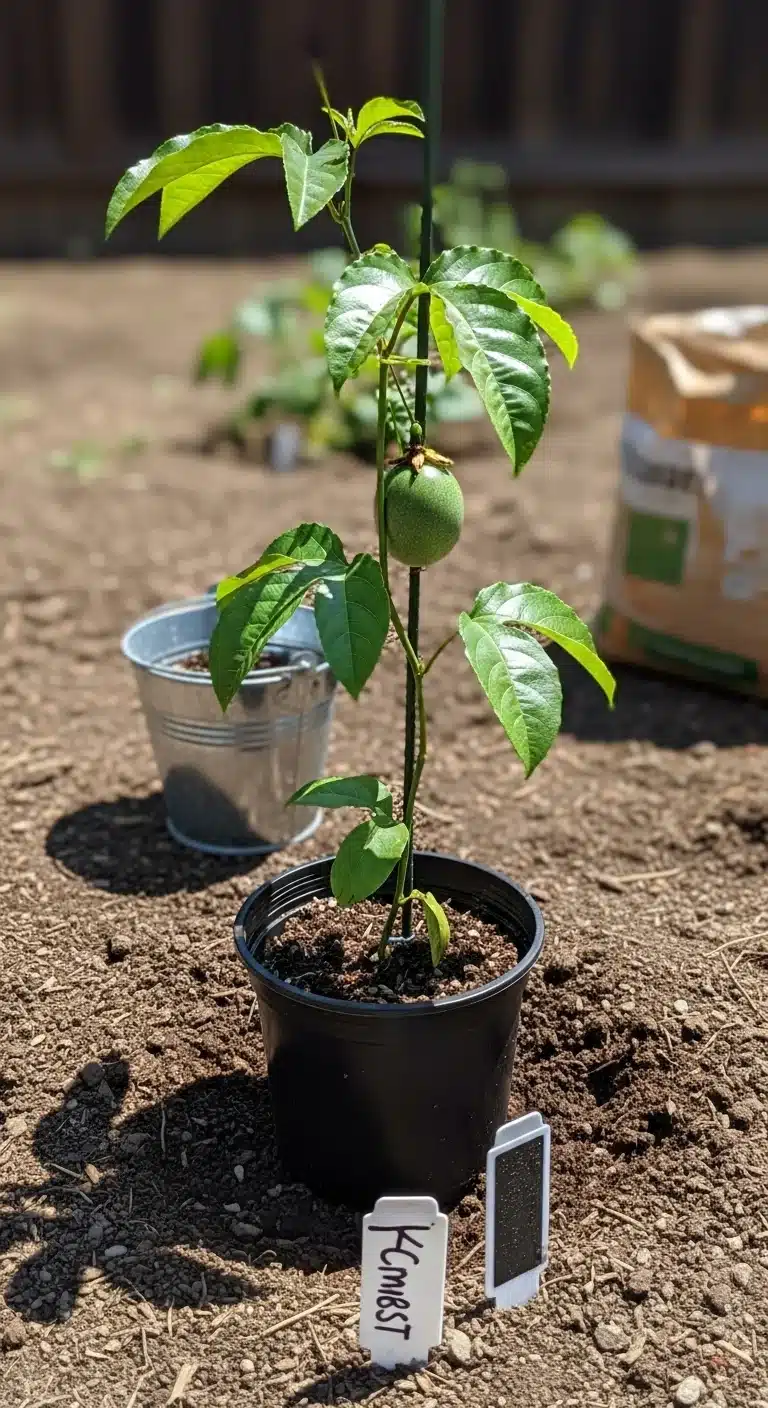
Plant container-grown vines after soil temperature reaches 65 degrees Fahrenheit and all frost risk has passed. Prepare the site by loosening soil to 18 inches deep in a three-foot-wide circle, mixing in compost, and forming a slight mound to improve drainage around shallow roots. Space plants eight to 10 feet apart along the trellis line. Water deeply immediately after planting and apply a two- to three-inch mulch layer kept two inches away from the stem. This timing and prep give the vine a full growing season to establish before cooler weather arrives.
Pruning for Renewal and Fruiting
Best for: Branch 1
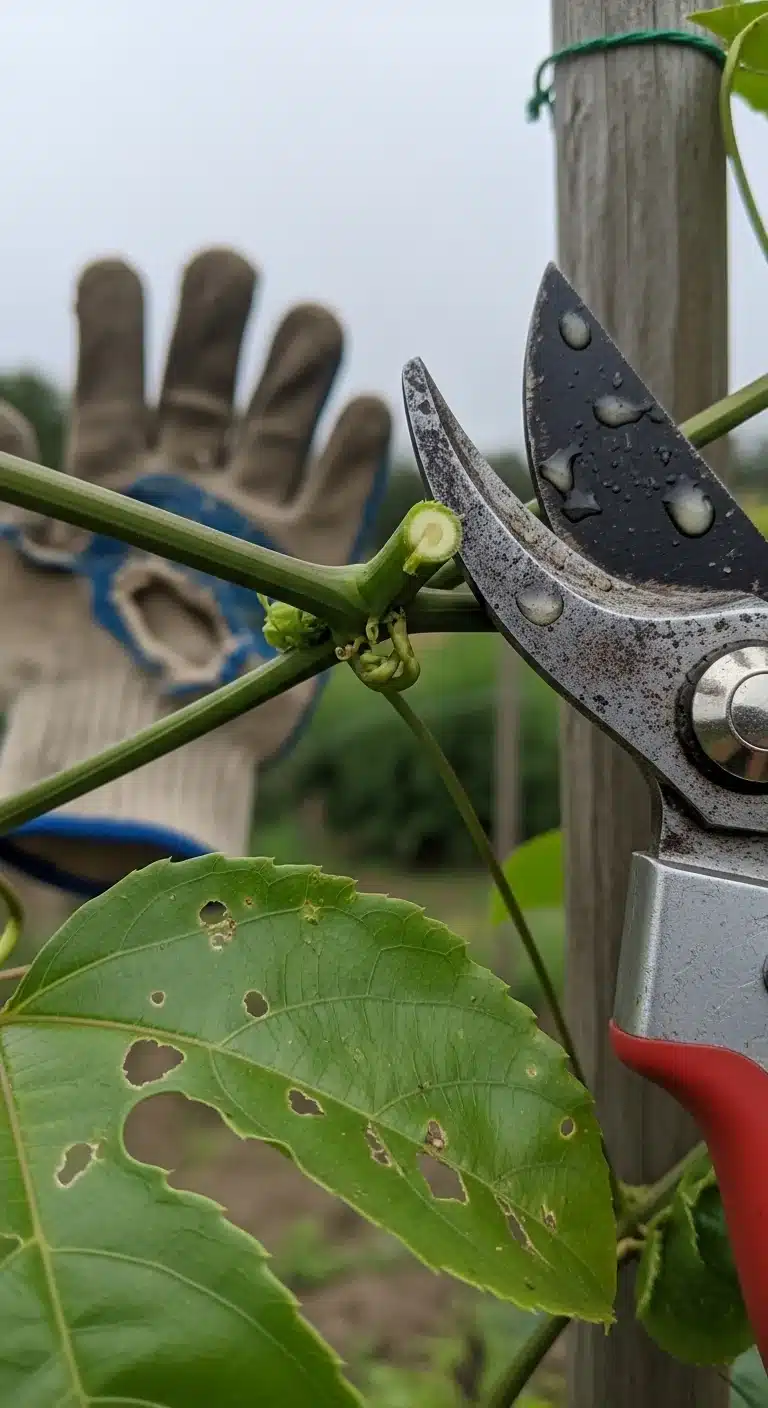
Passionfruit flowers and fruits on new growth, so annual pruning in late winter removes tangled or unproductive wood and redirects energy. Cut back laterals to two or three buds and remove up to one-third of the oldest framework, leaving the main cordons intact. Clean cuts with sterilized shears prevent disease entry. This renewal keeps the vine compact enough for the trellis and stimulates the spring flush that carries the next crop. In frost-free zones the vine recovers quickly; skip heavy cuts if the plant shows stress from recent cold snaps.
Edge case: Overgrown vines more than five years old respond best to a hard renovation prune in early spring, followed by light feeding to rebuild structure without shock. See raspberry pruning guide for similar lateral training techniques.
Fertilizing Schedule and Ratios
Best for: Branch 2
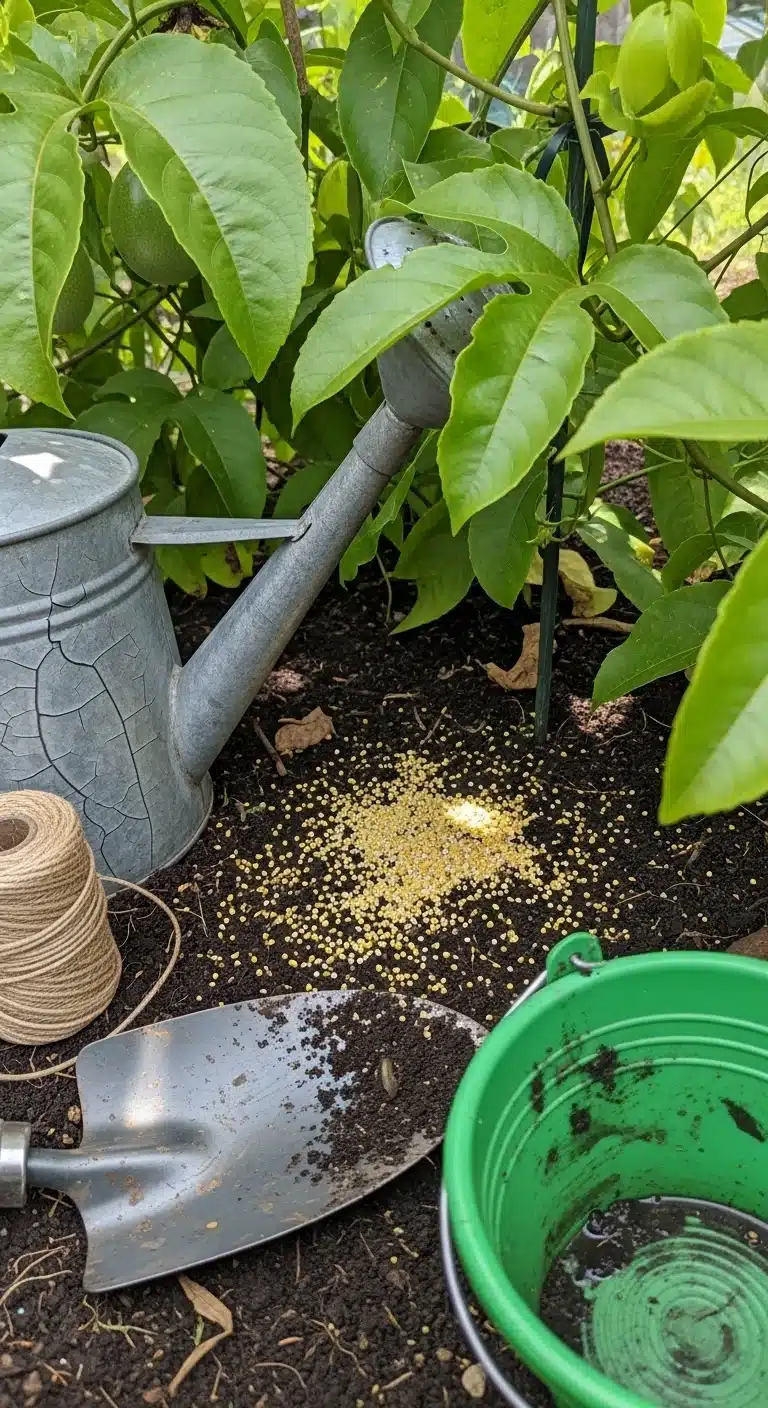
Apply a balanced fertilizer (such as 10-5-20 or similar) every four to six weeks from late winter through early fall, reducing nitrogen after the first two applications to favor flowers over leaves. Scatter granules around the drip line and water in immediately. In marginal climates with cooler springs, delay the first feeding until new growth appears to avoid tender shoots damaged by late cold. Foliar micronutrients help when soil pH drifts above 7.5.
Watering and Mulching Thresholds
Best for: Branch 3
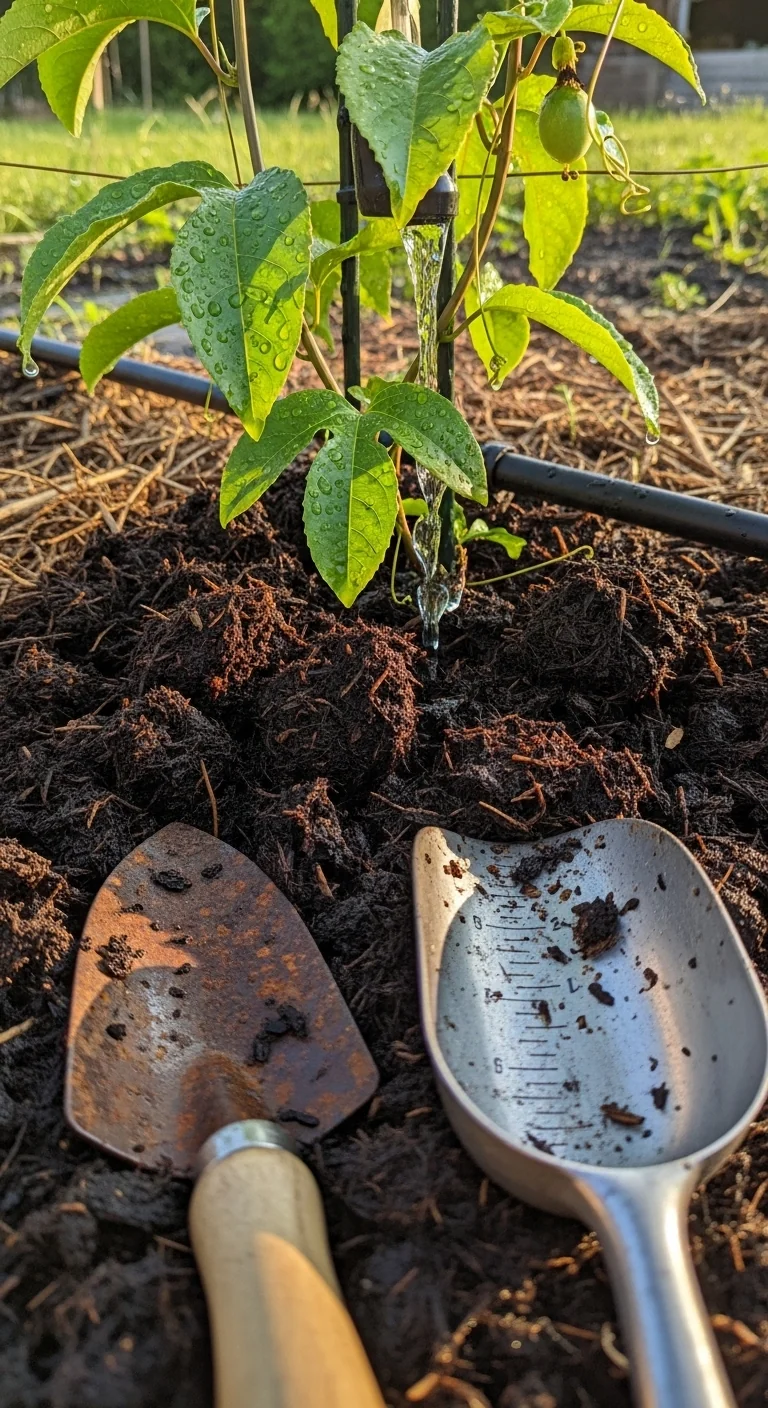
Check soil moisture by inserting a finger two inches deep; water only when the top layer feels dry. Provide deep soaking equivalent to one inch of rain weekly during fruit development, less in cool weather. Three-inch organic mulch conserves moisture and moderates root temperature but must stay clear of the stem base to avoid collar rot. In containers this check becomes daily in summer heat because pots dry faster.
Cold Protection and Frost Management
Best for: Branch 1
When forecasts predict temperatures near 32 degrees Fahrenheit, activate overhead sprinklers to coat foliage with ice; the freezing process releases heat that protects tissues down to 23 degrees Fahrenheit. For potted plants or small spaces, move containers to a sheltered spot or wrap with frost cloth. Remove covers as soon as temperatures rise above freezing to prevent heat buildup. This method has protected commercial vines in borderline areas without chemical intervention.
Link to related vine support: melon trellis ideas offer lightweight options for temporary winter covers.
Container Growing Adaptations
Best for: Branch 2
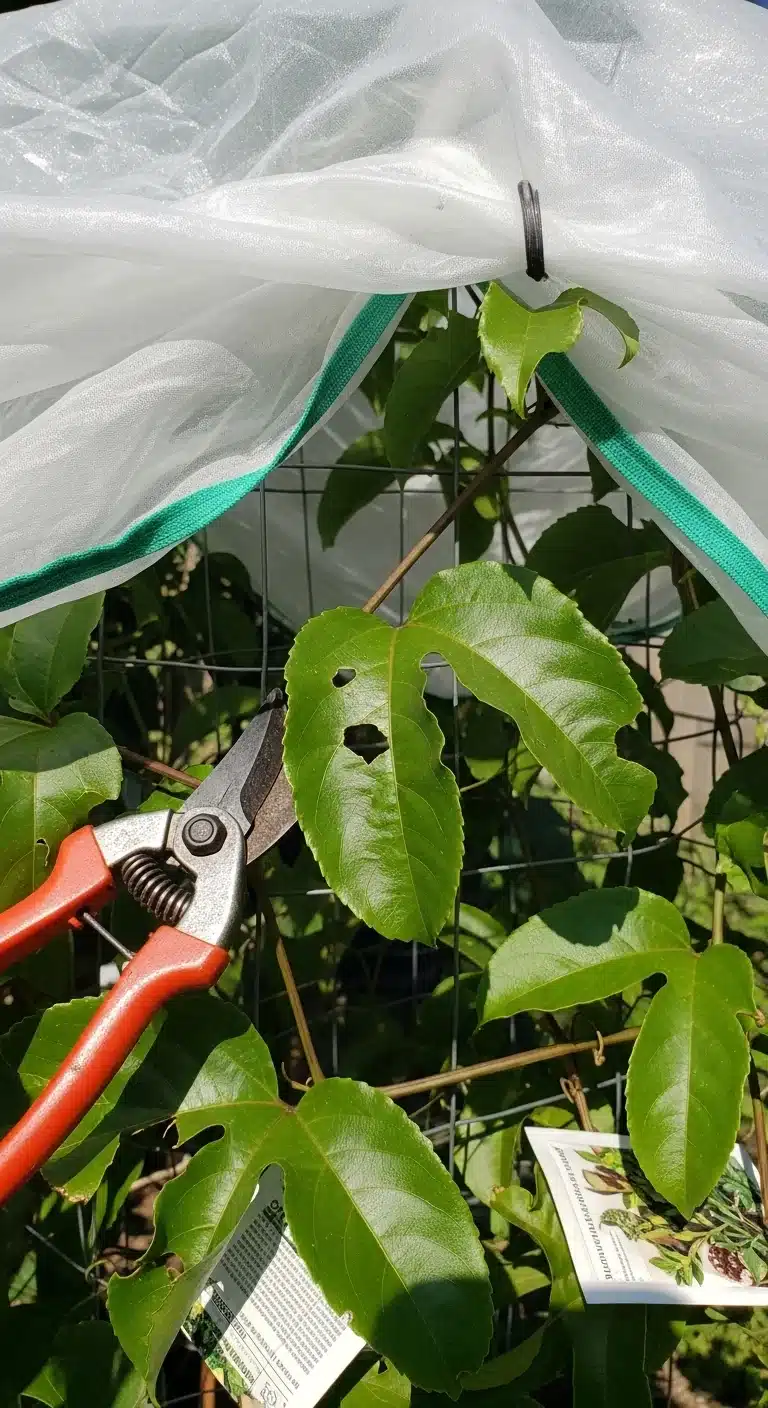
Select pots of 15 gallons or larger with multiple drainage holes and fill with a 50-30-20 mix of potting soil, compost, and perlite. Place on casters for mobility during cold snaps. Feed and water more frequently than in-ground plants because the limited soil volume depletes nutrients faster. Prune container vines more aggressively each winter to keep height under eight feet. See strawberries in containers for similar soil volume strategies.
Pest and Disease Monitoring Protocol
Best for: Branch 3
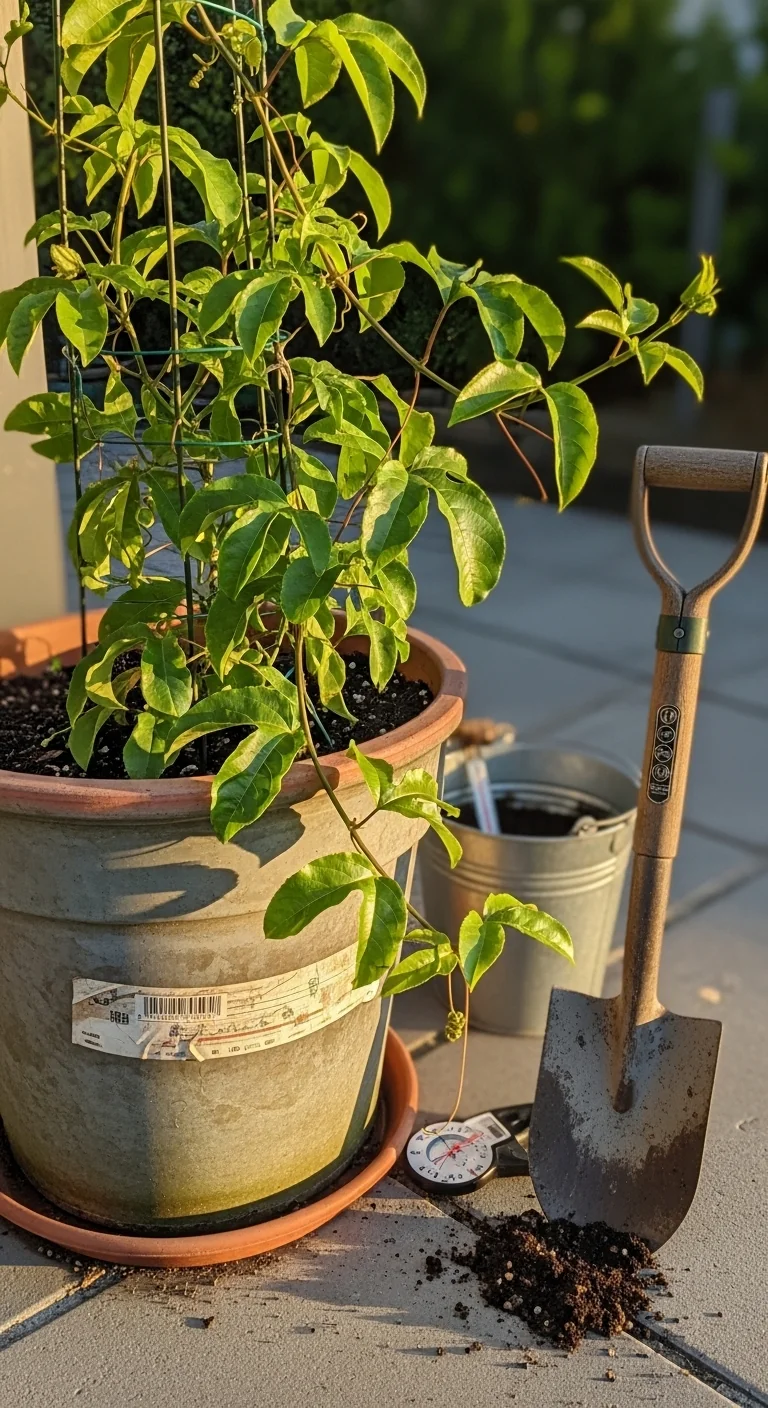
Walk the vine weekly and inspect undersides of leaves for aphids, scale, or caterpillars; remove by hand or targeted spray when numbers are low. Apply bird netting once fruit begins to color to protect the crop. Yellowing leaves or sudden wilting signal root issues caused by poor drainage; lift and replant in fresh soil if confirmed. Early detection prevents spread and keeps the short-lived vine productive through its peak three to five years.
Starter Stack (What to Choose First)
For Branch 1 (Frost-free ample space)
Start with Item 1 (trellis) plus Item 4 (pruning). Install the permanent framework first, then prune the new vine immediately after planting to establish strong cordons. Synergy: The sturdy trellis supports the renewed growth from pruning, directing energy into fruit instead of sprawl. Time estimate: two hours setup plus 30 minutes annual prune. Cost range: 80 to 150 dollars for materials and basic tools.
For Branch 2 (Marginal climate or variable drainage)
Start with Item 2 (soil pH adjustment) plus Item 5 (fertilizing). Test and amend soil before planting, then follow the four-to-six-week feeding schedule once growth begins. Synergy: Correct pH and drainage let the vine absorb nutrients efficiently, reducing leaf-only growth in cooler springs. Time estimate: one hour testing plus 10 minutes per feeding. Cost range: 25 to 60 dollars for test kit and initial amendments.
For Branch 3 (Limited space or containers)
Start with Item 3 (planting timing and prep) plus Item 6 (watering and mulching). Plant at the right soil temperature into mounded or large-pot soil, then maintain the moisture threshold. Synergy: Proper timing plus consistent watering in restricted volume prevents early fruit drop and root stress. Time estimate: 45 minutes planting plus five minutes daily checks. Cost range: 40 to 90 dollars for pot and soil mix.
When This Won’t Work
Passionfruit vine care fails when soil stays saturated longer than two hours after watering or when winter lows drop below 23 degrees Fahrenheit without protection. In these conditions root rot develops rapidly and the vine collapses within weeks regardless of trellis strength or feeding. The measurable fix is to move to raised beds or containers with fast-draining mix and relocate potted plants indoors or under cover during freezes.
A second failure point appears when vines receive no annual renewal pruning and reach eight years or older. Productivity drops sharply as old wood dominates. Replant with fresh stock after a soil solarization break of four weeks to reset the site. Bird netting fruit trees techniques apply equally well here for protecting replacement vines.
Choosing the Right Option for Your Situation
Budget threshold
Under 50 dollars: focus on soil test, basic mulch, and hand pruning (Items 2 and 4). Over 100 dollars: invest in permanent trellis posts and wire plus large containers (Items 1 and 8).
Time threshold
Less than one hour per month: choose once-per-season tasks such as trellis install and winter prune (Items 1 and 4). More than two hours per month available: add weekly watering checks and pest walks (Items 6 and 9).
Technical constraint (drainage or space)
Poor natural drainage or under 10 feet width: shift to container or raised-mound methods (Items 3 and 8). Excellent drainage and open space: prioritize heavy trellis and feeding (Items 1 and 5).
Yes/No checklist:
Do you have confirmed soil drainage under two hours? Yes leads to ground planting options.
Is winter low above 32 degrees Fahrenheit? Yes favors Branch 1 items.
Is space under 10 feet wide? Yes routes to Branch 3 container focus.
Ready to prune annually? Yes unlocks long-term productivity across all branches.
Expert Q&A
How soon after planting should I expect the first fruit on a passionfruit
vine?
Most vines set flowers and fruit within 12 to 18 months when planted at the correct soil temperature and given consistent moisture plus balanced feeding. First-year fruit is usually sparse; the second year brings the main crop once the framework is established on the trellis.
Do passionfruit vines need hand pollination in low-bee areas?
Hand pollination with a small brush improves fruit set when bee activity is low during cool or windy weather. Transfer pollen from one flower to another in the morning; this step takes under five minutes per vine and raises success rates without extra fertilizer.
What signs indicate the vine has reached the end of its productive life?
Declining fruit size, fewer flowers despite pruning and feeding, and increasing woodiness after five to seven years signal replacement time. Dig out the old plant, solarize the soil for four weeks, then replant in fresh mix to restart the cycle cleanly.
Can passionfruit share space with other fruit plants on the same trellis?
Yes, when spacing allows eight feet between plants and companion species have different flowering times. Hardy kiwi or certain melons work because they use similar wire frameworks without overlapping peak growth demands.
How does container size affect long-term vine health?
Fifteen-gallon minimum prevents root binding and lets the vine reach three to five productive years. Smaller pots require more frequent watering and feeding, which shortens lifespan and reduces fruit quality.
Conclusion
Next step: Measure your site drainage today and build or select the matching trellis or pot system from the recommended items. Blackberry trellis ideas provide adaptable wire patterns for quick weekend installation.