
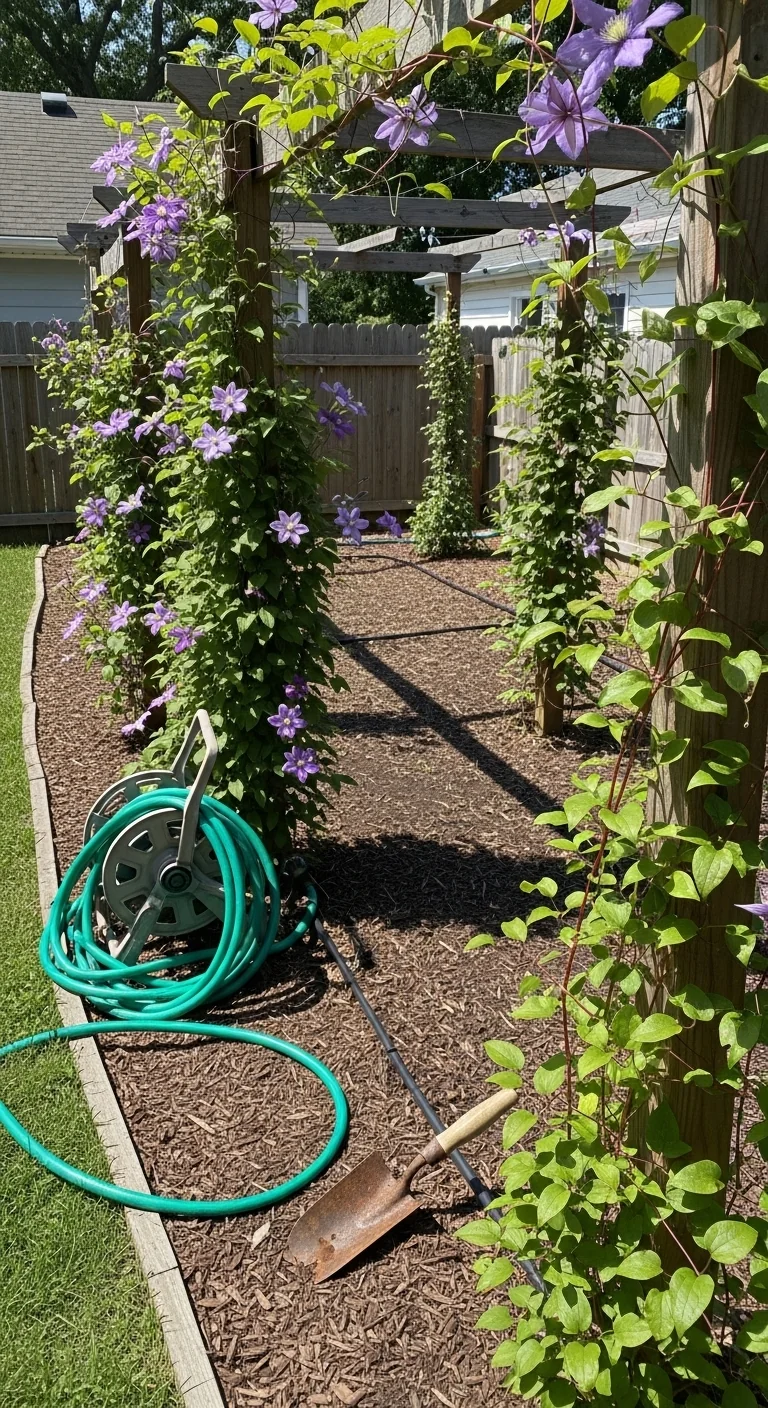
The key to clematis success lies in aligning the variety to your pruning tolerance rather than chasing flower color alone. Most gardeners lose blooms by applying the wrong cutback schedule to the wrong group.
This guide focuses on 12 reliable varieties across the three standard pruning groups. It excludes herbaceous non-climbing types and ultra-rare cultivars available only from specialists.
You will gain a clear framework to select plants that fit your time budget, space constraints, and desired bloom window, then integrate them into existing beds or structures.
Match pruning group to your annual schedule first for blooms every season without guesswork.
The Yield Grid Decision Grid
Branch 1: Minimal pruning (once per season or less). You have time for at most one light cutback in late spring or none at all. Measurable condition: your calendar shows no more than one 30-minute vine maintenance slot per year. Recommended: Items 1, 2, 3 below.
Branch 2: Moderate pruning (two light sessions per year). You can handle one early-spring shaping plus one post-bloom trim. Measurable condition: you schedule two 20-minute sessions between February and July. Recommended: Items 4, 5, 6, 10, 11 below.
Branch 3: Annual hard pruning (one cutback per year). You prefer a single decisive cut in late winter. Measurable condition: you cut stems to 12-18 inches above ground once each February or March. Recommended: Items 7, 8, 9, 12 below.
For more options among perennial climbers, see our perennial flowers guide.
Quick Comparison Table
| Option | Key mechanism | Best for | Decision Grid Branch | Effort Score |
|---|---|---|---|---|
| Clematis montana ‘Rubens’ | Blooms on old wood | Early spring coverage on large structures | Branch 1 | 1 |
| Clematis alpina ‘Frances Rivis’ | Blooms on old wood | Bell-shaped early color on modest fences | Branch 1 | 1 |
| Clematis macropetala ‘Markham’s Pink’ | Blooms on old wood | Double early blooms with compact habit | Branch 1 | 1 |
| Clematis ‘Nelly Moser’ | Blooms on old and new wood | Repeat large pink-striped flowers | Branch 2 | 3 |
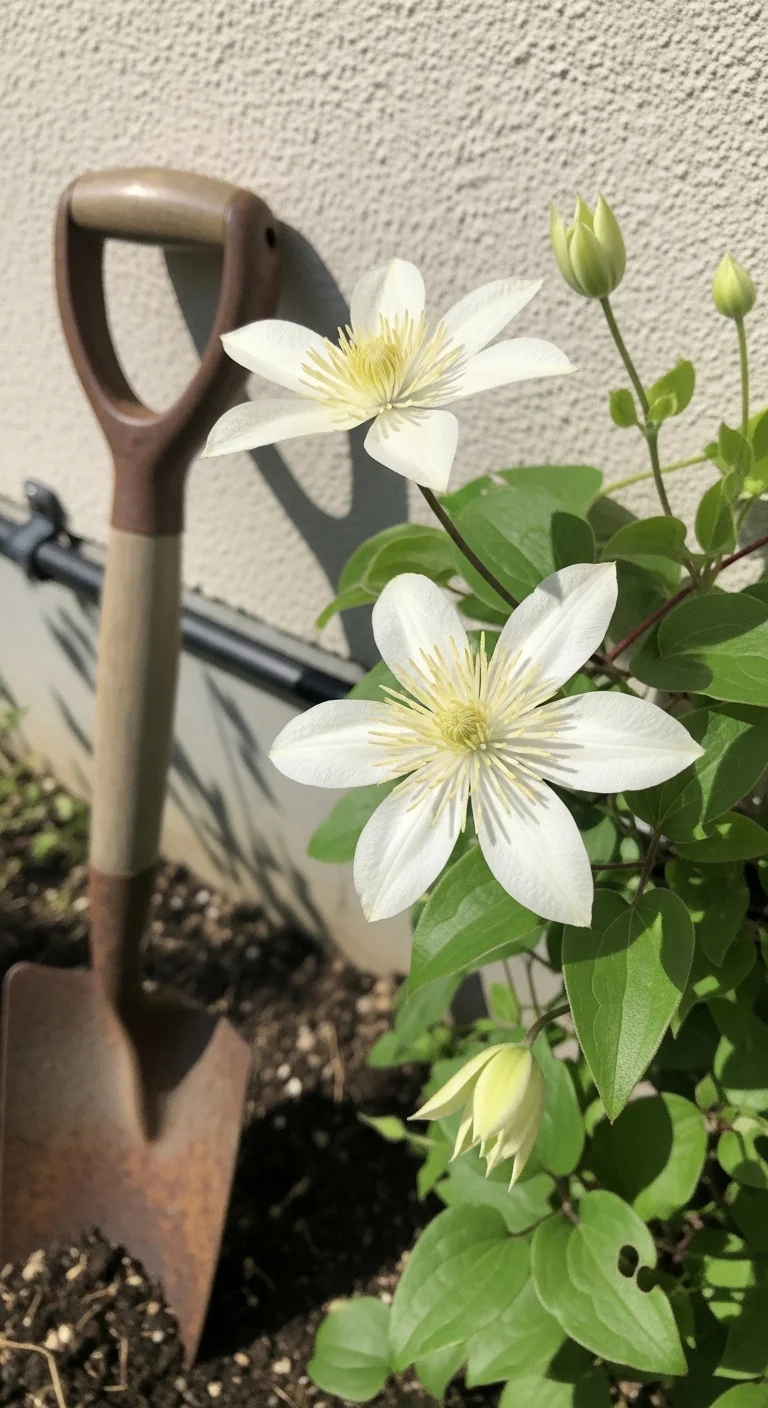
| Clematis ‘Henryi’ | Blooms on old and new wood | White flowers with dark centers | Branch 2 | 3 |
| Clematis ‘The President’ | Blooms on old and new wood | Deep purple large blooms twice | Branch 2 | 3 |
| Clematis ‘Jackmanii’ | Blooms on new wood | Late purple summer impact | Branch 3 | 1 |
| Clematis ‘Polish Spirit’ | Blooms on new wood | Vigorous deep purple late display | Branch 3 | 1 |
| Clematis ‘Etoile Violette’ | Blooms on new wood | Small violet flowers in abundance | Branch 3 | 1 |
| Clematis ‘Dr. Ruppel’ | Blooms on old and new wood | Pink striped repeat performer | Branch 2 | 3 |
| Clematis ‘Miss Bateman’ | Blooms on old and new wood | Creamy white early and late | Branch 2 | 3 |
| Clematis ‘Ernest Markham’ | Blooms on new wood | Magenta-red late summer color | Branch 3 | 1 |
Clematis montana ‘Rubens’
Best for: Branch 1
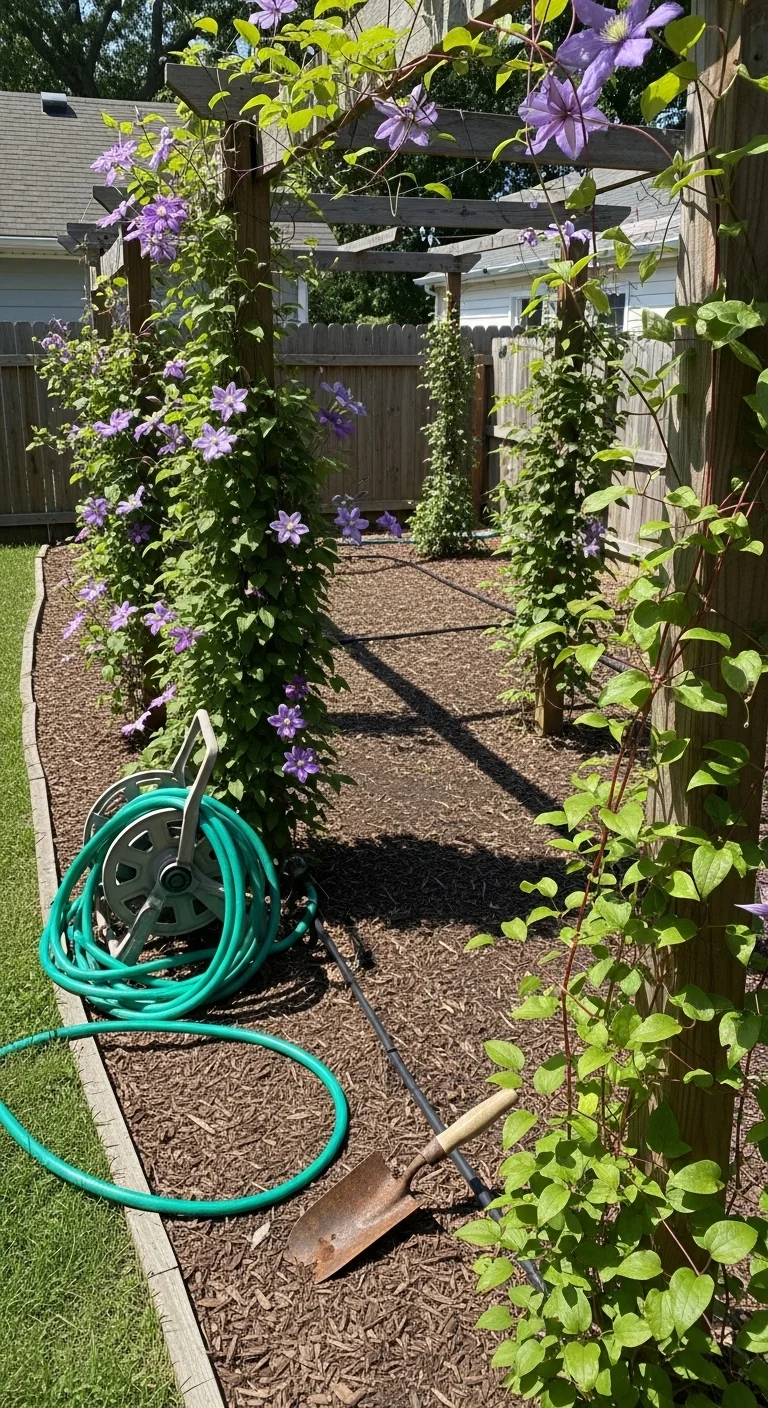
Blueprint: Plant this vigorous pink-flowered montana where you need fast coverage on fences or pergolas up to 30 feet. It flowers April to May on last year’s wood. Steps: Install sturdy support before planting; set crown 2 inches below soil level; water deeply weekly first season. Prune only after flowering if it outgrows bounds: remove oldest stems at base. Common mistake: hard winter cut that removes all flower buds for next spring. It tolerates clay once established but demands excellent drainage to avoid root issues. Pair it in a mixed border using ideas from our flower bed design page.
Clematis alpina ‘Frances Rivis’
Best for: Branch 1
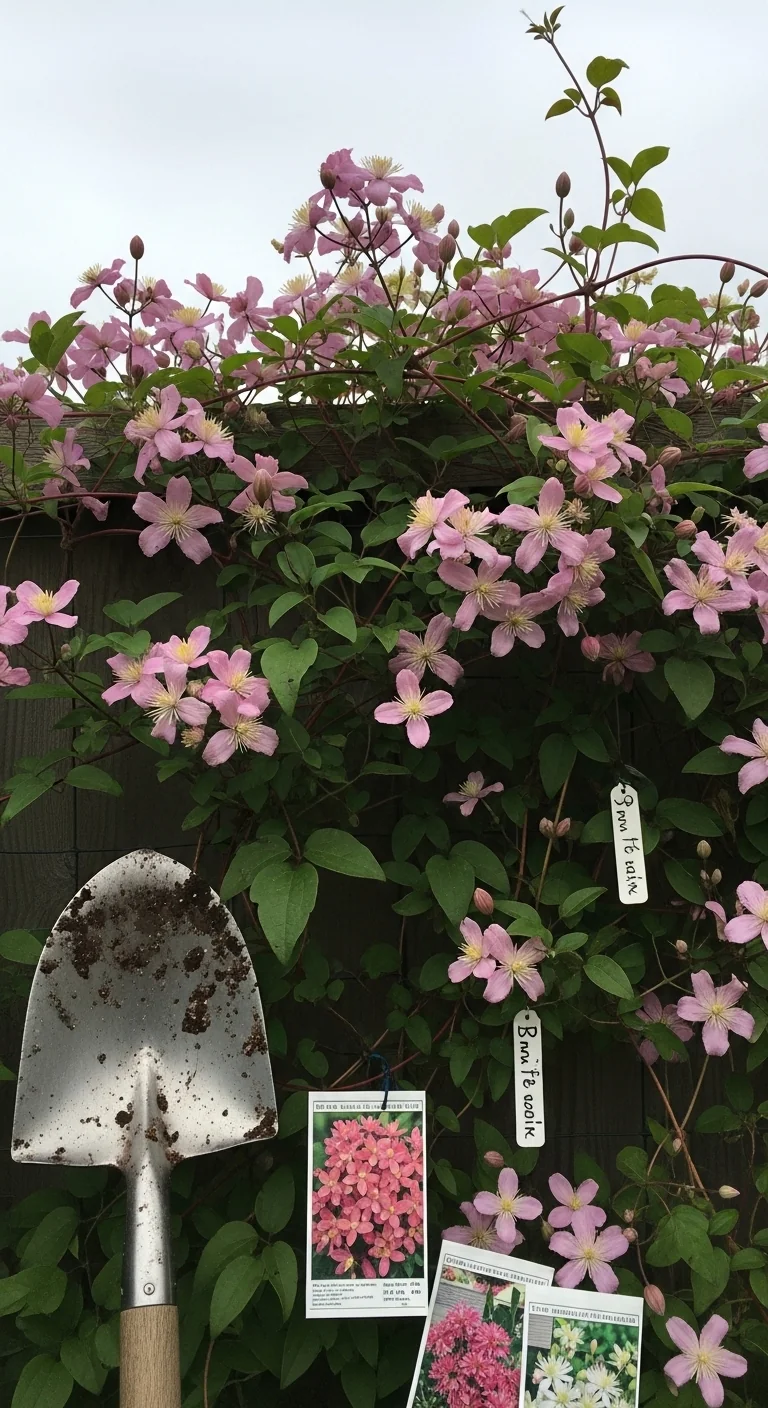
Use versus skip: Choose this for small bell-shaped blue flowers in early spring on 8- to 12-foot fences where low effort matters. Pros include cold hardiness and no annual prune. Skip if you want large flat blooms or repeat color later in summer. Edge case: it performs poorly in full afternoon sun in hot climates without root shading.
Clematis macropetala ‘Markham’s Pink’
Best for: Branch 1
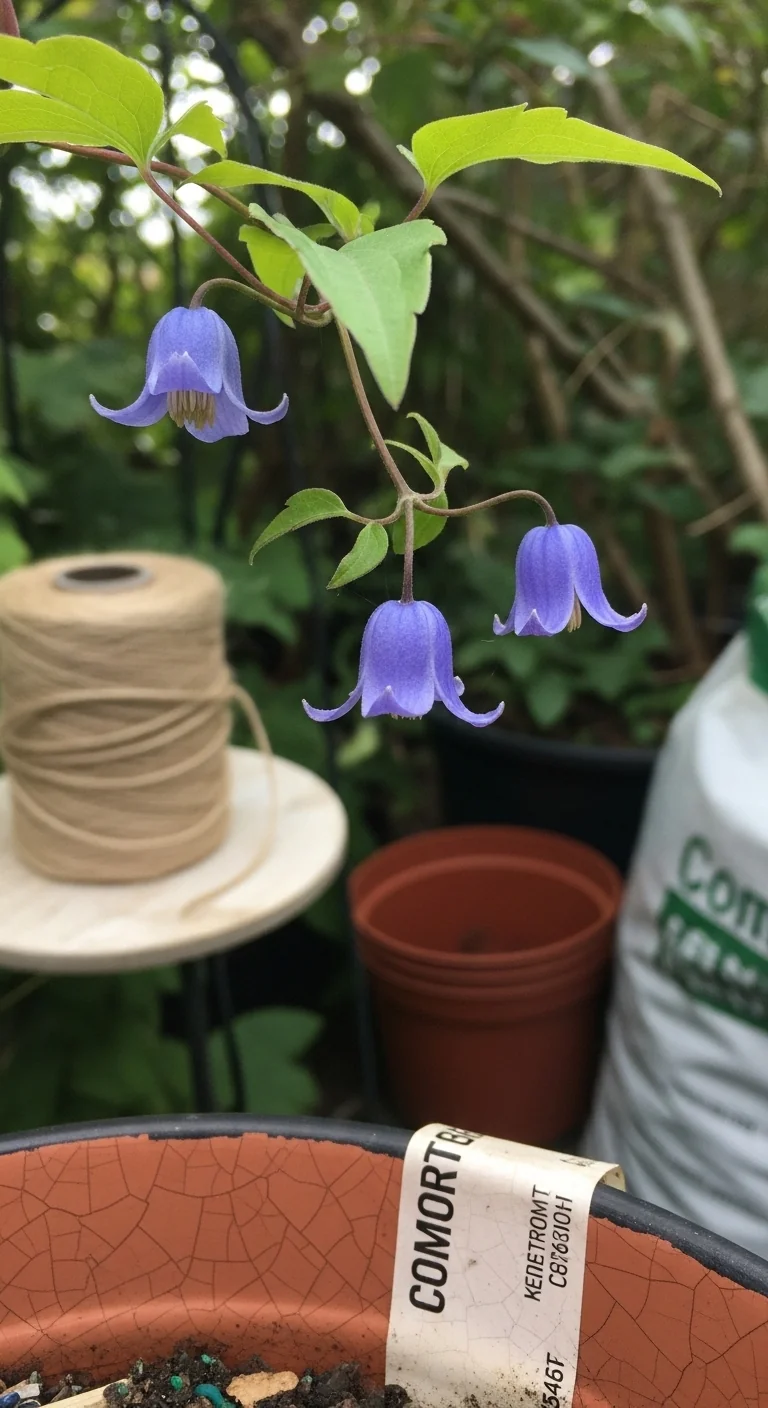
Threshold rule: Double pink flowers appear reliably when daytime temperatures stay above 50°F for two weeks in spring. Height stays under 10 feet, so limit to obelisks or small arbors. Adjust by cutting only dead wood in late spring if growth exceeds space; otherwise leave untouched. Soil pH between 6.5 and 7.5 keeps foliage green.
Clematis ‘Nelly Moser’
Best for: Branch 2
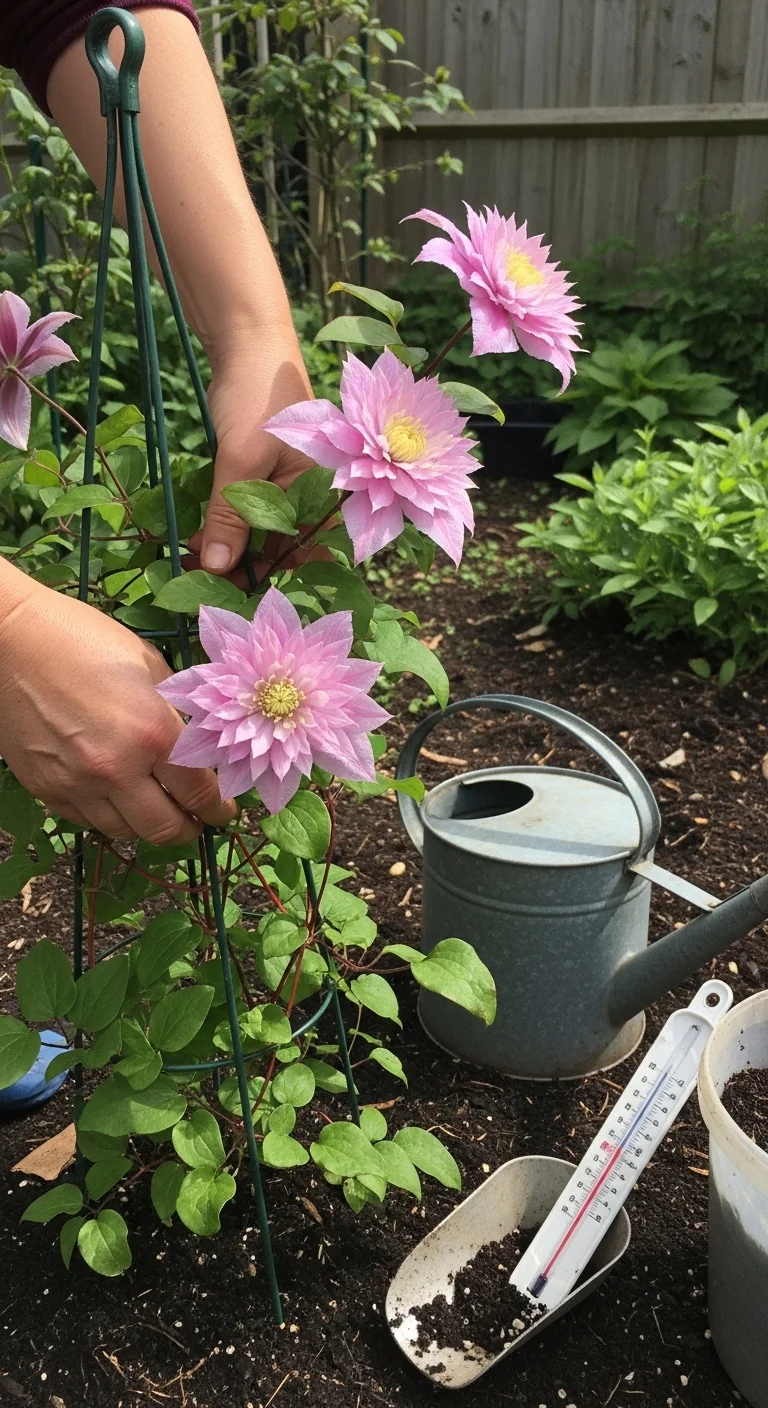
10-minute workflow: In late winter cut back to strongest buds 18 inches high, then deadhead after first June flush. Upgrade option: train onto an obelisk for vertical accent. Large pale-pink striped flowers reach 8 inches across and repeat in September when roots stay cool and shaded. Needs 6 hours of sun on foliage.
Clematis ‘Henryi’
Best for: Branch 2
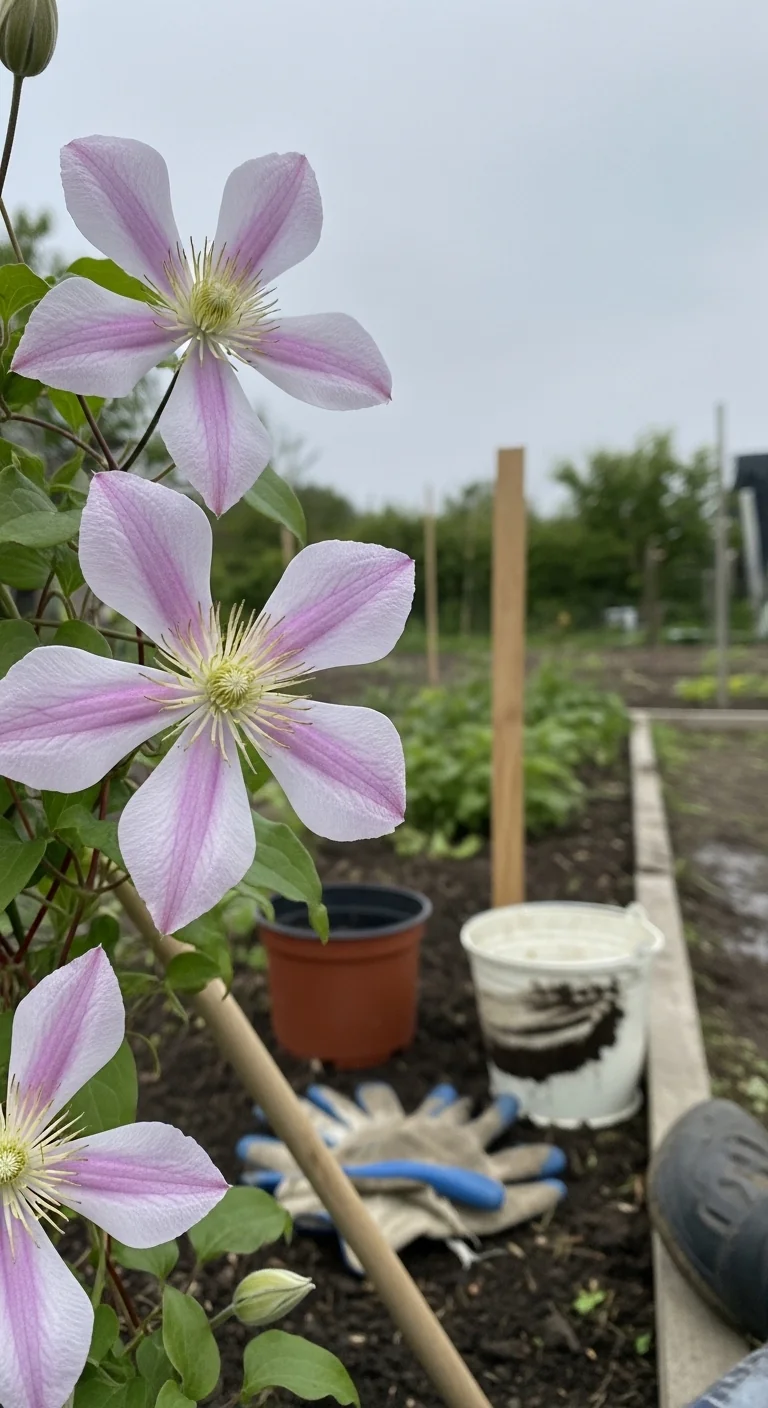
Use versus skip: Select this white-flowered variety for bright contrast against dark foliage or walls. Pros: 8- to 10-foot height and two bloom periods. Skip on exposed windy sites where large 6-inch flowers shred easily. Edge case: flowers fade in full sun without afternoon shade in zones above 8.
Clematis ‘The President’
Best for: Branch 2
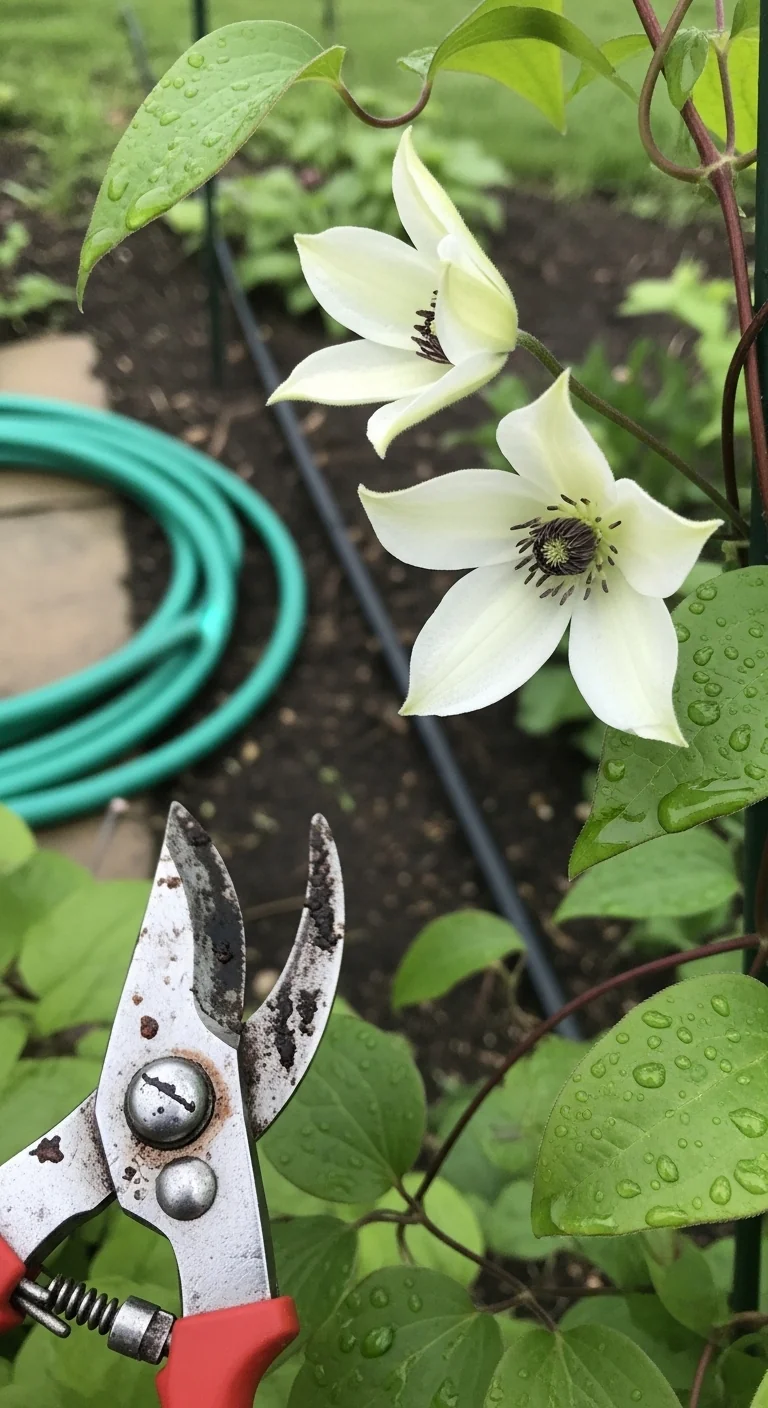
Threshold rule: Deep purple 6- to 8-inch blooms appear when night temperatures stay above 45°F after spring prune. Prune lightly in February and again after first flush ends in June. Soil must drain within 4 hours after heavy rain or roots suffer. Ideal height 8-12 feet on trellis.
Clematis ‘Jackmanii’
Best for: Branch 3
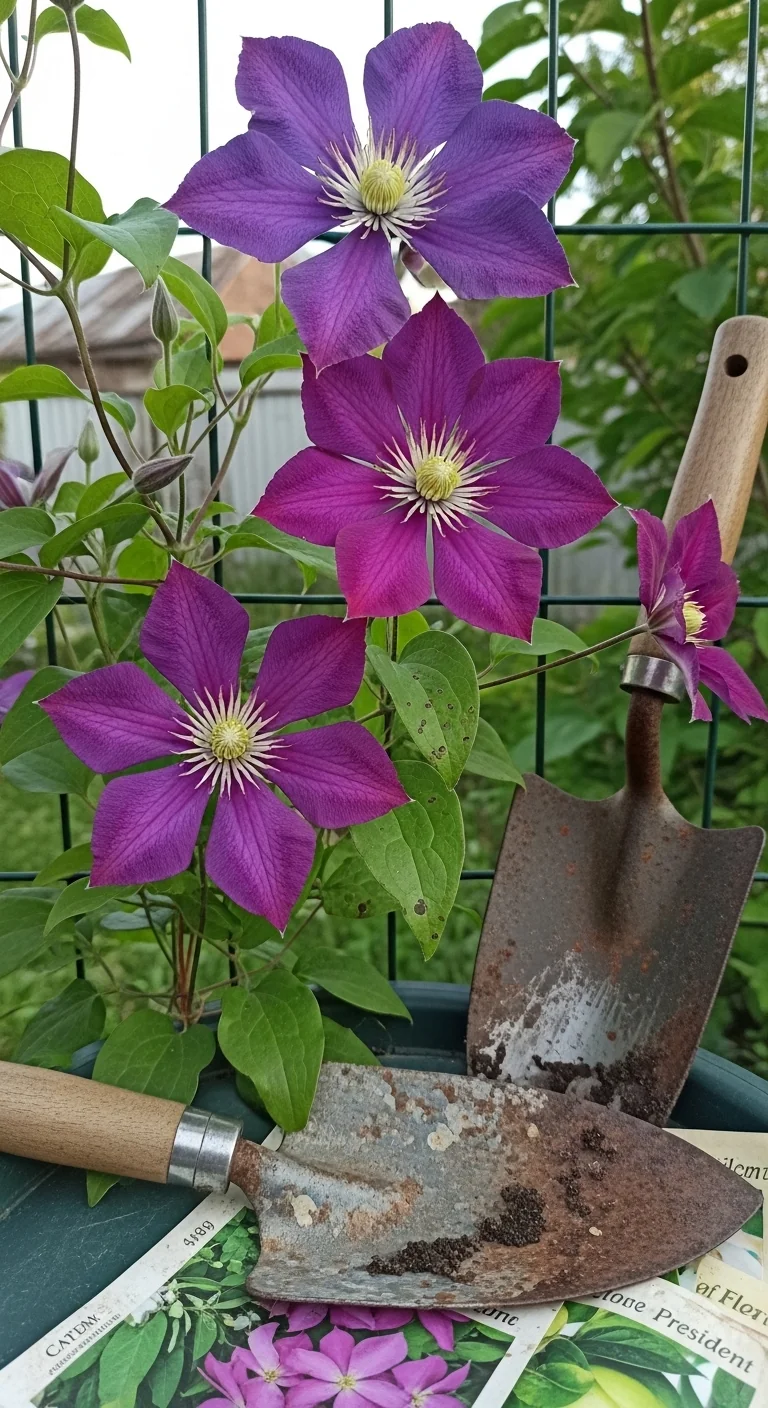
Blueprint: This classic purple variety delivers massive July-to-September display after hard cutback to 12 inches in late winter. Steps: plant in full sun with roots shaded by low perennials; tie new growth to support every 2 weeks first season. Mechanism: flowers form only on current-year wood, so annual reset produces longest stems. Common mistake: leaving old wood that weakens vigor over time.
Clematis ‘Polish Spirit’
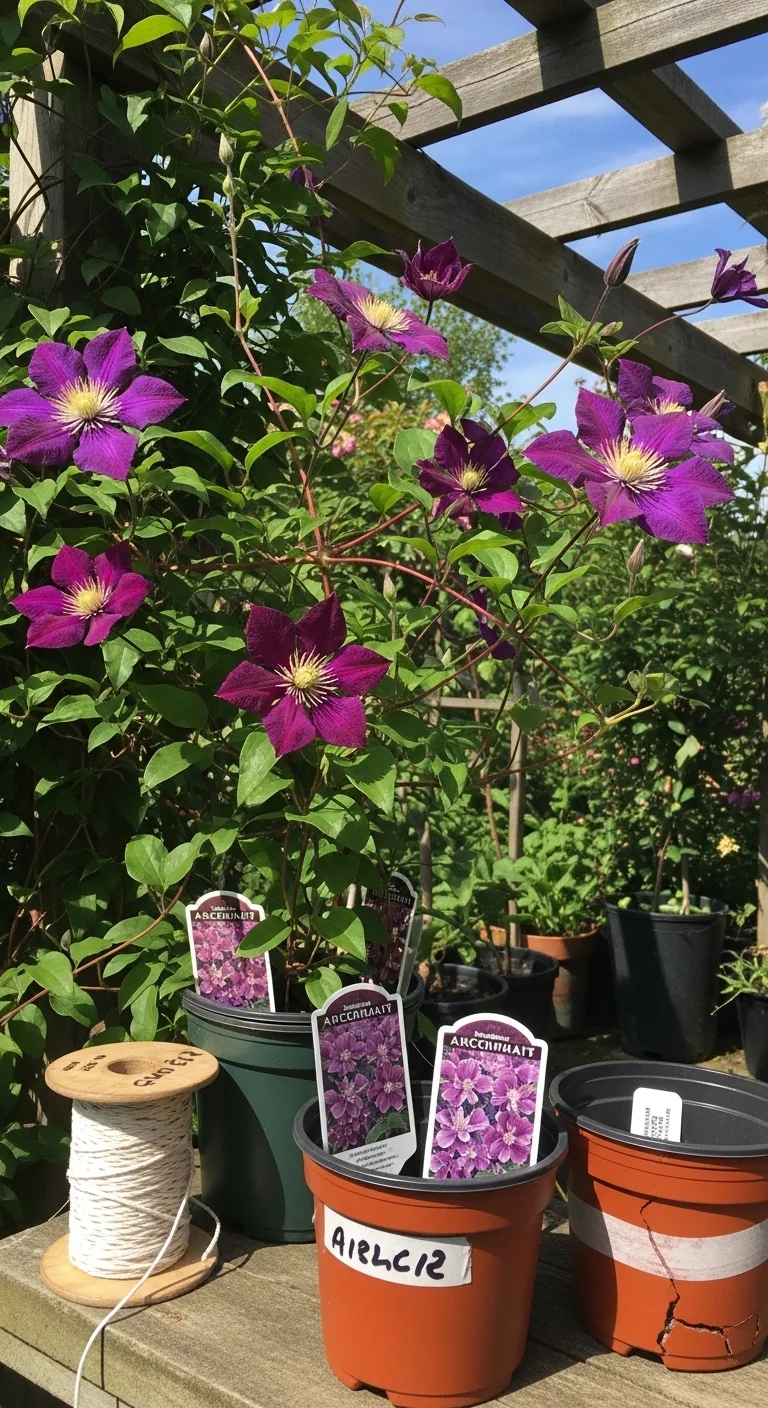
Best for: Branch 3
Use versus skip: Ideal for deep purple late-summer color on 10- to 15-foot structures where you want one decisive prune. Pros: vigorous and disease resistant. Skip if you need early-season interest. Edge case: performs best when soil temperature reaches 55°F before new growth starts.
Clematis ‘Etoile Violette’
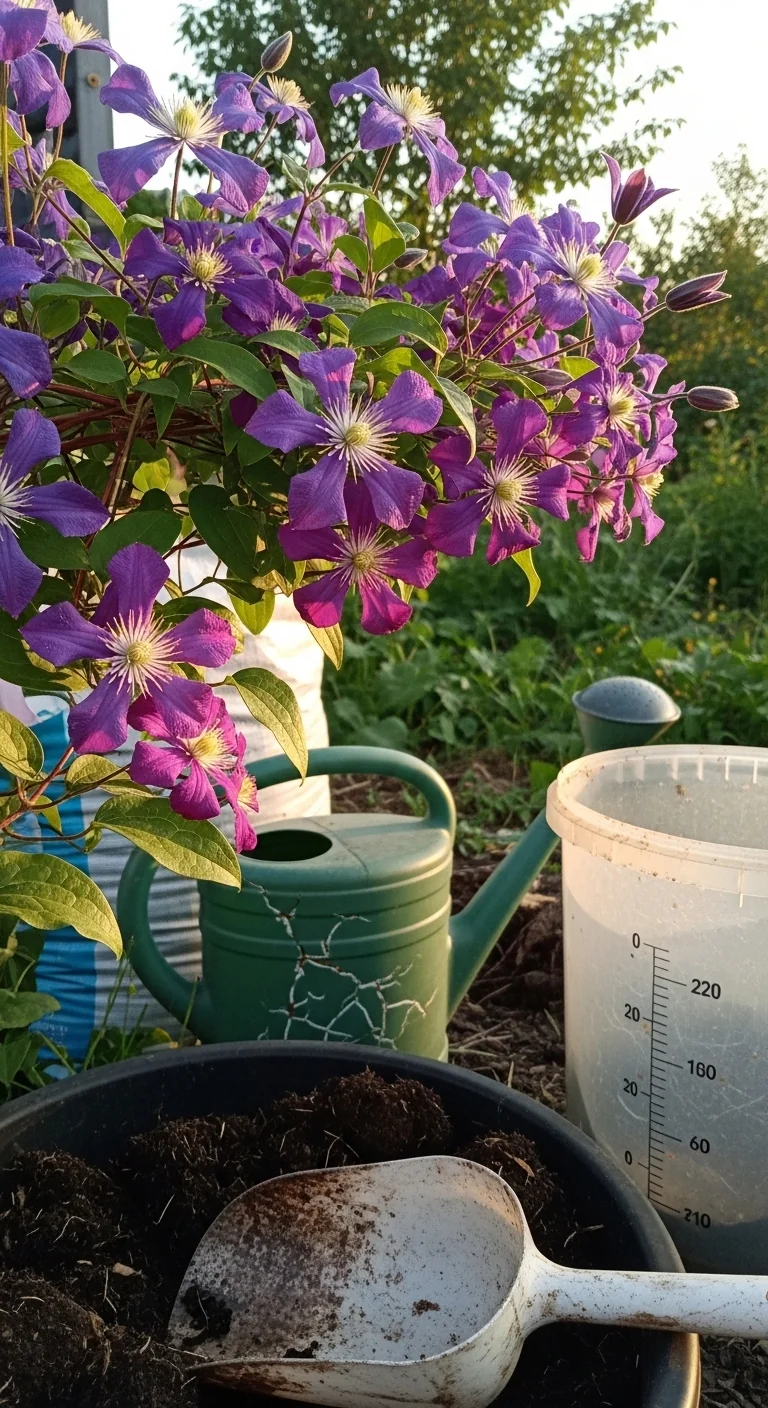
Best for: Branch 3
Threshold rule: Small violet flowers cover the vine when pruned to 18 inches in March and given at least 5 hours of direct sun. Blooms peak July-August on 10- to 12-foot vines. Adjustment: add 2 inches of mulch if summer soil temperature exceeds 75°F at root zone.
Clematis ‘Dr. Ruppel’
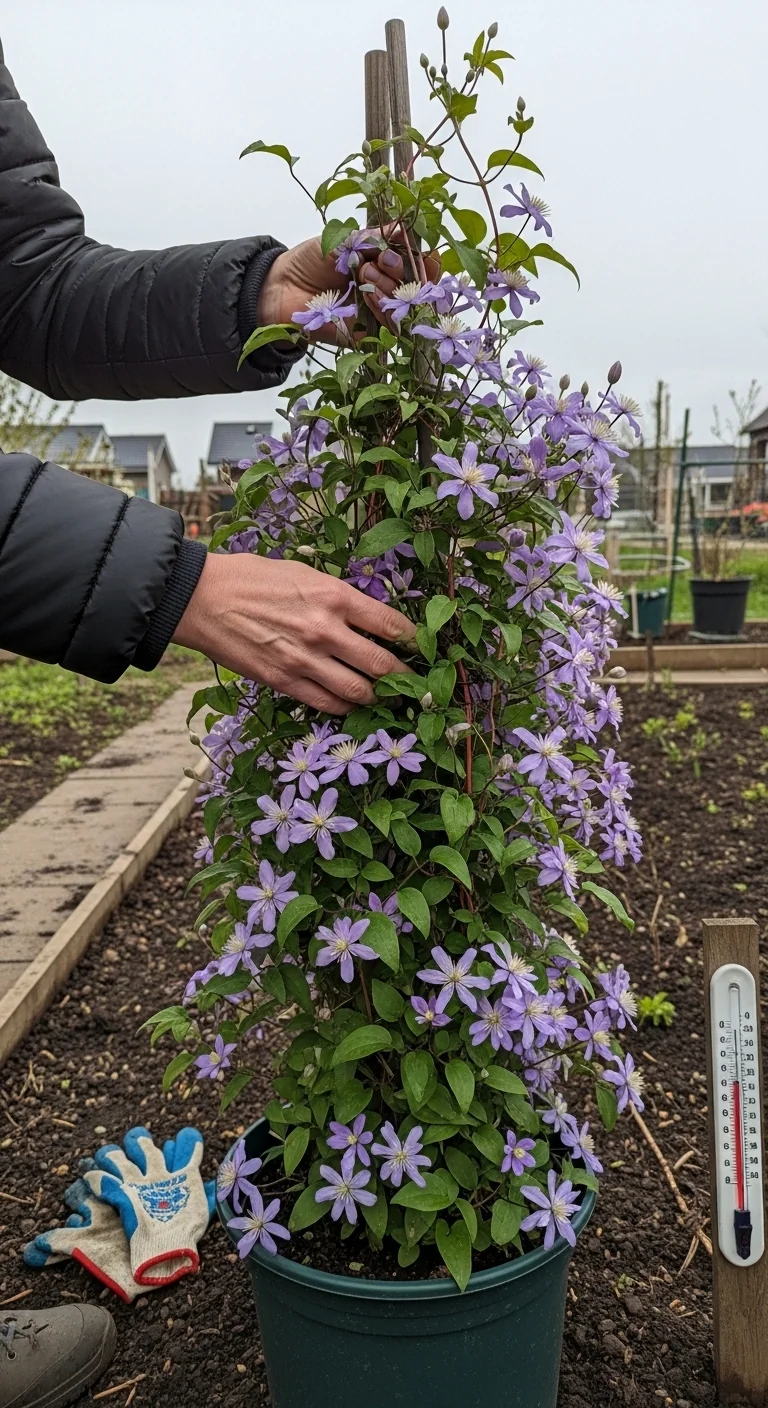
Best for: Branch 2
10-minute workflow: February light prune to 24 inches, tie new shoots, deadhead spent flowers in June for September repeat. Pink-striped large blooms suit cottage-style supports. Upgrade: combine with hydrangeas for layered summer color once established.
Clematis ‘Miss Bateman’
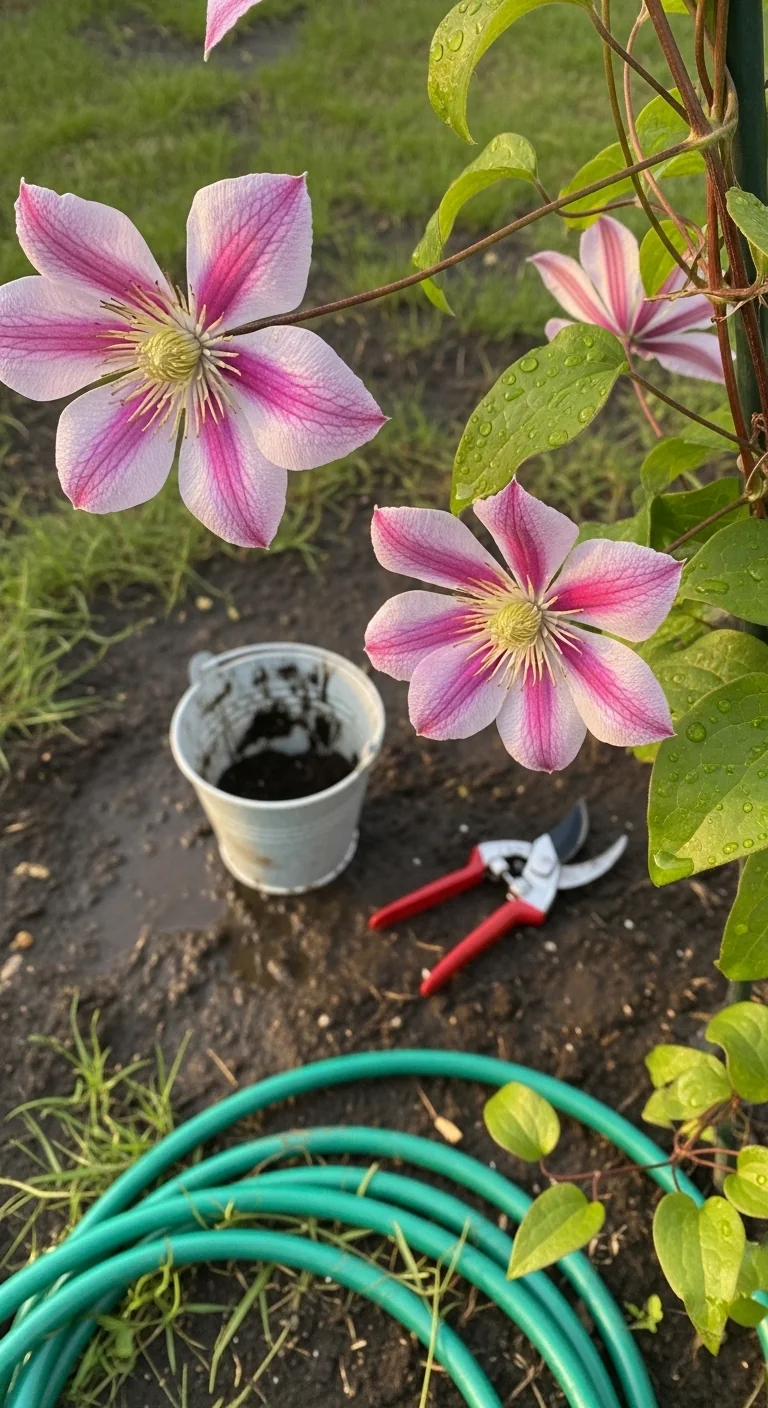
Best for: Branch 2
Use versus skip: Creamy-white early and late flowers suit formal white gardens or moon gardens. Pros: compact 8-foot habit. Skip on hot south-facing walls where color washes out. Edge case: needs consistent moisture first two seasons or buds drop.
Clematis ‘Ernest Markham’
Best for: Branch 3
Blueprint: Magenta-red 5-inch flowers arrive late summer after hard February cut to 12 inches. Steps: plant with crown 3 inches deep; provide strong trellis; water to 12 inches weekly until established. Mechanism: all flowers form on new wood, giving strong stems and reliable late color. It integrates well into cut-flower garden plans.
Starter Stack (What to Choose First)
For Branch 1 (minimal pruning)
Start with Items 1 and 2: Clematis montana ‘Rubens’ plus Clematis alpina ‘Frances Rivis’. Synergy comes from overlapping early-spring bloom windows and complementary pink-to-blue tones on the same structure. Cost range: 25-40 dollars per plant. Time estimate: 45-75 minutes to install both with support.
For Branch 2 (moderate pruning)
Start with Items 4 and 10: Clematis ‘Nelly Moser’ plus Clematis ‘Dr. Ruppel’. Synergy delivers striped pink tones across two flushes while sharing the same twice-yearly light-prune schedule. Cost range: 20-35 dollars per plant. Time estimate: 30-50 minutes planting plus two 15-minute maintenance sessions yearly.
For Branch 3 (annual hard pruning)
Start with Items 7 and 12: Clematis ‘Jackmanii’ plus Clematis ‘Ernest Markham’. Synergy gives purple-to-red late-summer sequence after one shared hard cutback. Cost range: 22-38 dollars per plant. Time estimate: 40-60 minutes install and one 20-minute winter prune.
When This Won’t Work
Clematis fails when foliage receives fewer than 5 hours of direct sun daily even if roots stay shaded. Measure with a sunlight meter or note shadow patterns over 3 days in June. Alternative: switch to shade-tolerant perennials or non-vining options and see our shade flowers guide.
It also fails in soil that stays saturated longer than 24 hours after rain. Test by digging a 12-inch hole, filling with water, and timing drainage. Alternative: raise the planting bed 6-8 inches or choose drought-tolerant companions instead.
Choosing the Right Option for Your Situation
Budget threshold
All listed varieties fall in the same low-to-medium price band of 20-40 dollars per plant at major nurseries. Buy bare-root in early spring or potted in fall for best establishment.
Time threshold
If your annual vine maintenance window totals under 30 minutes, stay with Branch 1. If you have two 20-minute slots available, Branch 2 works. One 20-minute winter session fits Branch 3.
Technical constraint: drainage test
Dig a test hole and confirm water drains within 4 hours. If not, amend with 30 percent grit or plant in containers.
Yes/No checklist:
Do you have a sturdy support ready before planting?
Will roots receive afternoon shade while foliage gets sun?
Does your schedule match one of the three pruning branches?
Is soil drainage verified?
Expert Q&A
How do I train clematis without damaging the support structure?
Use soft twine or plant ties replaced yearly rather than wire that cuts stems. Tie new growth loosely every 10-14 days in the first season. This prevents girdling while letting the vine twine naturally.
Which clematis work best as companions for roses?
Group 2 and Group 3 varieties such as Nelly Moser or Jackmanii thread through rose canes without competing for root space. Plant 18 inches away and let stems weave upward for layered color.
Can any of these varieties grow successfully in containers?
Compact Group 2 choices like Henryi or Miss Bateman stay under 10 feet and thrive in 18-inch-deep pots with good drainage. Use a loam-based mix and move to sheltered spot for winter.
What is the best way to encourage repeat blooming in Group 2 types?
Deadhead spent flowers within 7 days of fade and apply a balanced liquid feed after the first flush ends. This signals the plant to push new wood for the second round in late summer.
How do I integrate clematis into an existing pollinator garden?
Choose any of the 12 listed. They attract bees and butterflies when in bloom. Position so flowers sit above lower perennials to give pollinators easy landing access without shading ground plants.
Conclusion
Next step: pick your branch, order two starter varieties, and install supports this week using our full-sun flowers guide for complementary planting ideas.