
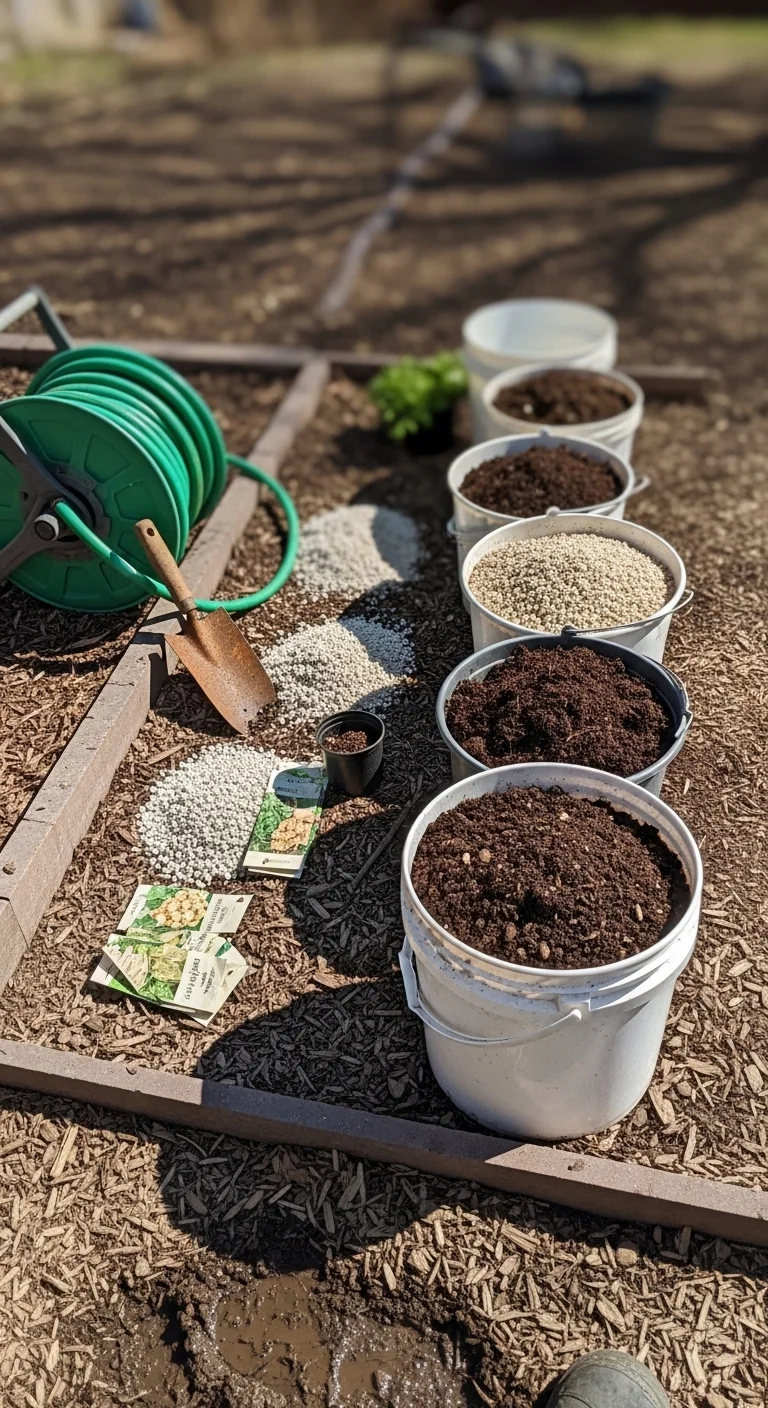
The right soil mix for herbs starts by matching drainage and nutrient levels to each herb’s native habitat rather than relying on a single generic potting formula. Mediterranean herbs such as rosemary and thyme evolved in rocky, fast-draining soils while leafy herbs such as basil and parsley prefer slightly more moisture-retentive conditions. Container setups demand lighter mixes than raised beds to prevent compaction and root issues.
This guide examines nine distinct soil mix options for common culinary herbs. It covers containers, raised beds, balconies, and indoor conditions in the US, UK, Canada, Australia, and similar climates. It excludes hydroponic systems, large-scale field production, and non-edible ornamentals.
Follow the decision grid and recipes below to select exact component ratios, adjust for your space, and avoid common mismatches. You will know precisely which blend suits your dominant herb type and setup so you can prepare once and grow with confidence.
Identify your primary growing method and herb category first to select the correct blend and prevent drainage or nutrient mismatches.
The Yield Grid Decision Grid
Branch 1 applies if your herbs grow in containers or pots 12 inches or smaller where water drains within 1 hour after watering. This branch covers most balcony or patio setups. Recommended: Items 1, 3, and 6 below.
Branch 2 applies if your herbs grow in raised beds or in-ground planting where soil volume exceeds 8 inches deep and the native soil forms a loose ball when squeezed. Recommended: Items 2, 5, and 8 below.
Branch 3 applies if your herbs grow indoors under grow lights or in windowsill pots 6 inches or smaller with controlled watering schedules. Recommended: Items 4, 7, and 9 below.
For a complete overview of beginner-friendly herb selection and placement, see the herb gardening for beginners guide.
Quick Comparison Table
| Option | Key mechanism | Best for | Decision Grid Branch | Effort Score |
|---|---|---|---|---|
| Coco Coir and Perlite Container Mix | Balanced water retention and aeration from coir plus perlite | Most container herbs needing reliable drainage | Branch 1 | 3 |
| Off-the-Shelf Potting Mix Amendment | Simple addition of one or two drainage additives to bagged mix | Quick starts with store-bought base | Branch 2 | 1 |
| Gritty Mediterranean Drainage Mix | Coarse sand and perlite create fast drainage for arid-origin herbs | Rosemary, thyme, oregano in pots | Branch 1 | 4 |
| Raised Bed Soil Amendment Blend | Compost and perlite loosen native soil structure | Larger beds with any herb type | Branch 2 | 3 |
| Moisture-Retentive Leafy Herb Mix | Extra compost and vermiculite hold even moisture | Basil, parsley, cilantro in containers | Branch 2 | 2 |
| Sand-Perlite Indoor Adjustment | Lightweight grit prevents compaction in small pots | Windowsill or grow-light setups | Branch 3 | 2 |
| Lean Perennial Container Blend | Low-nutrient base with high drainage for long-term plants | Established perennials in pots | Branch 1 | 4 |
| Balanced Raised Bed Integration Mix | Organic matter improves structure without excess richness | In-ground or bed herbs needing steady nutrients | Branch 3 | 3 |
| Lightweight Indoor Windowsill Mix | Vermiculite and perlite maximize aeration in limited volume | Small pots under artificial light | Branch 3 | 2 |
Coco Coir and Perlite Container Mix
Best for: Branch 1
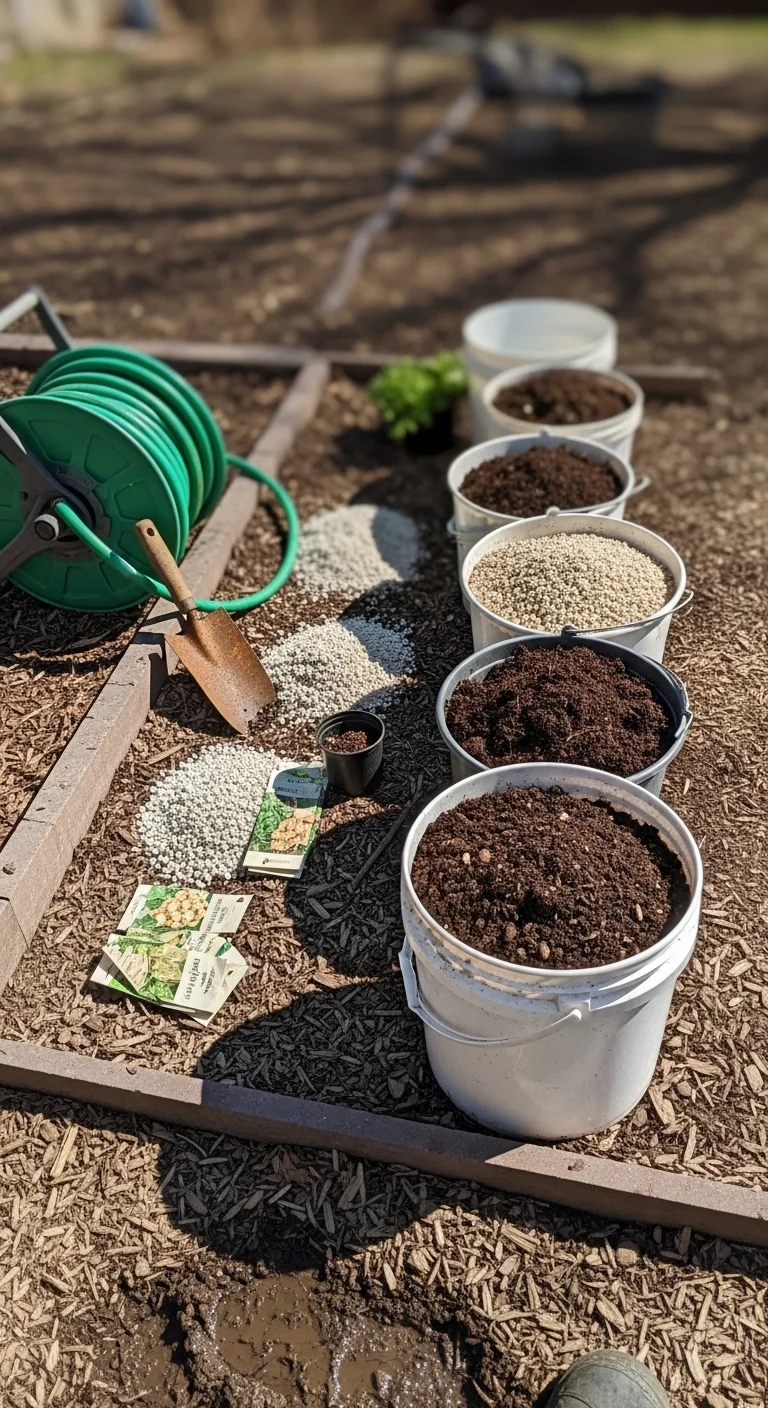
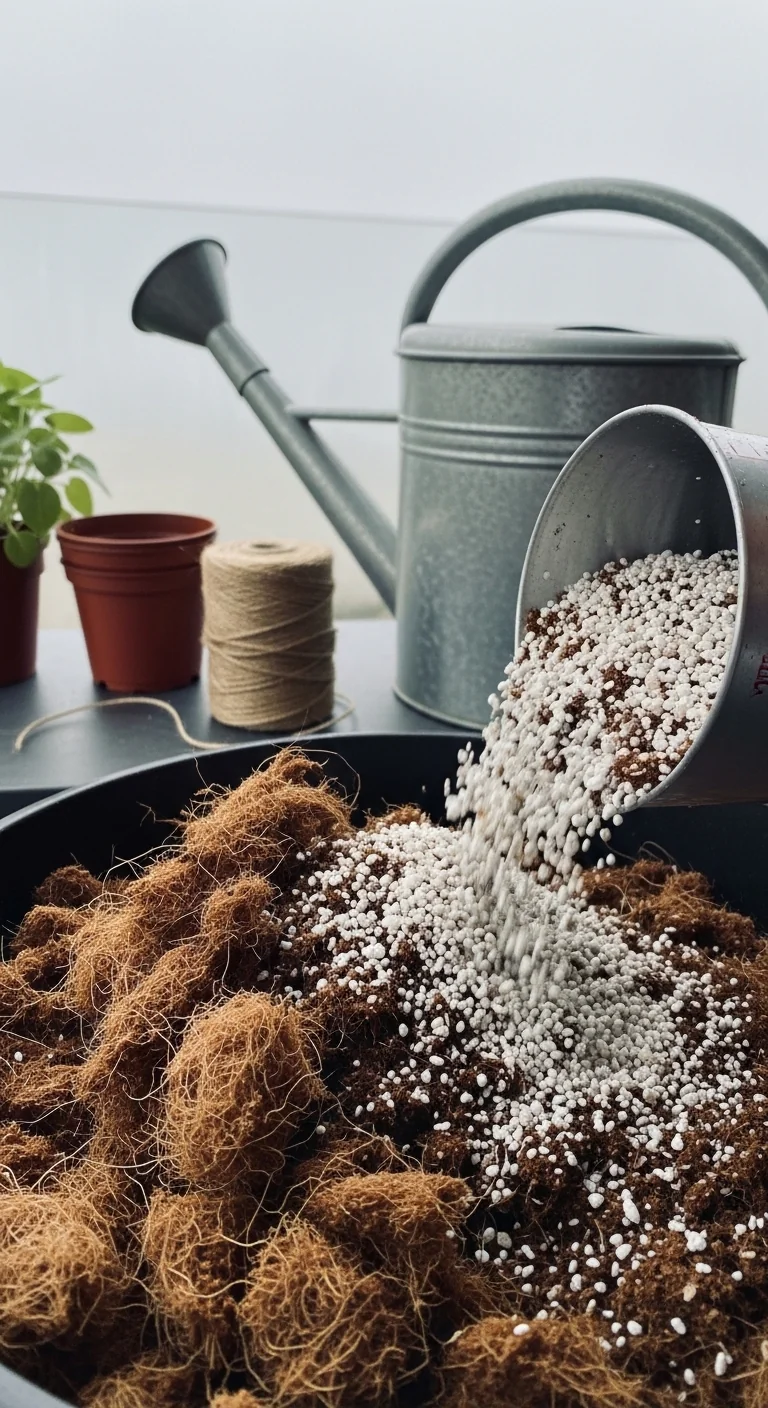
This blend uses equal volumes of coco coir, perlite, and composted potting mix. It delivers consistent aeration and moisture control for container herbs without compaction common in plain garden soil. Prepare it by combining the three components thoroughly in a large bin before filling pots. The coir holds just enough water while perlite ensures excess drains away quickly. Common mistake to avoid: skipping the perlite entirely, which leads to waterlogged roots in warm weather. Test drainage after filling by watering until it runs out the bottom; the mix should finish draining within 45 minutes. This recipe suits most culinary herbs grown in pots or balcony containers and pairs well with the best herbs for containers selection guide.
Off-the-Shelf Potting Mix Amendment
Best for: Branch 2
Use a standard commercial potting mix and stir in one part coarse sand or perlite by volume. This approach requires minimal measuring and works for raised beds or larger in-ground areas where native soil already provides some structure.
Gritty Mediterranean Drainage Mix
Best for: Branch 1
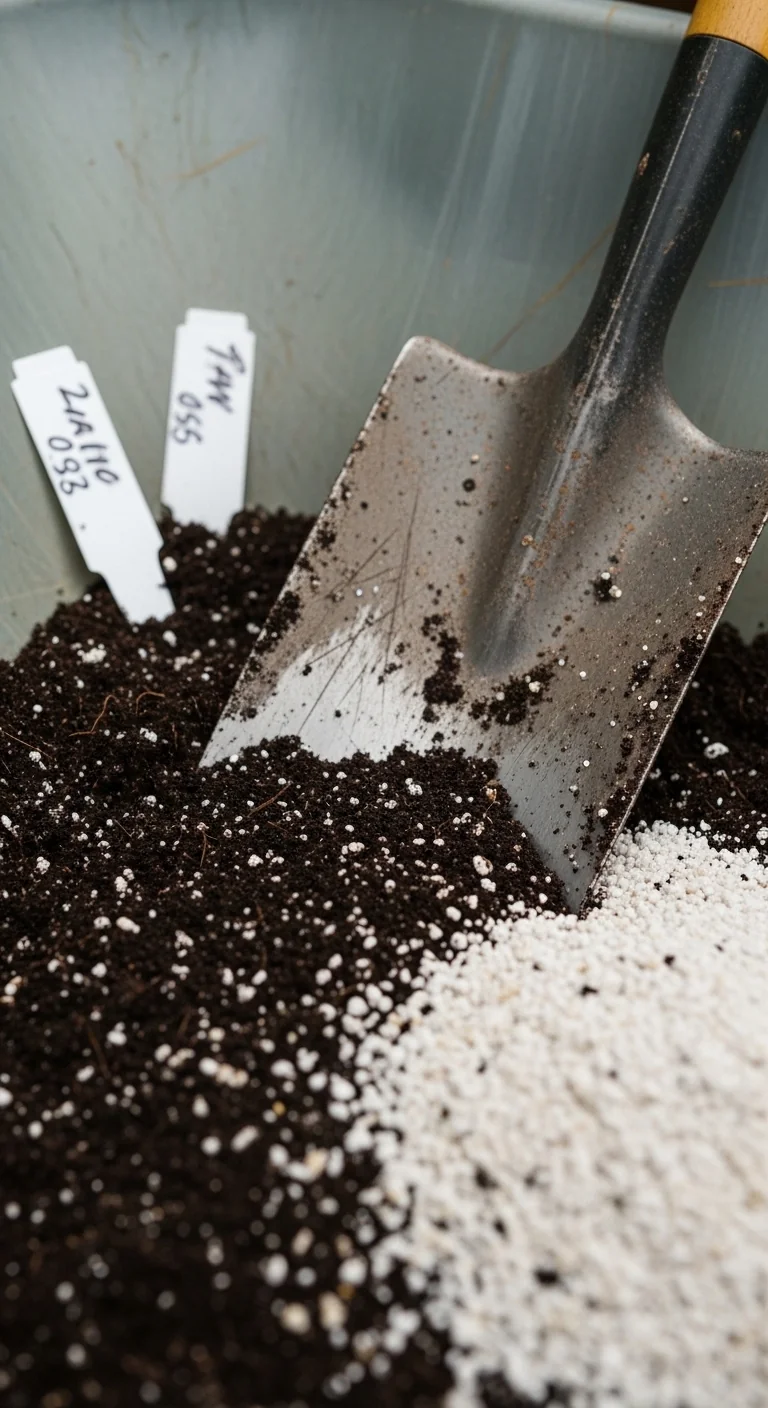
Combine two parts potting mix with one part coarse sand and one part perlite. The added grit replicates the rocky native soils of arid regions. Adjust only if your local water is very hard by adding a small amount of garden lime to reach pH 6.5 to 7.5. This mix prevents sogginess in pots during rainy spells and supports strong root development in drought-tolerant varieties. For full lists of suitable herbs see the drought-tolerant herbs overview.
Raised Bed Soil Amendment Blend
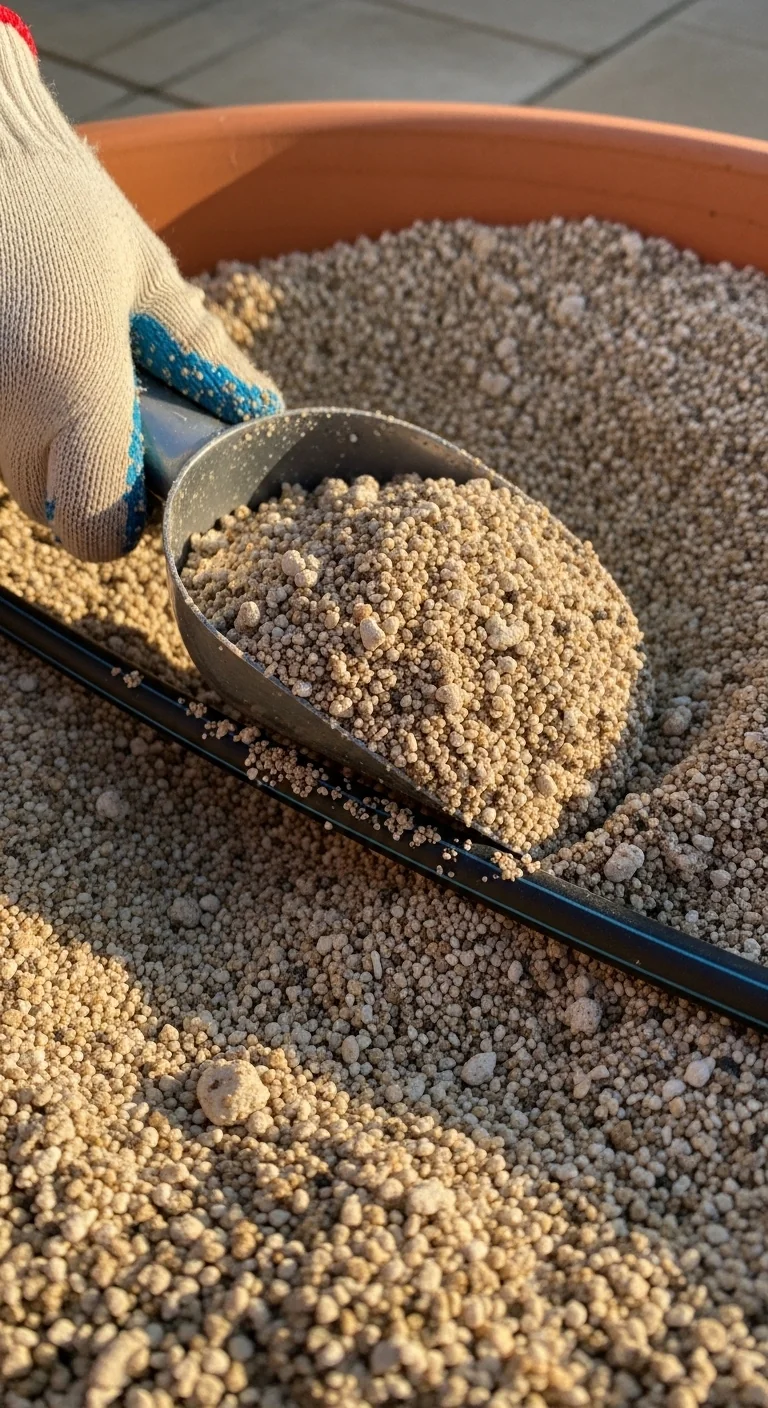
Best for: Branch 2
Mix equal volumes of native garden soil, compost, and perlite or coarse sand. Fill beds to the desired depth and water thoroughly once to settle. The compost supplies baseline nutrients while perlite and sand keep the structure open for root expansion across seasons. Prepare the full bed volume at once rather than spot amending later. This blend integrates directly with existing soil and supports diverse herb collections in larger spaces. Detailed planning steps appear in the raised bed herb garden guide.
Moisture-Retentive Leafy Herb Mix
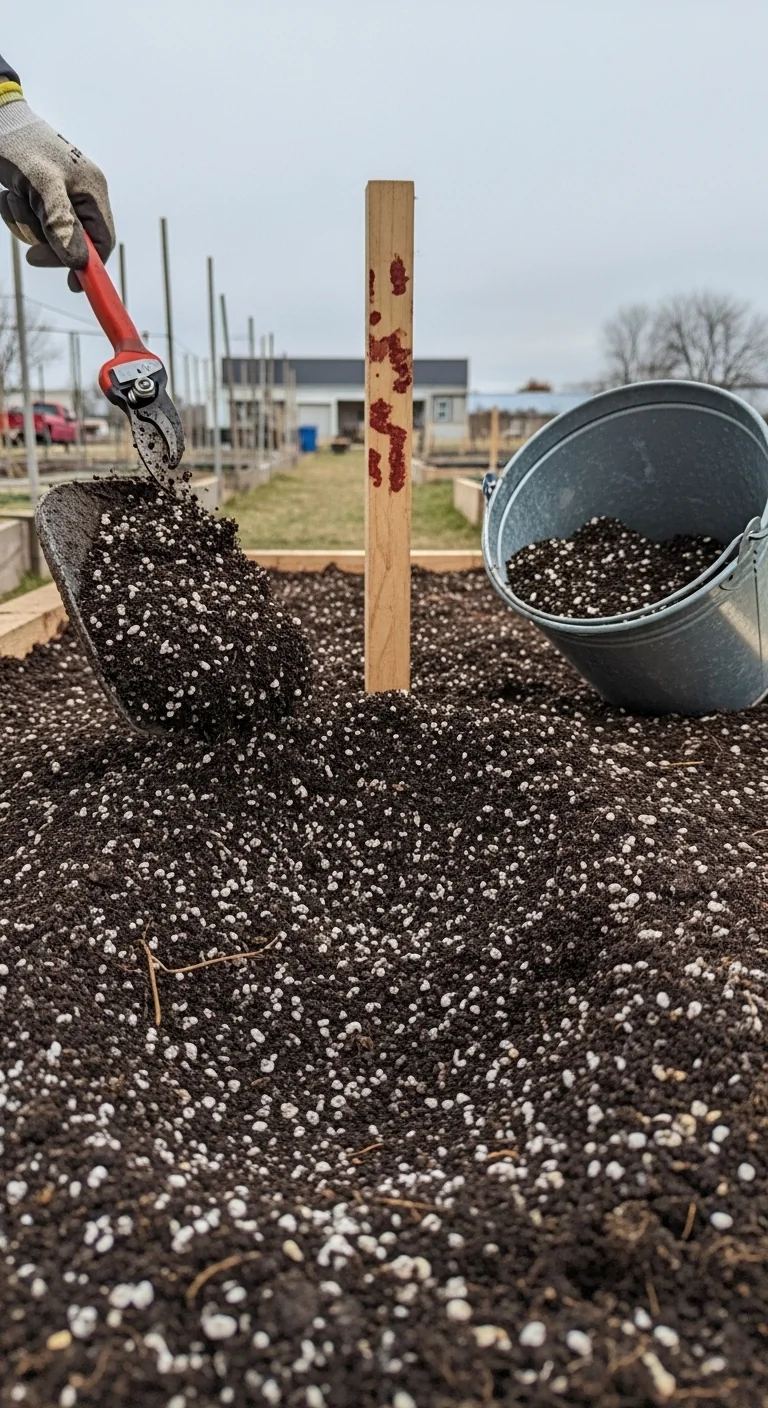
Best for: Branch 2
Blend one part compost, one part coco coir, and one part vermiculite. The vermiculite retains moisture longer than perlite alone, suiting leafy herbs that wilt quickly in dry conditions.
Sand-Perlite Indoor Adjustment
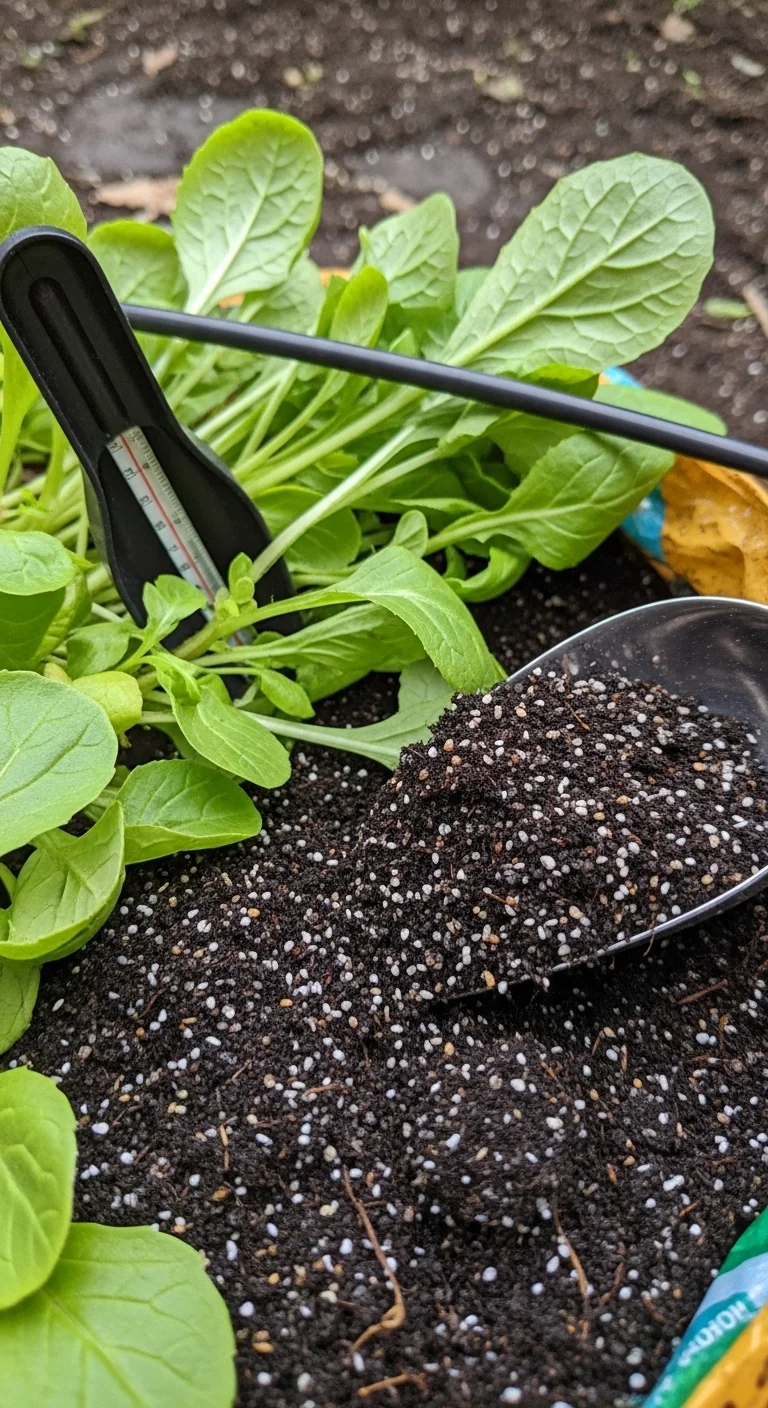
Best for: Branch 3
Add one part coarse sand and one part perlite to two parts light potting mix. The result stays loose in small pots and resists compaction under frequent small waterings typical of indoor environments. This mix works especially well for windowsill or grow-light trays where air circulation is limited.
Lean Perennial Container Blend
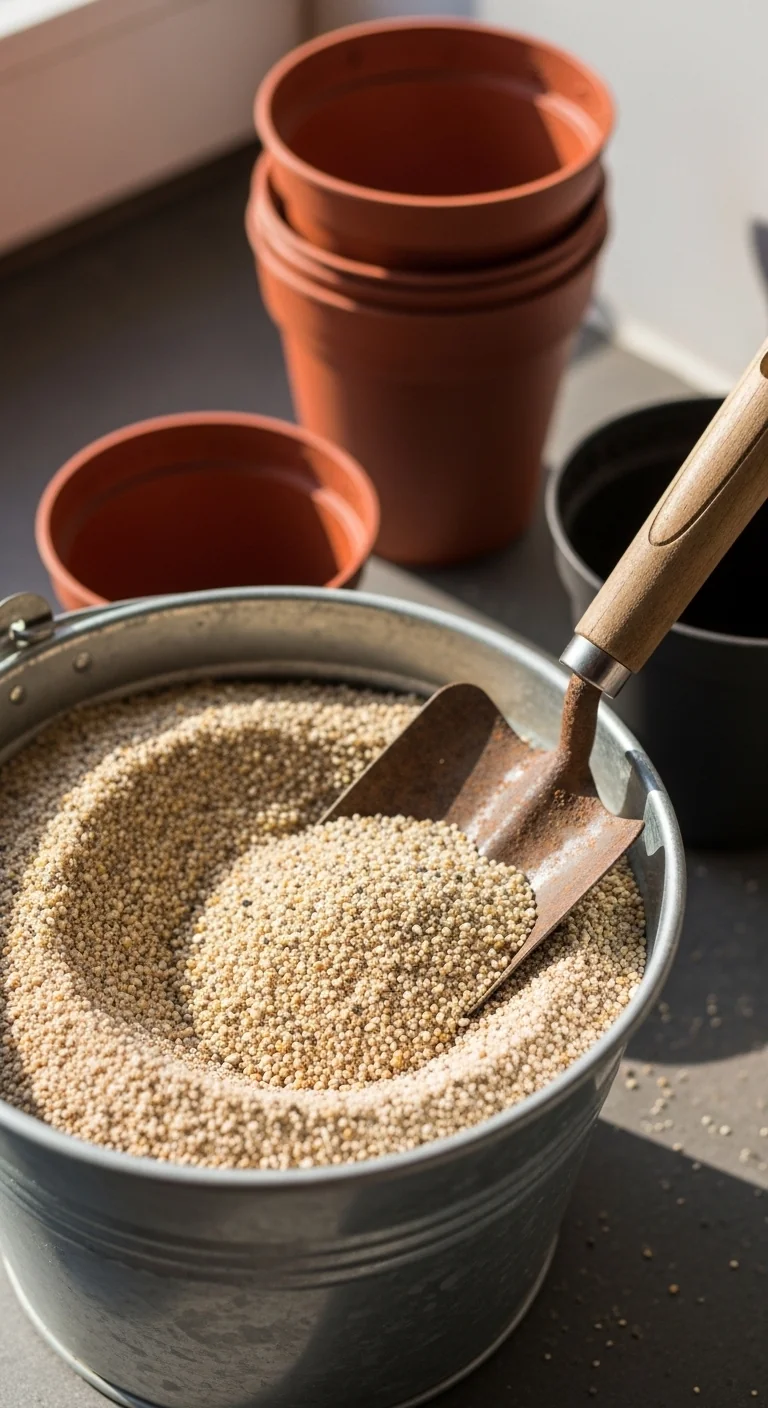
Best for: Branch 1
Combine equal volumes of potting mix, perlite, and a small amount of coarse grit or small gravel. The lean profile matches the low-nutrient preferences of perennial herbs that live multiple seasons in the same pot. Refresh only the top two inches each spring rather than replacing the entire volume. This prevents nutrient buildup over time while maintaining excellent drainage for long-term container performance.
Balanced Raised Bed Integration Mix
Best for: Branch 3
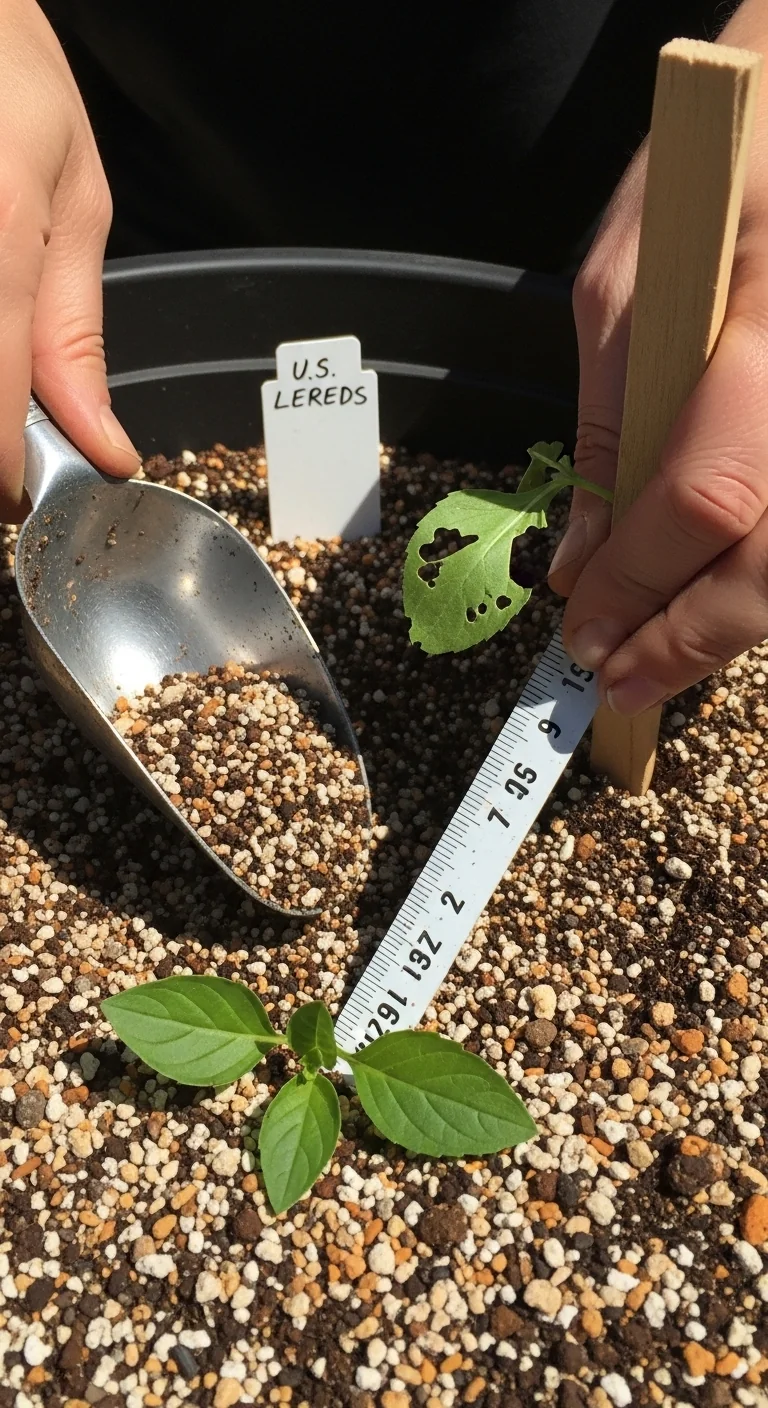
Use two parts native soil, one part compost, and one part perlite. The combination improves drainage and adds organic matter without creating overly rich conditions that encourage soft growth. Incorporate it when establishing new beds or refreshing existing ones every two to three seasons. The mix supports both annual and perennial herbs in open ground settings.
Lightweight Indoor Windowsill Mix
Best for: Branch 3
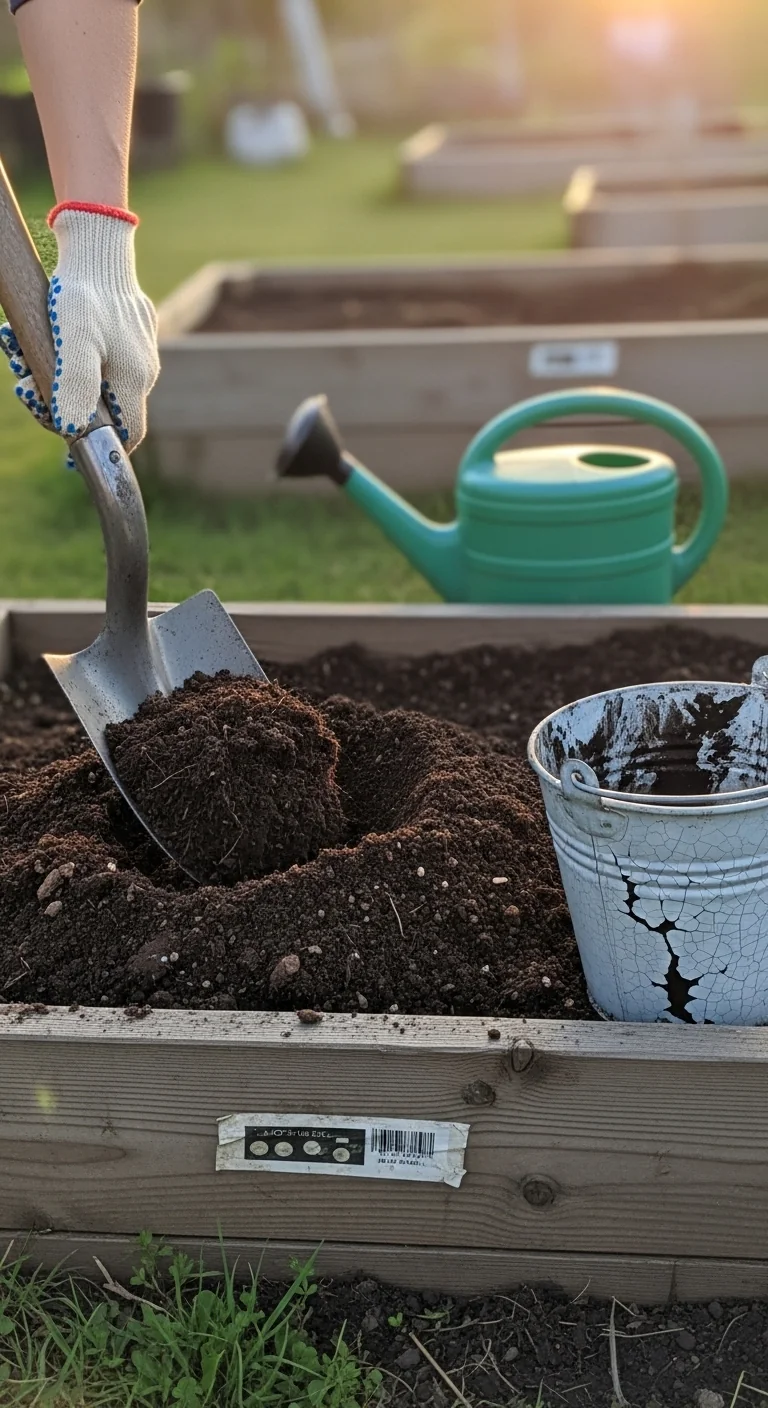
Mix equal parts perlite, vermiculite, and sterilized potting mix. The lightweight texture prevents pots from becoming top-heavy on narrow sills while ensuring roots receive oxygen between waterings. This blend suits small-scale indoor herb collections and minimizes mess during repotting.
Starter Stack (What to Choose First)
For Branch 1 Container Setups
Start with the Coco Coir and Perlite Container Mix plus the Gritty Mediterranean Drainage Mix. The first provides baseline performance for mixed herbs while the second handles true arid types. Together they cover most balcony or patio containers with one bulk prep session under 30 minutes and cost under 15 dollars for ten average pots.
For Branch 2 Raised Bed or In-Ground Setups
Begin with the Off-the-Shelf Potting Mix Amendment and the Raised Bed Soil Amendment Blend. The quick amendment gets immediate results while the full blend builds long-term soil health. Expect 20 to 40 minutes of mixing time and material costs scaled to bed size at roughly 20 to 35 dollars per 4 by 8 foot bed.
For Branch 3 Indoor or Small Pot Setups
Choose the Sand-Perlite Indoor Adjustment and the Lightweight Indoor Windowsill Mix. Both stay light enough for frequent handling and small spaces. Preparation takes under 15 minutes total with material costs below 10 dollars for a full windowsill collection.
When This Won’t Work
These soil mixes fail when native soil is heavy clay that stays saturated for days after rain even after amendment or when plain garden soil is used directly in containers without drainage additives. In both cases roots stay too wet and oxygen levels drop. The solution is to switch entirely to a raised bed or container system and use one of the listed container blends instead.
Another measurable failure occurs if soil pH tests below 6.0 or above 7.5 and herbs show yellowing leaves despite correct watering. Test with a simple kit and adjust only with lime or sulfur according to kit instructions before planting. For herbs expected to last multiple seasons see the perennial herbs list for long-term soil management notes.
Choosing the Right Option for Your Situation
Budget Threshold
If your total spend must stay under 20 dollars for a small collection of pots or one raised bed, select any option with Effort Score 1 or 2. These rely on single bags of commercial mix plus one or two cheap additives available at garden centers.
Time Threshold
If you have under 15 minutes for preparation, limit choices to Effort Score 1 or 2 options. Skip full custom blends and use ready bagged mixes with minimal stirring.
Technical Constraint Threshold
If you lack a pH test kit or drainage timer, avoid options that require precise grit ratios. Stick to balanced container mixes that tolerate small variations.
Yes/No checklist:
Do you have mostly containers under 12 inches? Yes leads to Branch 1.
Are your herbs primarily Mediterranean types? Yes favors gritty options.
Do you garden in raised beds with native soil? Yes points to Branch 2 or 3.
Is your space indoor or windowsill only? Yes selects lightweight mixes.
Expert Q&A
Can I reuse the same soil mix for multiple seasons without changes?
Container mixes can be reused for one additional season after removing old roots and refreshing the top two inches with fresh compost and perlite. Raised bed mixes last longer but benefit from annual top-dressing of compost to maintain structure. Always check drainage speed before replanting.
How do I know if my current mix is too rich for Mediterranean herbs?
Signs include soft, leggy growth and reduced essential oil aroma even in full sun. Switch to a grittier blend with extra sand or perlite and reduce any added fertilizer. The leaner profile encourages compact growth and stronger flavor.
Is there a difference between mixes for seed starting versus established plants?
Seed starting uses finer particles with more vermiculite for even moisture around tiny roots. Once seedlings reach two inches tall, transplant into the coarser adult mixes listed here to promote strong root systems.
What adjustment helps if herbs in self-watering planters stay too wet?
Increase the perlite or sand ratio by one additional part and reduce compost volume. The extra grit counteracts the constant moisture supply and prevents root rot in those systems.
Do indoor herbs under grow lights need different mixes than outdoor ones?
Indoor mixes prioritize extra aeration because air circulation is lower and watering happens more frequently in small pots. Add 10 to 20 percent more perlite or vermiculite compared with outdoor container recipes.
Conclusion
The decision grid and targeted blends remove guesswork by aligning soil texture and nutrients with herb origins and your exact growing method. The most common mistake is treating all herbs the same with one generic mix, which leads to either waterlogging or drought stress within weeks.
Prepare your chosen blend this weekend using the ratios and steps above, then plant according to your dominant herb category. Next, explore companion planting strategies to maximize space and health around your new herb collection with the companion planting herbs guide.