
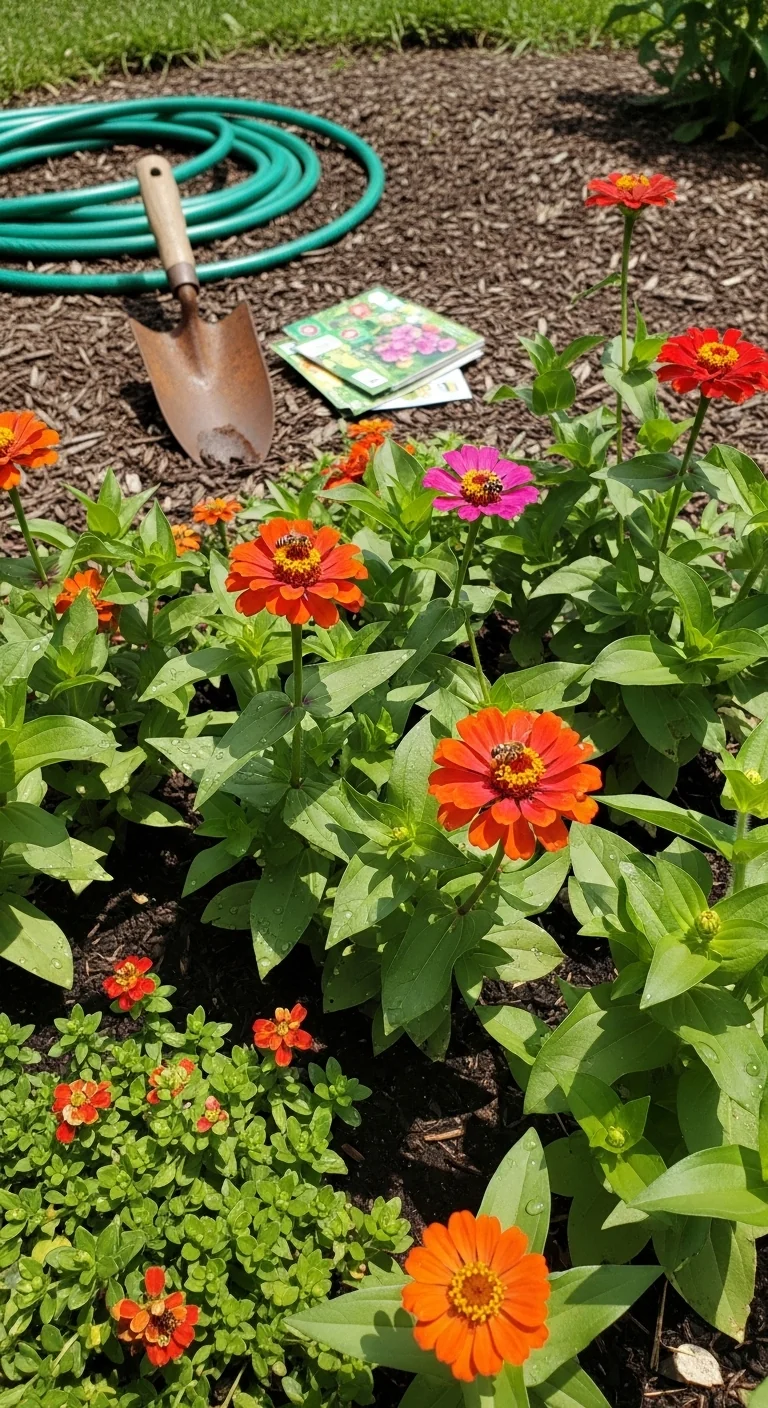
Zinnias succeed when variety selection aligns directly with measurable garden conditions rather than flower color alone. Most lists overlook this and leave gardeners battling sprawl in tight spots, mildew in humid zones, or short stems in cutting beds. The right series turns zinnias into consistent performers from midsummer through first frost.
This guide covers nine proven series and species suited to ornamental flower gardening in the US, UK, Canada, Australia, and similar temperate zones. It focuses on height, disease traits, and stem quality while excluding general seed-starting basics or unrelated perennials.
You will finish with a clear map of which zinnias fit your exact constraints, plus synergy stacks and failure safeguards that prevent common setbacks.
Align one variety to your space width, summer night temperatures, and stem needs and zinnias will deliver steady color without repeated trial plantings.
The Yield Grid Decision Grid
Branch 1 applies when your available growing width measures under 24 inches or you use containers. These conditions favor compact habits that stay tidy without staking. Recommended: Items 1, 2, and 7 below. For broader annual context see the annual flowers overview.
Branch 2 applies when summer nights regularly stay above 60 F with visible leaf wetness or you have faced powdery mildew before. These conditions favor built-in foliage resistance. Recommended: Items 1, 2, and 6 below.
Branch 3 applies when you need stems longer than 12 inches for arrangements or tall visual impact. These conditions favor strong upright growth. Recommended: Items 3, 4, and 5 below.
Quick Comparison Table
| Option | Key mechanism | Best for | Decision Grid Branch | Effort Score |
|---|---|---|---|---|
| Zahara Series | Compact habit plus leaf spot and mildew resistance | Containers and narrow borders | Branch 1 | 1 |
| Profusion Series | Low-growing spread with strong foliage tolerance | Edges and small beds | Branch 1 | 1 |
| Benary’s Giant | Long sturdy stems on tall plants | Cut-flower production | Branch 3 | 3 |
| Oklahoma Series | Prolific small-to-medium blooms on strong stems | Repeated cutting | Branch 3 | 3 |
| Queen Series | Unique soft-tone doubles on upright stems | Designer bouquets | Branch 3 | 3 |
| Zinnia haageana | Drought-tolerant spreading form | Dry or low-water spots | Branch 2 | 2 |
| Magellan Series | Bedding-type doubles with heat endurance | Small-space color blocks | Branch 1 | 2 |
| State Fair Mix | Large classic blooms on tall frames | Back-of-border impact | Branch 3 | 4 |
| California Giant | Extra-large flowers on vigorous stalks | Statement displays | Branch 3 | 4 |
1. Zahara Series Zinnias
Best for: Branch 1
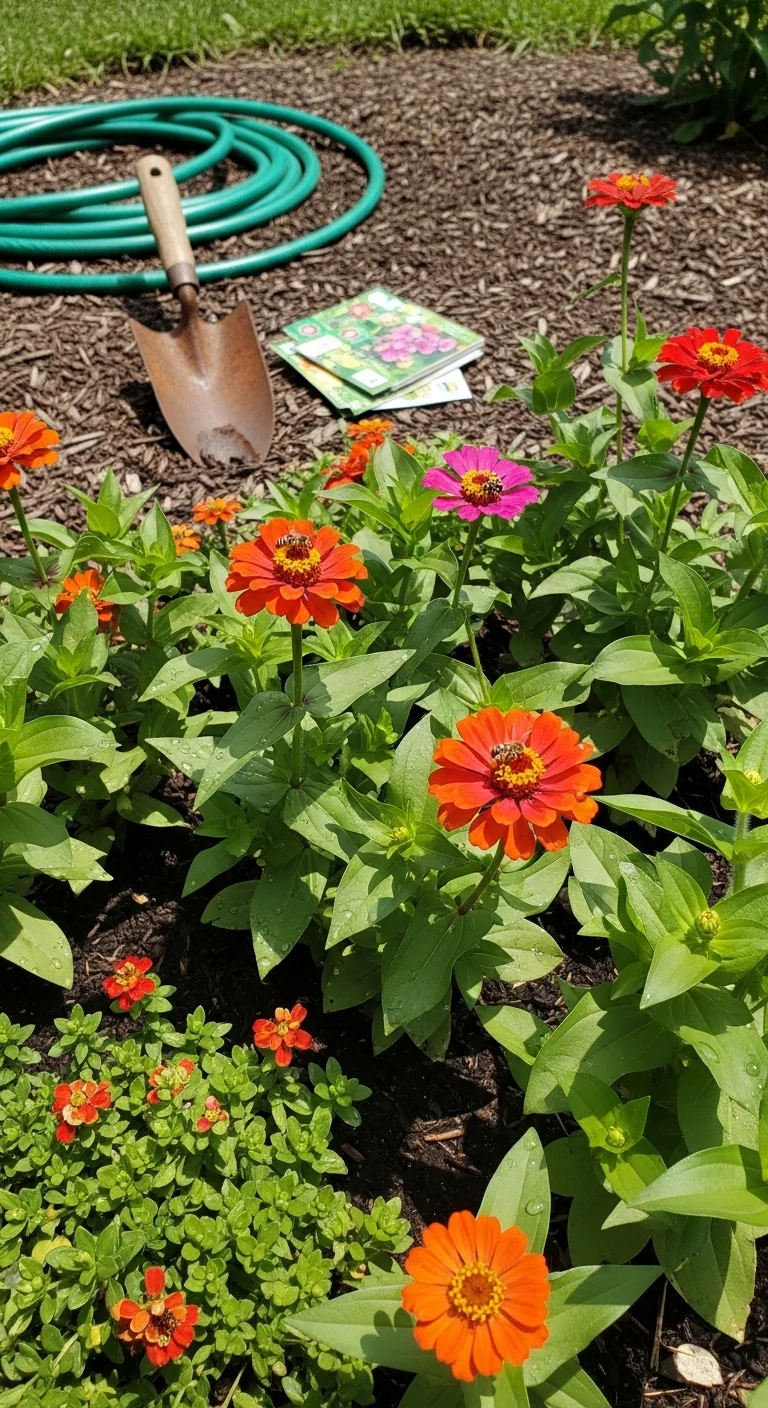
Zahara Series delivers compact plants that top out at 8 to 12 inches and spread into dense mats. The mechanism is built-in resistance to both powdery mildew and bacterial leaf spot, which keeps foliage clean even when air flow is moderate. Plant in full sun after soil warms to 70 F, space 8 to 10 inches apart, and water at the base. The series needs no deadheading because spent blooms drop cleanly. Common mistake is overwatering, which invites root issues in containers. Pair with the container flowers guide for drainage mixes that keep roots healthy through peak summer heat.
2. Profusion Series Zinnias
Best for: Branch 1
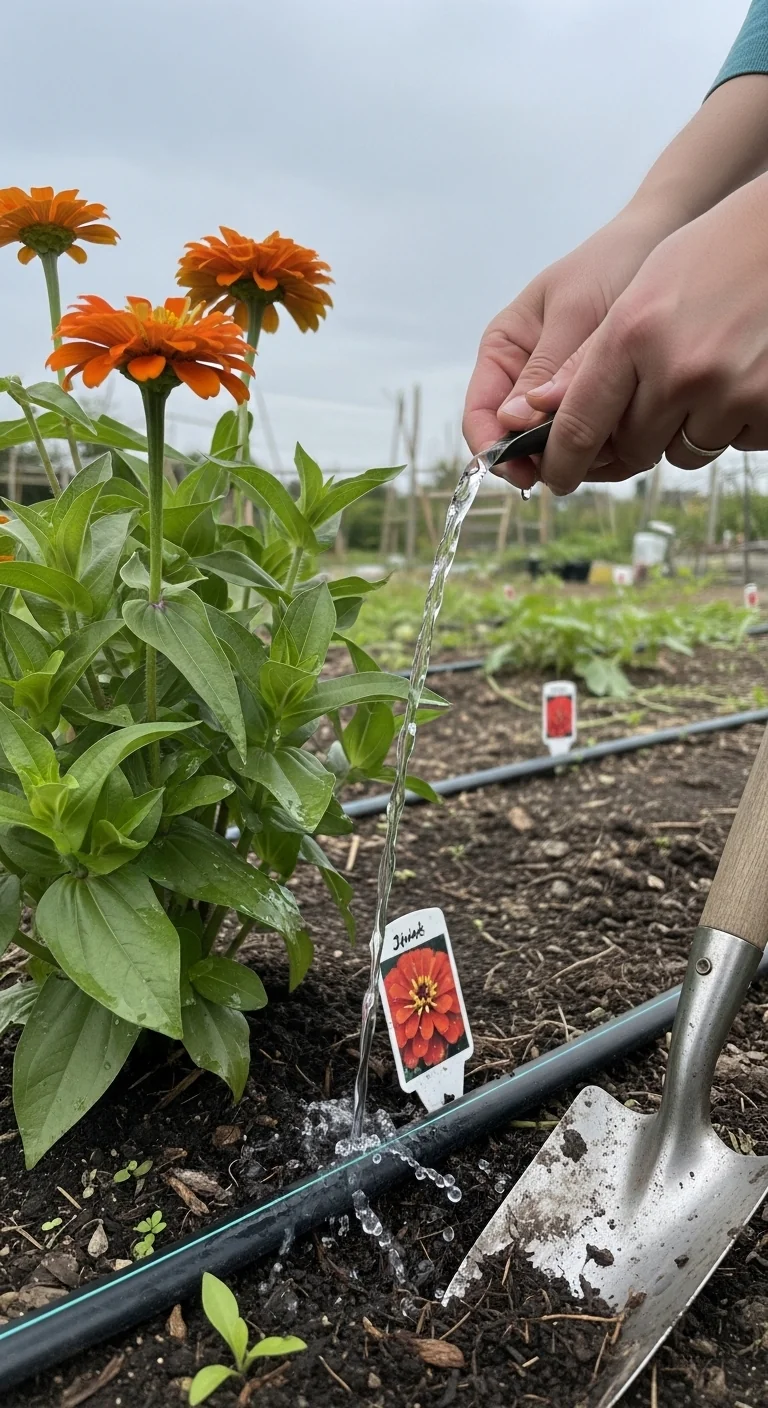
Use Profusion when you need nonstop color in tight footprints but skip it if you want large individual blooms for cutting. The series stays under 12 inches and resists foliage diseases better than older tall types. Edge case: it still requires full sun, so avoid any spot that drops below six hours daily.
3. Benary’s Giant Zinnias
Best for: Branch 3
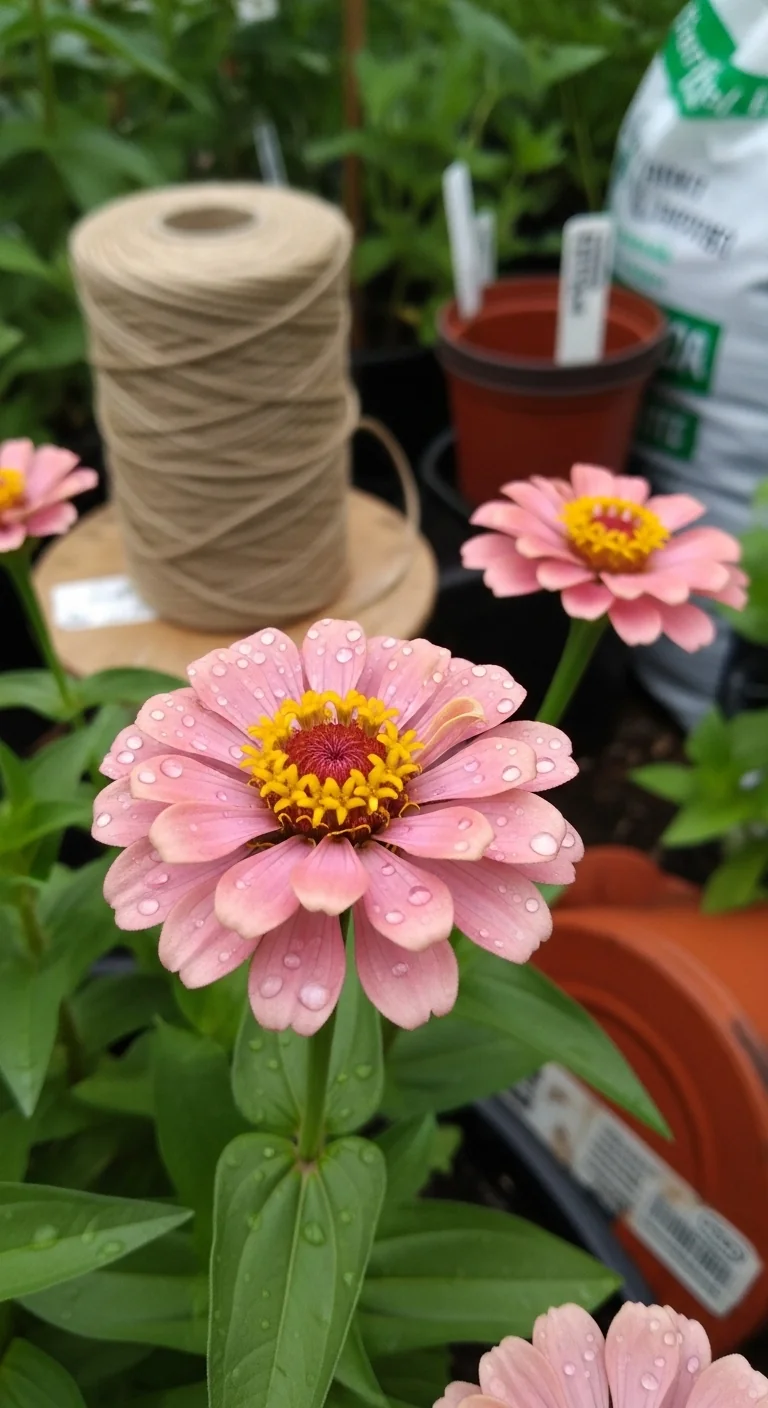
Benary’s Giant reaches 3 to 4 feet with stems long enough for vases. Threshold rule: space plants 12 to 18 inches apart once soil hits 70 F; closer planting drops air flow and raises mildew risk even in drier summers. Expect first blooms 60 to 70 days after direct sowing. Integrate into dedicated rows using the cut flower garden layout for easy harvesting access.
4. Oklahoma Series Zinnias
Best for: Branch 3
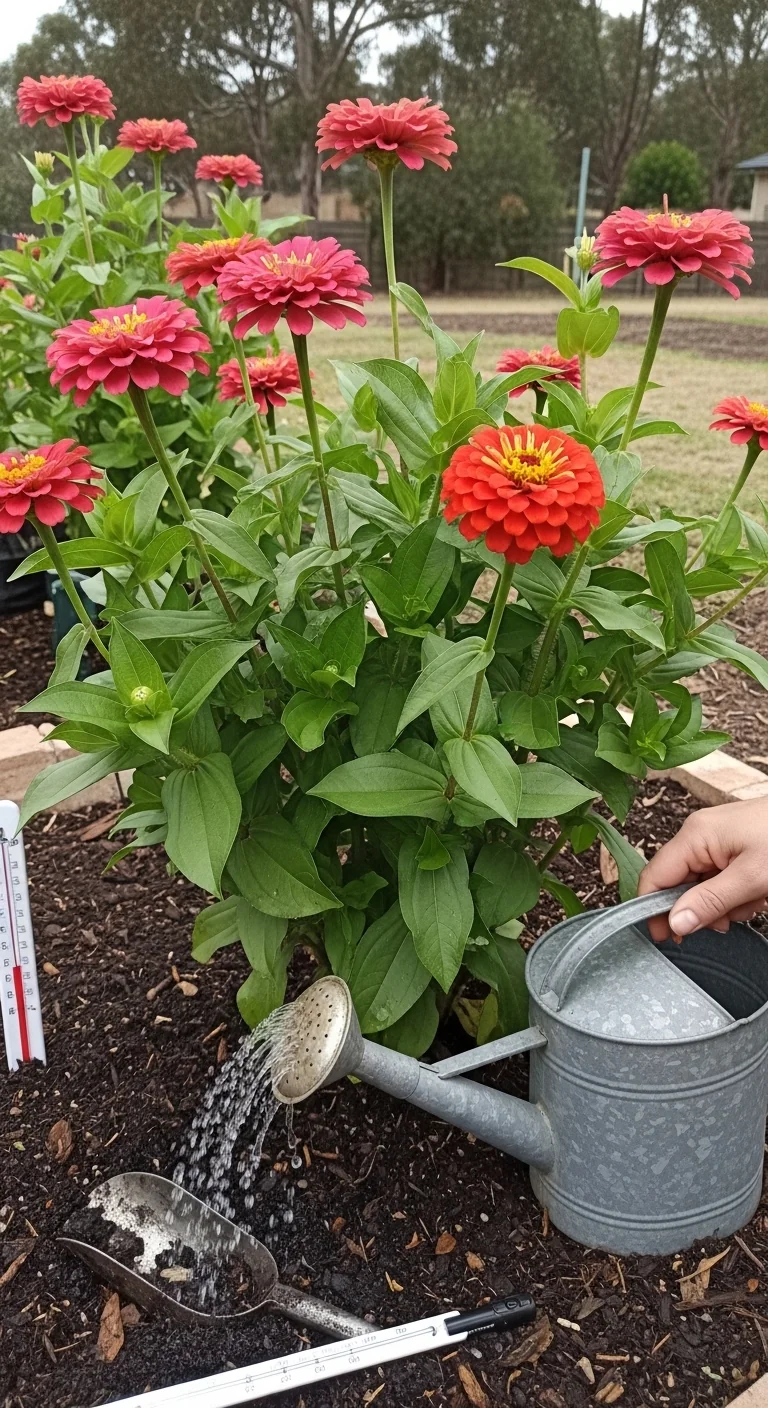
Oklahoma Series produces dozens of smaller, perfectly formed doubles on sturdy 2- to 3-foot stems. Blueprint starts with direct sowing after last frost into 70 F soil, followed by weekly harvest of center blooms to trigger side shoots. The mechanism is consistent flower size that fits both market bouquets and home arrangements. Add the pollinator flowers approach by mixing in open-center selections from the same series to draw butterflies while you cut.
Ten-minute workflow: cut stems early morning, strip lower leaves, place in cool water. Upgrade option is pinching the first set of true leaves at transplant to increase branching from the base.
5. Queen Series Zinnias
Best for: Branch 3
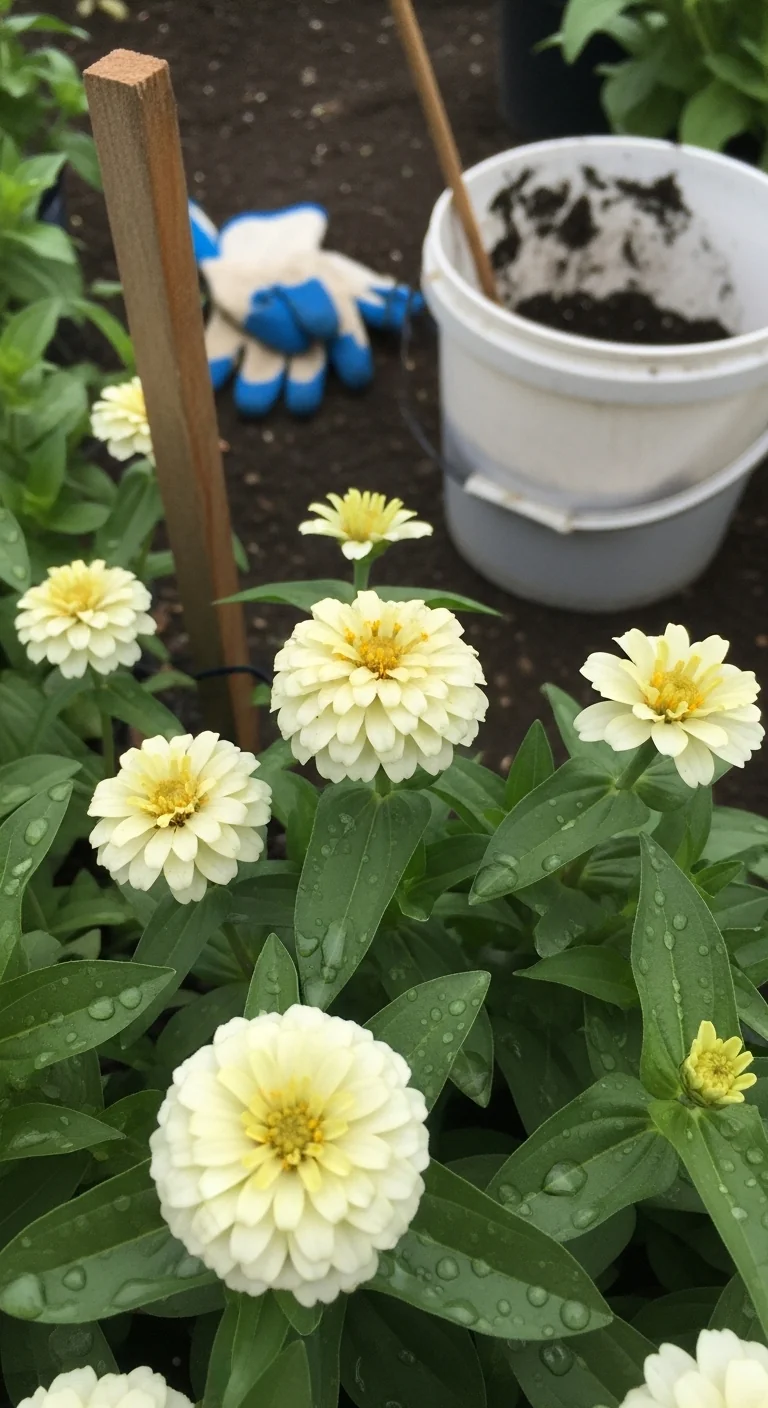
Queen Series stands out for soft dusty pinks, limes, and salmons on 2- to 3-foot stems. Use it when you want distinctive tones that blend rather than shout. Skip if your priority is maximum bloom count over color nuance.
6. Zinnia haageana
Best for: Branch 2
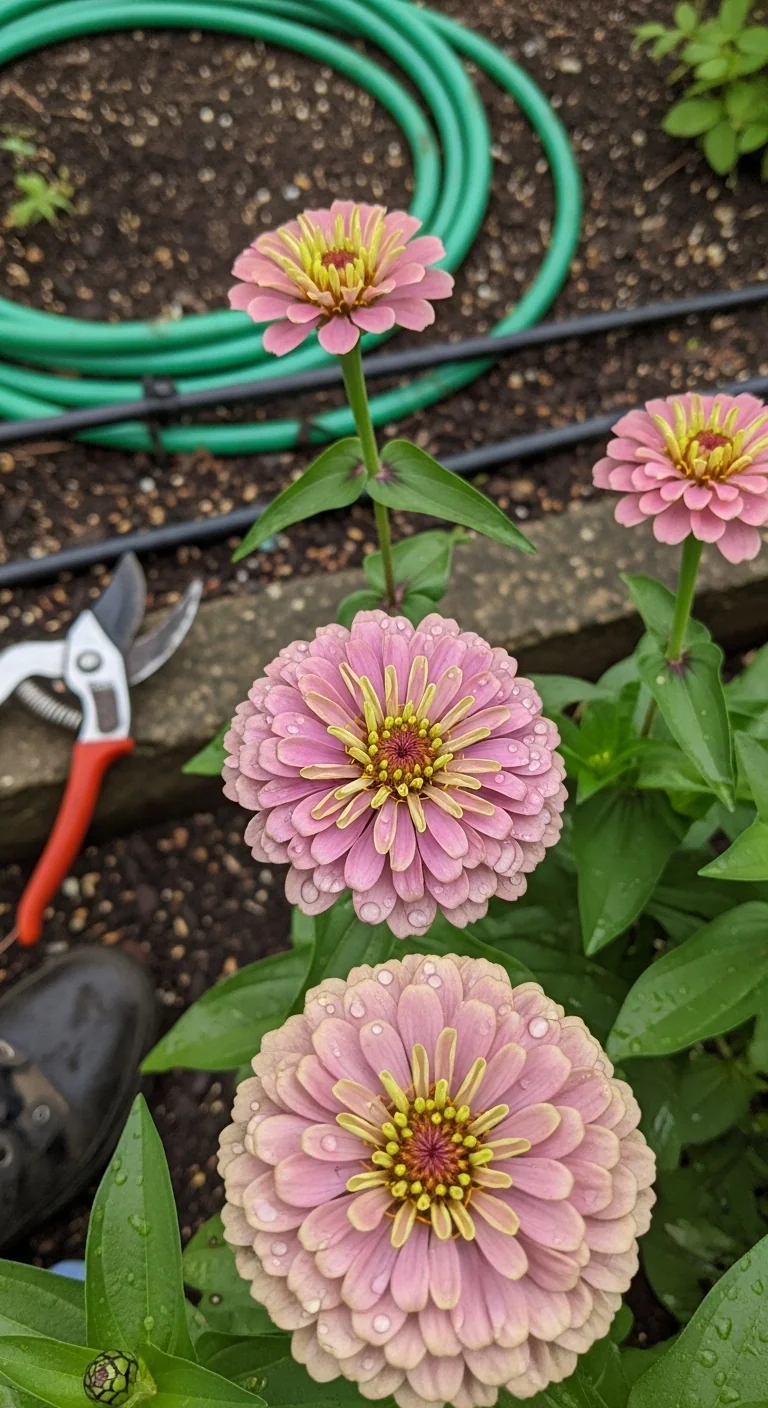
Zinnia haageana forms low spreading mounds with single or semi-double flowers in warm tones. It tolerates drier soil better than Zinnia elegans types once established. Threshold rule: provide at least 8 hours of direct sun and avoid overhead irrigation after foliage develops to keep leaves dry. In humid zones it still benefits from wider spacing than compact series.
7. Magellan Series Zinnias
Best for: Branch 1
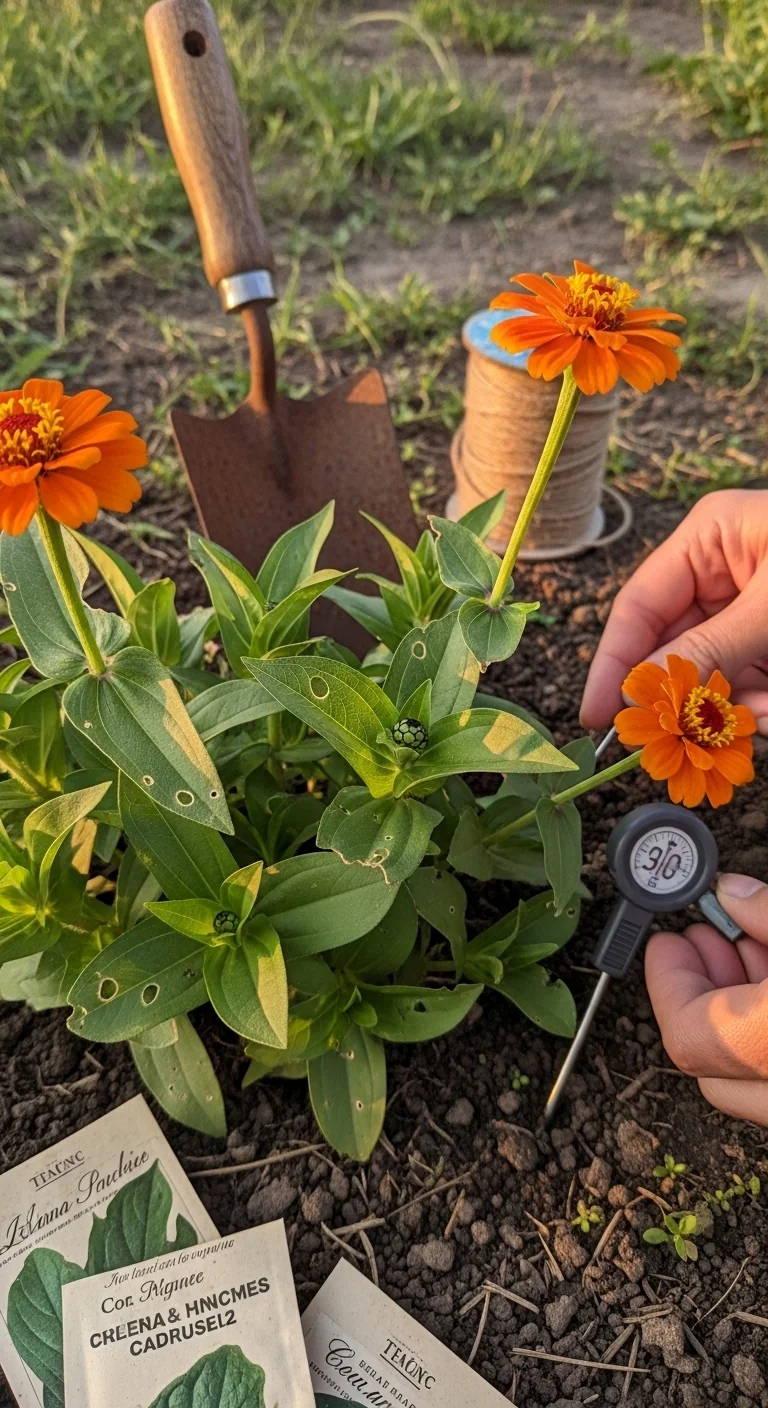
Magellan Series offers larger double blooms than Zahara on plants that stay under 18 inches. Blueprint: sow or transplant into well-drained soil, space 10 inches apart, and water only when the top inch dries. The mechanism is heat tolerance that keeps flowering through 90 F days without pause. Common mistake is planting too early when nights dip below 55 F, which stalls growth for weeks. Deadheading is optional but speeds rebloom in cooler UK or Canadian summers.
8. State Fair Mix Zinnias
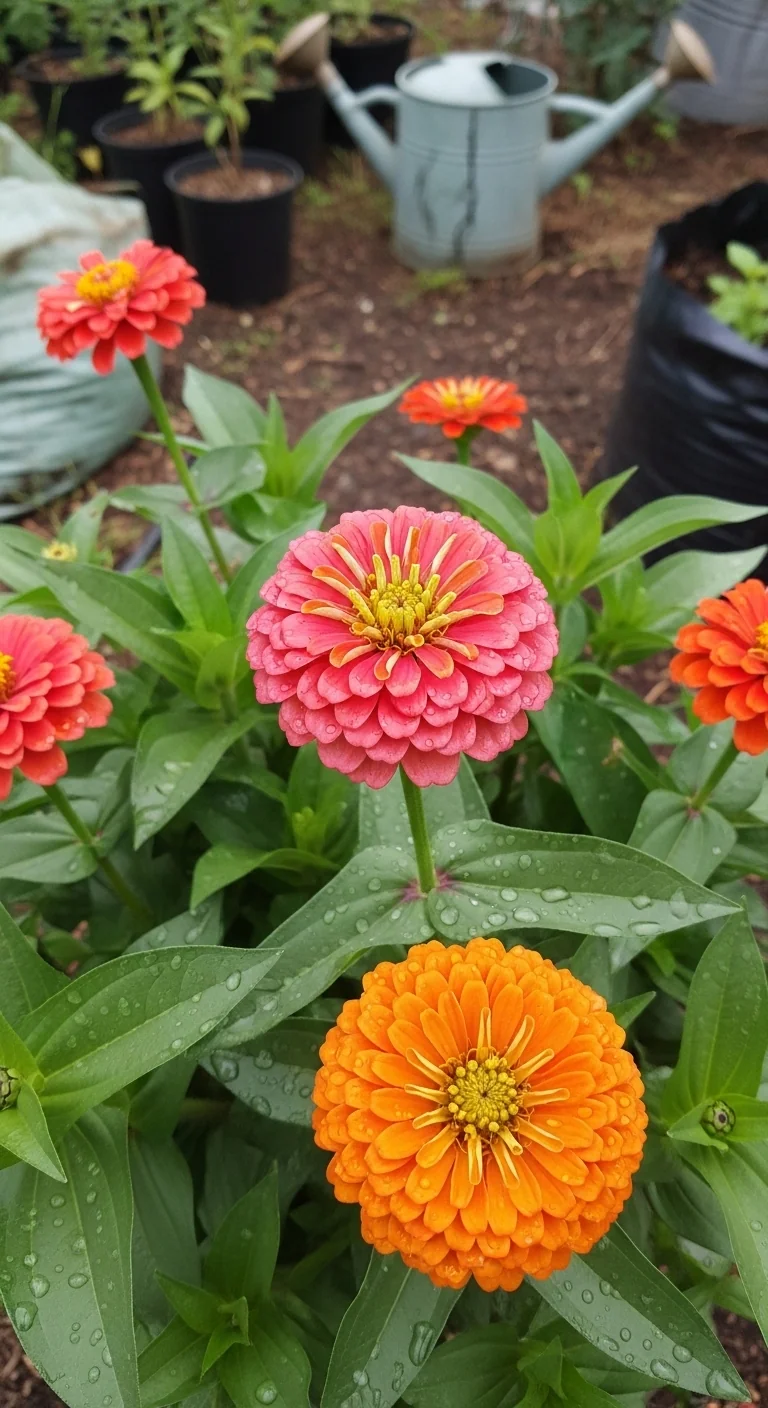
Best for: Branch 3
State Fair Mix delivers classic large blooms on tall plants. Use versus skip: choose it for back borders where height adds drama, skip in windy sites without support because stems can flop after heavy rain.
9. California Giant Zinnias
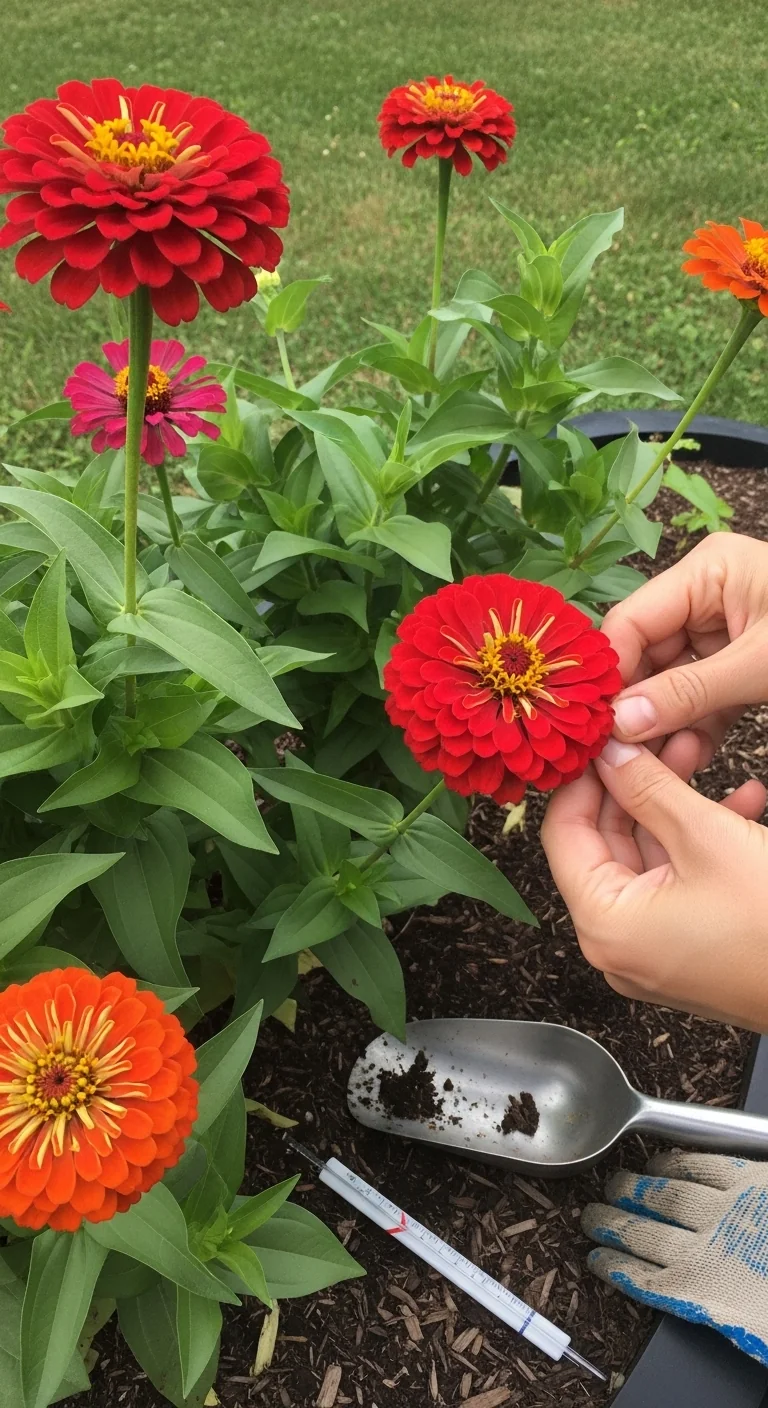
Best for: Branch 3
California Giant produces some of the largest flowers in the genus on vigorous stalks. Threshold rule: maintain 15-inch spacing and pinch early for bushier habit. In cooler zones transplant starts rather than direct seed to gain the extra weeks needed for full size before frost.
Starter Stack (What to Choose First)
For Branch 1 (limited space or containers)
Start with Zahara Series and Profusion Series. The compact habits stack together to fill pots or narrow beds with continuous low color while their shared disease resistance reduces monitoring time. Seed packets run 4 to 7 dollars each and plants reach bloom stage in 60 to 75 days from sowing.
For Branch 2 (humid or disease-prone conditions)
Start with Zahara Series and Zinnia haageana. The mildew tolerance of Zahara pairs with the drier-soil endurance of haageana to cover both wet-humid and occasional dry spells without extra sprays. Seed cost stays under 6 dollars per packet with first flowers in 65 to 80 days.
For Branch 3 (cut-flower or tall display)
Start with Benary’s Giant and Oklahoma Series. Long stems from Benary’s combine with the prolific smaller blooms of Oklahoma to fill buckets fast while both maintain upright form. Expect 5 to 8 dollars per packet and bloom in 70 to 85 days.
When This Won’t Work
Zinnias fail when soil temperature stays below 70 F at planting time. Seeds sit dormant or damp off quickly, wasting the season. Switch to indoor starts four to six weeks before your last frost date and harden off before setting out. Another measurable failure occurs when plants sit in shade or poor drainage. Growth turns leggy and flowers shrink regardless of variety. Move to a full-sun site or amend heavy soil with grit before replanting. For sites that stay shady consider alternatives in the full sun flowers collection instead.
Choosing the Right Option for Your Situation
Budget threshold
If your total seed spend stays under 15 dollars, select one packet each from Zahara or Profusion for Branch 1, or Benary’s Giant for Branch 3. These cover most small gardens without premium mixes.
Time threshold
If you can spare only five minutes weekly for maintenance, choose Zahara, Profusion, or Zinnia haageana. Their lower deadheading needs keep the bed tidy without daily attention.
Technical constraint (drainage)
If water pools longer than 24 hours after rain, avoid tall types and stay with Zahara, Profusion, or haageana. These tolerate occasional dry spells better once roots establish.
Yes/No checklist
Yes if your site receives 8 hours of sun: proceed with any matched variety.
No if soil stays soggy: amend or choose a different annual.
Yes if nights average above 60 F: pick Branch 2 options first.
No if you need instant tall color: start seeds indoors for Branch 3 types.
Expert Q&A
Can you reliably save seeds from hybrid zinnia series for next year?
Hybrid series such as Zahara or Benary’s Giant produce offspring that vary widely in color, height, and disease resistance. Open-pollinated types like Zinnia haageana come true more often. Collect only from single-color blocks and expect 30 to 50 percent deviation in the next generation.
What companion plants reduce pest pressure around zinnias?
Marigolds or alliums planted nearby deter nematodes and aphids through root secretions. Keep companions at least 12 inches away to preserve air flow that zinnias need. The combination also extends visual interest when zinnia bloom peaks slow.
Why do some zinnias stop flowering in late summer even with deadheading?
Day length shortens after midsummer and extreme heat above 95 F can pause bloom set in non-heat-tolerant series. Switching to Oklahoma or Magellan earlier in the season maintains production longer because those lines were bred for sustained output under stress.
How early can you start zinnias indoors in cooler regions like the UK or Canada?
Begin indoors six weeks before last frost when soil can be warmed to 70 F under lights. Harden off gradually over two weeks once nights reach 50 F. Direct sowing works only after soil consistently hits the threshold.
Do zinnias self-seed aggressively enough to return without replanting?
In mild winters some volunteer seedlings appear from fallen seed but vigor and color fade after one generation. For reliable returns collect and store seed each fall or replant fresh packets to maintain the exact series traits you selected.
Conclusion
Next step: map your bed dimensions and night temperature pattern, then review the low maintenance flowers collection to layer zinnias with compatible partners for season-long structure.