
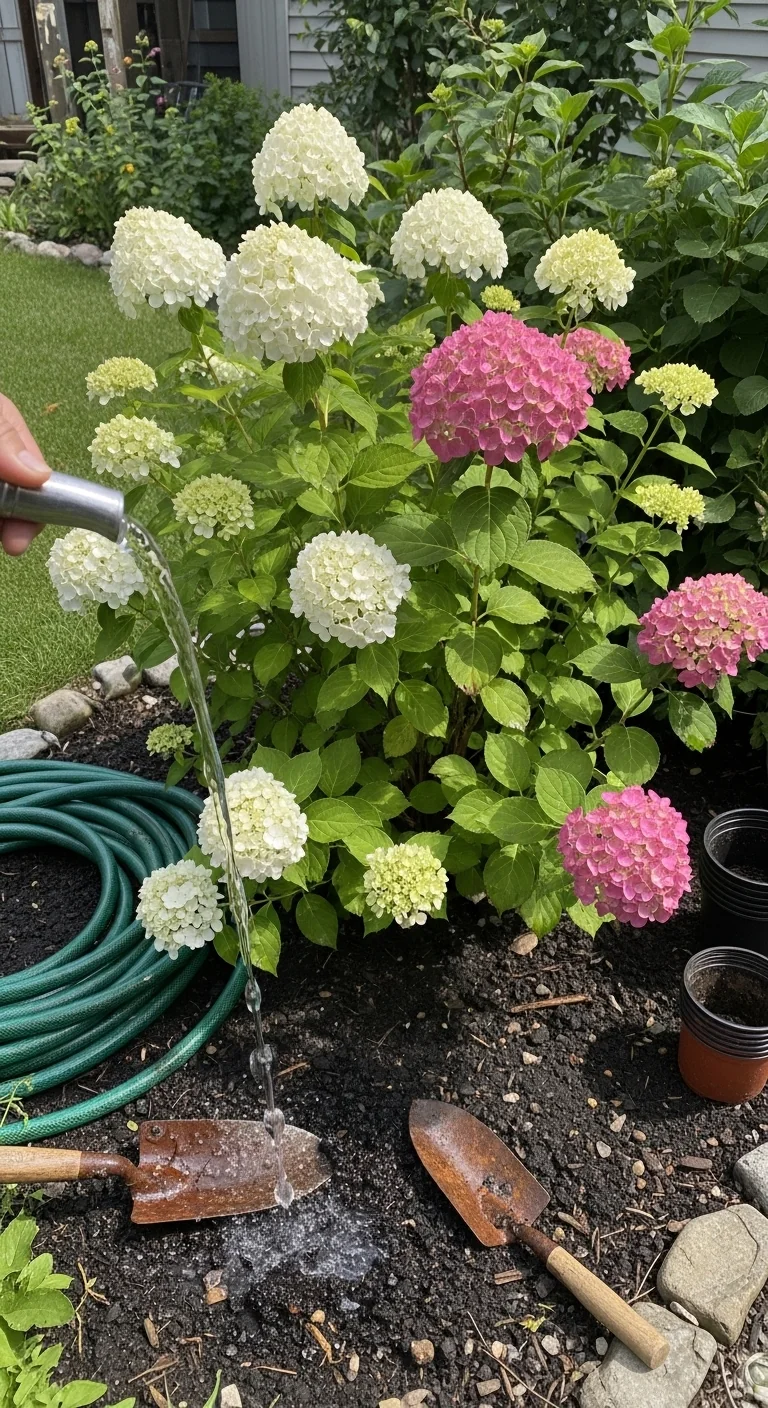
Hydrangeas do not fail randomly. They fail when the selected type mismatches your garden’s measurable conditions: daily sun hours, soil pH level, or available space. This reframing shifts the focus from trial-and-error planting to precise matching.
This listicle examines 9 distinct types across five main species. It covers selection criteria, planting basics, and type-specific maintenance. It excludes pest diagnosis, propagation techniques, and container-only growing.
You will leave with clear rules for matching a type to your site, a timeline for first-year establishment, and pruning windows that protect next-season blooms. These details enable immediate decisions on what to buy and where to plant.
Measure your sun hours and soil pH first, then select only from the recommended items in the matching decision grid branch.
The Yield Grid Decision Grid
Branch 1: Your garden receives 4 hours or fewer of direct sun daily. Recommended: Items 1, 2, 6, 7 and 9 below.
Branch 2: Your garden receives 6 hours or more of direct sun daily or experiences hot, humid summers. Recommended: Items 3, 4 and 8 below.
Branch 3: You can test and adjust soil pH and want controllable flower color. Recommended: Items 5 and 9 below.
For long-term perennial performance across these branches, see our perennial flowers guide.
Quick Comparison Table
| Option | Key mechanism | Best for | Decision Grid Branch | Effort Score |
|---|---|---|---|---|
| Annabelle Smooth Hydrangea | Blooms on new wood after hard spring cutback | Quick white mounds in low light | 1 | 2 |
| Incrediball Smooth Hydrangea | Large flower heads supported by sturdy stems | Dramatic white displays in shade | 1 | 2 |
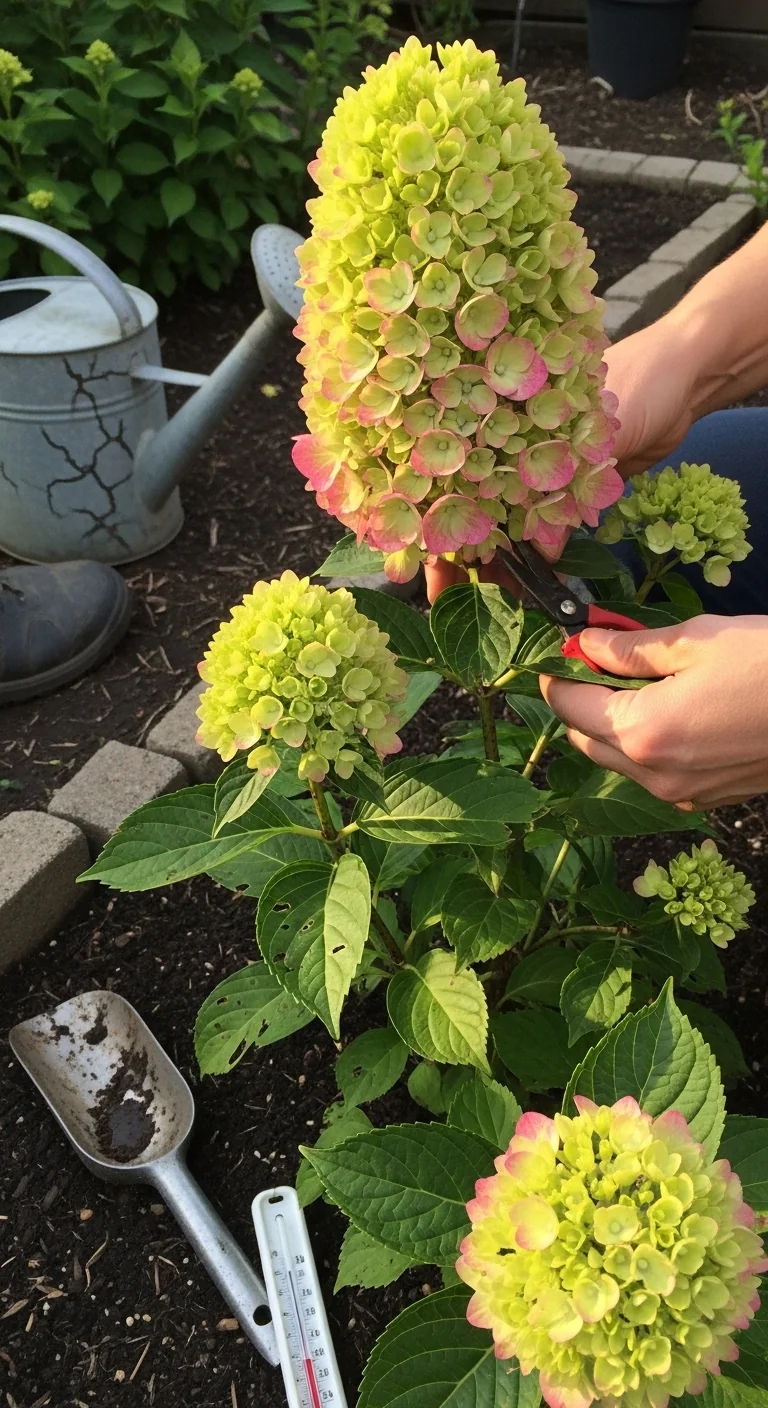
| Limelight Panicle Hydrangea | Cone-shaped blooms age from lime to pink on new wood | Full sun with late-season color shift | 2 | 1 |
| Quick Fire Panicle Hydrangea | Early bloom start on new wood | Extended flowering in hot sites | 2 | 1 |
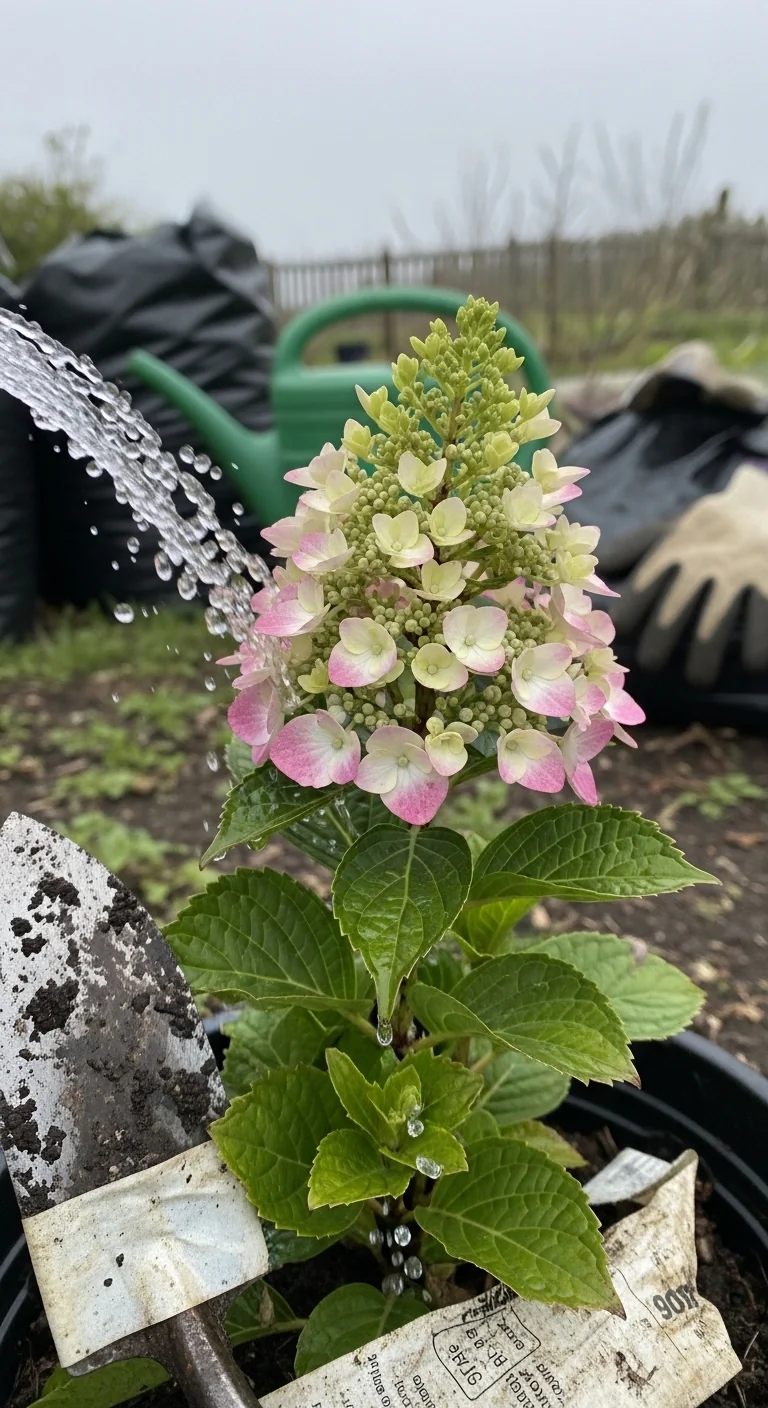
| Endless Summer Bigleaf Hydrangea | Reblooms on new and old wood with pH-dependent color | Repeat color in part shade | 3 | 4 |
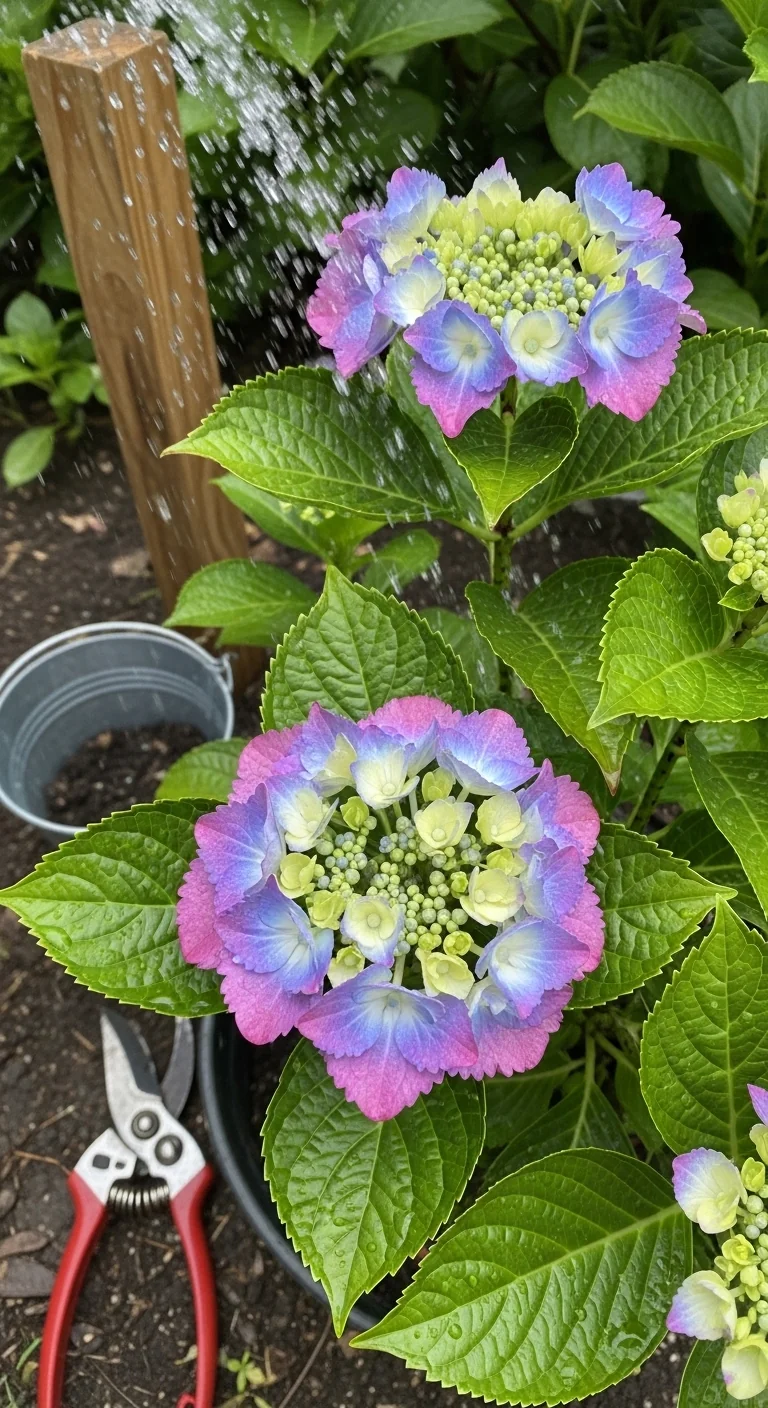
| Snow Queen Oakleaf Hydrangea | Exfoliating bark and fall foliage on established plants | Multi-season interest in part shade | 1 | 2 |
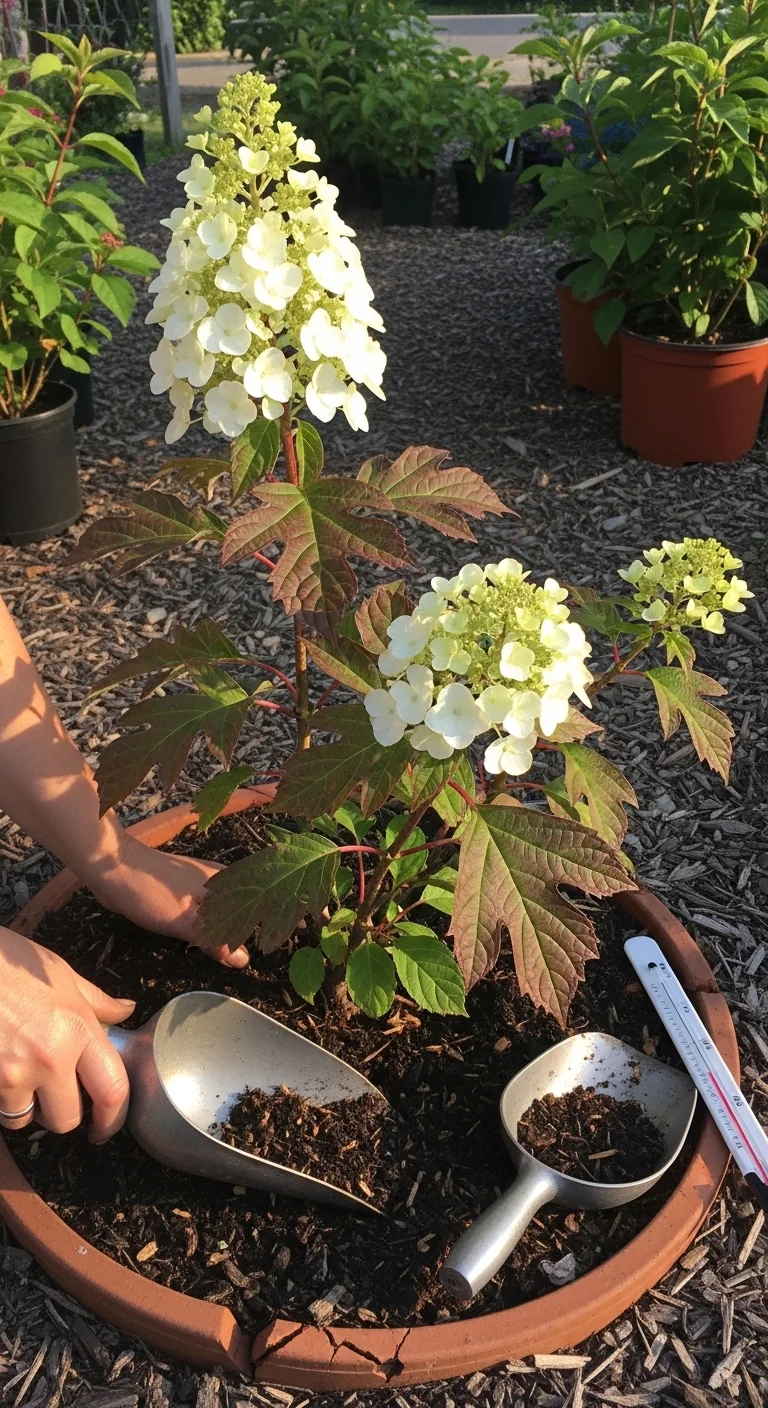
| Climbing Hydrangea | Self-clinging aerial roots for vertical coverage | Shade walls and fences | 1 | 1 |
| Pinky Winky Panicle Hydrangea | Two-tone pink and white cones on new wood | Full sun with bold late color | 2 | 1 |
| Lanarth White Lacecap Bigleaf | Open lacecap form with pH-influenced color | Delicate blooms in adjustable soil | 3 | 3 |
Annabelle Smooth Hydrangea
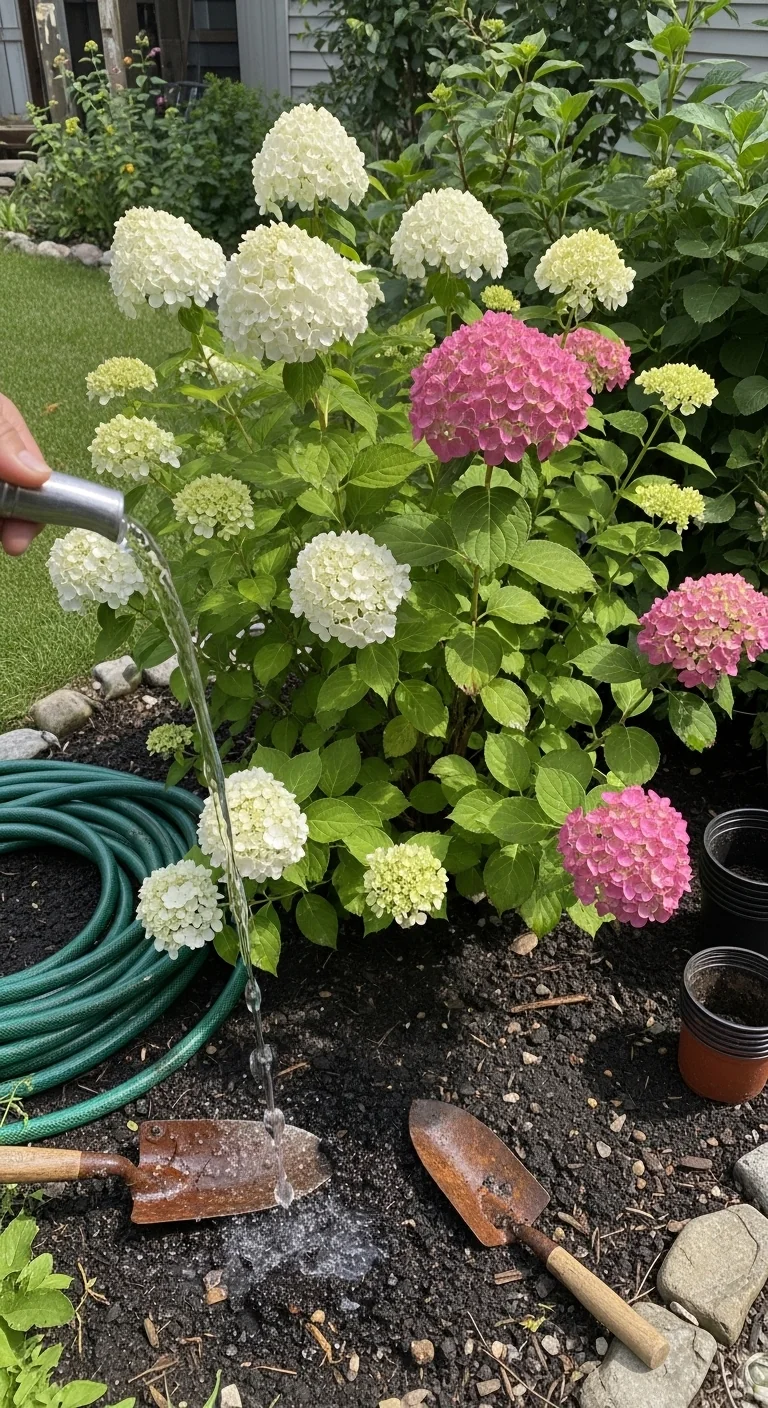
Best for: Branch 1
Blueprint. Annabelle produces large, rounded white flower heads up to 12 inches across on a 4- to 5-foot shrub. It thrives in moist, well-drained soil in partial to full shade. Plant in early spring or fall. Cut stems back to 12 inches above ground in late winter to early spring. This encourages strong new growth and abundant blooms the same season.
Common mistake: leaving old stems intact. They reduce vigor and flower size the following year. Pair with mulch to retain soil moisture. See our shade flowers guide for complementary planting ideas. Annabelle establishes quickly and delivers reliable summer color without soil amendments.
Incrediball Smooth Hydrangea
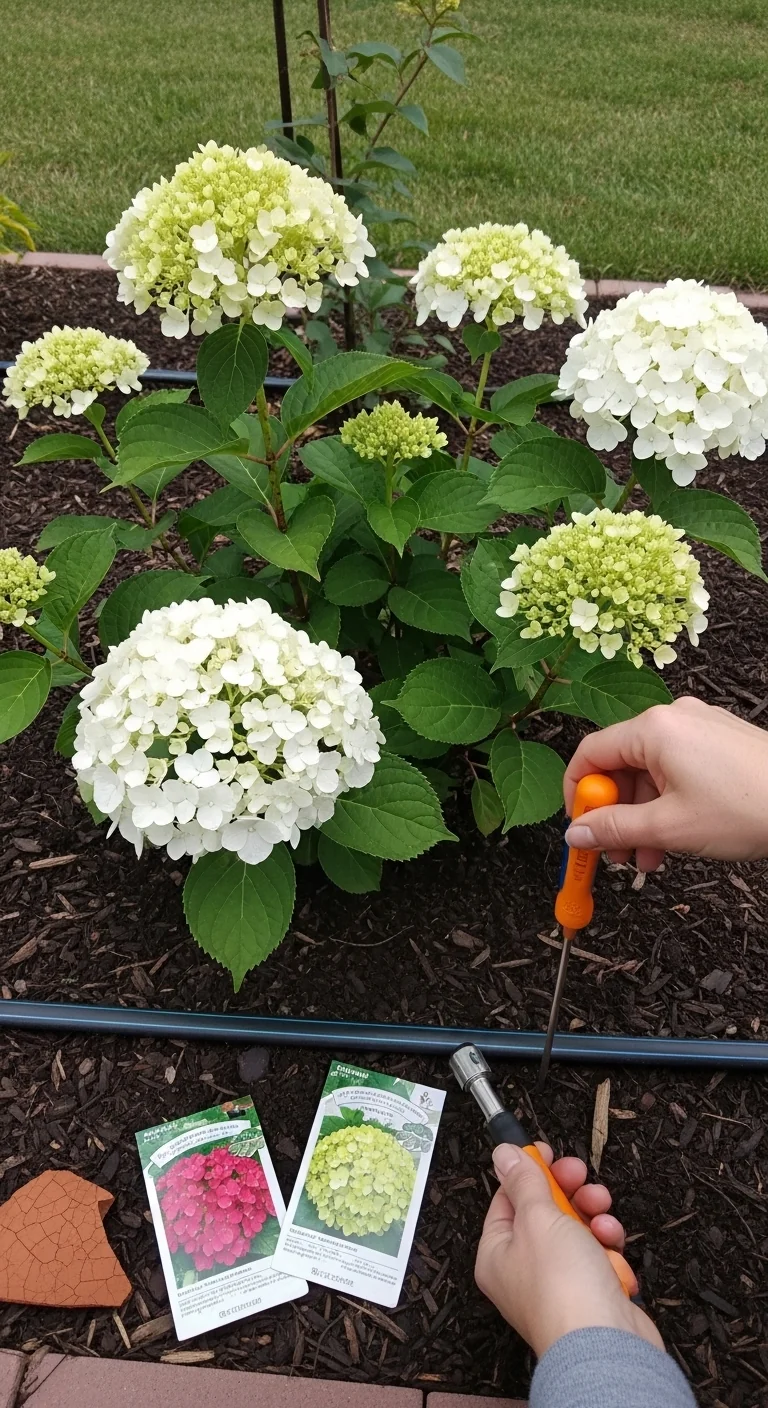
Best for: Branch 1
Use vs skip. Use Incrediball when you want oversized white blooms (up to 14 inches) on sturdy stems that resist flopping. Skip if your site dries out quickly in summer; it needs consistent moisture. Edge case: in zones with heavy wet snow, tie stems loosely in late fall to prevent breakage.
Limelight Panicle Hydrangea
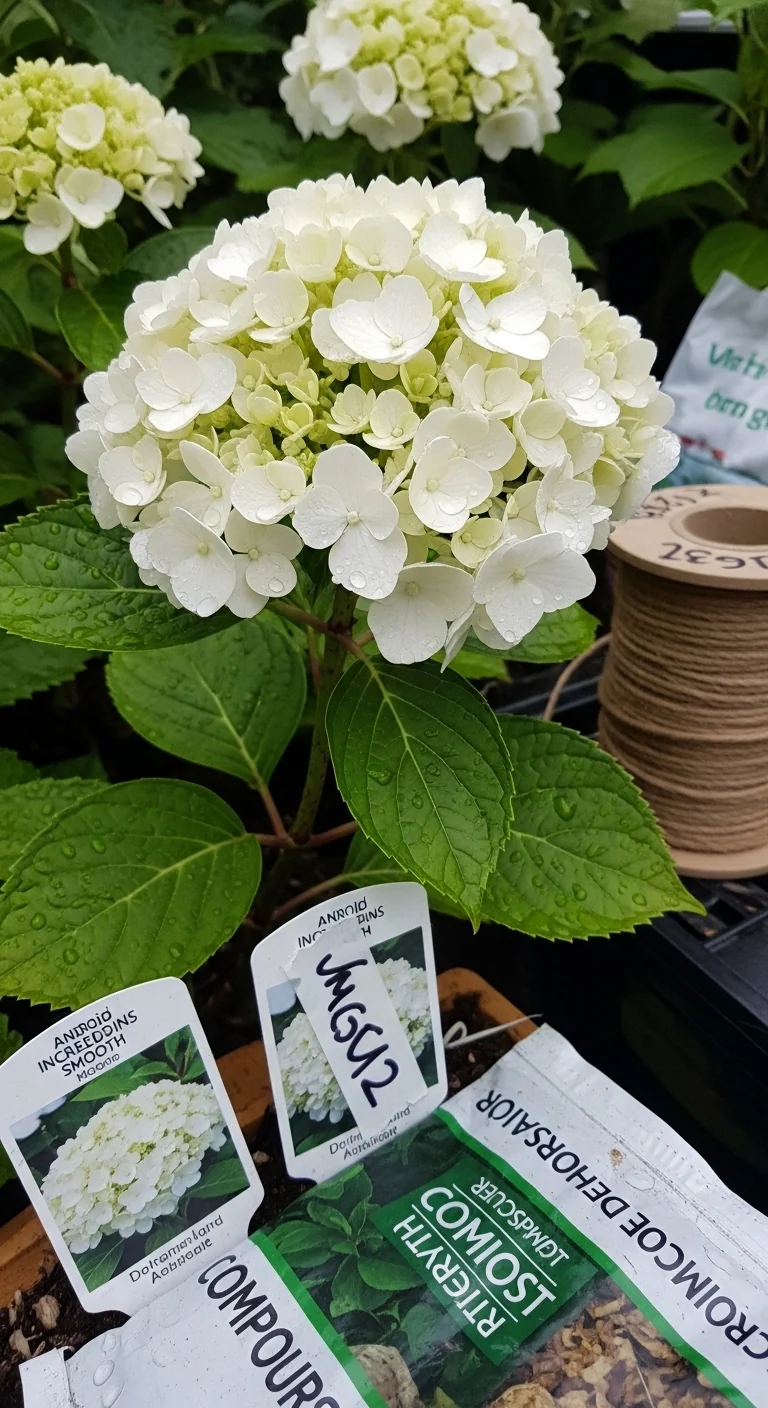
Best for: Branch 2
Threshold rule. Limelight blooms reliably once daily sun exceeds 6 hours. Flower cones open lime green and shift to pink as nights cool. Prune to 18-24 inches in late winter. Soil pH does not affect color. If summer temperatures regularly exceed 90 F, water deeply once weekly to maintain turgor.
See our full sun flowers guide for pairing options.
Quick Fire Panicle Hydrangea
Best for: Branch 2
10-minute workflow. Step 1: Plant in full sun with well-drained soil. Step 2: Water deeply at planting and weekly until established. Step 3: In late winter, prune to 18 inches, removing crossing branches. Upgrade option: apply a 2-inch layer of organic mulch after pruning to conserve moisture during heat waves. This sequence delivers flowers by early summer and extends color into fall.
See our hydrangea pruning guide for timing visuals.
Endless Summer Bigleaf Hydrangea
Best for: Branch 3
Blueprint. Endless Summer reblooms on both old and new wood, producing mophead flowers whose color shifts with soil chemistry. Test soil pH in spring. Keep below 6.0 for blue tones or above 6.5 for pink. Morning sun and afternoon shade suit it best. Deadhead spent blooms to encourage repeat flowering through summer. Avoid full afternoon sun in hot regions to prevent leaf scorch.
See our blue flowers guide for color management tips.
Snow Queen Oakleaf Hydrangea
Best for: Branch 1
Use vs skip. Use Snow Queen for four-season interest: white summer cones, bronze-red fall leaves, and peeling bark in winter. Skip in very dry shade; it prefers even moisture. Edge case: once established after year two, it tolerates brief dry spells better than bigleaf types.
Climbing Hydrangea
Best for: Branch 1
Threshold rule. Climbing Hydrangea needs at least 2 years to establish strong bloom production. It clings to surfaces without support once roots anchor. Prune only to shape in late winter if growth exceeds boundaries. Provide consistent moisture the first two seasons. If your wall faces north and receives under 4 hours sun, expect slower initial coverage but reliable white lacecap blooms thereafter.
Pinky Winky Panicle Hydrangea
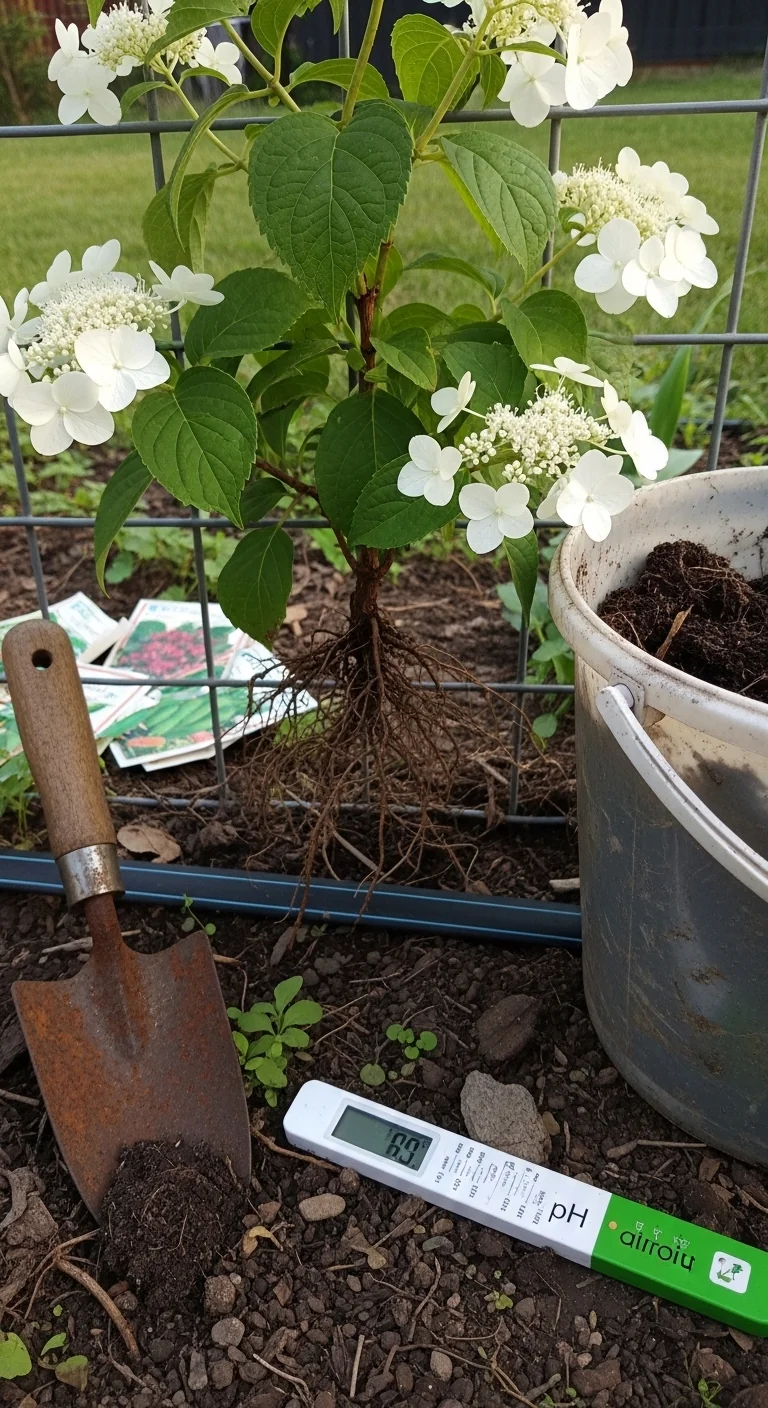
Best for: Branch 2
10-minute workflow. Step 1: Site in full sun. Step 2: Plant with crown at soil level. Step 3: Prune hard in late winter to 18 inches. Upgrade option: remove the oldest third of stems each year to maintain compact form. This routine produces two-tone pink-white cones from midsummer onward.
See our hydrangea companions guide for border ideas.
Lanarth White Lacecap Bigleaf
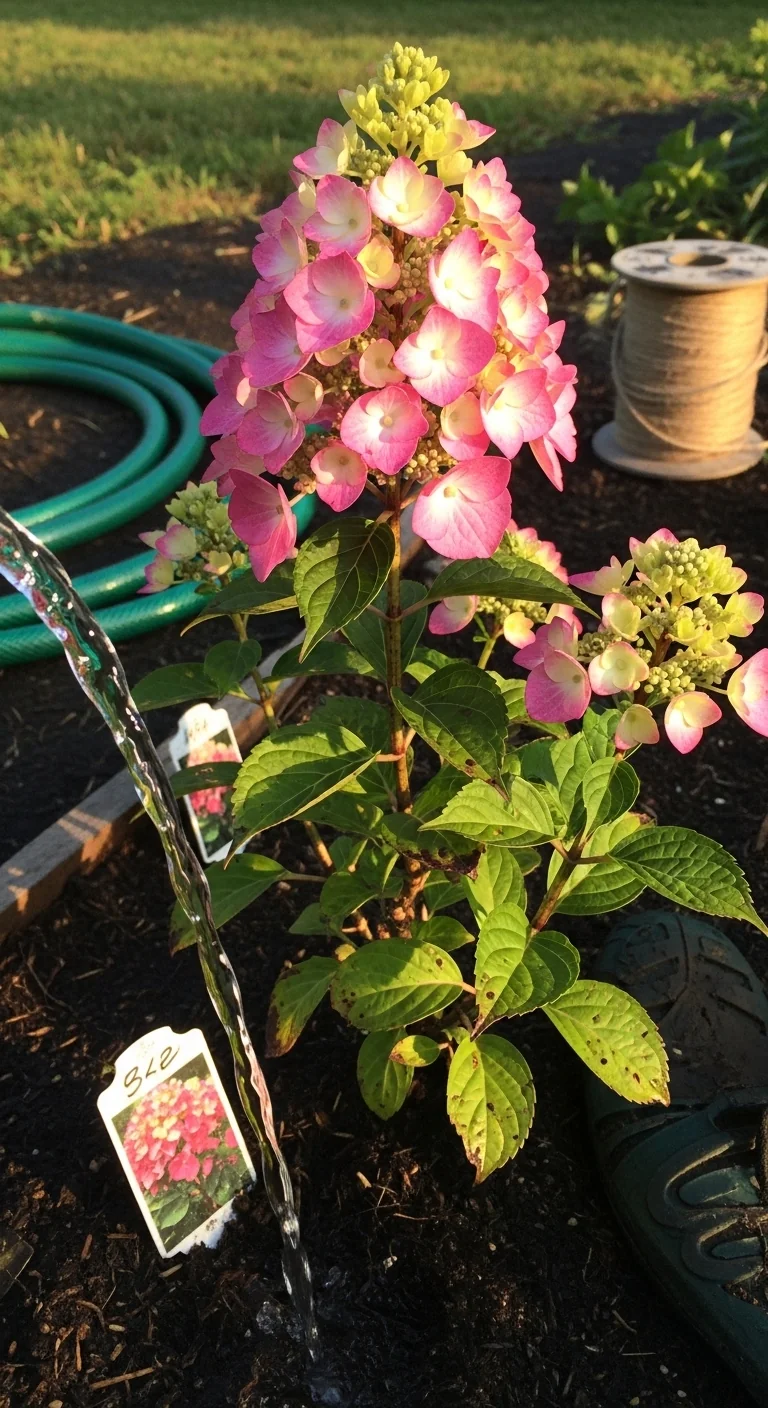
Best for: Branch 3
Blueprint. Lanarth White offers flat lacecap clusters with fertile central flowers surrounded by sterile white florets. Soil pH determines any pink tint on the sterile florets. Morning sun and afternoon shade prevent wilting. Prune immediately after the main flush to shape. It performs well in coastal or exposed sites with good drainage.
Starter Stack (What to Choose First)
For Branch 1 (partial to full shade)
Start with Annabelle Smooth Hydrangea and Climbing Hydrangea. Annabelle delivers fast white mounds while Climbing Hydrangea adds vertical structure on walls or fences. Synergy creates layered shade coverage with complementary bloom forms. Cost range: 25-45 dollars per plant. Planting time: 15-30 minutes each.
For Branch 2 (full sun or hot summers)
Start with Limelight Panicle Hydrangea and Quick Fire Panicle Hydrangea. Limelight provides late-season color shift while Quick Fire extends the bloom window by weeks. Synergy gives continuous cone-shaped interest from early to late summer. Cost range: 25-40 dollars per plant. Planting time: 10-20 minutes each.
For Branch 3 (color-changing priority)
Start with Endless Summer Bigleaf Hydrangea and Lanarth White Lacecap Bigleaf. Endless Summer offers repeat mophead blooms while Lanarth White adds delicate lacecap form. Synergy lets you test pH adjustments across two flower styles in the same bed. Cost range: 30-50 dollars per plant. Planting time: 15-25 minutes each.
When This Won’t Work
Hydrangeas fail when soil stays saturated longer than 48 hours after rain or irrigation. Heavy clay without amendment leads to root decline across all types. The alternative action is to install raised beds or amend with 30 percent coarse sand and organic matter before planting.
They also struggle when winter low temperatures drop below the type’s hardiness threshold without snow cover or mulch. Tender bigleaf selections may lose flower buds. Switch to panicle or smooth types rated for colder zones and apply 3 inches of mulch after the ground freezes.
See our flower bed design guide for drainage solutions that prevent these failures.
Choosing the Right Option for Your Situation
Budget threshold
If your per-plant spend stays under 35 dollars, select Annabelle, Incrediball, or Limelight. These deliver high visual impact without premium pricing. Higher budgets open Endless Summer or Snow Queen for specialized traits.
Time threshold
If annual maintenance must stay under 30 minutes per plant, choose panicle types (Limelight, Quick Fire, Pinky Winky) or Climbing Hydrangea. They require only one winter prune and no pH checks.
Technical constraint: soil pH adjustment
If you cannot or will not amend soil pH, avoid bigleaf types. Panicle, smooth, and oakleaf types ignore pH entirely and maintain consistent flower tones.
Yes/No checklist
Does your site match one decision grid branch exactly?
Can you provide consistent moisture the first season?
Will you prune at the type-specific window?
If yes to all three, proceed with the matching items.
Expert Q&A
Why do some bigleaf hydrangeas rebloom while others flower once?
Remontant cultivars like Endless Summer set buds on both old wood and new growth produced after the first flush. Traditional bigleaf types bloom only on old wood formed the previous season. Pruning timing and summer moisture directly affect whether new buds form for a second round.
How does pruning timing differ across hydrangea types?
Smooth and panicle types bloom on new wood, so hard pruning in late winter maximizes flowers. Bigleaf and oakleaf types primarily bloom on old wood, so prune right after the main flush ends. Climbing hydrangea needs only light shaping in late winter.
What role does aluminum play in flower color for bigleaf types?
Aluminum ions in acidic soil (pH below 6.0) enter roots and bind to pigments in sepals, producing blue tones. In alkaline soil aluminum becomes unavailable, so flowers default to pink. White varieties lack the pigment pathway and stay white regardless of soil chemistry.
Which hydrangea types work best for cut-flower arrangements?
Panicle types hold color and shape longest in vases when cut at the cone stage before full expansion. Bigleaf mopheads last well if stems are seared in hot water immediately after cutting. Change vase water daily and recut stems every two days for maximum display life.
What makes oakleaf hydrangeas stand out for four-season interest?
Oakleaf hydrangeas combine summer white cones, bronze-red fall foliage, cinnamon-colored exfoliating bark in winter, and early spring leaf emergence. This sequence provides structure and color when most perennials are dormant or finished blooming.
Conclusion
Next step: measure your site today and order two starter plants from the matching branch. See our cottage garden flowers guide for full-bed integration ideas.