
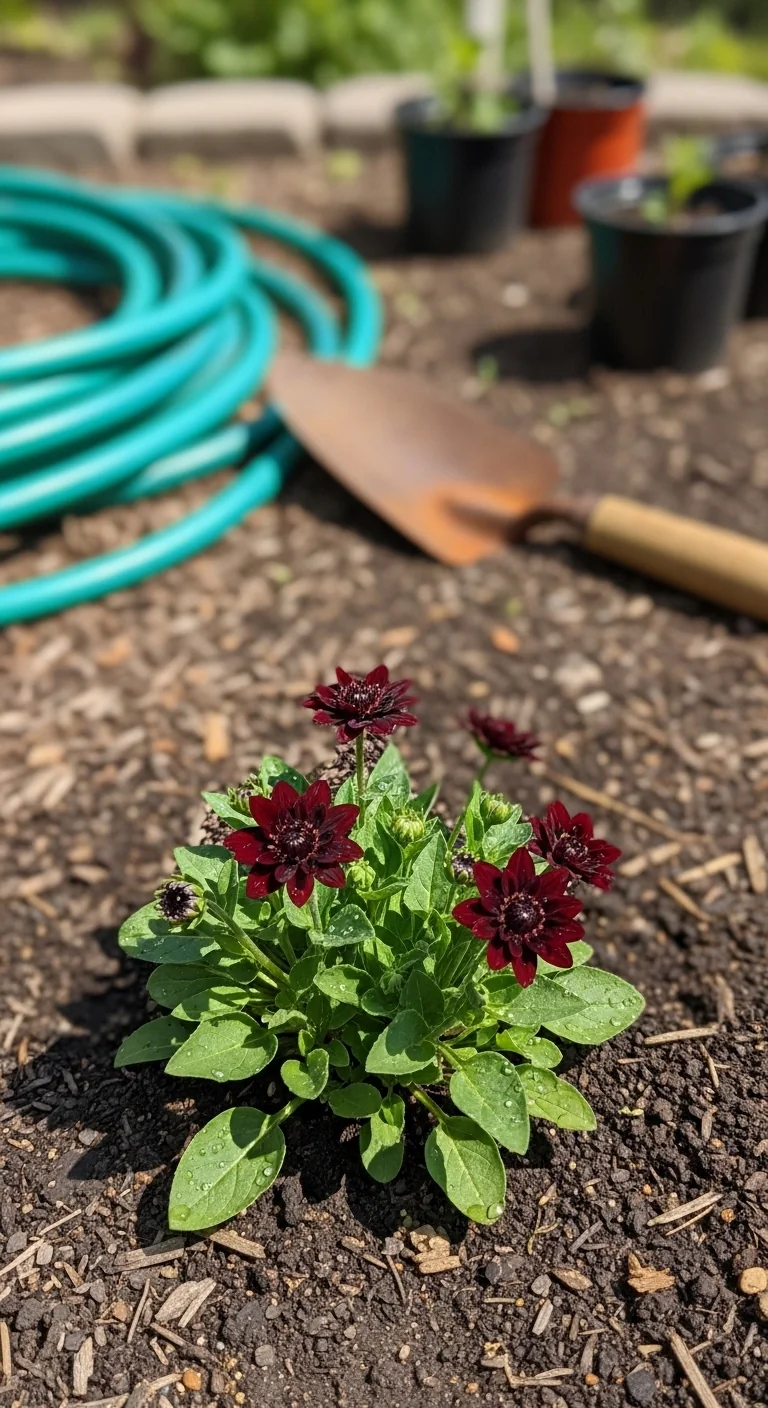
Black flowers deliver their deepest saturation only when the variety matches your garden’s daily light hours and soil drainage instead of relying on variety names alone.
This guide covers 10 reliable performers across bulbs, annuals, perennials and tubers suited to ornamental flower gardening in the US, UK and Canada. It excludes tropical exotics that demand greenhouse conditions or constant humidity control.
You will gain clear rules to select the right option for your site, avoid pigment fade, and integrate them into borders, containers or night viewing areas.
Align your conditions to one Decision Grid branch, pick the matching item, and achieve consistent near-black blooms without repeated trial plantings.
The Yield Grid Decision Grid
Branch 1: Full-sun gardens with at least 6 hours of direct sunlight daily and well-drained soil (pH 6.0-7.0). Pigment depth peaks here because high light activates full anthocyanin expression.
Recommended: Items 1, 3, 4, 10 below. For night-time drama pair these with ideas from our moon garden guide.
Branch 2: Partial-shade borders receiving 4 to 6 hours of direct sun with good air circulation. Lower light prevents scorching while still allowing dark tones to register.
Recommended: Items 5, 7, 9 below.
Branch 3: Container or raised-bed setups where drainage can be controlled to avoid waterlogging. These conditions suit varieties sensitive to root rot yet needing steady moisture.
Recommended: Items 2, 6, 8 below.
Quick Comparison Table
| Option | Key mechanism | Best for | Decision Grid Branch | Effort Score |
|---|---|---|---|---|
| Queen of Night Tulip | Anthocyanin concentration that absorbs light across spectrum | Spring borders and cutting gardens | Branch 1 | 2 |
| Black Velvet Petunia | Velvety petal texture that holds dark hue through heat | Containers and edging | Branch 3 | 4 |
| Chat Noir Dahlia | Tuber-stored energy for repeated deep blooms | Midsummer to fall displays | Branch 1 | 3 |
| Black Knight Scabiosa | Prolonged bloom cycle from continuous deadheading | Pollinator and cut-flower beds | Branch 1 | 3 |
| Chocolate Cosmos | Fragrance compounds paired with dark maroon pigment | Evening scent gardens | Branch 2 | 2 |
| Black Hollyhock | Biennial growth habit that self-seeds in place | Back-of-border drama | Branch 3 | 2 |
| Black Delight Viola | Early-season cold tolerance for extended color | Front-yard accents | Branch 2 | 4 |
| Black Star Calla Lily | Glossy spathe that reflects minimal light | Patio containers | Branch 3 | 3 |
| Black Barlow Columbine | Spurred petal structure for shade adaptation | Woodland edges | Branch 2 | 1 |
| Blackwater Iris | Rhizome vigor in neutral soil | Late-spring focal points | Branch 1 | 1 |
1. Queen of Night Tulip
Best for: Branch 1
Blueprint
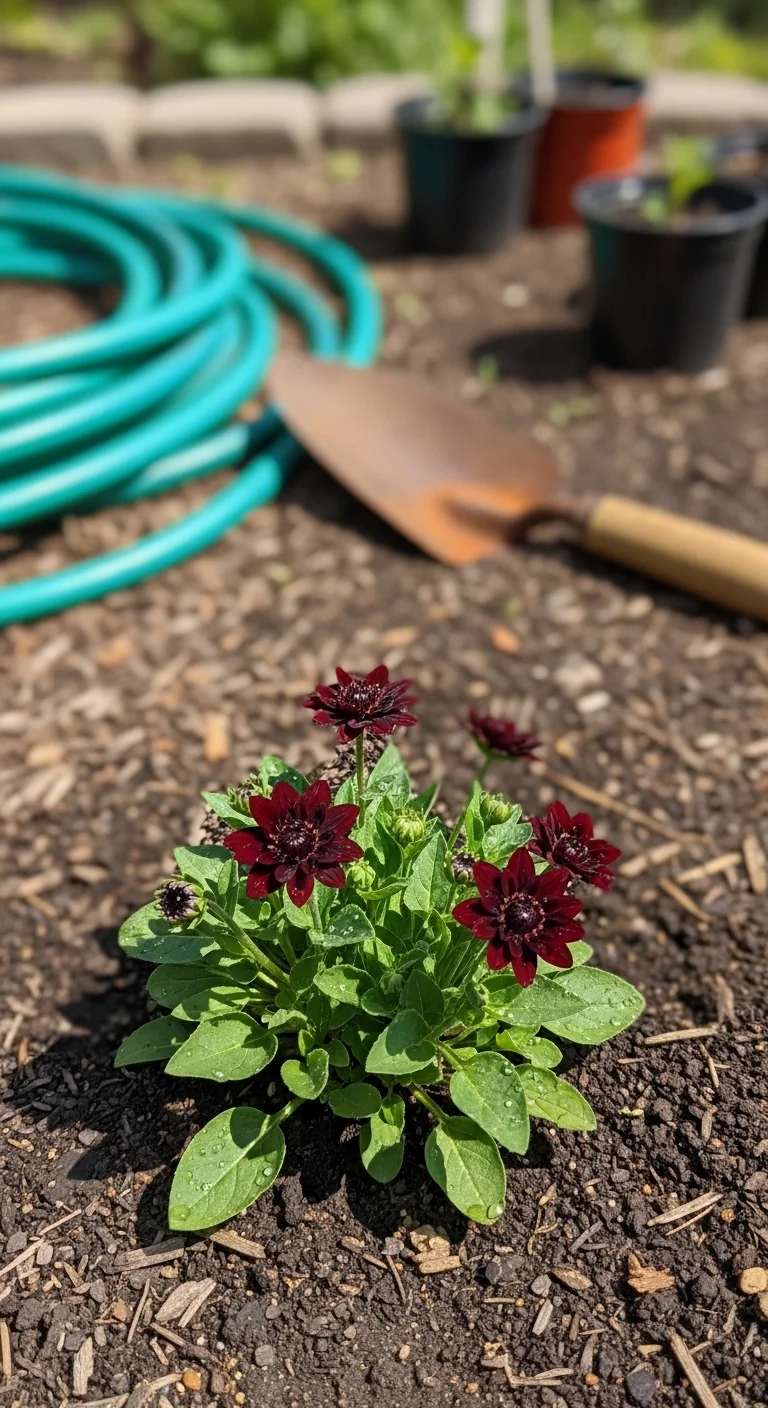
Queen of Night Tulip produces single late blooms that register as near-black under full sun. Use it in spring borders where 6 or more hours of direct light deepen the anthocyanin to its darkest tone.
Plant bulbs 18 cm deep in well-drained loam in autumn. Space 10 cm apart for full effect. Water once after planting then rely on natural rainfall until foliage emerges.
Common mistake: planting in heavy clay without amendment. The bulbs rot within weeks if drainage stays poor. Test soil by squeezing a handful: it should crumble, not form a ball.
See full-sun-flowers for companion choices that extend the dark season.
2. Black Velvet Petunia
Best for: Branch 3
Use versus skip
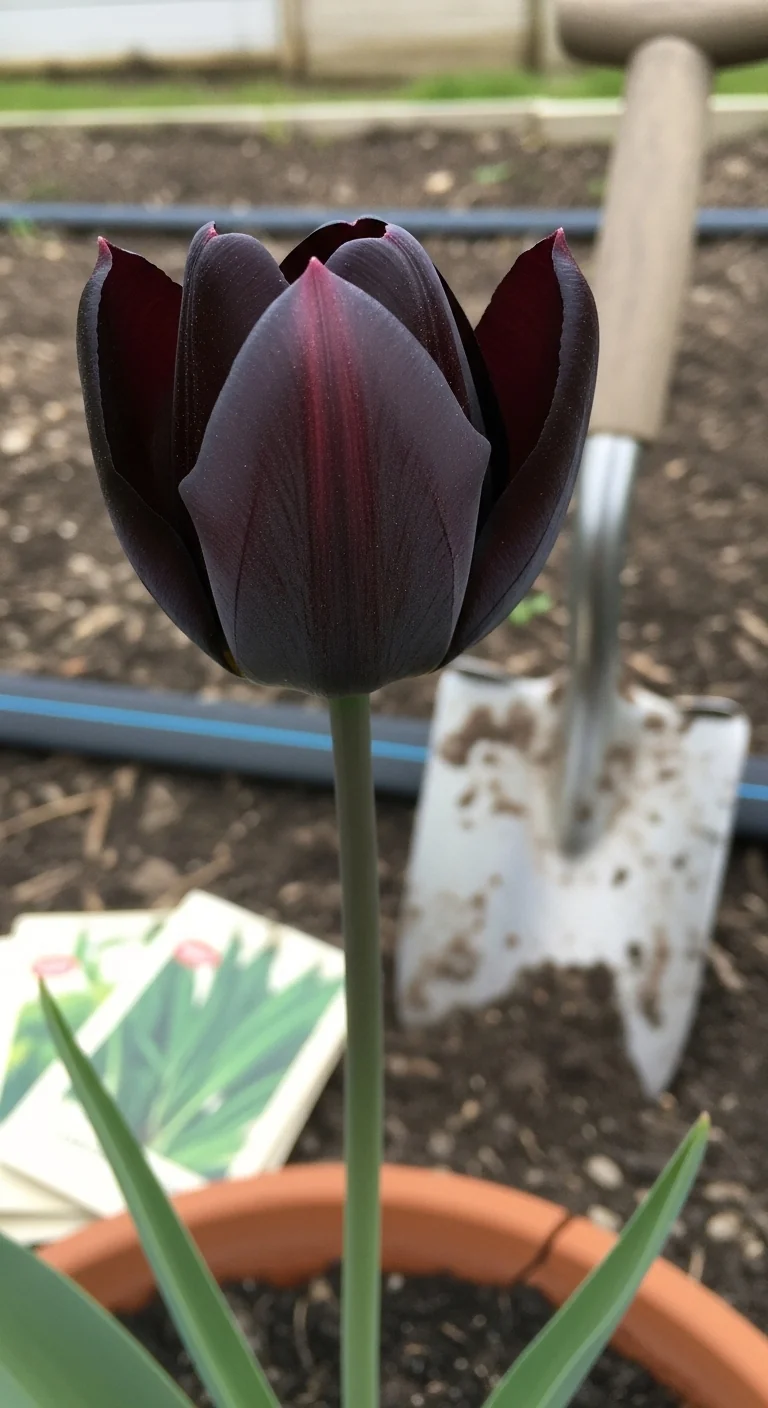
Use Black Velvet Petunia in containers or raised beds where you control drainage and can deadhead daily. It holds its velvet-black tone through summer heat when given full morning sun.
Skip it in open ground if summer rains keep soil soggy: stems collapse and blooms turn muddy purple. Edge case: in zones with nights above 18 C it performs best with morning-only watering.
3. Chat Noir Dahlia
Best for: Branch 1
Threshold rule
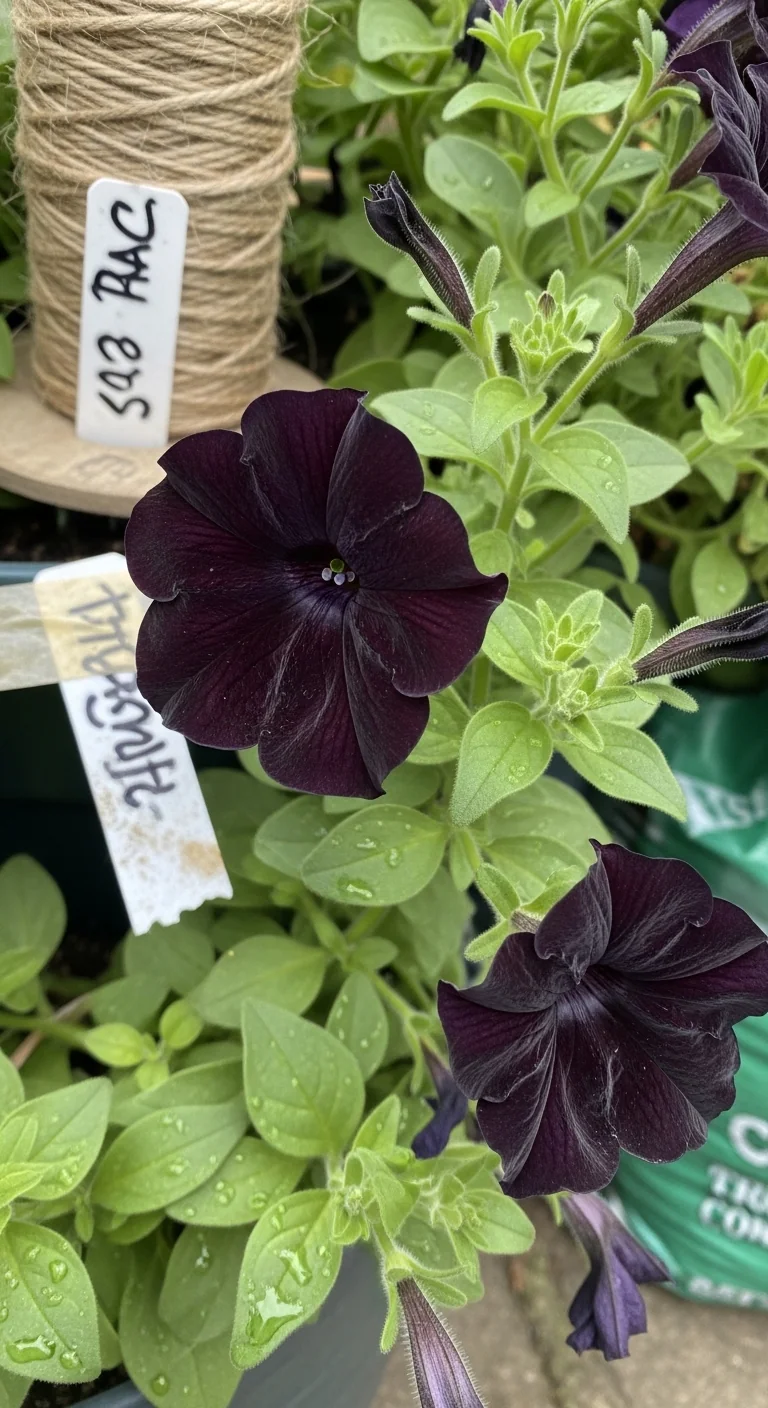
Chat Noir Dahlia delivers dinner-plate size blooms only when daily light exceeds 6 hours and soil temperature reaches 15 C at planting. Below that threshold the color stays maroon rather than black.
Start tubers indoors 4 weeks before last frost then transplant after soil warms. Lift and store tubers after first hard frost in zones below 8. Adjust spacing to 60 cm for air flow that prevents mildew.
4. Black Knight Scabiosa
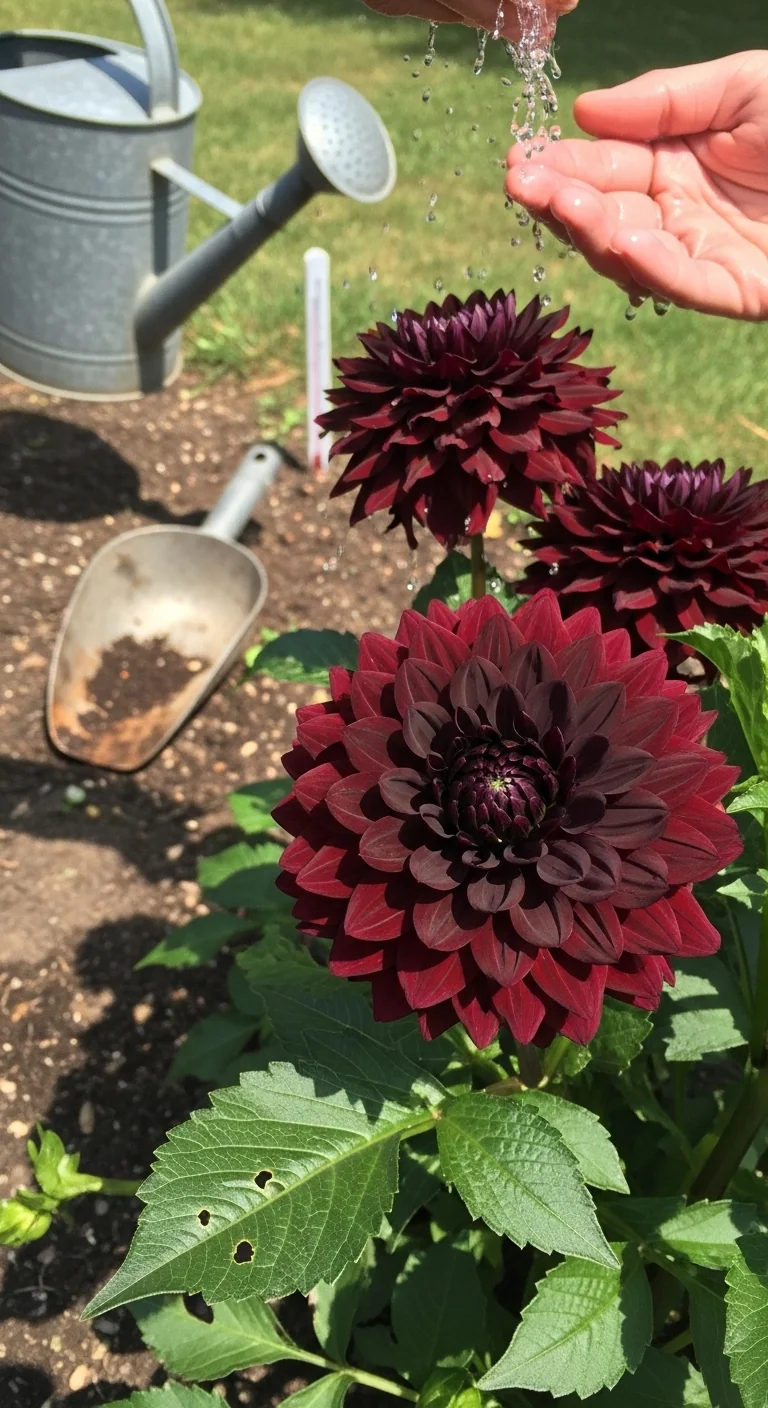
Best for: Branch 1
10-minute workflow
Black Knight Scabiosa offers pincushion blooms that attract pollinators and last 7 to 10 days in vases. Plant seeds or starts in full sun after soil reaches 18 C.
Step 1: loosen top 15 cm of soil and mix in compost. Step 2: space plants 30 cm apart. Step 3: water deeply once then allow surface to dry between waterings. Upgrade option: pinch tips at 15 cm height for bushier form and more stems.
Deadhead spent flowers every 7 days to keep production steady.
Explore perennial-flowers for longer-term companions.
5. Chocolate Cosmos
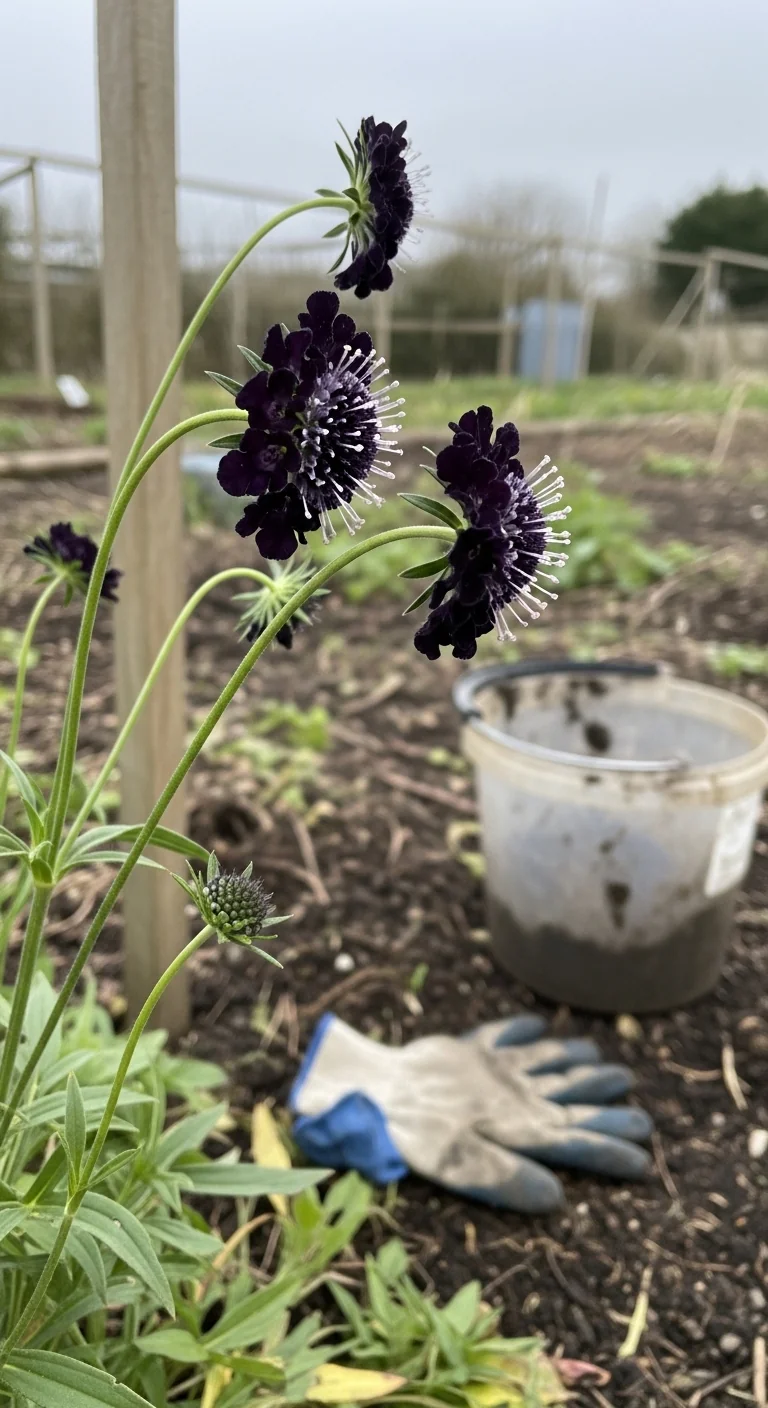
Best for: Branch 2
Blueprint
Chocolate Cosmos carries dark maroon petals with true chocolate scent released in warm afternoon air. Site it where 4 to 6 hours of sun reach the foliage without baking the roots.
Plant tubers 5 cm deep in spring after frost risk ends. Mulch lightly to retain even moisture. In zones 7 and warmer leave in ground; elsewhere lift after foliage dies back.
Mistake to avoid: full afternoon sun that scorches petals and eliminates fragrance within days.
See shade-flowers for pairing ideas in dappled spots.
6. Black Hollyhock
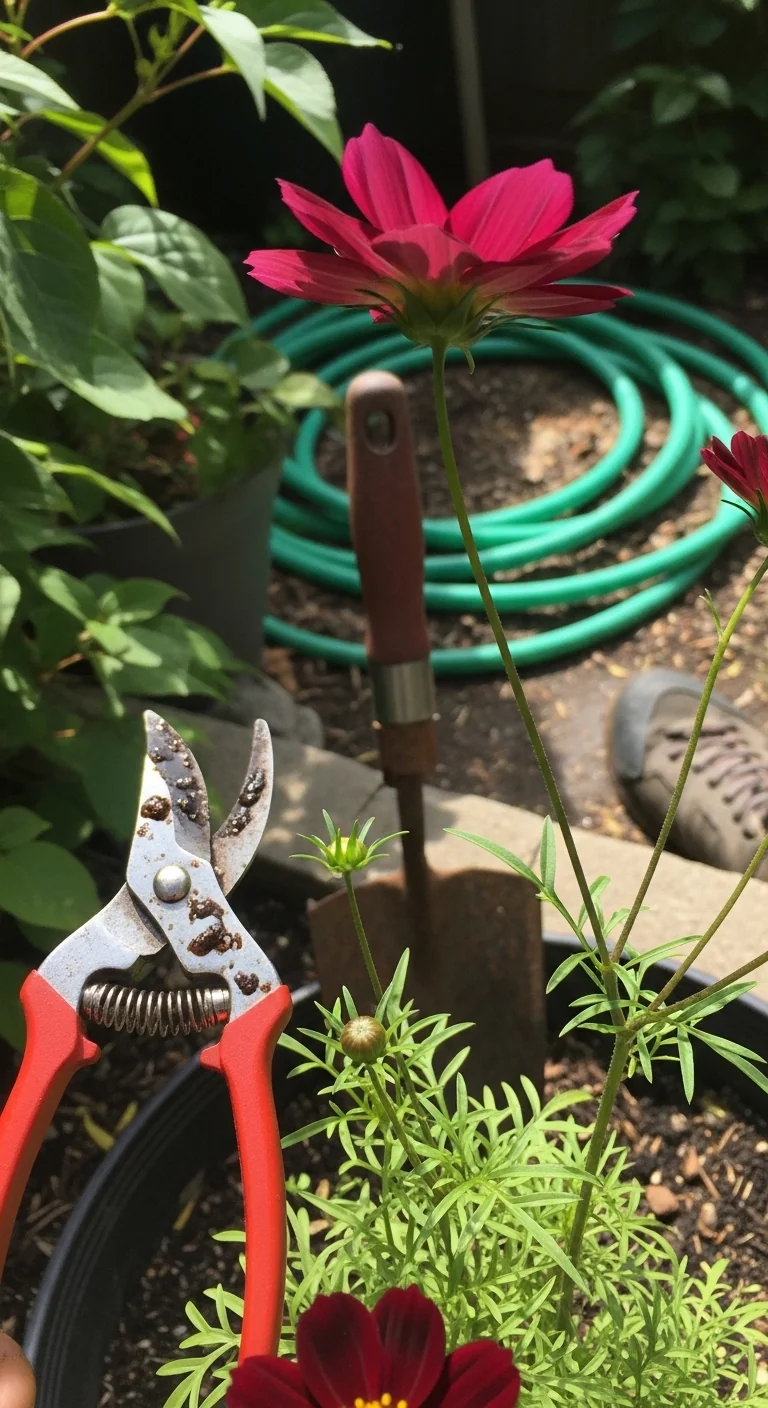
Best for: Branch 3
Use versus skip
Use Black Hollyhock in raised beds or large containers where you manage rust by removing lower leaves early. Its tall spikes create vertical drama behind lower plantings.
Skip it in open soil if rust spores are already present in your area: the disease spreads upward and ruins the dark display by midsummer. Edge case: self-seeded seedlings often appear darker than the parent in nutrient-rich spots.
7. Black Delight Viola
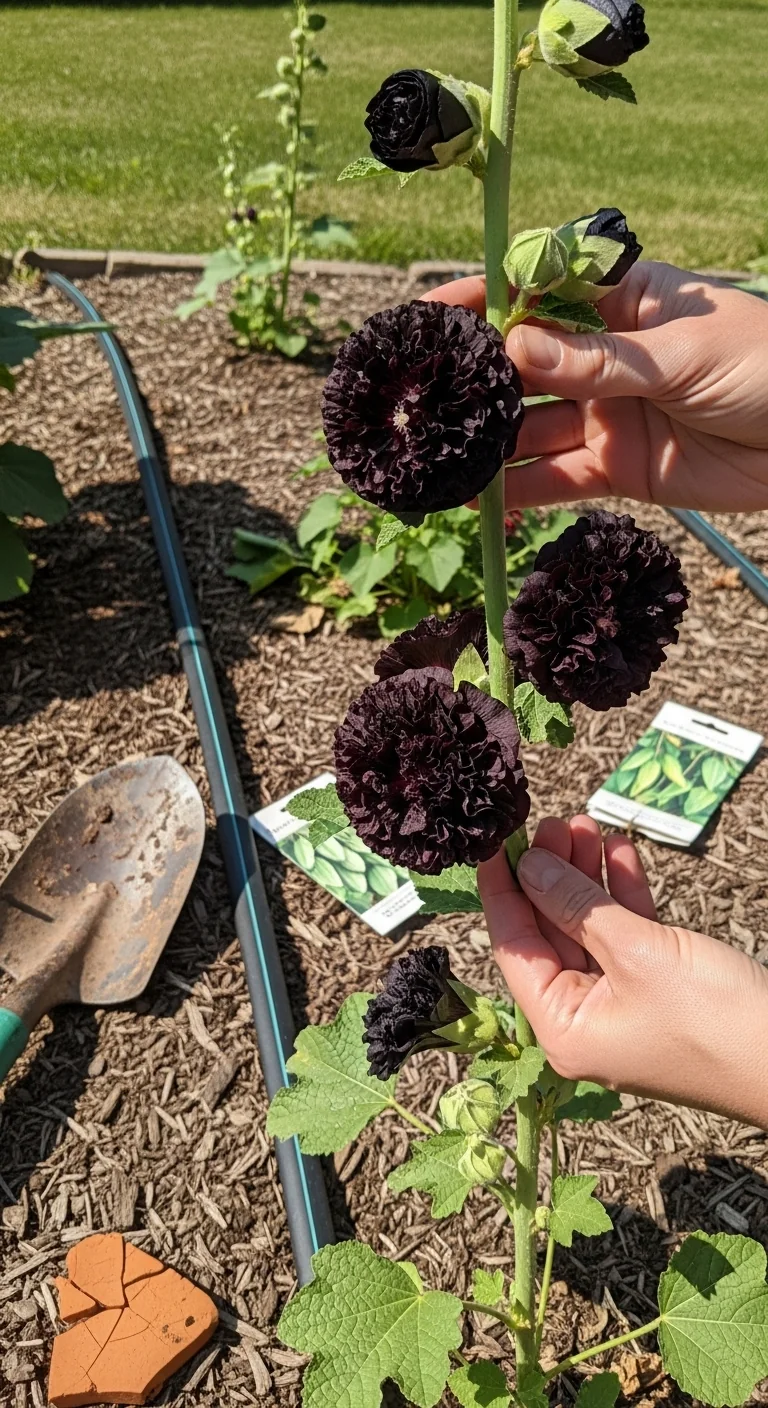
Best for: Branch 2
Threshold rule
Black Delight Viola maintains velvet-black petals when night temperatures stay below 15 C and light hits 4 to 6 hours daily. Above 18 C nights the color fades to deep purple by week 3.
Sow seeds indoors 8 weeks before last frost or buy starts for immediate color. Space 15 cm apart and shear back after first flush to trigger rebloom into autumn.
See cut-flower-garden for harvest timing that keeps plants compact.
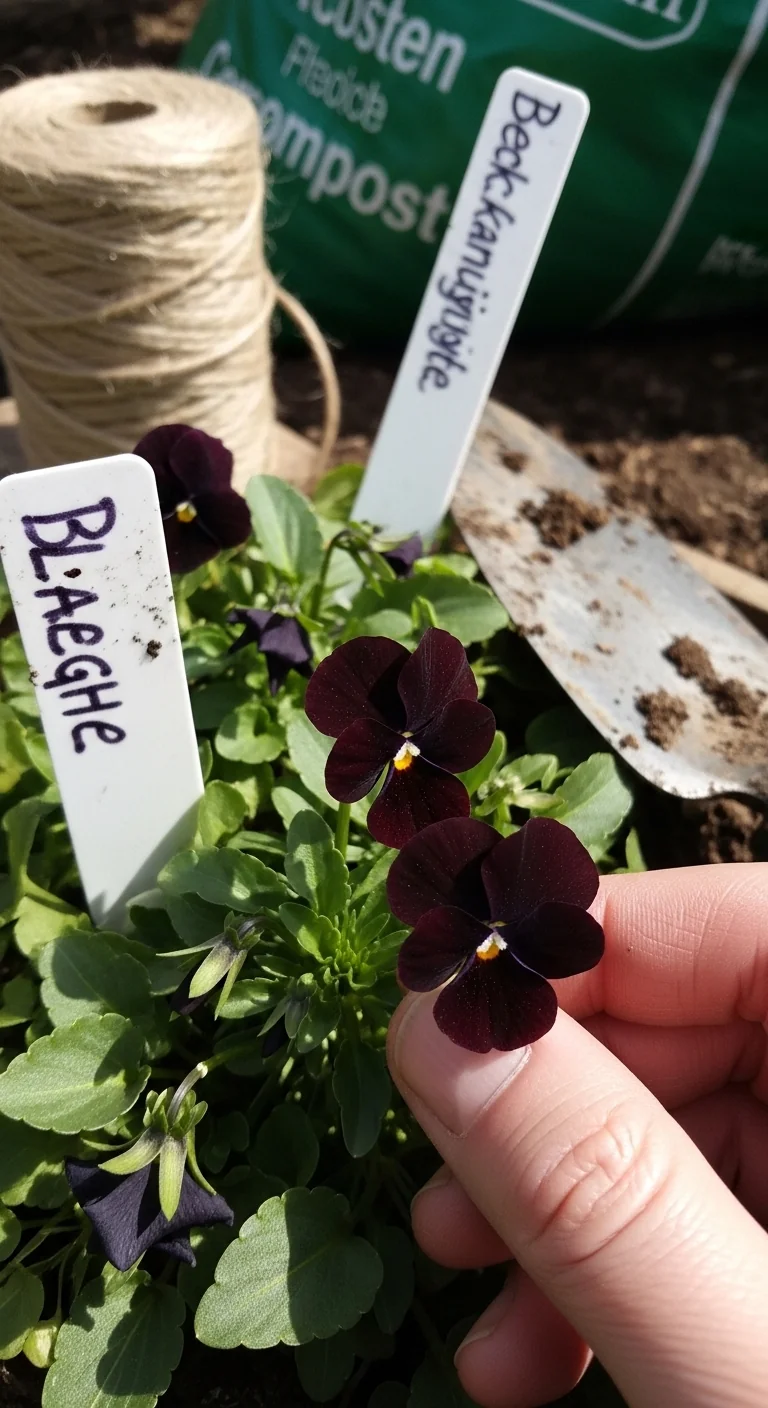
8. Black Star Calla Lily
Best for: Branch 3
10-minute workflow
Black Star Calla Lily features glossy black spathes ideal for patio pots. Choose containers at least 20 cm deep.
Step 1: fill with well-draining mix. Step 2: plant rhizomes 8 cm deep. Step 3: water until it drains freely then place in 4 to 6 hours of morning sun. Upgrade option: feed monthly with balanced liquid fertilizer diluted to half strength after first bloom appears.
Overwinter rhizomes indoors above 10 C in zones below 8.
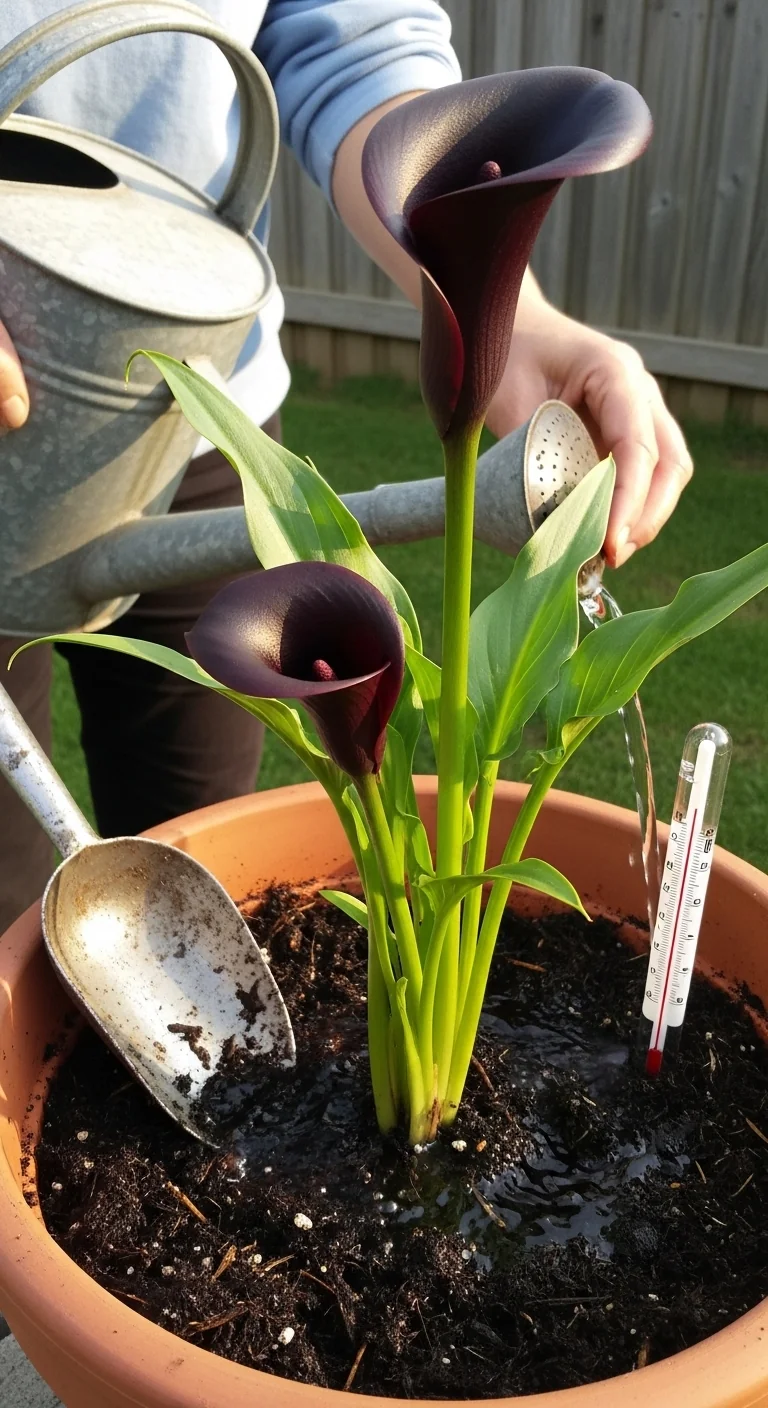
9. Black Barlow Columbine
Best for: Branch 2
Blueprint
Black Barlow Columbine produces double spurred blooms in early summer that tolerate dappled shade and return reliably as a short-lived perennial.
Sow seed in autumn or spring directly where it will grow. It self-seeds gently in neutral soil without becoming invasive. Keep soil evenly moist but never saturated during establishment.
Key constraint: avoid full sun that shortens bloom time to under 2 weeks.
See annual-flowers for fillers that extend interest after columbine finishes.
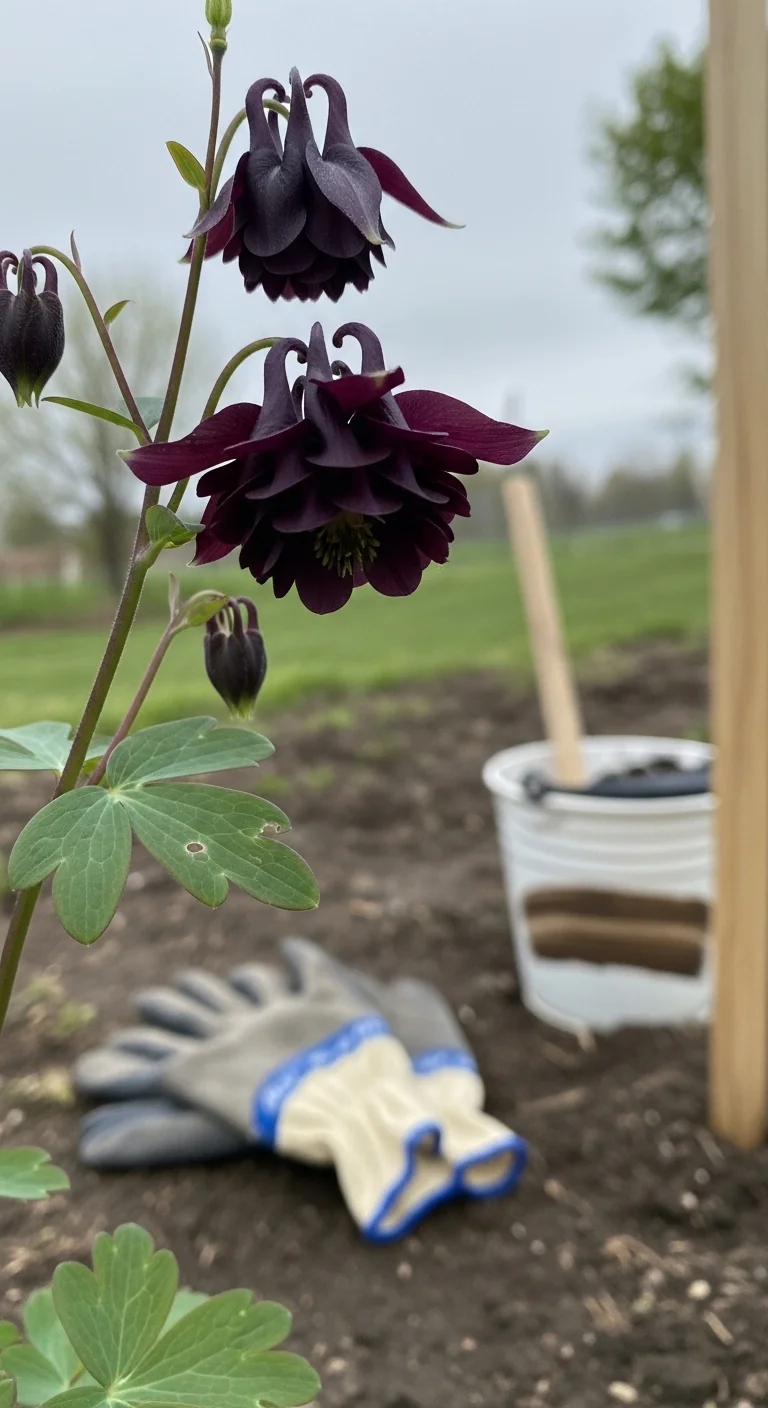
10. Blackwater Iris
Best for: Branch 1
Use versus skip
Use Blackwater Iris in full-sun beds where rhizomes sit at soil surface and receive 6 or more hours of light. The near-black standards and falls create strong vertical accents in late spring.
Skip it in wet clay soils: rhizomes rot within one season. Edge case: divide clumps every 3 to 4 years in early summer to maintain vigor and darkest color.
See drought-tolerant-flowers for companions that share the same dry-summer tolerance.
Starter Stack (What to Choose First)
Branch 1: Full-sun beds
Start with Queen of Night Tulip (item 1) and Blackwater Iris (item 10). The tulip finishes by early summer exactly when iris spikes open, creating seamless dark vertical interest. Planting time: 30 to 45 minutes for 12 bulbs and 3 rhizomes.
Branch 2: Partial-shade borders
Start with Chocolate Cosmos (item 5) and Black Barlow Columbine (item 9). Cosmos scent pairs with columbine spurs for evening appeal while both tolerate lower light. Planting time: 20 to 30 minutes for 5 tubers and 6 seedlings.
Branch 3: Container setups
Start with Black Velvet Petunia (item 2) and Black Star Calla Lily (item 8). Petunia spills over edges while calla provides upright structure in the same pot. Planting time: 15 to 25 minutes per 30 cm container.
When This Won’t Work
Black flowers lose their dramatic depth when daily direct sun drops below 4 hours: petals register as dull purple and stems stretch. The fix is to relocate to a sunnier site or shift to Branch 2 items that tolerate less light.
They also fail in poorly drained soil that stays wet for more than 48 hours after rain: roots rot and plants collapse before peak bloom. Switch to raised beds or containers filled with 50 percent grit mix and water only when the top 5 cm of soil feels dry.
See flower-bed-design for layouts that guarantee drainage in heavy soils.
Choosing the Right Option for Your Situation
Budget threshold
Under 20 dollars per season favors seeds or small starts such as Black Knight Scabiosa or Black Delight Viola. Above that range choose established bulbs or tubers like Queen of Night Tulip or Chat Noir Dahlia for faster results.
Time threshold
Less than 30 minutes total planting time points to low-effort perennials such as Blackwater Iris or Black Barlow Columbine. More than 1 hour available allows annuals or dahlias that need lifting and storage.
Technical constraint: soil pH
Test soil first. Values below 6.0 suit acid-loving choices like Chocolate Cosmos. Values above 7.0 require container growing for all listed items to prevent chlorosis that lightens dark tones.
Quick checklist
Yes if your site meets the branch light hours.
Yes if drainage test passes (soil crumbles after squeeze).
No if summer highs average above 27 C without shade cloth.
Yes if you can deadhead weekly for listed annuals.
Expert Q&A
Do black flowers attract more pollinators than lighter varieties?
Black Knight Scabiosa and Chocolate Cosmos draw equal numbers of bees and butterflies as their lighter cousins because nectar volume stays identical. The dark color simply makes them stand out against green foliage for visual foragers once they arrive.
Which black varieties work best for cut-flower arrangements that last over a week?
Chat Noir Dahlia and Black Star Calla Lily hold form longest when cut at first opening and placed in water with a drop of bleach. Change vase water every 48 hours to prevent bacterial stem rot.
Can black flowers be combined with silver foliage without losing contrast?
Yes. Pair any listed black variety with Artemisia or Lambs Ear. The silver reflects light and makes the dark blooms appear even deeper without competing for attention.
How do you overwinter black-flowering tubers and bulbs in zones 5 and 6?
Dig dahlia and calla tubers after foliage blackens, dry for 48 hours, then store in peat at 5 to 10 C. Leave tulip and iris bulbs in ground if soil drains freely; otherwise lift and replant in spring.
What is the earliest and latest bloom window possible with these black options?
Black Delight Viola starts in early spring while Chat Noir Dahlia finishes in late fall. Staggering one from each group gives continuous dark accents from April through October in most temperate gardens.
Conclusion
Black flowers succeed when light hours and drainage match the variety rather than when chosen by name alone. The number-one mistake is planting full-sun types in partial shade, which turns dramatic depth into ordinary purple.
Pick the item that fits your Decision Grid branch today and enjoy reliable dark drama all season. Next step: layer them into existing beds using our flower color combinations guide.