
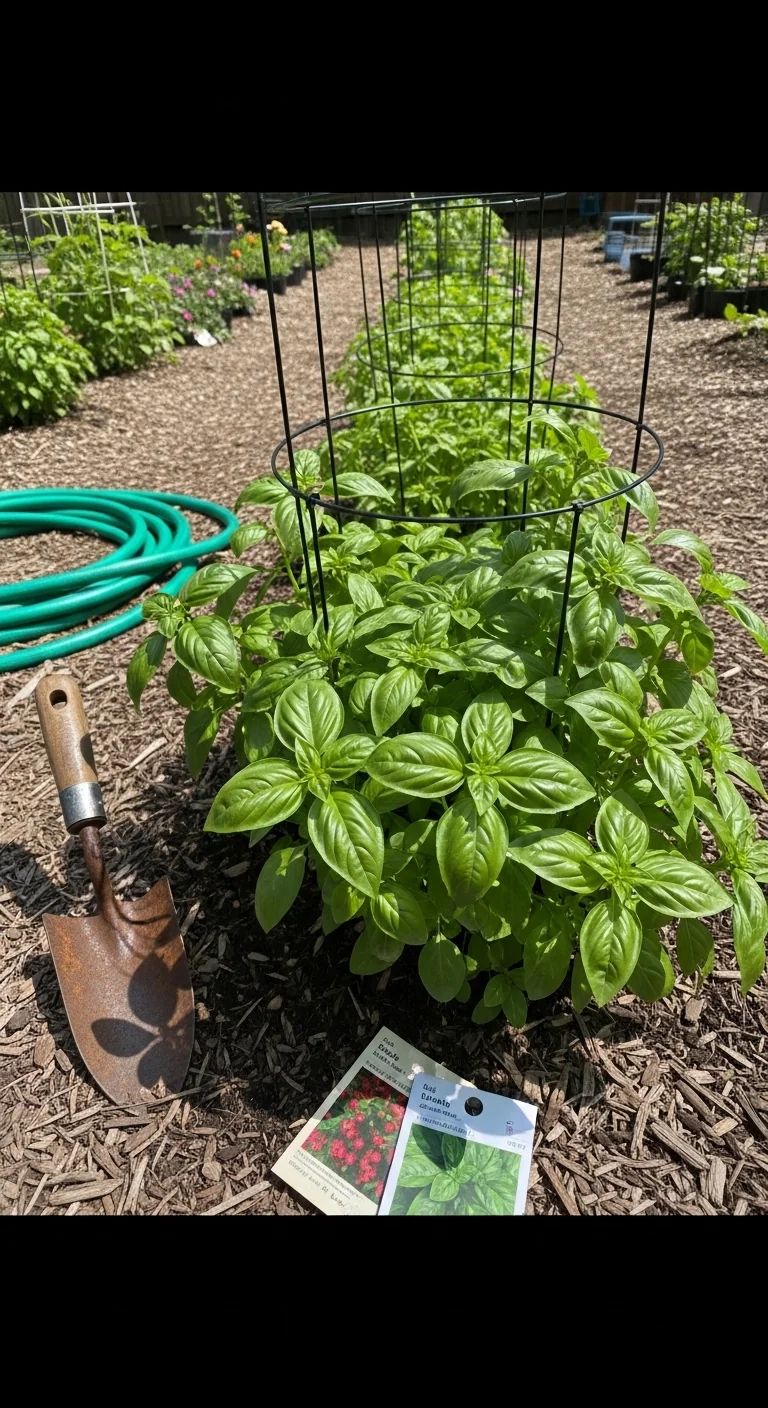
The basil growing tips that deliver consistent results come down to matching specific techniques to your space constraints, light levels, and climate conditions rather than applying a single checklist.
This guide covers starting methods, soil and watering rules, pruning, harvesting, and companion strategies suited to home edible gardening in the US, UK, Canada, and Australia. It excludes commercial production, hydroponic systems, and rare varieties that require specialized equipment.
You will walk away able to select the right approach for containers, raised beds, or indoors and implement measurable rules to keep plants productive through the season.
Identify your decision grid branch first, then apply the matched items to set up productive basil plants without repeated failures.
The Yield Grid Decision Grid
Branch 1 applies when your outdoor space receives at least 6 hours of direct sun daily and allows for 12 inch plant spacing in ground or raised beds.
Recommended: Items 1, 3, 7 below.
Branch 2 applies when you grow in containers or on a balcony with potential for 6 hours sun but limited soil volume.
Recommended: Items 2, 5, 8 below.
Branch 3 applies when your setup is indoor or receives less than 6 hours direct sun and relies on windowsills or supplemental lighting.
Recommended: Items 4, 6, 9 below.
For a full overview of beginner friendly layouts, see the herb gardening for beginners guide.
Quick Comparison Table
| Option | Key mechanism | Best for | Decision Grid Branch | Effort Score |
|---|---|---|---|---|
| 1. Prepare Soil Mix and Adjust pH Levels for Optimal Growth | Amends drainage and nutrient availability to pH 6.0 to 7.5 range | Preventing root issues in full sun beds | Branch 1 | 2 |
| 2. Select Basil Varieties Suited to Your Climate and Use | Matches leaf size and heat tolerance to local summer temperatures | Flavor and growth rate in variable zones | Branch 2 | 1 |
| 3. Time Planting to Avoid Cold Damage | Waits for soil temperature above 65 degrees F and last frost | Uniform germination outdoors | Branch 1 | 3 |
| 4. Ensure Proper Sunlight Exposure or Use Grow Lights | Delivers 6 to 8 hours equivalent light daily | Compact growth in low sun areas | Branch 3 | 4 |
| 5. Implement Consistent Watering Without Waterlogging | Checks top inch soil dryness before watering | Steady moisture in limited volume pots | Branch 2 | 3 |
| 6. Prune and Harvest Regularly to Encourage Bushiness | Pinches stems above leaf nodes to delay flowering | Continuous leaf production | Branch 3 | 2 |
| 7. Pair Basil with Companion Plants for Natural Pest Control | Uses nearby plants to deter aphids and beetles | Reduced intervention in garden beds | Branch 1 | 2 |
| 8. Choose Appropriate Containers and Drainage Systems | Selects pots at least 8 inches deep with holes | Root health in space limited areas | Branch 2 | 1 |
| 9. Monitor and Manage Common Basil Diseases Early | Inspects leaves weekly for mildew signs and improves airflow | Early correction in humid indoor conditions | Branch 3 | 4 |
1. Prepare Soil Mix and Adjust pH Levels for Optimal Growth
Best for: Branch 1
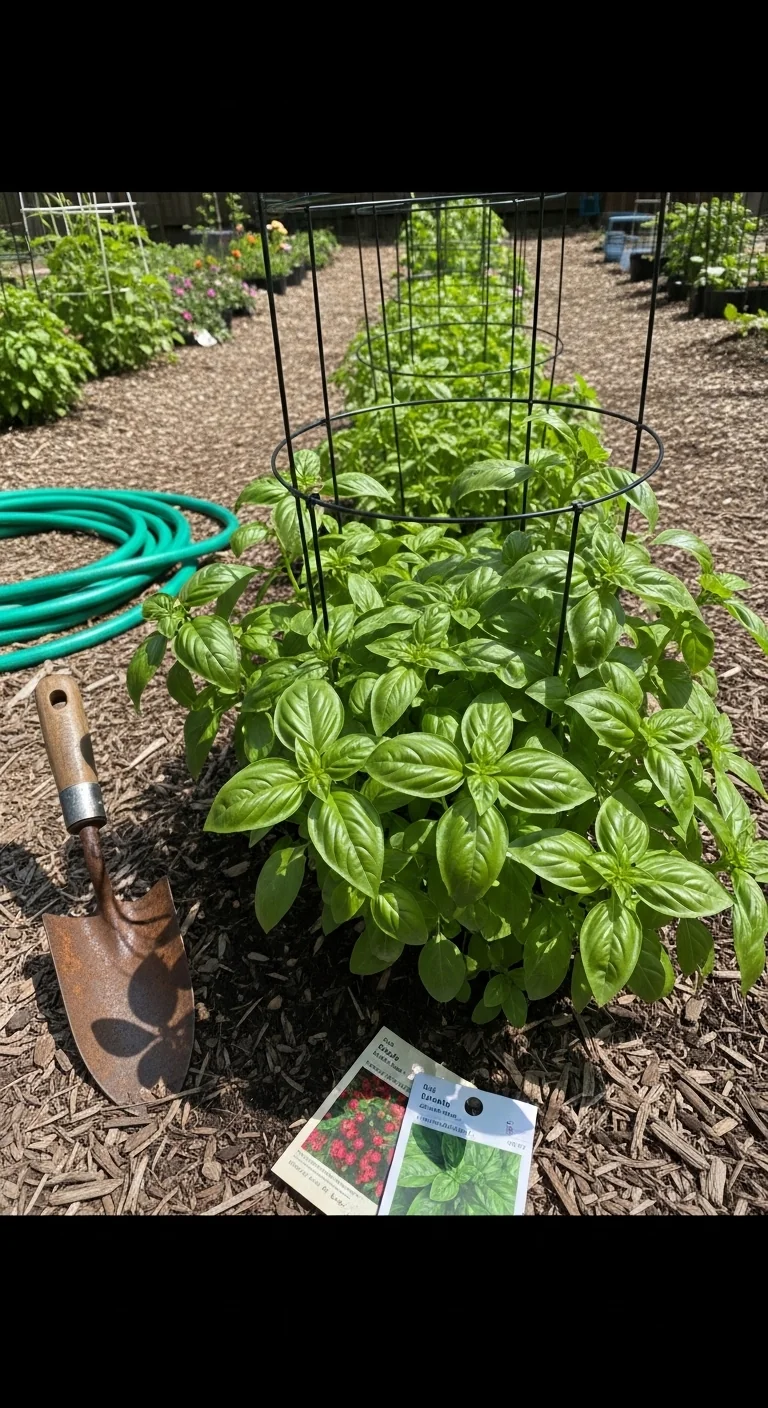
Soil mix selection sets the foundation for basil by providing drainage that prevents root rot while supplying nutrients for steady leaf production. It works best in outdoor ground or raised beds where you can amend native soil directly.
Steps begin with a soil test to confirm pH falls in the 6.0 to 7.5 range. Mix in compost at a 1 to 3 ratio with garden soil or potting mix, then rake lightly to 6 inches deep. Water the bed thoroughly and wait 24 hours before sowing or transplanting.
A common mistake occurs when gardeners skip the pH check and use unamended heavy clay, which stays soggy after rain and leads to yellow lower leaves within 10 days. See the soil mix for herbs for exact amendment ratios suited to different soil types. (178 words)
2. Select Basil Varieties Suited to Your Climate and Use
Best for: Branch 2
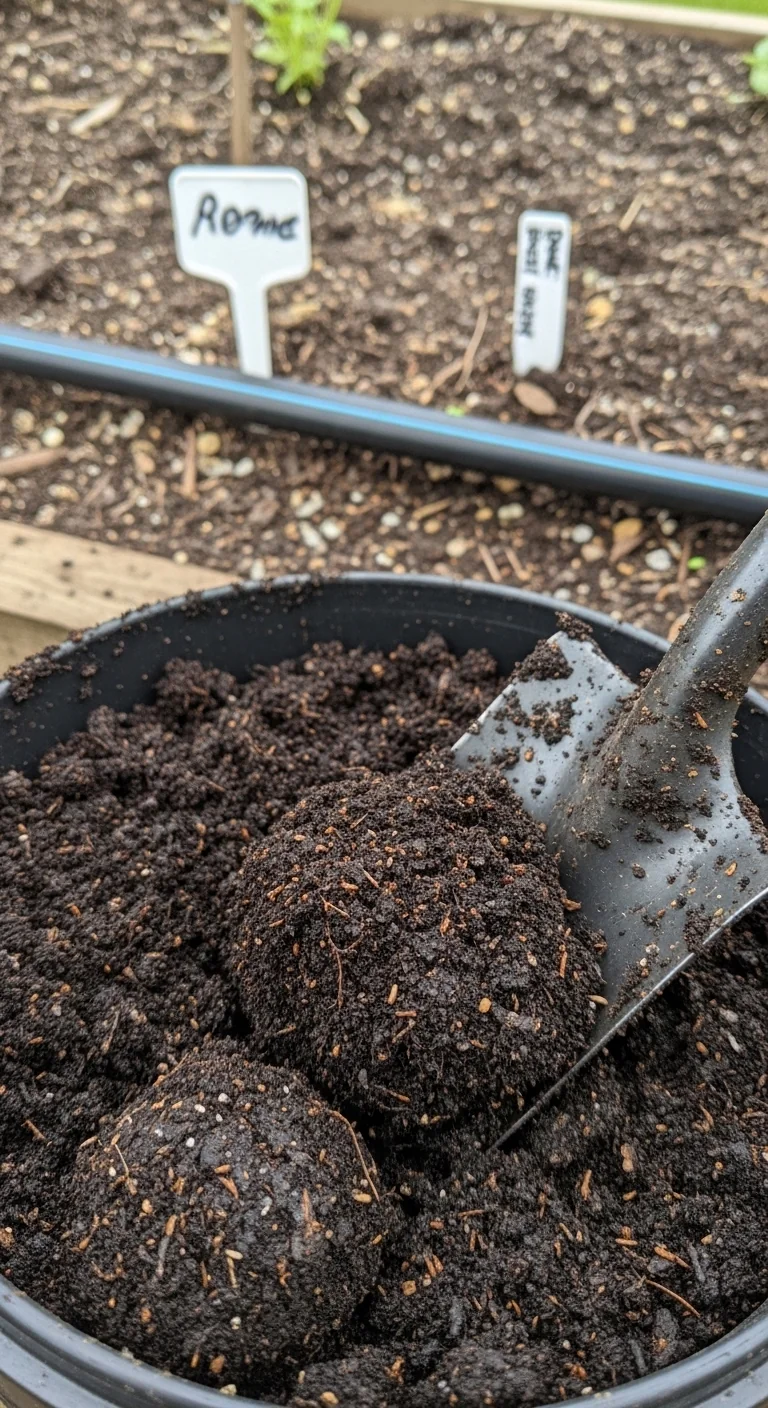
Variety choice matters because sweet basil bolts quickly in hot summers above 85 degrees F while Thai or lemon types hold flavor longer. Skip standard sweet basil if your area has long heat waves and use heat tolerant options instead. This keeps plants leafy rather than flowering early in containers. (68 words)
3. Time Planting to Avoid Cold Damage
Best for: Branch 1
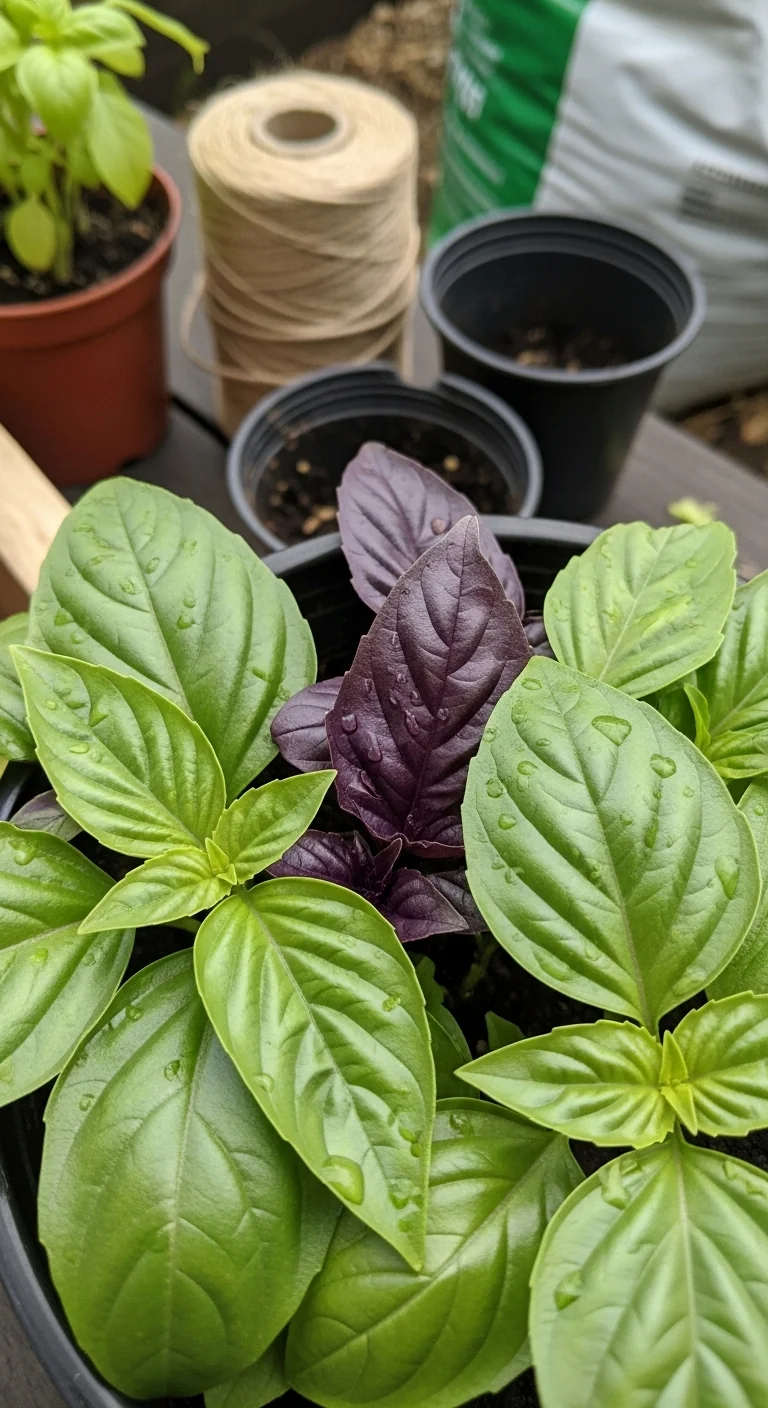
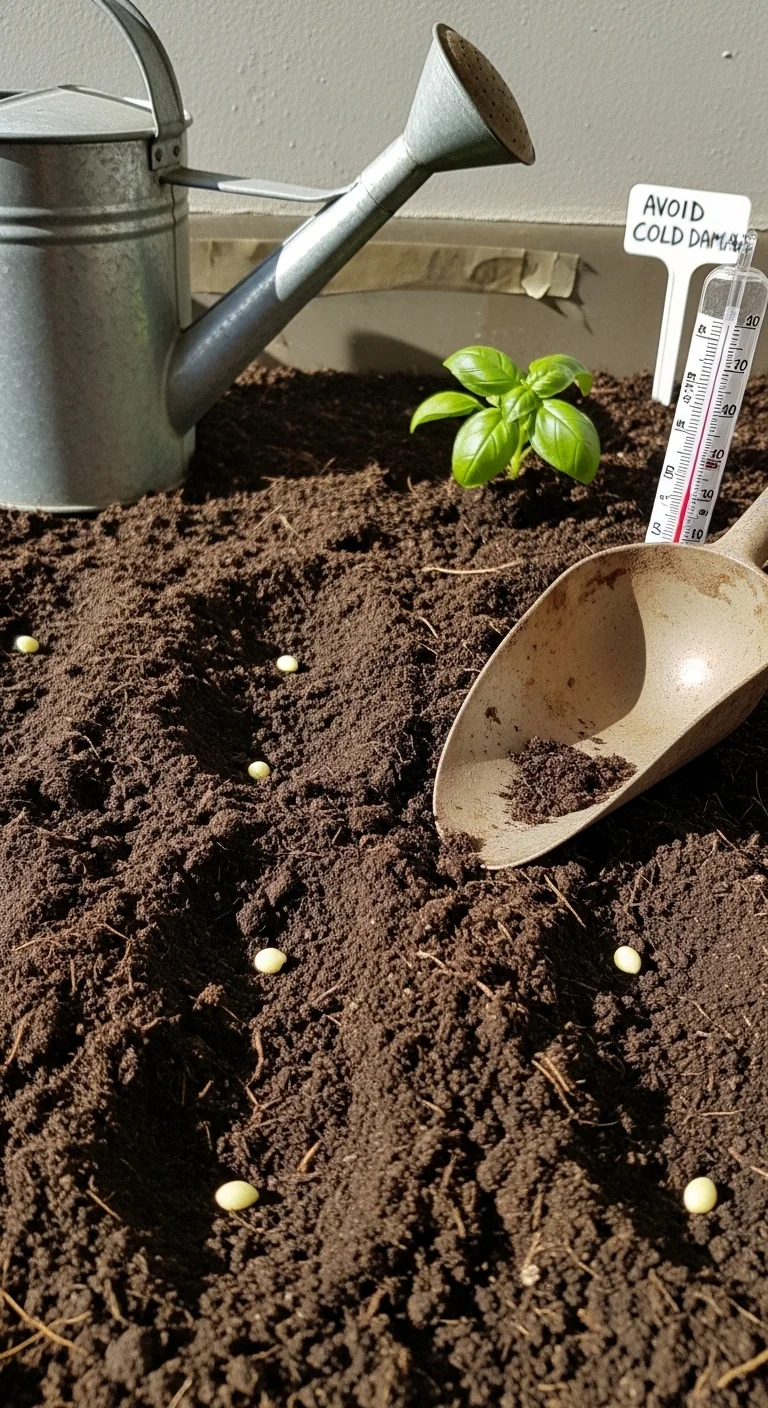
Planting timing prevents stunted growth by waiting until soil temperature reaches at least 65 degrees F at 2 inch depth and all risk of frost passes. In most temperate zones this window opens mid to late spring. Sow seeds 0.25 inch deep or transplant seedlings after hardening off for 7 days. Direct sowing too early below 50 degrees F night temperatures causes seeds to rot before emergence. (112 words)
4. Ensure Proper Sunlight Exposure or Use Grow Lights
Best for: Branch 3
Light exposure drives compact growth and strong flavor, so basil needs the equivalent of 6 to 8 hours full sun daily. Outdoors this means an unobstructed south facing spot. Indoors place plants under grow lights set 12 to 18 inches above foliage and run them 14 to 16 hours per day on a timer. Without sufficient light seedlings stretch and leaves lose aroma within 14 days. Upgrade option includes full spectrum LED panels rated for 20 watts per square foot of growing area. See the grow lights for herbs for setup details. (162 words)
5. Implement Consistent Watering Without Waterlogging
Best for: Branch 2
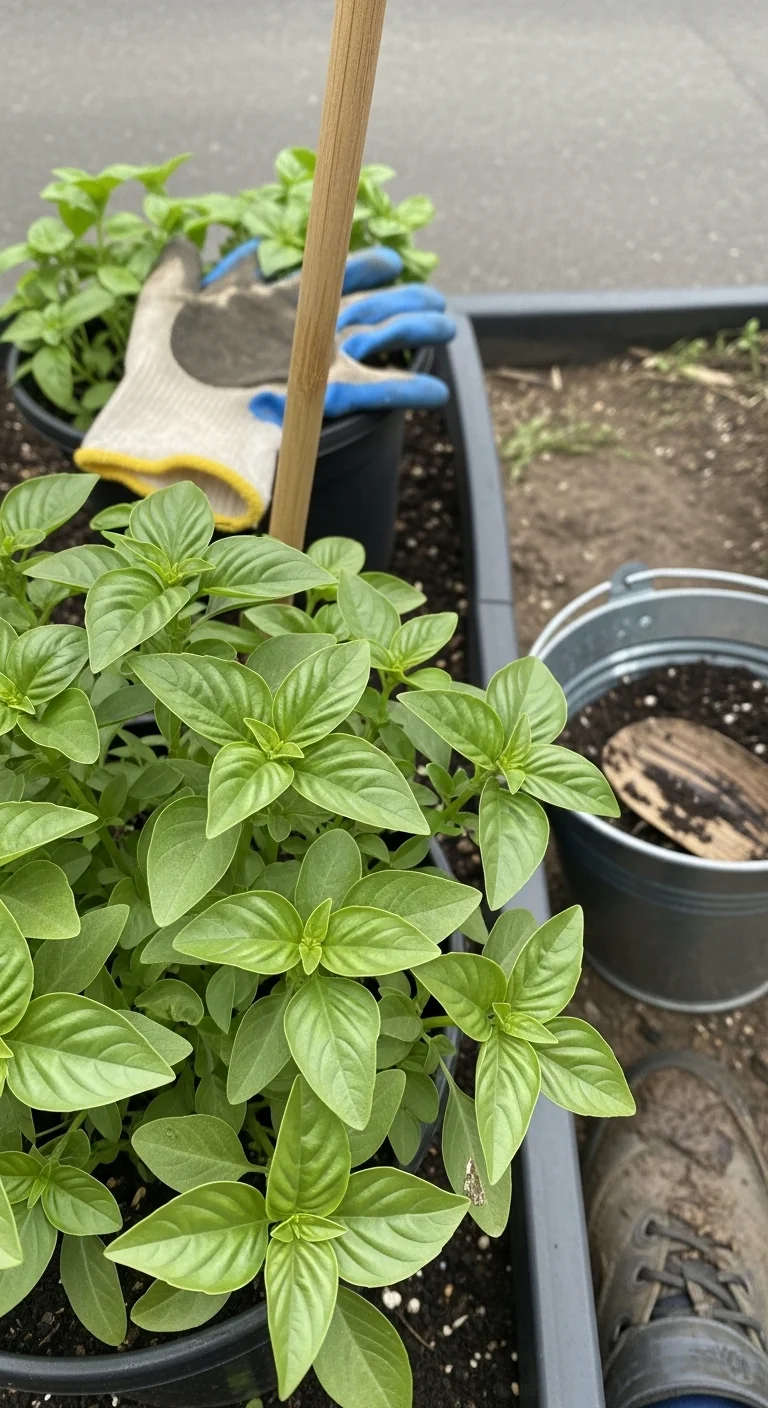
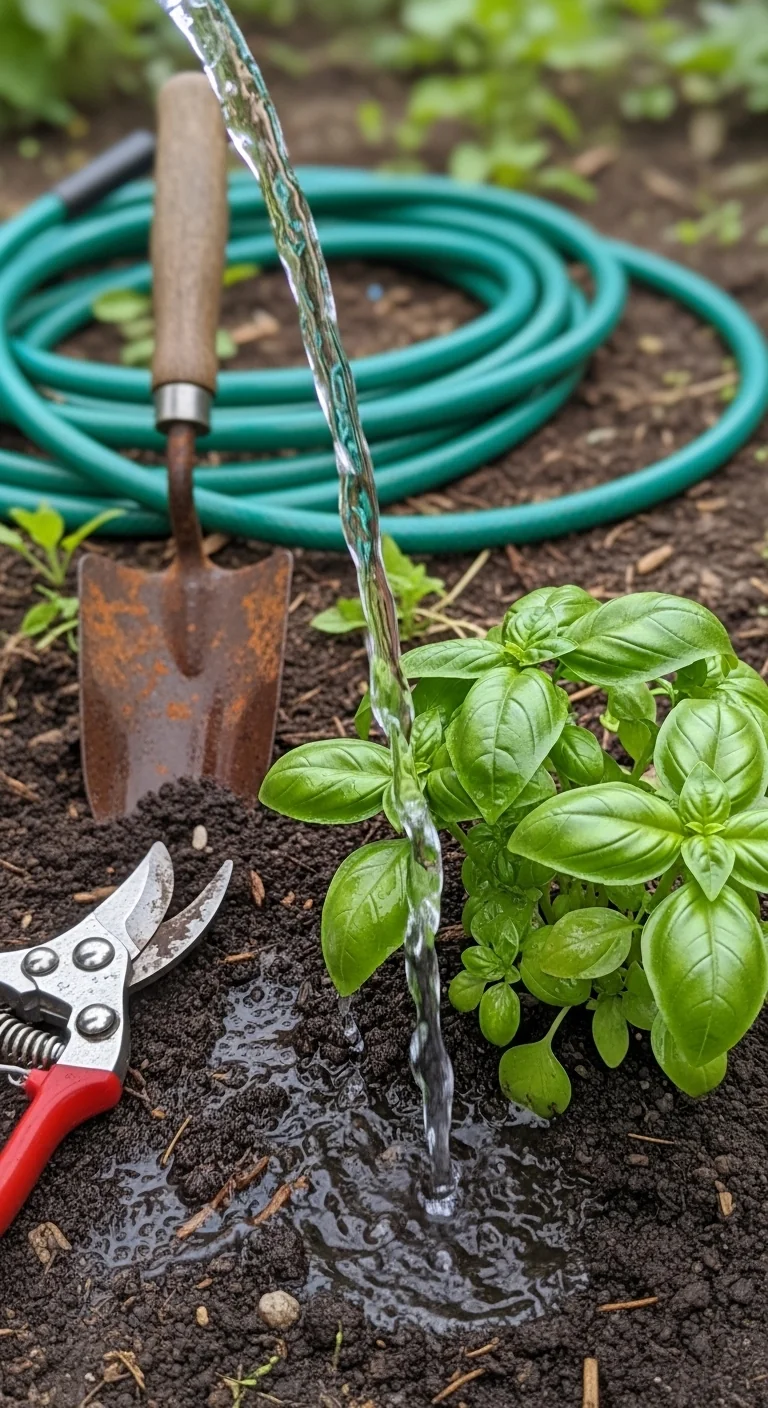
Water when the top inch of soil feels dry to the touch and apply enough to reach the bottom of the pot without pooling in the saucer. This schedule maintains steady moisture that basil requires while avoiding the root rot that follows from constantly saturated mix. In containers check daily during heat waves above 80 degrees F. (72 words)
6. Prune and Harvest Regularly to Encourage Bushiness
Best for: Branch 3
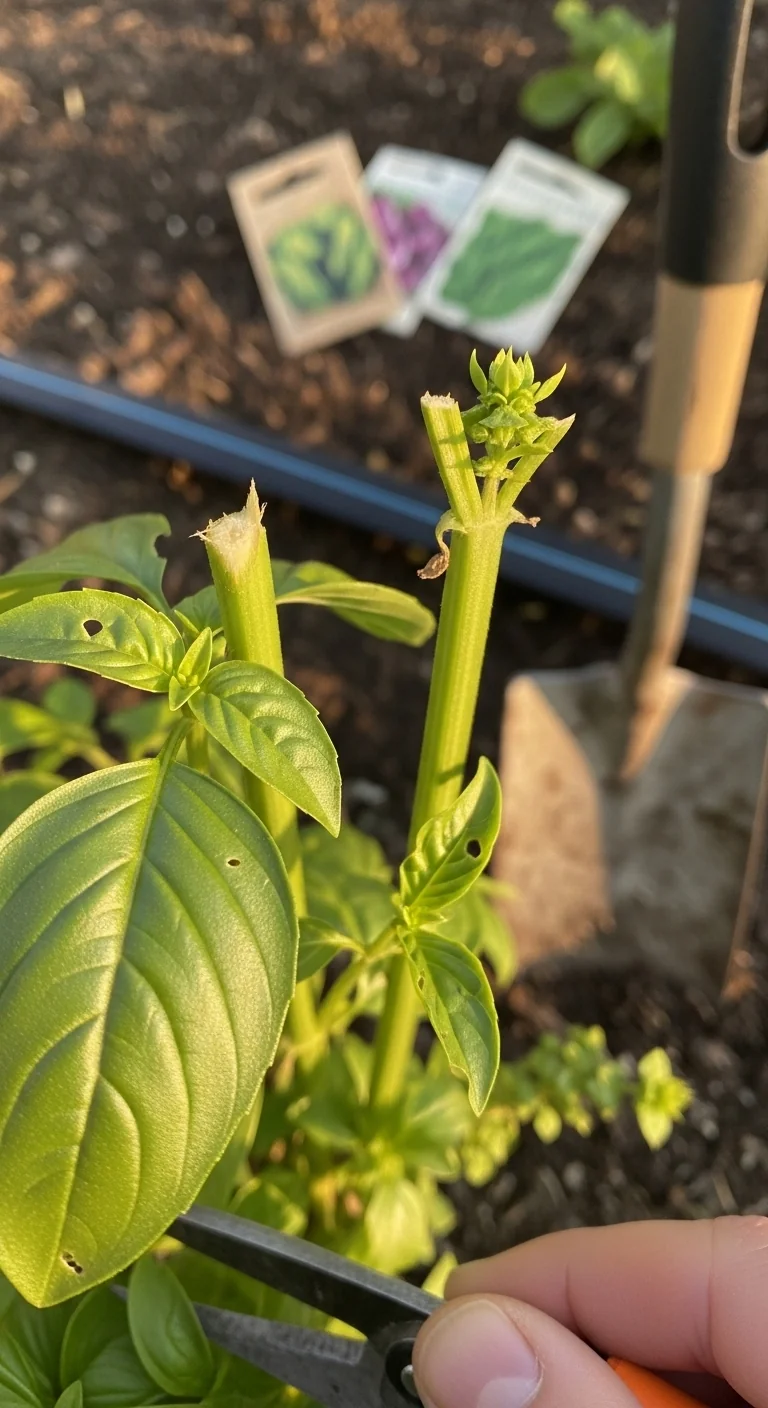
Regular pruning keeps plants bushy by removing the top 2 to 4 inches of stem just above a pair of healthy leaves every 2 to 3 weeks. This redirects energy from flowering back into leaf production and extends the harvest window by 4 to 6 weeks. Harvest leaves as needed for cooking but never strip more than one third of the plant at once. See the harvesting herbs for precise timing that preserves flavor. (118 words)
7. Pair Basil with Companion Plants for Natural Pest Control
Best for: Branch 1
Companion planting reduces aphid and beetle pressure when basil grows near tomatoes or peppers that share similar sun and water needs. The strong scent from basil leaves deters flying insects while the companions provide slight shade during peak afternoon heat. Space companions 18 inches apart and plant basil at the recommended 12 inch interval within the same bed. This combination works in raised beds or in ground plots and cuts manual intervention to spot checks only. See the companion planting herbs for layout diagrams. (148 words)
8. Choose Appropriate Containers and Drainage Systems
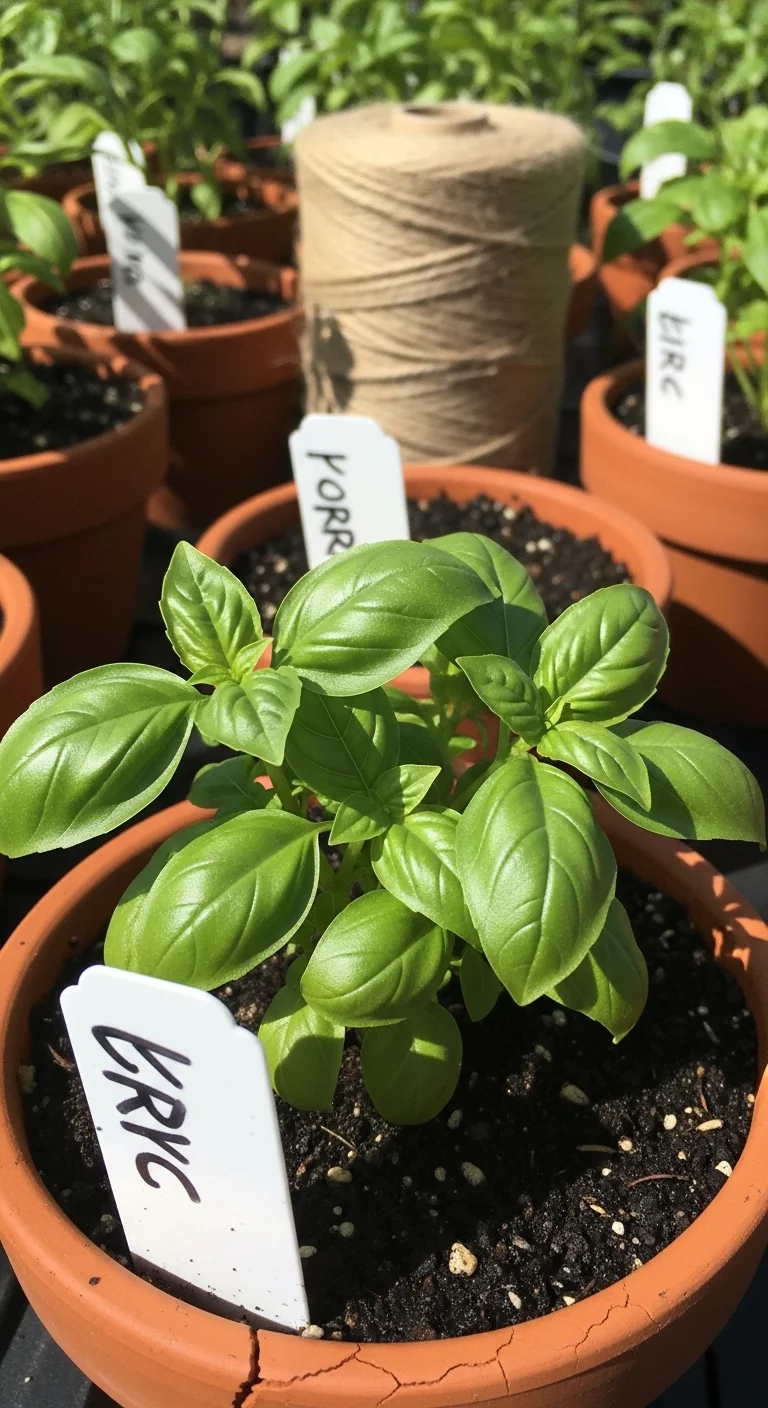
Best for: Branch 2
Container selection prevents root bound stress when pots measure at least 8 inches deep and wide with multiple drainage holes. Use terracotta or fabric pots that allow air flow to the roots and fill with a lightweight potting mix rather than garden soil. This setup suits balconies or patios where space limits larger beds. See the best herbs for containers for size comparisons. (79 words)
9. Monitor and Manage Common Basil Diseases Early
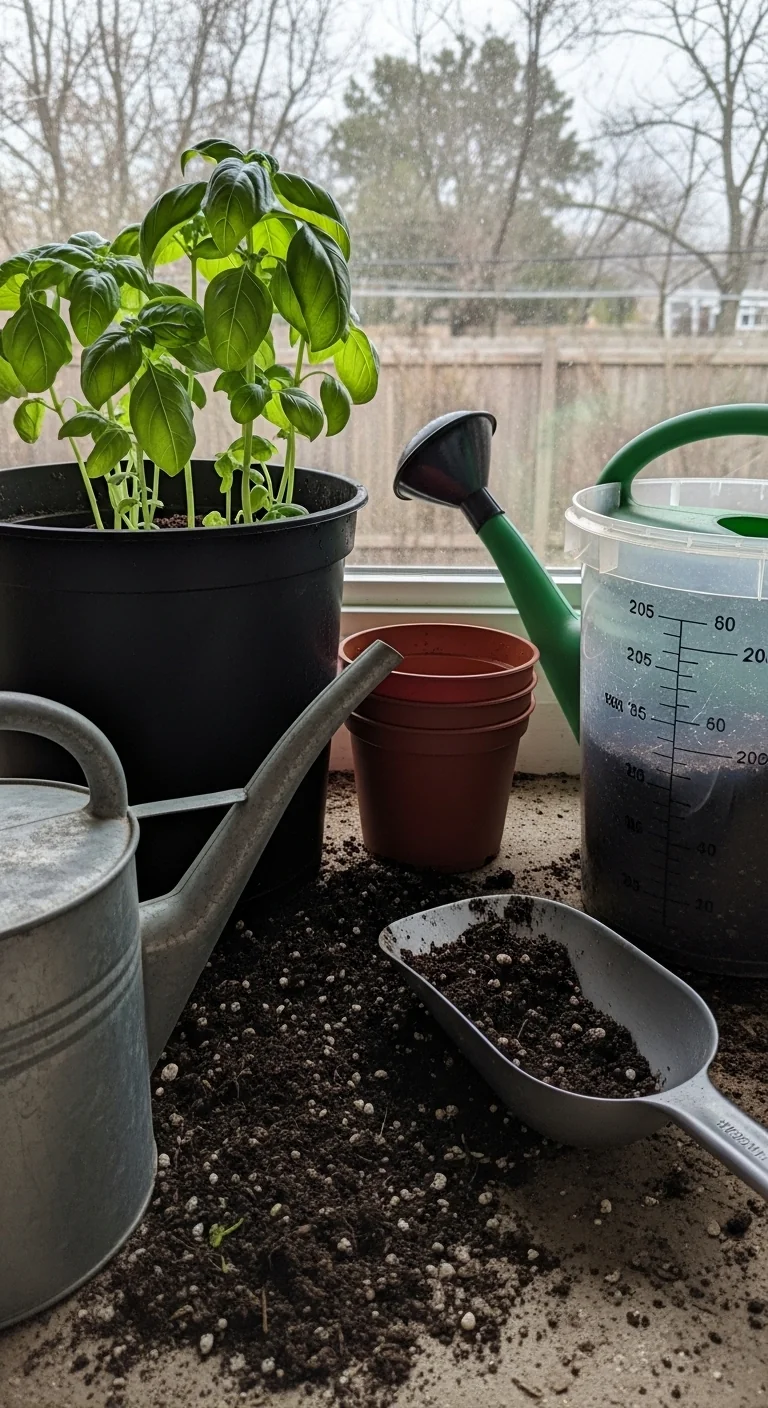
Best for: Branch 3
Weekly leaf checks catch downy mildew early when yellow spots appear on the upper surface and gray fuzz shows underneath. Improve airflow by spacing plants 12 inches apart and water only at the base to keep foliage dry. If signs appear remove affected leaves immediately and move the pot to better circulation. This approach works indoors where humidity builds faster than outdoors. (105 words)
Starter Stack (What to Choose First)
For Branch 1 (Outdoor full sun beds)
Combine item 1 soil mix preparation with item 7 companion planting. The synergy improves drainage while reducing pest pressure in one bed setup. Initial time investment ranges from 30 to 45 minutes plus one soil test. Material cost stays under 15 dollars for a 4 by 4 foot area.
For Branch 2 (Container or balcony)
Start with item 2 variety selection and item 8 container choice. Together they ensure the right pot size and heat tolerant type from the first day. Setup takes 15 to 25 minutes with material cost between 10 and 20 dollars per pot.
For Branch 3 (Indoor or low light)
Begin with item 4 sunlight or grow light setup and item 9 disease monitoring. The pairing delivers consistent light while catching humidity issues before they spread. Time investment falls between 20 and 35 minutes for light installation and weekly checks.
When This Won’t Work
Basil fails when night temperatures stay below 50 degrees F for more than three consecutive nights after planting. Growth stops and leaves blacken at the edges within a week. Switch to the indoor branch and start seeds under lights instead of direct outdoor sowing.
Another measurable failure occurs when soil remains waterlogged for longer than 48 hours after rain or watering. Roots suffocate and lower leaves yellow rapidly. Move to raised beds with the amended mix described in item 1. See the raised bed herb garden for construction steps that improve drainage permanently.
Choosing the Right Option for Your Situation
Budget threshold
If your total spend stays under 20 dollars select seeds and basic potting mix from items 2 and 8. Above that threshold add grow lights or soil amendments from items 1 and 4.
Time threshold
When you have under 10 minutes per week available focus on items 2 and 8 for one time variety and container choices. More time opens pruning and monitoring from items 6 and 9.
Technical constraint
If you lack a soil thermometer rely on frost date calendars and items 3 and 4 to time planting and light exposure instead of direct temperature checks.
Yes or no checklist:
Do you have 6 plus hours sun and space? Yes leads to Branch 1.
Limited to pots only? Yes leads to Branch 2.
Indoor setup? Yes leads to Branch 3.
Ready to test soil once per season? Yes unlocks full starter stack.
Expert Q&A
How does basil bolting change in different climates?
Bolting accelerates when day length exceeds 14 hours combined with temperatures above 85 degrees F. In cooler northern zones it arrives later than in southern areas so prune flower buds the moment they appear to extend leaf production by several weeks. (52 words)
Can basil grow successfully from cuttings instead of seed?
Cuttings root reliably in water or moist mix within 7 to 10 days when taken from healthy 4 inch stems. This method skips germination timing entirely and produces identical plants to the parent in container or indoor setups. (48 words)
What spacing works best between basil and other herbs?
Keep basil 12 inches from neighbors to maintain airflow that reduces mildew risk. Closer planting works only in large raised beds with excellent drainage and full sun. (41 words)
How do you overwinter basil indoors?
Bring container plants inside before first frost and place under grow lights for 14 hours daily while keeping temperatures above 65 degrees F. Water sparingly and prune lightly to maintain shape through winter. (47 words)
Does basil need fertilizer and how much?
Apply balanced fertilizer at half the vegetable rate once at transplant and again mid season only if leaves pale. Over feeding produces lush growth with reduced aroma. (43 words)
Conclusion
The decision grid turns basil growing from guesswork into a repeatable process once you match items to your branch. The number one mistake remains ignoring measurable conditions such as soil temperature or light hours which leads to leggy plants or early bolting.
Next step: pick your branch today and gather the two starter stack items for your setup. See the balcony herb garden for layout inspiration that scales the same principles to small spaces.