
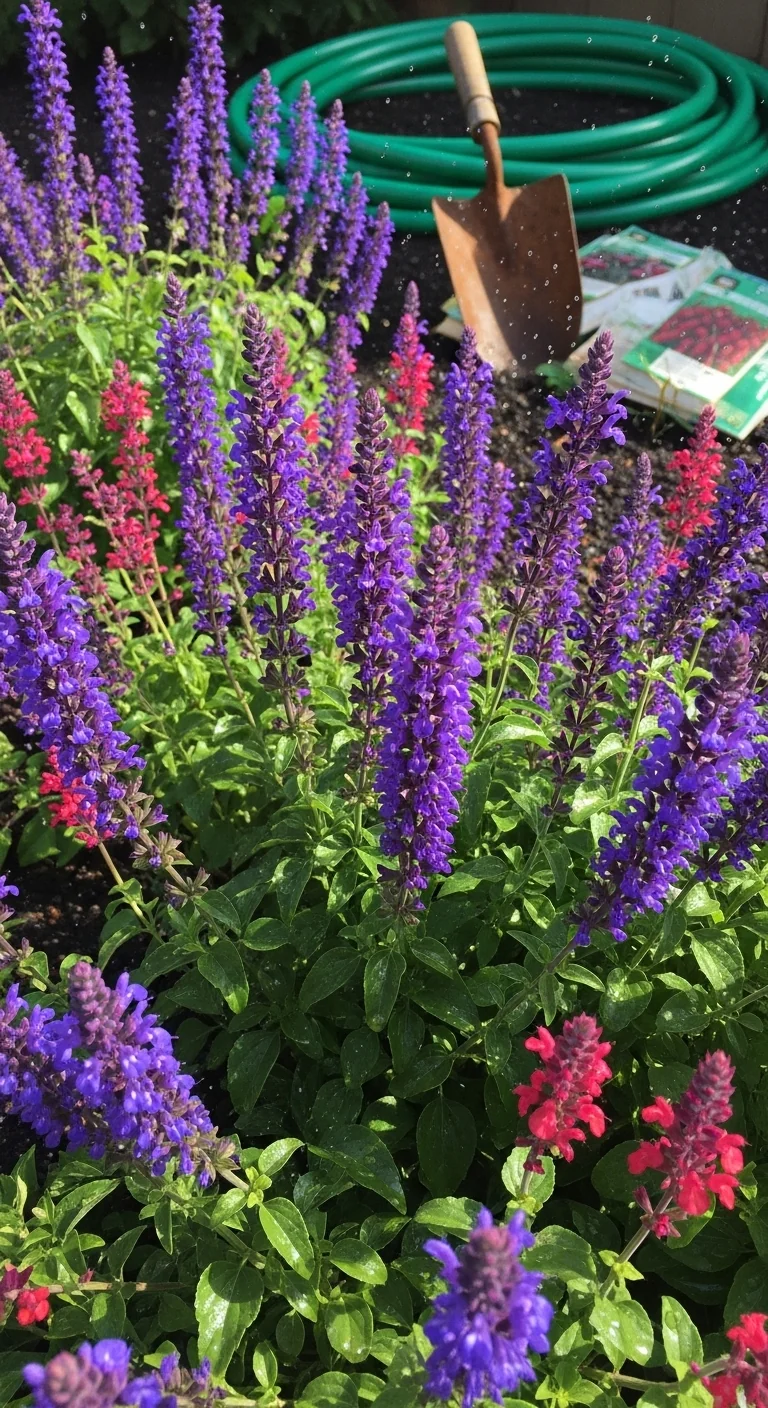
Most salvia lists highlight color or height alone. The varieties that deliver spikes of reliable color from early summer into fall are those whose native climate adaptations line up exactly with your garden’s winter lows, summer heat, and soil drainage. Match the plant to measurable site conditions and you avoid leggy stems, weak rebloom, or winter loss that plague mismatched choices.
This listicle reviews nine ornamental salvia options suited to flower borders, beds, and containers across the US, UK, Canada, and Australia. It covers both perennial types that return reliably in cold zones and tender or annual types that excel in heat. It excludes culinary sage and rare species that are difficult to source locally.
You will finish with clear placement rules, pairing ideas, and first-season care steps so you can plant once and enjoy consistent performance without repeated adjustments.
Identify your garden’s hardiness zone and summer moisture level, then follow the matching branch below to pick varieties that thrive without guesswork.
The Yield Grid Decision Grid
Branch 1: Cold-winter sites (USDA zones 4 to 6 with average winter lows to minus 20 degrees F). These locations need varieties hardy enough to survive freezing without heavy mulch and that rebloom after early cuts. Recommended: Items 1, 2, and 8 below. For more on pairing these with other perennials, see our perennial flowers guide.
Branch 2: Heat-tolerant and drought-prone sites (USDA zones 7 to 11 with summer highs above 85 degrees F or annual rainfall below 20 inches). These need aromatic foliage and deep roots that handle dry spells once established. Recommended: Items 3, 4, and 7 below.
Branch 3: Extended-bloom or container sites (any zone where maximum flower duration or compact size matters). These need compact habits or strong rebloom response to deadheading for season-long color. Recommended: Items 5, 6, and 9 below.
Quick Comparison Table
| Option | Key mechanism | Best for | Decision Grid Branch | Maintenance Effort Score |
|---|---|---|---|---|
| Salvia ‘May Night’ | Strong upright spikes on prairie-adapted roots | Cold hardy borders with pollinators | Branch 1 | 2 |
| Salvia ‘Caradonna’ | Dark stems hold flowers above foliage | Early color in short seasons | Branch 1 | 2 |
| Salvia greggii ‘Raspberry Delight’ | Aromatic leaves reduce water loss | Hot dry slopes | Branch 2 | 1 |
| Salvia farinacea ‘Victoria Blue’ | Powdery stems deter insects | Long blue spikes in heat | Branch 2 | 2 |
| Salvia coccinea ‘Lady in Red’ | Self-seeding in warm zones | Bright red accents | Branch 3 | 3 |
| Salvia ‘Mystic Spires Blue’ | Compact branching extends bloom | Containers with all-day sun | Branch 3 | 2 |
| Salvia microphylla ‘Hot Lips’ | Bicolor flowers shift with temperature | Dynamic color in dry beds | Branch 2 | 1 |
| Salvia nemorosa ‘Perfect Profusion’ | Rapid rebloom after cutback | Cold zones needing repeat color | Branch 1 | 2 |
| Salvia ‘Rockin’ Deep Purple’ | Hybrid vigor for nonstop spikes | Large containers or beds | Branch 3 | 3 |
Salvia ‘May Night’
Best for: Branch 1
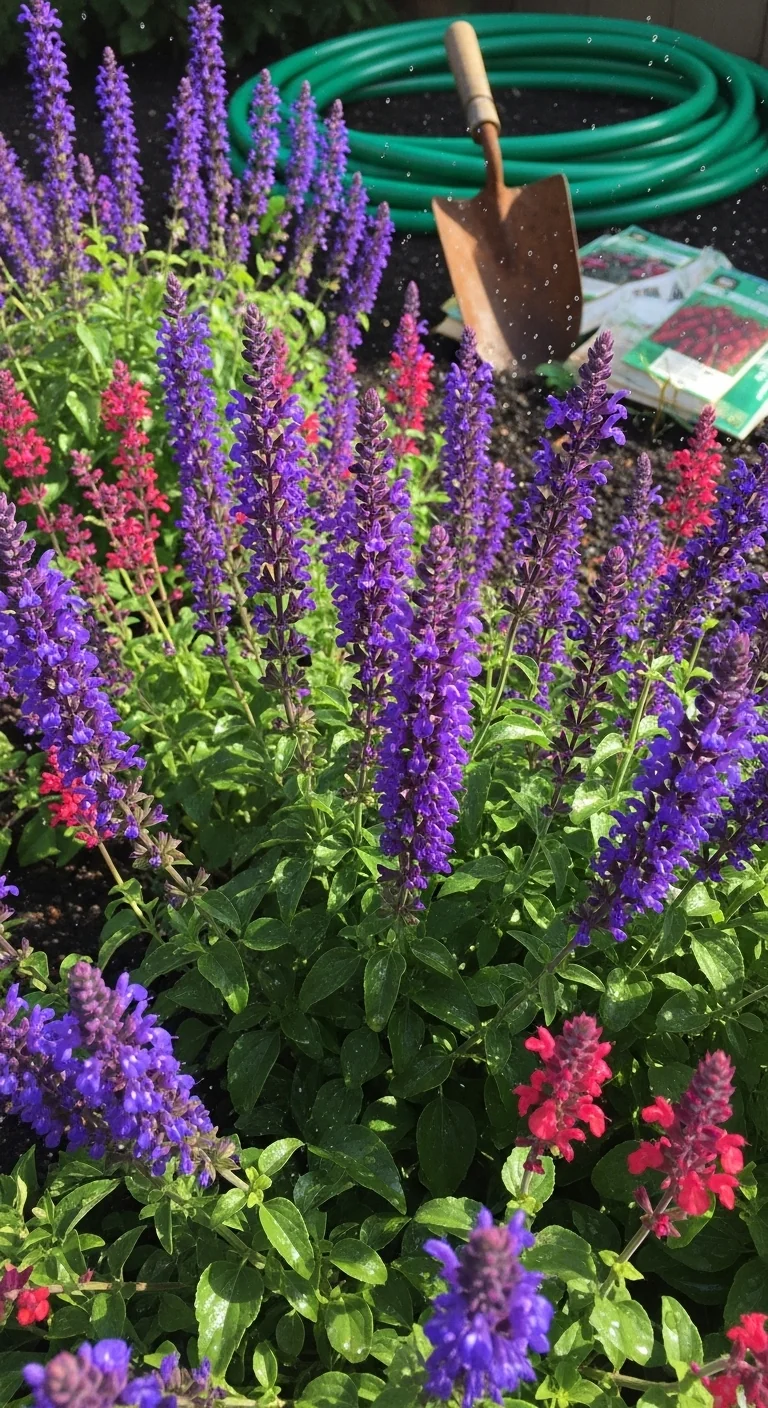
Salvia ‘May Night’ produces deep violet-blue spikes on sturdy 18- to 24-inch stems. It originates from European meadow species selected for cold tolerance and returns reliably in zones 4 to 6. Plant in full sun with soil that drains within one hour after rain. Space plants 18 inches apart in groups of three or more for impact.
Blueprint steps: Prepare soil by mixing in coarse sand or gravel if clay content exceeds 30 percent. Set the crown at soil level. Water deeply once weekly for the first month, then rely on rainfall. Cut spent spikes back by one-third in midsummer to trigger a second flush that lasts into early fall.
Common mistake: Planting too deeply causes crown rot in heavy soils. Pair with full-sun flowers such as coreopsis for contrasting yellow tones and shared drought tolerance after year one.
Salvia ‘Caradonna’
Best for: Branch 1
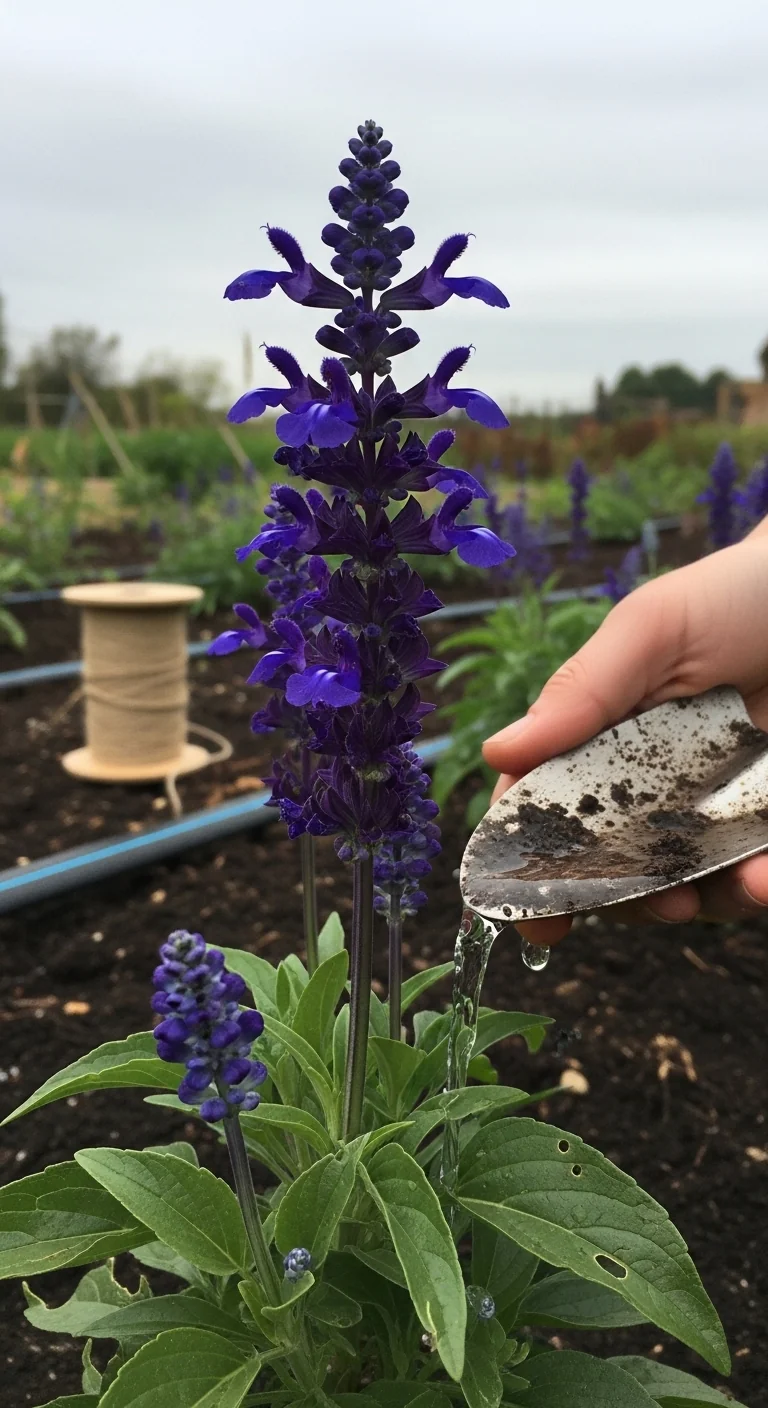
Use ‘Caradonna’ where you need early color without flopping. Its dark purple stems and lavender-blue flowers stand 20 to 28 inches tall and resist wind better than older nemorosa types.
Skip it only in zones warmer than 8 where summer humidity causes mildew on dense foliage. Edge case: In borderline zone 6 gardens with late freezes, add a two-inch layer of gravel mulch to keep crowns dry.
Salvia greggii ‘Raspberry Delight’
Best for: Branch 2
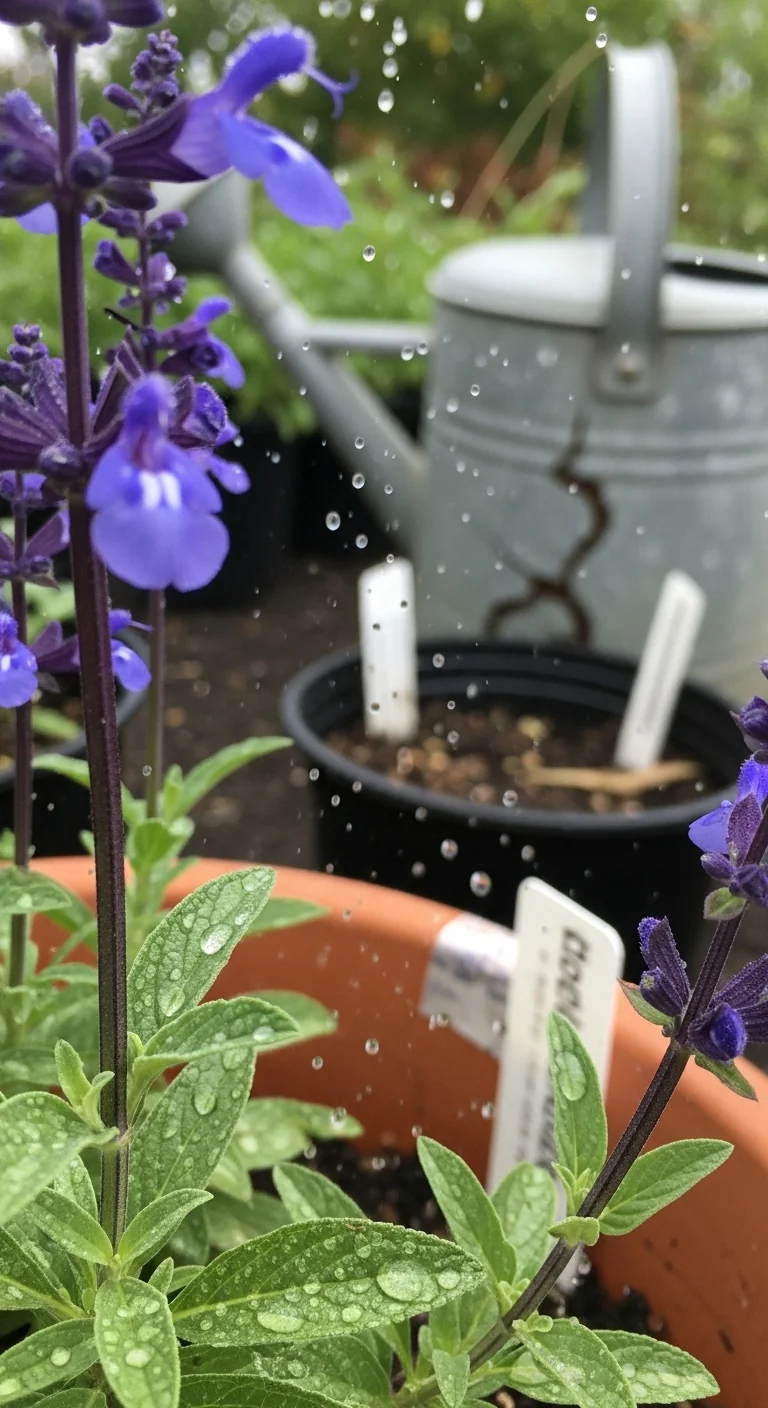
Threshold rule: Plant ‘Raspberry Delight’ only if your summer soil temperature stays above 70 degrees F at four-inch depth and rainfall stays under one inch per week. This Texas native shrubby salvia forms a rounded 24- to 36-inch mound covered in raspberry-pink flowers from midsummer until frost.
Its small, fragrant leaves reduce transpiration so it survives dry spells without supplemental water after establishment. Adjust spacing to 30 inches in rock gardens or slopes. One unique constraint: It resents winter wet feet, so elevate planting beds by four inches in areas with clay soil.
Link this variety to drought-tolerant flowers for low-water borders that stay colorful through heat waves.
Salvia farinacea ‘Victoria Blue’
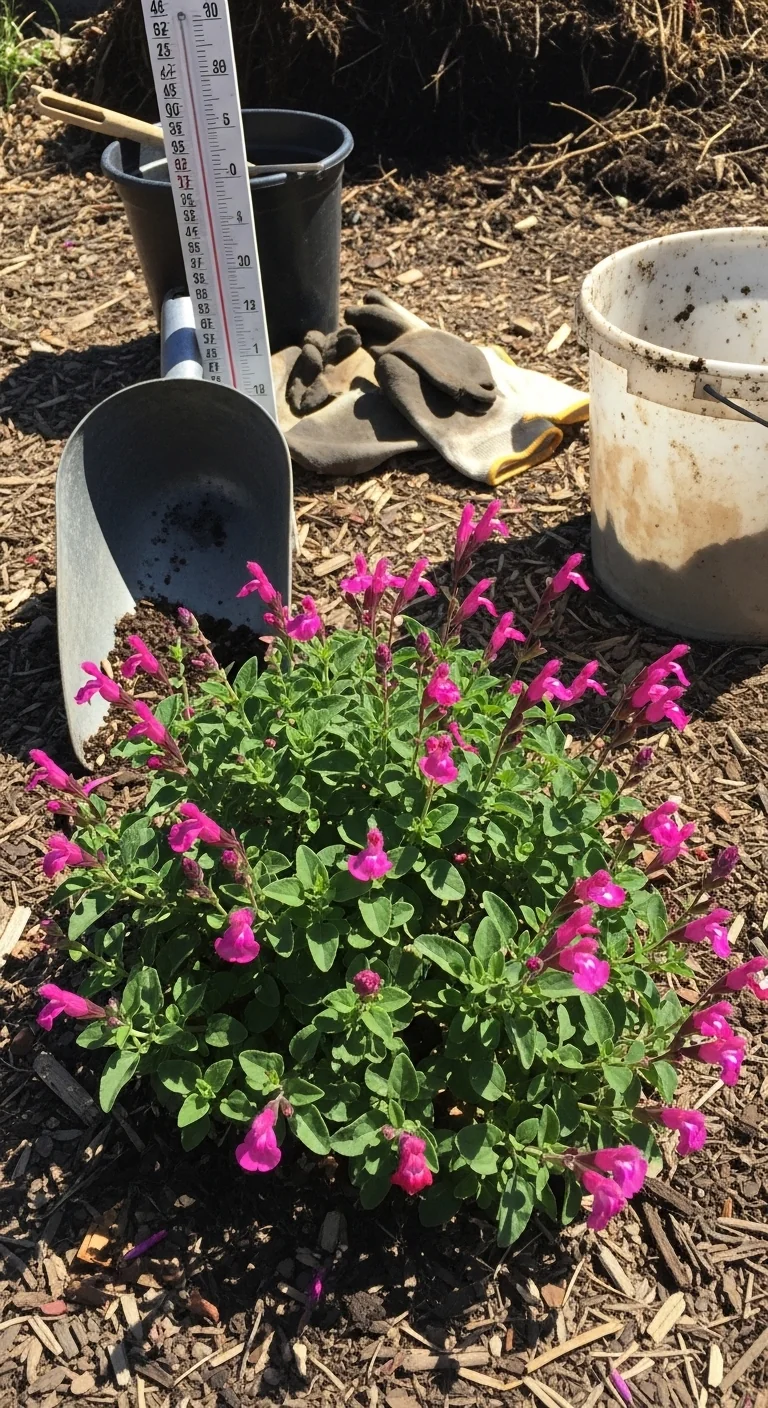
Best for: Branch 2
Salvia farinacea ‘Victoria Blue’ delivers mealy-white stems and intense blue spikes that reach 24 to 36 inches. It tolerates heat and poor soil once roots establish. Use it as a vertical accent in hot, sunny beds or as a cut-flower filler.
Blueprint: Sow or transplant after final frost. Space 18 inches apart. Provide one deep watering every 10 to 14 days until established. Remove faded spikes at the first set of leaves to keep plants tidy. In zones 8 and warmer it behaves as a short-lived perennial; treat as annual farther north.
Common mistake: Overwatering after week four leads to root decline. Combine with low-maintenance flowers such as gaillardia for complementary warm tones and shared tolerance for lean soil.
Salvia coccinea ‘Lady in Red’
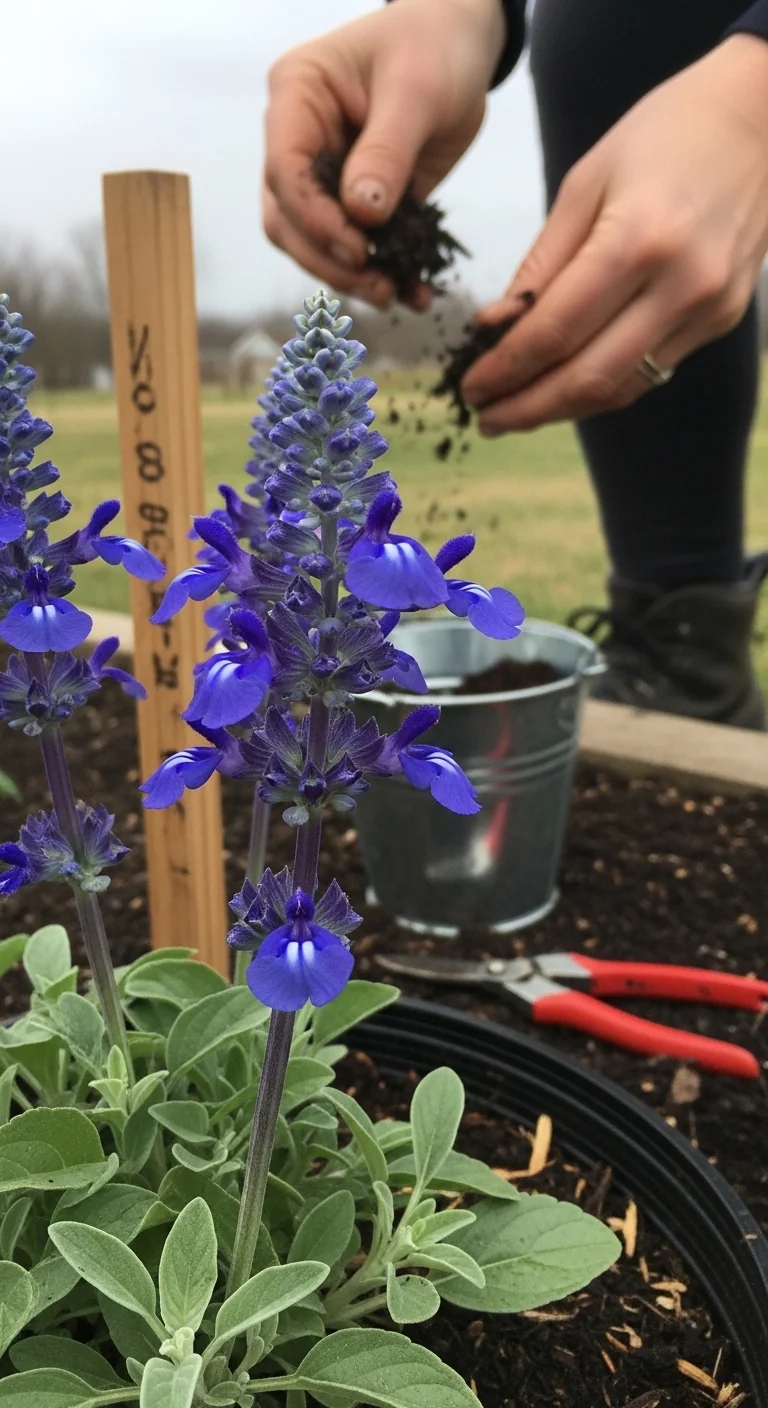
Best for: Branch 3
‘Lady in Red’ produces bright scarlet spikes on 18- to 30-inch plants and freely self-seeds in warm climates. It fills gaps quickly in mixed beds or window boxes.
Pros: nonstop color from early summer to frost. Cons: taller stems may need staking in windy sites. Edge case: In cooler zones treat strictly as annual and start indoors six weeks before last frost for earliest blooms.
Salvia ‘Mystic Spires Blue’
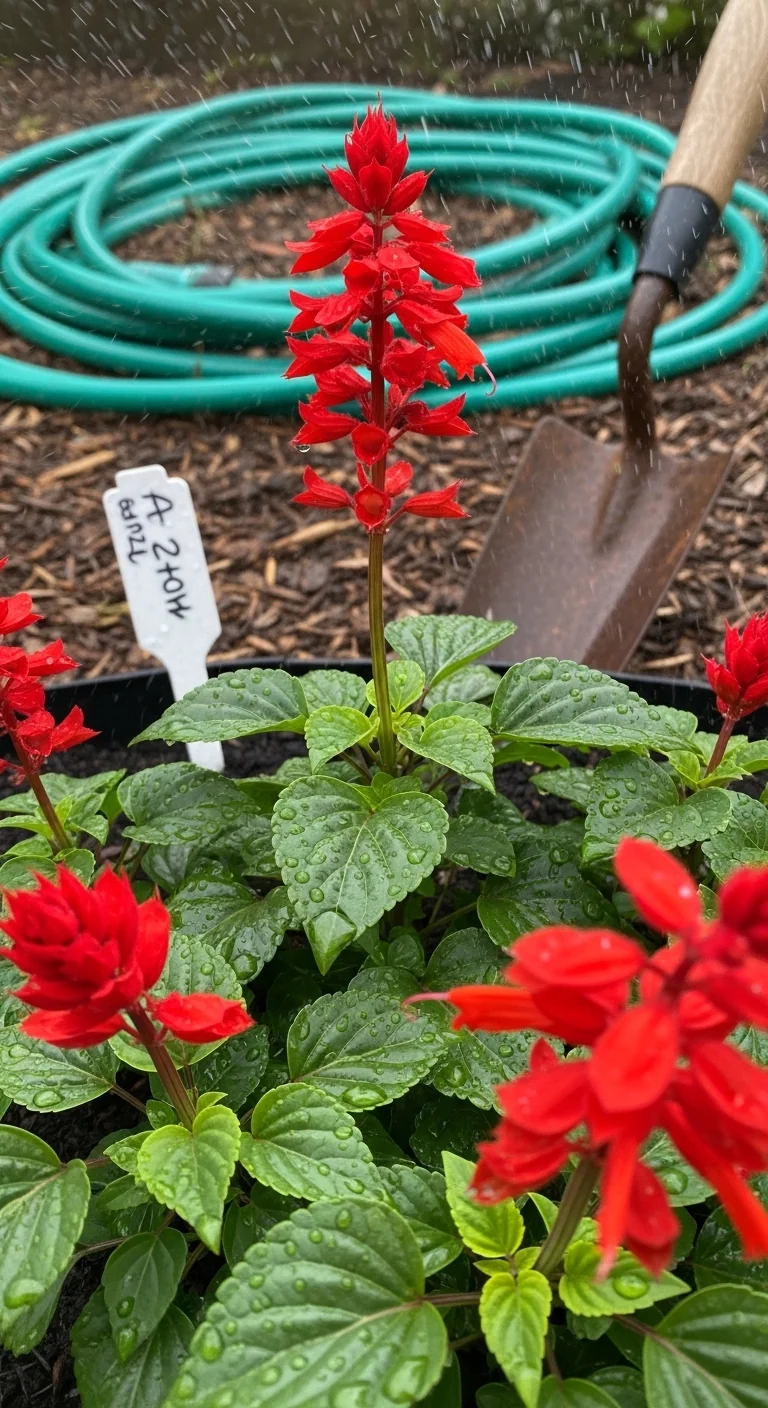
Best for: Branch 3
‘Mystic Spires Blue’ stays compact at 18 to 24 inches with deep blue spikes that continue until frost. Its branching habit makes it ideal for containers or front-of-border placement.
Threshold rule: Provide at least six hours of direct sun daily. If soil drains slower than one inch per hour, raise the pot or bed by two inches. One deadhead cycle in late July extends color another six weeks. Pair with pollinator flowers to create a bee- and butterfly-friendly display that requires only monthly checks.
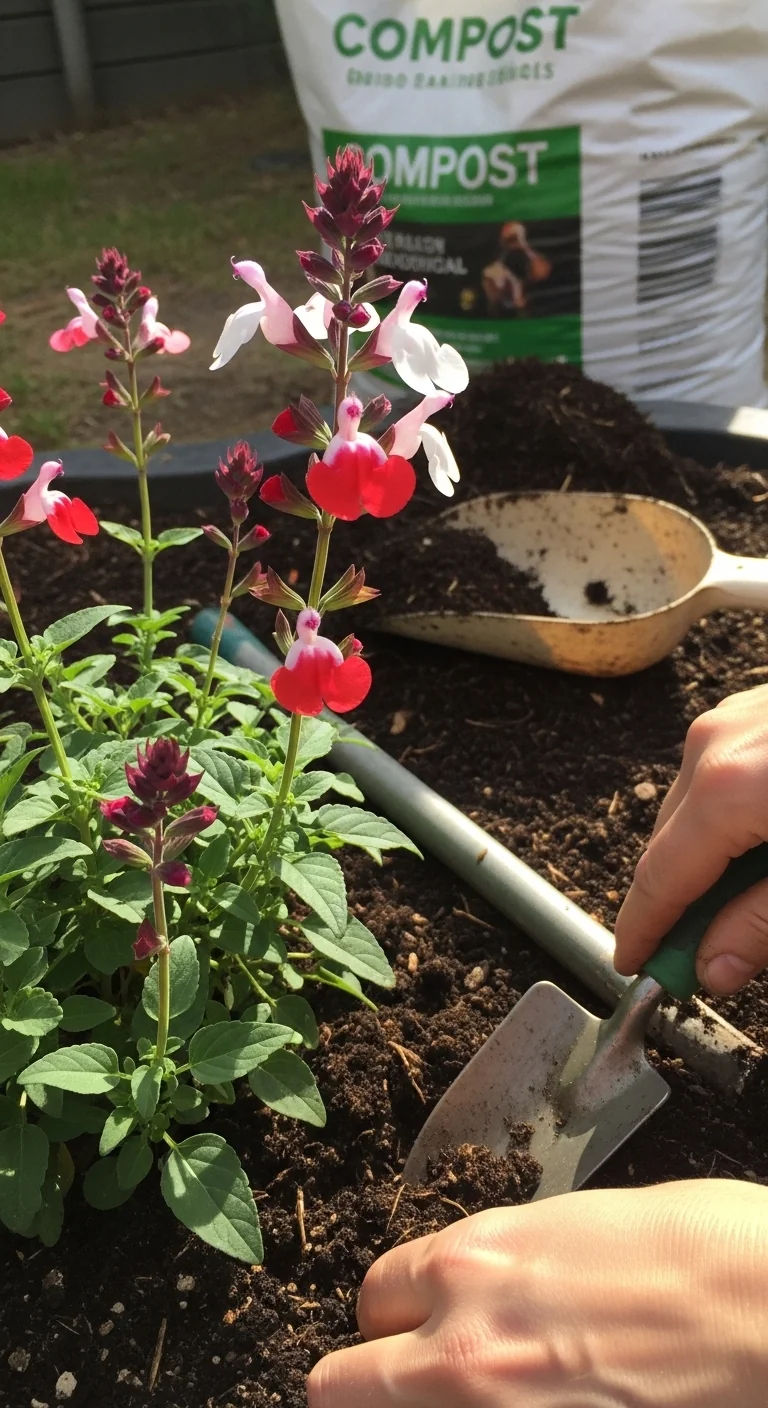
Salvia microphylla ‘Hot Lips’
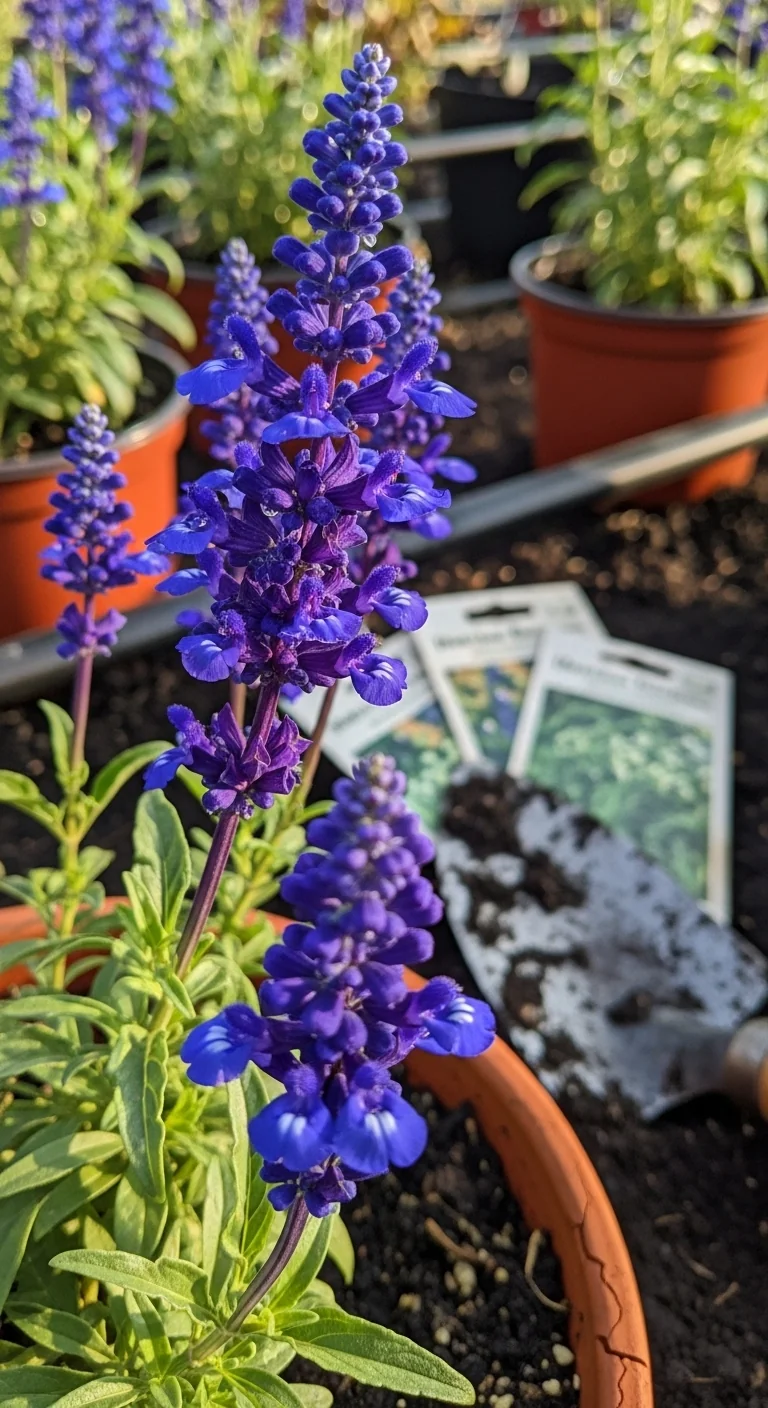
Best for: Branch 2
Blueprint for success with ‘Hot Lips’: Site in full sun with gritty, well-drained soil. Expect bicolor red-and-white flowers that shift toward solid red as nights cool. Space plants 24 inches apart for air circulation. Water deeply every two weeks after the first month. Trim lightly in early summer to maintain shape.
This Mexican native reaches 36 inches and fills dry borders without extra fertilizer. Unique detail: Flower color intensity increases with day-night temperature swings above 20 degrees F. Avoid rich soil that produces leafy growth at the expense of blooms. Combine with other heat lovers for season-long interest.
Salvia nemorosa ‘Perfect Profusion’
Best for: Branch 1
Use ‘Perfect Profusion’ where you need fast rebloom in short seasons. Its sky-blue flowers cover 16- to 20-inch mounds from late spring onward. Cut back the first flush by half when petals fade and expect a second wave within three weeks.
Pros: tighter habit than older nemorosa types. Cons: needs full sun to avoid open centers. Edge case: In zone 4 gardens with heavy snow cover, leave stems intact until spring to protect crowns.
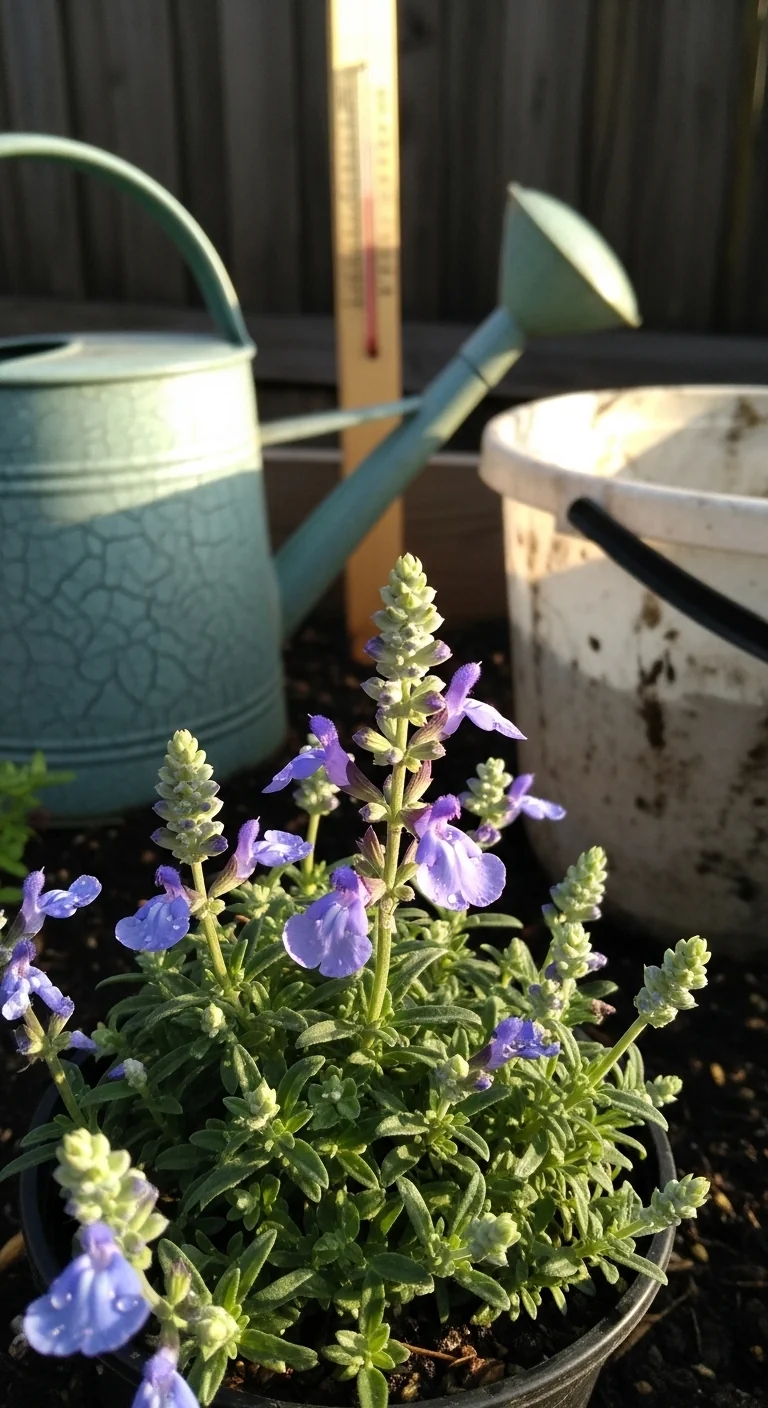
Salvia ‘Rockin’ Deep Purple’
Best for: Branch 3
‘Rockin’ Deep Purple’ offers large, intense purple spikes on vigorous 24- to 36-inch plants. It performs as a tender perennial in warm zones or as a high-impact annual farther north. Plant after soil warms to 65 degrees F.
Its hybrid vigor supports nonstop flowering when spent spikes are removed every two to three weeks. One unique constraint: It demands consistent moisture during the first six weeks after transplant but tolerates drier conditions later. Use it in large pots or as a focal point in mixed beds. Pair with trailing companions for vertical interest in containers.
Starter Stack (What to Choose First)
For Branch 1 (cold-winter sites)
Start with ‘May Night’ and ‘Perfect Profusion’. Both are zone 4 hardy perennials that rebloom after midsummer cutback. Plant them together in groups of three each for a 6- by 4-foot drift. Total cost range: 24 to 36 dollars for six plants. Planting time: 30 to 45 minutes for the group.
For Branch 2 (heat-tolerant and drought-prone sites)
Begin with ‘Raspberry Delight’ and ‘Hot Lips’. Their aromatic foliage and deep roots handle dry spells together while providing contrasting flower shapes. Space 30 inches apart in a sunny slope bed. Total cost range: 28 to 40 dollars for four plants. Planting time: 25 to 35 minutes.
For Branch 3 (extended-bloom or container sites)
Choose ‘Mystic Spires Blue’ and ‘Rockin’ Deep Purple’. Their compact habits and long flowering combine for season-long color in pots or small beds. Total cost range: 20 to 32 dollars for four plants. Planting time: 20 to 30 minutes including container fill.
When This Won’t Work
Salvia fails in two measurable conditions. First, if soil stays saturated longer than 48 hours after rain or irrigation, roots rot and plants collapse by midsummer. Test drainage by digging a six-inch hole and filling it with water: if it takes longer than four hours to empty, amend with coarse sand and gravel before planting or raise beds by six inches.
Second, if the site receives fewer than six hours of direct sun daily, flower production drops sharply and stems stretch. Move plants to a brighter location or replace with alternatives from our shade flowers guide.
In either case, switch to better-suited perennials rather than forcing salvia into unsuitable spots.
Choosing the Right Option for Your Situation
Budget threshold
If your total spend for three to five plants stays under 50 dollars, select any two from the same branch and propagate extras by division in year two for ‘May Night’ or ‘Caradonna’ types. Tender hybrids cost more per plant but fill space faster.
Time threshold
If you have less than 30 minutes per week for maintenance after establishment, choose Branch 2 options such as ‘Raspberry Delight’ or ‘Hot Lips’ that need only occasional deadheading and no supplemental water once roots set.
Technical constraint: soil drainage
Dig a test hole six inches deep and pour in one quart of water. If it drains in under one hour, any salvia on the list works. If drainage exceeds two hours, limit choices to Branch 2 drought-tolerant types planted in raised beds.
Yes/No checklist:
Do you have full sun and well-drained soil? Yes: proceed with any branch.
Is your zone 4-6 with cold winters? Yes: start with Branch 1.
Do summer dry spells exceed two weeks? Yes: prioritize Branch 2.
Do you need container color all season? Yes: use Branch 3 compact types.
Expert Q&A
How do perennial versus tender salvia types differ in winter survival?
Perennial types such as nemorosa and greggii survive USDA zones 4 to 9 when soil stays well drained. Tender types such as farinacea and many hybrids survive only in zones 8 and warmer or must be treated as annuals and replaced each spring. Cut back perennials in late fall and leave crowns exposed to air.
What spacing and grouping size produces the best visual impact?
Space most salvia 18 to 30 inches apart depending on mature width. Groups of three or five create fuller drifts that hide bare stems and amplify color. Odd numbers read more natural in borders than even rows.
Which companions share salvia requirements without competing for resources?
Pair with coreopsis, gaillardia, or echinacea. All prefer full sun, well-drained soil, and moderate water once established. Their contrasting flower shapes and bloom times extend interest while supporting the same pollinators.
How should you adjust care when growing salvia in containers versus in-ground beds?
Containers need potting mix amended with 20 percent perlite for drainage and daily checks for water needs in the first month. In-ground beds require only initial deep watering. Both benefit from cutting spikes back by one-third after the first bloom wave.
What is the best timing for the first cutback to encourage rebloom?
Remove the first flush of faded spikes when petals drop but before seed sets, usually four to six weeks after bloom begins. Cut to the first strong set of leaves. A second flush follows within three weeks in most varieties.
Conclusion
Next step: Review your garden’s winter lows and soil test results, then plant two or three matched varieties this season. Master precise cutback timing with our deadheading flowers guide to extend bloom even further.