
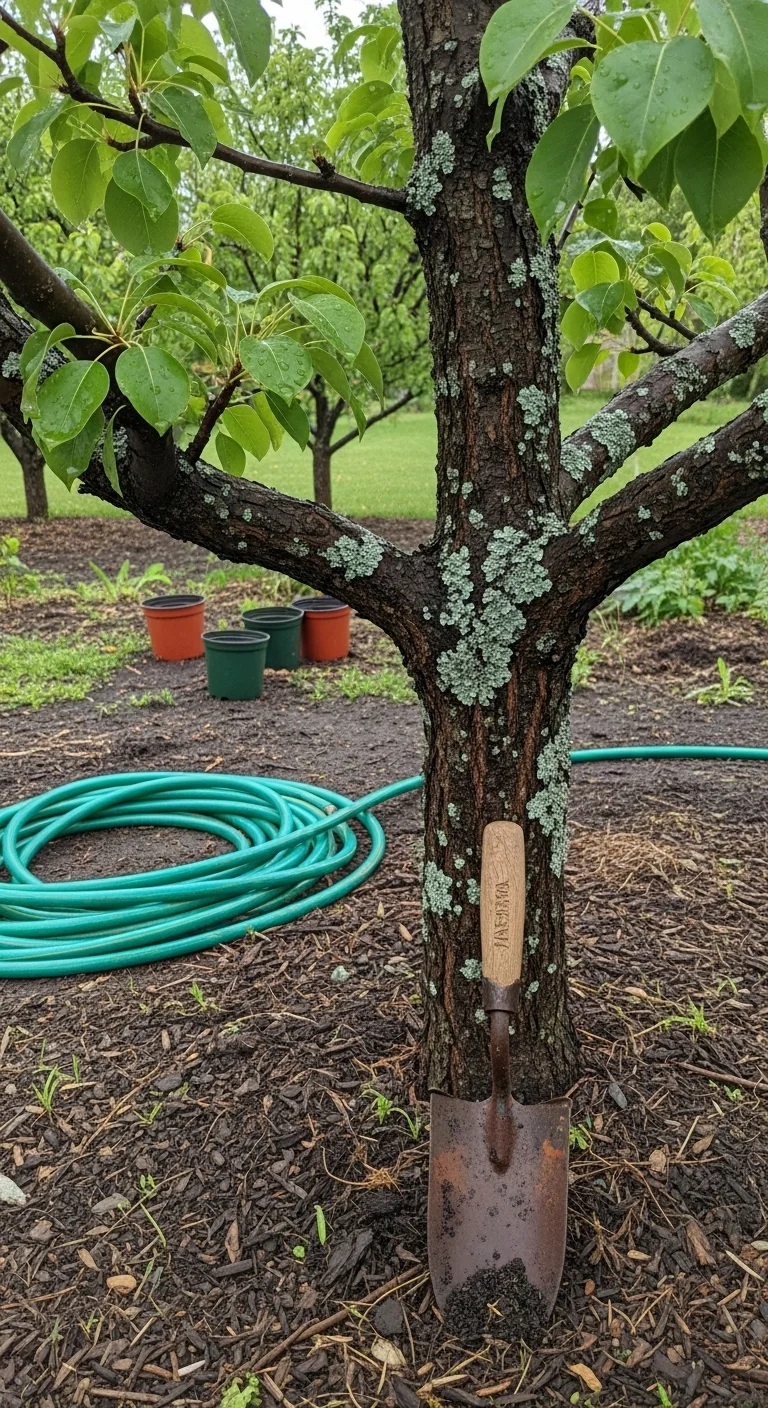
Fire blight on pear trees becomes a recoverable issue when you match interventions to the exact stage of infection and your tree’s vigor using extension-derived thresholds instead of blanket sprays or guesswork pruning.
This guide covers prevention, early shoot removal, and recovery for home edible gardeners growing pears in the US, UK, Canada, Australia, or New Zealand. It excludes commercial antibiotic protocols that require licensed applicators and focuses only on practices adaptable to backyard orchards.
You will identify which combination of variety selection, pruning, fertility adjustment, and cultural steps fits your specific conditions so you can protect bloom, limit spread, and maintain fruit production without trial-and-error seasons.
Follow the decision grid below to prioritize two or three actions that align with your tree’s current status and local spring weather patterns.
The Yield Grid Decision Grid
Branch 1: Prevention in high-risk bloom windows. Trees show no symptoms and spring forecasts include daytime temperatures above 65°F (18°C) paired with rain or heavy dew. Focus here on resistant varieties and pre-bloom cultural adjustments to block initial flower infections. Recommended: Items 1, 3, and 6 below. See our fruit tree fertilizing guide for nitrogen limits that reduce succulent growth favored by the bacterium.
Branch 2: Early localized shoot infections. Shepherd’s crook symptoms appear on one or two branches but have not reached main scaffolds or the trunk. Act within days of first wilting to contain spread. Recommended: Items 2, 4, and 7 below.
Branch 3: Advanced or recurrent cankers. Dark sunken cankers on larger limbs or repeated dieback in previous seasons indicate established overwintering sites. Shift to structural recovery and replacement planning. Recommended: Items 5, 8, and 9 below.
Quick Comparison Table
| Option | Key mechanism | Best for | Decision Grid Branch | Effort Score |
|---|---|---|---|---|
| Selecting Fire Blight Resistant Pear Varieties | Genetic resistance limits bacterial entry at flowers and shoots | Long-term orchard planning | Branch 1 | 1 |
| Proper Pruning Cuts for Infected Shoots | Removes infected tissue 12 inches below visible symptoms | Immediate containment | Branch 2 | 3 |
| Timing Copper Sprays During Bloom | Protective barrier on flowers during warm wet periods | Bloom protection | Branch 1 | 4 |
| Adjusting Nitrogen Fertility to Limit Susceptibility | Restricts excessive new growth that the bacterium targets | Vigor management | Branch 1 | 2 |
| Disinfecting Pruning Tools Between Cuts | Prevents mechanical spread of bacteria on blades | Sanitation during removal | Branch 2 | 3 |
| Improving Air Circulation with Training Methods | Opens canopy to reduce humidity around blossoms | Site-specific cultural control | Branch 1 | 2 |
| Monitoring for Early Shepherd’s Crook Symptoms | Daily visual checks during 65°F+ wet bloom windows | Early detection | Branch 2 | 5 |
| Choosing Resistant Rootstocks | Root system reduces overall tree stress and canker progression | Replanting decisions | Branch 3 | 1 |
| Recovery Strategies for Severely Affected Trees | Staged removal plus replanting timing | Salvage of mature trees | Branch 3 | 3 |
Selecting Fire Blight Resistant Pear Varieties
Best for: Branch 1
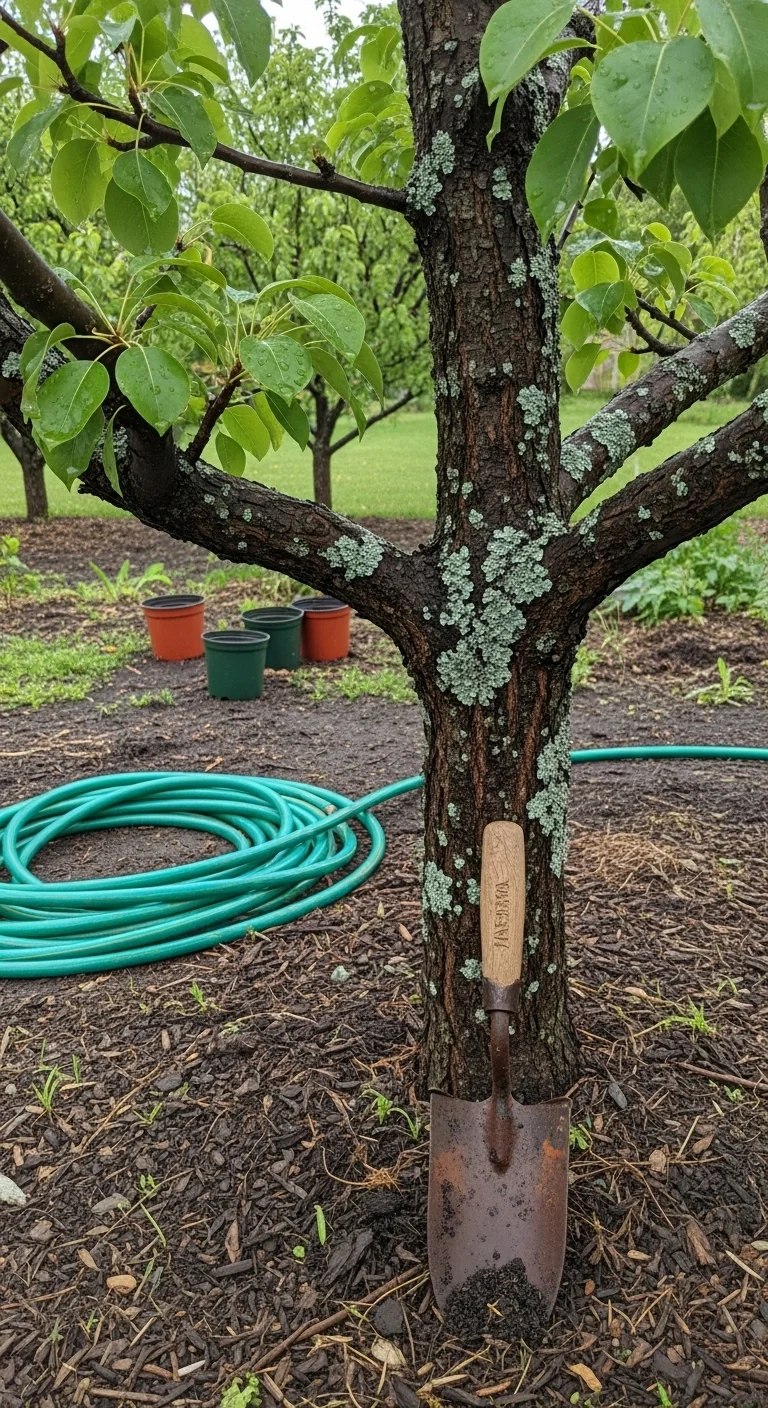
Resistant pear varieties provide the foundation for fire blight management because the bacterium Erwinia amylovora cannot easily colonize their flower and shoot tissues. University trials identify Magness, Moonglow, and Kieffer as highly resistant European and hybrid types that rarely develop shepherd’s crook symptoms even under warm wet bloom conditions. Asian pear options such as Shinko also show strong field resistance.
Threshold rule: choose varieties rated highly resistant in extension cultivar tables for your region before ordering new trees. Plant them in full sun with good drainage to further limit stress that invites infection. This single upfront choice reduces reliance on sprays in subsequent seasons and integrates directly with your existing edible garden layout.
Edge case: even resistant varieties can show minor tip blight if nitrogen is excessive, so pair with fertility checks. Replacement of one susceptible tree with a resistant cultivar typically takes one dormant season to establish.
Proper Pruning Cuts for Infected Shoots
Best for: Branch 2
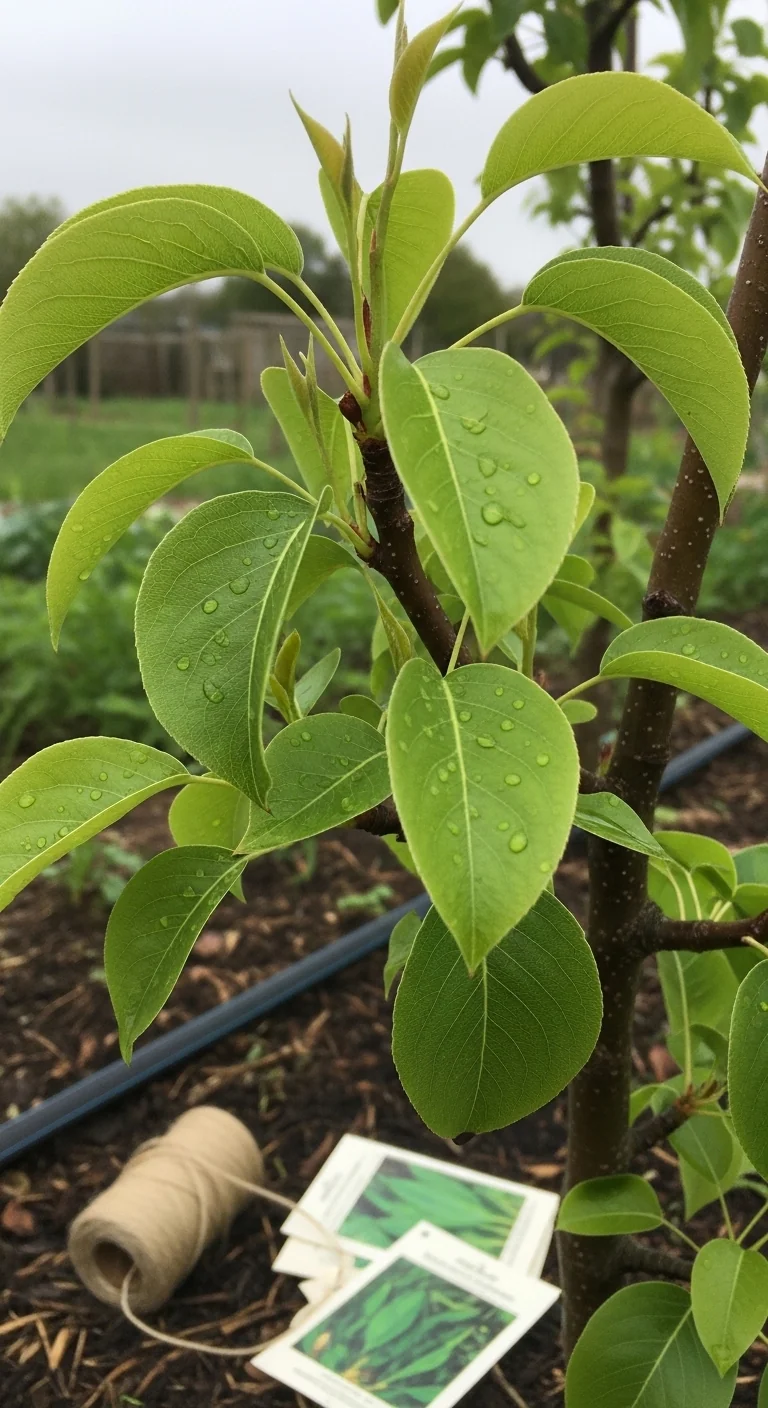
Use vs skip: prune out infected shoots when you first notice wilting and blackening, but skip if rain is forecast within 24 hours because wet conditions spread bacteria on tools.
Timing Copper Sprays During Bloom
Best for: Branch 1
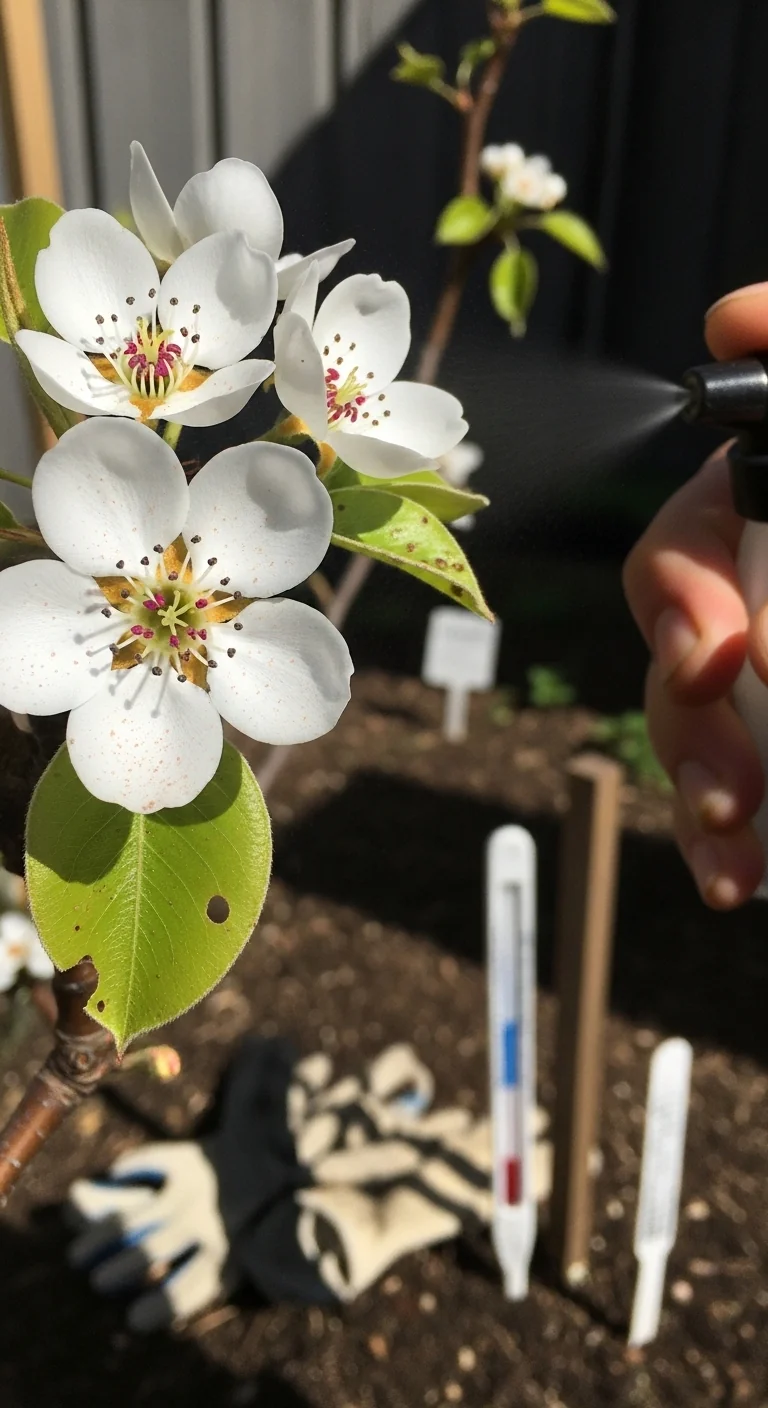
Blueprint: apply fixed copper formulations at first bloom and repeat at 5- to 7-day intervals only while temperatures exceed 65°F (18°C) and moisture is present. Stop applications after petal fall. Follow label dilution rates exactly and avoid use during bloom on trees setting fruit if label restricts. This creates a protective film that limits bacterial entry through flower nectaries without needing mixing beyond the initial preparation.
Adjusting Nitrogen Fertility to Limit Susceptibility
Best for: Branch 1
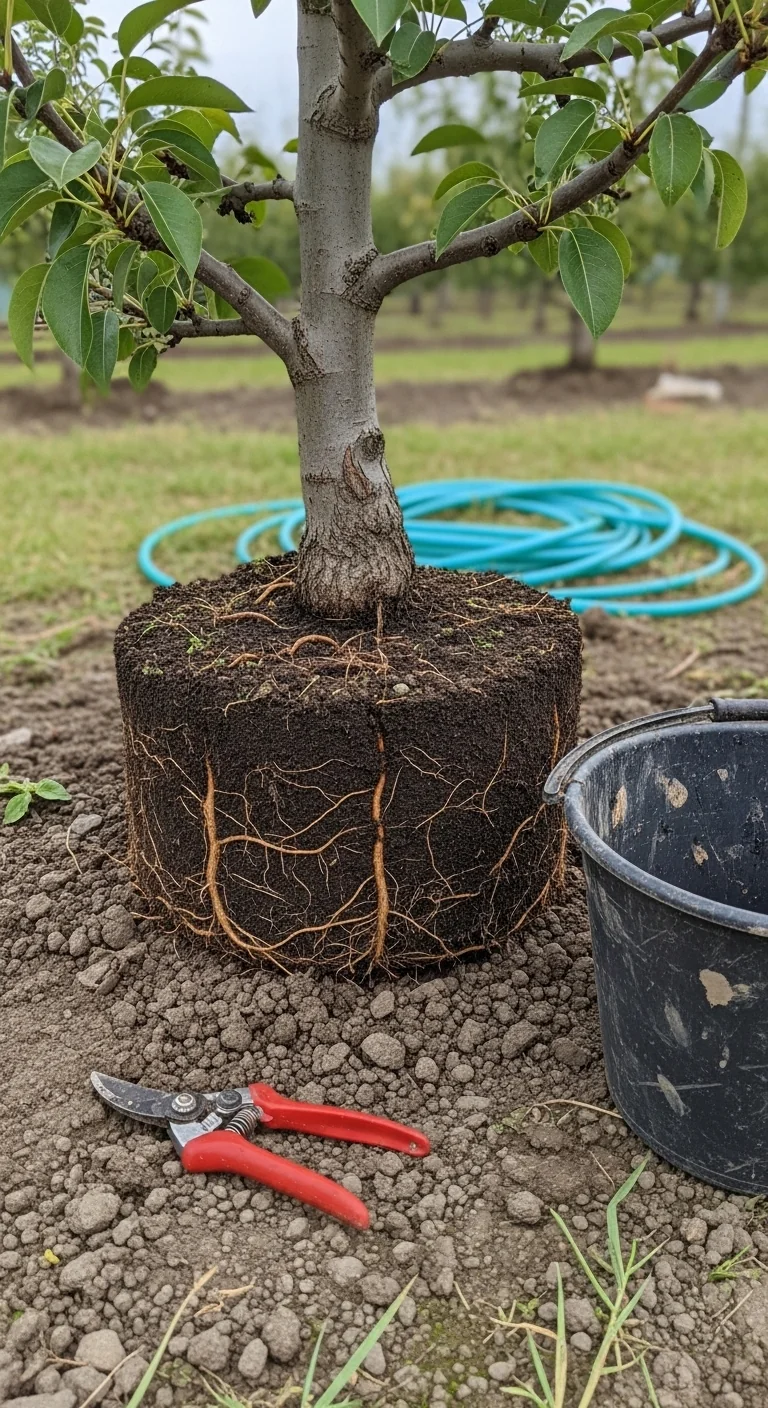
Excess nitrogen produces the tender new shoots the fire blight bacterium prefers for rapid invasion. Limit annual terminal growth to 6 to 8 inches on pear trees by reducing nitrogen applications after the first year of establishment. Apply fertilizer only in early spring based on leaf color and soil test results rather than a fixed calendar date.
This adjustment pairs with your overall fruit tree schedule and prevents the succulent growth that turns minor infections into major dieback. Monitor shoot length in late spring as the measurable indicator of balanced fertility.
Disinfecting Pruning Tools Between Cuts
Best for: Branch 2
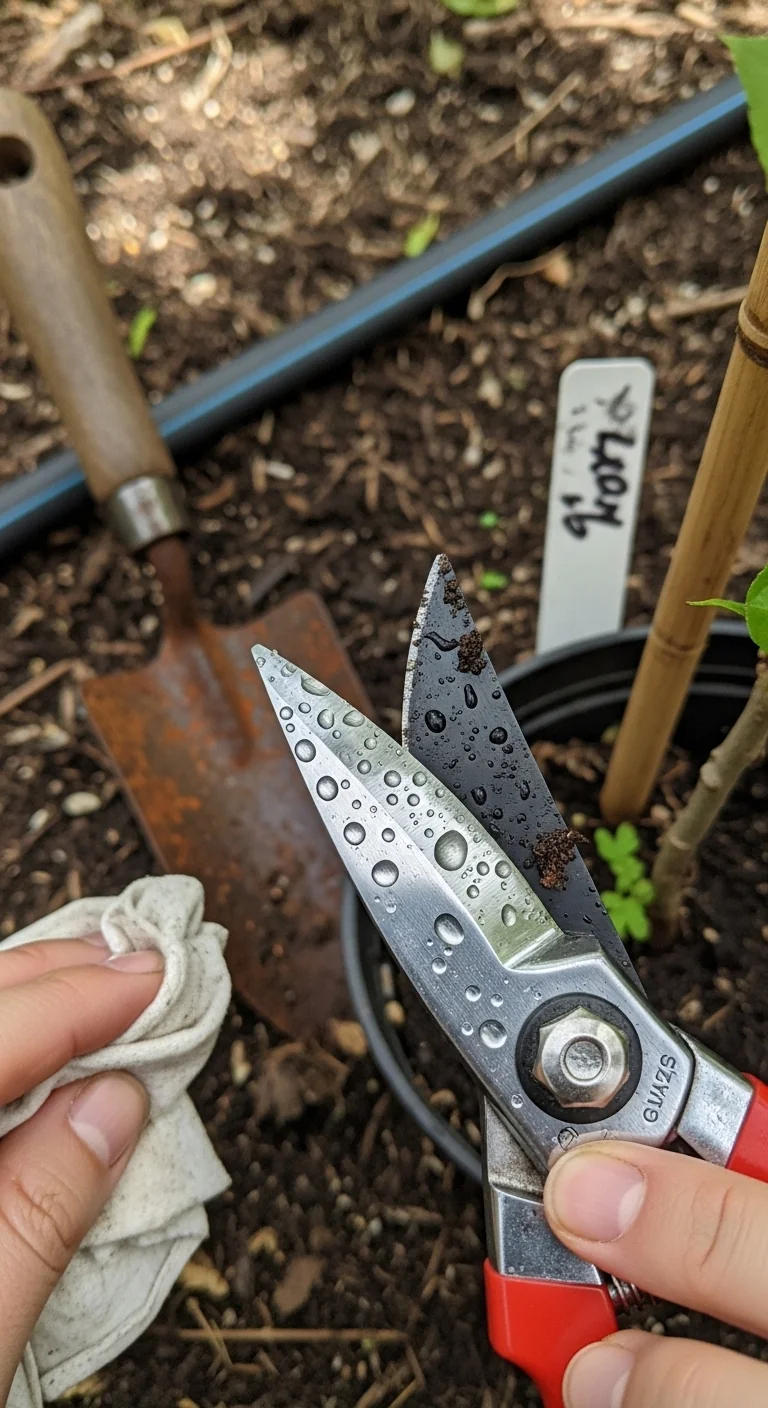
Blueprint: dip shears or saws in a 10 percent bleach solution or 70 percent isopropyl alcohol for 30 seconds between every cut when removing blighted wood. Rinse and dry tools at the end of the session to avoid corrosion. This step blocks mechanical transfer of bacteria from one branch to another during a single pruning session.
Improving Air Circulation with Training Methods
Best for: Branch 1
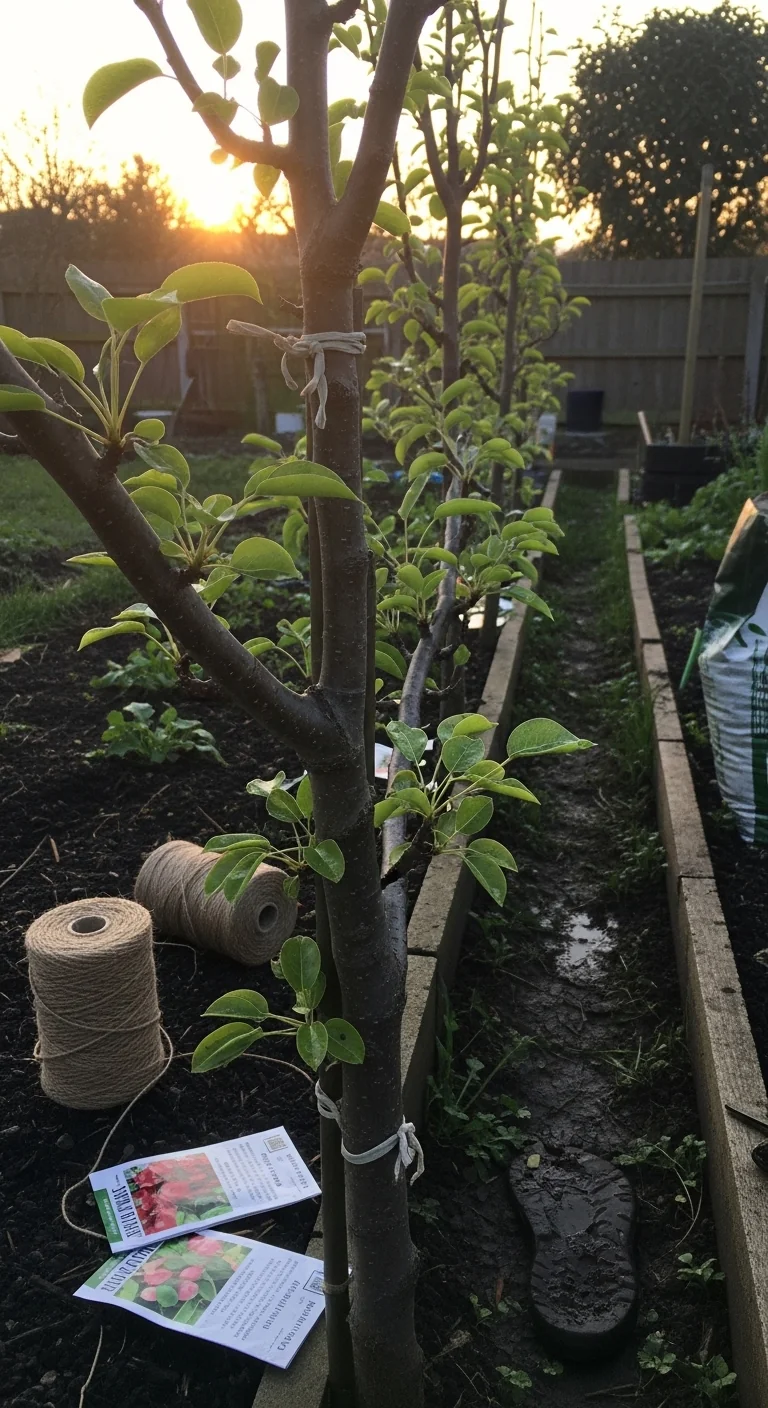
Espalier or open-center training keeps blossoms and shoots drier and easier to inspect. Open canopies reduce the humid microclimates that favor bacterial multiplication during bloom. Follow our espalier fruit trees guide for spacing that maintains 18 to 24 inches between main branches while preserving fruiting wood.
Unique detail: trained trees also allow faster visual scouting for early ooze droplets on bark, the first sign of active cankers in spring.
Monitoring for Early Shepherd’s Crook Symptoms
Best for: Branch 2
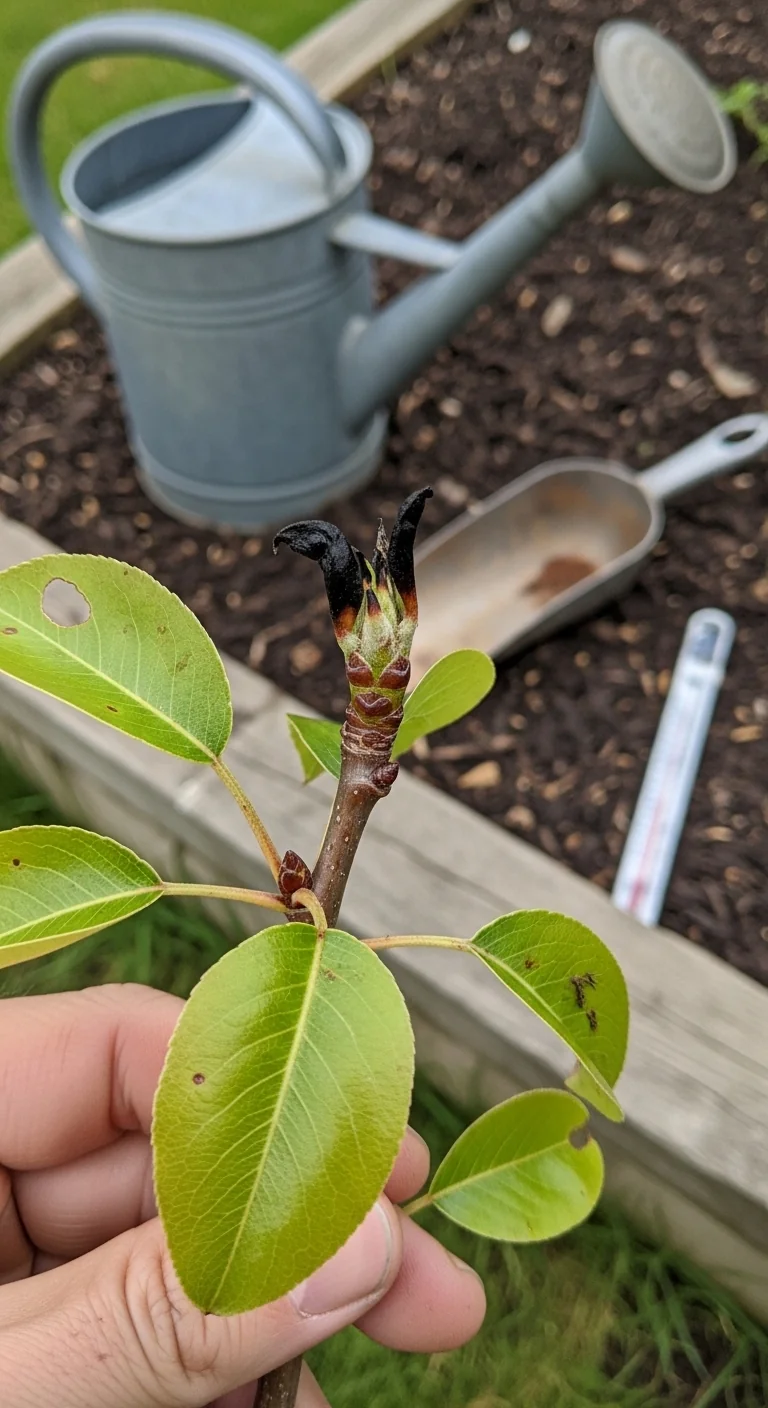
Threshold rule: inspect pear trees daily from petal fall through three weeks afterward whenever daytime temperatures stay above 65°F (18°C) and rain occurs. Look for the characteristic downward hook on shoot tips plus blackened leaves that remain attached. Mark affected branches immediately for same-day removal. Early detection within 48 hours of first wilting keeps infections from reaching scaffolds in most cases.
Choosing Resistant Rootstocks
Best for: Branch 3
Use vs skip: select rootstocks such as OHxF series when replanting in fire blight-prone sites; skip seedling rootstocks that offer no documented resistance benefit.
Recovery Strategies for Severely Affected Trees
Best for: Branch 3
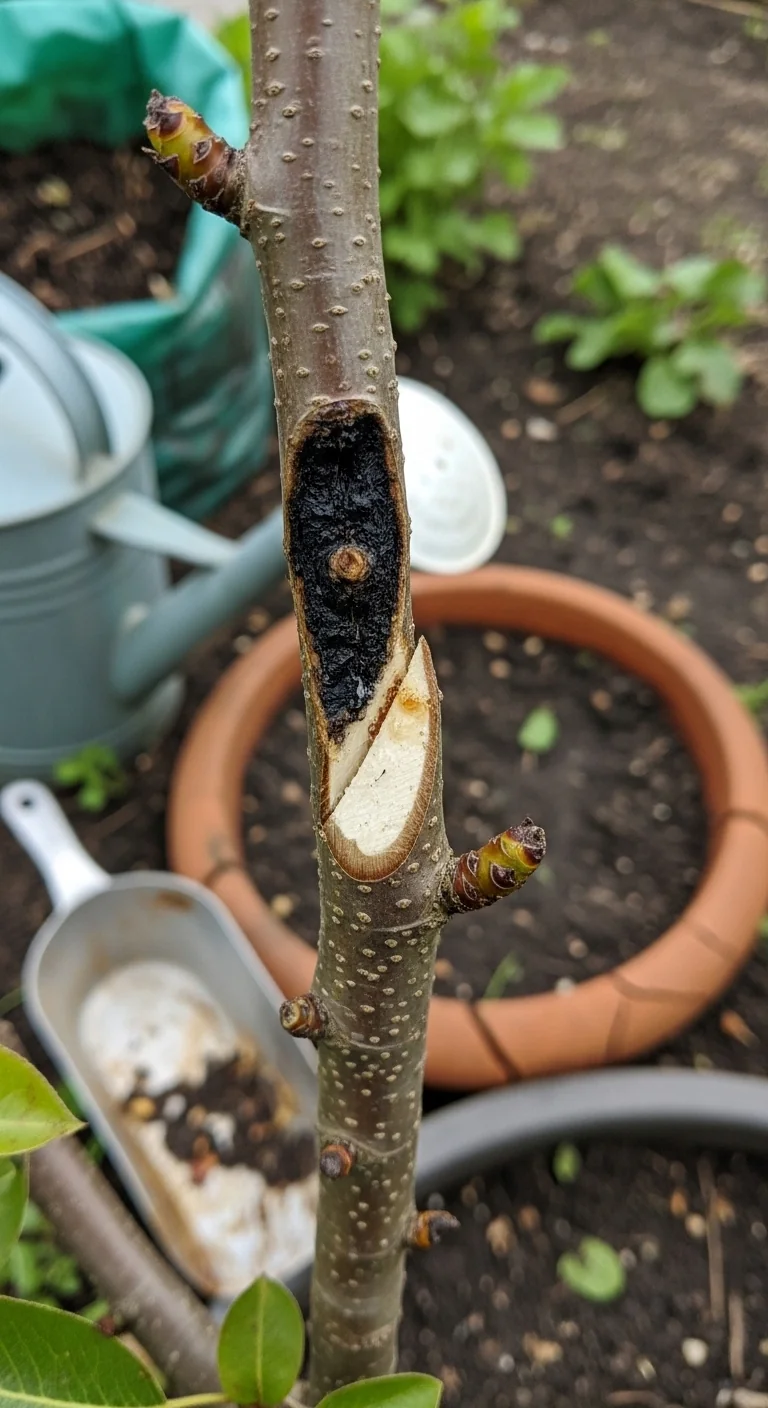
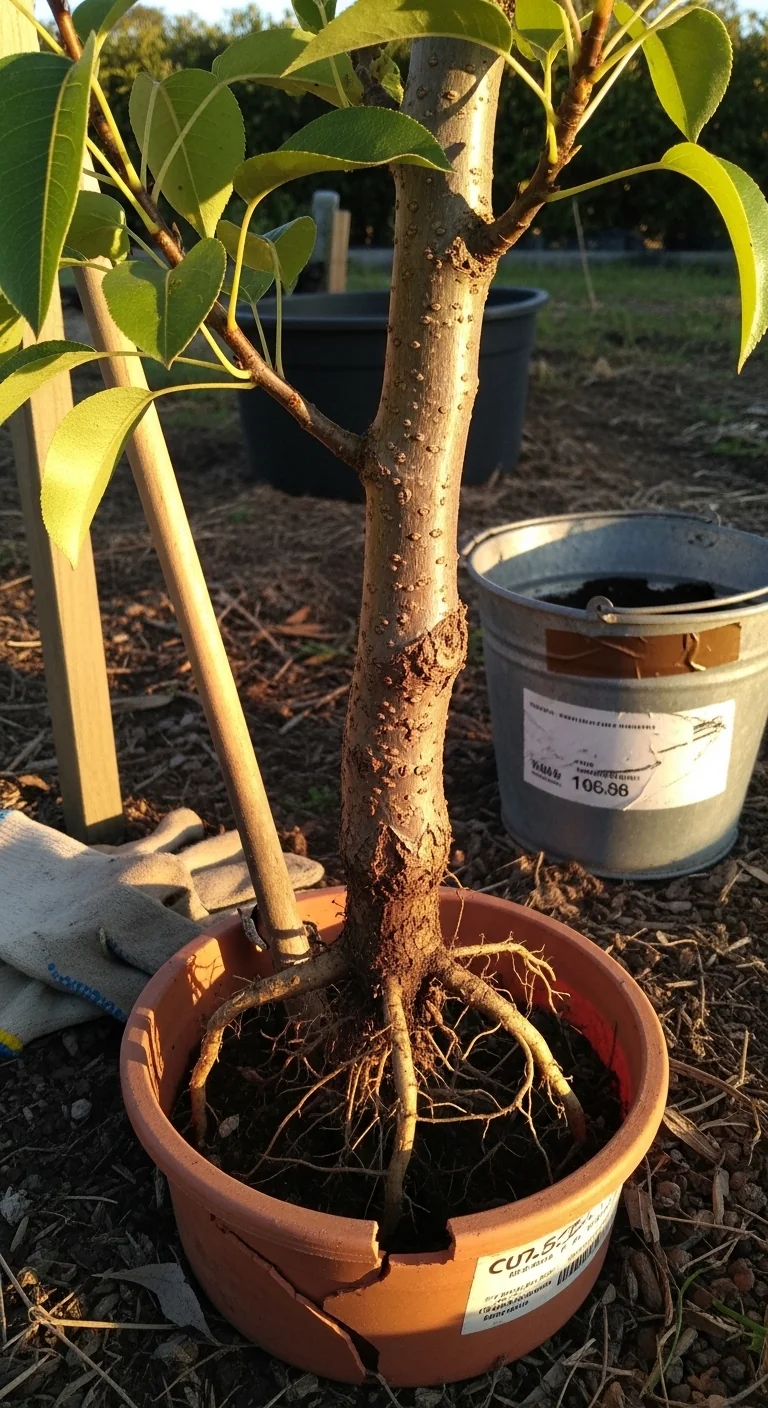
For trees with trunk cankers, remove entire affected limbs back to the collar and allow the tree to compartmentalize the wound. Avoid painting cuts. Replant or graft new scions only during the dormant season after soil temperatures stabilize above 50°F (10°C). Our when to plant fruit trees guide details the exact window that minimizes transplant stress and secondary infections.
Combine with thinning fruit trees practices the following season to maintain airflow around remaining wood.
Starter Stack (What to Choose First)
For Branch 1 (Prevention)
Start with Items 1 and 3: resistant variety selection plus timed copper sprays. Synergy comes from the variety reducing spray frequency while the copper protects the bloom window. Initial setup costs 40 to 80 dollars and requires 4 to 6 hours spread over one dormant season plus two bloom applications.
For Branch 2 (Early Localized Infection)
Prioritize Items 2 and 4: proper pruning cuts paired with nitrogen adjustment. The combination stops active spread and prevents future succulent growth that invites reinfection. Time investment stays under 3 hours per season with material costs below 20 dollars.
For Branch 3 (Advanced Cankers)
Begin with Items 5 and 8: tool disinfection protocol plus resistant rootstock selection for any replacement. Together they break the reinfection cycle during recovery. Expect 2 to 4 hours of work and 30 to 60 dollars in rootstock materials for one tree.
When This Won’t Work
Fire blight management fails when cankers fully encircle the trunk or when infections reach the root crown during consecutive wet springs above 65°F (18°C). In these measurable conditions the vascular tissue is compromised and the tree cannot recover functional canopy.
Another failure condition occurs on very young trees under three years old that lose more than half their scaffold branches in one season. The remaining framework cannot support adequate regrowth before the next bloom cycle.
Alternative action: remove the entire tree, improve site drainage if needed, and replant with a resistant variety and rootstock combination the following dormant season.
Choosing the Right Option for Your Situation
Budget Threshold
Under 50 dollars per tree favors Items 2, 5, and 7 (pruning, disinfection, monitoring). Above that amount opens Items 1 and 8 (new resistant varieties or rootstocks).
Time Threshold
Less than 2 hours per season limits you to Items 1 and 4 (variety choice and fertility). More available time unlocks spray timing and training methods.
Technical Constraint: Spring Humidity
In regions with frequent rain during bloom, prioritize airflow training (Item 6) and resistant varieties (Item 1). In drier zones, focus on fertility and pruning alone.
Yes/No checklist:
– Do you have confirmed symptoms this season?
– Are daytime temperatures forecast above 65°F during bloom?
– Is your current variety listed as highly susceptible?
– Can you prune within 48 hours of first wilting?
Expert Q&A
Does fire blight spread from pear trees to nearby apple trees?
Yes. The same bacterium Erwinia amylovora infects both crops through shared bloom timing and insect vectors. Maintain at least 20 feet separation or prune both species on the same sanitation schedule to limit cross-infection.
How do weather forecasts help time interventions?
Forecasts of temperatures above 65°F (18°C) with rain during bloom signal high infection risk. Begin protective sprays or daily monitoring exactly when those conditions align rather than on a calendar date.
Can rootstock choice reduce fire blight severity on mature trees?
Resistant rootstocks such as certain OHxF selections improve overall tree vigor and slow canker progression into the trunk. They do not cure existing infections but support better recovery after pruning.
Is there any benefit to biological sprays for home pear trees?
Certain beneficial bacteria products applied at bloom can compete with the fire blight pathogen on flower surfaces. They work best when combined with copper timing and are most useful in Branch 1 prevention scenarios.
Does late-season pruning increase fire blight risk?
Yes if cuts are made after early fall rains. Dormant pruning in midwinter when temperatures stay below 50°F (10°C) avoids creating fresh entry points during the bacterium’s active period.
Conclusion
Next step: review resistant variety options for your next planting window using our columnar fruit trees guide to fit fire blight management into compact garden spaces.