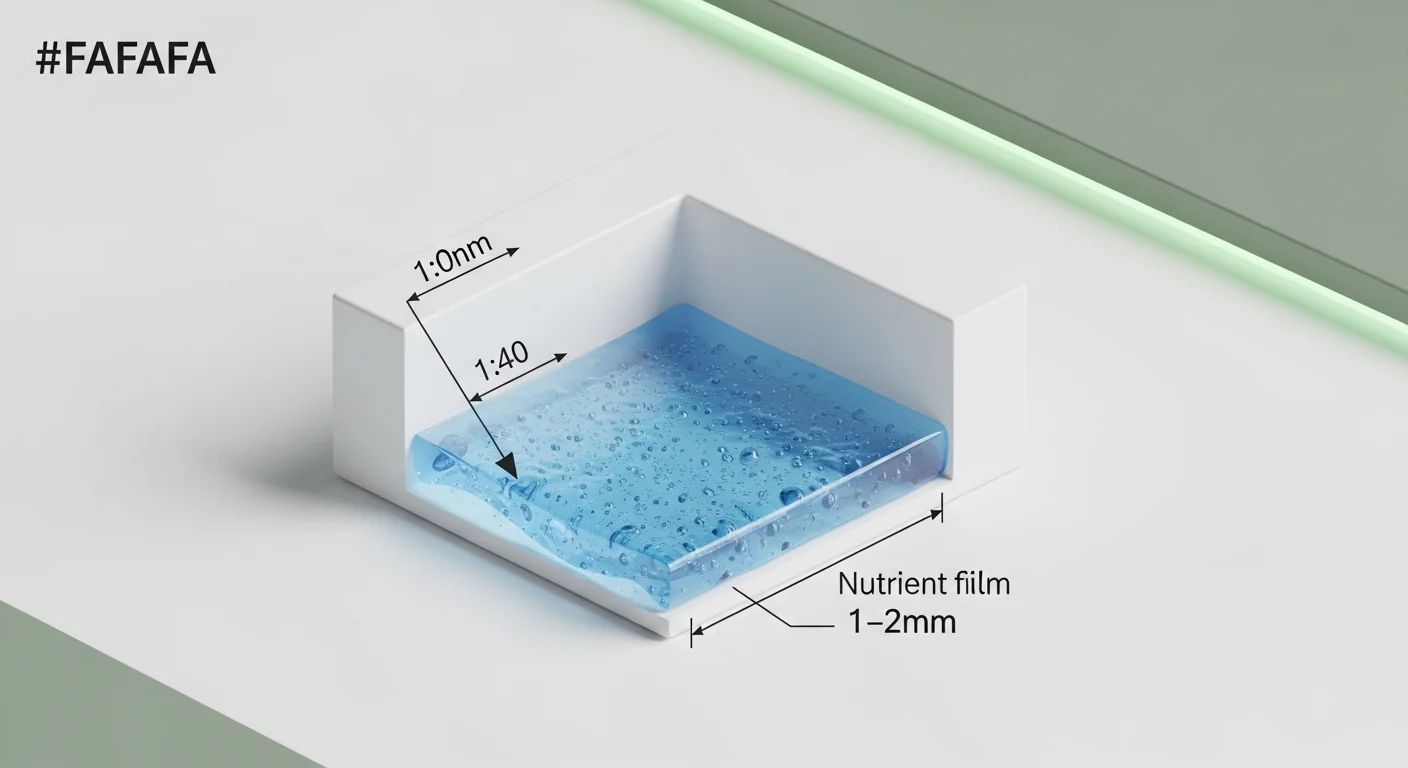
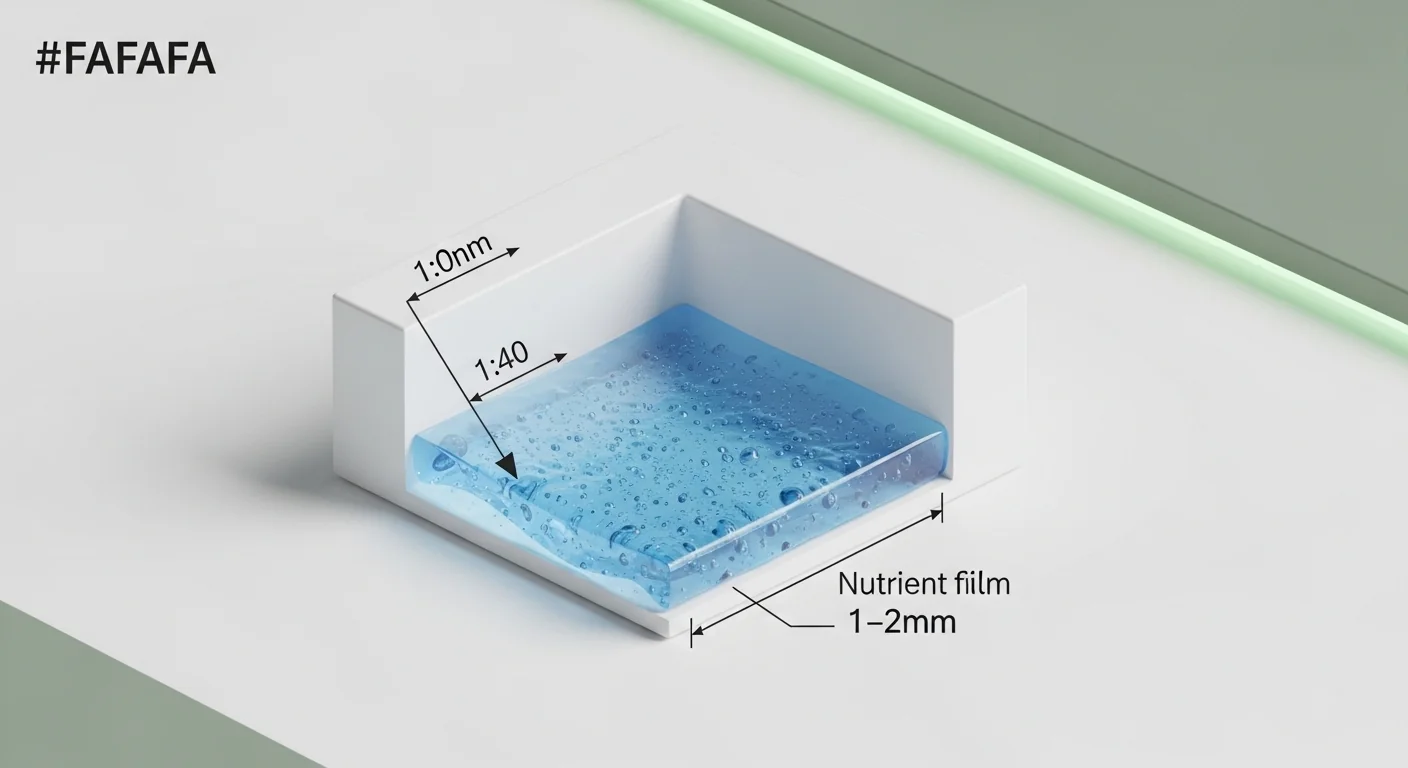
Nutrient Film Technique fails at the physics layer before it ever fails at the nutrient layer. The slope of the channel determines whether the solution moves as a thin, rushing micro-film exposing root tips to open air, or pools into a stagnant bath that depletes dissolved oxygen within minutes. Getting that ratio wrong by even a few points on the denominator shifts the system from optimal to catastrophic.
Precision nft hydroponics calculator — optimize channel slope and flow for root-zone oxygenation
(Stagnant) 1.0 LPM
(Min NFT) 2.0 LPM
(Ideal Max) 5+ LPM
(Flood Risk)
| Length (ft) | Slope Ratio | Drop (in) | Drop (cm) | Rating |
|---|
How This Calculator Works
Formula Steps
Step 1 — Convert length to inches (if feet):
Step 2 — Calculate vertical drop:
Step 3 — Validate flow rate:
Step 4 — Apply Secret Sauce safety checks:
Key Assumptions
- Channel width assumed to be 4-inch square NFT channel (standard)
- Nutrient solution temperature 18–24°C (64–75°F) for optimal oxygen saturation
- Film thickness target: 1–2 mm (true NFT micro-film, not a deep flow)
- Slope ratio is expressed as rise:run (1 unit vertical for every X units horizontal)
- A 1:30 slope = 1 inch drop every 30 inches of horizontal run
- Strawberries may tolerate 1.5–2.5 LPM due to larger root mass
- Film velocity approximated as drop × 0.18 (empirical NFT constant for 4-inch channel)
The Secret Sauce — Root Rot Physics
True NFT relies on a 1–2 mm micro-film of nutrient solution rushing over the root tips. The top half of the root mass is exposed to open air — this oxygenation is what makes NFT so productive. If the channel is too flat (slope ratio above 1:40), the film slows down and pools into a stagnant puddle 2+ inches deep. Roots sitting in still water deplete dissolved oxygen within ~10 minutes, triggering Pythium (root rot) — the most common NFT failure.
Channels longer than 40 ft also cause progressive oxygen depletion: roots at the inlet get fresh, oxygenated solution while roots near the outlet receive depleted water. Split long runs into two shorter channels fed from a central reservoir instead.
Limits of This Tool
- Does not account for pump head pressure or pipe friction losses
- Does not model dissolved oxygen depletion curve along channel length
- Assumes rigid channel substrate — flexible tubing may require adjusted slope
- Strawberry calculations are approximate; fruiting stage may require higher flow
This nft hydroponics calculator takes channel length, slope ratio, target flow rate, and crop type, then computes the exact vertical drop in inches and centimeters, estimates film velocity, and runs deterministic safety checks derived from known NFT fluid dynamics thresholds. It does not model pump head pressure, pipe friction losses, or dissolved oxygen depletion curves along the channel length. Those require lab instrumentation. What it does is flag the two failure modes that account for nearly every DIY NFT collapse: inadequate slope and excessive channel length.
After running your numbers, you will know whether your planned channel geometry produces a true micro-film or a slow-moving puddle, and whether the channel is short enough to deliver oxygenated solution uniformly from inlet to outlet.
Use the Tool
Before calculating, have the following ready: total channel length in feet or meters (measure the channel itself, not the frame), the slope ratio you intend to set or have already set (expressed as 1:X, where X is the horizontal run per unit of vertical rise), and your target pump output in liters per minute. If you are sizing a new pump and do not yet have a flow rate, start with 1.5 LPM as a working assumption for lettuce or herbs. For nutrient solution concentration targets to pair with your NFT build, the hydroponic nutrient dosing calculator covers solution mixing math separately.
Quick Start (60 Seconds)
- Channel Length: Enter the physical length of one NFT channel run, not the total circuit. If you have ten 20-foot channels, enter 20, not 200. Select the matching unit (ft or m) from the dropdown.
- Slope Ratio (1:X): Enter only the denominator. A 1:30 slope means the channel drops 1 unit for every 30 units of horizontal run. Enter 30, not "1:30" and not 0.033.
- Target Flow Rate (LPM): Enter the output of your pump as measured at the channel inlet, not the pump's rated maximum. Pump ratings are measured at zero head pressure; your actual output will be lower.
- Crop Type: Strawberries tolerate slightly higher flow (up to 3.0 LPM) due to their denser root mat. Lettuce and herbs share the 1.0-2.0 LPM standard range.
- Units matter for length only: Flow rate must be in liters per minute regardless of whether you enter length in feet or meters. The calculator does not accept gallons per minute; convert first (1 GPM = 3.785 LPM).
- Do not average two channels: If your channels have different lengths due to a sloped bench, calculate each length separately. A 15-foot and a 25-foot channel have different drops even at the same slope ratio.
- Fill all five fields before clicking Calculate. The tool performs validation on every field and will not display results until all inputs are present and within range.
Inputs and Outputs (What Each Field Means)
| Field | Unit | What It Means | Common Mistake | Safe Entry Guidance |
|---|---|---|---|---|
| Channel Length | ft or m | The horizontal run of one NFT channel from inlet end to outlet end | Entering total system length instead of individual channel length | Measure each channel individually; keep runs to 40 ft or shorter |
| Length Unit | ft / m | Unit selector for the length field | Entering meters but leaving unit set to feet, doubling the computed drop | Change the unit selector before entering the number |
| Slope Ratio (1:X) | dimensionless | Denominator of the rise-over-run ratio; higher X means flatter channel | Confusing slope ratio with grade percentage; a 1:30 slope is not 30% | Enter values between 20 and 40 for most NFT crops; do not exceed 40 |
| Target Flow Rate | LPM | Liters per minute of nutrient solution delivered to the channel inlet | Using the pump's label rating instead of the measured outlet flow at operating head | Measure actual output with a measuring jug over 60 seconds; target 1.0-2.0 LPM |
| Crop Type | category | Adjusts flow thresholds and warning text for the selected plant family | Selecting lettuce for a mixed channel containing strawberries | Use the most demanding crop on the channel; strawberries need their own circuit |
| Drop (inches) (output) | inches | Total vertical height difference between inlet and outlet of the channel | Treating this as the shimming increment rather than total drop | Shim the inlet end by this value; measure from a flat reference surface |
| Film Velocity (output) | cm/s (est.) | Estimated surface velocity of the nutrient film in a standard 4-inch square channel | Treating this as a precise measurement; it is an empirical estimate | Use for relative comparison between slope configurations, not absolute engineering |
| Slope Classification (output) | text label | Qualitative rating: Steep, Optimal, or Too Flat, based on the 1:20-1:40 standard range | Ignoring the classification when it reads "Too Flat" and proceeding anyway | Optimal classification requires a ratio between 1:20 and 1:40 |
Worked Examples (Real Numbers)
Example 1: Standard 20-Foot Lettuce Channel at 1:30
- Channel Length: 20 ft
- Slope Ratio: 1:30
- Flow Rate: 1.5 LPM
- Crop: Lettuce
Result: Drop = (20 × 12) / 30 = 240 / 30 = 8.00 inches (20.32 cm). Film velocity estimate: 1.44 cm/s. All safety checks pass.
This configuration produces a well-sloped micro-film with flow squarely in the 1.0-2.0 LPM lettuce range. The channel is short enough to maintain consistent dissolved oxygen from inlet to outlet. Shim the inlet end 8 inches above the outlet when mounting on a bench frame.
Example 2: Too-Flat Herb Channel at 1:45
- Channel Length: 25 ft
- Slope Ratio: 1:45
- Flow Rate: 1.0 LPM
- Crop: Herbs (Basil)
Result: Drop = (25 × 12) / 45 = 300 / 45 = 6.67 inches (16.93 cm). Stagnant Puddle warning triggered.
Although the calculated drop looks reasonable in centimeters, the slope ratio of 1:45 exceeds the 1:40 threshold. The film moves too slowly to maintain the 1-2 mm depth required for root-tip air exposure. Nutrient solution ponds, root tips submerge, and anaerobic conditions develop. Corrective action: reduce the ratio denominator to 30, raising the inlet by approximately 10 inches for the same channel length.
Example 3: Long Strawberry Run at 1:30
- Channel Length: 45 ft
- Slope Ratio: 1:30
- Flow Rate: 2.0 LPM
- Crop: Strawberries
Result: Drop = (45 × 12) / 30 = 540 / 30 = 18.00 inches (45.72 cm). Slope check passes; Oxygen Depletion warning triggered due to length exceeding 40 ft.
The slope is correct and the flow rate is within the strawberry range. The failure point is length. Roots at the outlet end of a 45-foot channel receive solution that has already been metabolically processed by 45 feet of upstream root mass. Splitting this into two 22.5-foot channels fed from a central reservoir solves the oxygen gradient without changing slope or flow.
Reference Table (Fast Lookup)
| Length (ft) | Slope Ratio | Drop (in) | Drop (cm) | Classification | O2 Risk |
|---|---|---|---|---|---|
| 10 | 1:20 | 6.00 | 15.24 | Steep | Low |
| 10 | 1:30 | 4.00 | 10.16 | Optimal | Low |
| 10 | 1:40 | 3.00 | 7.62 | Borderline | Low |
| 20 | 1:30 | 8.00 | 20.32 | Optimal | Low |
| 20 | 1:40 | 6.00 | 15.24 | Borderline | Low |
| 30 | 1:30 | 12.00 | 30.48 | Optimal | Low |
| 40 | 1:30 | 16.00 | 40.64 | Optimal | Threshold |
| 40 | 1:50 | 9.60 | 24.38 | Too Flat | Threshold |
| 50 | 1:30 | 20.00 | 50.80 | Optimal | High: Split Required |
| 60 | 1:30 | 24.00 | 60.96 | Optimal | High: Split Required |
Note: "O2 Risk" column reflects oxygen depletion gradient risk based solely on channel length. Slope classification is based on the 1:20-1:40 accepted NFT range. Both columns are computed directly from the formula and thresholds used in the calculator.
How the Calculation Works (Formula + Assumptions)
Show the calculation steps
Step 1: Convert channel length to inches (if entered in feet)
Length_inches = Channel_Length_ft x 12
If length is entered in meters, the calculator first converts to feet (1 m = 3.28084 ft) before converting to inches.
Step 2: Calculate vertical drop
Drop_inches = Length_inches / Slope_Ratio_Denominator
Drop_cm = Drop_inches x 2.54
Rounding: results are displayed to 2 decimal places for inches and 1 decimal place for centimeters. Underlying calculations carry full floating-point precision.
Step 3: Estimate film velocity
Film_Velocity_cm_per_s = Drop_inches x 0.18
The 0.18 coefficient is an empirical approximation calibrated to a standard 4-inch square NFT channel. It is not derived from first principles and should be treated as a relative indicator, not a precision measurement.
Step 4: Safety threshold checks
IF Slope_Ratio_Denominator > 40 THEN trigger Stagnant Puddle warning
IF Length_ft > 40 THEN trigger Oxygen Depletion warning
IF Flow_LPM < 1.0 THEN trigger Low Flow warning
IF Flow_LPM > 2.0 AND Crop != Strawberries THEN trigger High Flow warning
Assumptions and Limits
- Channel geometry assumed to be standard 4-inch square NFT channel (e.g., CropKing-style). Circular or custom profiles change hydraulic radius and will produce different actual film velocities than shown.
- Slope ratio is treated as a simple rise-over-run ratio (1 unit vertical per X units horizontal). The calculator does not account for channel substrate flex, which can cause a nominally sloped channel to belly flat in the middle under root weight.
- The 40-foot oxygen depletion threshold is a conservative rule-of-thumb based on commonly cited NFT design guidance. The actual depletion curve depends on plant density, growth stage, water temperature, and atmospheric pressure at the grow site. At higher altitudes, dissolved oxygen saturation in water is lower, and the safe channel length may be shorter.
- Film velocity is estimated using an empirical coefficient (0.18) appropriate for a 4-inch channel at typical NFT flow rates. Narrow channels (2-inch round tube) or very wide channels (6-inch) will have different actual velocities.
- Nutrient solution temperature is assumed to be 18-24 degrees C. Dissolved oxygen solubility drops significantly above 24 degrees C, which can push a borderline-long channel into oxygen depletion territory even below 40 feet. Pair NFT system design with a water temperature check to confirm your reservoir stays within this range.
- Pump flow rate entered must reflect actual delivered output at the channel inlet at operating head pressure. Rated pump capacity at zero head will overstate real-world flow and produce optimistic LPM readings.
- Strawberry flow tolerance extended to 3.0 LPM is an approximation for mature fruiting plants with dense root mats. Young transplants should be started at standard 1.0-1.5 LPM and ramped up gradually.
- This calculator does not account for branching manifolds or shared pump circuits where a single pump feeds multiple channels simultaneously. Each additional channel reduces the flow rate per channel from the rated pump output.
Standards, Safety Checks, and "Secret Sauce" Warnings
The core fluid dynamics standard for NFT: The nutrient solution must move as a film 1-2 mm deep across the channel floor. The top half of the root mass must remain suspended in open air above this film. Anything that interrupts this geometry, whether by pooling, slowing, or flooding the channel, creates an anaerobic root environment.
Critical Warnings
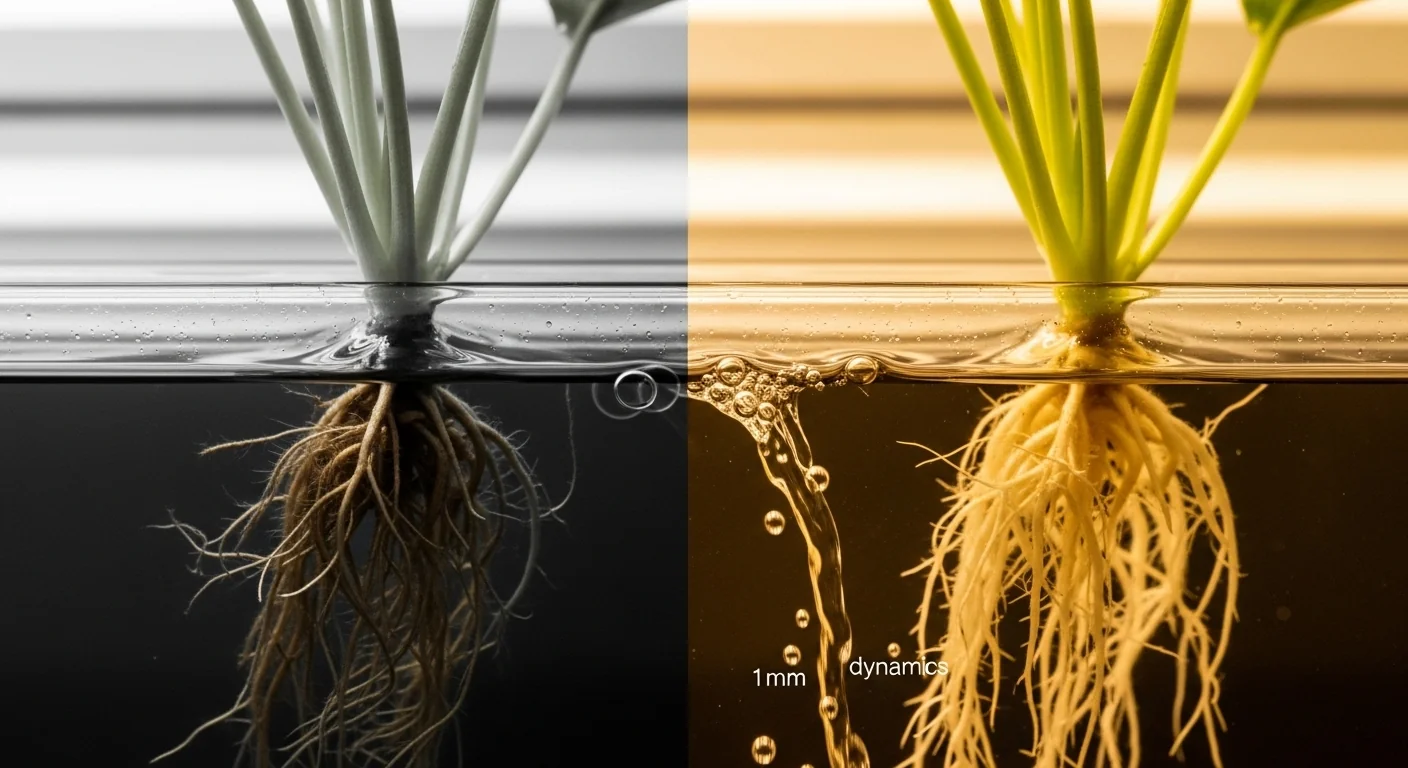
- Slope flatter than 1:40 triggers stagnant pooling. Below this threshold, surface tension and friction overcome gravitational pull and the solution slows into a pond rather than a rushing film. Root tips that should be exposed to air become submerged. Dissolved oxygen depletes within minutes under active root respiration, creating conditions favorable to Pythium and other water molds.
- Channels longer than 40 feet create an oxygen gradient. Plants at the inlet receive oxygenated, fresh solution. Plants at the outlet receive the same solution after it has been depleted by every upstream root it passed. This creates uneven growth rates across the channel and, in severe cases, root zone hypoxia at the far end. The solution is not to increase flow rate; it is to reduce channel length or split the run.
- Flow rate below 1.0 LPM causes intermittent wetting. At very low flows, the film becomes so thin it can break and dry in patches, leaving sections of root mat exposed to dry air rather than nutrient solution. This causes nutrient lockout and root tip die-back even with correct slope.
- Flow rate above 2.0 LPM on shallow-rooted crops causes turbulence damage. High flow velocity physically agitates fine root hairs, disrupts the boundary layer of the micro-film, and can lift or displace root mats in younger plants. Higher is not safer when it comes to nft channel flow rates.
Minimum Standards
- Slope ratio denominator: 20 to 40 (1:20 to 1:40). Do not exceed 40 for any crop in a standard NFT channel.
- Flow rate: 1.0 to 2.0 LPM for lettuce and herbs. 1.5 to 3.0 LPM for strawberries at fruiting stage.
- Maximum single channel run: 40 feet (approximately 12 meters) before splitting to a parallel circuit.
- Nutrient solution film depth: 1-2 mm at the channel floor. If visible pooling exceeds this, slope or flow adjustment is required.
Competitor Trap: Many NFT guides focus exclusively on flow rate and ignore slope ratio entirely, or give slope as a percentage grade without connecting it to the stagnant puddle failure mode. A grower can have a perfectly calibrated pump delivering exactly 1.5 LPM into a channel set at 1:50 slope and still lose the entire crop to Pythium within two weeks. Flow rate and slope are not independent variables; they interact. A steeper slope can compensate partially for slightly low flow, and vice versa, but neither can override the fundamental physics of a geometry that causes pooling. Any calculator or guide that treats these inputs separately without flagging slope ratio as a safety-critical parameter is omitting the most likely failure mechanism in hobbyist and small commercial NFT systems.
For systems where dissolved oxygen is a central concern across multiple crop types, comparing NFT oxygenation against the air pump requirements of deep water culture is useful context. The DWC air pump calculator covers the separate oxygenation math for reservoir-based systems if you are evaluating which growing method better fits your space.
EC management in the nutrient solution flowing through your NFT channels is equally important alongside slope and flow. Your hydroponic EC calculator can help dial in the conductivity targets for lettuce and herb circuits specifically.
Common Mistakes and Fixes
Mistake: Setting the Channel Level or Using Visual Estimation for Slope
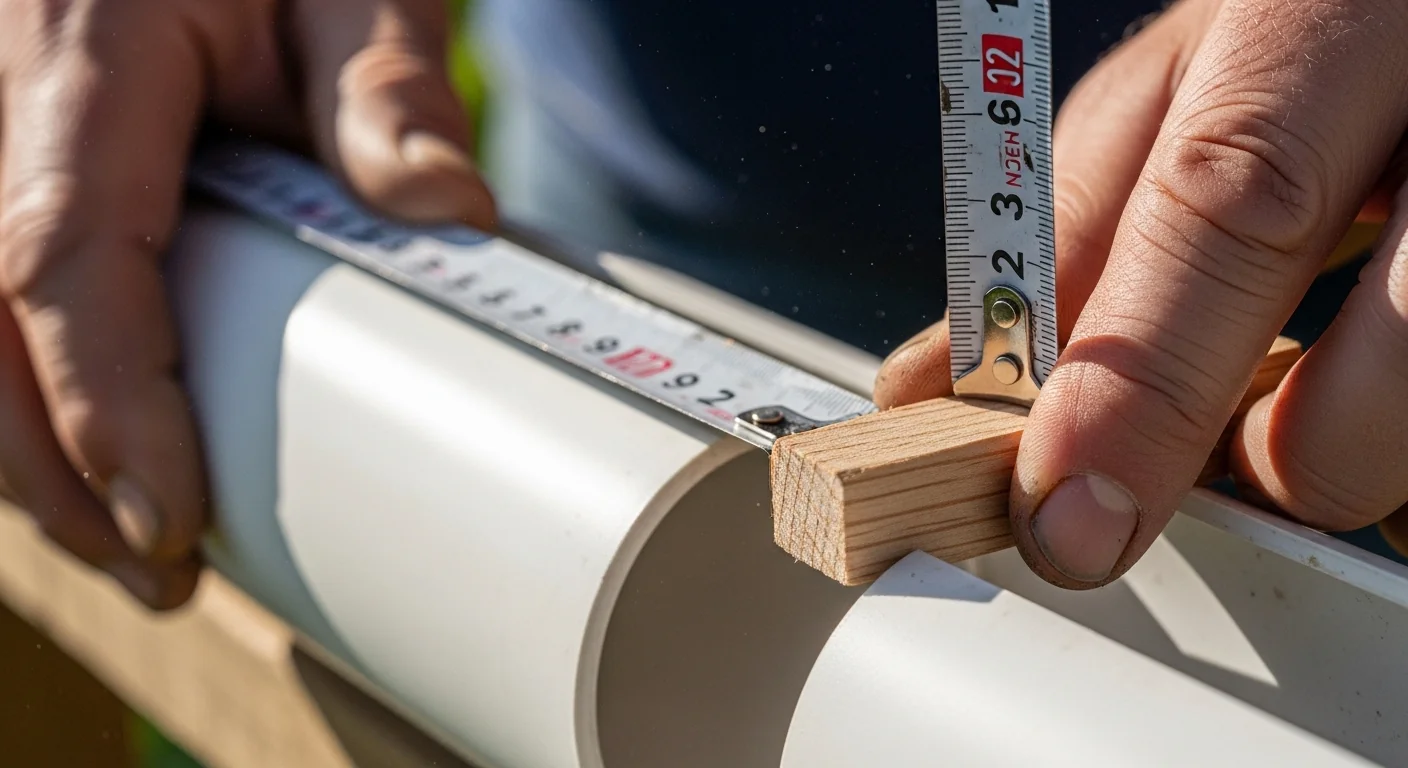
A channel that looks sloped to the eye can be nearly flat when measured. A 1:100 slope on a 20-foot channel produces only 2.4 inches of drop, which is invisible without a level and tape measure. Many first-time NFT builders eyeball the tilt and end up with a system functionally running at 1:80 or flatter. The nutrient solution moves in slow, wide sheets that resemble a flowing film but pool at any low point in the channel floor.
Fix: Use a digital level or a 4-foot spirit level to verify slope at multiple points along the channel. Calculate the required drop in inches using this tool, then use physical shims of that exact height under the inlet end brackets.
Mistake: Measuring Pump Output from the Label, Not the Outlet
Pump manufacturers rate output in LPM at zero head pressure, meaning the pump is submerged and the outlet is at water level. Every foot of vertical lift and every foot of horizontal pipe reduces actual output. A pump rated at 5 LPM delivering solution to a channel inlet 4 feet above the reservoir through 10 feet of tubing may deliver 2.5 LPM or less. Entering the label rating into a flow calculator produces dangerously optimistic results.
Fix: Place a one-liter container at the channel inlet with the system running as-built, measure how many seconds it takes to fill, and convert to LPM. This is the number to enter into the calculator.
Mistake: Running All Channels in Series Instead of Parallel
Connecting multiple NFT channels end-to-end so that the outlet of channel 1 feeds the inlet of channel 2 creates an effective channel length equal to the sum of all segments. A series of three 20-foot channels functions as a single 60-foot channel for oxygen depletion purposes, triggering the exact gradient problem the 40-foot limit is designed to prevent. Comparing this approach against the flood and drain pump calculator illustrates why parallel circuits require properly sized independent pump outputs for each branch.
Fix: Feed each channel from a shared reservoir manifold using individual supply lines. All inlets receive fresh, oxygenated solution simultaneously, and all outlets drain back to the reservoir independently.
Mistake: Ignoring Channel Floor Evenness
PVC pipe, foam board channels, and even commercial NFT tubing can sag between support points, creating micro-depressions where nutrient solution pools even in a correctly sloped system. These puddle points act as oxygen traps identical to a flat slope in a localized zone, and root sections sitting in those depressions are at the same Pythium risk as a fully level channel.
Fix: Support channels at intervals no greater than 24 inches. After setting slope and filling the system, run it for five minutes and visually inspect for any zones where solution is noticeably deeper or slower-moving than adjacent sections.
Mistake: Using the Same Flow Rate for All Crops on a Mixed System
Running lettuce, basil, and strawberries on the same pump circuit with identical flow rates to all channels is a structural mismatch. Strawberries have substantially denser root mats than lettuce and can tolerate higher flow, but that higher flow will physically stress basil root hairs. Shared circuits also make it impossible to tune flow per crop without adding flow control valves on each channel individually.
Fix: Separate crops with different root mass density onto independent pump circuits or install calibrated quarter-inch micro-valves on each channel to adjust flow independently from the shared manifold.
Next Steps in Your Workflow
Once the slope and flow calculations confirm your channel geometry is within safe parameters, the next variable to lock in is vapor pressure deficit in the grow space. NFT systems lose significant water through root-zone evaporation from the exposed top of the root mat, and high VPD conditions accelerate this beyond what the flowing film can compensate for, particularly in lettuce during the final two weeks before harvest. Running your climate numbers through the VPD calculator before setting your first transplant date will surface any seasonal humidity adjustments needed to keep transpiration balanced.
The other downstream variable is nutrient solution concentration. NFT systems recirculate solution continuously, and both concentration and pH drift between top-ups. A baseline EC reading at system start, combined with a target range by crop and growth stage, gives you the monitoring framework to catch drift before it affects the micro-film chemistry. Tracking PPM to EC conversions is particularly relevant if your meters report in different units than your nutrient product instructions.
FAQ
What is the ideal slope for an NFT channel?
The widely cited standard is between 1:30 and 1:40, meaning the channel drops 1 unit for every 30 to 40 units of horizontal run. A 1:30 slope (steeper) moves the film faster and is preferred for long channels or high-biomass crops. A 1:40 slope is the practical flatness limit; shallower than this and the film slows enough to pool in most channel materials and crop configurations.
How do I convert my slope to a drop measurement in inches?
Multiply the channel length in feet by 12 to get inches, then divide by the slope ratio denominator. For a 20-foot channel at 1:30: (20 x 12) / 30 = 8 inches of total drop. This is the height the inlet end must be elevated above the outlet end. Shim the inlet support brackets by this amount and verify with a digital level after installation.
Why does channel length matter for dissolved oxygen in NFT?
Plant roots absorb oxygen from the nutrient solution as it flows past. A 40-foot channel means the solution at the outlet has already been oxygenated and re-deoxygenated by every root mass between it and the inlet. The result is an oxygen gradient: plants at the inlet grow faster than plants at the outlet. Channels longer than 40 feet need to be split into parallel runs fed directly from the reservoir to reset this gradient.
What flow rate should I use for NFT lettuce versus strawberries?
Lettuce and most herbs perform well at 1.0 to 2.0 liters per minute per channel. Strawberries, especially at fruiting stage, develop a denser root mat that can handle and often benefits from 1.5 to 3.0 LPM. Starting both at the lower end of their respective ranges during propagation and increasing flow as root mass develops is a lower-risk approach than starting high.
Can I increase flow rate to fix a too-flat slope problem?
Not reliably. Increasing flow rate on a flat channel pushes more volume through but does not restore the thin micro-film geometry that NFT requires. The additional volume creates a deeper, faster-moving pool rather than a shallow film. The root oxygenation problem in a flat-slope NFT channel is geometric, not hydraulic. Correcting the slope is the only reliable fix.
What is Pythium and why is it the main NFT failure risk?
Pythium is a water mold pathogen that thrives in warm, low-oxygen aquatic environments. In a correctly designed NFT system, the exposed upper root mass stays aerobic and resistant to Pythium colonization. When slope or flow fails and roots sit in a stagnant puddle, the anaerobic conditions at root tips create an ideal environment for Pythium. Infection spreads rapidly through the shared nutrient solution and can collapse an entire channel within days of onset.
Conclusion
The two failure modes addressed here, stagnant pooling from inadequate slope and oxygen depletion from excessive channel length, account for the majority of NFT system failures that present as "nutrient problems" or "root disease outbreaks." Both are structural, both are preventable at the design stage, and neither requires expensive instrumentation to diagnose in advance. If you are scaling beyond a single bench of channels and want to build out a complete environmental control picture around your NFT system, the grow room dehumidifier calculator is a relevant next tool for managing the humidity load that a recirculating NFT system adds to an enclosed grow space.