
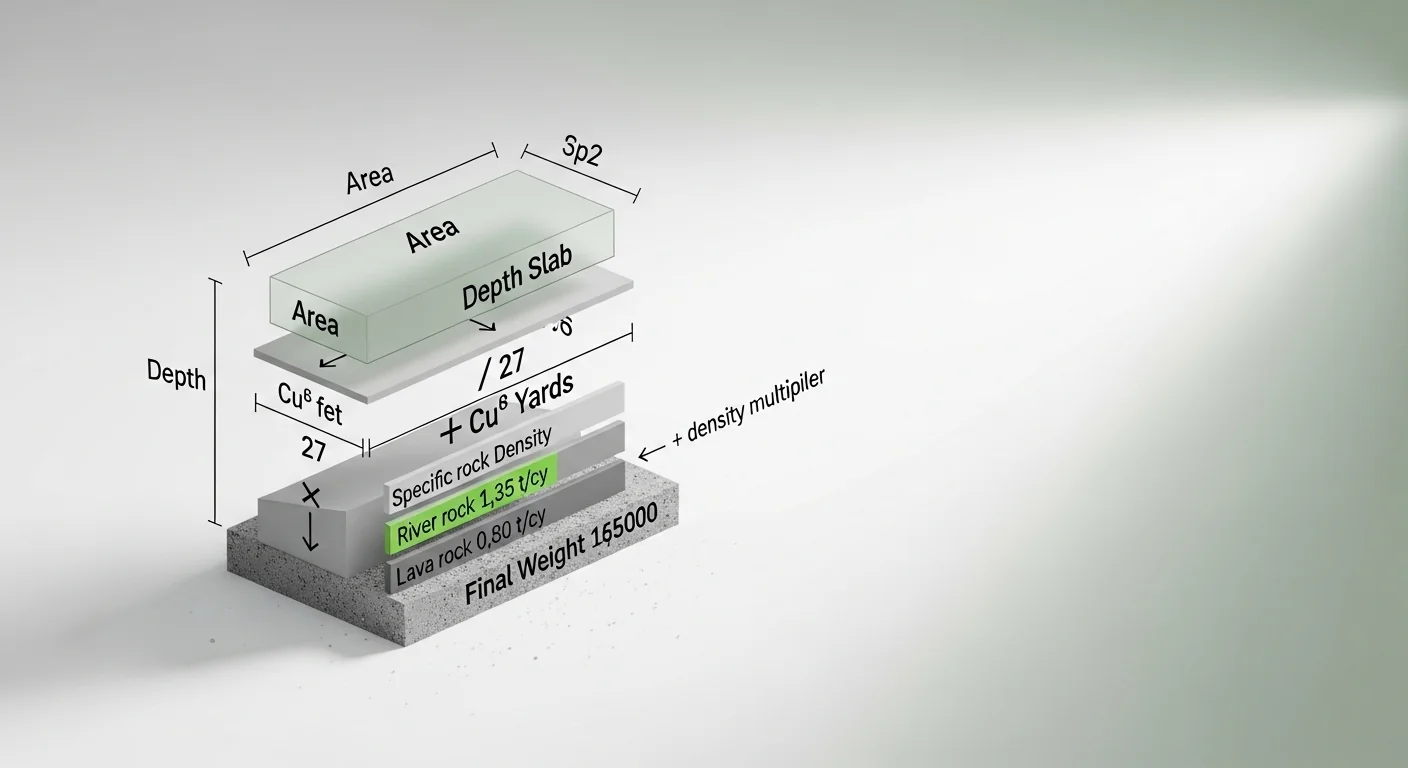
Rock estimates go wrong at the density step, not the area measurement. Two materials that look identical in a wheelbarrow can differ by nearly double in weight per cubic yard — and if your supplier quotes by the ton, that gap becomes a budget surprise on delivery day. Depth adds a second compounding error: most projects under-apply material and wonder why weeds push through within a season.
This river rock calculator converts area and depth into cubic yards and tons using the actual bulk density of the rock type you select. It does not account for soil compaction below the rock layer, slope adjustments, or drainage fabric thickness. What it produces is an accurate pre-purchase volume and weight estimate suitable for supplier conversations and project budgeting.
After running the numbers, you will know whether to order by the ton or by the yard, and whether your planned depth will hold back weeds long enough to be worth the material cost.
Use the Tool
| Metric | Value |
|---|
| Area (sq ft) | Depth | Volume (cy) | Weight (tons) |
|---|
Assumptions & Limits
- Densities are dry-weight approximations: River Rock ≈ 1.35, Gravel ≈ 1.40, Lava Rock ≈ 0.80, Decomposed Granite ≈ 1.50, Pea Gravel ≈ 1.40, Marble Chips ≈ 1.30 tons per cubic yard.
- Moisture, compaction, and size variations can change actual weight by ±10%.
- Max supported area: 100,000 sq ft. Max depth: 24 inches.
- Order 5–10% extra material to account for settling and irregular shapes.
- This calculator provides estimates. Always confirm with your supplier.
How This Calculator Works
Depth (ft) = Depth (in) ÷ 12Step 2 — Calculate volume in cubic feet:
Volume (cu ft) = Area (sq ft) × Depth (ft)Step 3 — Convert to cubic yards:
Volume (cy) = Volume (cu ft) ÷ 27Step 4 — Estimate weight:
Weight (tons) = Volume (cy) × Rock Density (tons/cy)Rock Densities Used: River Rock = 1.35, Gravel = 1.40, Lava Rock = 0.80, Decomposed Granite = 1.50, Pea Gravel = 1.40, Marble Chips = 1.30 tons per cubic yard.
All values are rounded to two decimal places. Results are estimates — actual quantities may vary with material moisture, compaction, and shape irregularities.
Before calculating, have three numbers ready: the total square footage of the area to be covered (length times width for rectangular beds, or a rough measured estimate for irregular shapes), the intended depth in inches, and the rock type you plan to order. If you have multiple separate bed areas, calculate them individually and add the cubic yard totals together before placing a bulk order. For comparable volume-based projects like gravel driveways, the gravel calculator handles those scenarios with its own material set.
Quick Start (60 Seconds)
- Area (sq ft): Measure length times width for rectangular beds. For irregular areas, divide the space into rectangles and add them. Enter the combined total. A common error is measuring the whole yard instead of only the area to be rocked.
- Depth (inches): Use a whole number or decimal. Two to four inches is standard. Enter 3 as a minimum if weed suppression is a goal -- the tool will confirm this threshold.
- Rock Type: Select the specific material you will order. Lava rock and river rock may cost similar amounts per cubic yard from your supplier but differ substantially in weight per yard, which matters if delivery is priced by the ton.
- Read the weight output: The tons figure is what a trucking company needs. The cubic yards figure is what most landscape suppliers use for volume pricing.
- Check the warning panel: If the calculator flags a depth warning, increase your depth input before locking in your material quantity.
- Add 5 to 10 percent: The reference table in results already factors in a modest overage for bags. For bulk orders, confirm with your supplier whether their minimum drop quantity meets your calculated need.
Inputs and Outputs (What Each Field Means)
| Field | Unit | What It Means | Common Mistake | Safe Entry Guidance |
|---|---|---|---|---|
| Area | sq ft | Total surface area to be covered with rock | Including planted area or structures inside the bed | Subtract any large plant bases, boulders, or hardscape inside the bed perimeter |
| Depth | inches | Thickness of the rock layer from ground surface to top of rock | Using the same depth as a mulch project (rock settles differently) | Minimum 2 inches for decorative use; 3 inches for weed suppression; 4 inches for heavy-traffic paths |
| Rock Type | N/A (select) | Material selection that determines the density multiplier for weight | Leaving it at the default when ordering a lighter or heavier material | Confirm the exact product name with your supplier and match it to the closest density option |
| Volume (output) | cubic yards (cy) | Total material volume needed | Confusing cubic yards with cubic feet (27 cu ft = 1 cy) | Use the cubic yard figure when talking to a landscape supplier |
| Weight (output) | tons | Total material weight at the selected rock density | Assuming all rocks weigh the same per yard | Use this number when arranging delivery or renting equipment for moving material |
| Bags estimate (output) | 50-lb bags | Approximate number of 50-pound bags to cover the same volume, with 5 percent overage | Buying bags for large jobs when bulk is significantly more cost-effective | Bulk delivery is typically more economical for projects exceeding 1 cubic yard |
Worked Examples (Real Numbers)
Example 1: Small Garden Accent Border (River Rock, 2 Inches Deep)
- Area: 50 sq ft
- Depth: 2 inches (0.167 ft)
- Rock type: River Rock (1.35 tons per cubic yard)
Result: Volume = (50 x 0.167) / 27 = 0.31 cubic yards. Weight = 0.31 x 1.35 = 0.42 tons.
At this scale, a bulk half-yard bag from a home improvement retailer covers the project. Two inches will look tidy but is below the weed-suppression threshold, so plan on landscape fabric beneath the rock layer.
Example 2: Front Yard Bed Refresh (Gravel, 3 Inches Deep)
- Area: 800 sq ft
- Depth: 3 inches (0.25 ft)
- Rock type: Gravel (1.40 tons per cubic yard)
Result: Volume = (800 x 0.25) / 27 = 7.41 cubic yards. Weight = 7.41 x 1.40 = 10.37 tons.
This is a bulk-delivery job. At just over 10 tons, a single dump truck load handles the material. Confirm the truck can reach the drop point, because spreading 10 tons by hand from a street position adds significant labor.
Example 3: Lava Rock Planting Bed (4 Inches Deep)
- Area: 200 sq ft
- Depth: 4 inches (0.333 ft)
- Rock type: Lava Rock (0.80 tons per cubic yard)
Result: Volume = (200 x 0.333) / 27 = 2.47 cubic yards. Weight = 2.47 x 0.80 = 1.97 tons.
Lava rock's low density means nearly the same volume as a gravel job weighs roughly half as much. That changes equipment requirements significantly: two tons is manageable with a small utility trailer, while the equivalent volume of decomposed granite (1.50 t/cy) would weigh over 3.7 tons.
Reference Table (Fast Lookup)
All values use the formula: Volume (cy) = (Area x Depth in ft) / 27. Weight columns use River Rock at 1.35 tons/cy and Lava Rock at 0.80 tons/cy. Entries show practical project sizes.
| Area (sq ft) | Depth (in) | Volume (cy) | River Rock (tons) | Lava Rock (tons) | Gravel (tons) |
|---|---|---|---|---|---|
| 50 | 2 | 0.31 | 0.42 | 0.25 | 0.43 |
| 100 | 2 | 0.62 | 0.84 | 0.50 | 0.87 |
| 100 | 3 | 0.93 | 1.25 | 0.74 | 1.30 |
| 200 | 3 | 1.85 | 2.50 | 1.48 | 2.59 |
| 500 | 3 | 4.63 | 6.25 | 3.70 | 6.48 |
| 500 | 4 | 6.17 | 8.33 | 4.94 | 8.64 |
| 1000 | 3 | 9.26 | 12.50 | 7.41 | 12.96 |
| 1000 | 4 | 12.35 | 16.67 | 9.88 | 17.29 |
| 2000 | 3 | 18.52 | 25.00 | 14.81 | 25.93 |
| 2000 | 4 | 24.69 | 33.33 | 19.75 | 34.57 |
How the Calculation Works (Formula + Assumptions)
Show the calculation steps
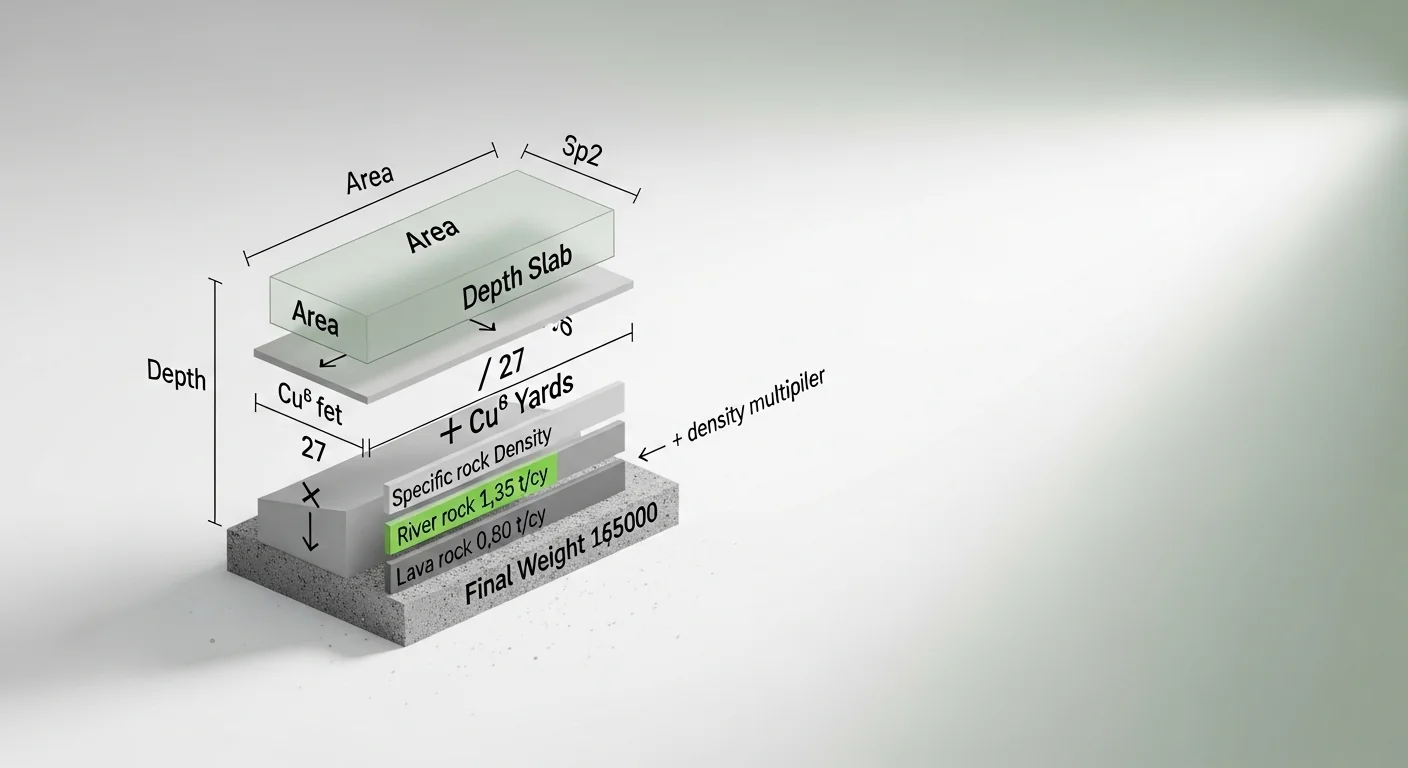
Step 1 -- Convert depth to feet:
Depth (ft) = Depth (inches) / 12
Example: 3 inches / 12 = 0.25 ft
Step 2 -- Calculate volume in cubic feet:
Volume (cu ft) = Area (sq ft) x Depth (ft)
Example: 800 sq ft x 0.25 ft = 200 cu ft
Step 3 -- Convert cubic feet to cubic yards:
Volume (cy) = Volume (cu ft) / 27
Example: 200 / 27 = 7.41 cy
Rounding: Results are rounded to two decimal places.
Step 4 -- Calculate weight:
Weight (tons) = Volume (cy) x Rock Density (tons/cy)
Example: 7.41 cy x 1.40 tons/cy = 10.37 tons
Densities used: River Rock = 1.35, Gravel = 1.40, Lava Rock = 0.80, Decomposed Granite = 1.50, Pea Gravel = 1.40, Marble Chips = 1.30 tons per cubic yard.
Assumptions and Limits
- Density values are dry-weight bulk averages. Wet material, finer gradations, or specific quarry stock can shift actual density by 10 percent or more in either direction.
- The calculator assumes a flat, uniform depth across the entire area. Sloped beds hold less rock on the downslope face and more in low points.
- Area input should reflect only the area to be covered. Planters, boulders, or hardscape islands inside the bed should be subtracted from the square footage.
- Bag estimates assume 50-pound bags and include a 5 percent overage factor. Actual bag weight may vary by supplier and product line.
- The tool does not account for landscape fabric or geotextile thickness, which typically adds 0.1 to 0.2 inches of effective depth reduction.
- For irregular shapes (curved beds, L-shapes, kidney beds), break the area into rectangles and sum the totals. This calculator handles one area at a time.
- Maximum supported inputs: 100,000 sq ft area, 24 inches depth. Entries outside this range will trigger a validation error.
Standards, Safety Checks, and "Secret Sauce" Warnings
Critical Warnings
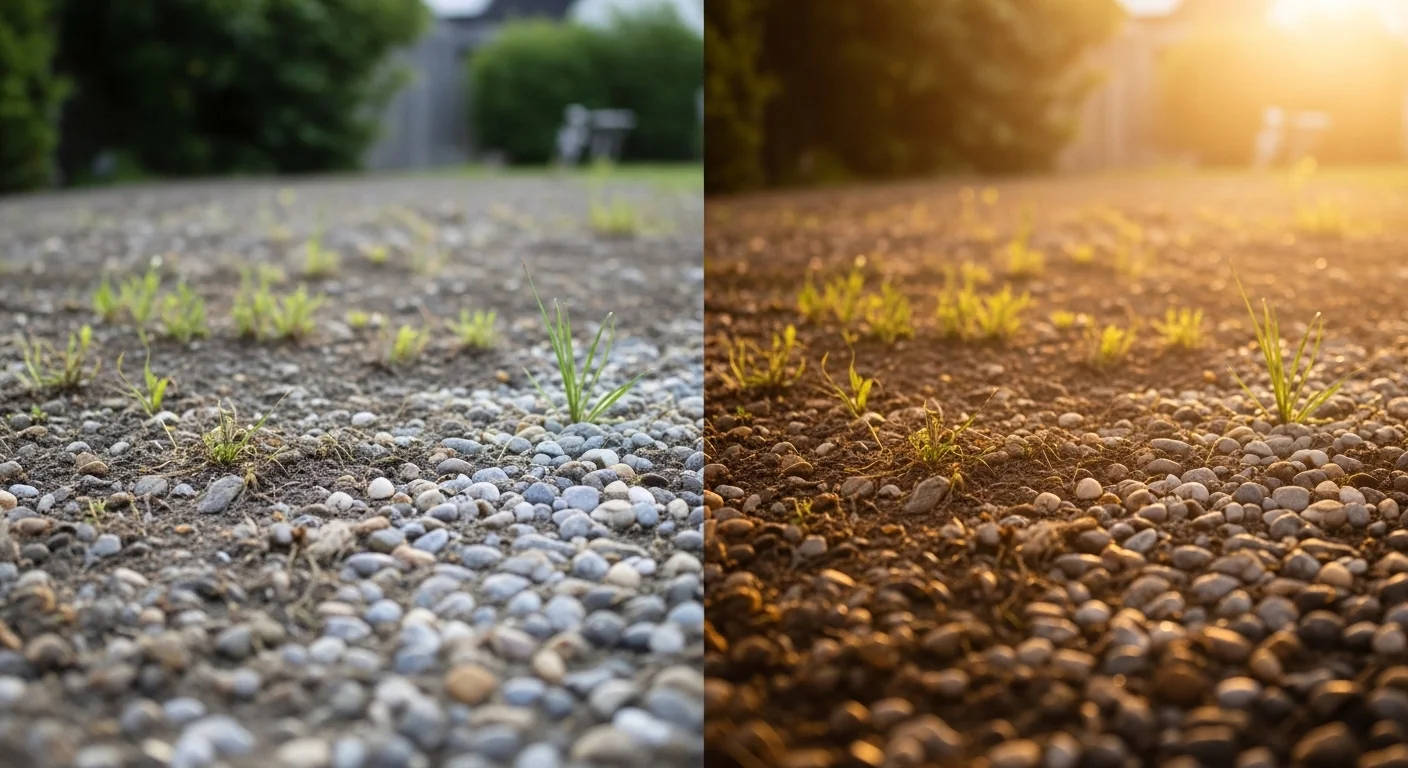
- Depth under 3 inches will not prevent weed growth. A 2-inch rock layer provides decorative cover but allows weeds to push through, particularly in areas with existing seed banks in the soil. The calculator flags this condition automatically. Pair any depth under 3 inches with a landscape fabric layer; the landscape fabric overlap calculator can help you estimate the fabric quantity for your bed dimensions.
- Lava rock requires wind consideration. Its low density (0.80 tons per cubic yard) makes individual pieces significantly lighter per volume than river rock or gravel. In exposed areas with regular wind, pieces can shift. Consider heavier border rock at the bed edge or confirm that the application site is adequately sheltered.
- Large orders (above 10 tons) involve delivery logistics. Standard dump trucks carry 10 to 15 tons. An order above that threshold requires coordinating multiple loads or a larger vehicle. Factor in driveway access, gate width, and whether the drop point allows the truck to unload without driving on turf or paving.
- Density mismatch is the most expensive error. If you calculate for river rock (1.35 t/cy) but your supplier delivers pea gravel priced by the ton at a similar rate, the volume per ton will differ. Confirm the quoted density or product specification with your supplier before finalizing quantities.
Minimum Standards
- 3 inches of rock depth is the accepted minimum for sustained weed suppression in residential landscape beds.
- For pedestrian paths or high-traffic areas, 4 inches provides better stability and reduces the appearance of bare ground from displacement.
- Edging or border containment is considered standard practice for any decorative rock installation to prevent migration onto turf, paving, or drainage channels.
Competitor Trap: Many landscape rock calculators ask only for area and depth, then apply a generic density figure without disclosure. River rock and lava rock are routinely listed side by side in the same "decorative rock" product category at suppliers, even though their densities differ by nearly 70 percent by weight per cubic yard. A calculator that does not distinguish material type will return a volume that is accurate but a weight estimate that is substantially wrong, leading to either overordered tonnage (overpaying) or underordered material if the supplier quotes by weight and the buyer budgets by volume.
If your project involves building up a raised edge or wall to contain rock beds, the retaining wall calculator covers block quantity and footing depth for that adjacent scope of work.
Common Mistakes and Fixes
Mistake: Measuring the Full Yard Area Instead of the Rock Bed
Pacing off a yard and entering the full lot dimensions is a common shortcut that produces a wildly inflated cubic yard result. Rock beds typically occupy a fraction of the total yard area, and entering the full property footprint can produce estimates 5 to 20 times higher than the actual need. Fix: measure only the planted and bare ground areas designated for rock coverage, and subtract any structures, hardscape, or existing large plantings within that perimeter.
Mistake: Treating Cubic Yards and Cubic Feet as Interchangeable
One cubic yard equals 27 cubic feet. Projects specified in cubic feet and ordered in cubic yards will arrive with roughly 27 times too little material. This happens most often when working from a landscaping plan drawn in feet and inches, then calling a supplier who quotes in yards. Fix: always divide your cubic foot total by 27 before calling the supplier, or use the calculator's output directly, which is already in cubic yards.
Mistake: Selecting the Wrong Rock Density for the Material Ordered
River rock and pea gravel look similar in catalog photos but have different densities. Ordering by volume is safe if your supplier quotes in cubic yards, but if they quote in tons, the density mismatch changes your material cost calculation. Fix: ask your supplier for the bulk density of the specific product before running your weight estimate, and match it to the closest option in the rock type selector. For a related project involving base material beneath pavers, check the paver base calculator for the correct compacted depth standards.
Mistake: Forgetting to Account for Landscape Fabric Thickness
Landscape fabric adds a small but real layer beneath the rock, effectively reducing the visible depth of rock above grade. A 3-inch rock install over heavy fabric may look like 2.75 inches of visible coverage, which brings it close to the weed-suppression threshold. Fix: if using fabric, add 0.25 inches to your target depth input to compensate, or plan to top-dress after the first season if gaps appear.
Mistake: Under-ordering and Returning for a Small Remainder Quantity
Ordering the exact calculated volume without overage forces a second supplier trip or delivery when corners, edges, and irregular sections require a bit more material than the clean rectangular calculation suggests. This is especially common with river rock in curved or kidney-shaped beds. Fix: add at least one half cubic yard to any bulk order under 5 yards, or 10 percent to larger orders, to cover edge fill and settling. Projects involving adjacent topsoil or organic layer depth can be verified using the topsoil calculator to cross-reference total material volumes.
Next Steps in Your Workflow
Once the cubic yard and ton totals are in hand, the next practical step is confirming delivery or transport logistics before placing an order. Small quantities under 1 cubic yard can often be handled in bulk bags from a home center. Projects in the 2-to-5 cubic yard range typically fit a utility trailer. Above 5 cubic yards, a professional delivery is usually the more efficient option -- and at that scale, it is worth asking whether the supplier has a minimum delivery fee that makes a slightly larger order more economical per yard. If the project includes stepping stones, pathways, or feature elements alongside the rock beds, the stepping stone calculator can help estimate spacing and quantity for those elements in the same planning session.
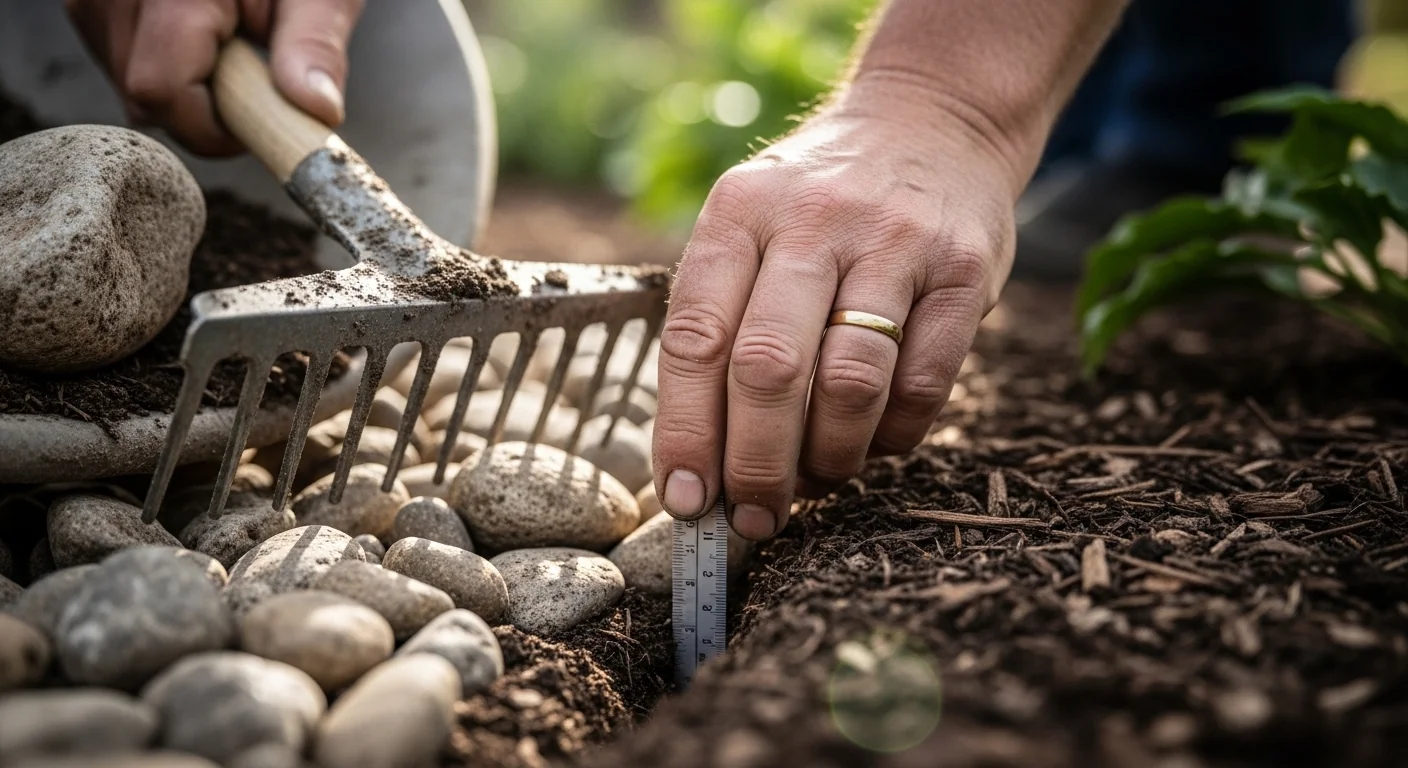
After material is delivered, the installation sequence matters for final coverage quality. Grading the soil base first, then laying fabric if needed, then spreading and raking rock from the center outward gives the most consistent depth across irregular areas. For dry creek bed features using river rock as the primary material, sizing selection (the specific stone diameter range to order) is a separate decision from quantity. The dry creek bed stone size calculator handles that alongside watershed and drainage context.
FAQ
How many cubic yards of river rock do I need for 100 square feet at 3 inches deep?
Using the formula: (100 x 0.25) / 27 = 0.93 cubic yards. That is just under 1 full cubic yard of river rock, which at 1.35 tons per cubic yard weighs approximately 1.25 tons. Most suppliers will round this to a 1-yard minimum order for bulk material, which leaves a small amount for edge fill or touch-up.
What is the difference between ordering by cubic yard versus ordering by the ton?
Cubic yards measure volume -- how much physical space the material occupies. Tons measure weight. The conversion between them depends entirely on the density of the specific rock type. River rock converts at roughly 1.35 tons per cubic yard; lava rock at 0.80 tons per cubic yard. Suppliers may price by either unit, so confirming their pricing basis before finalizing your quantity estimate prevents budget errors.
How deep should river rock be for weed control?
Three inches is the minimum depth considered effective for sustained weed suppression under most soil conditions. Depths below this allow light to reach the soil surface, particularly as rock settles and spreads over time. Pairing any rock layer with a quality landscape fabric beneath it extends the weed-free period and allows for a slightly thinner rock layer without sacrificing performance.
Is lava rock lighter than river rock?
Yes, substantially. Lava rock has a bulk density of approximately 0.80 tons per cubic yard, compared to river rock at approximately 1.35 tons per cubic yard. For the same volume coverage, a lava rock installation weighs roughly 40 percent less than an equivalent river rock installation. This affects delivery cost if priced by weight, equipment requirements for spreading, and stability in exposed or sloped areas.
Can I use this calculator for a gravel driveway?
The area and depth inputs work for driveways, but the appropriate depth for a driveway base is different from a landscape bed. Gravel driveways typically need 4 to 6 inches of compacted base material plus a surface layer, and the total calculation involves multiple material types. This calculator is best suited for single-material decorative or pathway applications. A dedicated gravel driveway tool will account for compaction ratios and layered material.
What does "tons per cubic yard" mean in practical terms?
It is the bulk density of a specific rock type -- how much a cubic yard of that material weighs when loose-loaded, not solidly packed. A cubic yard is a cube measuring 3 feet on each side. River rock at 1.35 tons per cubic yard means that standard volume weighs 2,700 pounds. This figure changes slightly based on stone size, moisture content, and how tightly the material is loaded, but the values in this calculator represent standard dry-weight industry averages.
Conclusion
The central value of a rock calculator is not the area math -- any spreadsheet handles that. It is the density step that separates a useful estimate from a misleading one. Lava rock and decomposed granite sit in the same product aisle but differ by nearly 0.70 tons per cubic yard, which translates to a material weight difference large enough to affect delivery method, equipment choice, and total project cost. Applying the right density to the specific material ordered is the one calculation most simplified estimators skip.
The most avoidable mistake remains depth under-specification. Ordering the correct volume of rock only to have weeds return within a season because the depth fell short of the 3-inch threshold is a common and fixable error. Run the depth input through the calculator before purchasing, add fabric if the project requires a thinner rock layer, and confirm your supplier's pricing basis -- volume or weight -- before translating your cubic yard result into an order quantity. For projects that involve a mix of rock types, water features, or adjacent hardscape, the mulch calculator covers organic topdressing quantities using the same area-and-depth logic if any plant beds share the project footprint.