
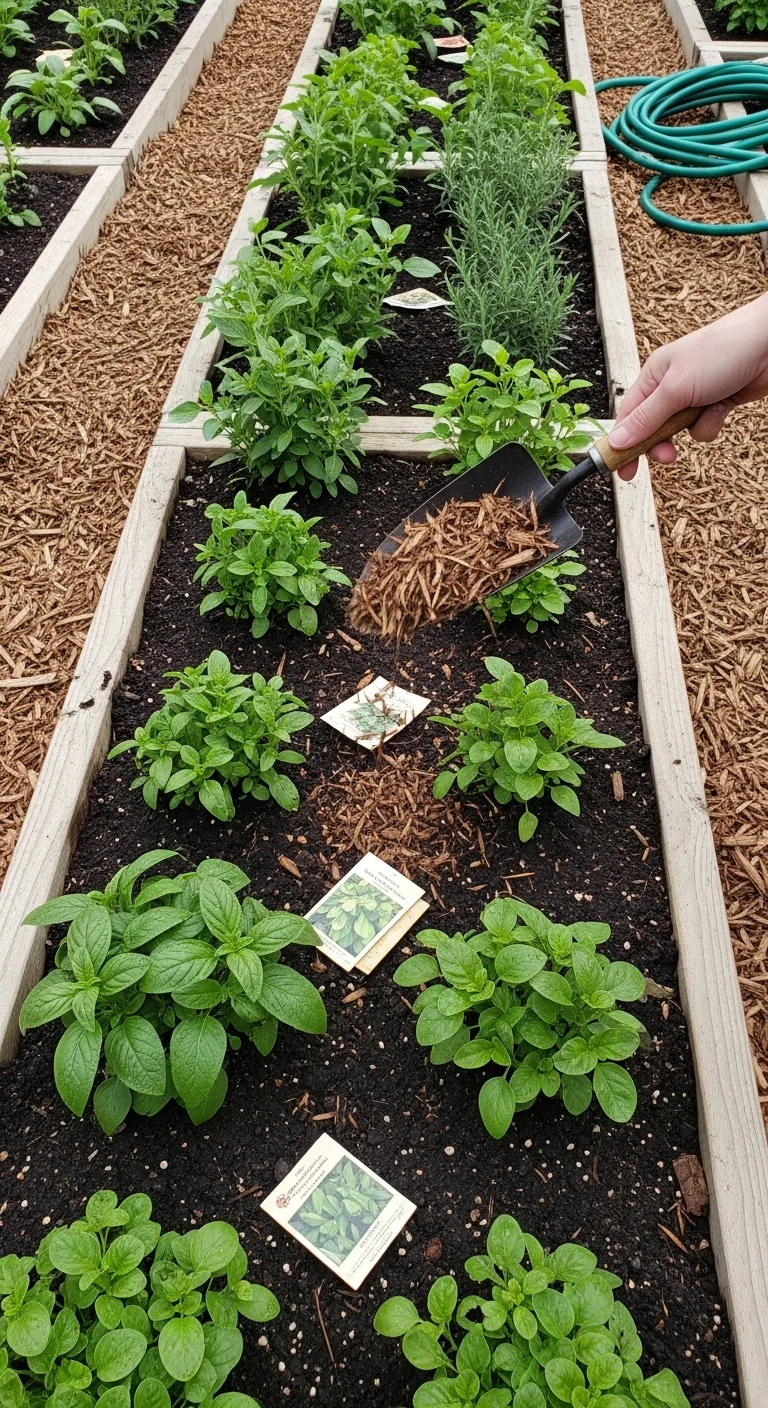
Herb garden design ideas deliver results only when they start with your exact measurements instead of generic aesthetics. Layouts that ignore daily sun hours, available square footage, or weekly care time often lead to leggy plants or wasted effort. This approach reframes every choice around three measurable inputs: sunlight exposure, space constraints, and maintenance capacity.
The guide presents nine practical designs for edible herb gardening in outdoor or container settings. It emphasizes layouts that support frequent culinary harvests. Purely decorative indoor windowsill setups or complex automated irrigation systems fall outside the scope.
You gain the ability to select one design that fits your conditions and supports consistent harvests without constant tweaks. Each option includes a unique mechanism, edge-case handling, and clear decision rules so you can act immediately.
Measure your space and sun first, then pick the matching design below to simplify every decision from planting to harvest.
The Yield Grid Decision Grid
Branch 1: You record 6 or more hours of direct sunlight daily and have at least 30 square feet of level ground space. Recommended: Items 1, 2, and 6 below. For a complete raised bed approach see our raised bed herb garden guide.
Branch 2: Your usable area measures under 25 square feet, such as a balcony or patio, with any sunlight level. Recommended: Items 3, 4, and 8 below.
Branch 3: Sunlight registers 5 hours or fewer per day or your schedule allows less than 30 minutes weekly for care. Recommended: Items 5, 7, and 9 below.
Quick Comparison Table
| Option | Key mechanism | Best for | Decision Grid Branch | Effort Score |
|---|---|---|---|---|
| Raised-Bed Layout | Elevated soil borders improve drainage and reduce soil compaction | Full-sun ground beds | 1 | 3 |
| Spiral Herb Garden | Stacked tiers create microclimates and natural drainage gradient | Space-saving sunny spots | 1 | 2 |
| Balcony Herb Garden | Wall-mounted or railing containers maximize vertical air flow | Small elevated spaces | 2 | 4 |
| Container Herb Garden | Modular pots allow easy rotation and soil refresh | Flexible small areas | 2 | 3 |
| Shade Herb Garden | Low-light tolerant species paired with reflective mulch | Partial-sun zones | 3 | 4 |
| Pizza Herb Garden | Themed circular bed groups compatible harvest-ready plants | Themed sunny patches | 1 | 2 |
| Self-Watering Herb Planters | Reservoir base maintains consistent moisture without daily checks | Low-attention setups | 3 | 1 |
| Companion Planting Layout | Interplanted species deter pests through natural chemical signals | Integrated small beds | 2 | 3 |
| Perennial Herb Border | Long-term woody or clumping herbs form permanent edging | Low-effort edges | 3 | 1 |
Raised-Bed Herb Garden
Best for: Branch 1
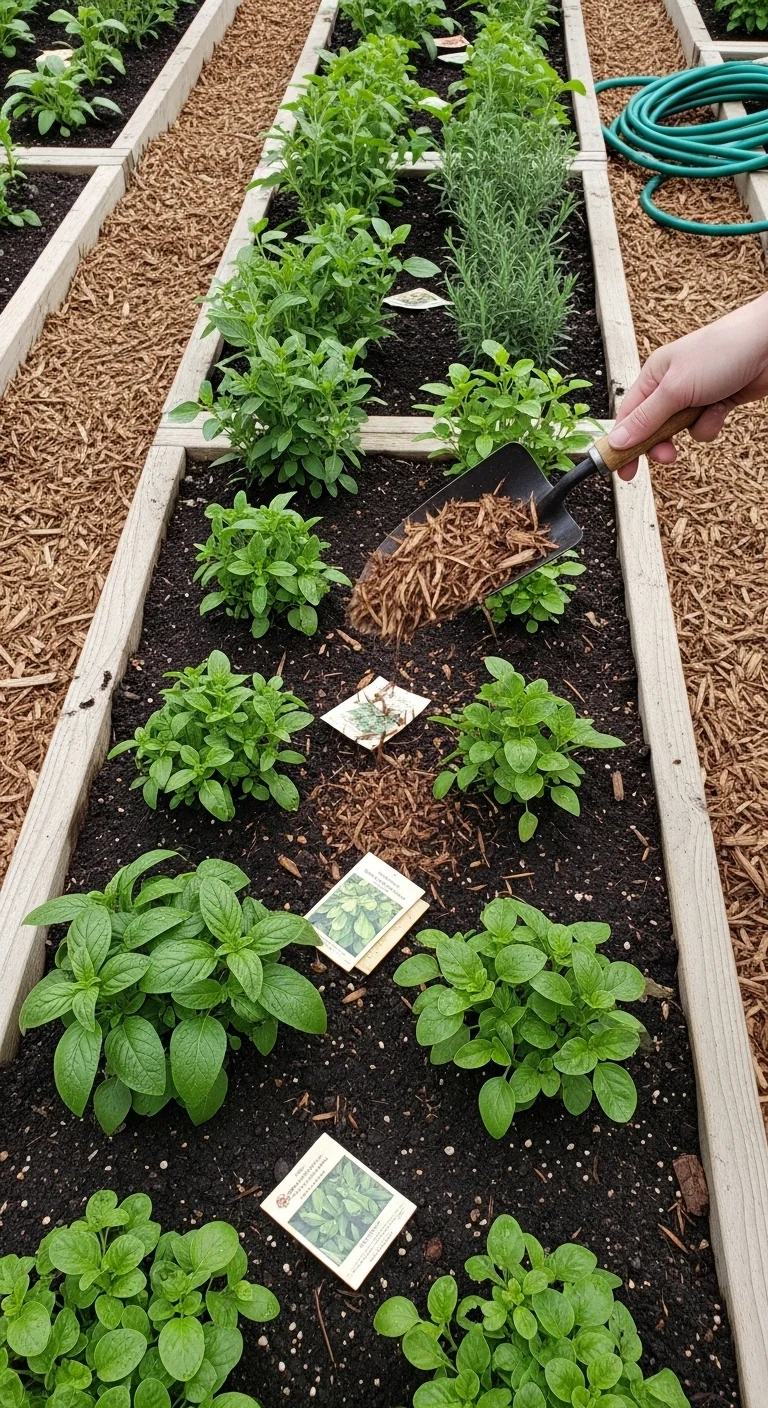
This layout uses a rectangular frame filled with amended soil to create an immediate growing zone above native ground. It suits sites with 6 or more hours of sun and at least 30 square feet because the 12-inch depth prevents compaction and allows roots to reach stable moisture. Construction starts with untreated lumber or composite boards formed into a 4-by-8-foot rectangle set on level ground. Fill with a 50:50 mix of garden soil and compost, then add a 2-inch layer of coarse mulch. Plant in zones: Mediterranean herbs at the south end for maximum heat, leafy types toward the north. One edge case: if your site floods after heavy rain, elevate the frame on concrete blocks to gain an extra 4 inches of clearance. The primary mechanism is improved drainage and easier access for harvesting without bending. Follow this blueprint and you avoid the common mistake of planting directly in heavy clay that stays wet for days.
Spiral Herb Garden
Best for: Branch 1
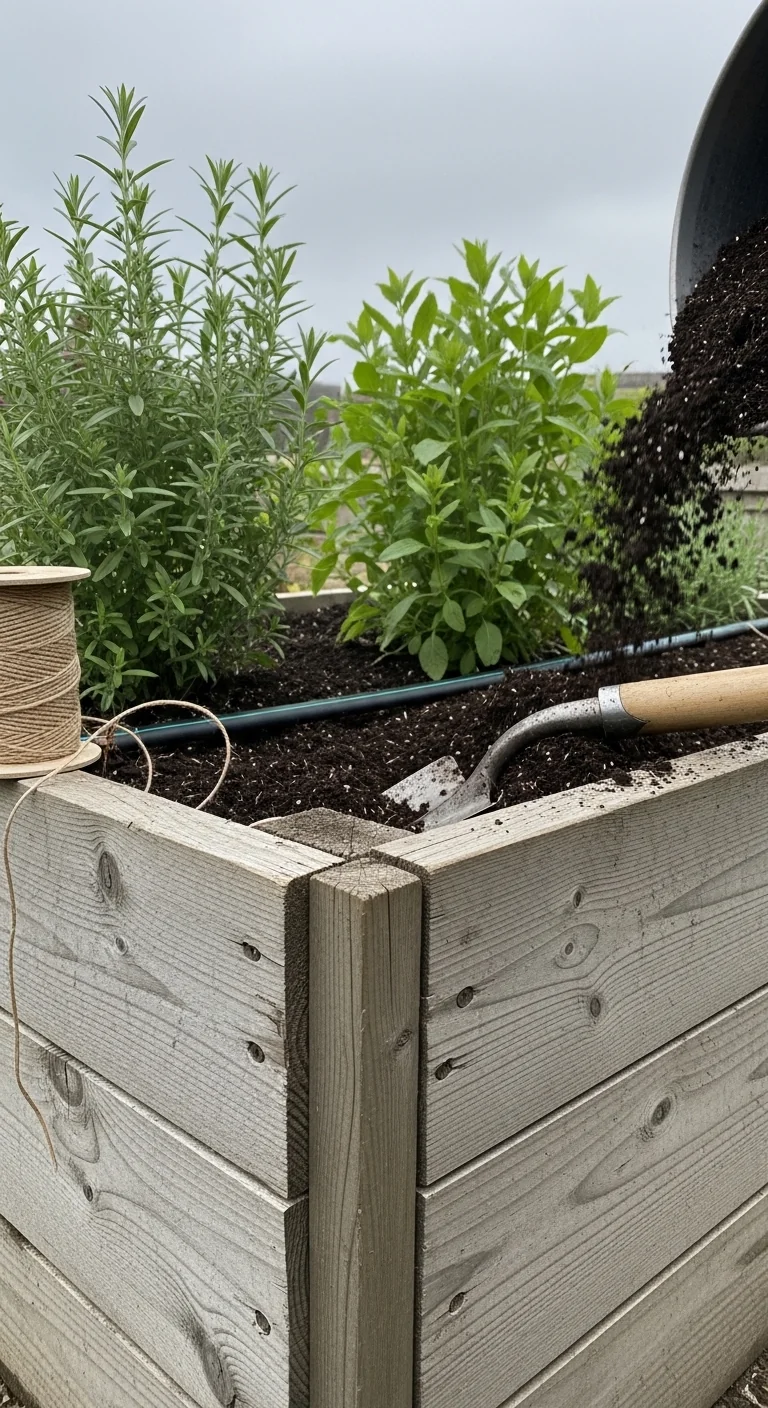
Spiral herb garden uses stacked stones or bricks to form a 4-foot-diameter rising coil that creates warmer, drier zones at the top and cooler, moister pockets at the base. Use it when you have full sun but want to fit more plants into a compact footprint. Build the base ring, add soil as you spiral upward over three turns, and top with a central stake for stability. Mediterranean herbs occupy the upper south-facing side while moisture lovers sit lower north. Skip this design if your site experiences strong winds over 15 miles per hour, because the exposed tiers dry out faster than flat beds.
Balcony Herb Garden
Best for: Branch 2
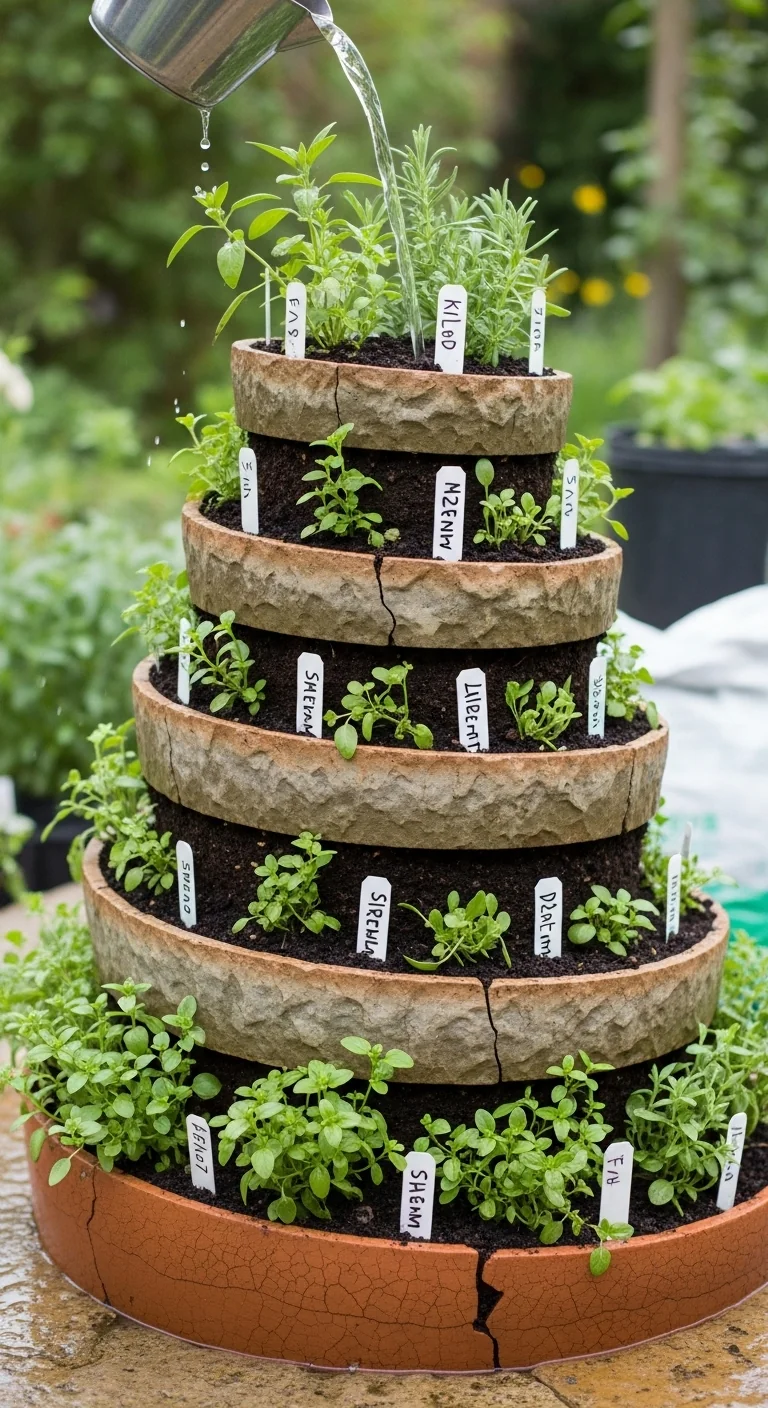
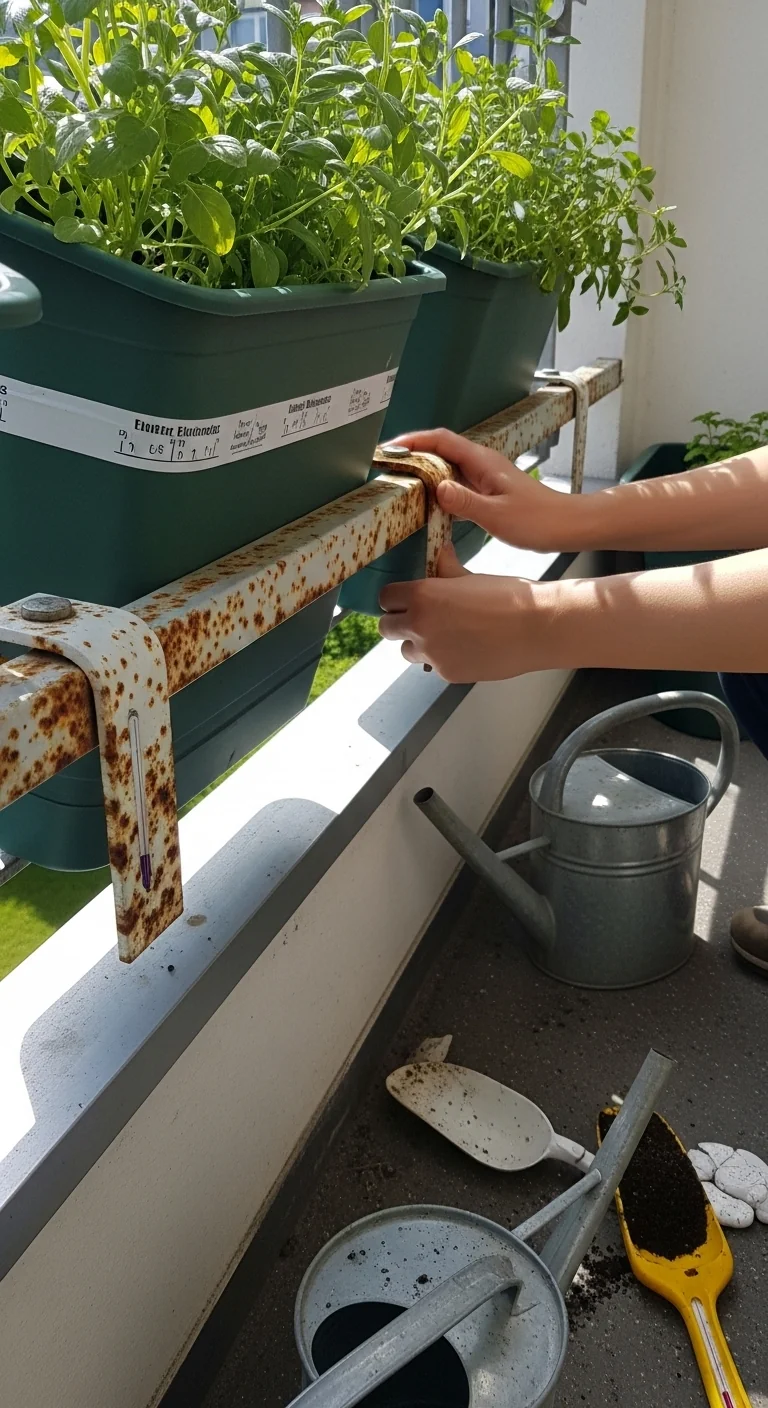
Balcony designs rely on railing hooks, wall brackets, and tiered shelves to turn vertical surfaces into productive growing area. They work in spaces under 25 square feet because each container receives independent drainage and air circulation. Start by selecting pots no smaller than 8 inches deep with saucers to catch runoff, then mount them at staggered heights so lower plants still receive light. Group sun-loving types on south rails and shade-tolerant ones against walls. One threshold rule: ensure each bracket supports at least 25 pounds when wet to prevent structural failure. This setup delivers harvests within arm reach without claiming floor space. Details appear in our balcony herb garden guide.
Container Herb Garden
Best for: Branch 2
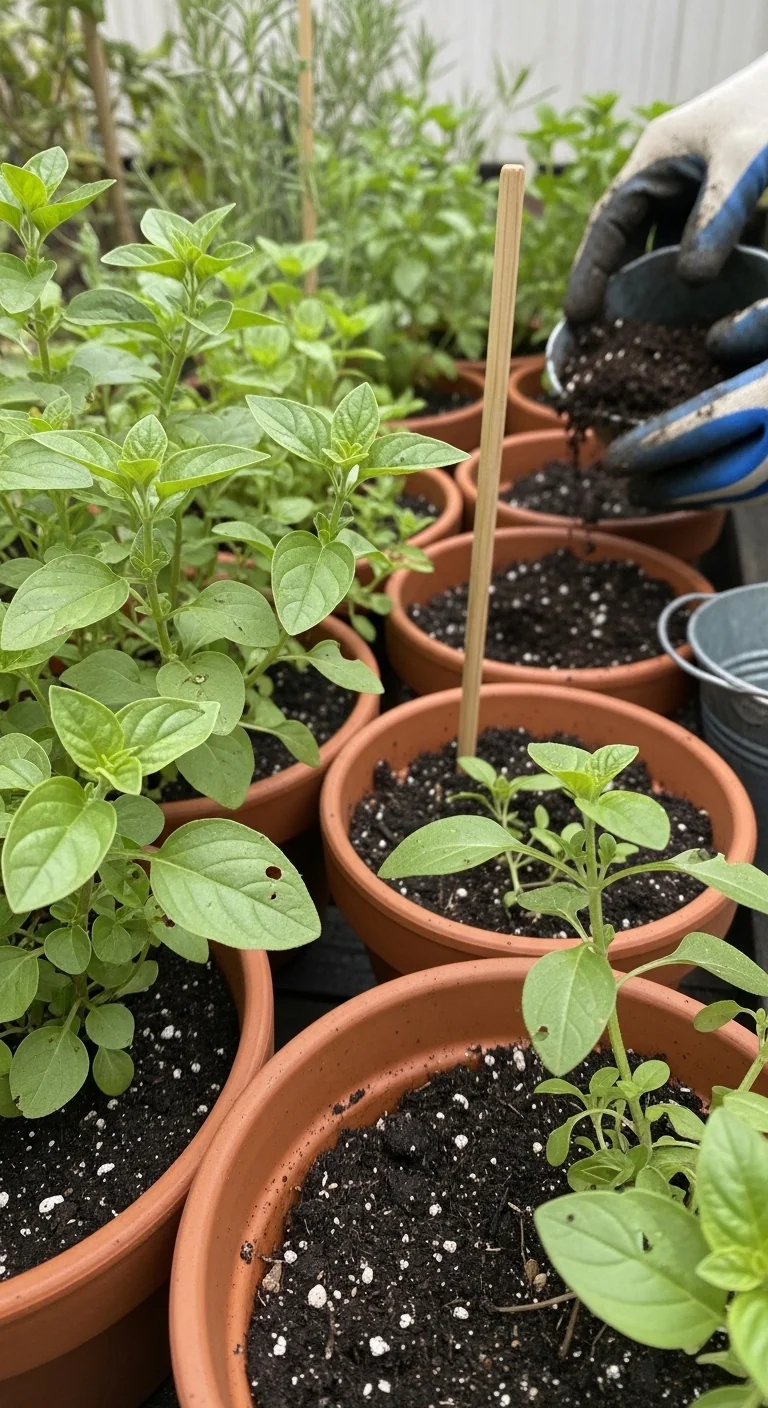
Container collections solve mobility and soil control in any small area by letting you move pots to chase sunlight or shelter from frost. Each pot uses its own sterile mix so you avoid shared disease pressure. Choose 10- to 14-inch diameters for most herbs and refresh the top 2 inches of soil every 30 days during peak growth. Rotate containers weekly to balance light exposure on all sides. The mechanism is isolation: if one plant shows stress you simply lift it out without disturbing neighbors. Edge case handling involves placing saucers under pots during rain to prevent root drowning in low-lying patios. Full recommendations on herb selection and sizing sit in our best herbs for containers guide.
Shade Herb Garden
Best for: Branch 3
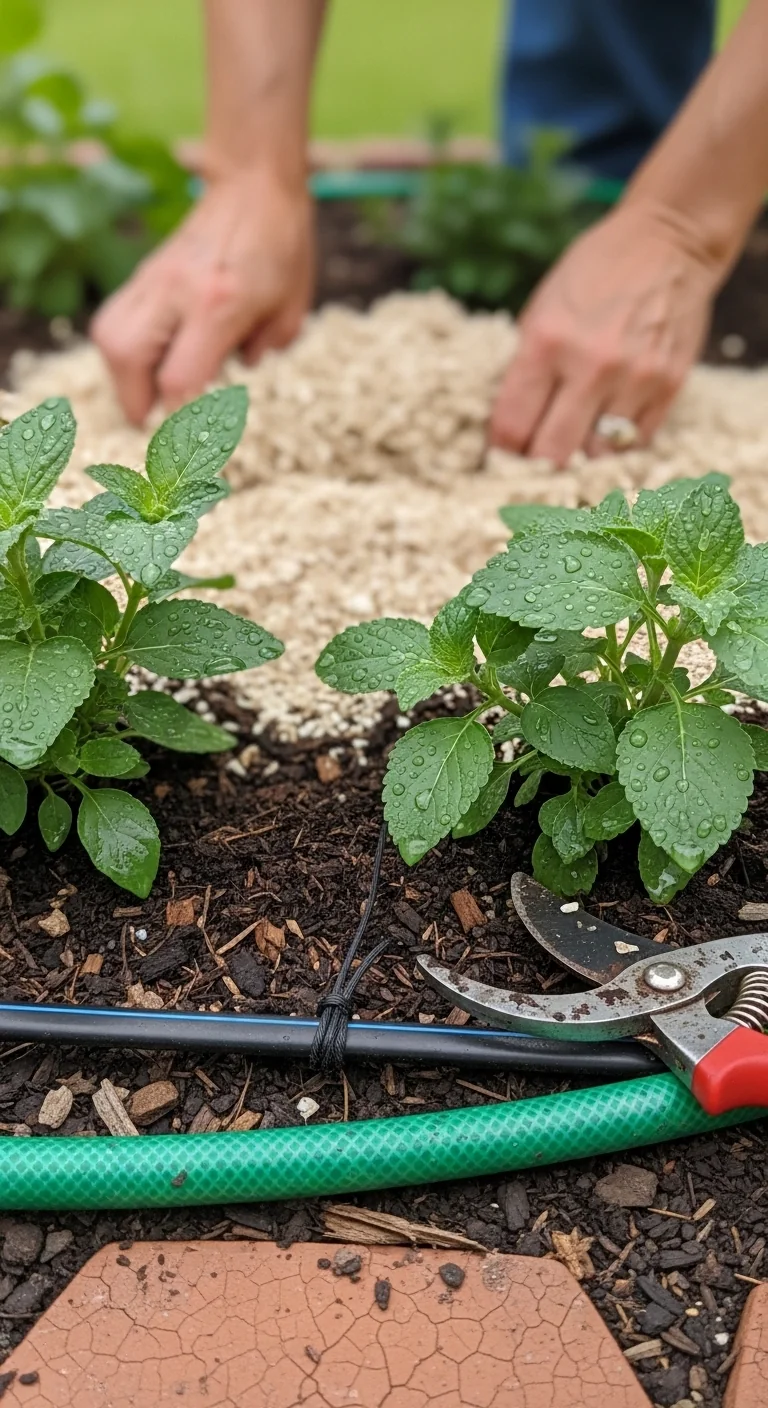
Shade layouts pair low-light tolerant species with reflective mulch to capture every available photon. They fit sites with 5 or fewer hours of direct sun because the plants naturally grow slower and focus energy on leaf production rather than flowers. Position taller herbs on the north side of the bed to avoid casting extra shadow, then use white gravel or light-colored mulch to bounce light upward. Monitor soil temperature: keep it above 55F by adding a 1-inch layer of compost in early spring. This design skips sun-dependent types like basil and focuses on mint family members and parsley. Full species list and placement maps appear in our herbs for shade guide.
Pizza Herb Garden
Best for: Branch 1
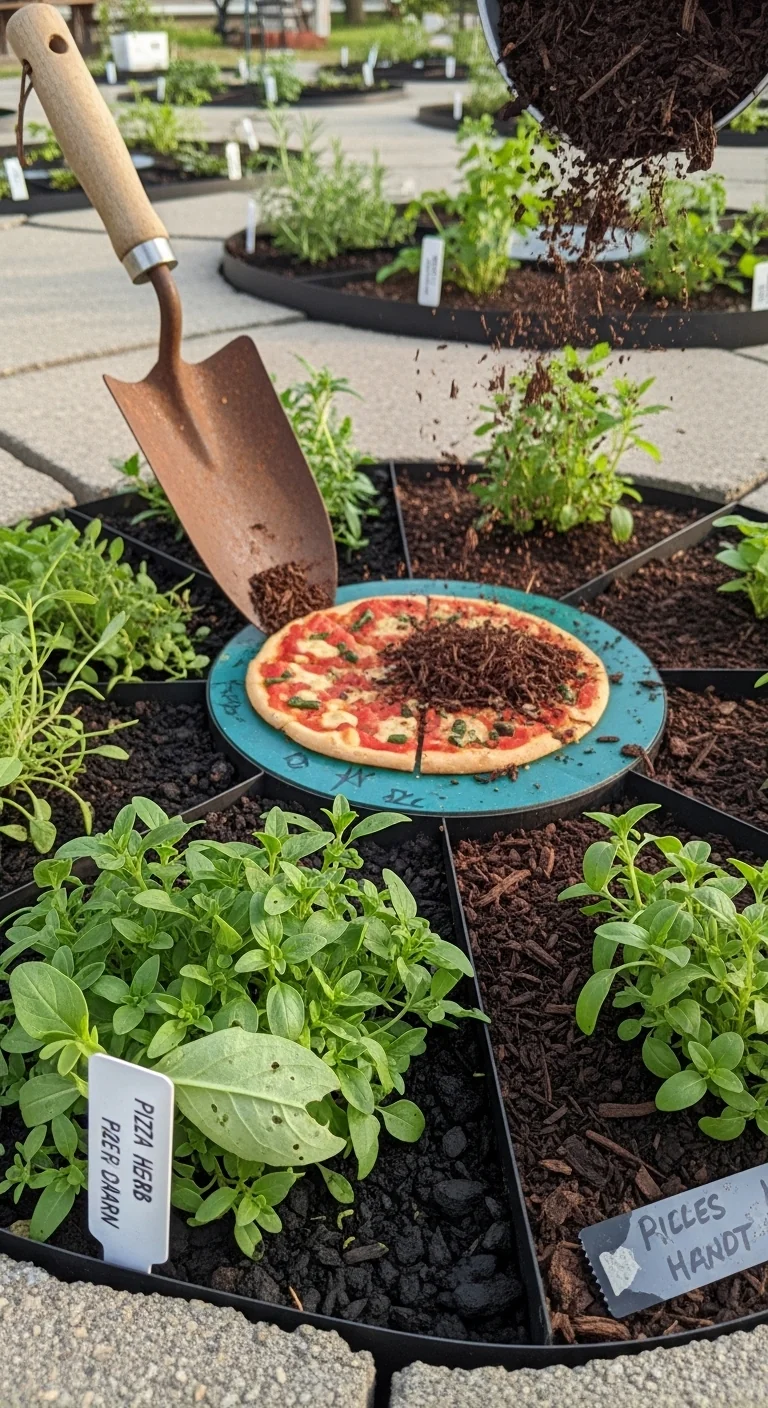
Pizza herb gardens arrange oregano, basil, thyme, and rosemary in a 6-foot-diameter circle divided into wedges for easy harvest access. The circular shape ensures even sun distribution and simplifies companion grouping so each wedge supports the next. Plant in full sun with at least 30 square feet available, spacing each herb 12 inches apart within its section. Add a central stepping stone for access. The mechanism is thematic harvest: cut outer leaves from each wedge without stepping into the bed. Edge case: in regions with late spring frost, start the basil wedge indoors and transplant after the last freeze date. Complete planting plan and variety choices live in our pizza herb garden guide.
Self-Watering Herb Planters
Best for: Branch 3
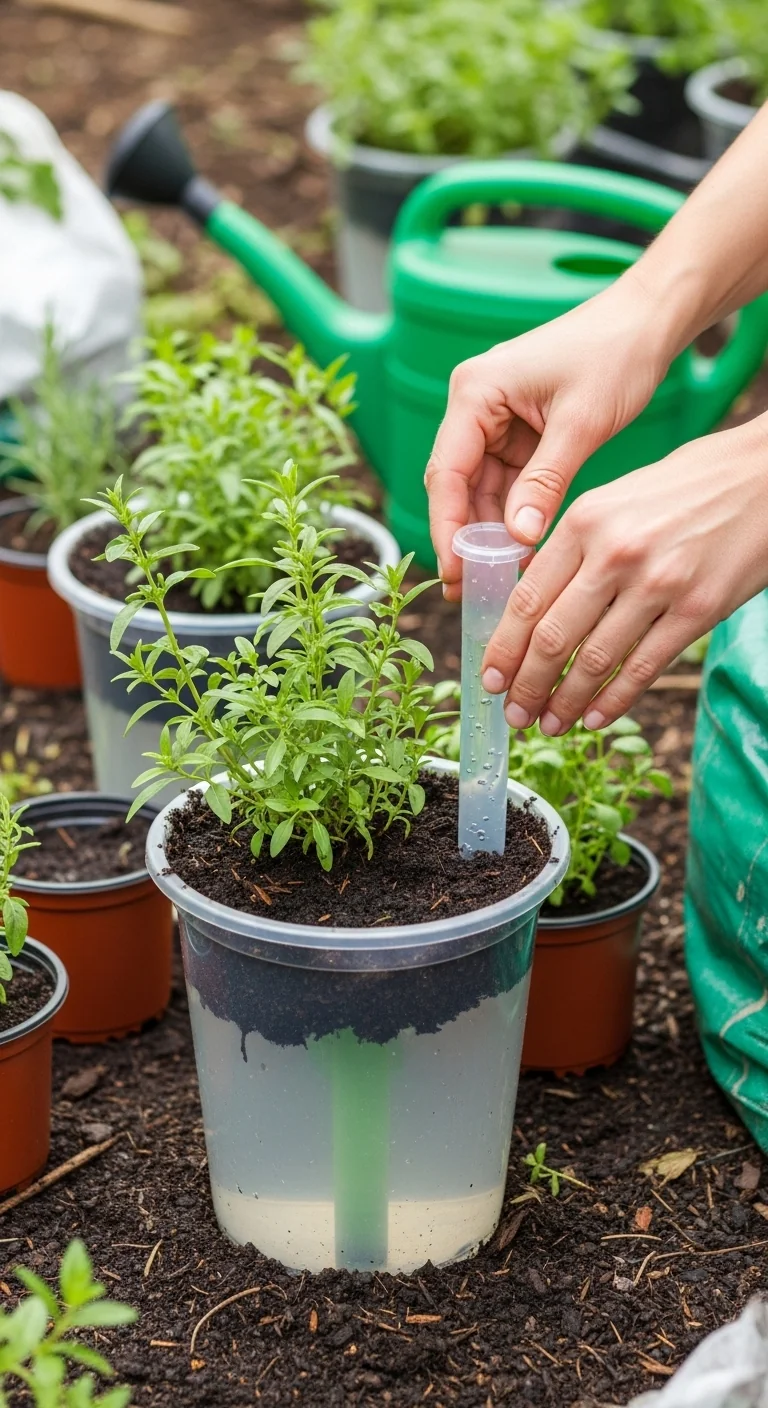
Self-watering planters feature a bottom reservoir that wicks moisture upward through fabric or soil columns, eliminating daily checks. They suit low-sun or low-time sites because the consistent moisture level prevents wilting even when light is marginal. Assemble by filling the reservoir to the indicator line every 7 to 10 days and topping the growing chamber with potting mix. One upgrade option adds a float valve connected to a rain barrel for automatic refill. The primary advantage appears during travel or heat waves when surface soil would otherwise dry. Full system specs and assembly steps appear in our self-watering herb planters guide.
Companion Planting Layout
Best for: Branch 2
Companion layouts interplant species that release root chemicals or scents to repel pests while sharing space efficiently. They fit small beds under 25 square feet because the pairings reduce the need for separate pest controls. Place tall basil next to tomatoes if present, or low thyme beside taller rosemary to fill gaps. Maintain 8-inch spacing between different species to avoid root competition. The mechanism relies on documented volatile compounds rather than guesswork. Edge case: avoid pairing mint with any other herb because its runners overtake the bed within one season. Detailed pairing charts and spacing diagrams appear in our companion planting herbs guide.
Perennial Herb Border
Best for: Branch 3
Perennial borders use woody or clumping herbs such as rosemary, sage, thyme, and oregano to form a permanent low hedge along paths or fences. They require 5 or fewer sun hours and minimal weekly care because established roots access deeper soil moisture. Plant in a single row spaced 18 inches apart in spring, then prune lightly each fall to maintain shape. The mechanism is longevity: once rooted these plants return for three or more seasons with only annual mulch refresh. Edge case: in zones with winter temperatures below 20F, add a 3-inch mulch layer after the first hard freeze to protect crowns.
Starter Stack (What to Choose First)
For Branch 1 (full sun and ground space)
Begin with the raised-bed layout paired with the pizza herb garden. The raised bed supplies stable drainage and easy access while the pizza theme groups harvest-ready plants in one compact circle. Together they deliver weekly kitchen herbs with one initial 5-hour build session. Estimated materials cost ranges from 90 to 160 dollars and setup time from 4 to 7 hours.
For Branch 2 (small space or balcony)
Start with the balcony herb garden and companion planting layout. Balcony brackets provide vertical real estate while companion pairings keep pest pressure low without extra products. The combination fits any railing or wall under 25 square feet and yields mixed fresh leaves within 6 weeks. Estimated materials cost ranges from 45 to 85 dollars and setup time from 1 to 3 hours.
For Branch 3 (low sun or low maintenance)
Begin with the shade herb garden and self-watering planters. Shade-tolerant species thrive in limited light while the reservoir system removes watering chores. The pair keeps production steady even during cloudy stretches or travel. Estimated materials cost ranges from 65 to 110 dollars and setup time from 2 to 4 hours.
When This Won’t Work
These designs fail when soil stays saturated longer than 48 hours after rain because roots develop rot regardless of layout. Test by digging a 6-inch hole and pouring in one gallon of water: if it drains slower than 1 inch per hour, switch to raised containers on gravel bases. They also fail when night temperatures drop below 45F for more than 14 consecutive days in spring because tender herbs stop growing and become susceptible to fungal issues. In that window shift to cold-hardy perennials or move containers indoors at dusk.
Choosing the Right Option for Your Situation
Budget threshold
If total materials stay under 80 dollars select container or balcony designs. Above that amount the raised-bed or spiral options become viable because lumber and stone costs rise with scale.
Time threshold
If you can commit fewer than 2 hours total for setup choose self-watering planters or perennial borders. Designs needing framing or tier building exceed this limit.
Technical constraint
If soil pH tests outside 6.0 to 7.5 adjust with lime or sulfur before planting because most herbs slow growth below or above this window.
Yes/No checklist:
Do you have 6+ hours of sun and 30+ square feet? Yes: choose Branch 1.
Is space under 25 square feet? Yes: choose Branch 2.
Is sun 5 hours or less or care time minimal? Yes: choose Branch 3.
Match your answers to the grid above and begin with the starter stack.
Expert Q&A
What makes a spiral herb garden better for Mediterranean herbs than flat beds?
The spiral creates a 12-inch elevation difference from base to top that produces warmer, drier soil at the summit and cooler, moister conditions below. Mediterranean herbs such as rosemary and oregano occupy the upper south side where drainage is sharpest, reducing root disease risk compared with level beds that hold uniform moisture.
How do you integrate companion planting into a balcony design without crowding?
Use vertical stacking with 8-inch spacing between species and select only two compatible pairs per container. Place tall basil behind low thyme on the same bracket so both receive light without root overlap. This keeps total plants under 12 per 10-square-foot railing while still gaining pest-repelling benefits.
Which herbs thrive in self-watering planters year-round?
Parsley, chives, mint, and oregano maintain steady growth because the reservoir prevents dry spells that trigger bolting. Refresh the reservoir every 7 to 10 days and trim outer leaves weekly to keep the root zone active without waterlogging.
Can pizza herb gardens work in partial shade?
Yes if you replace sun-loving basil with more tolerant oregano and thyme. The circular layout still works but expect slower growth and smaller leaves. Keep the bed under 5 hours of sun and harvest outer leaves only to maintain airflow.
How often should you refresh soil in perennial herb borders?
Refresh the top 3 inches every 18 months with compost to replenish nutrients without disturbing established roots. Test soil pH at the same time and adjust only if it falls outside 6.0 to 7.5.
Conclusion
The correct herb garden design turns your measured constraints into reliable production by aligning layout, sun, and care level from day one. The single biggest mistake is copying a picture without checking your square footage or daily light hours, which leads to weak plants and repeated restarts.
Take the next step by testing your soil and selecting perennials or annuals suited to your zone. Follow our guide to annual versus perennial herbs to lock in the long-term plan that matches your conditions.