
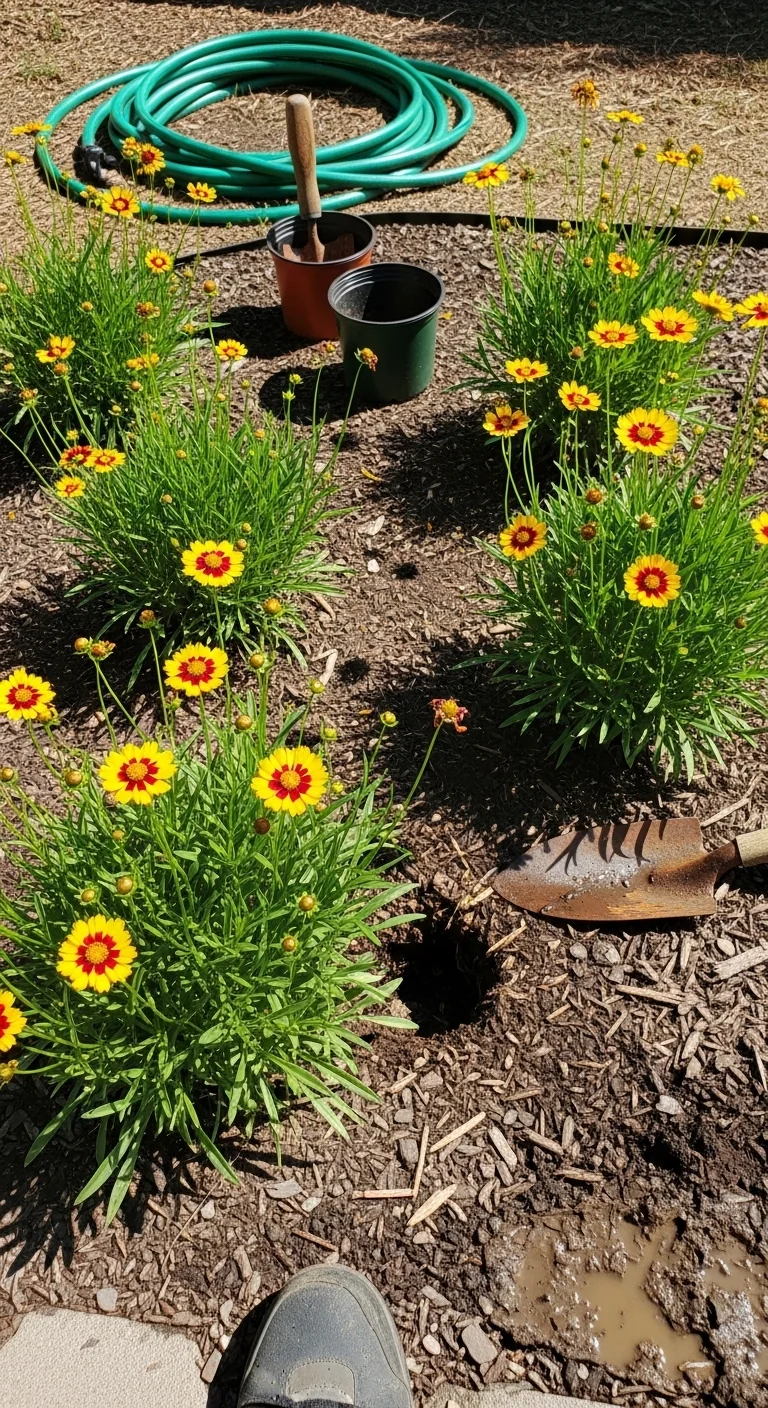
Coreopsis varieties are not interchangeable. Success hinges on one measurable match most guides overlook: how quickly your soil drains after rain plus your exact hardiness zone. Threadleaf types excel in fast-draining sandy sites in zones 7 and above, while large-flowered clumpers prefer average loam in zones 4 to 6. This grid eliminates trial-and-error planting by aligning variety traits to your conditions.
This article covers nine proven coreopsis options for flower gardens in the US, Canada, UK, Australia, and New Zealand. It focuses on perennials and reliable annuals for ornamental beds, borders, and containers. It excludes invasive spreaders or shade-tolerant plants outside coreopsis strengths.
You will finish with a clear pick for your site, precise planting steps, and timing for deadheading that keeps blooms coming until frost. Each entry includes the exact mechanism that drives performance in real gardens.
Test your soil drainage once, note your zone, and plant the matching variety to gain nonstop color with minimal ongoing work.
The Yield Grid Decision Grid
Branch 1 (Fast drainage): Soil drains completely in under 30 minutes after a soaking rain and you garden in zones 7 to 9 or equivalent hot, dry summers. Recommended: Items 1, 4, and 7 below. These threadleaf and compact types handle drought without extra water once established. For more on matching perennials to tough sites see our perennial flowers guide.
Branch 2 (Average drainage): Soil drains in 30 to 90 minutes and you garden in zones 4 to 6 with moderate summer moisture. Recommended: Items 2, 5, and 8 below. These clump-forming types deliver large flowers and steady rebloom.
Branch 3 (Compact or container focus): Limited space under 24 inches wide or raised beds and containers in any zone with at least six hours of sun. Recommended: Items 3, 6, and 9 below. These stay tidy without aggressive spread.
Quick Comparison Table
| Option | Key mechanism | Best for | Decision Grid Branch | Effort Score |
|---|---|---|---|---|
| Coreopsis verticillata ‘Moonbeam’ | Fine threadleaf foliage reduces water loss | Hot, dry full-sun beds | Branch 1 | 2 |
| Coreopsis grandiflora ‘Early Sunrise’ | Large semi-double flowers on strong stems | Cut-flower borders with average soil | Branch 2 | 3 |
| Coreopsis lanceolata | Basal rosette leaves support early bloom | Wildflower-style edges and pollinator strips | Branch 2 | 2 |
| Coreopsis verticillata ‘Zagreb’ | Compact threadleaf habit resists heat | Dry slopes and rock gardens | Branch 1 | 1 |
| Coreopsis tinctoria | Annual bicolor blooms from seed in one season | Quick color in new beds | Branch 2 | 1 |
| Coreopsis rosea | Pink daisy flowers tolerate slight extra moisture | Moist borders without standing water | Branch 3 | 3 |
| Coreopsis hybrid ‘Uptick Yellow & Red’ | Compact mounded form with bi-color petals | Containers and small patios | Branch 3 | 2 |
| Coreopsis grandiflora ‘Golden Showers’ | Tall stems for cutting with prolific yellow blooms | Large sunny borders needing height | Branch 2 | 3 |
| Coreopsis verticillata ‘Creme Brulee’ | Creamy yellow flowers on airy foliage | Soft-textured accents in dry sites | Branch 1 | 2 |
Coreopsis verticillata ‘Moonbeam’
Best for: Branch 1
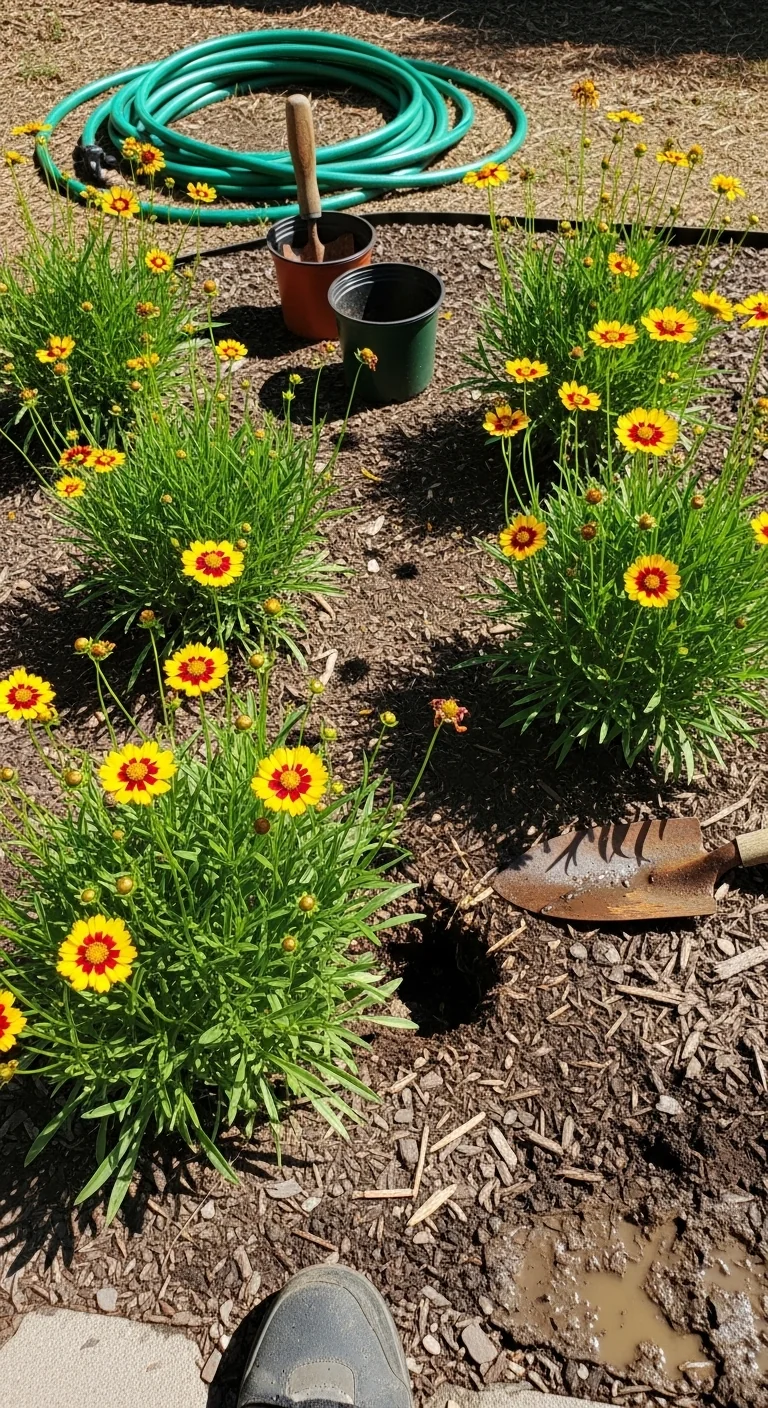
This threadleaf coreopsis delivers pale yellow flowers from midsummer to frost. The fine, needle-like foliage is the key mechanism: it minimizes surface area for water loss and creates an airy texture that stands up to wind and heat. Plant in full sun on sandy or gravelly soil that drains in under 30 minutes. Space plants 18 inches apart to allow natural spread of 24 to 36 inches wide.
Blueprint steps: 1. Test drainage by digging a 12-inch hole and filling with water; it should empty in under 30 minutes. 2. Plant in spring after last frost at the same depth as the nursery pot. 3. Water deeply once weekly for the first month only. Common mistake: adding rich compost, which causes leggy growth instead of flowers. In zones 7 to 9 this variety needs almost no supplemental water after establishment. See drought-tolerant flowers for pairing ideas. (178 words)
Coreopsis grandiflora ‘Early Sunrise’
Best for: Branch 2
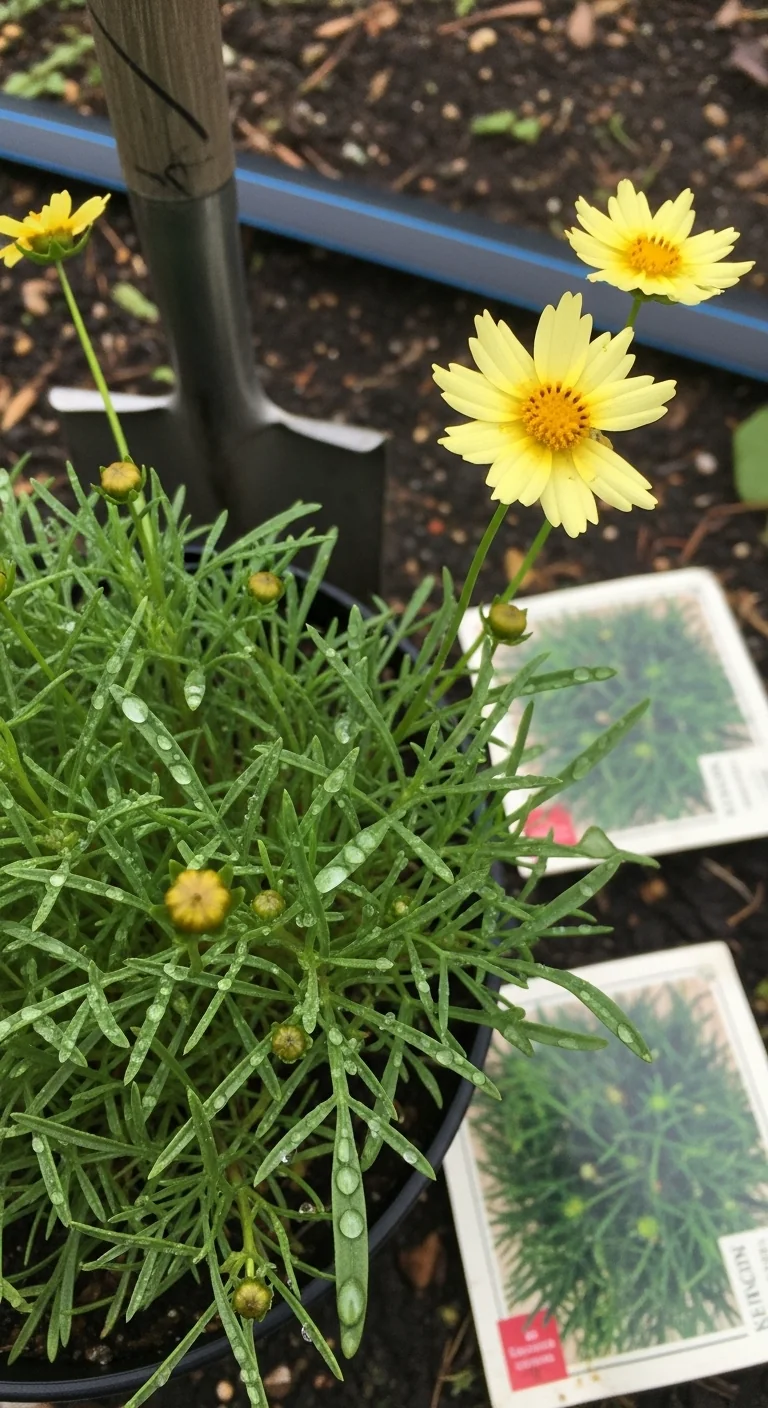
Semi-double golden yellow blooms open early and continue through summer on sturdy 18- to 24-inch stems. It suits average loam that drains in 30 to 90 minutes. (62 words)
Coreopsis lanceolata
Best for: Branch 2
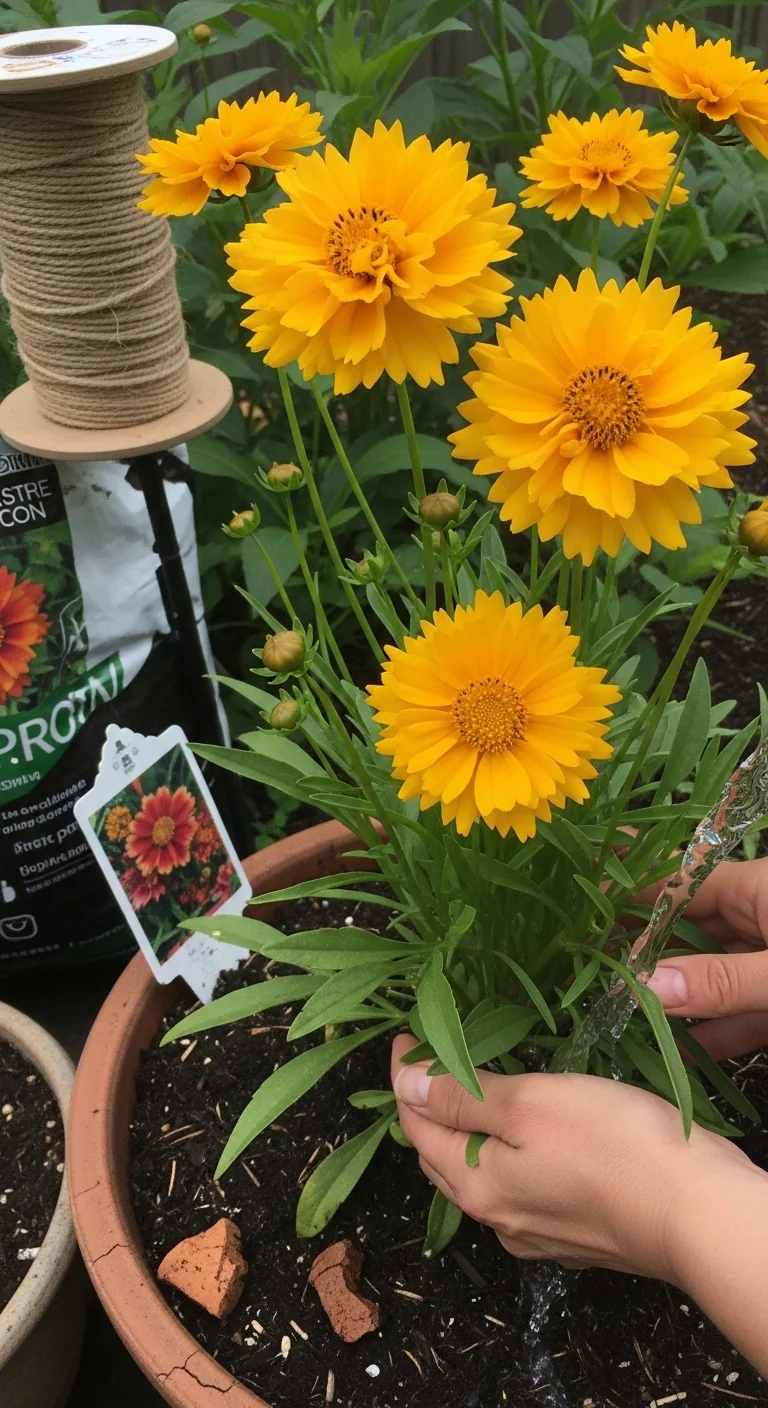
Lance-shaped basal leaves support single yellow flowers on 12- to 24-inch stems from late spring onward. This species brings a wildflower look and pairs naturally with other natives. Use it in full-sun borders where soil holds moderate moisture. Deadhead spent stems at the base to trigger side shoots. It tolerates light afternoon shade better than most coreopsis but still needs six hours minimum. For placement ideas in sunny sites check full-sun flowers. (112 words)
Coreopsis verticillata ‘Zagreb’
Best for: Branch 1
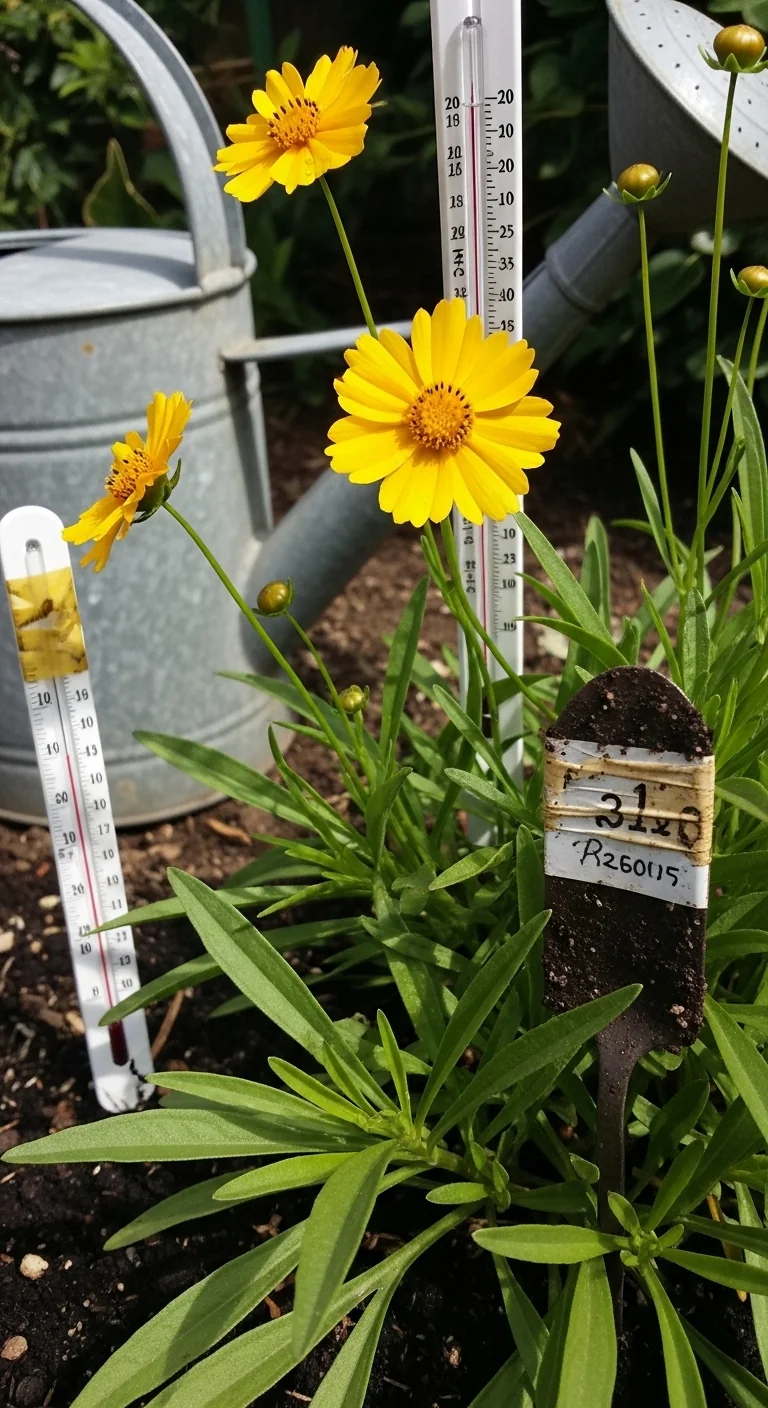
Golden yellow flowers cover this compact threadleaf selection from early summer onward. It stays under 18 inches tall and spreads slowly in dry, poor soil. The mechanism is its rhizomatous root system that explores rocky or sandy layers without needing extra fertility. Divide every three years only if the center dies out. This is the lowest-effort choice for hot slopes. See low-maintenance flowers for similar performers. (158 words)
Coreopsis tinctoria
Best for: Branch 2
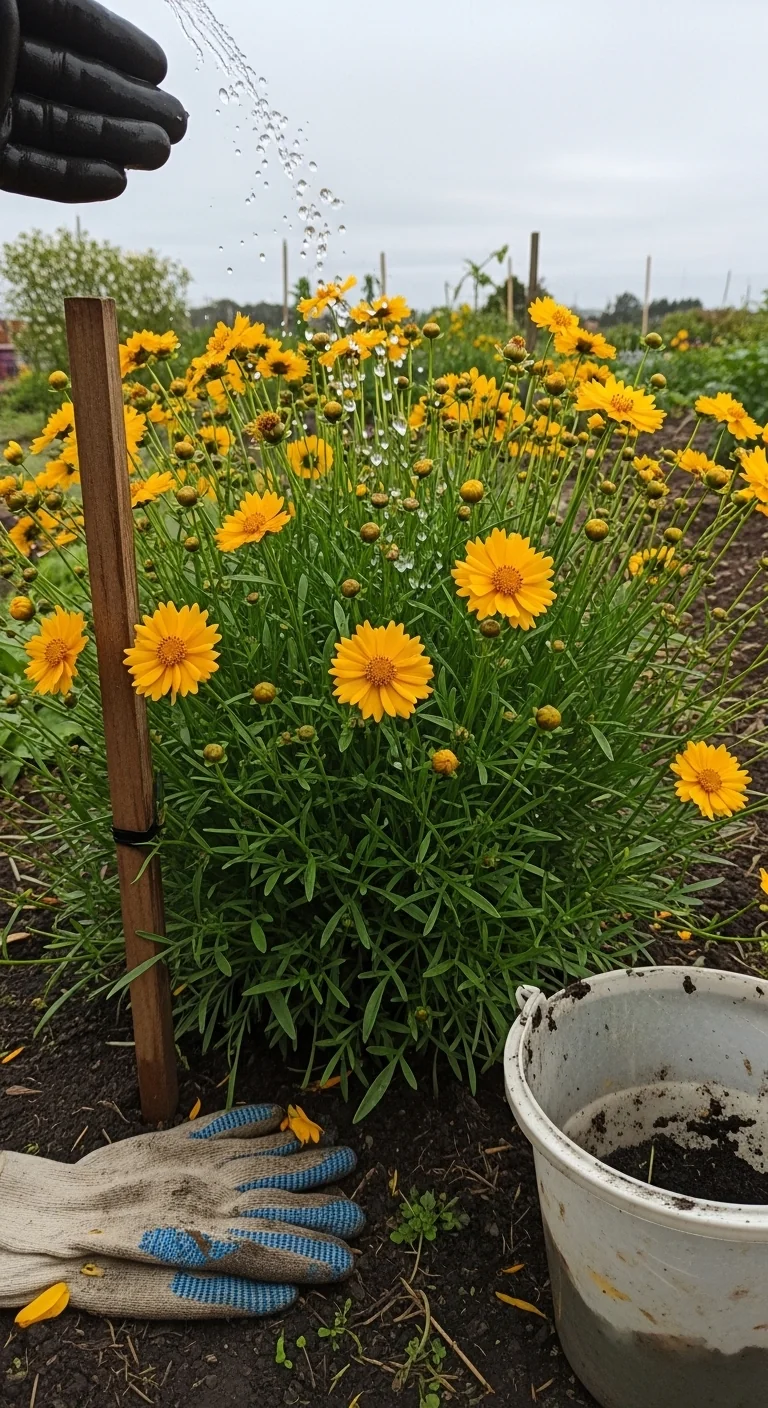
Annual plains coreopsis produces red-centered yellow blooms in one season from direct-sown seed. It fills gaps quickly in new beds with average drainage. (58 words)
Coreopsis rosea
Best for: Branch 3
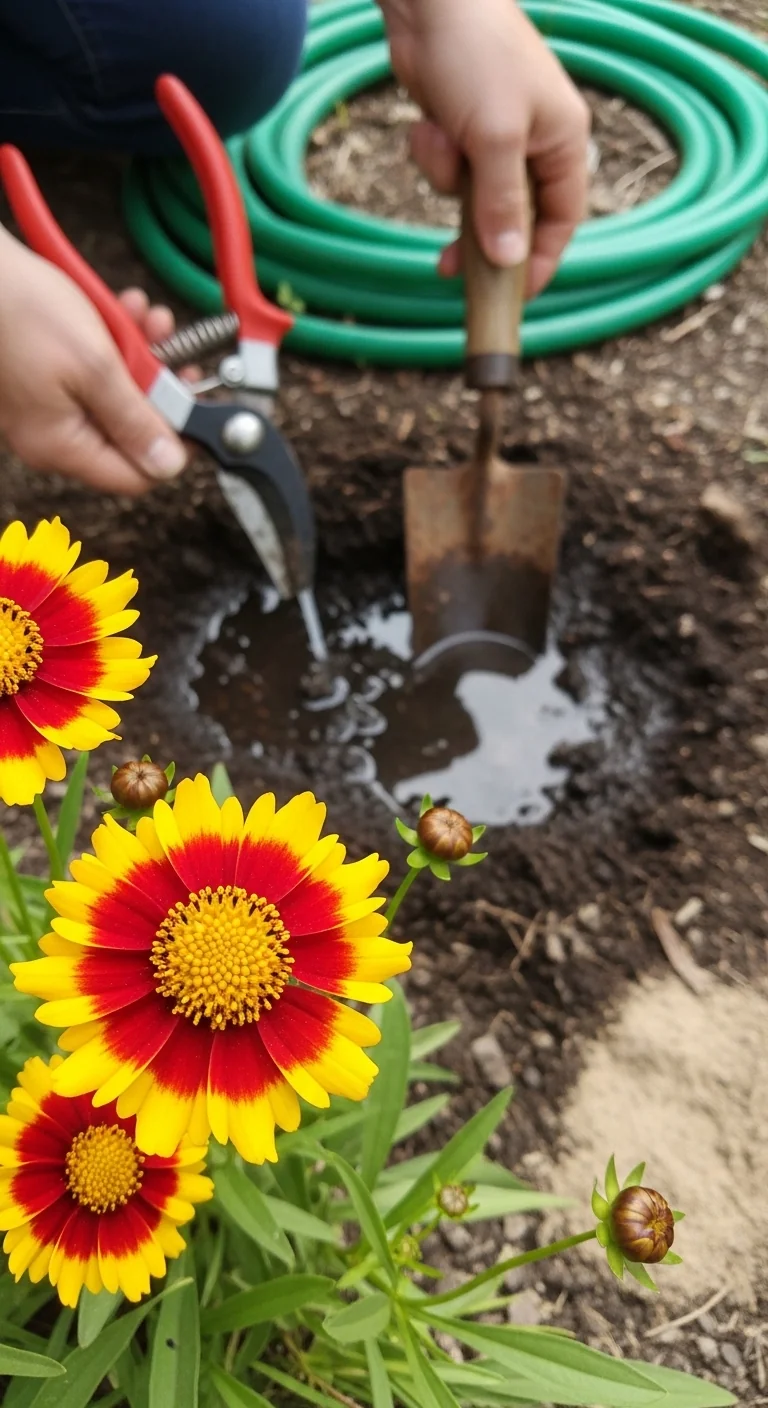
Soft pink daisy flowers distinguish this species from the usual yellow palette. It handles slightly more consistent moisture than threadleaf types yet still demands good drainage. Grow it in containers or narrow borders where you want lower height and pollinator appeal. The foliage stays neat without flopping. Combine with other moisture-tolerant perennials for extended season interest. Link to pollinator flowers for companion lists. (118 words)
Coreopsis hybrid ‘Uptick Yellow & Red’
Best for: Branch 3
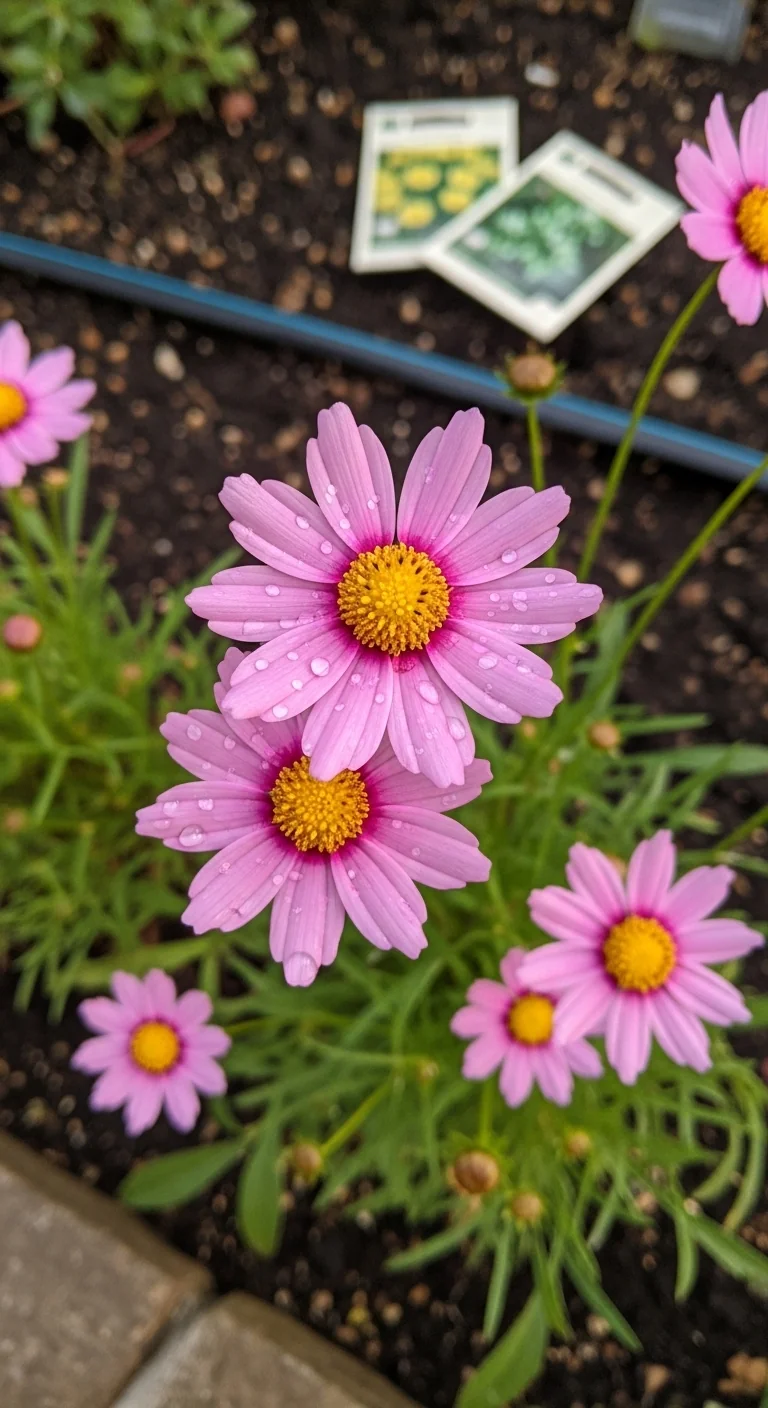
Bi-color blooms on a mounded 12- to 14-inch plant make this hybrid ideal for pots and tight spaces. The compact form resists lodging even in wind. Plant in spring in any well-drained mix; it blooms from early summer to fall. Threshold rule: keep soil pH between 6.0 and 7.0 and provide at least six hours of sun to avoid reduced color intensity. Upgrade option: pair with trailing herbs in the same container for mixed texture. See cut-flower garden planning for similar compact picks. (172 words)
Coreopsis grandiflora ‘Golden Showers’
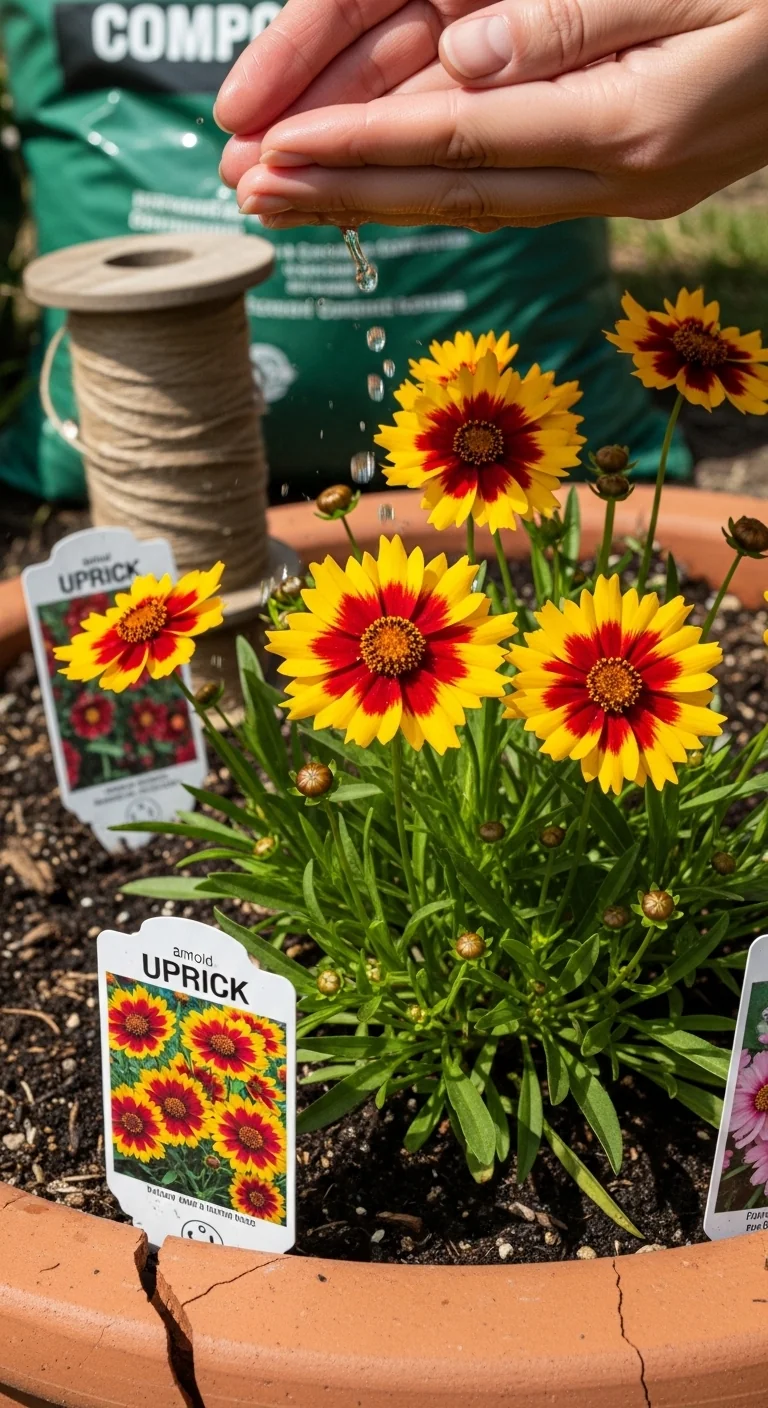
Best for: Branch 2
Tall stems carry profuse yellow flowers suited to cutting. It performs best in loamy soil with moderate moisture and full sun. (71 words)
Coreopsis verticillata ‘Creme Brulee’
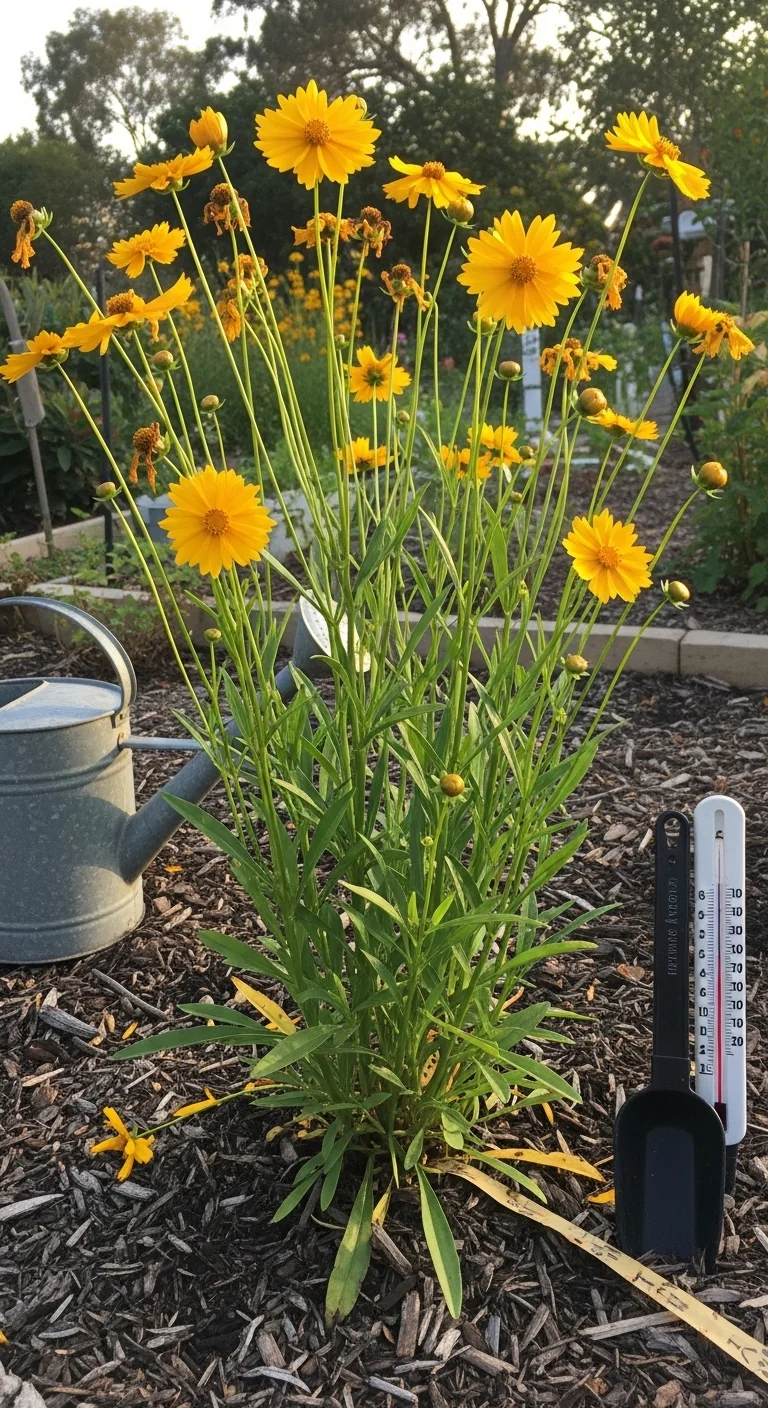
Best for: Branch 1
Creamy yellow flowers top airy threadleaf foliage in dry sites. This selection offers softer color than bright gold types while retaining the same drought tolerance and low water needs. Space 18 inches apart and avoid overhead watering to keep foliage clean. It spreads gently by rhizomes and requires division only every three to four years. (104 words)
Starter Stack (What to Choose First)
For Branch 1 (fast drainage, hot zones)
Start with Coreopsis verticillata ‘Moonbeam’ and ‘Zagreb’. Plant two of each 18 inches apart in a 4-by-4-foot sunny bed. Synergy comes from overlapping bloom times and contrasting foliage textures that fill space without competition. Cost range: 8 to 15 dollars per plant. Planting time: 10 to 15 minutes total for four plants.
For Branch 2 (average drainage, moderate zones)
Begin with Coreopsis grandiflora ‘Early Sunrise’ and Coreopsis lanceolata. Alternate them along a 6-foot border. The large flowers of ‘Early Sunrise’ pair with the basal habit of lanceolata for layered height and early color. Cost range: 8 to 12 dollars per plant. Planting time: 15 to 20 minutes for six plants.
For Branch 3 (compact or containers)
Choose Coreopsis rosea and ‘Uptick Yellow & Red’. Use one of each in a 12-inch pot or narrow edging strip. Their tidy mounds and complementary flower colors create instant impact without crowding. Cost range: 10 to 18 dollars per plant. Planting time: 5 to 10 minutes per container.
When This Won’t Work
Coreopsis fails when soil stays saturated longer than 48 hours after rain. Heavy clay or low spots without amendment lead to root rot regardless of variety. The fix is to build raised beds at least 8 inches high filled with 50 percent sand or gravel mix before planting.
Less than six hours of direct sun also collapses performance: stems stretch, flower count drops sharply, and plants become floppy. Relocate to the brightest available spot or choose a different full-sun perennial. See deadheading flowers only after you secure proper light and drainage.
One final measurable limit: soil pH outside 6.0 to 7.0 reduces nutrient uptake and bloom quality. Test with a simple kit and amend with lime or sulfur only if needed.
Choosing the Right Option for Your Situation
Budget threshold
Under 50 dollars total: select seed of Coreopsis tinctoria or bare-root ‘Zagreb’ for largest coverage. Over 50 dollars: invest in potted ‘Uptick’ hybrids or ‘Moonbeam’ for instant impact.
Time threshold
Under 10 minutes weekly: pick effort-score 1 or 2 options such as ‘Zagreb’ or ‘Moonbeam’ and skip daily checks. Over 10 minutes available: choose ‘Early Sunrise’ or ‘Golden Showers’ and deadhead twice weekly for maximum rebloom.
Technical constraint: spread rate
If your bed cannot handle more than 24 inches of spread per plant after two years, avoid aggressive rhizomatous types and stay with clump-forming grandiflora or compact hybrids.
Yes/No checklist:
Does your drainage test pass under 90 minutes?
Is your zone 4 or warmer?
Do you have at least six hours of sun?
Is pH between 6.0 and 7.0?
Answer yes to all four before planting.
Expert Q&A
How do coreopsis varieties differ in self-seeding behavior?
Annual Coreopsis tinctoria self-seeds freely in disturbed soil while most perennials produce few viable seedlings. Collect seed heads only if you want volunteers; otherwise deadhead before they dry to prevent unwanted spread in formal beds.
What companions maximize pollinator visits without competing for
space?
Pair coreopsis with echinacea or salvia at similar heights. The daisy shape of coreopsis attracts bees and butterflies while upright companions provide nectar over a longer window. Keep spacing at 18 inches to avoid shading lower foliage.
When and how should you divide mature clumps?
Divide every three years in early spring when new shoots are 2 inches tall. Lift the entire clump, cut into sections with healthy roots and shoots, and replant immediately at the original depth. This resets vigor and prevents woody centers.
Do any coreopsis tolerate light frost after blooming starts?
Most perennial types survive light frost down to 28 degrees Fahrenheit once hardened. Cover with floating row fabric only if temperatures drop below that for more than one night to protect open flowers.
How does pinching early growth affect bloom timing?
Pinch stem tips once when plants reach 6 inches tall in spring. This creates bushier plants and delays first bloom by about 10 days but doubles the number of flowering stems later in the season.
Conclusion
Next step: run the 12-inch hole drainage test this week, note your zone, then order the two starter-stack varieties that match. For layout inspiration see flower bed design.