
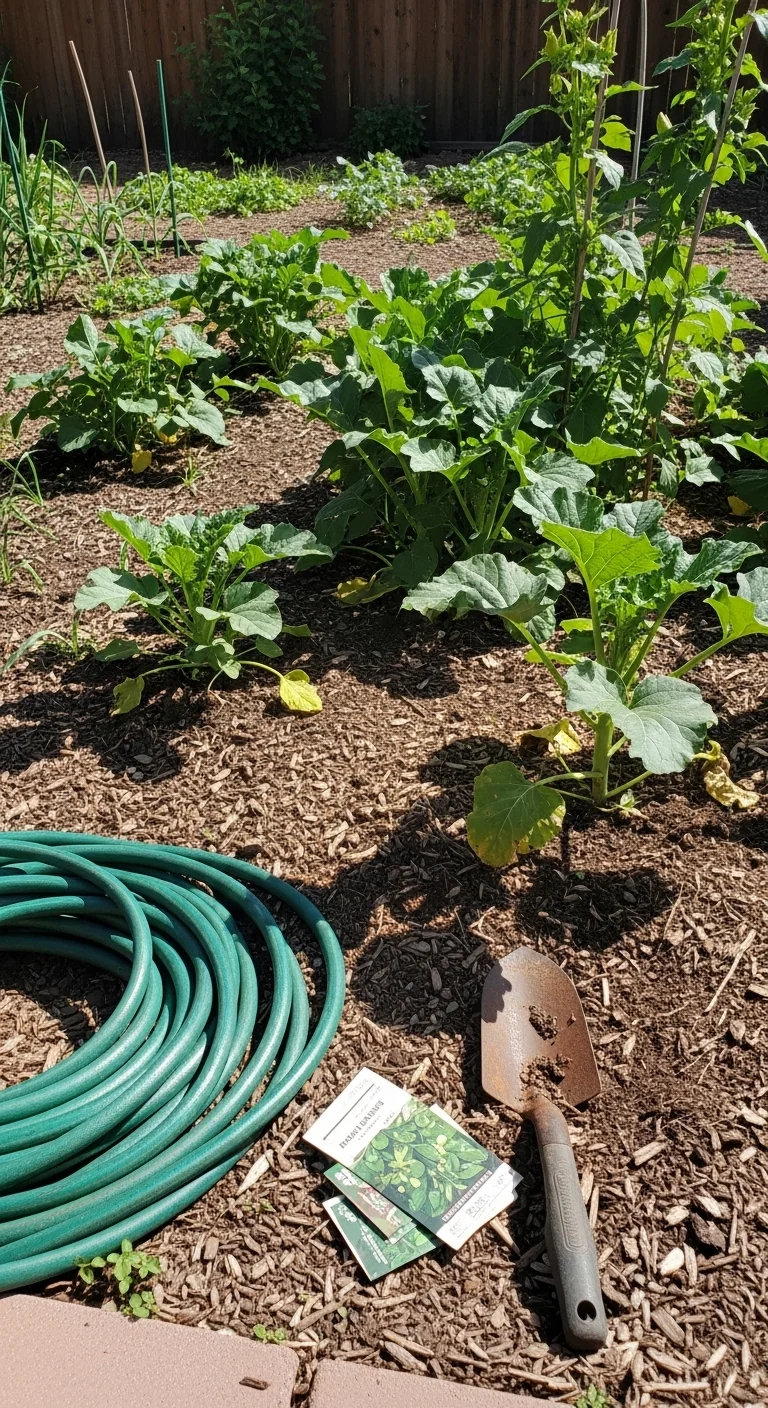
The Yield Grid reframes drought tolerant vegetables around measurable root architecture and temperature thresholds instead of vague survival lists. Crops with taproots or deep fibrous systems access moisture layers that shallow rooted plants miss, while heat adapted types maintain productivity above specific daytime highs and nighttime lows.
This article focuses on nine options proven across dry conditions in the US, Canada, UK, Australia, South Africa, and Spain. It excludes cool season crops such as lettuce or peas that wilt quickly under water stress. Coverage includes in ground beds, raised setups, and containers but skips purely ornamental or non edible plants.
Readers gain concrete matching rules that let them scan soil depth with a probe, check local summer highs, and decide within minutes which vegetables fit without trial and error. Each entry supplies one unique mechanism plus a micro format workflow or rule that directly informs planting choices.
Align the vegetable’s root profile and heat tolerance to your exact conditions and apply one mulch layer for season long water efficiency.
The The Yield Grid Decision Grid
Branch 1: Arid zones with sandy soils and daytime highs above 85°F (29°C) for 60 or more consecutive days plus soil drainage faster than 2 inches per hour. These conditions favor deep taproot or heat loving crops that draw from lower moisture reserves.
Recommended: Items 1, 2, and 7 below.
Branch 2: Semi arid or variable rainfall zones with loamy or clay soils and summer totals under 15 inches (38 cm). Here moderate depth roots and quick recovery traits perform best.
Recommended: Items 4, 6, and 9 below.
Branch 3: Raised beds or containers where soil depth stays under 18 inches (46 cm) and volume limits natural moisture storage. Compact or repeat harvest types excel with targeted mulching.
Recommended: Items 3, 5, and 8 below.
For deeper guidance on retaining moisture across all branches see our mulching strategies for vegetable gardens.
Quick Comparison Table
| Option | Key mechanism | Best for | Decision Grid Branch | Effort Score |
|---|---|---|---|---|
| Okra | Taproot plus heat adapted foliage | Arid zones above 85°F daytime | Branch 1 | 1 |
| Cowpeas | Low transpiration and warm night tolerance | Hot arid with minimal supplemental water | Branch 1 | 1 |
| Swiss Chard | Moisture storing petioles and cut and come again growth | Limited volume beds needing repeat harvests | Branch 3 | 3 |
| Eggplant | Deep fibrous roots and Mediterranean adaptation | Semi arid loamy soils | Branch 2 | 3 |
| Pole Beans | Short cycle with nitrogen fixing roots | Containers or raised beds | Branch 3 | 1 |
| Chili Peppers | Compact root system bred for dry origins | Variable rainfall semi arid zones | Branch 2 | 3 |
| Asparagus | Perennial crown with extensive deep roots | Established arid in ground sites | Branch 1 | 1 |
| Zucchini | Selected varieties with water seeking roots | Raised beds needing fast production | Branch 3 | 3 |
| Artichoke | Perennial taproot storage and drought recovery | Semi arid with occasional dry spells | Branch 2 | 1 |
Okra
Best for: Branch 1
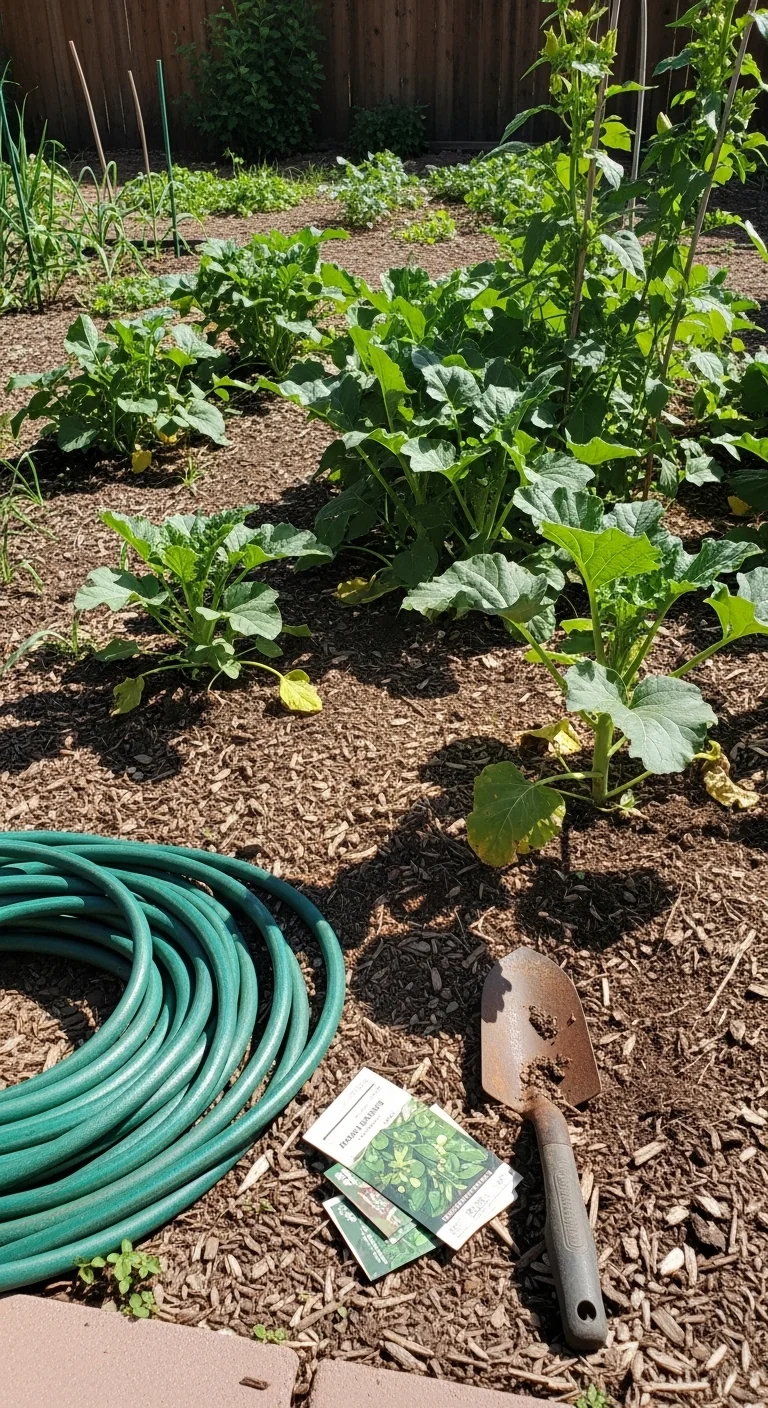
Okra originates from hot dry regions of Africa and uses a strong taproot to reach moisture unavailable to shallow crops. Plant when soil temperature holds above 65°F (18°C) at 4 inch depth and nighttime lows stay above 60°F (15°C) for reliable pod set. Blueprint starts with direct sowing 1 inch deep in full sun after last frost. Space plants 12 to 18 inches apart in rows 3 feet wide. Water deeply once at planting then reduce to once every 10 to 14 days once established. The common mistake is over watering after week three which causes lush leaves but fewer pods. Harvest pods at 3 to 4 inches long every other day to keep production steady. Companion planting with basil or peppers can improve air flow and reduce fungal pressure in humid pockets within arid zones. This vegetable delivers consistent yields when daytime temperatures regularly exceed 85°F because its foliage minimizes water loss through natural leaf rolling under stress.
Cowpeas
Best for: Branch 1
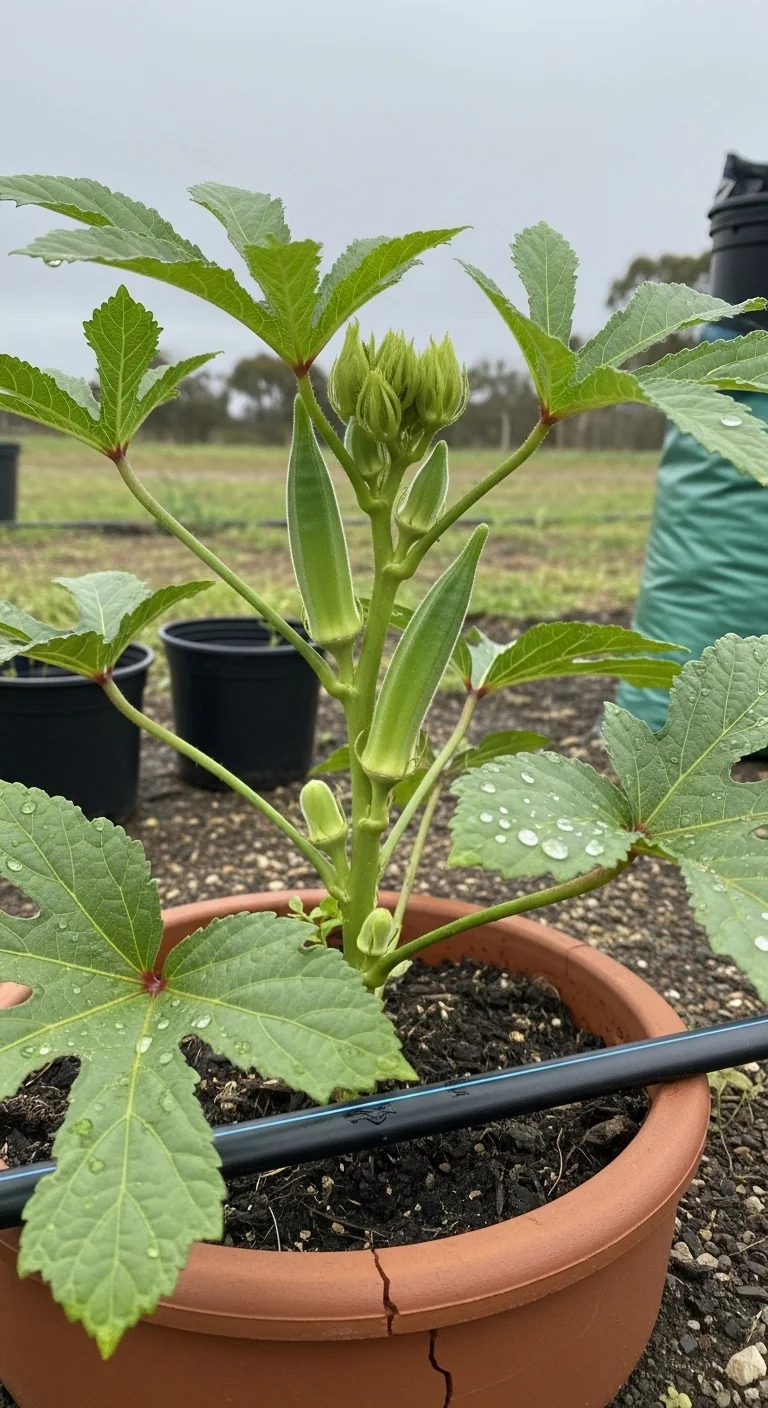
Cowpeas including black eyed peas tolerate extreme heat and actually set fewer seeds when soil stays too wet. Use versus skip rule: plant them if your summer nights stay above 65°F (18°C) and skip if evenings drop below that threshold because cool nights limit pod fill. They fix nitrogen so they improve soil without added inputs after the first season.
Swiss Chard
Best for: Branch 3
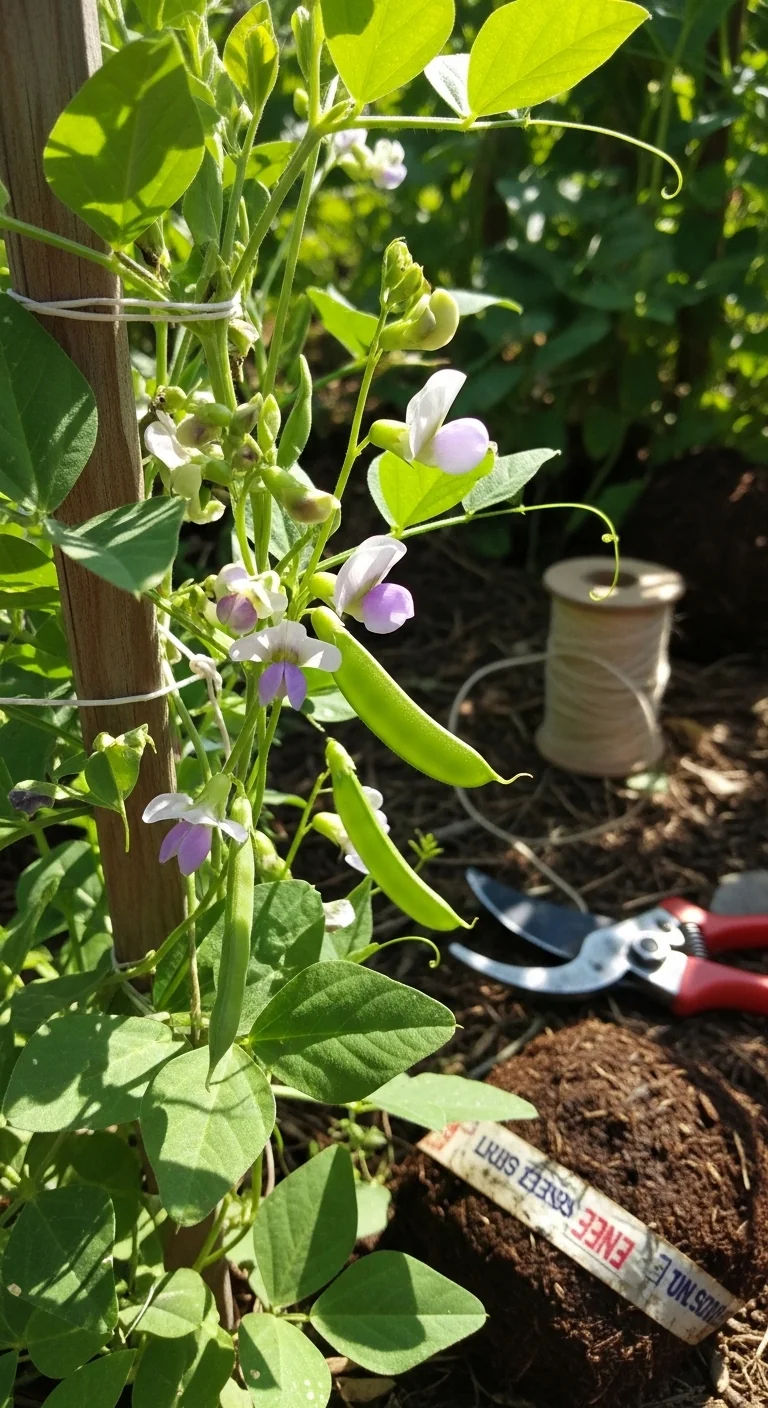
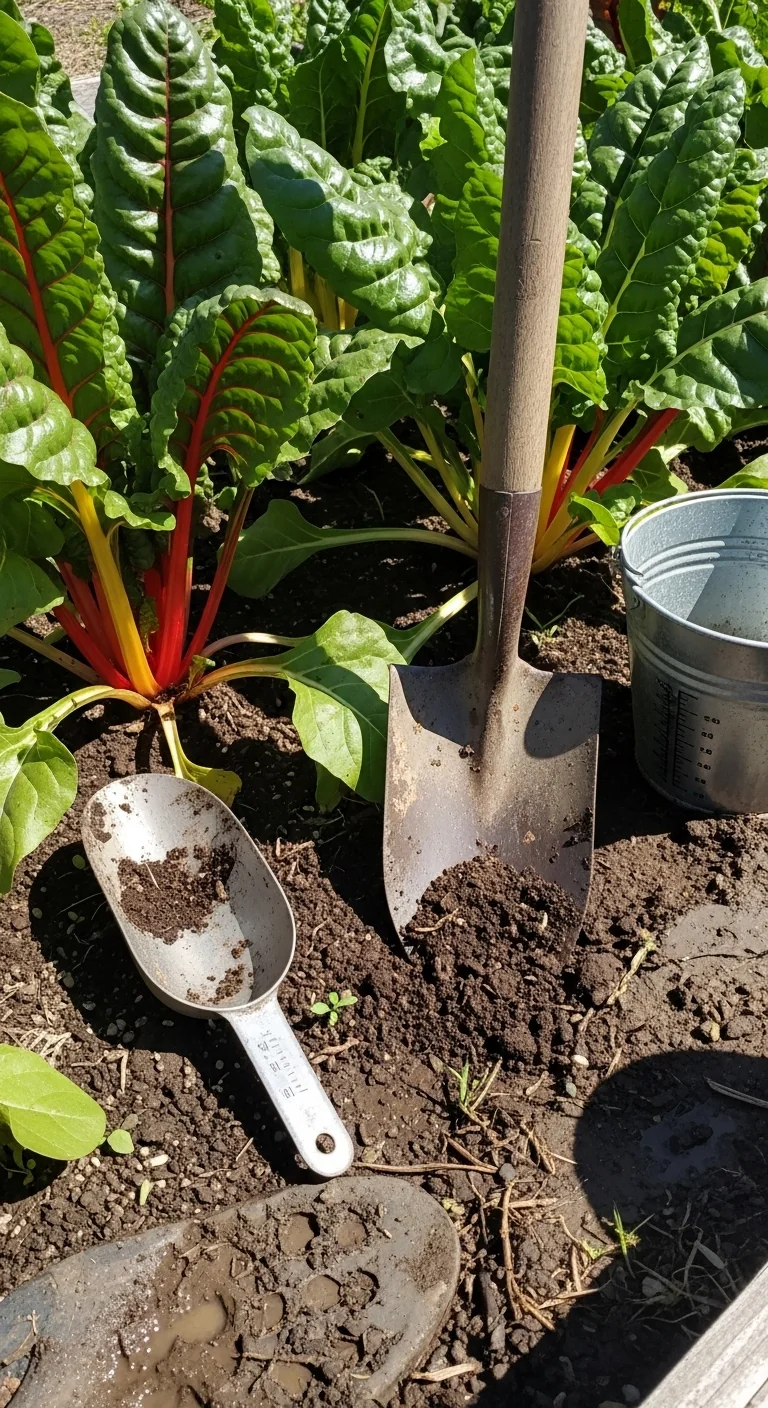
Swiss chard stores moisture in thick petioles and regrows after cutting which makes it ideal for limited volume setups. Threshold rule: maintain soil moisture at 40 to 60 percent of field capacity measured by a simple finger test 4 inches down. If readings fall below 40 percent reapply a 2 inch layer of organic mulch immediately. Most varieties listed in dry climate catalogs perform well once the first true leaves appear. Sow seeds ½ inch deep and thin to 8 inches apart. Harvest outer leaves at 6 inches tall leaving the center intact for continuous production through dry spells. In raised beds this approach extends the harvest window by 4 to 6 weeks compared with non tolerant greens.
Eggplant
Best for: Branch 2
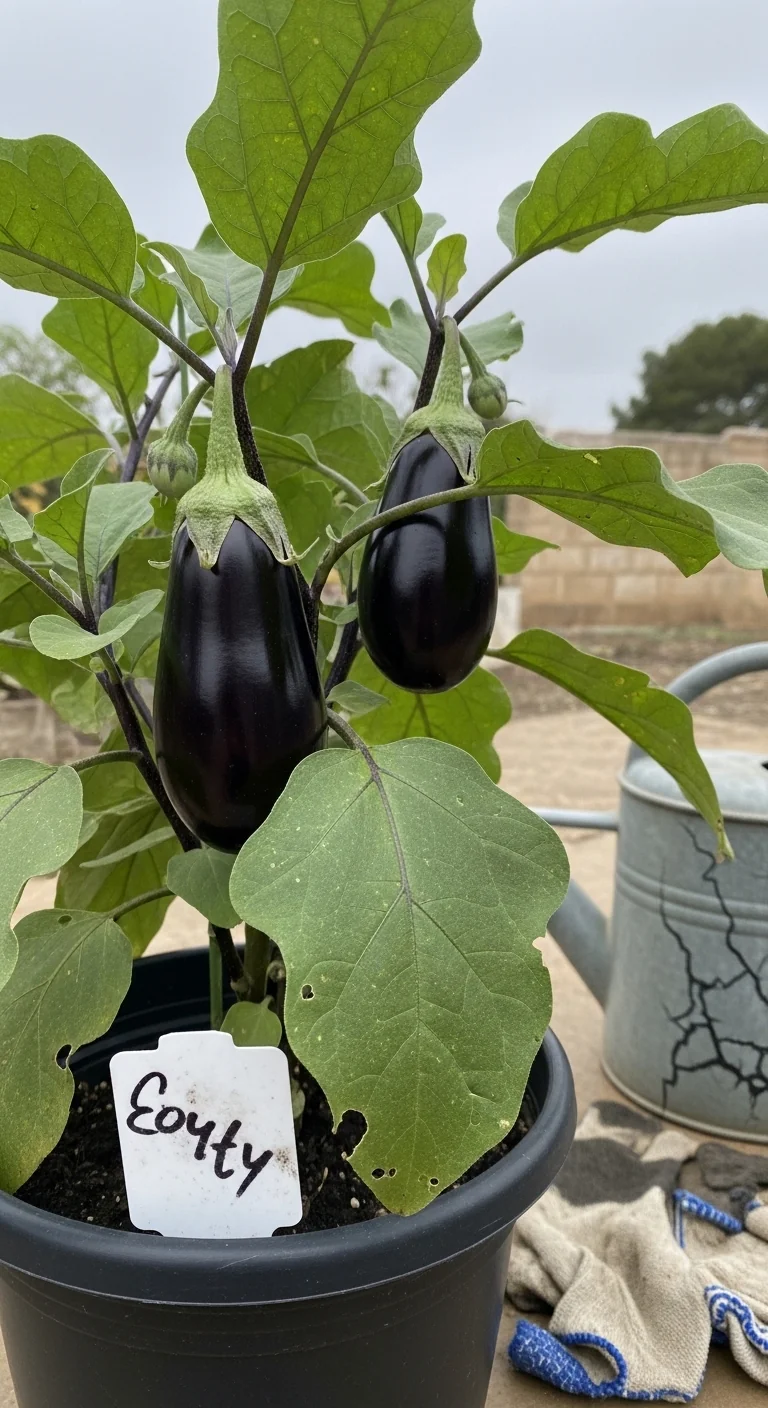
Eggplant develops a deep fibrous root system that accesses subsoil moisture in loamy conditions. Ten minute workflow: week one after transplant water to 12 inch depth then reduce frequency. Step one: check soil temperature reaches 70°F (21°C) before transplanting seedlings started indoors. Step two: space plants 18 to 24 inches apart in rows. Step three: apply 3 inches of mulch in a donut shape around the base leaving the stem clear. Step four: monitor for wilting only at midday and water only if leaves stay limp after 4 pm. Upgrade option includes adding a simple drip line on a timer set for 20 minutes twice weekly after establishment. Full details on variety selection and spacing appear in our dedicated growing eggplant guide.
Pole Beans
Best for: Branch 3
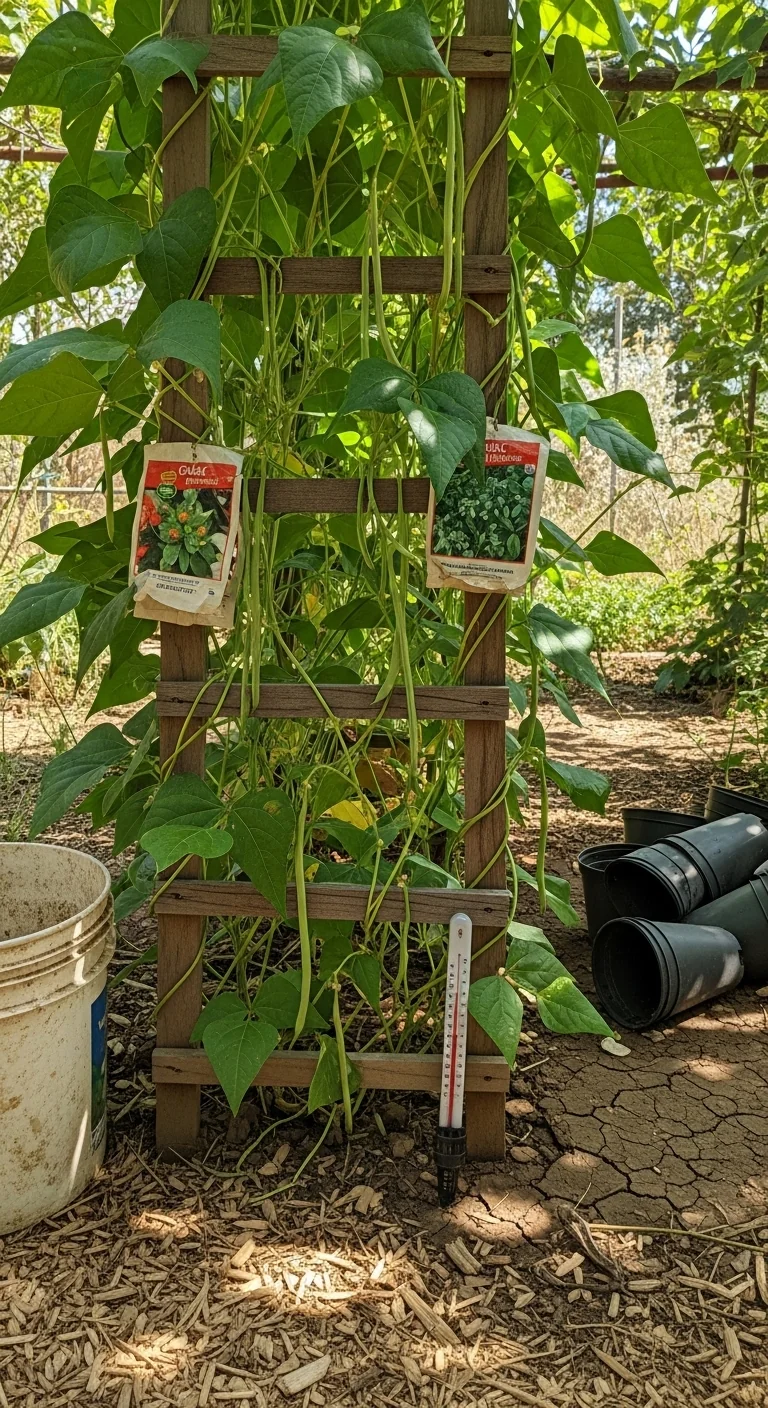
Pole beans finish their cycle in 50 to 60 days which matches the short irrigation window of containers. They climb trellises and fix nitrogen reducing the need for supplemental feeding. Direct sow after soil warms above 60°F (15°C).
Chili Peppers
Best for: Branch 2
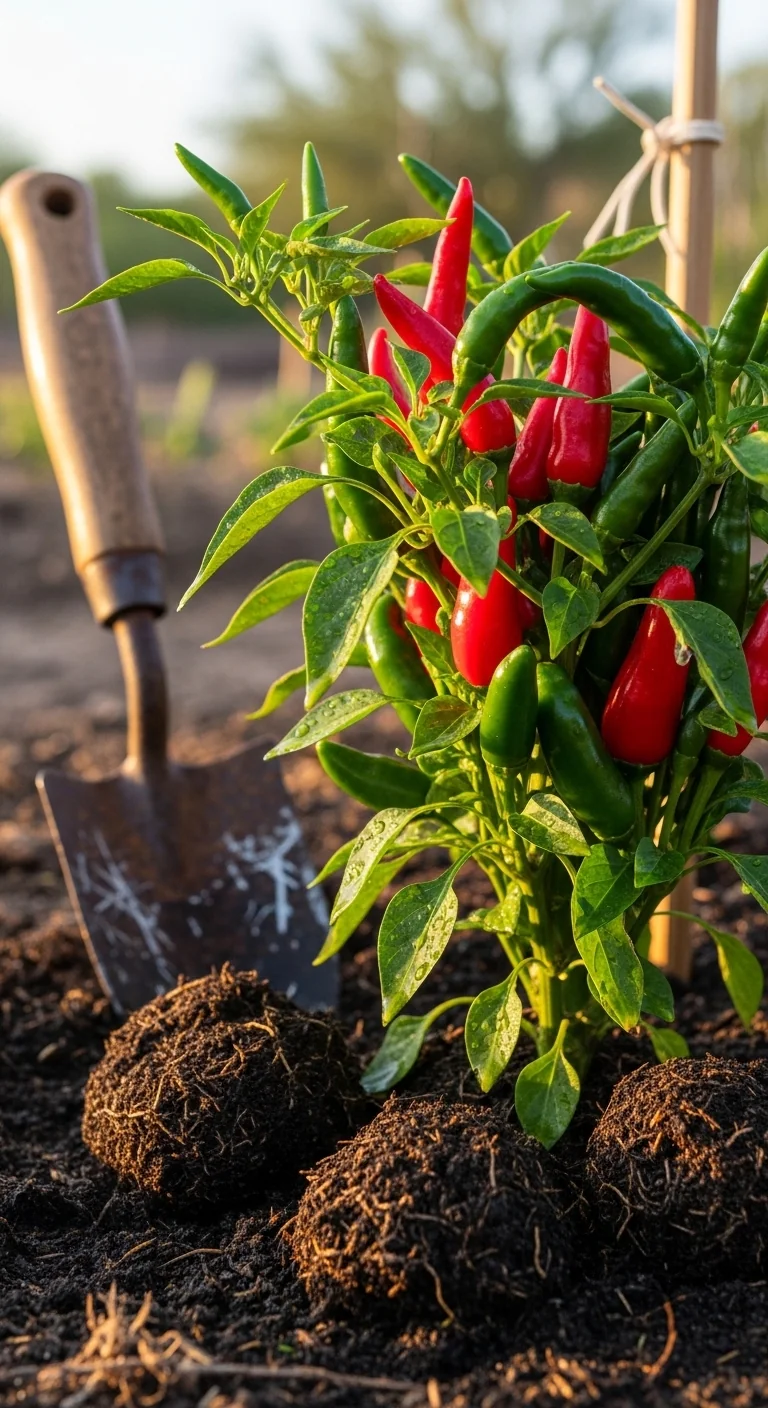
Chili peppers trace their origins to Central and South American dry zones and maintain fruit set with minimal water once roots establish. They prefer soil pH between 6.0 and 7.0 and daytime temperatures from 70 to 85°F (21 to 29°C). In semi arid spots with variable rain they outperform sweet peppers because smaller fruit size demands less moisture for development. Start seeds indoors 8 weeks before last frost or direct sow when nights stay above 55°F (13°C). Space plants 18 inches apart and provide a light support stake if fruit load increases. Harvest when fruits reach full color to encourage more production. Companion flowers can attract pollinators and improve air circulation around the plants. See our complete growing peppers guide for timing adjustments by region.
Asparagus
Best for: Branch 1
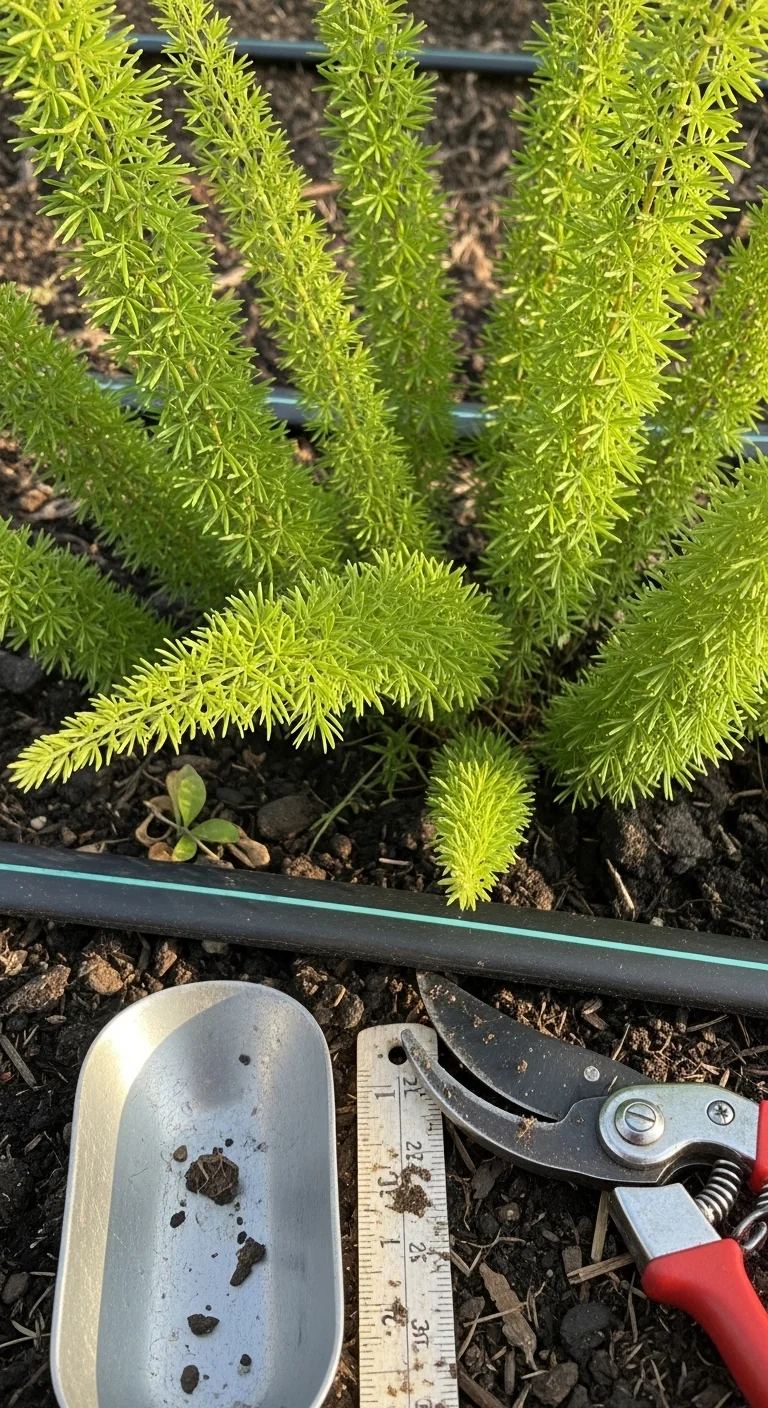
Asparagus is a perennial with an extensive deep root system that once established draws moisture from 3 to 4 feet below the surface. Plant crowns in early spring in trenches 8 inches deep and 4 feet apart. Backfill gradually as spears emerge in year one. After year three reduce irrigation to once every 14 to 21 days in arid zones because the crown stores reserves. Spears appear in spring before peak heat arrives so the crop avoids the driest months. Avoid harvesting after the third year until ferns turn brown in fall to rebuild root reserves. This option requires the longest establishment period but then demands the least ongoing input among all listed vegetables.
Zucchini
Best for: Branch 3
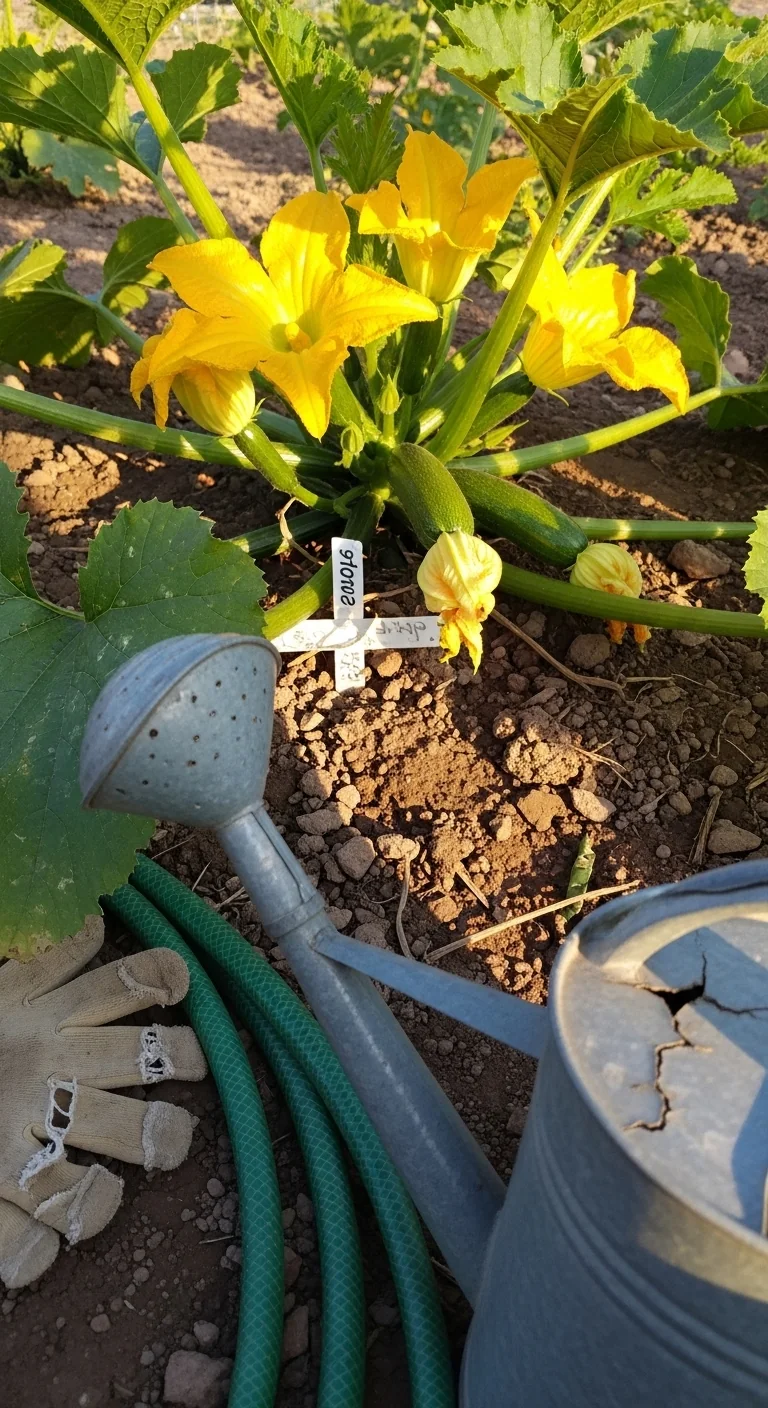
Selected varieties such as Dark Star develop roots that actively seek the water table in dryland conditions. Direct sow two seeds per hill 1 inch deep after soil reaches 70°F (21°C) and thin to the strongest plant. Space hills 3 feet apart in raised beds. Harvest fruits at 6 to 8 inches to keep plants productive.
Artichoke
Best for: Branch 2
Artichoke uses a perennial taproot to store moisture and recover from short dry spells common in semi arid zones. Plant offsets or start from seed in early spring in full sun with soil pH 6.5 to 7.5. Space plants 4 feet apart because mature crowns reach 5 feet wide. In year one water weekly to establish then reduce to biweekly deep soakings. Harvest buds before they open when they feel firm and heavy. Side shoots produce secondary buds later in the season extending the harvest. Cut back foliage to the ground after the first frost and mulch heavily for winter protection in borderline zones.
Starter Stack (What to Choose First)
Branch 1: Arid hot sandy zones
Start with okra and asparagus. The taproot of okra provides quick early season production while the perennial asparagus crown builds long term moisture access. Together they occupy different harvest windows and require only one 3 inch mulch layer applied in spring for both. Seed packet cost ranges from 3 to 6 dollars and total time to first harvest spans 55 to 90 days for okra with asparagus ready from year two onward.
Branch 2: Semi arid loamy or clay zones
Begin with eggplant and chili peppers. Both share Mediterranean style root systems and tolerate the same temperature band so they pair efficiently in the same bed. One 2 inch mulch application at transplant covers both and drip lines can run on a single timer. Material cost stays between 4 and 8 dollars per packet and first harvest arrives in 70 to 85 days.
Branch 3: Raised beds or containers
Choose swiss chard and zucchini first. The cut and come again habit of chard supplies steady greens while zucchini delivers fast fruit in limited volume. They share a 10 to 14 day watering rhythm once established. Combined setup cost runs 5 to 9 dollars and harvest begins in 45 to 60 days. Full setup details appear in our container vegetable gardening guide.
When This Won’t Work
These vegetables fail when nighttime temperatures stay below 55°F (13°C) for more than 10 consecutive days during flowering because pollen viability drops and pod or fruit set halts. The second measurable failure condition appears when soil pH falls below 5.5 and remains unadjusted because nutrient uptake collapses even with adequate moisture at depth.
In either case switch to cool season alternatives or move plants into a simple hoop house structure for temperature buffering. Adjust soil with lime applications measured against a basic test kit reading before planting the following season.
If your site matches these failure conditions repeatedly consider our low maintenance vegetable garden strategies for longer term site modifications.
Choosing the Right Option for Your Situation
Budget threshold under 10 dollars per packet
All nine options fit this range when purchased as standard seed packets. Prioritize direct sow types such as cowpeas pole beans and zucchini to eliminate indoor start costs.
Time threshold under 60 days to first harvest
Select pole beans swiss chard or zucchini because they reach edible stage fastest once soil warms. Avoid asparagus and artichoke which require multi year establishment.
Technical constraint of soil depth under 12 inches
Limit choices to swiss chard pole beans and zucchini which perform in shallow volume with mulch. Skip deep taproot crops such as okra or asparagus unless you amend with raised beds.
Yes/No checklist:
Do you have consistent daytime highs above 70°F (21°C)?
Is soil drainage faster than 1 inch per hour?
Can you apply 2 to 3 inches of mulch once at planting?
Does your site avoid prolonged nights below 55°F (13°C)?
If you answer yes to three or more proceed with the matched branch items.
Expert Q&A
How do drought tolerant vegetables respond when paired with nitrogen fixing companions?
Many such as pole beans already fix nitrogen themselves while okra and eggplant benefit from nearby cowpeas or bush beans that improve soil structure without competing for deep moisture. The pairing reduces the need for separate soil amendments after the first season.
Can these crops succeed in full sun exposure above 90°F (32°C) without afternoon shade cloth?
Okra cowpeas and chili peppers maintain production at those temperatures because their leaf structure reduces transpiration. Swiss chard and zucchini may show temporary wilting at peak heat but recover overnight if mulch keeps root zone cool.
What soil temperature minimum triggers reliable germination for the listed options?
Most require 65°F (18°C) or higher at 2 inch depth. Asparagus and artichoke tolerate slightly cooler starts around 55°F (13°C) because they rely on crown or offset planting rather than seed.
Do raised bed versions of these vegetables need different spacing than in ground plantings?
Yes. Reduce spacing by 20 percent in raised beds because vertical growth and mulch concentrate resources. Pole beans still need trellis support but can share a single structure with zucchini for efficient use of limited footprint.
How does harvest frequency change when water availability drops mid season?
Quick cycle crops such as swiss chard and zucchini continue producing with every other day picking while okra and eggplant require picking at smaller sizes to keep plants from stressing further. Perennials like asparagus and artichoke simply pause spear or bud formation until moisture returns.
Conclusion
Drought tolerant vegetables succeed when their root depth and heat thresholds align exactly with your measured garden conditions rather than with generic recommendations. The number one mistake remains over watering young transplants which delays root development and creates dependency.
Take the next step by auditing your soil depth and summer temperature pattern then select the two starter stack items for your branch. Layout options that maximize these choices appear in our vegetable garden layout ideas.