
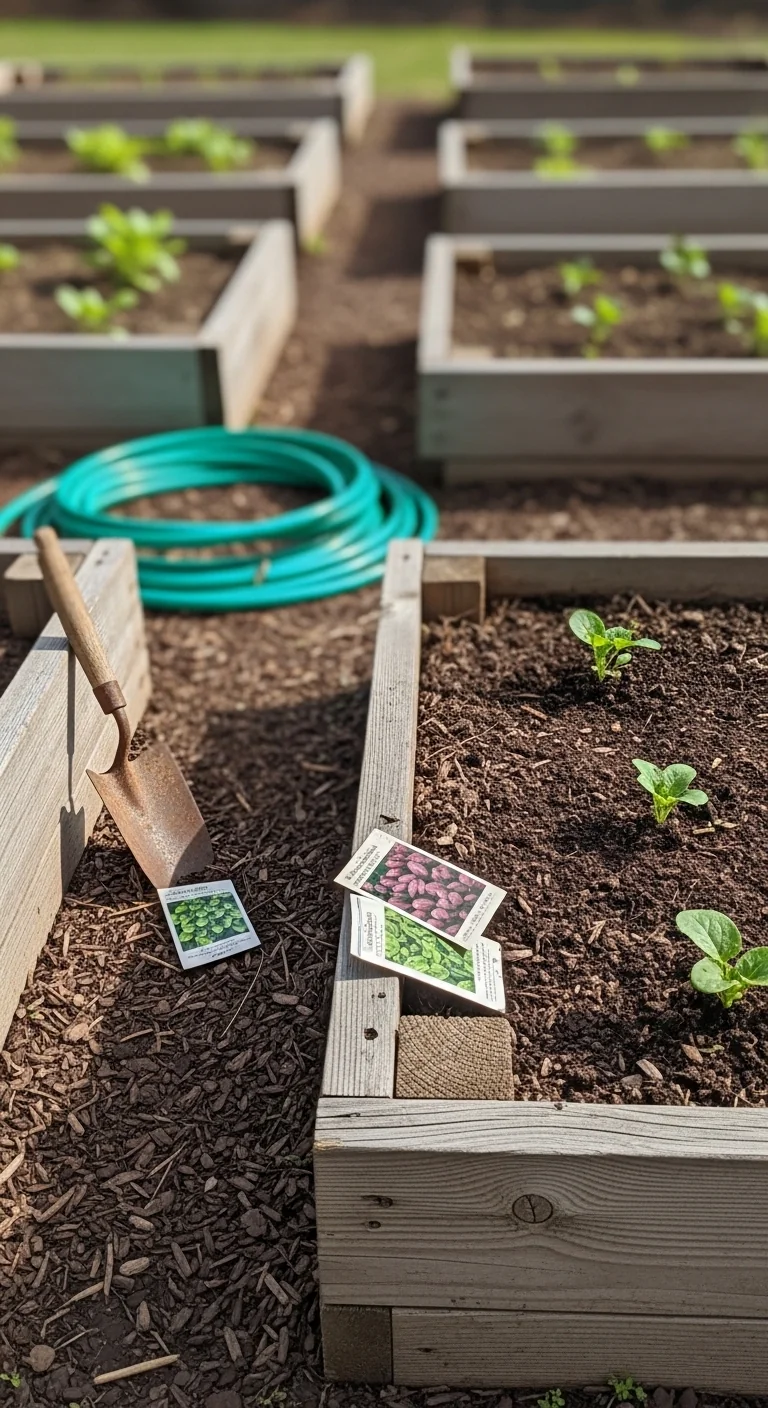
The real difference between raised bed and in ground gardening comes down to matching three measurable site constraints: drainage rate, open space size, and physical access needs. Raised beds isolate your soil mix from native problems while in ground systems tap existing biology at larger scale when conditions allow.
This guide covers edible gardening in home yards only. It excludes large farm operations, purely container methods, and ornamental flower beds. All recommendations tie directly to soil type, climate patterns common in the US, UK, Canada, and Australia, and practical constraints you can test in one afternoon.
After reading you will know which method fits your yard and which two starter items deliver the fastest results with the least ongoing work. You will also avoid the most common setup errors that force rework in year two.
Test your soil drainage time and measure available open area before buying materials or renting equipment.
The Yield Grid Decision Grid
Branch 1: Sites where native soil drains slower than 1 inch per hour after rain or shows compaction from prior construction or heavy clay content. Recommended: Items 1, 4, 7 below.
Branch 2: Yards exceeding 300 square feet of open level ground with topsoil already at least 8 inches deep and no known contaminants. Recommended: Items 2, 5, 9 below.
Branch 3: Gardens where bending or kneeling must stay under 15 minutes per session due to mobility limits or where total footprint stays under 40 square feet. Recommended: Items 3, 6, 8 below.
For custom soil recipes that work across all branches see our guide to the best soil mix for raised beds.
Quick Comparison Table
| Option | Key mechanism | Best for | Decision Grid Branch | Effort Score |
|---|---|---|---|---|
| Raised Bed | Imported soil layers isolated from native ground | Compromised drainage or small spaces | 1 and 3 | 3 |
| In-Ground | Direct integration with existing soil biology | Large yards with good native soil | 2 | 2 |
Hugelkultur Layering for Permanent Fertility in Raised Beds
Best for: Branch 1
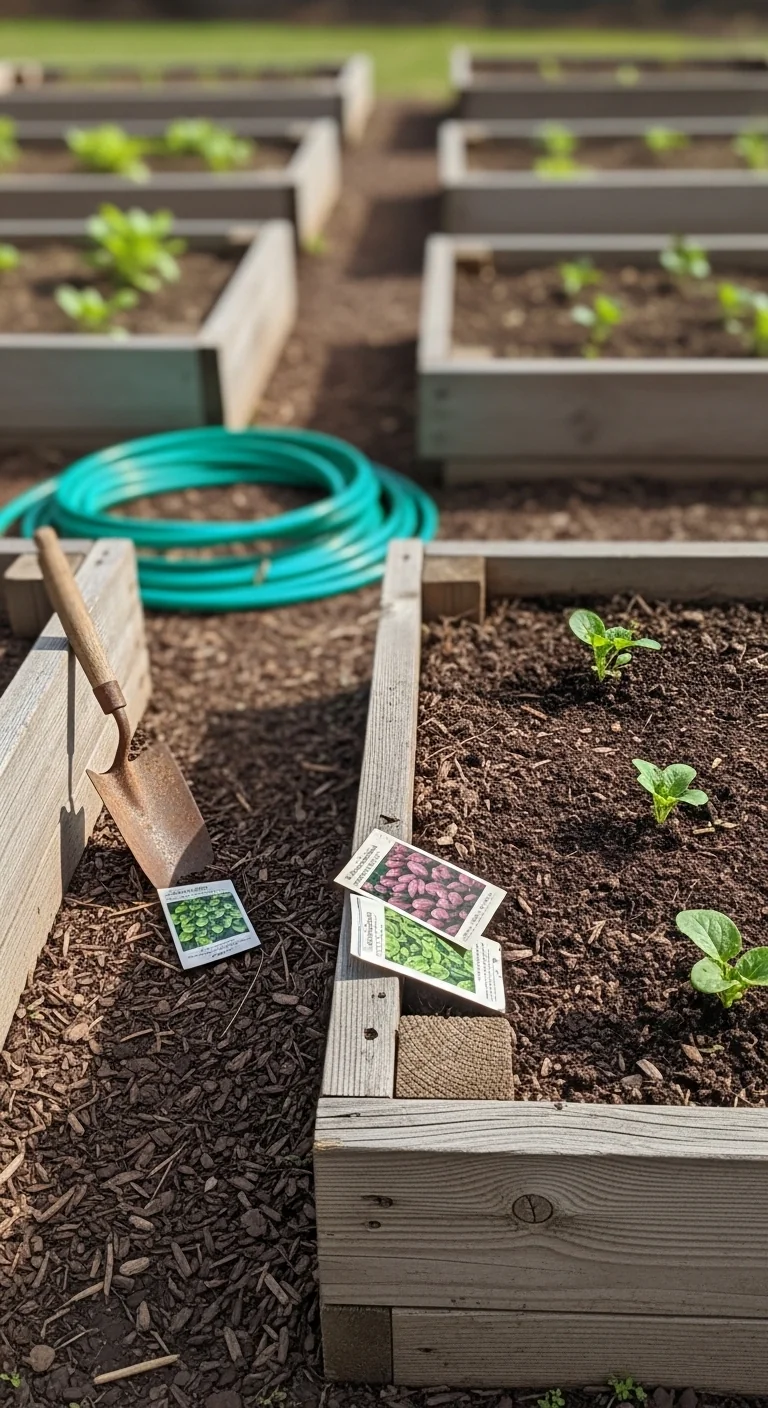
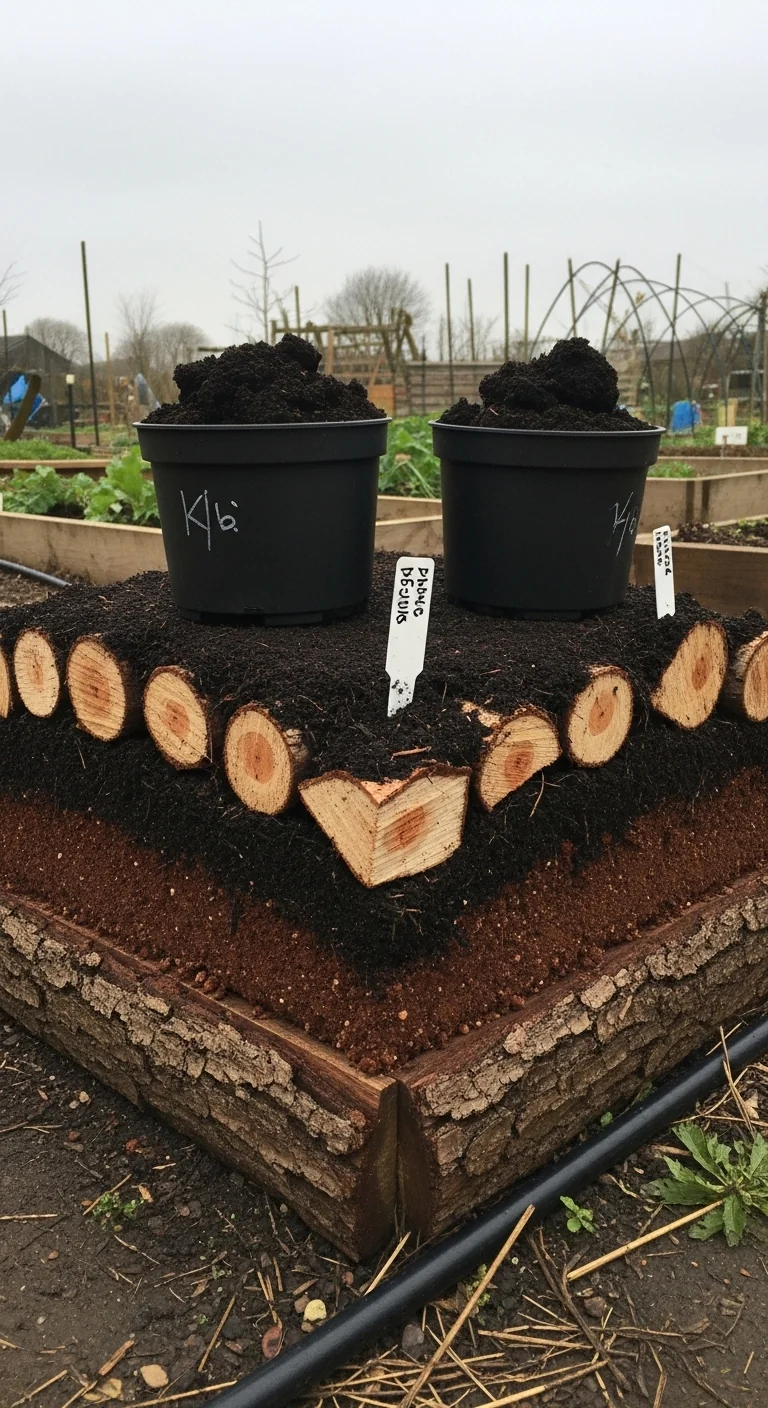
Hugelkultur uses buried wood layers to create long-term nutrient release inside raised beds. The technique works because wood decomposes slowly, holding water and feeding soil microbes without repeated fertilizer applications. It fits Branch 1 sites where native soil lacks organic matter or drains poorly.
What it solves: Compacted clay or low-nutrient subsoil that would otherwise require constant amendments in in-ground beds.
For: Any edible crop except deep taproot vegetables that need more than 24 inches of loose medium.
Steps: 1. Lay largest logs or branches at the bottom of the frame. 2. Add smaller woody debris and twigs. 3. Top with a 50-50 mix of compost and garden soil to 12-18 inches above the wood. 4. Water thoroughly once and mulch the surface.
Common mistake: Using fresh green wood that ties up nitrogen in the first season. Cure woody material for at least six months or mix in extra nitrogen-rich compost at planting time. See our full hugelkultur raised bed guide for exact layer ratios and wood types.
This blueprint turns a poor-soil site into a self-sustaining system after the first year because the wood continues breaking down below the root zone.
Root Expansion Advantages in In-Ground Gardens for Large Crops
Best for: Branch 2
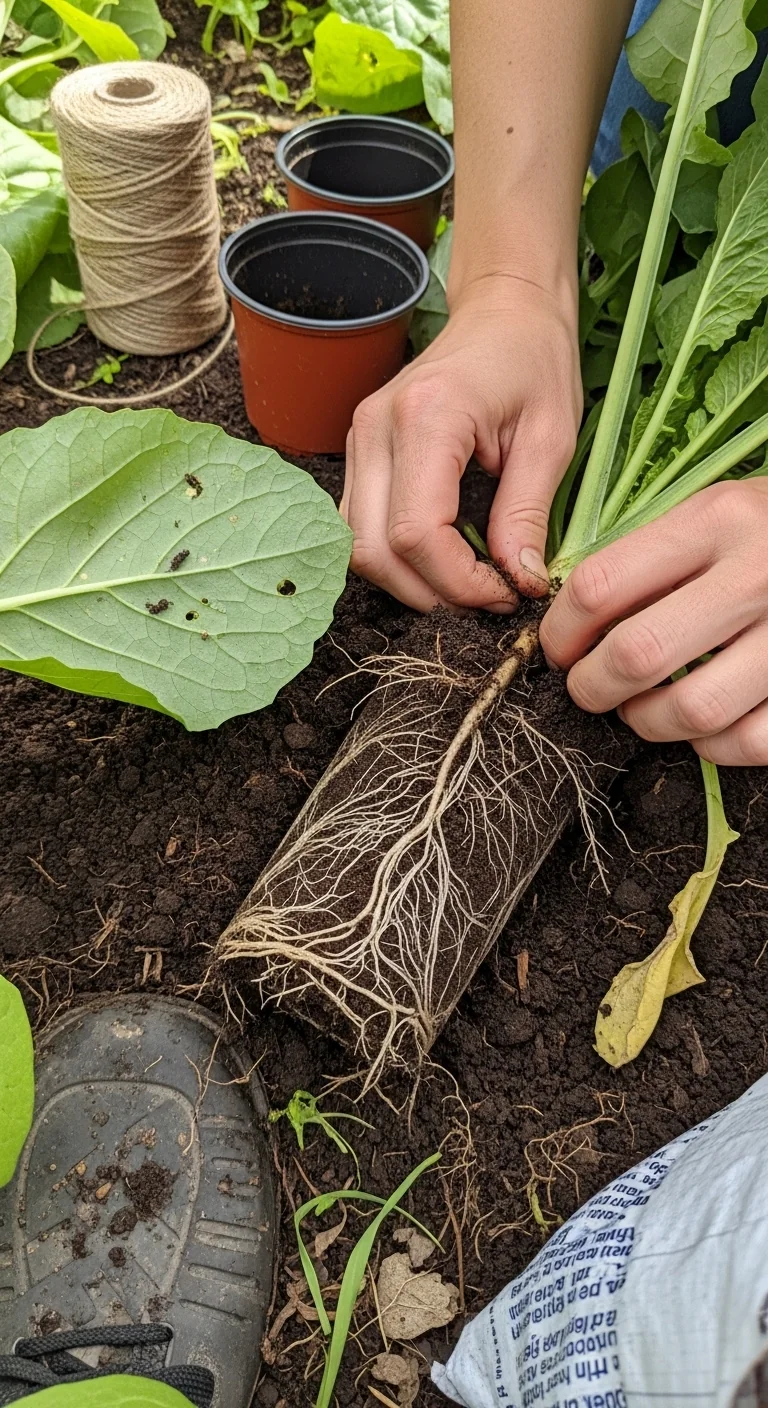
In-ground gardens let roots spread freely beyond the planting hole when native soil is already loose and fertile. Use this approach for potatoes, carrots, or parsnips that develop long taproots or wide lateral systems. Skip it on Branch 1 sites because compaction limits oxygen and causes misshapen roots.
Edge case: If your soil test shows high sand content that drains too fast, add organic matter only in the planting row rather than across the entire bed to avoid wasting material.
Elevated Raised Beds to Minimize Bending and Kneeling
Best for: Branch 3
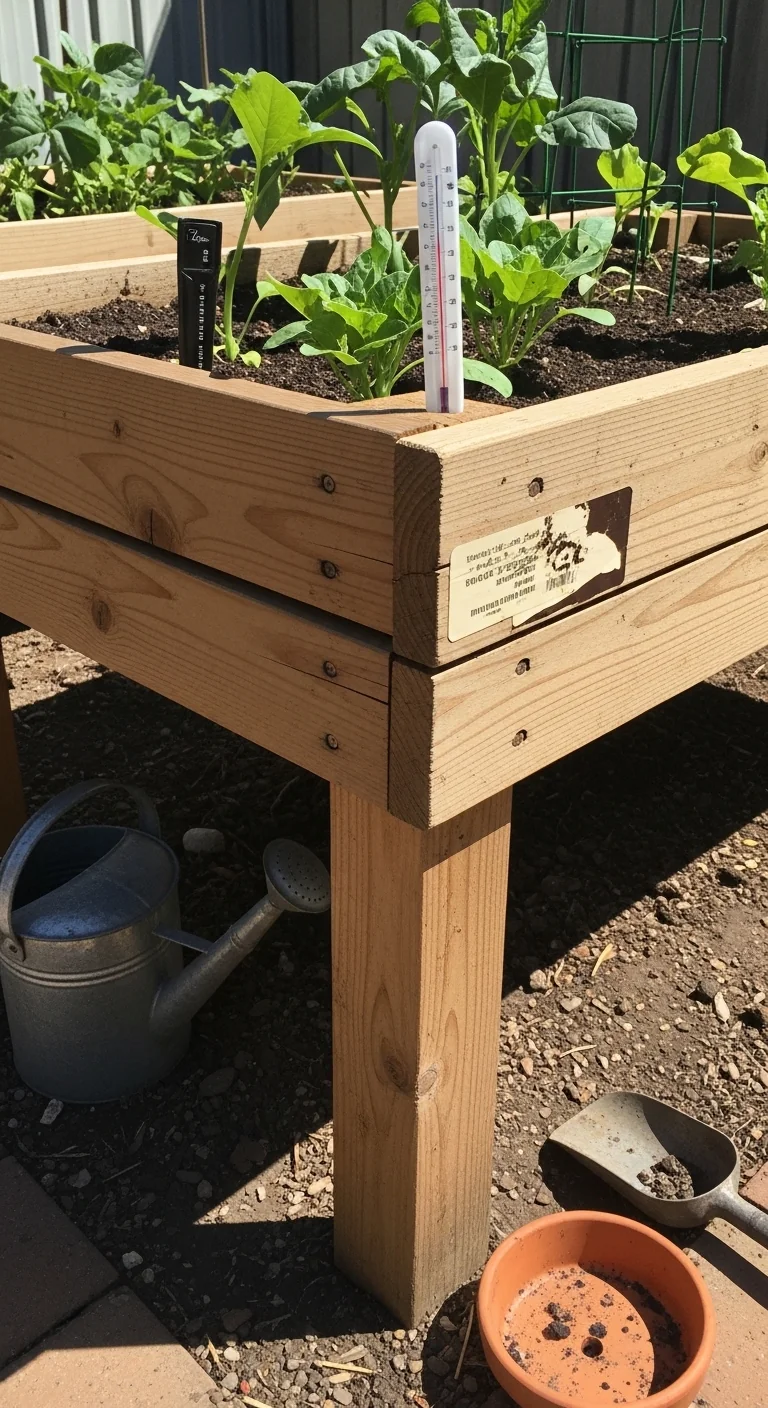
Elevated designs raise the growing surface 24 to 36 inches off the ground, keeping all work at waist height. The threshold that matters is session time: if you cannot kneel or bend for more than 15 minutes without discomfort, elevated frames deliver measurable relief. They also protect against soil compaction because paths stay separate from the bed area.
Adjustment rule: On slopes greater than 5 percent add leveling blocks or legs to keep the bed surface level and prevent water runoff along one side. See our elevated raised beds guide for height options and stability details.
Self-Watering Raised Bed Designs to Maintain Consistent Moisture
Best for: Branch 1
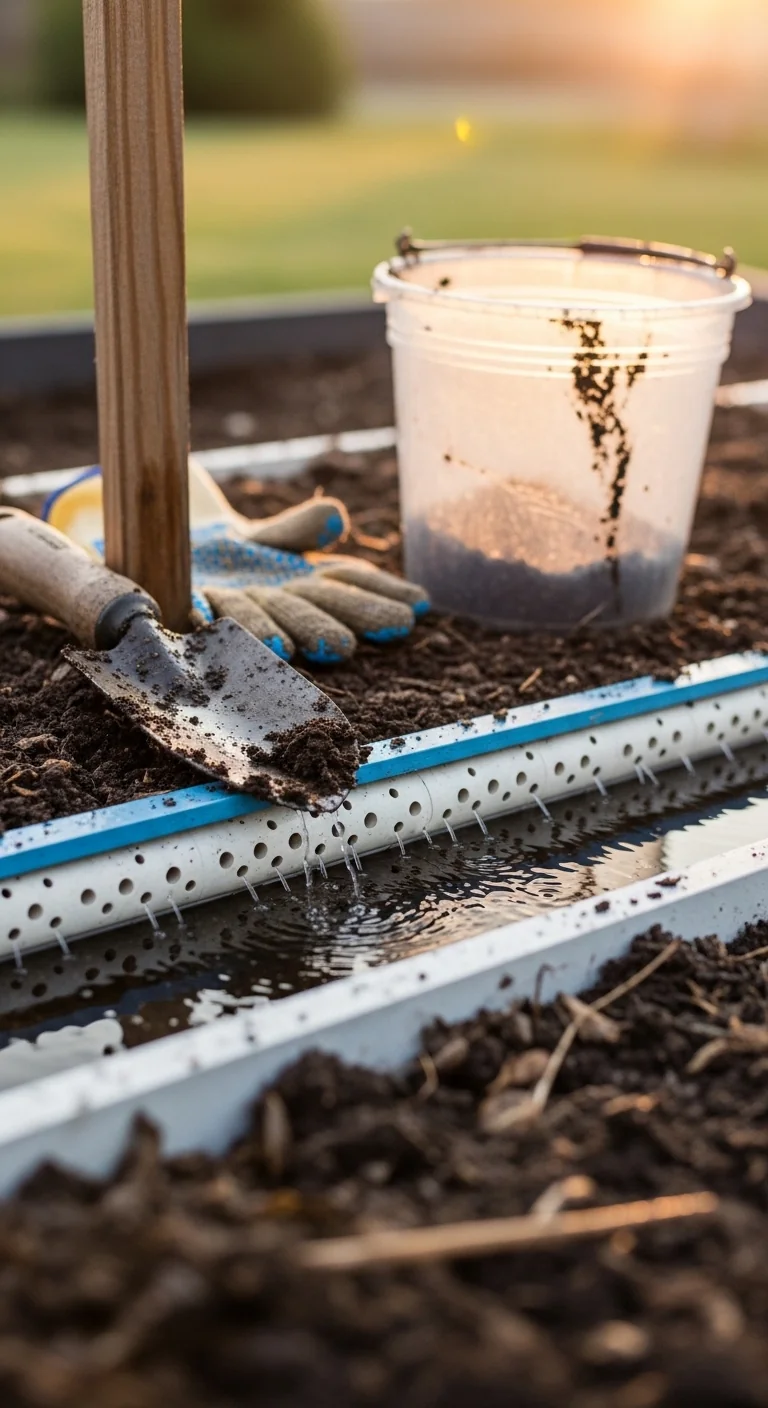
Self-watering systems use a reservoir at the base of the raised bed to supply water from below through capillary action. The design counters the faster drying typical of raised beds compared with in-ground soil. It works especially well on Branch 1 sites that already require imported soil mixes prone to drying.
10-minute workflow: 1. Install a perforated pipe or fabric reservoir layer during initial build. 2. Fill the reservoir through a vertical fill tube. 3. Check water level every two weeks in peak summer and top up as needed. 4. Upgrade option: add an automatic float valve connected to a rain barrel for hands-off operation.
Unique detail: The reservoir also collects excess rainwater that would otherwise run off the sides of a standard raised frame. See our self-watering raised bed guide for material lists and reservoir sizing.
Drip Irrigation Setup for Water Efficiency in Raised or In-Ground
Best for: Branch 2
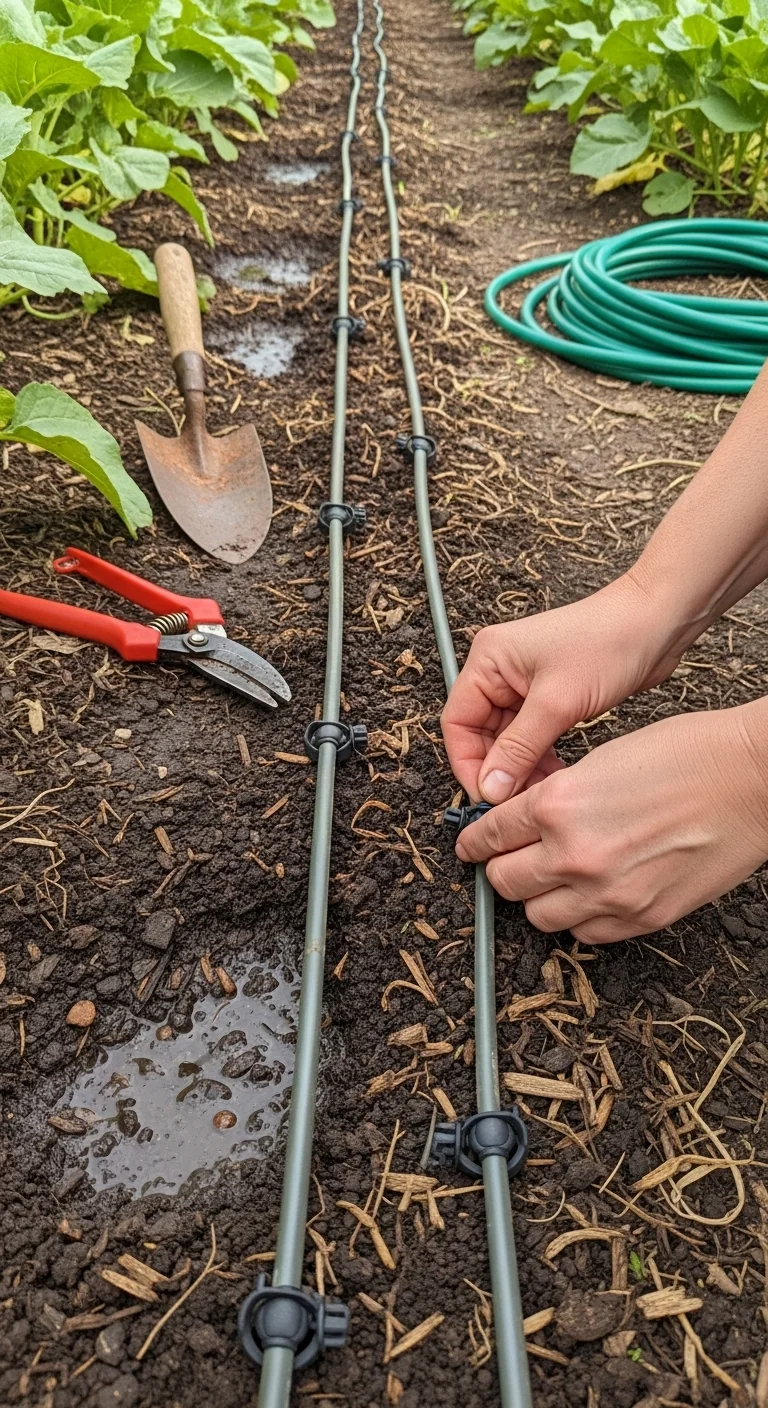
Drip lines deliver water directly to the root zone at low pressure, reducing surface evaporation in both methods. Use them on Branch 2 sites where larger in-ground beds would otherwise need frequent hand watering. The mechanism avoids wetting foliage and lowers disease pressure on tomatoes or peppers.
Edge case: In windy areas secure lines with landscape pins every 24 inches to prevent shifting.
See our drip irrigation raised beds guide for emitter spacing and pressure regulator details.
Cold Frame Integration for Early Season Starts in Raised Beds
Best for: Branch 3
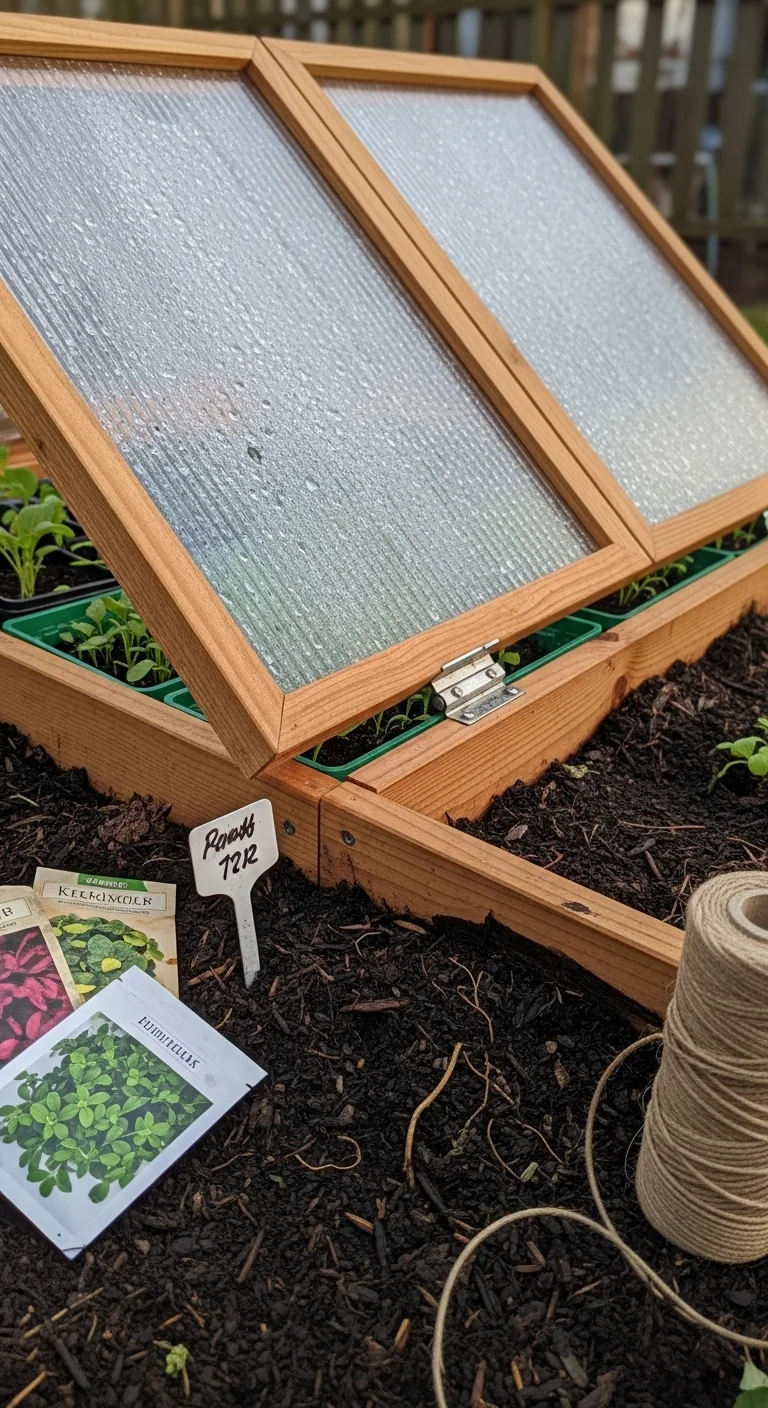
Cold frames attach directly to raised bed frames using hinges or removable panels, creating a mini greenhouse effect that warms soil 4 to 8 weeks earlier than open in-ground beds. The blueprint is simple: build a sloped lid with polycarbonate or glass that fits the exact bed dimensions.
Steps: 1. Attach frame extensions to the top rails. 2. Add ventilation props for warm days. 3. Remove the lid once night temperatures stay above 45 degrees Fahrenheit. This setup fits small-footprint Branch 3 gardens where space for separate hoop houses does not exist.
See our cold frame raised bed guide for hinge types and ventilation schedules.
Winterizing Raised Beds to Protect Soil Structure Year-Round
Best for: Branch 1
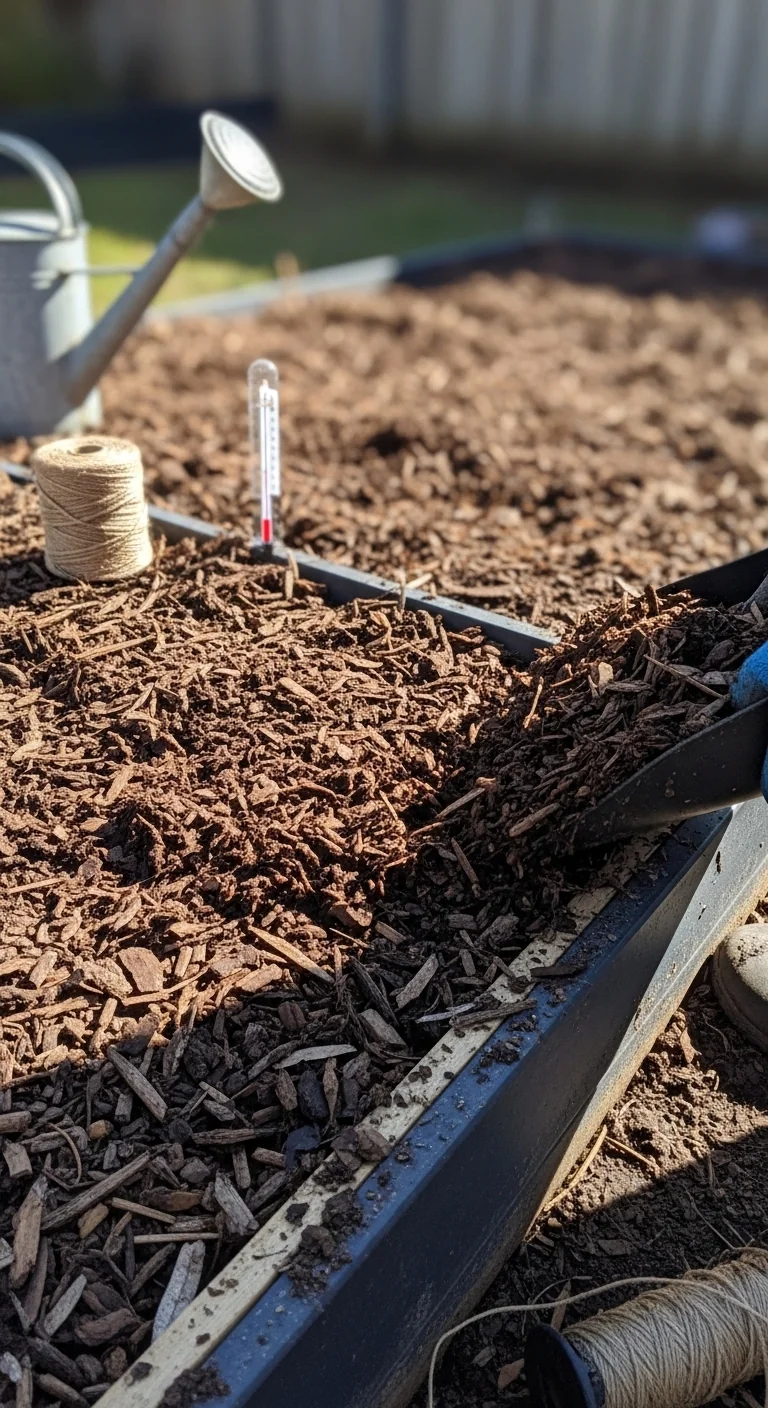
Winterizing involves covering raised beds with 4 to 6 inches of organic mulch or planting a cover crop to prevent erosion and nutrient leaching over winter. The threshold that matters is first frost date: apply protection within two weeks after harvest ends. This step preserves the imported soil structure built in year one and avoids the crusting common in unprotected in-ground beds.
Adjustment rule: On sites with heavy snowfall add a simple wooden cover board across the top rails to shed weight and keep the bed frame intact. See our winterizing raised beds guide for mulch choices and cover crop seeding rates.
DIY Trellis Systems for Vertical Growth in Raised Beds
Best for: Branch 3
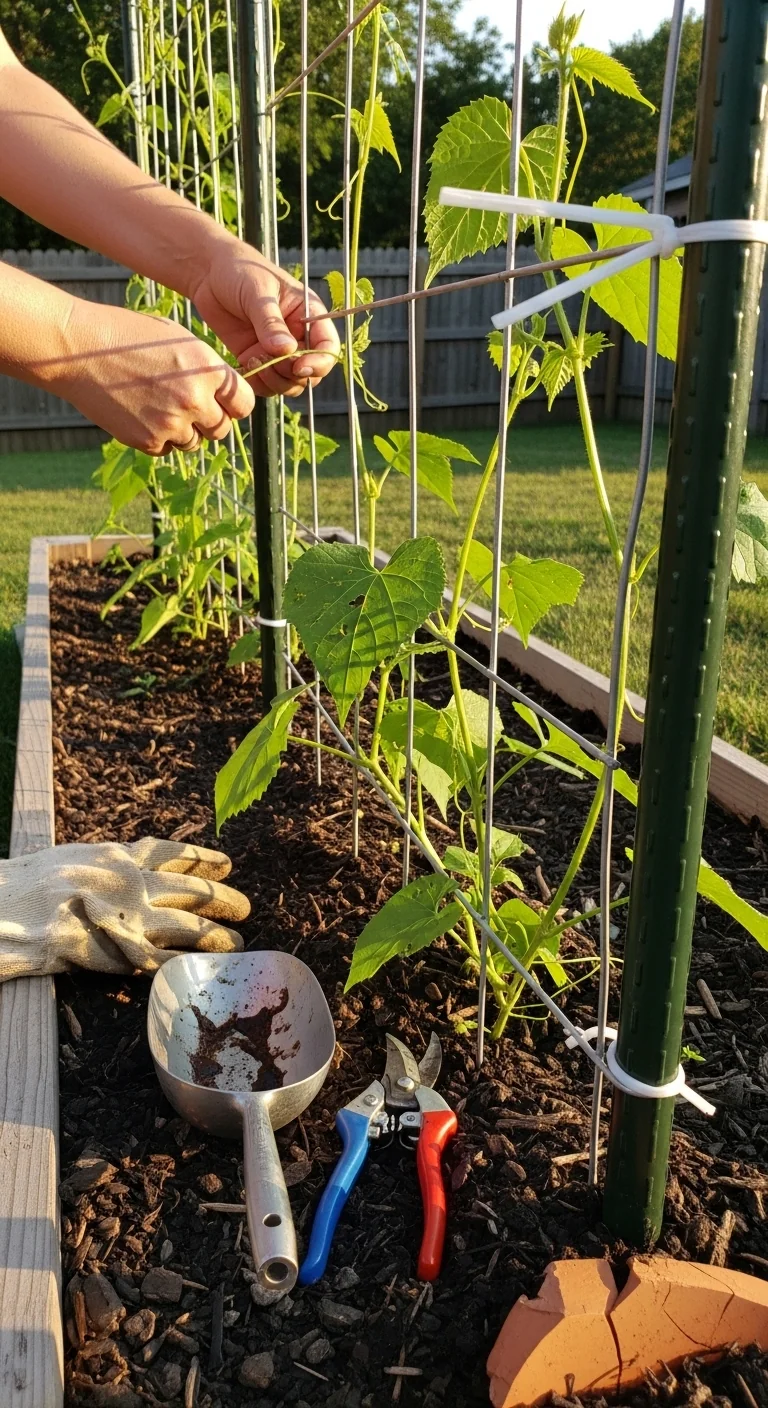
DIY trellises made from cattle panels or bamboo attach to raised bed frames and support vining crops upward instead of outward. Use this on Branch 3 sites where footprint limits horizontal spread. The mechanism doubles usable growing area without expanding the bed base.
Edge case: Secure panels with zip ties or brackets rated for wind load in exposed urban yards.
See our diy raised bed trellis guide for exact panel heights and attachment points.
Zucchini Production in Raised Beds Versus In-Ground Spacing
Best for: Branch 2
Zucchini needs 36 to 48 inches between plants for air flow and fruit development. In-ground beds on Branch 2 sites allow this spacing naturally across larger areas while raised beds require careful planning to avoid crowding. The comparison shows in-ground wins for bulk production when space is not limited, but raised beds still succeed with vertical training or compact varieties at tighter spacing.
See our zucchini in raised beds guide for pruning and support details that keep yields high in confined frames.
Starter Stack (What to Choose First)
Branch 1 Starter Stack
Start with Item 1 (Hugelkultur Layering) plus Item 4 (Self-Watering Raised Bed Designs). The wood base and reservoir work together to stabilize moisture and fertility without monthly top-dressing. Materials cost 120 to 250 dollars. Build time ranges from 4 to 8 hours for a 4 by 8 foot bed.
Branch 2 Starter Stack
Start with Item 2 (Root Expansion Advantages in In-Ground Gardens) plus Item 5 (Drip Irrigation Setup). The combination uses existing soil while delivering water precisely, keeping effort low on larger yards. Materials cost 40 to 120 dollars. Setup time ranges from 2 to 5 hours.
Branch 3 Starter Stack
Start with Item 3 (Elevated Raised Beds) plus Item 8 (DIY Trellis Systems). The height reduces physical strain and the vertical support fits small spaces perfectly. Materials cost 90 to 180 dollars. Build time ranges from 3 to 6 hours.
When This Won’t Work
Raised beds fail on sites with extreme slope greater than 10 percent because water runs off the sides faster than roots can absorb it and frames become unstable without major reinforcement. In-ground beds fail when native soil stays waterlogged for more than 48 hours after rain because root rot develops quickly in edible crops.
In both failure cases switch to the opposite method only after measuring the exact condition. For permanent non-wood alternatives that handle wet or sloped ground consider modular block construction.
Choosing the Right Option for Your Situation
Budget Threshold
If your initial materials budget stays under 150 dollars choose in-ground with targeted amendments. Above that threshold raised beds become viable because the soil mix investment pays across multiple seasons.
Time Threshold
If you have fewer than 4 hours available for initial setup stay with in-ground on Branch 2 sites. With 4 hours or more invest in a raised bed frame on Branch 1 or 3 sites.
Technical Constraint
If any crop on your list requires taproots deeper than 18 inches and your native soil is already loose prefer in-ground. Otherwise raised beds at 24 inches depth handle most edible vegetables without restriction.
Yes/No Checklist
Does your soil drain slower than 1 inch per hour after rain? Yes = Branch 1
Is your open yard larger than 300 square feet with good topsoil? Yes = Branch 2
Do you need to limit bending or total footprint? Yes = Branch 3
Answer two or more yes statements above and build your Starter Stack immediately.
Expert Q&A
How does raised bed depth change root vegetable performance versus in-ground?
At 12 inches or less raised beds restrict long carrots or beets and force shorter or forked roots. In-ground beds with 18 inches or more of loose topsoil allow full root length. Match depth to crop needs before choosing the method.
Can you rotate crops between raised and in-ground sections in the same yard?
Yes, but keep families separate for three years to break pest cycles. Raised beds warm faster so plant cool-season crops there in early spring and move warm-season crops to in-ground later. Track rotations on paper or a simple spreadsheet.
What pH adjustments work differently between the two methods?
Raised beds respond faster to lime or sulfur because you control the entire volume. In-ground adjustments spread more slowly and require testing every six months instead of every spring. Always retest after any change.
How do pollinator pathways differ with raised bed layouts?
Raised beds create defined paths that encourage bees to move between beds more predictably than scattered in-ground rows. Plant low-growing flowers at the ends of each frame to form corridors that increase visitation rates to squash and beans.
Is companion planting spacing different in raised beds?
Yes. The defined edges let you plant companions closer along the perimeter without root competition from paths. In-ground rows need wider buffers to avoid trampling during harvest. Adjust spacing by 4 to 6 inches tighter inside raised frames.
Conclusion
Match your measured drainage, space, and access conditions to the Decision Grid and you will select the method that minimizes long-term effort. The number one mistake is skipping the 30-minute drainage test and building the wrong system for your site.
Build your Starter Stack this weekend and protect the bed over winter so soil stays ready for next spring. Next step: review our wicking raised bed guide to add passive watering to any existing frame.