
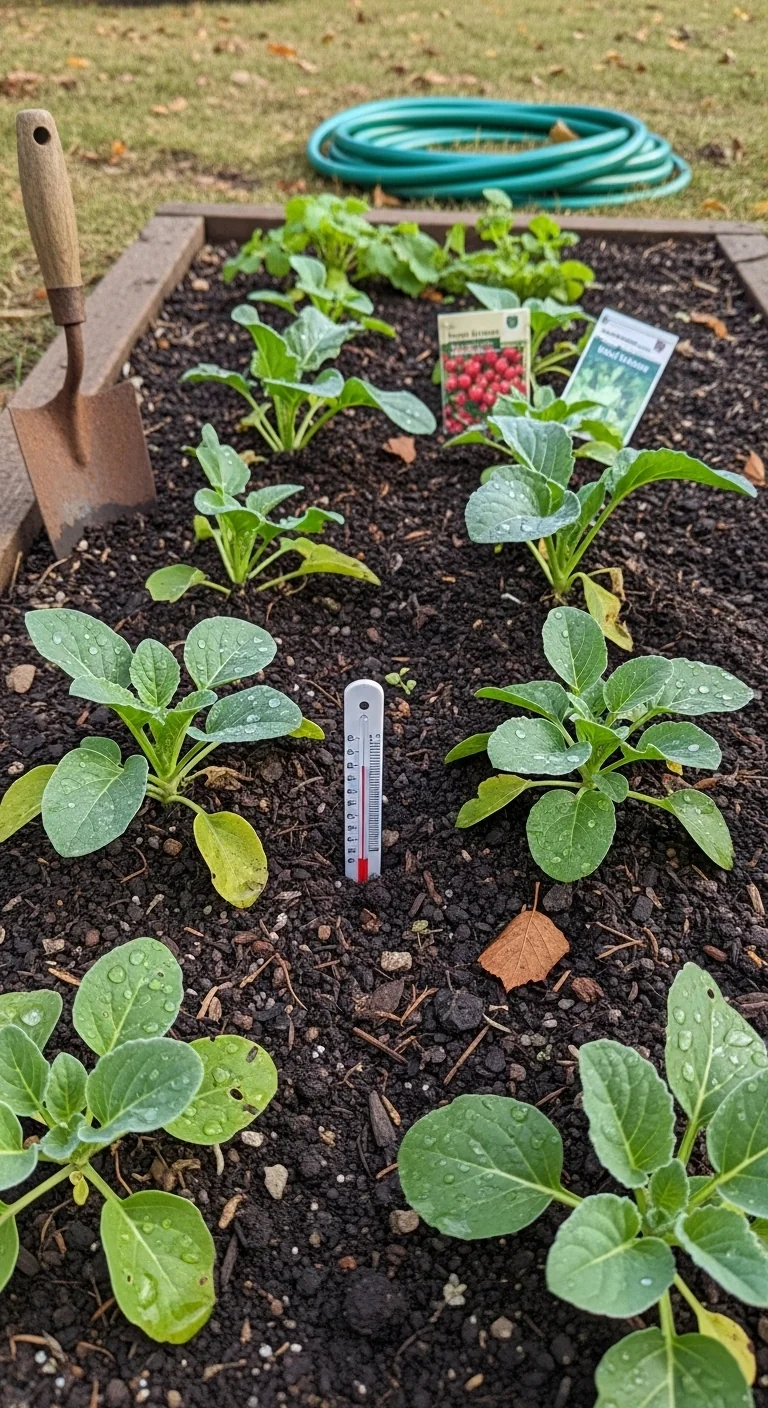
Fall vegetable garden planning succeeds when you align crop selection with your specific first frost date and the soil temperature at 2 inches deep, instead of relying on generic cool-season recommendations that ignore local conditions.
This guide covers 9 options suited to fall conditions across the US, Canada, UK, Australia, and New Zealand. It focuses on direct-seeded and transplanted edibles that fit measurable windows and excludes warm-season extensions or summer holdovers.
You will identify the right crops for your site, calculate safe planting dates, and prepare soil or containers to match germination needs. Each section delivers the exact thresholds and workflows needed for decisions.
Measure your first frost date and soil temperature at planting depth, then match to the options below for reliable fall production.
The Yield Grid Decision Grid
Branch 1: First frost date is more than 60 days from today and soil temperature at 2-inch depth measures 50 degrees F or higher. Recommended: Items 1, 4, 7 below.
Branch 2: First frost date falls 30 to 60 days out or soil temperature sits between 40 and 50 degrees F. Recommended: Items 2, 5, 8 below.
Branch 3: First frost date is fewer than 30 days away or space limits you to containers. Recommended: Items 3, 6, 9 below.
To fine-tune your exact dates for any location, consult the vegetable planting calendar.
Quick Comparison Table
| Option | Key mechanism | Best for | Decision Grid Branch | Effort Score |
|---|---|---|---|---|
| Beets for Extended Harvest | Taproot development that sweetens below 60 degrees F soil temperature | Long fall window with consistent moisture | Branch 1 | 2 |
| Radishes for Quick Wins | Fast germination in cool soil with 25-day maturity window | Medium window for succession cycles | Branch 2 | 1 |
| Arugula for Shade Tolerance | Bolting resistance in shortening days and lower light | Short window or partial shade sites | Branch 3 | 1 |
| Garlic Planted in Fall | Root establishment before winter dormancy for spring bulb sizing | Long window with well-drained soil | Branch 1 | 2 |
| Spinach Succession Planting | Repeated sowing every 10 days in 40-degree F soil | Medium window for continuous leaf harvest | Branch 2 | 3 |
| Kale in Containers | Compact growth with frost-hardy leaves in limited space | Short window or balcony setups | Branch 3 | 2 |
| Broccoli for Side Shoots | Central head followed by extended side-shoot production in cool air | Long window with transplant timing | Branch 1 | 3 |
| Swiss Chard for Cut-and-Come-Again | Regrowth from crown after outer leaf harvest | Medium window with minimal spacing | Branch 2 | 2 |
| Carrots for Storage Harvest | Root storage capability that improves flavor after light frost | Short window with mulch protection | Branch 3 | 3 |
Beets for Extended Harvest
Best for: Branch 1
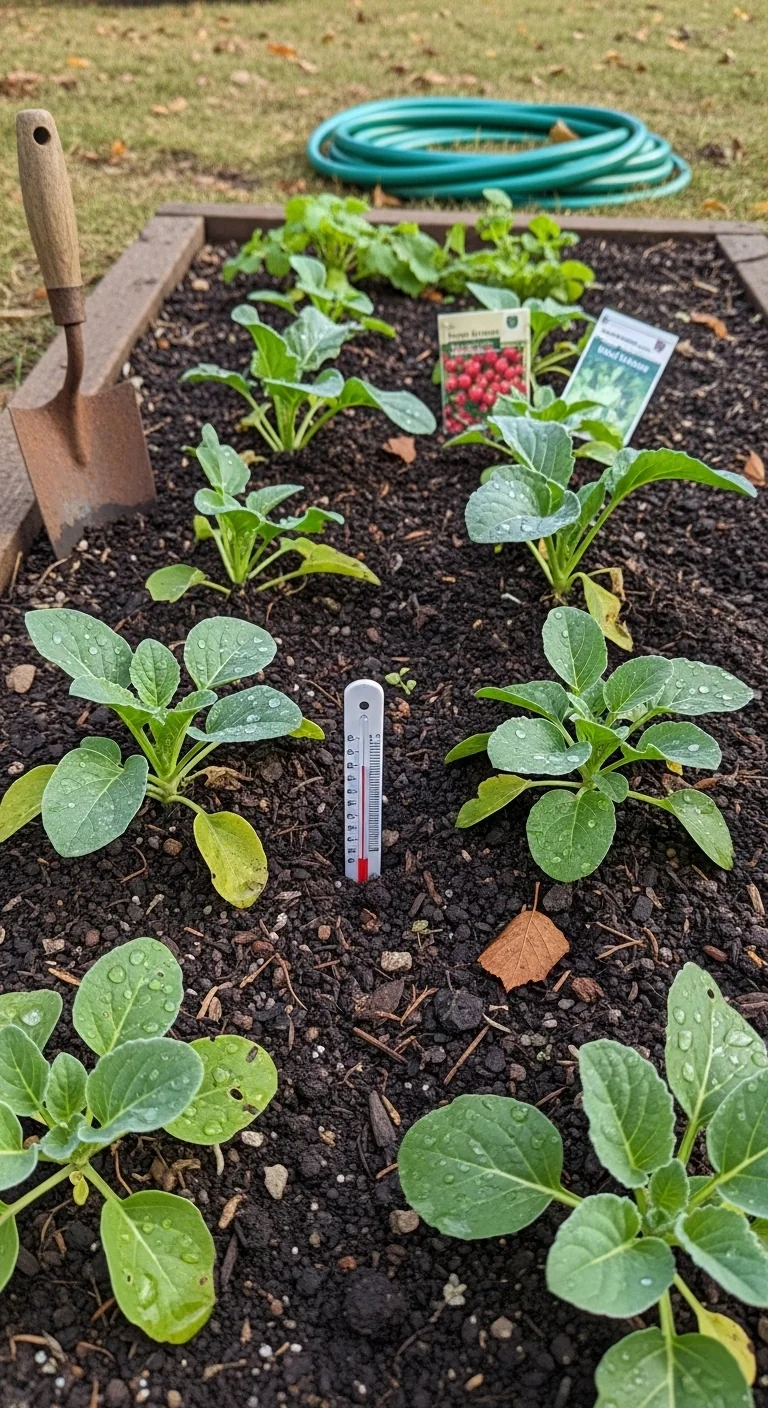
Beets deliver reliable roots when planted in soil at or above 50 degrees F with at least 60 days until first frost. The key threshold is maintaining even moisture to prevent woody texture. Sow seeds 1 inch deep and 3 inches apart in rows 12 inches wide. Thin seedlings to 4 inches once they reach 2 inches tall to avoid crowding that stunts roots.
Apply a 2-inch layer of organic mulch after thinning to conserve moisture and moderate soil temperature swings common in early fall. Harvest roots at 1.5 to 3 inches diameter. For detailed beet cultivation steps, see our growing beets guide.
Edge case: In regions with early heavy rains, elevate beds 6 inches to improve drainage and reduce splitting risk. This approach fits long windows and yields storage-quality roots without additional inputs beyond initial soil prep.
Radishes for Quick Wins
Best for: Branch 2
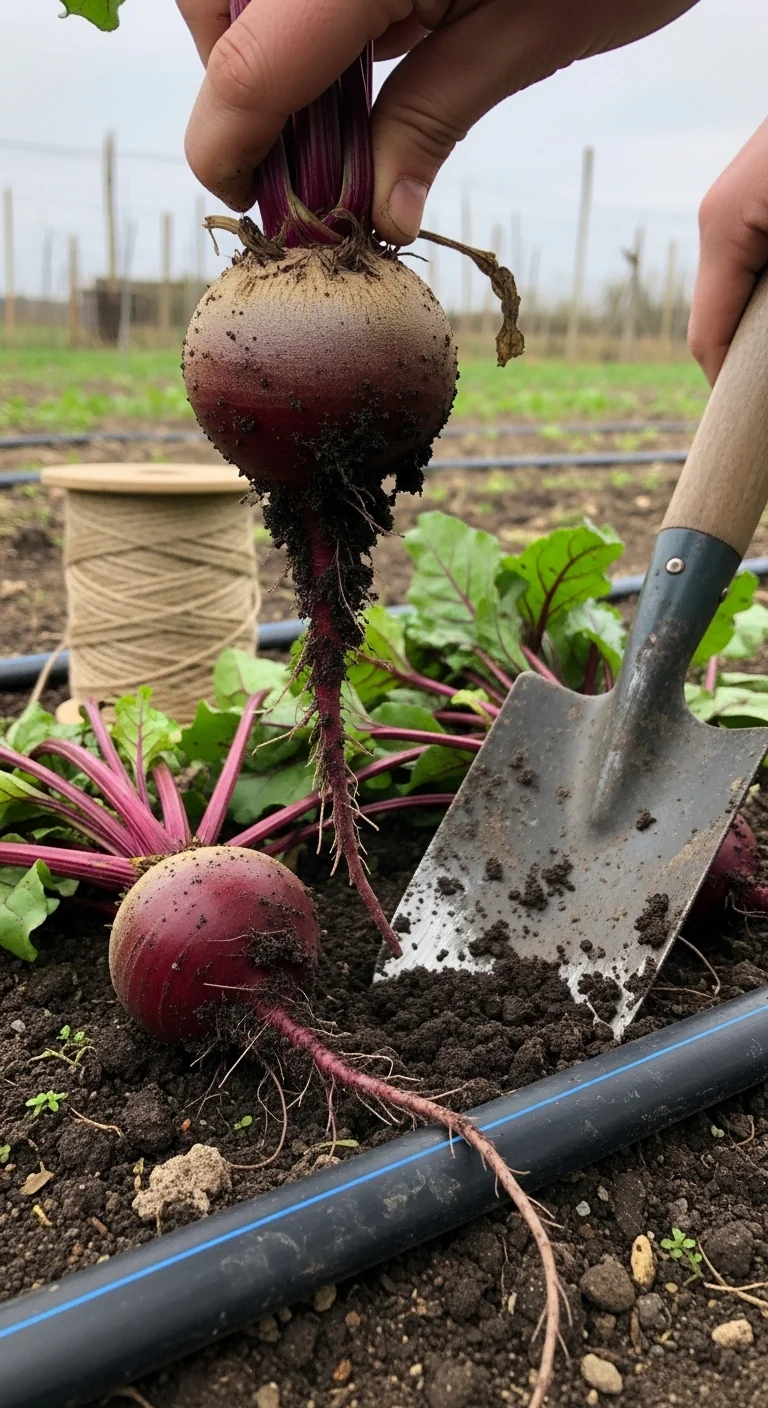
Use radishes when your first frost sits 30 to 60 days out. They germinate in soil as low as 40 degrees F and reach harvest in 25 days. Sow every 10 days in 1-inch-deep furrows spaced 2 inches apart. Skip if soil stays below 40 degrees F for more than 3 consecutive days, as germination drops sharply. Harvest at marble size for mild flavor.
Arugula for Shade Tolerance
Best for: Branch 3
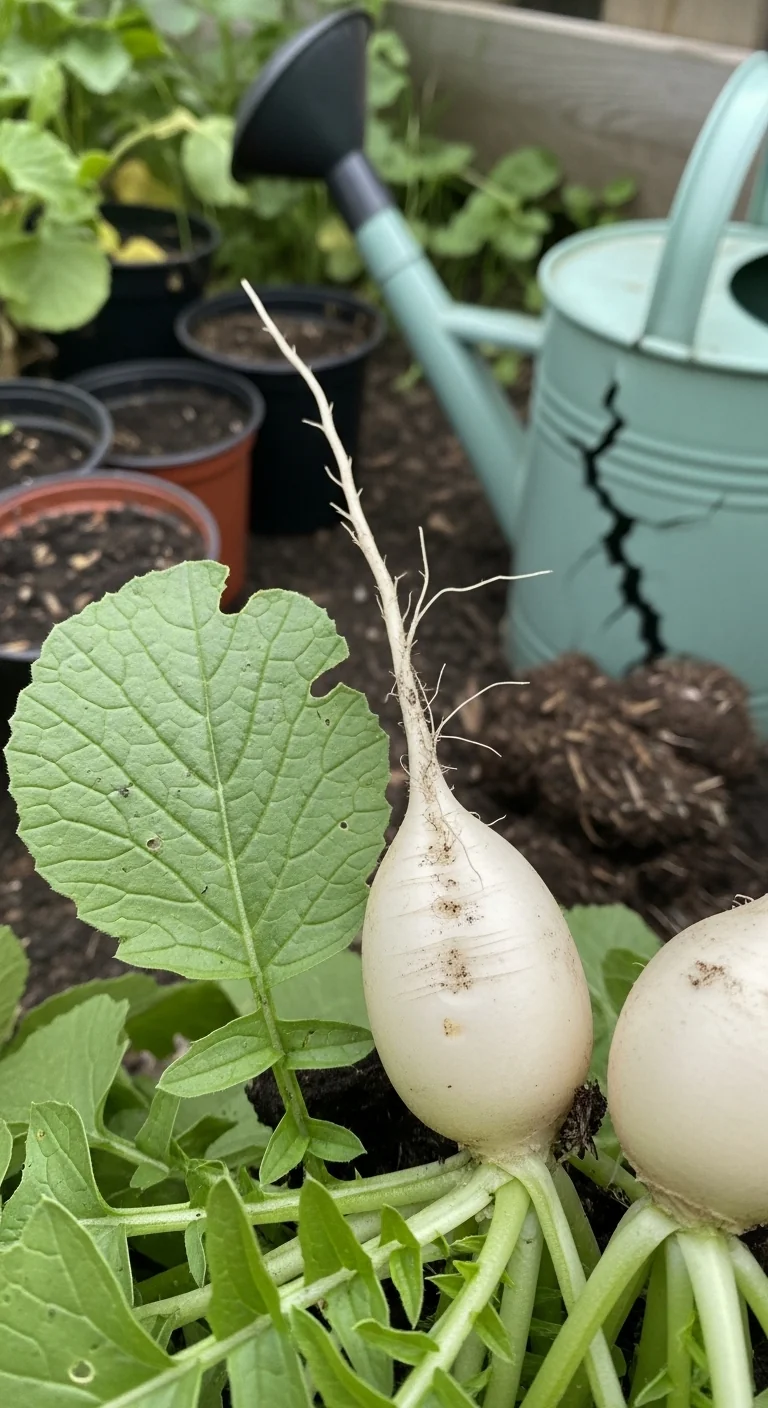
Arugula fits short windows or sites with fewer than 6 hours of direct sun by late fall. Direct seed 0.25 inch deep in rows 6 inches apart once soil reaches 40 degrees F. It tolerates light frost down to 25 degrees F without protection. Cut outer leaves at 3 inches tall for repeated harvests over 4 weeks. Blueprint steps: prepare soil with compost, sow densely, water lightly daily until emergence, then reduce to every other day. Common mistake: sowing deeper than 0.5 inch delays emergence by up to 7 days in cooling soil.
Garlic Planted in Fall
Best for: Branch 1
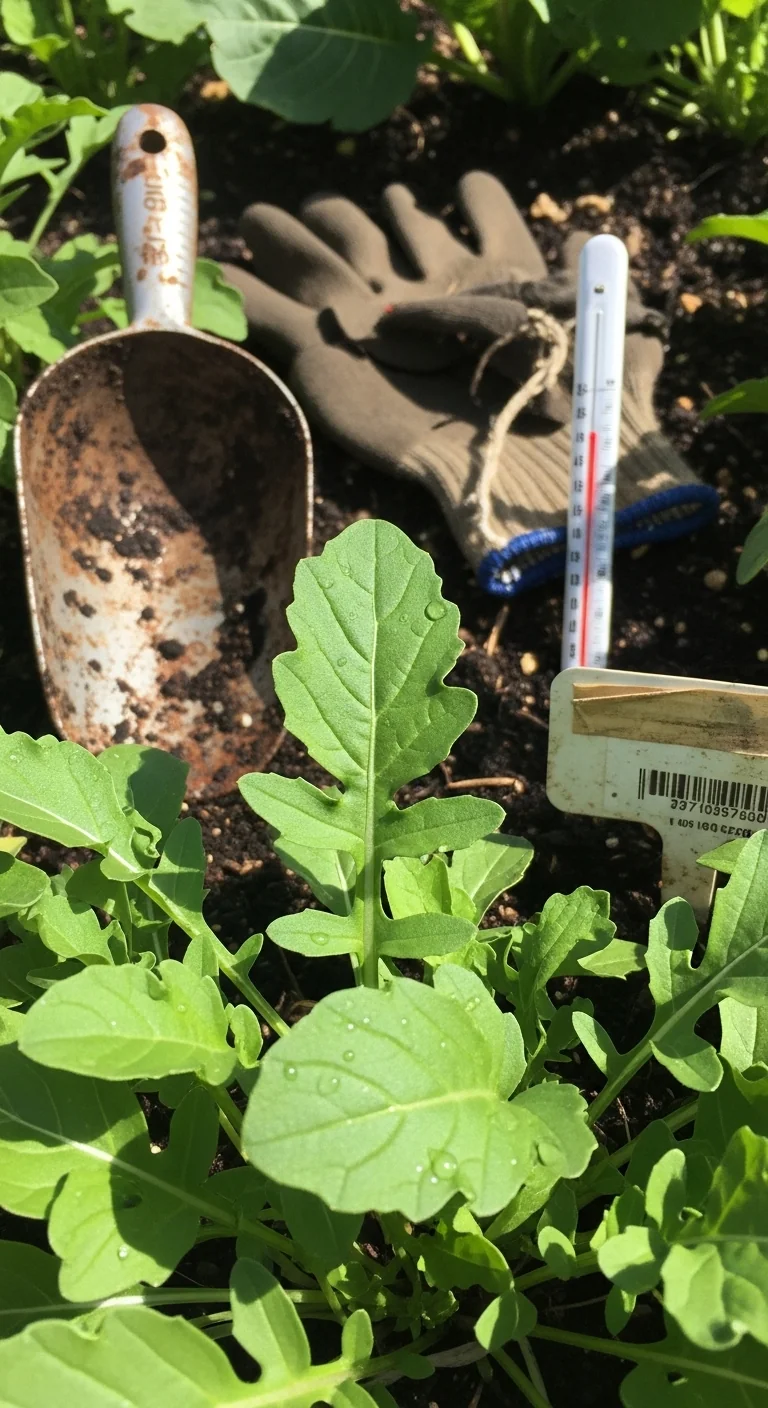
Garlic establishes roots before dormancy when planted 4 to 6 weeks before first frost in soil above 50 degrees F. Break bulbs into individual cloves and plant 2 inches deep with pointed end up, spaced 6 inches apart in rows 12 inches wide. Mulch 3 to 4 inches deep immediately after planting to insulate against temperature swings. For complete clove selection and spacing details, consult our onions and garlic guide.
This method uses the long window for bulb sizing without irrigation after establishment in most temperate zones. Edge case: in heavy clay soils, amend with 20 percent sand by volume at planting to prevent rot during winter wet periods.
Spinach Succession Planting
Best for: Branch 2
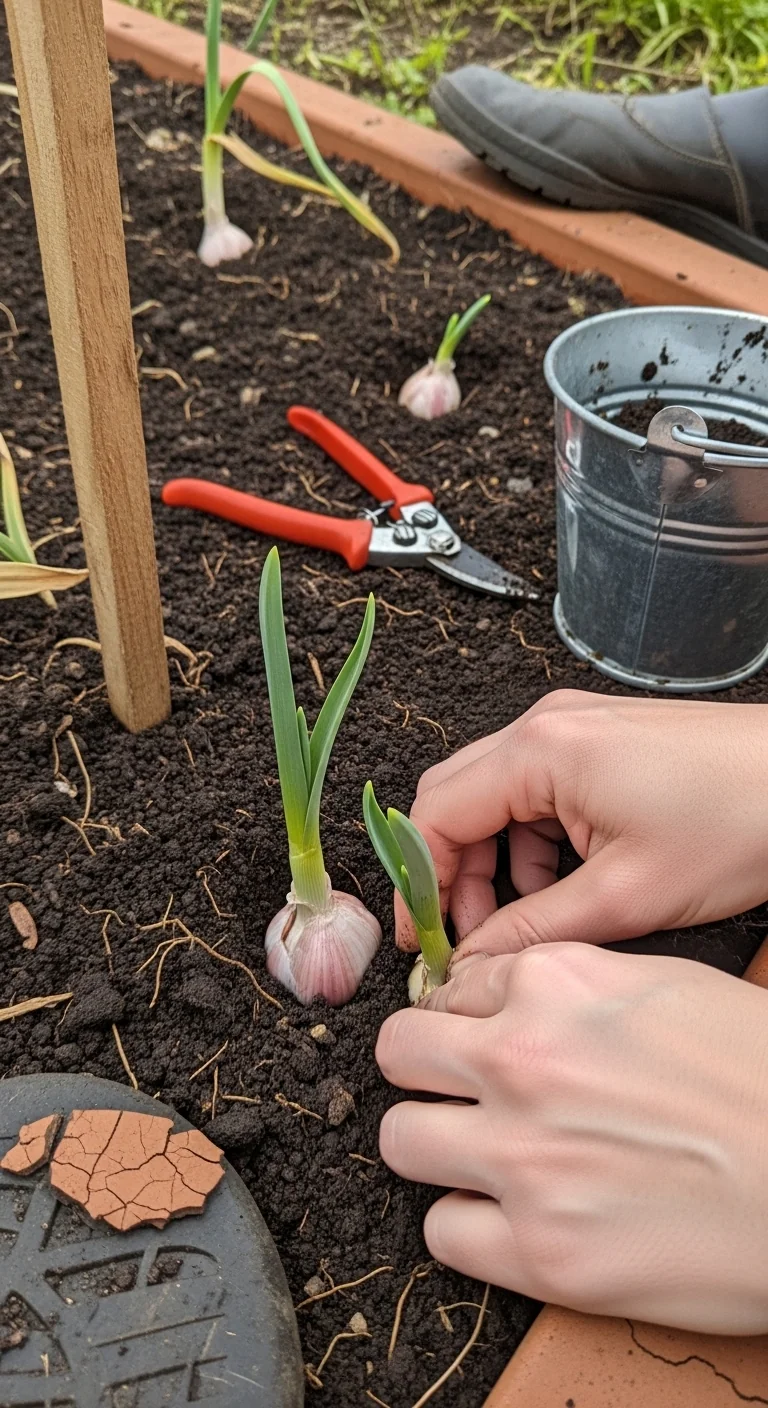
Spinach works in medium windows through repeated sowings every 10 days in soil at 40 degrees F or higher. Broadcast seeds 0.5 inch deep and cover lightly. Thin to 4 inches once true leaves appear. It withstands 20 degrees F with row cover if needed. Monitor for leaf miner by checking undersides weekly.
Kale in Containers
Best for: Branch 3
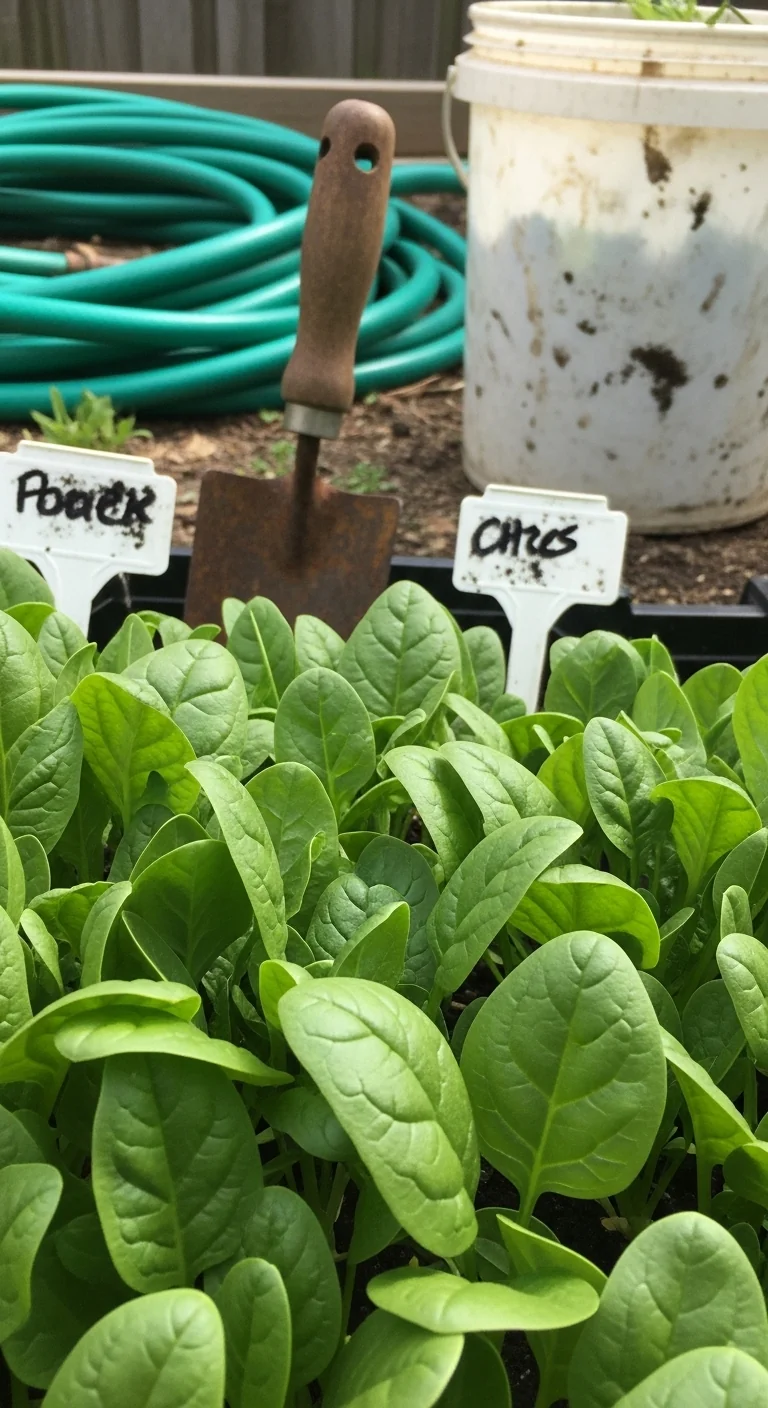
Kale thrives in containers when space limits in-ground options and first frost arrives in fewer than 30 days. Choose 5-gallon pots with drainage holes and fill with potting mix amended 25 percent compost. Plant 2 to 3 transplants or direct sow 0.5 inch deep. Space pots 18 inches apart for air flow. Harvest outer leaves starting at 6 inches tall. For full container setup and variety selection, see our container vegetable gardening guide.
Unique constraint: maintain soil moisture at field capacity to avoid bitter leaves in fluctuating fall temperatures. This fits short windows and produces through light frost without garden beds.
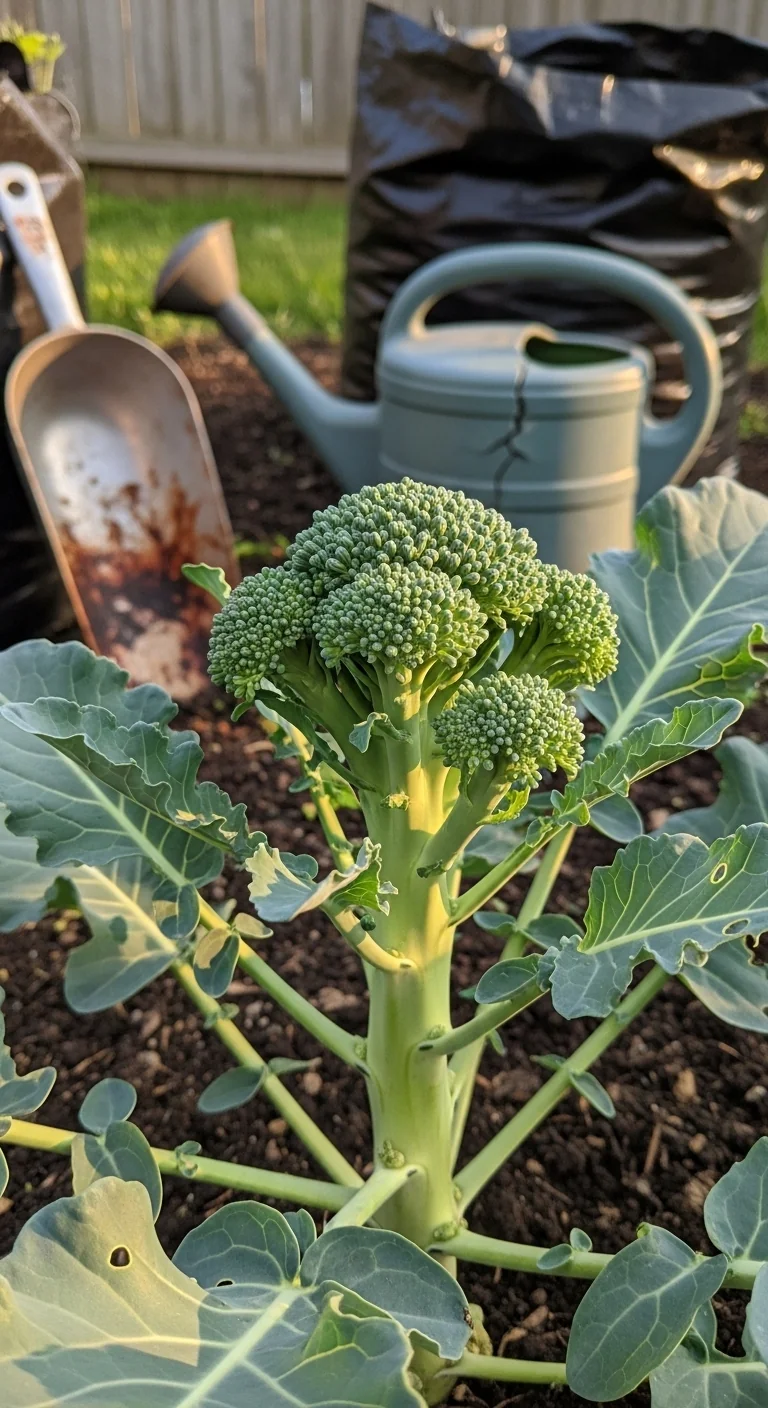
Broccoli for Side Shoots
Best for: Branch 1
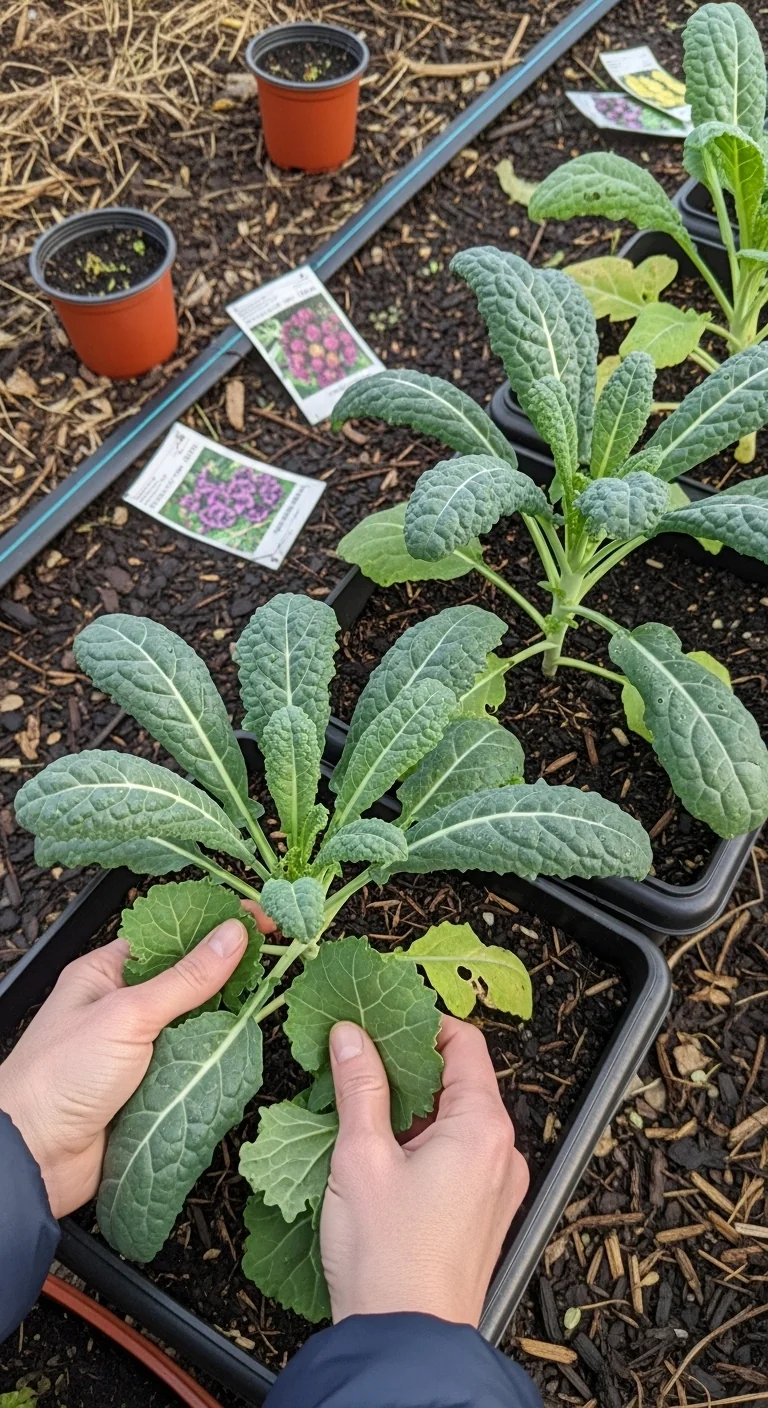
Broccoli maximizes production in long windows by focusing on side-shoot varieties after the central head. Start transplants indoors 4 weeks before outdoor soil hits 50 degrees F or transplant purchased starts directly. Space 18 inches apart in full sun. Cut the main head at 4 to 6 inches diameter to trigger side shoots that continue for 4 to 6 weeks. Use our raised bed vegetable garden guide for bed preparation steps that ensure even drainage and nutrient availability.
Threshold adjustment: if daytime highs drop below 55 degrees F for more than 5 days after head formation, add floating row cover at night to maintain quality. This option leverages the full 60-plus-day window for extended yields from a single planting.
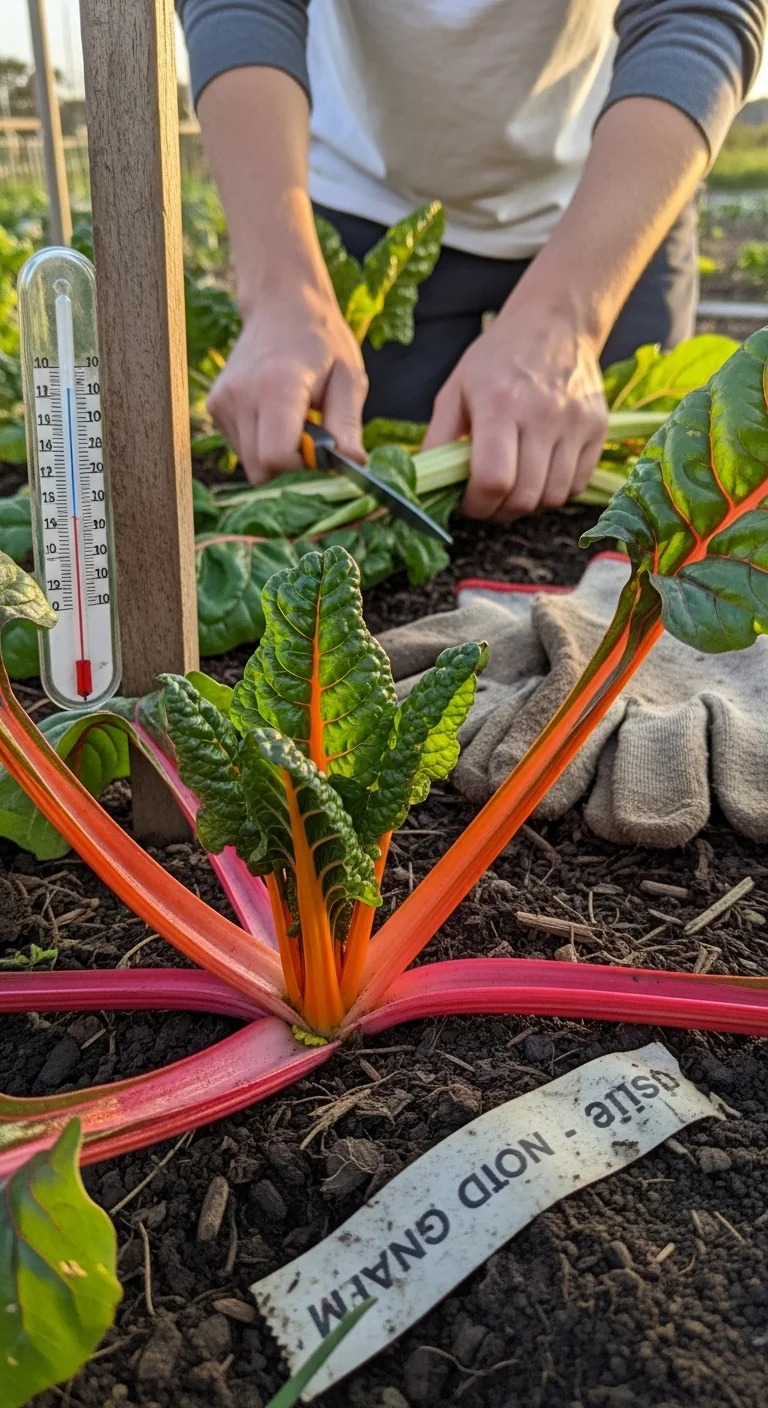
Swiss Chard for Cut-and-Come-Again
Best for: Branch 2
Swiss chard suits medium windows with its cut-and-come-again habit. Sow seeds 0.5 inch deep and 6 inches apart in rows 12 inches wide once soil reaches 45 degrees F. Harvest outer stalks at 8 inches, leaving the center crown intact for regrowth. It tolerates light frost and continues production until hard freeze. Rotate sowing dates by 14 days for steady supply.
Carrots for Storage Harvest
Best for: Branch 3
Carrots store in-ground when first frost arrives in fewer than 30 days and soil stays above 40 degrees F at planting. Sow 0.25 inch deep in loose soil free of rocks, spacing seeds 2 inches apart after thinning. Apply 2 inches of mulch once seedlings emerge to retain moisture and prevent greening. Harvest as needed through winter with protection in milder zones. This method uses the short window for roots that sweeten after frost exposure.
Starter Stack (What to Choose First)
For Branch 1 (60-plus days to frost, soil 50 degrees F plus)
Start with beets and garlic. Beets provide quick roots while garlic establishes for spring harvest. Synergy comes from shared mulch and spacing needs. Estimated cost: under 10 dollars for seed packet and cloves. Time investment: 30 minutes for initial planting plus 15 minutes for thinning.
For Branch 2 (30 to 60 days to frost, soil 40 to 50 degrees F)
Start with radishes and spinach. Radishes mark rows and mature fast while spinach fills in for longer harvest. Synergy reduces bare soil and pest pressure. Estimated cost: under 8 dollars for seeds. Time investment: 20 minutes sowing plus 10 minutes weekly succession checks.
For Branch 3 (fewer than 30 days to frost or containers)
Start with arugula and kale in containers. Arugula gives immediate leaves while kale builds structure. Synergy fits small spaces with overlapping light and water needs. Estimated cost: under 15 dollars including pots. Time investment: 25 minutes setup plus 10 minutes weekly harvesting.
When This Won’t Work
Fall vegetable gardens fail when soil temperature stays below 35 degrees F for more than 7 consecutive days at planting depth, preventing germination of most cool-season seeds. Alternative action: start transplants indoors under lights or purchase starts from local nurseries for immediate field placement.
They also fail in compacted clay without raised beds or heavy mulch cover, as roots cannot expand and water pools during fall rains. Apply a 3-inch layer of organic material and incorporate 2 inches into the top 6 inches of soil before sowing. For mulch application details suited to fall conditions, see our mulching vegetable garden guide.
Choosing the Right Option for Your Situation
Budget threshold
If your total seed and amendment budget stays under 20 dollars, prioritize direct-seeded options like radishes or arugula over transplants. Direct seed costs average 3 to 5 dollars per packet while starts add 2 dollars each.
Time threshold
If weekly garden time stays under 1 hour, select effort score 1 or 2 options such as radishes or beets that require only one sowing and minimal thinning.
Technical constraint
If soil pH measures below 6.0, choose Swiss chard or kale, which tolerate 5.5 to 7.0 ranges better than beets or carrots that prefer 6.0 to 7.5. Test and adjust with lime 4 weeks before planting.
Yes/No checklist:
Do you have 60-plus days to first frost and soil above 50 degrees F? Yes: choose Branch 1.
Is your window 30 to 60 days with soil 40 to 50 degrees F? Yes: choose Branch 2.
Is frost under 30 days away or are you container-only? Yes: choose Branch 3.
Will you measure soil temperature before sowing? Yes: proceed with matched option.
Expert Q&A
How does first frost date calculation change succession planting intervals in fall versus spring?
Fall requires shorter intervals of 7 to 10 days because cooling soil and air slow growth after emergence. Spring intervals stretch to 14 days due to warming trends that accelerate maturity. Always subtract 14 days from the maturity rating as a buffer when frost nears.
What soil temperature threshold triggers bolting risk in fall leafy greens?
Bolting risk rises when daytime soil temperatures exceed 75 degrees F for more than 5 days even in fall. Arugula and spinach stay vegetative below 65 degrees F at crown level. Use shade cloth during any late warm spells to maintain the threshold.
Why do root crops like carrots and beets need different mulch depths in fall compared with leafy crops?
Root crops require 2 to 3 inches of mulch to insulate the developing edible portion from frost heave and temperature swings. Leafy crops need only 1 inch to avoid crown rot while still moderating surface moisture.
When should you switch from overhead watering to drip or soaker hoses in a fall vegetable garden?
Switch once soil temperature drops below 50 degrees F and nights regularly fall below 45 degrees F. Overhead watering then increases fungal risk on cooling foliage, while drip keeps roots moist without wetting leaves.
How does companion planting with flowers affect pest pressure on fall brassicas like broccoli and kale?
Companion flowers such as calendula or alyssum planted at bed edges attract beneficial insects that target aphids and cabbage worms. Space flowers 12 inches from brassica rows to avoid shading while maintaining the pest reduction benefit through the cooler months.
Conclusion
The core decision for any fall vegetable garden comes down to matching your measured first frost window and soil temperature to the right crop group. The number one mistake is planting without checking soil temperature at 2 inches, which leads to failed germination and wasted seed.
Take the next step by reviewing your local frost dates and testing soil temperature today. Then move straight to winter vegetable gardening for extending your harvest beyond the first hard freeze.