
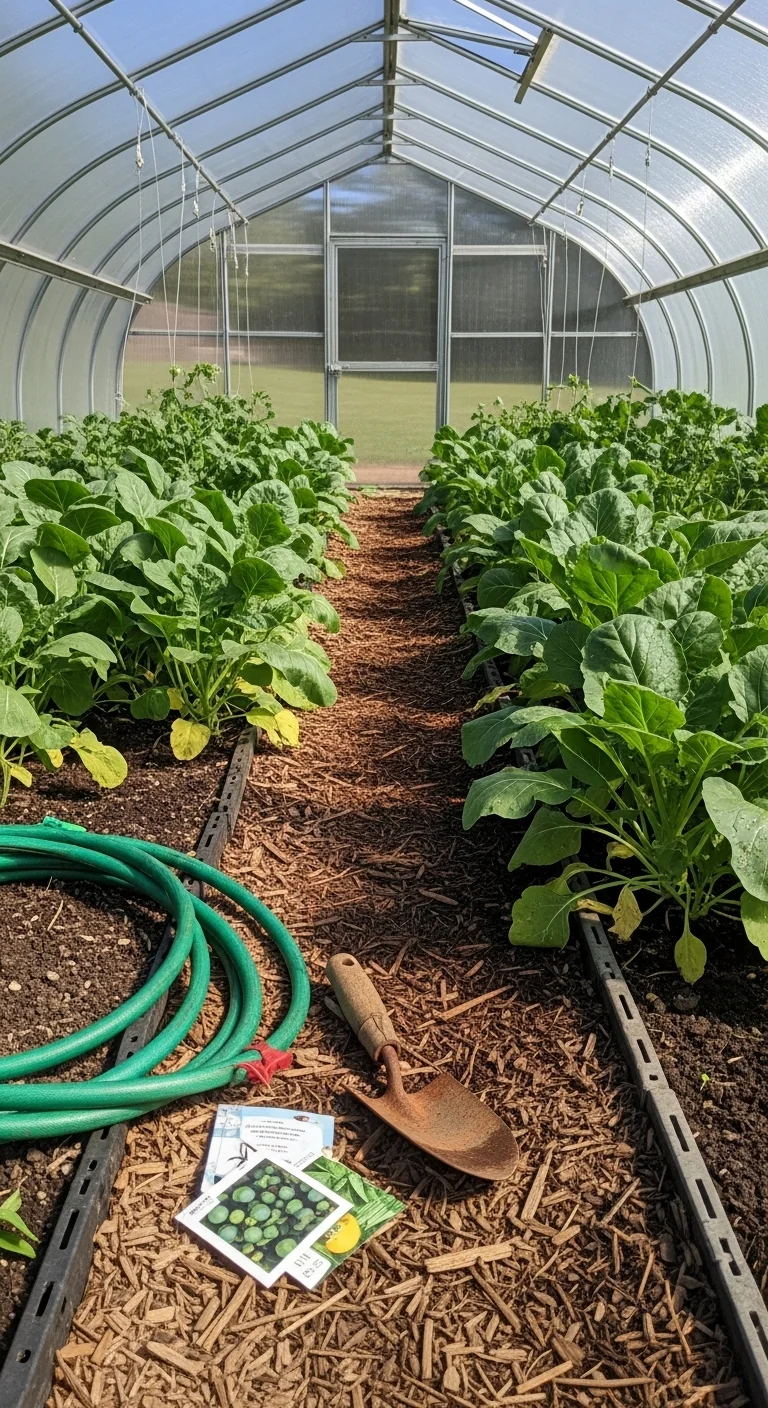
Greenhouse vegetables succeed when matched to measurable conditions inside your structure rather than generic recommendations. Select crops according to nighttime lows, available floor area, and seasonal temperature swings to avoid common failures like poor fruit set or leggy growth.
This guide covers nine high-performing edible options for vegetable gardening in greenhouses. It excludes ornamentals, fruit trees, and outdoor-only crops. Focus stays on vegetables that deliver reliable harvests when conditions align.
By the end you can prioritize two or three crops that fit your exact setup, plan support structures, and schedule transplants with confidence.
Run your greenhouse data through the decision grid below before ordering seeds or transplants.
The Yield Grid Decision Grid
Branch 1 applies when nighttime temperatures stay above 55 degrees F (13 degrees C) with daytime readings regularly reaching 70 degrees F (21 degrees C) or higher. These stable warm conditions suit heat-loving fruiting crops.
Recommended: Tomatoes, Peppers, Eggplant, Zucchini below.
Branch 2 applies when floor space measures 150 square feet or less or vertical trellises are already installed. Compact or trainable plants maximize limited area without crowding.
Recommended: Cucumbers, Pole Beans below.
Branch 3 applies when nighttime temperatures range from 40 degrees F to 55 degrees F (4 degrees C to 13 degrees C). Cool-tolerant leafy crops extend harvests into shoulder seasons.
Recommended: Lettuce, Spinach, Kale below.
For precise planting windows across all branches, see our vegetable planting calendar.
Quick Comparison Table
| Option | Key mechanism | Best for | Decision Grid Branch | Effort Score |
|---|---|---|---|---|
| Tomatoes | Consistent warmth for flower and fruit development plus support for indeterminate growth | Extended warm-season production | Branch 1 | 4 |
| Cucumbers | Strong vertical trellising for airflow and disease reduction | Space-efficient vining in small structures | Branch 2 | 3 |
| Peppers | Stable temperatures to prevent blossom drop | Reliable fruit set in controlled warmth | Branch 1 | 3 |
| Eggplant | High daytime heat accumulation for large fruit formation | Warm greenhouse environments | Branch 1 | 3 |
| Pole Beans | Trellis climbing to utilize vertical space | Compact footprints with continuous harvest | Branch 2 | 2 |
| Zucchini | Controlled vining or bush habit under warmth | High-volume summer squash in stable heat | Branch 1 | 3 |
| Lettuce | Cool temperatures to delay bolting | Shoulder-season leafy production | Branch 3 | 2 |
| Spinach | Low nighttime temperatures for tender leaf growth | Winter and early spring extension | Branch 3 | 1 |
| Kale | Frost tolerance within cool range for repeated cutting | Long-term cool harvests | Branch 3 | 2 |
Tomatoes
Best for: Branch 1
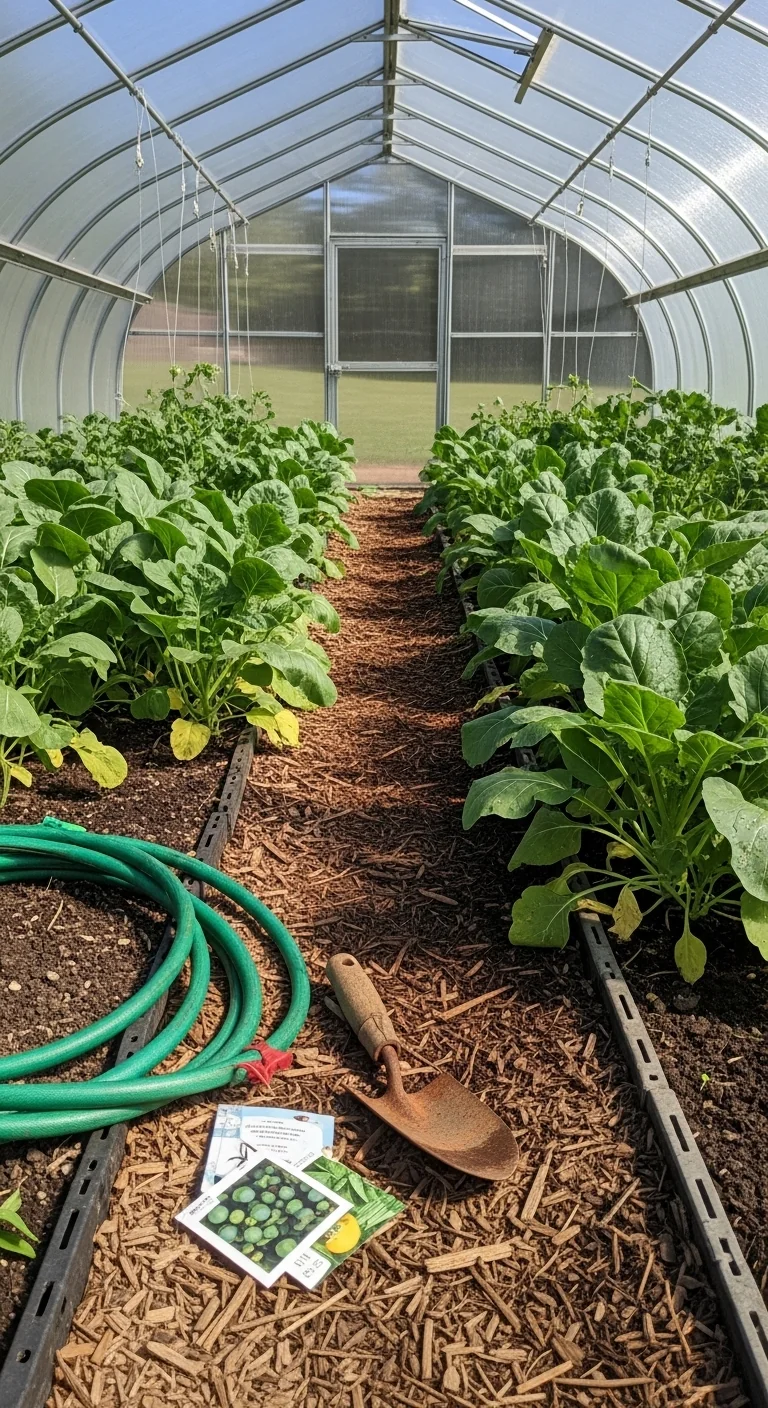
Tomatoes serve as the cornerstone warm-season greenhouse vegetable when nighttime temperatures remain above 55 degrees F. They require daytime readings between 70 and 85 degrees F for optimal flower pollination and fruit sizing. Use a blueprint approach: start with indeterminate varieties trained to a single stem on sturdy vertical supports spaced 24 inches apart in rows. Maintain soil pH between 6.0 and 6.8 and water at the base to keep foliage dry. Prune suckers weekly once the first cluster forms. Common mistake to avoid: allowing night temperatures to dip below the 55-degree threshold, which halts fruit set for two to three weeks. For variety selection details check our guide to best tomato varieties.
Cucumbers
Best for: Branch 2
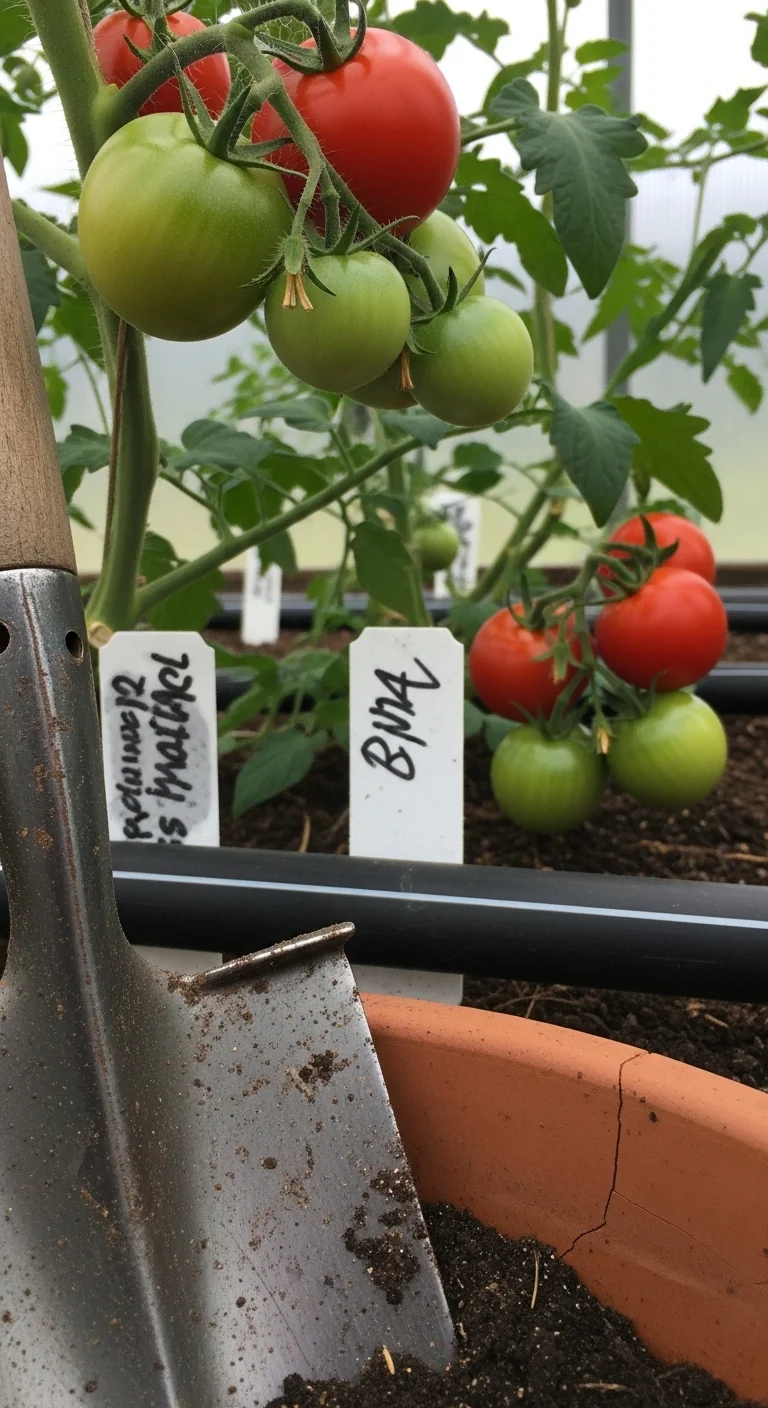
Cucumbers thrive with vertical training but skip them in greenhouses under 100 square feet without dedicated trellises. Pros include continuous harvest over eight to ten weeks once vines reach 6 feet. Cons appear when horizontal sprawl crowds other crops and raises humidity-related disease risk. Edge case: parthenocarpic types set fruit without pollination, suiting bee-scarce structures.
Peppers
Best for: Branch 1
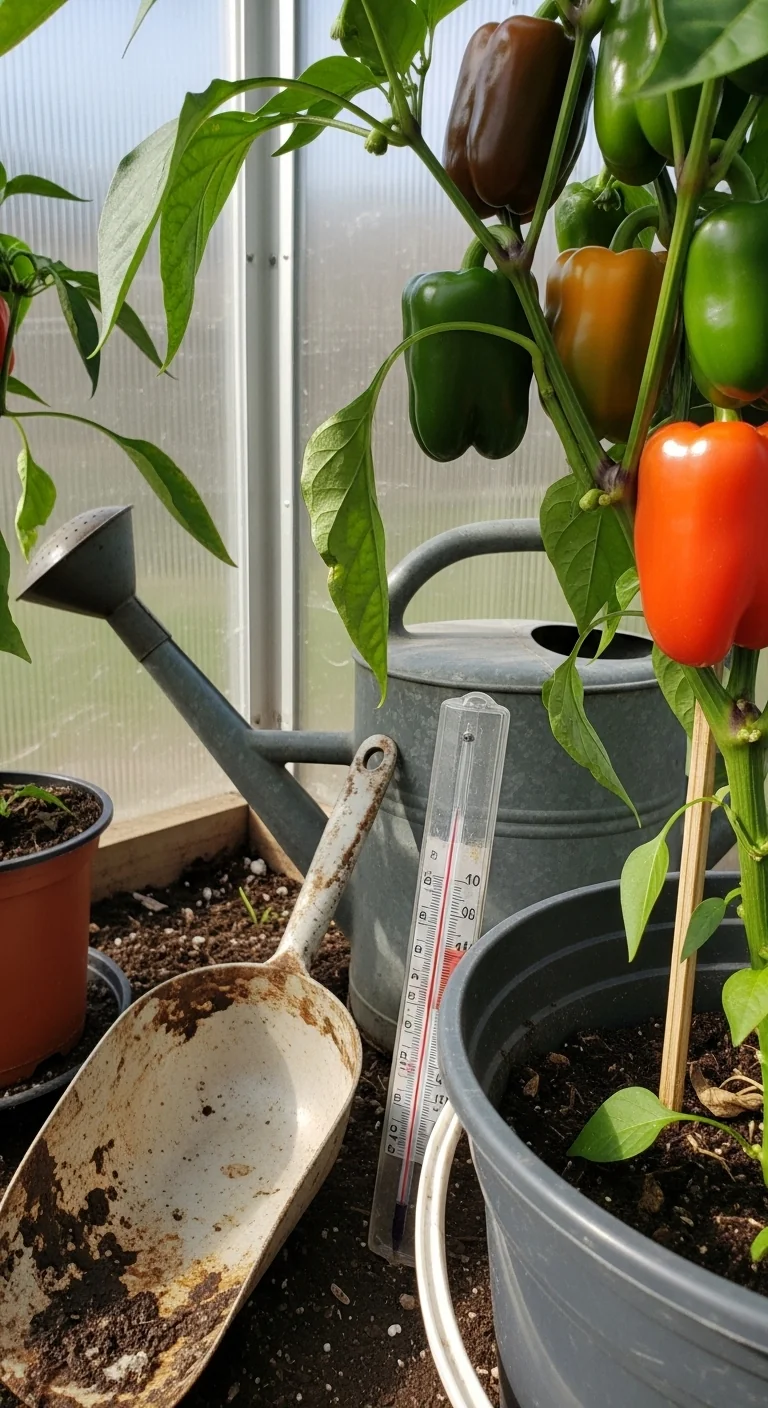
Peppers need nighttime temperatures above 55 degrees F and daytime peaks above 70 degrees F to avoid blossom drop. Use this threshold rule: transplant only after soil warms to 65 degrees F at 4-inch depth and maintain consistent moisture without waterlogging. Space plants 18 inches apart in rows to allow airflow. Adjust support stakes upward as fruit loads increase past 4 inches in length. Monitor for leaf curl when daytime readings exceed 90 degrees F and add shade cloth during peak sun hours.
Eggplant
Best for: Branch 1
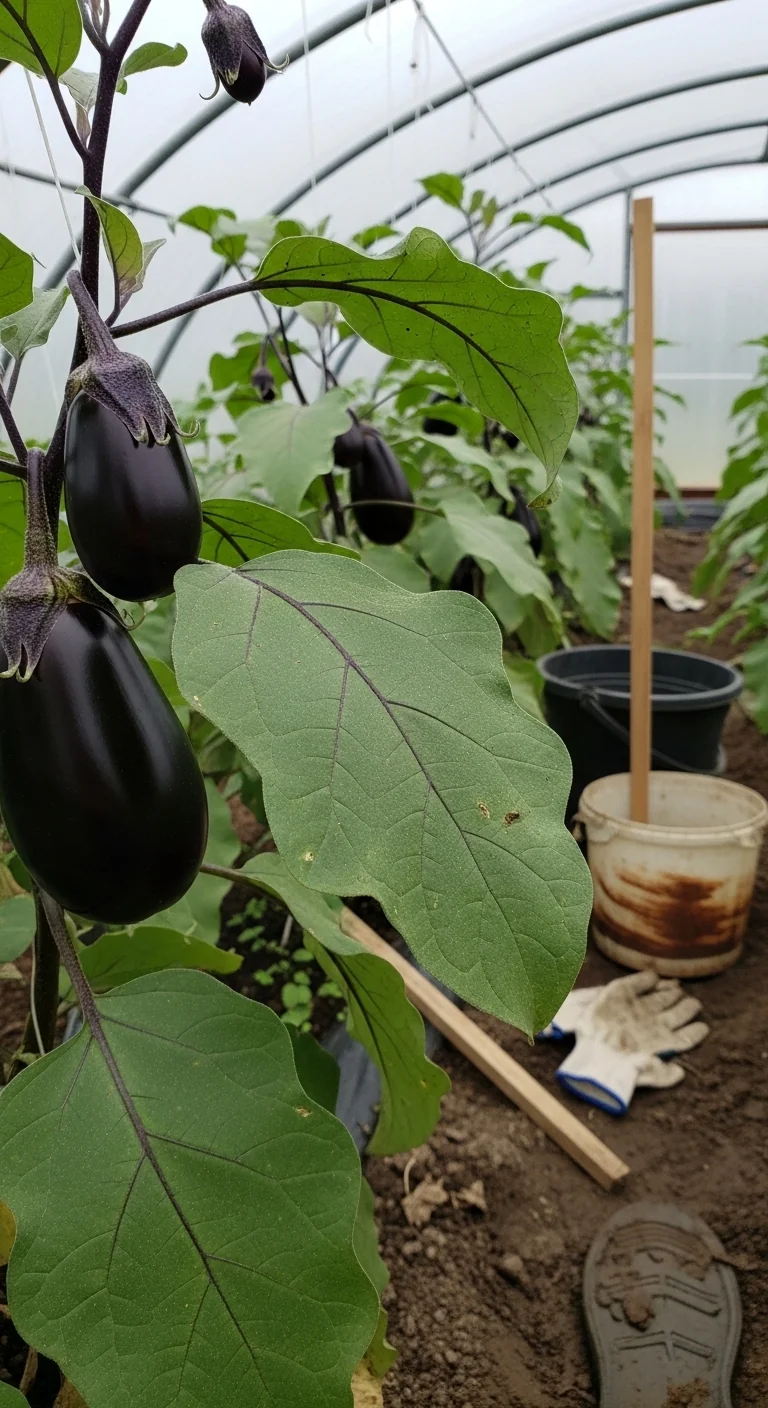
Eggplant performs best in Branch 1 greenhouses when daytime heat accumulates above 75 degrees F. Follow this 10-minute workflow every seven days: inspect each plant for flower clusters, tap stems gently to release pollen, check soil moisture at 6-inch depth, and prune lower leaves touching the ground. Upgrade option includes drip irrigation lines set to deliver 1 inch of water weekly. Stake main stems at 12 inches tall and tie fruiting branches as they reach 18 inches. Soil pH should stay between 6.0 and 7.0 for nutrient uptake.
Pole Beans
Best for: Branch 2
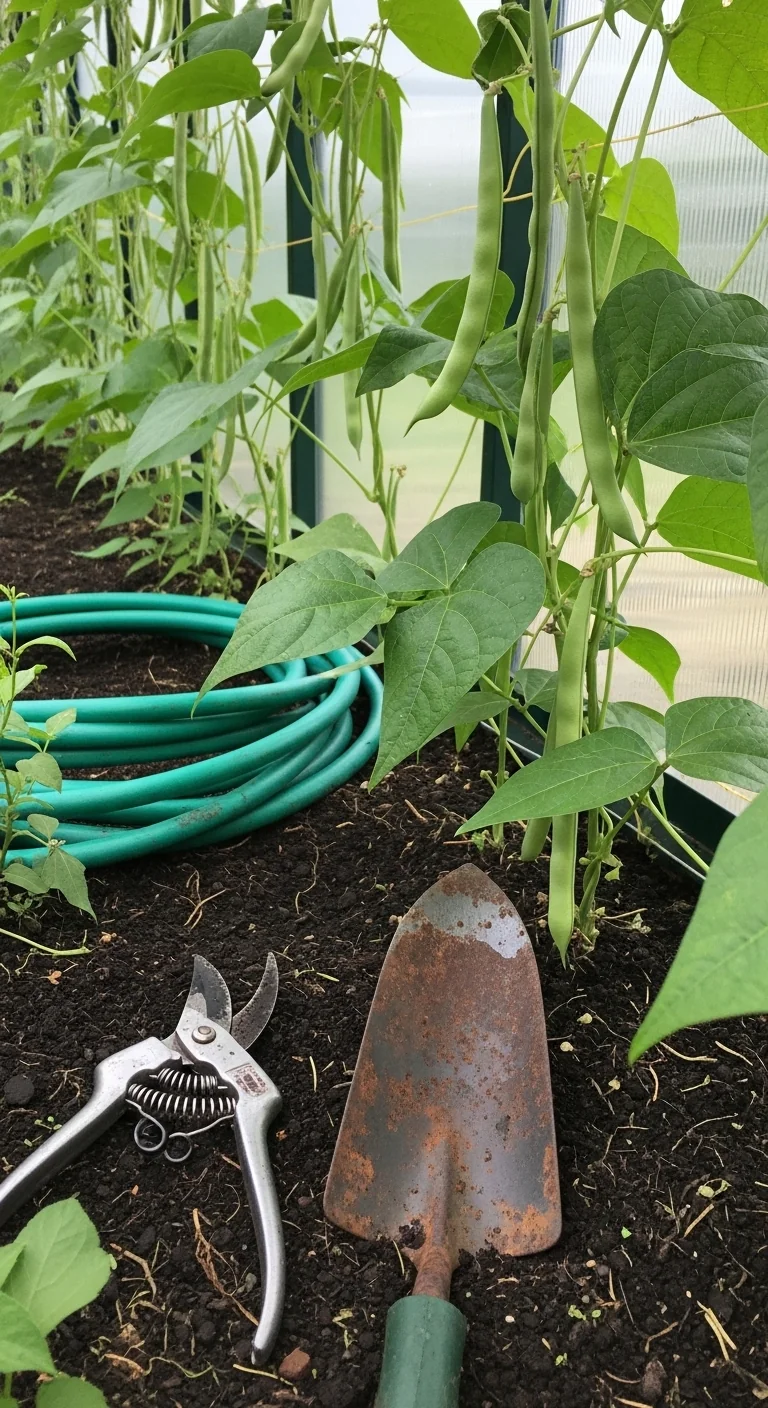
Pole beans suit space-constrained greenhouses because they climb trellises and produce over eight weeks once established. Plant seeds 2 inches deep and 6 inches apart along the base of 6-foot supports. Water at soil level to keep leaves dry and harvest pods when they reach 4 to 6 inches long. Common mistake is overcrowding the base, which reduces airflow and invites mildew.
Zucchini
Best for: Branch 1
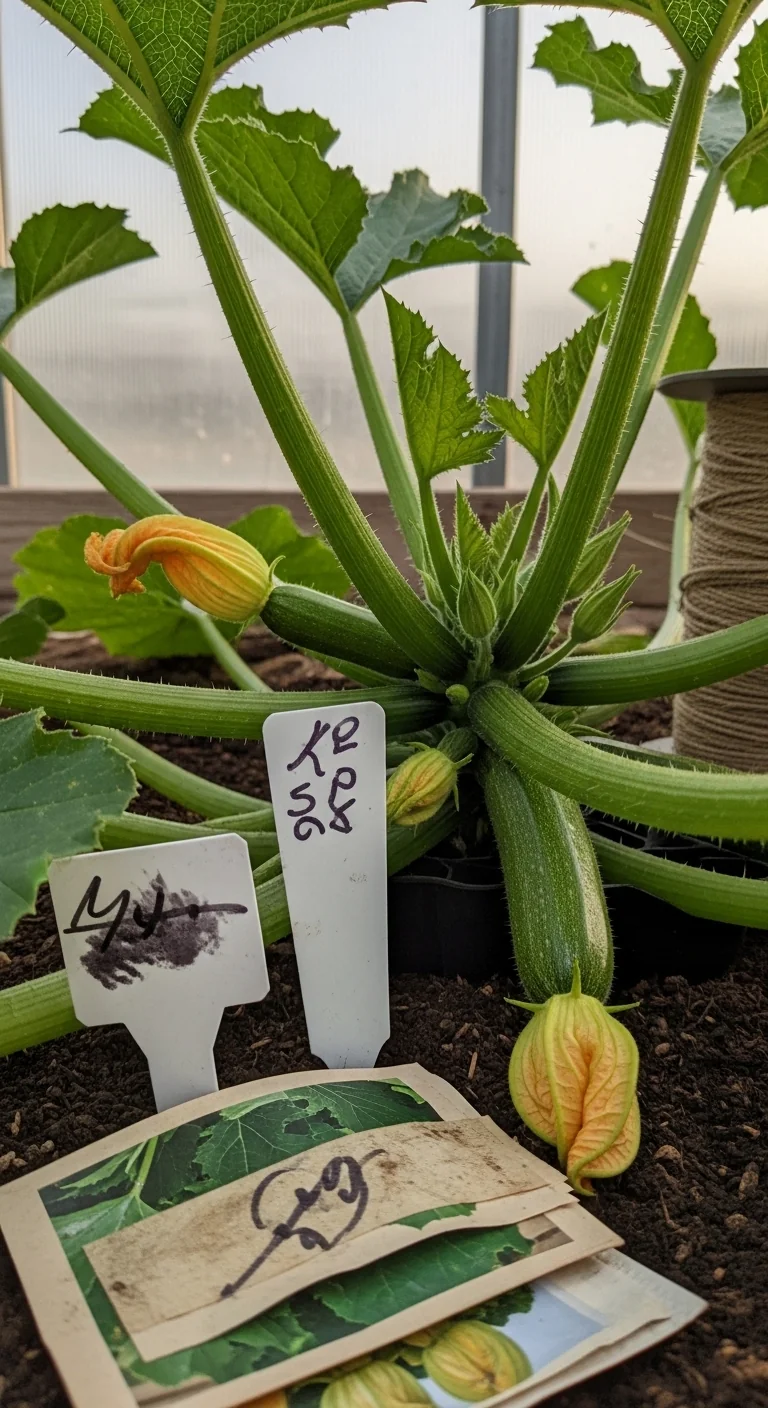
Zucchini delivers high yields in warm Branch 1 conditions but skip it if vertical space is under 5 feet or if you cannot train vines upward. Pros include rapid growth once daytime temperatures exceed 70 degrees F. Cons appear in cramped layouts where leaves block light to neighboring crops. Edge case: compact bush varieties reduce sprawl while still producing 4 to 6 fruits per week.
Lettuce
Best for: Branch 3
Lettuce extends harvests in Branch 3 when nighttime temperatures stay between 40 and 55 degrees F. Threshold rule: sow every 14 days once soil reaches 45 degrees F and thin seedlings to 8 inches apart to prevent bolting. Use cut-and-come-again harvesting to keep plants under 6 inches tall. Soil pH between 6.0 and 7.0 plus consistent moisture prevents tip burn. For cool-season planning see winter vegetable gardening strategies.
Spinach
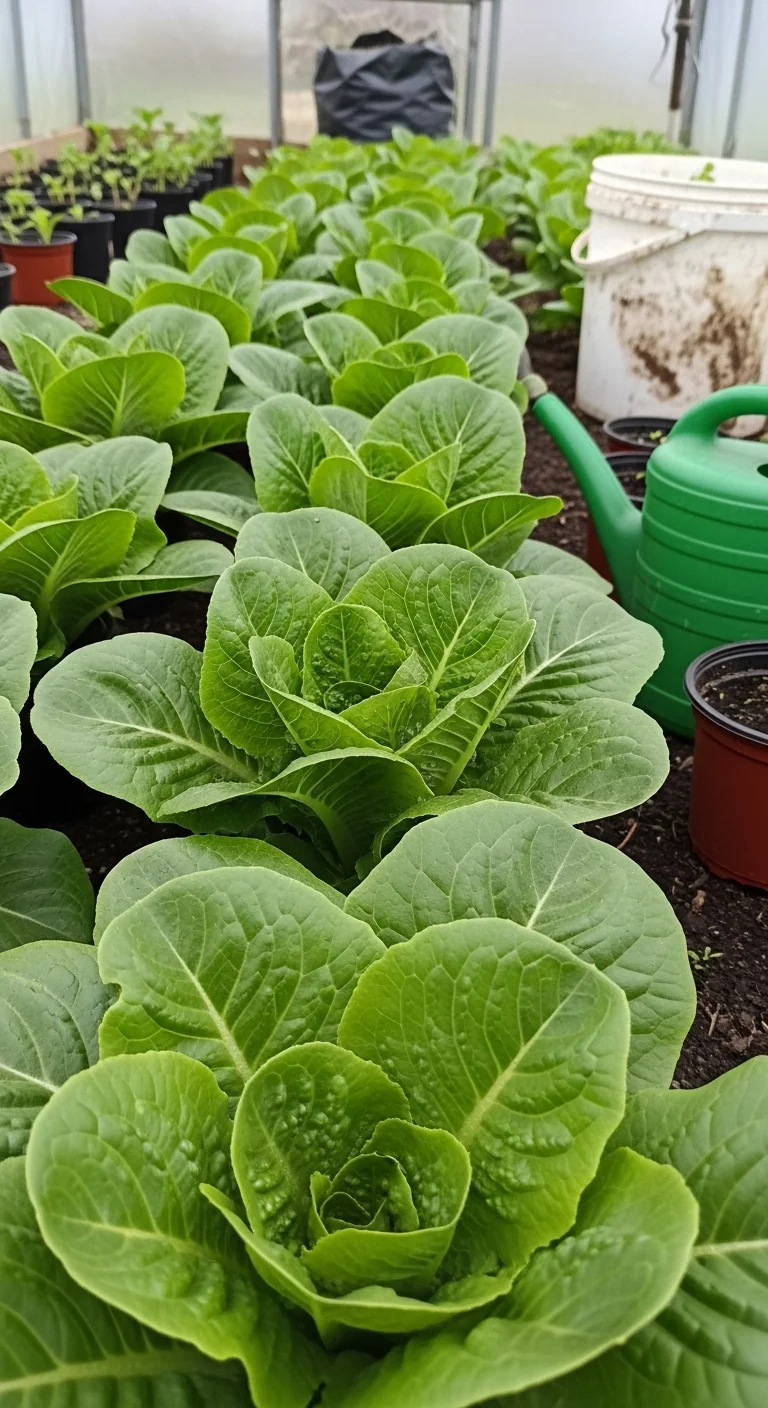
Best for: Branch 3
Spinach requires almost no intervention once established in cool Branch 3 conditions. Broadcast seeds 1 inch apart in rows and thin to 4 inches. Harvest outer leaves when they reach 3 inches long. It tolerates light frost and continues growth down to 40 degrees F nighttime lows.
Kale
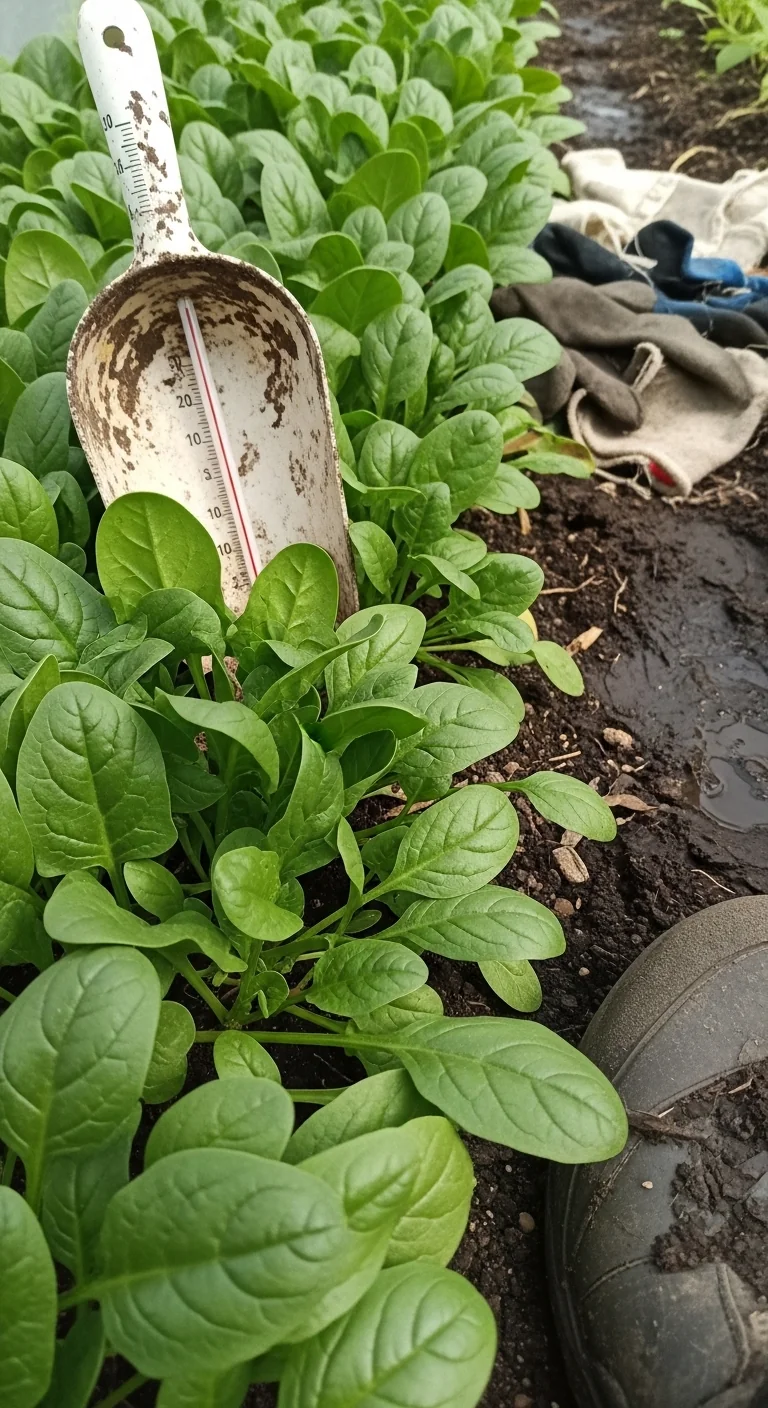
Best for: Branch 3
Kale continues producing in Branch 3 when nighttime temperatures hold between 40 and 55 degrees F. Space plants 12 inches apart and harvest outer leaves weekly once the plant reaches 8 inches tall. It withstands brief dips to 35 degrees F without damage. Rotate planting locations each season to maintain soil health.
Starter Stack (What to Choose First)
For Branch 1: Warm-Stable Greenhouses
Start with tomatoes and peppers. Tomatoes provide vertical structure that peppers can lean against while both share similar temperature needs and pollination timing. Combined planting requires one set of support stakes and one weekly pruning session.
For Branch 2: Space-Constrained Greenhouses
Start with cucumbers and pole beans. Cucumbers climb one side of a trellis while pole beans use the opposite side, doubling vertical output in under 100 square feet. Both need the same irrigation schedule and airflow spacing.
For Branch 3: Cool or Unheated Greenhouses
Start with lettuce and spinach. Lettuce matures in 40 to 50 days while spinach follows in overlapping cycles, delivering continuous leafy harvests with one soil preparation and one thinning pass.
When This Won’t Work
Greenhouse vegetables fail when nighttime temperatures drop below 40 degrees F for more than three consecutive nights or when relative humidity stays above 85 percent without ventilation for over 48 hours. Both conditions trigger slowed growth or disease pressure that no single crop selection can overcome.
Alternative action: install a small heater calibrated to maintain minimum 45 degrees F or add exhaust fans triggered at 80 percent humidity. If space constraints prevent proper airflow, shift to container vegetable gardening outside the main structure.
Companion planting also reduces pest pressure when temperatures fluctuate. See our guide to companion planting vegetables.
Choosing the Right Option for Your Situation
Budget Threshold
Seed packets and basic trellis materials stay under 50 dollars for any two-crop starter stack. Exceed this only if you add automated drip lines or heated mats for Branch 1 setups.
Time Threshold
Limit weekly maintenance to under 30 minutes by choosing Effort Score 1 or 2 crops such as spinach or pole beans. Branch 1 fruiters require 45 to 60 minutes weekly once plants reach 3 feet tall.
Technical Constraint: Soil pH
All nine options perform best between pH 6.0 and 7.0. Test soil every 12 months and amend with compost if readings fall outside this range before transplanting.
Yes or no checklist:
Does your greenhouse maintain nighttime temperatures above 55 degrees F? Yes: prioritize Branch 1.
Is floor space 150 square feet or less? Yes: prioritize Branch 2.
Do you target cool-season extension? Yes: prioritize Branch 3.
Can you commit to weekly checks? No: limit to Effort Score 1 or 2 crops.
Expert Q&A
How does hand pollination improve greenhouse vegetable success?
Greenhouse vegetable flowers often lack natural pollinators. Gentle daily tapping of stems or use of a small electric toothbrush releases pollen and raises fruit set rates in tomatoes, peppers, and eggplant when bee activity is low.
What soil mix supports multiple greenhouse vegetables without rotation issues?
A blend of 50 percent compost, 30 percent perlite, and 20 percent coco coir maintains drainage and nutrient levels across tomatoes, cucumbers, and leafy greens. Refresh the top 4 inches each season rather than full replacement.
When should you install trellises for vining greenhouse vegetables?
Install trellises before transplanting cucumbers or pole beans. Place vertical supports 6 feet tall and space them 12 inches apart so vines can climb from day one and avoid ground contact that invites rot.
How do you prevent bolting in cool-season greenhouse vegetables?
Harvest leafy crops like lettuce and spinach before they reach 6 inches tall and maintain consistent soil moisture. Daytime temperatures above 75 degrees F for more than five days signal time to switch to heat-tolerant replacements.
What ventilation schedule keeps humidity low enough for fruiting greenhouse vegetables?
Open vents or run exhaust fans for 30 minutes twice daily once temperatures exceed 80 degrees F. This keeps relative humidity below 80 percent and reduces mildew risk on tomatoes, cucumbers, and peppers.
Conclusion
The decision grid turns greenhouse vegetables from guesswork into a repeatable system based on temperature readings, floor measurements, and season length. The number-one mistake is planting without first confirming your structure meets the branch requirements for the chosen crops.
Take the next step by reviewing your greenhouse data against the grid and ordering seeds or transplants for two matched options. Build soil health with quality inputs to keep plants productive season after season. See our guide to organic fertilizer for vegetables.