
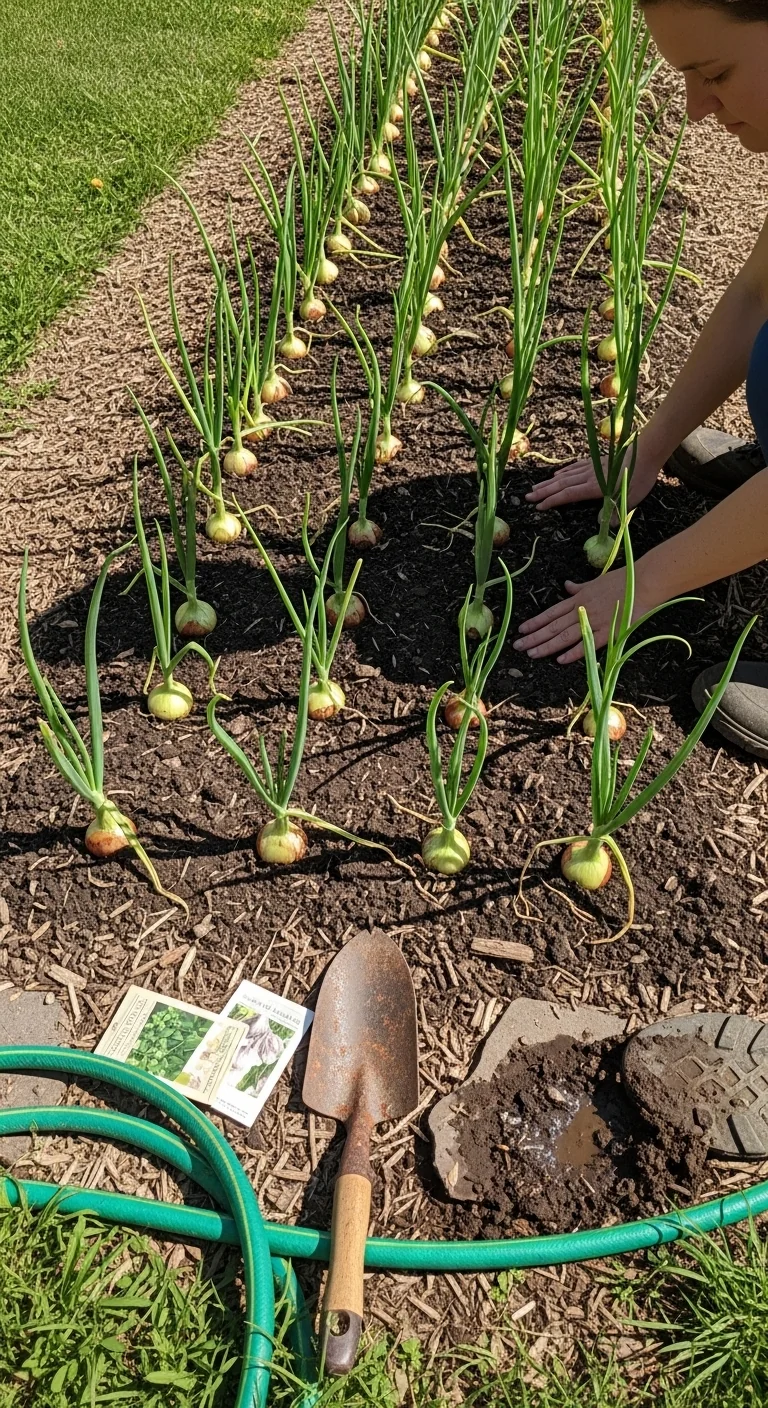
Growing onions and garlic delivers reliable bulbs when you match variety types to local daylight hours and winter temperatures instead of applying one-size-fits-all instructions.
This article focuses on variety selection, planting, and integrated care tactics for both crops in home vegetable gardens. It leaves out large-scale farming techniques and genetic modification topics.
You will pinpoint which variety and method pair suits your latitude, space, and effort level, set precise timing windows, and select spacing that prevents competition.
Assign your garden to the correct decision grid branch and apply only the matching strategies below.
The Yield Grid Decision Grid
Branch 1: Your location experiences summer day lengths exceeding 14 hours (typically above 37 degrees north latitude, as in much of the northern US, UK, and Canada).
Recommended: Items 1, 4, and 7 below.
Branch 2: Your location experiences peak day lengths under 14 hours (typically below 36 degrees north latitude, as in parts of the southern US, Australia, and India).
Recommended: Items 2, 5, and 8 below.
Branch 3: Your available planting area measures under 50 square feet or relies on containers.
Recommended: Items 3, 6, and 9 below. For zone-specific timing, consult the vegetable planting calendar.
Quick Comparison Table
| Option | Key mechanism | Best for | Decision Grid Branch | Effort Score |
|---|---|---|---|---|
| Long-Day Onion Varieties Matched to Northern Day Lengths | Photoperiod response to 14-16 hour days triggers bulb formation | Northern cool climates | Branch 1 | 1 |
| Softneck Garlic Cloves for Mild Climates | Lower vernalization need allows bulb development in warmer winters | Mild-winter areas | Branch 2 | 2 |
| Container Growing Setup for Onions and Garlic | Controlled drainage and depth in pots prevents waterlogging | Limited-space gardens | Branch 3 | 3 |
| Fall Planting Protocol for Hardneck Garlic and Onions | Root establishment before winter cold supports larger spring bulbs | Cool climates with frost | Branch 1 | 3 |
| Mulching Rules to Stabilize Soil Conditions | 4-6 inch layer moderates temperature swings and retains moisture | Any climate with variable weather | Branch 3 | 2 |
| Companion Planting Integration for Pest Deterrence | Alliums repel certain insects when placed near carrots or beets | Shared-bed layouts | Branch 1 | 2 |
| Organic Fertilizer Sidedress Schedule | Targeted nitrogen applications at 3-4 week intervals after emergence | Nutrient-poor soils | Branch 2 | 4 |
| Spacing Layout for Shared Beds | 4-5 inch plant spacing with 12-inch rows avoids competition | Intensive garden beds | Branch 2 | 1 |
| Harvest and Curing Techniques | Tops falling over signals maturity followed by shaded drying | Post-season storage | Branch 3 | 2 |
Long-Day Onion Varieties Matched to Northern Day Lengths
Best for: Branch 1
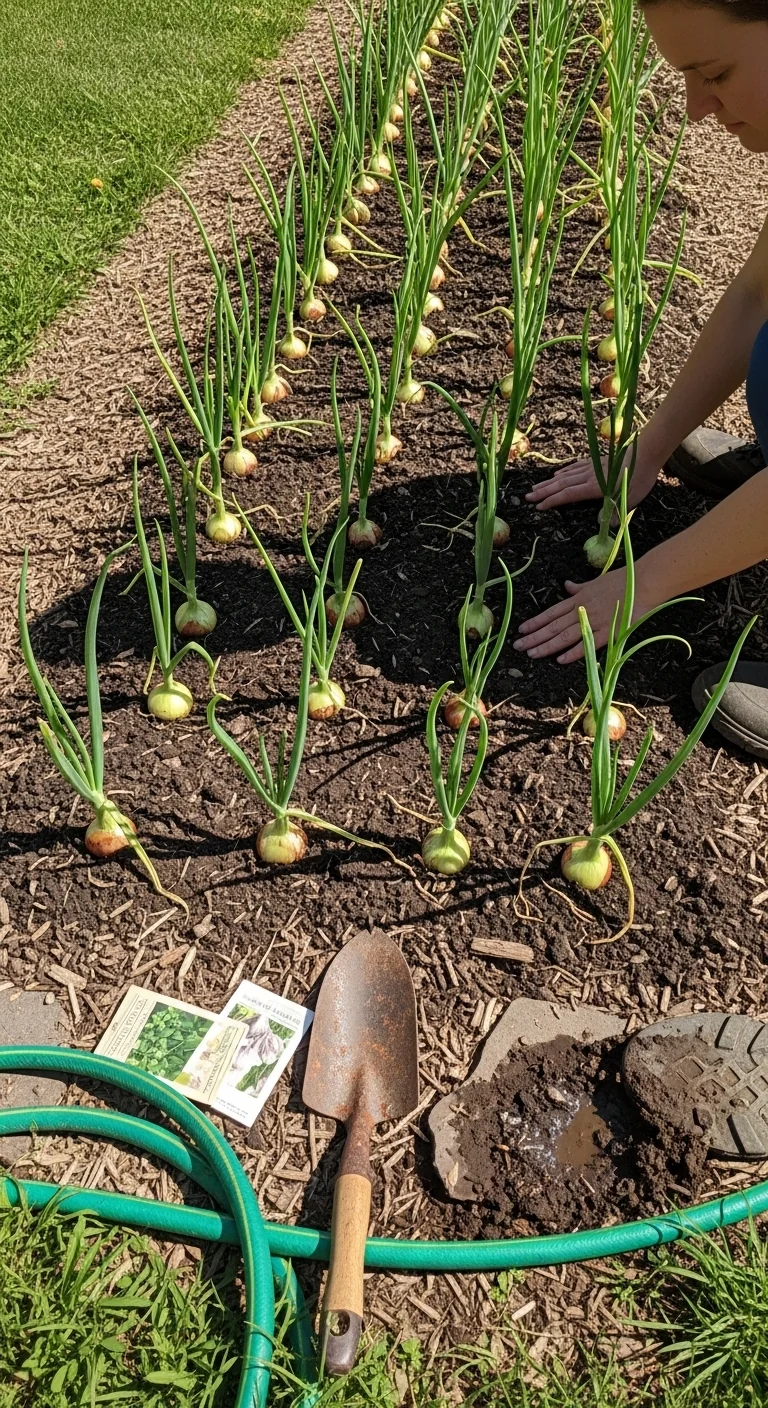
Long-day onions form bulbs once daylight reaches 14 to 16 hours. Select varieties suited to latitudes above 37 degrees north. Plant seeds 0.25 inch deep or transplants 4 to 5 inches apart with the base just covered. This approach works in cool climates with long summers because the extended daylight aligns with the variety trigger. Steps include confirming local daylight patterns, sourcing seed or sets labeled long-day, and thinning seedlings to final spacing. Common mistake involves using short-day types here, which results in green tops without bulb swelling. Edge case arises in borderline latitudes around 37 degrees north where intermediate-day onions may serve as a backup if long-day performance lags.
Softneck Garlic Cloves for Mild Climates
Best for: Branch 2
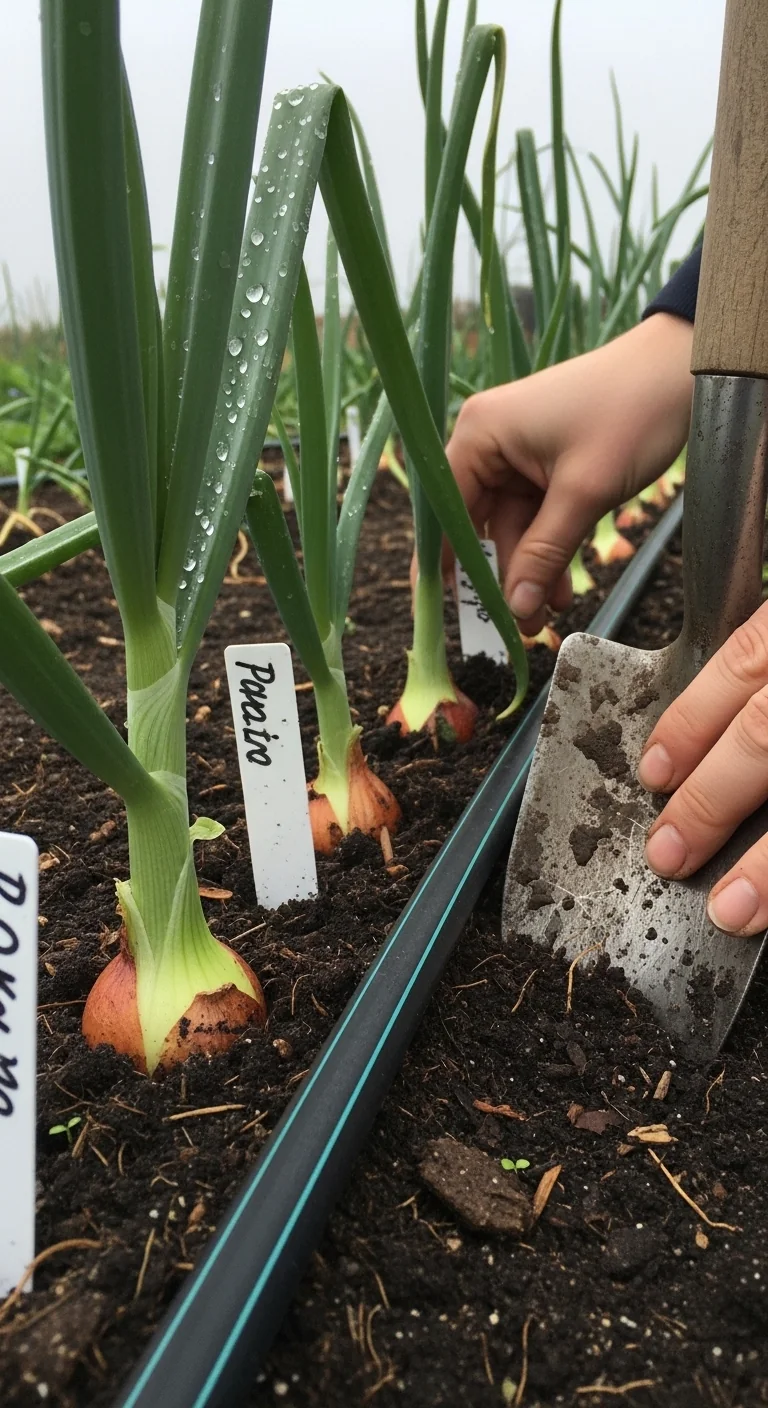
Softneck garlic tolerates milder winters better than hardneck types and produces bulbs that store longer. Break bulbs into cloves and plant the largest ones 2 inches deep with the pointed end up. Skip hardneck varieties in these conditions because they require extended cold below 45 degrees Fahrenheit for proper clove formation. This option fits southern or mild areas where winter lows stay above 20 degrees Fahrenheit.
Container Growing Setup for Onions and Garlic
Best for: Branch 3
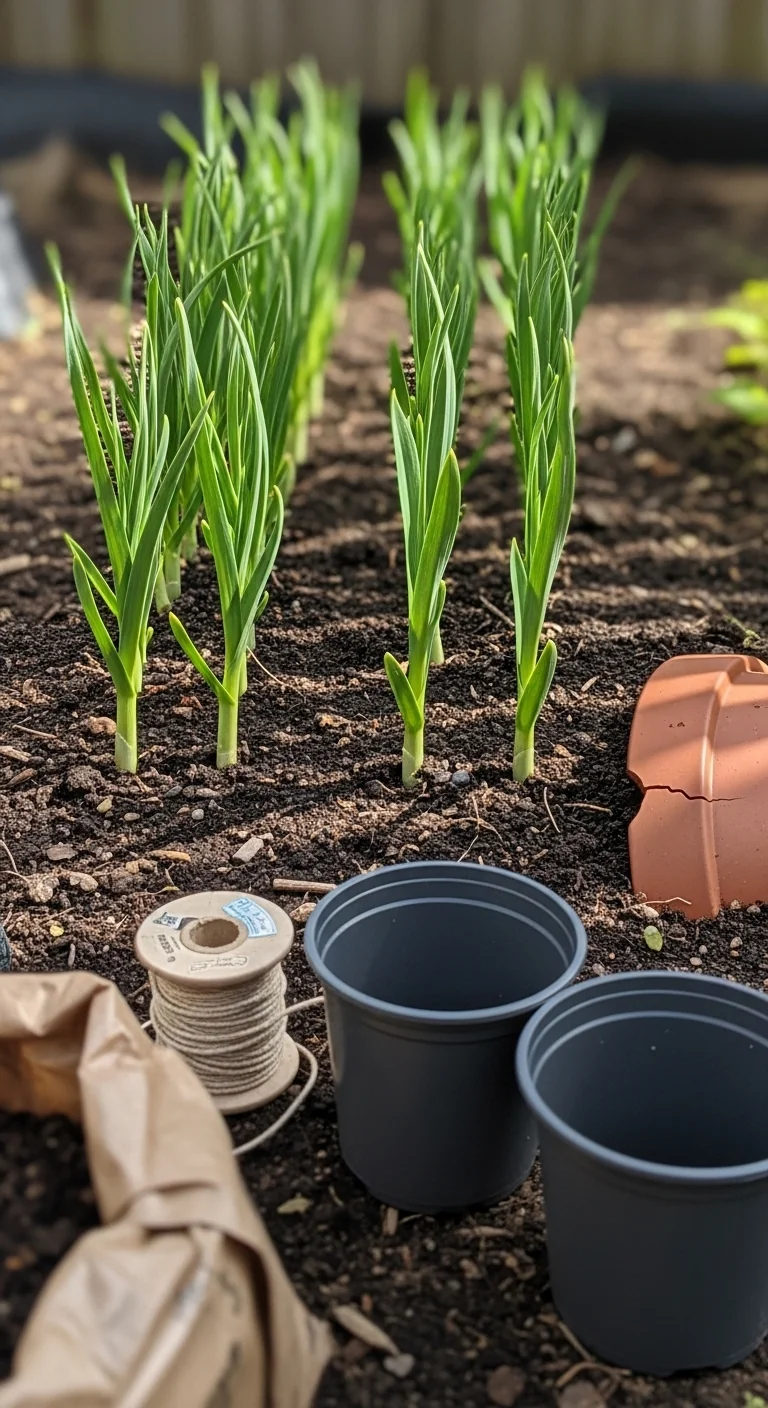
Choose pots at least 10 inches deep with drainage holes to prevent rot. Fill with a mix of potting soil and compost, then plant garlic cloves or onion sets 4 inches apart. Position containers in full sun for at least 4 to 6 hours daily. Threshold rule: maintain soil moisture at field capacity without standing water. Adjustment involves adding perlite if drainage slows. This setup succeeds in balconies or patios under 50 square feet where in-ground options fail due to compaction or shade from structures.
Fall Planting Protocol for Hardneck Garlic and Onions
Best for: Branch 1
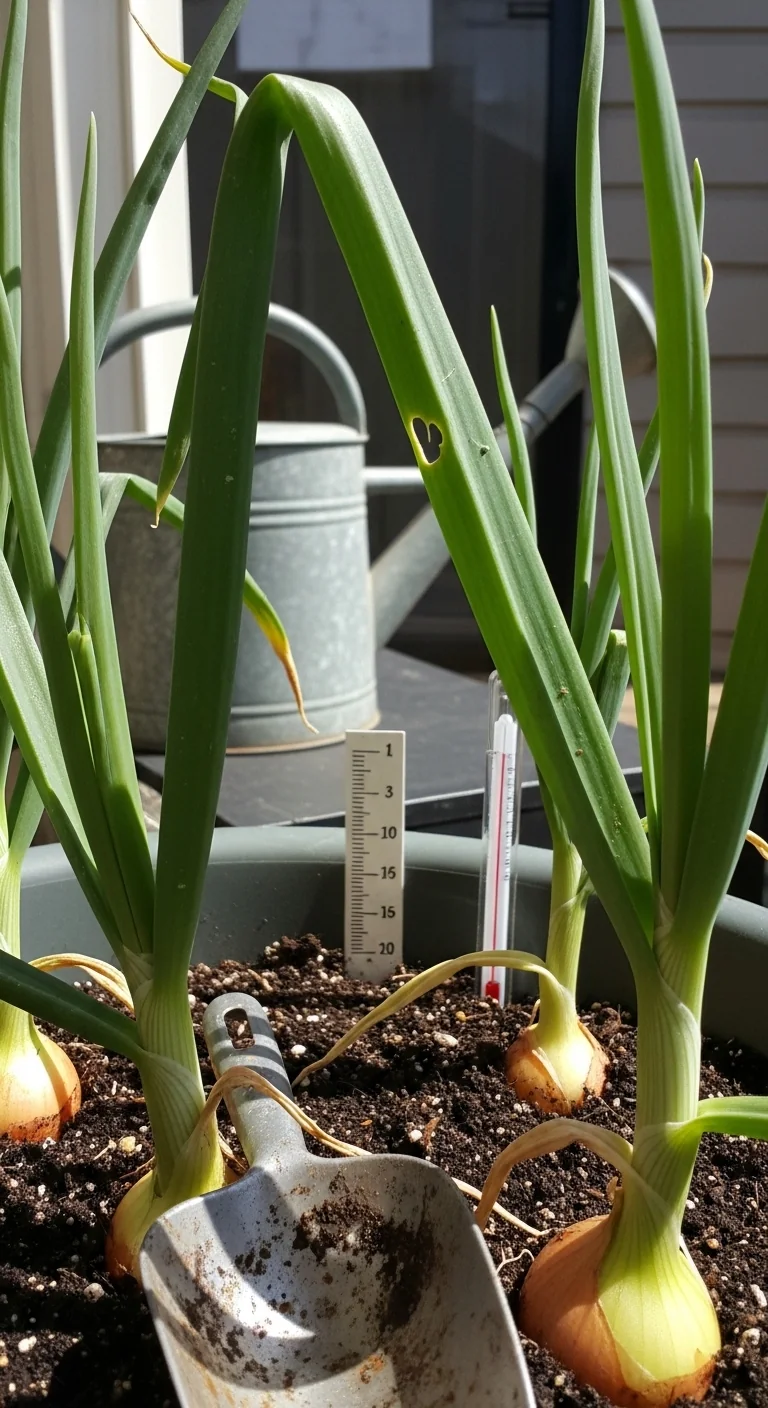
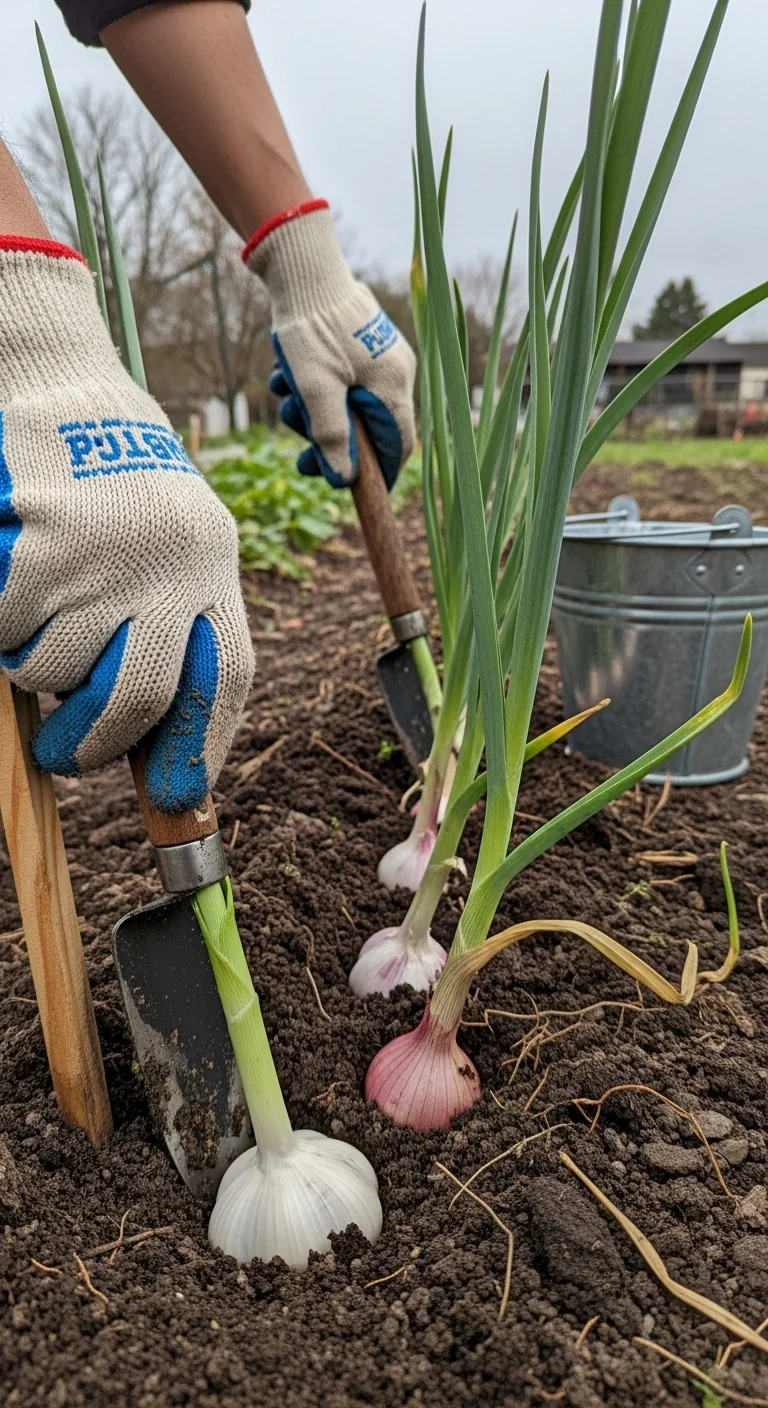
Fall planting lets roots develop before soil freezes. For hardneck garlic, separate cloves and plant 2 inches deep, pointed end up, 4 inches apart in rows 12 inches apart. For onions, place sets so shoulders sit at soil level. Perform this 4 to 6 weeks before the ground freezes. 10-minute workflow: prepare bed with compost, space plants, cover lightly, then water once. Upgrade option includes 4 to 6 inches of straw mulch applied after planting. See the fall vegetable garden guide for exact frost-date adjustments in your area. Edge case: late planting after soil drops below 50 degrees Fahrenheit yields smaller bulbs the following season.
Mulching Rules to Stabilize Soil Conditions
Best for: Branch 3
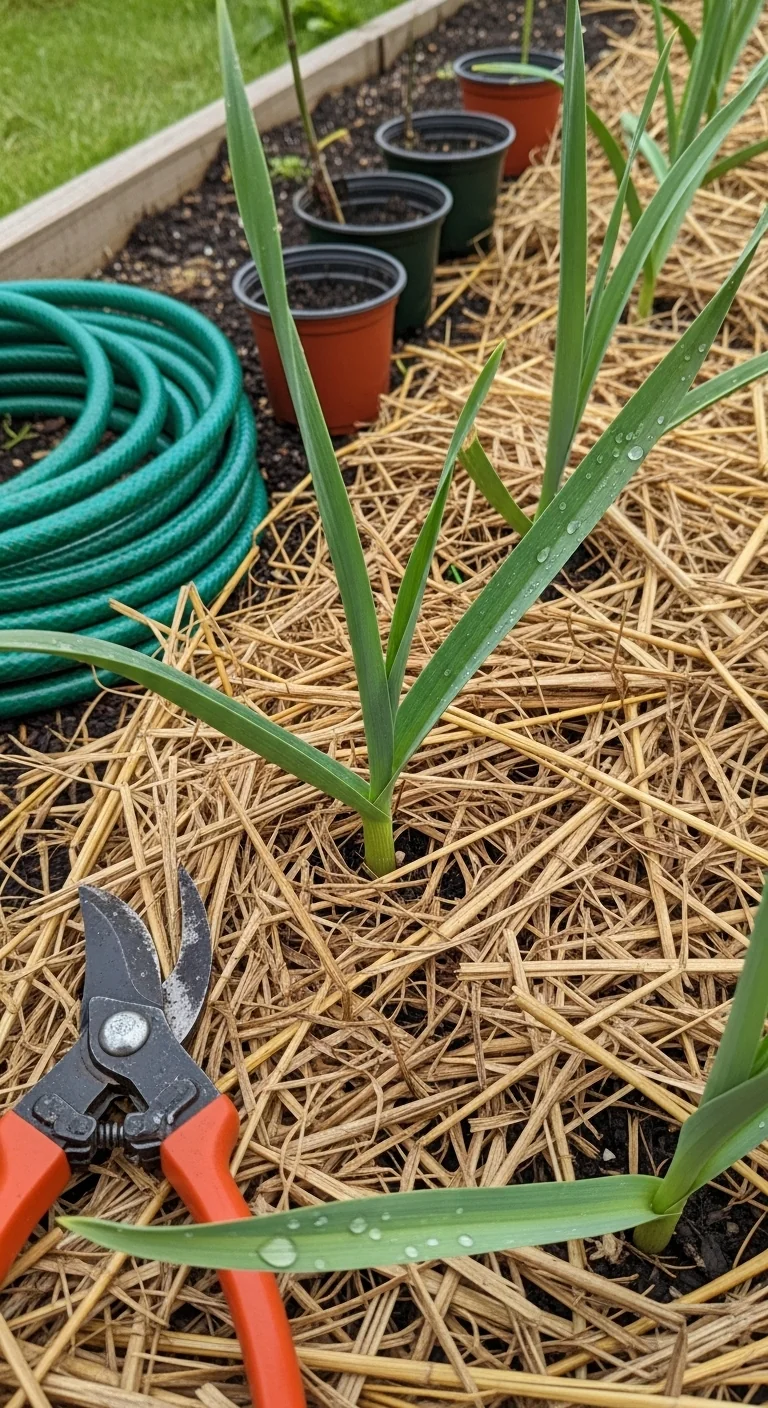
Apply 4 to 6 inches of weed-free straw or leaf mulch after planting to moderate soil temperature swings. This layer reduces evaporation and keeps roots cool during early summer heat. Use vs skip: apply in containers or small plots where temperature fluctuates rapidly; skip only if soil stays constantly saturated. Edge case occurs in heavy clay where mulch traps excess moisture and invites rot, so test drainage first.
Companion Planting Integration for Pest Deterrence
Best for: Branch 1
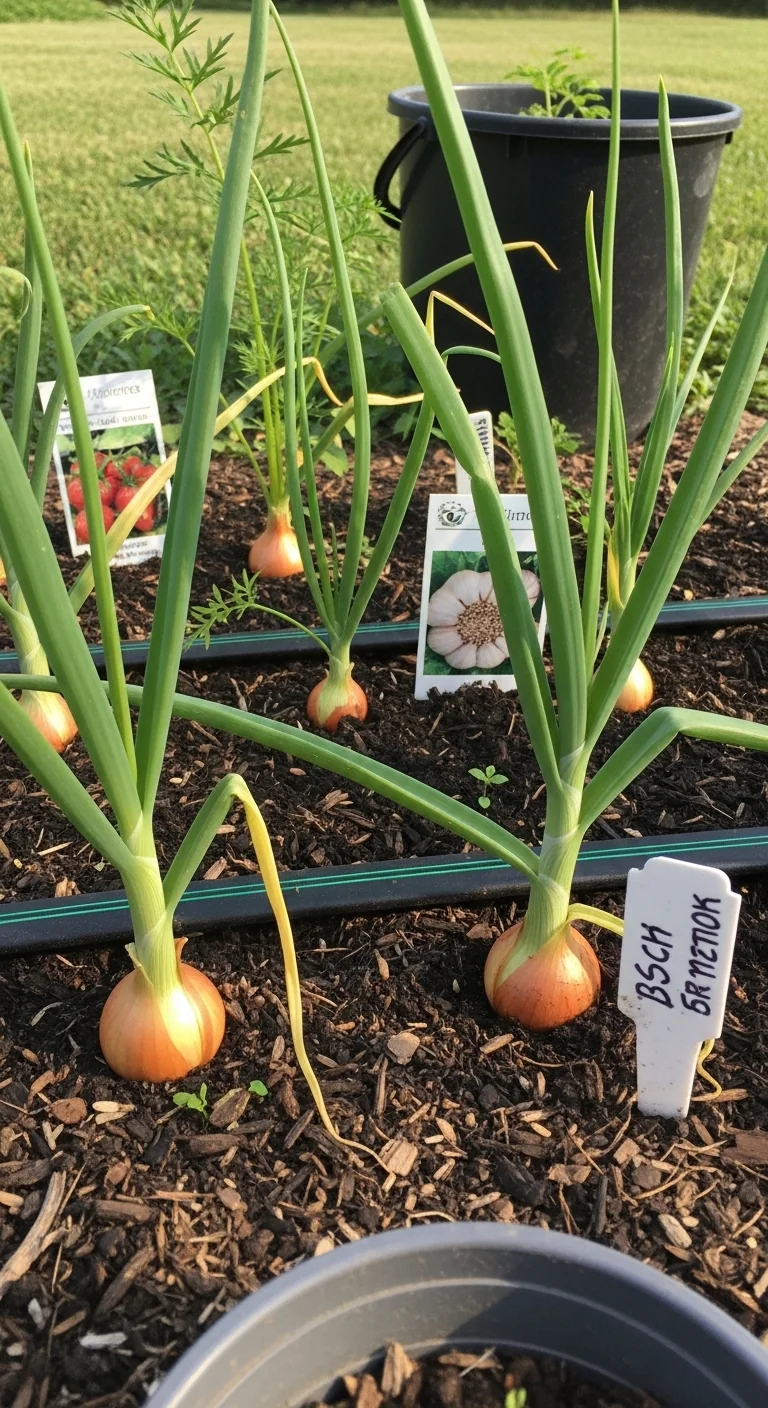
Onions and garlic deter certain insects when interplanted with carrots or beets at 4 to 5 inch spacing. The sulfur compounds released by allium roots disrupt pest feeding. Blueprint starts with mapping bed layout, placing alliums every third row, and monitoring for overlap in root zones. Steps include soil preparation weeks ahead, planting at the same time, and avoiding beans or peas nearby. Common mistake involves overcrowding, which reduces air flow and invites fungal issues. See companion planting vegetables for layout diagrams suited to northern beds.
Organic Fertilizer Sidedress Schedule
Best for: Branch 2
Apply nitrogen-rich organic fertilizer 3 to 4 weeks after emergence, then repeat every 3 to 4 weeks until bulbing begins. Use a balanced product worked into a shallow groove 4 to 6 inches from plants. Threshold rule: base first application on soil test results showing nitrogen below 50 ppm; reduce rate if prior compost amendment exceeds 1 pound per 4 to 5 square feet. This schedule supports steady growth without excess foliage in mild climates. See organic fertilizer for vegetables for product selection details. Edge case in containers requires halving the rate to avoid salt buildup.
Spacing Layout for Shared Beds
Best for: Branch 2
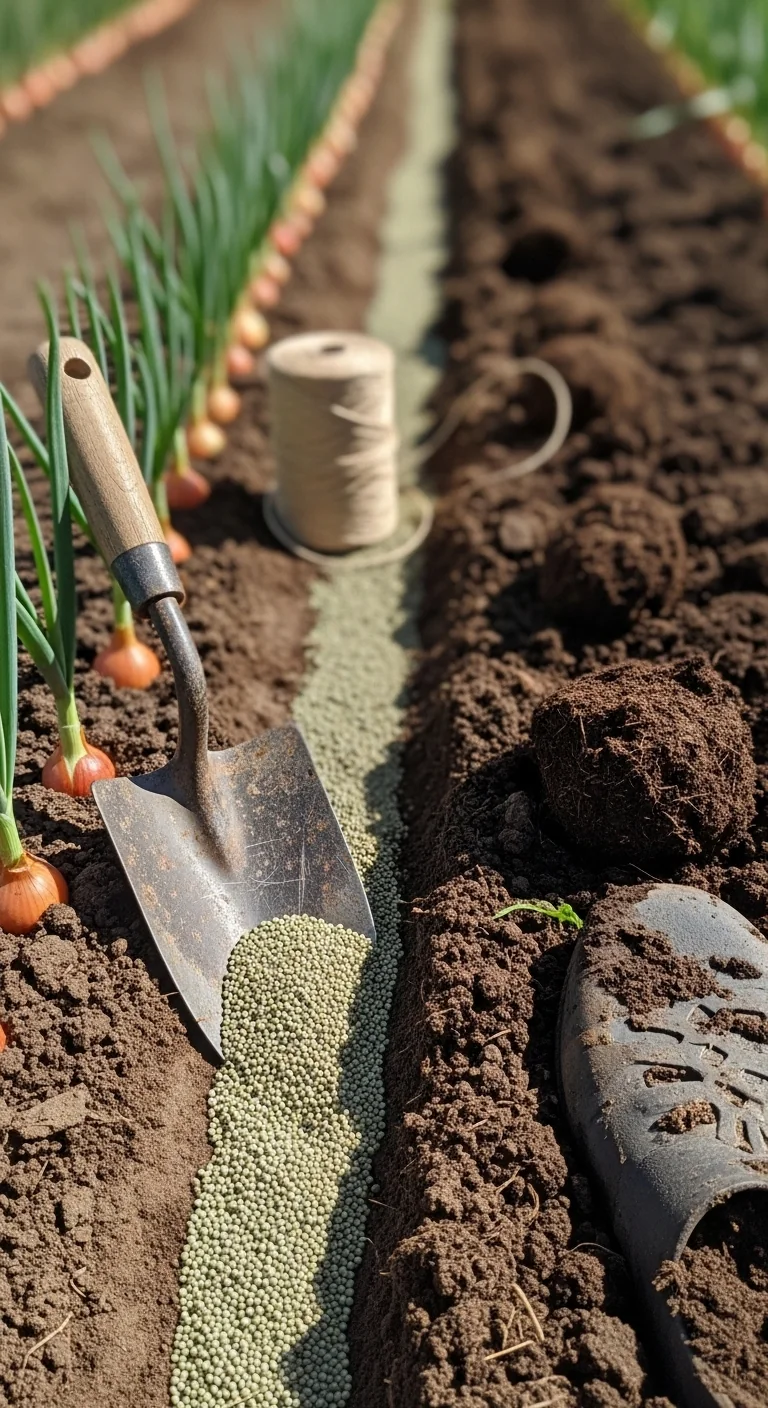
Set garlic cloves or onion transplants 4 to 5 inches apart within rows spaced 12 inches apart. This layout maximizes air circulation and root access in intensive beds. Use vs skip: adopt for shared allium beds under 50 square feet; skip wide-row systems only if space exceeds 100 square feet. Edge case appears when interplanting with faster crops, requiring temporary markers to maintain minimum distance.
Harvest and Curing Techniques
Best for: Branch 3
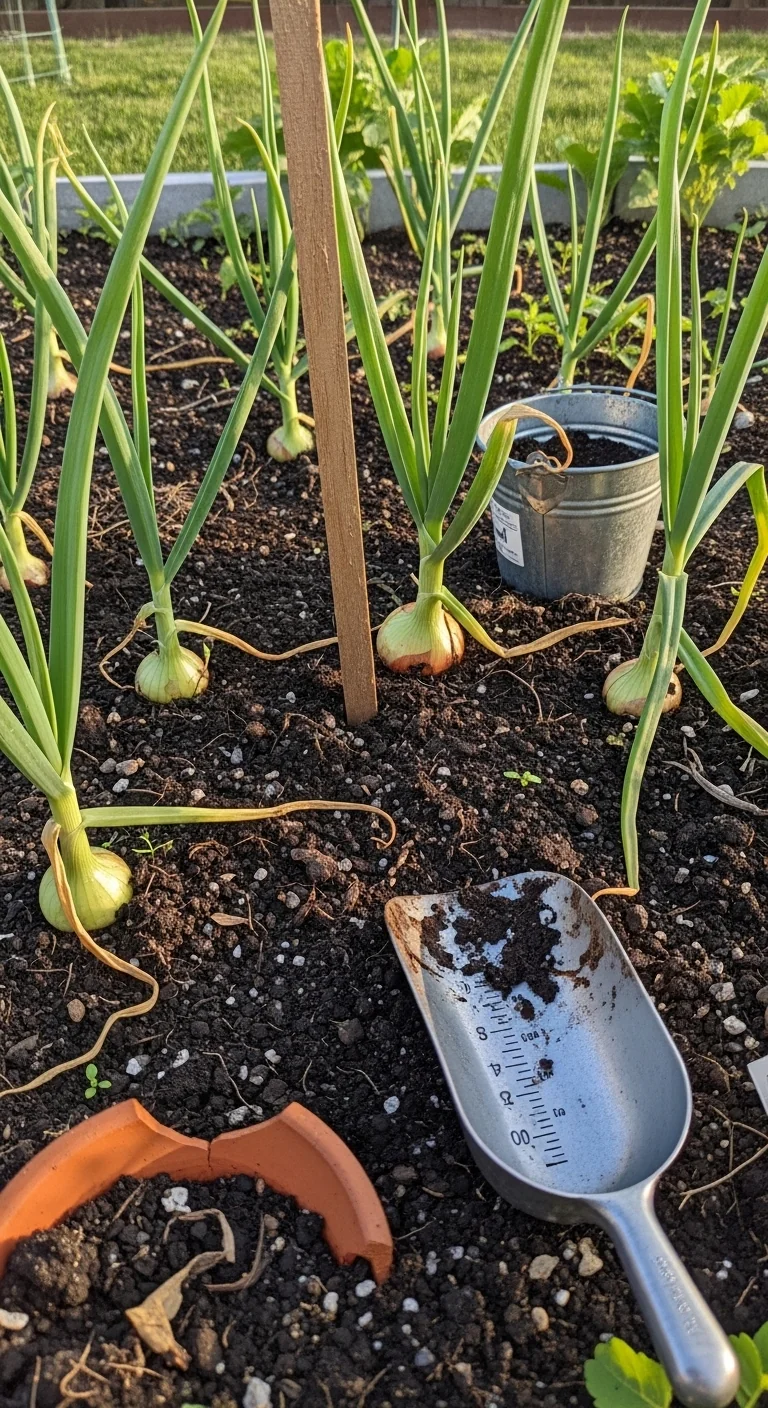
Harvest when three-fourths of tops have fallen over and outer scales dry. Lift bulbs carefully, brush off soil, and cure in a shaded spot with good air flow for 2 to 3 weeks until necks feel papery. For garlic, cut scapes on hardneck types in early summer if present. Store cured bulbs in mesh bags or braids at cool room temperature. This process works across container or small-plot harvests where space limits drying options.
Starter Stack (What to Choose First)
Branch 1 Starter Stack
Begin with long-day onion varieties and the fall planting protocol. Synergy arises because the day-length match plus early root establishment produces full bulbs in cool northern conditions. Time estimate: 45 to 90 minutes for a 100-square-foot bed. Cost range: low to medium for seeds or sets.
Branch 2 Starter Stack
Begin with softneck garlic cloves and the organic fertilizer sidedress schedule. Synergy comes from mild-climate tolerance paired with steady nutrient supply that prevents small heads. Time estimate: 30 to 60 minutes initial planting plus 15 minutes per sidedress. Cost range: low for cloves and basic organic products.
Branch 3 Starter Stack
Begin with the container growing setup and mulching rules. Synergy occurs because controlled drainage plus temperature moderation keeps roots healthy in small spaces. Time estimate: 20 to 45 minutes per container setup. Cost range: low for pots and mulch materials.
When This Won’t Work
These strategies fail when soil pH stays below 6.0 after testing or when drainage remains poor despite initial amendments. Bulbs then develop rot or stay undersized regardless of variety choice.
In such conditions, switch to containers or raised beds before planting. Test drainage by digging a 12-inch hole and filling it with water; if it fails to drain within 4 hours, prioritize the alternative setup.
See raised bed vegetable garden for construction steps suited to these constraints.
Choosing the Right Option for Your Situation
Budget Threshold
Under 20 dollars for starters favors seeds or grocery cloves over purchased sets or transplants. Above that threshold allows premium varieties or larger quantities of mulch and fertilizer.
Time Threshold
Less than 2 hours total per season points to sets or cloves instead of seeds. More time available supports full sidedress schedules and companion layouts.
Technical Constraint: Soil Test Result
If pH reads below 6.0, amend with lime weeks ahead of any planting. If drainage test shows water lingering over 4 hours, move to containers or raised beds immediately.
Yes/No checklist:
Does your latitude exceed 37 degrees north? Yes leads to Branch 1.
Is planting area under 50 square feet? Yes leads to Branch 3.
Do peak summer days stay under 14 hours? Yes leads to Branch 2.
Have you confirmed pH and drainage? No requires amendment first.
Expert Q&A
Can onions and garlic share the same bed without reducing bulb size?
Yes, provided you maintain 4 to 5 inch spacing and avoid overlapping root zones with faster-growing companions. The sulfur compounds from both crops help deter shared pests, but overcrowding below that distance cuts air flow and invites disease in humid conditions.
What temperature range triggers bolting in garlic?
Bolting in hardneck garlic begins when soil temperatures rise above 70 degrees Fahrenheit in late spring while plants still have active tops. Remove scapes promptly at 6 to 8 inches tall to redirect energy back to bulb sizing.
How does day-length mismatch affect onion performance?
Short-day onions planted north of 37 degrees north stay in leafy growth without forming bulbs because daylight never reaches their 12 to 14 hour trigger. Long-day onions planted south remain small or fail to bulb for the same reason.
Is grocery-store garlic suitable for planting?
It can work if untreated, but results vary because many commercial bulbs receive sprout inhibitors. Dedicated seed garlic ensures known variety performance and disease-free stock.
What soil moisture level matters most during bulbing?
Consistent field capacity without saturation supports bulb expansion until tops begin to yellow. Withhold water once three-fourths of tops fall to encourage outer scale drying and prevent storage rot.
Conclusion
The core decision is matching variety to your exact daylight hours and winter cold exposure before any planting step. The top mistake involves skipping that match and expecting uniform results across climates or spaces.
Next step: review your post-harvest process with the harvesting vegetables guide to extend storage life of your bulbs.