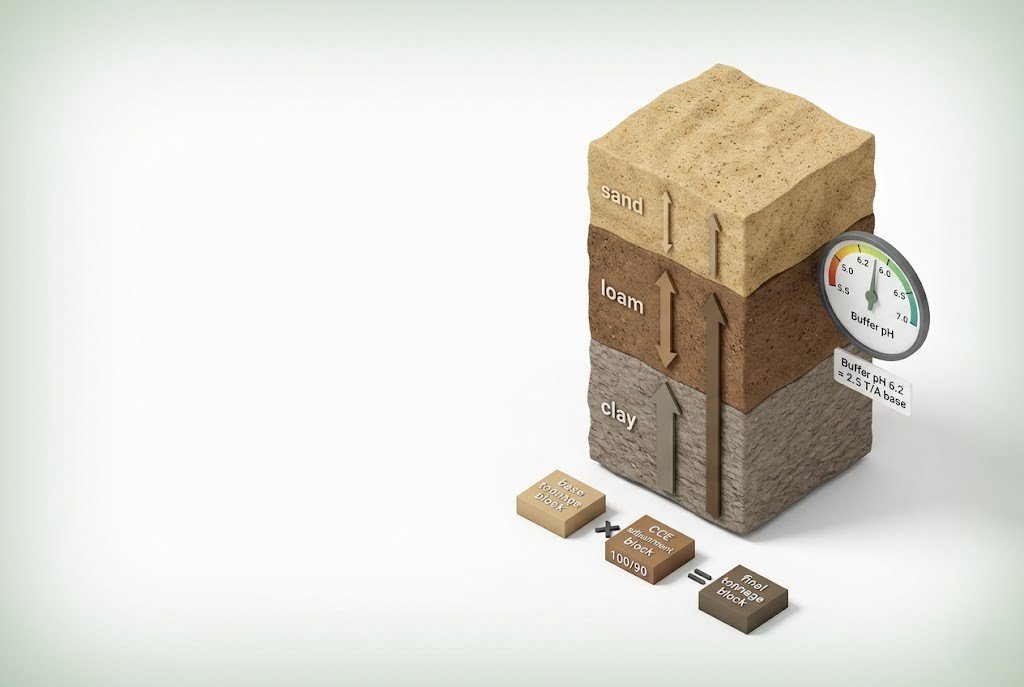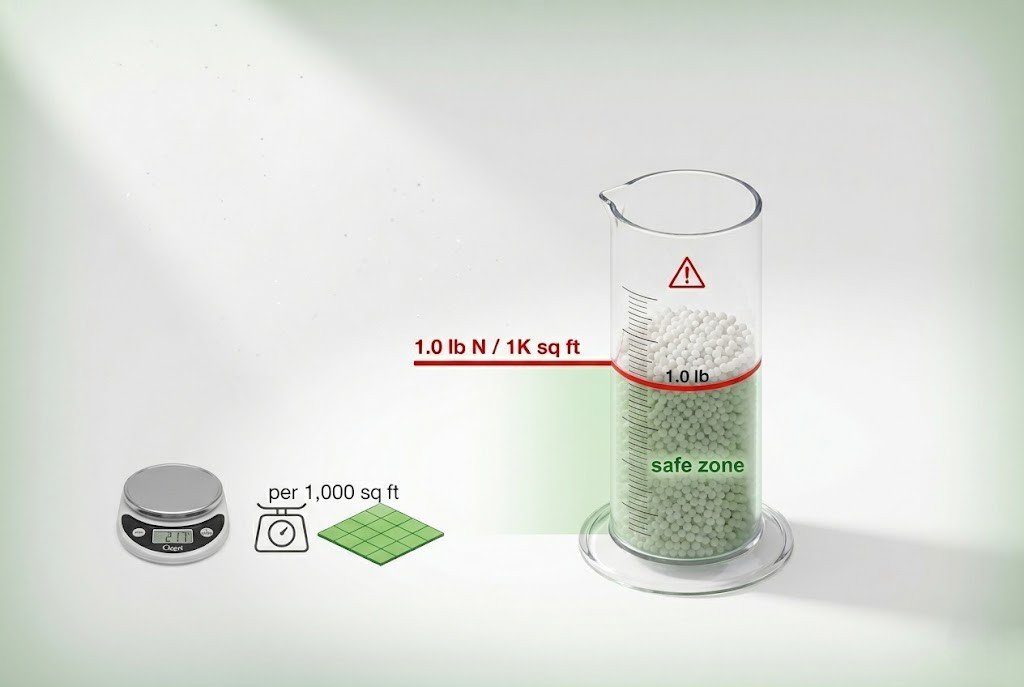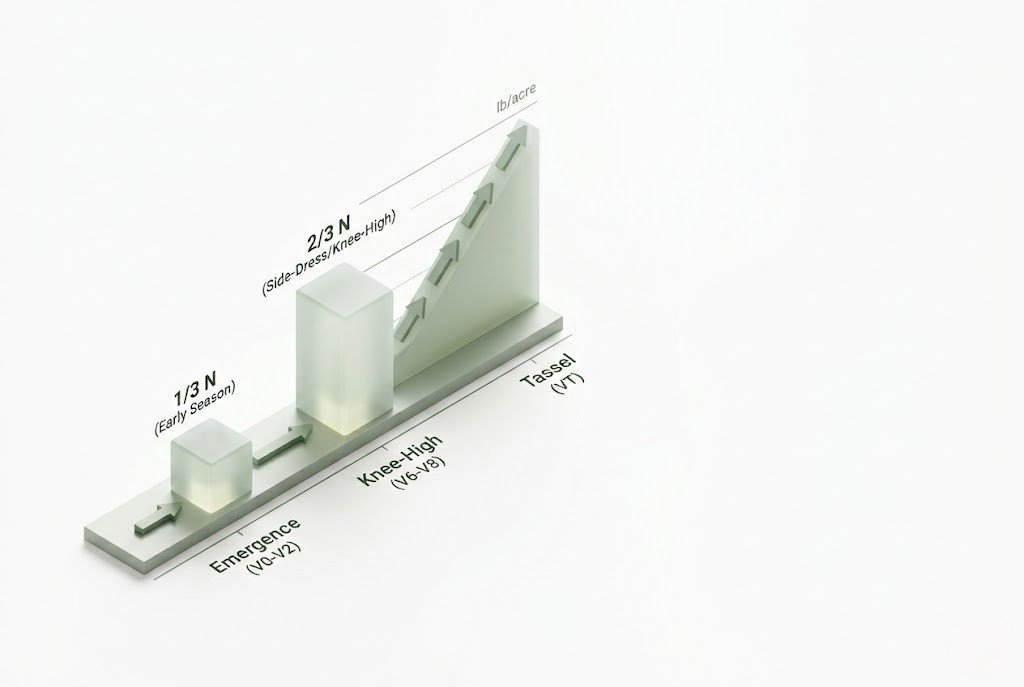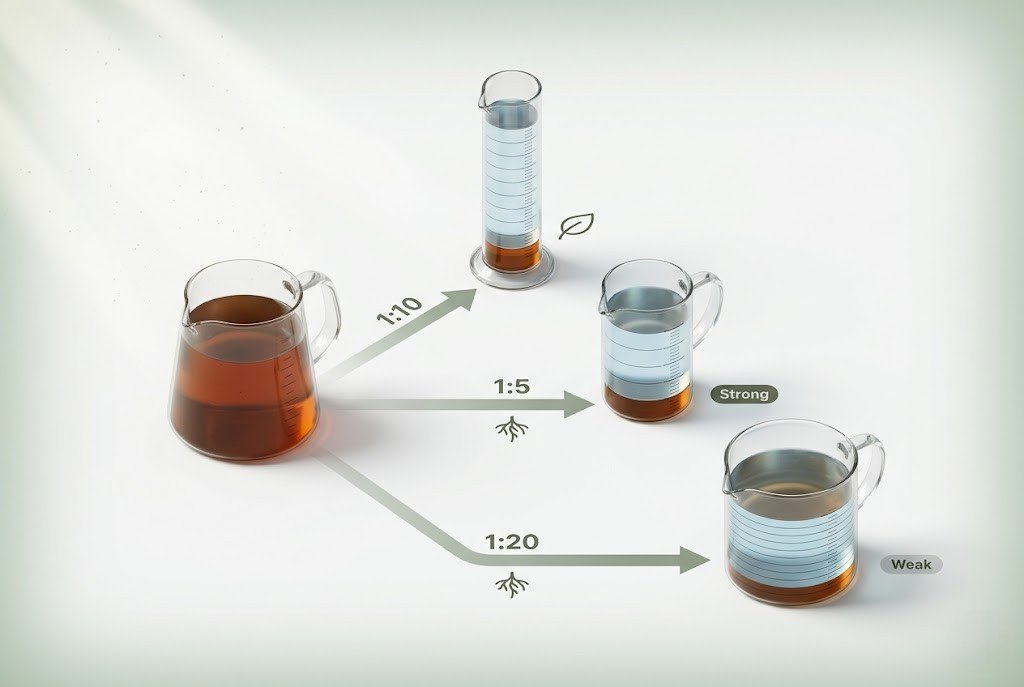
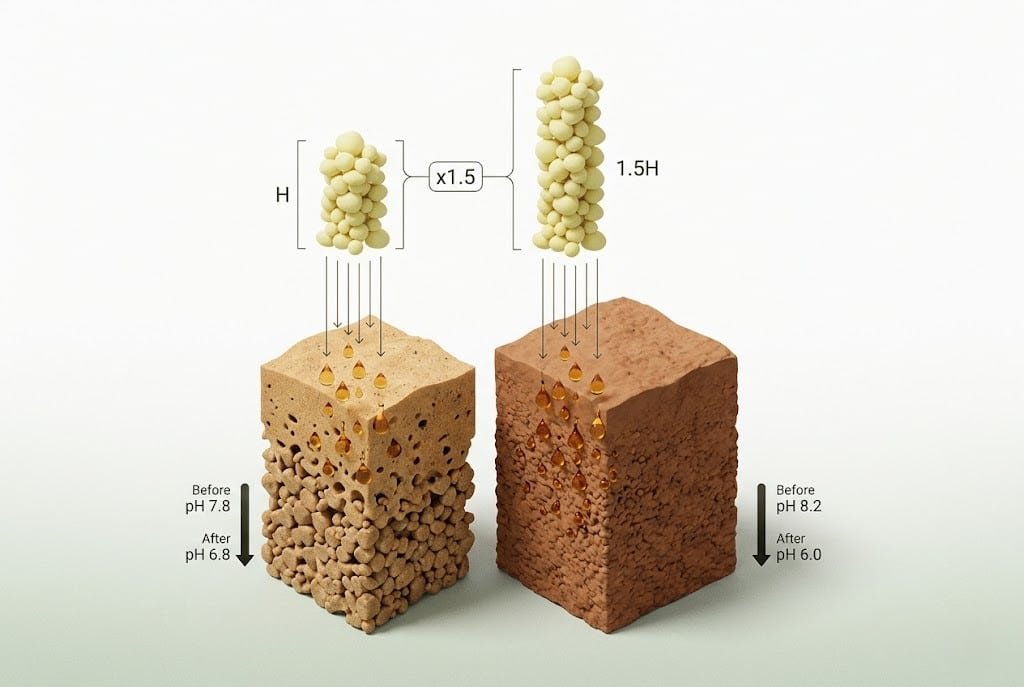
Lowering soil pH is not a one-ingredient problem. The amount of elemental sulfur a sandy loam needs to drop from pH 7.5 to 6.5 is a fundamentally different number than what a clay-heavy field requires for the same correction. Most online references treat soil as a single uniform medium, publish a single rate table, and leave growers wondering why their pH barely moved after a full season’s application. The gap is almost always buffering capacity, and buffering capacity is almost always tied to clay content and organic matter.
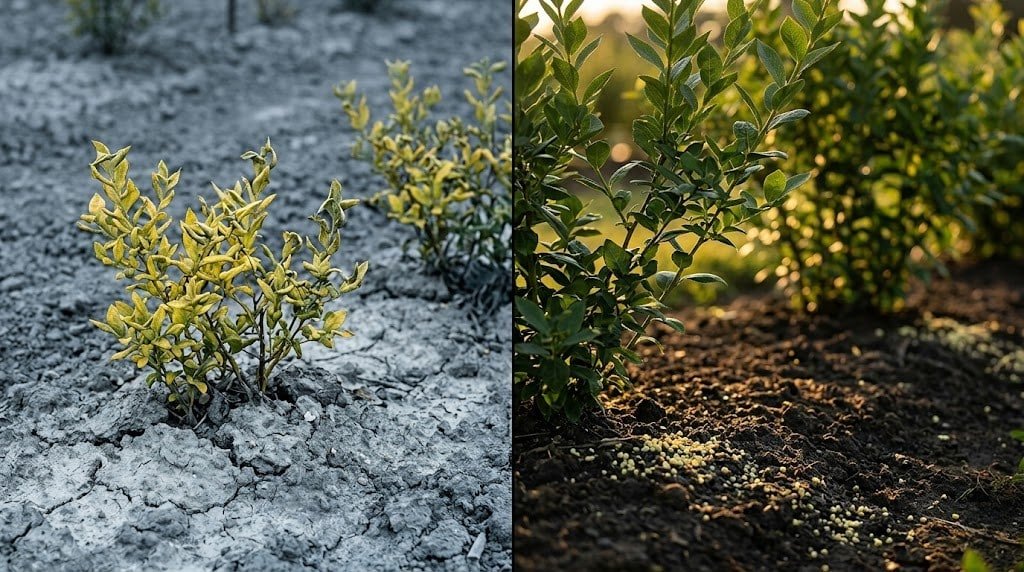
This calculator takes three inputs: current pH, target pH, and soil type (Sandy or Clay). It applies a clay correction factor of 1.5 times the base rate, enforces a hard safety threshold of no more than 1.0 pH unit of correction per growing season, and returns elemental sulfur in pounds per 100 square feet. It does not account for organic matter percentage, depth of incorporation below 6 inches, or the specific sulfur oxidation rate of your soil’s microbial population, all of which shift real-world results. Those variables require a certified soil laboratory report.
Bottom line: After using this tool, you will know the correct elemental sulfur rate for your soil type, whether the target correction is achievable in a single season or must be staged, and how many seasons to plan for if the pH drop exceeds the safe threshold.
Use the Tool
Before entering values, have a recent soil test result on hand. You need the current pH reading from that report, not a visual estimate or color-strip approximation. Target pH should reflect your crop’s or plant’s documented optimum, not a round number chosen arbitrarily. Soil type here means the dominant texture class: Sandy covers sands, loamy sands, and sandy loams; Clay covers clay loams, silty clay loams, and heavier textures.
Soil pH Sulfur Calculator
Calculate elemental sulfur needed to lower soil pH safely
| pH Drop | Sandy (lbs/100 ft²) | Clay (lbs/100 ft²) |
|---|
How This Calculator Works
Formula Steps (plain language):
2. Base Sulfur = pH Difference × 1.5 lbs per 0.1 pH per 100 sq ft
3. Clay Adjustment: multiply Base Sulfur × 1.5 for clay soils
4. Final Sulfur = Base Sulfur (Sandy) or Base Sulfur × 1.5 (Clay)
Why 1.5 lbs per 0.1 pH unit? This is the agronomic standard rate for elemental sulfur (S⁰) applied to lower pH in sandy loam soil. Soil microbes oxidize sulfur into sulfuric acid, releasing H⁺ ions that displace Ca²⁺ and Mg²⁺ on cation exchange sites, effectively acidifying the root zone.
Clay factor (×1.5): Clay soils have a higher buffering capacity and cation exchange capacity (CEC), meaning more acid equivalents are needed to shift the same number of pH units.
Safety limit (1.0 pH per season): Dropping pH more than 1.0 unit per growing season risks shocking plant roots and disrupting soil microbial communities. Split large drops across multiple seasons.
Assumptions & Limits:
- Results are estimates. Conduct a certified soil test for precise recommendations.
- Rates assume incorporation to 6-inch depth; surface applications may require adjustment.
- Only elemental sulfur (90%+ purity) is assumed — not ammonium sulfate or gypsum.
- Organic matter content, existing soil amendments, and rainfall all affect actual outcomes.
- pH range accepted: 4.0 – 9.0. Values outside this range may indicate a test error.
If you are managing a raised bed or container mix, the soil type classification may not apply cleanly. A heavily amended mix behaves more like a sandy medium regardless of any added clay content. For beds with significant organic matter, results will lean conservative.
If you also need to raise pH rather than lower it, the Soil pH Lime Calculator covers lime-based correction for alkaline targets.
Quick Start (60 Seconds)
- Current Soil pH: Enter the pH value directly from a soil test. Acceptable range is 4.0 to 9.0. Do not round to the nearest whole number; use the decimal the report gives you (e.g., 7.4, not 7).
- Target Soil pH: Enter the final pH you want to reach. This must be a lower number than the current pH. If your crop prefers a range, enter the midpoint or the lower bound of that range.
- Soil Type: Select Sandy or Clay. If your soil is a loam or silt loam, Sandy is the more conservative choice. When unsure, use the Soil Texture Calculator to estimate texture class from particle size data.
- pH difference matters more than pH value: The calculator uses the difference between current and target, not the absolute values. Two growers at pH 6.5 targeting 5.5 get the same base rate regardless of their starting point.
- Do not enter the total desired drop if it exceeds 1.0 pH units in a single season: The tool flags this automatically and tells you how many seasons to plan for. Split applications protect root zone chemistry and microbial communities.
- Units are fixed at pounds per 100 square feet: To convert for larger areas, multiply by the number of 100 sq ft blocks in your plot. A 1,000 sq ft garden uses 10 times the displayed rate.
- Click Calculate only after all three fields are filled: The widget enforces this. Partial entries return inline errors, not partial results.
Inputs and Outputs (What Each Field Means)
| Field | Unit | What It Means | Common Mistake | Safe Entry Guidance |
|---|---|---|---|---|
| Current Soil pH | pH units (dimensionless) | The measured hydrogen ion concentration of the topsoil, typically at 0-6 inch depth | Using a meter that hasn’t been calibrated, or reading a water-only slurry at the wrong ratio | Use a certified lab result or a 2:1 water-to-soil ratio with a calibrated digital meter. Valid range: 4.0-9.0 |
| Target Soil pH | pH units (dimensionless) | The desired final pH after elemental sulfur incorporation and oxidation | Setting target too low in a single season, triggering the safety warning zone | Must be lower than current pH. If final target requires more than 1.0 unit of drop, stage it across seasons |
| Soil Type | Category: Sandy / Clay | Represents the dominant texture class, which drives buffering capacity and cation exchange capacity (CEC) | Selecting Sandy for a clay loam because it “feels” easier. Clay loams require the 1.5x correction | When in doubt, choose Clay. Under-application is worse than over-application because low sulfur leaves pH unchanged |
| Elemental Sulfur Required | lbs per 100 sq ft | The calculated mass of 90%+ purity elemental sulfur (S0) to apply and incorporate to 6-inch depth | Confusing elemental sulfur with ammonium sulfate or iron sulfate, which have different acidification equivalents | Use only products labeled as elemental sulfur (90%+ S). Do not substitute without recalculating |
Worked Examples (Real Numbers)
Example 1: Blueberry Bed Preparation on Sandy Soil
- Current pH: 6.8
- Target pH: 5.8
- Soil type: Sandy
- pH difference: 1.0 unit
Result: 15.0 lbs of elemental sulfur per 100 sq ft.
A 1.0-unit drop lands exactly at the seasonal safety limit. This correction is achievable in a single growing season without risk of over-acidification. Apply before spring planting and water in thoroughly to support sulfur-oxidizing bacteria.
Example 2: Vegetable Garden on Clay Soil
- Current pH: 7.5
- Target pH: 6.5
- Soil type: Clay
- pH difference: 1.0 unit
Result: 22.5 lbs of elemental sulfur per 100 sq ft.
Clay’s higher CEC means 50 more acid equivalents are needed to shift the same number of pH units compared to sand. Applying the sandy rate of 15.0 lbs on this plot would leave pH largely unchanged after one full season, a common source of frustration in heavy soils.
Example 3: Acid-Loving Shrub Border on Clay Soil Requiring a Multi-Season Drop
- Current pH: 8.0
- Target pH: 6.0
- Soil type: Clay
- pH difference: 2.0 units
Result: 45.0 lbs total per 100 sq ft, split into two seasonal applications of 22.5 lbs each.
A 2.0-unit drop on clay is a multi-season project. Applying all 45 lbs at once risks acute root toxicity and the collapse of soil microbial communities that are themselves responsible for oxidizing the sulfur into the acid needed to lower pH. Season one targets pH 7.0; season two completes the correction to 6.0 after re-testing.
Reference Table (Fast Lookup)
All values assume elemental sulfur at 90%+ purity, incorporated to 6-inch depth. The “Sulfur Shortfall” column shows how many pounds of sulfur are missed when a sandy rate is incorrectly applied to a clay soil for the same pH target.
| pH Drop Target | Sandy Soil (lbs / 100 ft²) | Clay Soil (lbs / 100 ft²) | Seasons Required (Clay, max 1.0/season) | Sulfur Shortfall if Sandy Rate Applied to Clay (lbs) | Risk Level |
|---|---|---|---|---|---|
| 0.5 | 7.5 | 11.3 | 1 | 3.8 | Low |
| 1.0 | 15.0 | 22.5 | 1 | 7.5 | Low |
| 1.5 | 22.5 | 33.8 | 2 | 11.3 | Moderate |
| 2.0 | 30.0 | 45.0 | 2 | 15.0 | Moderate |
| 2.5 | 37.5 | 56.3 | 3 | 18.8 | High |
| 3.0 | 45.0 | 67.5 | 3 | 22.5 | High |
| 3.5 | 52.5 | 78.8 | 4 | 26.3 | Very High |
| 4.0 | 60.0 | 90.0 | 4 | 30.0 | Very High |
How the Calculation Works (Formula + Assumptions)
Show the calculation steps
Step 1: Calculate pH Difference
Difference = Current pH minus Target pH
Example: 7.5 minus 6.5 = 1.0 pH units
Step 2: Calculate Base Sulfur Rate (Sandy Soil Baseline)
The base rate is 1.5 lbs of elemental sulfur per 0.1 pH unit of correction per 100 sq ft.
Base Sulfur = (Difference / 0.1) x 1.5
Example: (1.0 / 0.1) x 1.5 = 10 x 1.5 = 15.0 lbs / 100 sq ft
Step 3: Apply Clay Correction (if applicable)
If soil type is Clay, multiply the base rate by 1.5.
Clay Sulfur = Base Sulfur x 1.5
Example: 15.0 x 1.5 = 22.5 lbs / 100 sq ft
Step 4: Season Safety Check
If the pH difference exceeds 1.0 unit, the tool flags a multi-season split. Each season corrects a maximum of 1.0 pH unit. The number of seasons required = ceiling of (Difference / 1.0).
Per-season sulfur = Total sulfur / number of seasons
Rounding Rule: Results are displayed to one decimal place. Internal calculations carry full floating point precision before rounding at output.
Unit note: There are no unit conversions in this calculator. All inputs are dimensionless pH units; output is pounds per 100 square feet. To convert to lbs per 1,000 sq ft, multiply by 10.
Assumptions and Limits
- The base rate of 1.5 lbs per 0.1 pH unit applies to elemental sulfur with at least 90% sulfur purity. Products with lower purity require higher application volumes not computed by this tool.
- Rates assume mechanical incorporation to a 6-inch depth. Surface broadcast without tillage reduces effectiveness significantly; sulfur oxidation depends on soil contact and moisture.
- Organic matter content is not a factor in this formula. Soils with more than 4% organic matter typically buffer more strongly than either Sandy or Clay categories here suggest, which means results may underestimate actual sulfur needs.
- The clay correction factor of 1.5x is a generalization. Montmorillonite-dominant clays (common in the US Midwest and Southwest) may buffer even more aggressively; kaolinite-dominant clays (common in the Southeast) may require less. Certified soil analysis remains the definitive source.
- Sulfur oxidation is temperature-dependent and microbially driven. Applications in cold soil (below 50 degrees F / 10 degrees C) may not produce measurable pH change for months. This calculator does not account for seasonal timing effects.
- The tool does not address the chemical composition of your water source. Irrigation with high-bicarbonate water will partially reverse soil acidification over time, requiring periodic re-application regardless of initial sulfur dosing.
- pH values outside 4.0 to 9.0 are rejected as likely measurement errors. Valid agronomic soil pH outside that range is extremely rare under non-contaminated conditions.
Standards, Safety Checks, and “Secret Sauce” Warnings
Critical Warnings
- Do not exceed 1.0 pH unit of correction per growing season. Agronomic standards consistently flag rapid pH drops as a risk to root architecture and the soil microbial communities, including the sulfur-oxidizing bacteria that are responsible for activating the elemental sulfur you apply. Over-correction in one season can produce inconsistent pH results across the root zone and create pockets of acute acidity.
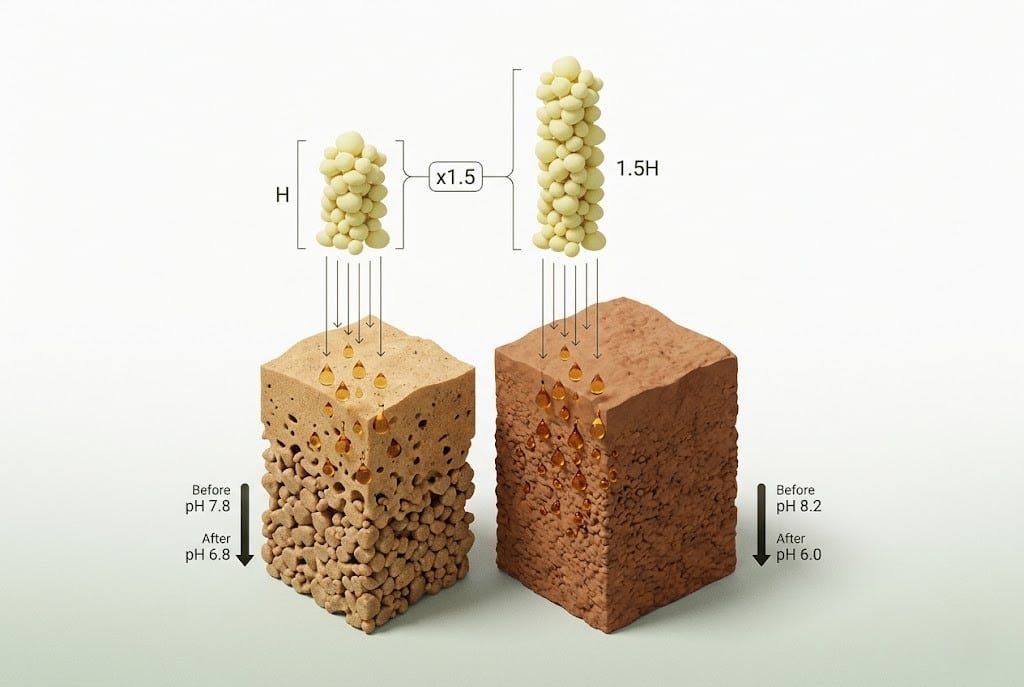
- Clay soil rates are not interchangeable with sandy soil rates. Applying a sandy-soil sulfur recommendation to a clay loam consistently under-delivers acid equivalents. The clay correction factor of 1.5 is a field-standard adjustment for higher CEC, not an arbitrary buffer. Growers who skip this adjustment and then wonder why their pH has not moved are almost always applying to clay at the sandy rate.
- Elemental sulfur is not the same as ammonium sulfate, iron sulfate, or aluminum sulfate. Each product has a different acid equivalent per pound. This calculator is calibrated for elemental sulfur (S0) only. Substituting another product without recalculating will produce results that are either dangerously high or ineffectively low.
Minimum Standards
- Always conduct a baseline soil test before applying sulfur. Estimated or visually guessed pH values introduce error that cascades through every subsequent calculation.
- Re-test soil pH at the start of each new season before applying the next staged correction. Soil pH can drift due to rainfall, irrigation chemistry, decomposing organic matter, and plant uptake between applications.
- Do not apply sulfur at rates above those computed for your soil type even if results feel slow. Oxidation is a biological process. Impatience leads to over-application, which produces uneven acidification and potential phytotoxicity.
Competitor Trap: A common failure pattern on soil pH resource pages is a single table of sulfur rates with no soil type distinction. That approach works for sandy loam benchmarks and produces meaningfully wrong numbers for clay-textured soils. A grower following a sandy-loam table on a clay field for a 1.0-unit pH correction applies 15.0 lbs per 100 sq ft when 22.5 lbs is the correct dose. After one full season, pH has barely shifted, the grower assumes sulfur doesn’t work, and they switch to a more aggressive acid product, often without understanding why. The missing variable was always texture and CEC. Understanding your soil’s cation exchange capacity is foundational; the CEC Soil Calculator provides that context alongside the buffering discussion. For texture class identification to confirm whether Sandy or Clay is the right input for this tool, the Soil Texture Calculator offers a structured starting point.
Common Mistakes and Fixes
Mistake: Using Estimated pH Instead of a Lab Result
Color-indicator kits and uncalibrated consumer meters can read 0.5 to 1.0 pH units away from the actual value. Running the calculator on an inaccurate starting number produces a confidently wrong sulfur rate. A half-unit error in the current pH input translates directly to 7.5 lbs of sulfur error per 100 sq ft on sandy soil, and 11.3 lbs on clay.
Fix: Use a certified soil testing laboratory or a properly calibrated digital pH meter with fresh buffer solution before entering any values.
Mistake: Applying the Full Multi-Season Dose in Year One
When the pH target requires a 2.0-unit correction, the total sulfur amount looks achievable in a single truck delivery. The biology does not work that way. Elemental sulfur must be oxidized by soil bacteria into sulfuric acid, and that process has a rate ceiling tied to microbial population density, soil temperature, and moisture. Overloading the system does not speed up pH drop; it creates zones of excessive acidity adjacent to zones of unchanged pH.
Fix: Follow the season split indicated in the calculator results. Apply season-one rate, water in, allow at least one full growing season, then re-test before applying the next installment.
Mistake: Selecting Sandy Soil for a Clay Loam Because the Field “Drains Well”
Drainage speed is a function of structure and compaction, not solely texture. A well-managed clay loam with good tilth can drain adequately while still carrying a CEC that demands 50% more sulfur than a true sandy loam. The soil type selection in this tool refers to texture class, not drainage class.
Fix: Confirm texture class using a soil ribbon test, hydrometer analysis, or a soil laboratory report. When in genuine doubt between Sandy and Clay, choose Clay and apply the higher rate.
Mistake: Confusing Elemental Sulfur Products with Sulfate-Based Fertilizers
Ammonium sulfate, iron sulfate, and gypsum (calcium sulfate) all appear on store shelves near elemental sulfur and share the word “sulfur” on their labels. Their acidifying power per pound is entirely different. Ammonium sulfate provides some indirect acidification through nitrification chemistry, but at a much lower rate per pound than elemental sulfur. Iron sulfate acidifies faster but carries phytotoxicity risks at high rates.
Fix: Check the guaranteed analysis panel on the product bag. Elemental sulfur products list “Sulfur (S): 90%” or higher. If the primary ingredient is a sulfate compound, this calculator’s output does not apply.
Mistake: Not Watering After Application
Elemental sulfur oxidation requires moisture. Dry-applied sulfur sitting on the soil surface without irrigation or rainfall can remain chemically inert for weeks. Growers who apply correctly and then see no pH change at the six-week mark are often dealing with a moisture problem rather than a dosing error.
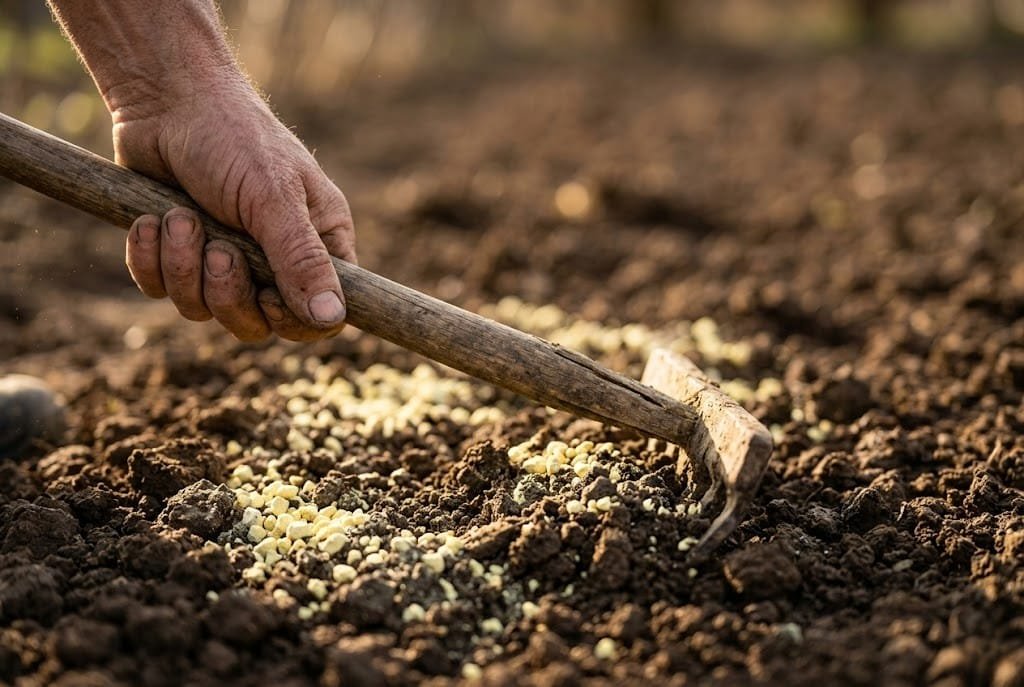
Fix: Incorporate sulfur into the top 6 inches by tilling or raking, then irrigate immediately to field capacity. Repeat irrigation if the following two weeks are unusually dry. Maintain soil moisture above wilting point throughout the oxidation period.
Related Tools and Next Steps
If your soil requires lime to raise pH rather than sulfur to lower it, the Soil pH Lime Calculator uses the same soil-type logic to compute agricultural lime rates for alkaline corrections.
Before deciding on sulfur rates, understanding your soil’s cation exchange capacity tells you how much buffering resistance to expect. The Base Saturation Calculator translates CEC data from lab reports into practical interpretation of your soil’s nutrient-holding behavior.
Once pH is corrected, getting the right fertilizer blend in place is the logical next step. The NPK Calculator helps you formulate a nitrogen-phosphorus-potassium application from your soil test recommendations.
For raised bed projects where pH correction is part of the initial fill plan, the Raised Bed Soil Calculator computes soil volume and mix ratios before acidification amendments are factored in.
Compost additions can shift pH slightly and significantly increase organic matter, which in turn raises buffering capacity. The Compost Calculator helps you size compost applications to meet both organic matter and volume targets.
If you are diluting a liquid sulfur or acidifying fertilizer product, the Fertilizer Dilution Calculator converts concentrate-to-water ratios into ready-to-apply volumes.
Soil bulk density affects how amendment rates translate to actual mass-per-volume when tilling amendments into compacted or heavy soils. The Soil Bulk Density Calculator provides that conversion when your application rate needs to account for soil mass rather than area alone.
FAQ
How much elemental sulfur does it take to lower soil pH by 1 unit in sandy soil?
For a 1.0-unit pH drop in sandy soil, the calculated rate is 15.0 lbs of elemental sulfur per 100 square feet, incorporated to a 6-inch depth. This is also the maximum safe correction for a single growing season. Larger drops require staged multi-season applications regardless of soil type.
Why does clay soil need more sulfur than sandy soil to achieve the same pH change?
Clay particles carry a much higher cation exchange capacity than sand particles. More negative charges on the clay surface mean more calcium, magnesium, and other base cations must be displaced before the soil’s buffering capacity is overcome and pH actually shifts. The 1.5x clay correction factor accounts for that higher buffering resistance.
Can I apply elemental sulfur and lime at the same time?
Not productively. Lime raises pH; elemental sulfur lowers it. Applying both simultaneously neutralizes the effect of both amendments before either can act on the soil. Select one correction direction based on your soil test, apply it, allow a full season for stabilization, then re-test before making any opposing amendment decision.
How long does elemental sulfur take to lower soil pH?
Oxidation timelines depend on soil temperature, moisture, and microbial activity. Under favorable conditions (soil temperatures above 60 degrees F, adequate moisture, active bacterial populations), measurable pH change may occur within 6 to 8 weeks. Cold or dry soils can delay the process through an entire season with no observable change at all.
Is this calculator suitable for container mixes and raised beds with amended soil?
Partially. Container and raised bed mixes often contain perlite, peat moss, coir, or compost in proportions that change buffering capacity away from the Sandy or Clay classification. The Sandy option provides the more conservative (lower) rate, which is a safer starting point for amended mixes. A re-test after one season is essential regardless of initial results.
What happens if I apply too much elemental sulfur at once?
Over-application creates localized zones of very low pH that can cause phytotoxicity, manganese and aluminum toxicity in sensitive crops, and disruption of mycorrhizal fungi. Sulfur-oxidizing bacteria themselves are inhibited at very low pH, which can paradoxically slow or halt the acidification process mid-season, leaving uneven pH distribution across the root zone.
Conclusion
The core value of a soil pH sulfur calculator is not the arithmetic, which is straightforward, but the soil-type correction and the season safety gate that most published tables omit. Applying a sandy-soil rate to a clay field is the single most common reason elemental sulfur applications fail to move pH, and the multi-season split is the most common variable that gets ignored when a target correction exceeds 1.0 pH unit. Both are built into this tool’s logic because they are not optional refinements; they are agronomically necessary for the calculation to be useful.
After completing your correction plan, pH management does not end with sulfur application. Soil organic matter decomposition, irrigation water chemistry, and fertilizer nitrogen form all influence pH drift over successive seasons. Understanding how organic matter releases nitrogen in your soil can help you anticipate pH fluctuations between planned corrections; the Soil Organic Matter Nitrogen Release Calculator addresses that piece of the long-term fertility equation.

Lead Data Architect
Umer Hayiat
Founder & Lead Data Architect at TheYieldGrid. I bridge the gap between complex agronomic data and practical growing, transforming verified agricultural science into accessible, mathematically precise tools and guides for serious growers.
View all tools & guides by Umer Hayiat →