
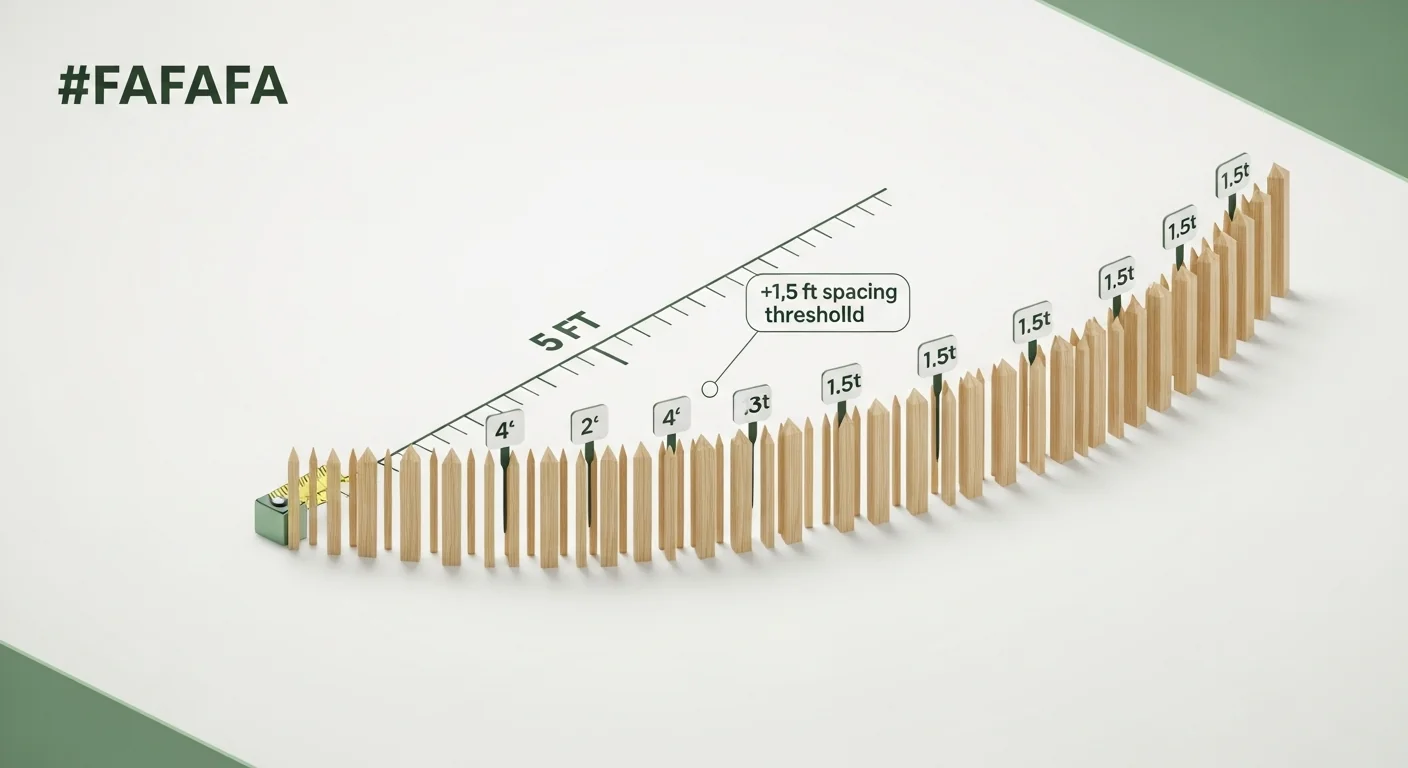
Landscape Edging & Bender Board Calculator
Linear footage, stake count, and thermal expansion checks for steel, poly & stone edging.
Quick Reference: Stake Spacing by Scenario
| Scenario | Material | Spacing | Stakes / 100 ft |
|---|
Recommended Products for This Install
How This Calculator Works — Formula Steps
- Perimeter (Net Linear Feet):
• Circle: Circumference = 2 × π × Radius
• Rectangle: Perimeter = 2 × (Length + Width)
• Kidney/Freeform: Perimeter = user-measured value - Material with Waste:
Total Linear Feet = Perimeter × 1.10 (10% waste factor for cuts, overlaps, and errors) - Stake Spacing by Material:
• Poly Bender Board: stake every 4 ft (straight runs)
• Steel Edging: stake every 2.5 ft minimum
• Stone/Cobble: stakes not applicable (set-in-place)
• Tight curves (< 5 ft radius): 1.5 ft spacing forced for any flexible material - Thermal Expansion (Poly only):
HDPE (high-density polyethylene) has a thermal expansion coefficient of approx. ~0.000108 in/(in·°F). Over 100°F temperature swing (cold install to July heat), 100 ft of black poly can expand by ~13 inches. Tight staking at 1.5–3 ft intervals on curves prevents the “Sun-Warped Spaghetti” bow effect. - Stakes Count:
Stakes = ceil(Total Linear Feet ÷ Stake Spacing) + 1 - Hard Clay Adjustment:
In hard/clay soil, steel stakes are recommended over plastic pins. Spacing requirement remains the same, but driving stakes requires a rubber mallet and pre-soaking.
Assumptions & Limitations
- Waste factor is fixed at 10%. Increase orders by 5–15% for highly curved or multi-section beds.
- Circle calculation assumes a perfect geometric circle. Irregular ovals should use Kidney/Freeform mode.
- Stake count adds +1 end stake and assumes uniform spacing. Actual count may vary at corners.
- Stone edging does not use stakes — cost is based on linear footage only.
- Tight-curve stake spacing (1.5 ft) is triggered when the radius input is < 5 ft for circles, or for kidney/freeform beds with an estimated perimeter-to-area ratio that implies tight turns.
- Thermal expansion warning applies to poly/plastic bender board only. Steel does not have significant expansion issues at garden scale.
- Hard clay soil increases installation difficulty but does not change the stake count formula.
- This tool does not estimate cost — prices vary by region and supplier.
Pre-computed Reference Table — Common Scenarios
| Scenario | Net Perimeter | With 10% Waste | Stakes (Poly) | Stakes (Steel) |
|---|---|---|---|---|
| Small circle bed (r=3 ft) | 18.8 ft | 20.7 ft | 15 | 9 |
| Medium circle bed (r=6 ft) | 37.7 ft | 41.4 ft | 28 | 17 |
| Large circle bed (r=10 ft) | 62.8 ft | 69.1 ft | 47 | 28 |
| Small rectangle (8×4 ft) | 24 ft | 26.4 ft | 8 | 11 |
| Medium rectangle (20×10 ft) | 60 ft | 66 ft | 18 | 27 |
| Large rectangle (40×20 ft) | 120 ft | 132 ft | 34 | 54 |
| Kidney/freeform (est. 50 ft) | 50 ft | 55 ft | 15* | 23 |
| Kidney/freeform (est. 100 ft) | 100 ft | 110 ft | 30* | 45 |
*Kidney/freeform poly stakes calculated at 3.5 ft spacing (tight-curve assumption). Actual spacing depends on curve tightness.
Calculating landscape edging is not just about measuring a perimeter. The material you choose and the tightness of your curves determine whether the edging holds its line for five years or buckles after the first summer. Black poly bender board on a tight circular bed, staked every five feet, will warp under July sun because high-density polyethylene expands significantly under heat load and the soil friction on widely-spaced stakes cannot counter the bowing force. Steel edging fails for a different reason: buried too shallow, it heaves during freeze-thaw cycles. Neither failure shows up in a basic linear-foot estimate. Before you place an order, you need the right total footage and the right staking plan for your specific material and bed shape. If you’re also planning the bed interior, a mulch volume calculation pairs naturally with this edging estimate once you have the perimeter locked in.
This calculator computes three outputs from your inputs: net perimeter, total material with a built-in 10 percent waste allowance, and the stake count derived from material-specific spacing rules. It also applies a tight-curve threshold: any circular bed with a radius under five feet, or any kidney/freeform bed, triggers the 1.5-foot stake spacing requirement that prevents thermal bowing in poly installations. The tool does not estimate cost, because edging prices vary significantly by region and supplier. It does not account for frost-line depth requirements in northern climates beyond the standard burial warning for steel.
After running your numbers, you will know exactly how many linear feet to purchase and how many stakes to order, with confidence that the stake count reflects your curve geometry rather than a one-size-fits-all guess.
Use the Tool
Before you start, have a tape measure or a length of rope handy for odd-shaped beds. For circles, measure the radius from the center of the bed to the planned edging line, not to the outer soil edge. For rectangles, measure the outer dimensions including any planned edging offset. Kidney and freeform beds are best measured by walking a measuring tape along the planned edging path or by laying a rope along the curve and then measuring the rope. Select your edging material and soil type before calculating, since both affect the output. If you are lining the bed with landscape fabric before installing the edging, the landscape fabric overlap calculator can help you size that layer from the same perimeter measurement.
Quick Start (60 Seconds)
- Garden Bed Shape: Select Circle, Rectangle, or Kidney/Freeform. Choosing the wrong shape is the fastest path to a short order. Ovals that are clearly not circular belong in Kidney/Freeform mode.
- Radius (Circle only): Enter in feet, not inches. A six-foot-diameter bed has a three-foot radius. Do not measure to the outer edge of the border stones if you want the edging to sit inside them.
- Length and Width (Rectangle only): Both values are required. Enter the outer dimensions of the edging run, not the inner bed dimensions.
- Estimated Perimeter (Kidney/Freeform): Walk the planned edging line with a 100-foot tape and record the total. Add multiple tape reads together for long runs. Guessing high is safer than guessing low.
- Edging Material: Poly bender board and steel edging have completely different staking schedules. Stone or cobble edging requires no stakes and uses a different installation method entirely.
- Soil Type: Hard clay soil does not change the stake count formula, but it changes the tool selection and prep required. The calculator flags this in the warnings panel.
- Calculate, then read the Warnings panel: The most critical output is not the linear footage but the stake spacing recommendation, especially for curved poly installations.
Inputs and Outputs (What Each Field Means)
| Field | Unit | What It Means | Common Mistake | Safe Entry Guidance |
|---|---|---|---|---|
| Garden Bed Shape | Selection | Determines which perimeter formula is applied | Using Rectangle for an oblong oval bed | When in doubt, use Kidney/Freeform and measure the actual path |
| Radius | Feet | Distance from bed center to edging line; triggers tight-curve staking if under 5 ft | Entering diameter instead of radius | Measure from center stake to edge; divide diameter reading by 2 |
| Length | Feet | Long dimension of a rectangular bed perimeter | Measuring the inside of a raised bed rather than the edging line | Measure the outer boundary where the edging will actually sit |
| Width | Feet | Short dimension of a rectangular bed perimeter | Forgetting that perimeter = 2 x (L + W), not L + W | The calculator handles the formula; just enter each dimension once |
| Estimated Perimeter | Feet | Full measured length of a kidney or freeform edging path | Estimating by eye instead of measuring with tape or rope | Round up to the nearest foot; undercounting leaves you short at the final joint |
| Edging Material | Selection | Controls stake spacing rules and thermal warnings | Selecting Steel when the product is actually heavy-gauge poly | Check the product label; black flexible edging is almost always poly/HDPE |
| Soil Type | Selection | Affects installation difficulty and stake product recommendation | Selecting Soft when the top layer is sandy but clay starts 4 inches down | Select Hard Clay if you encounter any resistance when probing with a screwdriver |
| Total Material Needed | Linear feet | Net perimeter x 1.10; the amount to purchase | Ordering exactly the net perimeter amount with no waste buffer | This output already includes the 10 percent allowance; do not add more manually |
| Stakes Required | Count | Total stakes needed for the full run including one end stake | Forgetting the end stake and coming up one short | The calculator adds the terminal stake automatically |
| Stake Spacing | Feet | Recommended interval between stakes based on material and curve geometry | Using manufacturer “up to” spacing on curved sections | Treat this as a maximum; tighter is always safer, especially mid-curve |
Worked Examples (Real Numbers)
Example 1: Circular Rose Bed, Radius 6 Feet, Poly Bender Board, Soft Soil
- Shape: Circle
- Radius: 6 ft
- Material: Poly bender board
- Soil: Soft / sandy
Circumference = 2 x 3.14159 x 6 = 37.7 ft (rounded to one decimal). Total with 10 percent waste = 37.7 x 1.10 = 41.4 ft. Radius of 6 ft exceeds the 5-ft tight-curve threshold, so stake spacing is 4 ft. Stakes = ceiling(41.4 / 4) + 1 = 11 + 1 = 12 stakes.
Result: 41.4 linear feet of poly edging, 12 stakes at 4-foot spacing.
This is a manageable single-section install. The radius is just above the tight-curve cutoff, but any sections of the circle that were installed in a tighter arc than the overall radius (such as an indented portion of the bed) should receive an extra stake between the standard ones.
Example 2: Rectangular Perennial Bed, 20 x 8 Feet, Steel Edging, Hard
Clay
- Shape: Rectangle
- Length: 20 ft
- Width: 8 ft
- Material: Steel edging
- Soil: Hard / clay
Perimeter = 2 x (20 + 8) = 56 ft. Total with 10 percent waste = 56 x 1.10 = 61.6 ft. Steel stake spacing minimum = 2.5 ft. Stakes = ceiling(61.6 / 2.5) + 1 = 25 + 1 = 26 stakes.
Result: 61.6 linear feet of steel edging, 26 stakes at 2.5-foot spacing.
Hard clay requires pre-soaking the bed perimeter 12 to 24 hours before installation. Use a dead-blow rubber mallet rather than a standard hammer to avoid deforming the stake heads. Bury the lower lip at least 1.5 inches to prevent frost heave in climates with ground freeze.
Example 3: Kidney/Freeform Island Bed, Estimated 80-Foot Perimeter,
Poly, Soft Soil
- Shape: Kidney / Freeform
- Estimated perimeter: 80 ft
- Material: Poly bender board
- Soil: Soft / sandy
Net perimeter = 80 ft (user-measured). Total with 10 percent waste = 80 x 1.10 = 88 ft. Kidney/freeform beds trigger tight-curve staking (1.5 ft). Stakes = ceiling(88 / 1.5) + 1 = 59 + 1 = 60 stakes.
Result: 88 linear feet of poly edging, 60 stakes at 1.5-foot spacing.
Sixty stakes for an 88-foot run sounds aggressive, but this is the correct specification for any flexible poly material on a continuous curved path exposed to summer sun. Reducing this to 4-foot spacing to save money on stakes is the primary cause of the thermal bowing failure mode described in the warnings below.
Reference Table (Fast Lookup)
| Shape / Dimensions | Material | Net Perimeter | Total w/ 10% Waste | Stake Spacing | Stakes Required |
|---|---|---|---|---|---|
| Circle, r = 3 ft | Poly (tight curve) | 18.8 ft | 20.7 ft | 1.5 ft | 15 |
| Circle, r = 6 ft | Poly | 37.7 ft | 41.4 ft | 4 ft | 12 |
| Circle, r = 10 ft | Poly | 62.8 ft | 69.1 ft | 4 ft | 18 |
| Circle, r = 6 ft | Steel | 37.7 ft | 41.4 ft | 2.5 ft | 18 |
| Rectangle, 8 x 4 ft | Steel | 24 ft | 26.4 ft | 2.5 ft | 12 |
| Rectangle, 20 x 10 ft | Poly | 60 ft | 66 ft | 4 ft | 18 |
| Rectangle, 40 x 20 ft | Steel | 120 ft | 132 ft | 2.5 ft | 54 |
| Kidney, est. 50 ft | Poly (tight curve) | 50 ft | 55 ft | 1.5 ft | 38 |
| Kidney, est. 80 ft | Poly (tight curve) | 80 ft | 88 ft | 1.5 ft | 60 |
| Kidney, est. 100 ft | Steel | 100 ft | 110 ft | 2.5 ft | 45 |
| Kidney, est. 80 ft | Stone / Cobble | 80 ft | 88 ft | N/A | 0 |
The Stakes Required column is the key derived output: it is calculated as ceiling(Total Linear Feet / Stake Spacing) + 1. This terminal-stake addition is commonly omitted from manual estimates, causing a one-stake shortage at the end of the run.
How the Calculation Works (Formula + Assumptions)
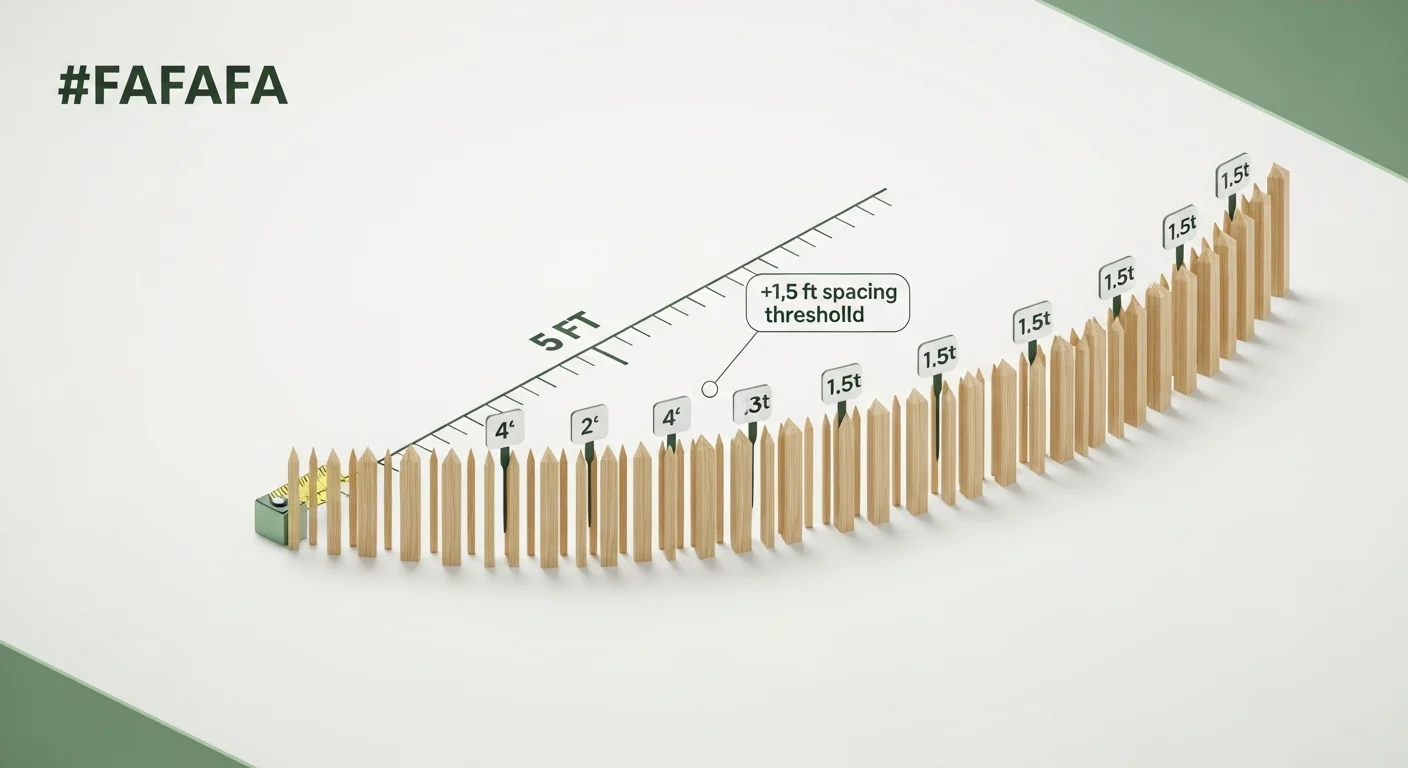
Show the calculation steps
Step 1: Compute the net perimeter by shape.
- Circle: Circumference = 2 x pi x Radius (pi = 3.14159). Result in feet.
- Rectangle: Perimeter = 2 x (Length + Width). Result in feet.
- Kidney / Freeform: Perimeter = user-supplied measured value in feet. No formula is applied; the calculator trusts this input directly.
Step 2: Apply the 10 percent waste allowance.
Total Linear Feet = Net Perimeter x 1.10. This accounts for end overlaps, corner cuts, damaged sections, and the buffer needed when joining sections mid-run. Round to one decimal place for the displayed result; order to the next full unit above this number.
Step 3: Determine stake spacing by material and curve geometry.
- Poly bender board, straight or gentle curves (radius at or above 5 ft): 4 ft between stakes.
- Poly bender board, tight curves (radius under 5 ft) or any kidney/freeform bed: 1.5 ft between stakes. This is the thermal expansion safety requirement.
- Steel edging, any shape: 2.5 ft between stakes minimum.
- Stone / cobble edging: no stakes; set-in-place in a compacted sand or concrete base.
Step 4: Compute stake count.
Stakes = ceiling(Total Linear Feet / Stake Spacing) + 1. The ceiling function rounds up to the next whole number. The +1 adds the terminal end stake that closes the run.
Step 5: Apply soil-type warnings.
Soil type does not change the stake count formula. It triggers advisory warnings about installation technique and stake product selection. Hard clay: use 10-inch steel spikes, pre-soak, rubber mallet. Soft/sandy soil: standard plastic edging pins are sufficient for poly; steel stakes are still preferred for steel edging.
Rounding rules: All perimeter and total footage values are rounded to one decimal place for display. Stake counts use ceiling rounding (always round up, never down).
Assumptions and Limits
- The 10 percent waste factor is a fixed allowance. Highly irregular freeform beds or those requiring many short-section cuts may warrant ordering an additional 5 to 10 percent beyond the calculator’s output.
- The circle formula assumes a perfect geometric circle. Beds that are egg-shaped, elliptical, or otherwise non-circular will return an incorrect perimeter if the Circle input is used. Use Kidney/Freeform and measure the actual path instead.
- The tight-curve threshold of 5 ft radius is the point at which thermal bowing in poly becomes structurally significant under typical summer temperature swings. Beds with radii between 5 and 8 feet in dark-colored poly and high sun exposure may benefit from reducing spacing to 2 to 3 feet as a precaution.
- The stake count calculation assumes uniform spacing for the entire run. Real installations may have corner clusters or transition zones where spacing is tighter, which will slightly increase the actual stake count needed.
- Stone edging is treated as a no-stake product. Some cobble border systems use landscape pins for alignment; consult the product instructions if your stone system includes a pinning specification.
- This tool does not account for ground slope. Steeply sloped beds may require shorter stake intervals on the downhill face to resist lateral soil pressure and edging migration.
- Frost heave depth requirements for steel edging vary by USDA hardiness zone and local frost depth. The 1.5-inch minimum burial recommendation in the calculator’s warning panel is a general minimum, not a zone-specific engineering specification.
Standards, Safety Checks, and “Secret Sauce” Warnings
Critical Warnings
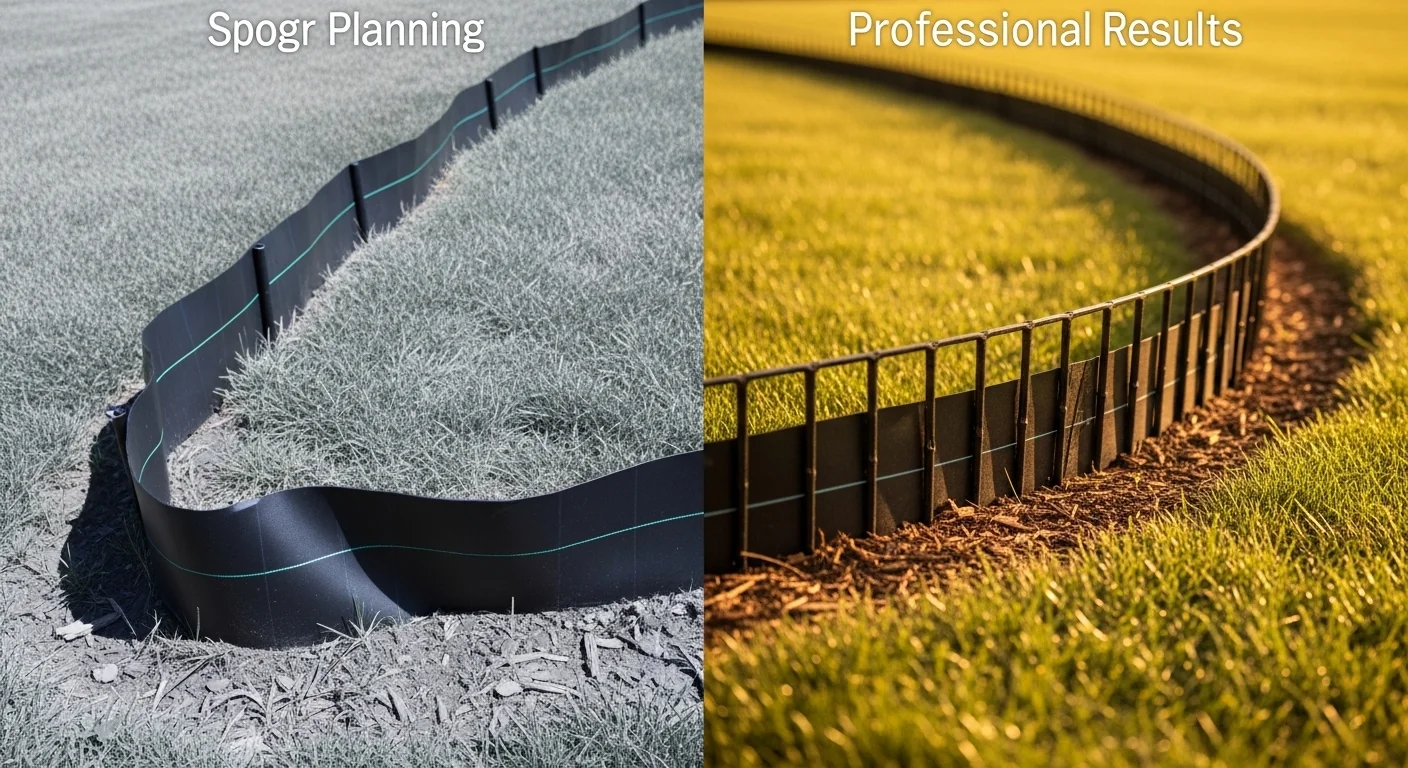
- The “Sun-Warped Spaghetti” failure mode (poly edging only): Black HDPE bender board absorbs radiant heat intensely. A 100-foot run of black poly can expand by approximately 13 inches over a 100-degree Fahrenheit temperature swing. Stakes spaced at 4 to 5 feet cannot hold the bowing force at mid-span on a curved section. The result is a wavy, buckled edging line that requires complete reinstallation. This failure is preventable with 1.5-foot staking on all curves tighter than a 5-foot radius.
- Frost heave and shallow steel (steel edging only): Steel edging buried with less than 1.5 inches of bottom-lip depth will migrate upward during freeze-thaw cycles in cold climates. Once heaved, steel edging develops a visible lip above the soil surface that creates a tripping hazard and breaks the clean visual line of the installation. Bury deeper in zones with frost penetration below 12 inches.
- Joint failure on large runs: Runs over 200 linear feet require deliberate joint planning. Each section overlap should be at least 6 inches with an additional stake placed directly at the joint. Unstaked joints are the second most common failure point after thermal bowing.
- Hard clay and plastic stake breakage: Driving standard plastic edging pins into clay soil with a hammer instead of a rubber mallet splits the stake head and leaves the pin partially seated. A split plastic stake has approximately half the holding force of a properly seated one. Use 10-inch steel spikes in clay, and pre-soak if resistance is high.
Minimum Standards
- Poly bender board on curves: 1.5 ft stake spacing maximum on any radius under 5 feet.
- Steel edging: 2.5 ft stake spacing maximum, bottom lip buried minimum 1.5 inches.
- Section joints: minimum 6-inch overlap, one stake at every joint regardless of the surrounding spacing interval.
- Stone / cobble: set into a trench 2 to 3 inches deep with compacted sand or a dry concrete base to prevent shifting.
For projects where the edging abuts a hardscape structure such as a retaining wall, the edging must terminate flush with the wall face rather than overlapping it. The retaining wall calculator can help with the wall design if that structure is part of the same project. Drainage beneath curved beds is also worth considering before installation; a compacted gravel sub-base under the edging trench improves frost resistance for both steel and poly materials in wetter climates.
Competitor trap: Most landscape edging calculators found online return a single linear-foot number and a generic stake count using one flat spacing interval for all materials and shapes. They treat a tight circular rose bed and a broad rectangular border identically. That flat estimate is technically correct for straight steel runs but structurally wrong for curved poly installations. An installer who follows a generic calculator’s stake count for a black poly kidney bed and skips the tight-curve spacing adjustment is setting up a failure that will be visible by mid-July. The thermal physics of HDPE under solar gain are not a matter of preference; they are the reason tight-curve staking requirements exist.
Common Mistakes and Fixes
Mistake: Measuring Diameter Instead of Radius for Circular Beds
A bed described as “twelve feet across” has a six-foot radius, not a twelve-foot radius. Entering the full diameter as the radius produces a circumference that is exactly twice the correct value, doubling the material order and the stake count. This is one of the most frequent input errors on circular bed projects.
Fix: Drive a stake at the center of the bed, tie a string to it, stretch it to the edging line, and measure that string. That length is the radius.
Mistake: Using Rectangle Mode for Non-Rectangular Beds
Beds with rounded corners, tapered ends, or any organic curvature will return an understated perimeter when forced into Rectangle mode, because the formula only accounts for four straight sides. The curved corner sections add real material length that the rectangle formula ignores.
Fix: Any bed with curves at the corners or along the sides belongs in Kidney/Freeform mode. Measure the actual edging path with a rope or tape, not the overall footprint dimensions. A paver base calculation often reveals this same measurement issue when a patio with curved edges is forced into a rectangular area formula.
Mistake: Ordering Only the Net Perimeter Amount
Purchasing the exact calculated perimeter leaves no buffer for overlapping section joints, diagonal cuts at corners, and damaged or kinked pieces that must be discarded. Running short mid-installation means a second supply trip and a visible joint seam that was not planned for.
Fix: The calculator’s primary output already includes the 10 percent waste factor. Order that number, rounded up to the next available unit (roll length or section size). Do not subtract from it.
Mistake: Using Manufacturer “Maximum” Stake Spacing on Curves
Product packaging for poly bender board often lists a maximum stake spacing of 4 to 6 feet. This figure is generally appropriate for straight sections and gentle curves. Applying it to tight curves in a sun-exposed installation ignores the thermal expansion behavior of black HDPE, which is not addressed on most packaging.
Fix: Treat packaging spacing as the straight-section maximum only. On any curve with a radius under five feet, reduce to 1.5-foot intervals regardless of what the product label says.
Mistake: Skipping the Soil-Type Assessment

Selecting “Soft / Sandy” by default without probing the soil leads to under-specified stakes and installation technique. Clay soil four inches below a sandy top layer is still effectively hard clay for the purpose of stake driving and holding strength. Plastic pins driven into clay by hand will often not reach full depth, leaving them with inadequate purchase.
Fix: Push a screwdriver or thin rebar stake into the ground to 6 inches of depth. If it requires mallet force or stops short, select Hard / Clay. Plan for 10-inch steel spikes and plan an extra hour for installation.
Next Steps in Your Workflow
Once you have your linear footage and stake count confirmed, the next practical step is to segment your run on paper or on a simple sketch before purchasing. Mark the tight-curve sections separately from the straight runs and label each segment with its stake spacing requirement. This segmented approach prevents the common error of buying a uniform stake quantity based on the average spacing instead of the curve-specific requirement. It also gives you a clear installation sequence so tight-curve sections can be staked first while the material is still cool and pliable.
After the edging is installed, the bed interior is ready for final preparation. If you are adding fresh soil to bring the bed level up to the edging height, the topsoil volume calculator will give you a cubic yard estimate from the same perimeter dimensions you just used. If a path or stepping-stone border runs alongside the bed, the stepping stone calculator can size that adjacent feature using the same overall bed measurement as a reference line.
FAQ
What is the difference between poly bender board and steel landscape
edging?
Poly bender board is flexible HDPE plastic, typically black, used for curves and freeform beds. It is lightweight and easier to cut but susceptible to thermal expansion and UV degradation over time. Steel edging is rigid, longer-lasting, and resists thermal movement. Steel requires more stake force to install but holds a cleaner line for straight or gently curved sections over many years.
How do I measure the perimeter of a kidney-shaped garden bed?
Lay a length of rope or garden hose along the planned edging line, following every curve and contour. Once the full path is traced, lift the rope and measure it flat with a tape measure. This direct-path measurement is more accurate than trying to calculate a curved perimeter geometrically. Record the length and enter it directly into the Kidney/Freeform field in the calculator.
Why does stake spacing change for tight curves?
Poly bender board expands when heated. On a straight section, expansion distributes along the full length with minimal outward force. On a curve, expansion generates an outward bowing force at the midpoint of each stake interval. The shorter the staking interval, the smaller the unsupported span, and the lower the bowing force at midspan. Reducing to 1.5 feet prevents visible deformation under summer heat.
Can I use this calculator for metal landscape edging other than steel?
Aluminum edging behaves similarly to steel for installation purposes and can use the 2.5-foot stake spacing rule as a safe starting point. Cor-Ten (weathering steel) follows the same specification as standard steel edging. If you are using a proprietary edging system with its own engineering spec, follow that product’s staking schedule rather than the calculator’s general-purpose output.
Why does the calculator add 10 percent to the net perimeter?
The 10 percent waste factor covers section overlaps at joints (typically 6 inches per joint), angled cuts at corners, material lost to kinks or installation damage, and the end cap closure. On curved beds with frequent direction changes, actual waste can approach or exceed 10 percent. For highly irregular freeform beds, consider adding an additional 5 percent to the calculator’s output before ordering.
Does soil type affect how many stakes I need?
Soil type does not change the stake count formula in this calculator. The stake spacing rules are driven by material and curve geometry, not soil. However, soil type determines which stake product to use and whether pre-soaking or special tools are needed. In hard clay, even correctly-counted stakes will fail if driven with the wrong technique or if plastic pins are used instead of steel spikes.
Conclusion
The single most important habit to develop before any edging project is measuring the actual edging path rather than the bed footprint. Perimeter and footprint dimensions diverge significantly on any curved or freeform bed, and that gap directly translates to a material shortage. For projects that also involve adjacent sod areas or lawn borders, the sod area calculator can size the turf from the same site measurements so both the edging and the lawn material are ordered on the same trip.