
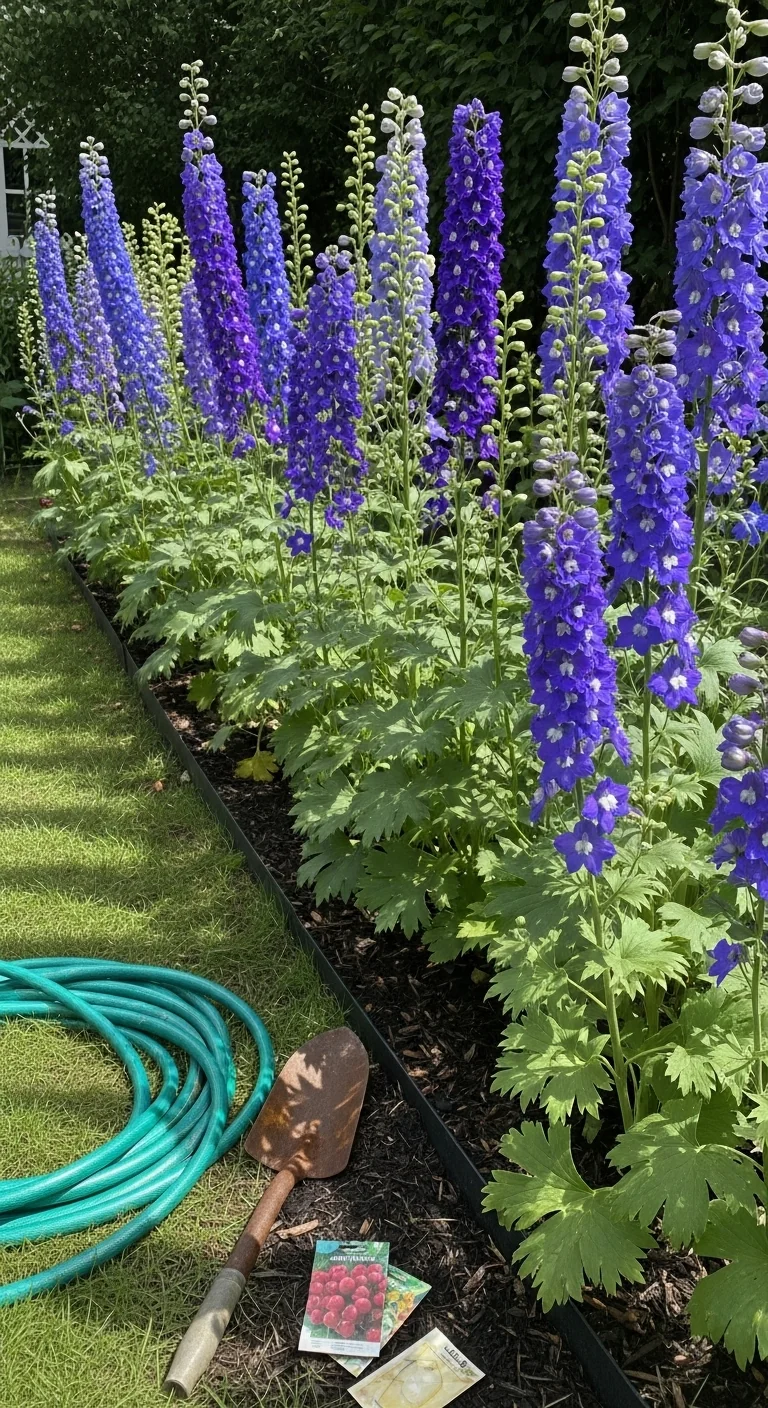
Gardeners often assume every delphinium demands the same high effort regardless of garden conditions. In practice each series performs differently based on measurable factors such as summer high temperatures and available bed width. The right match turns these plants into consistent performers instead of ongoing projects.
This listicle examines nine established delphinium series for ornamental flower gardens. It focuses on height ranges, stem strength, bloom timing, and site fit for perennial borders and cutting use. It leaves out annual larkspur types and rare specialized species.
You will identify the exact series that fits your USDA zone data, square footage, and weekly maintenance window. The decision grid and comparison table let you eliminate poor fits before you buy or plant.
Align the series to your measurable garden conditions and you will enjoy consistent tall spikes season after season.
The Yield Grid Decision Grid
Branch 1 applies when your garden sits in USDA zones 3 to 5 and summer highs stay below 75 F. These sites support maximum height without heat-induced flopping. Recommended: Items 1, 7, 9 below.
Branch 2 applies when your garden sits in USDA zones 6 to 7 or experiences occasional heat spikes above 75 F but maintains good airflow. Sturdy stems become the priority here. Recommended: Items 2, 3, 6 below.
Branch 3 applies to beds under 4 square feet per plant or when maintenance time stays under 30 minutes weekly. Compact forms reduce support needs. Recommended: Items 4, 5, 8 below. For broader perennial integration options see our perennial flowers overview.
Quick Comparison Table
| Option | Key mechanism | Best for | Decision Grid Branch | Effort Score |
|---|---|---|---|---|
| Pacific Giant Series | Tall single unbranched stems from classic elatum genetics | Dramatic vertical accents in large borders | Branch 1 | 5 |
| New Millennium Series | Thicker hollow stems bred for wind resistance and disease tolerance | Reliable rebloom in variable weather | Branch 2 | 3 |
| Belladonna Group | Branched stems that extend bloom period naturally | Repeated cutting without losing structure | Branch 2 | 3 |
| Magic Fountains Series | Balanced short stature with self-supporting branching | Containers and narrow beds | Branch 3 | 2 |
| Guardian Series | Early bloom cycle that finishes before peak summer heat | Small spaces needing quick color | Branch 3 | 2 |
| Aurora Series | Uniform dense spikes with sturdy 3 to 4 foot stems | Consistent mid-border color blocks | Branch 2 | 3 |
| Excalibur Series | Mixed colors on tall structured stems | Layered height with color harmony | Branch 1 | 4 |
| Blue Butterfly Delphiniums | Dwarf grandiflorum habit under 2 feet | Front edging or rock gardens | Branch 3 | 1 |
| King Arthur Delphiniums | Deep purple elatum spikes on strong tall stems | Back-border focal points | Branch 1 | 5 |
Pacific Giant Delphiniums
Best for: Branch 1
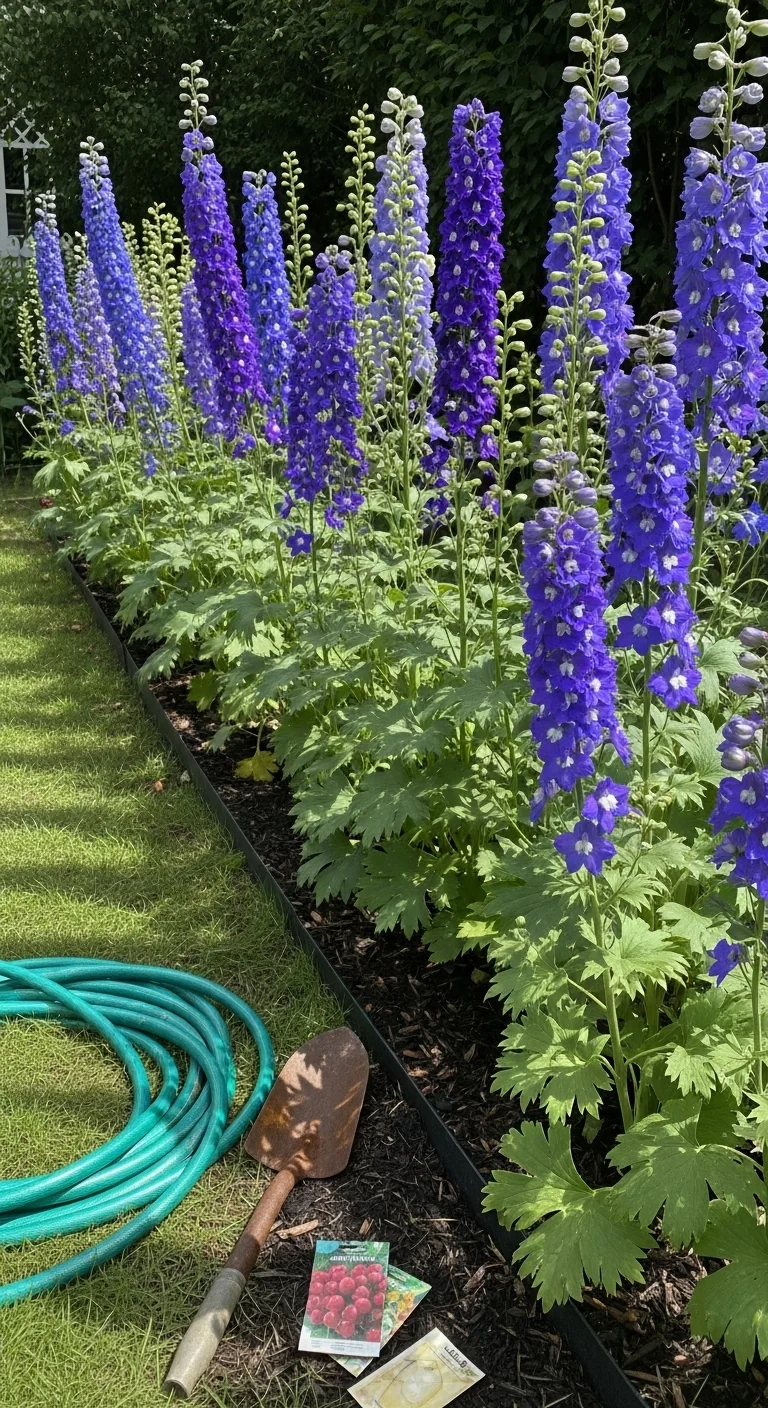
Pacific Giant delphiniums deliver the tallest spikes available, often reaching 5 to 6 feet when conditions stay cool. Use them at the back of deep borders where vertical drama matters most. Plant in early spring after soil reaches 50 F, spacing plants 24 inches apart in rich well-drained soil amended with compost. Water at the base to keep foliage dry. Install stakes or grow-through supports at planting time to prevent wind damage on hollow stems. The common mistake is waiting until spikes form before adding support, which leads to bent or broken stems. These integrate seamlessly into cottage garden flowers schemes for timeless appeal.
New Millennium Series
Best for: Branch 2
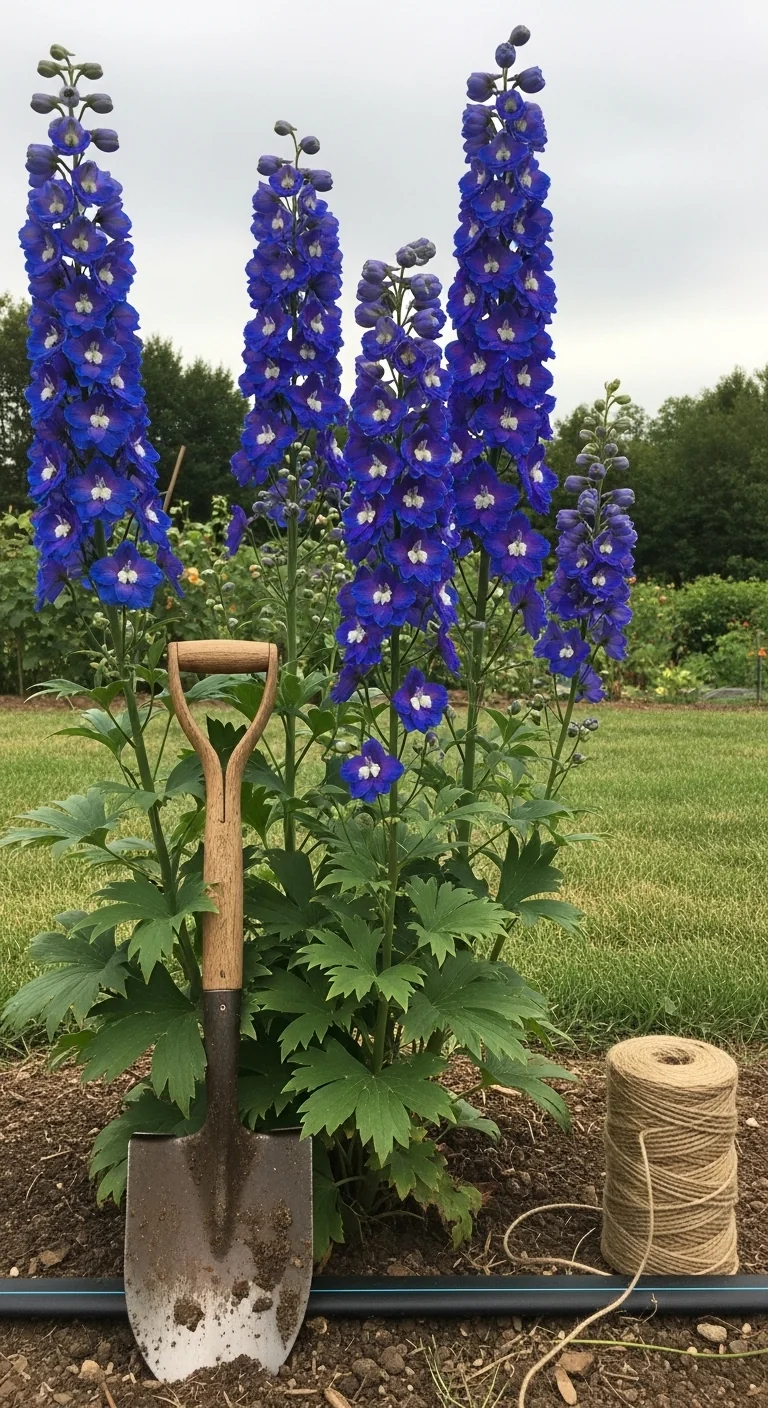
Use New Millennium series when you want sturdy stems that resist wind and reduce disease pressure compared with older tall types. Skip it if you specifically need maximum 6-foot height because these top out closer to 4 to 5 feet. The series reblooms reliably after deadheading.
Belladonna Group
Best for: Branch 2
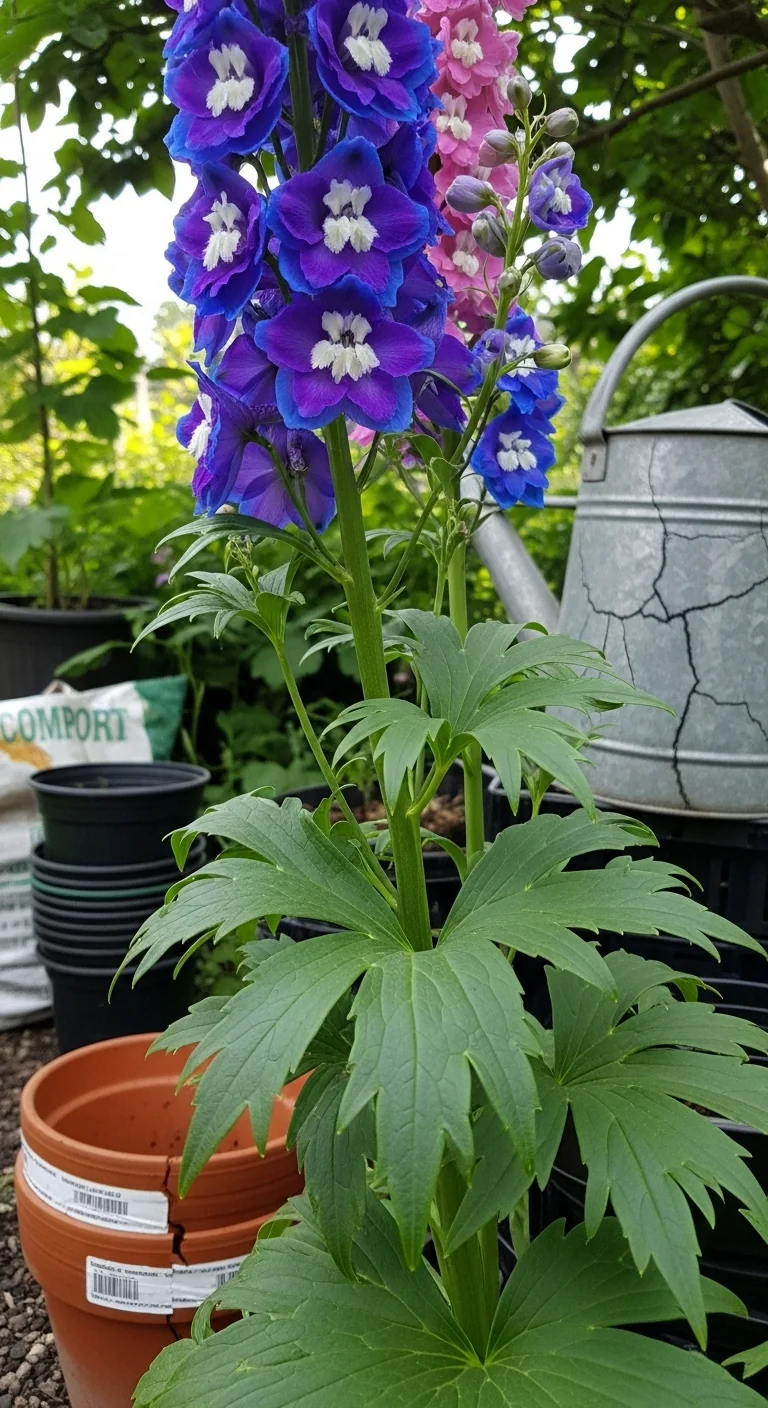
Belladonna types bloom over a longer window because their branched stems produce side shoots naturally. Apply this threshold rule: if your first flush finishes before mid-July, cut stems back to 12 inches above ground to trigger a second round in late summer. Space at 18 inches and provide afternoon shade when highs reach 78 F. These work especially well in cut flower garden setups because side branches supply steady harvest material without collapsing the main plant.
Magic Fountains Series
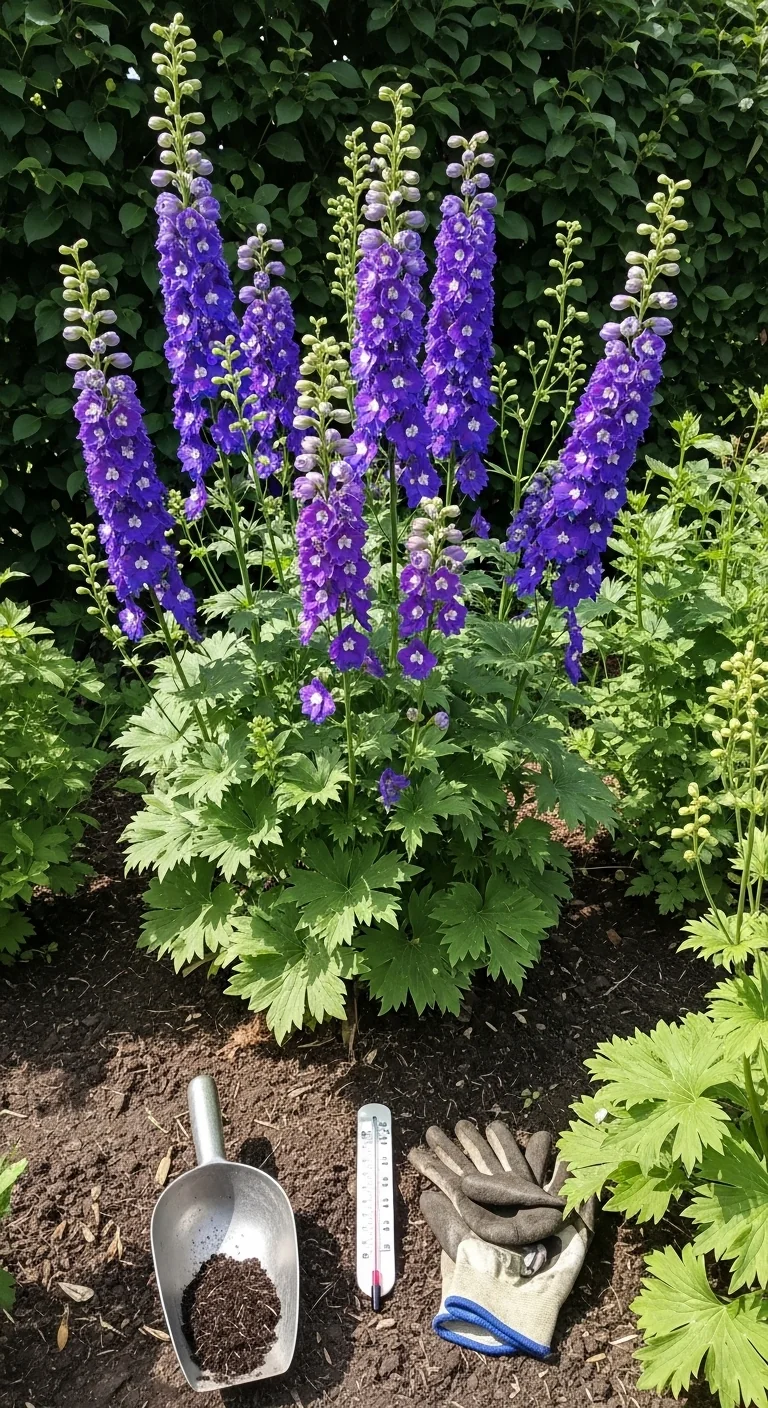
Best for: Branch 3
The 10-minute workflow for Magic Fountains starts with selecting a container or narrow bed spot that receives full sun. Dig a hole twice the pot width, backfill with compost-amended soil, and set the crown at soil level. Water thoroughly once, then apply a 2-inch mulch layer to retain moisture. Check soil moisture every 7 days during the first month and adjust watering only if the top inch feels dry. Upgrade option: add a slow-release granular fertilizer at planting for extended bloom into late summer. This series stays under 3 feet and rarely needs staking even in moderate wind.
Guardian Series
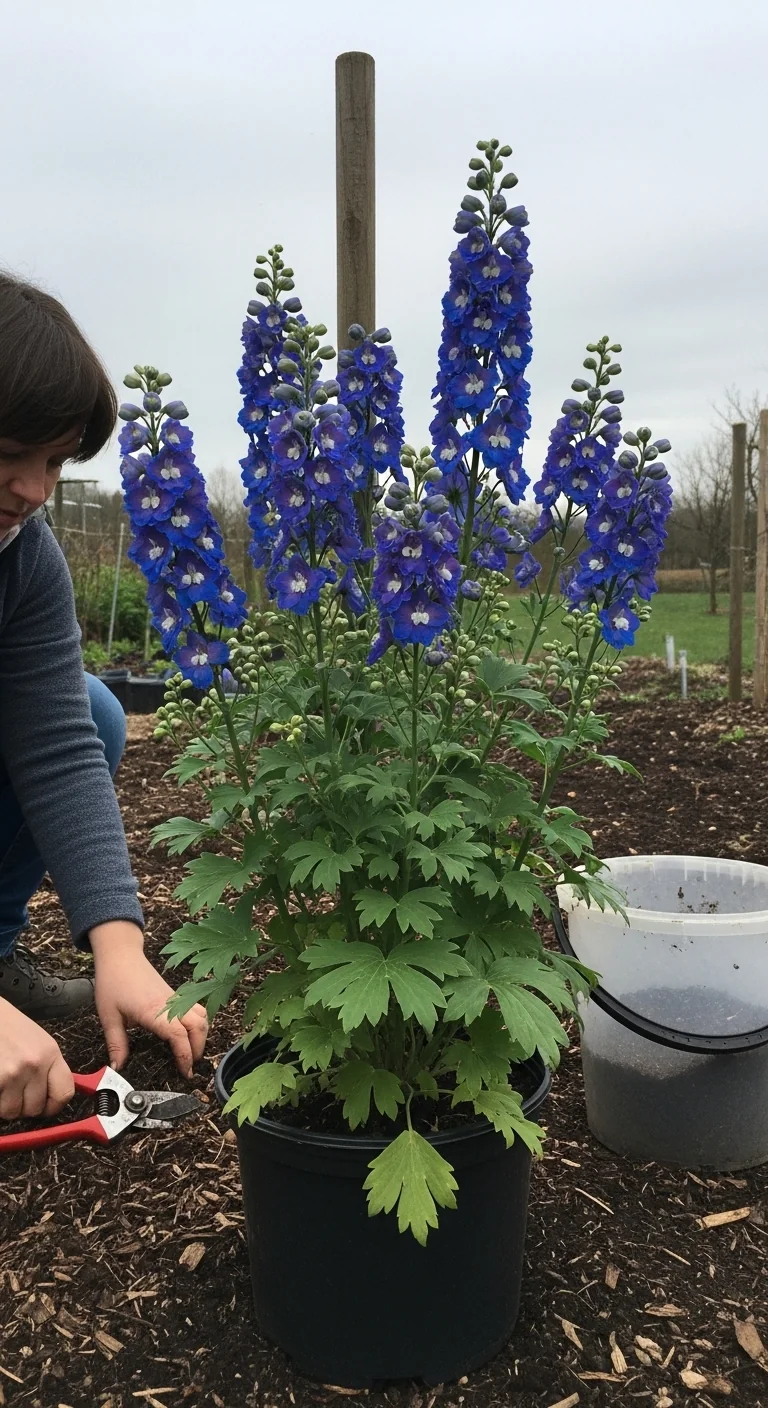
Best for: Branch 3
Guardian series provides an early bloom cycle that finishes before peak summer heat arrives. Plant in early spring for color by late May in most zones. Combine with later series for season-long coverage. The compact 2- to 3-foot height fits small spaces perfectly.
Aurora Series
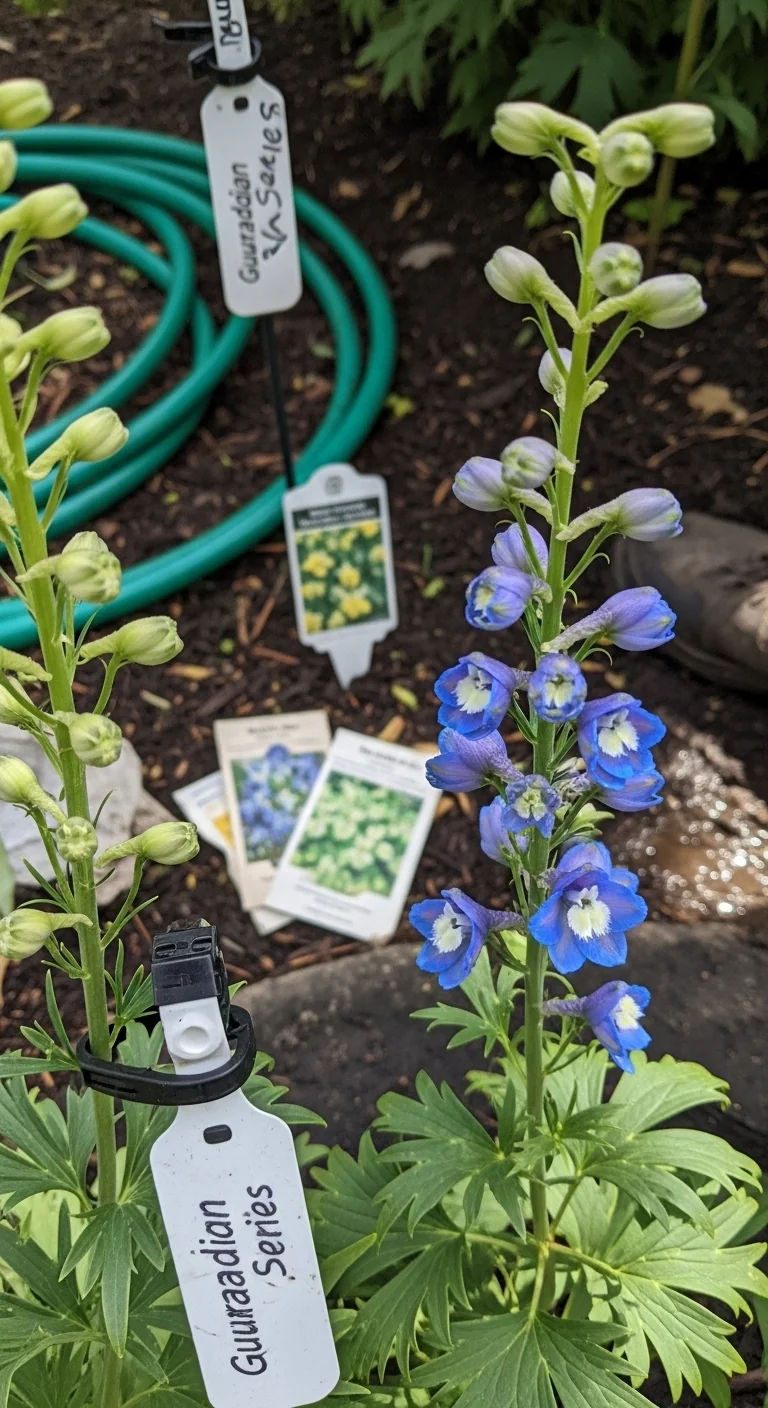
Best for: Branch 2
Use Aurora series for uniform dense spikes when you need reliable mid-border color without constant monitoring. Skip it if your site experiences frequent heavy rain because the flower heads can become top-heavy despite sturdy stems. These varieties maintain clean foliage longer than many tall types when air circulation stays adequate.
Excalibur Series
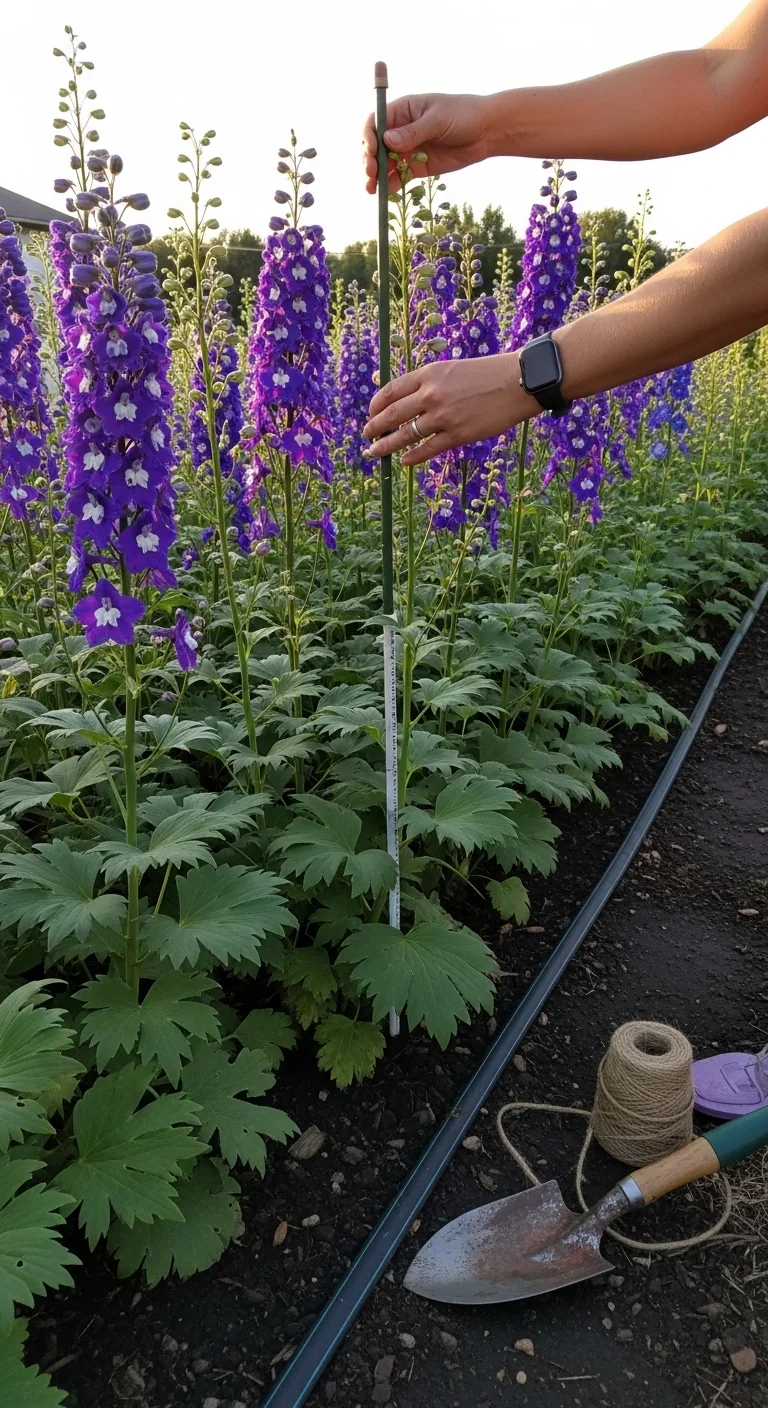
Best for: Branch 1
Excalibur series mixes colors on tall structured stems for layered displays in cool climates. Apply this threshold rule: when soil temperature hits 55 F at 4-inch depth, transplant hardened seedlings or divisions. Space 24 inches apart and install supports immediately. If summer highs climb above 78 F for more than 10 days straight, provide temporary shade cloth during the hottest hours to protect developing spikes. These perform best in full sun with good airflow. Pair them with other tall options from our full sun flowers collection for balanced back borders.
Blue Butterfly Delphiniums
Best for: Branch 3
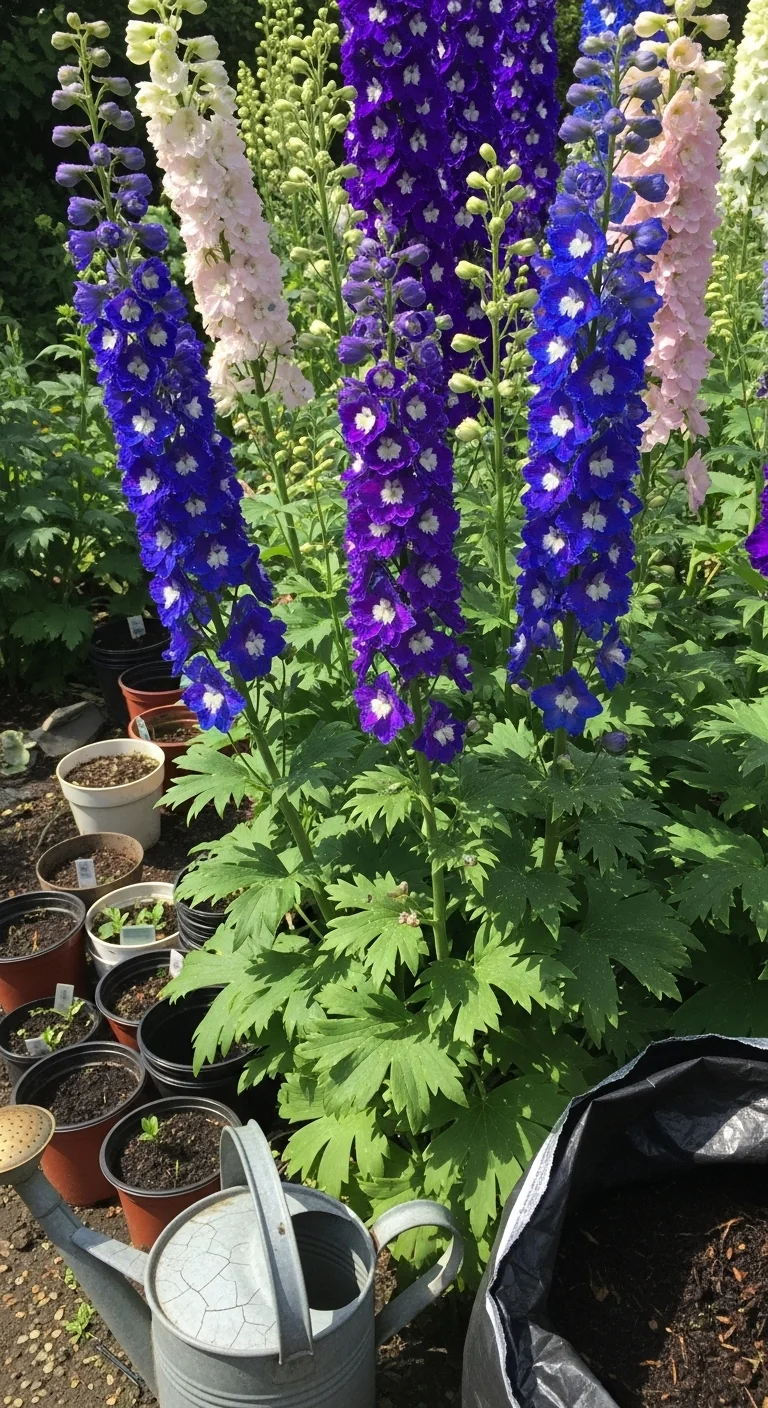
The 10-minute workflow for Blue Butterfly delphiniums fits edging or rock gardens. Select a front-bed spot with excellent drainage, dig a shallow hole, and plant so the crown sits level with soil. Water once at planting then mulch lightly. Monitor only for slug activity in spring by checking under mulch weekly for the first month. This dwarf grandiflorum type stays under 2 feet and requires no staking.
King Arthur Delphiniums
Best for: Branch 1
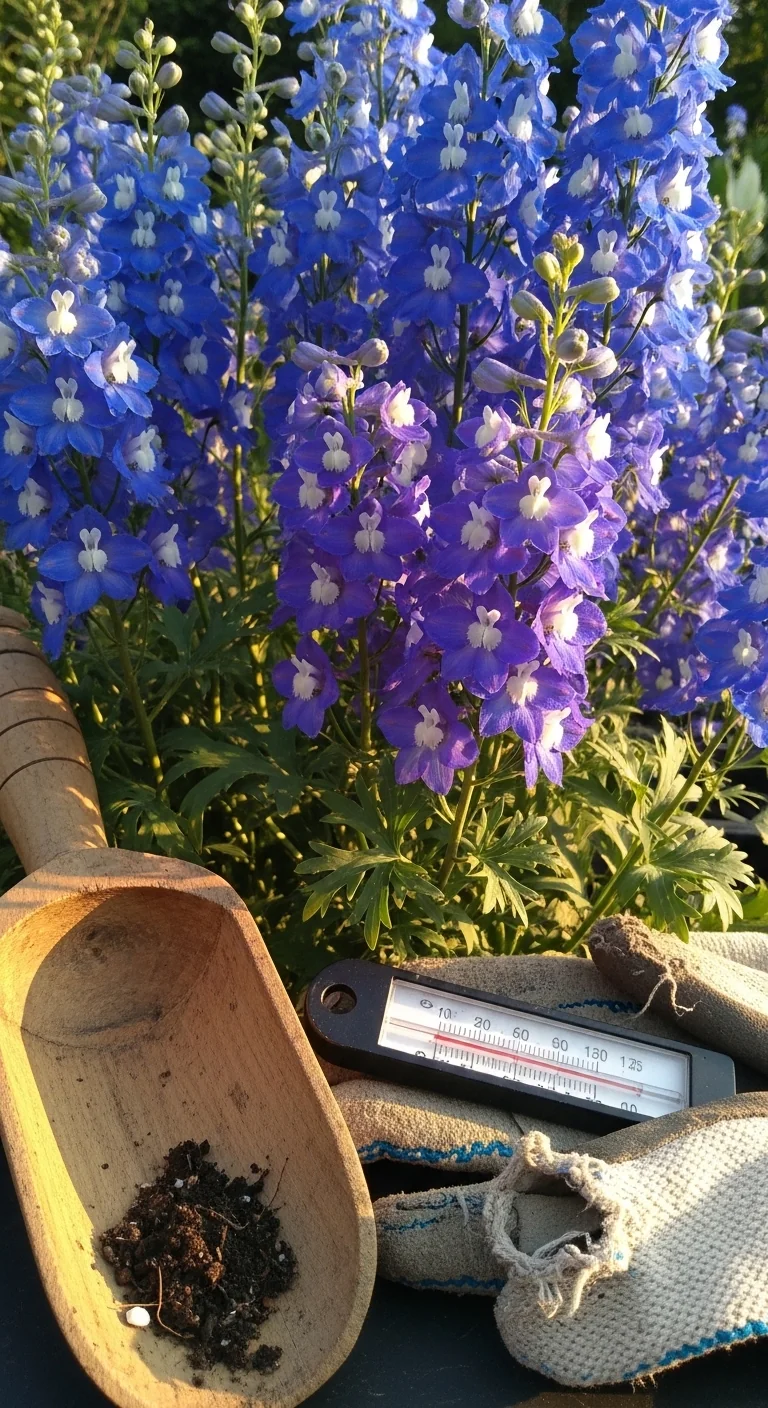
King Arthur delphiniums feature deep purple elatum spikes on strong tall stems suited to cool back borders. Plant in spring when soil reaches 50 F and space 24 inches apart. These add rich color contrast in large displays. The deep hue stands out against lighter companions when sited correctly.
Starter Stack (What to Choose First)
For Branch 1 Cool-Summer Tall Displays
Start with Pacific Giant and Excalibur series. Their heights layer naturally for depth while color ranges complement without clashing. Plant 2 to 3 of each for initial impact. Time estimate: 20 to 30 minutes per plant including soil prep. Cost range: 6 to 12 dollars per plant.
For Branch 2 Moderate Climates
Start with New Millennium and Belladonna series. The sturdy stems of New Millennium provide structure while Belladonna branching fills gaps for continuous color. Time estimate: 15 to 25 minutes per plant. Cost range: 8 to 14 dollars per plant.
For Branch 3 Small Spaces or Low Maintenance
Start with Magic Fountains and Blue Butterfly series. The compact forms combine for front edging that needs almost no support. Time estimate: 10 to 15 minutes per plant. Cost range: 5 to 10 dollars per plant.
When This Won’t Work
Delphiniums fail under two measurable conditions. First, when average summer highs exceed 80 F for more than two consecutive weeks without afternoon shade or strong airflow. Second, when soil drainage allows water to stand longer than 4 hours after rain, which invites crown rot in the fleshy roots. In either case taller series collapse or decline rapidly even with perfect planting.
Switch immediately to compact Branch 3 options or treat any series as annuals by starting fresh seed each spring. Consider alternatives from our summer flowers selections that tolerate heat better.
Choosing the Right Option for Your Situation
Budget Threshold
When your planting budget stays under 40 dollars for a small grouping, prioritize seed-started series such as Pacific Giant or King Arthur over premium named hybrids. Direct-sow or start indoors 8 weeks before last frost to stretch funds.
Time Threshold
When weekly maintenance stays under 1 hour total, select Branch 3 compact series. These need staking only once per season and minimal deadheading compared with tall types.
Technical Constraint
In sites with poor drainage, test by digging a 12-inch hole and filling it with water. If it drains slower than 1 inch per hour, amend heavily with organic matter or raise beds before planting any series.
Yes/No checklist:
Do you have USDA zones 3 to 7?
Does your site receive 6 or more hours of direct sun?
Can you provide 18 to 24 inch spacing per plant?
Will you deadhead spent spikes promptly?
Expert Q&A
How do I prevent powdery mildew on delphinium foliage?
Space plants at least 18 inches apart for airflow and water only at the base to keep leaves dry. Apply preventive sulfur dust at first sign of white coating when humidity stays above 70 percent for several days. Remove and destroy affected leaves immediately.
What companion plants pair well with tall delphinium spikes?
Pair with upright perennials such as foxglove or hollyhock for similar vertical lines or with mounded forms such as catmint to hide lower stems. These combinations balance height without competing for the same soil resources.
Can delphiniums succeed in containers on a balcony?
Yes when you choose Branch 3 dwarf series and use pots at least 12 inches deep with excellent drainage holes. Position in full sun but provide wind protection and water daily during bloom because containers dry out faster.
When and how should I divide established delphinium clumps?
Divide every 3 to 4 years in early spring as new growth emerges but before spikes form. Lift the clump, separate sections with healthy crowns and roots, and replant immediately at the original depth. Discard woody centers.
How do I overwinter delphiniums in colder zones?
Cut stems to 6 inches after the first hard frost and apply a 2- to 3-inch layer of mulch once the ground freezes. In zones 3 to 4 add extra protection with evergreen boughs if snow cover is inconsistent.
Conclusion
Your next step is to explore companion options in our pollinator flowers guide to create balanced borders that support both delphiniums and beneficial insects.