
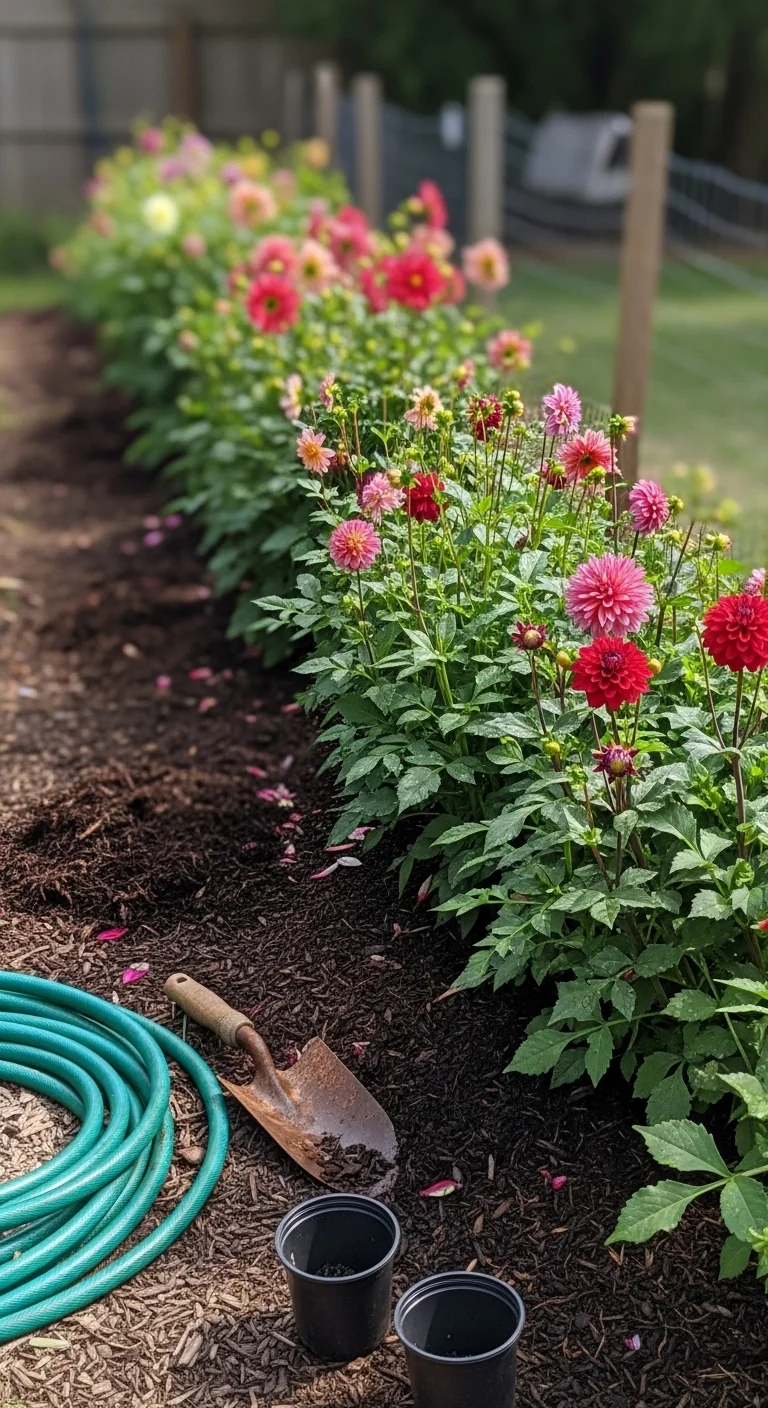
The key to reliable dahlia performance lies in matching variety growth habits to your garden’s specific measurements rather than selecting by bloom color alone.
This guide covers 10 named dahlia varieties across different forms and heights suitable for gardens in the US, UK, Canada, Australia, and Netherlands. It focuses exclusively on tuber-grown options that deliver repeatable results year after year and excludes seed-grown annuals or non-hardy hybrids.
By the end you will know exactly which variety fits your measured sun hours, available space, and climate zone so you can plant with confidence and avoid common failures.
Use the decision grid below to select dahlias that thrive in your exact conditions rather than guessing.
The Yield Grid Decision Grid
Branch 1: Gardens receiving 6 or more hours of direct sun daily with space for plants 4 feet or taller spaced 18 inches apart. Recommended: Items 3, 4, 5, 7 below. Explore more full-sun flower options here.
Branch 2: Limited space or container setups requiring plants under 4 feet tall. Recommended: Items 2, 8, 10 below.
Branch 3: Warm climates (USDA zones 8 and above) or gardeners seeking lower intervention options. Recommended: Items 1, 6, 9 below.
Quick Comparison Table
| Option | Key Mechanism | Best For | Decision Grid Branch | Budget Tier |
|---|---|---|---|---|
| 1. Elsie Huston | Pencil-thick stems for heat stability | Warm-climate displays | Branch 3 | Medium |
| 2. Bishop of Llandaff | Compact bushy habit with dark foliage | Containers and borders | Branch 2 | Low |
| 3. Blizzard | Long straight stems for cutting | Cut-flower production | Branch 1 | Medium |
| 4. Sylvia | Evenly spaced petals on sturdy plants | Reliable border color | Branch 1 | Low |
| 5. Ivanetti | Ball form with high flower count | Continuous summer bloom | Branch 1 | Medium |
| 6. Honey Dew | Large cupped blooms on 4-foot plants | Focal-point displays | Branch 3 | High |
| 7. Spartacus | Velvet-textured informal petals | Statement cut flowers | Branch 1 | High |
| 8. Clearview Peachy | Productive apricot tones with strong habit | Small-space productivity | Branch 2 | Medium |
| 9. Kidds’ Climax | Huge blended pink and yellow blooms | High-impact late season | Branch 3 | Medium |
| 10. Mars | Miniature collarette with ruffled center | Edging and pots | Branch 2 | Low |
1. Elsie Huston
Best for: Branch 3
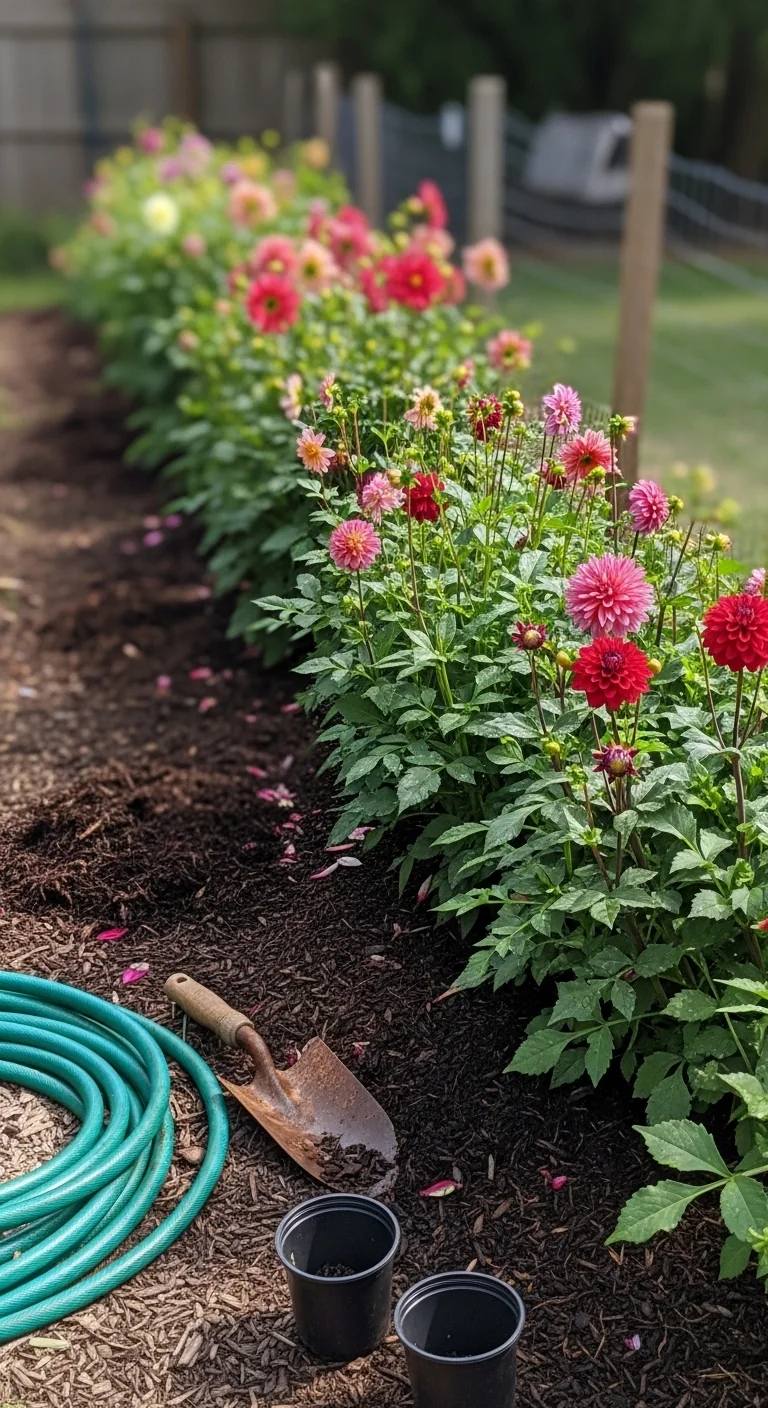
Elsie Huston stands out for its dark pink informal decorative blooms measuring 8 to 10 inches across on pencil-thick stems that resist flopping in warmer conditions. The variety reaches 4 feet tall and performs best when soil temperature hits 60 degrees F at planting time. Follow this blueprint: test soil pH and adjust to the 6.5 to 7.0 range with lime or sulfur as needed, incorporate compost for drainage, plant tubers 4 to 6 inches deep after the last frost, and water to maintain even moisture without sogginess. The key mechanism is the sturdy stem structure that reduces the need for frequent staking compared with taller types. One common mistake is ignoring soil temperature and planting too early, which delays establishment and reduces overall vigor. In zones 8 and above the tubers can remain in the ground with a thick mulch layer for winter protection.
2. Bishop of Llandaff
Best for: Branch 2
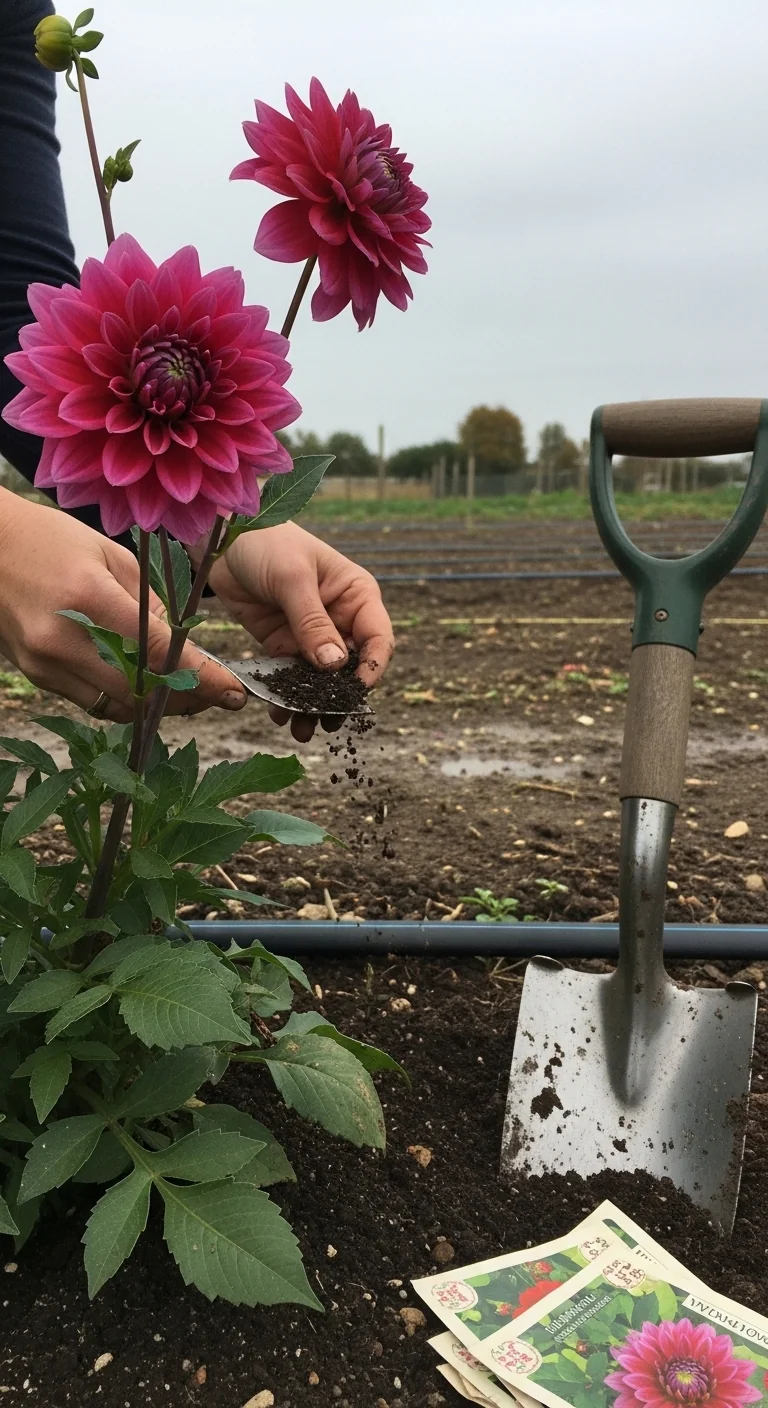
Use Bishop of Llandaff in containers or tight borders where its compact 3-foot height and dark foliage provide contrast without overwhelming small spaces. Skip this variety if your goal is long-stem cutting because stems stay shorter than those on taller types. The edge case appears in partial shade where bloom count drops noticeably below 6 hours of direct sun. Overall it remains one of the easiest starter options for gardeners who want reliable red flowers with minimal intervention.
3. Blizzard
Best for: Branch 1
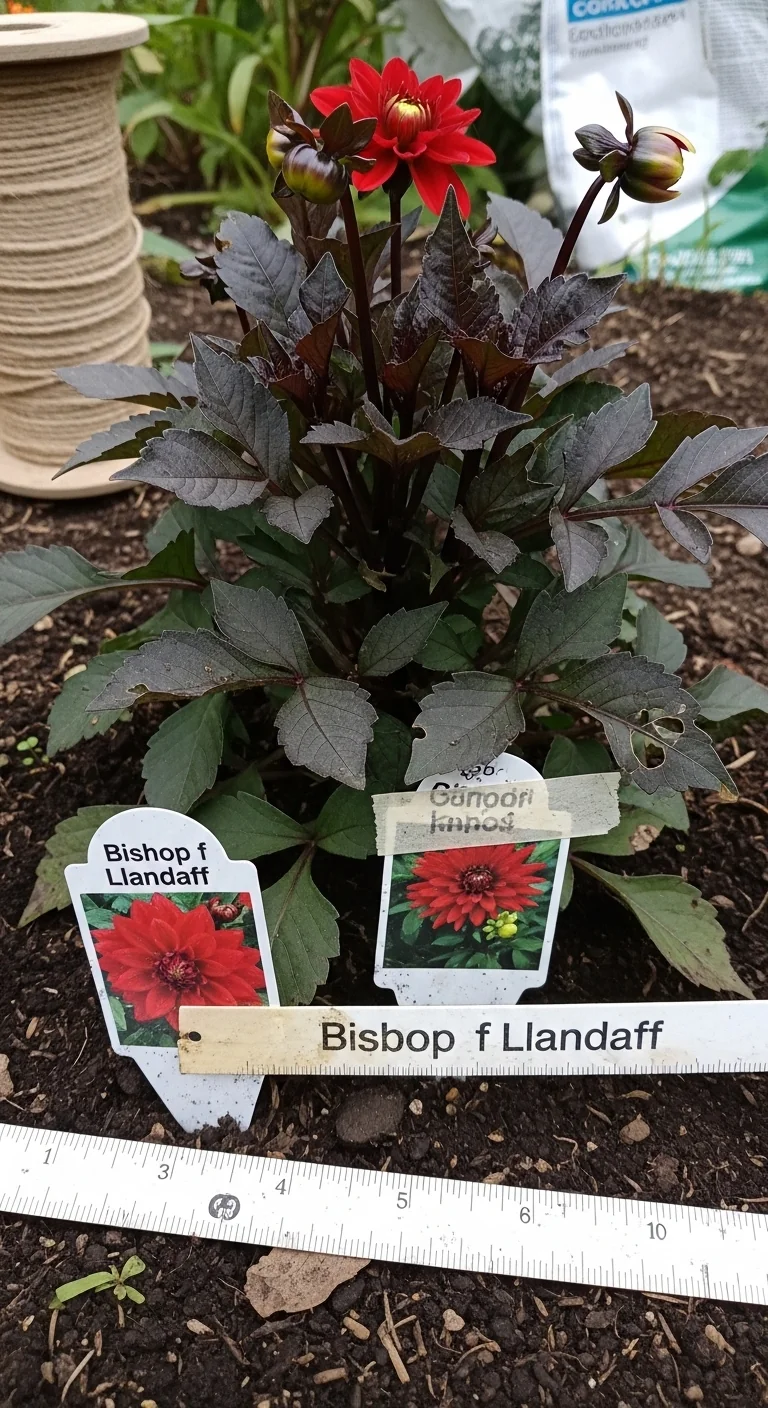
Blizzard produces clean white ball or pompon blooms on 5-foot plants with exceptionally long stems ideal for cutting. The variety thrives when given full sun and 18-inch spacing in beds amended for drainage. Threshold rule: maintain soil pH between 6.5 and 7.0 and ensure at least 6 hours of sun or bloom size shrinks below 4 inches. In practice this means testing soil once per season and adding organic matter if drainage slows. Pair it with a simple staking system at planting to support the height without later adjustments.
4. Sylvia
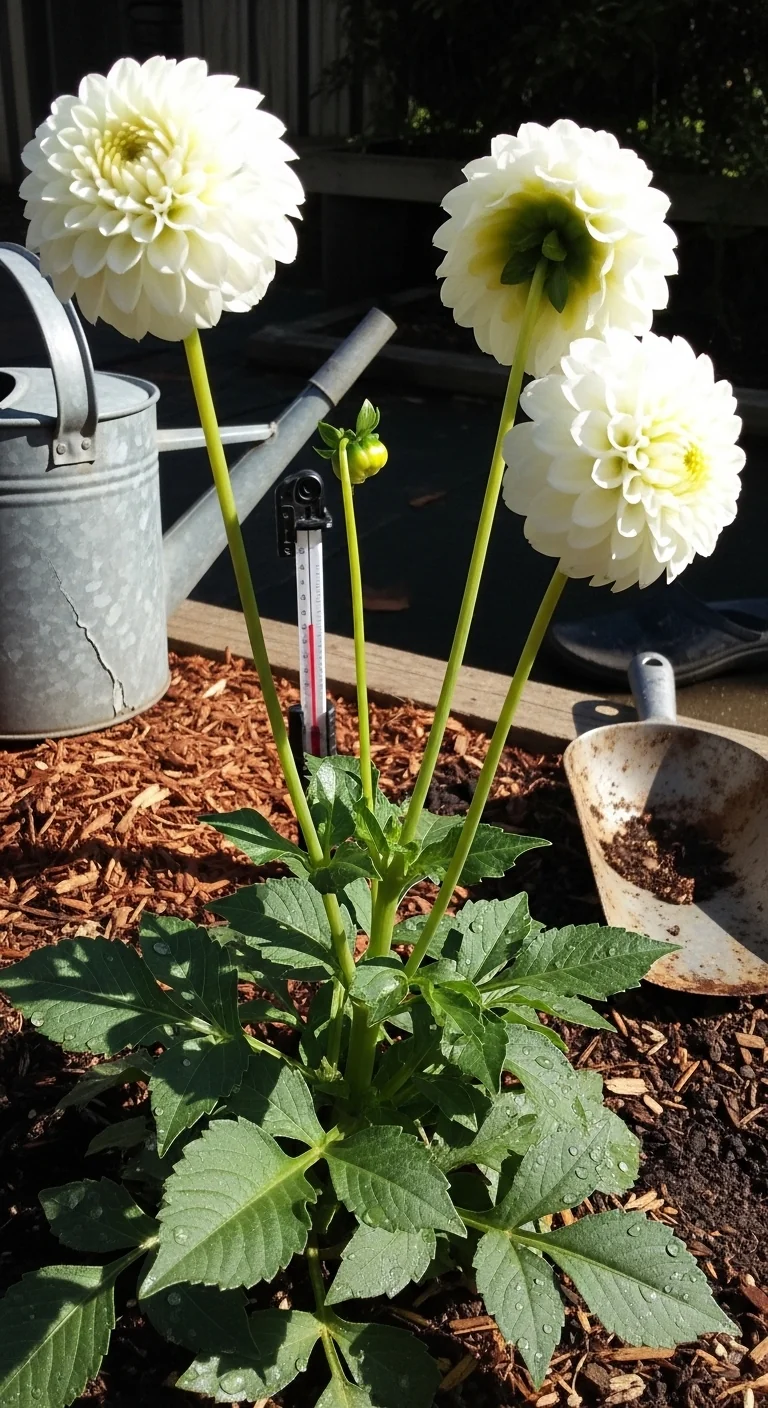
Best for: Branch 1
Sylvia delivers solid orange decorative blooms 2 to 4 inches across on plants with strong upright habits that reach 4 feet. The even petal arrangement creates a clean look in borders. Blueprint steps include preparing the bed with compost, planting tubers 4 inches deep once soil warms to 60 degrees F, spacing 18 inches apart, and applying a 2-inch mulch layer to retain moisture. The mechanism that sets it apart is the balanced plant structure that needs only occasional deadheading to keep flowers coming through fall. Avoid the mistake of overwatering early in the season when drainage is still settling. Learn precise deadheading timing in our dedicated guide.
5. Ivanetti
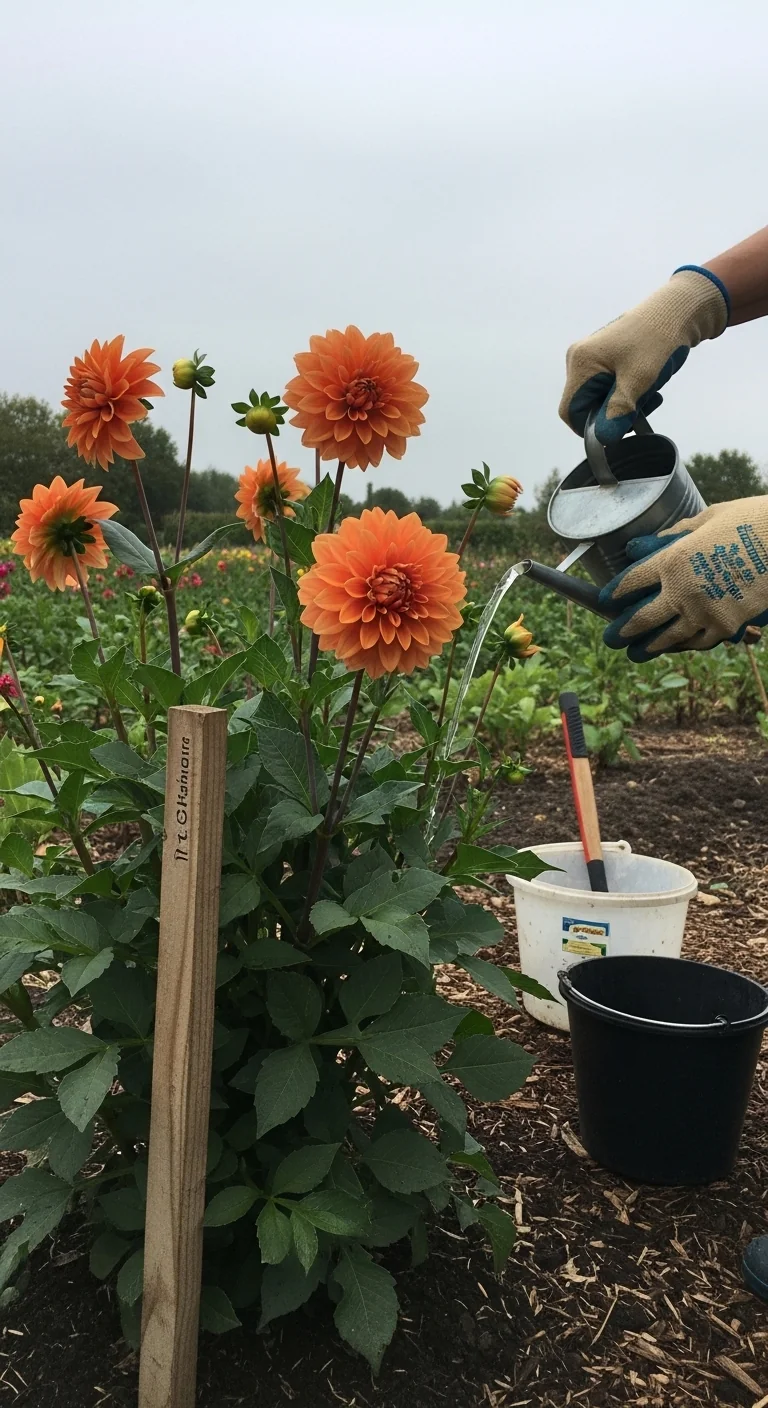
Best for: Branch 1
Ivanetti offers dark purple ball blooms 2 to 4 inches wide on productive 4-foot plants that keep flowering steadily. Use this when you want consistent color without constant monitoring. Skip only if your garden experiences prolonged wet spells because the dense bloom form can trap moisture and invite rot in poor drainage.
6. Honey Dew
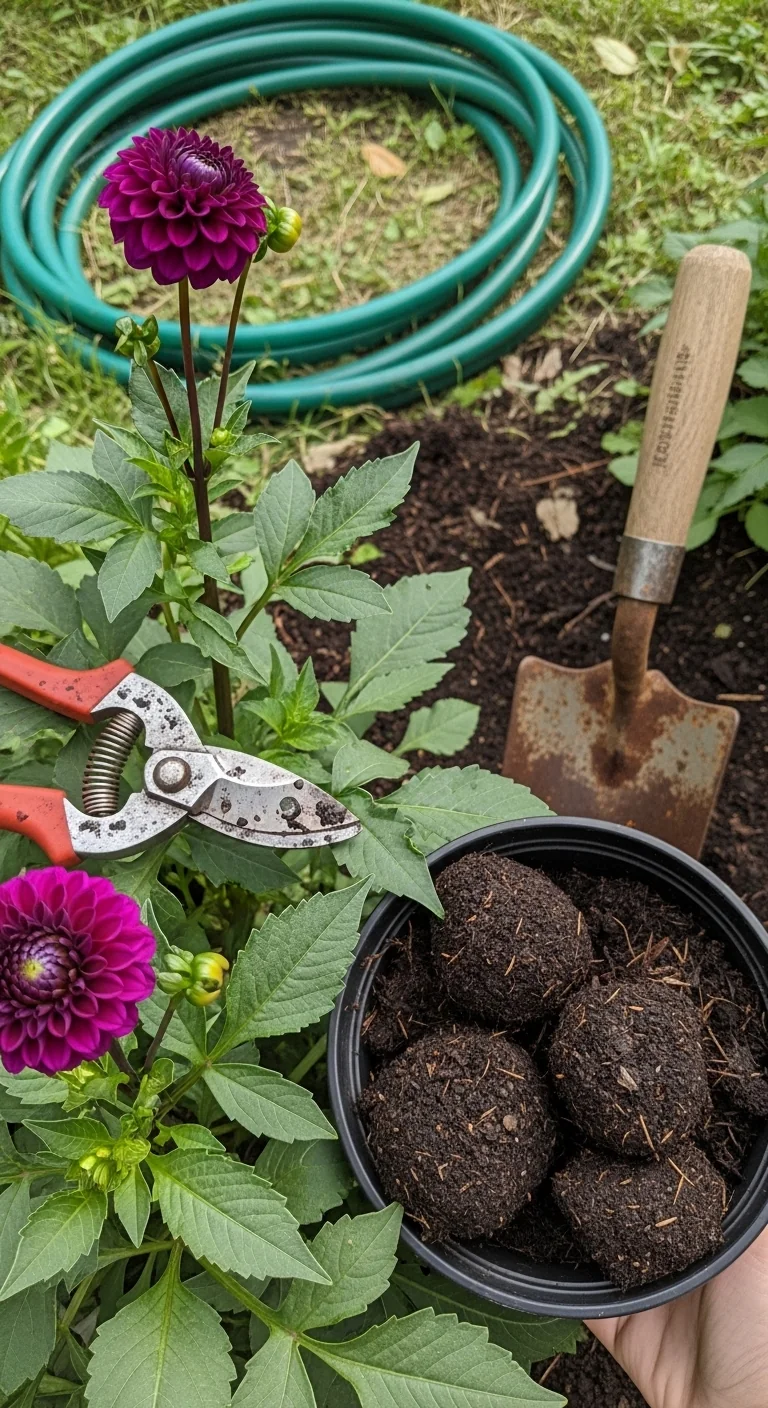
Best for: Branch 3
Honey Dew features large symmetrical cupped blooms in creamy apricot and yellow tones, sometimes with red stripes, on 4-foot plants. The variety suits warmer zones where its 7-inch blooms stand out as focal points. Threshold rule: plant only after soil reaches 60 degrees F and maintain pH 6.5 to 7.0 to maximize petal color intensity. In practice this translates to a single soil test before planting and light compost top-dressing mid-season. The cupped form holds up well in mild heat but benefits from afternoon shade in extreme conditions above 85 degrees F.
7. Spartacus
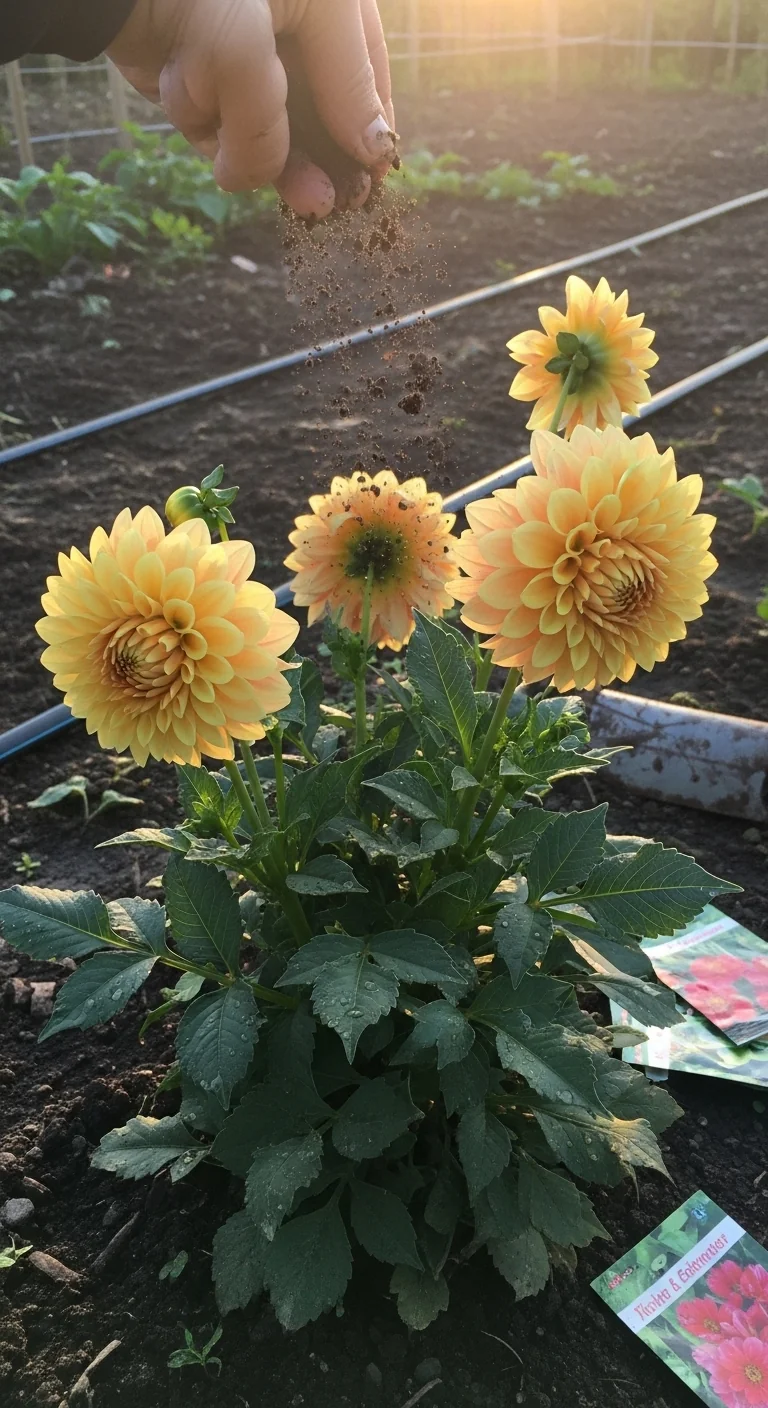
Best for: Branch 1
Spartacus produces striking black-red informal decorative blooms up to 9 inches across with a velvet-like petal texture on plants 4 to 6 feet tall. The mechanism is the irregular petal placement that creates dramatic depth for cut arrangements. Blueprint: dig holes 6 inches deep, position tubers with eyes upward, backfill and stake immediately, then water deeply once per week during dry spells. The edge case occurs in high-wind areas where extra support prevents stem snap. See our watering guide for precise schedules.
8. Clearview Peachy
Best for: Branch 2
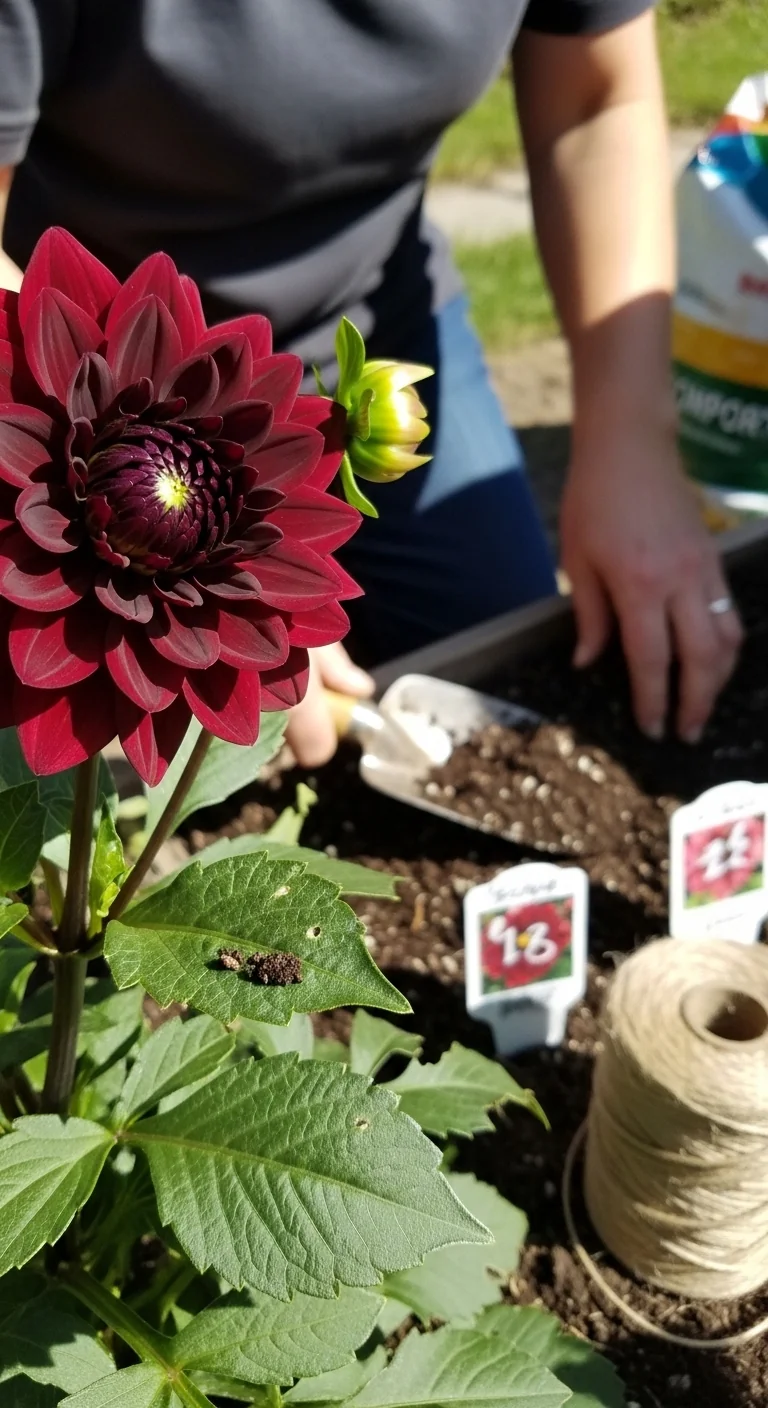
Clearview Peachy brings productive peachy-apricot ball blooms 3 to 4 inches wide on compact 4-foot plants suited to smaller beds or large containers. Use it where space limits taller options. Skip if you prefer single-color solid tones because the subtle blending can look busy in formal designs. The strong habit keeps maintenance low once established.
9. Kidds’ Climax
Best for: Branch 3
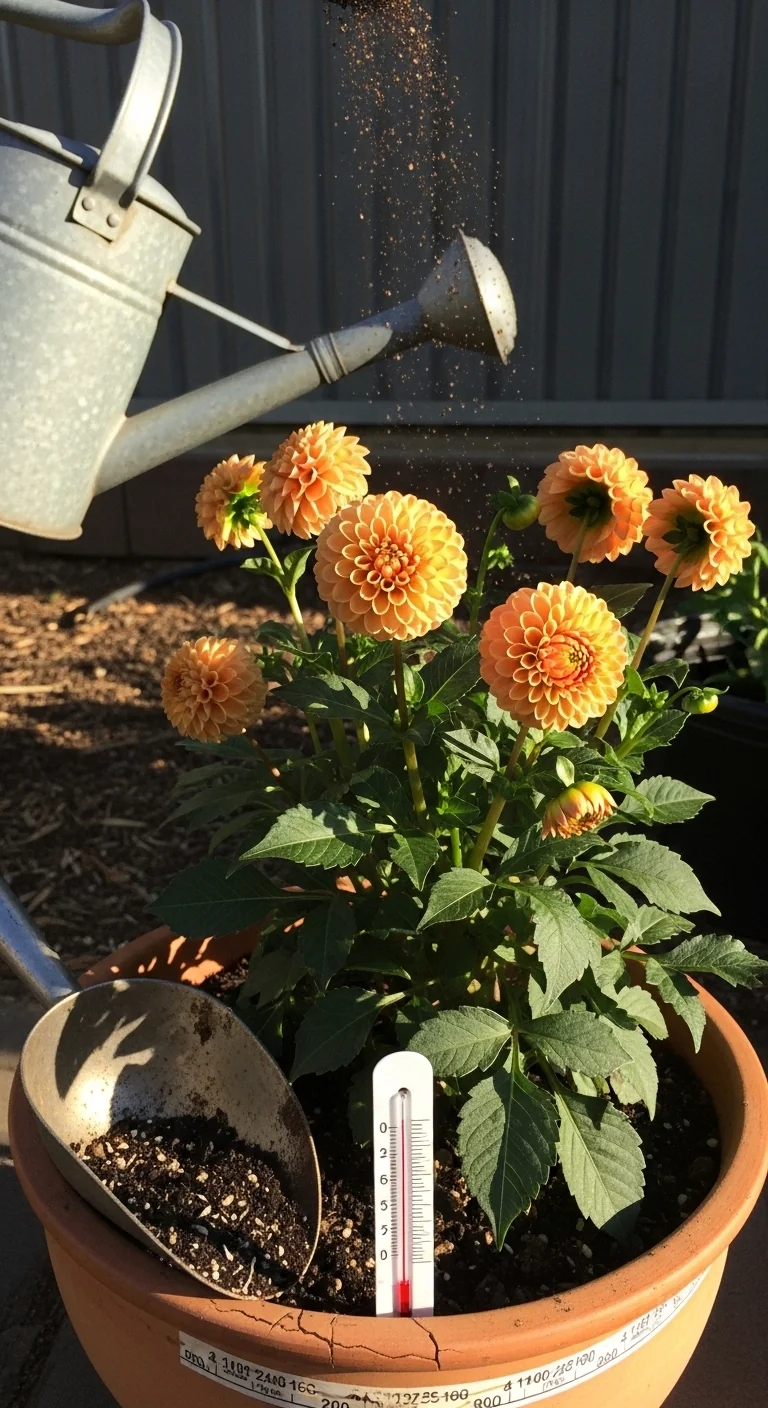
Kidds’ Climax yields huge 10-inch blooms blending pink and creamy yellow on sturdy 3- to 4-foot plants that perform well in warmer zones. The variety peaks in late season when cooler nights enhance color. Threshold rule: space 24 inches apart in full sun and keep soil evenly moist to support the large flower heads without splitting stems. This single adjustment at planting time prevents most support issues later.
10. Mars
Best for: Branch 2
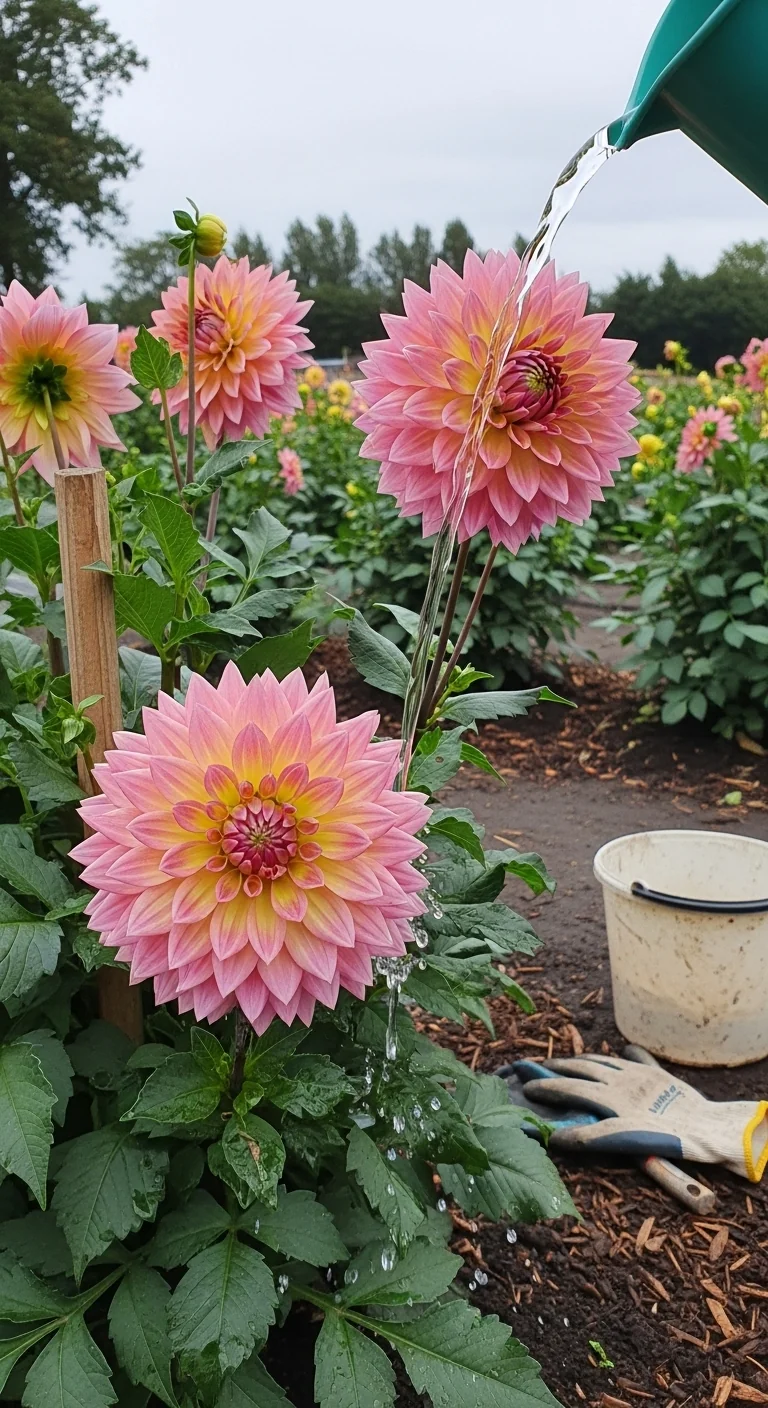
Mars displays miniature collarette blooms up to 4 inches with a ruffled center ring on plants that stay compact enough for edging or pots. The outer flat petals and inner collar create a unique layered look. Use this in tight spaces where larger varieties would crowd. Skip only if you need massive blooms because the miniature size prioritizes quantity over individual flower scale.
Starter Stack (What to Choose First)
For Branch 1 (Full Sun and Tall Space)
Start with Blizzard and Sylvia. Their long stems and sturdy habits work together for continuous cut-flower supply across the season. Planting time estimate: 45 to 60 minutes for 6 tubers. Tuber cost range: 8 to 20 USD total.
For Branch 2 (Limited Space or Containers)
Start with Bishop of Llandaff and Clearview Peachy. The dark foliage of the first contrasts nicely with the peachy tones of the second while both stay compact. Planting time estimate: 30 to 45 minutes for 4 tubers. Tuber cost range: 6 to 15 USD total.
For Branch 3 (Warm Climates or Low Intervention)
Start with Elsie Huston and Kidds’ Climax. Both tolerate heat well and produce large blooms with minimal staking once soil conditions are set. Planting time estimate: 40 to 55 minutes for 5 tubers. Tuber cost range: 10 to 22 USD total.
When This Won’t Work
Dahlias fail when soil temperature stays below 60 degrees F at planting time because tubers rot before roots form. The fix is to start tubers indoors in pots and transplant once outdoor soil warms. They also struggle in sites where water pools longer than 24 hours after rain because poor drainage invites crown rot. The fix is to switch to raised beds or amend heavy soil with coarse sand before planting.
In either case lift and store tubers each fall in zones below 8 by digging after the first frost, drying thoroughly, and keeping them at 35 to 45 degrees F in vermiculite. Consult our flower diseases guide for early symptom checks.
Choosing the Right Option for Your Situation
Budget Threshold
If your tuber budget is under 15 USD total choose low-tier options such as Bishop of Llandaff, Sylvia, or Mars. These deliver strong performance without premium pricing.
Time Threshold
If you have under 2 hours per week for maintenance select compact varieties from Branch 2 or low-intervention options from Branch 3 that need only basic deadheading and occasional watering checks.
Technical Constraint
If your soil pH falls outside the 6.5 to 7.0 range test and amend before planting or choose container growing where you control the mix entirely.
Yes/No Checklist
Full sun 6+ hours daily? Yes: proceed with tall varieties.
Soil drains within 24 hours? Yes: plant directly.
Soil temperature 60 degrees F or higher? Yes: tubers go in ground.
Space for 18-inch spacing? Yes: select Branch 1 options.
Expert Q&A
What soil pH range gives dahlias the best nutrient uptake?
Dahlias perform best when soil pH sits between 6.5 and 7.0. Outside this window certain nutrients lock up and growth slows even with added fertilizer. Test your soil once per season and adjust with lime to raise pH or sulfur to lower it before planting.
How should dahlia tubers be divided each spring for stronger plants?
Divide tubers so each section has at least one eye and a piece of the crown. Discard any soft or shriveled sections. This practice produces more vigorous plants than planting undivided clumps because individual tubers establish faster and bloom more freely.
Can dahlias grow successfully in clay soil?
Clay soil works if amended with coarse sand and compost to improve drainage before planting. Without amendment tubers rot quickly in heavy clay because water sits around the roots. Raised beds solve the issue in persistent clay sites.
When is the right time to lift and store tubers in colder zones?
Lift tubers after the first hard frost blackens the foliage but before the ground freezes. Cut stems to 6 inches, dig carefully, dry upside down for a few days, then store in vermiculite at 35 to 45 degrees F. This timing prevents rot during storage.
What companion plants help dahlias resist common pests?
Plant dahlias near marigolds or alliums because their scent deters aphids and other insects that target dahlia stems. The companions also fill gaps while dahlias establish and provide visual contrast through the season.
Conclusion
Next step: measure your sun hours and soil drainage today, then pick the two starter-stack varieties that fit your branch. Build a longer summer bloom sequence with our summer flowers guide.