
| Cycle Duration | Applied (gal/day) | Target Runoff (gal/day) | LF % | Status |
|---|
- Commercial Dutch (Bato) Buckets — 2-gallon or 4-gallon with integrated drain tube
- Coarse Horticultural Perlite — 4 cubic foot bags (large pore size, superior drainage)
- Netafim Pressure-Compensating Drip Emitters — consistent flow across all buckets regardless of line pressure variation
- 1/2-inch Poly Drain Pipe — connect bucket drain ports to a central recirculation or disposal line
How this calculator works — Formula & Assumptions
Step 1 — Applied Volume per Cycle (per bucket):
Unit: gallons per bucket per cycle
Step 2 — Total Daily Applied Volume (all buckets):
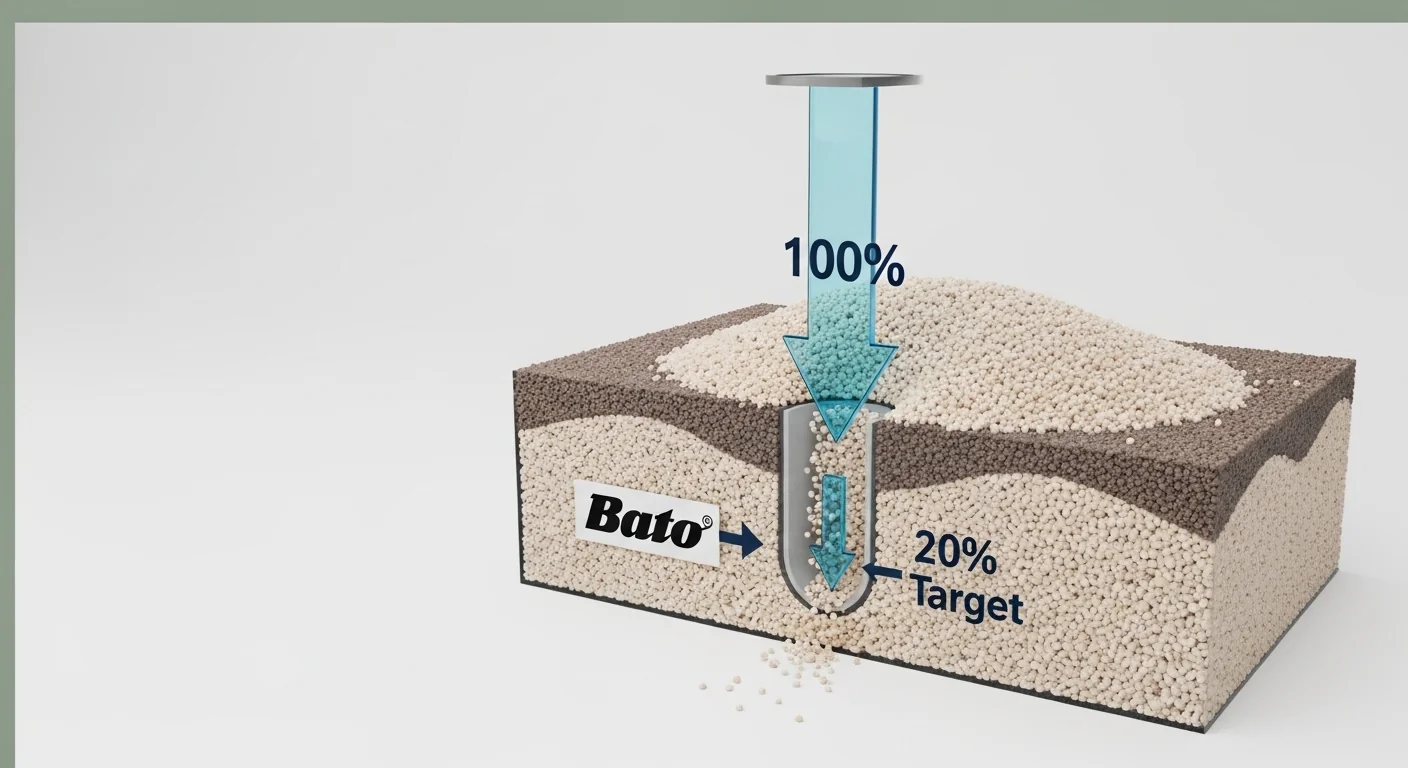
Step 3 — Target Runoff Volume (Leaching Fraction = 20%):
Industry standard: 15–20% leaching fraction for perlite-based Dutch bucket systems
Step 4 — Leaching Fraction (if observed runoff provided):
Assumptions & Limits:
- One emitter per Dutch bucket assumed. Add more emitters by multiplying GPH × emitter count.
- Emitter flow rate is the manufacturer-rated GPH at your operating pressure (typically 10–25 PSI).
- Pressure-compensating emitters are strongly recommended; standard emitters vary flow with line pressure.
- Substrate type affects actual drainage speed but not the core applied-volume math. More retentive media (coco) may require more frequent cycles to maintain LF targets.
- Results assume all emitters are functioning. Clogged emitters reduce LF rapidly — inspect weekly.
- Day length is 24 hours. This calculator does not apply a night-time dry-down period (typically no irrigation 1–2 hours before lights-off in indoor grows).
- This tool is for educational and planning purposes. Always verify with physical runoff collection.
Industry Reference: Leaching Fraction & Salt Risk by Media Type
| Media Type | Min Safe LF | Ideal LF Range | Salt Risk if LF <5% | Notes |
|---|---|---|---|---|
| 100% Perlite | 5% | 15–25% | Very High | Extremely porous; salts accumulate fast. EC can reach lethal 6.0+ within 7 days of zero-runoff irrigation. |
| Coco / Perlite Mix | 10% | 15–20% | High | Coco retains more water and buffers salts longer, but still requires consistent flushing. |
| Clay Pebbles | 10% | 10–20% | Moderate | Excellent drainage; reusable. Pre-soak to saturate pores before use. Less salt retention than perlite. |
Sources: CEA (Controlled Environment Agriculture) industry guidelines; Sargent & Hopper (Hydroponic Food Production, 7th ed.); Netafim commercial greenhouse drip management protocols.
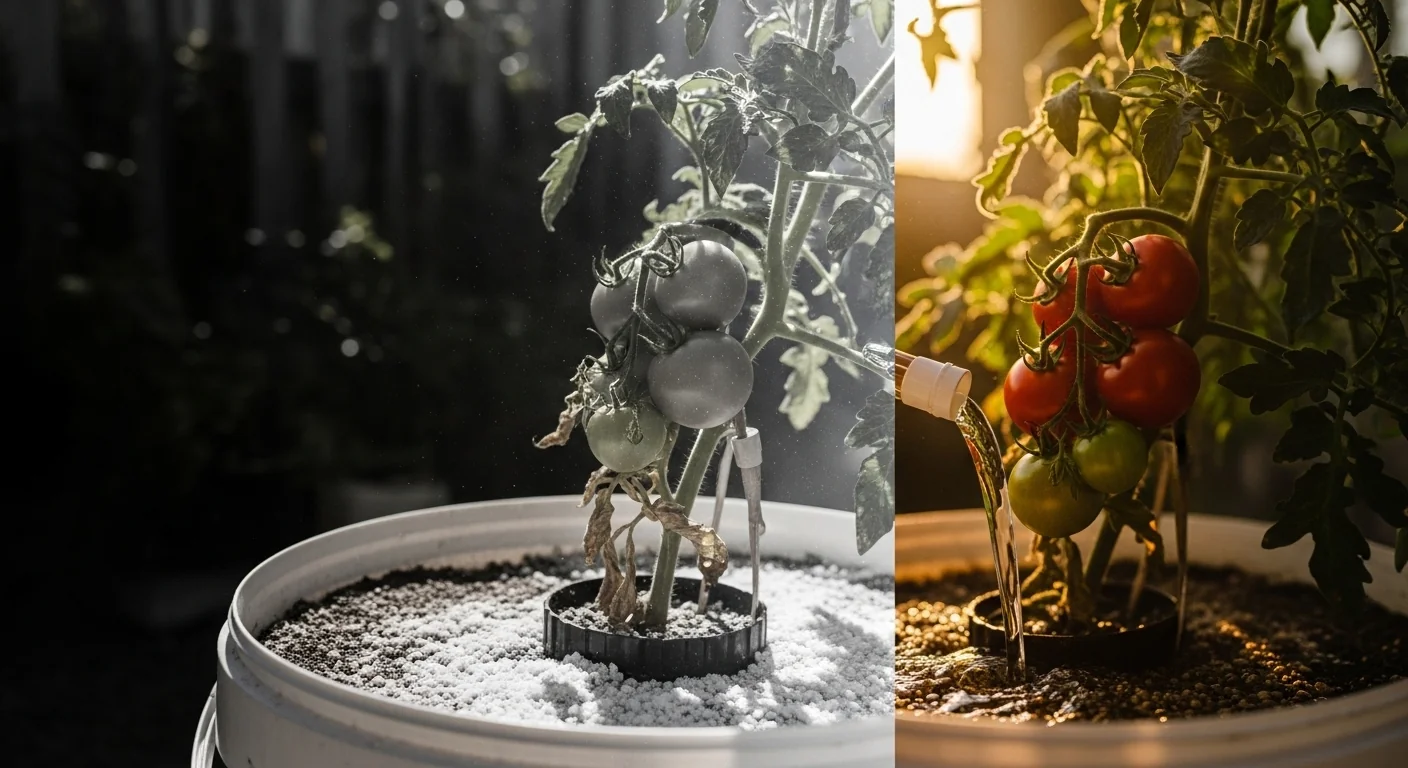
The single most consequential number in a Dutch bucket drip system is not the nutrient concentration in your reservoir. It is the volume of water that exits the bottom of each bucket every day. That exit volume, expressed as a fraction of what you applied, determines whether fertilizer salts are being flushed out of the substrate or quietly accumulating toward a lethal threshold. Most growers set a timer, observe that the plants look healthy, and assume the math is correct. The math is often not correct.
This calculator takes five inputs from your system: the number of Bato buckets, emitter flow rate in gallons per hour, grow media type, number of irrigation cycles per day, and the duration of each cycle in minutes. From those, it computes total daily applied volume for your entire system, the target runoff volume needed to maintain a safe leaching fraction, and, if you provide observed runoff data, the actual leaching fraction your system is achieving. It does not predict plant growth rates, account for evapotranspiration, or replace physical runoff monitoring with a sensor.
After using this tool, you will know whether your current drip schedule is flushing enough salt to protect your crop or setting up a slow accumulation event that will not become visible until root damage is already underway.
Use the Tool
Before entering values, have your emitter manufacturer spec sheet available so you can confirm the rated flow at your operating pressure. Pressure-compensating emitters, such as those from Netafim, are rated at a specific PSI range; a standard emitter's actual output will differ from its label at pressures above or below that range. You will also need to know your timer settings: the number of daily cycles and exact cycle duration in minutes. If you have a collection container under one or more drain ports, measure the runoff from a full day's irrigation before entering it in the optional observed runoff field. For context on how EC measurements in that runoff connect to salt accumulation, the hydroponic EC calculator on this site can help you interpret what you find.
Quick Start (60 Seconds)
- Number of Dutch Buckets: Count every active Bato bucket connected to your supply line. If some are plugged or empty, exclude them. The calculator assumes one emitter per bucket.
- Emitter Flow Rate (GPH): Use the manufacturer-rated GPH at your actual line pressure, not the label maximum. Common sizes are 0.5, 1.0, and 2.0 GPH. Do not mix emitter sizes and enter an average; systems with mixed emitters require separate calculations per zone.
- Grow Media Type: Select the media currently in the buckets. If you have recently switched from one media to another, use the new media. This selection affects the safety interpretation of your leaching fraction, not the core volume math.
- Irrigation Cycles per Day: Count only the cycles that actually run irrigation, not empty timer slots. If your controller is set for 10 cycles but 2 are outside the light period and disabled, enter 8.
- Duration per Cycle (minutes): This is the clock time each valve stays open per event. Enter decimals for sub-minute durations (for example, 1.5 for 90 seconds).
- Observed Runoff (optional): Collect runoff from all buckets into a single container over one full day and measure the total volume in gallons. This field activates the actual leaching fraction analysis and is the most valuable input you can provide.
- Click "Calculate Runoff and Leaching Fraction." Results appear immediately below the form. No page reload is required.
Inputs and Outputs (What Each Field Means)
| Field | Unit | What It Measures | Common Mistake | Safe Entry Guidance |
|---|---|---|---|---|
| Number of Dutch Buckets | count (integer) | Total active Bato buckets receiving irrigation from the drip system | Including empty or disconnected buckets inflates applied volume | Count physical buckets with emitters installed and supply line connected |
| Emitter Flow Rate | GPH (gallons per hour) | Rated output of each drip emitter at operating pressure | Using label GPH without accounting for actual line pressure | Confirm from spec sheet at your working PSI; measure a test bucket if uncertain |
| Grow Media Type | category | Substrate in the buckets; affects drainage speed and salt-buffering capacity | Selecting perlite when system has a coco/perlite mix; each has different minimum safe LF | Match to the actual media; mixed systems require more conservative thresholds |
| Irrigation Cycles per Day | count (integer) | Number of drip events occurring per 24-hour period | Counting timer slots rather than active irrigation events | Verify against your controller's active schedule, not its total programmed slots |
| Duration per Cycle | minutes (decimal allowed) | Clock time the valve stays open for each irrigation event | Confusing cycle duration with total daily run time | Enter the per-event duration; do not divide daily minutes by cycles here |
| Observed Runoff (optional) | gallons per day | Actual measured volume of water draining from all buckets in 24 hours | Measuring only 1-2 buckets and multiplying by bucket count without verifying uniformity | Collect from all drain ports or use a verified representative sample of at least 10% of buckets |
| Total Applied Volume (output) | gallons per day | Water delivered to the entire system daily by the drip emitters | n/a | Compare against reservoir consumption to verify plausibility |
| Target Runoff at 20% LF (output) | gallons per day | Minimum daily runoff needed to maintain the 20% leaching fraction target | n/a | Use as a floor, not a ceiling; more runoff is acceptable if EC in runoff stays in range |
| Leaching Fraction (output) | percent | Runoff as a fraction of applied volume; the primary salt-management metric | n/a | Target 15 to 20% for perlite; 10 to 20% for coco/perlite and clay pebbles |
| Applied per Bucket per Cycle (output) | gallons | Volume each individual bucket receives in a single irrigation event | n/a | Useful for verifying emitter output against a physical bucket test |
Worked Examples (Real Numbers)
Example 1: Small Hobby Perlite System
- Buckets: 20
- Emitter flow rate: 1.0 GPH
- Media: 100% Perlite
- Cycles per day: 6
- Duration per cycle: 3 minutes
Result: Applied per bucket per cycle = 1.0 x (3 / 60) = 0.050 gal. Total applied = 20 x 0.050 x 6 = 6.0 gal/day. Target runoff at 20% LF = 6.0 x 0.20 = 1.2 gal/day.
This system needs to produce at least 1.2 gallons of visible drain water per day across all 20 buckets combined. Collect runoff physically to verify. A reading of zero confirms zero-runoff operation, which is dangerous in perlite within a matter of days.
Example 2: Mid-Scale Commercial Tomato Greenhouse
- Buckets: 100
- Emitter flow rate: 1.0 GPH
- Media: Coco/Perlite Mix (50/50)
- Cycles per day: 10
- Duration per cycle: 4 minutes
Result: Applied per bucket per cycle = 1.0 x (4 / 60) = 0.0667 gal. Total applied = 100 x 0.0667 x 10 = 66.7 gal/day. Target runoff at 20% LF = 66.7 x 0.20 = 13.3 gal/day.
A 100-bucket coco/perlite system at this schedule needs to produce over 13 gallons of daily runoff. Given coco's moderate water retention, achieving this in early vegetative stages may require extending cycle duration or adding a cycle rather than increasing GPH emitters.
Example 3: Large Perlite System with Observed Under-Flushing
- Buckets: 300
- Emitter flow rate: 1.0 GPH
- Media: 100% Perlite
- Cycles per day: 10
- Duration per cycle: 3 minutes
- Observed runoff: 13.5 gal/day (measured)
Result: Applied per bucket per cycle = 1.0 x (3 / 60) = 0.05 gal. Total applied = 300 x 0.05 x 10 = 150.0 gal/day. Target runoff at 20% LF = 150.0 x 0.20 = 30.0 gal/day. Observed leaching fraction = (13.5 / 150.0) x 100 = 9.0%.
At 9.0% LF, this system is under-flushing by 16.5 gal/day relative to the 20% target. The grower needs either 16.5 more gallons of daily runoff or must increase cycle duration per event by approximately 0.66 minutes to bring LF into the safe range. Salt accumulation is already in progress; EC of the bucket runoff should be tested immediately.
Reference Table (Fast Lookup)
All values below are calculated using the formula: Total Applied = Buckets x GPH x (Minutes / 60) x Cycles. Target Runoff column assumes a 20% leaching fraction. The Danger Threshold column shows the minimum runoff in gallons per day needed to stay above the 5% critical floor below which toxic salt accumulation is triggered.
| Buckets | GPH/Emitter | Cycles/Day | Min/Cycle | Applied (gal/day) | Target Runoff 20% LF (gal/day) | Danger Floor 5% LF (gal/day) | Risk if Zero Runoff Observed |
|---|---|---|---|---|---|---|---|
| 10 | 1.0 | 6 | 2 | 2.0 | 0.4 | 0.1 | High (perlite: lethal EC in 7 days) |
| 20 | 1.0 | 6 | 3 | 6.0 | 1.2 | 0.3 | High |
| 50 | 1.0 | 8 | 3 | 20.0 | 4.0 | 1.0 | High |
| 50 | 1.5 | 8 | 4 | 40.0 | 8.0 | 2.0 | Moderate to High |
| 100 | 1.0 | 8 | 3 | 40.0 | 8.0 | 2.0 | High |
| 100 | 1.0 | 10 | 4 | 66.7 | 13.3 | 3.3 | High |
| 200 | 1.0 | 10 | 4 | 133.3 | 26.7 | 6.7 | High |
| 200 | 2.0 | 8 | 5 | 266.7 | 53.3 | 13.3 | Critical at scale |
| 300 | 1.0 | 12 | 3 | 180.0 | 36.0 | 9.0 | High |
| 500 | 2.0 | 10 | 4 | 666.7 | 133.3 | 33.3 | Critical at scale |
How the Calculation Works (Formula + Assumptions)
Show the calculation steps
Step 1: Applied Volume per Bucket per Cycle
Multiply the emitter flow rate in GPH by the fraction of an hour that each cycle runs. Since duration is entered in minutes, divide by 60 to convert to hours first.
Applied per bucket per cycle (gal) = GPH x (Minutes per cycle / 60)
Example: 1.0 GPH emitter running for 4 minutes delivers 1.0 x (4/60) = 0.0667 gallons per cycle per bucket.
Step 2: Total System Applied Volume per Day
Multiply the per-cycle per-bucket volume by the number of buckets and by the number of cycles run in a full day.
Total applied (gal/day) = Buckets x GPH x (Minutes / 60) x Cycles per day
Rounding: Results are displayed to one decimal place for daily totals and three decimal places for per-bucket-per-cycle values.
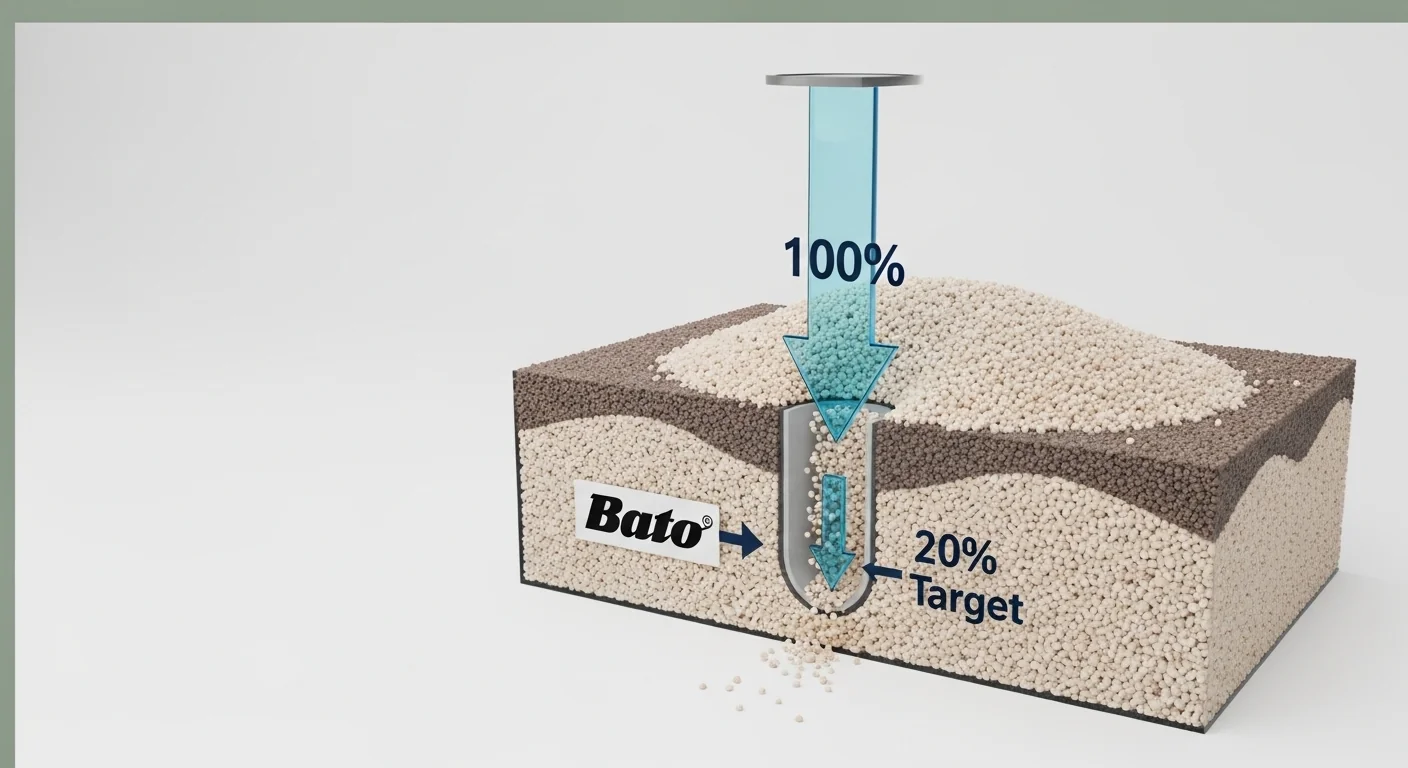
Step 3: Target Runoff at 20% Leaching Fraction
Target runoff (gal/day) = Total applied x 0.20
The 20% figure is the standard industry target for perlite-based Dutch bucket systems. This is the volume of water that must physically exit the bottom of the buckets each day as drain water to maintain adequate salt displacement.
Step 4: Observed Leaching Fraction (when runoff data is available)
Observed LF (%) = (Observed runoff in gal/day / Total applied in gal/day) x 100
This is the only calculation that tells you what your system is actually doing, as opposed to what you intended it to do.
Rounding rules: Daily volumes are rounded to one decimal place. Per-bucket-per-cycle volumes are shown to three decimal places. Leaching fraction percentages are shown to one decimal place.
Unit note: All volumes are in US gallons. GPH is gallons per hour. If your emitter is rated in liters per hour, divide by 3.785 to convert to GPH before entering.
Assumptions and Limits
- The calculator assumes exactly one emitter per Dutch bucket. Systems with two emitters per bucket require doubling the GPH input before entry.
- Emitter flow rate is assumed to be the actual output at operating pressure, not the label maximum. Pressure-compensating emitters are recommended specifically because non-compensating emitters vary output across long supply lines.
- The model does not account for evapotranspiration. During peak summer production, plant transpiration can reduce available runoff below calculated values even when the schedule is correct.
- Substrate type changes the safety interpretation of leaching fraction but does not alter the volume calculation. The core formula is media-independent.
- Night-time dry-down periods (no irrigation 1-2 hours before lights-off in indoor grows) are not subtracted from the cycle count. If you do not irrigate during a portion of the day, reduce your cycles-per-day entry accordingly.
- The 5% danger floor and 20% target are based on industry guidelines for recirculating and drain-to-waste Dutch bucket systems growing long-season fruiting crops. Short-season crops or systems in early seedling stages may require different LF management.
- Clogged emitters are not detectable by this tool. A system that calculates a healthy LF may still have individual buckets receiving zero water. Physical inspection remains essential.
- The tool does not account for system pressure fluctuations caused by simultaneous zone firing, elevation changes, or undersized supply lines.
Standards, Safety Checks, and "Secret Sauce" Warnings
The chemistry behind leaching fraction is straightforward: plants absorb water molecules far faster than they take up dissolved mineral ions. That differential uptake causes salts to concentrate in the substrate between irrigation events. The only mechanism that counteracts this is draining enough solution out of the bucket to physically remove the accumulated ions. No amount of pH adjustment or nutrient ratio balancing compensates for insufficient leaching.
Critical Warnings
- Zero-runoff operation in perlite is not nutrient conservation. It is delayed crop loss. When no drain water exits the bucket, 100% of the salt applied with each irrigation event stays in the substrate. The electrical conductivity inside the root zone compounds daily. Root damage in tomatoes begins above EC 4.0. Perlite has virtually no cation exchange capacity to buffer this escalation, unlike soil or coco fiber, so the accumulation is fast and irreversible without a full substrate flush.
- A visually healthy canopy does not confirm adequate leaching. Salt toxicity in the root zone is invisible from above the substrate for days or weeks. By the time leaf tip burn, wilting under load, or blossom drop appear, the root system is already damaged. The only reliable early indicator is EC measurement in the bucket runoff, which requires physical collection of drain water. Pair this calculator's outputs with EC data from the ppm to EC converter to track whether runoff EC is trending up over time.
- Leaching fraction below 5% should be treated as a system emergency. The tool flags this threshold explicitly. An LF below 5% means fewer than 5 gallons of runoff are being produced for every 100 gallons applied. In a perlite system, this is insufficient to prevent exponential salt concentration across even a short production window.
- Over-watering beyond 30% LF wastes nutrient solution and creates disposal volume. In drain-to-waste systems this is simply cost. In recirculating systems, excess runoff may overwhelm the return reservoir and require dumping, which carries both cost and environmental implications.
Minimum Standards
- Leaching fraction for 100% perlite Dutch bucket systems: minimum 15%, target 15 to 25%.
- Leaching fraction for coco/perlite mix systems: minimum 10%, target 15 to 20%.
- Leaching fraction for clay pebble systems: minimum 10%, target 10 to 20%.
- Runoff EC should be measured at least weekly. A runoff EC more than 2.0 mS/cm above the supply EC is a signal that salt accumulation is outpacing the flush rate, regardless of what the LF calculation shows. For full nutrient solution planning, the hydroponic nutrient dosing calculator provides context on supply-side EC targets by crop stage.
Competitor Trap: Many drip irrigation scheduling guides published for Dutch bucket systems focus exclusively on gallons-per-plant-per-day as the output metric without calculating or displaying the resulting leaching fraction. A grower can apply precisely the "correct" gallons per plant per day and still achieve a 2% LF if the cycle structure concentrates irrigation into too few, too-short events. Volume applied and leaching fraction are independent variables. The only guide that is complete is one that connects both metrics, and the only way to verify either is physical measurement of applied volume and actual runoff.
For growers who also manage vapor pressure deficit as part of their irrigation timing strategy, the VPD calculator can help synchronize drip cycles with periods of peak plant transpiration, which is when substrate EC stabilization is most critical.
Common Mistakes and Fixes
Mistake: Treating No Visible Runoff as Optimal Efficiency
The intuition that "no runoff = no wasted nutrients" is economically appealing and agronomically disastrous in perlite. Plants do not absorb salts proportionally to water uptake. Every irrigation event that produces no drain water deposits the full mineral load from that application into the substrate, with no mechanism for removal. The fix is simple: extend cycle duration until physical drain water is consistently visible from the bucket drain port, then confirm with a measurement against the calculator's target runoff value.
Mistake: Using Standard (Non-Compensating) Emitters Across Long
Supply Lines
Pressure drops along long supply lines mean that the last emitter in a 200-foot run may deliver 30 to 40% less water than the first, even when both are rated at the same GPH. This creates a gradient of leaching fractions across the system: buckets near the supply head may over-water while those at the end under-flush. Pressure-compensating emitters maintain consistent output across a defined pressure range and eliminate this variability. The fix is to replace non-compensating emitters and verify uniformity by timing bucket fill into a graduated container across multiple positions in the run.
Mistake: Counting Timer Slots as Active Irrigation Cycles
Controllers with 8 or 12 programmable slots may have only 5 or 6 actually enabled. Entering the total slot count rather than the active cycle count inflates the calculated applied volume and causes the tool to report a higher (safer-looking) leaching fraction than the system is actually achieving. Always verify the active cycle count against the controller's live schedule, not its programming capacity.
Mistake: Ignoring Media-Specific Leaching Fraction Requirements
Clay pebbles and coco/perlite mixes have meaningfully different moisture retention and CEC characteristics compared to 100% perlite. A schedule that produces a safe 18% LF in clay pebbles may result in a dangerous 6% LF in perlite at the same applied volume, because perlite drains faster and retains almost no buffer against salt concentration. Growers switching substrates between production cycles must recalculate their schedule, not carry it forward unchanged. For growers using coco, the buffering coco coir math tool addresses the pre-treatment chemistry that affects early-cycle nutrient availability before LF management even begins.
Mistake: Measuring Runoff from a Single Bucket and Multiplying
Individual bucket runoff varies significantly based on emitter wear, supply pressure at that position, and substrate condition. A single-bucket sample multiplied by total bucket count introduces compounding error. An under-performing bucket is physically indistinguishable from a correctly operating one during a brief visual inspection. The fix is to collect runoff from at least 10% of buckets distributed across the supply line, including the first, middle, and last positions, and use the average to estimate system-wide daily runoff. Compare this against the NFT hydroponics calculator if you are evaluating alternative production systems where salt management dynamics differ substantially.
Next Steps in Your Workflow
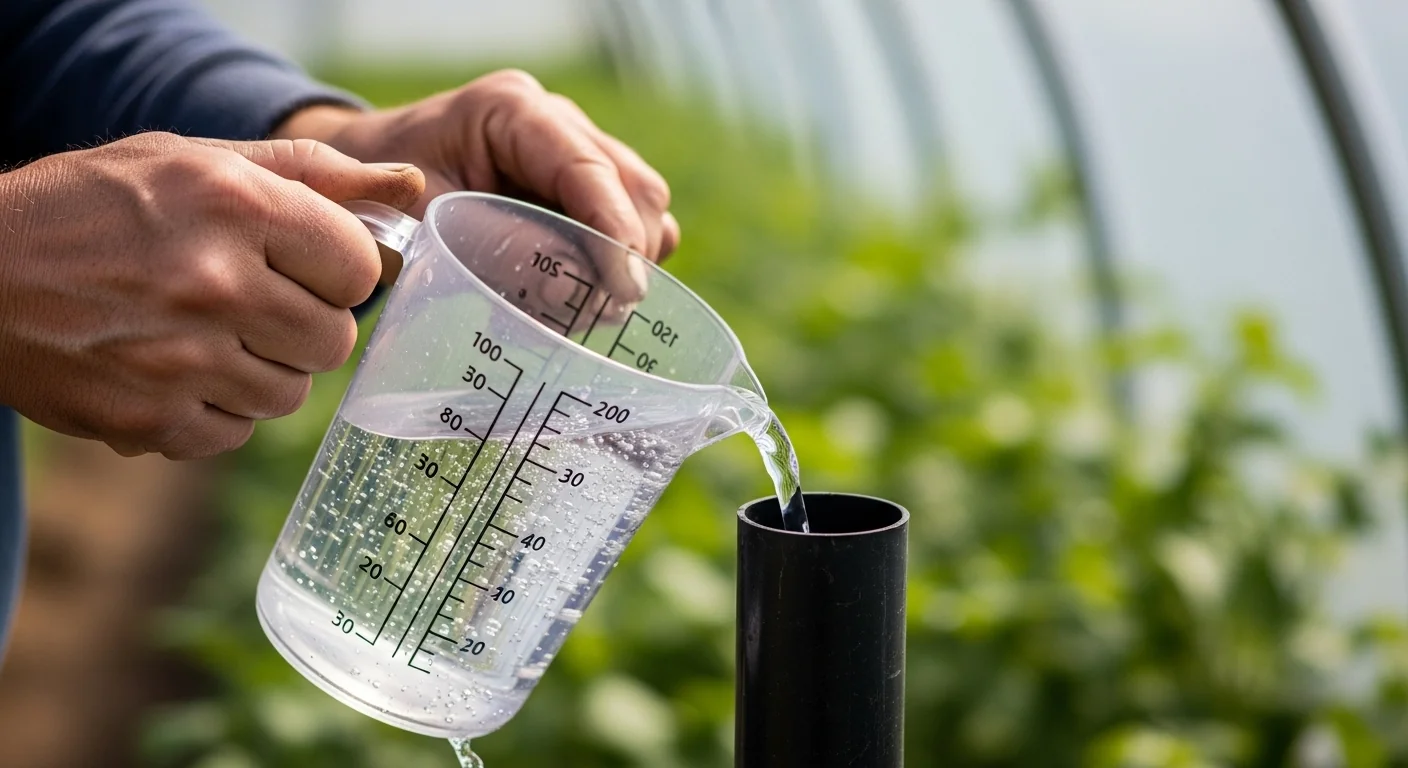
Once you have calculated your target runoff volume, the first physical action is to place a collection container under a representative drain port and run one full day's irrigation schedule with it in place. The collected volume, divided by your applied volume per bucket per day, gives you the actual leaching fraction for that position. If it matches or exceeds your target, verify at least two additional positions across the supply line. If it falls short, extend cycle duration in 30-second increments, recalculate, and retest before making further changes. Irrigation adjustments should be made one variable at a time to isolate their effect. The crop steering calculator can help you structure the relationship between generative and vegetative irrigation strategies as your production cycle progresses.
Beyond the drip schedule itself, the runoff you collect is an extremely useful diagnostic sample. Measuring its EC weekly gives you a running record of salt accumulation in the root zone. A runoff EC that is consistently trending upward even when your LF appears adequate suggests either that supply EC is too high, that emitter uniformity is poor, or that some buckets have substrate channeling that bypasses the root zone. At that point, full substrate replacement or a targeted fresh-water flush event may be needed. For the nutritional side of that decision, the hydroponic EC calculator provides the framework for evaluating whether your reservoir EC is aligned with your crop's demand at its current growth stage.
FAQ
What is leaching fraction in Dutch bucket irrigation?
Leaching fraction is the proportion of applied irrigation water that drains out of the grow media as runoff, expressed as a percentage of the total volume applied. In Dutch bucket systems, it is the primary indicator of whether fertilizer salts are being flushed out of the substrate at a sufficient rate to prevent root-damaging accumulation. A target of 15 to 20% is standard for perlite-based systems.
Why is perlite more sensitive to salt buildup than other media?
Perlite has an extremely low cation exchange capacity, which means it cannot chemically buffer excess mineral ions the way coco coir or amended substrates can. Salts applied with each irrigation event that are not physically flushed out by drain water remain in solution in the pore spaces, concentrating with every subsequent application. Coco fiber provides more temporary buffering but is not a substitute for adequate leaching.
How many irrigation cycles per day are typical for Dutch bucket
tomatoes?
Most commercial Dutch bucket tomato programs operate between 6 and 14 cycles per day during peak production, with cycle frequency increasing during high-radiation periods when plant transpiration is greatest. Fewer, longer cycles are common in vegetative stages; shorter, more frequent cycles are typical during fruiting. The correct number depends on substrate, plant size, and ambient conditions, not on a single universal recommendation.
What should I do if my observed leaching fraction is below 5%?
Treat it as an urgent scheduling problem. First, increase cycle duration immediately to generate visible runoff from each bucket. Then measure the actual runoff volume over a full day and recheck the leaching fraction using the observed runoff field in this calculator. Separately, measure the EC of the runoff water currently coming from the buckets. Elevated runoff EC confirms that salt accumulation is already in progress and may require a targeted fresh-water flush event in addition to the schedule correction.
Can I use this calculator for recirculating Dutch bucket systems?
Yes. The applied volume and leaching fraction calculations work identically for recirculating and drain-to-waste systems. The primary operational difference is that in a recirculating system, runoff is returned to the reservoir, which means salt accumulation in the reservoir must also be monitored. Runoff EC rising above supply EC is the same warning signal in both system types, but in a recirculating system it also indicates that the reservoir EC will trend upward over time and require dilution or replacement.
How do pressure-compensating emitters affect the calculation?
They do not change the formula, but they dramatically improve its accuracy. The calculator assumes that every emitter in your system delivers its rated GPH. In a non-compensating system, actual output varies with line pressure, meaning the applied volume at each bucket differs from the calculated value. Pressure-compensating emitters maintain consistent output within their rated pressure range, making the calculator's assumptions match real-world delivery much more closely and reducing variation in leaching fraction across the system.
Conclusion
The single most preventable failure in Dutch bucket production is the deliberate targeting of zero runoff in the belief that it reduces cost. It reduces one visible cost while creating a larger, less visible one. Use the observed runoff field in this calculator with real measurement data, not assumptions, and make every irrigation schedule decision from that number outward. If you are managing other aspects of your controlled environment alongside irrigation, the grow room dehumidifier calculator can help ensure your climate management keeps pace with the transpiration load you are generating by maintaining an adequately flushed, healthy root zone.